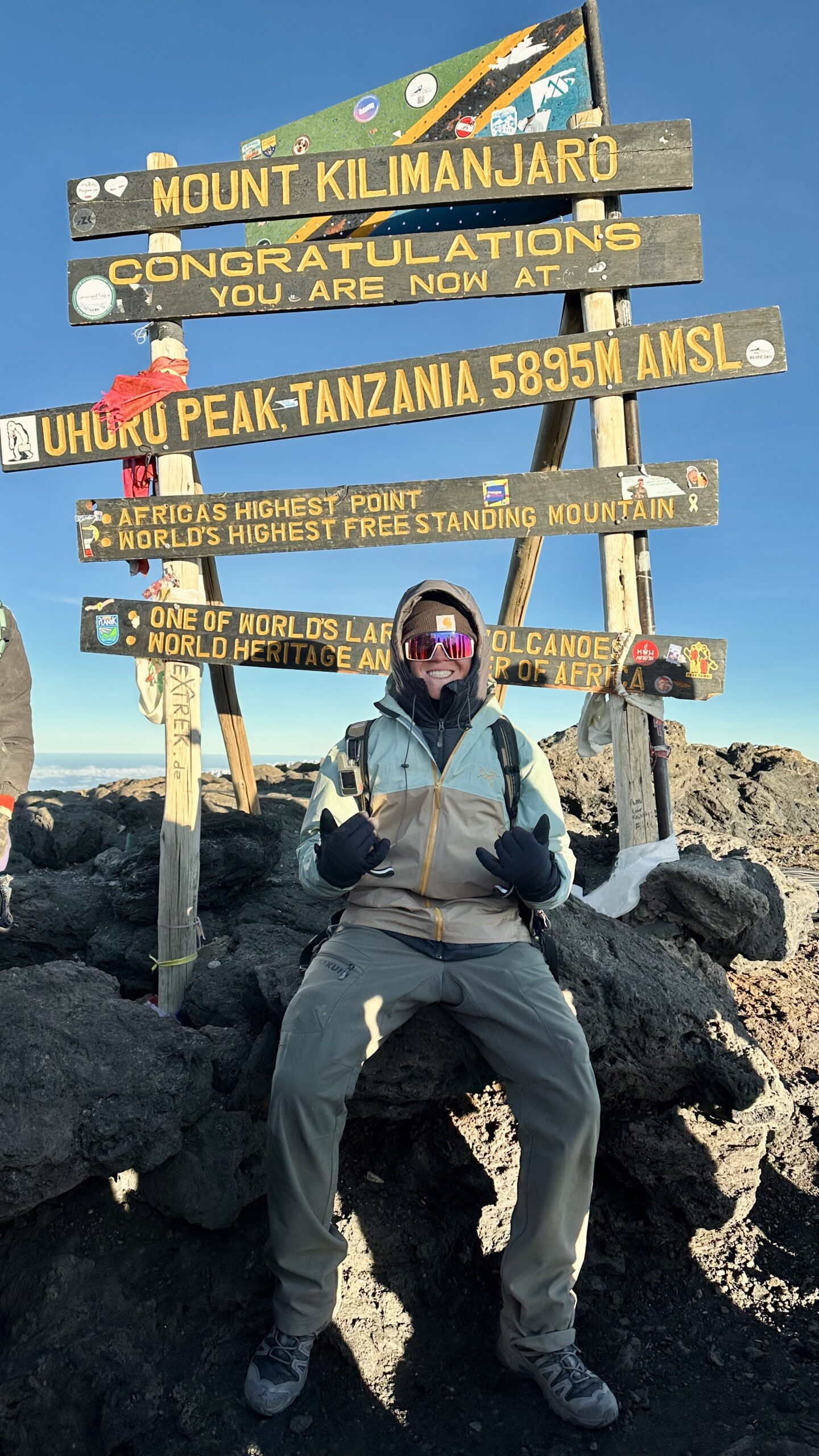
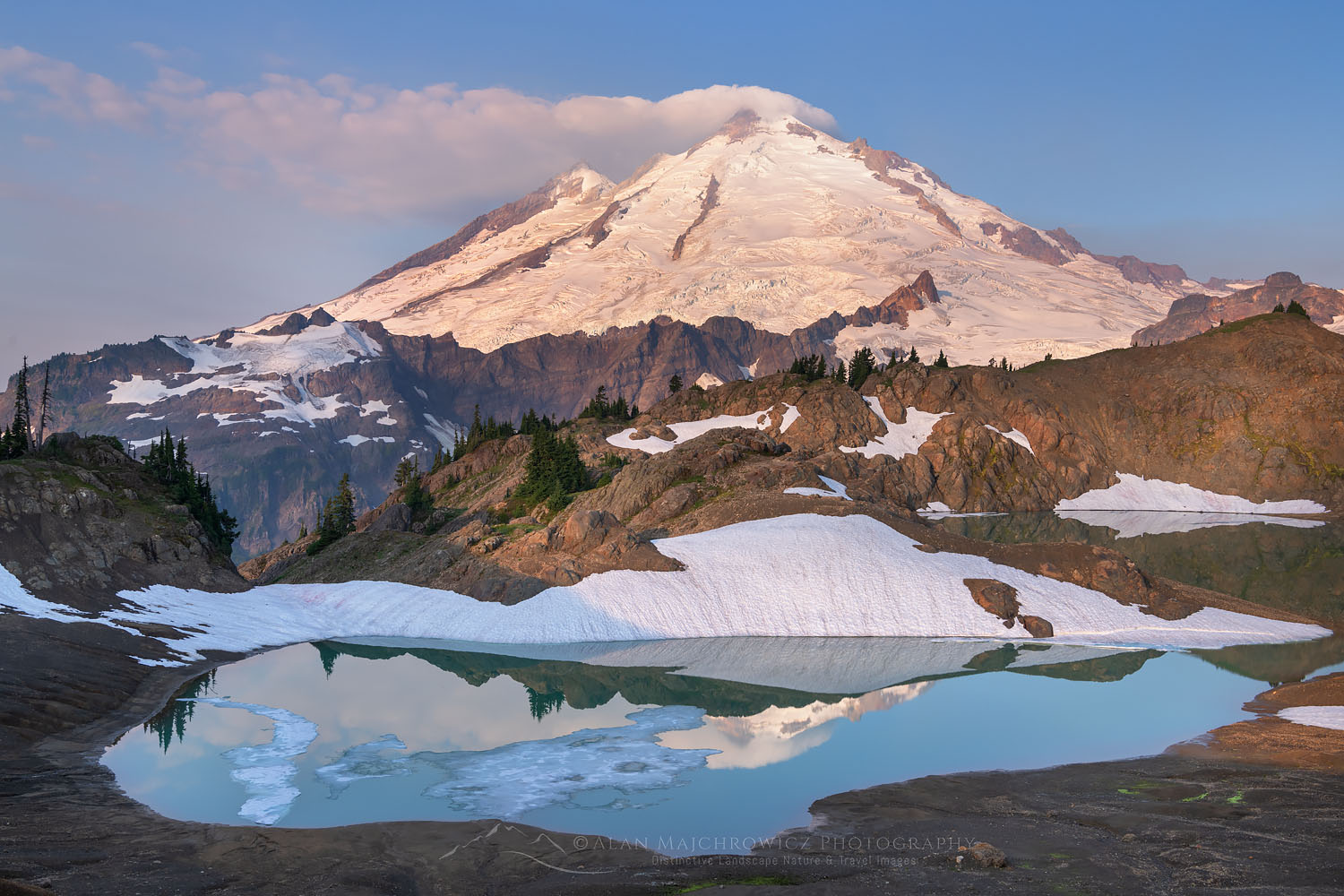
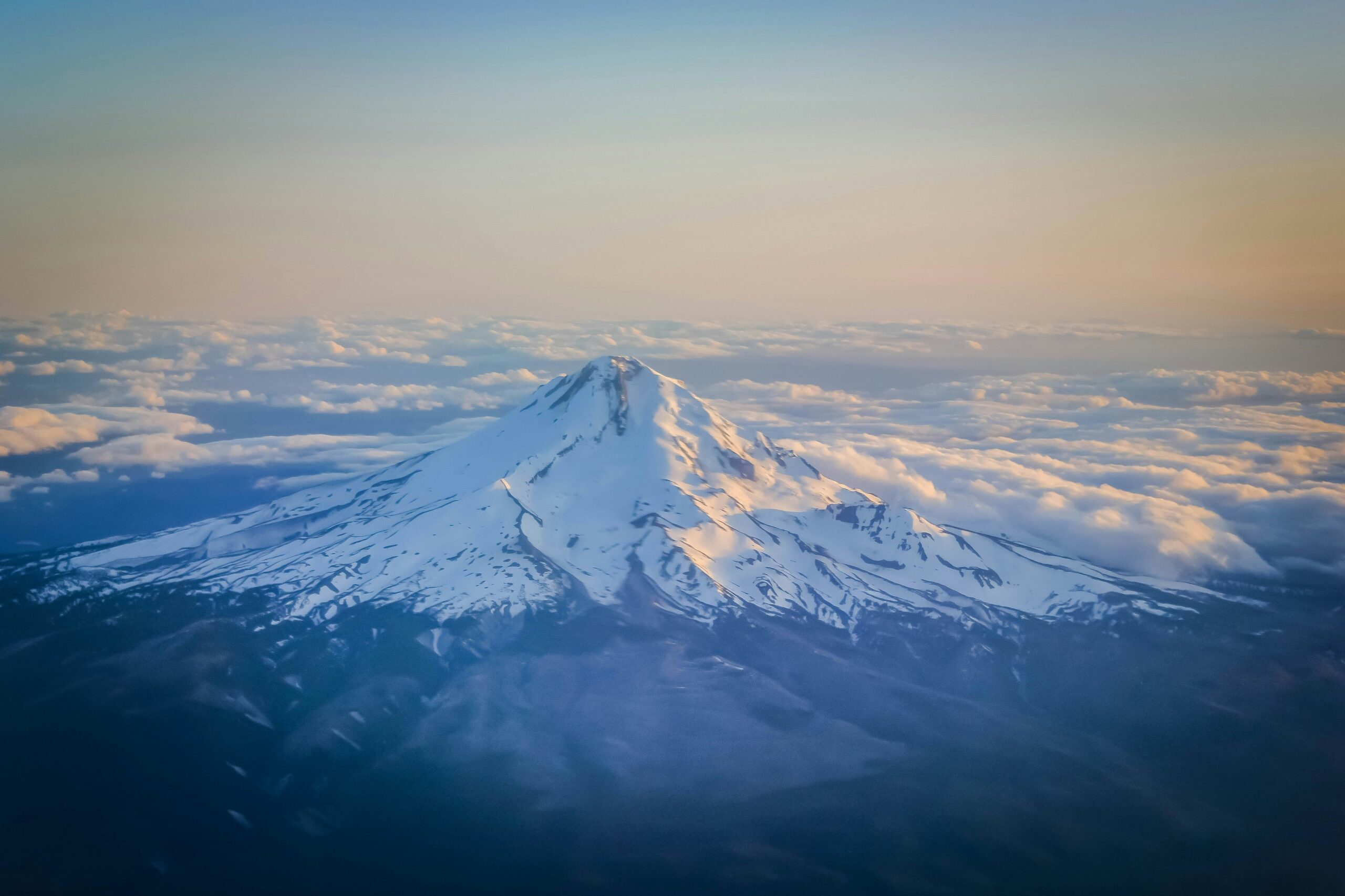
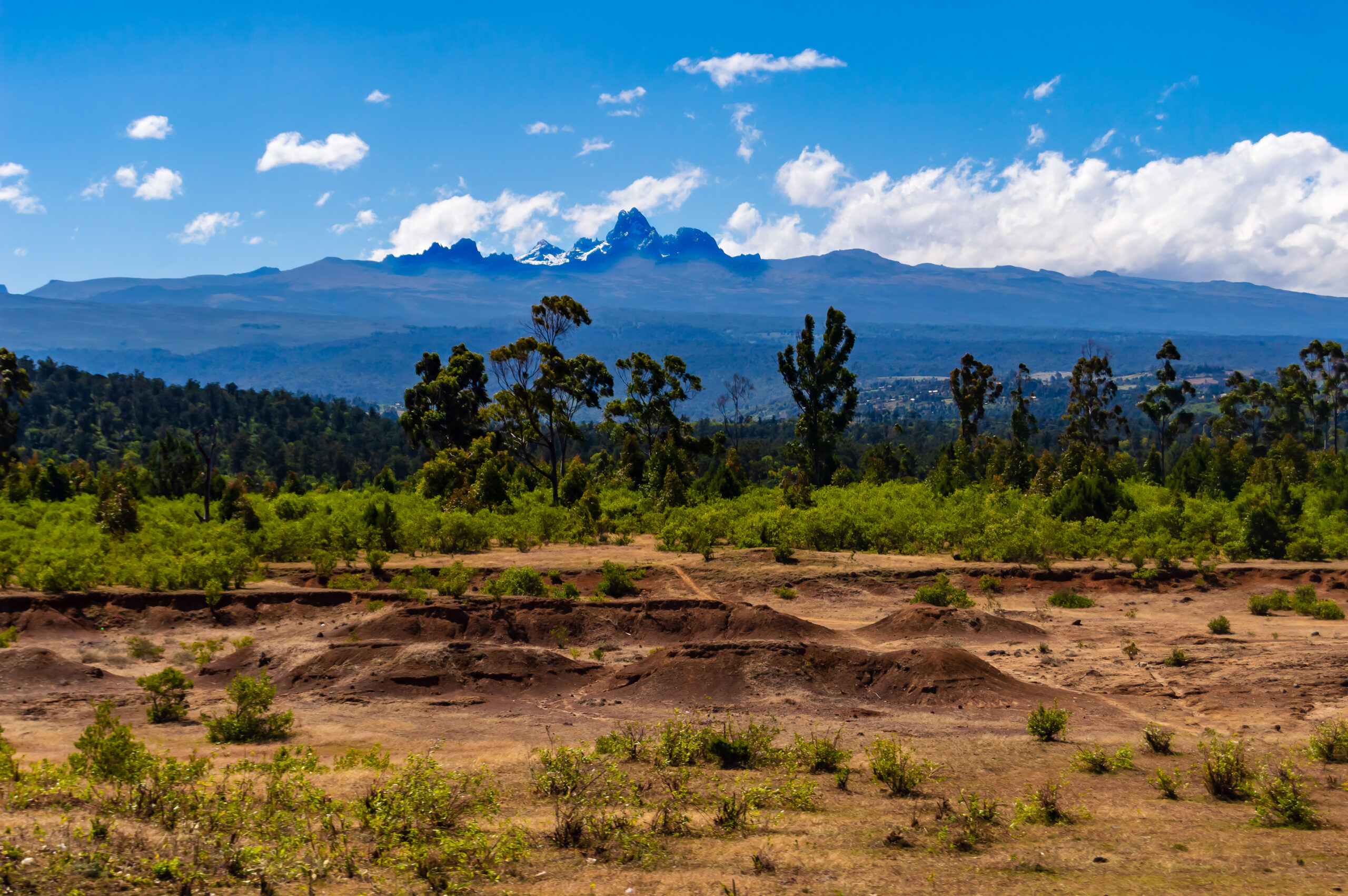
Kilimanjaro, 19,341 ft (5,895 m), via Lemosho. The roof of Africa and the highest point we have reached.
About · Our Field Experience
The real climbs behind our guides
Anyone can write about mountains. We think you deserve to know who is actually doing the climbing. This is our honest first-hand record: two dozen summits and more than forty ascents from Utah’s Wasatch Range to the roof of Africa, climbs in Patagonia and Iceland, and the high-altitude progression we are on right now. Where our guides go beyond what we have personally climbed, we tell you, and we cite our sources.
Updated Jul 27, 2026 · Our experience record · ~9 min read
Every climb on this page is first-hand and real. Elevations are verified against current geographic records. Where we have not personally climbed a peak we cover, we say so, and those guides are clearly research-based. We would rather earn your trust with an honest record than an inflated one.
The honest summary
Deep experience up to 19,000 feet, and honest about the rest.
Our Climbing & Mountaineering Lead, Dawson Ludlow, has summited more than twenty distinct peaks across more than forty ascents, from repeated Wasatch classics to Kilimanjaro (19,341 ft), Mount Whitney (14,505 ft), and the glaciated Mount Hood.
With founder Travis Ludlow he has also climbed Pikes Peak, climbed in Patagonia and Iceland, and stood at the foot of Mount Fuji.
We have not summited Everest or any 8,000-meter peak, and we never pretend otherwise. Next up is a deliberate high-altitude progression: Orizaba, Cotopaxi, and Chimborazo.
The climbs that anchor our altitude and glacier experience, and inform how we write about the bigger peaks.
Kilimanjaro · via the Lemosho route
19,341 ft (5,895 m) · Tanzania · our highest summit
The roof of Africa and the highest point we have reached. A non-technical but serious high-altitude trek that taught us first-hand how altitude, pacing, and multi-day fatigue actually feel above 15,000 feet, lessons that shape our Kilimanjaro and altitude guides.
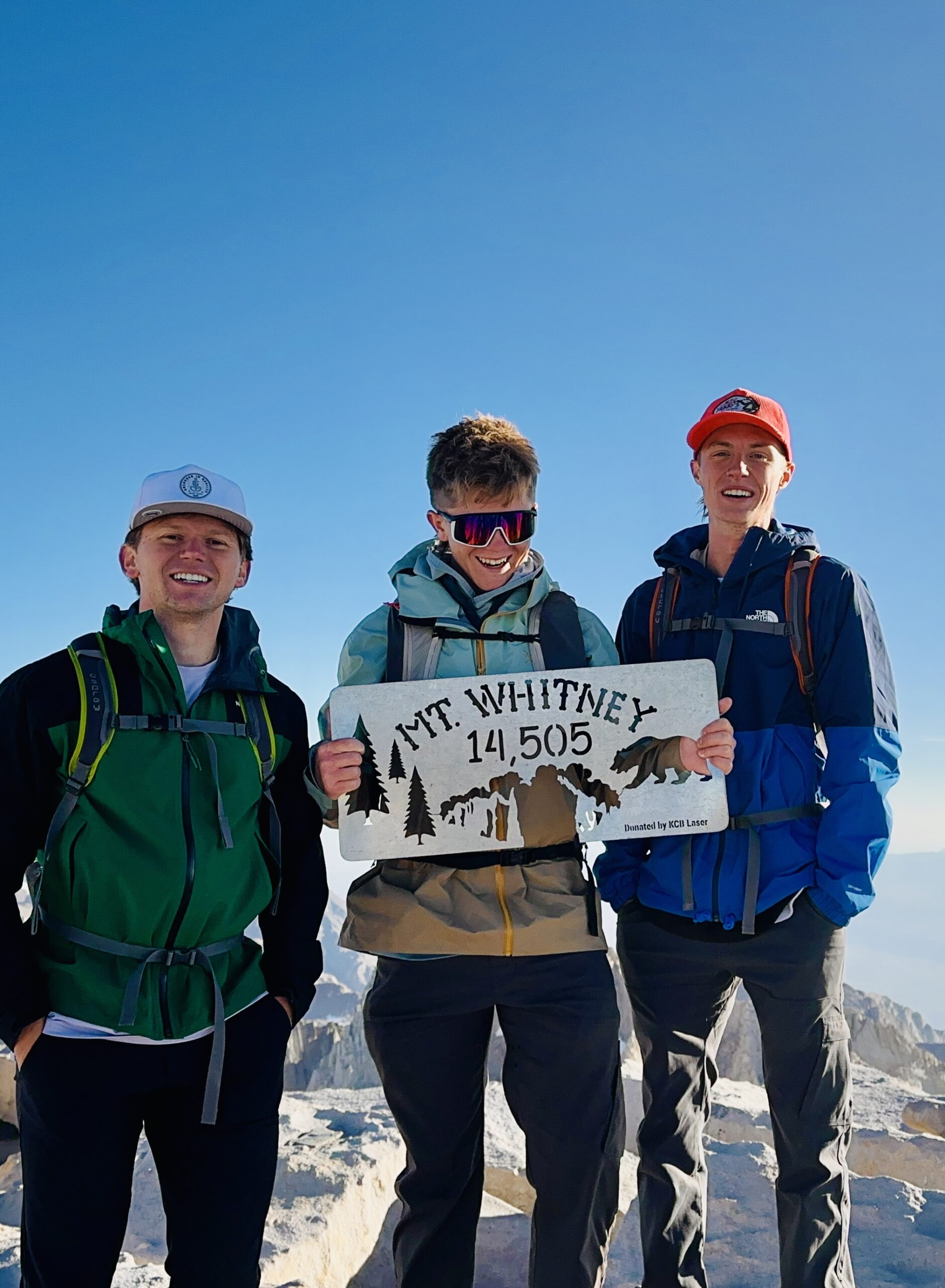
Mount Whitney
14,505 ft (4,421 m) · California · highest in the lower 48
The highest summit in the contiguous United States, a long, demanding day at altitude on the classic route.
Pikes Peak · Travis and Dawson
14,115 ft (4,302 m) · Colorado
A Colorado 14er climbed together, one of several climbs Travis and Dawson have done side by side.
Mount Hood · via Timberline
11,249 ft (3,429 m) · Oregon · glaciated volcano
Our introduction to a glaciated Cascade volcano: crampons, an alpine start, and real snow-and-ice terrain, and a direct stepping stone toward the volcanoes we are climbing next.
The Wasatch record
Utah’s Wasatch Range is our home range and the foundation of everything else. Repeated ascents in every season are where judgment is actually built.
The bulk of our experience is earned close to home, on the peaks of Utah’s Wasatch Range, climbed and re-climbed across seasons and conditions. This is where the unglamorous work of mountaineering happens: learning to read weather, pace a long climb, move on snow, and turn around when a day goes wrong. Highlights include Mount Nebo, the highest peak in the Wasatch, climbed six times; Mount Timpanogos by two different routes including the Everest Ridge; Lone Peak three times via the committing Jacob’s Ladder approach; and Kyhv Peak above Provo four times. These are not exotic objectives, but the accumulated mileage across dozens of ascents is exactly the kind of experience that makes the difference between writing about mountains and knowing them.
Out on the mountain. First-hand time in real terrain, across seasons and conditions, is where the judgment behind our guides is actually built.
The full summit table
Every peak in our first-hand record, with verified elevations and the number of ascents. Grouped by elevation band.
Peak
Route(s)
Elevation
Ascents
High-altitude & signature
Kilimanjaro
Lemosho
19,341 ft (5,895 m)
1
Mount Whitney
Standard route
14,505 ft (4,421 m)
1
Mount Hood
Timberline
11,249 ft (3,429 m)
1
Wasatch & Utah 11,000-ft peaks
Mount Nebo
North Peak Trail
11,928 ft
6
Mount Timpanogos
Timpooneke; Everest Ridge
11,752 ft
3
American Fork Twin Peaks
Standard
11,489 ft
1
Pfeifferhorn
Standard
11,326 ft
2
Lone Peak
Jacob’s Ladder
11,253 ft
3
Mount Superior
Cardiff Pass
11,132 ft
1
Box Elder Peak
Standard
11,101 ft
1
Provo Peak
The Y; Slate Canyon; normal
11,068 ft
3
Wasatch & Utah 10,000-ft peaks
Loafer Mountain
Standard
10,687 ft
1
Santaquin Peak
Loafer Mountain Trail
10,685 ft
1
Sunset Peak
Catherine Pass
10,648 ft
1
Gobblers Knob
Standard
10,246 ft
1
Mount Raymond
Standard
10,241 ft
1
Spanish Fork Peak
Standard
10,193 ft
2
Utah peaks under 10,000 ft
Ben Lomond
Cutler
9,712 ft
1
Notch Peak
Standard
9,655 ft
1
Mount Olympus
Standard
9,026 ft
2
Y Mountain
Standard
~8,568 ft
1
Grandeur Peak
Standard
8,299 ft
1
Kyhv Peak
Rock Canyon
7,865 ft
4
Big Baldy
Standard
Wasatch
2
How to read this table
Twenty-four distinct summits, forty-two total ascents. The repeated climbs matter as much as the list: six trips up Mount Nebo and four up Kyhv Peak represent real, seasonal familiarity, not a one-time tick. Elevations are verified against current records; Big Baldy is listed without a precise figure rather than guess at which of Utah’s several Big Baldys applies.
International climbing
Beyond the summits above, Travis and Dawson have sought out mountain terrain around the world.
Our experience is not confined to North America. Together, Travis and Dawson have climbed in Patagonia, the wild, weather-battered mountains at the southern end of South America, and in Iceland, a landscape of glaciers, volcanoes, and fast-changing conditions. They have also spent time at the base of Mount Fuji in Japan. We are precise about that last one on purpose: we explored Fuji’s lower slopes rather than standing on its summit, and it matters to us to describe experience exactly as it happened. Time in these ranges, on very different rock, ice, and weather than Utah’s, broadens the judgment we bring to writing about mountains everywhere.
What we are climbing next
Our experience is not a finished list. We are on a deliberate progression toward higher, glaciated, high-altitude volcanoes, and we will document it as it happens.
The high-altitude progression, 2026 to 2027
December 2026
Pico de Orizaba
18,491 ft (5,636 m) · Mexico
North America’s highest volcano and our next high-altitude glacier objective, building on Mount Hood.
2027
Cotopaxi
19,347 ft (5,897 m) · Ecuador
A classic glaciated Andean volcano and a step up in sustained altitude and glacier travel.
2027
Chimborazo
20,548 ft (6,263 m) · Ecuador
Ecuador’s highest peak and the farthest point from the center of the Earth, our first objective above 20,000 feet.
These are goals, not achievements, and we will report honestly on how the preparation and the climbs actually go. Follow the same path in our progression plans and expedition training guides.
Our honesty policy
Global Summit Guide covers mountains far higher and more technical than we have personally climbed, including Everest, K2, and the 8,000-meter peaks. We will never blur the line between what we have done and what we have researched. Our first-hand summits top out at Kilimanjaro; everything above that is research-based synthesis drawn from the Himalayan Database, the American Alpine Club, expedition operators, and published accounts, and we cite those sources.
We believe this honesty makes us more useful, not less. It means you can trust that when we describe how something feels, we have felt it, and when we are working from research, we say so. That is the standard we hold every page on this site to.
Experience FAQ
The questions readers ask about who is behind the guides.
Has the team summited Everest or the 8,000-meter peaks?
No, and we say so plainly. Our highest summit is Kilimanjaro at 19,341 feet. Our 8,000-meter guides are research-based syntheses from the Himalayan Database, the American Alpine Club, operators, and published accounts, with sources cited.
What is the team’s highest summit?
Kilimanjaro, 19,341 feet (5,895 m), via Lemosho. Then Mount Whitney (14,505 ft), Pikes Peak (14,115 ft), and Mount Hood (11,249 ft), plus more than twenty Wasatch summits.
How does this experience make your guides more reliable?
First-hand time teaches what no database can: how altitude feels, how fast weather turns, how fatigue erodes judgment on descent. That shapes how we frame difficulty, training, and risk, even for peaks higher than we have climbed, where we are transparent that the work is research-based.
What are you climbing next?
A high-altitude progression: Pico de Orizaba (18,491 ft) in December 2026, then Cotopaxi (19,347 ft) and Chimborazo (20,548 ft) in 2027. Glaciated volcanoes that build directly on Kilimanjaro and Mount Hood.
Who does the climbing?
Primarily Dawson Ludlow, our Climbing & Mountaineering Lead, with founder Travis Ludlow climbing alongside him, including Pikes Peak and climbs in Patagonia and Iceland. Health and altitude content is reviewed by Taylor Ludlow, RN.
About Global Summit Guide
Dawson Ludlow, Climbing & Mountaineering Lead · Travis Ludlow, Founder & Head of Research
Global Summit Guide is an independent mountaineering resource built on a simple principle: earn trust by being honest about what we know first-hand and what we have researched. This page is our experience record, and we keep it current as we climb. Health and altitude content is reviewed by Taylor Ludlow (Registered Nurse), and gear by Walker Ludlow. Read more about the team and mission.
Kilimanjaro Routes Current Conditions 2026: Best Time to Climb, Route Comparison & What to Expect This Season
Everything you need to know about climbing Mount Kilimanjaro in the 2026 season. Current conditions across all seven routes (Lemosho, Machame, Marangu, Rongai, Northern Circuit, Umbwe, Shira). The June-October dry season opens now. TANAPA fees, summit success rates, recent climber reports, and the new 2026 Leave No Trace regulations.
5,895m
Uhuru Peak Summit
Jun-Oct
Long Dry Season 2026
85-95%
Dry Season Success Rate
7 routes
Climbing Paths to Summit
2026 Long Dry Season Opens · Lemosho 8-Day Best Conditions · TANAPA Park Fees $1,000-$1,400 · Leave No Trace Mandate Active · Full Kilimanjaro Guide →
Last updated May 24, 2026 — verified for the 2026 long dry season (June-October) climbing window
If you’re planning to climb Kilimanjaro this season, several specific things have changed for 2026. TANAPA has implemented strict Leave No Trace regulations, including a ban on plastic packaging and digital waste tracking. Park fees now total $1,000-$1,400 USD per climber depending on route length. The long dry season opens in June, with peak conditions running through October. Routes vary significantly in their current state — some handle the upcoming shoulder season better than others. This page covers all seven climbing routes, current 2026 conditions on each, recent climber reports, and what to expect for the rest of the season.
Kilimanjaro climbing in 2026 happens primarily in two dry windows. The long dry season runs late June through October — July and August represent peak conditions with the most reliable weather, the firmest trails, and the clearest summit views. The short dry season runs January through early March, with February typically the driest month. The April-May long rains and the November short rains are the wet seasons; first-time climbers should avoid both. Success rates during the dry seasons average 85-95% on 7-9 day routes, dropping to 60-70% during the wet seasons.
The Tanzania National Parks Authority (TANAPA) maintains seven climbing routes to the summit. Lemosho, Machame, Marangu, Rongai, and Northern Circuit are the standard options. Umbwe and Shira see less traffic and serve specific climber profiles. Mweka is descent-only — no operator offers ascents on Mweka. Each route has its own current condition profile that climbers should understand before booking the 2026 season.
Kilimanjaro Live Conditions Snapshot
Here’s the current status of Kilimanjaro climbing conditions as of May 24, 2026, verified against TANAPA, recent operator advisories, and the Kilimanjaro Porters Assistance Project (KPAP).
2026 Season Status — Updated May 24, 2026
Long Dry Season
Opens late June, runs through October. July-August peak conditions. Booked operators report 90%+ summit success during this window.
Illegal. All climbers must book through licensed operator. Standard crew: guide, assistant guide, cook, 2-3 porters per climber.
Prohibited
2026 booking timing matters. Lemosho and Machame routes during the prime July-August window typically book out 6-8 months in advance. Climbers planning peak-season 2026 trips should already have operator reservations confirmed. Last-minute bookings (1-3 months out) are possible for September-October dates and for less popular routes (Rongai, Northern Circuit). Avoid booking through any operator that cannot demonstrate KPAP partnership — porter welfare violations have triggered TANAPA enforcement actions in recent seasons.
Kilimanjaro Location & Live Weather
Mount Kilimanjaro sits in northeastern Tanzania near the Kenyan border, about 300 km south of the equator. Uhuru Peak coordinates: 3.0674°S, 37.3556°E. The climbing routes start from various gates around the base: Londorossi (Lemosho), Machame Gate (Machame), Marangu Gate (Marangu and Mweka exit), Rongai (northern side), and Lemosho Gate for Shira. Climbers fly into Kilimanjaro International Airport (JRO) near Moshi or Arusha, then drive 1-2 hours to the trailhead.
Moshi (Base) Temp
Loading…
Wind
—
Conditions
—
Tomorrow
—
Live weather data from Open-Meteo at Moshi, Tanzania (910m). Summit-night temperatures at Uhuru Peak (5,895m) typically run -15°F to -20°F (-26 to -29°C) with significant wind chill, regardless of base camp conditions. Always check your operator’s pre-climb weather briefing.
Kilimanjaro At a Glance
Summit elevation
5,895 m (19,341 ft) — Uhuru Peak; Africa’s highest peak; one of the Seven Summits
Location
Northeastern Tanzania, near Kenyan border
Coordinates
3.0674°S, 37.3556°E
Park authority
Tanzania National Parks Authority (TANAPA) / Kilimanjaro National Park (KINAPA)
$2,200-$6,000+ USD per climber (group budget to private premium)
Summit success rate
85-95% on 7-9 day routes during dry season; 50-70% on 5-6 day routes or wet season
Solo climbing
Illegal — all climbers must book through licensed operator with registered guide team
Required crew per climber
1 guide + 1 assistant guide + 1 cook + 2-3 porters (4-5 team members standard)
2026 regulations
Leave No Trace mandate; plastic packaging banned; KPAP partner verification
Summit night temperatures
-15°F to -20°F (-26 to -29°C) with wind chill regardless of season
First ascent
October 6, 1889 — Hans Meyer, Ludwig Purtscheller, and Chagga guide Yohani Lauwo
Airport
Kilimanjaro International (JRO), 1-2 hours from trailheads via Moshi or Arusha
Crew tipping
$250-350 USD per climber, split among guides, cook, and porters
Mount Kilimanjaro and Uhuru Peak (5,895 m) — Africa’s highest summit and one of the Seven Summits. The 2026 climbing season uses seven established routes ranging from the 5-day Marangu (lowest success rate) to the 9-day Northern Circuit (highest success rate). The long dry season opens late June and runs through October.
The 7 Kilimanjaro Routes: Current 2026 Conditions on Each
Each Kilimanjaro route offers a different climbing experience, different success rate, and different current conditions for the 2026 season. Here’s the breakdown of all seven routes with what climbers should expect right now.
Route
Days
2026 Success Rate
Cost Range
Best Season
Lemosho
7-8
85-90%
$2,700-$4,500
Jun-Oct, Jan-Mar (year-round capable)
Machame
6-7
80-85%
$2,400-$4,000
Jun-Oct, Jan-Mar (avoid wet season)
Northern Circuit
9
95%+
$3,800-$6,000
Jun-Oct (peak season optimal)
Marangu
5-6
50-70%
$2,200-$3,500
Year-round (huts provide weather protection)
Rongai
6-7
75-80%
$2,500-$4,000
Year-round; best in shoulder seasons
Umbwe
5-6
50-65%
$2,400-$3,800
Dry season only (Jun-Oct, Jan-Mar)
Shira
7-8
80-85%
$2,700-$4,200
Dry season; merges with Lemosho
Lemosho Route — Best Overall 2026 Conditions
7-8 days · Western approach · 85-90% summit success · $2,700-$4,500 · Best balance of scenery and acclimatization
The Lemosho route starts on Kilimanjaro’s western side at the Londorossi Gate (2,250 m), traversing through pristine montane rainforest before reaching the Shira Plateau. The first two days are notably quieter than the more popular Machame route, with climbers often having stretches of trail to themselves. After crossing the Shira Plateau, Lemosho merges with the Machame route at Lava Tower, then continues to the dramatic Barranco Wall and the summit approach via Barafu Camp.
Current 2026 conditions: Excellent. Lemosho handles rain well thanks to good drainage, making it the most reliable route across seasons. The 8-day variant adds an extra acclimatization day that pushes summit success rates to 85-90%. The 7-day variant remains popular but cuts acclimatization tight for some climbers. Lemosho campsites have transitioned to 70%+ solar-powered lighting under the 2026 TANAPA mandate.
Days
7-8
Success rate
85-90%
Cost
$2,700-$4,500
2026 status
Best overall
Machame Route — Most Popular (“The Whiskey Route”)
The Machame route handles approximately 35% of all Kilimanjaro climbers and offers the most varied scenery of any route. The trail passes through five distinct ecological zones from rainforest at the base to alpine desert near the summit. The famous Barranco Wall, Lava Tower, and Karanga Valley are all on this route. Camping only — no hut accommodation. Standard 7-day version follows the “climb high, sleep low” pattern that aids acclimatization.
Current 2026 conditions: Good but crowded. Machame is the most heavily used route on the mountain, and July-August traffic reaches 100+ climbers starting per day. The route becomes very muddy during the wet season transitions (early April, early November), making it less pleasant in shoulder periods. The 7-day Machame is the standard recommendation for budget-conscious climbers seeking strong success rates. The 6-day Machame compresses acclimatization to a margin many climbers can’t sustain.
The Northern Circuit is Kilimanjaro’s longest route and offers the highest summit success rate of any climbing path. Starting from the Londorossi Gate, the route traverses to the Shira Plateau, then continues around the northern slopes of the mountain — passing through terrain that 95% of Kilimanjaro climbers never see. The summit approach uses Pofu, Third Cave, and School Hut camps before joining the Barafu summit route.
Current 2026 conditions: Excellent. The Northern Circuit’s 9-day length provides exceptional acclimatization, which is why success rates exceed 95% during the dry season. Crowds are minimal compared to Machame and Marangu. The northern side stays drier in shoulder seasons. Cost is higher due to additional park fees (9 days × $70 + 8 nights × $50 = significant), but the success rate justifies the premium for climbers committed to summiting.
Days
9
Success rate
95%+
Cost
$3,800-$6,000
2026 status
Best success
Marangu Route — “The Coca-Cola Route”
5-6 days · Southeast approach · 50-70% summit success · $2,200-$3,500 · Only route with hut accommodation
The Marangu route is the only path on Kilimanjaro with hut accommodation instead of tents. Mandara Hut, Horombo Hut, and Kibo Hut provide weather-protected sleeping with shared dormitories for 4-8 climbers. The route uses the same trail for ascent and descent (the “Coca-Cola” nickname comes from this directness and the soft-drink stand at Marangu Gate). The 5-day version is the cheapest and shortest Kilimanjaro option, which explains its persistent popularity despite the low success rates.
Current 2026 conditions: Open year-round due to hut protection, but with caveats. The 5-day Marangu has a 50-60% summit success rate due to compressed acclimatization — many climbers attempt it and fail. The 6-day Marangu adds an acclimatization day at Horombo and improves success to 65-70%. The huts can be very crowded in peak season. Hut fees are $60/night (vs $50 camping on other routes). Marangu is best for climbers with weather concerns who need hut shelter or for those genuinely on a tight schedule. Most experienced trekkers recommend choosing Lemosho or Machame instead.
The Rongai route is the only path that approaches Kilimanjaro from the northern side, near the Kenyan border. The northern slope receives less rainfall than the southern side, making Rongai the most reliable route during shoulder seasons (March-April transition, late October-November) when other routes turn muddy. The route is quieter than Machame or Marangu and offers wilderness terrain reminiscent of the African plains rather than the cloud forest of southern routes.
Current 2026 conditions: Reliable. Rongai handles shoulder seasons better than any other Kilimanjaro route. The 7-day variant offers 75-80% success rates with good acclimatization. The 6-day version compresses acclimatization but is still competitive with the standard Machame timing. The route’s lower-altitude approach is gentler than Machame’s early rainforest climb, which some climbers prefer for their first day. Crowds are moderate but never reach Machame levels.
Days
6-7
Success rate
75-80%
Cost
$2,500-$4,000
2026 status
Shoulder season pick
Umbwe Route — Steepest & Most Technical
5-6 days · Southwestern approach · 50-65% summit success · $2,400-$3,800 · Experienced climbers only
The Umbwe route is the steepest and most direct path to Kilimanjaro’s summit. The first two days involve a relentless climb up a narrow, forested ridge with significant elevation gain. Some sections require hands-on scrambling, and the early acclimatization is aggressive compared to other routes. Umbwe joins the Machame route at Barranco Camp before continuing to the summit via the standard southern approach.
Current 2026 conditions: Dry season only. Umbwe is not recommended during wet season due to safety concerns on the steep early sections. The route attracts experienced trekkers seeking solitude — daily climber counts are a small fraction of Machame or Marangu numbers. Success rates are lower because the route compresses acclimatization. Only climbers with previous high-altitude trekking experience should consider Umbwe.
Days
5-6
Success rate
50-65%
Cost
$2,400-$3,800
2026 status
Dry season only
Shira Route — Plateau Start (Less Common)
7-8 days · Western plateau approach · 80-85% summit success · $2,700-$4,200 · Drives to high start
The Shira route is similar to Lemosho but starts higher — climbers drive directly to the Shira Plateau (3,500 m) rather than hiking up from Londorossi Gate. This high start saves a day of trekking but compresses acclimatization significantly during the early route. Shira eventually merges with Lemosho at Shira Camp 2 and continues identically to the summit. Most operators have phased out Shira in favor of Lemosho due to the acclimatization concerns.
Current 2026 conditions: Decreasing operator support. Some operators still offer Shira as a budget alternative for climbers without time for the full Lemosho ascent. The high-altitude vehicle start can trigger altitude symptoms earlier than other routes. Success rates depend heavily on the climber’s pre-trip acclimatization plan. If your operator offers Lemosho at similar price, choose Lemosho instead.
Days
7-8
Success rate
80-85%
Cost
$2,700-$4,200
2026 status
Less common
Month-by-Month 2026 Kilimanjaro Conditions
Month
Season
Conditions
Crowds
Best For
January
Short dry
Mild days (20-25°C), clear mornings, freezing summit nights
Moderate
First-timers, photographers, balanced trip
February
Short dry
Warm, dry, clear weather; typically driest month
Moderate
Photography, clear summit views, prime conditions
Early March
End short dry
Stable early; transitions to rain late month
Moderate
Early-month climbers; avoid late March
April
Long rains
Heavy rainfall; muddy trails; only Lemosho/Machame remain open
Climbers wanting quieter routes before peak crowds
July
Long dry peak
Most reliable weather; firm trails; clearest views
Maximum
First-time climbers seeking highest success
August
Long dry peak
Continued stable conditions; warmest dry season month
Maximum
Peak conditions; book 6-8 months ahead
September
Long dry
Stable; thinning crowds; excellent visibility
Building down
Climbers wanting prime conditions with fewer crowds
October
End long dry
Conditions remain stable through mid-month
Reducing
Last reliable month before short rains
November
Short rains
Lighter rains than April-May but still risky; trails muddy
Minimal
Solitude seekers; success rates drop to 60-70%
December
End short rains
Stabilizing late month; holiday-season climbing begins
Building
Late-December climbers riding the dry-season opening
July-August 2026: Peak Season
July and August are statistically the most reliable months for Kilimanjaro summits. Weather windows are consistent, trails are firm, and summit-day temperatures remain manageable. The trade-off is maximum crowding — Machame route can see 100+ climbers starting per day. Operator packages for these months frequently sell out by January 2026. Climbers planning peak-season trips should already have reservations confirmed.
September-October 2026: Quieter Prime Window
September and early October offer dry-season conditions with significantly reduced crowds. The Northern Circuit and Rongai routes particularly benefit from this window — fewer climbers at remote camps and clearer trail conditions. Operator pricing during September-October is often 10-15% lower than July-August peak. Late October transitions toward the short rains; book early to mid-October dates for the best balance of conditions and crowds.
January-March 2026: Short Dry Season
The short dry season in early 2026 produced stable conditions for climbers with several operators reporting 85%+ summit success during the prime February window. Crowds are moderate, weather is reliable, and temperatures are warmer than during the long dry season. The trade-off is summit nights are colder than July-August in absolute terms despite warmer daytime temperatures. Equipment selection matters more in January-February than in July-August.
Recent Kilimanjaro Trip Reports (2025 Season Synthesis)
The 2025 Kilimanjaro season followed standard dry-season patterns with several notable trends that carry forward to 2026 planning.
2025 Operator Recap
Major operators (Ultimate Kilimanjaro, Altezza Travel, Tanzania Trail, African Scenic Safaris, Climbing Kilimanjaro) reported strong booking volumes throughout the 2025 dry seasons. KPAP partner verification became a stronger selection factor for climbers, with non-KPAP operators losing bookings to certified competitors. Operator packages with crew-tip transparency saw increased market share. The trend continues into 2026.
2025 Trail Condition Patterns
The 2025 dry seasons saw exceptionally firm trail conditions, particularly on Lemosho and Northern Circuit. Mid-July through mid-September provided continuous good weather windows with few rain interruptions. The April-May long rains were heavier than the 5-year average, with some operators reporting Machame and Marangu route closures for 2-3 days during the peak rainy periods.
2025 Summit Success Patterns
Successful climber reports from 2025 emphasized several common patterns: 7-9 day routes performed much better than 5-6 day routes regardless of operator, “climb high, sleep low” acclimatization profiles worked even on shorter trips, and Diamox (acetazolamide) prescribed before the climb (rather than in response to altitude symptoms) improved success rates among first-time high-altitude trekkers.
Independent Climber Notes from 2025
Summit night timing: Most operators depart Barafu Camp (4,673m) at midnight for the 6-7 hour push to Uhuru Peak. Some operators have shifted to 23:00 departures during peak season to manage trail congestion.
Kosovo Camp option: Some climbers stay at Kosovo Camp (4,870m) instead of Barafu, shortening summit day by roughly 30 minutes but at the cost of less rest at lower altitude.
Cell signal: Inconsistent above 4,000m. Most camps have spotty coverage. Garmin InReach is the reliable communication method.
Helicopter rescue: Kilimanjaro Search and Rescue Trust (KILISAR) operates helicopter evacuations. Travel insurance with high-altitude rescue coverage is essential.
WAG bags not yet required: Unlike the Matterhorn in 2026, Kilimanjaro does not require WAG bags. Operators handle waste management through TANAPA-approved methods, but a personal waste-bag protocol may be added in future seasons.
Drone restrictions: Drone use requires TCAA + TANAPA permits, applied 4-6 weeks before climb dates. Casual drone use is prohibited.
The Machame Route — most popular path on Kilimanjaro — handles about 35% of all climbers. The route passes through five ecological zones and crosses the famous Barranco Wall. The 2026 dry season (June-October) offers peak conditions on this route with 80-85% summit success rates on the 7-day variant.
Required Gear for the 2026 Kilimanjaro Climb
Kilimanjaro is a non-technical trek but the altitude and summit-night cold demand quality gear. Most operators provide tents, sleeping pads, cooking equipment, and dining gear, so the personal kit you bring focuses on clothing, footwear, and altitude essentials. Here’s the standard 2026 equipment list.
Footwear
Item
Spec
Notes
Waterproof hiking boots
B0 or B1 rated; ankle support
Broken in; no technical boots needed
Camp shoes
Lightweight sneakers or sandals
For evenings at camp
Hiking socks
Merino wool
4-5 pairs for trek
Liner socks
Thin synthetic
Blister prevention
Gaiters
Light to mid-weight
Keep dust and snow out
Clothing System
Layer
Item
Notes
Base
Top and bottom (merino or synthetic)
2-3 sets
Mid
Fleece
Chilly camp evenings
Light insulation
Synthetic or down sweater
Active climbing layer
Heavy insulation
Down parka
-10°C rated minimum for summit night
Hardshell jacket
Gore-Tex or equivalent
Wind + rain protection
Hardshell pants
Full side-zip or rain pants
Rain + summit night
Soft shell pants
2 pairs for the trek
Active hiking days
Hiking shorts
Quick-dry
Warm rainforest days
Hat + buff
Warm hat + buff + neck gaiter
Frostbite protection
Sun hat or cap
Light + breathable
UV severe at altitude
Gloves (2 pairs)
Light + insulated/mittens
Active vs summit night
Sleeping Gear
Item
Spec
Notes
Sleeping bag
-10°C rated or colder
Operator rental usually available
Sleeping bag liner
Silk or synthetic
Adds warmth + protects bag
Inflatable pillow
Compressible camp pillow
Optional but improves sleep
Backpacks & Bags
Item
Spec
Notes
Daypack
30-35L
Water, layers, rain gear, snacks
Duffel bag
75-90L
Porters carry; gear + sleeping bag
Dry bags / stuff sacks
Waterproof
Organize gear inside duffel
Rain cover
For daypack
Rainforest section + storms
Hydration & Food
Item
Spec
Notes
Water capacity
3L total
Split bladder + bottle
Insulated bottles
Nalgenes with insulating sleeves
Bladder hoses freeze summit night
Water purification
Tablets or filter
Backup; operators provide treated water
Snacks + energy bars
Reusable containers only
2026 plastic ban enforced
Electrolyte tablets / mix
Nuun, Liquid IV, or similar
Hydration + altitude support
Personal Items & Safety
Item
Spec
Notes
Headlamp + spare batteries
Lithium for cold
Essential for midnight summit start
Sunscreen + lip balm
SPF 50+ with SPF lip balm
UV severe at altitude
Sunglasses
Cat 3 minimum, Cat 4 ideal
UV + glare protection
First aid kit
Blister care, ibuprofen, electrolytes, AMS meds
Customize to team needs
Diamox / acetazolamide
250mg twice daily typical
Discuss with doctor; common preventive
Hand + toe warmers
Chemical warmers
5-10 pairs for summit night
Trekking poles
Adjustable, 3-section
Essential for steep Mweka descent
Passport + Tanzania visa
Visa on arrival available
Required at JRO entry
Travel insurance
Mountain rescue coverage
Required for high-altitude evac
Yellow fever certificate
If arriving from yellow fever zone
Most US/EU direct flights exempt
Cash (USD)
$400-600
Tips, drinks, emergencies
2026 TANAPA Regulations & New Requirements
The Tanzania National Parks Authority implemented several new regulations for the 2026 climbing season, primarily focused on environmental protection and porter welfare.
Leave No Trace Mandate
The 2026 season operates under strict Leave No Trace rules enforced at every gate and campsite:
Plastic packaging ban: All plastic packaging is prohibited on the mountain. Snacks must be packed in reusable containers. Disposable water bottles are confiscated at gates. Operators provide reusable food containers as part of standard service.
Digital waste tracking: Operators log all waste brought on and off the mountain using TANAPA digital tracking systems. Verification at gates ensures waste accounting matches climber count.
Solar power transition: Over 70% of campsites have transitioned to solar-powered lighting and lithium-rechargeable systems. Diesel generators are being phased out, reducing campsite carbon emissions by approximately 40%.
Porter Welfare Standards (KPAP)
The Kilimanjaro Porters Assistance Project (KPAP) sets ethical standards that TANAPA increasingly enforces. Key 2026 requirements:
Maximum porter load: 20 kg per porter, verified digitally at the gate
Minimum daily wage: Operators must pay the KPAP-recommended minimum
Required equipment: Porters must have boots, sleeping bag, and adequate clothing — climbers should verify this with their operator
Climber-to-porter ratio: Reasonable ratios enforced; over-loading is penalized
Climbers should verify their operator is a KPAP partner before booking. The Ultimate Kilimanjaro KPAP partner designation has become a key trust signal for 2026 bookings.
Drone Restrictions
Drone use on Kilimanjaro requires both Tanzania Civil Aviation Authority (TCAA) and TANAPA permits, applied 4-6 weeks before climb dates. Casual drone use is prohibited and aggressively enforced. Drones brought to the gate without permits are confiscated. Most operators advise leaving drones at home unless you have a specific commercial need with permits processed in advance.
Solo Climbing Prohibition
Solo climbing remains illegal on Kilimanjaro. Every climber must book through a licensed operator with a registered guide team. Standard crew sizes run 4-5 local team members per climber, including one guide, one assistant guide, one cook, and 2-3 porters. The 2026 enforcement is stricter than previous years, with TANAPA verifying licensed operator registration at every gate.
2026 Booking Strategy
Kilimanjaro permits are arranged through licensed operators — climbers cannot pay TANAPA directly. Here’s the practical booking timeline for the 2026 season.
For Remaining 2026 Dates (June-December)
If you haven’t booked yet for 2026, your options depend on your target month:
June 2026: Wide operator availability. Some shoulder-season pricing remaining.
July-August 2026: Largely fully booked. Limited availability with premium operators. Check 1-2 weeks out for cancellations.
September 2026: Moderate availability. Strong conditions with fewer crowds.
October 2026: Wide availability through mid-month. Late October becomes risky due to short rains transition.
December 2026: Holiday-season climbers face premium pricing. Avoid Christmas-New Year peak unless willing to pay 30-50% premium.
For 2027 Booking
Climbers planning 2027 trips should start research in October-November 2026, with operator deposits typically locked in 6-9 months ahead of climb dates. Peak 2027 season (July-August 2027) will sell out by January-February 2027.
Guide Service Selection
The Kilimanjaro guide service market is large and quality varies significantly. Standard 2026 selection criteria:
KPAP partnership: Verify on the official KPAP partner list
License verification: TANAPA-licensed operators only
Crew transparency: Operator should disclose crew size and tip recommendations
Insurance coverage: Operator should provide expedition insurance documentation
Track record: Operator should publish summit success rates by route and year
Reviews: Recent verified reviews on TripAdvisor, Trustpilot, and climbing-specific forums
Frequently Asked Questions About Kilimanjaro Routes Current Conditions
When is the best time to climb Kilimanjaro in 2026?
The two dry seasons offer the best Kilimanjaro climbing conditions in 2026. The long dry season runs late June through October, with July and August representing peak conditions. The short dry season runs January through early March, with February typically the driest month. June-October generally has the most reliable weather, the firmest trails, and the clearest summit views. April-May (long rains) and November (short rains) are the wet seasons and are not recommended for first-time climbers. Success rates during the dry season average 85-95% on 7-9 day routes, dropping to 60-70% during the wet seasons.
Which Kilimanjaro route has the best conditions right now?
For the 2026 dry season, Lemosho 8-day offers the best overall conditions: 85-90% summit success rate, excellent scenery, good acclimatization, and lower crowds than Machame for the first two days. Northern Circuit 9-day has the highest summit success rate (95%+) at premium cost. Machame 7-day remains the most popular route with 80-85% success at moderate cost. Rongai is the best option for shoulder seasons because the northern side stays drier when other routes are wet. Avoid Marangu 5-day — the lower success rate (50-60%) is not worth the price advantage. Umbwe is recommended only for experienced climbers seeking solitude.
How much do Kilimanjaro park fees cost in 2026?
TANAPA park fees for the 2026 Kilimanjaro climbing season run approximately $1,000 to $1,400 USD per person depending on route length. Daily breakdown: conservation fee $70 per person per day, camping fee $50 per night (or $60 hut fee on Marangu), one-time rescue fee $20 per climber, plus 18% VAT on all fees. A 7-day Machame or Lemosho climb generates roughly $1,210 in park fees alone. The 9-day Northern Circuit exceeds $1,400 in fees. Park fees represent 30-50% of your total trip cost and are non-negotiable.
Can I climb Kilimanjaro independently in 2026?
No. Solo climbing is illegal on Kilimanjaro. The Tanzania National Parks Authority requires every climber to book through a licensed operator with a registered guide team. The 2026 regulations are strictly enforced at the park gates. Your operator handles permit applications, fee payments, equipment, food, porters, and guides. Standard crew sizes run 4-5 local team members per climber. Tipping the crew is customary and adds $250-350 per climber to your total trip cost.
What 2026 regulations changed on Kilimanjaro?
TANAPA implemented strict Leave No Trace regulations for the 2026 season. Three key changes affect every climber. First, a waste-free mandate bans all plastic packaging on the mountain. Climbers must pack snacks in reusable containers. Second, 70% of campsites have transitioned to solar-powered lighting and lithium-rechargeable systems, reducing carbon emissions by 40%. Third, porter welfare standards are tighter, with KPAP-partner operators carrying digital crew weight checks. Climbers should verify their operator is a KPAP partner before booking.
How much does climbing Kilimanjaro cost in 2026?
Climbing Kilimanjaro in 2026 typically costs $2,200-$6,000 USD per climber for the trek itself. Budget group climbs (large operators, basic service) run $2,200-$3,000. Mid-range operators with KPAP certification and good crew ratios run $3,000-$4,500. Private premium expeditions with experienced guides run $4,500-$6,000+. Park fees ($1,000-$1,400) and crew tips ($250-350) are typically included in operator package pricing. International flights to Kilimanjaro International Airport (JRO) add $800-$2,000. Total trip budget including flights, gear, vaccinations, and tips typically runs $4,000-$8,000 per climber.
How many days do I need to climb Kilimanjaro?
Climbing Kilimanjaro takes 5-9 days on the mountain plus 2-3 days for travel, briefing, and recovery. Most operators recommend 7-9 day routes for the highest success rates. The 5-day Marangu has a 50-60% summit success rate due to compressed acclimatization. The 7-day Lemosho or Machame route delivers 80-90% success. The 9-day Northern Circuit produces 95%+ success rates. Climbers should plan their total Tanzania trip for 9-13 days including arrival, climbing, and recovery before flights home.
Do I need to be in great shape to climb Kilimanjaro?
You need to be reasonably fit, but Kilimanjaro is a non-technical trek rather than a technical climb. The standard fitness benchmark: hike 6-8 hours per day with a daypack for multiple consecutive days. Cardio fitness equivalent to running 5K in 30-35 minutes provides solid base. Most climbers train with hill walking, stair climbing, and weighted backpack hikes for 8-12 weeks before the climb. The challenge is altitude rather than physical difficulty — even fit climbers can fail to summit if their body doesn’t acclimatize. Diamox prescription before the climb helps many climbers succeed.
What is summit night like on Kilimanjaro?
Summit night is the hardest part of the Kilimanjaro climb. Most groups depart Barafu Camp (4,673 m) at midnight for the 6-7 hour push to Uhuru Peak. Temperatures drop to -15°F to -20°F (-26 to -29°C) with significant wind chill. Your water bottle freezes. The trail switchbacks endlessly up loose scree to Stella Point (5,756 m) on the crater rim, then traverses 45-60 minutes to Uhuru Peak. Most climbers reach the summit between 06:00 and 08:00 for sunrise. Descent to Barafu takes 3-4 hours. Total summit day is typically 14-16 hours.
What vaccinations do I need for Kilimanjaro in 2026?
Standard Tanzania vaccinations apply for Kilimanjaro climbers. Yellow fever vaccination certificate is required only if you’re arriving from a yellow fever zone (most travelers from the US and Europe do not need it for direct flights). Routine vaccinations (MMR, DTaP, polio) should be current. Recommended for Tanzania travel: typhoid, hepatitis A, hepatitis B, and rabies. Malaria prophylaxis is recommended for the trip — Kilimanjaro itself is above the malaria zone, but base towns Moshi and Arusha are not. Consult a travel medicine specialist 6-8 weeks before your trip for personalized recommendations.
Summit night on Kilimanjaro — the hardest part of the climb. Most groups depart Barafu Camp (4,673 m) at midnight for the 6-7 hour push to Uhuru Peak. Summit-night temperatures drop to -15°F to -20°F (-26 to -29°C) with wind chill. The 2026 climbing season operates under TANAPA Leave No Trace rules with mandatory KPAP porter welfare standards.
Sources & Further Reading
Tanzania National Parks Authority (TANAPA) — official 2026 park fees, regulations, and route information
Kilimanjaro National Park (KINAPA) — current conditions and entry requirements
Kilimanjaro Porters Assistance Project (KPAP) — partner operator list and porter welfare standards
Ultimate Kilimanjaro — 2026 trip pricing and route success rate data
Altezza Travel — 2026 itinerary recommendations and TANAPA fee breakdowns
Tanzania Trail — 2026-2027 climbing season cost analysis
Africa contains some of the most distinctive mountains in the world — equatorial glaciers, dormant volcanoes rising from savanna plains, the dramatic Ruwenzori range straddling the Uganda-DRC border, and the Ethiopian Highlands. Mount Kilimanjaro at 5,895 meters is not just the highest peak in Africa but also one of the most accessible major mountains anywhere in the world — a non-technical hike rather than a true climbing objective. But Africa’s high mountain landscape extends far beyond Kilimanjaro. This guide ranks the 10 highest peaks in Africa with detail on each, plus regional context for the rest of the continent’s notable mountains. For broader context see our Africa’s highest peaks master collection.
The geography of African mountains where the high peaks are
African mountaineering is dominated by East Africa. All 10 of the highest African peaks are in the eastern third of the continent, concentrated in four distinct geographic areas:
The Tanzanian volcanoes: Kilimanjaro (5,895m), Mount Meru (4,562m), and several smaller peaks. The classic African mountain climbing experience.
Mount Kenya: the second-highest peak in Africa, sitting alone in central Kenya near the equator with no other major peaks immediately adjacent.
The Ruwenzori range: the dramatic “Mountains of the Moon” straddling the Uganda-DRC border. Contains 6 of the top 10 highest African peaks including Mount Stanley at 5,109m.
The Ethiopian Highlands: Ras Dashen (4,550m) and the Simien Mountains, a distinct ecosystem in northern Ethiopia.
Outside East Africa, two notable mountain regions deserve mention. Mount Toubkal (4,167m) in the Moroccan Atlas is the highest peak in North Africa. Mount Cameroon (4,040m) is the highest peak in West Africa. Both are dramatically lower than the East African giants but represent the continental high points of their respective regions.
The equatorial glacier phenomenon
One of the most distinctive features of African mountains is the presence of glaciers directly on the equator. Mount Kenya, the Ruwenzori, and Kilimanjaro all have (or had) permanent ice despite sitting between 0 and 3 degrees south latitude. This is possible because of the extreme altitude — temperatures decrease approximately 6.5°C per 1,000 meters of elevation. Climate change has dramatically reduced these equatorial glaciers since the 1990s, with most scientific projections suggesting they will disappear within decades. The remaining ice on Kilimanjaro is approximately 85% smaller than its 1912 extent.
The crown peak Africa’s tallest
1
Mount Kilimanjaro
Tanzania · Dormant stratovolcano · Seven Summits peak · Non-technical trek · 5-9 days
5,895 m
Mount Kilimanjaro is the highest mountain in Africa, one of the Seven Summits, and uniquely among major peaks at this altitude, a non-technical hike rather than a true climbing objective. The mountain consists of three volcanic cones — Kibo (the summit cone), Mawenzi, and Shira — with the summit known as Uhuru Peak at the rim of the Kibo crater. Kilimanjaro is unique for being the highest free-standing mountain in the world (not part of a mountain range) and for its location just 3 degrees south of the equator.
Approximately 35,000 to 50,000 climbers attempt Kilimanjaro each year via seven established routes (Marangu, Machame, Lemosho, Rongai, Northern Circuit, Umbwe, and Shira). The climb is technically straightforward — no ropes, no glacier travel — but the altitude is significant. Summit success rates vary from 60-90% depending on route choice and duration. The full Kilimanjaro framework is in our Kilimanjaro climbing guide, with detailed coverage of routes in our Kilimanjaro routes comparison, training plan at our 8-week training plan, and gear in our Kilimanjaro gear list. The 2026 cost framework is in our Kilimanjaro cost 2026 guide.
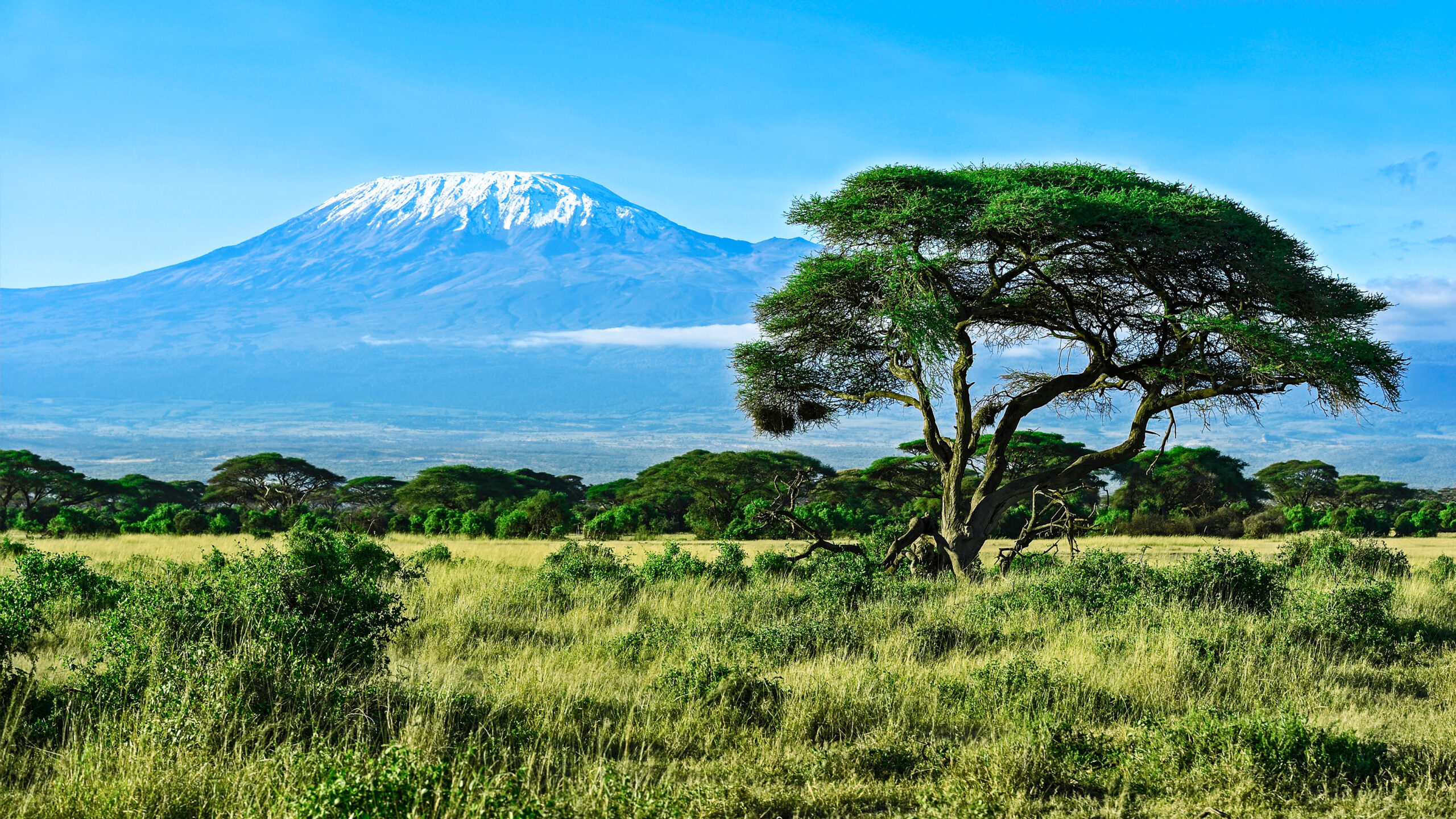
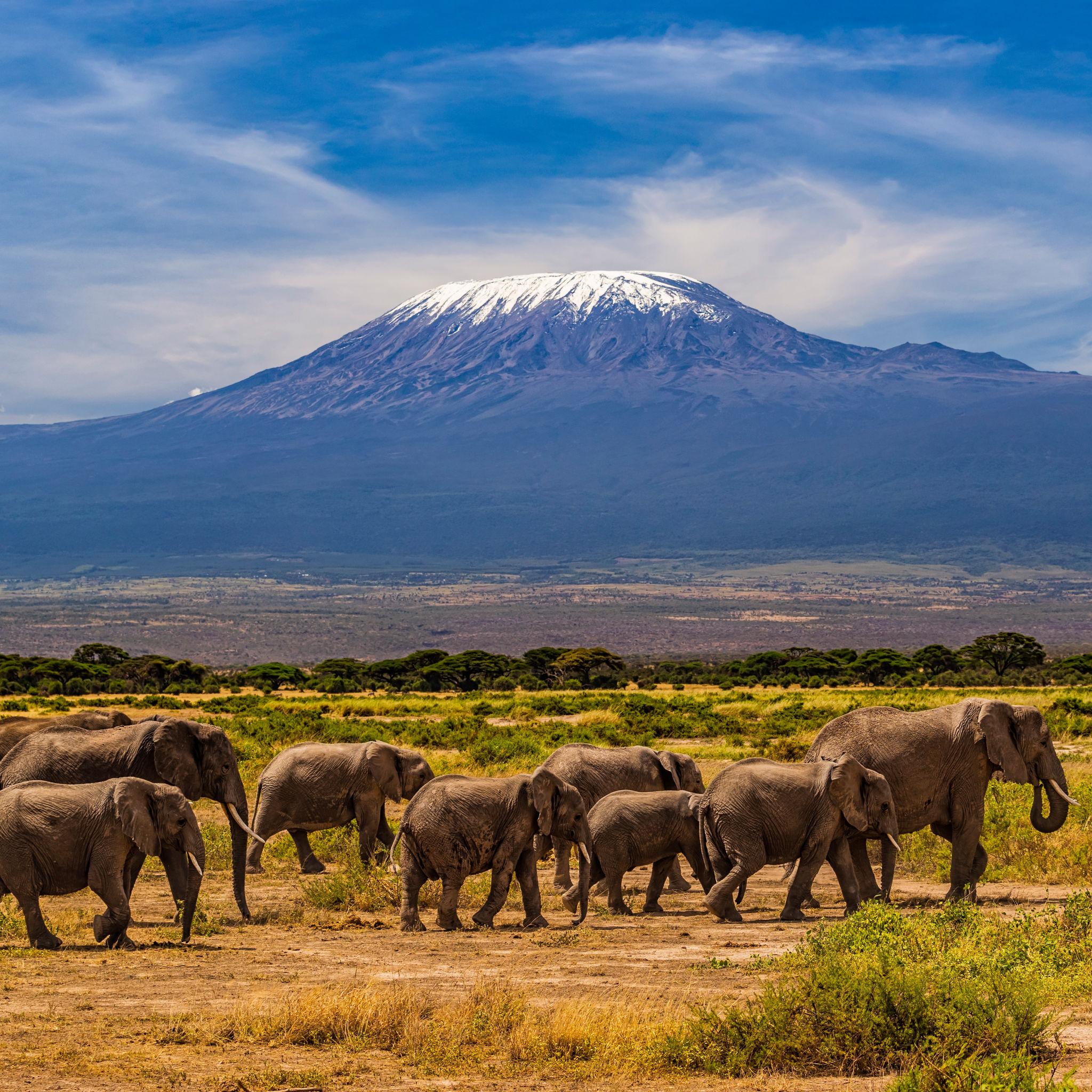
Mount Kilimanjaro in Tanzania at 5,895 meters — the highest mountain in Africa and one of the Seven Summits, climbed by 35,000-50,000 hikers each year via seven established non-technical routes.
Iconic African peaks the recognizable mountains
2
Mount Kenya
Kenya · Extinct stratovolcano · Technical (Batian) + trek (Lenana) · 4-6 days
5,199 m
Mount Kenya is the second-highest mountain in Africa and one of the most underrated mountaineering destinations in the world. Unlike Kilimanjaro which is a non-technical hike, Mount Kenya is genuinely technical — the highest summit, Batian Peak (5,199m), requires rock climbing skills up to 5.7+ on its standard North Face route. The second summit, Nelion (5,188m), is also technical climbing. Most trekkers visit the third summit, Lenana Peak (4,985m), which is a non-technical scramble accessible to fit hikers.
The mountain has three main trekking routes (Sirimon, Naro Moru, Chogoria) plus technical climbing routes on the upper peaks. Mount Kenya is dramatically less crowded than Kilimanjaro – approximately 16,000 climbers per year versus Kilimanjaro’s 35,000-50,000 – and offers a more adventurous African mountaineering experience. The mountain has unique afro-alpine vegetation including giant lobelias and senecio plants that create an otherworldly landscape. The full Mount Kenya framework is in our Mount Kenya routes guide, with weather detail in our Mount Kenya weather guide and difficulty in our Mount Kenya difficulty and safety guide.
3
Mount Stanley (Margherita Peak)
Uganda / DRC border · Ruwenzori range · Technical glacier climbing · 6-8 days
5,109 m
Mount Stanley is the highest peak in the legendary Ruwenzori range, also known as the “Mountains of the Moon.” The highest summit, Margherita Peak, sits exactly on the Uganda-Democratic Republic of the Congo border. The Ruwenzori are arguably the most unique mountain range in Africa — dramatic glaciated peaks rising from equatorial rainforest, with constant cloud cover, perpetual rain on the approach, and otherworldly bog vegetation.
Climbing Mount Stanley requires technical glacier travel (one of only three places in Africa with active glaciers), crampons and ice axe, and willingness to deal with extreme weather. The standard Central Circuit route takes 6-8 days through the dramatic Bujuku Valley. The Ruwenzori receive far fewer climbers than Kilimanjaro or Mount Kenya, partly because of complex logistics from Uganda and partly because the conditions are dramatically more challenging. The full Mount Stanley framework is in our Mount Stanley climbing guide.
Mount Speke is the second-highest peak in the Ruwenzori range and the fourth-highest in Africa. Like all Ruwenzori peaks, it sits in the Uganda-DRC border region and requires technical mountaineering skills. The mountain has multiple summits, with Vittorio Emanuele (4,890m) being the highest. Mount Speke is often climbed as part of an extended Ruwenzori traverse rather than as a standalone objective, with parties combining it with Mount Stanley and Mount Baker for a multi-summit Ruwenzori expedition.
The Ruwenzori glaciers on Mount Speke have retreated dramatically since 1900 — some glaciers have disappeared entirely and others are projected to be gone within 10-20 years. Climbers seeking the historic equatorial glacier experience on African mountains face a closing window.
The Ruwenzori cluster peaks 5-8 in the rankings
Peaks 5 through 8 in the African rankings all sit in the Ruwenzori range on the Uganda-DRC border. These are typically climbed only by climbers attempting the full Ruwenzori traverse rather than as individual objectives:
5
Mount Baker
Uganda · Ruwenzori range · Edward Peak highest at 4,844m
4,844 m
Mount Baker is the third-highest peak in the Ruwenzori range and often included in multi-summit Ruwenzori expeditions. The mountain has several named summits with Edward Peak being the highest. Less visited than Stanley but commonly combined with it on extended expeditions.
Mount Emin is the fourth-highest peak in the Ruwenzori range, named after the 19th-century explorer Emin Pasha. The mountain straddles the Uganda-DRC border and is rarely climbed due to its remote position and limited access from the DRC side. Most climbers see Mount Emin only from adjacent peaks on the Central Circuit traverse.
7
Mount Gessi
Uganda · Ruwenzori range · Less-known Ruwenzori summit
4,715 m
Mount Gessi is the fifth-highest peak in the Ruwenzori and the seventh-highest in Africa. The peak sits in the northern part of the Ruwenzori range and is climbed primarily as part of extended Ruwenzori traverses by climbers seeking less-visited summits.
8
Mount Luigi di Savoia
Uganda · Ruwenzori range · Named for Italian explorer
4,627 m
Mount Luigi di Savoia (named for the Italian Duke of the Abruzzi who led the 1906 Ruwenzori expedition) is the sixth-highest peak in the Ruwenzori and the eighth-highest in Africa. The mountain rounds out the Ruwenzori summits typically included in extended Central Circuit expeditions.
Other East African giants peaks 9-10
9
Mount Meru
Tanzania · Dormant stratovolcano · Kilimanjaro acclimatization · 3-4 days
4,562 m
Mount Meru is the fifth-highest mountain in Africa (depending on how Ruwenzori subsidiary peaks are counted, it ranks 9th-10th overall) and Tanzania’s second-highest peak. Located in Arusha National Park approximately 70 kilometers west of Kilimanjaro, Mount Meru is increasingly climbed as acclimatization preparation for Kilimanjaro. The 3-4 day climb provides altitude exposure to nearly 4,600 meters before climbers attempt the higher Kilimanjaro.
The standard Momela route climbs through wildlife-rich savanna and montane forest. Climbers typically see buffalo, giraffes, and occasionally elephants on the lower approaches. The summit requires a non-technical scramble with some exposed sections on the final ridge. Mount Meru is dramatically less crowded than Kilimanjaro and offers a more wild African mountain experience. The full Mount Meru framework is in our Mount Meru climbing guide.
10
Ras Dashen (Ras Dejen)
Ethiopia · Simien Mountains · Non-technical trek · 3-5 days
4,550 m
Ras Dashen (also spelled Ras Dejen) is the highest peak in Ethiopia and the tenth-highest in Africa. The mountain sits in the Simien Mountains National Park in northern Ethiopia and represents an entirely different African mountain experience — high plateau highlands rather than volcanic peaks or equatorial glaciers. The Simien Mountains feature dramatic escarpments, gelada baboons (endemic to Ethiopia), and the unique walia ibex.
The standard Ras Dashen trek takes 3-5 days from the village of Debark via the Simien Lodge. The climb itself is non-technical hiking, but the Ethiopian context — combining mountaineering with the country’s deep Christian heritage, Lalibela’s rock-hewn churches, and the cultural complexity of the Ethiopian Highlands — makes Ras Dashen a unique African mountain objective. Most climbers combine the trek with broader Ethiopian travel.
All 10 peaks at a glance
Rank
Peak
Country
Elevation
Character
1
Kilimanjaro
Tanzania
5,895 m
Non-technical, Seven Summits, most accessible
2
Mount Kenya (Batian)
Kenya
5,199 m
Technical climbing summit, Lenana trekking peak
3
Mount Stanley (Margherita)
Uganda/DRC
5,109 m
Ruwenzori glacier climb, remote
4
Mount Speke
Uganda
4,890 m
Ruwenzori second-highest
5
Mount Baker
Uganda
4,844 m
Ruwenzori extension
6
Mount Emin
Uganda/DRC
4,798 m
Ruwenzori remote peak
7
Mount Gessi
Uganda
4,715 m
Ruwenzori northern peak
8
Mount Luigi di Savoia
Uganda
4,627 m
Ruwenzori southern peak
9
Mount Meru
Tanzania
4,562 m
Kilimanjaro acclimatization peak
10
Ras Dashen
Ethiopia
4,550 m
Ethiopian Highlands, Simien Mountains
The Ruwenzori dominance
Six of the top ten African peaks are in the Ruwenzori range, but the Ruwenzori receive a tiny fraction of the climbing traffic that Kilimanjaro does. This is a function of access (Uganda is more complex to reach than Tanzania), conditions (perpetual rainforest rain vs Kilimanjaro’s relatively dry savanna approach), and brand recognition (Kilimanjaro is one of the world’s most famous mountains; the Ruwenzori are largely unknown outside serious mountaineering circles).
African mountains by region beyond the top 10
North Africa: Mount Toubkal (Morocco)
Mount Toubkal at 4,167 meters in the Moroccan High Atlas range is the highest peak in North Africa. Toubkal is dramatically easier than the East African giants — a non-technical 2-3 day climb from the village of Imlil south of Marrakech. The mountain provides accessible high-altitude trekking combined with the unique Moroccan cultural context. Toubkal is increasingly popular as a “soft introduction” to African mountaineering for climbers without expedition experience.
West Africa: Mount Cameroon
Mount Cameroon at 4,040 meters is the highest peak in West Africa, located in southwestern Cameroon near the Atlantic coast. The mountain is an active stratovolcano with several recent eruptions including significant events in 1999, 2000, and 2012. The standard Buea route requires 3-4 days and is technically straightforward but physically demanding due to the steep relief from sea level. Mount Cameroon is climbed primarily by locals and African residents rather than international visitors.
Southern Africa: Mafadi and Thabana Ntlenyana
Southern Africa’s highest peaks are in the Drakensberg range straddling South Africa and Lesotho. Thabana Ntlenyana at 3,482 meters in Lesotho is the highest peak in Southern Africa. Mafadi at 3,450 meters is the highest peak entirely within South Africa. Both are non-technical hikes through dramatic Drakensberg escarpment terrain, though winter conditions can add complexity.
The Atlas Mountains beyond Toubkal
The Moroccan High Atlas contains multiple 4,000+ meter peaks including Toubkal (4,167m), Ouanoukrim (4,089m), Akioud (4,071m), and others. Climbers seeking multi-peak Moroccan trips often combine Toubkal with adjacent summits over a week-long traverse.
African mountains compared to other ranges
Range
Highest peak
vs Africa
Himalaya
Everest 8,849 m
3,000m higher, but Kilimanjaro more accessible
Andes
Aconcagua 6,961 m
1,000m higher, similar technical character on standard routes
North America
Denali 6,190 m
Slightly higher, dramatically more technical
Africa
Kilimanjaro 5,895 m
Most accessible 5,000+ peak in the world
Caucasus
Mt Elbrus 5,642 m
Similar elevation, more technical on standard route
European Alps
Mont Blanc 4,810 m
1,000m lower, technical mountaineering required
Sierra Nevada (USA)
Mount Whitney 4,421 m
1,500m lower than Kilimanjaro
Africa’s distinctive characteristic in global mountaineering is the unique accessibility of Kilimanjaro. No other 5,000+ meter peak in the world is as approachable for non-technical climbers. The full Seven Summits framework is in our Seven Summits collection.
A natural African mountains progression how climbers approach the continent
Mount Toubkal (Morocco): 4,167m non-technical introduction. Combine with Marrakech cultural travel. 4-5 day trip.
Mount Meru (Tanzania): 4,562m. Excellent acclimatization for Kilimanjaro. 3-4 days.
Kilimanjaro (Tanzania): 5,895m, the centerpiece. Choose 7-9 day route for highest success rate. The standard “African mountain experience.”
Mount Kenya (Lenana trekking peak): 4,985m non-technical alternative or addition. 4-6 days.
Mount Kenya (Batian technical summit): 5,199m rock climbing. Serious technical objective.
Mount Stanley (Ruwenzori): 5,109m glacier climb. The most adventurous mainstream African mountaineering objective.
Ras Dashen (Ethiopia): 4,550m. Different cultural context from East African volcanoes.
Full Ruwenzori traverse: multiple peaks across 7-10 days. Advanced African mountaineering project.
Most international climbers visiting Africa do Kilimanjaro alone as a one-time experience. Climbers building a serious African mountains portfolio combine 3-5 of the above over multiple trips spanning 5-10 years.
Cost framework for African mountains honest budgeting
Trip type
Typical cost (USD)
Notes
Mount Toubkal (Morocco)
$500-$1,200
3-4 day guided trek
Mount Meru (Tanzania)
$800-$1,500
3-4 days, similar to Kilimanjaro pricing per day
Kilimanjaro standard 6-day route
$1,800-$3,500
Marangu route, budget operators
Kilimanjaro premium 8-day route
$3,500-$6,500
Lemosho or Northern Circuit, quality operators
Mount Kenya (Lenana trek)
$1,500-$2,500
4-6 day trek via Sirimon or Chogoria
Mount Kenya (Batian/Nelion technical)
$3,000-$5,000
Multi-day with technical guide
Mount Stanley / Ruwenzori
$2,500-$4,500
6-8 day Central Circuit
Ras Dashen + Ethiopia tour
$2,000-$5,000
Combined trekking and cultural
International flights to East Africa
$1,500-$3,500
From US/Europe gateway cities
Kilimanjaro represents excellent value among major peaks worldwide — a 5,895-meter summit attempt at $2,000-$6,000 versus the $45,000+ that an Everest expedition costs. The full Kilimanjaro 2026 cost framework is in our Kilimanjaro cost guide. Cost comparisons with other major peaks are in our Aconcagua cost breakdown and Seven Summits cost guide.
When to climb African mountains seasonal patterns
Region
Best season
Avoid
Tanzania (Kilimanjaro, Meru)
Jan-Feb, Jun-Oct
Mar-May (long rains), Nov (short rains)
Kenya (Mount Kenya)
Jan-Feb, Jun-Oct
Mar-May, Nov (rainy seasons)
Uganda/DRC (Ruwenzori)
Dec-Feb, Jun-Aug
Mar-May, Sep-Nov (heavier rain)
Ethiopia (Ras Dashen)
Oct-Mar (dry season)
Jun-Sep (rains)
Morocco (Toubkal)
Apr-May, Sep-Oct
Jun-Aug (very hot)
Cameroon (Mount Cameroon)
Nov-Feb (dry season)
Mar-Oct (rains)
Equatorial African mountains have two rainy seasons (long rains in March-May and short rains in October-November) which both make climbing more difficult. The two dry windows — January-February and June-October — are the standard climbing seasons. The Ruwenzori receive perpetual rainfall regardless of season but are slightly drier in the December-February and June-August windows.
★ Africa Mountains Resources
The complete African peaks framework
Detailed peak profiles, route guides, costs, and the broader African climbing context.
The bottom line on the highest mountains in Africa
Africa contains approximately 15-20 named mountains above 4,000 meters, concentrated heavily in East Africa with the Ruwenzori range alone containing 6 of the top 10 highest peaks. Mount Kilimanjaro in Tanzania at 5,895 meters is the highest mountain in Africa, one of the Seven Summits, and uniquely among major peaks at this altitude, a non-technical trek rather than a true climbing objective. The second-highest is Mount Kenya at 5,199m (technical Batian summit, non-technical Lenana). The third-highest is Mount Stanley at 5,109m in the Ruwenzori range — the most adventurous mainstream African mountaineering objective with technical glacier climbing on the equator. Outside East Africa, Mount Toubkal in Morocco (4,167m) is the highest North African peak and Mount Cameroon (4,040m) is the highest in West Africa. Africa’s distinctive characteristic is the equatorial glacier phenomenon — Mount Kenya, Kilimanjaro, and the Ruwenzori all have or had permanent ice despite sitting within 3 degrees of the equator, though climate change has dramatically reduced these glaciers since the 1990s. For climbers wanting major high-altitude experience without technical climbing, Kilimanjaro is the most accessible 5,000+ meter peak in the world. For more adventurous climbers, the Ruwenzori or Mount Kenya’s technical summits offer dramatically different experiences. The full African peaks framework is in our Africa’s highest peaks master collection, with detailed coverage of Kilimanjaro, Mount Kenya, Mount Stanley, and Mount Meru in our peak-by-peak guides.
Frequently asked questions
What is the highest mountain in Africa?
Mount Kilimanjaro in Tanzania is the highest mountain in Africa at 5,895 meters (19,341 feet). Kilimanjaro is also one of the Seven Summits — the highest peak on each continent. The mountain is a dormant stratovolcano composed of three volcanic cones (Kibo, Mawenzi, and Shira) with the summit, Uhuru Peak, on the Kibo cone. Kilimanjaro is unique among major peaks for being a non-technical hike rather than a climbing objective requiring ropes or specialized equipment, which makes it the most accessible 5,000+ meter mountain in the world for fit hikers.
What are the top 10 highest mountains in Africa?
The 10 highest mountains in Africa are: 1. Mount Kilimanjaro (5,895m, Tanzania), 2. Mount Kenya (5,199m, Kenya), 3. Mount Stanley/Margherita Peak (5,109m, Uganda/DRC border), 4. Mount Speke (4,890m, Uganda), 5. Mount Baker (4,844m, Uganda), 6. Mount Emin (4,798m, Uganda/DRC), 7. Mount Gessi (4,715m, Uganda), 8. Mount Luigi di Savoia (4,627m, Uganda), 9. Ras Dashen (4,550m, Ethiopia), and 10. Mount Meru (4,562m, Tanzania). All ten peaks are in eastern Africa, with the Ruwenzori range alone containing six of the top ten.
What is the 2nd highest peak in Africa?
Mount Kenya at 5,199 meters (17,057 feet) is the second-highest mountain in Africa after Kilimanjaro. Mount Kenya is located in central Kenya near the equator and is more technically demanding than Kilimanjaro – the highest summit (Batian Peak) requires technical rock climbing while the second summit (Nelion) is also technical. The third summit (Lenana Peak at 4,985m) is the standard trekking objective and is accessible to non-technical climbers via the Sirimon, Naro Moru, and Chogoria routes. Mount Kenya is significantly less crowded than Kilimanjaro and offers a more adventurous African mountaineering experience.
Where are the highest peaks in Africa located?
The highest peaks in Africa are concentrated in East Africa, primarily in Tanzania, Kenya, Uganda, and the Democratic Republic of the Congo border region. Mount Kilimanjaro is in Tanzania near the Kenyan border. Mount Kenya is in central Kenya. The Ruwenzori range, containing six of the top ten peaks including Mount Stanley, sits on the Uganda-DRC border. Ras Dashen at 4,550m is in northern Ethiopia. Other notable African peaks include Toubkal in Morocco (4,167m, the highest peak in North Africa) and Mount Cameroon (4,040m, the highest in West Africa).
What is the highest peak in West Africa?
Mount Cameroon at 4,040 meters (13,255 feet) is the highest peak in West Africa, located in southwest Cameroon near the Atlantic coast. The mountain is an active stratovolcano with multiple recorded eruptions including significant events in 1999, 2000, and 2012. Mount Cameroon is climbed primarily during the dry season (November to February) via the Buea route. The mountain is technically less challenging than the East African giants but offers a unique West African mountaineering experience combined with proximity to Atlantic coastal regions.
What is the highest peak in North Africa?
Mount Toubkal at 4,167 meters (13,671 feet) is the highest peak in North Africa, located in the High Atlas range of Morocco approximately 60 kilometers south of Marrakech. Toubkal is a non-technical climb accessible to fit hikers in 2-3 days from the village of Imlil. The mountain is climbed year-round though winter conditions add technical complexity. Toubkal is significantly easier than the East African major peaks and serves as an accessible introduction to high-altitude trekking for climbers without prior expedition experience. The mountain sits in Toubkal National Park, Morocco’s oldest national park.
How many mountains in Africa are over 4000 meters?
Africa has approximately 15 to 20 named mountains above 4,000 meters depending on how subsidiary summits are counted. The concentration is heavily in East Africa with the Ruwenzori range alone containing 6 peaks above 4,500 meters and the Ethiopian Simien Mountains containing several 4,000+ meter summits. The main 4,000-meter peaks span Tanzania, Kenya, Uganda, DRC, Ethiopia, Morocco, and Cameroon. Compared to the Himalaya (with over 100 peaks above 7,000 meters) or the Alps (with 82 peaks above 4,000 meters), Africa has fewer high mountains, but the East African peaks are uniquely positioned in equatorial latitudes where glaciers exist directly on the equator.
★Part of the Master GuideThis mistakes guide is part of our comprehensive mountaineering reference — browse all guides from one hub.Visit the Hub →
Kilimanjaro success rates aren’t a function of luck or fitness alone — they’re driven by a small set of preventable mistakes that climbers make over and over. The honest math: climbers on the 5-day Marangu route summit at 35-50%, while climbers on the 8-day Lemosho route summit at 90%+. The mountain hasn’t changed. The difference is the mistakes the first group made before they even left their home gym. This guide walks through the 12 mistakes that account for the overwhelming majority of failed Kilimanjaro attempts, ranks them by severity, and gives you the specific fix for each. For broader context, see our Kilimanjaro climbing guide and our master mountaineering hub.
The severity scale: how mistakes compound
Not all mistakes are equal. Some single-handedly cost climbers the summit; others are recoverable with the right response on the mountain. The severity scale below classifies each mistake by its real-world impact on summit probability.
High Severity
Single-handedly causes summit failure or serious safety risk. Cannot be recovered from on the mountain.
Mid Severity
Significantly reduces summit odds and physical reserves. Partially recoverable with the right adjustment.
Low Severity
Affects comfort and resilience. Doesn’t prevent the summit but compounds with other mistakes.
The twelve summit-killing mistakes
I
Choosing a route that’s too short
Mistake 01 · The most preventable failure
High severity
The Marangu 5-day and Machame 6-day routes have summit success rates of 35-50% and 60-65% respectively, while the Lemosho 8-day route runs 90%+. The reason isn’t terrain difficulty — it’s acclimatization compression. A 5-day climb gives the body roughly 60 hours above 3,500m before summit night. That’s not enough for most people.
The decision usually comes down to cost (shorter route = lower fee) or work schedule (shorter route = less time off). Both rationales fail the math: the savings of a $400 cheaper route are lost when you don’t summit and have to either return to Tanzania or live with the failure. The 1-2 extra days on a longer route are the highest-ROI dollars in the entire trip budget. We covered route selection and timing decisions in our Kilimanjaro route timing guide.
The Fix
Book the 8-day Lemosho. Or if cost is a hard constraint, the 7-day Lemosho. The Northern Circuit (9 days) is the highest success-rate option and the right answer for climbers with sensitive altitude tolerance. Avoid Marangu and 6-day Machame except in very specific circumstances (athletes with proven 5,000m+ acclimatization data).
II
Walking too fast (ignoring pole pole)
Mistake 02 · The pace problem
High severity
Pole pole means slowly, slowly in Swahili, and you’ll hear it from your guide team a hundred times across the climb. They’re not being conservative — they’re enforcing the single most important variable in summit success. Walking 30-40% slower than your natural pace keeps your heart rate in an aerobic zone, allows your body to adapt to thinning air, and prevents the oxygen debt that triggers AMS.
The trap: climbers feel strong on days 1-2 (still at 2,800-3,800m) and walk faster than their guide. They feel like they’re being held back. By day 4 at 4,600m, the same climbers are wrecked — not from the day-4 climbing, but from the cumulative oxygen debt they built across days 1-3.
The Fix
Walk slower than feels right, every single day, regardless of how strong you feel. The rule of thumb: if you can talk in full sentences without breath strain, you’re at the right pace. If you have to pause mid-sentence, slow down. Stay behind your guide on day 1 to set the tempo correctly.
III
Showing up undertrained
Mistake 03 · The fitness gap
High severity
Kilimanjaro doesn’t require elite fitness, but it does require sustained cardiovascular base. The standard test: can you hike 12 miles with 3,000 feet of elevation gain carrying a 20 lb pack without crushing fatigue? If you can, you’re fit enough. If you can’t, you need 12-16 more weeks of training before booking flights.
Undertrained climbers fail not on summit night but on the cumulative load of 7 consecutive days of hiking. The body breaks down — joints ache, sleep deteriorates, appetite collapses, and altitude symptoms hit harder because there’s no physical reserve to fight them. The summit becomes physically impossible by day 5, regardless of what altitude does.
The Fix
Run a 12-16 week training program before the climb. Three cardio sessions per week, 2 strength sessions per week, weekend back-to-back hikes with elevation gain. Specific programs for Kilimanjaro are detailed in our Kilimanjaro training plan and our broader high-altitude training program.
IV
Underhydrating
Mistake 04 · The silent killer
High severity
Climbers commonly need 4-5 liters of water per day on Kilimanjaro — roughly double their normal daily intake. Cold, dry, fast breathing pulls water out faster. Acclimatization triggers diuresis, which pulls more water out. Mild dehydration amplifies AMS symptoms — headache, nausea, fatigue — and is mistaken for altitude sickness when it’s actually a fluid problem.
The mistake is using thirst as the indicator. At altitude, thirst response lags 1-2 liters behind actual dehydration. By the time you feel thirsty, you’re already significantly behind. Many climbers who turn around at high camp would have summited if they’d been drinking 1-2 extra liters per day across the climb.
The Fix
Drink on a schedule, not in response to thirst. Target 4-5 liters per day. Use a hydration bladder for sipping consistency, plus electrolyte mixes (Liquid IV, Nuun) once per day. Urine should be pale yellow throughout the climb — dark yellow is a flag.
V
Bringing inadequate summit-night gear
Mistake 05 · The cold-weather failure
High severity
Summit night runs from -10°C to -20°C with wind chill. Climbers who arrive without proper insulation — adequate down jacket, mittens (not just gloves), warm base layers, balaclava or buff — physically cannot stay warm enough to keep moving for the 6-8 hour climb to Uhuru. The body shifts blood from extremities to core, hands and feet go numb, and the climber turns around or worse.
This isn’t about expensive premium gear. It’s about meeting the cold-weather requirement. A $200 down jacket and $40 mittens layered correctly will work; a $30 fleece and bare hands will not. Detailed in our layering systems guide.
The Fix
Test your full summit-night kit at home in cold weather before the trip. Wear all the layers you plan to summit in, stand outside for 60 minutes in cold conditions, and verify you can stay warm. If hands or feet go cold, fix the gap before flying. Detailed gear breakdown in our complete gear list.
VI
Wearing un-broken-in boots
Mistake 06 · The blister cascade
Mid severity
New boots cause blisters. Blisters across day 1-2 turn into raw wounds across day 3-4. Raw wounds across day 5-6 force a turn-around. The cascade is brutal and entirely preventable. Climbers who bought their boots within 4 weeks of the trip and haven’t put serious miles on them are creating an injury timeline.
The standard prep: 50+ miles of hiking in the boots before the climb, ideally with the same socks and the same pack weight you’ll use on Kilimanjaro. The full boot selection framework is in our mountaineering boots guide.
The Fix
Buy boots at least 8-12 weeks before departure and put 50+ miles on them in your sock system. Address any hot spots early with moleskin and lace adjustments. Bring blister tape, Compeed pads, and at least 4 pairs of merino wool socks for the climb itself.
VII
Not taking Diamox when recommended
Mistake 07 · Acclimatization assist
Mid severity
Diamox (acetazolamide) is a proven prophylactic for AMS and is widely prescribed for Kilimanjaro climbers. The 125mg twice-daily protocol, started 1-2 days before reaching 3,000m, measurably improves acclimatization and reduces AMS rates. It’s not a replacement for slow ascent or proper route selection, but it’s a meaningful additional layer of protection.
Climbers who skip Diamox out of a vague preference for “natural acclimatization” are leaving meaningful summit probability on the table. Side effects (tingling fingers, increased urination, altered carbonated drink taste) are mild and resolve when you stop taking it. The full altitude medicine framework is in our acclimatization guide.
The Fix
Discuss Diamox with your travel doctor and start it 1-2 days before reaching 3,000m. Standard dose: 125mg twice daily through the climb, taper after summit. Always inform your guide team that you’re taking it.
VIII
Ignoring early AMS symptoms
Mistake 08 · The stoic trap
Mid severity
Mild AMS symptoms — headache, mild nausea, slight loss of appetite, fatigue beyond what the day’s effort explains — are warning signs the body is struggling to acclimatize. Climbers who ignore these symptoms and push hard the next day frequently develop severe AMS, which forces evacuation. Climbers who slow down, hydrate aggressively, take ibuprofen, and tell their guide almost always recover and continue.
The deeper problem: many climbers think reporting symptoms makes them look weak. The opposite is true. Experienced guides have seen the failure pattern and want early information. The full symptom-progression framework is in our altitude sickness guide.
The Fix
Tell your guide about every symptom, even mild ones, immediately. Drink an extra liter of water, take 400mg ibuprofen for headache, and slow your pace for the next 1-2 hours. Almost all early AMS responds to this protocol within hours.
IX
Sleeping poorly because of bag and pad failures
Mistake 09 · The recovery gap
Mid severity
Sleep is when the body acclimatizes. Climbers who shiver through nights in inadequate sleeping bags or on thin pads don’t recover, and the cumulative deficit compounds altitude fatigue. By day 5, sleep-deprived climbers are operating with zero physical reserve.
The standard requirement: a sleeping bag rated to 0°F (-18°C) or colder, plus an insulated sleeping pad with R-value 4 or higher. Climbers who borrow a friend’s 30°F bag are setting themselves up for a brutal week. Detailed in our sleeping bags for altitude guide.
The Fix
Use a 0°F or colder bag and an R4+ pad. Rent in Moshi if buying isn’t an option ($5-10/day). Wear dry base layers to bed, bring a beanie for sleep, and put a hot water bottle (Nalgene wrapped in a sock) at your feet on cold nights.
X
Not eating enough on the mountain
Mistake 10 · The appetite crash
Mid severity
Appetite crashes at altitude. Climbers who don’t actively force food consumption end up calorie-deficient by day 4-5, and the body breaks down. The brain stops working as well, decision-making degrades, physical reserves vanish.
Real Kilimanjaro caloric demand: 4,000-5,500 calories per day on hiking days, more on summit night. Operators provide adequate food at meals, but climbers need to force themselves to eat even when they don’t feel hungry. Snacks between meals are essential — protein bars, nuts, dried fruit, candy. Anything that delivers calories in a small package.
The Fix
Eat on a schedule, not on appetite. Bring 8-10 days of high-calorie snacks (Snickers, peanut M&Ms, salted nuts, jerky, dried mango). Force a snack every 90 minutes during hiking days. Eat full portions at every meal even when food doesn’t sound appealing.
XI
Picking the wrong season
Mistake 11 · Weather window risk
Low severity
Kilimanjaro has two dry seasons (January-February and July-October) and two wet seasons (March-May long rains, November short rains). Climbing in the wet seasons is possible but dramatically harder — wet trails, wet gear, lower visibility, and uncomfortable camping conditions that affect sleep quality.
Climbers who book during the wet seasons usually do it for cost (cheaper operator fees, cheaper flights) or schedule flexibility. The cost savings are real but come with success-rate degradation. Detailed in our month-by-month Kilimanjaro timing guide.
The Fix
Book July-October or January-February if possible. Best summit conditions. If you must climb in shoulder seasons, prepare for rain and be flexible on summit-night dates.
XII
Choosing the cheapest operator regardless of KPAP status
Mistake 12 · Ethics and safety
Low severity
Non-KPAP-certified operators undercut market prices by paying porters poorly, providing inadequate group gear, and skimping on guide-to-climber ratios. The savings to the climber are real ($300-600 vs KPAP-certified peers), but the climber bears safety risk and the porters bear the wage cut.
This is a low-severity summit-success mistake (you can summit with a budget operator) but a high-severity ethics mistake. Quality operators improve summit success rates by 5-15% and dramatically improve the climbing experience.
The Fix
Book only KPAP-certified operators. Verify KPAP membership directly on the KPAP Partners list. Budget KPAP-certified operators exist in the $1,800-2,200 range — pick one of those rather than a non-KPAP operator at the same price. Hidden costs context lives in our Kilimanjaro hidden costs guide.
How these mistakes compound on summit night
Most mistakes don’t cause failure individually. They compound. The specific failure pattern that ends most Kilimanjaro climbs looks like this:
The cascade dynamic is why Kilimanjaro’s failure rate isn’t about fitness alone — it’s about decision-stacking. The full mountaineering decision framework is laid out in our master mountaineering hub, with peak-specific decision trees in our Seven Summits guide.
Anatomy of a Failed Summit Attempt
The cascade pattern
Day 1-2. Climber is on a 6-day Machame route (Mistake 01: too short). Feels great, walks fast (Mistake 02: pace). Drinks water but not aggressively (Mistake 04: hydration).
Day 3. First mild headache appears at Shira Camp. Climber attributes it to dehydration but doesn’t tell the guide (Mistake 08: ignoring symptoms). Sleeps poorly because their bag is rated 30°F and Shira camp is 25°F (Mistake 09: bag).
Day 4. Loses appetite, eats half a normal portion (Mistake 10: food). Headache persists. Walks at the same pace as before because guide hasn’t been told.
Day 5. Arrives at Barafu (4,673m) exhausted, dehydrated, calorie-deficient. Tries to sleep before midnight summit push — can’t. Stomach unsettled.
Summit night. Two hours in, hands and feet are cold (Mistake 05: gear gap). Three hours in, severe headache and nausea hit. Climber turns around at 5,400m — 500m short of Uhuru.
None of the individual mistakes was fatal. The combination was.
The summit-success protocol: do these things and odds jump to 90%+
Reverse-engineering the mistakes above gives you the protocol that actually moves the needle. None of this is exotic — it’s just disciplined execution of basics most climbers skip. The full peak-specific protocol framework lives in the master mountaineering hub, and the breathing technique drills that support pole pole pacing are in our breathing techniques guide.
★ The 90%+ Summit Protocol
What climbers who summit consistently do differently
Book the 8-day Lemosho or Northern Circuit. Acclimatization length is the highest-impact decision in the entire trip.
Train 12-16 weeks minimum. Cardio base + back-to-back hikes + strength training. Show up able to hike 12 miles with 3,000 ft of gain carrying 20 lb without crushing.
Walk pole pole every day, day 1 included. 30-40% slower than your natural pace. Talk-test for tempo.
Drink 4-5 liters per day on a schedule. Hydration bladder for consistency, electrolyte mix once per day.
Take Diamox 125mg twice daily, starting 2 days before reaching 3,000m. Discussed with your travel doctor in advance.
Test your full summit-night gear in cold weather before the trip. 60 minutes outside in 0°F, all layers on, verify warmth.
Tell your guide about every symptom, even mild ones, immediately. Don’t be stoic. Information is the guide’s job.
Use a 0°F sleeping bag and R4+ pad. Rent in Moshi if you don’t own one.
Eat on a schedule, not on appetite. 4,000-5,500 cal/day. Snack every 90 minutes on hiking days.
Climb in the dry season (Jul-Oct or Jan-Feb). Better summit windows, drier camps, better sleep.
This mistakes guide is part of a comprehensive mountaineering reference covering gear, training, altitude, routes, peak-specific planning, and decision frameworks. Our master hub indexes every guide in one place.
Frequently asked questions about Kilimanjaro mistakes
What’s the most common reason climbers fail Kilimanjaro?
The single most common cause of summit failure is altitude sickness, which is itself almost always the result of three deeper mistakes: choosing too short a route, walking too fast in lower-altitude days, or arriving in poor cardiovascular condition. AMS turns into HACE when these factors compound. The fix is structural — choosing 8-day Lemosho, walking pole pole consistently, and arriving with 12+ weeks of cardio training already done.
Why do so many people fail on the Marangu route?
The Marangu 5-day route has summit success rates of 35-50%, dramatically lower than longer routes. The cause is acclimatization compression: 5 days isn’t enough for most climbers’ bodies to adapt to 5,895m. Climbers who choose Marangu trade 2-3 days of trip length for a 40-50% reduction in summit probability. The 7-day or 8-day Lemosho is the right answer for nearly every climber.
How important is pace on Kilimanjaro?
Pace is one of the top three factors in Kilimanjaro summit success. Pole pole (slowly, slowly) is repeated by guides constantly because it’s the single most actionable thing climbers can do. Walking 30-40% slower than your natural pace allows the body to adapt, keeps heart rate aerobic, and prevents the oxygen debt that triggers AMS. Climbers who feel strong on day 1 and walk fast almost always pay for it on day 4 or 5.
What’s a realistic Kilimanjaro training plan?
A realistic Kilimanjaro training plan runs 12-16 weeks and combines cardiovascular base (3-4 sessions per week of 45-60 minute zone-2 work), back-to-back hiking with weighted pack, strength training (lower body and core, 2 sessions per week), and altitude exposure when possible. Climbers who can hike 12 miles with 3,000 feet of gain carrying a 20 lb pack without crushing fatigue have done enough physical preparation.
Why does hydration matter so much at altitude?
Dehydration triggers and amplifies AMS symptoms because the body loses water faster at altitude through respiration and through urination. Climbers commonly need 4-5 liters per day on Kilimanjaro, double their typical intake. Mild AMS often improves dramatically with simple rehydration. The mistake is treating thirst as an indicator — at altitude, thirst lags far behind actual dehydration, so climbers must drink on a schedule.
What gear mistakes most often cause Kilimanjaro failure?
Three gear mistakes dominate: inadequate insulation for summit night (no proper down jacket, mittens, base layers), poorly broken-in boots (blisters worsening across 7 days), and inappropriate sleeping bags (using 30°F bags causes shivering through nights and never recovering). The summit-night system needs to handle -10°C with wind, and the sleeping bag needs to be rated 0°F or colder.
Should I take Diamox on Kilimanjaro?
Diamox (acetazolamide) is widely recommended by altitude medicine specialists, particularly on faster routes like Machame 6-day or Marangu 5-day. The standard dose is 125mg twice daily, started 1-2 days before reaching 3,000m. Side effects are mild and reversible. Diamox is not a replacement for acclimatization, but it’s a meaningful additional layer of protection. Discuss with your travel doctor.
What should I do if I start feeling AMS symptoms?
Mild AMS typically responds to rest, hydration (drink an extra liter), and ibuprofen for headache. Tell your guide. If symptoms persist or worsen overnight, do not ascend further — descent is the only definitive treatment for serious altitude sickness. Severe AMS (severe headache unresponsive to medication, vomiting, ataxia, confusion, shortness of breath at rest) requires immediate descent regardless of how close to the summit.
Hidden costs of climbing Kilimanjaro most articles ignore
Written byGlobal Summit Guide Editorial Team
PublishedApril 25, 2026
Reading time17 minutes
10
Hidden Cost Categories
$4.5K–6.5K
Real Total Range
$300–500
Tipping Reality
2×
Real vs Headline Price
★Part of the Master GuideThis cost guide is part of our comprehensive mountaineering reference — browse all guides from one hub.Visit the Hub →
When climbers Google “how much does it cost to climb Kilimanjaro,” the first results all quote a single number — usually the operator’s headline price of $2,500-4,500. That number is roughly half the real cost. The hidden costs aren’t hidden because operators are dishonest; they’re hidden because operators legitimately can’t include them. Tipping is paid in cash to the porter team. Visas, flights, insurance, gear, and hotels are the climber’s responsibility. Add them up and the real budget for a North American climber lands at $4,500-6,500. This guide walks through every hidden cost category, explains what it actually pays for, and gives you the budgeting framework to plan accurately. For the operator-fee context, see our complete Kilimanjaro cost guide and the master mountaineering hub.
The ten hidden cost categories
These are the budget items not included in your operator’s quote. We’ll go through each in detail, but here’s the headline — the categories that turn a $3,500 climb into a $5,500 trip.
I
Tipping the porter and guide team
Cost category 01 · Mandatory
Per climber$300–500
Tipping is the single largest hidden cost on Kilimanjaro and the one most likely to catch first-time climbers off guard. It’s not optional. The porter team’s wages from the operator are legally compliant under Tanzanian law but functionally inadequate — tips make up the meaningful portion of porter income, and the standard operator briefing on day zero will outline expected tipping ranges.
For a 7-day climb with a typical 4-person team supporting 1-2 climbers, expect to tip:
Lead guide: $20-25 per day = $140-175 total
Assistant guide: $15-20 per day = $105-140 total
Cook: $12-15 per day = $84-105 total
Each porter: $10-12 per day = $70-84 per porter
Bring the tip money in USD small bills ($1, $5, $10, $20). Tanzanian shillings are not preferred for tipping, and obtaining smaller USD denominations is difficult once in country. Plan to give the tips on the final morning of the climb in a transparent envelope ceremony — operators typically structure this so you can hand each team member their amount directly.
II
International flights to Tanzania
Cost category 02 · Variable
Round-trip$1,000–1,800
The closest international airport is Kilimanjaro International (JRO), about 45 minutes from Moshi. Some climbers route through Nairobi (NBO) and connect via short hop or shuttle. Most North American climbers fly via European hubs (Amsterdam, Paris, Doha) or Middle East hubs (Doha, Dubai, Addis Ababa).
Round-trip economy from major US cities runs $1,000-1,400 booked 6+ months out, $1,400-1,800 within 3 months. The cheapest dates are typically off-season (April-May rainy season, November short rains) which most climbers avoid. Peak Kilimanjaro climbing months (July-September, January-February) command the highest fares.
Layover strategy matters: 24+ hour layovers in Doha or Amsterdam cost the same as direct connections and let you arrive in Tanzania less jet-lagged. Many climbers add a Serengeti or Zanzibar extension that uses internal Tanzania flights, adding $300-600 to the total.
III
Tanzania visa and entry fees
Cost category 03 · Mandatory
Per traveler$100
US passport holders pay $100 for the Tanzania tourist visa. Visas are available on arrival at Kilimanjaro International Airport, but the e-visa pre-application is faster and reduces the queue at JRO immigration after a long flight. Apply 3-4 weeks before departure at the official Tanzania Immigration Services portal.
Other passport holders should check current fees — UK passports run $50, Canadian $50-100, Australian $50, EU $50-80. Carry one printed copy of the e-visa receipt plus the digital version. Tanzania immigration occasionally requires the printed copy.
IV
Travel and altitude evacuation insurance
Cost category 04 · Strongly recommended
Per traveler$150–300
Standard travel insurance from a typical credit card or off-the-shelf policy excludes activities above 4,500m, which means it does not cover Kilimanjaro summit day. Climbers need a policy with explicit high-altitude trekking coverage to 6,000m and emergency helicopter evacuation included.
Recommended providers and approximate 2-week-trip costs:
World Nomads Explorer Plan: $150-200, includes trekking to 6,000m
Global Rescue: $250-350, premium evacuation focus
IMG Patriot Adventure: $180-260, broader medical coverage
Ripcord Rescue Travel Insurance: $350-450, includes field rescue
Helicopter evacuation from Kilimanjaro without insurance can run $5,000-30,000+ depending on altitude and complexity. The insurance cost is roughly 1-2% of total trip cost for coverage that genuinely matters. Don’t skip this. Our mountain climbing insurance guide covers what to look for in policy fine print.
V
Pre and post-climb hotels in Moshi
Cost category 05 · Variable
2–4 nights$150–400
Most operators include the night before the climb in their package. They generally do not include the night after, which most climbers want — a hot shower, real bed, and decent meal after 7 days on the mountain are non-negotiable. Plan for at least 1-2 nights in Moshi or Arusha that you pay for directly.
For climbers connecting to safari extensions, Arusha is the better base. For climbers who want a quick post-climb recovery and direct Kilimanjaro views, Moshi works fine. Either way, budget for 1-2 nights of independent hotel cost beyond the operator package.
VI
Gear purchases or rentals
Cost category 06 · Major variable
From scratch$1,500–3,000
If you already own quality outdoor gear, your Kilimanjaro gear cost is essentially zero. If you’re starting from scratch, expect $1,500-3,000 for the full kit. The big-ticket items:
Renting in Moshi is a viable strategy for the most expensive items. Typical Moshi rental rates: down jacket $5-10/day, sleeping bag $5-10/day, gaiters $2-3/day, trekking poles $3-5/day. A full rental kit for the climb runs $60-150 — a fraction of buying outright. Don’t rent boots or gloves — they need to be broken in and personally fit.
VII
Vaccinations and travel health
Cost category 07 · Often forgotten
First-time travelers$200–500
Tanzania requires yellow fever vaccination if arriving from a yellow fever-endemic country, which most climbers traveling through Kenya, Ethiopia, or other African hubs are. The yellow fever shot itself runs $150-200 at a travel clinic and is good for life. Other commonly recommended vaccinations: typhoid, hepatitis A, tetanus booster, and seasonal flu.
Malaria prophylaxis is recommended for the lower-altitude portions of the trip (Moshi, Arusha, safari extensions) but not required on Kilimanjaro itself, where altitude eliminates mosquitoes above ~2,500m. Doxycycline runs $20-40 for a 14-day course; Malarone runs $80-150 for the same. Discuss with your travel doctor based on extension plans.
Total first-time travel-health cost runs $200-500 for vaccinations and prescriptions, with most of the cost amortizing across future African travel since yellow fever is good for life.
VIII
Cash for incidentals and bar bills
Cost category 08 · Underestimated
Per climber$200–400
The “incidentals” budget is consistently underestimated. Real costs that accumulate during a Kilimanjaro trip:
Meals at hotels and Moshi restaurants ($15-40 per meal × 4-6 meals = $80-200)
Drinks (beer, soda, bottled water in town and at hotel): $50-100
SIM card, internet, or international phone roaming: $20-40
Laundry service after the climb: $15-30
Plan for $200-400 in incidental cash beyond your operator and tipping budget. If you extend with a safari, this number grows substantially.
IX
Pre-climb training and conditioning costs
Cost category 09 · Often overlooked
3–6 months prep$200–800
Most climbers need to build cardiovascular and altitude tolerance in the months leading up to Kilimanjaro. The financial side of training varies enormously based on what you already do and have:
Gym membership for stair-climber and cardio work: $30-100/month × 3-6 months
Conditioning hikes (gas, gear wear, occasional permits): $100-300 across training period
Optional altitude tent rental: $300-500 for 4-8 weeks of pre-acclimatization (debated value)
Weighted vest or training pack: $50-150 if not owned
Personal trainer or coaching: $300-1,500 if pursued
Climbers serious about the trip typically spend $200-400 on training inputs across the prep period — modest but real. Detailed in our 12-week Kilimanjaro training plan.
X
Post-climb recovery extras
Cost category 10 · The surprise category
Variable$100–500
The category nobody thinks about until they’re home. Real costs reported by climbers in the weeks after Kilimanjaro:
Massage or recovery service in Moshi or Arusha: $30-80
Replacement gear for items destroyed on the climb (gloves, base layers): $50-200
Chiropractor or physical therapist appointments: $80-200 per session
Custom orthotics for hiking boots if foot problems emerged: $300-700
Knee brace, back brace, or other recovery equipment: $40-150
Not every climber faces these. Younger climbers in good condition often have zero post-climb recovery expense. Climbers over 45, climbers with existing knee or back issues, or climbers who pushed through pain on the descent often spend $100-500 in the first 30 days back.
The full tipping breakdown
Tipping is the most-asked-about cost item on Kilimanjaro because it’s both substantial and unfamiliar. Here’s the standard 2026 tipping framework for a typical 7-day climb with a 4-person support team supporting 2 climbers (per-climber numbers).
Standard tipping per climber · 7-day climb
Lead guide$20-25 per day × 7 days
$140-175
Assistant guide$15-20 per day × 7 days
$105-140
Cook$12-15 per day × 7 days
$84-105
Porter (×3 typical)$10-12 per day × 7 days × 3 porters
$210-252
Total per climber (typical small group)
$300-500
KPAP-certified operators
If your operator is KPAP-certified (Kilimanjaro Porters Assistance Project), you’ll receive a tipping recommendation aligned with KPAP guidelines on day zero. KPAP certification verifies that operators pay porters fair base wages and don’t undercut the tipping floor. It’s the single most important ethical credential to look for when choosing an operator. Most quality operators are KPAP-certified — we cover the certification details and operator selection criteria in our complete Kilimanjaro climbing guide and the broader operator framework lives in our master mountaineering hub. We covered our own KPAP-certified operator (Peak Planet) in detail in our Lemosho trip report.
Mid-tier operator, standard economy flights, mix of owned and rented gear, mid-range Moshi hotel, recommended tipping.
Premium
$6,500–10,000+
Premium operator, business class flights, fully-owned premium gear kit, premium hotels, generous tipping, safari extension.
Side-by-side: where every dollar goes
Cost category
Budget
Standard
Premium
Operator climb fee
$1,800-2,400
$2,500-3,800
$3,800-6,000
Tipping
$300
$400
$500-700
International flights
$900-1,200
$1,200-1,500
$3,500-6,000 business
Tanzania visa
$100
$100
$100
Travel insurance
$150
$200
$300-450
Hotels (pre/post)
$60-120
$200-300
$400-600
Gear (rent vs buy)
$60-150 rental
$300-700 mixed
$2,000-3,000 owned
Vaccinations & health
$200
$300
$400-500
Incidentals & meals
$150-200
$250-350
$400-600
Realistic Total
$3,500-4,500
$4,500-6,500
$8,500-15,000
How to cut costs without cutting ethics
Some cost-cutting tactics make sense; others compromise your safety or someone else’s livelihood. Here’s the honest breakdown.
Smart ways to cut costs
Book 6-9 months out for cheaper flights. Tanzania fares drop $200-400 with adequate lead time.
Rent the expensive gear in Moshi. Down jacket, sleeping bag, gaiters can all be rented for $5-10/day total. Don’t rent boots or gloves. The full gear breakdown is in our complete mountain climbing gear list.
Stay in budget guesthouses, not premium hotels. A $40 guesthouse delivers a hot shower and a clean bed — exactly what you need before and after the climb.
Choose the 7-day Lemosho over the 8-day for slight cost savings. Success rate is still high, and operator fees drop by $200-400. The route timing tradeoffs are detailed in our route timing guide.
Skip the safari extension. Tempting but expensive. A separate safari trip in the future runs the same total cost and lets you focus on each experience.
Train hard so you only climb once. The biggest cost saver is summiting on the first attempt — failed summits mean a second $5,000 trip. Our 12-week Kilimanjaro training plan is built around minimizing summit-night failure risk.
Cost-cutting moves to avoid
Don’t book non-KPAP operators for sub-$1,800 prices. The savings come directly out of porter wages. There are KPAP-certified budget operators in the $1,800-2,200 range — pick one of those instead.
Don’t skimp on tipping. The $200 you save by tipping the lower bound is meaningful operator revenue lost — and it disrespects the team that carried you to 5,895m.
Don’t skip travel insurance. A single helicopter evacuation costs more than 20 climbs. The insurance math is overwhelming.
Don’t buy ultra-cheap critical gear. $40 gloves, $30 sleeping pads, and $80 sleeping bags are not adequate for Kilimanjaro summit night.
Continue your cost research
This hidden costs guide pairs with our broader cost and operator content. Recommended next reads for budget-aware climbers:
This hidden-costs breakdown is part of a comprehensive mountaineering reference covering gear, training, altitude, routes, peak-specific planning, and budget frameworks. Our master hub indexes every guide in one place.
Frequently asked questions about Kilimanjaro hidden costs
How much should I tip on Kilimanjaro?
Standard Kilimanjaro tipping in 2026 totals $300-500 USD per climber for a 7-day climb. Recommended distribution: lead guide $20-25/day, assistant guides $15-20/day, cook $12-15/day, and porters $10-12/day each. Bring USD in small bills ($1, $5, $10, $20) — change is hard to obtain on the mountain and Tanzanian shillings are not preferred.
What’s the real total cost of climbing Kilimanjaro?
The realistic total cost from a North American departure in 2026 is $4,500-6,500 per climber. This includes the operator climb fee ($2,500-4,500), tipping ($300-500), international flights ($1,000-1,800), Tanzania visa ($100), travel insurance ($150-300), pre/post-climb hotels ($150-300), gear costs ($300-1,500), and incidentals ($100-200). Most articles quote only the operator price, which is roughly half the actual trip cost.
Do I need travel insurance for Kilimanjaro?
Yes — Kilimanjaro requires travel insurance with high-altitude trekking coverage and emergency evacuation. Standard travel insurance excludes activities above 4,500m. Look for policies that explicitly cover trekking to 6,000m and include helicopter evacuation. Recommended providers include World Nomads, Global Rescue, IMG Patriot Adventure, and Ripcord Rescue. Expect to pay $150-300 for adequate coverage.
How much does Kilimanjaro gear cost?
From scratch, full Kilimanjaro gear runs $1,500-3,000. Big-ticket items: hiking boots ($150-350), down jacket ($200-500), sleeping bag rated 0°F ($250-500), three-season layering ($400-700), gloves ($80-200), trekking poles ($80-180), and a 50-65L pack ($150-300). Climbers can rent specific items in Moshi for $5-15 per day per item. Boots and gloves should be owned and broken in.
What hidden costs catch climbers off guard?
The most commonly overlooked Kilimanjaro costs are: pre-climb hotels in Moshi ($150-300), tipping ($300-500), travel insurance with altitude coverage ($150-300), visa fees ($100), gear rental fees ($60-150), and Tanzanian VAT and tourism levies that apply to some operator services. Together these add roughly $1,500-2,000 to what most climbers initially budget.
Should I bring cash or use credit cards in Tanzania?
Cash dominates in Tanzania. Bring $400-600 USD in small bills specifically for tipping and another $200-300 for incidentals. Major hotels and operator offices accept credit cards. ATMs in Moshi dispense Tanzanian shillings but international withdrawal fees are significant. Bills should be 2013 series or newer — older USD is sometimes refused.
Are there any post-climb costs I should plan for?
Yes — post-climb costs that surprise climbers include: extended hotel night for hot shower and meal ($75-150), laundry service ($15-30), tips for hotel staff ($10-20), souvenir shopping ($50-200), additional safari days if extending ($300-800/day), and possible chiropractor or physical therapist appointments within a week of returning home.
What’s the cheapest way to climb Kilimanjaro?
The cheapest legitimate way to climb Kilimanjaro in 2026 runs about $3,500-4,500 total. Strategy: book a budget but KPAP-certified operator ($1,800-2,200), fly economy with one stop ($900-1,200), rent expensive gear in Moshi ($60-120), stay in budget guesthouses ($25-40/night), tip on the lower end ($300), and skip the safari add-on. Going below this often means non-KPAP operators that pay porters poorly.
Kilimanjaro vs Aconcagua: which 7-summit should you climb first?
Written byGlobal Summit Guide Editorial Team
PublishedApril 25, 2026
Reading time19 minutes
5,895m
Kilimanjaro
6,961m
Aconcagua
7
Decision Criteria
2.5×
Difficulty Gap
★Part of the Master GuideThis decision guide is part of our comprehensive mountaineering reference — browse all guides across 12 clusters from one hub.Visit the Hub →
Kilimanjaro and Aconcagua sit next to each other on every 7-Summits aspirant’s planning list, and the decision between them is the most consequential one a first-time high-altitude climber makes. Get it right and you build experience that carries you through the rest of the 7-Summits. Get it wrong and you either walk away from a $10,000 expedition with nothing, or worse, get evacuated. This guide compares the two peaks across the seven criteria that actually drive the decision — difficulty, altitude, success rate, cost, time commitment, technical demand, and what you learn from each — and tells you which mountain fits your current experience level. It’s part of our comprehensive mountaineering reference, alongside our full Seven Summits guide.
The peaks at a glance: side-by-side
Peak 01
Kilimanjaro
Tanzania · Africa · Free-standing volcano
Summit altitude
5,895m
Trip length
7-9 days
Success rate
85-95%
Cost guided
$2,500-4,500
Technical grade
Trek
Best season
Jun-Oct
The introduction to high-altitude climbing. A trek with porter support, hot meals at every camp, and a deliberately-paced acclimatization profile.
VS
Peak 02
Aconcagua
Argentina · Andes · Highest peak in Americas
Summit altitude
6,961m
Trip length
16-21 days
Success rate
30-40%
Cost guided
$5,500-9,500
Technical grade
Expedition
Best season
Dec-Feb
The test that decides whether you belong on bigger mountains. Self-supported above base camp, real cold-weather expedition skills required.
Seven criteria that decide the call
The difference between these two peaks isn’t summarized by a single number. It’s a constellation of practical factors that compound. Below, we work through the seven criteria that matter most, with a winner called for each. For climbers planning their full 7-Summits sequence, our master mountaineering hub covers every peak in the progression.
I
Difficulty & technical demand
Kilimanjaro · Easier
Kilimanjaro
Pure walking from trailhead to summit on every standard route. No rope work, no glacier travel, no crampons or ice axe required. The hardest physical movement on the entire mountain is the Barranco Wall scramble — a 90-minute hands-on section with no exposure consequences. Difficulty comes from altitude and summit-night cold, not technique.
Aconcagua
Non-technical on the Normal Route but expedition-level. Crampons mandatory above 5,500m on snow and ice slopes. Self-arrest skills required. Climbers carry 30-40 lb loads to upper camps in multiple rotations. Cold-weather camp management at −25°C and below is a survival skill, not a comfort issue. False Polish Glacier route adds glacier travel and rope skills.
Verdict: Kilimanjaro is fundamentally easier — the difficulty is altitude, not technique. Aconcagua adds physical load-carrying, cold-weather survival, and weather-window decision-making. Your gear setup matters more on Aconcagua, and our crampons and ice axes guide covers the hardware difference.
II
Altitude & physiological demand
Aconcagua · Higher
Kilimanjaro
5,895m summit. Climbers spend 2-3 days above 4,000m and a single night at 4,673m before the summit push. Total time above 5,000m on summit day: 4-6 hours. Acute mountain sickness is the main physiological challenge; pulmonary or cerebral edema cases occur but are uncommon on slow-paced routes.
Aconcagua
6,961m summit. Climbers spend 5-6 days sleeping above 5,000m and 2-3 nights above 5,500m. Total time above 5,500m on a typical climb: 4-5 days. The body’s ability to compensate for altitude starts breaking down measurably above 5,800m, and Aconcagua’s high camp at 5,950m sits squarely in that zone. Pulmonary and cerebral edema cases are dramatically more common.
Verdict: Aconcagua imposes 2-3x the cumulative altitude exposure. The physiological demand isn’t just the summit altitude — it’s the days spent at altitudes that would be a peak experience on Kilimanjaro. Pre-trip altitude exposure matters far more for Aconcagua. See our altitude acclimatization guide.
III
Summit success rate
Kilimanjaro · Higher
Kilimanjaro
85-95% on long routes (Lemosho 8-day, Northern Circuit). 65-75% on short routes (Marangu 5-day). Quality operators with 7-day or longer itineraries deliver consistent success because acclimatization is built into the route design and weather rarely shuts down the mountain.
Aconcagua
30-40% across all climbers and routes. Top operators improve to 50-60%, but the underlying mountain is far harder. Failure causes split roughly: 40% altitude-related (AMS, exhaustion, appetite collapse), 35% weather-window misses (storms shut the mountain), 25% physical or motivational breakdown.
Verdict: The success-rate gap is the single biggest data point in the comparison. Climbers booking Aconcagua should plan for the realistic possibility of not summiting. Climbers booking Kilimanjaro on a long route can plan as if summiting is the default outcome. To improve your Kilimanjaro odds, see our Kilimanjaro mistakes that cost the summit guide.
IV
Cost & budget
Kilimanjaro · Cheaper
Kilimanjaro
Guided climb $2,500-4,500. Tipping $300-500. International flights $1,200-1,800 from North America. Gear (rented or owned) $500-1,500. Pre/post hotels and meals $300-600. Total trip cost: $4,500-6,500.
Aconcagua
Guided climb $5,500-9,500. Tipping $150-300. Permit fee $800-1,000 USD (high season). International flights $1,400-2,200. Gear (substantially more required) $1,500-3,500. Pre/post hotels and meals $400-800. Total trip cost: $9,500-13,000.
Verdict: Aconcagua is roughly 2x the total trip cost. The gap comes from longer expedition length, higher gear requirements, mandatory permit fees, and the higher operator day-rate for technical guiding. We break this down further in our hidden costs of Kilimanjaro guide.
V
Time commitment
Kilimanjaro · Shorter
Kilimanjaro
7-9 days on the mountain. 1-2 days each side for Moshi/Arusha logistics. Total trip 10-14 days. Easily fits inside two weeks of vacation, leaves room for safari extension, and works for working professionals with limited PTO budgets.
Aconcagua
16-21 days on the mountain. 2-3 days each side in Mendoza for permits and logistics. Total trip 21-26 days. The time commitment alone disqualifies many working professionals. Successful Aconcagua climbers either negotiate extended leave or take the trip during transitions between jobs.
Verdict: The time gap is the most under-discussed difference between these peaks. Aconcagua requires nearly four weeks away from work. For climbers with finite vacation budgets, this single factor often forces the decision toward Kilimanjaro.
VI
Logistics & support
Kilimanjaro · Supported
Kilimanjaro
Porter and cook teams carry your duffel, pitch your tent, and prepare hot meals at every camp. Climbers carry only a daypack with water, snacks, and a layer. Mess tents are warm. Kitchen tents produce real food. The expedition runs as a guided trek, not a self-supported climb.
Aconcagua
Mules carry your gear to Plaza de Mulas (4,300m) base camp. Above base camp, you carry your own gear, set your own tent, and cook your own meals. Cold-weather expedition camping at altitude is a real skill. Climbers spend 10-14 days self-supported above 4,000m. This is the defining experience of Aconcagua.
Verdict: Kilimanjaro is fully supported throughout. Aconcagua is supported to base camp and self-supported from there. Climbers who haven’t camped at altitude before will find the Aconcagua expedition style a much steeper learning curve than they expect. Our Kilimanjaro porter system history covers what makes Kili’s support model unique.
VII
What you learn from each climb
Different lessons
Kilimanjaro
How your body responds to altitude. Whether you tolerate cold-weather summit pushes. How to pace at altitude (pole pole). What the high-altitude appetite collapse feels like. Whether high-altitude climbing is something you actually want to keep doing. These lessons transfer cleanly to every bigger peak.
Aconcagua
Self-supported expedition camp life. Cold-weather camp management. Carrying loads at altitude. Multi-day weather-window decision-making. Mental endurance through 16-21 days of unbroken expedition life. These lessons transfer to Denali, the Himalayan trekking peaks, and the rest of the bigger 7-Summits.
Verdict: Kilimanjaro teaches whether you can tolerate altitude. Aconcagua teaches whether you can run a real expedition. Both lessons matter. The order matters too: Kilimanjaro first means Aconcagua becomes a meaningful test rather than a guess.
Quick-reference comparison across all factors
Factor
Kilimanjaro
Aconcagua
Summit altitude
5,895m (19,341 ft)
6,961m (22,837 ft)
Days on mountain
7-9 days
16-21 days
Total trip length
10-14 days
21-26 days
Summit success rate
85-95% (long routes)
30-40% (all routes)
Technical grade
Trek (no technical skills)
Expedition (cold-weather skills)
Crampons / ice axe
Not required
Required above 5,500m
Glacier travel
None
Optional (False Polish route)
Porter support
Full (every day)
Mules to base camp only
Climber load above base
Daypack (5-10 lbs)
30-40 lbs in rotations
Sleep altitude maximum
4,673m (Barafu)
5,950m (Camp Colera)
Summit night temp
-7°C to -20°C
-15°C to -30°C
Weather-window dependency
Low
High (storms close the mountain)
Permit fee
Included in climb cost
$800-1,000 USD separately
Total trip cost
$4,500-6,500
$9,500-13,000
Best for
First major high-altitude climb
Second or third 7-Summit
Decision matrix: which one fits you?
Below, the most common climber profiles and which peak fits each. Read the description, find the match, and use the recommendation as a starting point.
You’ve never been above 4,000m
You’ve done some hiking, maybe a 14er or two, but you’ve never spent multiple days at altitude. Your altitude tolerance is unknown.
→ Kilimanjaro
You have 2 weeks of vacation, maximum
Time off is your binding constraint. You can’t take three full weeks for a single trip and still have leave for the rest of the year.
→ Kilimanjaro
Your budget is under $7,000
You want a serious mountain experience but you’re not in a position to spend $10,000+ on a single trip yet.
→ Kilimanjaro
You’ve already summited Kilimanjaro or similar
You know how your body handles 5,500m sleeping altitude. You handled cold summit nights without major issues. You’re ready for the next test.
→ Aconcagua
You’re chasing the 7-Summits and want to know if you belong
You want a real check on whether bigger objectives (Denali, Himalayan peaks) are realistic for you. You need a true expedition test.
→ Aconcagua
You have prior cold-weather camping experience
You’ve winter-camped, done multi-day backcountry trips, and managed cold-weather camp life. The expedition style won’t be the surprise.
→ Aconcagua
You have time, money, and want both eventually
If you’re going to do both anyway, Kilimanjaro first is the universal recommendation — but the Kili-Aconcagua sequence works in either order if you bring real prep.
→ Kili first, then Aconcagua
The standard 7-Summits progression
Most climbers tackling the 7-Summits sequence them as: Kilimanjaro → Elbrus → Aconcagua → Denali → Vinson → Kosciuszko/Carstensz → Everest. Kilimanjaro is universally the entry point. Aconcagua slots in as the third or fourth peak, after Elbrus has tested European logistics and basic glacier travel. Climbing Aconcagua before any other 7-Summit is doable but punishing — most climbers who try it cold turn around.
The training and preparation gap
Kilimanjaro and Aconcagua require fundamentally different training stacks. For Kilimanjaro, the bar is sustained cardio fitness — climbers who can hike 6-8 hours a day with a daypack at sea level will summit if they pace correctly and acclimatize. Our 12-week Kilimanjaro training plan covers the specific build-up. For the broader training, gear, and altitude context across all 7-Summits, see our master mountaineering hub.
For Aconcagua, the cardio bar rises and three new dimensions appear: load-carrying capability (sustained 30-40 lb pack work), altitude pre-exposure (ideally a peak above 4,500m within 12 months of the climb), and cold-weather camp competence. Our high-altitude training program covers the multi-month build for peaks like Aconcagua.
For climbers planning a Kilimanjaro-then-Aconcagua progression, the practical training gap is 6-12 months between climbs. That’s enough time to absorb Kilimanjaro lessons, build load-carrying capacity, and add altitude exposure on a training peak (Mount Rainier, Pico de Orizaba, Cotopaxi).
Gear and cost differences that compound
Kilimanjaro and Aconcagua share roughly 60% of their gear list — boots, layering system, sleeping bag, headlamp, trekking poles. The other 40% is where Aconcagua becomes meaningfully more expensive and complex.
Sleeping bag: Kilimanjaro climbers use a 0°F (−18°C) bag. Aconcagua demands a −20°F (−29°C) expedition bag. The price gap is $300-500. See our sleeping bags for altitude guide.
Boots: Kilimanjaro uses B1 or B2 leather/synthetic boots. Aconcagua needs B3 double boots — typically $700-900. Detailed in our mountaineering boots guide.
Crampons and ice axe: Not required on Kilimanjaro. Required on Aconcagua. Add $300-500.
Tent: Provided by the operator on Kilimanjaro. Often climber-supplied or shared on Aconcagua. A 4-season expedition tent runs $500-1,000.
Layering system: Both peaks need full layering, but Aconcagua adds a heavy expedition parka rated for −30°C. Detailed in our layering systems guide.
The total gear premium for Aconcagua over Kilimanjaro typically runs $1,500-2,500 if buying new. For a complete head-to-toe gear list, see our complete mountain climbing gear list.
The honest answer for most climbers
★ Bottom Line
Kilimanjaro first, almost always
For 90% of climbers comparing these peaks, Kilimanjaro is the right first answer. It’s cheaper, shorter, more supported, far higher success rate, and teaches the altitude lessons that make every subsequent climb safer. Aconcagua becomes the right call only after you’ve demonstrated you tolerate altitude well, can handle cold-weather summit pushes, and have the time and budget for a 3-week expedition.
The 10% exception: climbers with strong cold-weather backcountry experience, prior high-altitude exposure (4,500m+), and the time and budget for a full expedition. Those climbers can skip Kilimanjaro and go directly to Aconcagua. But for everyone else, Kilimanjaro first builds the foundation that makes Aconcagua a meaningful test rather than a roll of the dice.
Continue your 7-Summits research
Kilimanjaro vs Aconcagua is the first decision in a longer sequence. If you’re planning to take both peaks on, these are the next guides to read:
This Kilimanjaro vs Aconcagua decision guide is part of a comprehensive mountaineering reference covering gear, training, altitude, routes, peak-specific planning, and field reports across all 7-Summits and beyond. Our master hub indexes every guide in one place.
Frequently asked questions about Kilimanjaro vs Aconcagua
Should I climb Kilimanjaro or Aconcagua first?
For nearly all climbers, Kilimanjaro should come first. It is a non-technical trek to 5,895m with no glacier travel, no rope work, no crampons or ice axe required, and a fully-supported logistics chain. Aconcagua climbs 1,066m higher, requires self-supported expedition camp life above base camp, demands real cold-weather skills, and exposes climbers to weather windows that can shut the mountain down for days.
How much harder is Aconcagua than Kilimanjaro?
Aconcagua is roughly 2-3 times harder than Kilimanjaro by most measures. The summit altitude is 1,066m higher, the expedition length is 2-3x longer (16-21 days vs 7-9), summit success rates are about half (30-40% vs 85-90% on Lemosho), and climbers must be self-sufficient above base camp. Kilimanjaro’s difficulty comes almost entirely from altitude; Aconcagua adds expedition logistics, cold-weather survival, and load-carrying.
What’s the success rate difference?
On Kilimanjaro, success rates run 85-95% on long routes and 60-65% on short routes. On Aconcagua, success rates run 30-40% across all climbers and routes. The gap reflects Aconcagua’s higher altitude exposure, summit-day weather windows, and lack of porter support that means physical load-carrying compounds altitude fatigue.
Is Aconcagua technical?
Aconcagua’s standard Normal Route is non-technical in the climbing sense — no rope work, no glacier travel above 5,500m, no rock climbing. However, it requires real mountaineering competence: confident crampon use on snow slopes, ice axe self-arrest skills, cold-weather camp management, and judgment for high-altitude weather. Climbers describe it as expedition-level non-technical.
How long does each climb take?
Kilimanjaro climbs run 5-9 days on the mountain depending on route, with most quality operators using 7-8 day itineraries. Total trip from a North American departure: 10-14 days. Aconcagua expeditions run 16-21 days on the mountain — the standard itinerary is 18-19 days. Total trip length: 21-26 days.
What does Kilimanjaro vs Aconcagua cost?
A guided Kilimanjaro climb runs $2,500-4,500 plus tipping, gear, and flights — total trip typically $4,500-6,500. Aconcagua runs $5,500-9,500 guided plus a separate $800-1,000 permit, more substantial gear, and longer flights — total trip typically $9,500-13,000. Aconcagua is roughly 2x the total cost.
Can I skip Kilimanjaro and go straight to Aconcagua?
You can, but most operators advise against it. Aconcagua’s 30-40% success rate punishes climbers who haven’t experienced multi-day exposure to altitude above 5,000m. If you skip Kilimanjaro, plan a serious altitude training trip (Cotopaxi, Pico de Orizaba, Mount Rainier) before Aconcagua to build the altitude data point that Kilimanjaro normally provides.
Which has better scenery?
Kilimanjaro wins on biodiversity — five distinct ecosystems in seven days. Aconcagua wins on raw mountain scale — climbers spend weeks within sight of 6,000m peaks across the Cordon del Plata range. Most climbers say they would return to Kilimanjaro for the experience and to Aconcagua for the achievement.
Written byGlobal Summit Guide Editorial Team Climbed
Trip Reports / Kilimanjaro
Kilimanjaro Lemosho Route: our 7-day trip report with Peak Planet
Written byGlobal Summit Guide Editorial Team
ClimbedJuly 2025 · Summited July 25
Reading time22 minutes
7
Days on the Mountain
5,895m
Uhuru Peak Summit
70km
Total Distance
−15°C
Summit Night Cold
★Part of the Master GuideThis trip report is part of our comprehensive mountaineering reference — browse all guides across 12 clusters from one hub.Visit the Hub →
In July 2025 we climbed Kilimanjaro via the Lemosho route with Peak Planet, summiting Uhuru Peak at sunrise on July 25. This is the day-by-day account of how that climb actually unfolded — what worked, what we didn’t expect, what surprised us, and the small details (frozen water bottles, the food, the exact moment summit night gets hard) that the guidebooks tend to skip. If you’re planning a Kilimanjaro climb on Lemosho or considering Peak Planet as your operator, our hope is that this report gives you the real version, not the marketing one. For the full route comparison and planning context, see our Kilimanjaro climbing guide and the broader master mountaineering hub.
RouteLemosho · 7 days
OperatorPeak Planet
SeasonJuly 2025 · dry
Summit dateJuly 25, 2025
ResultUhuru Peak reached
ConditionsClear · −15°C summit
Why we chose Lemosho
Kilimanjaro has seven established routes, and the choice between them is the single biggest decision a climber makes after picking an operator. We spent weeks comparing options before landing on Lemosho. The decision came down to three factors: success rate, scenery, and acclimatization profile. Lemosho approaches from the west across the Shira Plateau, which means more days at moderate altitude before the summit push. Statistically, that translates to one of the highest success rates of any Kilimanjaro route — around 90% on the 8-day version, mid-80s on the 7-day. We’ve broken down all the route tradeoffs in our how long does it take to climb Kilimanjaro guide, but the short version: Lemosho’s longer approach is what makes it work.
The scenery argument is real too. Lemosho passes through five distinct ecosystems on the ascent: rainforest, heather, moorland, alpine desert, and arctic summit zone. We’d read trip reports describing the Shira Plateau as one of the most beautiful walks in African mountaineering, and that turned out to be accurate.
Our Operator
Peak Planet — what they got right
Peak Planet runs guided Kilimanjaro climbs with a focus on small group sizes, strong guide-to-climber ratios, and KPAP-verified porter wages. We climbed with them in July 2025 and they were genuinely excellent. The food was consistently good. The guides knew the mountain at the level you want — they read altitude symptoms in our group accurately, paced the climb with the right kind of “pole pole” patience, and made the summit night decisions confidently. Communication before the trip was clear, gear lists were comprehensive, and the team was visible and present at every camp.
Group sizeSmall group format
Porter ethicsKPAP-verified wages
Guide qualityWilderness First Responder certified
FoodHot meals at every camp
We don’t earn anything from this recommendation — we paid the same price any other client pays. But after climbing with them and watching how they treated their porter teams, how their guides handled altitude problems in the group, and how the kitchen team produced quality meals at 4,600m, we’d recommend them without reservation to anyone considering Kilimanjaro.
Day-by-day: how the climb unfolded
The Peak Planet 7-day Lemosho itinerary follows the standard camp progression: Mti Mkubwa (Big Tree) → Shira 1 → Shira 2/Moir Hut → Barranco → Karanga or Barafu → Barafu summit night → Uhuru → Mweka. Here’s how each day actually felt.
I
Londorossi Gate to Mti Mkubwa Camp
Rainforest ascent · 6 km · 4 hours
2,360m → 2,780m+420m gain
The first day is more about logistics than altitude. We met the team at the hotel in Moshi, did the long drive around the western side of the mountain to Londorossi Gate (about 3 hours from town), and then sorted permits and porter loads for what felt like another hour. The actual hike from the trailhead to Mti Mkubwa Camp is short but immersive — dense rainforest with colobus monkeys, dripping moss, and the kind of humid green light you only get inside an equatorial forest.
By the time we rolled into camp, the porter team had already pitched our tents, laid out the mess tent, and started water boiling for tea. We’d been told this would happen but seeing it the first time still felt remarkable — that team carries everything in on foot, gets there ahead of you, and has camp standing when you arrive. Dinner was hearty: soup, a hot main course, fresh fruit. We slept well at 2,780m, which is barely altitude — for context on what altitude actually does to the body once you’re climbing higher, see our altitude sickness guide.
II
Mti Mkubwa to Shira 1 Camp
Rainforest to moorland · 8 km · 5–6 hours
2,780m → 3,505m+725m gain
The day where the landscape transformed completely. We climbed steadily out of the rainforest into the heather and moorland zones, with the trees getting shorter and shorter until they disappeared entirely and we were walking across open ground covered in giant lobelia and senecio plants — the strange tree-ferns that look prehistoric. By midday we were on the Shira Plateau, which is genuinely one of the most beautiful walks any of us had ever done. Open sky in every direction, Kibo (the summit cone) visible for the first time across the plateau, and a sense of scale that no photograph captures.
This was also the first day where we started feeling altitude. Nothing dramatic — slight breathlessness on steeper sections, a mild headache that passed with hydration and a ginger tea — but enough to remember we were moving toward 4,000m fast. Shira 1 sits at 3,505m and we slept comparatively well there, with a “climb high, sleep low” acclimatization built into the route’s design. Our acclimatization approach, including the climb-high-sleep-low principle, is covered in detail in our altitude acclimatization guide.
III
Shira 1 to Shira 2 / Moir Hut
Plateau crossing · 11 km · 5–6 hours
3,505m → 3,900m+395m gain
A long, gentle day across the Shira Plateau itself. The walking was easy — the trail rolls more than climbs — but the altitude started becoming a more consistent presence. By late morning most of us were on a slower cadence than we’d kept the previous days, breathing deliberately and drinking constantly. The guides set a pace that felt almost glacial at first (“pole pole” — slowly, slowly, in Swahili) and we resisted it for the first day before realizing it was the exact right speed. Climbers who push faster on these middle days are the ones who blow up on summit night.
We arrived at Shira 2 in the early afternoon and had an acclimatization walk up to about 4,200m before returning to camp for dinner. The group was tightening up — by Day 3 you know who’s strong, who’s struggling, who eats well, who doesn’t. We were eating well, which mattered more than we realized at the time.
IV
Shira 2 to Barranco Camp via Lava Tower
Climb high, sleep low · 10 km · 6–7 hours
3,900m → 4,640m → 3,960m+740m / −680m
The hardest acclimatization day on the Lemosho route, and intentionally so. We climbed through the alpine desert zone up to Lava Tower at 4,640m, ate lunch there in cold wind with the air noticeably thinner, and then descended a long, knee-pounding 700 meters down to Barranco Camp at 3,960m. Climbing high and sleeping low forces your body to start producing more red blood cells without sustained altitude exposure that would risk acute mountain sickness. Done correctly, it’s the day that makes the rest of the climb work.
It also felt rough. The combination of altitude at Lava Tower, the long descent on tired legs, and the cumulative fatigue of three previous days hit pretty much everyone at some point. But by the time we got to Barranco — sitting in a beautiful cirque under the Western Breach with the Barranco Wall rising directly behind camp — most of us felt better than we had at lunch. The tent and a hot dinner repaired a lot. For climbers who want to understand the physiology behind why this day works, our high-altitude training program covers acclimatization principles in detail.
V
Barranco to Karanga Camp via Barranco Wall
Wall scramble + ridges · 5 km · 4–5 hours
3,960m → 3,995m+35m net (deceptive)
The Barranco Wall is famous and deserves it. From Barranco Camp the trail climbs straight up a 250-meter rock and dirt face that requires hands-on scrambling in places — nothing technical, but more vertical than anything we’d done so far. There’s a section called the Kissing Rock where you press your chest against a vertical face to shuffle around an exposed corner. The whole wall takes about 90 minutes from camp to top.
What makes the day tough isn’t the wall itself — it’s everything after. From the top of the wall, the trail rolls across a series of ridges and valleys with substantial up-and-down before reaching Karanga Camp. The net elevation gain is almost zero on paper, but the actual day involves probably 600-700m of cumulative climbing. We were tired by the time we got to Karanga, more tired than we’d been on Day 4. Karanga is also where appetites started visibly dropping in the group — a few people ate light at dinner, which is a warning sign at this altitude. Frostbite risk also starts becoming real here as temperatures drop overnight; our frostbite prevention guide covers the warning signs that matter most.
VI
Karanga to Barafu Camp · Rest before summit night
Approach to summit base · 4 km · 3–4 hours
3,995m → 4,673m+678m gain
Short day, deliberately. The hike from Karanga to Barafu Camp climbs through the alpine desert across exposed scree slopes, with views of the summit cone looming closer with every hour. Barafu means “ice” in Swahili, and the camp sits on a rocky shoulder at 4,673m where the wind never really stops. We rolled in around 1pm, ate lunch, and were told to sleep until dinner.
That’s the recipe for summit night: arrive at Barafu with as much daylight rest as you can bank, eat a substantial dinner around 5–6pm, sleep again until 10:30pm, then wake to start the climb at 11pm or midnight. We managed maybe two hours of patchy sleep total across the afternoon and early evening. The wind buffeted the tent the whole time. Nobody slept well.
VII
Summit night · Barafu to Uhuru Peak to Mweka
The day that decides everything · 21 km · 14+ hours
4,673m → 5,895m → 3,100m+1,222m / −2,795m
We left Barafu just after 11pm on July 24 in a line of headlamps moving slowly upward through the dark. The temperature dropped fast above camp — we’d started the climb in three layers and were in five by 5,000m. The route from Barafu to Stella Point follows scree slopes that switchback up the southern flank of Kibo for about 1,000 vertical meters. There’s nothing technical about it. What makes it hard is the combination of altitude, cold, sleep deprivation, and the duration: six to eight hours of unbroken upward movement in the coldest hours of the night.
Around 5,500m the wind picked up. The cold became something we were managing actively rather than passively — wiggling toes on every break, keeping water bottles inside our parkas, switching gloves before fingers numbed. By the time we reached Stella Point at 5,756m, the sun was just starting to lighten the eastern horizon over the curve of Mawenzi peak.
A moment we won’t forget
“At Uhuru Peak just after sunrise on July 25, 2025, the first thing we did was reach for water — and discovered that both of our insulated Nalgene bottles had frozen completely solid. We’d put them away two hours earlier still liquid. The cold at the summit was different from anything below — not just numbers on a thermometer, but a specific, hostile quiet that made you understand immediately why Kilimanjaro guides obsess about summit night gear.”
From Stella Point, the trail rolls along the crater rim for about 45 minutes to Uhuru Peak — Kilimanjaro’s true summit at 5,895m, the highest point in Africa. We summited in clear conditions just after sunrise, with views all the way down to the savannah and across to Mt. Meru in the distance. The summit signs were exactly as photographed by every Kilimanjaro climber before us. We took the same photos. We hugged the guides who got us there. The sense of standing on the highest point in Africa is hard to put into words, but for the broader 7-Summits context Kilimanjaro fits into, our Seven Summits guide covers how each continental high-point relates to the others.
The descent is its own challenge. From Uhuru you retrace the route to Stella Point, then descend the scree slopes back to Barafu — 1,200 vertical meters down on tired knees. We arrived at Barafu around 10:30am, ate a late breakfast, packed up, and continued descending another 1,500m to Mweka Camp at 3,100m for the night. By the time we collapsed into our tents at Mweka, we’d been moving for roughly 14 hours and descended close to 2,800 vertical meters. Sleep came easily.
Frozen water on summit night
Our biggest practical lesson from the climb: even insulated Nalgenes inside packs will freeze on summit night. Hot water from camp before the 11pm start, bottle-cap-down storage so the cap stays liquid, and a wool sock around each bottle is the standard summit-night protocol. Hydration bladders freeze in the hose within 20 minutes — bottles only. We’ll be more aggressive with hot fills next time.
What worked, what we’d do differently
Looking back across the seven days, a handful of decisions and details stand out. Some we got right by luck or guidance; some we’d change for next time. The full breakdown of expedition prep we used is in our master mountaineering guide.
+ What worked
Pole pole pacing from Day 1
Resisting the urge to push faster on early days kept us all eating, sleeping, and acclimatizing well. Climbers who pushed pace on Days 2–4 were the ones who struggled later. Our altitude breathing techniques guide covers why slow cadence works.
+ What worked
Eating beyond appetite
Above 4,000m, appetite drops hard. We made it a rule to finish the protein and starch on every plate even when we weren’t hungry. Energy on summit night came directly from the calories banked at Karanga and Barafu.
+ What worked
Hydration discipline
Three to four liters per day, every day. Headaches that started on Day 2 disappeared after we got serious about fluid intake. Tea at every meal helped enormously.
+ What worked
Trusting Peak Planet’s guides
The guides paced summit night, called turn-around points for one climber who needed to descend, and read the group’s altitude symptoms accurately. Their judgment carried us when ours was compromised by exhaustion.
− What we’d change
Bring expedition mittens, not just gloves
Our heavyweight gloves were sufficient down to about −10°C. Above 5,500m we wished for mittens with hand warmers. Layered gloves are a compromise; mittens are the right answer for Kilimanjaro summit night.
− What we’d change
Hot water in thermoses for summit
We carried Nalgenes filled with hot water and they still froze. Next time we’d use a vacuum-insulated thermos for at least one of the summit-night liquids — the kind that keeps water hot for 12+ hours.
− What we’d change
One more day of acclimatization
The 7-day Lemosho works, but the 8-day version with a Karanga rest day produces meaningfully better summit success and a less brutal summit night. If we did Kilimanjaro again, we’d take the extra day.
− What we’d change
More rest at Barafu
The wind made sleep at Barafu nearly impossible. Earplugs and a real eye mask would help. Even an extra hour of horizontal time before summit night would have made the climb easier.
The food, the team, the parts you don’t see in trip reports
Most Kilimanjaro trip reports focus on the trail, the summit, and the gear. The thing that quietly defined our climb was the team that made it possible — the porters, cooks, and guides who turn a wilderness into a livable expedition.
The food on Peak Planet’s climb was genuinely good. Hot soups for lunch every day, even at 4,600m. Hearty breakfasts of porridge, eggs, sausage, fresh fruit, and tea. Dinners that included a real protein (chicken, beef, or fish), a starch (rice, pasta, ugali), and vegetables. Birthday cake — actual cake — produced from a kitchen tent at 3,900m on a teammate’s birthday. We have no idea how the cook team baked a cake at altitude, and we never asked because the answer would somehow have made it less magical.
The porter team carried our duffel bags, the tents, the kitchen equipment, the food, the water — everything. They moved faster than we did, set camp before we arrived, and then carried it all again the next morning. Peak Planet runs KPAP-verified porter wages, which means the team is being paid the standard the Kilimanjaro Porters Assistance Project considers ethical. This matters. The Kilimanjaro porter system has a complicated history we’ll cover in detail in a future story-cluster post, but for the climber considering an operator: ask whether the company is KPAP-registered before you book.
What this climb cost and what we’d budget for next time
We’ve broken down Kilimanjaro costs in detail in our dedicated Kilimanjaro cost guide, but here’s the rough shape of what a Peak Planet 7-day Lemosho climb runs in 2025-2026 dollars: $2,500-3,500 per climber for the climb itself (depending on group size), plus $300-500 in mandatory tipping for guides and porters, plus international flights and Tanzania visa, plus 1-2 nights in Moshi or Arusha before and after, plus gear (rented or owned). Total trip cost from a North American departure typically lands in the $4,500-6,500 range.
The hidden costs — the ones we’d flag for first-time Kilimanjaro climbers — are the gear category and the post-trip fatigue. Quality gloves, a real summit parka, properly broken-in boots, and a good headlamp are not optional. Renting some items in Moshi works for some pieces (down jackets, gaiters) but not for boots and gloves. We covered the full kit in our mountain climbing gear list, the boot-specific tradeoffs in our mountaineering boots guide, and the layering strategy in our layering systems guide. For climbers thinking about Kilimanjaro as their first major peak in a longer mountaineering journey, our master mountaineering hub indexes everything from beginner trekking peaks through 8,000m expeditions.
Continue reading: our full Kilimanjaro coverage
This trip report is one piece of our broader Kilimanjaro content. If you’re planning a climb, these are the guides we’d recommend reading next:
This Lemosho trip report is part of a comprehensive mountaineering reference covering gear, training, altitude, routes, peak-specific planning, and field reports across all 7-Summits and beyond. Our master hub indexes every guide in one place.
Frequently asked questions about climbing Kilimanjaro Lemosho
How long is the Lemosho route on Kilimanjaro?
The Lemosho route runs 70 kilometers (43 miles) round-trip from the Londorossi Gate trailhead at 2,360m to Uhuru Peak at 5,895m and back down to Mweka Gate at 1,640m. Most operators run Lemosho as either a 7-day or 8-day itinerary. The 8-day version adds an acclimatization day at Karanga Camp and produces meaningfully higher summit success rates. Our trip ran the 7-day Peak Planet itinerary.
What is the success rate on the Lemosho route?
Lemosho is one of Kilimanjaro’s highest-success-rate routes because of its long approach and natural acclimatization profile. Operators report 90-95% success rates on the 8-day version and 85-90% on the 7-day version, compared with 60-65% on the 5-day Marangu route. The route’s western approach across the Shira Plateau gives climbers two extra days above 3,500m before the summit push.
How cold is Kilimanjaro on summit night?
Kilimanjaro summit night temperatures typically run between -7°C and -20°C (20°F to -4°F) at Uhuru Peak depending on the season, with wind chill pushing the felt temperature significantly lower. Our July 2025 summit had cold enough conditions that water bottles froze solid at the top despite being inside packs. Insulated bottles or hot water in thermoses are essential. Hydration bladders freeze in the hose almost immediately on summit night.
Why did our water bottles freeze on Kilimanjaro?
Water bottles freeze on Kilimanjaro summit night because temperatures at Uhuru Peak routinely drop to -10°C to -20°C and the summit push lasts 6-8 hours. Even insulated Nalgenes inside backpacks can freeze in this combination of extreme cold and prolonged exposure. The standard solution is filling bottles with hot water before the 11pm-midnight start, carrying them inside a parka, and storing them upside-down so the cap stays liquid even as the bottom begins to ice.
Is Peak Planet a good Kilimanjaro operator?
Peak Planet is a well-regarded mid-tier Kilimanjaro operator with consistent reviews for guide quality, food, and porter treatment. Our July 2025 climb with them was excellent — knowledgeable guides, generous portions of locally-cooked food, and clear safety protocols throughout. They run KPAP-verified porter wages, which matters ethically. Pricing sits in the $2,500-3,500 range per climber depending on group size and itinerary length.
What should you eat on Kilimanjaro?
Kilimanjaro climbing diets emphasize easily-digested carbohydrates, mild flavors that work for upset altitude stomachs, and high caloric density. Quality operators serve cooked meals in mess tents at every camp — typically pasta, rice, soups, stews, eggs at breakfast, and copious tea. As altitude increases above 4,000m, appetites suppress significantly — climbers should eat what they can even when not hungry to maintain energy reserves for summit night.
What’s the best month to climb Kilimanjaro?
July through October is the most popular Kilimanjaro climbing window because it falls in Tanzania’s dry season with stable weather, clear summit views, and minimal trail rain. January and February offer warmer temperatures and less crowded trails. March-May (long rains) and November (short rains) have meaningfully wetter conditions and lower success rates. Our July climb had ideal conditions throughout.
What gear is essential for Kilimanjaro summit night?
Kilimanjaro summit night essentials include a heavyweight down or synthetic parka, insulated mountaineering pants, four-layer top system, balaclava, expedition-weight gloves with liner gloves (mittens are better), double-layer socks, a sub-zero rated headlamp, and insulated water bottles or thermos. Hand and toe warmers are practical insurance. The summit push leaves Barafu Camp around 11pm-midnight and reaches Uhuru just after sunrise, meaning you climb in the coldest hours of the night for 6-8 hours straight.
Best mountains for beginner climbers: the top 10 peaks to start
The right first mountain is not the most impressive one you can afford – it is the one that teaches you the most for the least risk. These ten are ranked by accessibility, skill-building value, cost, and summit rate, from weekend training volcanoes in the Cascades to your first 5,000-metre altitude objective. Every peak here has a reputable guide service, an established beginner pathway, and a clear answer to “what will I actually learn?”
How this ranking was built – research-based. Peaks are ranked on four beginner-weighted factors: accessibility (guide services, infrastructure, rescue options), skill-building value (what transfers to later objectives), realistic total cost including instruction, and summit rate on beginner programs. Data is compiled from AMGA-certified guide services, NPS climbing-ranger reports, AAC accident records, and published pre-trip briefings from Alpine Ascents, RMI Expeditions, International Mountain Guides, American Alpine Institute, and Mountain Madness. Safety framing reviewed by Dawson Ludlow. Fact-check date: April 2026.
The quick answer
Climb smaller first – the big peaks don’t go anywhere.
Best first climb: Mount Baker or Mount Hood – Cascade volcanoes with formal 2-6 day courses that teach every foundation (crampons, self-arrest, rope teams, crevasse rescue). Budget pick: Mount St. Helens ($22 permit). First altitude: Kilimanjaro (non-technical) or Pico de Orizaba (cheaper, adds crampons).
The right first mountain is a calibration peak that teaches your body’s response, your gear preferences, and your risk tolerance – not the biggest summit you can book. Skipping that step to attempt something larger rarely ends well. Do not start with any Seven Summit except Kilimanjaro, and use a guide for your first major mountain – it is the highest-return safety investment in beginner climbing.
Every peak by tier, season, duration, what it teaches, typical summit rate, and cost. Ordered by readiness, not height.
#
Peak
Location
Elevation
Tier
Season
Duration
Teaches
Summit
Cost
1
Mount Baker
WA Cascades
3,286 m / 10,781 ft
Starter
Jun-Sep
5-6 days
All foundations
~75-85%
$1,500-2,800
2
Mount Hood
OR Cascades
3,429 m / 11,250 ft
Starter
Apr-Jun
2-3 days
Alpine starts
~60-80%
$700-2,500
3
Mount St. Helens
WA Cascades
2,549 m / 8,363 ft
Starter
Year-round
1 day
Winter basics
~85%+
$22 permit
4
Mount Adams
WA Cascades
3,742 m / 12,277 ft
Entry
Jun-Aug
2 days
High camps
~70%
$15 permit
5
Mount Washington
NH White Mtns
1,917 m / 6,289 ft
Entry
Year-round
1-2 days
Weather judgment
~50% (winter)
$500-1,500
6
Longs Peak
CO Front Range
4,346 m / 14,259 ft
Entry
Jul-Sep
1 long day
Scramble + altitude
~50%
$30 fee
7
Mount Rainier
WA Cascades
4,392 m / 14,410 ft
Entry
Jun-Aug
4-5 days
Expedition rhythm
~50-65%
$1,500-4,500
8
Mount Whitney
CA Sierra
4,421 m / 14,505 ft
Entry
Jul-Sep
1-2 days
Altitude calibration
~70%
$21 permit
9
Pico de Orizaba
Mexico
5,636 m / 18,491 ft
First altitude
Nov-Mar
7-10 days
Altitude + crampons
~60-75%
$1,500-3,500
10
Kilimanjaro
Tanzania
5,895 m / 19,341 ft
First altitude
Jan-Mar, Jul-Oct
6-9 days
Pure altitude
~65-90%
$2,500-6,000
Read the tiers, not just the ranks. The list moves through three readiness tiers: starter training peaks climbed locally (Baker, Hood, St. Helens), entry mountaineering objectives (Adams, Washington, Longs, Rainier, Whitney), and a first 5,000 m+ altitude test (Orizaba, Kilimanjaro). Summit rate is a signal, not a promise – Kilimanjaro’s range (65-90%) is set almost entirely by route length, and Rainier’s 50-65% reflects that it is already a real mountain.
Peak by peak
What each mountain actually teaches – and where it fits in your first year.
01 · Starter Tier · #1 pick
Mount Baker
Washington, USA · North Cascades · best first climb
The canonical introductory mountaineering peak in North America. Alpine Ascents, American Alpine Institute, and Mountain Madness all run their core 6-day introductory courses here, teaching every foundational skill – crampon technique, self-arrest, rope-team travel, crevasse rescue – on the Easton and Coleman-Deming glaciers. The summit is a moderate glacier climb with no technical crux; the value is the full week of structured instruction followed by a supervised summit.
SeasonJun-Sep
Duration5-6 days
TeachesAll foundations
Summit~75-85%
Mount Baker’s glaciated flanks in the North Cascades – the canonical first mountaineering peak in North America, where the major guide services run their week-long introductory courses on real glacier terrain.
02 · Starter Tier
Mount Hood
Oregon, USA · Cascade Range · fast first summit
Hood’s South Side route is the shortest real mountaineering climb accessible to beginners – a 2-day push with a midnight alpine start summiting mid-morning. Guide services run 3-day programs combining a skills day with the summit. It teaches crampons, ice axe, roped movement, and the psychological reality of alpine starts in a single weekend. Oregon weather is the main variable – many Hood climbs are cancelled by high wind or icefall.
SeasonApr-Jun
Duration2-3 days
TeachesAlpine starts
Summit~60-80%
03 · Starter Tier · budget
Mount St. Helens
Washington, USA · Cascade Range · active volcano
The most accessible real-mountain climb in the Pacific Northwest. The Monitor Ridge route (summer) is a non-technical slog on scree and ash; the Worm Flows route (winter) introduces crampons, ice axe, and self-arrest in a low-consequence environment. At $22 for a permit and no guide required for fit hikers with basic winter skills, it is the cheapest way to build experience. Book early – summer weekends are competitive.
SeasonYear-round
Duration1 day
TeachesWinter basics
Summit~85%+
04 · Entry Tier
Mount Adams
Washington, USA · second-highest Cascade · first high camp
Adams’ South Spur is the natural next step after St. Helens – a 2-day climb with a high-camp bivy at Lunch Counter (around 2,900 m) and a dawn summit. Non-technical in standard conditions but requires crampons, ice axe, and self-arrest proficiency. No fee beyond the $15 Cascade Volcano Pass. Most fit climbers with prior winter skills can do Adams self-supported – the peak where many Cascade climbers first learn what expedition-style camping feels like.
SeasonJun-Aug
Duration2 days
TeachesHigh camps
Summit~70%
05 · Entry Tier · East Coast
Mount Washington
New Hampshire, USA · White Mountains · weather gauntlet
Short on elevation but infamous for weather – among the worst in the lower 48, with recorded gusts of 372 km/h and full winter conditions even in summer. The summer hike is trivial; the winter traverse on Lion Head or Tuckerman Ravine teaches every fundamental – layering, wind assessment, turnaround discipline, whiteout navigation – in a consequential but accessible environment. The training peak for East Coast climbers without Cascade access.
SeasonYear-round
Duration1-2 days
TeachesWeather judgment
Summit~50% winter
06 · Entry Tier · altitude intro
Longs Peak
Colorado, USA · Rocky Mountain National Park
Longs via the Keyhole is a 14-mile round trip with 1,500 m of gain, including sustained Class 3 scrambling on the Homestretch – the line between hiking and mountaineering. Non-technical in dry summer conditions; a true alpine climb in winter. Free to climb, no permit. The Keyhole teaches altitude response and committed scrambling, and completing Longs is the benchmark for Colorado climbers before bigger peaks. Expect 12+ hour days and alpine starts. See our Colorado 14ers guide.
SeasonJul-Sep
Duration1 long day
TeachesScramble + altitude
Summit~50%
07 · Entry Tier · full expedition
Mount Rainier
Washington, USA · most glaciated US peak · real expedition
The closest US climb to what Denali or Aconcagua actually feels like. The Disappointment Cleaver route combines heavy glaciation, altitude, crevasse navigation, and a true alpine-start summit day. RMI (at Paradise) and IMG run 4-5 day combined skills-and-climb programs – the standard entry path. Do not attempt Rainier as a first-ever climb; complete Baker or Hood first. Beginner-program summit rates average 50-65% precisely because it is already a real mountain.
SeasonJun-Aug
Duration4-5 days
TeachesExpedition rhythm
Summit~50-65%
08 · Entry Tier · highest lower 48
Mount Whitney
California, USA · Sierra Nevada · contiguous US high point
Whitney’s Mountaineer’s Route is California’s training-peak answer – a 2-day climb with basic scrambling, real altitude, and a day-one high camp at Iceberg Lake (3,660 m). The permit lottery is competitive (apply Feb-Mar). The standard Whitney Trail is a 22-mile non-technical day hike; the Mountaineer’s Route adds rock scrambling and route-finding. An excellent altitude-calibration peak for climbers planning Orizaba or Kilimanjaro.
SeasonJul-Sep
Duration1-2 days
TeachesAltitude calibration
Summit~70%
09 · First Altitude Tier
Pico de Orizaba
Mexico · North America’s 3rd-highest · glaciated volcano
The most accessible 5,000 m+ peak in the Americas. The standard route via the Jamapa Glacier combines moderate crampon and ice-axe work with real altitude at a fraction of the Kilimanjaro cost. Typical programs run 7-10 days including acclimatization on La Malinche (4,461 m) and Iztaccihuatl (5,230 m). Mexican operators offer budget options; US operators add premium structure. An excellent first-altitude peak that pairs crampon experience with altitude. See our Orizaba route comparison.
SeasonNov-Mar
Duration7-10 days
TeachesAltitude + crampons
Summit~60-75%
10 · First Altitude Tier · iconic
Kilimanjaro
Tanzania · Africa’s highest · a Seven Summit
The default first 5,000 m+ peak for international climbers. Non-technical (no crampons, ice axe, or rope), full porter support, and the most mature mountaineering infrastructure in the world. The single biggest summit-rate factor is route duration – an 8-day Lemosho climb summits 85-90%, a 5-day Marangu just 30-50%. Always choose the longest route you can budget, and see Seven Summits for Beginners.
The right peak depends on your situation – this mirrors the framework guide services apply on a beginner intake call.
Start with Baker or Hood if
You have zero prior mountaineering experience and want formal instruction.
You live near the Pacific Northwest or can travel there for a week.
You have $1,500-3,000 for a first real climb.
You want transferable skills for every future objective.
Start with St. Helens or Washington if
You are budget-constrained and want to build skills locally first.
You have hiking experience and some winter-travel fundamentals.
You want a shorter time commitment than a multi-day course.
You are testing whether mountaineering is right for you before a bigger investment.
Start with Kilimanjaro or Orizaba if
You already have formal skills training from a previous course.
Your primary interest is altitude, not technical climbing.
You are planning a Seven Summits project (Kilimanjaro is the default first peak).
You have 2+ weeks and $3,000+ for an international trip.
The build-first principle. Most successful mountaineers’ first climb was not their most impressive – it was a calibration peak (Baker, Hood, St. Helens, Longs) that taught their body’s response, gear preferences, and risk tolerance. Skipping that step to attempt something larger rarely ends well. For the full framework, see our mountaineering for beginners guide.
Peaks to avoid as your first climb
The common mistake is picking peaks that are not actually beginner-appropriate despite their marketing and reputation.
Any Seven Summit except Kilimanjaro. Aconcagua, Denali, Elbrus, Vinson, and Carstensz all require prior mountaineering experience, prior altitude experience, or both – starting here sharply raises failure and injury risk.
Technical rock objectives. The Matterhorn and most European alpine classics need prior rock-climbing skill that mountaineering courses do not teach.
Remote expedition peaks. Aconcagua and the Peruvian 6,000 m peaks test expedition-craft beginner programs do not build. Save these for year 2-3.
Winter routes on major peaks. Summer Rainier is a beginner-appropriate guided climb; winter Rainier is an expedition that kills experienced climbers. Same peak, very different readiness.
The 5-stage progression
Most climbers move from absolute beginner to confident mountaineer through five stages over roughly 1-3 years.
Fitness foundation (1-3 months). Cardiovascular endurance and leg strength on 5-10 mile day hikes with 1,500-2,500 ft gain. Focus: aerobic capacity, hiking technique, gear familiarity. Cost: $200-500.
Peak-bagging day hikes (3-6 months). Summit-focused hikes with 2,500-4,000 ft gain. Focus: route-finding, weather awareness, sustained-climbing fitness. Cost: $0-500 (most are free).
First major mountain (6-12 months). A non-technical major mountain matched to your region – Whitney, Elbert, Toubkal, Fuji. Use a guide. Focus: altitude management, multi-day logistics, expedition mindset. Cost: $1,500-5,000.
First glaciated mountain (18-24+ months). Apply your skills on a Cascade volcano (Adams, Hood), Rainier for advanced beginners, or a first European 4,000 m peak (Breithorn, Allalinhorn). Focus: real glaciated terrain, weather windows, safe-descent priority. Cost: $2,500-8,000.
Real glaciated terrain is where a mountaineering course pays off – crampons, rope teams, and self-arrest are learned on the mountain, not just in the classroom. It is the last rung before a first 5,000-metre peak.
Beyond stage 5. After a successful glaciated mountain, climbers have the base for first 5,000 m peaks, technical alpine routes, and eventually 6,000 m+ expeditions. Reaching a first 6,000 m peak typically takes 3-5 years of consistent commitment and $15,000-50,000+ across the whole journey. Train for the altitude with our acclimatization guide and fitness standards.
What it costs
The full beginner-to-mountaineer progression runs roughly $7,000-16,000 across 1-3 years – here is where it goes.
Investment
Stage 1-2 (hiking)
Stage 3 (first major)
Stage 4-5 (mountaineering)
Footwear
$120-250 (trail/hiking)
$200-400 (waterproof boots)
$400-800 (B1/B2 mountaineering)
Layering system
$200-400 (synthetic base)
$400-800 (+ shell + insulation)
$800-1,500 (full alpine)
Backpack
$80-200 (day pack)
$150-300 (overnight)
$300-500 (alpine)
Navigation & safety
$100-200 (map, compass, light)
$200-500 (+ GPS, emergency)
$500-1,000 (technical)
Technical gear
–
–
$700-1,500 (crampons, axe, harness, helmet)
Mountain experience
Free / $50 permits
$1,000-3,000 (guided first major)
$2,000-5,000 (course + glaciated peak)
Stage total
$500-1,200
$2,000-5,000
$4,500-10,300
The highest-return line item. A guided first major mountain is the single best money you will spend – it reduces risk and accelerates learning more than any piece of gear. Skimping on instruction to afford a more impressive peak is almost always a false economy. Kit up with our gear checklist, crampons buyer’s guide, and boots guide.
Common beginner mistakes
The recurring errors that cause injuries and deaths – not on the hardest peaks, but the mismatched ones.
Choosing too ambitious a first major mountain. Kilimanjaro and Aconcagua are non-technical at altitude – they demand fitness, altitude tolerance, and expedition logistics beginners have not built. Start with sub-4,000 m peaks first.
Skipping the guide. Most beginner fatalities occur on unguided attempts. A guide’s weather calls, route-finding, pacing, and emergency response are the highest-return safety investment in the sport.
Inadequate acclimatization. AMS affects 50%+ of climbers above 3,000 m; HACE and HAPE can kill quickly. Ascend gradually, gain no more than 300-500 m of sleeping elevation per night above 3,000 m, and take rest days.
Ignoring afternoon thunderstorms. Summit by 11:00 AM and descend below treeline by noon, especially in Colorado, the Cascades, and tropical mountains. Lightning kills beginners who ignore timing.
Wrong gear for conditions. Hiking boots are not crampon-compatible; cotton is dangerous when wet; down needs a waterproof shell. Rent or borrow technical gear before buying.
Ignoring turnaround-time discipline. Set a turnaround time before the summit push and respect it regardless of how close the top looks. Develop this on small mountains first.
Beginner mountains by region
The best first mountain depends heavily on geography – start with accessible peaks in your region before international objectives.
Quick regional starting points: USA – Colorado 14ers (Elbert, Bierstadt) or Mount Whitney, then Cascade volcanoes (Adams, Hood). UK – Snowdon, then Scafell Pike, then Ben Nevis, then the Alps. Europe – national high points, then Toubkal in Morocco, then the Breithorn or Allalinhorn for a first 4,000 m. Asia – Mount Fuji (Japan) or Kinabalu (Malaysia). Africa – Toubkal or Mount Kenya (Point Lenana) before Kilimanjaro. Australia – Kosciuszko, then New Zealand’s lower peaks, then Kilimanjaro for first altitude. For the full country-by-country breakdown of beginner-friendly peaks, see best beginner mountains in the world and best mountains in the USA.
The universal rule. Complete several local day hikes before your first overnight expedition. International beginner mountains (Kilimanjaro, Aconcagua, Cotopaxi) are achievable but represent real financial and time commitments better suited to a second or third major expedition – not a first. For the simplest summits, see easiest mountains to climb.
Beginner climbing FAQ
The questions first-time climbers search most.
What is the best mountain for a first climb?
Mount Baker and Mount Hood – Cascade volcanoes with formal 2-6 day courses that teach every foundation in a real alpine environment, at $700-3,000. For a first 5,000 m+ objective, Kilimanjaro is the classic non-technical choice and Orizaba a lower-cost alternate. Avoid jumping straight to altitude.
Can a complete beginner climb Mount Rainier?
Only after a formal course first – the same services (RMI, Alpine Ascents, IMG) run the course and Rainier back-to-back as a 5-6 day program. Rainier is heavily glaciated, demands real technique, and produces fatalities each season; beginner summit rates run 50-65%. Do Baker or Hood first.
What is the easiest 5,000 m+ peak for beginners?
Kilimanjaro – non-technical, porter-supported, needing only fitness and altitude tolerance. Orizaba (5,636 m) is a close alternate that adds crampons but has simpler, cheaper logistics. Elbrus is similar but needs glacier skills and has complicated access.
Should I climb locally or travel for my first peak?
Climb locally first when possible – a weekend-accessible peak (Washington NH, Longs, St. Helens, Hood) lets you learn cheaper and lower-stakes and build a cadence of practice days. The exception is if you live without mountaineering terrain, where traveling for a first formal course beats waiting years.
How much should I spend on my first climb?
$700-3,000 for a guided introductory course on Baker or Hood; under $200 self-supported on St. Helens if you have hiking gear; $1,500-6,000 for an international objective (Kilimanjaro, Orizaba). Your first climb should include formal instruction – it pays back on every later climb.
What is the safest mountain for first-timers?
No peak is categorically safe. The lowest-risk have strong guide infrastructure, weather and avalanche forecasting, easy descent routes, and daily operator monitoring: Baker, Hood, Adams, St. Helens, Kilimanjaro. Use more caution on Mount Washington, winter Front Range 14ers, and Rainier without course prep.
What is the easiest mountain to climb in the world?
By non-technical accessibility, Mount Kosciuszko (Australia, 2,228 m – paved road plus trail). Easiest Seven Summit: Kosciuszko or Kilimanjaro. Easiest Colorado 14er: Mount Sherman. Easiest 4,000 m Alpine peak: the Breithorn via the Klein Matterhorn cable car.
How do you start mountain climbing as a beginner?
The five-stage progression: fitness foundation, peak-bagging day hikes, a first major mountain with a guide, a basic mountaineering course, then a first glaciated peak – roughly 1-3 years and $7,000-16,000 total including gear.
Do I need a guide for my first mountain?
Strongly recommended for your first major mountain – weather calls, route-finding, pacing, and emergency response are why most beginner fatalities happen on unguided attempts. After one or two guided climbs plus a formal course, you can begin unguided attempts on familiar terrain.
Methodology & sources
Peaks ranked on four beginner-weighted factors: accessibility, skill-building value, realistic cost including instruction, and summit rate on beginner programs.
Data compiled from NPS climbing-ranger reports (Rainier, RMNP), USFS permit data (St. Helens, Adams, Baker), the Mount Washington Observatory, Inyo NF (Whitney), TANAPA (Kilimanjaro), AMGA course curricula, and AAC accident reports – plus operator pre-trip briefings from Alpine Ascents, RMI, IMG, American Alpine Institute, and Mountain Madness.
Research-based; safety framing reviewed by Dawson Ludlow. Costs, permits, and summit rates change by season and operator – verify before booking.
Last updated: July 18, 2026 · Global Summit Guide Editorial Team.
Confidence: High on peak selection and what each teaches; Medium on exact costs and summit rates, which vary by operator, route, and season.
Global Summit Guide Editorial Team
Research: Travis Ludlow (Founder & Head of Research) · Safety review: Dawson Ludlow
Global Summit Guide is an independent mountaineering resource based in Nephi, Utah, turning complex mountain objectives into clear, actionable guidance. This ranking is research-based – built from certified guide-service programs, national-park and forest-service data, and accident records rather than sponsored placements – and reviewed for safety framing.
Your first mountain should open doors, not close them. Pick a calibration peak that matches your geography, budget, and skills – learn how your body handles altitude and how fast weather changes – and the big peaks will still be there when you are ready.
Kilimanjaro in 7 Days: A Complete Summit Diary on the Lemosho Route
What the 7-day Lemosho route actually feels like — from the first rainforest footsteps at Lemosho Glades to the dawn breaking over Uhuru Peak. Seven chapters covering every camp, every view, every moment that separates the operational guides from the lived experience of climbing Africa’s highest peak.
Global Summit GuideA trip report in Cluster 06 · KilimanjaroView master hub →
The planning guides tell you what Kilimanjaro demands — routes, costs, success rates, training plans, acclimatization math. This trip report tells you what Kilimanjaro is. Seven daily chapters from a 7-day Lemosho climb in February 2026 — the rainforest waking up on Day 1, the first dramatic view of Kibo on Day 3, the Barranco Wall scramble in morning mist, the 7-hour climb to Stella Point through darkness, the exact moment the sun broke over the Tanzanian plains while standing on Uhuru Peak. Not everything that happens on a mountain fits into a comparison table.
⊛
About this trip report
This report documents a 7-day Lemosho route climb completed in February 2026 with a KPAP-partnered operator. Group of 6 climbers (4 Americans, 2 Germans), 3 guides, 1 cook, 18 porters. Total cost per climber: $3,400 operator fee plus tips of $380. Fitness: moderate to strong; group summited 5 of 6 climbers on Uhuru. Report captures the sensory experience and daily rhythm that complements the operational guidance in our other Kilimanjaro Climbing Guide posts. Fact-check and editorial review: April 19, 2026.
The 7-Day Lemosho Itinerary at a Glance
Before the chapters, here’s the elevation and distance arc of the entire route — the bones of what the narrative flesh hangs on:
Day
From → To
Elevation Gain
Distance
Hours
Day 1
Londorossi Gate → Mti Mkubwa
2,385 → 2,820 m
7 km
4–5 hrs
Day 2
Mti Mkubwa → Shira 1
2,820 → 3,505 m
8 km
6–7 hrs
Day 3
Shira 1 → Shira 2
3,505 → 3,900 m
11 km
6–7 hrs
Day 4
Shira 2 → Lava Tower → Barranco
3,900 → 4,630 → 3,940 m
15 km
7–8 hrs
Day 5
Barranco → Karanga
3,940 → 4,035 m
5 km
4–5 hrs
Day 6
Karanga → Barafu → Uhuru → Mweka
4,035 → 5,895 → 3,100 m
22 km
13–15 hrs
Day 7
Mweka → Mweka Gate
3,100 → 1,640 m
10 km
4–5 hrs
The crucial pattern: the first three days are gentle ascent. Day 4 — the Lava Tower detour — is the first genuine altitude test. Day 5 is short by design (acclimatization). Day 6 is summit day and descent combined. Day 7 is the long descent through the final ecosystem zone back to warm air.
Day 1: Into the Rainforest
01
Day 1 of 7
Londorossi Gate → Mti Mkubwa Camp
The first footsteps — Lemosho Glades through rainforest
2,820 m
Camp elevation
Start07:00 Moshi
Hiking4-5 hours
Gain435 m
ZoneRainforest
The morning begins with a three-hour drive from Moshi to Londorossi Gate, winding through Tanzanian countryside — coffee plantations, banana trees, villages with children waving at the safari trucks. The gate itself is anti-climactic: a weathered sign, registration clerks moving papers, dozens of porters organizing gear in the dust. Our operator leader introduces the crew — Emmanuel (head guide), Joseph and Ibrahim (assistants), and 18 porters whose names blur in the introductions. Everyone wears KPAP porter IDs on their shoulders.
From Londorossi we drive another hour further to Lemosho Glades at 2,385m — the actual trailhead. The rainforest here feels otherworldly. Thick canopy overhead. Moss-hung branches. Occasional colobus monkeys flashing black and white through the trees. It’s early afternoon when we start walking, packs adjusted, trekking poles extended, Emmanuel setting a deliberately slow pace that the fastest members of our group resist until he repeats pole pole for the fourth time.
The rainforest trail is gentle ascent — occasional muddy sections, roots, fallen branches. Birds call above us in species we can’t identify. A brief rainshower finds us at the 3-hour mark, reminding us to finally unpack rain jackets. The shower lasts 20 minutes, then sun cuts through the canopy in dramatic shafts. Porters pass us carrying impossible loads — 15kg balanced on heads, tents strapped across shoulders — and they’re all moving twice our speed while smiling and greeting us in Swahili.
The first thing Emmanuel teaches us isn’t how to walk. It’s how to stop wanting to walk faster.
Mti Mkubwa Camp (“Big Tree Camp”) appears through the forest just after 16:00 — tents already pitched by the porters who left Lemosho Glades 90 minutes after us. Our mess tent is set up with camping chairs and a table. Hot tea and popcorn appear as welcome gifts. The smell of cooking from the porter tent makes us instantly hungry. Dinner is soup, pasta, fresh vegetables that somehow survived the drive from Moshi, fresh fruit — the best meal we’ll eat on the entire mountain because everything after this is harder to transport and cook well.
After dinner, our first pulse oximeter check: everyone reads 94-97% oxygen saturation, normal at this modest altitude. By 20:00 we’re in sleeping bags, listening to night sounds of the rainforest — the occasional hyrax call, distant birds, wind moving through the canopy high above. Tomorrow we leave the forest forever until the descent.
Small moments from Day 1
First time seeing “pole pole” actually written on a sign at the gate — the Kilimanjaro motto
Watching a young porter balance a 15kg duffel on his head while hiking faster than we do with daypacks
The smell of cooking fires mixing with rainforest humidity at Mti Mkubwa
Emmanuel pronouncing our names in his accent — “Michael” becoming “MEE-kel”
Realizing how dark true wilderness darkness actually gets
Day 2: Emerging from Forest
02
Day 2 of 7
Mti Mkubwa → Shira 1 Camp
Through moorland into giant lobelia country
3,505 m
Camp elevation
Start07:30
Hiking6-7 hours
Gain685 m
ZoneMoorland
Wake-up is 06:00 with hot water delivered to our tents in metal bowls — washing water that somehow feels luxurious. Breakfast in the mess tent: porridge, eggs, toast, banana. Emmanuel briefs us on the day ahead — 7 hours of hiking, breaking through the treeline, first taste of the moorland zone. Most importantly: first altitude where some people start feeling effects.
The rainforest persists for the first 90 minutes. Then suddenly, dramatically, the trees end. One minute you’re under canopy; the next minute you’re in open landscape with giant heather bushes — plants that look like small trees until you realize they’re flowering heath. The trail climbs steadily through this transitional zone. The sky is enormous after the closed rainforest. We can see Mount Meru 80 kilometers to the southwest, its characteristic profile emerging from clouds.
By mid-morning we’re in classic moorland — giant lobelia plants rising two meters tall, looking like something out of science fiction. Senecio trees (giant groundsels) dot the landscape. The trail passes through tussock grasslands that remind me of Patagonia except warmer. Emmanuel points out wildlife tracks — buffalo have been here recently, he says. Occasional elephant tracks on the Lemosho route, though sightings are rare.
We stop for lunch at 11:30 — the porters have leap-frogged ahead and set up a lunch station with hot soup, sandwiches, fresh fruit. The food quality on day 2 is still excellent. Jackson, our cook, has figured out each of our dietary preferences already. Germans in our group request less spice; Americans want more coffee. Everyone gets accommodation.
Kilimanjaro’s genius is that it shows you five different worlds in seven days — you get to walk through a new ecosystem every day.
Shira 1 Camp sits on the eastern edge of the Shira Plateau at 3,505m. We arrive around 15:30 to tents already set up. The air feels different here — thinner, cleaner, cooler. Sunset views are spectacular: the entire Shira Plateau spread westward, Kibo’s summit visible to the east behind cloud layers. The mountain that seemed abstract in the rainforest is now unmistakably present.
One of our group — Rachel, 52, from Minnesota — develops a mild headache during dinner. Emmanuel reassures her it’s normal at this elevation and suggests extra water. Not everyone will have symptoms this early, but many do. She drinks three liters before bed and wakes up fine. Altitude revealing itself in small ways for the first time.
Small moments from Day 2
Walking out of the rainforest into moorland — a literal border crossing in the landscape
Seeing Mount Meru across the plains, 80km distant but clearly visible
Giant lobelias standing taller than humans, otherworldly vegetation
The sudden temperature drop when sun goes behind clouds at 3,500m
First view of Kibo’s summit through cloud gaps at dinner
Day 3: Crossing the Shira Plateau
03
Day 3 of 7
Shira 1 → Shira 2 Camp
The first full day of Kibo views
3,900 m
Camp elevation
Start08:00
Hiking6-7 hours
Gain395 m
ZoneAlpine moorland
Shira Plateau is a vast, windswept, mostly-flat expanse at nearly 3,500m, the bottom of what was once Kilimanjaro’s third volcanic cone (now collapsed). Walking across it feels like hiking on another planet. The ground is volcanic ash and rock. Vegetation is sparse and hardy. The plateau stretches for kilometers ahead with Kibo rising directly east, visible now in full glory through the clear morning air.
The trail gently climbs across the plateau rather than steeply ascending. This is deliberate — we’re gaining altitude slowly to allow acclimatization. Emmanuel stops regularly to point out specific plants: everlasting flowers (helichrysum) that bloom year-round in this climate. Senecio kilimanjari — the giant groundsel that only exists on Kilimanjaro and a few neighboring peaks. Protea kilimandscharica — endemic protea with massive pink flowers.
Mid-morning Rachel’s headache returns — mild but noticeable. Emmanuel pulls out the pulse oximeter: 88% oxygen saturation, normal for this altitude but approaching the lower range. He adjusts her pace, insists on more water, switches her snacks to include more salt. The Kilimanjaro guides are half medical team, half coaches. She rallies by lunch.
Lunch at Shira Cave (3,850m) — a natural formation where climbers have been resting for decades. Porters set up the lunch station with characteristic efficiency. Hot soup (cream of vegetable), sandwich wraps with hummus and vegetables, fruit, hot tea. At this altitude, hunger starts becoming variable. Some of us eat normally; two members of our group eat less than they’d like, appetite suppression being an early altitude symptom.
The first time you see Kibo clearly, you understand what you’ve signed up for. That’s your destination. And it looks impossibly far away.
We arrive at Shira 2 Camp around 14:00. The camp is nestled at 3,900m with absolutely panoramic views. Kibo is now directly east and looking enormous — the glaciers visible even without binoculars, the summit crater visible against the sky. Sunset is spectacular: alpenglow turns Kibo’s snow-capped peaks golden, then pink, then deep red before the mountain fades into silhouette against twilight.
Dinner conversation focuses on tomorrow. Day 4 is the big one — climbing to Lava Tower at 4,630m for lunch, then descending to Barranco. This is the first true altitude test, the classic “climb high, sleep low” day that makes Lemosho successful. Emmanuel reviews symptoms to watch for. Everyone listens carefully. The mountain’s reality is starting to feel tangible.
Day 4: Lava Tower — The First Altitude Test
04
Day 4 of 7 · Major day
Shira 2 → Lava Tower → Barranco Camp
Climb high, sleep low — the acclimatization secret
4,630 m
High point reached
Start07:30
Hiking7-8 hours
Range3,900→4,630→3,940m
ZoneAlpine desert
This is the day the mountain gets serious. The morning starts with a strong pace out of Shira 2, crossing increasingly barren alpine desert terrain — volcanic rock, sparse vegetation, thin air. The ascent is steady rather than steep, winding through a landscape that feels more like Mars than Africa. We can see our destination — Lava Tower — rising as a dark volcanic plug against the sky, perhaps four hours away.
The altitude starts affecting us noticeably now. Mild headaches appear in several members of the group. Breathing becomes conscious work — slower, deeper breaths than feels natural at sea level. Steven, the strongest athlete in our group, develops the worst symptoms of anyone — he’s pushing pace unconsciously despite Emmanuel’s repeated pole pole reminders. Fit climbers often suffer most on this day because they resist the required slow pace.
Three hours in we reach Lava Tower at 4,630m — a 300-foot volcanic spire where climbers rest for lunch. The air feels thin and I can feel my heart working harder just standing still. Emmanuel pulls out the pulse oximeter: readings across our group show 82-88% saturation. Three of us have minor headaches. One climber (Rachel) is nauseated and can barely eat. This is where altitude declares itself.
Lunch is simpler today by necessity — sandwiches, cookies, fruit, hot tea. No one eats much; appetite suppression is normal at this altitude. We rest for 90 minutes, letting our bodies taste 4,630m before descending. Emmanuel talks with each of us individually, gauging symptoms. He’s done this thousands of times and reads bodies better than they read themselves.
Lava Tower is where Kilimanjaro tells you the truth. Everyone is reduced to what their body can handle. Fitness matters less than you thought. Adaptation matters more.
Then we descend — 700 vertical meters down to Barranco Camp at 3,940m. The descent on loose volcanic rock feels longer than expected. Our trekking poles earn their keep. The scenery changes dramatically as we drop — from bare alpine desert back into zones where senecio and lobelia can grow. The Great Barranco Valley opens before us, with the famous Barranco Wall visible ahead — tomorrow’s morning obstacle.
Barranco Camp is magical. We arrive at 16:00 with the sun setting directly behind the Barranco Wall, creating dramatic silhouettes against orange-red sky. The camp is the largest we’ve seen — perhaps 100 tents clustered on terraces built into the hillside. Climbers from Machame route converge here too, since Lemosho and Machame merge at Barranco. We meet climbers from a dozen countries. The international community sharing this experience creates instant camaraderie.
Headaches ease as we lose altitude. Rachel’s nausea resolves by dinner. Steven feels better but is quieter than usual — the altitude has humbled him. Pulse ox readings improve across the group. The climb-high-sleep-low principle is working exactly as designed — our bodies got a taste of 4,630m then retreat to a recovery altitude, and all night long they’re producing the adaptations we’ll need to summit.
Small moments from Day 4
The strange quiet at Lava Tower — no birds, no insects, just wind
Watching Steven (our strongest athlete) finally slow down when altitude humbled him
Alpine flowers growing in cracks between lava rocks at 4,500m
The Great Barranco Valley opening below as we descended — cinematic
Meeting Kiwi climbers at Barranco who had just come down from Machame
Day 5: The Barranco Wall
05
Day 5 of 7
Barranco → Barranco Wall → Karanga Camp
The famous morning scramble, then acclimatization rest
4,035 m
Camp elevation
Start07:00
Hiking4-5 hours
Gain95 m net
HighlightBarranco Wall
We wake early deliberately — starting the Barranco Wall at 07:00 rather than 09:00 means encountering fewer groups ahead of us on the wall. Looking up at the wall from camp is genuinely intimidating. It rises 257 meters in what appears to be a vertical face. From Barranco Camp it looks like something requiring ropes. Our fears are reinforced by sleepy pre-breakfast anxiety.
Breakfast is quick. By 07:15 we’re at the wall’s base, packs secured, trekking poles stowed (you need both hands free for parts of the scramble). Emmanuel leads, calling out which foot goes where, demonstrating holds and moves for the steeper sections. Behind us, a line of climbers from Barranco starts to form. We’re lucky to be ahead of the crowd.
The actual wall is dramatically less technical than it appears from below. It’s a Class 2-3 scramble — hiking with occasional hands-on moves. The steepest sections require three points of contact (two feet and one hand, or two hands and one foot). Most of it is simply steep hiking on rocky terrain. The exposure feels modest — there are plenty of ledges and gentle angles interspersed with the steeper bits.
The famous “Kissing Rock” is a specific passage where you hug a rock face to pass through a narrow section. Everyone photographs it. The moment becomes a shared joke — “who kissed the rock best?” — that persists through the rest of the climb. By 08:30 we’re at the top of the wall, 257 meters higher, with panoramic views down the Great Barranco Valley.
The Barranco Wall looks worse than it is. Everything before looks worse than it is. Everything after — summit day — is exactly as hard as they told you.
After the wall, the trail rolls through a series of valleys and ridges toward Karanga Camp. This is a deliberately short day — designed for rest, not distance. We arrive at Karanga (4,035m) around 11:30. Tents are barely set up; we wait for lunch. The afternoon is rest, journaling, conversations about tomorrow.
The group dynamic has solidified by now. We know each other’s stories — the Germans run a gardening business together; Rachel is a retired teacher celebrating 60 with this climb; Steven is training for Everest and using this as a warmup; Maria is climbing for her deceased mother who always wanted to see Kilimanjaro. Shared adversity creates fast friendships. We’ll stay in touch for years, exchange photos, some of us might climb together again.
Dinner at Karanga includes a specific briefing for tomorrow — summit day logistics. Emmanuel reviews the full 13-15 hour push ahead. We’ll reach Barafu (4,640m) tomorrow afternoon, rest until midnight, then begin the summit attempt. He describes Stella Point, the crater rim, the final walk to Uhuru. Everyone takes notes mentally. Sleep comes hard tonight — a mix of altitude, anticipation, and nerves.
Day 6: Summit Day — 15 Hours That Change You
06
Day 6 of 7 · THE day
Karanga → Barafu → Uhuru Peak → Mweka
The 13-15 hour push to the Roof of Africa
5,895 m
Uhuru Peak reached
Wake23:00
Depart23:45
Summit06:20
Temp at top-16°C
The day starts at Karanga with a 4-hour walk to Barafu High Camp at 4,640m. The landscape is now genuinely alpine — volcanic rock, scree, almost no vegetation. We arrive at 12:30, eat lunch, then try to sleep from 14:00 to 22:30. Almost no one actually sleeps — anticipation is too high. I doze maybe 90 minutes total.
23:00 wake-up in darkness. Porridge, tea, biscuits that no one can finish. Full layering begins — the temperature at Barafu is already -5°C. Down jacket, hardshell, fleece pants, hardshell pants, mittens, balaclava. My pack is heavy with water, extra layers, camera, headlamp batteries. Pulse ox check shows everyone around 85-90% — acceptable for the push.
23:45: departure. We step out of Barafu into complete darkness with only headlamps and the first visible stars. Looking up the slope, a line of lights extends upward — other groups started earlier, their headlamps creating a dotted line reaching toward the sky. We join the procession, pole pole, one step at a time.
The first 2 hours (23:45-01:45) are steep scree. The trail switchbacks relentlessly upward. We walk slowly enough that talking isn’t possible — breathing is the only focus. The temperature drops as we climb. -10°C by 01:00. Then -12°C. Occasionally one of us stops to drink water from insulated bottles before continuing. No long rests — the cold would seize muscles. Emmanuel maintains unwavering pace.
By 03:00 we’re at about 5,200m and the altitude fully asserts itself. Every step requires conscious effort. Breathing feels shallow. My legs feel weighted. Psychologically this is the darkest hour — darkness outside, exhaustion inside, no sunrise yet visible. One of our group, Maria, starts vomiting from altitude. Emmanuel assesses her — she chooses to continue. Altitude affects people unpredictably. Some of our fittest members are suffering worst.
Between 3 AM and 5 AM at 5,400 meters, you learn what you’re actually made of. Not what you thought. What you actually are.
04:30: first hints of dawn. A faint light appears on the eastern horizon. The temperature feels its coldest — body heat low, sun not yet providing warmth. But hope enters as light grows. We can see the ridge above us for the first time. Stella Point is visible ahead, perhaps 45 minutes of climbing remaining.
05:15: Stella Point reached at 5,756m. On the crater rim for the first time. Hot tea from thermoses. Brief rest. Everyone can see Uhuru Peak now — the final 139 meters of elevation, perhaps 1 hour of walking along the rim. The sun is cresting the horizon now, painting the African plains in oranges and golds 80 kilometers below us. Mount Meru in silhouette to the southwest.
The walk from Stella to Uhuru is the emotional peak of the entire climb. Glaciers rise on our right — the shrinking Furtwängler glaciers, the remnants of a once-vast ice cap. The crater floor lies below us to the north. We can see other climbers ahead. Everyone is moving slowly but purposefully. Some are crying. The sun fully rises and temperature starts to moderate. The African plains stretch endlessly southward, cloudlayers visible below us.
06:20: Uhuru Peak reached. The famous wooden sign. “Congratulations! You are now at Uhuru Peak, 5,895m AMSL. Africa’s highest point.” Group hug. Photos with the sign. Maria — who was vomiting 3 hours ago — reaches the top smiling. Rachel (60-year-old retired teacher) summits. Steven (fast athlete) summits. The Germans summit. One of our group, Tom, has turned back at 5,500m due to severe altitude symptoms and is descending with Joseph. Five of six of us stand on the roof of Africa.
15 minutes at the summit. Emotional. Overwhelming. Too cold to stay longer. Then the descent begins — down to Barafu (3 hours on loose scree), then continuing to Mweka Camp (another 3-4 hours). By the time we reach Mweka at 3,100m, it’s 15:00. We’ve been active for 16 hours. I fall asleep during dinner at 19:30, head on the mess tent table. No one blames me.
Small moments from summit day
The line of headlamps ahead of us, extending upward like a string of pearls in the black sky
Realizing at 3 AM that I hadn’t felt my toes for an hour
The exact moment the sun crested the eastern horizon and I could see Kenya’s plains 80km away
Rachel (60) reaching the summit with both hands in the air
Maria vomiting at 5,400m, then summiting at 5,895m two hours later
The Furtwängler glacier’s dying beauty — ice that won’t exist by 2050
The crater floor visible below us, a lunar landscape of ash and snow
Day 7: The Long Descent
07
Day 7 of 7 · Final day
Mweka Camp → Mweka Gate
Through rainforest back to warm air and beer
1,640 m
Gate elevation
Start08:30
Hiking4-5 hours
Descent1,460 m
ZoneRainforest return
Wake-up at 07:00 — luxurious after yesterday’s 23:00 start. The camp feels festive. Everyone is slightly wrecked but buzzing with accomplishment. Jackson prepares a celebration breakfast with everything we’ve missed for a week — real eggs, pancakes, fresh fruit, bacon, coffee. We eat seriously for the first time in days.
Before departing, the crew gathers for the traditional tipping ceremony. We present envelopes by role — head guide, assistants, cook, porters — with small thank-you speeches. The crew responds with the Jambo Bwana song, a Swahili welcome-and-farewell song that porters sing at this ceremony across Kilimanjaro. Everyone is emotional. These people have carried our gear, cooked our food, monitored our health, and literally walked us to the summit. The tips — $380 per climber distributed — represent substantial income for them.
The descent begins. The trail drops steeply through moorland that transitions quickly into rainforest — ecosystems in reverse. By the second hour we’re back in thick canopy, tropical humidity, bird calls overhead. The temperature rises dramatically. Down jackets come off, then fleeces. By the end we’re in t-shirts sweating in rainforest warmth.
Mweka Gate appears at 13:00. A simple sign, a few vendors selling certificates and beer. We drop packs. Local guides and porters from our operator gather around a celebration table. Cold Kilimanjaro beer (brewed locally) appears. The German couple finally smiles broadly. Rachel calls her husband crying happily on a borrowed phone. Emmanuel distributes summit certificates — mine says “Climbed Successfully to Uhuru Peak, 5,895m, 15 February 2026.”
We went up as strangers. We came down as people who had done something together. The mountain doesn’t care who you were before. Only who you became.
The 2-hour drive back to Moshi feels surreal. We pass villages we drove through a week ago without understanding where we were going. Now we’ve been there. Now we’ve been to the top. The hotel in Moshi feels like a palace after camping for 7 nights. Hot shower. Real bed. Dinner that doesn’t require porter delivery.
That evening, we sit on the hotel terrace watching Kilimanjaro’s summit in the distance. It seems impossible that we were up there 30 hours ago. The mountain rises above the town, summit clear against the evening sky. We order local beer and raise glasses. Emails exchanged. Instagram handles shared. Everyone promises to stay in touch.
Most don’t, over time. But every February 15 for years afterward, my phone buzzes with messages from 3 strangers I climbed with — “one year”, “two years”, “three years”. We remember exactly what we did. We remember what it cost and what it gave. Kilimanjaro stops being a mountain and becomes a verb — something we did. Something we’ll always have done.
Small moments from Day 7 & after
Jackson’s final breakfast — real eggs, pancakes, somehow tasting better than any restaurant
The Jambo Bwana song at the tipping ceremony — porter voices in harmony
Descending back into warm air and realizing how cold we’d been
Emmanuel’s handshake at Mweka Gate, quiet and meaningful
The first hot shower in Moshi — sitting on the floor laughing
Watching Kilimanjaro from the hotel terrace and not recognizing myself in the person who had done that
What I’d Tell Future 7-Day Lemosho Climbers
After completing the route, several observations and recommendations emerge for anyone planning this climb:
Train for the descent as much as the ascent. Summit day is 1,255m up then 2,730m down. My quads hurt worse from the descent than my lungs from the ascent. Single-leg strength work matters.
Pole pole is not advice — it’s physics. Fit climbers suffered most because they resisted the required slow pace. Trust your guide’s pace from Day 1.
Your boots will determine your comfort. Bring fully broken-in boots. I had zero blisters; one climber had 6 blisters by Day 3 because her boots were new.
The Barranco Wall is easier than it looks. Don’t waste anxiety. It’s fun, photogenic, safe with guides, and over in 90 minutes.
Summit day is exactly as hard as they say. 13-15 hours in the cold and dark is real. Mental preparation matters.
KPAP-partnered operator was worth every dollar. Watching well-treated porters vs. exploited porters on neighboring operators — the ethical difference is visible on the mountain.
Consider 8-day Lemosho instead of 7-day. We succeeded at 83% (5 of 6), but 8-day improves odds to 90-95%. The extra $200-400 is cheap insurance on a trip costing $5,000+.
Bring a journal. These moments fade faster than expected. Write something each evening at camp. You’ll thank yourself later.
★
Would I do it again?
Yes — but next time I’d choose the 9-day Northern Circuit for its higher success rate and quieter trails. The 7-day Lemosho is achievable and memorable, but the extra days on longer routes dramatically reduce suffering on summit day while improving summit odds. If returning for Crater Camp or photography, I’d add time. Kilimanjaro is a mountain you can climb multiple times with different experiences each time. Some climbers return every few years. Now I understand why. See our duration guide for the full success-by-days breakdown.
Kilimanjaro Trip Report FAQ: Your Common Questions Answered
What does a 7-day Lemosho climb actually look like?
A 7-day Lemosho climb covers approximately 70 kilometers with 4,085 meters of elevation gain from start to summit, followed by 4,035 meters of descent. Day-by-day breakdown: (1) Day 1: Arrival at Londorossi Gate (2,385m), drive to Lemosho Glades, hike 4-5 hours through rainforest to Mti Mkubwa camp (2,820m). (2) Day 2: Climb 6-7 hours through moorland to Shira 1 Camp (3,505m) on the Shira Plateau. (3) Day 3: Cross the Shira Plateau, climb 6-7 hours to Shira 2 Camp (3,900m) with first dramatic views of Kibo. (4) Day 4: Major acclimatization day — climb to Lava Tower (4,630m) for lunch, then descend to Barranco Camp (3,940m). 7-8 hours. Classic climb high, sleep low. (5) Day 5: Scale the Barranco Wall (the famous morning scramble), traverse to Karanga Camp (4,035m). 4-5 hours. (6) Day 6: Push to Barafu High Camp (4,640m), 4-5 hours. Rest until midnight. Midnight: begin summit attempt. Reach Uhuru Peak (5,895m) around dawn, descend to Mweka Camp (3,100m). 13-15 hour day. (7) Day 7: Descend through rainforest to Mweka Gate (1,640m), 4-5 hours. Driving back to Moshi. Total elevation change across 7 days: 8,120 meters combined ascent and descent. Daily walking time averages 5-7 hours except summit day’s 13-15 hours.
What is the Barranco Wall like?
The Barranco Wall is a 257-meter cliff-face scramble that climbers ascend on Day 5 of the Lemosho route (or equivalent day on Machame). Despite its intimidating first impression — from Barranco Camp looking up it appears vertical — the actual climb is a Class 2-3 scramble (hiking with occasional hands-on sections), not technical climbing. Details: (1) Time to climb: 1-1.5 hours typical pace. (2) Height gained: 257 meters from camp base to top. (3) Technical grade: YDS Class 2-3 / UIAA I-II. (4) Gear needed: none beyond trekking poles (which are stowed during the wall itself) and hands for a few specific moves. (5) Famous moments: The Kissing Rock — a rock section that requires hugging the stone to pass a narrow section. The Hug — a photo-op rock that climbers embrace for balance. Key things to know: (1) Start early — camps below the wall fill morning trails; departing at 07:00 avoids the worst crowds. (2) Watch for scree — some sections have loose rock. Trust your boots’ edges. (3) Follow your guide’s line — they know the easiest path. (4) Take breaks — 3-4 stops during the ascent is normal. (5) Don’t look down nervously — the exposure is actually minimal though it feels dramatic. (6) Porter traffic — porters move fast carrying loads; step aside politely to let them pass. Most climbers find the Barranco Wall significantly easier than they feared. It’s memorable and photogenic but not technically dangerous with proper guides and reasonable fitness. Many climbers cite it as their favorite day on Kilimanjaro.
What happens on Kilimanjaro summit day?
Kilimanjaro summit day is the longest and most demanding day of the climb. Timeline from Barafu Camp (4,640m) to Uhuru Peak (5,895m) and back to Mweka Camp (3,100m): (1) 22:00-23:00: Wake-up at Barafu after 2-3 hours of light sleep. Breakfast (tea, biscuits, porridge typically). Final gear check. (2) 23:30: Headlamps on, departure into darkness. Line of climbers visible ahead on switchbacks. (3) 00:30-01:00: First hour complete, pace established. Cold building — summit temperatures around -15°C. (4) 02:00-03:00: Most challenging hours psychologically. Dark, cold, sustained climbing. Some climbers develop altitude headaches. (5) 04:00-04:30: Approaching Stella Point (5,756m) — on the crater rim. Short stop for hot tea. (6) 05:00-05:30: Stella Point reached for most climbers. Sunrise beginning to color eastern horizon. Mount Meru visible 80km south. (7) 05:30-06:30: Final push along crater rim to Uhuru Peak (5,895m). Gradual terrain, just 139m additional gain but feels hard at altitude. (8) 06:00-07:00: Summit at Uhuru. The famous sign — Africa’s highest point. Emotional moment for many climbers. 15-30 minutes at summit typical before cold drives descent. (9) 07:00-10:00: Descent to Barafu on loose scree. Climbers often slide/run down — fast but tiring. Approximately 3 hours. (10) 10:00-12:00: Rest, pack up, have real food at Barafu. Some climbers nap briefly. (11) 12:00-16:00: Descent continues to Mweka Camp (3,100m). Final 3-4 hours through progressively warmer air. Total summit day: 13-15 hours active from wake-up to tent. Emotional peak for most climbers — exhaustion combined with accomplishment.
How cold is it on Kilimanjaro summit?
Kilimanjaro summit temperatures range from -15°C to -20°C (5°F to -4°F) during the critical 00:00-07:00 summit attempt period. Temperature breakdown across the climb: (1) Lower rainforest (800-2,800m): 15-25°C daytime, 10-18°C night. Often humid and rainy. (2) Moorland zone (2,800-4,000m): 10-20°C daytime, 0-10°C night. Temperature swings dramatic. (3) Alpine desert (4,000-5,000m): 5-15°C daytime sun, -5 to +5°C night. Intense UV. (4) Summit zone (5,000-5,895m): -5 to +5°C in sunshine, -15 to -25°C during pre-dawn summit hours. What makes summit cold feel extreme: (1) You arrive exhausted after 6 hours of climbing. (2) Body temperature drops during rest at Stella Point. (3) Windchill often reduces apparent temperature another 5-10°C. (4) Sweat from ascent evaporates, adding cooling effect. (5) Dehydration at altitude impairs temperature regulation. Essential summit day clothing: (1) Base layer (wool or synthetic). (2) Mid-layer fleece or wool shirt. (3) Heavy down jacket rated -15°C minimum. (4) Waterproof hardshell jacket over down. (5) Hardshell pants over fleece-lined pants. (6) Heavy insulated mittens — finger gloves alone are inadequate. (7) Balaclava covering nose and cheeks. (8) Warm beanie under hood. (9) Wool socks with vapor barrier option. (10) Insulated mountaineering boots. Properly layered, summit cold is uncomfortable but safe. Inadequately layered climbers experience dangerous cold exposure symptoms.
Is Lemosho better than Machame?
Yes, the Lemosho route is generally preferred over Machame for first-time Kilimanjaro climbers, despite being slightly longer and more expensive. Lemosho advantages: (1) Scenery — Lemosho’s western approach offers stunning views of Shira Plateau and northern wilderness, widely considered the most beautiful starting zone on Kilimanjaro. (2) Lower crowds early — first 3 days are less crowded than Machame, which is the most popular route. Lemosho joins Machame on Day 4 at Barranco. (3) Better acclimatization — Lemosho’s slightly longer approach provides marginally better time at altitude before summit attempt. (4) Less hurried feel — the extra kilometers spread across the full week mean less rushed daily sections. Machame advantages: (1) Lower cost — typically $150-$400 cheaper than comparable Lemosho. (2) Shorter total distance — 62km vs Lemosho’s 70km. (3) Classic experience — Machame’s ‘Whiskey Route’ status attracts many climbers. (4) Faster access — Londorossi Gate (Lemosho start) is 3-hour drive from Moshi; Machame Gate is 45 minutes. The verdict: For first-time Kilimanjaro climbers with moderate budget flexibility, Lemosho 8-day is the gold standard recommendation with 90-95% success. Lemosho 7-day (this trip report) achieves 85% success matching Machame 7-day. Choose based on preferences: Lemosho for scenery and lower crowds, Machame for cost and classic experience. Both routes merge at Barranco Camp Day 4 and share the same summit approach. The final summit experience is identical on both routes.
What should I bring in my daypack on Kilimanjaro?
Kilimanjaro daypack (25-35 liter) should weigh 15-18 pounds fully loaded and contain everything needed for the day’s hiking. Essential daypack contents: (1) Hydration — 3 liters total (mix of water bottles and hydration bladder). Water purification tablets as backup. (2) Snacks — 400-500 calories for between-meal energy. Energy bars, nuts, dried fruit, chocolate. (3) Layers for temperature changes — light fleece, rain jacket, rain pants, sun hat, warm hat. (4) Sun protection — SPF 50 sunscreen, UV 400 sunglasses (glacier-rated), lip balm with SPF. (5) Personal medication — Diamox if using, ibuprofen, personal prescriptions, blister treatment. (6) Camera and phone — fully charged. Phones work in some areas. (7) Headlamp — for early starts and any emergency. (8) Gloves — light for cool mornings, warm for high altitude. (9) Buff or neck gaiter — dust protection. (10) Toilet paper and hand sanitizer — critical comfort items. (11) Trekking poles — essential, even if not usually a pole user. (12) Small first aid essentials. (13) Passport and cash (carry these with you, not in porter bags). Summit day additions: (14) Heavy down jacket in pack or on body. (15) Insulated mittens. (16) Thermos with hot water. (17) Extra camera batteries (cold drains them fast). (18) Emergency space blanket. Things porters carry (not in daypack): sleeping bag, clothing changes, main gear, food supplies, tent. Your daypack weight should feel sustainable for 5-8 hours daily. Too heavy = early fatigue; too light = unprepared for weather changes.
How much do the porters carry on Kilimanjaro?
Kilimanjaro porters carry loads up to 15 kilograms (33 pounds) of client and expedition gear, plus an additional 5-7 kg of their personal items — approximately 20-22 kg (44-48 lb) total per porter. The KPAP (Kilimanjaro Porters Assistance Project) standard maximum is 20 kg total, but enforcement varies by operator. Typical porter distribution per climber: (1) Primary gear bag (duffle) — 15 kg limit containing your sleeping bag, clothing, extra gear. (2) Group equipment distributed across porters — tents, cooking equipment, food for 7 days, fuel, mess tent, table. (3) Each climber typically has 2-3 porters assigned (varies by operator and group size). Porter reality on the mountain: (1) Porters carry loads on heads, shoulders, or backs depending on load type. (2) Pace is often faster than climbers — porters rush ahead to set up camps. (3) Porters climb in regular clothing with basic footwear compared to climbers’ high-tech gear. (4) KPAP-partnered operators provide proper cold-weather gear for porter safety. (5) Porter schedules are physically demanding — hours of carrying plus setting up tents plus cooking. Porter welfare standards (from KPAP): (1) Maximum 20 kg total load. (2) Daily wages $10-$20 minimum. (3) Three meals daily provided by operator. (4) Proper gear for altitude conditions. (5) Shelter at camp (tent, not open-air sleeping). (6) Clean drinking water. (7) Health insurance and fair working hours. Choosing KPAP-partnered operators ensures ethical porter treatment. The $200-$500 cost difference between budget and KPAP operators directly funds fair wages and safety for approximately 10,000 Tanzanians working annually on the mountain.
What is life at Kilimanjaro camps like?
Kilimanjaro camp life centers around shared meals, rest, and acclimatization walks, with a predictable daily rhythm across all tented camps. Typical camp schedule: (1) 15:00-16:00 arrival — porters have set up camp, tents ready, hot drinks waiting. (2) 16:00-17:00 — rest, journaling, brief acclimatization walks to higher elevation if camp location permits. (3) 17:00-18:00 — pulse oximeter check by guide (monitors oxygen saturation twice daily). (4) 18:00-19:00 — dinner. Soups, stews, pasta, rice, bread, fresh vegetables when available. Lower camps get better food than high camps. (5) 19:00-20:30 — socializing, card games, briefing on next day. (6) 20:30-21:00 — lights out. Most climbers sleep early due to fatigue and next morning’s early start. (7) 06:00-07:00 — wake-up (later on acclimatization days). (8) 07:00-07:45 — breakfast. Porridge, eggs, toast, tea/coffee, fresh fruit. (9) 07:45-08:30 — pack gear, porter organization, departure prep. (10) 08:30 — start day’s hiking. Physical camp details: (1) Tents are 2-person and carried by porters. Most operators provide quality tents for client use. (2) Ground is rocky/sandy at most camps — sleeping pads essential. (3) Mess tent — shared dining space with table and chairs. (4) Toilet tents — separate privacy tents with portable toilet systems. Budget operators use pit toilets; mid/premium offer portable toilets. (5) Water supply — porters carry water from streams, boil and treat. Bring bottle for personal use. (6) No showers on mountain — wet wipes are your friend. Camp atmosphere: friendly international community. Climbers chat with people from different countries, share food, exchange stories. Porter crews sing traditional songs at some camps, particularly before summit and at celebration moments. Evenings are often the emotional highlight of the climb.
Authoritative Sources & Further Reading
Factual details verified against authoritative Kilimanjaro sources:
KINAPA (Kilimanjaro National Park Authority) — Official route distances and camp elevations
This guide is one of 71 across 12 thematic clusters on Global Summit Guide. The master hub organizes every guide by experience tier, specific peak, skill area, and region.