
Last updated September 3, 2026
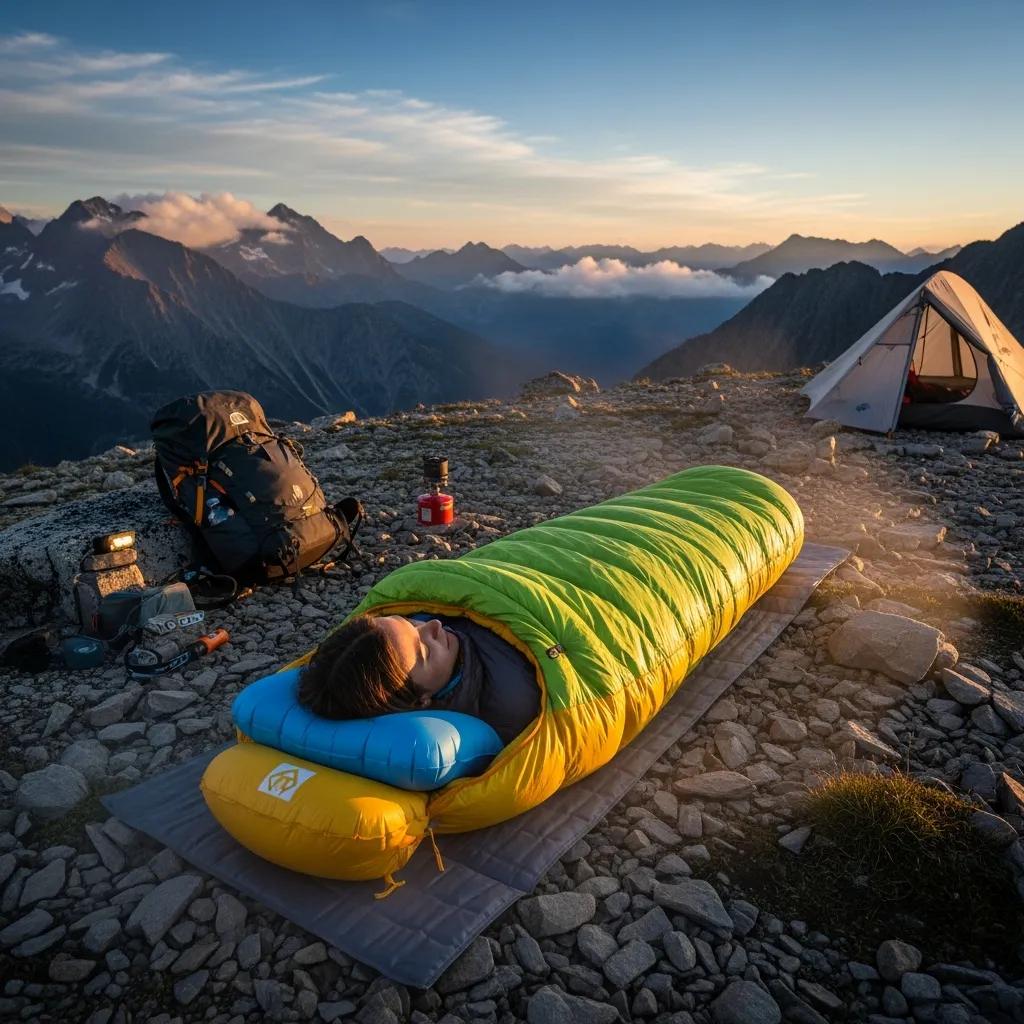
Best Sleeping Bags for High Altitude Camping 2026
The best high-altitude sleeping bag is not the bag with the lowest number on the tag. It is the lightest reliable sleep system that still gives you enough cold margin for the actual camps, forecast, shelter, sleeping pad and expedition requirements. For extreme expedition cold, the Western Mountaineering Bison GWS and Rab Expedition 1400 lead this comparison. For Denali-style -25°F-class use, the Feathered Friends Ptarmigan ES is a strong specialist. For lighter 0°F alpine use, the Mountain Hardwear Phantom 0 saves more than a pound versus the true expedition bags.
Best High-Altitude Sleeping Bags in 2026
Best extreme-expedition all-rounder: Western Mountaineering Bison GWS — a -40°F bag at about 4 lb 10 oz with a weather-resistant shell and unusually strong warmth-to-weight for the class.
Best 8,000m / polar specialist: Rab Expedition 1400 — 1,400 g of 850-fill down, -40°F Rab sleep limit and an oversized expedition cut for sleeping in bulky down clothing.
Best roomy -40°F option: Feathered Friends Snow Goose ES — 900+ fill down, weather-resistant shell and a wider expedition mummy for extra clothing and gear.
Best Denali-focused -25°F option: Feathered Friends Ptarmigan ES — the manufacturer specifically identifies it as its most frequently sent model to Denali.
Best lighter -20°F-class expedition bag: Rab Expedition 1000. Best tunable cold-weather bag: NEMO Sonic -20. Best light 0°F alpine bag: Mountain Hardwear Phantom 0.
High-Altitude Sleeping Bag Comparison
Manufacturer temperature labels are not perfectly interchangeable. Where a brand publishes an EN/ISO lower-limit value, it is shown as such. Proprietary expedition ratings are labeled as manufacturer ratings.
| Sleeping bag | Published rating | Rating type | Fill | Total weight | Current list price* | Best use |
|---|---|---|---|---|---|---|
| Western Mountaineering Bison GWS | -40°F / -40°C | Manufacturer | 850+ FP goose down · 42 oz fill | 4 lb 10 oz / ~2.10 kg | $1,400–$1,440 | Best extreme-expedition all-rounder |
| Rab Expedition 1400 | -40°F / -40°C | Rab sleep limit / published expedition rating | 850 FP hydrophobic goose down · 1400 g | 73 oz / 2.07 kg | $1,200 | 8,000m / polar / extreme expedition |
| Feathered Friends Snow Goose ES | -40°F / -40°C | Manufacturer | 900+ FP goose down · 1210 g regular | 4 lb 0.6 oz / 1.83 kg | $1,209 | Roomy -40°F expedition bag |
| Feathered Friends Ptarmigan ES | -25°F / -32°C | Manufacturer | 900+ FP goose down · 1112 g regular | 3 lb 12.4 oz / 1.71 kg | $1,009 | Denali-focused -25°F class |
| Rab Expedition 1000 | -22°F / -30°C | EN lower limit / Rab expedition rating | 850 FP hydrophobic goose down · 1000 g | 57.3 oz / 1.63 kg | $900 | Lighter expedition class |
| NEMO Sonic | -20°F version | Manufacturer model rating | 800 FP hydrophobic RDS down | Verify current size spec | ~$679.95 | Tunable cold-weather use |
| Mountain Hardwear Phantom 0 | 12°F comfort / 0°F limit | EN comfort + limit | 800 FP RDS goose down · 865 g regular fill | 2 lb 10.4 oz / 1.20 kg | $780 | Light 0°F alpine/mountaineering use |
*Prices are manufacturer list prices observed September 3, 2026 and can change. Availability also changes; several expedition models are produced in limited runs or seasonal batches.
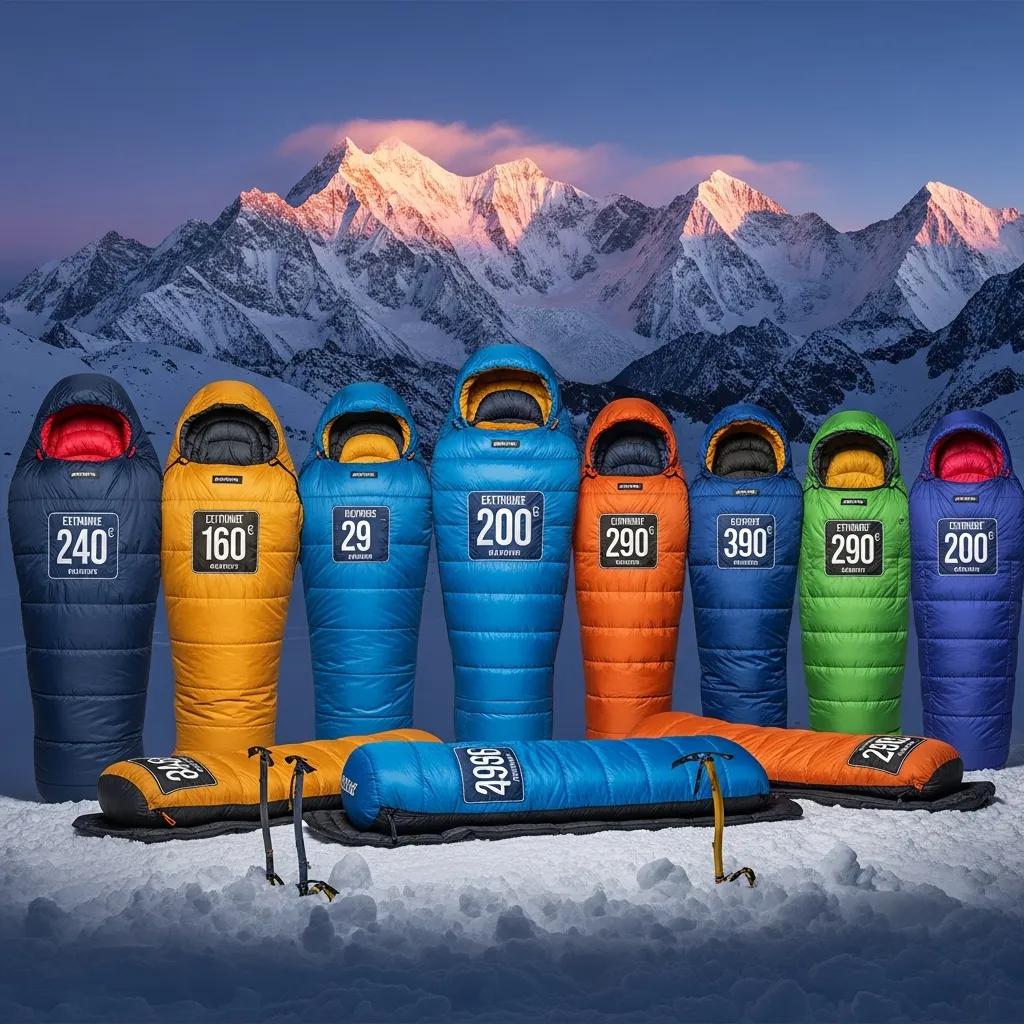
A -40°F Bag Is Not “Better” If Your Camps Only Need a 0°F System.
Extra insulation costs money, weight and pack volume. The target is enough margin for the real overnight conditions—not the coldest bag you can afford.
How Cold a Sleeping Bag Do You Need?
These are decision bands, not altitude laws. Verify the actual mountain, route, camp elevations, season, forecast and guide requirements.
| Bag class | Typical use | Why choose it | What it is not |
|---|---|---|---|
| 15°F to 0°F | Cold alpine trips, shoulder-season mountaineering, some high camps in relatively mild seasons | Lowest weight and bulk in this guide | Not a severe-winter or deep-expedition default |
| 0°F to -20°F | Cold alpine camps, winter backpacking, some 5,000–6,000m expeditions depending climate and operator | Strong balance of warmth and carry weight | Not automatically sufficient for Denali or prolonged severe cold |
| -20°F to -30°F | True cold-expedition use, sustained snow camping, many Denali-oriented systems depending guide requirement | Large cold margin without full -40°F bulk | Still not the coldest expedition class |
| -40°F class | Extreme expedition cold, polar environments, some Denali and 8,000m expedition systems | Maximum warmth and weather margin | Overkill for many alpine and trekking trips |
For the deeper selection framework—ratings, fill power, altitude context and sleep-system fundamentals—use the High-Altitude Sleeping Bag Guide. That page explains how to choose; this page compares what to buy.
Best High-Altitude Sleeping Bags: Detailed Picks
These recommendations are based on current manufacturer specifications and use-case fit. Global Summit Guide has not field-tested every product listed here.
Western Mountaineering Bison GWS Expedition
The Bison GWS stands out because it reaches the true -40°F expedition class without becoming dramatically heavier than several -25°F competitors. Western Mountaineering lists 42 oz of 850+ fill down, 10.5 inches of loft and a 4 lb 10 oz total weight in the 6-foot version.
The Gore Windstopper shell, large hood, full collar and dual draft tubes make it a strong choice when tent condensation, wind-driven snow and repeated cold nights matter as much as pure loft.
- Strength: excellent warmth for a true -40°F bag.
- Tradeoff: premium price and very large packed volume.
- Watch: fit is still a mummy; expedition clothing volume should be tested before departure.
Rab Expedition 1400
Rab designed the Expedition 1400 specifically for 8,000-meter peaks and polar environments. It uses 1,400 g of hydrophobic 850-fill goose down and a slightly oversized expedition cut that leaves room for bulky down clothing.
The construction is more moisture-conscious than a conventional backpacking bag, with water-resistant fabric in vulnerable areas, longitudinal baffles and a large expedition hood.
- Strength: purpose-built extreme-expedition design.
- Tradeoff: heavy and bulky outside severe-cold use.
- Current list: $1,200 when checked.
Feathered Friends Snow Goose ES -40
The Snow Goose is the bag to notice when you need -40°F-class insulation but dislike very tight expedition mummy cuts. Feathered Friends gives it a 64-inch shoulder and 60-inch hip circumference, enough room for substantial insulating clothing and gear that must not freeze.
Its ES shell uses weather-resistant Pertex construction with extra moisture management through the torso panel. The regular version is listed at just over four pounds despite the roomier shape.
- Strength: unusually roomy for the temperature class.
- Tradeoff: 35-liter packed size and intermittent availability.
- Availability: verify before building an expedition purchase plan around it.
Feathered Friends Ptarmigan ES -25
The Ptarmigan is lighter and less bulky than the -40°F giants, but it is still a true expedition sleeping bag. Feathered Friends explicitly says it sends more Ptarmigan bags to Denali than any other bag it makes.
That does not mean -25°F is the correct rating for every Denali itinerary. It means the model has a direct use-case connection to the mountain and belongs on the shortlist when your guide’s equipment requirement fits this temperature class.
- Strength: strong warmth-to-weight and expedition shell protection.
- Tradeoff: less cold margin than the -40°F class.
- Availability: Feathered Friends currently notes seasonal availability, so order timing matters.
Rab Expedition 1000
The Expedition 1000 is the entry point into Rab’s true expedition line. It uses the same broad design logic as the 1400—oversized cut, Pertex Quantum Pro outer, hydrophobic down and room for expedition clothing—but drops 400 g of down.
Rab publishes an EN lower-limit figure of -30°C / -22°F, which gives buyers a standardized reference that is useful when comparing this model with bags that publish ISO/EN data.
- Strength: true expedition construction at a lower weight and price.
- Tradeoff: much less cold reserve than the 1400.
- Current list: $900 when checked.
NEMO Sonic -20
The Sonic is useful for climbers who need one bag to handle a wider temperature range rather than one dedicated expedition temperature. NEMO’s Thermo Gill vents let excess heat escape without fully opening the main zipper, which is helpful when a -20°F bag is used across warmer approach camps and colder high camps.
The waterproof/breathable footbox and hydrophobic down also address one of the recurring expedition problems: moisture accumulation around the tent wall and foot end.
- Strength: broad usable temperature range.
- Tradeoff: not an extreme-expedition replacement.
- Current list: about $679.95 for the -20°F version when checked; verify current size-specific specs.
Mountain Hardwear Phantom 0
The Phantom 0 is the weight-conscious choice in this comparison. Mountain Hardwear lists an EN comfort rating of 12°F and lower limit of 0°F, with a total weight around 2 lb 10 oz and 865 g of down in regular length.
That makes it compelling for cold alpine climbing, ski touring and high-elevation trips where the overnight temperature supports a 0°F system. It also makes the key point of this guide: a lightweight 0°F bag and a -40°F expedition bag are not competitors simply because both are sold to mountaineers.
- Strength: much lighter and smaller than the expedition models.
- Tradeoff: insufficient margin for severe expedition cold.
- Current list: about $780 when checked.
Sleeping Bag Class by Mountain Objective
The mountain name gives context; the actual overnight forecast and operator requirement make the final decision.
| Objective | Starting class to investigate | Why | What to verify before buying |
|---|---|---|---|
| Kilimanjaro trekking camps | Cold three-season / 0°F-to-15°F context depending route and season | High camps are cold, but this is not a Denali-style snow-camping expedition | Operator-provided bag, seasonal lows, personal cold tolerance |
| Mount Rainier / Cascades | 0°F-to-15°F alpine class depending season | Shorter alpine trips, but damp cold and weather can matter | Forecast, route, bivy/tent exposure, guide requirement |
| Aconcagua | 0°F to -20°F expedition class depending season and camp plan | Long expedition with cold high camps but large seasonal variation | Guide gear list and expected camp temperature |
| Denali | -25°F to -40°F expedition class often deserves consideration | Sustained snow camping and severe cold can demand much more reserve | Exact guide-service requirement; do not choose from this table alone |
| Everest Base Camp trek | Cold trekking / lodge sleep system rather than 8,000m expedition bag | Sleeping in lodges is fundamentally different from expedition high camps | Operator-provided bedding and lodge temperatures |
| Everest / 8,000m expedition | -30°F to -40°F expedition class | High camps and long expedition duration push moisture and temperature demands upward | Operator-specific high-camp gear list and whether multiple bags are used |
Every Extra Temperature Class Adds Weight and Pack Volume.
That tradeoff is worth paying when the cold requires it. It is wasted weight when the bag is dramatically warmer than the camps you will actually sleep in.
Comfort, Lower Limit & Extreme Ratings
A temperature number is useful only when you know what the number represents.
The conservative comparison point
Under ISO-style testing, the comfort figure represents a colder-sleeper profile and is the more conservative number to use when you know you sleep cold.
A warmer-sleeper reference
The lower-limit figure is a standardized comparison point for a warmer sleeper. It is not a promise that every person will sleep comfortably at that temperature.
Do not plan around it
The extreme value is an emergency-risk threshold, not a normal sleeping target. Some manufacturers no longer emphasize it because shoppers can misread it as usable comfort.
Read the manufacturer’s method
Several expedition specialists publish their own temperature rating rather than an ISO comfort/limit pair. Compare the full construction and intended use rather than assuming the number is directly equivalent to ISO lower limit.
Bag + Pad + Shelter + Clothing
A -25°F bag on inadequate ground insulation is not a -25°F sleep system.
Ground insulation is separate
Your bag slows heat loss to the air around you. The pad reduces conductive heat loss into snow, ice or frozen ground. Build the pad system for the same cold conditions as the bag.
See the full sleep-system guide →Tent conditions change the margin
Wind protection, condensation, snow loading and tent ventilation all affect how the bag performs over multiple nights. Moisture accumulation matters more on long expeditions than on a single cold night.
Expedition bags assume different layering
Some extreme bags are cut deliberately wide so climbers can sleep in down clothing. A tight backpacking mummy may lose effective loft if bulky layers compress the insulation.
Warm sleep is performance gear
On a multi-week expedition, a bag is not just comfort equipment. Consistently poor sleep reduces recovery and makes every decision harder. Carrying enough insulation is part of managing expedition fatigue.
Down, Fill Power & Moisture
| Factor | What it tells you | What it does not tell you |
|---|---|---|
| Fill power | How much loft a given weight of down can produce | Total warmth without knowing fill weight and construction |
| Fill weight | How much down is actually inside the bag | Warmth without knowing fill power, baffles and fit |
| Hydrophobic down | Down treated to improve moisture resistance | Permission to let the bag get wet |
| Weather-resistant shell | Extra defense against tent-wall moisture and wind-driven condensation | A waterproof bivy replacement in every situation |
| Synthetic insulation | Better wet-performance resilience and lower cost in many bags | The same packed size or warmth-to-weight as premium expedition down |
Fit, Cold Sleepers & Expedition Clothing
Compressed loft costs warmth
If shoulders, knees or down clothing press hard into the shell, insulation can lose loft. Climbers who sleep in large expedition layers should look carefully at internal girth.
Extra volume has to be heated
A very wide bag can feel colder for a small sleeper if the insulation and fit are not designed for that body size. Room is useful only when you need it.
Use comfort-side margin
If you consistently sleep colder than partners in the same conditions, do not build the purchase around the most optimistic lower-limit figure. Move toward a warmer bag or more conservative full system.
Do not buy unnecessary dead space
Choose the shortest bag that fits your body and intended layers correctly. Extra unused footbox length adds volume that must be heated and carried.
Buy, Rent or Use the Operator’s Bag?
| Situation | Best approach | Why |
|---|---|---|
| One Kilimanjaro or trekking trip | Rent / operator bag often makes sense | A dedicated -25°F or -40°F purchase may never be used again |
| Regular winter camping | Buy the class you repeatedly need | Fit, familiarity and care become more valuable over many nights |
| Denali / major expedition | Buy or rent exactly to the expedition requirement | This is not the time to improvise from a generic outdoor retailer recommendation |
| 8,000m expedition progression | Buy only after confirming the high-camp system | Some expeditions use different bags or staged equipment at different camps |
How We Selected the Bags
This is a specification- and use-case comparison, not a claim that every bag was personally field-tested.
Current models only
Each pick had to have a current manufacturer product page or current manufacturer collection listing when checked.
Published thermal information
We prioritize actual comfort/limit ratings where available, then clearly label manufacturer proprietary expedition ratings when standardized data is not published.
Warmth-to-weight
Total weight, fill weight and fill power are considered together. A low temperature number alone does not win.
Expedition construction
Hood design, draft control, shell moisture protection, footbox construction and room for insulating clothing matter in severe cold.
Distinct use case
Every bag in the final list needs a reason to exist. We do not fill the roundup with seven nearly identical 0°F backpacking bags.
Limitations disclosed
Availability, prices and manufacturer specs change. Verify the exact model and expedition requirement before purchasing.
Related Global Summit Guide Gear Pages
High-Altitude Sleeping Bag Guide
Understand ratings, temperature classes and altitude/weather context before choosing a model.
Choose the class → Full systemMountaineering Gear Guide
Place the sleeping bag inside the larger mountain equipment system.
Open gear guide → ShelterBest Base Camp Tents
Pair the sleep system with a shelter built for the same exposure.
Compare expedition tents → ClothingHigh-Altitude Layering
Build the insulated clothing system used outside—and sometimes inside—the sleeping bag.
Build layers → Deep recovery 1Mountain Weather
Use realistic overnight temperature and wind forecasts instead of choosing from altitude alone.
Read mountain weather → Deep recovery 2Climbing Gear Checklist
Audit the rest of the equipment before departure.
Open checklist → Deep recovery 3Trip Planning
Decide what to buy, rent and obtain through the guide service.
Plan the trip → Cold-system companionMountaineering Boots
Match footwear insulation to the same objective and temperature regime.
Choose boots →Manufacturer Specifications
Use these pages for current pricing, sizing, availability and specification changes.
Extreme Expedition
Cold Alpine / Lighter Expedition
Frequently Asked Questions
What is the best sleeping bag for high altitude camping?
There is no single best temperature class. For extreme expedition cold, start with the Western Mountaineering Bison GWS and Rab Expedition 1400. For a Denali-oriented -25°F class, the Feathered Friends Ptarmigan ES is a strong specialist. For lighter 0°F alpine use, the Mountain Hardwear Phantom 0 is much easier to carry.
Do I need a -40°F sleeping bag for high altitude?
No. Altitude by itself does not determine the sleeping-bag rating. Use the coldest realistic temperature at the camps where you sleep, the expedition or guide-service requirement, pad insulation, shelter, moisture and personal cold tolerance. A -40°F bag is a specialized severe-cold tool.
What sleeping bag rating should I use for Denali?
Requirements vary by route, date and guide service. Feathered Friends explicitly positions the Ptarmigan -25 for Denali use, while Western Mountaineering also markets the -40 Bison for Denali and other extreme expeditions. Follow your guide’s specific gear requirement rather than choosing from a generic chart.
What is the difference between comfort and lower-limit ratings?
Under ISO-style testing, Comfort is the more conservative standardized sleeper profile and Lower Limit represents a warmer sleeper profile. Neither guarantees your personal comfort. The Extreme rating is an emergency-risk value and should not be used to select the temperature at which you intend to sleep normally.
Is a 0°F bag enough for mountaineering?
It can be. The Mountain Hardwear Phantom 0, for example, is a legitimate mountaineering bag with a 12°F EN comfort and 0°F EN lower limit. It makes sense when your camp temperatures support that class. It is not equivalent to a -25°F or -40°F expedition bag.
Is down or synthetic better for high-altitude camping?
Premium down dominates the coldest expedition bags because it compresses well and delivers high warmth for its weight. Synthetic insulation remains valuable when dampness and repeated wet exposure dominate. Regardless of fill type, protecting the insulation from moisture is essential.
Does fill power tell me how warm the sleeping bag is?
No. Fill power describes loft efficiency. You also need to know how much down is in the bag, how the baffles are built, the shape and fit, and the published temperature rating. This is why both fill power and fill weight appear in the comparison whenever manufacturers provide them.
Can a warm sleeping bag compensate for a low-R sleeping pad?
No. The pad reduces heat loss into the ground and the bag insulates the rest of the body. Build them as one system. For cold snow camping, follow the sleeping-pad requirement from your expedition or guide service and use the full high-altitude sleep-system guide for the selection framework.
Should I buy or rent an expedition sleeping bag?
Renting often makes sense for a one-time climb, especially when an operator can supply a bag matched to the route. Buying makes more sense when you will use the same temperature class repeatedly and want consistent fit, care and performance.
How often should this buyer guide be updated?
Product availability and prices can change throughout a season. The model list should be rechecked when manufacturers release a new winter/expedition line or when a major product is discontinued. Temperature-class guidance should change only when underlying standards or route requirements change.
High Altitude Sleeping Bags: 2026 Expert Reviews & Safety Guide
If the expedition truly needs -40°F performance, the Bison GWS, Rab Expedition 1400 and Snow Goose ES belong in the conversation. If the real requirement is around -20°F, carrying a four-pound extreme bag may be wasted weight. And if your trip only needs a 0°F alpine system, the Phantom 0 shows how much pack weight you can save by refusing to overbuy.
Was this helpful?
🏔Related gear guides
🧭Explore & compare
Global Summit Guide is an independent mountaineering resource founded in 2026. The team combines first-hand trekking and climbing experience with in-depth research and professional health and nutrition review to help climbers choose objectives, prepare properly, and stay safe.
Health, altitude, and nutrition content is reviewed by Taylor Ludlow (Registered Nurse) and Brigg Hoopes (Nutritionist).
What We Don't Know Yet
Mountain information changes quickly. This box explains the limits of what this page can responsibly promise.
- Weather, snowpack, avalanche risk, road access, and route conditions can change quickly and may be different on your climbing dates.
- Gear requirements can change by season, route variation, weather window, personal cold tolerance, and guide-service requirements.
- Fitness and altitude response vary by person; no guide, itinerary, or training plan can guarantee acclimatization or summit success.
- Comparisons simplify complex decisions; the better mountain depends on current conditions, skills, timing, budget, and risk tolerance.
Verify current conditions with official land managers, guide services, local forecasts, and current route reports before booking or climbing.
Mountaineering, rock and ice climbing, glacier travel, and high-altitude activity are inherently dangerous and can result in serious injury or death. The information on Global Summit Guide is provided for general informational and educational purposes only and is not a substitute for professional instruction, qualified guiding, proper equipment, or your own judgment and experience.
Route conditions, weather, snowpack, permits, regulations, and hazards change constantly and may differ from what is described here. Details may be incomplete, out of date, or contain errors. Always verify current information with local authorities, certified guides, and official sources before making any decision in the mountains.
Nothing on this site is medical, legal, or financial advice. Our fitness, acclimatization, altitude, and nutrition content is general in nature; consult a qualified physician before beginning any strenuous exercise program or exposing yourself to high altitude.
You are solely responsible for your own safety and decisions. To the fullest extent permitted by law, Global Summit Guide and its team accept no liability for any loss, injury, damage, or expense arising from use of, or reliance on, this information. By using this site you acknowledge these risks and accept these terms.
Some links on this site may be affiliate links. If you buy through them we may earn a small commission at no extra cost to you; this never affects our recommendations.
Global Summit Guide recommendation path
Next Best Mountain to Research
Use these recommendations to continue the right planning path instead of stopping on one page.
Use current permit, weather, route, and operator information before booking or climbing.