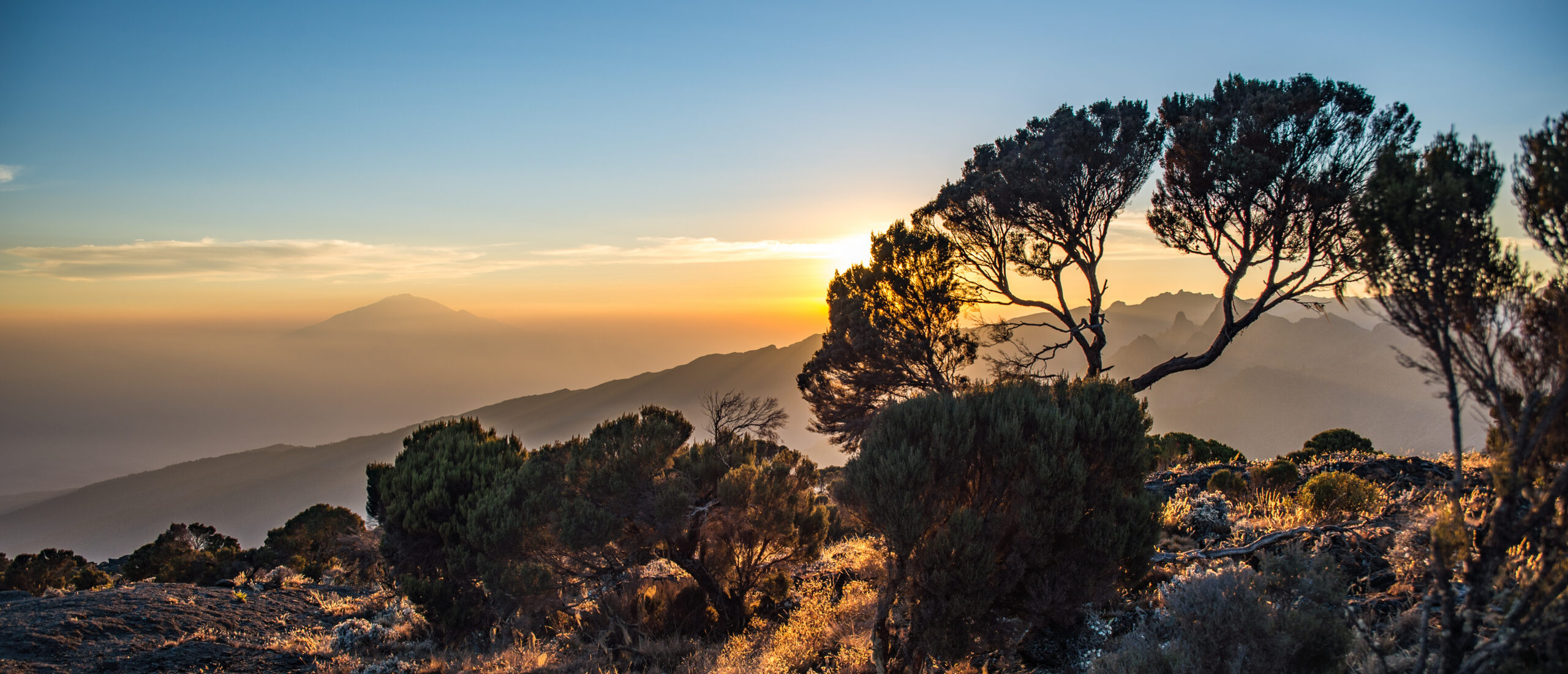
Climbing Africa’s Highest Peaks: A Complete Guide to Africa’s Mountains
Africa’s mountains span five distinct climbing regions — from Kilimanjaro (Africa’s Seven Summit and the world’s most-summited 5,000m peak) to Mount Kenya’s technical rock summits, from the glaciated Rwenzori on the DRC-Uganda border to Morocco’s Atlas Mountains, Ethiopia’s Simien Highlands, and the active volcanoes of the Virunga chain. This guide covers the 9 most important African climbing objectives, all 7 Kilimanjaro routes, and how Africa’s peaks serve as altitude training for Everest and Denali aspirants.
Africa’s Seven Summit
African peaks
established routes
climbing regions
Climbing in Africa means confronting altitude more than technical difficulty. The continent holds only one of the Seven Summits — Mount Kilimanjaro — and its highest peaks cluster in the 4,500-to-5,900m zone that defines the hardest part of any big mountain: the altitude where decisions start to blur, where fitness alone won’t summit you, and where the right number of acclimatization days can matter more than any other variable. But Africa also offers genuine range: Mount Kenya is the continent’s most technical peak (Batian’s normal route is alpine rock at UIAA IV+), the Rwenzori range holds Africa’s most serious glacier climbing, the Atlas Mountains and the Simien Highlands offer high-altitude trekking, and the Virunga volcanoes in DRC and Rwanda provide some of the most dramatic active-volcano experiences on earth. This guide covers the 9 most important African climbing destinations in detail, with full Kilimanjaro route comparisons and a dedicated altitude training section for climbers using Africa as preparation for Everest or Denali.
What Counts as Africa’s Highest Peaks?
Africa’s “highest peaks” is a surprisingly specific list. Unlike the Himalaya (where dozens of peaks exceed 7,000m) or the Andes (where the high zone runs from Ecuador to Argentina), Africa concentrates its major mountaineering objectives in a relatively small number of peaks across five distinct regions. The continent’s three tallest peaks — Kilimanjaro (5,895m), Mount Kenya (5,199m), and Mount Stanley/Margherita Peak (5,109m) — are all in East Africa, all within about 1,400 kilometers of each other, and all geographically connected to the Eastern African Rift system that also produced the Virunga volcanoes.
Beyond those three, Africa’s climbing peaks scatter across the continent. Ras Dashen (4,550m) anchors the Ethiopian Highlands. Mount Cameroon (4,040m) is West Africa’s highest active volcano. Mount Karisimbi (4,507m) tops the Virunga volcanic chain. Jebel Toubkal (4,167m) is North Africa’s highest peak in Morocco’s Atlas Mountains. Thabana Ntlenyana (3,482m) in Lesotho is the highest point in Southern Africa. And Mount Nyiragongo (3,470m) in DRC’s Virunga National Park offers the world’s most accessible active lava lake, though political and eruption risk have complicated access in recent years.
This guide covers the 9 most significant African climbing peaks based on combination of elevation, mountaineering significance, and climber interest. Mount Meru in Tanzania (4,566m) is sometimes included in “Africa’s highest peaks” lists but is covered separately as part of Kilimanjaro acclimatization strategy rather than as a primary objective.
Kilimanjaro: Africa’s Seven Summits Peak
Mount Kilimanjaro is the most recognized African mountain in the world, and the reason most people have heard of it is specific: it’s Africa’s Seven Summit — the highest peak on the African continent at 5,895 meters, one of the seven peaks that together comprise the “Seven Summits” challenge of climbing the highest mountain on every continent. Both the Bass List and the Messner List agree on Kilimanjaro — unlike the Oceania peak (where Kosciuszko vs Carstensz remains debated), Kilimanjaro’s position as Africa’s Seven Summit is uncontested. Every serious Seven Summits climber includes it.
What makes Kilimanjaro distinctive among the Seven Summits is that it’s the only one that doesn’t require technical climbing skills. Everest requires high-altitude oxygen expertise and fixed-rope experience. Denali demands glacier travel and expedition camping. Aconcagua involves sustained high-altitude effort with some technical sections. Vinson requires Antarctic logistics. Elbrus needs crampon and ice axe technique. Even Kosciuszko, the “easy” Seven Summit, still requires navigating winter conditions for authentic experience. Kilimanjaro, by contrast, is walked up. Any physically fit hiker can reach its summit without learning a single mountaineering skill. The mountain’s genuine challenge is altitude.
This is why Kilimanjaro is the most climbed of the Seven Summits and the entry-point peak for most Seven Summits projects. Approximately 35,000-50,000 climbers attempt Kilimanjaro each year compared to 500-1,000 Everest attempts, and the mountain’s commercial infrastructure reflects that scale: hundreds of licensed tour operators, standardized routes, established logistics, and a well-developed porter and guide economy in nearby Moshi and Arusha. For Seven Summits aspirants, Kilimanjaro typically serves as the second or third peak in a progression, after Kosciuszko (as a test of logistics and motivation) and before the technical peaks. See our Seven Summits guide for the complete project overview.
More than any single African mountain, Kilimanjaro functions as the ambassador for African mountaineering. It’s also the dominant reason people visit African peaks at all. Many climbers never visit Mount Kenya, Mount Stanley, or Ras Dashen despite their comparable significance simply because the Kilimanjaro trip consumes their African mountaineering budget and vacation time. For climbers seeking Africa beyond Kilimanjaro, the peaks listed below are the next logical objectives.
The Five Climbing Regions of Africa
Africa’s climbable peaks break into five geographically distinct regions. Each has its own character, permit system, and climbing season. Understanding which region your target peak sits in is the first step in trip planning.
🌍 East African Rift
Africa’s top three peaks and most famous mountaineering destinations. Tanzania’s Kilimanjaro and Kenya’s Mount Kenya sit here, plus Meru, Mount Elgon, and the highest concentration of climbing infrastructure in Africa. Serviced by Nairobi and Kilimanjaro International Airport (JRO).
🏔️ Rwenzori Mountains
The Rwenzori range on the Uganda-DRC border — often called “the Mountains of the Moon” — is Africa’s most seriously glaciated climbing zone. Mount Stanley holds the continent’s most technically demanding standard route. Less visited than Kilimanjaro but more genuinely alpine in character.
🌋 Virunga Mountains
The active volcanoes of the East African Rift’s northern branch — straddling DRC, Rwanda, and Uganda. Home to mountain gorillas and active lava systems including Nyiragongo’s famous lava lake. Climbs operate under security considerations that shift year to year.
🏞️ Ethiopian Highlands
The Simien Mountains of northern Ethiopia and the Bale Mountains to the south offer high-altitude trekking at 4,000m+ without the technical or permit complexity of East Africa’s bigger peaks. Ras Dashen is the region’s anchor, combined with UNESCO-listed scenery and unique wildlife (gelada monkeys, Ethiopian wolves).
🕌 Atlas Mountains
Morocco’s Atlas Mountains — particularly the High Atlas range — offer North Africa’s only significant climbing. Jebel Toubkal is the anchor peak, reachable from Marrakech in a 2-day program, and climbable as a technical winter objective or a non-technical summer walk. Unique among African climbing for its Berber cultural context.
🌿 West & Southern Africa
Two geographically isolated climbing peaks round out Africa’s mountaineering map. Mount Cameroon is West Africa’s highest active volcano. Thabana Ntlenyana in Lesotho is Southern Africa’s highest peak, anchoring the spectacular Drakensberg trekking region. Both are specialized objectives rather than mainstream climbing destinations.
Africa’s 9 Major Climbing Peaks: Comparison Table
The table below lists the 9 peaks covered in detail in this guide, ranked by elevation. All three 5,000+ meter African peaks are in East Africa; the rest span the continent’s other climbing regions.
| # | Peak | Elevation | Country | Type | Difficulty | Best Season |
|---|---|---|---|---|---|---|
| 1 | Kilimanjaro (Uhuru) | 5,895 m / 19,341 ft | Tanzania | Trekking | Altitude only | Jan–Mar, Jun–Oct |
| 2 | Mount Kenya (Batian) | 5,199 m / 17,057 ft | Kenya | Rock/Alpine | UIAA IV+ (trek to Lenana) | Jan–Feb, Jul–Oct |
| 3 | Mount Stanley (Margherita) | 5,109 m / 16,762 ft | Uganda/DRC | Glaciated | Moderate alpine | Dec–Feb, Jun–Aug |
| 4 | Ras Dashen | 4,550 m / 14,928 ft | Ethiopia | Trekking | Moderate trek | Oct–Mar |
| 5 | Mount Karisimbi | 4,507 m / 14,787 ft | Rwanda/DRC | Volcano | Moderate-Hard | Jun–Sep, Dec–Feb |
| 6 | Jebel Toubkal | 4,167 m / 13,671 ft | Morocco | Trek/Winter | Easy summer / Hard winter | Apr–May, Sep–Nov |
| 7 | Mount Cameroon | 4,040 m / 13,255 ft | Cameroon | Volcano | Moderate trek | Nov–Apr |
| 8 | Thabana Ntlenyana | 3,482 m / 11,424 ft | Lesotho | Trekking | Moderate trek | Apr–Sep (dry) |
| 9 | Mount Nyiragongo | 3,470 m / 11,385 ft | DRC | Active volcano | Easy (security risk) | Jun–Sep, Dec–Feb |
Africa’s 9 Major Climbing Peaks: Detailed Breakdown
The sections below cover each of the 9 major African climbing peaks in detail, ordered by elevation. Each entry describes the mountain’s character, standard route, history, and practical climbing considerations. Links to dedicated climb guides appear at the end of each section.
Mount Kilimanjaro
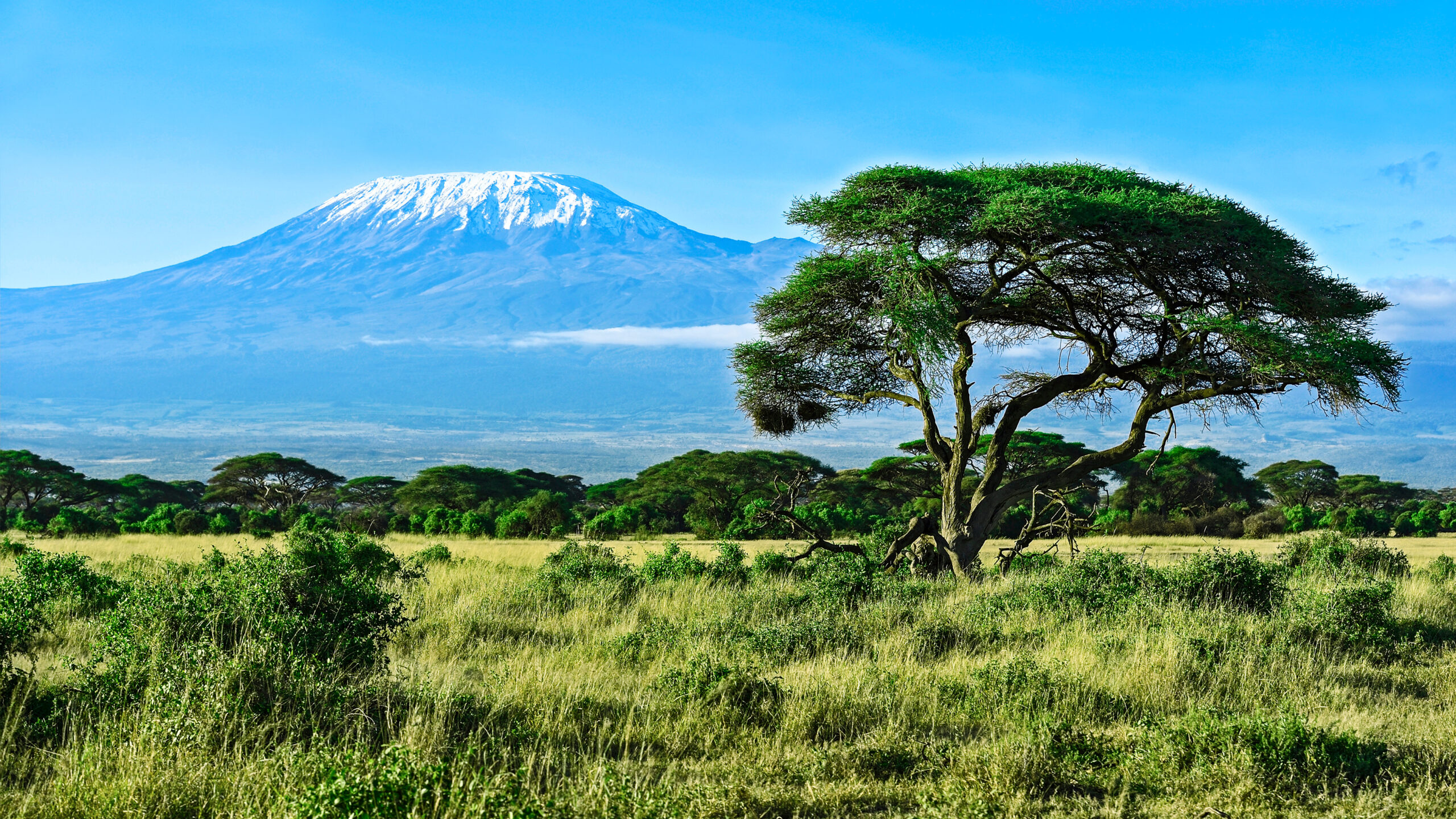
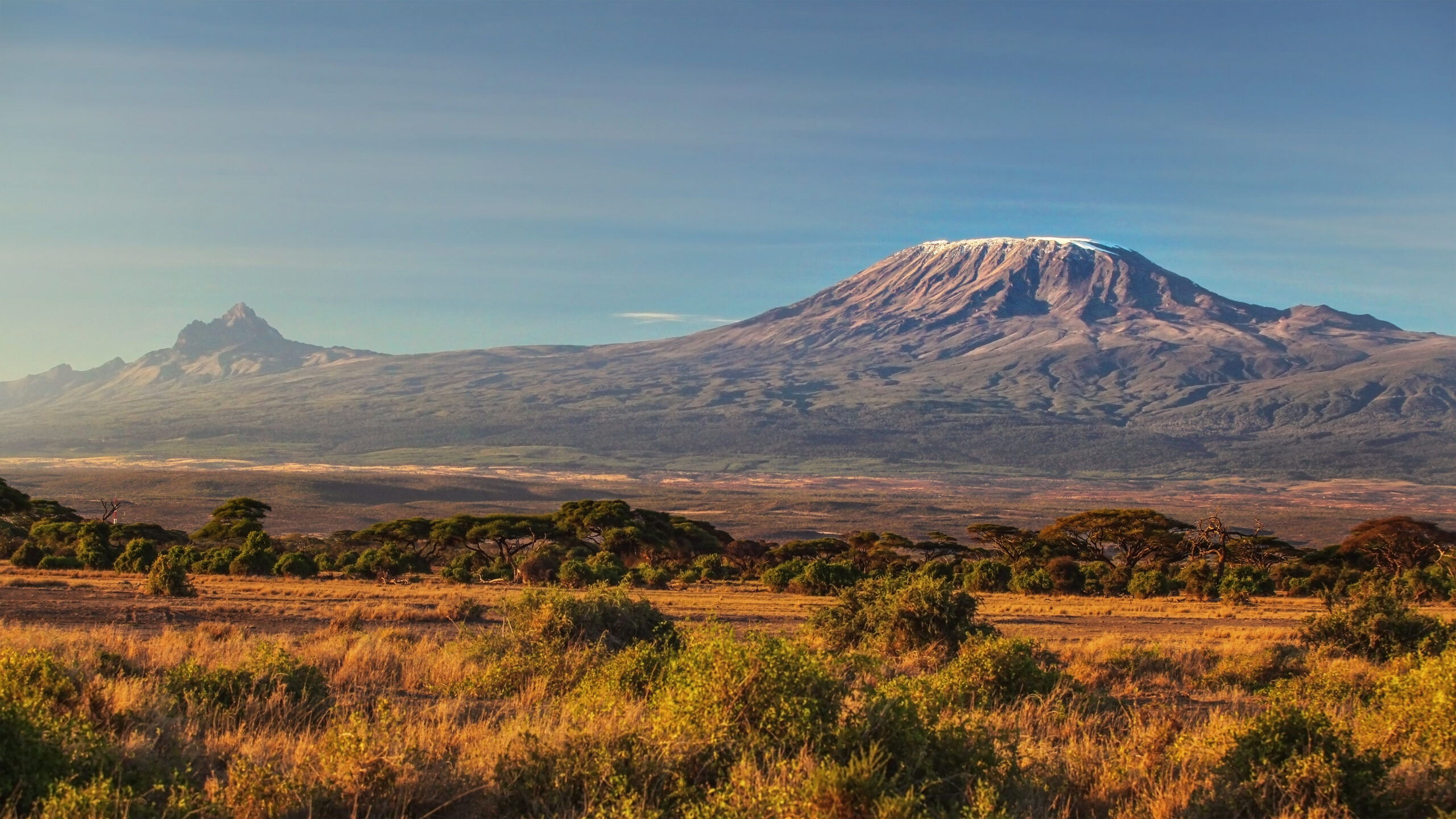
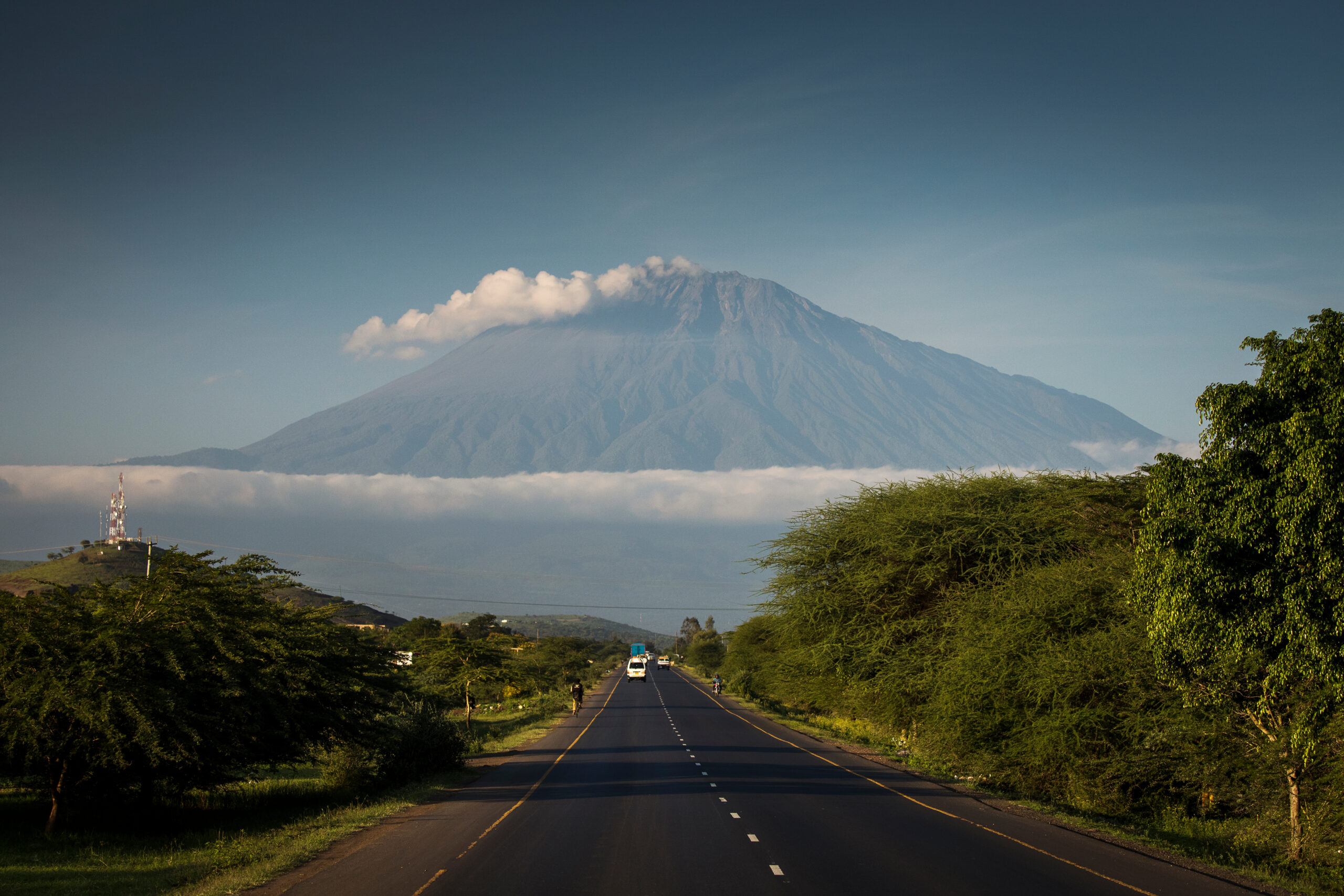
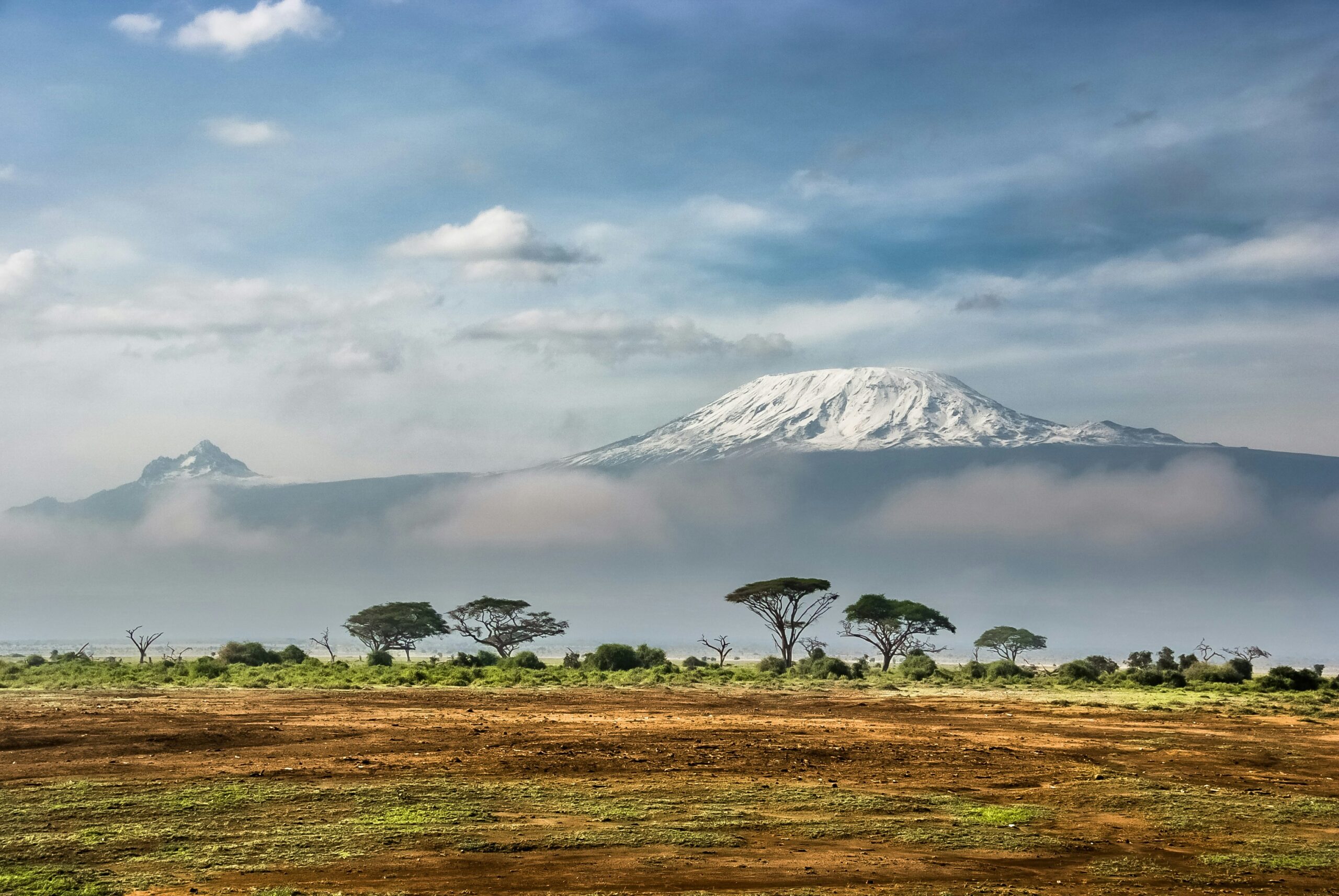
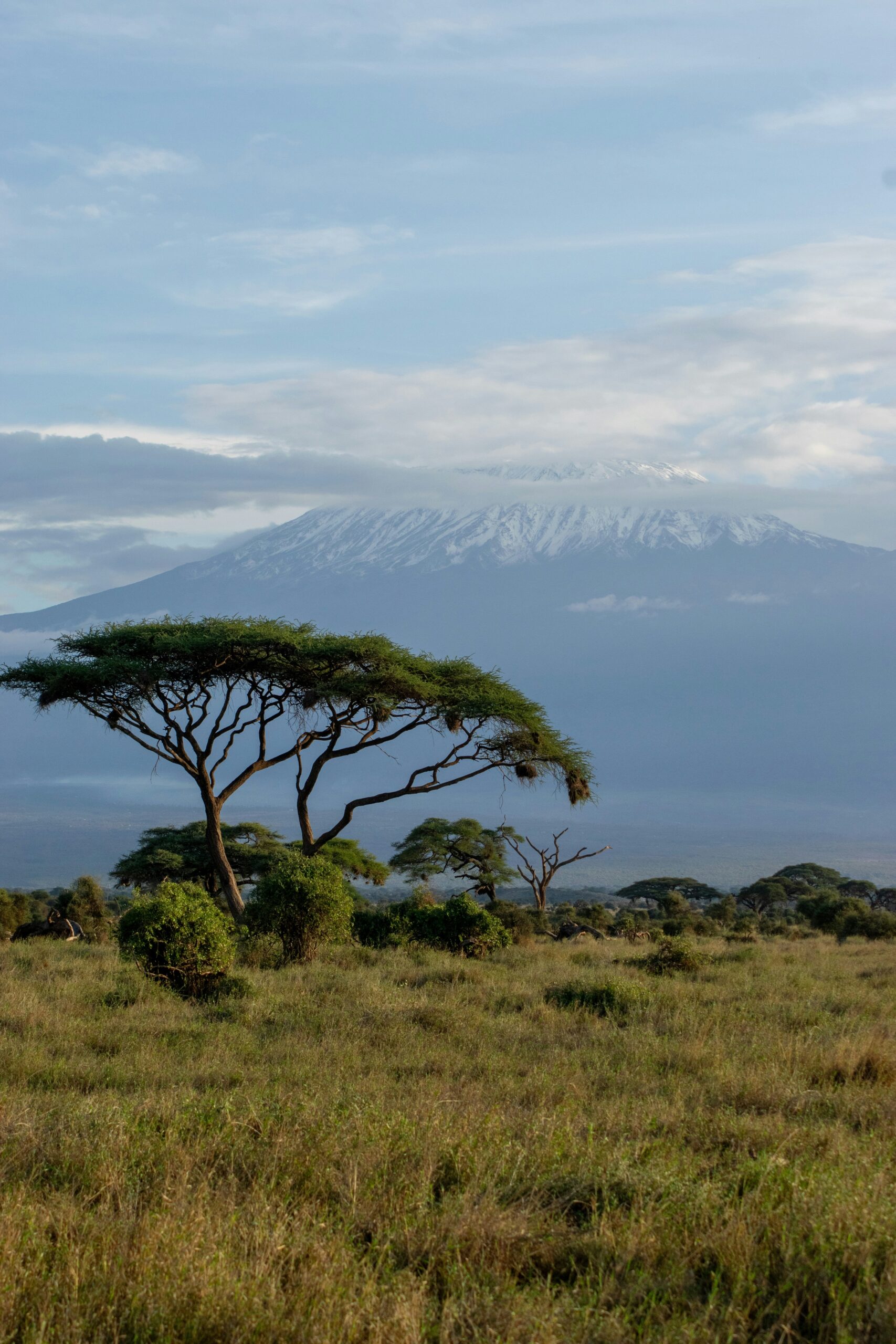
Mount Kilimanjaro is the highest peak in Africa, the highest freestanding mountain in the world (rising approximately 4,900m from its base plain), and the most summited 5,000-meter mountain on earth. Uhuru Peak — the true summit at 5,895m — is one of the Seven Summits, making Kilimanjaro the continent’s flagship mountaineering objective. The mountain is a dormant stratovolcano with three volcanic cones: Kibo (the summit), Mawenzi (5,149m), and Shira (3,962m, largely eroded). First summited on October 6, 1889 by German geologist Hans Meyer, Austrian climber Ludwig Purtscheller, and Tanzanian guide Yohani Kinyala Lauwo (who was only 18 at the time and became a legendary figure in Kilimanjaro history, living until 1996).
What makes Kilimanjaro distinctive is that it has no technical climbing route — every established line to the summit is a walking trail. Any physically fit hiker can summit via any of the seven standard routes, provided they follow a program of sufficient length to allow proper acclimatization. The mountain passes through five distinct climate zones — cultivated lower slopes, rainforest (1,800-2,800m), moorland (2,800-4,000m), alpine desert (4,000-5,000m), and arctic summit — providing a dramatic 4-day journey from tropical jungle to glaciated summit. Kilimanjaro’s remaining summit glaciers are projected to disappear entirely by roughly 2050 due to climate change.
Annual climbing numbers are 35,000-50,000 attempts, with overall success rates averaging roughly 65% (varying dramatically by route length — see the route comparison section below). Approximately 8-10 climbers die on Kilimanjaro each year, usually from altitude-related causes preventable with proper acclimatization. All climbs require a licensed tour operator; independent climbing is prohibited. Costs range $2,000-$6,000+ depending on route, duration, and operator quality. The climb is typically the most significant cost in any trip — flights to Kilimanjaro International Airport (JRO) add $1,200-$2,500 from North America or Europe.
Full Mount Kilimanjaro climb guide →Mount Kenya
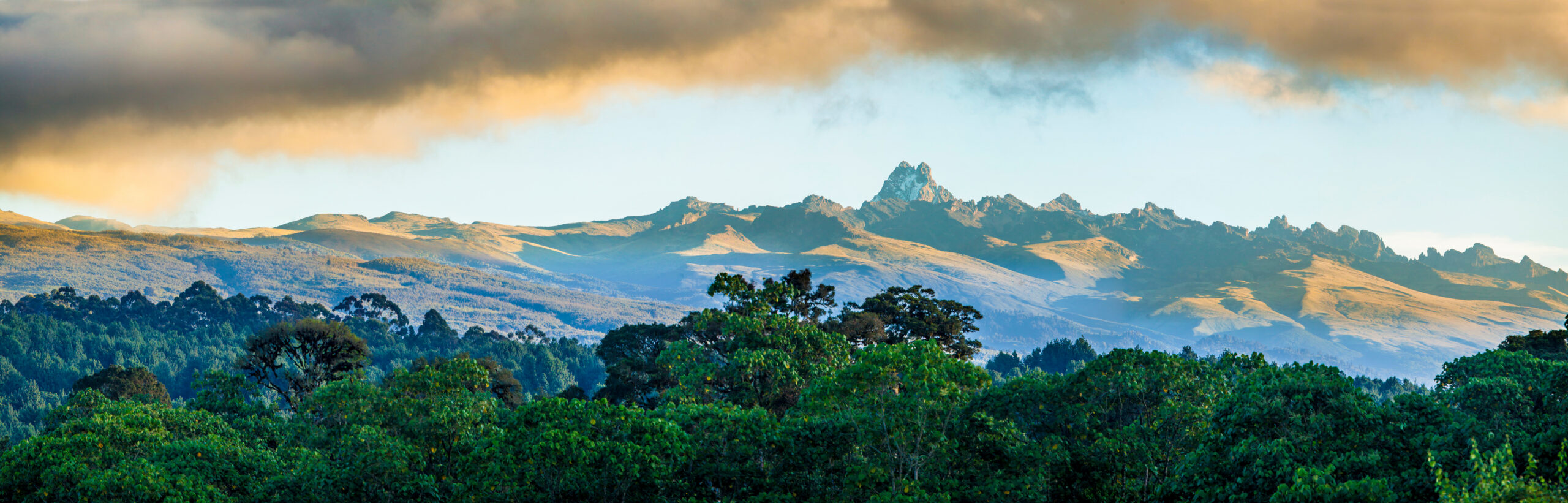
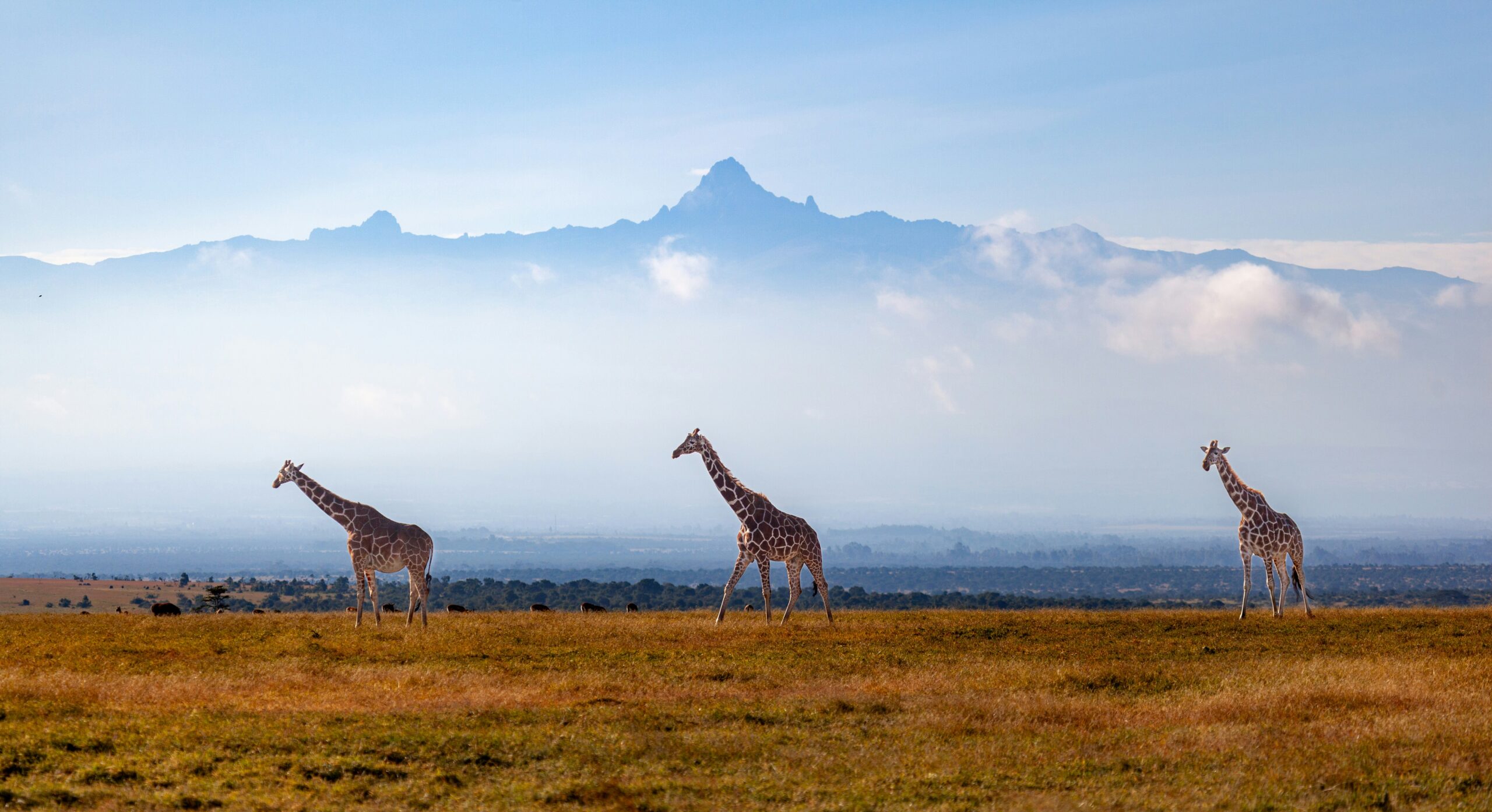
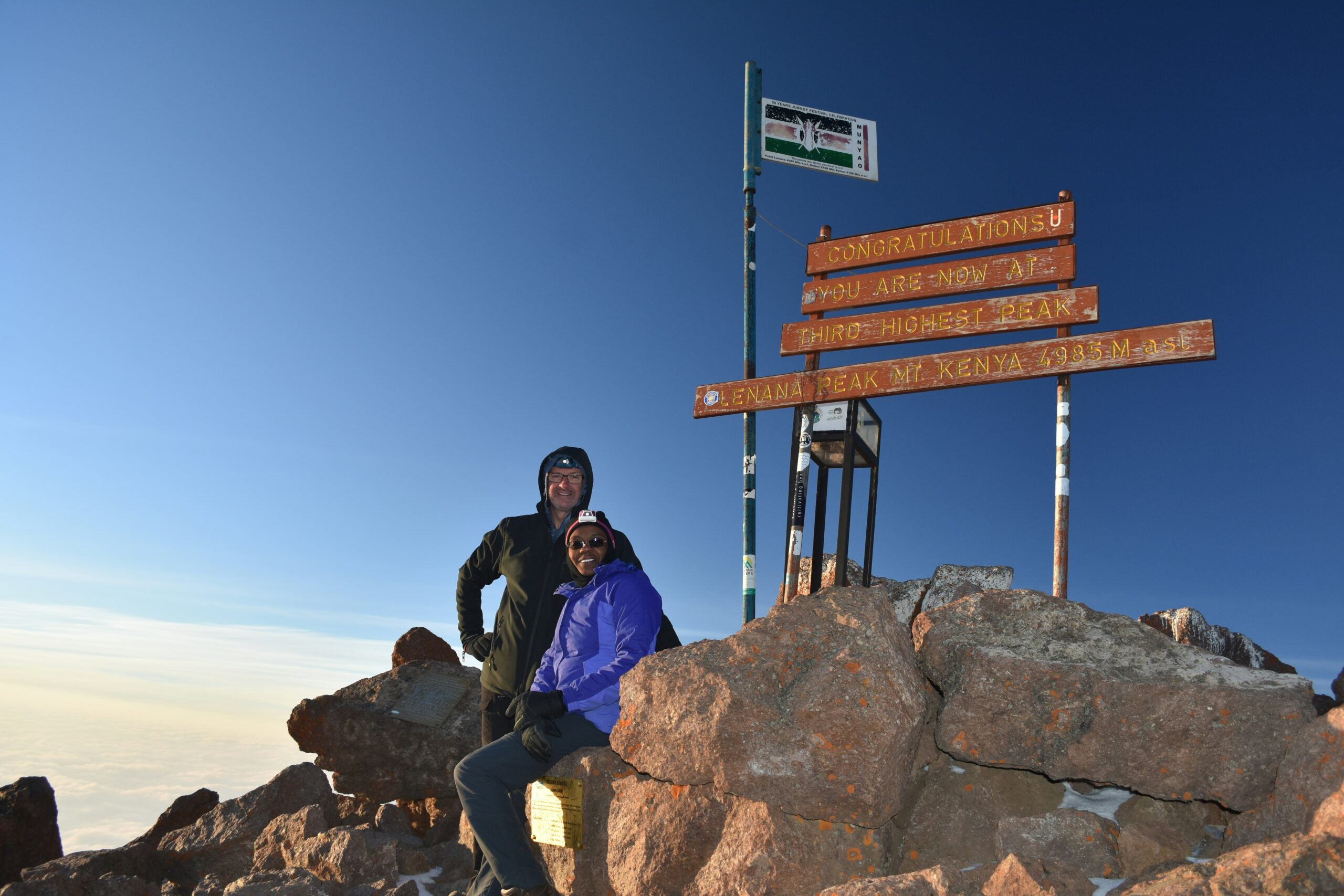
Mount Kenya is Africa’s second-highest peak and — for experienced climbers — the continent’s most technically interesting. Unlike Kilimanjaro’s single broad summit, Mount Kenya is an ancient eroded stratovolcano with multiple jagged summits: Batian (5,199m, the true summit), Nelion (5,188m, the second-highest), and Point Lenana (4,985m, the trekking summit). Reaching Batian’s summit requires sustained rock climbing at UIAA IV+ grade (roughly US 5.7) — making Mount Kenya the only major African peak where a technical climbing background is genuinely required for the true summit. Batian was first climbed in September 1899 by British geographer Halford Mackinder with Swiss guides César Ollier and Josef Brocherel, only a decade after Kilimanjaro’s first ascent.
The practical reality is that Mount Kenya has two very different climbs. The technical climb to Batian or Nelion summits is a serious alpine rock objective — the Normal Route is 16 pitches at UIAA IV+, often with wet or icy conditions, and requires experienced alpine rock climbers. This climb is attempted by only a few hundred people per year. The trekking climb to Point Lenana, the third summit, is a non-technical multi-day walk via the Sirimon, Chogoria, or Naro Moru routes — 3-5 day circuits through stunning Afro-alpine scenery with giant lobelias and senecios. Point Lenana receives approximately 15,000 visitors per year and is often described as a more scenic, less crowded alternative to Kilimanjaro.
Mount Kenya National Park permits are managed by Kenya Wildlife Service with daily fees of approximately $52 (for non-residents) in 2026. The Chogoria Route is widely considered Africa’s most scenic high-altitude trek — ascending through the Gorges Valley past glacial tarns including Lake Michaelson and the Temple cliffs before reaching Point Lenana. For climbers who have already summited Kilimanjaro, Mount Kenya’s Point Lenana offers a more atmospheric and technically interesting second African peak at similar altitude but better scenery.
Full Mount Kenya climb guide →Mount Stanley / Margherita Peak
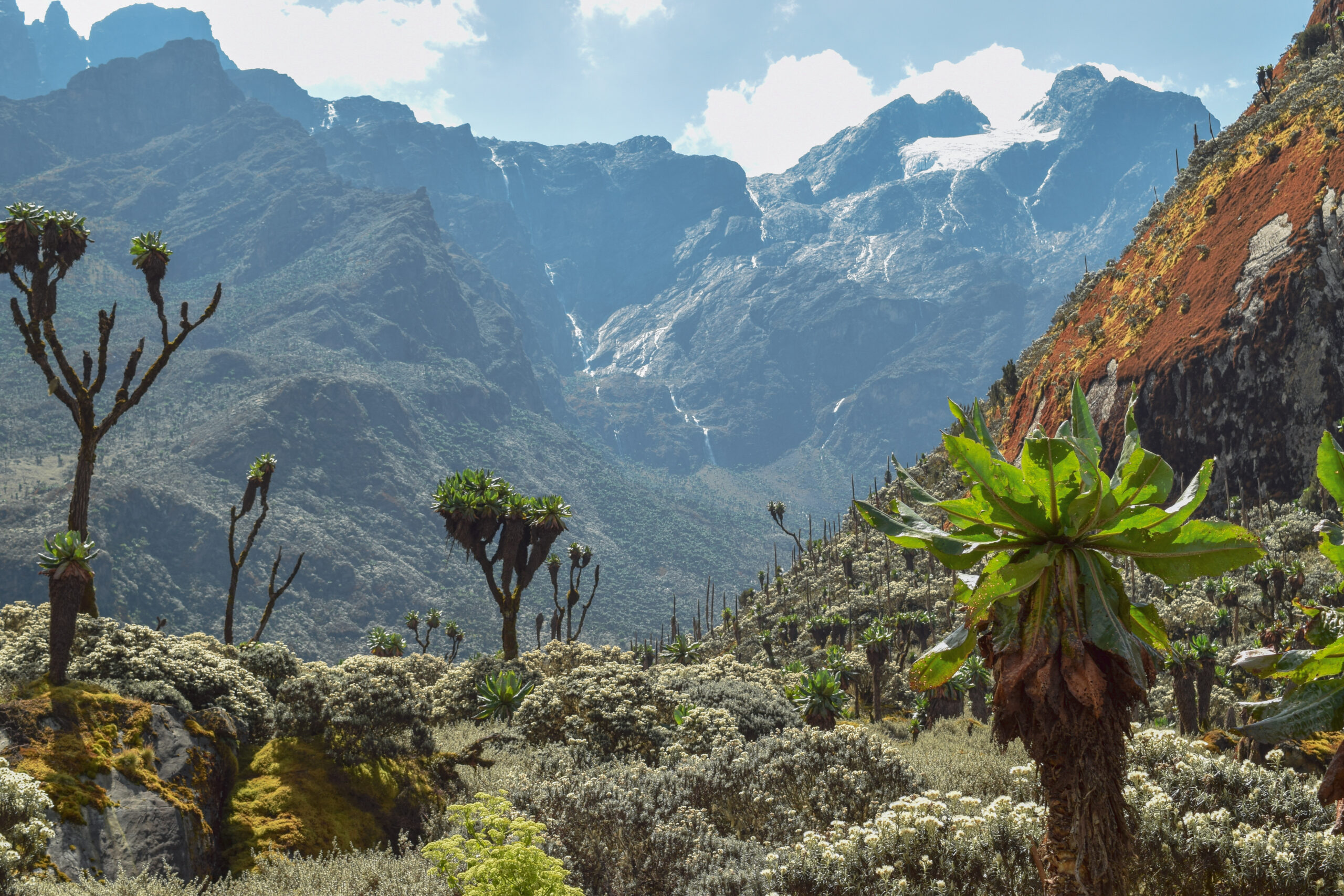
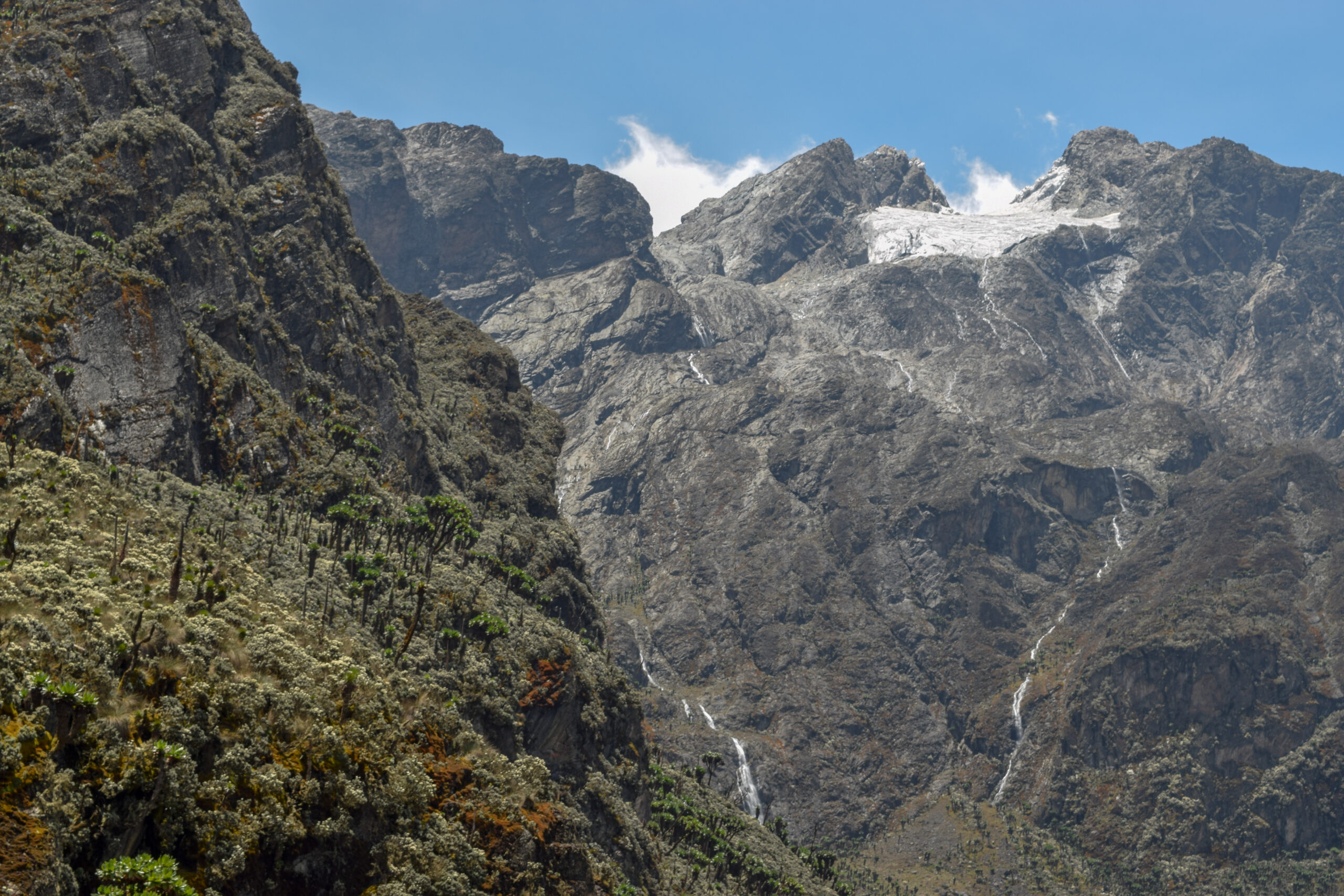
Mount Stanley is Africa’s third-highest peak and the most glaciated mountain on the continent. The Rwenzori Range — known historically as the Mountains of the Moon and suggested by Ptolemy in 150 CE as the source of the Nile — forms the border between Uganda and the Democratic Republic of the Congo. The range holds multiple 4,000-5,000m peaks, with Mount Stanley as the highest. Stanley’s true summit is Margherita Peak (5,109m), named after Queen Margherita of Italy by the 1906 first-ascent expedition led by the Duke of the Abruzzi — the same Italian mountaineer who attempted K2 in 1909 and later established Abruzzi Spur as that peak’s standard route.
The Margherita Peak summit climb is the most technically demanding standard route on any major African peak. Unlike Kilimanjaro’s walking trail or Ras Dashen’s trek, climbing Margherita requires glacier travel with crampons and ice axe, crossing crevassed glaciers (Stanley Plateau Glacier, Margherita Glacier), and final steep snow/ice climbing on the summit block. The glaciers are actively retreating — the climb has become harder and more dangerous over the past 30 years as bare rock replaces what was once walkable snow. Climbers with solid glacier mountaineering experience can handle the route; Kilimanjaro-only background is insufficient preparation.
Access is via the Central Circuit or Kilembe Trail from the Ugandan side — both are 7-9 day trekking circuits through the Rwenzori’s famously muddy valleys and remarkable Afro-alpine landscapes (giant groundsels, tree heather forests). The DRC side is rarely used due to security considerations. All climbs require Uganda Wildlife Authority permits and licensed operators; total trip costs run $1,500-$2,500 for 7-8 day programs, considerably less than Kilimanjaro. Climber numbers are far lower — typically a few hundred Margherita summits per year vs 30,000+ Kilimanjaro attempts — making this one of Africa’s least-crowded major mountaineering objectives.
Full Mount Stanley climb guide →Ras Dashen
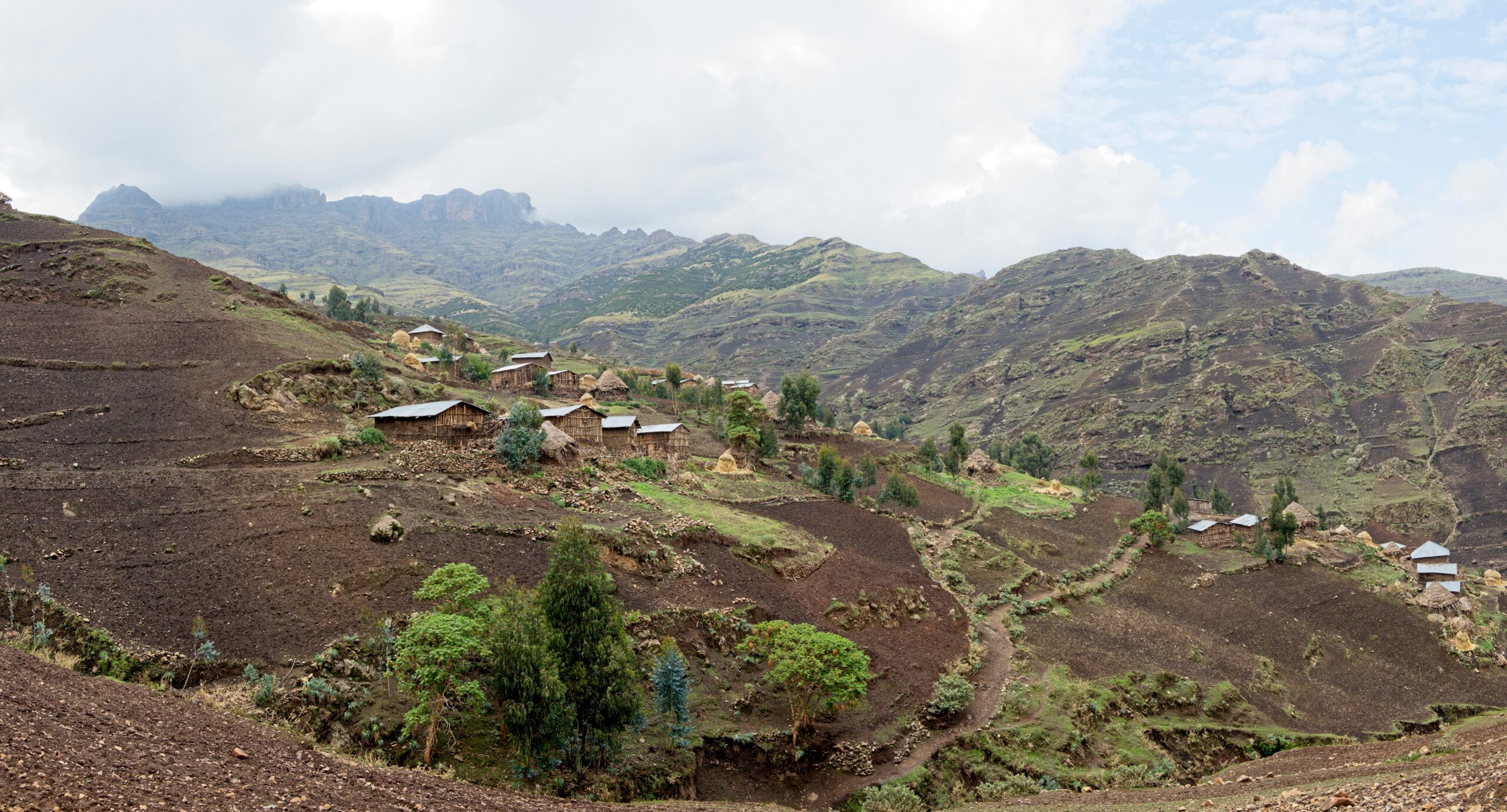
Ras Dashen (also spelled Ras Dejen) is Ethiopia’s highest peak and the fourth-highest in Africa. Rising from the Simien Mountains of northern Ethiopia within Simien Mountains National Park — a UNESCO World Heritage Site established in 1978 — Ras Dashen is a trekking summit rather than a technical climb, reached by a multi-day traverse across the remarkable Simien Highlands. The surrounding landscape is unlike anywhere else in Africa: dramatic escarpments and canyons carved into the ancient Ethiopian Highlands, abundant populations of endemic wildlife including gelada monkeys (the world’s only grass-eating primate), Walia ibex, and Ethiopian wolves.
The standard Ras Dashen trek typically runs 7-10 days from Debark town, crossing the Simien escarpment at Sankaber and Chennek before the summit climb itself. The peak is a non-technical walk-up from a high camp — the real challenge is the cumulative altitude exposure across the traverse and the distances involved. Ras Dashen sees far fewer visitors than Kilimanjaro (a few hundred summits per year compared to Kilimanjaro’s tens of thousands), making this one of Africa’s quietest high-altitude experiences. The route cost is also significantly lower: typical trips run $800-$1,500 for 7-10 day programs.
Beyond the summit itself, Simien Mountains National Park offers some of the most culturally authentic highland experiences in Africa. Trekkers pass through Amhara villages, camp near mountain communities, and hire local guides, scouts (mandatory — scout fees go to local communities), and mules. The park’s elevation range (2,000-4,550m) and scenic drama make it a preferred destination for climbers seeking African altitude without the Kilimanjaro circus. Best season is the dry October-March window; the summer rainy season (June-September) makes high-altitude trekking challenging.
Full Ras Dashen climb guide →Mount Karisimbi
Mount Karisimbi is the highest peak in the Virunga volcanic chain, straddling the Rwanda-DRC border at the heart of one of Africa’s most biologically significant protected areas. The name derives from the Kinyarwanda word amasimbi meaning “white shell,” referring to the occasional snow that falls on the summit during the cold season — a rarity for an equatorial volcano. Karisimbi is dormant (last eruption dated to prehistoric times) and forms part of the mountain gorilla habitat that makes the Volcanoes National Park internationally famous. Many climbers who summit Karisimbi combine the trip with gorilla tracking, the region’s primary tourism activity.
The standard Karisimbi climb is a 2-day program from the Bisate or Kinigi trailheads on the Rwandan side. Day 1 climbs to a high camp at approximately 3,700m through bamboo forest and giant senecio groves; Day 2 is a pre-dawn push through alpine vegetation to the summit. The climb is physically demanding due to altitude and consistent steep terrain but requires no technical skills. The mountain is often misty and cold — proper layering and rain gear are essential year-round. Costs run approximately $400-$800 for guided Rwandan-side climbs including park fees and porter services.
Karisimbi exists within a broader Virunga climbing complex that includes Mount Bisoke (3,711m, featuring a stunning summit crater lake), Mount Mikeno (4,437m, on the DRC side), Mount Sabyinyo (3,669m, on the Rwanda-Uganda-DRC tripoint), and the active volcanoes Nyiragongo and Nyamuragira. Many visitors who come for mountain gorilla trekking add a day hike to Bisoke (easier and more scenic) rather than the Karisimbi summit. For climbers prioritizing the highest Virunga peak specifically, Karisimbi is the answer — but the region rewards broader exploration.
Full Mount Karisimbi climb guide →Jebel Toubkal
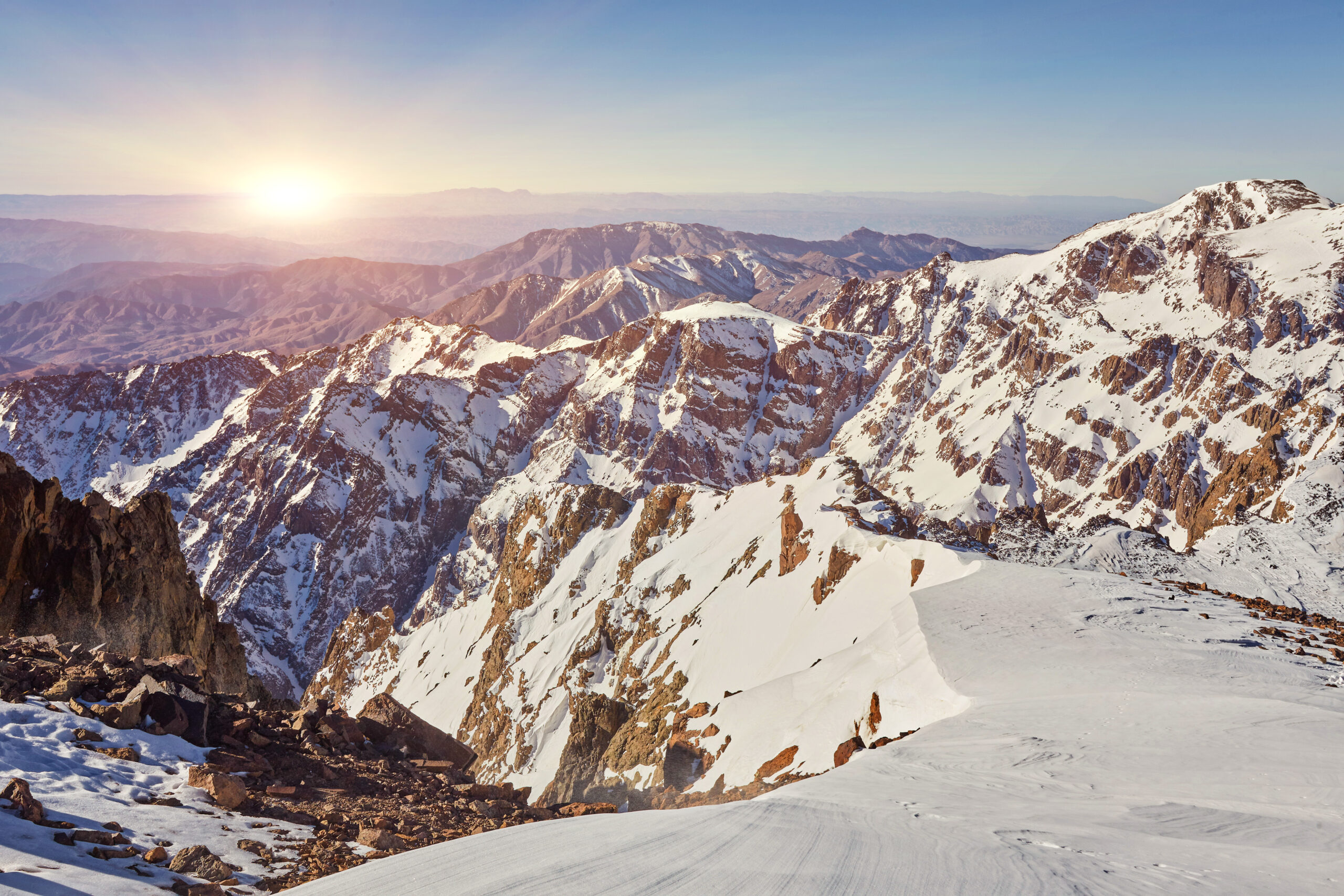
Jebel Toubkal is the highest peak in North Africa and the anchor of Morocco’s High Atlas Mountains. Rising roughly 60 kilometers south of Marrakech, Toubkal offers something unique among African peaks: genuine accessibility. The mountain can be climbed in a 2-day trip from Marrakech, making it the only African 4,000+ meter peak that fits into a short-trip itinerary. The first confirmed European ascent was in 1923 by the Marquis de Segonzac with French climbers, though local Berber shepherds had undoubtedly reached the summit previously. The peak sits within Toubkal National Park, Morocco’s most visited mountain area.
The standard Imlil to Toubkal Refuge route is the classic 2-3 day approach. Day 1: drive from Marrakech to Imlil (1,740m), then hike 4-5 hours up the Mizane Valley through Berber villages to the Toubkal Refuge (3,207m). Day 2: alpine start at 4-5 AM, climb the South Cwm (summer) or South Couloir (winter) to the summit in 3-4 hours. Descend to Imlil the same day. Summer ascents (April-November) are non-technical hikes; winter ascents (December-March) require mountaineering skills — crampons, ice axe, and avalanche awareness. Winter Toubkal is a legitimate alpine climb.
Jebel Toubkal has distinctive cultural context that sets it apart from most African climbs. The approach passes through Berber villages where traditional Amazigh culture remains vibrant, and climbing trips are typically guided by local Berber mountain guides — the oldest organized mountain guiding tradition in Africa. Costs are low: $250-$500 for guided 2-3 day programs, with additional options for multi-peak traverses (Ouanoukrim, Afella, Timesguida) to extend the trip. Toubkal is an excellent choice for climbers seeking a short African adventure, a winter mountaineering objective, or a cultural add-on to a Morocco vacation.
Full Jebel Toubkal climb guide →Mount Cameroon
Mount Cameroon is the highest peak in West Africa and one of the most active volcanoes on the continent — the mountain has erupted at least seven times in recorded history (most recently in 2012), with flows that have reached as close as 5 kilometers from the coastal town of Buea. Known locally as Mongo ma Ndemi (“Mountain of Greatness”) in the local Bakweri language, the volcano rises almost directly from the Atlantic coast, making it one of the only significant mountains in the world whose base elevation is sea level and whose summit reaches 4,000m+ — the vertical gain is essentially the peak’s full height.
The standard Guinness Route from Buea is a 3-day program named after the Guinness Cameroon Mountain Race (the world’s toughest footrace — 4,040m of ascent and descent in under 5 hours by elite runners). Regular climbers take 3 days: Day 1 climbs to Hut 1 (1,870m); Day 2 continues to Hut 2 (2,850m) and the summit; Day 3 descends to Buea. The climb passes through rainforest, tropical highlands, and finally volcanic moonscape on the upper mountain — dramatically different biomes within a single climb. No technical skills are required; the challenge is sustained ascent on variable volcanic terrain.
Mount Cameroon’s relative obscurity is both its challenge and its charm. The mountain sees perhaps a few hundred foreign climbers per year, compared to Kilimanjaro’s tens of thousands. Infrastructure is basic — the “huts” are simple shelters, guide services are local rather than international, and permit systems run through the Limbe Ecotourism office. Guided climbs cost approximately $300-$500 for 3-day programs. For climbers seeking a genuine off-the-beaten-path African peak with active volcanism and coastal rainforest-to-summit ecology, Mount Cameroon is a distinctive objective. November through April (dry season) is the only practical climbing window; wet season rains make the mountain largely inaccessible.
Full Mount Cameroon climb guide →Thabana Ntlenyana
Thabana Ntlenyana — meaning “beautiful little mountain” in Sesotho — is the highest peak in Southern Africa and the highest point in the Kingdom of Lesotho, the small landlocked country entirely surrounded by South Africa. The peak sits in the Drakensberg escarpment region (known as Maloti on the Lesotho side), within the UNESCO-listed Maloti-Drakensberg Park transfrontier reserve. At 3,482m, Thabana Ntlenyana is the lowest-elevation peak on Africa’s major mountaineering list, but its position in Southern Africa gives it particular significance as the continent’s southern-most high-altitude destination.
The standard climb from Sani Pass is a moderate multi-day trek — typically 2-3 days of hiking through rolling highland terrain at consistent altitude above 2,800m. The peak itself is a non-technical walk-up from a high camp. The surrounding Maloti-Drakensberg region is rich with San rock art sites, high-altitude Basotho shepherd villages, and dramatic escarpment scenery. Access is typically via Sani Pass Road (a legendary 4WD pass that drops from Lesotho’s 2,874m border post to KwaZulu-Natal below) or from Mokhotlong town on the Lesotho side.
What makes Thabana Ntlenyana distinctive is the Basotho highland culture that surrounds it. Lesotho is one of the few places on earth where traditional horse-riding pastoral life continues as a functional rather than performative tradition — climbers pass through villages where men still wear traditional blankets and shepherds use horses as primary transport in the highlands. The climbing season is opposite to East African peaks: April through September (Southern Hemisphere autumn-winter-spring) offers the dry stable conditions needed for trekking. Summer rains (November-March) make the highlands difficult. Costs are minimal — $200-$400 for 3-4 day guided programs.
Full Thabana Ntlenyana climb guide →Mount Nyiragongo
Mount Nyiragongo is one of the most dangerous and visually spectacular active volcanoes on earth — home to the world’s largest permanent lava lake, visible bubbling in the summit crater 400 meters below the rim. The mountain has erupted at least 34 times since 1882, with the most catastrophic events occurring in January 2002 (which destroyed much of nearby Goma, Congo’s largest eastern city, and killed approximately 250 people) and May 2021 (which killed 32 people and again damaged Goma’s suburbs). Nyiragongo sits within Virunga National Park, Africa’s oldest national park, established in 1925 primarily to protect mountain gorillas.
The standard Nyiragongo summit climb is a moderate 2-day program from Kibati Ranger Station near Goma. Day 1: 4-6 hours of steep hiking through tropical forest and volcanic moonscape to the crater rim at 3,470m, where simple wooden cabins perch above the lava lake; Day 2: descend at dawn. The physical climb is not difficult — the elevation gain is roughly 1,500 meters over varied volcanic terrain. The experience of watching the glowing orange lava lake through the night from the crater rim is what draws climbers; very few geological features on earth match this spectacle for accessibility.
The security dimension complicates every Nyiragongo trip. Eastern DRC has ongoing armed conflict related to regional instability, and Virunga National Park has lost more than 200 rangers to armed groups over the past two decades. Climbs were entirely suspended after the May 2021 eruption and have resumed intermittently since 2022 under shifting security conditions. Every climb is conducted with armed Virunga National Park ranger escorts, and visitors must book through official park channels (visitvirunga.org). Costs are $300-$500 for the 2-day program. Travelers should verify current operational status and security conditions immediately before booking — this is Africa’s most politically complex climbing destination.
Full Mount Nyiragongo climb guide →All 7 Kilimanjaro Routes: Complete Comparison
Choosing the right Kilimanjaro route is the single most important decision in planning a Kilimanjaro climb — the route determines your success probability, your scenery, your cost, and the overall character of your experience. There are seven established routes to Uhuru Peak, each with distinct character and trade-offs. The comparison below covers all seven with success rates, duration, and key considerations.
Machame Route — “Whiskey Route”
The most popular Kilimanjaro route, approaching from the south via Machame Gate through stunning varied scenery. Good “climb high, sleep low” acclimatization profile with the Lava Tower detour on day 3. 7-day Machame has significantly better success rates than 6-day. Camping only (no huts). Can be crowded during peak season; expect 300+ climbers starting the same day in July-August.
Lemosho Route
Widely considered the best all-around Kilimanjaro route. Approaches from the western Shira Plateau, provides excellent acclimatization over 8 days, offers the most varied scenery of any route (crosses the entire mountain west-to-east), and has lower crowds than Machame. 8-day Lemosho is the most recommended route for first-time Kilimanjaro climbers who want realistic summit chances.
Northern Circuit
Kilimanjaro’s longest standard route, circling the mountain entirely before summiting. Highest success rate of any Kilimanjaro route due to extensive acclimatization time. Lowest crowds — the northern side sees very few climbers. Higher cost reflects the extra days. Best choice for climbers prioritizing summit probability or wanting the most complete Kilimanjaro experience.
Marangu Route — “Coca-Cola Route”
The only route with hut accommodation (no tents needed). Historically the cheapest and most direct route — also the one with the lowest summit success rate due to short duration and poor acclimatization profile. The “Coca-Cola” nickname refers to the huts’ cold drink availability, not easiness. Consider this only if you cannot physically tent camp or must climb as cheaply as possible. Not recommended for first-timers seeking summit success.
Rongai Route
The only Kilimanjaro route approaching from the north. Drier and less scenic than the southern routes (rainforest is thinner on the north side). Preferred during the rainy seasons (April-May, November) because the northern side receives less precipitation. Moderate crowds. Reasonable option for climbers seeking less tourist traffic or visiting during shoulder-season months.
Umbwe Route
The steepest and most direct Kilimanjaro route — widely considered the hardest due to limited acclimatization time and consistently demanding gradients. Very few climbers choose this route (only 2-3% of total Kilimanjaro traffic). Recommended only for experienced climbers with proven altitude tolerance who want privacy and a physically harder experience. Not suitable for beginners despite being physically possible.
Shira Route
A variation of the Lemosho Route that starts higher on the Shira Plateau (approximately 3,500m) via 4WD access. Saves a day of hiking but adds altitude exposure — climbers are immediately at 3,500m without the gradual acclimatization that the full Lemosho provides. Some operators still offer Shira but it’s less recommended than full Lemosho. Consider it only if time is constrained.
First-time Kilimanjaro climber: Lemosho (8 days). Priority on summit success: Northern Circuit (9 days). Budget-constrained: Machame (7 days, not 6). Physical limitations requiring hut accommodation: Marangu (7 days if possible, not 5). Experienced climber wanting solitude: Umbwe or Rongai. The single most important variable is duration — adding a day almost always improves success rates. Never choose a 5-6 day itinerary as your first Kilimanjaro attempt.
The Virunga Volcanoes: Climbing Among Mountain Gorillas
The Virunga Mountains form a transnational volcanic chain spanning eight peaks across the Rwanda-DRC-Uganda tripoint. For climbers, this region offers something unique: a combination of active volcano climbing, mountain gorilla trekking, and genuine political complexity that distinguishes Virunga trips from any other African mountaineering experience. The region’s protected areas — Virunga National Park (DRC), Volcanoes National Park (Rwanda), and Mgahinga Gorilla National Park (Uganda) — were established primarily to protect the mountain gorilla population, and climbing here exists within that broader conservation context.
The Active Volcanoes
Three of the Virunga peaks are active. Nyiragongo (3,470m, DRC) holds the world’s largest permanent lava lake and is the most dramatic climbing experience in the region — detailed in its peak card above. Nyamuragira (3,058m, DRC) is Africa’s most active volcano, erupting nearly continuously, and is generally not climbed as an objective due to active lava flows. Karisimbi (4,507m, Rwanda/DRC) is technically dormant but still classified as active — its summit is the highest point in the Virunga chain.
The Dormant Peaks
The remaining Virunga peaks are dormant and climbable as moderate trekking objectives. Mount Mikeno (4,437m, DRC) is the second-highest Virunga peak but rarely climbed due to DRC security issues. Mount Bisoke (3,711m, Rwanda) features a stunning summit crater lake and is often climbed as a half-day alternative to Karisimbi for visitors doing gorilla treks. Mount Muhabura (4,127m, Rwanda/Uganda) and Mount Sabyinyo (3,669m, Rwanda/Uganda/DRC tripoint) are accessible from both countries. Mount Gahinga (3,474m, Rwanda/Uganda) is the smallest.
Security and the 2021 Eruption Context
The May 22, 2021 eruption of Nyiragongo killed 32 people, displaced 400,000 from Goma, and triggered a broader security re-evaluation of Virunga tourism. Combined with the ongoing armed conflict in eastern DRC (where multiple rebel groups operate in Virunga National Park territory), Nyiragongo climbs were suspended for extended periods. The park has resumed operations intermittently since 2022, but visitors must verify current operational status directly with Virunga National Park (visitvirunga.org) before planning trips. Rwandan-side climbs (Karisimbi, Bisoke) have remained consistently accessible throughout this period.
Gorilla Tracking as the Primary Context
The Virunga region’s defining activity is mountain gorilla trekking rather than volcano climbing. Approximately 1,000 mountain gorillas exist worldwide, all in the Virunga-Bwindi ecosystem. Rwanda Development Board permits cost $1,500 per person for one-hour gorilla encounters (reduced from peak 2022 pricing); Uganda permits are $800; DRC permits (when accessible) are $400. Most climbing visitors combine 1-2 gorilla treks with a Virunga volcano climb — this is the standard Virunga trip structure, and the gorilla experience typically exceeds the climbing experience in emotional impact for most visitors.
More than any other African climbing destination, Virunga trips require checking current conditions at booking time rather than relying on guides written even a few months prior. Political situations shift, volcanic activity changes, and park operations respond. Official sources: visitvirunga.org (DRC), visitrwanda.com (Rwanda), and the Uganda Wildlife Authority (Uganda). The U.S. State Department’s DRC travel advisory should also be reviewed before planning Nyiragongo trips specifically.
Africa as Altitude Training for Everest and Denali
Africa holds a specific position in the global mountaineering training pathway: it’s where many climbers go to first experience serious altitude. Kilimanjaro at 5,895m puts climbers deeper into the altitude zone than any peak in North America, Europe, or Oceania — only the Andes offer comparable altitude exposure without the technical demands of the Himalaya or Alaska. This makes Africa’s three highest peaks (Kilimanjaro, Mount Kenya, and Mount Stanley) central to most Everest and Denali preparation pathways.
What Africa teaches climbers is altitude tolerance without technical overhead. On Kilimanjaro, a climber can spend 4-5 days above 4,000m, sleep above 4,500m for multiple nights, and reach 5,895m — testing their physiological response to altitude without simultaneously managing glacier travel, crevasse hazard, or technical climbing. This is invaluable data before committing to a $40,000+ Everest expedition where altitude failure would end the trip early. Many Everest aspirants report that Kilimanjaro success or failure dramatically informed their decisions about whether to attempt eight-thousanders.
Kilimanjaro: The Altitude Test
At 5,895m, Kilimanjaro is roughly equivalent to Everest Base Camp altitude (5,364m) plus some margin. Climbers who comfortably summit Kilimanjaro via a 7-8 day route have demonstrated good altitude tolerance in the expedition-camping zone. Most Everest guide services recommend or require a Kilimanjaro summit before accepting clients. Combined with Aconcagua (6,961m) and Denali (6,190m), Kilimanjaro provides a well-calibrated altitude progression before attempting an eight-thousander.
Mount Kenya: Technical Add-on
For climbers pursuing Denali (which requires technical glacier climbing), Mount Stanley is the better Africa preparation peak. For climbers pursuing Everest (largely non-technical in its “standard” guided form but at extreme altitude), Mount Kenya’s Point Lenana adds altitude testing without the Kilimanjaro crowds. Batian (5,199m technical route) specifically builds skills for technical alpine objectives and is rarely used as pure altitude prep.
Mount Stanley: Glaciated Africa
Mount Stanley’s Margherita Peak route is Africa’s one genuinely glaciated major climb — crampons, ice axe, roped glacier travel, and technical snow climbing all required. For Denali-bound climbers who have not done extensive Alaska Range or Cascades climbing, Mount Stanley provides a valuable test of glacier skills at 5,000m altitude. The combination (technical + altitude + expedition length) is a closer analog to Denali than Kilimanjaro despite lower elevation.
Ras Dashen: Acclimatization Traverse
For climbers who struggle with altitude but want an African experience without the Kilimanjaro commitment, Ras Dashen’s Simien Mountains traverse provides 7-10 days above 3,500m with a 4,550m summit — similar altitude exposure to Kilimanjaro at lower intensity and lower cost. The traverse-style itinerary also mimics Himalayan trek-style acclimatization more closely than Kilimanjaro’s single-mountain push.
For climbers working toward Everest or Denali, the typical Africa-inclusive progression looks like: (1) Alpine training peaks at 3,000-4,000m (Cascades, Alps, or Mount Kenya Lenana), (2) Kilimanjaro at 5,895m for altitude tolerance testing, (3) Aconcagua at 6,961m for sustained altitude exposure, (4) Denali at 6,190m for glaciated expedition skills, then (5) an 8,000-meter peak or Everest. Kilimanjaro’s role is specifically step 2 — the altitude benchmark. See our what to climb before Everest guide for the full pathway.
Best Time to Climb in Africa
Africa’s climbing seasons vary significantly by region. East African peaks follow a two-dry-season pattern; Morocco follows a Northern Hemisphere pattern; Southern Africa follows an inverted pattern. Understanding which season suits which peak is essential for trip planning.
East African Peaks (Kilimanjaro, Mount Kenya, Mount Stanley)
East Africa has two dry seasons: the short dry period of January-March and the long dry period of June-October. Both work for climbing, with distinct character:
- January-March: Warmer, slightly wetter than June-October, but generally stable. Preferred for climbers who don’t tolerate cold well. Higher crowds on Kilimanjaro in January and February.
- June-October: Cooler, drier, and more stable. The peak Kilimanjaro season. July-September sees the highest traffic — book major routes 6-12 months in advance for prime dates.
- Shoulder (April-May, November): Rainy seasons. Climbing is possible but rain is frequent, trails are muddy, and views are limited. Lower costs, fewer crowds. Rongai Route (north side) is less affected by rains.
Ethiopian Highlands (Ras Dashen)
Ethiopia’s dry season runs October through March, with peak trekking conditions in November-February. The April-September rainy season makes Simien Mountains trekking difficult — mud, flooded trails, and limited visibility.
Morocco (Jebel Toubkal)
Morocco’s climbing season is split by winter’s alpine conditions:
- Summer (April-November): Non-technical hiking conditions. Peak visitation in July-August (hot but scenic).
- Winter (December-March): Full alpine conditions. Technical climb requiring crampons, ice axe, and avalanche awareness. Popular with European winter climbers.
Virunga Mountains (Karisimbi, Nyiragongo)
Dry seasons: June-September and December-February. Climbs operate year-round but dry seasons offer firmer trails, clearer views, and better gorilla tracking conditions.
Southern Africa (Thabana Ntlenyana)
Southern Hemisphere’s dry winter is the climbing season: April through September. Summer rains (November-March) make the Drakensberg highlands largely inaccessible for trekking. Winter can be cold — expect sub-freezing overnight temperatures at altitude.
West Africa (Mount Cameroon)
Dry season only: November through April. The wet season (May-October) receives extreme rainfall that makes the mountain largely inaccessible and creates genuinely dangerous conditions on the upper slopes.
Frequently Asked Questions About Climbing in Africa
What is the highest peak in Africa?
Mount Kilimanjaro in Tanzania is the highest peak in Africa at 5,895 meters (19,341 feet). Its summit, Uhuru Peak, is one of the Seven Summits — the highest peak on every continent — and the most summited 5,000-meter peak in the world. Mount Kenya is Africa’s second-highest at 5,199m, followed by Mount Stanley (Margherita Peak) on the Uganda-DRC border at 5,109m. The continent’s top three peaks are all in the Eastern Africa region and are all heavily glaciated, though Kilimanjaro’s glaciers are projected to disappear by roughly 2050 due to climate change.
Can a beginner climb Mount Kilimanjaro?
Yes — Mount Kilimanjaro is the most accessible of the Seven Summits and has no technical climbing requirements. The summit can be reached by any physically fit hiker without prior mountaineering experience, provided they follow a route of sufficient length (7-9 days) to allow proper acclimatization. The challenge is altitude, not technique: Uhuru Peak at 5,895m puts climbers in the “extreme altitude” zone. The 5-6 day Marangu Route has low summit success rates (approximately 27-45%), while the 8-9 day Lemosho or Northern Circuit routes achieve 85%+ success rates. Beginners should choose longer routes for higher success.
Which Kilimanjaro route is best?
The Lemosho Route (7-8 days) is widely considered the best all-around Kilimanjaro route, combining the highest success rates (~85-90%), excellent scenery through all 5 climate zones, lower crowds than Machame, and proper acclimatization through its “climb high, sleep low” profile. The Northern Circuit (9 days) has the highest success rates of any Kilimanjaro route (~95%) but takes longer and costs more. The Machame Route (6-7 days) is the most popular for its scenery but has higher traffic. The Marangu Route is the cheapest and easiest logistically but has the lowest success rates. Beginners should choose 8+ day routes.
How much does it cost to climb Kilimanjaro?
Kilimanjaro climb costs typically range from $2,000 to $6,000+ per person depending on route length, operator quality, and group size. Budget operators charge $1,800-$2,500 for 6-7 day trips (often with insufficient guide ratios and marginal safety standards). Mid-range reputable operators charge $2,800-$4,000 for 7-8 day climbs with proper safety, food quality, and guide ratios. Premium operators charge $4,500-$7,000+ for 8-9 day Lemosho or Northern Circuit programs. These costs include park fees (~$900-$1,200 alone in 2026), crew wages, food, tents, and guide services. Flights to Tanzania are separate, typically $1,200-$2,500 from North America or Europe.
Is Mount Kenya harder than Kilimanjaro?
Mount Kenya and Kilimanjaro are harder in different ways. Kilimanjaro (5,895m) is higher and poses a greater altitude challenge but requires no technical climbing — any fit hiker can summit via the standard routes. Mount Kenya’s true summit, Batian (5,199m), requires technical rock climbing at UIAA IV+ grade (roughly 5.7 by US standards) and is only accessible to experienced rock climbers. Most visitors to Mount Kenya climb Point Lenana (4,985m) — the third-highest summit and a non-technical trekking objective. Point Lenana is easier than Kilimanjaro’s summit; Batian is significantly harder than anything on Kilimanjaro.
Is it safe to climb Mount Nyiragongo?
Mount Nyiragongo is in the Democratic Republic of the Congo’s Virunga National Park, an area with ongoing security concerns related to armed groups. Climbs were suspended after the May 2021 eruption that destroyed parts of Goma and killed 32 people, and have resumed intermittently since 2022 under varying security conditions. When climbs operate, they’re conducted exclusively through Virunga National Park authorities with armed ranger escorts. The climb itself — a 2-day trek to view the world’s largest permanent lava lake from the crater rim — is physically moderate but the security dimension makes this the most specialized African climb. Travelers should check Virunga National Park’s current operational status before planning.
When is the best time to climb in Africa?
The best time varies significantly by region. For East African peaks (Kilimanjaro, Mount Kenya, Mount Stanley), two dry seasons work best: January-March and June-October, with January-February offering slightly warmer conditions and June-September slightly drier. Ethiopian Highlands (Ras Dashen) are best October-March during the dry season. Morocco’s Jebel Toubkal is best in spring (April-May) and autumn (September-November), with winter ascents requiring technical snow skills. The Virunga volcanoes (Nyiragongo, Karisimbi) can be climbed year-round but dry seasons (June-August and December-February) offer better trail conditions. Southern Africa’s Drakensberg (Thabana Ntlenyana) is best in the dry winter: April-September.
Is Kilimanjaro good training for Everest?
Kilimanjaro is useful but limited as Everest preparation. The mountain teaches altitude tolerance at 5,895m and builds the mental endurance needed for multi-day expedition routines — both valuable for bigger objectives. However, Kilimanjaro requires no technical skills (no glacier travel, no crevasse rescue, no crampon use), which means the harder technical demands of Everest, Denali, or Aconcagua must be learned elsewhere. Most Everest aspirants climb Kilimanjaro early in their progression for altitude testing, then move to Aconcagua (6,961m) or Denali (6,190m) for technical development before attempting an eight-thousander. Mount Kenya’s Point Lenana route is a similar altitude-focused objective.
What is Africa’s most technical climb?
Mount Kenya’s Batian Peak (5,199m) is Africa’s most technical major peak, requiring sustained rock climbing at UIAA IV+ to V+ grade (US 5.7-5.9) on its standard Normal Route. The North Face Standard Route is considered the easiest line to Batian’s true summit and involves 12+ pitches of alpine rock climbing. Mount Stanley’s Margherita Peak (5,109m) in the Rwenzori Range involves glaciated mountaineering with crampons and ice axe, steep snow climbing, and crevasse navigation — Africa’s most technically glaciated standard route. For pure rock climbing difficulty, Batian’s harder variations rival alpine routes in Europe. Kilimanjaro has no technical requirements on any standard route.
Do you need a permit to climb Kilimanjaro?
Yes — all Kilimanjaro climbs require permits from Kilimanjaro National Park (KINAPA), and climbing independently is prohibited. Climbers must book through a licensed tour operator who arranges permits, guides (mandatory), porters, and park fees. 2026 park fees include approximately $70 per day conservation fee, $50 per day camping fee (or $60-$70 for huts on the Marangu Route), and a $20 per climb rescue fee — typically adding up to $900-$1,200 in park fees alone for a 7-8 day climb. Similar requirements exist for Mount Kenya (Kenya Wildlife Service permits) and Mount Stanley (Uganda Wildlife Authority). Most other African peaks have simpler, cheaper permit systems.
Plan Your Africa Climb
For expedition-level planning on each peak, see our dedicated climb guides. Each covers routes, permits, gear, training, and logistics in depth.
Your Africa Trip, Whatever Form It Takes
First-time climbers: Kilimanjaro via the 8-day Lemosho Route. Altitude testing for Everest aspirants: the same, as the classic benchmark. Technical alpinists: Mount Kenya’s Batian or Mount Stanley’s Margherita Peak. Those seeking something less crowded: Ras Dashen’s Simien traverse or Jebel Toubkal in winter. Each path starts with the relevant peak guide.
Mount Kilimanjaro


Mount Kenya