Last updated September 9, 2026

Camino de Santiago: Choose Your Route, Plan Your Walk & Reach Santiago
The Camino de Santiago is not one trail. It is a network of historic pilgrimage routes that converge on Santiago de Compostela, with the Camino Francés, Portugués, Norte, Primitivo and Inglés offering very different combinations of distance, terrain, solitude, culture and pilgrim infrastructure. This hub helps you choose the right Camino first, then sends you to the route and planning guide that owns the details.
Start by Choosing the Camino That Fits Your Time and the Experience You Actually Want.
Choose the Camino Francés if you want the classic social pilgrimage, the deepest albergue network and the easiest route to break into shorter sections. Choose the Camino Portugués if you want a shorter first Camino with a choice between inland heritage and Atlantic coast. Choose the Camino del Norte if scenery and quieter walking matter more than easy logistics. Choose the Camino Primitivo if you want the historic original route and are comfortable with more climbing. Choose the Camino Inglés from Ferrol if you have about a week and still want a continuous route long enough to meet the normal Compostela walking threshold.
If your first question is not which route but how to make the trip work—flights, starting points, daily stages, baggage, albergues, money and the final arrival—use the How to Walk the Camino de Santiago planning guide.
Choose Your Camino de Santiago Route
The yellow arrows eventually point toward the same city, but the weeks before Santiago can feel completely different. Choose on terrain, time, lodging density and social rhythm—not simply on which route name you have heard most often.
Camino Francés · The French Way
The classic Camino crosses the Pyrenees, Navarre, La Rioja, Castilla y León and Galicia. It is the easiest route for a first-time pilgrim to understand because the waymarking, albergue density, cafés, pilgrim services and social community are exceptionally developed. The first Pyrenean stage is a serious start, but the route later settles into long agricultural, village and rolling-hill stages.
Best for: first full Camino, social walking, flexible start points, history, first solo pilgrimage.
Open the Camino Francés guide →Camino Portugués · Central & Coastal
The Portuguese routes create one of the cleanest first-Camino choices for walkers who cannot devote five weeks to Spain. From Porto, the Central Way uses old towns, rural lanes and historic inland corridors; the Coastal Way stays closer to the Atlantic before joining the inland line near Redondela. Tui and A Guarda create shorter Galician starts.
Best for: 10–14 day trips, couples, first international walking trips, Atlantic scenery, travelers combining Portugal and Spain.
Open the Camino Portugués guide →Camino del Norte · The Northern Way
The Northern Way tracks Spain’s Cantabrian side through Basque Country, Cantabria and Asturias before entering Galicia. It is greener, wetter and generally more undulating than the Francés. Large towns and resort areas interrupt the rural rhythm, but ocean views, beaches and a lower-density pilgrim scene make it compelling for walkers who do not need constant Camino company.
Best for: coast, food, cooler summer walking, experienced travelers, solitude without extreme remoteness.
Open the Camino del Norte guide →Camino Primitivo · The Original Way
The Primitivo follows the line associated with Alfonso II and the earliest royal pilgrimage to Santiago. It is shorter than the big routes but not easier: repeated climbs, mountain weather and longer rural stretches reward walkers who already know they can handle back-to-back hiking days. Its historical identity is unusually strong, and the route joins the Camino Francés near Melide for the final approach.
Best for: stronger hikers, quieter stages, mountain terrain, historical depth, a two-week pilgrimage.
Open the Camino Primitivo guide →Camino Inglés · The English Way
Medieval pilgrims from Britain, Ireland, Flanders and Scandinavia arrived by sea and continued overland to Santiago. Today Ferrol gives time-limited walkers one of the most coherent short Caminos: it is long enough to exceed the normal 100-kilometre Compostela threshold while still fitting inside a week. The A Coruña branch is historically important but shorter than 100 kilometres by itself.
Best for: first short Camino, one-week vacations, British Isles connections, walkers who want a full named route rather than only the final stages of a longer one.
Open the Camino Inglés guide →How to Walk the Camino de Santiago
Once you have chosen a route, the remaining decisions become practical: where to start, how far to walk each day, how to get there, what to reserve, how the pilgrim passport works, when to transfer a bag, what to carry and how to handle the final day in Santiago. This page owns that planning sequence so the route pages can stay focused.
Best for: turning a chosen Camino into an actual trip.
Open the master Camino planning guide →Camino Routes Compared
Distances vary slightly by variant, accommodation choice and exact start point. Use these as route-selection numbers; use each route guide for stage-by-stage planning.
| Route | Common full start | Approx. full distance | Typical time | Physical feel | Pilgrim density | Best reason to choose it |
|---|---|---|---|---|---|---|
| Camino Francés | Saint-Jean-Pied-de-Port | ~780 km | 32–38 days | Moderate Hard opening Pyrenees; long cumulative mileage. | Highest | Classic social Camino with the deepest service network. |
| Camino Portugués | Porto | ~250 km Central / ~280 km Coastal | 10–14 days | Easy–Moderate Generally gentler than Norte or Primitivo. | High | Shorter international pilgrimage with Portugal + Spain. |
| Camino del Norte | Irún | ~800 km | 35–40 days | Moderate–Hard Frequent ups and downs; wetter climate. | Lower | Atlantic scenery and a quieter walking culture. |
| Camino Primitivo | Oviedo | ~300–320 km | 12–15 days | Harder Mountainous, steeper, more weather exposed. | Medium–Low | Historic original route and stronger hiking character. |
| Camino Inglés | Ferrol | 112.4 km | 5–6 days | Moderate Short, rolling, compact. | Medium | A complete named Camino that fits roughly one week. |
Route-number note: official agencies publish different figures depending on whether they measure the route inside Spain, inside Galicia, from a traditional international start, or by a specific variant. That is why one source may describe the Francés as 738 km in a UNESCO property, another as roughly 780 km from Saint-Jean-Pied-de-Port, and another as more than 800 km from a Spanish branch. For trip planning, the start point matters more than arguing over a single universal total.

The Camino Is a Pilgrimage Network, Not a Long-Distance Trail with a Religious Theme Added Later.
Its roads, bridges, churches, hospitals, hostels, towns and rituals developed around movement toward the shrine of Saint James. Modern hikers can walk for many reasons, but understanding that history changes how the route makes sense.
What Makes the Camino de Santiago a Pilgrimage?
The Cathedral of Santiago describes the Way as a means of arriving at the Tomb of Saint James. That destination gives the Camino a structure that a normal thru-hike does not have.
Santiago Is the Point of Convergence
Traditional routes begin in different countries and cities, but the pilgrimage direction is toward Santiago de Compostela and the Cathedral associated with the tomb of the Apostle James. A walker may start at Saint-Jean, Porto, Oviedo, Ferrol, Sarria or a front door much farther away; the destination is what makes the network coherent.
Shells, Arrows and a Shared Walking Language
The scallop shell and yellow arrow form a practical wayfinding system and a cultural vocabulary. They point ahead, but they also tell walkers that they have entered a route shaped by centuries of arrivals, departures and hospitality. Modern signage is not identical from region to region, so a current route app or guide remains useful.
Albergues Change the Social Structure of the Walk
Pilgrim hostels create repeated communities. The person at breakfast may reappear three villages later, at a communal dinner, in the next albergue and finally in Obradoiro Square. That recurring social rhythm is one reason the Camino Francés feels different from an ordinary point-to-point trek.
The Journey Is Recorded as You Move
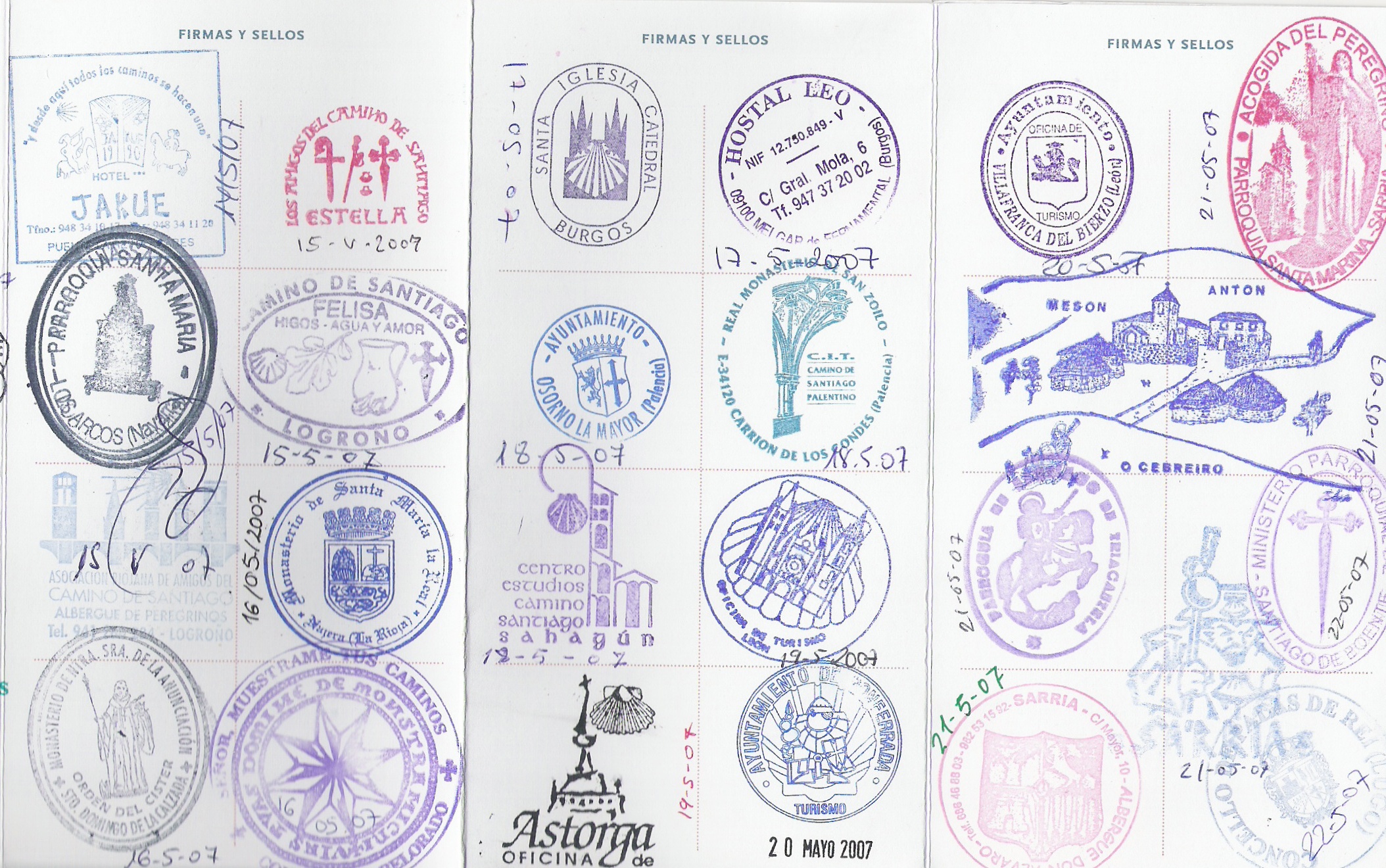
The Credencial del Peregrino is stamped along the road. Historically, a pilgrim carried proof of status and movement; today the credential still identifies the walker, can be required for pilgrim lodging, and documents the route for the traditional Compostela.
Read the Credencial & Compostela guide →Arrival Is More Than a Finish Line
For religious pilgrims, the Cathedral, tomb, liturgy and long-standing arrival rites are central. For secular walkers, the same final approach can still carry personal meaning without claiming a faith the walker does not hold. Respecting the religious purpose of the destination does not require pretending every traveler shares it.
People Walk for Different Reasons
Some walk as an act of Christian faith. Others walk after loss, retirement, illness, transition, curiosity, a love of Spain, a desire for quiet or simply because they want to cross a country under their own power. Those motivations can coexist without collapsing the Camino’s Christian history into generic spirituality.
Do you have to be religious to walk? →Which Camino Fits the Time You Have?
A shorter pilgrimage is not a lesser pilgrimage. The strongest itinerary is one you can walk without turning every day into a mileage test.
5–7 Days · Camino Inglés from Ferrol
Choose this when you want a named historic route from its recognized start and a genuine beginning-to-end rhythm in one week. Ferrol to Santiago is officially listed at 112.4 km in Galicia, putting it above the normal walking threshold for the Compostela.
- Best for a first short pilgrimage.
- Compact travel logistics inside Spain.
- Less crowded than the final Francés.
- Plan rolling terrain rather than treating 112 km as flat.
6–8 Days · Sarria to Santiago
This is the classic one-week Francés experience. It sacrifices the long cross-Spain narrative but gives first-time walkers a dense pilgrim atmosphere, frequent services and a simple rail/bus starting strategy. Because it covers the final continuous 100+ km, it is also structured around the Compostela minimum.
- Best infrastructure of the short options.
- Busier in peak season.
- Easy to add a Santiago rest day.
- Ideal if the social Camino is more important than solitude.
10–14 Days · Porto to Santiago
From Porto, the Portuguese route feels like a complete international journey without requiring a month. The Central Way is roughly 250 km in common itineraries; the Coastal Way is closer to 280 km and adds the Atlantic before the routes merge.
- Good balance of walking and city travel.
- Choose Central for heritage and countryside.
- Choose Coastal for ocean exposure and maritime towns.
- Easy to pair with extra days in Porto or Lisbon.
12–15 Days · Camino Primitivo
The Primitivo fits a two-week window but asks more from the body than its distance suggests. It is a better choice for walkers who value climbing, rural landscapes and historical identity over a dense café-and-albergue corridor.
- Best short route for stronger hikers.
- More weather-sensitive mountain sections.
- Quieter than Francés and Portugués.
- Final stages merge into the broader Camino flow.
4–6 Weeks · Full Camino Francés
For the full Camino experience most travelers picture, Saint-Jean-Pied-de-Port to Santiago remains the benchmark. The route is long enough for weather, friendships, fatigue, routine and changing landscapes to become part of the story rather than one-off events.
- Best for a sabbatical or major life transition.
- Strongest service and social infrastructure.
- Time for rest days in major cities.
- More forgiving if you adjust stage length mid-trip.
5–6 Weeks · Camino del Norte
If the ocean, food and quieter stages matter more than the classic Francés community, the Norte is the long-form alternative. Expect repeated climbing and descending, damp weather, and city sections mixed with some of the most dramatic coastal walking in the Camino network.
- Best for experienced walkers who want fewer crowds.
- Summer can be more comfortable than inland heat.
- Not every day feels like a rural pilgrimage corridor.
- Accommodation planning matters more in thinner sections.

A Good Camino Plan Removes Decisions Before Your Feet Are Tired.
Choose the route, daily range, lodging style and transport plan before departure. Leave room for weather and fatigue, but do not make every evening a scramble for the next day’s bed.
How to Plan a Camino Without Overcomplicating It
The Camino is logistically easier than a remote expedition, but the trip still rewards disciplined choices. Solve the highest-consequence decisions first and let the small ones remain flexible.
Decide what you want more of: social life, coast, history, mountain walking, short duration or full-cross-country immersion.
A route name does not determine a start point. Match the starting city to your available days and arrival transport.
Most walkers are better served by a comfortable range than by forcing every stage in a guidebook exactly as printed.
Public albergues, private albergues, pensions and hotels create very different budgets, privacy and reservation needs.
Use an accepted Credencial and understand the stamp requirement before the final 100 km rather than at the finish.
Carry what you need for daily weather and walking, not a conventional vacation wardrobe. Bag transfer is a valid support choice.
Flights, first night, high-demand bottlenecks and Santiago deserve more certainty than every ordinary village stage.
Foot care, sleep, food, hydration and realistic pace matter more than squeezing another attraction into every afternoon.
Do Not Let a Guidebook Dictate Your Legs
Traditional stage towns are convenient, not compulsory. A 20–25 km day is common, but fitness, elevation, heat, foot condition and lodging availability can justify much shorter or longer stages. Build a target range, then identify bailout towns before the day begins.
Self-Carry and Bag Transfer Are Both Legitimate
Some pilgrims value carrying everything. Others use daily luggage transfer so knees, backs or previous injuries do not decide the trip. This is not a wilderness thru-hike where support changes the nature of the route; the Camino has long been supported by towns and hospitality.
Reserve Strategically, Not Reflexively
Peak-season short sections can be crowded, especially near Santiago. A fully prebooked trip maximizes certainty but reduces flexibility. A hybrid plan—book critical nights and leave ordinary stages adjustable—often preserves both control and the ability to change pace.
Weight Is a Daily Tax
A light, repeatable clothing system beats packing for every social scenario. Shoes must already work for consecutive walking days. Rain protection matters on every route; sun protection matters especially on exposed Francés and Portuguese stages.
Use the Camino packing list →Plan the Start and the Exit First
Starting towns are often smaller than arrival cities. Work backward from the date you need to be in Santiago, include a buffer before the flight home, then confirm how rail, bus or transfer connections reach your chosen start.
Move From Route Choice to an Actual Booking Plan
The detailed sequence—start-city access, stage design, credential, bookings, footwear, luggage, cash, phone use and Santiago arrival—belongs in the dedicated planning page.
How to Walk the Camino de Santiago →How the Pilgrim Passport and Compostela Work
The traditional certificate is administered by the Cathedral’s Pilgrim’s Reception Office, not by a hiking association or tour company. Use the current Cathedral rules rather than old forum posts.
Credencial del Peregrino
The credential records your pilgrimage with dated stamps from churches, albergues, hotels, town halls and other authorized or accepted stops. The Pilgrim’s Reception Office states that the accepted credential is issued by the Cathedral or by organizations authorized to distribute it.
At Least 100 Continuous Kilometres
The current rule for walking or horseback pilgrimage is at least 100 continuous kilometres on the same recognized route toward Santiago, with the final stage leading into Santiago. If you are only completing the minimum distance, document it carefully rather than assuming one stamp per town is enough.
At Least 200 Kilometres by Bicycle
Cyclists have a higher minimum. The certificate rules also require the journey to finish in Santiago and be documented in the credential.
Two Stamps Per Day in the Minimum Section
The Pilgrim’s Reception Office FAQ states that at least two sellos per day are required for the final minimum-distance section. This is easy to accomplish on popular routes but worth knowing before your final days.
The Compostela Has Religious or Spiritual Criteria
The Cathedral frames the Compostela as recognition of pilgrimage to the tomb of Saint James for religious and/or spiritual reasons. A traveler who does not share that motivation should not invent one simply to obtain a document.
Certificate of Distance
The Pilgrim’s Reception Office also offers a Certificate of Distance that records the starting point, route, kilometres and arrival. It is useful for walkers who want an official record of the physical journey without treating the Compostela as a generic completion medal.
Read the full Compostela guide →Albergues, Guesthouses and Hotels
Accommodation is not just a budget question. It determines how social, flexible and restorative the trip feels.
| Lodging style | What it is | Best for | Reservation pattern | Main tradeoff |
|---|---|---|---|---|
| Public pilgrim albergue | Simple dormitory lodging associated with the Camino network. Galicia’s current public network lists €10 per person per night. | Budget walkers, traditional pilgrim rhythm, social experience. | Current Galicia public-network guidance describes arrival-based occupancy rather than normal advance booking. | Least privacy; availability can be uncertain. |
| Private albergue | Privately operated pilgrim hostel, often with dorms plus small private rooms. | Social walkers who want more control. | Often reservable. | Prices and facilities vary widely. |
| Pensión / guesthouse | Small private lodging, typically quieter than a hostel. | Couples, light sleepers, recovery nights. | Usually reservable. | Higher cost; less communal. |
| Hotel / rural hotel | Conventional private room with the strongest privacy and predictable amenities. | Comfort-focused travelers, rest days, supported trips. | Reserve in advance in high demand towns. | Can isolate you from the pilgrim-hostel culture. |
For the practical difference between municipal, parochial and private hostels, check-in patterns, credentials, dorm etiquette and when to reserve, use Albergues Explained.
Best Time to Walk the Camino de Santiago
Spain’s official tourism site highlights spring and September–October as especially pleasant general periods. That is a good starting point, not a substitute for route-specific weather.
| Season | Francés | Portugués | Norte | Primitivo | What to watch |
|---|---|---|---|---|---|
| March–April | Cool; mountain uncertainty early. | Good shoulder-season potential. | Wet and cool. | Weather can still feel wintry at elevation. | Open lodging, rain, high-route access. |
| May–June | Excellent | Excellent | Good, greener, rain still possible. | Strong once mountain weather settles. | Increasing crowds, variable rain. |
| July–August | Hot on exposed inland sections; busy. | Warm; coast can be attractive. | Strong summer option | Warm but mountain storms remain possible. | Heat, sun exposure, beds near Santiago. |
| September–October | Excellent | Excellent | Good, with rising rain risk later. | Good early; cooler later. | Shortening daylight, changing lodging schedules. |
| November–February | Specialized winter Camino. | Milder than northern routes but wetter. | Wet, stormier coast. | Higher weather consequence. | Closures, fewer beds, snow/ice in mountain sections. |
Month-by-month weather, crowd and route tradeoffs belong in Best Time to Walk the Camino de Santiago.
What Actually Determines Camino Cost
The road itself has no universal entry fee. Your spending is driven by how you sleep, how often you eat restaurant meals, how far you travel to reach the start, and how much support you buy.
The Biggest Daily Lever
Public albergues create the lowest accommodation floor; Galicia’s current public-network rate is €10. Private albergues, pensions and hotels move the budget upward quickly but can improve sleep and recovery.
Grocery, Café or Restaurant Rhythm
Breakfasts, coffee stops, pilgrim menus, groceries and dinner habits can double the food portion of a trip without changing the route at all. Long Caminos reward a repeatable food rhythm more than constant restaurant splurges.
Bag Transfer and Organized Packages
Daily luggage transfer, prebooked private rooms and tour-company support convert uncertainty into cost. They can be worth it for injury history, older walkers, families or travelers with a narrow vacation window.
The Start Can Cost More Than the Finish
Santiago has strong onward transport. Reaching Saint-Jean-Pied-de-Port, a smaller Portuguese start or a remote northern section can require extra rail, bus or transfer legs. Price the whole trip, not just the walking days.
Long Caminos Need Slack
A zero-mile day still has lodging and food costs, but it can prevent a foot problem from becoming a trip-ending problem. Full Francés and Norte plans should budget time and money for recovery rather than treating rest as failure.
Build the Cost From Your Lodging Style
The dedicated cost page separates shoestring albergue travel, mixed private/public lodging and comfort-focused itineraries so the numbers stay useful rather than pretending one daily average fits everyone.
How Much Does the Camino Cost? →Arriving in Santiago de Compostela
Do not turn the final morning into an airport-transfer problem. The emotional and practical finish is easier when Santiago has breathing room.
Walk Into the City Before You Schedule Anything Else
The final kilometres become increasingly urban. Allow time to reach the historic centre without racing your watch. Obradoiro Square is the visible finish for many pilgrims; the Cathedral and tomb are the religious destination of the pilgrimage.
Know the Current Cathedral Rules
The Cathedral currently lists opening hours of 7:00 a.m.–9:00 p.m. and states that backpacks are not permitted inside for security reasons. Hours and access can change around liturgies and special events, so verify them close to arrival.
Collect the Compostela Without Building a Tight Connection
The Pilgrim’s Reception Office currently operates at Rúa Carretas 33 and uses a QR-ticket queue. High-volume periods can prevent same-day collection. If the certificate matters to you, give Santiago enough time to absorb a delay.
Consider a Second Night
One extra night changes the finish: shower, laundry, food, Cathedral visit, old-town walk, meeting people you last saw days earlier and a full night’s sleep before onward travel. On a month-long Camino, it is a small addition with disproportionate value.
Once the Route Is Chosen, Build the Camino Around Your Real Dates.
Use the master planning page to convert the route into a day-by-day trip: arrival airport, first night, daily mileage, lodging model, credential, bag strategy, Santiago buffer and homeward transport.
Go Deeper on the Decisions That Matter
The hub should help you choose direction. These pages own the decisions that would otherwise make this page bloated and repetitive.
Camino Francés vs Portugués
Compare the two strongest first-Camino choices on time, terrain, crowds, infrastructure, scenery and travel logistics.
Compare Francés vs Portugués →How Much Does the Camino Cost?
Build the trip budget from lodging style, food, transfers, rest days and transportation to the start.
Open the Camino cost guide →Best Time to Walk
Month-by-month heat, rain, crowds, accommodation and route-specific seasonal tradeoffs.
Choose your month →The Camino Packing List
What to carry, what to repeat, what to leave home and where pack weight matters most.
Build your Camino pack →Compostela & Pilgrim Passport
Distance thresholds, stamps, credential rules and how the finish works at the Pilgrim’s Reception Office.
Understand the Compostela →Albergues Explained
Public vs private pilgrim hostels, etiquette, reservations, credentials and when to choose a private room.
Understand Camino lodging →Kumano Kodo vs Camino
Compare two UNESCO-linked pilgrimage traditions and understand the Dual Pilgrim connection without pretending the traditions are interchangeable.
Compare Kumano Kodo vs Camino →Walking Without Religious Belief
How to participate respectfully when your reasons are cultural, personal, spiritual-but-not-religious or simply about the journey.
Pilgrimage without religion →Best Pilgrimages Under a Week
Compare short pilgrimage routes for first-time walkers when Spain is only one option.
See short pilgrimage routes →Where to Go After Santiago
The Camino is the strongest entry point into long-distance pilgrimage for many Western travelers, but it is only one tradition. Keep the differences intact as you compare other routes.
For a reflective bridge between mountain travel, belief and personal meaning, read Why We Climb: Faith & the Mountains.
Where the Current Camino Rules Come From
Distance thresholds, credential rules, public-hostel policies and Cathedral access should be checked against the institutions that administer them, not copied forward from old Camino blogs.
Pilgrim’s Reception Office · The Compostela
Primary source for the current walking and cycling minimums, recognized-route requirement and certificate rules.
Open the Compostela rules →Pilgrim’s Reception Office · The Credencial
Primary source for official credential distribution, stamps and the role of the Credencial in pilgrim lodging and certification.
Open the Credencial rules →Cathedral of Santiago · Pilgrimage
Used for the Cathedral’s description of the pilgrimage destination and its list of major traditional Camino routes.
Open the Cathedral pilgrimage page →Camino de Santiago in Galicia · Official Route Network
Galicia’s official route pages provide measured Galician distances, route variants, public-hostel network information and planning resources.
Open the official Galicia route network →Spain.info · Camino de Santiago
Spain’s national tourism portal provides route overviews, season guidance and common itinerary distances, including the full Francés and Porto-to-Santiago Portuguese options.
Open Spain’s Camino portal →UNESCO · Routes of Santiago de Compostela
Used for the World Heritage context of the Camino Francés and the Northern Spanish routes, including their historical role and built pilgrimage infrastructure.
Open the UNESCO property →Camino de Santiago FAQ
Which Camino de Santiago route is best for a first-time pilgrim?
The Camino Francés is the easiest first choice for many walkers because it has the densest pilgrim infrastructure, frequent waymarking, a large social community and many possible starting points. The Portuguese Way is an excellent alternative for a shorter, somewhat gentler first Camino, while the Camino Inglés is the strongest choice for a walk of roughly one week.
How long does it take to walk the Camino de Santiago?
It depends on the route and starting point. A full Camino Francés from Saint-Jean-Pied-de-Port is roughly 780 kilometres and commonly takes about five weeks. Porto to Santiago on the Portuguese routes often takes around two weeks, the Camino Primitivo roughly two weeks, and the Camino Inglés from Ferrol about five to six walking days. Many pilgrims walk only the final week into Santiago.
How far do you have to walk to receive the Compostela?
The Pilgrim’s Reception Office currently requires at least 100 continuous kilometres on foot or horseback on a recognized route to Santiago, or at least 200 kilometres by bicycle. The route must end in Santiago and the Credencial is used to document the pilgrimage.
Do you need to be religious to walk the Camino de Santiago?
No. People walk the Camino for religious, spiritual, cultural, personal, athletic and reflective reasons. The Cathedral’s Compostela has its own religious or spiritual criteria, but the trail network itself is open to walkers with many motivations. A separate Certificate of Distance is available through the Pilgrim’s Reception Office.
What is the best time of year to walk the Camino de Santiago?
Spring and September through October are strong general windows because temperatures are often milder than midsummer. Route choice still matters: the northern and high-elevation Caminos can be wetter and cooler, while exposed inland sections can be very hot in summer. Winter requires more careful accommodation and mountain-access planning.
How do albergues work on the Camino?
Albergues are pilgrim hostels along the route. Rules vary by owner. Galicia’s current public network lists a €10 nightly charge, one-night stays and priority for pilgrims travelling under their own power. Private albergues, pensions, guesthouses and hotels offer more reservable and private options.
Can you walk the Camino de Santiago alone?
Yes. Solo walking is common, especially on the Camino Francés and Portuguese routes. The more popular routes offer frequent villages and pilgrim services, but walkers still need to plan daily water, accommodation, weather, transport and emergency communication. Quieter routes require more self-sufficiency.
What is the shortest Camino route that still qualifies for the Compostela?
The Camino Inglés from Ferrol is one of the cleanest short-route choices because the official Galician route is about 112 kilometres, placing it above the current 100-kilometre walking threshold. The A Coruña branch is shorter than 100 kilometres and does not by itself meet the normal minimum-distance rule.
Choose the Route, Then Build the Walk
Use the world pilgrimage hub to compare traditions beyond Spain, or move directly into the Camino planning guide and the five route pages below.
Your Best Camino Is the One You Can Walk Well.
Do not choose the Francés because it is famous, the Norte because it looks dramatic, or the Primitivo because it sounds more authentic. Choose the route whose time, terrain, social rhythm and logistics fit the journey you want. Then give yourself enough margin to notice where you are going.
Was this helpful?
Global Summit Guide is an independent mountaineering resource founded in 2026. The team combines first-hand trekking and climbing experience with in-depth research and professional health and nutrition review to help climbers choose objectives, prepare properly, and stay safe.
Health, altitude, and nutrition content is reviewed by Taylor Ludlow (Registered Nurse) and Brigg Hoopes (Nutritionist).
What We Don't Know Yet
Mountain information changes quickly. This box explains the limits of what this page can responsibly promise.
- Route conditions, trailhead access, crevasse exposure, stream crossings, and rescue access may vary from published planning guidance.
- Visa, passport, vaccination, border, insurance, and local transportation rules may change before your trip.
- Route conditions, snowpack, closures, and weather can change quickly after this page is updated.
- Permit rules, fees, quotas, and reservation windows may change between review cycles.
- Operator availability, pricing, guide ratios, and cancellation terms can change by season.
Verify current conditions with official land managers, guide services, local forecasts, and current route reports before booking or climbing.
Mountaineering, rock and ice climbing, glacier travel, and high-altitude activity are inherently dangerous and can result in serious injury or death. The information on Global Summit Guide is provided for general informational and educational purposes only and is not a substitute for professional instruction, qualified guiding, proper equipment, or your own judgment and experience.
Route conditions, weather, snowpack, permits, regulations, and hazards change constantly and may differ from what is described here. Details may be incomplete, out of date, or contain errors. Always verify current information with local authorities, certified guides, and official sources before making any decision in the mountains.
Nothing on this site is medical, legal, or financial advice. Our fitness, acclimatization, altitude, and nutrition content is general in nature; consult a qualified physician before beginning any strenuous exercise program or exposing yourself to high altitude.
You are solely responsible for your own safety and decisions. To the fullest extent permitted by law, Global Summit Guide and its team accept no liability for any loss, injury, damage, or expense arising from use of, or reliance on, this information. By using this site you acknowledge these risks and accept these terms.
Some links on this site may be affiliate links. If you buy through them we may earn a small commission at no extra cost to you; this never affects our recommendations.
Global Summit Guide recommendation path
Next Best Mountain to Research
Use these recommendations to continue the right planning path instead of stopping on one page.
Use current permit, weather, route, and operator information before booking or climbing.