
Last updated September 29, 2026
Best Mountaineering Boots: Choose by Terrain, Warmth & Fit
The best mountaineering boot is not the stiffest, warmest or most expensive. It is the least-bulky boot that is warm enough for the objective, rigid enough for the hardest terrain, compatible with the exact crampon system and shaped correctly for your foot.

For Most Classic Alpine Climbs, Start With a Warm Technical Single Boot—Then Move Warmer Only When the Objective Demands It.
For general glacier travel, classic alpine mountaineering and technical routes in moderate-to-cold conditions, the practical center of the market is a stiff, insulated single boot that can securely accept the crampon system your route requires. The SCARPA Mont Blanc Pro GTX and La Sportiva Nepal Cube GTX are current examples of that traditional all-around category.
Fast alpine objectives may favor lighter boots such as the La Sportiva Aequilibrium Top GTX. Technical ice and mixed climbing may justify an integrated-gaiter boot such as the SCARPA Phantom Tech HD. Multi-day extreme cold and high-altitude expeditions push toward removable-liner systems such as the SCARPA Phantom 6000 HD, Mammut Nordwand 6000 High or an 8,000-meter boot such as the La Sportiva Olympus Mons Cube.
None of those model names overrides fit. A boot that is theoretically perfect for the route but crushes your forefoot, lifts at the heel or allows your toes to hit the front on descent is the wrong boot.
7 Best Mountaineering Boots by Use Case
These are not seven versions of the same boot. They occupy different points on the spectrum from fast alpine movement to extreme expedition warmth. Choose the category first, then fit competing models in person whenever possible.
| Use case | Boot | Construction | Crampon interface | Why it stands out | Main trade-off |
|---|---|---|---|---|---|
| Best all-around classic | SCARPA Mont Blanc Pro GTX | Insulated single leather/synthetic alpine boot | Automatic + semi-automatic | Durable, supportive and built for high-altitude and mixed crampon terrain without jumping to expedition-boot bulk. | Heavier and less walkable than fast/light alpine boots. |
| Warm traditional single | La Sportiva Nepal Cube GTX | Insulated technical single boot | Technical crampon-compatible platform | Long-established category for big peaks, glacier travel and vertical ice where warmth and rigidity both matter. | Too much boot for long dry approaches and lower, warmer objectives. |
| Fast & light alpine | La Sportiva Aequilibrium Top GTX | Light integrated-gaiter alpine boot | Semi-automatic | Manufacturer reference weight of 650 g per boot, strong walkability and a BOA-assisted closure for quick alpine movement. | Not the choice for the coldest expeditions or full automatic-crampon requirements. |
| Technical ice & mixed | SCARPA Phantom Tech HD | Insulated integrated-gaiter technical boot | Automatic + semi-automatic | Precise, weather-protected design focused on winter mountaineering, ice and mixed climbing; SCARPA lists an 800 g reference weight. | Premium price and more specialized than a traditional all-around leather alpine boot. |
| Cold 6,000 m category | SCARPA Phantom 6000 HD | Double boot with removable insulated inner boot | Automatic + semi-automatic | Built for high altitude, cold and multi-day use where a removable liner improves drying and camp management. | More bulk and less precision than a single technical boot. |
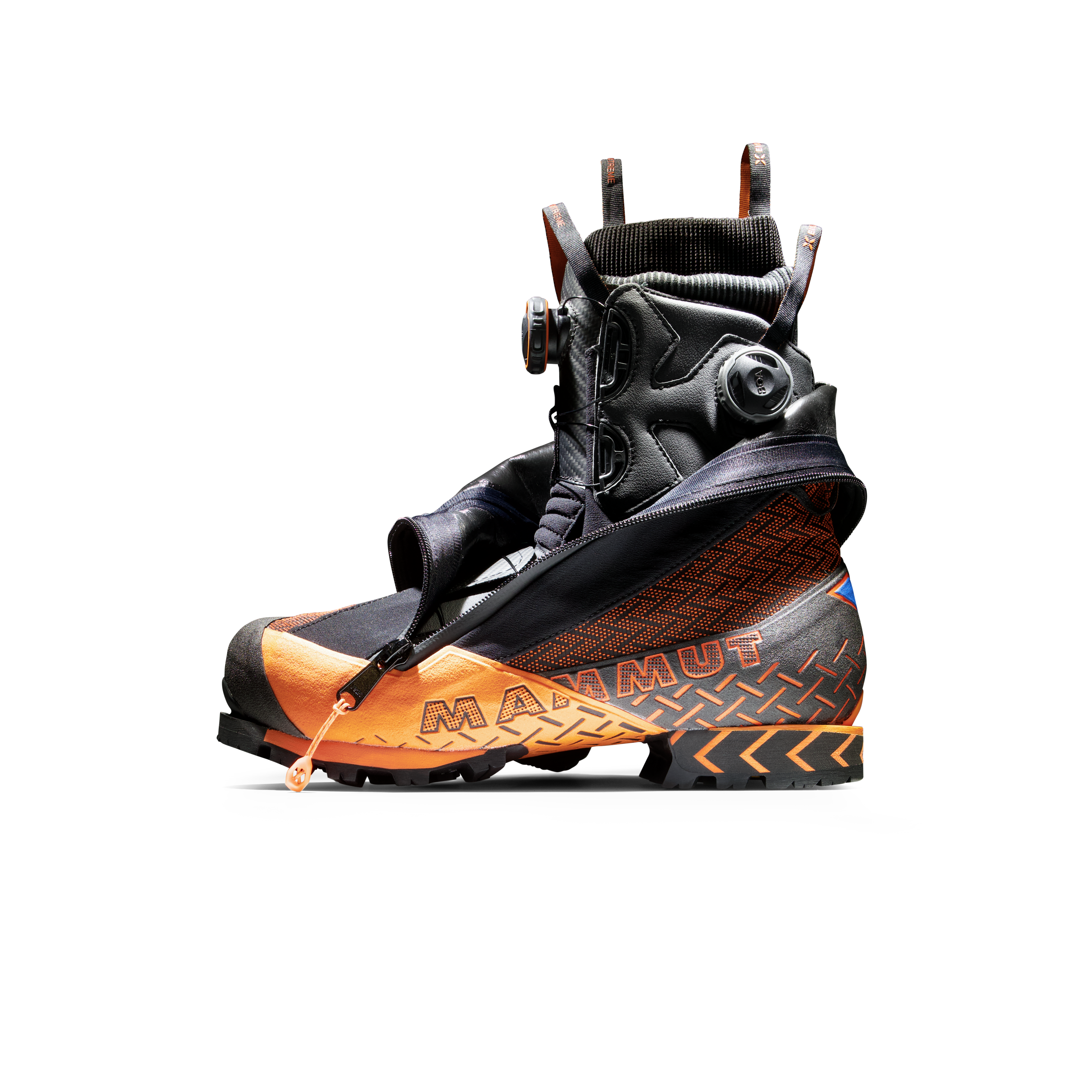
| 6000 m BOA alternative | Mammut Nordwand 6000 High | Gaiter expedition boot with removable liner | Automatic / C3-style interface | Rigid, highly insulated construction with BOA fit adjustment and a removable liner for demanding high-altitude use. | Expedition-level weight, bulk and cost are unnecessary for moderate alpine climbing. |
| Extreme 8,000 m / polar | La Sportiva Olympus Mons Cube | Extreme-cold expedition system with removable thermal booties | Expedition crampon platform | Designed for maximum thermal insulation and the world’s coldest, highest objectives rather than ordinary alpine use. | Massive overkill for lower peaks; expensive and bulky. |
Current Mountaineering Boots
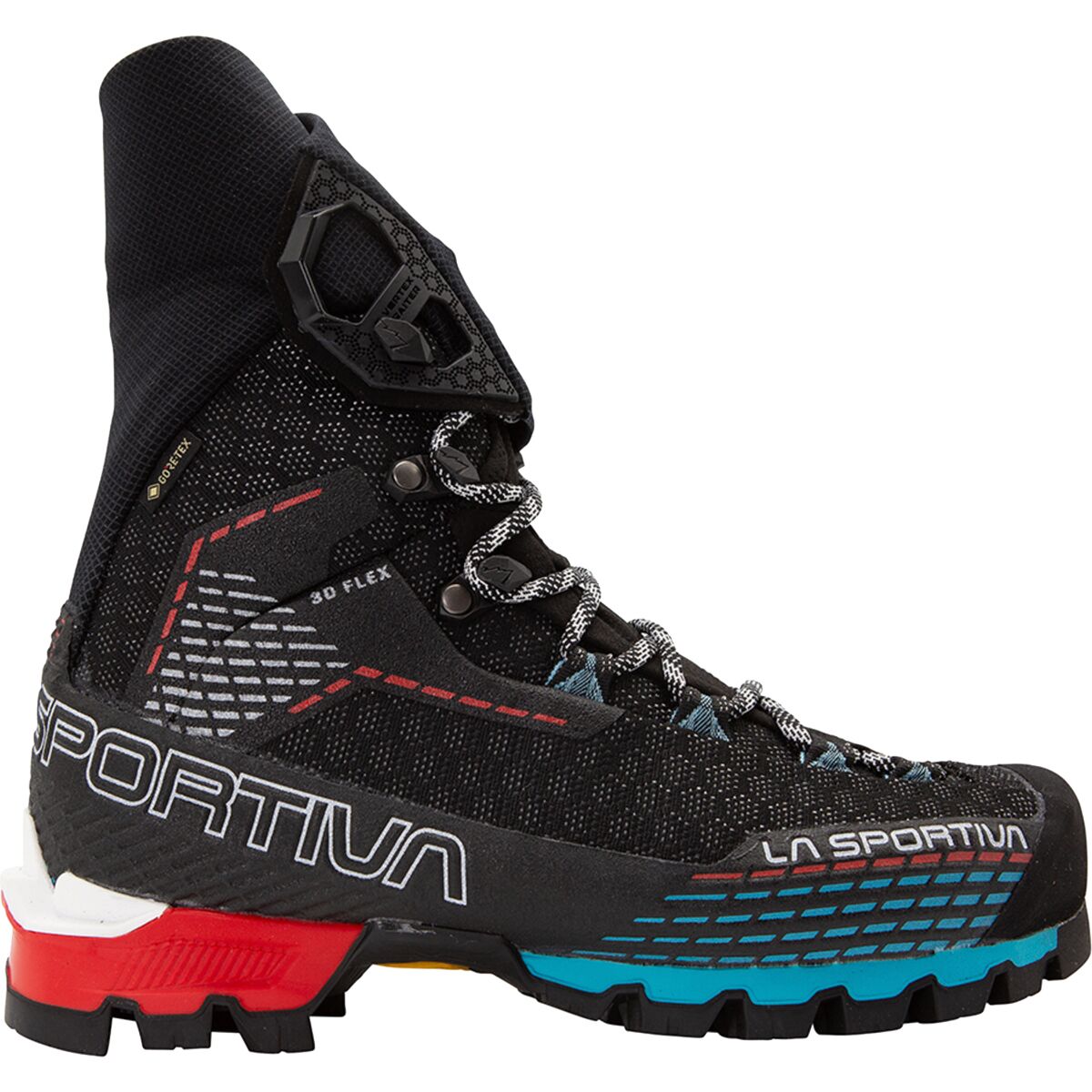
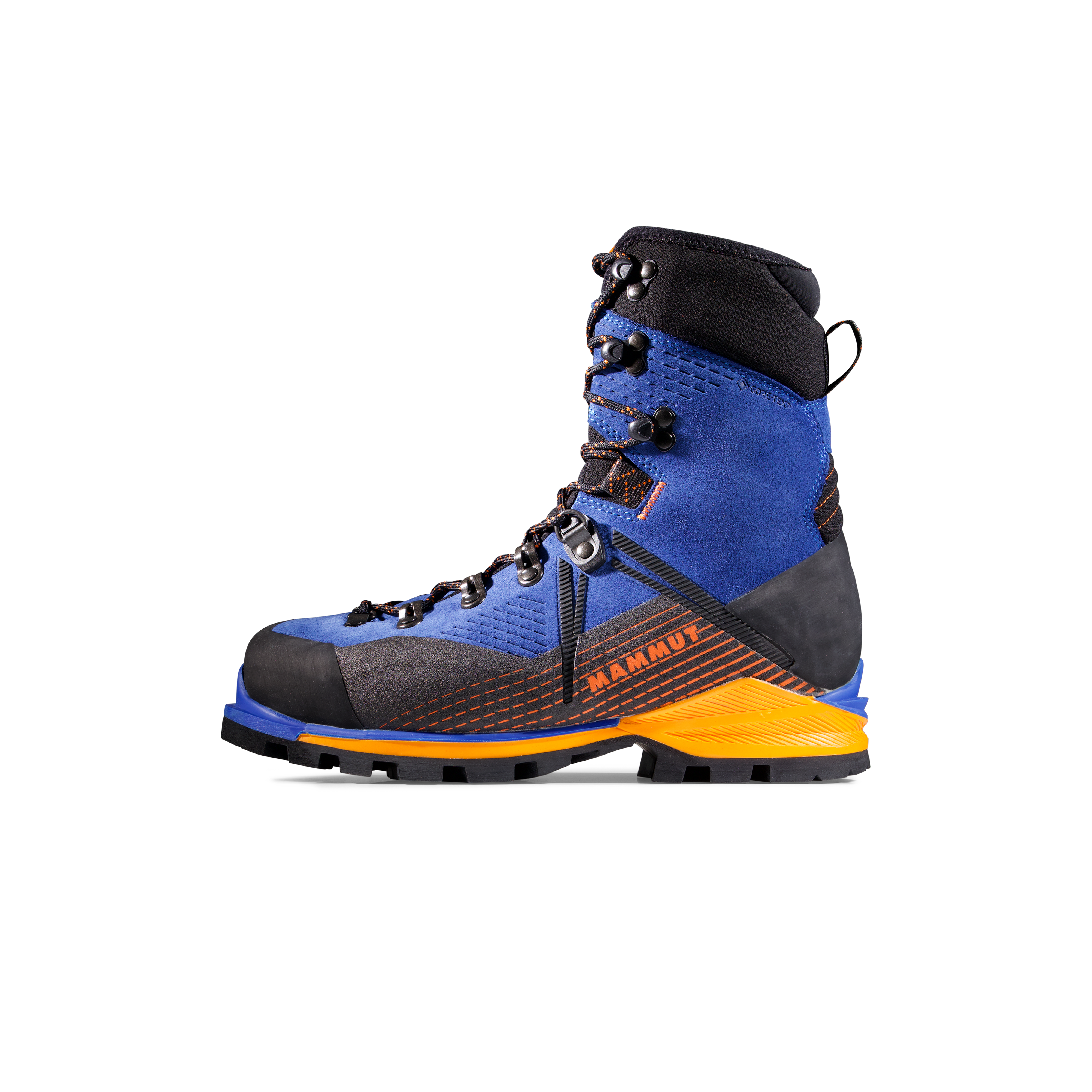
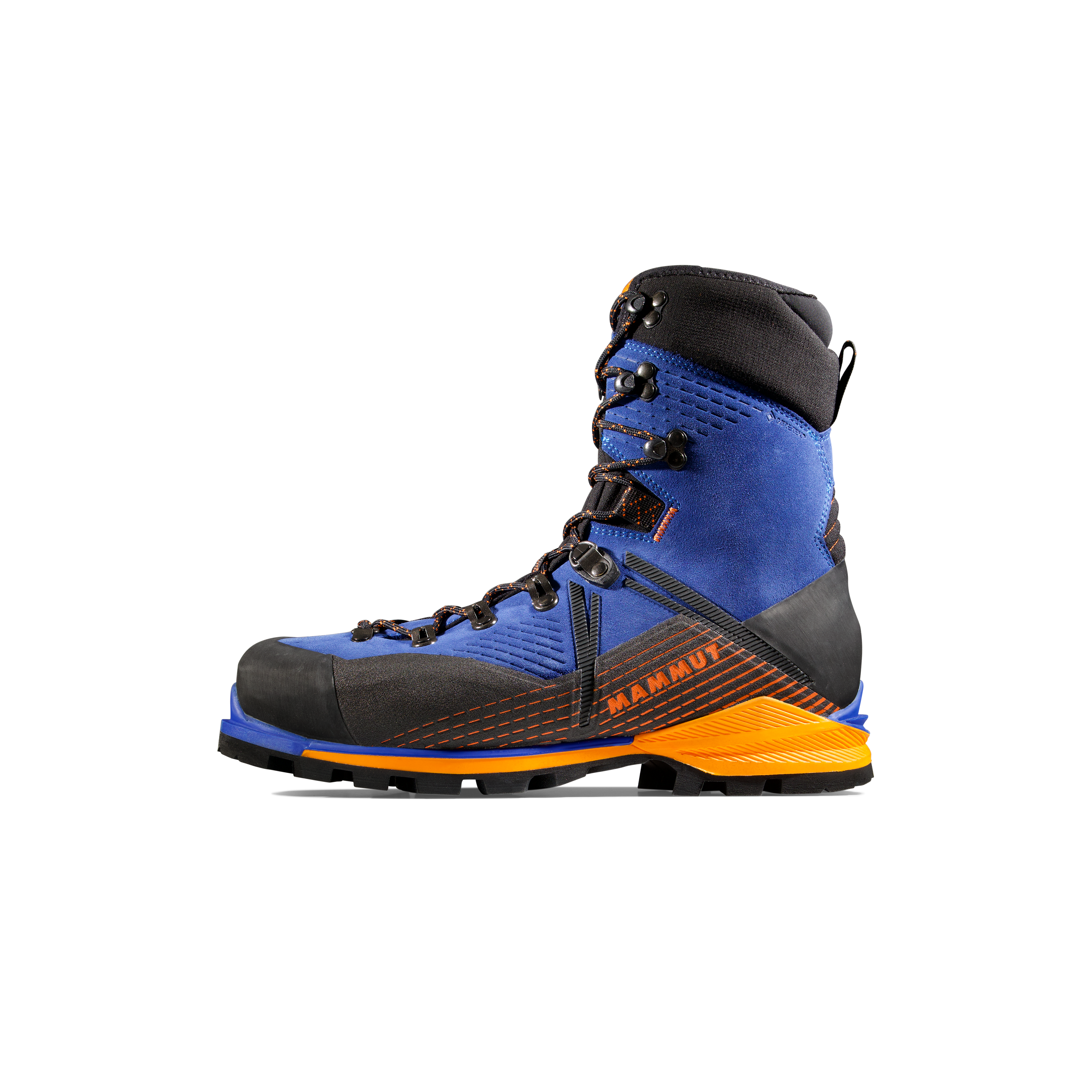
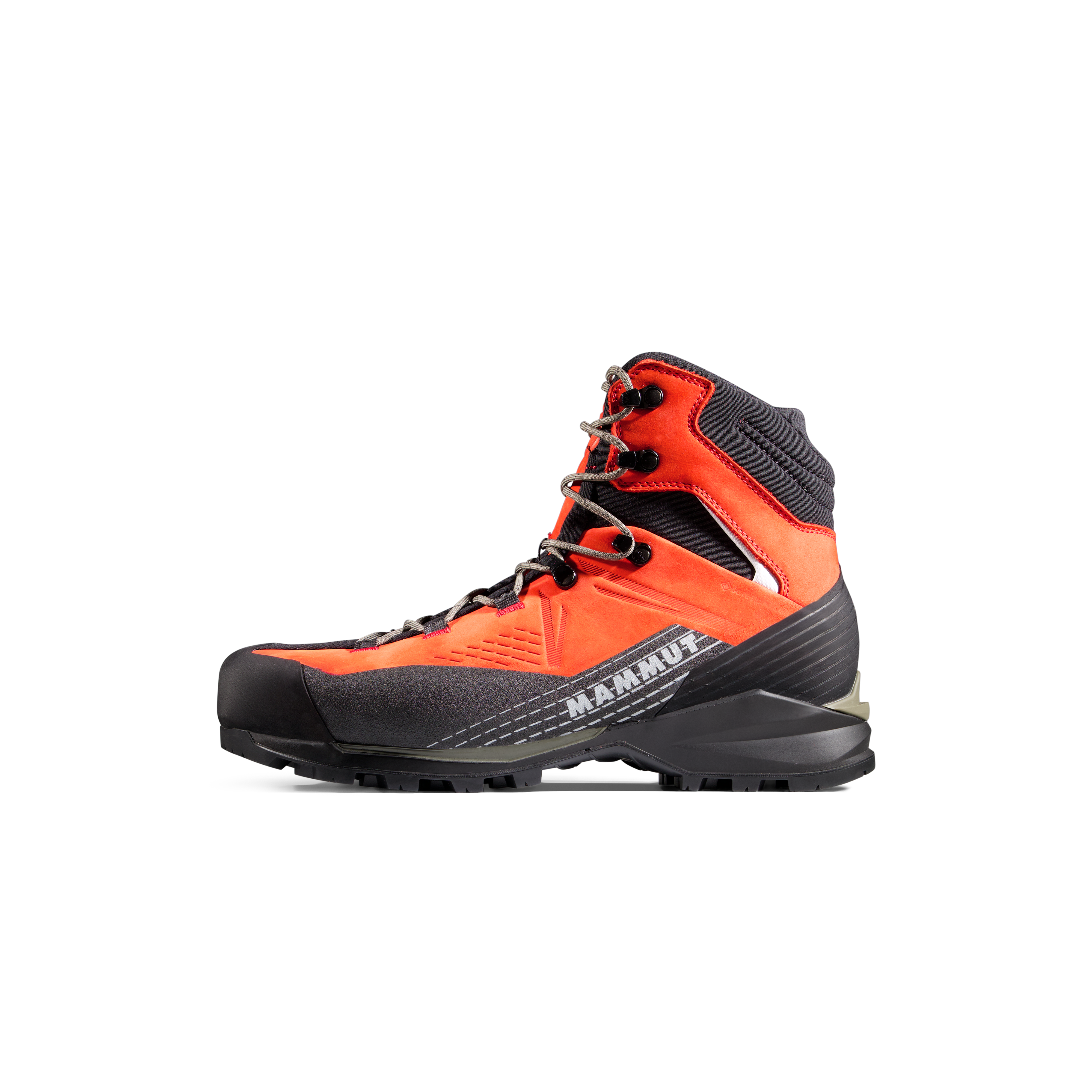
Inventory and prices change. The product module below pulls directly from the freshly imported Global Summit Guide gear catalog and rotates current products tagged as mountaineering boots.
Choose the Mountain First. Then Choose the Boot.
Boot selection becomes easier when you stop asking which model is “best” and define the actual problem. How much of the day is walking? Will you front-point? Is there a glacier? What is the coldest camp? Can liners be dried overnight? What crampons are required? Are you carrying your own load?
A summer Alpine route with a long rocky approach rewards walkability and moderate warmth. Waterfall ice rewards rigidity and precision. Denali-style expedition climbing rewards insulation, durability and drying strategy. An 8,000-meter summit push makes thermal protection the dominant requirement.
| Objective type | Priority | Likely boot direction | What not to overbuy |
|---|---|---|---|
| Snow hiking / easy glacier approach | Walkability, weather protection, compatible traction | Flexible-to-moderately stiff mountain footwear | Rigid technical ice boot |
| Classic glacier mountaineering | Warmth, secure crampon fit, all-day walking | Stiff insulated single boot | 8,000 m expedition boot |
| Technical ice / mixed | Rigidity, precision, front-point control | Rigid technical or integrated-gaiter boot | Soft hiking-oriented boot |
| Cold multi-day 5,000–6,500 m expedition | Warmth, drying, insulation margin | Warm integrated boot or removable-liner double boot | Light summer alpine boot |
| Extreme 7,000–8,000 m / polar cold | Thermal protection and expedition reliability | Purpose-built extreme-cold expedition boot | Single boot chosen only for precision |
NORTIV 8: A Budget Option for the Approach—Not a Technical Mountaineering Boot
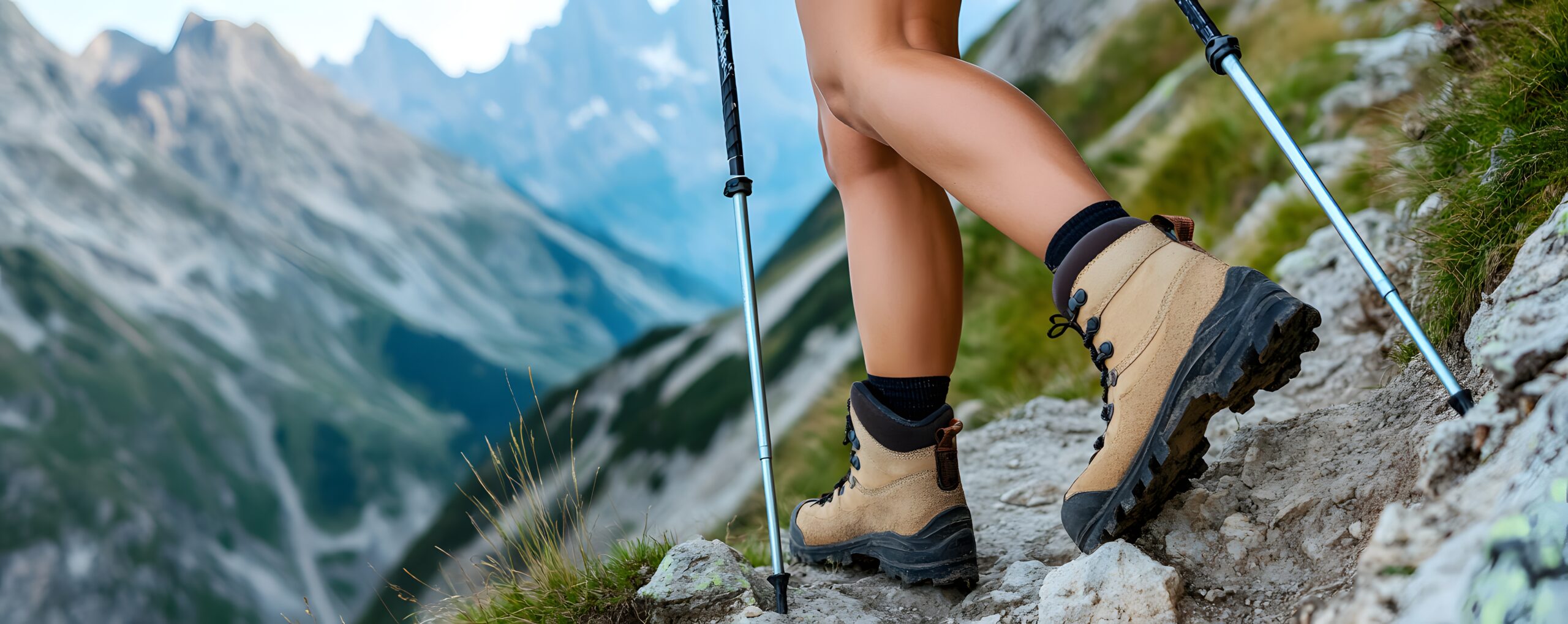
NORTIV 8 currently sells waterproof hiking and trekking boots. That can make the brand relevant for trail approaches, lower-elevation hiking and non-technical mountain days. Do not substitute a hiking boot for a true technical crampon-compatible mountaineering boot when the route requires rigid footwear, toe/heel welts, sustained snow, steep ice or serious cold.
The Boot Has to Work After Hours of Movement—not Just on the Shop Floor.
Heel lift, toe impact, lace pressure, cold spots and crampon movement often appear only after real climbing time. Treat the return window as a testing period and simulate the socks, footbeds, gaiters and crampons you will actually use.
That is why Global Summit Guide treats the final decision as a systems choice rather than a simple “best boot” list. Fit, socks, footbeds, gaiters and the exact crampon setup all need to be tested together.
B1, B2 & B3 Are Useful Shorthand—Not an Official UIAA Footwear Certification
B1, B2 and B3 are widely used retail and mountaineering shorthand for increasing boot stiffness and the type of crampon interface a boot is likely to support. They are useful as a first sorting tool. They should not be presented as an official UIAA boot-certification system.
The UIAA publishes UIAA 153 for crampons, which is tied to EN 893. The standards describe crampon safety requirements. The final compatibility decision still comes down to the exact boot, the exact binding and the manufacturer’s instructions.
B1-style shorthand
Walkability dominates. Think compatible flexible/strap attachment systems rather than automatic crampons. Do not assume every hiking boot is suitable simply because a strap can wrap around it.
B2-style shorthand
A stiffer mountain boot often with a heel welt. This is the practical middle ground for many general mountaineering and glacier objectives when paired with a compatible hybrid/semi-automatic crampon.
B3-style shorthand
Rigid technical or expedition footwear commonly built with toe and heel interfaces for automatic crampons. The exact bail shape and boot geometry still need to match.
The Welt Is a Clue. The Physical Fit Is the Test.
The same crampon may fit one boot securely and another poorly even when the broad category looks compatible. Test the exact pair before the climb.
No technical welts required
Flexible toe and heel baskets can work with a wider range of boots, but the boot still needs enough structure for the intended terrain and the binding must remain secure under twisting and flex.
Heel lever + flexible toe
Common on general mountaineering setups. The heel lever typically relies on a compatible heel welt while the front basket accommodates boots without a front welt.
Toe bail + heel lever
Common on rigid technical boots with both front and rear interfaces. The metal toe bail must seat correctly on the exact boot shape; a visible welt alone is not enough.
Single vs Double vs Extreme Expedition Boots
There is no universal altitude where a single boot becomes unsafe and a double boot becomes mandatory. Temperature, duration, weather, circulation, pace and the ability to dry insulation matter as much as elevation.
Lighter + more precise
Best when the objective needs mountaineering stiffness and insulation but does not require a removable liner for multi-day extreme cold. The Mont Blanc Pro GTX and Nepal Cube GTX live in this broad category.
Warmth + removable inner
A removable inner boot can be dried and kept warm in camp or inside a sleeping system. That becomes increasingly valuable as trips get colder and longer.
Thermal protection dominates
Purpose-built 7,000–8,000 m and polar boots prioritize insulation and protection over approach efficiency. They are not “better” on ordinary alpine routes—only better for their environment.
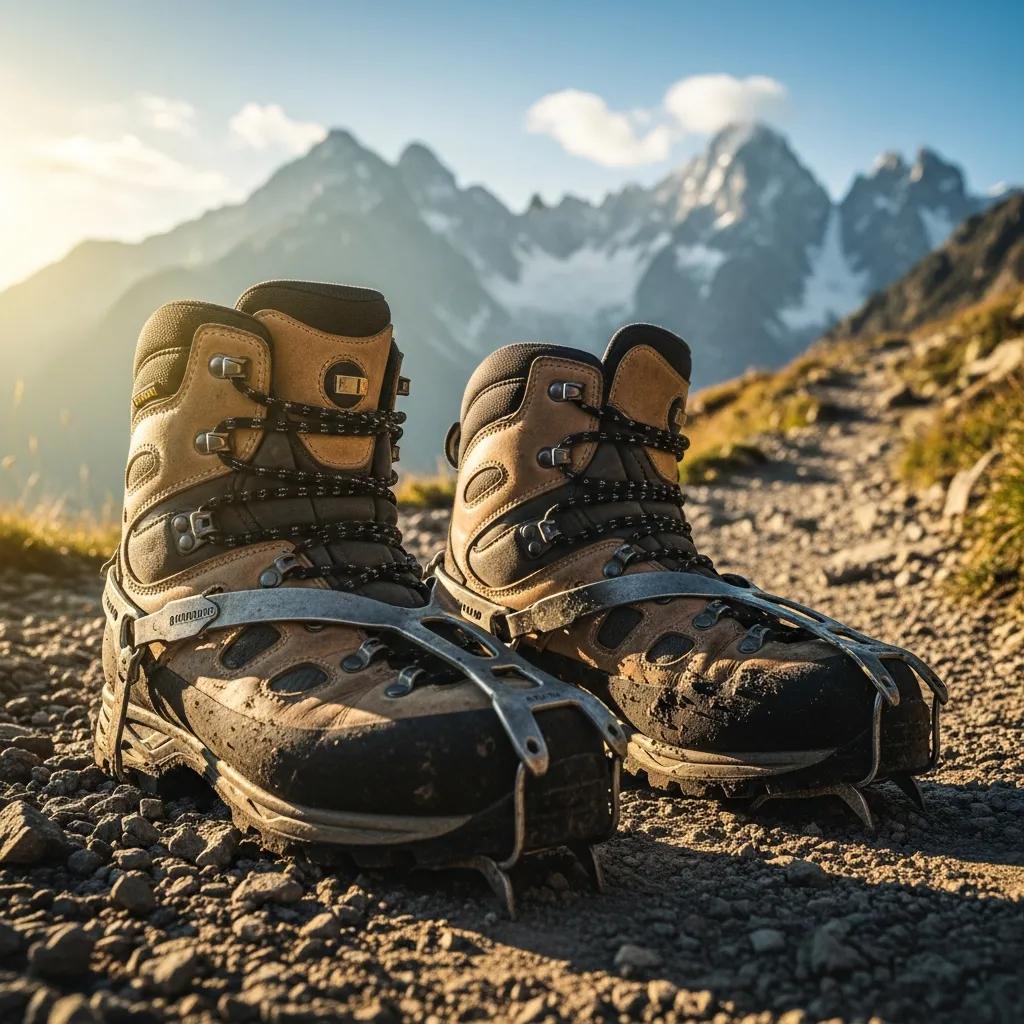
How Mountaineering Boots Should Fit
Do not size a mountaineering boot from a generic “half-size up” rule. Last shape, liner volume, sock thickness, orthotics and how your feet swell under load all change the answer.
The correct fit protects your toes on descents, holds the heel securely enough for front-pointing, leaves circulation intact and creates enough volume for the exact sock and footbed system you will use. More internal space is not automatically warmer if it lets the foot slide and forces you to overtighten the laces.
Fit late in the day
Feet often swell after hours of movement. Morning fit can hide a boot that becomes too short or tight later.
Use the real sock + footbed system
Bring the socks, insoles and orthotics you will climb in. Do not size around a store sock you will never use.
Lock the heel without crushing the forefoot
Heel lift causes friction and reduces technical control; excessive lower-lace tension can restrict circulation.
Simulate a steep descent
Your toes should not strike the front repeatedly. Use a shop ramp, stairs or a safe incline before the return window closes.
Fit the actual crampons
Adjust each foot separately, then twist, flex and kick-test the system according to the crampon manufacturer’s instructions.
Do a full-length training day
Only real time reveals lace bite, hot spots, liner compression, heel lift and whether the boot is too stiff for the approach.
What Each Boot Is Actually Built to Do
Avoid the “best brand” shortcut. Even within one brand, lasts and constructions differ enough that a climber can fit one model well and another poorly.
The durable classic-alpine choice
SCARPA describes the Mont Blanc Pro GTX as a classic mountaineering boot for technical mountaineering, high altitude and mixed crampon terrain. The current model uses a Perwanger suede upper, insulated GORE-TEX lining and an automatic/semi-automatic crampon-compatible sole.
Choose it when you want a conventional, durable single boot and do not need the removable liner of a full expedition double.
The warm technical-single benchmark category
La Sportiva positions the Nepal Cube GTX for big peaks, mixed terrain, glacier travel and vertical ice. Its value is versatility: enough structure and insulation for serious mountaineering without stepping into 6,000- or 8,000-meter boot bulk.
The fast-movement alpine choice
This model emphasizes walkability and low weight. La Sportiva lists a 650 g reference weight, an integrated gaiter, BOA-assisted closure and semi-automatic crampon compatibility.
It makes the most sense where approaches and efficient movement matter more than maximum cold-weather insulation.
The technical ice and mixed choice
The Phantom Tech HD is designed around high-output winter mountaineering, ice and mixed climbing. SCARPA lists an 800 g reference weight, integrated weather protection and automatic/semi-automatic crampon compatibility.
The cold high-altitude double
SCARPA builds the Phantom 6000 HD as a removable-liner double boot for high-altitude cold, long expeditions and technical climbing. The removable inner boot is a major advantage when drying and overnight warmth become part of the system.
The BOA-equipped 6000-meter alternative
Mammut positions the Nordwand 6000 High as a rigid, crampon-compatible expedition boot with a removable liner, BOA fit adjustment and automatic-crampon compatibility. It belongs in the cold-expedition comparison rather than the summer-Alps comparison.
The extreme-cold 8,000-meter system
La Sportiva describes the Olympus Mons Cube around maximum warmth and minimal weight for the highest, coldest mountains and Arctic environments. It uses dual BOA closure and removable thermal booties.
Try competing lasts, not just competing features
A climber who fits the Mont Blanc poorly may fit a La Sportiva model well—or the reverse. Brand stereotypes are too crude for a decision this fit-sensitive. Compare heel volume, forefoot width, instep pressure and toe-box shape on your foot.
Which Mountaineering Boots for Rainier, the Alps, Aconcagua, Denali & Everest?
These are starting categories, not route-specific commands. Season, route, weather, guide requirements and personal cold tolerance can move the recommendation warmer or lighter.
| Mountain / environment | Typical starting category | Why | Verify before buying |
|---|---|---|---|
| Summer Alps 4,000ers | Light-to-warm technical single | Long approaches, glacier travel and mixed terrain reward walkability plus crampon security. | Route difficulty, hut approach, expected snow/ice and guide list. |
| Mount Rainier | Insulated general-mountaineering single for many summer climbs | Glacier travel, predawn cold and crampon use without expedition-duration exposure. | Season, route, cold tolerance and guide-service list. |
| Aconcagua | Warm single or double depending route, season and cold tolerance | High altitude and wind create cold stress even when technical climbing is limited on the Normal Route. | Operator requirement, route, forecast and previous cold-foot history. |
| Denali / Alaska expedition cold | Expedition double / very warm integrated system | Long duration, low temperatures, snow camps and moisture management make removable liners valuable. | Guide-service boot list and overboot requirements. |
| 6,000 m Andes / Himalaya | Warm single through 6000 m double depending objective | Technical difficulty, camp temperatures and time exposed vary enormously. | Exact route and expedition logistics—not altitude alone. |
| Everest / 8,000 m | Purpose-built extreme-cold expedition boot | Multi-week duration, high camps and extreme cold overwhelm the priorities of an ordinary alpine boot. | Operator’s current approved boot list and oxygen/camp strategy. |
Warmer Is Not Only About Insulation Thickness
A boot that is too tight can reduce circulation and undermine the thermal advantage you bought it for. Socks that occupy too much internal volume can create the same problem. Moisture also matters: damp liners and socks increase conductive heat loss, which is why removable liners become so valuable on multi-day cold expeditions.
This is one reason universal temperature claims are unreliable. Two climbers can wear the same boot on the same mountain and have completely different thermal experiences because pace, circulation, sock system, moisture, medication, previous cold injury and time spent standing still all differ.
Care, Drying, Resoling & When to Replace Them
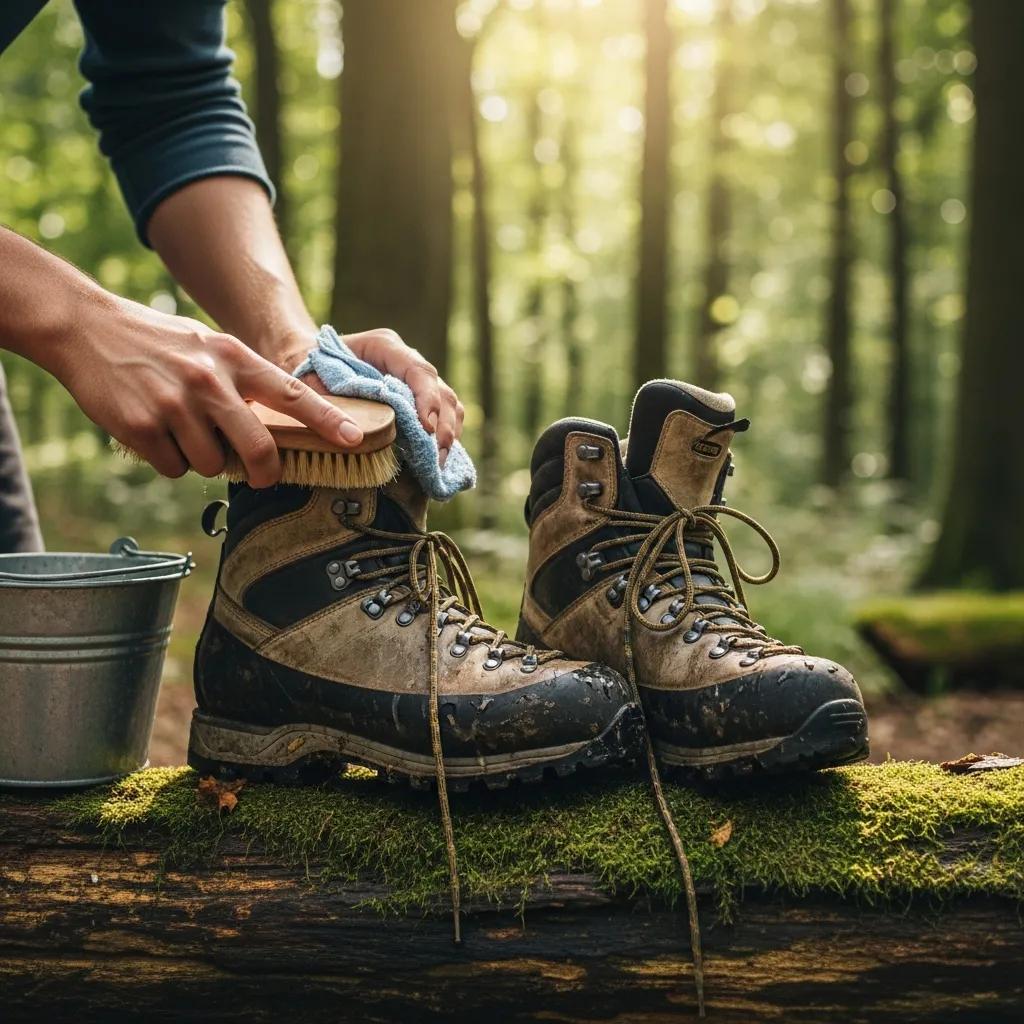
Brush dirt and salt away before storage, dry boots away from direct high heat, remove liners and insoles when appropriate, and maintain leather or water-repellent materials according to the manufacturer’s instructions.
Do not wait for a sole to detach on a trip. Inspect the outsole, rand, welt, stitching, gaiter zipper, liner, lacing hardware and midsole before every major objective. Any repair or resole that changes the boot shape deserves a fresh crampon fit test.
Buy Enough Boot for the Hardest Required Terrain—Not the Most Extreme Mountain You Might Climb Someday.
A well-fitted boot matched to today’s route will usually serve you better than an expedition boot bought years early. Build your footwear system as your mountains, crampon skills and cold-weather experience progress.
That approach usually saves money, improves performance on current objectives and reduces the chance of ending up with an expensive expedition boot that only comes out of the closet once every few years.
Standards & Current Manufacturer Sources
Product specifications can change by season and market. The references below identify the standards and manufacturer materials reviewed for this guide. We intentionally do not link to non-affiliate retailer or manufacturer sites; confirm current specifications before purchasing.
Primary references reviewed
- UIAA Safety Standards — UIAA 153 Crampons
- Petzl — Choosing Your Crampons & Binding Systems
- SCARPA — Mont Blanc Pro GTX
- SCARPA — Phantom Tech HD
- SCARPA — Phantom 6000 HD
- La Sportiva — Nepal Cube GTX
- La Sportiva — Aequilibrium Top GTX
- La Sportiva — Olympus Mons Cube
- Mammut — Nordwand 6000 High
Mountaineering Boots FAQ
What are the best mountaineering boots for most climbers?
There is no single best boot for every climber. For classic alpine and general technical mountaineering, a well-fitted insulated single boot such as the SCARPA Mont Blanc Pro GTX or La Sportiva Nepal Cube GTX is a strong starting category. Colder and longer expeditions require warmer double or expedition boots.
Are B1, B2 and B3 official UIAA boot ratings?
No. They are widely used compatibility shorthand, not an official UIAA footwear certification. UIAA 153 covers crampons. Always verify the exact boot/crampon combination using the manufacturer instructions for both products.
What is the difference between single and double mountaineering boots?
Single boots integrate the footwear and insulation into one structure and are usually lighter and more precise. Double boots use a removable insulated inner boot or liner, which improves drying and camp management on long, very cold trips.
Can I use hiking boots for mountaineering?
Sometimes for non-technical snow travel with an appropriate flexible traction system, but hiking boots are not substitutes for technical mountaineering boots when the route requires rigid footwear, serious insulation or automatic crampons.
How should mountaineering boots fit?
The heel should remain secure, toes should not hit the front on descents and the boot should leave enough volume for the actual socks and footbeds you will use without restricting circulation. Test late in the day and under load.
Do I need double boots for Aconcagua?
Not every Aconcagua climb requires the same footwear. Route, season, forecast, personal cold tolerance and operator requirements matter. Some climbers use warm single boots; others choose double boots for a larger thermal margin. Follow the current guide-service requirement for a guided climb.
What boots should I use for Denali?
Denali is a cold, multi-week expedition environment, so warm expedition double boots or other very warm systems are common. Guide services may specify approved boot models or require overboots. Use the current operator equipment list rather than a generic internet recommendation.
How do I know whether my crampons fit my boots?
Confirm the binding type and manufacturer compatibility, adjust each crampon to the specific boot, then conduct the manufacturer’s recommended fit test. The boot should not shift vertically, laterally or lengthwise and the binding should not come off the welts under force.
Build the Rest of the Footwear & Technical Gear System
Boots are only one interface in the system. Move next into crampons, layers, complete equipment planning and mountain-specific packing lists.
Was this helpful?
🏔Related gear guides
🧭Explore & compare
Global Summit Guide is an independent mountaineering resource founded in 2026. The team combines first-hand trekking and climbing experience with in-depth research and professional health and nutrition review to help climbers choose objectives, prepare properly, and stay safe.
Health, altitude, and nutrition content is reviewed by Taylor Ludlow (Registered Nurse) and Brigg Hoopes (Nutritionist).
What We Don't Know Yet
Mountain information changes quickly. This box explains the limits of what this page can responsibly promise.
- Gear requirements can change by season, route variation, weather window, personal cold tolerance, and guide-service requirements.
- Visa, passport, vaccination, border, insurance, and local transportation rules may change before your trip.
- Route conditions, snowpack, closures, and weather can change quickly after this page is updated.
- Permit rules, fees, quotas, and reservation windows may change between review cycles.
- Operator availability, pricing, guide ratios, and cancellation terms can change by season.
Verify current conditions with official land managers, guide services, local forecasts, and current route reports before booking or climbing.
Mountaineering, rock and ice climbing, glacier travel, and high-altitude activity are inherently dangerous and can result in serious injury or death. The information on Global Summit Guide is provided for general informational and educational purposes only and is not a substitute for professional instruction, qualified guiding, proper equipment, or your own judgment and experience.
Route conditions, weather, snowpack, permits, regulations, and hazards change constantly and may differ from what is described here. Details may be incomplete, out of date, or contain errors. Always verify current information with local authorities, certified guides, and official sources before making any decision in the mountains.
Nothing on this site is medical, legal, or financial advice. Our fitness, acclimatization, altitude, and nutrition content is general in nature; consult a qualified physician before beginning any strenuous exercise program or exposing yourself to high altitude.
You are solely responsible for your own safety and decisions. To the fullest extent permitted by law, Global Summit Guide and its team accept no liability for any loss, injury, damage, or expense arising from use of, or reliance on, this information. By using this site you acknowledge these risks and accept these terms.
Some links on this site may be affiliate links. If you buy through them we may earn a small commission at no extra cost to you; this never affects our recommendations.
Global Summit Guide recommendation path
Next Best Mountain to Research
Use these recommendations to continue the right planning path instead of stopping on one page.
Use current permit, weather, route, and operator information before booking or climbing.
Search Flights, Hotels & Rental Cars
Have the mountain or destination picked? Use Expedia to compare the flights, lodging and rental cars that fit your actual trip dates. For mountain travel, consider arriving early enough for delays and adding a buffer night after the climb before a fixed flight home.
Compare current flight, hotel and car options.
Affiliate disclosure: Global Summit Guide may earn a commission if you book through this link, at no additional cost to you.