<

Best Mountains for Beginner Climbers: Top 10 Peaks to Start

Scenic mountain view with hikers on a beginner-friendly climbing trail, showcasing lush green landscapes and distant peaks, representing suitable adventures for novice climbers.
Cluster 02 · Beginner Progression · Updated April 2026

10 Best Mountains to Climb for Beginners

The ten best first mountains — ranked by accessibility, skill-building value, cost, and summit rate. From weekend training volcanoes in the Cascades to your first 5,000 m+ altitude objective. Every peak here has a reputable guide service, an established beginner pathway, and a clear answer to “what will I actually learn?”

10
Ranked
peaks
3
Difficulty
tiers
2,549–5,895
Elevation
range (m)
$200–6K
Cost
range
Global Summit Guide A guide in Cluster 02 · Beginner Progression View master hub →

The right first mountain isn’t the most impressive one you can afford — it’s the one that teaches you the most for the least risk. That’s rarely Kilimanjaro on day one, even though Kilimanjaro gets the magazine coverage. The peaks on this list are ordered by readiness tier: introductory training peaks climbed locally, entry-level mountaineering objectives, and a first 5,000 m+ altitude test. Every peak here has a real beginner pathway — formal courses, reputable guide services, and a track record of getting first-timers up safely.

How these rankings were made

Peaks are ranked by four factors weighted for beginner climbers: accessibility (established guide services, infrastructure, rescue options), skill-building value (what the peak teaches that transfers to later objectives), cost (realistic total including instruction), and summit rate on beginner programs. Data pulled from AMGA-certified guide services, NPS climbing ranger reports, AAC accident records, and pre-trip briefings from Alpine Ascents, RMI Expeditions, International Mountain Guides, American Alpine Institute, and Mountain Madness. Fact-check date: April 19, 2026.

The 10 Peaks at a Glance

Quick comparison of every peak in the ranking. Detailed profiles follow below.

RankPeakLocationElevationTierCost range
1. Mount BakerUSA — WA Cascades3,286 mStarter$1,500–$2,800
2. Mount HoodUSA — OR Cascades3,429 mStarter$700–$2,500
3. Mount St. HelensUSA — WA Cascades2,549 mStarter$22 permit + gear
4. Mount AdamsUSA — WA Cascades3,742 mEntry$15 permit + gear
5. Mount WashingtonUSA — NH White Mtns1,917 mEntry$500–$1,500
6. Longs PeakUSA — CO Front Range4,346 mEntry$30 fee + gear
7. Mount RainierUSA — WA Cascades4,392 mEntry$1,500–$4,500
8. Mount WhitneyUSA — CA Sierra4,421 mEntry$21 permit + gear
9. Pico de OrizabaMexico5,636 mFirst altitude$1,500–$3,500
10. KilimanjaroTanzania5,895 mFirst altitude$2,500–$6,000

01
Starter Tier · #1 Pick

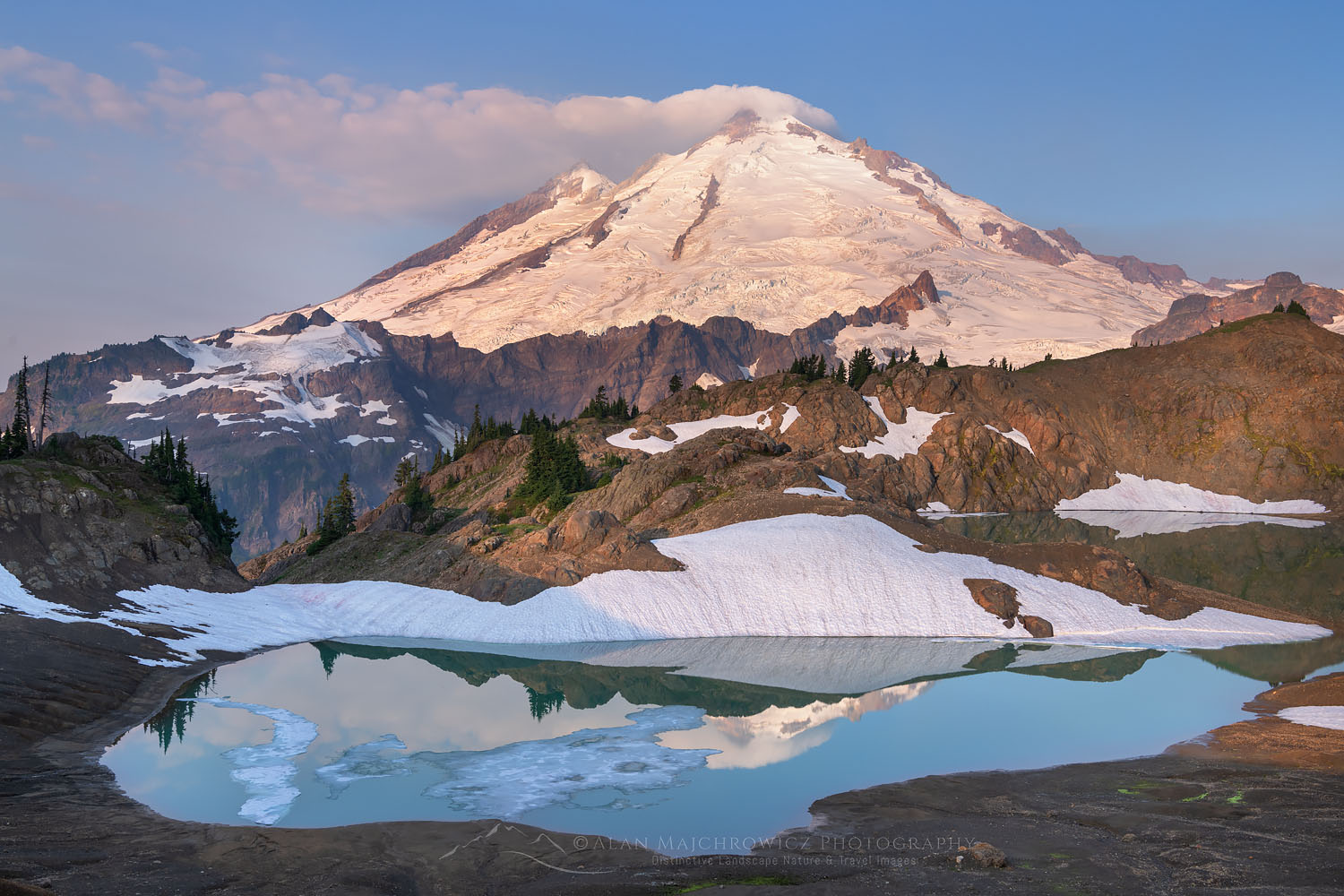
Mount Baker (3,286 m)

Washington, USA · North Cascades · Glacier Peak
Best first climb

Mount Baker is the canonical introductory mountaineering peak in North America. Alpine Ascents, American Alpine Institute, and Mountain Madness all run their core 6-day introductory courses here, teaching every foundational skill — crampon technique, self-arrest, rope team travel, crevasse rescue — on the Easton and Coleman-Deming glaciers. The summit itself is a moderate glacier climb with no technical crux; the value is in the full week of structured instruction followed by a supervised summit attempt. Graduates leave with the skills needed for every future climb.

SeasonJun–Sep
Duration5–6 days
What it teachesAll foundations
Summit rate~75–85%
02
Starter Tier · Seven Summits training

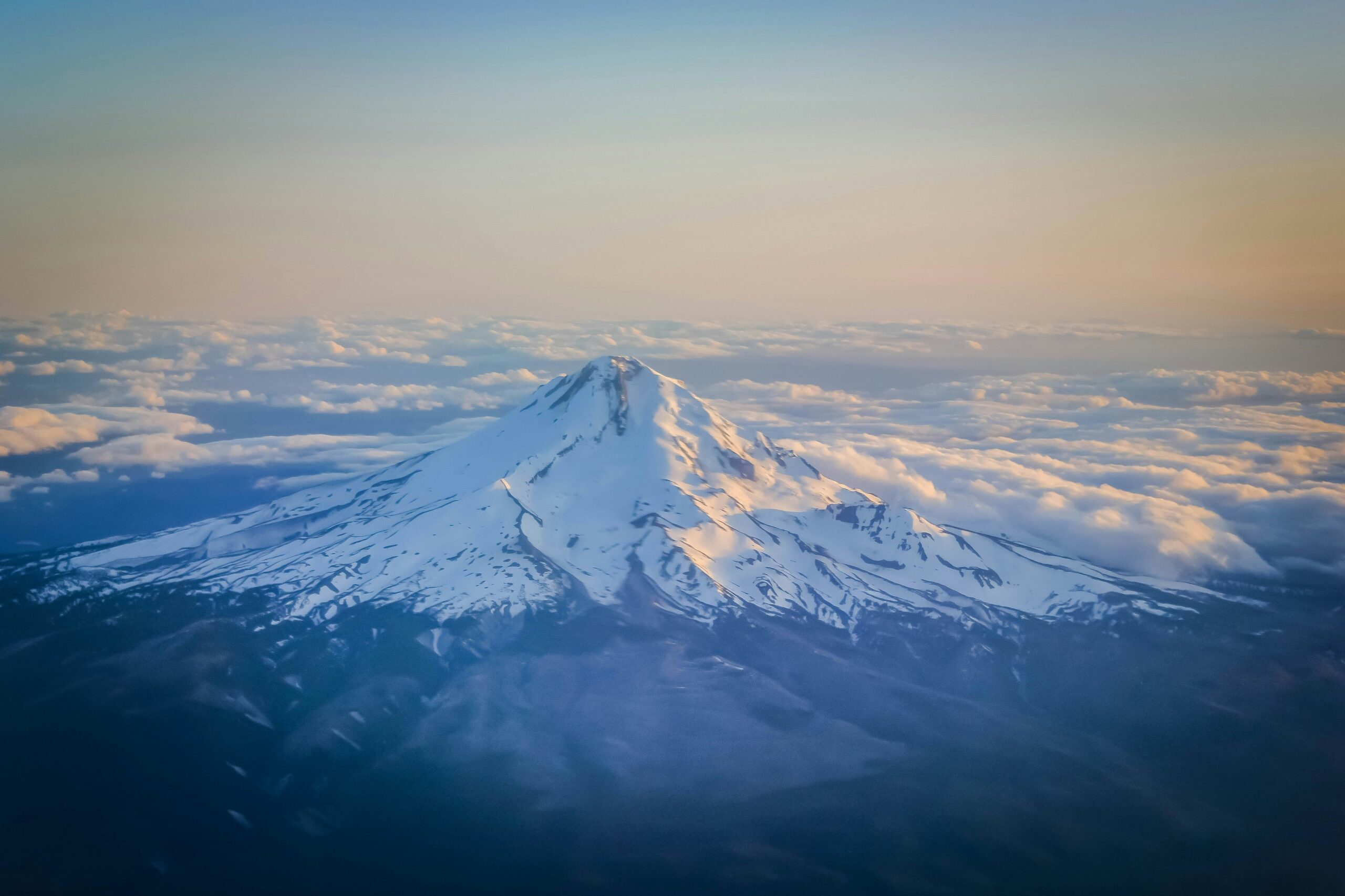
Mount Hood (3,429 m)

Oregon, USA · Cascade Range · Stratovolcano
Fast first summit

Mount Hood’s South Side route is the shortest real mountaineering climb accessible to beginners — a 2-day push with an alpine start (midnight departure) summiting mid-morning. Guide services (Timberline Mountain Guides, Mountain Madness) run 3-day programs that combine a skills day with the summit attempt. The climb teaches crampons, ice axe, roped team movement, and the psychological reality of summit-day alpine starts, all in a single weekend. Oregon’s weather is the main variable — many Hood climbs get cancelled by high winds or icefall warnings.

SeasonApr–Jun
Duration2–3 days
What it teachesAlpine starts
Summit rate~60–80%
03
Starter Tier · Self-supported option

Mount St. Helens (2,549 m)

Washington, USA · Cascade Range · Active volcano
Budget choice

Since the 1980 eruption, Mount St. Helens has become the most accessible real-mountain climb in the Pacific Northwest. The Monitor Ridge route (summer) is a non-technical slog on scree and volcanic ash; the Worm Flows route (winter) introduces crampons, ice axe, and self-arrest practice in a low-consequence environment. At $22 for a permit and no guide required for fit hikers with basic winter mountaineering skills, it’s the cheapest way to build experience. Check permit availability early — summer weekends are competitive.

SeasonYear-round
Duration1 day
What it teachesWinter travel basics
Summit rate~85%+
04
Entry Tier · Overnight expedition feel

Mount Adams (3,742 m)

Washington, USA · Cascade Range · Second-highest Cascade
Solo-ready

Mount Adams’ South Spur route is the natural next step after St. Helens — a 2-day climb with a high-camp bivy at Lunch Counter (around 2,900 m), summit attempt at dawn. Non-technical in standard conditions; requires crampons, ice axe, and self-arrest proficiency. No permit fee beyond the $15 Cascade Volcano Pass. Most fit climbers with prior winter mountaineering skills can do Adams self-supported. It’s the peak where many Cascade-region climbers first learn what expedition-style camping feels like.

SeasonJun–Aug
Duration2 days
What it teachesHigh camps
Summit rate~70%
05
Entry Tier · East Coast access

Mount Washington (1,917 m)

New Hampshire, USA · White Mountains · Weather gauntlet
Weather practice

Mount Washington is short on elevation but infamous for weather — one of the worst in the lower 48, with recorded wind gusts of 372 km/h and full winter conditions even in summer. The summer hike is trivial; the winter traverse on Lion Head or Tuckerman Ravine teaches every fundamental — layering, wind assessment, turnaround discipline, navigation in whiteout conditions — in a consequential but reasonable-access environment. Multiple East Coast guide services (International Mountain Equipment, Mooney Mountain Guides) run 2-day winter programs. For East Coast climbers without access to Cascades, Washington is the training peak.

SeasonYear-round
Duration1–2 days
What it teachesWeather judgment
Summit rate~50% (winter)
06
Entry Tier · Rocky Mountain scale

Longs Peak (4,346 m)

Colorado, USA · Rocky Mountain National Park
Altitude intro

Longs Peak via the Keyhole route is a 14 mile round-trip with 1,500 m of elevation gain, including sustained Class 3 scrambling on the Homestretch — the line between hiking and mountaineering. Non-technical in summer when conditions are dry; a genuine alpine climb in winter with full mountaineering gear. No permit required; free to climb. The Keyhole teaches altitude response and committed scrambling; completing Longs is the benchmark for Colorado climbers before progressing to bigger peaks. Expect 12+ hour days and alpine starts.

SeasonJul–Sep
Duration1 long day
What it teachesScrambling + altitude
Summit rate~50% (reaches it)
07
Entry Tier · Full glacier expedition

Mount Rainier (4,392 m)

Washington, USA · Cascade Range · Most glaciated US peak
Real expedition

Mount Rainier is the Seven Summits-adjacent training peak — the closest US climb to what Denali or Aconcagua actually feels like. The Disappointment Cleaver route combines heavy glaciation, altitude exposure, crevasse navigation, and a true alpine start summit day. RMI Expeditions (based at Paradise) and IMG run 4–5 day combined skills-and-climb programs that are the standard entry path. Do not attempt Rainier as a first-ever mountaineering climb. Complete Baker or Hood first; the summit rate on Rainier beginner programs averages 50–65% precisely because it’s already a real mountain.

SeasonJun–Aug
Duration4–5 days
What it teachesExpedition rhythm
Summit rate~50–65%
08
Entry Tier · Highest lower 48

Mount Whitney (4,421 m)

California, USA · Sierra Nevada · Contiguous US high point
California classic

Mount Whitney’s Main Mountaineer’s Route is California’s training-peak answer — a 2-day climb with basic scrambling, real altitude (4,421 m), and a day-one high camp at Iceberg Lake (3,660 m). Permit lottery is competitive; apply February–March for summer windows. The standard summer route via the Mount Whitney Trail is a 22-mile day hike, non-technical; the Mountaineer’s Route adds rock scrambling and some route-finding. Excellent altitude calibration peak for climbers planning Orizaba or Kilimanjaro.

SeasonJul–Sep
Duration1–2 days
What it teachesAltitude calibration
Summit rate~70%
09
First Altitude Tier · Mexico’s roof

Pico de Orizaba (5,636 m)

Mexico · North America’s 3rd-highest · Glaciated volcano
Altitude debut

Pico de Orizaba is the most accessible 5,000 m+ peak in the Americas. The standard route via the Jamapa Glacier combines moderate crampon/ice axe work with real altitude at a fraction of the Kilimanjaro cost. Typical programs run 7–10 days including acclimatization on La Malinche (4,461 m) and Iztaccíhuatl (5,230 m). Mexican operators (Pura Aventura, Orizaba Mountain Guides) offer budget options; US operators (Mountain Madness, International Mountain Guides) add premium pricing with additional structure. An excellent alternative first-altitude peak for climbers who want crampon experience alongside altitude.

SeasonNov–Mar (dry)
Duration7–10 days
What it teachesAltitude + crampons
Summit rate~60–75%
10
First Altitude Tier · Africa’s roof

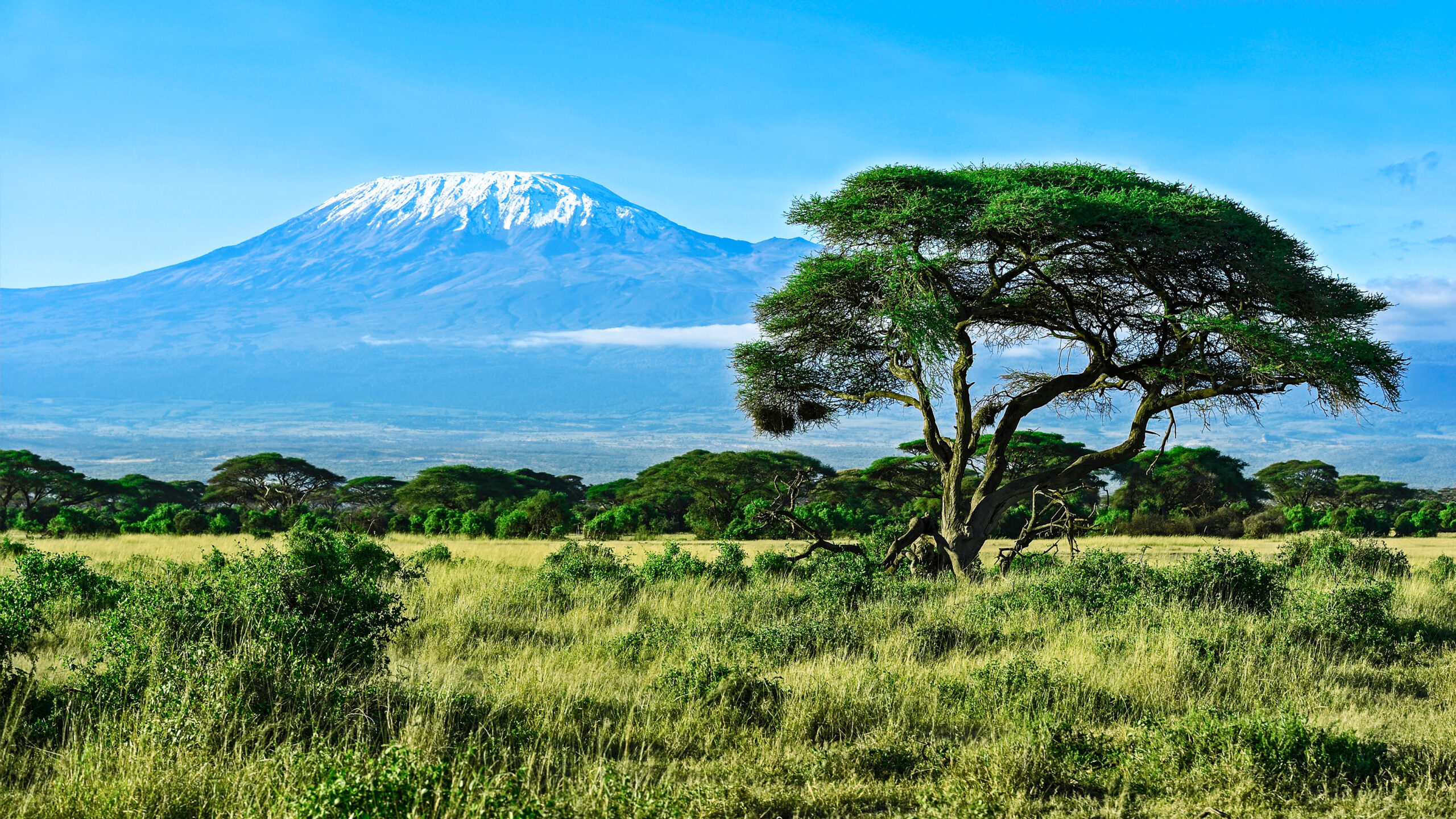
Kilimanjaro (5,895 m)

Tanzania · Africa’s highest · Seven Summit
Iconic first 5,895 m

Kilimanjaro is the default first 5,000 m+ peak for international climbers. Non-technical (no crampons, ice axe, or rope needed), full porter support, and the most mature mountaineering infrastructure in the world. The single biggest summit-rate determinant is route duration — an 8-day Lemosho climb summits 85–90% of attempts, a 5-day Marangu just 30–50%. Always choose the longest route you can budget. See our Kilimanjaro Climbing Guide for route selection, the monthly timing guide, and our 7-day Lemosho trip report. Kilimanjaro is also the classic first Seven Summits peak — see Seven Summits for Beginners.

SeasonJan–Mar, Jul–Oct
Duration6–9 days
What it teachesPure altitude
Summit rate~65–90% by route

How to Choose Your First Peak

The right peak depends on your specific situation. Use the decision logic below — it mirrors the framework most guide services apply when taking a beginner intake call.

Start with Mount Baker or Mount Hood if:

  • You have zero prior mountaineering experience and want formal instruction
  • You live near the Pacific Northwest or can travel there for a week
  • You have $1,500–$3,000 available for a first real climb
  • You want to come away with transferable skills for every future objective

Start with Mount St. Helens or Mount Washington if:

  • You’re budget-constrained and want to build skills locally first
  • You have prior hiking experience and some winter-travel fundamentals
  • You want a shorter time commitment than a multi-day course
  • You’re testing whether mountaineering is right for you before bigger investment

Start with Kilimanjaro or Orizaba if:

  • You already have formal skills training from a previous course
  • Your primary interest is altitude experience, not technical climbing
  • You’re planning a Seven Summits project (Kilimanjaro is the default first peak)
  • You have 2+ weeks and $3,000+ available for an international trip
The build-first principle

Most successful mountaineers’ first climb wasn’t their most impressive climb. It was a calibration peak — Baker, Hood, St. Helens, Longs — that taught them their body’s response, their gear preferences, and their risk tolerance. Skipping that calibration step to attempt something larger rarely ends well. Climb smaller first; the big peaks don’t go anywhere. For the full beginner progression framework, see our Mountaineering for Beginners guide.


Peaks to Avoid as Your First Climb

Common beginner mistakes involve picking peaks that aren’t actually beginner-appropriate despite marketing and reputation. Four categories to skip until you have the prerequisite experience:

  • Any Seven Summit except Kilimanjaro. Aconcagua, Denali, Elbrus, Vinson, and Carstensz all require prior mountaineering experience, prior altitude experience, or both. Starting with any of these substantially elevates failure and injury risk. See Seven Summits for Beginners.
  • Technical rock objectives. Matterhorn, Half Dome Cables (in winter), and most European alpine classics require prior rock-climbing skill and alpine experience that formal mountaineering courses don’t teach.
  • Remote expedition peaks. Aconcagua, Peruvian Andes 6,000 m peaks, and similar multi-week objectives test expedition-craft that beginner programs don’t build. Save these for year 2–3.
  • Winter routes on major peaks. Summer Mount Rainier is a beginner-appropriate guided climb; winter Rainier is an expedition that kills experienced climbers. Same peak, very different readiness requirements.

For climbers planning a structured multi-year project, our Mountaineering for Beginners guide provides the complete roadmap from zero to first-major-peak.


Frequently Asked Questions

What is the best mountain for a first climb?

Mount Baker (3,286 m, Washington) and Mount Hood (3,429 m, Oregon) are the most-recommended first real mountaineering peaks for North American climbers. Both offer formal introductory course platforms where you learn foundational skills in an actual alpine environment, both are climbable in 2–3 days, and both cost $1,500–$3,000 through reputable guide services. For climbers seeking a first 5,000 m+ objective, Kilimanjaro (5,895 m, Tanzania) is the classic non-technical choice, while Pico de Orizaba (5,636 m, Mexico) offers genuine altitude with less-expensive logistics. Avoid jumping straight to altitude — the North American training peaks teach skills you need before altitude becomes the primary challenge.

Can a complete beginner climb Mount Rainier?

Mount Rainier (4,392 m, Washington) is climbable by a beginner who completes a formal introductory course first — typically the same guide services (RMI Expeditions, Alpine Ascents, International Mountain Guides) run both the course and the subsequent Rainier climb back-to-back as a 5–6 day program. This is the proven pathway. Rainier is NOT appropriate as a true first climb without any prior instruction. The peak is heavily glaciated, demands real crampon and ice-axe technique, has genuine objective hazards, and produces fatalities each season. Summit rates on Rainier beginner programs run 50–65% — respectable but not automatic. Respect the mountain.

What is the easiest 5,000+ m peak for beginners?

Kilimanjaro (5,895 m) is the easiest true 5,000+ m peak for beginners — it’s non-technical (no crampons, ice axe, or rope required on standard routes), climbed with porter support on established infrastructure, and requires only fitness and altitude tolerance. Pico de Orizaba (5,636 m, Mexico) is a close alternate requiring crampons and ice axe but with simpler logistics and lower cost than Kilimanjaro. Mount Elbrus (5,642 m, Russia) is similarly accessible but requires basic glacier-travel skills and has complicated current access for Western climbers. For a first 5,000 m+ objective, most beginners should choose Kilimanjaro.

Should I climb a local mountain or travel for my first peak?

Climb locally first when possible. A weekend-accessible peak like Mount Washington (New Hampshire), Longs Peak (Colorado), Mount St. Helens (Washington), or Mount Hood (Oregon) lets you learn in a lower-cost, lower-stakes environment before committing to an international expedition. Local climbs also let you build a cadence of practice days that traveling can’t match. Exception: if you live in a region without mountaineering terrain (the Midwest, most of the South), traveling to Washington’s Cascades or Colorado’s Front Range for a first formal course makes more sense than delaying for years. The right first peak is determined by your geography and time availability, not by prestige.

How much should I spend on my first mountain climb?

Budget $1,500–$3,000 for a formal introductory course with guide service on a peak like Mount Baker or Mount Hood, including instruction, guide fees, permits, and some gear rental. Self-supported beginner climbs on peaks like Mount St. Helens can be done for under $200 if you already have basic hiking gear. International beginner objectives (Kilimanjaro, Orizaba) cost $2,500–$6,000 including operator fees, flights, and local expenses. The crucial factor is that your first climb SHOULD include formal instruction — this pays back through every subsequent climb. Skimping on instruction to afford a more impressive peak is almost always a false economy.

What is the safest mountain for first-time climbers?

No mountain is categorically safe — every peak on this list has produced fatalities, even among guided clients. That said, the lowest-risk beginner peaks are those with (1) well-established guide service infrastructure, (2) strong avalanche and weather forecasting systems, (3) easy emergency descent routes, and (4) large operator populations monitoring conditions daily. Mount Baker, Mount Hood, Mount Adams, Mount St. Helens, and Kilimanjaro all meet these criteria. Peaks to approach with more caution as a beginner: Mount Washington (extreme unpredictable weather), high Front Range 14ers in winter (lightning and weather), and Mount Rainier without formal course prep. Risk management comes from preparation, not peak selection alone.


Authoritative Sources & Further Reading

Peak-specific data reflects current operator publications, NPS ranger reports, and certified guide service pre-trip briefings:

  • NPS Mount Rainier National Park — Official climbing ranger reports, route data, and annual accident statistics
  • USFS Gifford Pinchot National Forest — Mount St. Helens and Mount Adams permit data
  • USFS Mount Baker-Snoqualmie National Forest — Mount Baker access, permits, and route information
  • Mount Washington Observatory — Weather data and winter climbing guidelines
  • Rocky Mountain National Park — Longs Peak ranger reports and accident summaries
  • Inyo National Forest — Mount Whitney permit lottery and route data
  • TANAPA (Tanzania National Parks Authority) — Kilimanjaro regulations, fees, and summit statistics
  • American Mountain Guides Association (AMGA) — Certified guide standards and introductory course curricula
  • American Alpine Club / American Alpine Journal — Annual accident reports and peak-specific data
  • Guide service pre-trip briefings: Alpine Ascents International, RMI Expeditions, International Mountain Guides, American Alpine Institute, Mountain Madness, Mountain Trip, Timberline Mountain Guides, International Mountain Equipment
  • Mexican operator publications: Pura Aventura, Orizaba Mountain Guides
Published: February 15, 2026
Last updated: April 19, 2026
Next review: July 2026
Part of the Global Summit Guide

Back to the Master Hub

This guide is one of 71 across 12 thematic clusters on Global Summit Guide. The master hub organizes every guide by experience tier, specific peak, skill area, and region — return anytime to navigate to your next topic.

View the Hub →

Beginner Mountains by Region: Where to Start Globally

The best beginner mountain depends substantially on geography — climbers should typically start with accessible peaks in their region before progressing to international objectives. Below is the comprehensive regional breakdown of beginner-appropriate mountains globally.

North America Beginner Mountains

MountainLocationElevationWhy Beginner-Friendly
Mount WhitneyCalifornia, USA4,421 m22-mile permit hike; non-technical; highest in lower 48
Mount ElbertColorado, USA4,401 mEasiest Colorado 14er; non-technical trail
Mount BierstadtColorado, USA4,287 mClosest 14er to Denver; popular first-14er
Pikes PeakColorado, USA4,302 mMultiple options: Cog Railway, toll road, Barr Trail hike
Mount Saint HelensWashington, USA2,549 mPermit day hike to crater rim
Mauna KeaHawaii, USA4,207 mDrive most of the way; short summit walk
HaleakalaHawaii, USA3,055 mRoad access; substantial sunrise destination
Mount MitchellNorth Carolina, USA2,037 mHighest east of Mississippi; road access
Half Dome (cables route)California, USA2,694 m14-mile permit hike; cable route for final ascent

Europe Beginner Mountains

MountainLocationElevationWhy Beginner-Friendly
Snowdon / Yr WyddfaWales, UK1,085 m6 hiking routes + mountain railway; most-climbed UK peak
Scafell PikeEngland, UK978 mEngland’s highest; Three Peaks Challenge mountain
Ben Nevis (Mountain Track)Scotland, UK1,345 mUK’s highest; non-technical but weather-serious
Mount TriglavSlovenia2,864 mSlovenia’s national symbol; established trails
Mount OlympusGreece2,917 mMythological home of Greek gods; well-marked routes
Mount EtnaSicily, Italy3,357 mCable car + guided crater approach; volcanic experience
Pico (Azores)Portugal2,351 mPortugal’s highest; long day hike from sea level
Mount TeideTenerife, Spain3,718 mCable car + permit-required summit hike
Breithorn (Klein Matterhorn)Switzerland4,164 mEasiest 4,000m Alpine peak; cable car access
AllalinhornSwitzerland4,027 mStandard “first 4,000m” via Saas-Fee cable car

Africa Beginner Mountains

MountainLocationElevationWhy Beginner-Friendly
Mount Kilimanjaro (Uhuru Peak)Tanzania5,895 mAfrica’s highest; non-technical trek; substantial altitude
Mount ToubkalMorocco4,167 mNorth Africa’s highest; 2-day climb; substantial guides
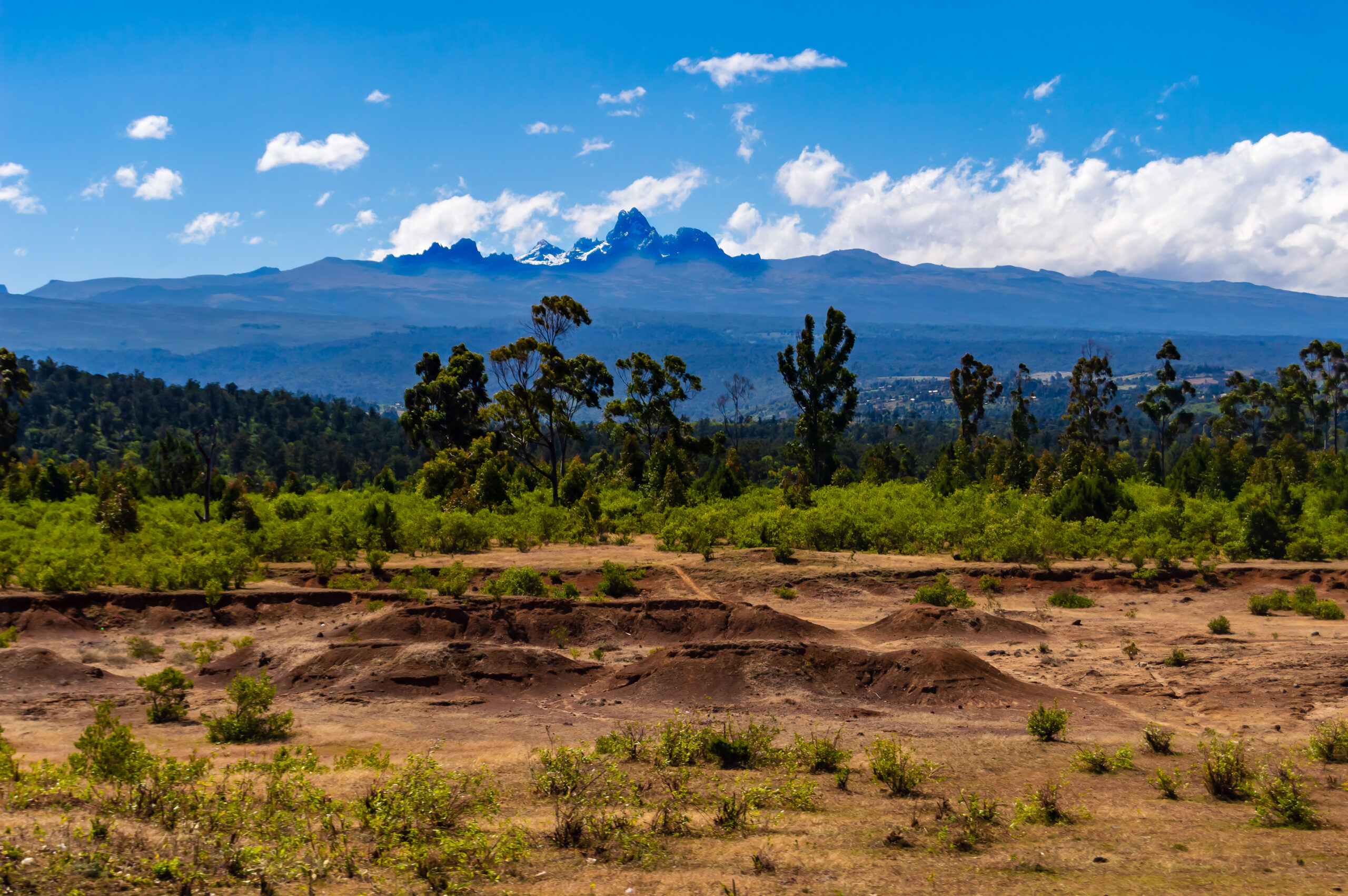
Mount Kenya (Point Lenana)Kenya4,985 mAfrica’s second-highest; non-technical hiking summit
Mount MeruTanzania4,562 mAfrica’s 5th-highest; 4-day technical hike; Kilimanjaro acclimatization
Mount Stanley (Margherita)Uganda/DRC5,109 mAfrica’s 3rd-highest; technical glaciers near summit
Table MountainSouth Africa1,086 mCable car access; substantial day hikes

Asia / Oceania Beginner Mountains

MountainLocationElevationWhy Beginner-Friendly
Mount FujiJapan3,776 mJapan’s highest; established mountain huts; 5-7 hour ascent
Mount KosciuszkoAustralia2,228 mEasiest Seven Summit; road + paved trail access
Mount KinabaluMalaysia (Borneo)4,095 mSoutheast Asia’s highest; mandatory guide; 2-day climb
Mount ApoPhilippines2,954 mHighest in Philippines; substantial hiking infrastructure
Mount RinjaniLombok, Indonesia3,726 mIndonesia’s 2nd-highest volcano; substantial trek
Mount BromoJava, Indonesia2,329 mActive volcano; tourist hiking
Mount Cook (Aoraki)New Zealand3,724 mNZ’s highest — but NOT beginner; technical alpine climb
Mount AspiringNew Zealand3,033 mStandard route is intermediate; NOT beginner

South America Beginner Mountains

MountainLocationElevationWhy Beginner-Friendly
CotopaxiEcuador5,897 mGlaciated; basic mountaineering skills; 2-day climb
ChimborazoEcuador6,263 mFarthest peak from Earth’s center; glaciated; intermediate
Pichincha (Rucu and Guagua)Ecuador4,696 m / 4,776 mQuito-accessible; non-technical day climbs
AcatenangoGuatemala3,976 m2-day trek; views of active Volcán de Fuego
Aconcagua (Normal Route)Argentina6,961 mHighest outside Asia; non-technical but extreme altitude
Pico de Orizaba (Citlaltépetl)Mexico5,636 mMexico’s highest; glaciated; intermediate
IztaccíhuatlMexico5,230 mMexico’s 3rd-highest; non-technical; substantial scrambling

Choosing your first mountain by region. The “best first mountain” depends substantially on your home region — international expeditions add substantial cost and logistical complexity that’s unnecessary for early climbing experiences. Recommendations by region: USA climbers — start with Colorado 14ers (Mount Elbert, Mount Bierstadt) or Mount Whitney, then progress to Cascade volcanoes (Mount Adams, Mount Hood). UK climbers — start with Snowdon, then Scafell Pike, then Ben Nevis, then European Alps. European climbers — start with national highest points, then Mount Toubkal in Morocco, then the Breithorn or Allalinhorn for first 4,000m. Asian climbers — Mount Fuji (Japan) or Mount Kinabalu (Malaysia) are excellent first major mountains. African climbers — Mount Toubkal or Mount Kenya (Point Lenana) before Kilimanjaro. Australian climbers — Mount Kosciuszko, then New Zealand’s lower peaks, then Kilimanjaro for first major altitude. For all regions: complete several local day hikes before attempting your first overnight expedition. International beginner mountains (Kilimanjaro, Aconcagua, Cotopaxi) are achievable but represent substantial financial and time commitments more appropriate for second or third major expeditions.

The Beginner-to-Mountaineer Progression

The 5-Stage Mountain Climbing Progression

Most successful climbers progress through approximately five stages from absolute beginner to confident mountaineer. The full progression typically takes 1-3 years of consistent commitment depending on climbing frequency and ambition level.

Stage 1: Fitness Foundation (1-3 months)
Build cardiovascular endurance and leg strength through 5-10 mile day hikes with 1,500-2,500 ft elevation gain. Standard local trails. Focus: aerobic capacity, hiking technique, gear familiarity (boots, layering, hydration). Cost: $200-$500 (initial hiking gear).

Stage 2: Peak Bagging Day Hikes (3-6 months)
Progress to summit-focused day hikes with 2,500-4,000 ft elevation gain. Examples: Mount Sanitas (Boulder), Mount Olympus (SLC), Bear Peak (Boulder), Mount Wilson (Salt Lake), Mount Si (Seattle). Focus: route-finding, weather awareness, fitness for sustained climbing. Cost: $0-$500 (most are free/permit-free).

Stage 3: First Major Mountain (6-12 months)
Choose a non-technical major mountain matching your region. Examples: Mount Toubkal, Snowdon, Mount Fuji, Mount Whitney, Mount Elbert. Use a guide for your first major mountain — substantially reduces risk and accelerates learning. Focus: altitude management, multi-day logistics, expedition mindset. Cost: $1,500-$5,000 including guide, permits, gear additions.

Stage 4: Technical Mountaineering Skills (12-18 months)
Take a basic mountaineering course (Mountain Madness, AAI, RMI, AMGA-affiliated guides, or local mountaineering clubs). Standard skills: crampon technique, ice axe self-arrest, glacier rope team, crevasse rescue, anchor building. Most courses are 4-7 days at $1,500-$3,500. Focus: technical fundamentals that enable serious mountaineering. Cost: $2,000-$5,000 (course + technical gear: crampons $200, ice axe $100, harness $80, helmet $80, technical clothing).

Stage 5: First Glaciated Mountain (18-24+ months)
First “real mountaineering” expedition typically: Cascade volcanoes (Mount Adams 3,743m, Mount Hood 3,429m), Mount Rainier 4,392m for advanced beginners, or European Alps first 4,000m (Breithorn, Allalinhorn). Focus: applying technical skills in real glaciated terrain; weather window management; safe descent priority. Cost: $2,500-$8,000 depending on objective and guide selection.

Beyond Stage 5: After completing a glaciated mountain successfully, climbers have the foundation for serious mountaineering progression — first 5,000m peaks, technical alpine routes, and eventually 6,000m+ expeditions. The progression from absolute beginner to first 6,000m peak typically takes 3-5 years of consistent commitment with substantial financial investment ($15,000-$50,000+ across the journey).

The Beginner Mountain Mistakes: What Not to Do

Critical mistakes beginners make that cause injuries and deaths.

  1. Choosing too ambitious a first major mountain. Mount Kilimanjaro, Aconcagua, and similar 5,000m+ peaks are NOT beginner mountains despite being non-technical. They are non-technical AT ALTITUDE — meaning they require substantial fitness, altitude tolerance, and expedition logistics that beginners haven’t developed. Multiple deaths annually occur to climbers attempting these peaks without sufficient progression. Start with sub-4,000m peaks before attempting 5,000m+ objectives.
  2. Skipping the guide for first major mountains. Most beginner mountain fatalities occur on unguided attempts. Guides substantially reduce risk through weather decisions, route-finding, pace management, and emergency response. The $1,000-$3,000 guide cost is the highest-ROI safety investment in beginner mountaineering.
  3. Inadequate altitude acclimatization. Acute Mountain Sickness (AMS) symptoms — headache, nausea, fatigue, sleep disturbance — affect approximately 50%+ of climbers above 3,000m. Severe altitude illness (HACE, HAPE) can kill quickly. The rule: ascend gradually, never gain more than 300-500m of sleeping elevation per night above 3,000m, take rest days. Climbers who fly from sea level directly to high altitude (common Kilimanjaro mistake) have substantially higher failure and death rates.
  4. Insufficient afternoon thunderstorm awareness. Mountain weather changes dramatically and quickly. Standard rule: summit by 11:00 AM and descend below treeline by noon, especially in Colorado, the Cascades, and tropical mountains. Multiple beginner deaths occur from lightning strikes when climbers ignore afternoon timing.
  5. Wrong gear for conditions. Hiking boots are not crampon-compatible. Cotton clothing is dangerous when wet at altitude. Down jackets need waterproof shells. Beginners frequently underestimate gear requirements. Borrow or rent technical gear from established gear shops before purchasing personally.
  6. Cardio fitness without leg strength. Runners and cyclists often have cardio capacity but lack leg strength for sustained climbing. Mountain climbing requires substantial quadriceps, glute, and core strength. Add weight training and stair climbing to cardio preparation.
  7. Ignoring ‘turnaround time’ discipline. Successful mountaineers set predetermined turnaround times before starting a summit attempt — and respect them regardless of summit proximity. The 1996 Mount Everest disaster (8 deaths) was caused by climbers ignoring turnaround times. Beginners must develop this discipline on smaller mountains first.

The Cost of Beginner Mountaineering

Investment CategoryStage 1-2 (Hiking)Stage 3 (First Major Mountain)Stage 4-5 (Mountaineering)
Hiking footwear$120-$250 (trail runners or hiking boots)$200-$400 (waterproof hiking boots)$400-$800 (mountaineering boots, B1/B2)
Layering system$200-$400 (basic synthetic layers)$400-$800 (added shell + insulation)$800-$1,500 (full alpine layering)
Backpack$80-$200 (day pack)$150-$300 (overnight pack)$300-$500 (alpine pack)
Navigation and safety$100-$200 (map, compass, headlamp)$200-$500 (added emergency gear, GPS)$500-$1,000 (technical added gear)
Technical gear$700-$1,500 (crampons, axe, harness, helmet)
Mountain experienceFree / $50 permits$1,000-$3,000 (guided first major mountain)$2,000-$5,000 (mountaineering course + first glaciated peak)
STAGE TOTAL$500-$1,200$2,000-$5,000$4,500-$10,300

Frequently Asked Questions

What are the best mountains for beginner climbers?

Top global beginner mountains: Mount Fuji (Japan, 3,776m — established trails and huts), Mount Toubkal (Morocco, 4,167m — North Africa’s highest, manageable), Snowdon (Wales, 1,085m — well-marked UK peak), Mount Kilimanjaro (Tanzania, 5,895m — Africa’s highest, non-technical but altitude challenge), Mount Whitney (USA, 4,421m — highest in lower 48), Mount Elbert (Colorado, 4,401m — easiest Colorado 14er), Pikes Peak (Colorado, 4,302m — multiple route options). For first-time mountain climbers: Mount Toubkal, Snowdon, or Mount Fuji are typically recommended starting points before progressing to higher-altitude objectives.

How do you start mountain climbing as a beginner?

Structured 5-stage progression: (1) Fitness foundation through 5-10 mile day hikes with substantial elevation gain (1-3 months); (2) Peak bagging day hikes with 2,500-4,000 ft elevation gain (3-6 months); (3) First major non-technical mountain with a guide (6-12 months); (4) Basic mountaineering course teaching crampon, ice axe, glacier rope skills (12-18 months); (5) First glaciated mountain such as Cascade volcanoes or European 4,000m peaks (18-24+ months). Total progression typically 1-3 years. Total budget: $7,000-$16,000 across all stages including gear and experiences.

What is the easiest mountain to climb in the world?

Several mountains compete for “easiest” depending on definition. By absolute non-technical accessibility: Mount Kosciuszko (Australia, 2,228m) — paved road + well-marked trail, 4-6 hours to summit. By “easiest Seven Summit”: Kosciuszko (Bass List) or Kilimanjaro (Messner List). By “easiest 14er”: Mount Sherman (Colorado, 4,278m). By “easiest 4,000m Alpine peak”: Breithorn (4,164m, Switzerland, via Klein Matterhorn cable car). By “easiest peak with substantial summit experience”: Mount Fuji during climbing season — well-marked trail, mountain huts. By “easiest accessible summit”: Pikes Peak via Cog Railway, Mount Washington via Cog Railway or Auto Road.

Can a beginner climb Kilimanjaro?

Yes — Kilimanjaro is climbed annually by approximately 35,000-50,000 people, many with no prior mountaineering experience. However, Kilimanjaro is NOT a beginner mountain despite being non-technical. At 5,895m, it presents substantial altitude challenge — approximately 50-70% of climbers reach the summit depending on route and acclimatization schedule. Key beginner advice for Kilimanjaro: (1) Choose a 7-9 day route rather than 5-6 days — additional acclimatization substantially improves success rates; (2) Build substantial hiking fitness beforehand (3-6 months of consistent training); (3) Complete 1-2 sub-4,000m climbs first to assess altitude tolerance; (4) Choose Lemosho or Northern Circuit routes for best acclimatization profile; (5) Budget $2,500-$5,000 for reputable operators with proper guide ratios. Climbers who skip preparation have substantially higher failure rates and risk altitude sickness.

How much does beginner mountain climbing cost?

Total cost for the beginner-to-mountaineer progression: approximately $7,000-$16,000 across 1-3 years. Stage-by-stage breakdown: Stage 1-2 (hiking foundation): $500-$1,200 for basic gear; Stage 3 (first major mountain with guide): $2,000-$5,000; Stage 4-5 (mountaineering course + first glaciated peak): $4,500-$10,300 including technical gear. After completing this progression, climbers have the foundation for serious mountaineering with marginal cost reductions per expedition (most gear is reusable). The single highest-ROI investment is a guided first major mountain experience — substantially reduces risk and accelerates learning compared to unguided attempts.

Do I need a guide for my first mountain?

Strongly recommended for your first major mountain (Stage 3 in the progression). Guides substantially reduce risk through: weather decisions, route-finding in poor visibility, pace management for altitude, emergency response capability, and immediate technical instruction. The $1,000-$3,000 guide cost is the highest-ROI safety investment in beginner mountaineering. Most beginner mountain fatalities occur on unguided attempts where climbers continue despite deteriorating conditions or push beyond their capabilities. After completing 1-2 guided major mountain experiences and a formal mountaineering course (Stage 4), climbers can begin unguided attempts on familiar terrain. Until then, guided experiences are the standard approach and recommended practice.

Continue Reading — Beginner Mountain Resources

Language »