Global Summit Guide logo featuring mountain imagery, symbolizing hiking and mountaineering resources for trip planning and safety.

Tag: mount baker

  • Mount Baker Climbing Update 2026: Routes, Season, Permits & Glacier Training

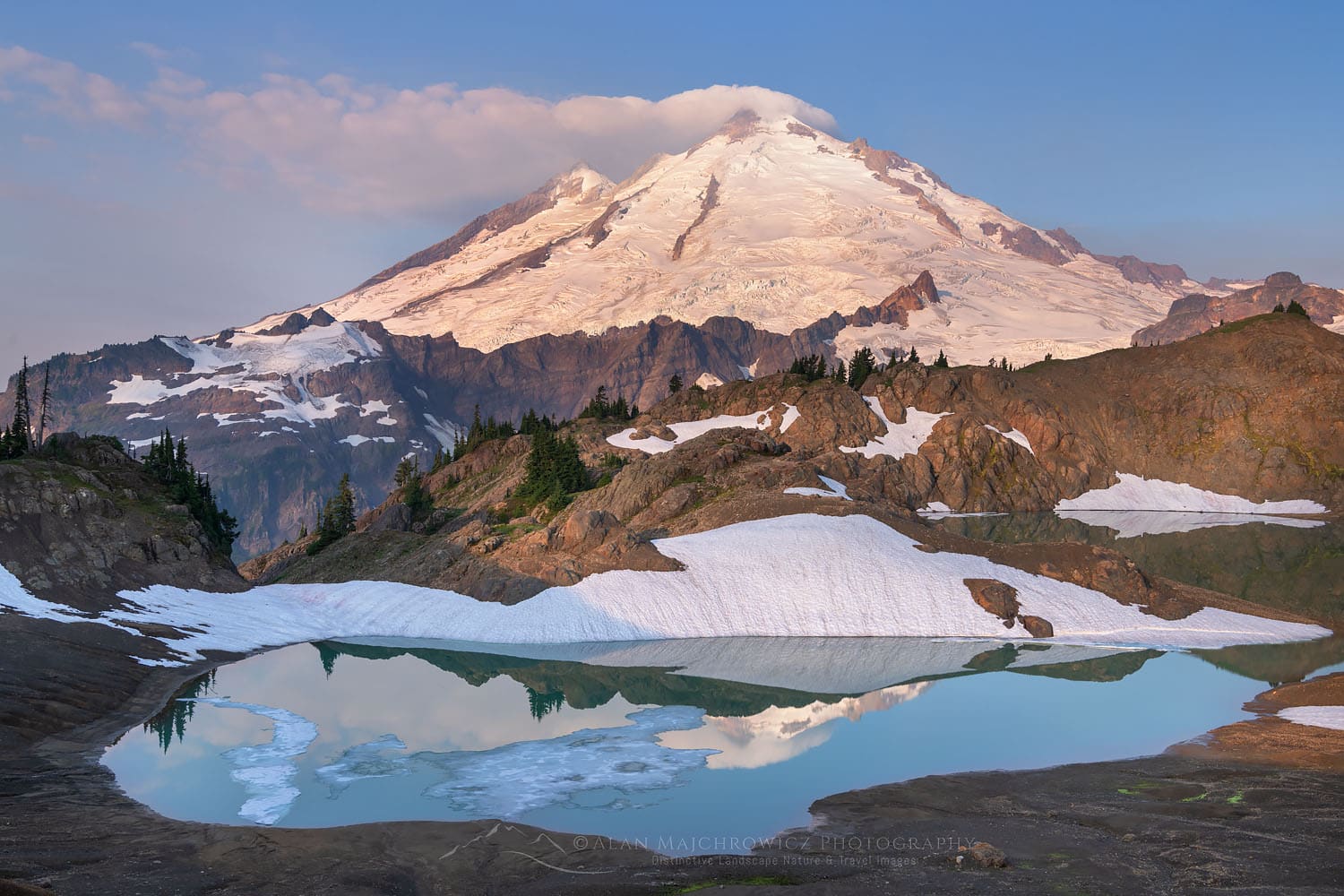
    Glaciated Mt. Baker summit reflecting in alpine lake, Washington climbing destination
    Mount Baker is 10,781 ft (3,286 m), the second-most glaciated peak in the Lower 48. It is the classic first glaciated volcano and the Cascades’ great training ground.
    Expedition Updates · Cascades

    Mount Baker climbing update

    The Cascades’ glacier-mountaineering classroom, and the best first glaciated volcano in the Lower 48. This page tracks the season, the two standard routes, the permits and access, the cost, the hazards, and where Baker fits your progression. A single-mountain page in our Expedition Updates directory. Heights in feet (metres).

    Current status In season May to Sep 10,781 ft (3,286 m)

    The best classroom in the Cascades, with no climbing fee to get in.

    Baker is where climbers learn glacier travel, crevasse rescue, and roped movement before Rainier, Denali, and the Alps. Its two standard routes, the Coleman-Deming and the Easton Glacier, are moderate glacier climbs run heavily as skills-and-summit courses.

    Unlike Rainier, Baker charges no climbing permit or fee, just a Northwest Forest Pass to park and a free self-issued wilderness permit. What it does ask for is skill: over 7,000 ft of gain, a long summit day, and real crevasse and avalanche hazard. Beginner-friendly is not the same as easy.

    10,781 ft

    Summit (3,286 m)

    Third-highest in Washington, second-most glaciated in the Lower 48.

    No fee

    Climbing permit

    Just a Northwest Forest Pass to park; no climbing charge.

    May to Jul

    Prime season

    Best snow and firmest crevasse bridges.

    Mount Baker, known by its Indigenous name Kulshan, dominates the skyline north of Seattle and east of Bellingham. It is one of the snowiest places on earth, holding a world-record single-season snowfall, and its deep glaciation is exactly what makes it such a good place to learn. This page owns the current picture, the season, the routes, the access, and where Baker sits in a climbing progression. For the full history, route detail, and gear, see our Mount Baker climb guide.

    Season and status

    A long summer window, with the best conditions early.

    Baker is climbed from late spring through summer, roughly May to September. May to July usually brings the best snow cover and the firmest crevasse bridges, which is why the guided skills courses cluster there, while later in the summer the glaciers open up, route-finding gets harder, and crevasse hazard rises. Weather is the deciding factor on any given summit day, so teams build in flexibility rather than betting on a single date.

    The glacier classroom

    Why Baker is the peak climbers learn on.

    More than a summit in its own right, Baker is the Pacific Northwest’s teaching mountain. Its moderate, heavily glaciated routes are the ideal place to learn the core skills of glaciated mountaineering: roped glacier travel, crevasse rescue, cramponing, and self-arrest, in real terrain but without extreme technical difficulty. Guide services run constant skills-and-summit courses here for exactly that reason, and climbers routinely use Baker as the proving ground before Rainier, Denali, and bigger objectives in the Alps and the Andes. If you want one mountain to build glacier competence on, this is the one.

    The honest framing: treat Baker as a skills investment, not just a summit. The glacier-travel and crevasse-rescue habits you build here are what keep you safe on every bigger glaciated peak afterward. Pair it with our first glacier climb training and crevasse rescue basics guides.

    The two standard routes

    Coleman-Deming and Easton, plus a step up.

    Coleman-Deming (north side)

    The most popular and most guided route, from the Heliotrope Ridge trailhead. It climbs to Hogsback Camp around 6,000 ft, then up the Coleman Glacier, across the Deming Glacier, and finishes up the steep Roman Wall, the crux, to the summit plateau and Grant Peak. Expect over 7,000 ft of gain and a summit day near 5,000 ft.

    Easton Glacier (south side)

    From the Schriebers Meadow trailhead, a gentler, broad-glacier ascent that is popular for skills courses and ski descents. A slightly more forgiving introduction to the mountain, with its own long summit day.

    North Ridge (a step up)

    A steeper, more technical ice route for experienced climbers, and a natural next objective once the standard routes feel comfortable. Not an introductory line.

    Permits and access

    Simpler and cheaper than Rainier.

    Baker’s access is refreshingly straightforward. There is no climbing permit and no climbing fee for the mountain, which sets it apart from Rainier. What you need is a Northwest Forest Pass to park at the trailhead, at $30 for the year or $5 for the day, or an equivalent Interagency pass, plus a free self-issued wilderness permit that you fill out at the trailhead. The Mount Baker Wilderness rules apply: a maximum party size of 12, no campfires, and packing out all human waste. Passes and information are available at the Glacier Public Service Center on the Mount Baker Highway.

    Cost

    One of the most affordable big glaciated climbs anywhere.

    What a Mount Baker climb costs, per climber. Confirm current figures with the Forest Service and your guide service.
    ItemCostNotes
    Northwest Forest Pass (parking)$30 per year or $5 per dayRequired at the trailheads; an Interagency or America the Beautiful pass also works.
    Climbing permit or feeNoneUnlike Rainier, Baker charges no climbing fee; you self-issue a free wilderness permit at the trailhead.
    Guided climb or skills course$1,000 to $1,600A 2 to 3 day Coleman-Deming or Easton climb, usually including glacier training.
    Self-guided direct costPass, gear, and travelThe real requirement is not money but glacier-travel and crevasse-rescue skill.
    Guided or self-guided? If you do not yet have glacier skills, a guided skills-and-summit course is the safest and most useful way to climb Baker, and it doubles as training for everything after. If you do have the skills, Baker is one of the cheapest big glaciated climbs going. Either way, check your base against our fitness standards and pick a team with our how to choose an operator guide.

    Hazards

    A moderate climb with real, serious dangers.

    âš  Do not be fooled by the beginner rating

    Baker is rated as an introductory glacier climb, but that describes the technical difficulty, not the seriousness. The Coleman-Deming route gains over 7,000 ft with a summit day close to 5,000 ft, the glaciers are heavily crevassed, the Roman Wall is steep, avalanche hazard is real, and the weather changes fast enough to end summit bids without warning. Baker is also an active volcano, with steam venting from Sherman Crater and lahars as its greatest geologic hazard.

    It demands glacier-travel and crevasse-rescue competence, sound turnaround discipline, and respect for the forecast. Learn or refresh the fundamentals with our crevasse rescue basics guide. This page is educational and is not a substitute for training or a guide.

    Weather and timing

    A live look at one of the snowiest mountains on earth.

    Baker sits directly in the path of Pacific storms and collects extraordinary amounts of snow, and its weather can turn from clear to whiteout quickly. Summit day success hinges on catching a settled window. The live map below shows current conditions for the massif; use it as background and rely on the Northwest Avalanche Center and a mountain forecast for the actual go decision.

    Live wind and weather for Mount Baker. Source: Windy.com. For how to read a mountain forecast, see our weather guide.
    Mount Baker, in the North Cascades of Washington State, near Bellingham. Map: OpenStreetMap contributors.

    Where Baker fits your progression

    The rung below the bigger glaciated peaks.

    Baker’s real value is as a stepping-stone. It is the natural place to build glacier competence before stepping up to a bigger, more committing objective, and the skills transfer directly. Once Baker feels controlled, the usual next steps are its Cascades neighbour Mount Rainier, with its longer summit day and glacier complexity, and from there the far bigger commitment of Denali in Alaska. See how the pieces fit together in our progression plans, and track current conditions on the next objectives in our Rainier and Denali updates.

    Go or no-go checklist

    Work through these before you climb.

    Before you go

    • Have the glacier skills – roped travel, crevasse rescue, and self-arrest, or book a guide who teaches them.
    • Buy the Northwest Forest Pass – and self-issue the free wilderness permit at the trailhead.
    • Pick the route for the conditions – Coleman-Deming or Easton, based on snow, season, and crowds.
    • Check the forecast and avalanche report – weather is the main reason summit days fail here.
    • Respect the beginner rating – 7,000+ ft of gain and a long summit day are serious regardless of grade.
    • Pack it out – carry out all waste; the wilderness rules are strict for good reason.

    Mount Baker update FAQ

    The questions climbers ask most about permits, routes, and the season.

    Do you need a permit to climb Mount Baker?

    There is no climbing permit or climbing fee for Mount Baker itself. What you need is a Northwest Forest Pass to park at the trailhead, which costs $30 for the year or $5 for the day, or an Interagency or America the Beautiful pass, plus a free self-issued wilderness permit filled out at the trailhead. Wilderness rules apply: a maximum party size of 12, no campfires, and packing out all waste. This is simpler and cheaper than Rainier, which does charge a climbing pass.

    Is Mount Baker a good first glaciated peak?

    Yes. Baker is the classic first glaciated volcano and one of the best glacier-mountaineering training grounds in the Lower 48. Its two standard routes are ideal for learning roped glacier travel, crevasse rescue, cramponing, and self-arrest, which is why guide services run so many skills-and-summit courses on it and why it is standard preparation for Rainier, Denali, and the Alps. The one caveat is that beginner-friendly does not mean easy.

    Which Mount Baker route should I climb?

    The Coleman-Deming route, from the Heliotrope Ridge trailhead on the north side, is the most popular and most guided line, climbing the Coleman and Deming Glaciers to the steep Roman Wall crux and the summit. The Easton Glacier route, from Schriebers Meadow on the south side, is a gentler, broad-glacier climb popular for skills courses and ski descents. The North Ridge is a steeper, more technical ice route for experienced climbers.

    How hard is it to climb Mount Baker?

    It is a moderate glacier climb rather than technical rock, but it is a serious mountain day. Expect over 7,000 ft of elevation gain from the trailhead, a summit day of close to 5,000 ft, real crevasse and avalanche hazard, the steep Roman Wall, and famously fast-changing weather. It requires glacier-travel and crevasse-rescue skills, or a guide who has them. As the guide services put it, do not be fooled by the beginner rating.

    When is the Mount Baker climbing season?

    Late spring through summer, roughly May to September. May to July usually offers the best snow and the firmest crevasse bridges, while later summer opens more crevasses and makes route-finding harder. Weather is the single biggest factor in whether a summit day succeeds, so build in flexibility.

    How much does it cost to climb Mount Baker?

    A guided two or three day climb or a combined skills-and-summit course runs roughly $1,000 to $1,600. If you have the skills to go self-guided, the direct costs are just the Northwest Forest Pass, your gear, and travel, which makes Baker far cheaper and more accessible than Rainier or Denali. The real prerequisite is competence on a glacier, not a big budget.

    Is Mount Baker an active volcano?

    Yes. Baker is an active stratovolcano monitored by the USGS Cascades Volcano Observatory. Steam vents from Sherman Crater just south of the summit, activity that increased noticeably in 1975 and 1976, and lahars, volcanic mudflows, are considered its greatest geologic hazard. It is not currently erupting, and it is climbed routinely, but it is a living volcano rather than an inert peak.

    How high is Mount Baker and where is it?

    Mount Baker is 10,781 ft (3,286 m), the third-highest peak in Washington and the second-most glaciated mountain in the Lower 48 after Rainier. It stands in the North Cascades near Bellingham, about two and a half hours north of Seattle. Its Indigenous name is Kulshan, and it is one of the snowiest places on earth, holding a world-record single-season snowfall from the winter of 1998 to 1999.

    📋 How this update is built

    This page is compiled by Travis Ludlow, Founder and Head of Research at Global Summit Guide, from US Forest Service access rules, USGS Cascades Volcano Observatory monitoring, and guide-service route information, with sources named below. It was reviewed for safety by Dawson Ludlow, our Climbing and Mountaineering Lead (Wilderness First Aid), whose highest first-hand summit is Kilimanjaro.

    Our team has not climbed Mount Baker, so we report official rules and route information rather than personal experience, and we review this page through the climbing season. Passes, rules, and volcanic status can change, so confirm current access and conditions with the Forest Service and USGS before you plan around them.

    Planning a Baker climb?

    Start with our Mount Baker climb guide, build the skills with our first glacier climb training guide, and see where it leads in our progression plans. Most climbers stage through Bellingham or Seattle, so for flights and lodging, browse travel on Expedia.

    Disclosure: the Expedia link above is a sponsored affiliate link. We may earn a commission at no extra cost to you.

    Was this helpful?

    Yes
    No
    Thanks for your feedback!
  • Best Mountains to Climb for Beginners: 12 First Peaks (2026)

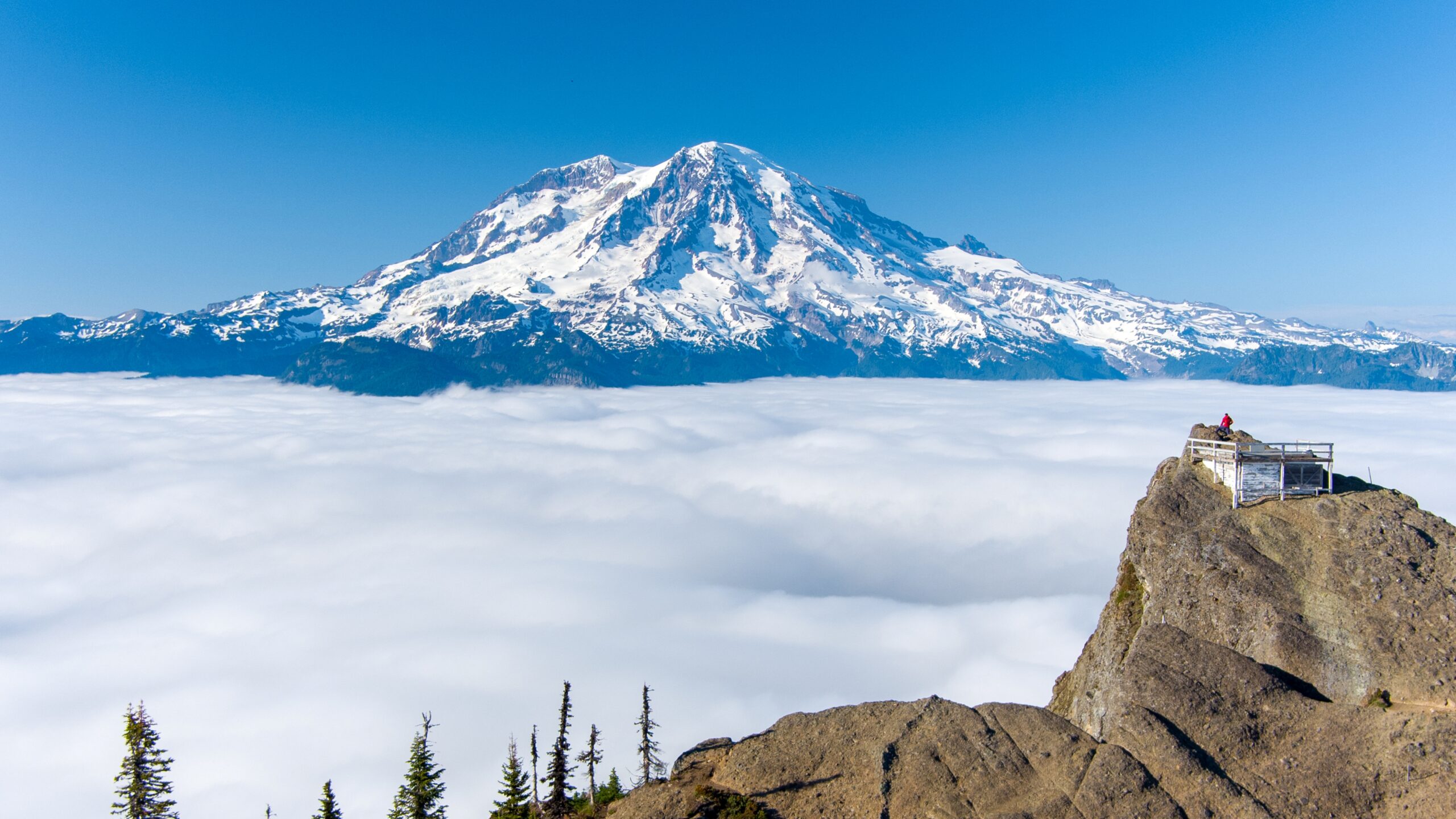
    Mount Rainier summit above cloud layer, snow-covered peak and rocky outcrop
    Beginner mountain choice is about matching the objective to your current skills. Rainier belongs near the end of the beginner progression, while smaller trekking and instructional peaks belong at the beginning.
    Beginner progression · 12 global peaks · first mountain selector · 2026

    Best Mountains for Beginner Climbers: 12 First Peaks Ranked by Skill, Cost and Risk

    A complete beginner, a strong hiker, a first-time glacier climber and a climber seeking a first altitude expedition need different mountains. This ranking separates those goals and shows which peaks can genuinely be a first-ever mountain—and which require training first.

    The quick answer

    The best first mountain depends on what you want to learn.

    Best first technical mountain: Mount Baker. Best short guided snow climb: Mount Hood. Best first Alpine 4,000er: the Breithorn. Best first international trekking summit: Jebel Toubkal or Mount Fuji. Best first high-altitude expedition: Kilimanjaro.

    Rainier and Pico de Orizaba are beginner-accessible only within a progression. They should not be treated as first-ever mountains.

    First technical course

    Mount Baker

    Several days of instruction followed by a real glacier summit.

    First Alpine summit

    Breithorn

    A compact guided glacier climb to a 4,000-metre summit.

    First international trek

    Toubkal or Fuji

    Mountain logistics and altitude without technical glacier systems.

    First altitude expedition

    Kilimanjaro

    A supported multi-day introduction to serious altitude.

    12Global first-peak options
    4Beginner types separated
    6 regionsNorth America to Africa
    $–$$$$Budget bands
    68–94Beginner Score range

    The 12 best beginner mountains compared

    The ranking prioritizes suitability and progression value—not height or fame. “First-ever” refers to a climber with strong basic hiking preparation, not a sedentary traveler with no mountain experience.

    #PeakBest forCan be first-ever?Mountain typeElevationDurationBudgetScore
    1Mount BakerWashington, USAFirst technical mountaineering courseYes—as a first technical climb after hiking preparationGlacier course + summit3,286 m5–6 days$$$94
    2BreithornSwitzerland / ItalyFirst Alpine 4,000-metre summitConditional—fit hikers should go guidedShort glaciated Alpine climb4,164 m1 day$$–$$$91
    3Gran ParadisoItalyFirst complete hut-based Alpine climbConditional—strong hiking base requiredGlacier climb + hut approach4,061 m2–3 days$$$90
    4Mount HoodOregon, USAShort guided snow-and-ice climbYes—as a guided first technical summitSteep snow climb3,429 m2–3 days$$–$$$88
    5Mount St. HelensWashington, USABudget first volcano summitYes in summer for a fit, prepared hikerNontechnical volcano hike2,549 m1 day$86
    6Mount FujiJapanFirst developed international mountainYes during the official climbing seasonHigh-altitude trekking summit3,776 m1–2 days$–$$84
    7Jebel ToubkalMoroccoFirst international 4,000-metre trekYes for a fit hiker with a licensed guideRefuge-based trekking summit4,167 m2–3 days$–$$83
    8Mount AdamsWashington, USAFirst self-supported snow climb after trainingNo—snow skills should come firstTwo-day snow volcano3,742 m2 days$80
    9Mount KilimanjaroTanzaniaFirst high-altitude expeditionConditional—strong fitness and a long itinerarySupported trekking expedition5,895 m7–9 days preferred$$$$78
    10Mount Kenya — Point LenanaKenyaFirst multi-day African trekking summitConditional—use a slow itineraryHigh-altitude trekking traverse4,985 m4–6 days$$$76
    11Pico de OrizabaMexicoFirst 5,000-metre crampon-and-altitude progressionNo—prior snow skills and altitude experienceHigh-altitude volcano climb5,636 m7–10 days with acclimatization$$$72
    12Mount RainierWashington, USAFirst major glacier expedition after trainingNo—course or prior glacier climb firstRoped glacier expedition4,392 m4–6 days$$$68

    How the Beginner Score works

    25 pointsFirst-mountain suitability
    20 pointsTechnical barrier
    20 pointsObjective-hazard burden
    15 pointsGuide and rescue infrastructure
    10 pointsAccess and budget
    10 pointsProgression value

    A higher score does not mean a mountain is safe. It means the peak offers a clearer, more supported match for one or more beginner pathways.

    Find Your Best First Mountain

    Answer five questions to receive three matches. The selector is a planning aid, not a substitute for a guide assessment or current conditions.

    What do you want from the climb?

    What experience do you already have?

    Which region works best?

    What budget level fits?

    How much time can you use?

    Not sure your fitness is ready?

    Use the beginner climbing fitness self-assessment before choosing a mountain.

    Your three matches

    Complete the questionsYour matches will appear here.
    Glaciated Mt. Baker summit reflecting in alpine lake, Washington climbing destination
    Mount Baker ranks first because a beginner can learn the complete technical foundation on the mountain before applying those skills on a supervised glacier summit.

    Peak-by-peak beginner fit

    What each mountain teaches, who should choose it and why some famous “beginner” peaks belong later in the progression.

    01 · First technical mountaineering course

    Mount Baker

    Washington, USA · 3,286 m

    Mount Baker remains the clearest first technical-mountaineering choice because major guide programs combine instruction with a real glacier summit. The mountain teaches the systems that transfer directly to Rainier, the Alps and larger expedition peaks.

    First-ever?Yes—as a first technical climb after hiking preparation
    SeasonJune–September
    Duration5–6 days
    GuideStrongly recommended
    TeachesCrampons, ice axe, rope teams, crevasse rescue
    Budget$$$
    02 · First Alpine 4,000-metre summit

    Breithorn

    Switzerland / Italy · 4,164 m

    The Breithorn combines cable-car access with genuine glacier travel and altitude. It is not trivial, but it gives a fit beginner a compact introduction to Alpine rope work without the long approach or sustained technical climbing of larger classics.

    First-ever?Conditional—fit hikers should go guided
    SeasonJune–September
    Duration1 day
    GuideRecommended for beginners
    TeachesCrampon movement, rope travel, first 4,000er pacing
    Budget$$–$$$
    03 · First complete hut-based Alpine climb

    Gran Paradiso

    Italy · 4,061 m

    Gran Paradiso gives beginners a fuller Alpine experience than the Breithorn: a hut approach, predawn glacier travel, altitude and a short rocky summit section. It is one of the best bridges from hiking into European mountaineering.

    First-ever?Conditional—strong hiking base required
    SeasonJune–September
    Duration2–3 days
    GuideRecommended for beginners
    TeachesHut routine, glacier pacing, summit scrambling
    Budget$$$
    04 · Short guided snow-and-ice climb

    Mount Hood

    Oregon, USA · 3,429 m

    Mount Hood offers the fastest route from skills day to a real technical summit. The South Side is short compared with Baker, but steeper and more conditions-sensitive. It suits fit beginners who want a guided weekend objective rather than a full instructional week.

    First-ever?Yes—as a guided first technical summit
    SeasonApril–June
    Duration2–3 days
    GuideStrongly recommended
    TeachesAlpine starts, cramponing, timing discipline
    Budget$$–$$$
    05 · Budget first volcano summit

    Mount St. Helens

    Washington, USA · 2,549 m

    Mount St. Helens is the lowest-cost way to test whether summit-focused mountain days suit you. The Monitor Ridge route is hiking and scrambling rather than technical mountaineering, while snow-season routes add equipment and skills that should be learned before an independent attempt.

    First-ever?Yes in summer for a fit, prepared hiker
    SeasonSpring–autumn
    Duration1 day
    GuideUsually optional in summer
    TeachesPacing, weather, permits and turnaround discipline
    Budget$
    06 · First developed international mountain

    Mount Fuji

    Japan · 3,776 m

    Mount Fuji is a strong first international summit because the official-season routes have developed infrastructure, marked trails and mountain huts. The challenge is altitude, weather and crowd timing rather than technical climbing.

    First-ever?Yes during the official climbing season
    SeasonOfficial summer season
    Duration1–2 days
    GuideOptional for prepared hikers
    TeachesAltitude pacing, hut logistics and night hiking
    Budget$–$$
    07 · First international 4,000-metre trek

    Jebel Toubkal

    Morocco · 4,167 m

    Toubkal adds culture, refuge logistics and a 4,000-metre summit without summer glacier systems. It is one of the most accessible international mountain experiences, although winter snow transforms it into a mountaineering objective.

    First-ever?Yes for a fit hiker with a licensed guide
    SeasonApril–October for summer conditions
    Duration2–3 days
    GuideLicensed local guide required
    TeachesRefuge travel, long summit days and moderate altitude
    Budget$–$$
    08 · First self-supported snow climb after training

    Mount Adams

    Washington, USA · 3,742 m

    Mount Adams is the logical independence test after formal snow training. Its South Climb is less technically complex than Baker or Rainier, but the long ascent, snow travel and overnight systems make it unsuitable as a completely untrained first mountain.

    First-ever?No—snow skills should come first
    SeasonJune–August
    Duration2 days
    GuideOptional only with appropriate skills
    TeachesHigh camps, self-arrest and independent systems
    Budget$
    09 · First high-altitude expedition

    Mount Kilimanjaro

    Tanzania · 5,895 m

    Kilimanjaro is the established first high-altitude expedition, not the easiest first mountain. Standard routes require no technical climbing, but the summit elevation is serious. A longer itinerary and conservative pacing matter more than raw athletic speed.

    First-ever?Conditional—strong fitness and a long itinerary
    SeasonJanuary–March and June–October
    Duration7–9 days preferred
    GuideLicensed operator required
    TeachesAcclimatization, expedition routine and pacing
    Budget$$$$
    10 · First multi-day African trekking summit

    Mount Kenya — Point Lenana

    Kenya · 4,985 m

    Point Lenana is the nontechnical trekking summit of Mount Kenya; Batian and Nelion are technical rock climbs and do not belong on a beginner list. A Sirimon–Chogoria traverse gives a stronger progression experience than a rushed out-and-back.

    First-ever?Conditional—use a slow itinerary
    SeasonJanuary–February and June–September
    Duration4–6 days
    GuideRegistered guide or operator recommended
    TeachesMulti-day pacing, altitude and changing ecosystems
    Budget$$$
    11 · First 5,000-metre crampon-and-altitude progression

    Pico de Orizaba

    Mexico · 5,636 m

    Orizaba is a first major altitude-and-crampon objective rather than a first mountain. It works best after introductory snow training and a staged Mexico-volcano acclimatization plan.

    First-ever?No—prior snow skills and altitude experience
    SeasonNovember–March
    Duration7–10 days with acclimatization
    GuideStrongly recommended
    TeachesCrampon efficiency, altitude and pre-dawn summit pacing
    Budget$$$
    12 · First major glacier expedition after training

    Mount Rainier

    Washington, USA · 4,392 m

    Rainier belongs at the end of a beginner list, not the beginning. It is the first major glacier expedition for climbers who have completed a course or a smaller glaciated peak and can arrive with strong fitness and practiced rope-team skills.

    First-ever?No—course or prior glacier climb first
    SeasonMay–July for many guided programs
    Duration4–6 days
    GuideStrongly recommended for first attempt
    TeachesExpedition rhythm, glacier hazards and sustained summit days
    Budget$$$

    Four types of beginner climber

    Most ranking mistakes happen because every beginner is treated as the same person.

    1. First-ever summit beginner

    • Has hiking fitness but no technical mountain experience.
    • Best matches: St. Helens, Fuji and Toubkal.
    • Needs pacing, weather, navigation and turnaround habits.

    2. First technical mountaineer

    • Wants crampons, an ice axe and rope-team instruction.
    • Best matches: Baker, Hood, Breithorn and Gran Paradiso.
    • Choose a structured instructional program rather than summit-only guiding.

    3. First independent snow climber

    • Already has formal snow skills and wants to apply them.
    • Best match: Mount Adams in suitable conditions.
    • Must carry independent navigation and emergency systems.

    4. First altitude-expedition climber

    • Has strong hiking fitness and wants a multi-day high summit.
    • Best matches: Kilimanjaro, Point Lenana and later Orizaba.
    • Altitude management—not technical grade—becomes the primary problem.
    Guided does not mean identical. Some programs are designed primarily to reach a summit; others are built to teach transferable skills. Compare the difference in best mountains for your first guided climb before booking.

    Mountains to avoid as a first-ever climb

    A mountain can be marketed to beginners while still requiring prior fitness, altitude or technical experience.

    • Mount Rainier without a course or smaller glacier climb. Crevasses, rope-team travel and a sustained summit day make it a first major expedition—not a first mountain.
    • Pico de Orizaba without snow skills and acclimatization. Its standard route adds crampon efficiency and serious altitude at the same time.
    • Aconcagua, Denali, Elbrus, Vinson or Carstensz as a first serious objective. Nontechnical sections do not remove expedition, cold, altitude or access complexity.
    • Matterhorn and other technical Alpine ridges. These require efficient rock movement, route-finding and descent competence built on easier climbs.
    • Winter versions of summer beginner peaks. Snow, avalanche terrain and limited rescue options can completely change the difficulty.

    A five-stage beginner progression

    The mountain should become more complex only after the underlying skill has been demonstrated.

    Build the hiking base. Complete repeated 8–12-mile mountain days with 2,500–4,000 feet of gain while learning footwear, fueling and weather decisions.

    Complete a first summit objective. Use St. Helens, Fuji, Toubkal or a suitable local peak to test pacing and turnaround discipline.

    Take a mountaineering course. Learn crampon movement, ice-axe arrest, rope-team travel, anchors and crevasse rescue on Baker or a comparable instructional mountain.

    Apply the skills. Climb Hood, Gran Paradiso, the Breithorn or Adams under the level of supervision appropriate to your competence.

    Add altitude or expedition complexity. Progress to Kilimanjaro, Point Lenana, Orizaba and finally Rainier-level objectives.

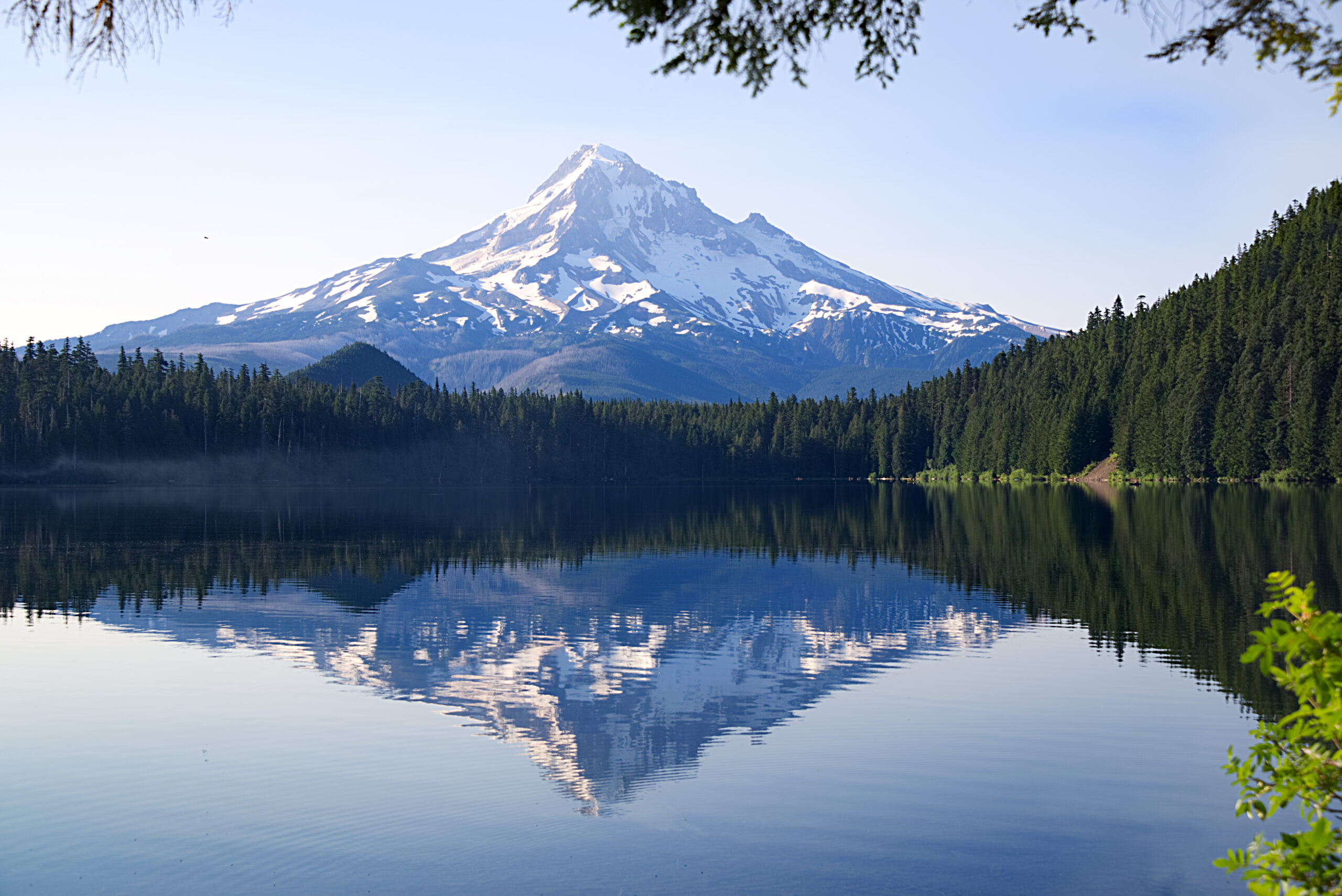
    Glaciated Mt. Hood reflected in a lake, Oregon's signature climbing peak
    A first glaciated mountain should come after—not before—the systems that make glacier travel safer and more efficient.

    Budget bands

    Use budget bands rather than one false global price. Airfare, equipment rental, guide ratio and itinerary length can change the final total substantially.

    BandTypical formatExamplesWhat drives cost
    $Local or self-supported nontechnical objectiveSt. Helens, Adams, some Fuji plansPermits, local transport and equipment already owned
    $$Short guided climb or low-cost international trekHood, Breithorn, ToubkalGuide day, lifts, refuge or local transport
    $$$Multi-day guided course or expeditionBaker, Gran Paradiso, Point Lenana, Orizaba, RainierInstruction days, lodging, permits, rental equipment and guide ratio
    $$$$International high-altitude expeditionKilimanjaroFlights, operator support, park fees, porters and itinerary length

    Planning travel after choosing the mountain?

    Complete the mountain and operator research first. Then compare flights and lodging through the Global Summit Guide Expedia travel shop.

    Disclosure: the Expedia link is an affiliate link. Global Summit Guide may earn a commission at no additional cost to you.

    Beginner mountain FAQ

    Direct answers to the questions that matter before choosing a first objective.

    What is the best mountain for a first technical climb?

    Mount Baker is the strongest all-around first technical choice because guided programs combine several days of instruction with a glacier summit. Mount Hood is the better option for a shorter guided snow climb.

    What is the best mountain for a complete beginner?

    For a first-ever summit, Mount St. Helens in summer, Mount Fuji during its official season and Jebel Toubkal with a licensed guide are more appropriate than Rainier, Orizaba or Mount Adams. The right choice still depends on fitness and conditions.

    What is the best first mountain in the Alps?

    The Breithorn is the most compact first Alpine 4,000-metre experience. Gran Paradiso is the better choice for a fuller two- or three-day hut and glacier climb.

    Can Mount Rainier be your first mountain?

    Rainier should not be a first-ever mountain. It is a suitable first major glacier expedition after a formal course or a smaller glaciated climb such as Mount Baker.

    What is the best first high-altitude expedition?

    Kilimanjaro is the most established first high-altitude expedition because the standard routes are nontechnical and supported by licensed operators. A seven- to nine-day itinerary is preferable to a rushed schedule.

    Is Pico de Orizaba a beginner mountain?

    Orizaba is beginner-accessible only within a progression. Climbers should already have crampon and ice-axe competence, strong hiking fitness and prior altitude exposure.

    Do I need a guide for my first mountain?

    A guide is strongly recommended for a first technical, glaciated or high-altitude objective. Nontechnical summer routes may be appropriate independently when the climber already has navigation, weather and emergency skills.

    What is the difference between an easy mountain and a good beginner mountain?

    An easy mountain has a low technical barrier. A good beginner mountain also teaches transferable skills, has reliable guide and rescue infrastructure and offers a clear next step in a progression.

    Which Seven Summit is best for beginners?

    Kilimanjaro is the established first high-altitude Seven Summit. Kosciuszko is technically easier, but it is primarily a hiking objective rather than a mountaineering course.

    Choose the mountain that teaches the next skill

    Start with an objective that matches your fitness, experience, region and budget. Build one layer at a time, then use the larger mountains to confirm skills you already possess—not to learn everything at once.

    Use the mountain quiz Check your fitness

    Was this helpful?

    Yes
    No
    Thanks for your feedback!
Language »