
Last updated August 29, 2026
Beginner Mountain Climbing Guide: How to Start and Choose Your First Summit
Start with a nearby Class 1 or easy Class 2 summit that requires no technical gear in its normal season. Build enough fitness to handle 6–8 miles and 2,000–3,000 feet of gain, train consistently for six to eight weeks, learn weather and turnaround judgment, and only then move toward snow, glacier or altitude objectives.
How Do You Start Mountain Climbing?
Start smaller than your ambition. Pick one nontechnical summit close to home, train for that exact amount of distance and vertical gain, carry the basic hiking essentials, start early and use a predetermined turnaround rule.
You do not need ropes, crampons, an ice axe or expedition gear for a true first summit. Those belong later, after ordinary mountain days feel routine.
The fastest way to progress is not to jump categories—it is to make each step boringly competent before adding exposure, snow, altitude or technical systems.
How to Start Mountain Climbing in 5 Steps
Each step solves one risk before adding the next.
Build a Hiking Base
Spend several weeks on local trails with sustained climbing. Learn how you handle hills, descents, a loaded pack and several hours on your feet.
Choose One First Mountain
Pick a Class 1 or easy Class 2 route close to home with a clear trail and predictable seasonal window.
Train for the Actual Route
Match weekly hikes, stairs or hills and strength work to the distance and vertical gain of your target summit.
Pack Only What the Route Needs
Buy personal-fit essentials. Rent or defer technical equipment until your next objective actually requires it.
Climb With Turnaround Discipline
Start early, watch weather, eat and drink before you feel depleted, and turn around when conditions or time say to.
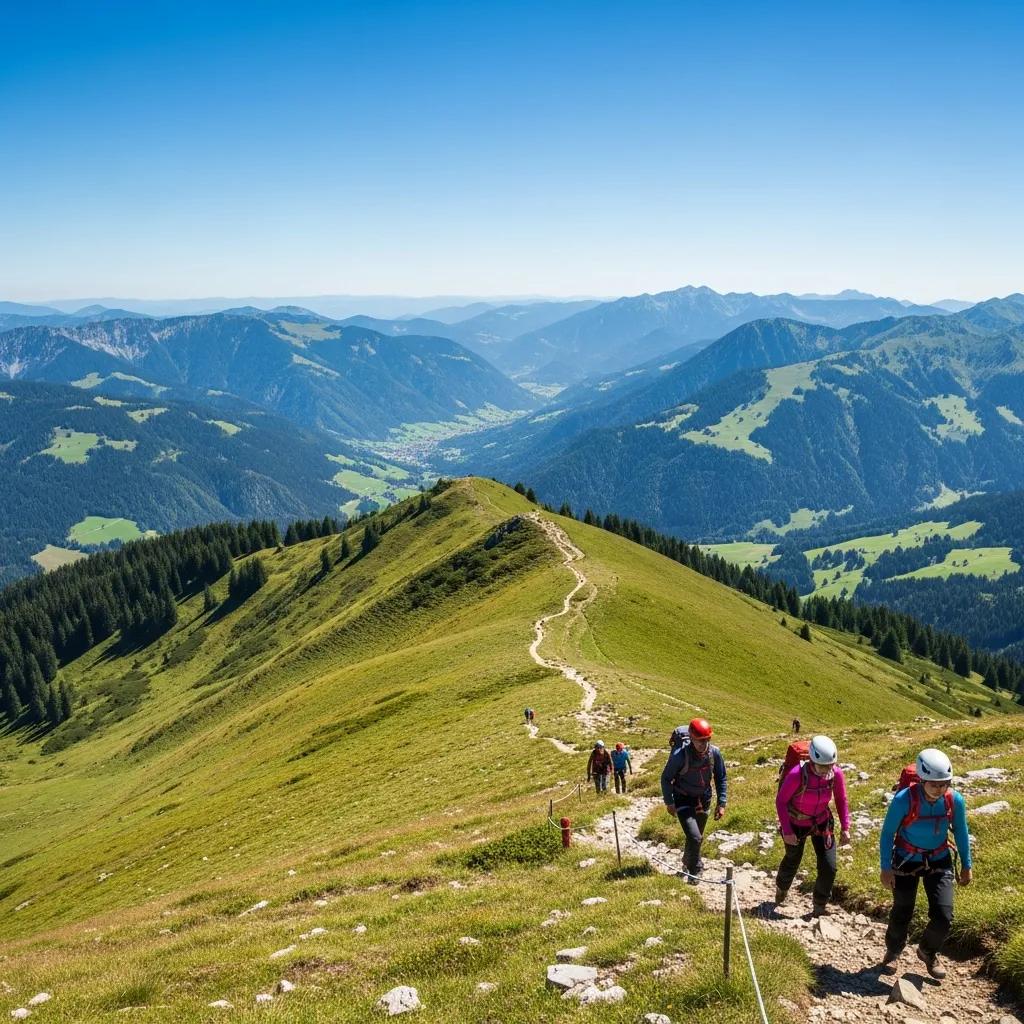
Your First Summit Should Challenge Fitness—Not Require Skills You Do Not Yet Have.
A clear route, manageable vertical gain and nontechnical terrain let you learn pacing, weather judgment and descent discipline without stacking unnecessary hazards.
What Makes a Good First Mountain?
| Factor | Good first-mountain target | Avoid for now |
|---|---|---|
| Terrain | Class 1 or easy Class 2 | Technical climbing, exposed Class 3+ |
| Vertical gain | ~1,500–3,000 ft | Huge gain before you know your pacing |
| Distance | ~5–10 miles | Ultra-long days as a first summit |
| Route | Marked / obvious | Complex off-trail navigation |
| Season | Snow-free normal season | Snow/ice requiring technical gear |
| Access | Simple day trip or weekend | Expedition logistics |
| Weather | Reliable forecast window | Routes known for frequent severe conditions |
Are You Ready for a First Summit?
| Test | Useful benchmark | If you are not there yet |
|---|---|---|
| Distance | 6–8 mile hike | Build weekly walking volume |
| Vertical | 2,000–3,000 ft gain | Add sustained hill / stair sessions |
| Time on feet | 4–6 hours comfortably | Extend weekend hikes gradually |
| Descent | Can descend with control when tired | Train quads, balance and downhill technique |
| Pack | Carry food, water and layers without distress | Progress pack weight slowly |
| Judgment | Willing to turn around | Set hard turnaround rules before the hike |
Six Good First Mountains Across the USA
Use these as examples of the category—not as a universal ranking.
| Region | Peak | Summit | Approx. gain | Terrain |
|---|---|---|---|---|
| Pacific Northwest | Mount Si, WA | 4,167 ft | ~3,150 ft | Class 1 |
| Rockies | Quandary Peak, CO | 14,265 ft | ~3,450 ft | Class 1 |
| Southwest | Humphreys Peak, AZ | 12,637 ft | ~3,460 ft | Class 1 |
| Southeast | Clingmans Dome, TN/NC | 6,643 ft | Low from summit-area trailhead | Class 1 |
| Northeast | Mount Monadnock, NH | 3,165 ft | ~1,800 ft | Class 2 sections |
| Mountain West | Bald Mountain, UT | 11,943 ft | ~1,000 ft | Class 1 |
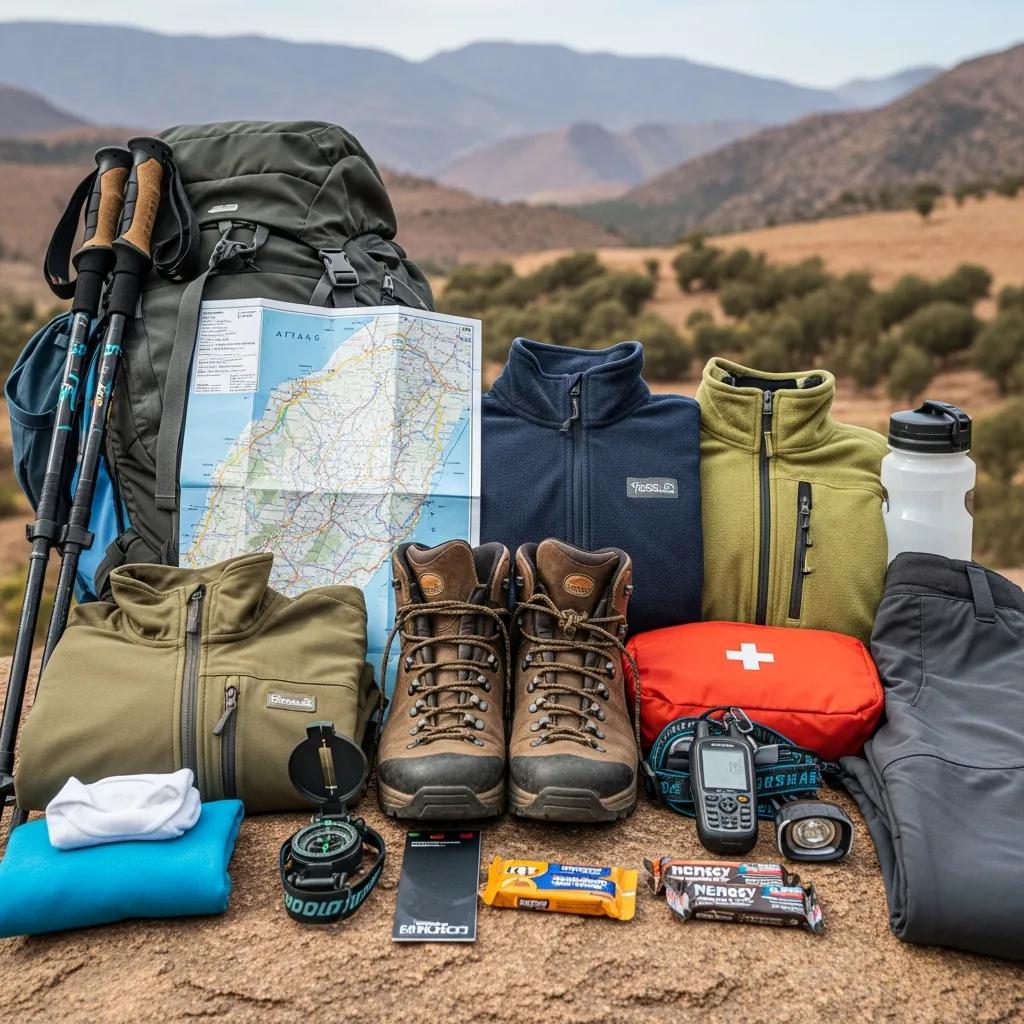
You Need Less Gear Than You Think.
For a nontechnical first summit, personal-fit hiking gear and emergency essentials matter more than crampons, ice axes or expedition hardware.
What Gear Does a Beginner Actually Need?
Broken-In Footwear
Trail runners or hiking boots appropriate to the route and conditions.
Simple Layering System
Base or hiking layer, insulation and wind/rain protection. Add only what the forecast requires.
20–30L Daypack
Enough room for water, food, spare layers and emergency essentials.
Navigation + Headlamp + First Aid
Bring the hiking essentials even when the route appears obvious.
What Comes After the First Summit?
| Stage | What changes | Good focus | Next resource |
|---|---|---|---|
| 1 · Local hikes | Build base | Distance, gain, pack, weather | Readiness assessment |
| 2 · First summit | Add summit objective | Pacing + turnaround | 8-week training plan |
| 3 · Peak progression | Add length / altitude / mild scrambling | Judgment under fatigue | Intermediate guide |
| 4 · First technical category | Add snow / glacier / ropes only with training | Instruction + systems | First glacier climb training |
Beginner Safety Rules That Matter Most
Start Early
Protect daylight and reduce exposure to afternoon weather where that pattern applies.
Set a Turnaround Time
Decide before fatigue, summit pressure and sunk-cost thinking distort the decision.
Check Mountain Weather
Use the elevation and route forecast, not only the nearest town.
Fuel Before You Bonk
Eat and drink on schedule rather than waiting until performance falls apart.
Tell Someone the Plan
Share route, trailhead and expected return time with someone not on the mountain.
Finish the First Summit Wanting to Climb the Second.
The best beginner day builds confidence without hiding the mountain’s seriousness.
What Should You Do Next?
Mountain Match
Use your location, experience and goals to narrow the objective.
Find my mountain → I need a reality checkReadiness Assessment
Measure your fitness and preparation against the planned climb.
Check readiness → I chose my peak8-Week First Summit Plan
Turn the mountain’s distance and gain into a structured training block.
Start training → My climb is scheduledSummit Day Walkthrough
Know what the day should feel like before the alarm goes off.
Preview summit day →18 Beginner Mountains by Region
Choose a first peak close enough that logistics do not become the hardest part.
Compare first mountains → National collectorBest Mountains in the USA
See how beginner objectives fit into the wider U.S. progression.
Explore USA mountains → Deep recoveryAltitude Acclimatization
Fitness and altitude tolerance are different problems.
Understand altitude → Deep recoveryMountaineering Truth Project
Match the objective to real ability rather than summit marketing.
Read the project → Deep recoveryGear Safety
Learn inspection, maintenance and retirement before equipment becomes technical.
Review gear safety → PlanMy Climb
Save the mountain, training milestones and summit plan.
Build My Climb →This page owns
- How to start mountain climbing
- Who beginner climbing is for
- How to choose a first summit
- Basic readiness benchmarks
- First-year progression logic
- Routing into the 12-guide beginner cluster
This page does not duplicate
- Full 8-week training schedules
- Hour-by-hour summit-day detail
- Regional 18-peak rankings
- Technical glacier instruction
- Advanced expedition systems
- Mountain-specific route guides
Beginner Mountain Climbing FAQ
How do I start mountain climbing as a beginner?
Start with a nontechnical Class 1 or easy Class 2 summit near home, build a hiking base, train for six to eight weeks and learn weather, pacing, navigation and turnaround discipline before adding technical terrain.
What is the best first mountain for a beginner?
The best first mountain is usually a nearby Class 1 or easy Class 2 summit with a clear route, manageable elevation gain and no technical equipment requirement in its normal season.
How fit do I need to be?
A useful benchmark is being able to hike 6–8 miles with roughly 2,000–3,000 feet of gain carrying a light pack and still descend with control.
How long should I train for my first summit?
Most beginners with a reasonable baseline can prepare in six to eight weeks using consistent hiking, hill or stair work and leg strength.
What gear do beginners need?
Supportive footwear, layers, a daypack, water, food, navigation, sun protection, a headlamp, first aid and emergency essentials are enough for most nontechnical first summits.
Do beginners need a guide?
Usually not for a straightforward Class 1 or easy Class 2 day hike. Professional instruction becomes much more valuable once snow, glaciers, technical climbing or high-altitude systems enter the objective.
What should I climb after my first summit?
Add longer Class 1 and Class 2 peaks, more gain, mild scrambling and altitude gradually before moving into technical categories.
What makes a mountain beginner-friendly?
Nontechnical terrain, a clear route, manageable gain, reliable seasonal conditions, simple access and consequences that match a new climber’s skills.
Choose One Mountain You Can Prepare for Well.
Your first summit does not need to be famous. It needs to teach you how your body, gear and judgment work in the mountains—and leave you ready for the next step.
Was this helpful?
🏔Related guides
🧭Explore & compare
Global Summit Guide is an independent mountaineering resource founded in 2026. The team combines first-hand trekking and climbing experience with in-depth research and professional health and nutrition review to help climbers choose objectives, prepare properly, and stay safe.
Health, altitude, and nutrition content is reviewed by Taylor Ludlow (Registered Nurse) and Brigg Hoopes (Nutritionist).
What We Don't Know Yet
Mountain information changes quickly. This box explains the limits of what this page can responsibly promise.
- Visa, passport, vaccination, border, insurance, and local transportation rules may change before your trip.
- Route conditions, snowpack, closures, and weather can change quickly after this page is updated.
- Permit rules, fees, quotas, and reservation windows may change between review cycles.
- Operator availability, pricing, guide ratios, and cancellation terms can change by season.
- Your fitness, altitude response, risk tolerance, and experience level may change what is safe or realistic.
Verify current conditions with official land managers, guide services, local forecasts, and current route reports before booking or climbing.
Mountaineering, rock and ice climbing, glacier travel, and high-altitude activity are inherently dangerous and can result in serious injury or death. The information on Global Summit Guide is provided for general informational and educational purposes only and is not a substitute for professional instruction, qualified guiding, proper equipment, or your own judgment and experience.
Route conditions, weather, snowpack, permits, regulations, and hazards change constantly and may differ from what is described here. Details may be incomplete, out of date, or contain errors. Always verify current information with local authorities, certified guides, and official sources before making any decision in the mountains.
Nothing on this site is medical, legal, or financial advice. Our fitness, acclimatization, altitude, and nutrition content is general in nature; consult a qualified physician before beginning any strenuous exercise program or exposing yourself to high altitude.
You are solely responsible for your own safety and decisions. To the fullest extent permitted by law, Global Summit Guide and its team accept no liability for any loss, injury, damage, or expense arising from use of, or reliance on, this information. By using this site you acknowledge these risks and accept these terms.
Some links on this site may be affiliate links. If you buy through them we may earn a small commission at no extra cost to you; this never affects our recommendations.
Global Summit Guide recommendation path
Next Best Mountain to Research
Use these recommendations to continue the right planning path instead of stopping on one page.
Use current permit, weather, route, and operator information before booking or climbing.