
Last updated September 12, 2026

Classic Alpine Peaks: The Alps’ 10 Most Iconic Climbs
The classic alpine peaks of Europe define what most climbers mean by mountaineering: the birthplace of the sport, the origin of the grading systems, and home to mountains whose silhouettes are recognised worldwide. This guide covers the 10 greatest classics, the 82-peak Alpine 4000ers list, the French grading system, the hut-based logistics that make Alpine climbing unique, and realistic 2026 costs for guided and independent ascents. Elevations in metres (feet).
The classic alpine peaks of Europe are where modern mountaineering was invented. From the first Mont Blanc ascent in 1786 to the golden age of Victorian alpinism that tamed the Matterhorn in 1865, the Alps set the rules for how climbers rate routes, organise huts, train guides, and understand what it means to climb a mountain. Today the range’s 10 most iconic peaks remain the standard apprenticeship for any climber progressing toward bigger objectives, and many are worthy lifetime goals in themselves.
Ten peaks, three valleys, one grading system.
There is no official list, but climbers agree on a core of 10 mountains that define the classics: Mont Blanc, Monte Rosa, Dom, Weisshorn, Matterhorn, Grandes Jorasses, Jungfrau, Monch, Eiger, and Aiguille Verte. They concentrate in three areas served by three gateway towns, and every one of them is described by a single French grade from F to ED. Learn the grade system and the gateways, and the whole range starts to make sense.
New to glaciated climbing? See the wider picture in our intermediate climbing guide, and the skills every classic assumes in glacier travel basics.
Alpine 4000ers
UIAA peaks above 4,000 m across the range.
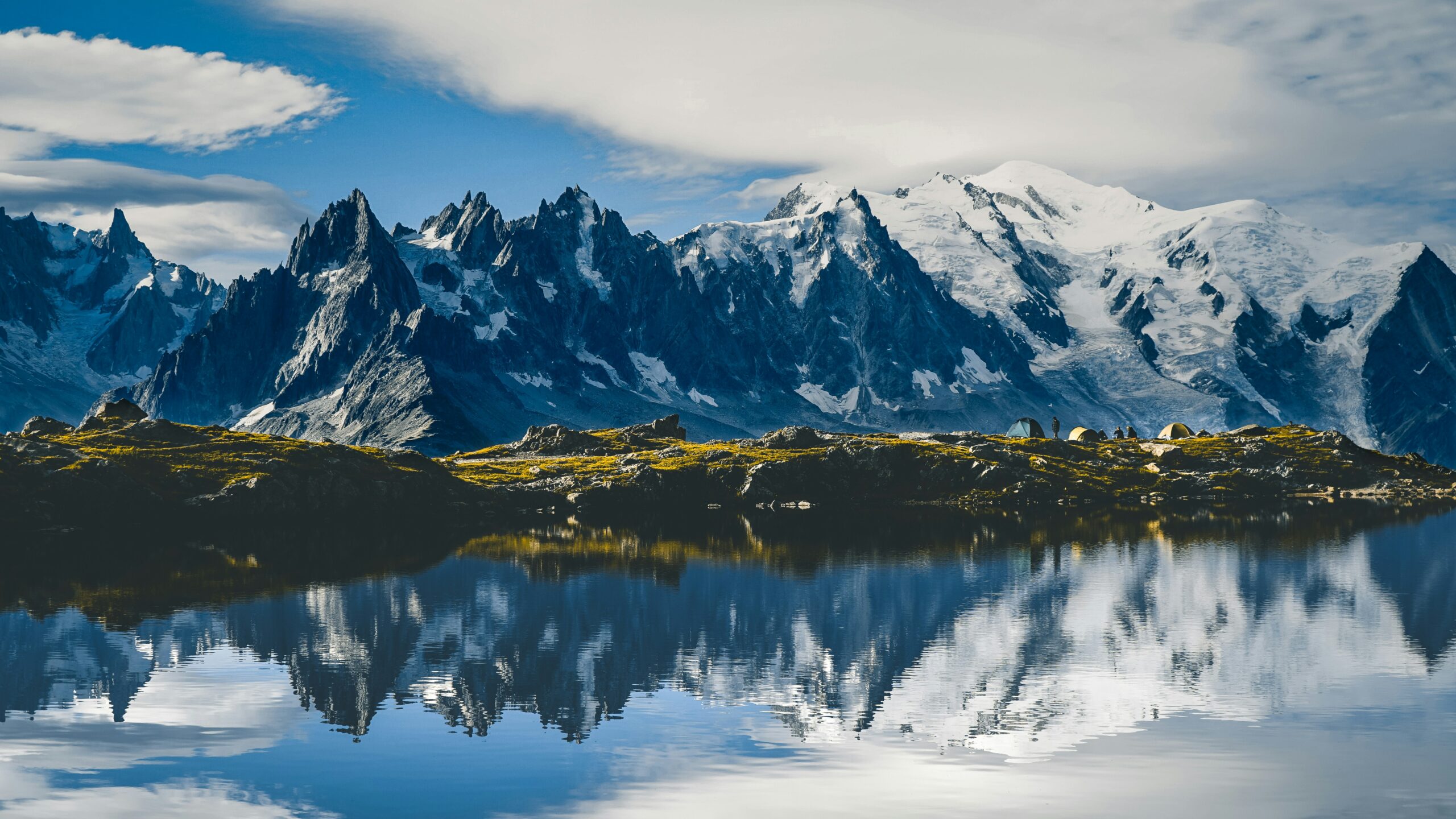
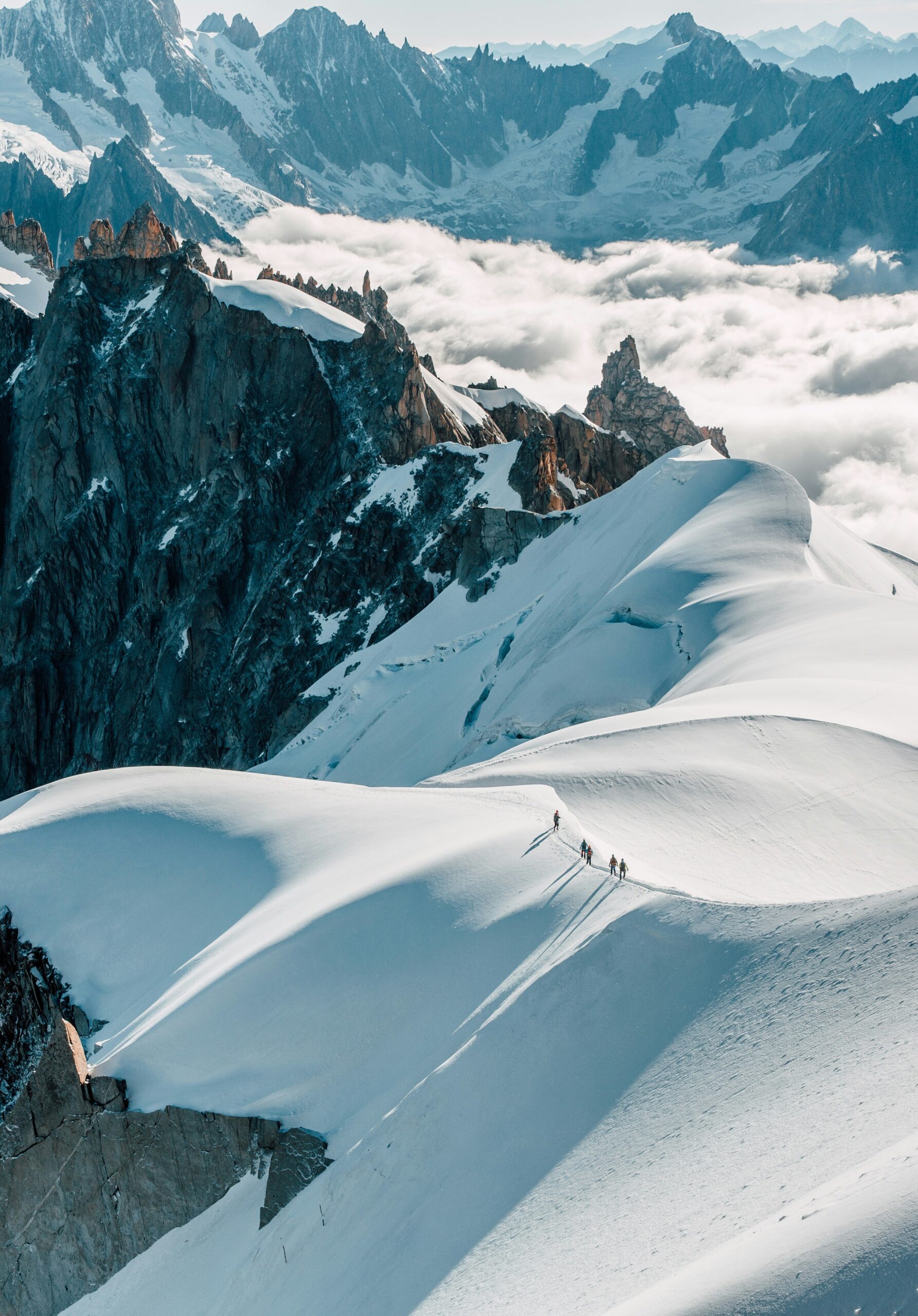
Mont Blanc
The tallest peak in the Alps and in Western Europe.
Gateways
Chamonix, Zermatt, and Grindelwald reach nearly all of them.
One grade
The French system rates every route on this page.
What are the classic alpine peaks?
The most historically significant summits of the Alps, mostly above 4,000 metres, that define the category.
The classic alpine peaks are a loose but widely understood category covering the range’s most iconic summits above roughly 4,000 metres. There is no formal list with exact membership, but climbers generally agree on a core of 10: Mont Blanc, Monte Rosa (Dufourspitze), Dom, Weisshorn, Matterhorn, Grandes Jorasses, Jungfrau, Monch, Eiger, and Aiguille Verte. Each combines historical importance, technical interest, and a striking profile that has drawn generations of climbers.
The Alps are the largest mountain range in Europe, spanning eight countries across roughly 1,200 kilometres. The classic peaks concentrate in three sub-ranges: the Mont Blanc massif on the French-Italian border, the Valais Alps around Zermatt in Switzerland, and the Bernese Oberland above Grindelwald. A climber visiting just these three areas can attempt every peak in this guide.
The Alpine 4000ers: the original challenge
Before the Seven Summits or the Eight-Thousanders, there were the 82 peaks above 4,000 metres.
The Alpine 4000ers are the 82 mountains in the Alps that rise above 4,000 metres. The list was formalised by the UIAA in 1994 with strict criteria: peaks must exceed 4,000 metres, have sufficient prominence to count as independent summits, and meet a mountaineering-interest requirement. Summiting all 82 is a serious lifetime undertaking. While many are straightforward glacier walk-ups such as the Breithorn, Allalinhorn, and Gran Paradiso, a dozen or more demand advanced climbing at grade AD or harder, and only a few hundred climbers in history have completed the full list.
The 4000ers cluster in three countries, with Switzerland holding 48, Italy 38, and France 24 (totals overlap because border peaks count for more than one country). The Valais canton of Switzerland alone contains 41 of them, making it the most 4000er-dense region on earth. For a first Alpine trip, a fortnight based in Zermatt can tick off a surprising number.
The three gateway towns
Almost every classic is climbed from Chamonix, Zermatt, or Grindelwald. Learn which town serves which peaks.
Chamonix, France · Mont Blanc massif
The birthplace of mountaineering and the busiest alpine climbing town on earth. The Aiguille du Midi cable car lifts climbers from 1,035 m to 3,842 m in 20 minutes, the single most efficient altitude gain in the Alps. The culture is fast, French, and serious, and this is where professional alpinists base themselves. Chamonix serves Mont Blanc, the Aiguille Verte, and the northern approach to the Grandes Jorasses.
Zermatt, Switzerland · Valais Alps
Car-free, Matterhorn-obsessed, and home to the highest concentration of 4000 m peaks on earth. The Gornergrat railway and Klein Matterhorn cable car reach most Valais classics. Zermatt has a more conservative, guide-centric culture than Chamonix and is the traditional base for first-time Matterhorn climbers. It serves the Matterhorn, Dufourspitze (Monte Rosa), the Dom, the Weisshorn, and the Breithorn.
Grindelwald, Switzerland · Bernese Oberland
The base for the Eiger, Jungfrau, and Monch, the iconic trio seen from Kleine Scheidegg. The Jungfraubahn cog railway climbs to 3,454 m at Jungfraujoch, the highest train station in Europe and the main launch point for the Oberland 4000ers. It is less elite than Chamonix and friendlier than Zermatt. A fourth base worth knowing is Courmayeur in Italy, the Italian gateway to the Mont Blanc massif, quieter than Chamonix and known for better hut food.
The 10 classic peaks
In order of height, tallest first. Standard-route grades shown; harder routes exist on every peak.
1.Mont Blanc 4,808 m (15,777 ft)
The highest peak in the Alps and the mountain that effectively invented the sport. Its first ascent on 8 August 1786 by Jacques Balmat and Michel-Gabriel Paccard, under a prize offered by Geneva scientist Horace-Benedict de Saussure, is the traditional birth date of modern alpinism.
The standard Gouter Route is graded PD and often called the easiest of the big Alps peaks, but that is misleading. The Gouter traverse crosses the Grand Couloir, a rockfall-prone gully that has killed over 100 climbers since records began, and Mont Blanc is the single deadliest mountain in the Alps by absolute numbers with roughly 25 to 30 fatalities per year. The best alternative is the Trois Monts route AD, which avoids the Grand Couloir. Full Mont Blanc climb guide. Guided 1,200 to 2,500 euros.
2.Dufourspitze (Monte Rosa) 4,634 m (15,203 ft)
The second-highest peak in the Alps and the high point of the sprawling Monte Rosa massif, ten connected 4000ers on the Swiss-Italian border. First climbed on 1 August 1855, it was named after Swiss general Guillaume-Henri Dufour, who created the first accurate topographic map of Switzerland.
The standard route from Zermatt starts at the Monte Rosa Hut (2,883 m), reached by a striking crossing of the Gorner Glacier. Graded AD, more serious than Mont Blanc despite similar height, it involves sustained glacier travel, a long summit ridge, and a final rocky scramble, with success rates around 60 percent. Its highlight is the Monte Rosa traverse, a multi-day link-up that can bag 3 to 5 4000ers in one push. Full Dufourspitze climb guide. Guided 1,400 to 2,200 euros.
3.Dom 4,545 m (14,911 ft)
The highest mountain located entirely within Switzerland (Dufourspitze straddles the Italian border) and the third-highest in the Alps. First climbed on 11 September 1858, it sits in the Mischabel Range above the Saas valley, a quieter alternative to the busier Zermatt region.
The Festigrat route is graded PD+, one of the more approachable 4500 m-plus classics for climbers with basic glacier experience. But the approach from Randa climbs 3,000 vertical metres over 5 to 6 hours to the Dom Hut (2,940 m), arguably the most demanding hut approach in the Alps, and summit days run a long 12 to 15 hours round trip. It rewards with far smaller crowds than Mont Blanc or Monte Rosa. Guided 1,500 to 2,000 euros.
4.Weisshorn 4,506 m (14,783 ft)
Often called the single most beautiful mountain in the Alps, a perfect three-faced pyramid of ice and rock above the Zinal valley. Its first ascent on 19 August 1861 by Irish physicist John Tyndall established it as one of the prizes of the Victorian golden age.
The standard East Ridge from the Tracuit Hut is graded AD+, significantly more serious than Mont Blanc and comparable to the Matterhorn’s Hornli Ridge, with sustained exposed rock, a long upper ice face, and a summit ridge that demands careful rope work. Weather is the constant challenge and success rates run 50 to 60 percent. For serious alpinists, the Weisshorn is one of the defining achievements of a Valais climbing career. Guided 1,800 to 2,500 euros.
5.Matterhorn 4,478 m (14,692 ft)
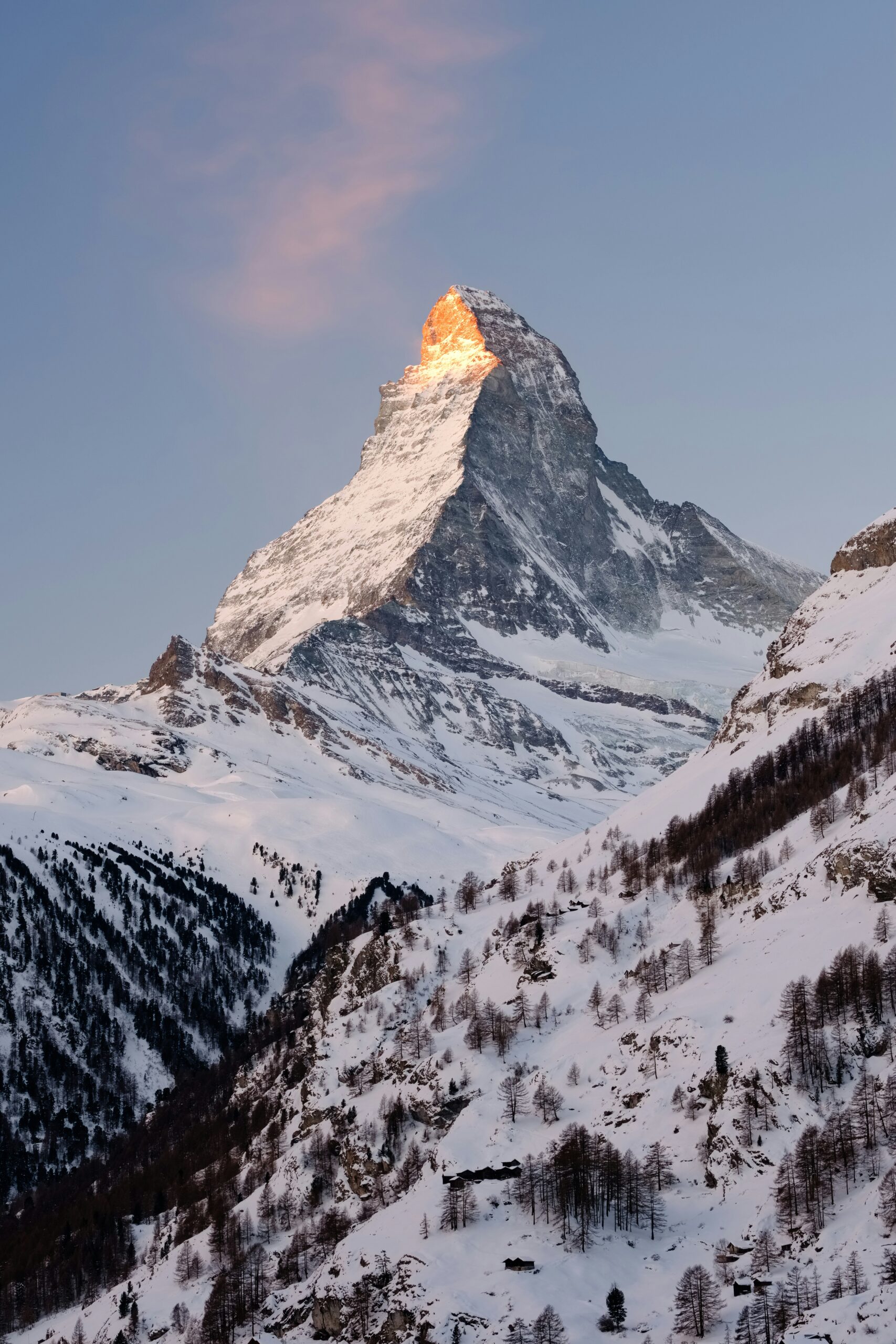
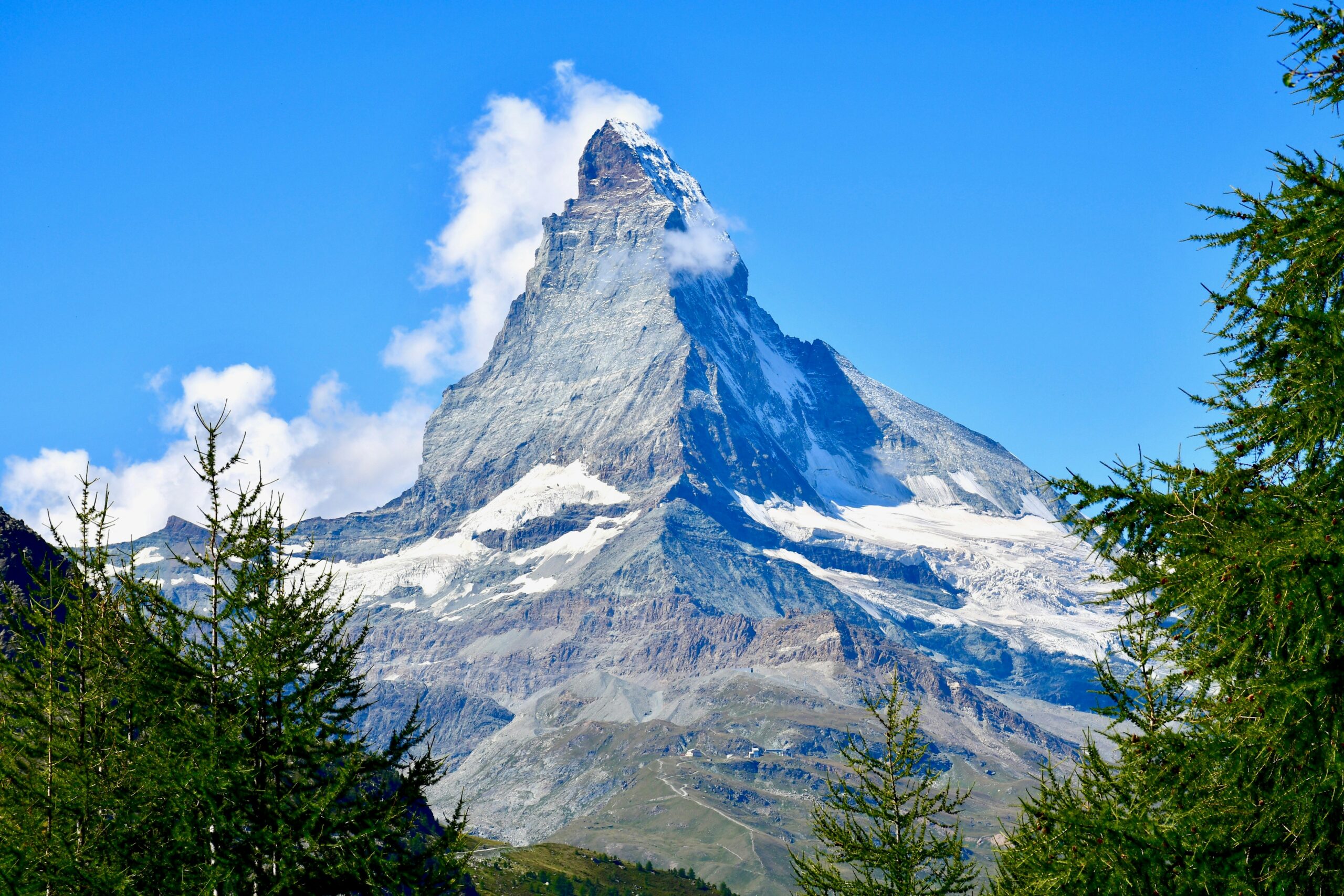
The four-sided pyramid above Zermatt is arguably the single most iconic mountain shape in the world. Its first ascent on 14 July 1865 by Edward Whymper’s party ended in disaster: four of the seven climbers fell to their deaths on the descent when a rope broke. The tragedy effectively ended the Victorian golden age and made the Matterhorn a symbol of mountaineering’s dual nature, beauty and death intertwined.
The modern standard is the Hornli Ridge AD. From the Hornli Hut at 3,260 m, climbers follow a sustained ridge of broken rock past the Solvay emergency shelter, roughly 1,200 metres of technical gain in 8 to 10 hours round trip. The Matterhorn kills approximately 12 to 15 climbers per year, and Zermatt guides universally require a 1:1 guide-to-client ratio. Full Matterhorn climb guide. Guided 1,500 to 3,500 euros.
6.Grandes Jorasses 4,208 m (13,806 ft)
A 2-kilometre summit ridge on the French-Italian border with six named points. The highest, Pointe Walker, was first reached on 30 June 1868 by Horace Walker; the neighbouring Pointe Whymper was summited by Edward Whymper in 1865. For most modern climbers, climbing the Grandes Jorasses means reaching Pointe Walker.
The mountain is famous not for its standard Rochefort Ridge D, which is rarely climbed, but for its North Face, one of the six great north faces of the Alps. The Walker Spur ED1, first climbed in 1938 by Cassin, Tizzoni, and Esposito, remains a coveted test piece. Weather is notoriously fickle and objective hazards are significant; this is a serious objective that assumes sound skills on technical rock and ice at altitude. Guided 2,000 to 3,500 euros.
7.Jungfrau 4,158 m (13,642 ft)
The most famous peak of the Bernese Oberland and, with the Eiger and Monch, part of the trio that defines the view from Kleine Scheidegg. It was first climbed on 3 August 1811 by the Meyer brothers, a remarkably early ascent decades before British climbers arrived in force.
The standard route begins from Jungfraujoch (3,454 m), reached by the Jungfraubahn cog railway, the highest train station in Europe. This makes it one of the most altitude-efficient climbs in the Alps: arrive at 3,454 m by train, stay at the Monchsjoch Hut, and face only 700 m of climbing, graded AD. Despite the easy access it is a serious climb, with real crevasse hazard on the descent. Success rates are relatively high near 75 percent. Full Jungfrau climb guide. Guided 1,400 to 2,200 euros.
8.Aiguille Verte 4,122 m (13,524 ft)
The test piece of the Chamonix classics, a steep, striking peak above the Mer de Glace that French alpinists use to separate serious climbers from Mont Blanc tourists. Gaston Rebuffat famously wrote that a climber who has not summited the Verte is not really a Chamonix climber. Whymper made the first ascent on 29 June 1865, weeks before his Matterhorn tragedy.
Every route here is serious. The standard Whymper Couloir D is a 700-metre ice couloir notorious for rockfall on warm afternoons, so most parties start at 1 to 2 AM to cross before sunrise. The Moine Ridge AD+ offers a rockier alternative that is still sustained and committing. Round-trip summit days run 10 to 14 hours from the Couvercle Hut. Attempt it only with prior AD ascents behind you. Guided 1,800 to 2,500 euros.
9.Monch 4,107 m (13,474 ft)
The middle peak of the Oberland trio, between the Eiger and Jungfrau, and the easiest of the three. First summited on 15 August 1857, it has become the entry-level Oberland 4000er for climbers working up toward the Jungfrau and ultimately the Eiger.
The standard Southeast Ridge (Monchsjoch route) is graded PD+, one of the more accessible classics for climbers with solid glacier skills but limited technical experience. Like the Jungfrau it benefits from the Jungfraubahn railway, with a short summit day of 4 to 6 hours round trip. Its real value is as acclimatisation: many climbers pair it with the Jungfrau from Jungfraujoch, gaining significant experience in 3 to 4 days. The summit is a sharp snow arete that demands careful rope work. Guided 1,200 to 1,800 euros.
10.Eiger 3,967 m (13,015 ft)
Just 33 metres short of 4,000, which technically excludes it from the UIAA list, but its place among the classics is unquestioned. The Nordwand (Mordwand, or Death Wall, in climber slang) is the most famous alpine wall in the world, an 1,800-metre precipice that killed eight climbers across 13 years of attempts before its 1938 first ascent by Heckmair, Voerg, Harrer, and Kasparek.
For most climbers, the Eiger means the Mittellegi Ridge, not the North Face, first climbed in 1921 by Yuko Maki with three guides. Graded AD with sustained exposed scrambling, it is one of the finest ridge climbs in the Alps, approached with a night at the spectacular Mittellegi Hut (3,355 m) perched on the ridge. The North Face Heckmair route ED1 remains a lifetime goal for elite alpinists. Full Eiger climb guide. Guided 1,800 to 3,000 euros.
Compare all 10
Standard-route grades and commonly cited figures. Harder routes exist on every peak.
| Peak | Elevation | Country | Range | Grade | First ascent |
|---|---|---|---|---|---|
| Mont Blanc | 4,808 m (15,777 ft) | France / Italy | Mont Blanc massif | PD | 1786 |
| Dufourspitze (Monte Rosa) | 4,634 m (15,203 ft) | Switzerland / Italy | Valais Alps | AD | 1855 |
| Dom | 4,545 m (14,911 ft) | Switzerland | Mischabel Range | PD+ | 1858 |
| Weisshorn | 4,506 m (14,783 ft) | Switzerland | Valais Alps | AD+ | 1861 |
| Matterhorn | 4,478 m (14,692 ft) | Switzerland / Italy | Valais Alps | AD | 1865 |
| Grandes Jorasses | 4,208 m (13,806 ft) | France / Italy | Mont Blanc massif | D | 1868 |
| Jungfrau | 4,158 m (13,642 ft) | Switzerland | Bernese Oberland | AD | 1811 |
| Aiguille Verte | 4,122 m (13,524 ft) | France | Mont Blanc massif | D | 1865 |
| Monch | 4,107 m (13,474 ft) | Switzerland | Bernese Oberland | PD+ | 1857 |
| Eiger | 3,967 m (13,015 ft) | Switzerland | Bernese Oberland | AD | 1858 |
The French Alpine grading system
One overall grade per route, combining difficulty, hazard, length, and commitment. It governs every peak here.
Every alpine guidebook in Europe uses the French Alpine grading system for overall route difficulty. It produces a single grade per route, combining technical difficulty, objective hazard, length, altitude, and commitment, which is why it differs from American rock grades that describe technical difficulty only. Each grade takes plus and minus modifiers.
Walking on glaciers or non-technical ridges
No technical climbing. Crampons and rope for glacier travel are the typical skills needed.
e.g. Gran Paradiso standard route, Breithorn via Klein Matterhorn.Mixed glacier travel with some easy climbing
Short sections of steeper snow or rock. Basic crampon and ice-axe skills required.
e.g. Mont Blanc via Gouter, Monch SE Ridge.Sustained climbing on mixed terrain
Short technical sections on rock up to III or IV, or ice up to 50 degrees. Real alpine skill required.
e.g. Matterhorn Hornli, Eiger Mittellegi, Jungfrau.Sustained technical climbing
Long sections at IV or V on rock, 55 to 70 degree ice, or significant mixed terrain. Full proficiency required.
e.g. Aiguille Verte Whymper Couloir, Grandes Jorasses Rochefort Ridge.Very sustained, committing terrain
Serious objective hazard. Climbing at V to VI, ice 70 to 85 degrees, or major mixed sections. Strong experienced alpinists only.
e.g. Matterhorn Zmutt Ridge, Dru NW Face.Extreme alpine climbing
Grade VI-plus rock, sustained vertical ice, severe objective hazard, multi-day commitment. Subdivided ED1 to ED4.
e.g. Eiger North Face (Heckmair), Grandes Jorasses Walker Spur.Cost breakdown
Cheaper than a Himalayan expedition, but guides and huts add up. Realistic 2026 ranges.
| Item | Typical 2026 cost | Notes |
|---|---|---|
| IFMGA guide (1 day) | 400 to 800 euros | Highest certification. 1:1 or 1:2 ratio; technical peaks command top rates. |
| Hut fee (per night) | 60 to 90 euros | Dinner and breakfast included. Alpine Club members minus 50 percent; most huts are cash only. |
| Cable cars and trains | 40 to 130 euros | Aiguille du Midi ~90, Klein Matterhorn ~125, Jungfraubahn ~230 round trip. |
| Gear rental (per day) | 15 to 40 euros | Boots, crampons, axe, harness, helmet, all rentable in the gateway towns. |
| Guided Mont Blanc (3 day) | 1,200 to 2,500 euros | Guide, hut nights, acclimatisation day. Excludes travel and personal gear. 1:2 standard. |
| Guided Matterhorn (2 day, 1:1) | 1,500 to 3,500 euros | Strict 1:1 required by most Zermatt guides; many require a prep peak first. |
Which classic should you climb first?
Alpine climbing rewards a progressive approach. This ladder reflects what guides recommend.
Jumping straight to the Matterhorn or Eiger with no prior alpine experience is a recipe for a dangerous summit day. Build the skills that every classic assumes (see how to train for your first glacier climb), then work up in order.
1.First glacier peak: Breithorn or Gran Paradiso
Not among the 10 classics, but the standard first-alpine-climb choices. The Breithorn (4,164 m, F) is a single day from the Klein Matterhorn cable car; Gran Paradiso (4,061 m, F / PD) is the classic Italian introductory 4000er. Both teach basic glacier travel without technical demands.
2.Entry-level classic: Monch or Mont Blanc (Gouter)
The Monch PD+ is the gentlest true classic, with easy altitude access and a short summit day. Mont Blanc via Gouter is a step up: longer, more objective hazard, true high-altitude climbing.
3.Stepping up: Dom, Jungfrau, or Dufourspitze
The PD to AD range that builds serious experience without technical extremes. Dom’s long approach teaches endurance, Jungfrau adds technical sections, Dufourspitze demands a full day of glacier and ridge work.
4.Technical classics: Matterhorn or Eiger (Mittellegi)
The AD technical classics that define real alpine climbing for most people, with sustained exposure and genuine consequences. Climb with a guide for a first ascent unless you have substantial D-grade experience. The Weisshorn belongs here for experienced parties.
5.Serious alpinism: Aiguille Verte, Grandes Jorasses
The D-grade standard routes that assume experience at the AD level, with committing couloir climbing and long technical ridges. Climbers here typically go guideless and are building toward serious projects.
6.North faces: Eiger Nordwand, Walker Spur
The ED routes that are lifetime goals, needing years of technical climbing and alpine experience across seasons. Most climbers who attempt these have been building toward them for a decade or more.
Best time to climb
The main season runs mid-June through mid-September, with July and August the most reliable.
Climate change has shifted the season slightly later than historical norms, with July and August now more reliably stable than an increasingly variable June. In June, firmer snow suits glacier and couloir routes but avalanche risk on rock routes is higher, and Mont Blanc and Aiguille Verte couloirs are often at their best. July begins peak season, with stable high pressure and hut reservations becoming essential. August is the busiest and warmest, which increases afternoon rockfall, so early starts of 1 to 3 AM are essential and popular peaks should be booked 3 to 6 months ahead. September shortens the days but can deliver spectacular stable spells with fewer crowds. From October to May, alpinism is off-season: winter ascents of the Eiger North Face, and ski mountaineering of 4000ers from April.
Before you book a classic
- Match the grade to your experience – be honest about your highest prior alpine grade, not your ambition.
- Book huts and guides early – popular peaks fill 3 to 6 months ahead for the short season.
- Have the glacier skills the route assumes – roped travel, crevasse rescue, ice-axe and crampon technique.
- Plan an acclimatisation peak – a Breithorn or Monch first improves your odds on a bigger objective.
- Start early on summit day – most classics demand a 1 to 3 AM start to beat afternoon rockfall and storms.
- Carry cash for huts – most alpine huts do not take cards.
Getting to the gateway towns
Every classic starts from a mountain town: Chamonix, Zermatt, Grindelwald, or Courmayeur. You will want a night before and after your climb to travel in, sort gear, and recover, and booking those nights and your flights early makes the whole trip smoother, especially in the busy July and August season.
Disclosure: the link below is an affiliate link. If you book through it, Global Summit Guide may earn a small commission at no extra cost to you. It does not affect which peaks we include or how we rank them.
Find lodging and flights to the gateway towns →Explore Mountain Collections
Where the Alpine classics fit in the bigger picture of the world’s great peaks.
Classic Alpine peaks FAQ
The questions climbers ask most before a first Alpine trip.
What are the classic alpine peaks?
The most iconic mountains in the Alps, generally summits above 4,000 metres with established historical routes. The core 10 are Mont Blanc (4,808 m, the tallest), Dufourspitze on Monte Rosa (4,634 m), Dom (4,545 m), Weisshorn (4,506 m), Matterhorn (4,478 m), Grandes Jorasses (4,208 m), Jungfrau (4,158 m), Aiguille Verte (4,122 m), Monch (4,107 m), and the Eiger (3,967 m).
How many 4,000 m peaks are there in the Alps?
There are 82 officially recognised 4,000-metre peaks per the UIAA list published in 1994, sometimes called the 82. Only a small handful of climbers have summited all of them. Peaks qualify on both elevation above 4,000 m and a minimum prominence criterion that excludes minor subpeaks.
What is the hardest classic alpine peak?
Historically the Eiger’s North Face, which took 13 years of attempts and multiple deaths before its 1938 first ascent. For standard routes, the Matterhorn’s Hornli Ridge and the Grandes Jorasses are the most technical of the popular classics, and the Weisshorn is also graded at or above AD.
What is the easiest classic for beginners?
Mont Blanc via the Gouter Route (PD) is often cited as the easiest of the major classics, though rockfall in the Grand Couloir makes it genuinely dangerous. Better true-beginner options are the Breithorn (4,164 m) and Gran Paradiso (4,061 m), which need fitness and basic glacier skills but no technical rock climbing.
How much does a guided Alpine climb cost?
IFMGA guide rates run 400 to 800 euros per day. A guided Mont Blanc runs 1,200 to 2,500 euros, and the Matterhorn 1,500 to 3,500 euros with a required 1:1 ratio. Hut fees average 60 to 90 euros per night with meals. Most classics can be climbed guided for 1,500 to 3,500 euros total.
Do you need a guide to climb in the Alps?
Not legally, but the Matterhorn and technical climbs strongly benefit from one. Most serious routes assume prior glacier travel, rope skills, and ice-axe and crampon technique. Without those skills, an IFMGA guide is essentially required for safety. Independent climbing is more common on Mont Blanc, the Breithorn, and Gran Paradiso.
📋 How this guide is built
This guide is a research synthesis by the Global Summit Guide Editorial Team, drawing on alpine-club and national-park information, established IFMGA guide services, and standard route literature for the Alps. Grades, costs, and fatality figures are commonly cited ranges that vary by route, season, and source, so we give ranges rather than false precision. Reviewed for safety by Dawson Ludlow, our Climbing & Mountaineering Lead (Wilderness First Aid). Verify current hut availability, guide certification, permits, and conditions before you book or set out.
Sources and further reading
- UIAA official list of the 82 Alpine 4000ers (1994) and prominence criteria.
- National alpine-club hut and route information (CAI, SAC, CAF, OeAV).
- IFMGA-certified guide services in Chamonix, Zermatt, and Grindelwald for standard-route grades and costs.
- Standard Alpine route guidebooks and first-ascent histories.
- Global Summit Guide death rates by mountain for fatality context.
- Figures are commonly cited ranges; confirm current data before planning.
Mont Blanc
Matterhorn
Was this helpful?
🏔Peaks in this region
🧭Explore & compare
Global Summit Guide is an independent mountaineering resource founded in 2026. The team combines first-hand trekking and climbing experience with in-depth research and professional health and nutrition review to help climbers choose objectives, prepare properly, and stay safe.
Health, altitude, and nutrition content is reviewed by Taylor Ludlow (Registered Nurse) and Brigg Hoopes (Nutritionist).
What We Don't Know Yet
Mountain information changes quickly. This box explains the limits of what this page can responsibly promise.
- Permit availability, reservation windows, quotas, and official fee rules may change after this page is updated.
- Route conditions, trailhead access, crevasse exposure, stream crossings, and rescue access may vary from published planning guidance.
- Total trip cost can change with flights, lodging, guide pricing, permits, gear rentals, transportation, and exchange rates.
- Gear requirements can change by season, route variation, weather window, personal cold tolerance, and guide-service requirements.
- Fitness and altitude response vary by person; no guide, itinerary, or training plan can guarantee acclimatization or summit success.
Verify current conditions with official land managers, guide services, local forecasts, and current route reports before booking or climbing.
Mountaineering, rock and ice climbing, glacier travel, and high-altitude activity are inherently dangerous and can result in serious injury or death. The information on Global Summit Guide is provided for general informational and educational purposes only and is not a substitute for professional instruction, qualified guiding, proper equipment, or your own judgment and experience.
Route conditions, weather, snowpack, permits, regulations, and hazards change constantly and may differ from what is described here. Details may be incomplete, out of date, or contain errors. Always verify current information with local authorities, certified guides, and official sources before making any decision in the mountains.
Nothing on this site is medical, legal, or financial advice. Our fitness, acclimatization, altitude, and nutrition content is general in nature; consult a qualified physician before beginning any strenuous exercise program or exposing yourself to high altitude.
You are solely responsible for your own safety and decisions. To the fullest extent permitted by law, Global Summit Guide and its team accept no liability for any loss, injury, damage, or expense arising from use of, or reliance on, this information. By using this site you acknowledge these risks and accept these terms.
Some links on this site may be affiliate links. If you buy through them we may earn a small commission at no extra cost to you; this never affects our recommendations.
Global Summit Guide recommendation path
Next Best Mountain to Research
Use these recommendations to continue the right planning path instead of stopping on one page.
Use current permit, weather, route, and operator information before booking or climbing.
Start Planning Your Next Mountain Adventure
Found a mountain, hiking region or destination worth exploring? Use Expedia to start comparing the flights, places to stay, rental cars and travel options that can turn the idea into a realistic trip.
Explore current travel options for your next destination.
Affiliate disclosure: Global Summit Guide may earn a commission if you book through this link, at no additional cost to you.