
Last updated May 23, 2026
Alpine Icons: Climbing Europe’s Most Prestigious Peaks — Mont Blanc, the Matterhorn, Eiger & the Great Alpine Summits (2026)
The European Alps host approximately 82 official 4,000m peaks and define modern mountaineering culture. Mont Blanc at 4,808m is Western Europe’s highest mountain; the Matterhorn at 4,478m is arguably the most iconic mountain on Earth; the Eiger’s 1,800-meter North Face is the most legendary climbing wall in the world. This collection covers the Alps’ most prestigious summits across France, Italy, Switzerland, Austria, Germany, and Slovenia — from the achievable first 4,000m peaks for new mountaineers through the Three Great North Faces for elite alpinists.
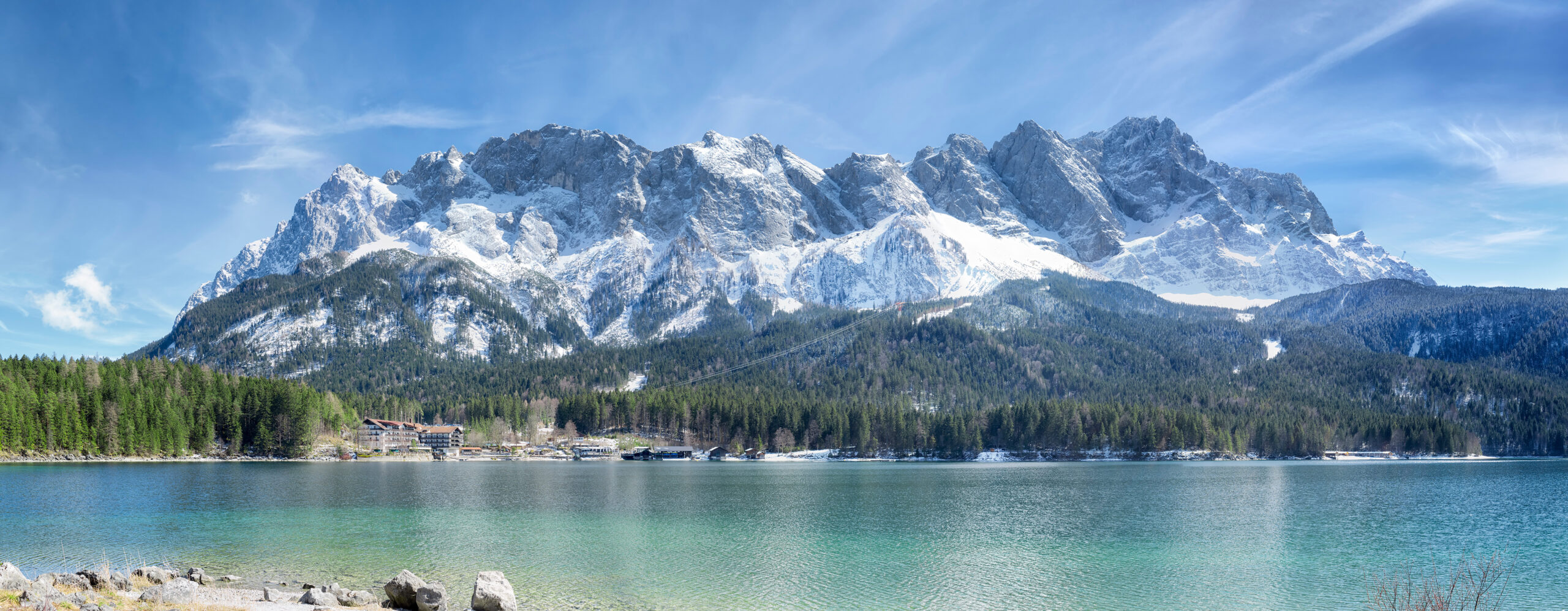
The Alps in summary. The European Alps stretch approximately 1,200 km in a great arc from southeastern France through northern Italy, Switzerland, Austria, southern Germany, Liechtenstein, and Slovenia. The range encompasses approximately 82 official 4,000m peaks (the official UIAA list), with Mont Blanc at 4,808m the highest. Beyond the 4,000m peaks, thousands of summits between 3,000-4,000m offer substantial mountaineering objectives. The Alps host modern mountaineering’s cultural and historical center — from the 1786 first ascent of Mont Blanc by Balmat and Paccard through Edward Whymper’s 1865 Matterhorn first ascent and the 1938 first ascent of the Eiger Nordwand, through to modern speed records and ongoing route development. Approximately 10 million annual visitors engage with Alpine mountaineering and hiking activities.
The Most Iconic Alpine Peaks
Seven peaks define the Alpine experience for international climbers and tourists. Each represents a different facet of Alpine mountaineering — from the highest summit (Mont Blanc) to the most iconic silhouette (Matterhorn), the most legendary climbing wall (Eiger), the highest in Switzerland (Dufourspitze), the highest in Austria (Grossglockner), and the highest in Germany (Zugspitze).
Mont Blanc
The highest mountain in Western Europe and the Alps. First climbed 1786 by Balmat and Paccard. 20,000+ annual summit attempts via the standard Goûter Route (~50% success). The mountain that started modern mountaineering — Chamonix’s iconic centerpiece.
Mont Blanc Full GuideThe Matterhorn
The most iconic mountain on Earth — the pyramid-shaped silhouette that defines mountain imagery worldwide. First climbed 14 July 1865 by Whymper’s party (4 deaths on descent). Standard route via the Hörnli Ridge from Zermatt; ~3,000-3,500 annual ascents.
Matterhorn Full GuideThe Eiger
Home to the Eiger Nordwand — the 1,800m North Face that is the most legendary climbing wall in the world. First north face ascent 1938 (Heckmair-Vörg-Harrer-Kasparek). The “Mordwand” (“Murder Wall”) has claimed 60+ climbers; standard Mittellegi Ridge climb is substantially easier.
Eiger Full GuideDufourspitze
Switzerland’s highest mountain and the second-highest peak in the Alps after Mont Blanc. Part of the Monte Rosa massif. Substantially less crowded than Mont Blanc despite the impressive elevation. Standard route from the Monte Rosa Hut on the Swiss side.
Dufourspitze Full GuideJungfrau
“The Maiden” — third peak of the iconic Eiger-Mönch-Jungfrau Bernese Oberland trio. The Jungfraujoch railway (Top of Europe) reaches 3,463m via the most famous mountain railway in the Alps. Climbing the summit itself is a technical objective requiring substantial Alpine experience.
Jungfrau Full GuideGrossglockner
Austria’s highest mountain. Hohe Tauern National Park. First climbed 1800 — earlier than Matterhorn or many Swiss peaks. Standard Stüdlgrat route is moderately technical; substantially less developed tourist infrastructure than Western Alps. The Grossglockner High Alpine Road is itself iconic.
Grossglockner Full GuideZugspitze
Germany’s highest mountain on the Bavarian-Tyrolean border. The most accessible major Alpine summit — three cable car / cogwheel train systems from Garmisch-Partenkirchen serve 2.5+ million annual visitors. €65-75 round-trip tickets; day-trip from Munich. World-record cable car engineering.
Zugspitze Full GuideSchreckhorn
One of the more technical Bernese 4,000ers. The “Terrifying Peak” earned its name from the demanding rock climbing on the standard southwest ridge. Substantially less crowded than the iconic Bernese trio. Standard route from the Schreckhorn Hut.
Schreckhorn Full GuideAletschhorn
The second-highest peak of the Bernese Alps. Above the massive Aletsch Glacier (the largest glacier in the Alps). Substantially more remote than the iconic Bernese trio; serious mountaineering objective with limited tourist infrastructure on its slopes.
Aletschhorn Full GuideThe Three Great North Faces: The Alps’ Most Legendary Climbing Walls
The “Three Great North Faces” of the Alps are the three most legendary big-wall climbing objectives in European mountaineering — the Eiger Nordwand, the Matterhorn North Face, and the Grandes Jorasses Walker Spur. Together they represent the spiritual center of Alpine technical climbing, with first ascents in 1938 (Eiger), 1931 (Matterhorn), and 1938 (Jorasses) that defined the golden era of European alpinism. Each face still draws the world’s top alpinists for repeats, speed records, and new variations.
The Three Great North Faces Compared
The three faces are united by their northern orientation (which keeps them cold, icy, and rarely in sun), their substantial height (1,000-1,800m of vertical climbing), and their position as defining objectives of pre-war Alpinism. Each face has its own character, technical demands, and tragic history.
| North Face | Mountain & Country | Face Height | First Ascent | Standard Grade |
|---|---|---|---|---|
| Eiger Nordwand | Eiger (3,967m) · Switzerland | ~1,800 m | July 1938 · Heckmair-Vörg-Harrer-Kasparek | ED2 (Extremely Difficult) |
| Matterhorn Nordwand | Matterhorn (4,478m) · Switzerland | ~1,200 m | July 1931 · Schmid Brothers | TD+ to ED1 |
| Grandes Jorasses Walker Spur | Grandes Jorasses (4,208m) · France/Italy | ~1,200 m | August 1938 · Cassin-Esposito-Tizzoni | TD+ to ED1 |
Eiger Nordwand (“Mordwand” / “Murder Wall”) is the most famous of the three — 1,800m of mixed rock, ice, and snow climbing through named features including the Difficult Crack, the Hinterstoisser Traverse, the Swallow’s Nest, the Ramp, the Spider, and the Exit Cracks. Over 60 climbers have died on the face. The 1936 disaster (Kurz, Hinterstoisser, Angerer, Rainer) cemented its reputation. Modern speed records: Ueli Steck’s 2:22:50 in 2015 stood until Dani Arnold lowered it.
Matterhorn North Face was the first of the three to be climbed (Franz and Toni Schmid in 1931 — a year before the Eiger Nordwand was even attempted). The face is shorter than the Eiger but exposed and technical throughout. Now climbed less frequently than the Eiger Nordwand despite being arguably equal in technical demand.
Grandes Jorasses Walker Spur is the third of the great faces — climbed in 1938 by Italian alpinists Riccardo Cassin, Luigi “Gino” Esposito, and Ugo Tizzoni. The Walker Spur is the right-hand line up the central buttress of the north face; the Croz Spur and Whymper Spur to its left are technically harder. Mont Blanc Massif provides the setting.
The 82 Official 4,000m Peaks of the Alps
The Alps contain approximately 82 official 4,000m peaks according to the UIAA (Union Internationale des Associations d’Alpinisme) — the governing body for international mountaineering. The exact count varies (sources cite 82, 128, or other numbers depending on whether minor sub-summits are included) but the UIAA’s 82-peak list is the most widely accepted standard for “Alpine 4,000ers.”
The UIAA 82 4,000m Peaks list — Alpine peak bagging’s defining tradition. “Climbing all the Alpine 4,000ers” is a major lifetime project for serious European alpinists, comparable to climbing all Munros in Scotland or all 14 eight-thousanders in the Himalaya. Approximately 200-300 climbers have completed all 82 4,000ers as of 2024 — a relatively small number reflecting the substantial technical demands of the harder peaks. The list spans the western Alps (concentrated in the Mont Blanc Massif, Pennine Alps, and Bernese Alps) — there are no 4,000m peaks east of the Schreckhorn / Finsteraarhorn area, making the eastern Alps (Austria, Germany, eastern Switzerland) entirely below 4,000m. The 4,000ers project typically takes dedicated alpinists 5-15+ years given weather windows, technical complexity, and time investment per peak.
Major 4,000m Peaks Beyond the Famous Nine
| Mountain | Elevation | Country | Significance |
|---|---|---|---|
| Monte Rosa (Dufourspitze) | 4,634 m | Switzerland / Italy | Switzerland’s highest; main summit of the Monte Rosa massif |
| Liskamm (West Summit) | 4,479 m | Switzerland / Italy | “The Maneater” — knife-edge ridge with substantial cornice danger |
| Weisshorn | 4,506 m | Switzerland | Among the most beautiful and remote 4,000ers; first climbed 1861 by John Tyndall |
| Täschhorn | 4,491 m | Switzerland | Part of the Mischabel range; sister peak to the Dom |
| Dom | 4,545 m | Switzerland | The highest peak entirely within Switzerland (Dufourspitze is on the border) |
| Lyskamm (East Summit) | 4,532 m | Switzerland / Italy | Part of Monte Rosa massif; technical ridge crossing |
| Castor | 4,228 m | Switzerland / Italy | Standard objective for first 4,000m experience; relatively accessible |
| Pollux | 4,092 m | Switzerland / Italy | Castor’s twin peak; substantial via ferrata sections |
| Aiguille Verte | 4,122 m | France | Mont Blanc Massif technical peak; substantial climbing history |
| Les Droites | 4,000 m | France | North Face is a serious modern alpine objective |
| Mont Maudit | 4,465 m | France / Italy | Mont Blanc Massif; classic Three Monts route summit |
| Mont Blanc du Tacul | 4,248 m | France | Mont Blanc Massif; standard Three Monts route summit |
| Aiguille du Midi | 3,842 m | France | Not technically 4,000m but iconic cable car summit; gateway to Chamonix climbing |
| Grand Combin | 4,314 m | Switzerland | Substantial peak in the southwestern Pennine Alps |
| Piz Bernina | 4,049 m | Switzerland | The easternmost Alpine 4,000m peak — Engadine region |
| Finsteraarhorn | 4,274 m | Switzerland | Highest peak of the Bernese Alps; substantial remote climbing |
| Bishorn | 4,153 m | Switzerland | Often called “the lady’s Weisshorn” — easier 4,000m introduction |
| Allalinhorn | 4,027 m | Switzerland | Among the most popular “first 4,000m peak” — cable car access reduces approach |
| Breithorn | 4,164 m | Switzerland / Italy | Often called “the easiest 4,000m peak” — popular first-4,000er via Klein Matterhorn cable car |
Alpine Mountaineering Historical Timeline
Modern mountaineering as a sport was invented in the Alps. The historical timeline traces from the 1786 first ascent of Mont Blanc through the golden age of Alpine first ascents to modern speed records and ongoing route development.
Chamonix doctor Michel-Gabriel Paccard and crystal hunter Jacques Balmat make the first ascent of Mont Blanc (4,808m) via the Bosses Ridge. The climb represents the founding event of modern mountaineering as a sport rather than scientific or commercial activity. Horace-Bénédict de Saussure had offered a reward for the first ascent in 1760; Saussure himself climbs Mont Blanc the following year (1787).
Englishman Alfred Wills makes the first ascent of the Wetterhorn (3,690m). This climb is generally regarded as marking the start of the “Golden Age of Alpinism” (1854-1865) — the period when most major Alpine peaks were first climbed, primarily by British mountaineers with Swiss and French guides.
Edward Whymper leads the first ascent of the Matterhorn via the Hörnli Ridge with Charles Hudson, Lord Francis Douglas, Douglas Hadow, and guides Michel Croz, Peter Taugwalder Sr., and Peter Taugwalder Jr. On descent, four climbers (Hadow, Hudson, Douglas, Croz) fall to their deaths when the rope breaks. The disaster marks the end of the Golden Age of Alpinism and creates lasting public fascination with the Matterhorn that persists today.
The Schweizer Alpen-Club (Swiss Alpine Club) is founded. The SAC establishes the mountain hut system that still serves Alpine climbers today — over 150 huts across the Swiss Alps providing accommodation for serious climbers. Similar Alpine Clubs are founded in Austria (1862), Germany (1869), France (1874), and Italy (1863).
Munich-based brothers Franz and Toni Schmid make the first ascent of the Matterhorn North Face — the first of the Three Great North Faces to be climbed. The 1,200m face had been considered unclimbable; the Schmids’ ascent opens the era of “Northwall” climbing as a serious objective.
Anderl Heckmair (Austrian), Ludwig Vörg (German), Heinrich Harrer (Austrian, later author of “Seven Years in Tibet”), and Fritz Kasparek (Austrian) make the first ascent of the Eiger Nordwand. The 1,800m climb takes 4 days. The ascent comes after multiple fatal attempts including the 1936 disaster (Kurz, Hinterstoisser, Angerer, Rainer). The climb is the most famous mountaineering ascent in European history.
Italian alpinists Riccardo Cassin, Luigi Esposito, and Ugo Tizzoni make the first ascent of the Walker Spur on the Grandes Jorasses (4,208m) — completing the trio of “Three Great North Faces” of the Alps in the same summer as the Eiger Nordwand.
The Compagnie des Guides de Chamonix — the world’s oldest mountain guide service, founded in 1821 — celebrates its centennial of formalized guide certification. The Compagnie remains the most prestigious guide service in the Alps and trains the next generation of IFMGA guides.
John Harlin (American) leads an Anglo-American-German team on the first direct route up the Eiger North Face — the “Harlin Route” — through the most challenging direct line. Harlin dies during the ascent when a fixed rope fails; the route is completed by his team and named the “John Harlin Direttissima” in his memory.
Reinhold Messner (South Tyrolean / Italian) becomes the first person to climb all 14 eight-thousanders. Messner’s Alpine training — including the 1969 Civetta North Face climb and other Dolomites work — directly enables his Himalayan achievements. The Alps remain the training ground for serious high-altitude mountaineering even as the highest objectives moved to the Himalaya.
Swiss alpinist Ueli Steck dominates Eiger Nordwand speed climbing — repeatedly lowering the speed record. His 2:22:50 ascent in 2015 stands until lowered by Dani Arnold. Modern Alpine speed climbing develops as a discipline distinct from traditional alpinism — soloing iconic routes in single-day pushes.
The new Seilbahn Zugspitze opens with three world records — tallest steel cable car support (127m), longest free-span segment (3,213m), and greatest cable car altitude difference (1,945m). The cable car represents modern Alpine engineering at its most ambitious, accessible to mass tourism rather than elite climbers.
The Alps continue as the spiritual and practical center of European mountaineering. Approximately 10 million annual visitors engage with Alpine mountaineering and hiking. Climate change is altering glacier conditions, creating new challenges including hazard from retreating glaciers, increased rockfall on iconic routes, and shifting weather window patterns.
What Makes Alpine Climbing Different from Other Mountain Ranges
The European Alps occupy a unique position in world mountaineering — accessible, culturally central, technically diverse, and supported by infrastructure that no other major range matches. Understanding what makes Alpine climbing structurally different explains why the Alps remain the standard training ground and aspirational objective for international climbers.
What sets the Alps structurally apart:
- The cable car and mountain railway network. No other major range has infrastructure remotely comparable — Aiguille du Midi cable car (3,842m), Klein Matterhorn cable car (3,883m), Jungfraujoch railway (3,463m), Zugspitze cable car (2,962m), and dozens of others. These systems compress traditional multi-day Alpine approaches into single-day technical climbs and create unique training opportunities unavailable elsewhere.
- The mountain hut system. Over 1,500 staffed mountain huts across the Alps provide accommodation, meals, and shelter at strategic locations. The hut system is operated by national Alpine clubs (SAC, CAS, DAV, OeAV, CAI, Club Alpin Français) and creates a fundamentally different climbing experience from the camping-based traditions of the Himalaya, Andes, or North American ranges.
- IFMGA mountain guide tradition. The International Federation of Mountain Guide Associations (IFMGA / UIAGM) originated in the Alps and maintains its highest standards there. Compagnie des Guides de Chamonix (founded 1821) is the world’s oldest mountain guide service. The professional guide tradition creates a class of working alpinists rare elsewhere in the world.
- Weather window planning is the defining skill. Alpine weather typically operates in 2-7 day windows separated by storm periods — substantially shorter and more variable than Himalayan or Andean weather patterns. Successful Alpine climbing requires accurate weather forecasting, rapid decision-making, and the ability to commit to objectives or abort within hours.
- Glacier travel as standard practice. Most Alpine 4,000m peaks involve substantial glacier travel — crevasse rescue, rope team management, and ice climbing technique are required skills. The Mer de Glace, Aletsch Glacier, Gorner Glacier, and dozens of others are integral to standard Alpine routes.
- Mixed climbing as the dominant discipline. Alpine routes typically combine rock climbing, ice climbing, glacier travel, and high-altitude management in single climbs. The Mont Blanc Goûter Route requires snow travel + glacier crossing + scrambling + altitude management; the Matterhorn Hörnli Ridge requires rock scrambling + fixed rope sections + altitude management. The diverse demands distinguish Alpine climbing from rock-focused traditions (Yosemite) or pure altitude traditions (Himalaya).
- Cultural and linguistic complexity. Alpine climbing spans German-speaking, French-speaking, Italian-speaking, and Slovenian-speaking communities — creating a multilingual climbing culture with route names, hut names, and traditions varying by region. Major Alpine ranges are typically described in multiple languages (Wallis / Valais, Berner Oberland / Oberland Bernois, Pennine Alps / Walliser Alpen).
- The “via ferrata” tradition. Italian-developed via ferrata routes (protected climbing routes with fixed cables, ladders, and steel rungs) extend Alpine access to climbers without full technical roping skills. The Dolomites host the most extensive via ferrata networks — over 170 documented routes — but via ferrata systems exist across all Alpine countries.
Where the Alps fit in mountaineering progression. For first-time mountaineers, the Breithorn, Allalinhorn, or Bishorn provide accessible introductions to 4,000m climbing with cable car approaches. For intermediate alpinists, Mont Blanc via the Goûter Route is the standard objective — substantial but achievable for fit climbers with basic glacier skills. For experienced alpinists, the Matterhorn Hörnli Ridge represents a technical step up requiring solid rock scrambling. For elite alpinists, the Three Great North Faces (Eiger Nordwand, Matterhorn North Face, Grandes Jorasses) define the discipline. For training before Himalayan or Andean expeditions, Alpine routes provide weather management, glacier travel, and altitude exposure that translate directly. The Alps remain the global standard for serious mountain training.
When to Climb Alpine Peaks: Best Seasons
| Period | Window | Conditions | Best For |
|---|---|---|---|
| Peak Alpine Climbing Season | July – August | Warmest temperatures (summit 0 to -10°C); driest conditions; longest weather windows | Mont Blanc, Matterhorn, standard 4,000m peaks; first-time visitors |
| Shoulder Season | June + September | Substantially fewer crowds; more variable weather; substantial snow remaining in June | Experienced alpinists wanting quieter mountains; rock climbing |
| Late Season Crevasse Risk | Late August – September | Glaciers most exposed; substantial crevasse hazard on standard routes | Caution required; some routes effectively closed by late season |
| Spring Ski Mountaineering | April – May | Snow conditions favor ski touring; substantial avalanche awareness required | Haute Route, Skitour, Aspirant ski touring objectives |
| Winter Alpinism | December – March | Reliable ice/mixed conditions on the Great North Faces; full alpine winter conditions | Eiger Nordwand winter ascents, technical ice climbing, elite alpinism |
| Cable Car Tourism (Year-Round) | All seasons | Aiguille du Midi, Klein Matterhorn, Jungfraujoch, Zugspitze operate year-round | Non-climbers and tourist visits to high altitude; weather observation |
Frequently Asked Questions
Mont Blanc at 4,808 meters / 15,774 feet is the highest mountain in the Alps and in Western Europe. The summit sits on the France-Italy border in the Mont Blanc Massif, with Chamonix (France) and Courmayeur (Italy) the standard staging towns. Mont Blanc was first climbed on 8 August 1786 by Chamonix doctor Michel-Gabriel Paccard and crystal hunter Jacques Balmat — an ascent generally regarded as the founding event of modern mountaineering as a sport. Approximately 20,000+ climbers attempt the summit annually via the standard Goûter Route, with success rates approximately 50%. The second-highest Alpine peak is Dufourspitze at 4,634m (Switzerland’s highest); the most iconic is the Matterhorn at 4,478m.
The Alps contain approximately 82 official 4,000m peaks according to the UIAA (Union Internationale des Associations d’Alpinisme) — the governing body for international mountaineering. The exact count varies depending on whether minor sub-summits are included (sources cite 82, 128, or other numbers), but the UIAA’s 82-peak list is the widely accepted standard. The 4,000m peaks are concentrated in the western Alps — Mont Blanc Massif (France/Italy), Pennine Alps (Switzerland/Italy), and Bernese Alps (Switzerland). There are no 4,000m peaks east of the Schreckhorn / Finsteraarhorn area, meaning Austria, Germany, and eastern Switzerland have no 4,000m summits. “Climbing all the Alpine 4,000ers” is a major lifetime project; approximately 200-300 climbers have completed all 82 as of 2024.
The Three Great North Faces of the Alps are the three most legendary big-wall climbing objectives in European mountaineering: (1) The Eiger Nordwand (Eiger, 3,967m, Switzerland) — 1,800m face first climbed July 1938 by Heckmair, Vörg, Harrer, and Kasparek; (2) The Matterhorn North Face (4,478m, Switzerland) — 1,200m face first climbed July 1931 by the Schmid Brothers; (3) The Grandes Jorasses Walker Spur (4,208m, France/Italy) — 1,200m face first climbed August 1938 by Cassin, Esposito, and Tizzoni. Each face is northern-facing (keeping them cold and icy), substantial in height (1,000-1,800m), and historically defining of pre-war Alpinism. The Eiger Nordwand (“Murder Wall”) is the most famous and has claimed over 60 climbers. Modern speed records continue to be set on all three faces.
The standard Alpine climbing season is July through August — warmest temperatures (summit 0 to -10°C), driest conditions, longest weather windows, and full operations of mountain huts and cable cars. June and September are shoulder months with substantially fewer crowds; substantial snow may remain through June and return in September. Late August-September brings the most exposed glaciers and substantial crevasse hazard on standard routes — some glacier routes effectively close by late season. April-May suits ski mountaineering (Haute Route, classic ski tours). December-March is serious winter alpinism on the Great North Faces — Eiger Nordwand winter ascents and technical ice climbing. Cable car tourism (Aiguille du Midi, Klein Matterhorn, Jungfraujoch, Zugspitze) operates year-round. For first-time visitors, weekday mid-July through mid-August offers the best combination of weather, conditions, and manageable crowds.
The Breithorn (4,164m, Switzerland/Italy) is generally considered the easiest 4,000m peak in the Alps and the standard “first 4,000er” for climbers. The Klein Matterhorn cable car from Zermatt brings climbers to 3,883m, leaving only ~280m of vertical gain to the summit. The standard route involves glacier travel (crevasse rescue skills required), basic crampon technique, and altitude management. Time from cable car to summit: 2-3 hours. Other accessible 4,000m peaks include: Allalinhorn (4,027m) — cable car approach from Saas-Fee; Bishorn (4,153m) — “the lady’s Weisshorn”; Pollux (4,092m) — Castor’s twin peak; Castor (4,228m) — substantial introduction to roped 4,000m climbing. Even “easy” Alpine 4,000m peaks require glacier travel competence, altitude acclimatization, and proper weather window selection — they are not casual hikes.
A guide is strongly recommended for first-time Alpine climbers, anyone attempting technical routes without prior glacier travel experience, and climbers attempting the Three Great North Faces. IFMGA / UIAGM certified guides are the international standard — recognized across all Alpine countries. Local guide services include Compagnie des Guides de Chamonix (founded 1821, the world’s oldest mountain guide service), Zermatt’s Bergführerverein, and dozens of regional services. Standard pricing: €400-€700 per person per day for guided Mont Blanc or Matterhorn (group of 2 climbers per guide); €600-€1,500 per person per day for private 1:1 guiding on technical objectives. For independent climbing, the SAC / DAV / CAI / OeAV mountain hut systems provide route information, weather updates, and emergency coordination. Many Alpine climbers progress from guided initial ascents (Breithorn, Allalinhorn) to independent climbing on familiar routes after building experience.
Alpine climbing costs vary substantially by approach style. Independent budget climb of Mont Blanc (2026): approximately €600-€1,200 per person including Chamonix accommodation (€60-€120/night, 3-4 nights), Goûter Hut booking (€100-€140), tram + mountain hut fees, food, and basic gear if rented. Guided Mont Blanc (4-day program): €1,200-€2,500 per person including guide, accommodation, gear, food, transport. Independent budget Matterhorn climb: €700-€1,400 per person. Guided Matterhorn: €1,500-€3,500 per person. Cable car day trips (Aiguille du Midi, Klein Matterhorn, Jungfraujoch, Zugspitze): €60-€170 per person round-trip. Equipment investment for independent climbers: €1,500-€3,000 for full Alpine kit (boots, crampons, ice axe, harness, clothing, technical gear). International flights add substantial cost ($800-$1,500 from major North American cities; €100-€400 from European hubs). Total realistic budget for first Alpine climbing trip: $2,500-$5,000 per person for ~10-day visit including travel.
The Matterhorn at 4,478m is arguably the most iconic mountain on Earth — the pyramid-shaped silhouette has become the universal symbol for “mountain” in popular culture. The peak is featured on Toblerone chocolate packaging, the Paramount Pictures logo, and countless other commercial uses. The mountain straddles the Switzerland-Italy border with Zermatt the standard staging town. First climbed 14 July 1865 by Edward Whymper’s party (in a famously controversial ascent where 4 climbers died on the descent), the Matterhorn became the focus of mountaineering’s transition from Victorian gentleman’s pursuit to modern adventure sport. The standard Hörnli Ridge route is climbed by approximately 3,000-3,500 climbers annually. Beyond the Matterhorn, Mont Blanc is the highest and most-climbed Alpine peak; the Eiger has the most famous North Face; the Bernese Oberland trio (Eiger-Mönch-Jungfrau) is among the most photographed Alpine sights.
Featured Mountain Guides & Tour Operators
Multiple IFMGA-certified guide services operate across the Alpine countries. Below are established operators in 2026.
France — Chamonix & Mont Blanc Massif
Compagnie des Guides de Chamonix — founded 1821; the world’s oldest mountain guide service. Chamonix Experience — international clientele specialist. Mountain Adventure Company — Mont Blanc and Aiguille du Midi technical climbs.
Switzerland — Zermatt & Pennine Alps
Zermatt Bergführerverein — official Zermatt guides’ association. Alpin Center Zermatt — comprehensive Matterhorn programs. Mountain Guides Saas-Fee — Saas Valley specialists.
Switzerland — Bernese Oberland & Eiger
Eiger Climbing Mountain School — Grindelwald-based, specialist Eiger and Bernese 4,000ers. Bergsteigerzentrum Grindelwald — comprehensive Bernese Alps operations.
Italy — Mont Blanc Italian Side & Dolomites
Società delle Guide del Monte Bianco di Courmayeur — Italian Mont Blanc guides since 1850. Guide Alpine Dolomiti — Dolomites via ferrata and climbing.
Austria — Eastern Alps & Grossglockner
Bergsteigerschule Glockner-Großvenediger — Hohe Tauern specialists. Alpinschule Innsbruck — comprehensive Austrian Alps operations.
Germany — Bavarian Alps & Zugspitze
Bergsteigerschule Garmisch-Partenkirchen — Zugspitze and Wetterstein specialists. DAV Summit Club — German Alpine Club’s official guide service.
International Standards & Coordination
IFMGA / UIAGM — International Federation of Mountain Guide Associations; the gold standard for guide certification. SAC / CAS — Swiss Alpine Club; manages 150+ Swiss mountain huts. DAV — German Alpine Club; manages 320+ huts across Germany and Austria. CAI — Italian Alpine Club. OeAV — Austrian Alpine Club. FFCAM — French Federation of Alpine Clubs.
Was this helpful?
🏔Peaks in this region
🧭Explore & compare
Global Summit Guide is an independent mountaineering resource founded in 2026. The team combines first-hand trekking and climbing experience with in-depth research and professional health and nutrition review to help climbers choose objectives, prepare properly, and stay safe.
Health, altitude, and nutrition content is reviewed by Taylor Ludlow (Registered Nurse) and Brigg Hoopes (Nutritionist).
What We Don't Know Yet
Mountain information changes quickly. This box explains the limits of what this page can responsibly promise.
- Visa, passport, vaccination, border, insurance, and local transportation rules may change before your trip.
- Route conditions, snowpack, closures, and weather can change quickly after this page is updated.
- Permit rules, fees, quotas, and reservation windows may change between review cycles.
- Operator availability, pricing, guide ratios, and cancellation terms can change by season.
- Your fitness, altitude response, risk tolerance, and experience level may change what is safe or realistic.
Verify current conditions with official land managers, guide services, local forecasts, and current route reports before booking or climbing.
Mountaineering, rock and ice climbing, glacier travel, and high-altitude activity are inherently dangerous and can result in serious injury or death. The information on Global Summit Guide is provided for general informational and educational purposes only and is not a substitute for professional instruction, qualified guiding, proper equipment, or your own judgment and experience.
Route conditions, weather, snowpack, permits, regulations, and hazards change constantly and may differ from what is described here. Details may be incomplete, out of date, or contain errors. Always verify current information with local authorities, certified guides, and official sources before making any decision in the mountains.
Nothing on this site is medical, legal, or financial advice. Our fitness, acclimatization, altitude, and nutrition content is general in nature; consult a qualified physician before beginning any strenuous exercise program or exposing yourself to high altitude.
You are solely responsible for your own safety and decisions. To the fullest extent permitted by law, Global Summit Guide and its team accept no liability for any loss, injury, damage, or expense arising from use of, or reliance on, this information. By using this site you acknowledge these risks and accept these terms.
Some links on this site may be affiliate links. If you buy through them we may earn a small commission at no extra cost to you; this never affects our recommendations.
Global Summit Guide recommendation path
Next Best Mountain to Research
Use these recommendations to continue the right planning path instead of stopping on one page.
Use current permit, weather, route, and operator information before booking or climbing.