<
2,962 m / 9,718 ft · Germany’s Highest Mountain · Wetterstein Range · Bavaria-Tyrol Border · Year-Round Access

Zugspitze Guide: How to Visit Germany’s Highest Mountain (2,962m) — Cable Car, Cogwheel Train Routes from Munich, Ticket Prices & The Höllental Climbing Route (2026)

The Zugspitze at 2,962 meters / 9,718 feet is the highest mountain in Germany — accessible to over 2.5 million annual visitors via the world-record Seilbahn Zugspitze cable car (10 minutes from Lake Eibsee to the summit), the historic 1930 Zugspitzbahn cogwheel train from Garmisch-Partenkirchen, or the Austrian-side Tirolean Cable Car. The summit offers a 360-degree panoramic view of over 400 Alpine peaks across Germany, Austria, Switzerland, and Italy. Round-trip tickets cost €65-€75; the mountain is accessible as a 2.5-hour day trip from Munich. Technical climbers can ascend via the Höllental Route (15-hour technical via ferrata) or the Reintal hiking route (8-10 hours non-technical). This guide covers everything for 2026: ticket pricing, Munich access logistics, all three cable car / cogwheel train routes, the 1820 Josef Naus first ascent history, the climbing routes, the Zugspitzplatt ski area, and seasonal visit planning.

Elevation
2,962 m / 9,718 ft
First Ascent
27 Aug 1820 (Naus)
Annual Visitors
2.5 million+
Round-Trip Ticket
€65-€75 (~$70-$85)
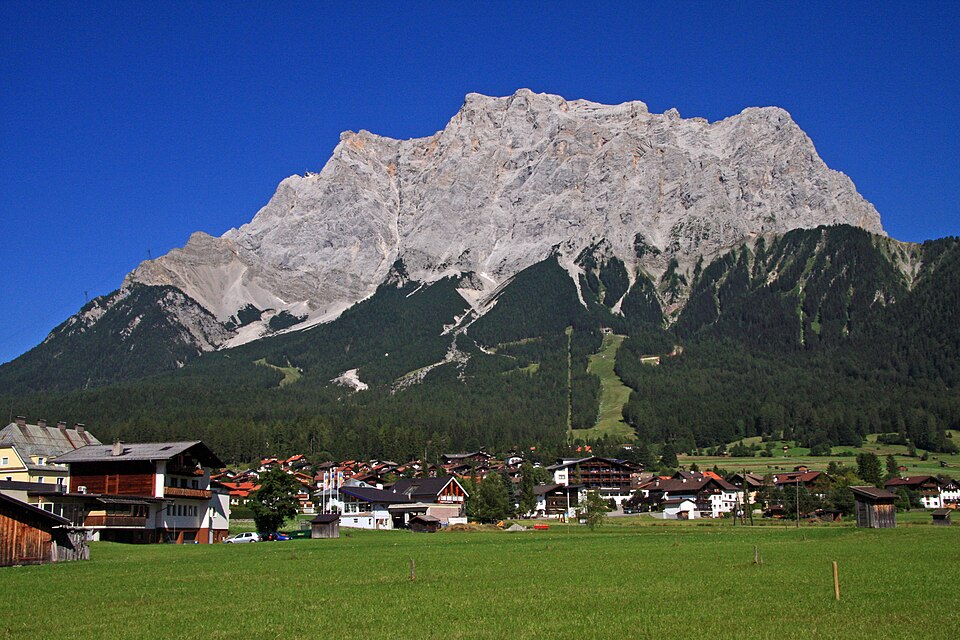
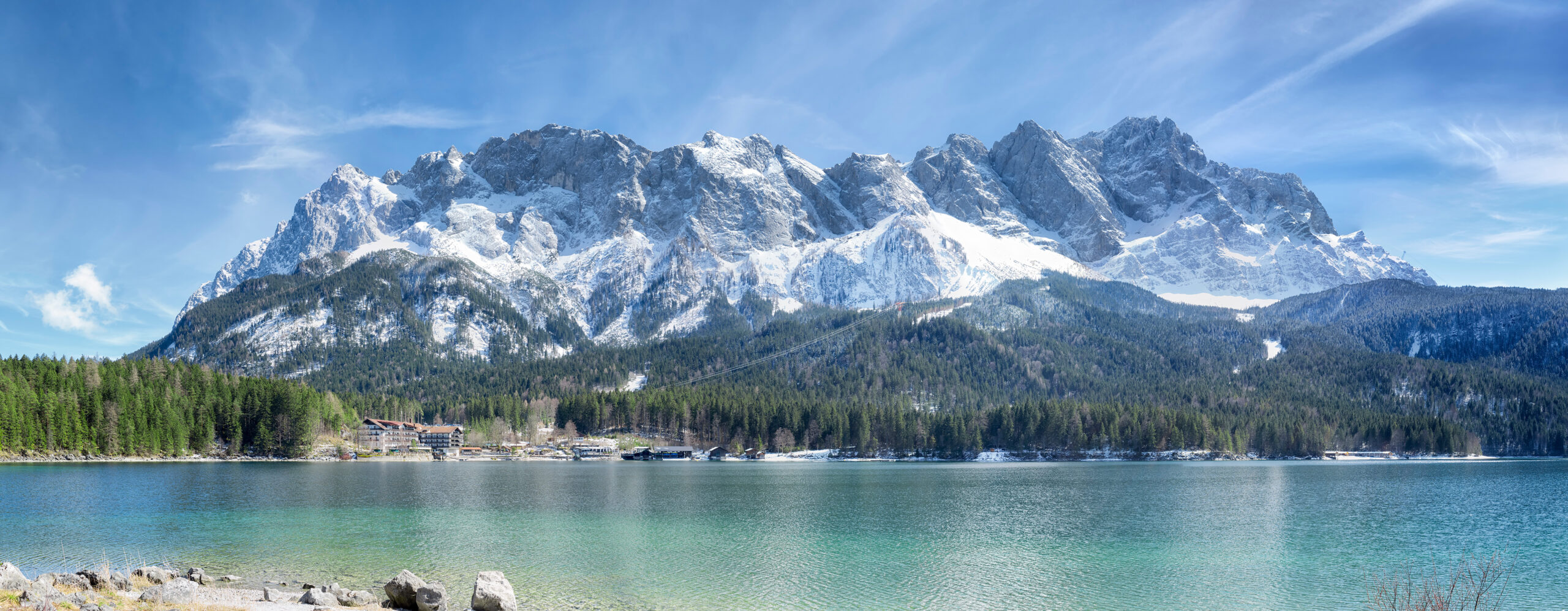
Zugspitze in the Bavarian Alps — Germany's highest mountain at 2962 meters elevation on the Bavaria-Tyrol border in the Wetterstein range with the iconic golden summit cross and 360-degree panoramic views of over 400 Alpine peaks accessible via the Eibsee cable car the Zugspitzbahn cogwheel train from Garmisch-Partenkirchen and the Austrian-side Tirolean cable car
The Zugspitze — Germany’s highest mountain at 2,962m, with its iconic golden summit cross visible against the Bavarian Alps skyline

The Zugspitze in summary. The Zugspitze is the highest peak in Germany at 2,962 m / 9,718 ft, situated on the border between Bavaria (Germany) and Tyrol (Austria) in the Wetterstein mountain range. The summit is approximately 90 km southwest of Munich and accessible as a standard day trip via three mountain railway systems — the Eibsee Cable Car (10 minutes), the Zugspitzbahn cogwheel train (1930, scenic route via 4.5 km tunnel), and the Austrian Tirolean Cable Car. Over 2.5 million annual visitors make this one of Europe’s most-visited major Alpine summits. The 360-degree summit view encompasses over 400 Alpine peaks across four countries — Germany, Austria, Switzerland, and Italy. Standard round-trip ticket pricing in 2026: €65-€75 for combined cogwheel + cable car access.

The Zugspitze: Germany’s Highest Mountain

The Zugspitze rises 2,962 meters (9,718 feet) above sea level in the Wetterstein mountain range of the Northern Limestone Alps — making it the highest mountain in Germany, the highest peak in the German federal state of Bavaria, and one of the most prominent summits along the Germany-Austria border. The mountain is a complex limestone massif with two main summits: the Eastern Summit (Ostgipfel) at 2,962m — the highest point and the standard summit visited by all mountain railways — and the Western Summit (Westgipfel) at 2,961m, which sits 1 meter lower and is rarely visited.

The Zugspitze sits at the geographic intersection of Bavaria (Germany) and Tyrol (Austria) — with the political border running across the summit ridge. Both countries claim portions of the summit and both maintain tourism infrastructure on their respective sides. The summit’s iconic golden cross (Gipfelkreuz) marks the actual highest point and is one of the most photographed features in the German Alps. Before the European Union’s Schengen Agreement, visitors crossing between the Bavarian and Tyrolean terraces at the summit required passport stamps — turning a casual summit visit into an international border crossing.

The mountain’s name “Zugspitze” derives from the Bavarian German word Zug meaning a chute or avalanche track — referring to the steep snow gullies that channel down the mountain’s flanks. The name reflects the Zugspitze’s distinctive shape: a steep limestone massif with prominent gullies on multiple faces. The mountain is part of the broader Wetterstein range that includes the Alpspitze (2,628m), the Hochwanner (2,744m), and other major Bavarian summits.

The Wetterstein Mountain Range Setting

The Zugspitze is the highest peak in the Wetterstein Alps — a sub-range of the Northern Limestone Alps that extends across the Bavarian-Tyrolean border. The Wetterstein range is approximately 50 km long and contains multiple summits over 2,500m. The Zugspitze massif itself extends over approximately 15 km² and includes the Zugspitzplatt — a high-altitude plateau at 2,600m that houses Germany’s highest ski area. The surrounding region includes the dramatic Höllental (“Hell’s Valley”) — a steep gorge that provides the most scenic climbing route to the summit — and the Reintal valley to the south, the traditional non-technical approach.

The mountain sits within Germany’s broader Bavarian Alps conservation area, with the surrounding region under various levels of nature protection. The Zugspitze summit area itself is heavily developed with tourism infrastructure (cable car stations, restaurants, observation platforms, ski lifts), while the surrounding wilderness areas in the lower Wetterstein remain substantially undeveloped. The Garmisch-Partenkirchen region at the mountain’s northern base is Bavaria’s primary Alpine tourism destination, with over 1 million annual tourist visits.

1820: The First Verified Ascent

The first verified ascent of the Zugspitze was made on 27 August 1820 by Tyrolean-born topographer Josef Naus, accompanied by his assistant Maier and mountain guide Johann Georg Tauschl. The expedition climbed via what is now called the Reintal Route — the longest but technically easiest approach to the summit. The climb was part of a broader Bavarian topographical survey commissioned by the Bavarian government, with Naus mapping the surrounding region for cartographic purposes rather than pursuing recreational mountaineering.

The 1820 ascent reflects the practical scientific purposes that drove early Alpine summit climbing — Naus was a working surveyor, not a sport climber, and the ascent was undertaken as official government work. The first ascent of the Western Summit (1m lower than the Eastern Summit) was made later in the 19th century. The mountain became an accessible climbing destination during the late 19th century with the development of mountain hut infrastructure.

1897: The Münchner Haus Mountain Hut on the Summit

The German Alpine Club (Deutscher Alpenverein) constructed the Münchner Haus mountain hut directly on the Zugspitze summit in 1897 — making the Zugspitze one of the few major Alpine peaks with formal summit accommodation. The hut originally provided basic shelter for hikers and climbers attempting multi-day ascents via the Reintal or other foot routes. The Münchner Haus remains operational in 2026 as a basic guesthouse on the summit, accessible to overnight visitors arriving via cable car or completing technical climbing routes. The hut’s century-plus history makes it one of the longest-operating summit accommodations in the Alps.

The Mountain in the Late 19th and Early 20th Centuries

The Zugspitze’s role as a tourist destination predates the cable cars by several decades. The late 19th-century expansion of the German railway system brought visitors to Garmisch and Partenkirchen (originally separate towns) for Alpine recreation. The 1897 Münchner Haus construction was part of a broader German Alpine Club program to make major peaks accessible to recreational mountaineers. Tourist visits to the summit grew steadily, but remained limited to climbers and hikers capable of the 8-15 hour foot routes from the valleys.

The transformation of the Zugspitze into a mass tourism destination began with the engineering projects of the 1920s-1930s — leading to the world-changing 1930 Zugspitzbahn cogwheel train and the subsequent cable car developments. Before these engineering achievements, the Zugspitze was a serious mountaineering objective comparable to other Alpine 3,000m peaks. After 1930, it became one of Europe’s most accessible major Alpine summits.

The Cable Car and Cogwheel Train Engineering: How Visitors Reach the Summit

The Zugspitze’s accessibility to over 2.5 million annual visitors is the result of a century of Alpine railway engineering — beginning with the 1930 Zugspitzbahn cogwheel train and culminating in the 2017 Seilbahn Zugspitze cable car that holds three world records. Understanding these engineering systems is essential to planning a visit.

Three world records in one cable car. The current Seilbahn Zugspitze (Eibsee Cable Car) — opened in December 2017 — holds three world records that make it one of Alpine engineering’s most significant achievements: (1) The world’s tallest steel cable car support pillar at 127 meters — taller than the Statue of Liberty including its pedestal; (2) The world’s longest free-span cable car segment at 3,213 meters between the support pillar and the mountain station; and (3) The world’s greatest cable car altitude difference at 1,945 meters between valley station and mountain station — nearly 2 vertical kilometers in a 10-minute ride. The cable car replaced an older 1963 system at a construction cost of approximately €50 million ($55 million USD). The cabins hold 120 passengers each and operate at speeds up to 10.6 m/s (38 km/h). The 10-minute valley-to-summit journey is the fastest route to Germany’s highest mountain.

The Seilbahn Zugspitze (Eibsee Cable Car) — The Fast Modern Route

The Seilbahn Zugspitze is the fastest and most modern route to the Zugspitze summit. Key details:

  • Valley station: Located at Lake Eibsee (Eibsee), at 1,008m elevation, 9 km from Garmisch-Partenkirchen.
  • Journey time: 10 minutes from valley to summit.
  • Altitude gain: 1,945 meters (the world’s greatest cable car altitude difference).
  • Capacity: 120 passengers per cabin; approximately 580 passengers per hour each direction.
  • Operating season: Year-round except for annual maintenance periods (typically November).
  • Opened: 21 December 2017 (replaced an older 1963 system).
  • Cost: Approximately €50 million construction.

The Eibsee cable car is the standard recommendation for visitors prioritizing speed or those visiting after late morning when cogwheel train queues build up. The 10-minute journey provides dramatic continuous views of the surrounding peaks and Lake Eibsee below.

The Zugspitzbahn Cogwheel Train (Zahnradbahn) — The Historic Scenic Route

The Bayerische Zugspitzbahn (Bavarian Zugspitze Railway) — opened in 1930 — is one of only four operating cogwheel railways in Germany and one of the most historic mountain railway lines in the Alps. Key details:

  • Valley station: Garmisch-Partenkirchen, directly accessible from Munich via Deutsche Bahn regional train.
  • Total length: Approximately 19 km of track including the 4.5 km Zugspitztunnel.
  • Altitude gain: 1,838m from 705m (Garmisch-Partenkirchen) to 2,588m (Zugspitzplatt mountain station).
  • Journey time: Approximately 75 minutes from Garmisch-Partenkirchen to Zugspitzplatt.
  • Track features: Combination of normal track (Garmisch-Partenkirchen to Grainau, ~7 km) and cogwheel rack track (Grainau to Zugspitzplatt, ~12 km through the Zugspitztunnel).
  • Opened: 8 July 1930 — among the most historic operating Alpine mountain railways.
  • Operating season: Year-round; one of the few mountain railways in the Alps that has operated continuously since the 1930s.

The Zugspitzbahn is the scenic and historic route favored by visitors prioritizing the journey experience over speed. The train passes through dramatic Bavarian Alps scenery in the lower section, then through the famous Zugspitztunnel (4.5 km of tunneled cogwheel railway) to emerge at the high-altitude Zugspitzplatt. From the Zugspitzplatt station at 2,588m, the Gletscherbahn cable car (1,000m length, 360m altitude gain, 4 minutes) connects to the summit station.

The Tirolean Cable Car (Tiroler Zugspitzbahn) — The Austrian-Side Access

The Tiroler Zugspitzbahn on the Austrian side of the Zugspitze provides alternative access from the Tyrol region. Key details:

  • Valley station: Ehrwald, Austria (730m elevation).
  • Journey time: Approximately 8-10 minutes.
  • Altitude gain: 1,725m (from 730m to 2,455m mid-station, then to summit).
  • Best for: Visitors approaching from Austria, Innsbruck, or southern Bavaria; substantially less crowded than the German-side cable car.
  • Ticket pricing: Approximately €60-€70 round-trip — comparable to German-side pricing.
  • Operating season: Year-round with similar maintenance periods to the German systems.

The Austrian cable car is preferred by visitors staying in Innsbruck or southern Tyrol, those wanting to avoid the German-side crowds, and those including the Zugspitze in broader Austrian Alps itineraries. The summit accessed from the Austrian side leads to the Austrian terraces, separate from the German-side observation areas — though visitors can walk between them at the summit.

The Munich Day Trip to the Zugspitze: Complete 2026 Logistics

The Zugspitze is the standard day trip from Munich for visitors wanting to experience the German Alps without committing to multi-day mountain stays. Approximately 60-70% of Zugspitze visitors are based in Munich for their broader trip, making the Munich-Zugspitze day trip the most common visit pattern.

The standard Munich-Zugspitze day trip. Approximately 10-hour door-to-door experience from Munich hotel to back at hotel. The optimal logistics:

  • 7:30-8:30 AM: Depart Munich Hauptbahnhof on Deutsche Bahn regional train (Werdenfelsbahn line) to Garmisch-Partenkirchen. The train is the most popular option — 1 hour 20 minutes journey, comfortable, includes wifi and bathrooms.
  • 9:00-9:30 AM: Arrive Garmisch-Partenkirchen. Walk ~100 meters from the Deutsche Bahn station to the Zugspitzbahn cogwheel train station. Tickets can be purchased at the station or online in advance (recommended for peak season).
  • 9:30-11:00 AM: Cogwheel train journey to Zugspitzplatt at 2,588m. The 75-minute ride includes scenic Bavarian Alps countryside, passage through the 4.5 km Zugspitztunnel, and arrival at the high-altitude Zugspitzplatt station with views of the Zugspitze summit directly above.
  • 11:00-11:15 AM: Transfer to the Gletscherbahn cable car at the Zugspitzplatt station. Brief 4-minute cable car ride to the summit station at 2,962m.
  • 11:15 AM-2:30 PM: Time at the summit. Standard activities include visiting the iconic golden summit cross, photographing the 360-degree panorama, lunch at the Panorama 2962 restaurant or the Sonnalpin glacier restaurant, walking between the German and Austrian summit terraces, and experiencing the unique cross-border atmosphere.
  • 2:30-2:45 PM: Begin descent via the Seilbahn Zugspitze (Eibsee Cable Car) — the world-record cable car for the dramatic descent experience.
  • 2:45-2:55 PM: 10-minute cable car descent to Lake Eibsee (Eibsee station at 1,008m).
  • 2:55-3:30 PM: Brief Eibsee stop — the lake at the cable car base is one of Bavaria’s most photographed scenes. Walk along the lakeshore, photograph the Zugspitze reflected in the water (weather permitting), or take a brief boat ride (April-October).
  • 3:30-4:00 PM: Take the Eibseebus or short walk to Eibsee Bahnhof; board the cogwheel train back to Garmisch-Partenkirchen (or take the bus if preferred).
  • 4:30-5:00 PM: Arrive Garmisch-Partenkirchen. Brief town exploration before returning to Munich (optional dinner before evening train).
  • 6:00-7:30 PM: Return train to Munich (1 hour 20 minutes); arrival in Munich approximately 8:30-9:00 PM.

This is the standard “Zugspitze Round Trip” — cogwheel train up, cable car down. The reverse direction (cable car up, cogwheel train down) works equally well; many visitors choose based on which direction they want to experience the 10-minute cable car ride.

Munich Day Trip Transport Options

Multiple options exist for getting from Munich to Garmisch-Partenkirchen:

OptionJourney TimeCost (Round Trip)Notes
Deutsche Bahn Werdenfelsbahn1 hr 20 min direct€36-€50/person standard fareMost popular option; comfortable, frequent service; reservations not required
Bayern Ticket (regional pass)1 hr 20 min€27-€37 for full day unlimited Bavarian regional travelBest value for groups; covers unlimited regional trains in Bavaria for 1 day
Drive (rental car)1 hr 30 min via A95~€80-€120 fuel + rentalMore flexibility; parking €5-€15/day at Garmisch or Eibsee; recommended for groups of 4+
Munich-based bus tour2-2.5 hr by bus$120-$200/person includes transport + ticket + guideConvenience option; English-speaking guides; substantial premium pricing
Private taxi/Uber1 hr 30 min€180-€280 each wayPremium option; rarely worth the cost vs train + cable car
FlixBus2-2.5 hr€10-€25 round-tripBudget option; less convenient timing; limited routes

Zugspitze Tickets and 2026 Pricing

Zugspitze ticket pricing is reasonable for a major Alpine summit experience — comparable to other Alpine cable car destinations and substantially cheaper than Swiss equivalents like the Jungfraujoch. Multiple ticket options accommodate different visitor preferences and budgets.

Standard 2026 Zugspitze pricing. Round-trip combined access (cogwheel train + cable car) is the most popular ticket type — allowing flexible up-one-way + down-the-other variation at no additional cost. All prices in Euros (~$1.07-$1.12 USD as of mid-2026).

Ticket TypeAdult PriceChild (6-15)Notes
Round Trip Combined (Cogwheel + Cable Car)€65-€75~50% of adultMost popular option; flexible direction; recommended for first visit
Round Trip Cable Car Only (Eibsee)€52-€60~50% of adultFastest option; both directions via Eibsee cable car
Round Trip Cogwheel Train Only€52-€60~50% of adultScenic option; both directions via train + Gletscherbahn
One-Way (Up Only or Down Only)€42-€48~50% of adultUseful for hikers descending or ascending via foot routes
Family Ticket (2 adults + own children)€130-€160Substantial savings for families with multiple children
Group Discount (10+ people)~10-15% reductionAvailable with advance booking
Tirolean (Austrian) Cable Car Round Trip€60-€70~50% of adultAustrian-side access; less crowded
Bayern Ticket + Zugspitze Combo~€55-€65 effectiveBavarian residents or visitors with Bayern Ticket; combined deal
Children under 6FreeStandard Alpine railway practice

Practical advice on tickets: Advance online booking via zugspitze.de is strongly recommended during peak season (June-August, December-February, all major German and Austrian holidays). Online tickets save 15-30 minutes of queue time at the valley station and guarantee space on busy days. The 2-day or season passes are useful for visitors wanting to combine winter skiing with summit visits. Guests at Garmisch-Partenkirchen hotels often receive guest cards with 10-20% Zugspitze ticket discounts — verify with your accommodation.

What Makes the Zugspitze Different from Every Other Major Alpine Peak

The Zugspitze occupies a unique position in European mountaineering — substantially shorter than the highest Alpine peaks (Mont Blanc 4,808m, Monte Rosa 4,634m, Matterhorn 4,478m), but among the most-visited major Alpine summits due to engineering, accessibility, and pricing. The mountain’s identity is built from a combination of features that no other Alpine peak quite matches.

What sets the Zugspitze structurally apart:

  • Germany’s highest mountain with full visitor access. Unlike the higher Swiss and French Alpine peaks that require technical climbing for summit access, the Zugspitze allows ordinary tourists to stand on Germany’s highest point via cable car or cogwheel train. The mountain is the only 3,000m-class peak in Europe with this level of comprehensive infrastructure for mass visitors.
  • World-record cable car engineering. The 2017 Seilbahn Zugspitze holds three world records — the tallest steel cable car pillar (127m), the longest free-span cable car segment (3,213m), and the greatest cable car altitude difference (1,945m). The cable car is itself a tourist attraction independent of the mountain.
  • Day-trip accessibility from a major European hub. Munich is one of Europe’s major air and rail hubs, and the Zugspitze is reachable in 2.5 hours from Munich Hauptbahnhof. No other 2,500m+ Alpine summit offers comparable accessibility from a major capital. This single feature makes the Zugspitze the most realistic Alpine experience for many international visitors with limited European time.
  • Reasonable pricing. €65-€75 round-trip combined access is approximately half the price of comparable Swiss high-Alpine experiences (Jungfraujoch round-trip costs €165+). The Zugspitze provides genuine 3,000m Alpine experience at substantially lower cost than premium Swiss destinations.
  • Year-round operations. Unlike most Alpine summits that close to tourists during winter, the Zugspitze operates year-round — the cable car and cogwheel train run through winter, and Germany’s highest ski area on the Zugspitzplatt provides snow reliability that few other ski destinations match. December-April ski season makes the Zugspitze a multi-season destination.
  • The cross-border summit experience. The summit sits on the Germany-Austria border, with separate terraces for each country and the unique pre-Schengen historical context of border crossings at 2,962m. The dual national identity creates a distinctive cultural feature — visitors can technically “stand in two countries” at the summit.
  • The 1930 Zugspitzbahn cogwheel train. One of only four operating cogwheel railways in Germany and among the most historic operating Alpine railways. The 95-year-old route through the 4.5 km Zugspitztunnel is a substantial engineering and historical achievement independent of the mountain access.
  • The 400-peak panorama across four countries. The 360-degree summit view encompasses over 400 Alpine peaks across Germany, Austria, Switzerland, and Italy — one of the broadest geographic panoramas accessible to ordinary tourists anywhere in Europe.

Where the Zugspitze fits in European mountain visits. For first-time European Alpine visitors, the Zugspitze is the standard recommendation as an introduction to the Alps — accessible, affordable, scenic, with substantial supporting infrastructure. For Munich-based visitors, the Zugspitze is the standard day trip and frequently the highlight of a Bavarian visit. For climbers seeking the actual climbing experience, the Höllental Route or Reintal Route provide alternative non-cable-car access. For visitors comparing to higher Swiss summits, the Zugspitze is shorter and less dramatic than the Jungfraujoch but offers substantially better value and accessibility. As preparation for higher Alpine objectives, the Zugspitze’s cable car experience provides useful altitude exposure for climbers planning Mont Blanc, the Matterhorn, or other technical peaks. As wilderness adventure — no. The Zugspitze is a structured tourism experience, not a remote wilderness destination.

Zugspitze Historical Timeline

~250 Million Years Ago
Limestone Formation

The limestone that forms the Zugspitze begins deposition during the Triassic period in shallow marine environments. Subsequent uplift during the Alpine orogeny (60-30 million years ago) transforms the limestone into the modern Wetterstein mountain range.

~2 Million Years Ago
Glacial Carving

Pleistocene glaciation carves the modern Zugspitze massif and the surrounding Wetterstein peaks. The Höllental gorge and the Reintal valley are shaped by glacial action, creating the dramatic terrain visible today.

~1000 CE
Medieval Bavarian Settlement

Medieval German settlements develop in the Bavarian valleys around the Zugspitze. The mountain is locally known and named — “Zugspitze” referring to the avalanche tracks (Zug) on the steep faces — but remains uncimbed as a recreational objective.

27 August 1820
First Verified Ascent

Tyrolean topographer Josef Naus makes the first verified ascent of the Zugspitze with his assistant Maier and guide Johann Georg Tauschl via the Reintal Route. The climb is part of Bavarian government topographical survey work rather than recreational climbing.

1897
Münchner Haus Mountain Hut Constructed

The German Alpine Club (Deutscher Alpenverein) constructs the Münchner Haus mountain hut directly on the Zugspitze summit. The hut provides accommodation for hikers and climbers attempting multi-day ascents and remains operational over 125+ years later — one of the longest-operating summit accommodations in the Alps.

8 July 1930
Zugspitzbahn Cogwheel Train Opens

The Bayerische Zugspitzbahn (Bavarian Zugspitze Railway) opens for service after nearly a decade of construction. The 19 km route including the 4.5 km Zugspitztunnel transforms Zugspitze access from a multi-day climbing expedition to a day-trip experience. The cogwheel train remains in operation 95+ years later.

1935-1936
Garmisch-Partenkirchen Merged and 1936 Olympics

The previously separate towns of Garmisch and Partenkirchen are merged by the Nazi German government in 1935 specifically to host the 1936 Winter Olympics. The merged town hosts the games successfully but the imposed unification creates lasting cultural tensions between the two original communities. The 1936 Winter Olympics make the broader Zugspitze region internationally famous.

1963
First Eibsee Cable Car Built

The first cable car from Lake Eibsee to the Zugspitze summit is constructed, providing an alternative to the cogwheel train. The 1963 cable car operates for over 50 years before being replaced by the modern 2017 system.

1992
Gletscherbahn Cable Car

The Gletscherbahn cable car connecting the Zugspitzplatt mountain station at 2,588m to the summit at 2,962m opens. The 1,000m cable car covers 360m of altitude in 4 minutes — the final link allowing cogwheel train passengers to reach the actual summit.

1995
European Schengen Agreement

The European Union’s Schengen Agreement enters into effect for Germany and Austria, eliminating border controls between the two countries. The Zugspitze summit’s pre-Schengen tradition of passport stamps for visitors crossing between Bavarian and Tyrolean terraces becomes a historical curiosity rather than active practice.

21 December 2017
New Seilbahn Zugspitze Opens

The new Seilbahn Zugspitze (Eibsee Cable Car) opens for service, replacing the 1963 system. The new cable car holds three world records: tallest steel cable car support pillar (127m), longest free-span segment (3,213m), and greatest cable car altitude difference (1,945m). Construction cost approximately €50 million.

2020-2022
Pandemic Impact and Recovery

COVID-19 restrictions substantially reduce Zugspitze visitor numbers during 2020-2021. Operations resume in 2021-2022 with various restrictions and capacity limits. By 2022-2023, visitor numbers return to pre-pandemic levels of approximately 2.5 million annual visits.

2025-2026
Continued Major Tourist Destination

The Zugspitze continues to receive 2.5+ million annual visitors. Ticket pricing structures evolve to €65-€75 standard round-trip; online booking becomes the standard mechanism for peak-season access. Operations continue across all three mountain railway systems plus the ski area on the Zugspitzplatt.

How to Climb the Zugspitze: The Foot Routes for Hikers and Alpinists

Approximately 5,000-10,000 climbers per year reach the Zugspitze summit via foot routes — vs the 2.5+ million who arrive via cable car or train. The climbing routes range from non-technical hiking (Reintal Route) to substantial technical alpinism (Stopselzieher, modern via ferrata variations). For climbers and serious hikers who want to experience the mountain as a real ascent rather than a cable-car tourist visit, here are the standard routes.

RouteStyleDuration / DistanceStatus
Reintal RouteNon-technical hike; Knorr Hut overnight8-10 hrs total · ~22 km / 2,200m gain● Standard Hiking Route
Höllental Route (“Hell’s Valley”)Via ferrata + glacier crossing15 hrs full route · Includes technical sections● Classic Climbing Route
Stopselzieher RouteAustrian-side technical climb; via Wiener-Neustädter Hut2-day climb · Sustained climbing● Experienced Alpinists
Jubiläumsgrat TraverseLong technical ridge traverse from Alpspitze10-15 hrs · Substantial commitment● Elite Alpinists Only
Eisenzeit KlettersteigModern via ferrata route from Ehrwald6-8 hrs · Substantial technical demand● Via Ferrata Climbers

Reintal Route — The Standard Hiking Approach

Style: Long but non-technical hiking · 8-10 hours total · 22 km round trip · 2,200m elevation gain · The first ascent line (1820 Naus) and the standard non-cable-car route.

The Reintal Route is the longest but technically easiest way to reach the Zugspitze summit. Suitable for fit recreational hikers without specialized mountaineering experience. The route follows the Reintal valley south of the summit through dramatic Bavarian Alpine terrain.

The route:

  • Garmisch-Partenkirchen (705m): Start at the base of the Reintal valley. Trail begins near the Partnach Gorge entrance.
  • Partnach Gorge (~750m): Spectacular 700m natural gorge with the Partnach river flowing through limestone walls. The trail passes through the gorge in the early sections.
  • Reintal Valley (continuing for ~12 km): Sustained gentle gradient through forested valley with views of surrounding peaks. Multiple stream crossings.
  • Bockhütte (~1,100m, ~10 km): First major rest stop and refuge. Open in summer for refreshments and overnight stays.
  • Reintalangerhütte (~1,366m, ~14 km): Second mountain hut, also operational in summer.
  • Knorr Hut / Knorrhütte (2,051m, ~18 km): The standard overnight stop for the 2-day Reintal climb. The hut accommodates ~100 climbers with simple meals and dormitory-style sleeping.
  • Final ascent to summit (~4 km, 911m gain): The most demanding section. Trail steepens substantially through limestone terrain to reach the Zugspitzplatt and then the summit. The final approach to the summit cross involves substantial scrambling and exposure to weather.
  • Summit (2,962m): Arrival at the top — same destination as cable car tourists. Climbers can descend via cable car to Garmisch-Partenkirchen (saving 8-10 hours of descent).

Standard timing: 2-day climb is recommended — Day 1 to the Knorr Hut (~6 hours), overnight at the hut, Day 2 to the summit and descent via cable car (~5 hours). Single-day attempts are possible for fit hikers but require pre-dawn starts and substantial daylight management.

Required experience: Standard hiking fitness; surefootedness for the upper sections; ability to handle long days at altitude; weather management. No technical climbing equipment required for the standard Reintal Route, though trekking poles and basic mountain gear are essential.

Höllental Route (“Hell’s Valley”) — The Classic Climbing Line

Style: Substantial via ferrata with glacier crossing · 15 hours full route · Includes technical sections requiring climbing equipment · The classic and most scenic climbing route on the Zugspitze.

The Höllental Route is the most scenic and technically demanding standard climbing route on the Zugspitze. The route ascends through the dramatic Höllental (“Hell’s Valley”) — a steep limestone gorge that channels down the northeast side of the mountain. The route requires climbing experience and equipment but is achievable by intermediate alpine climbers in good weather conditions.

The route:

  • Hammersbach (~750m): Standard starting point near Grainau. Approach trail enters the Höllental valley.
  • Höllental Entrance (Höllentaleingang) (~1,000m): The entrance to the dramatic gorge. The first scenic section of the route.
  • Höllentalangerhütte (1,387m, ~3 hours from start): Standard mountain hut in the lower Höllental valley. Provides accommodation for overnight stays during multi-day attempts.
  • Brett (“The Board”) (~1,800m): First major technical section — a steep limestone climb that historically used wooden planks (hence the name). Now equipped with via ferrata cables and ladder rungs.
  • Höllentalferner Glacier Crossing (~2,000-2,400m): The most distinctive feature of the route — climbers cross the small Höllentalferner glacier (one of Germany’s southernmost remaining glaciers). Crampons and ice axe required. Glacier conditions change throughout the season.
  • Inner Höllental and Via Ferrata Sections (2,400-2,800m): Sustained via ferrata climbing on the upper mountain. Requires climbing harness, helmet, via ferrata set, and substantial Alpine experience. Multiple difficult sections including the “Falten” and the “Karli’s Wand.”
  • Summit (2,962m): Final approach to the golden summit cross via the Höllental ridge.

Standard timing: 15-hour full route is realistic for fit, experienced climbers. Most parties split the route across 2 days with overnight at the Höllentalangerhütte. Single-day attempts are possible but require pre-dawn starts (3-4 AM) and substantial daylight management.

Required equipment: Climbing harness, helmet, via ferrata kit (Klettersteigset with shock absorber), crampons and ice axe for the glacier crossing, alpine clothing system, gloves, headlamp, navigation. Substantial fitness for the 1,200m+ vertical gain.

Required experience: Prior via ferrata experience essential; basic glacier travel competence; experience with multi-pitch trad climbing or substantial mountaineering background. Not recommended for first-time climbers.

Other Zugspitze Climbing Routes

Stopselzieher Route — Austrian-Side Technical Climb: Climbs the Zugspitze from the Austrian side via the Wiener-Neustädter Hut. The route follows the Stopselzieher couloir — a steep technical climb requiring substantial alpine experience. Less crowded than the German-side routes; technical difficulty similar to the Höllental Route. 2-day standard with Wiener-Neustädter Hut overnight at 2,200m.

Jubiläumsgrat Traverse — The Elite Ridge Line: One of the most demanding alpine traverses in the Bavarian Alps — a 5 km technical ridge traverse from the Alpspitze (2,628m) to the Zugspitze summit. Includes sustained scrambling, via ferrata sections, and exposed ridge climbing. 10-15 hours from start to summit; substantial commitment with limited bailout options. Reserved for elite alpinists with extensive Wetterstein experience.

Eisenzeit Klettersteig — Modern Via Ferrata Route: A modern via ferrata route from Ehrwald, Austria, completed in 2014. The route ascends the Austrian-side face of the Zugspitze via continuous via ferrata terrain. 6-8 hours from Ehrwald to summit. Substantial technical demand throughout — among the most demanding via ferrata routes in the German-Austrian Alps. Requires substantial via ferrata experience.

Winter Ascents: The Zugspitze can be climbed in winter via several routes, with substantially elevated difficulty and risk. The Reintal Route becomes a serious ski touring objective; the Höllental Route becomes a major winter mountaineering objective with substantial avalanche hazard. Winter ascents require specialized experience and equipment beyond the summer routes.

Münchner Haus Mountain Hut: The 1897 mountain hut directly on the summit operates as a basic guesthouse for climbers and visitors wanting summit accommodation. Bookings essential for the limited summit beds. Provides a unique opportunity to overnight at Germany’s highest point — accessible to cable car visitors as well as climbers via foot routes.

Cable Car Tourist Visit + Summit Time

Style: Standard tourist visit · Cable car ascent + summit time + cable car descent · The experience used by 99% of Zugspitze summit visitors.

The vast majority of Zugspitze visitors use the cable car / cogwheel train infrastructure rather than climbing. This is the experience the mountain is designed for, with substantial visitor amenities at the summit.

The standard summit visit:

  • Arrive at the summit station via cable car or Gletscherbahn (2-10 minute final approach): The summit station is a modern multi-level facility with restaurants, observation decks, restrooms, and gift shop.
  • Visit the Golden Summit Cross (Gipfelkreuz): Walk to the actual highest point of the Zugspitze, marked by the iconic golden cross. The cross is approximately 100m from the summit station along a short path with handrails for safety.
  • 360-Degree Panorama Viewing: Multiple observation areas around the summit station offer the full 360-degree panorama of 400+ Alpine peaks. Clear-weather days provide views extending to Munich (north), the Italian Dolomites (south), the Swiss Alps including the Bernina massif (west), and the Austrian Tyrol (east).
  • Visit the Austrian Terrace: The Austrian side of the summit has its own terrace and observation area, accessible via a short walk from the German side. The “two countries in one summit” experience is one of the Zugspitze’s distinctive features.
  • Lunch at Panorama 2962 or Sonnalpin Restaurant: Two main summit dining options. The Panorama 2962 restaurant offers full meals with floor-to-ceiling glass views. The Sonnalpin Glacier Restaurant at the Zugspitzplatt is a more casual option with terrace seating.
  • Visit the AlpspiX Viewing Platform: A dramatic glass-floored viewing platform that extends out from the mountain, providing vertigo-inducing views into the Höllental valley below.
  • Photography of the Golden Cross + Panorama: The summit is one of the most photographed locations in the German Alps. Standard photo opportunities include the golden cross with the panorama backdrop, the AlpspiX glass platform, and the cable car arrival.
  • Total time at summit: 2-4 hours is standard for substantive visits. Quick visits (1-1.5 hours) cover the basics; longer visits (4-6 hours) include extended dining and exploration.

Visit considerations: Summit weather is typically 15-20°C colder than the valley, with substantial wind possible even on warm summer days. Visitors should bring a warm layer regardless of season. The summit can be substantially crowded during peak season weekends — weekday morning visits are strongly recommended.

Zugspitze summit at 2962 meters elevation showing the iconic golden summit cross and the summit station infrastructure that accommodates 2.5 million annual visitors arriving via the world-record Seilbahn Zugspitze cable car and the historic 1930 Zugspitzbahn cogwheel train from Garmisch-Partenkirchen
The Zugspitze summit area — Germany’s highest point with the iconic golden summit cross and full visitor infrastructure

The Zugspitze Elevation Progression

The standard Zugspitze cable car / cogwheel train experience progresses through these named locations from Munich-area valleys (~520m) to the 2,962m summit:

Munich Hauptbahnhof
Standard departure point for Munich day trips; Deutsche Bahn Werdenfelsbahn line operates frequent service; 1 hr 20 min direct journey to Garmisch-Partenkirchen
520 m / 1,706 ft
Garmisch-Partenkirchen
Main valley town; population ~26,000; Bavaria’s premier Alpine tourism destination; site of 1936 Winter Olympics; ~1 km walk from DB station to Zugspitzbahn station
705 m / 2,313 ft
Grainau
Smaller village between Garmisch-Partenkirchen and Lake Eibsee; standard intermediate stop on the Zugspitzbahn cogwheel train; population ~3,500
748 m / 2,454 ft
Lake Eibsee (Eibsee)
Glacial lake at the base of the Zugspitze; iconic photography location with Zugspitze reflected in water; valley station of the Seilbahn Zugspitze cable car
1,008 m / 3,307 ft
Knorr Hut (Knorrhütte)
Mountain hut on the Reintal climbing route; standard overnight stop for 2-day Reintal ascents; accommodates ~100 climbers
2,051 m / 6,729 ft
Wiener-Neustädter Hütte
Mountain hut on the Austrian-side Stopselzieher Route; accommodates climbers for the technical ascent
2,213 m / 7,260 ft
Zugspitzplatt
High-altitude plateau and skiing area; cogwheel train mountain station; Sonnalpin glacier restaurant; Germany’s highest ski area
2,588 m / 8,491 ft
Zugspitze Summit
Germany’s highest mountain at 2,962m; cable car and Gletscherbahn arrival point; golden summit cross; Münchner Haus mountain hut; restaurants and observation platforms
2,962 m / 9,718 ft

Best Time to Visit & Zugspitze Weather Patterns

The Zugspitze is one of the few major Alpine summits operating year-round, with each season offering substantially different visitor experiences. Understanding the weather patterns helps optimize visit timing.

PeriodWindowConditionsWatch For
Peak Summer Tourist SeasonJune – AugustWarmest summit temperatures (10-20°C); longest daylight (15-16 hours); best chance of clear panoramic viewsSubstantial crowds; weekend queues at valley stations; book tickets in advance
Shoulder SummerMay + SeptemberSubstantially fewer crowds; still-warm temperatures; reliable cable car operationsSome restaurants reducing hours; cooler summit temperatures (5-15°C)
Winter Ski SeasonDecember – AprilGermany’s highest ski area operates on the Zugspitzplatt; snow reliability among the best in the German AlpsSubstantial winter crowds; ski equipment required for slopes; cold summit temperatures (-10 to -20°C)
Off-Season MaintenanceNovember (typically)Annual maintenance closures; some mountain railways may be closed; reduced servicesCheck zugspitze.de within 1-2 weeks of planned visit; specific dates vary year to year
Spring ShoulderApril – Early MayTransition period; some ski operations ending; spring weather variablePossible snow conditions; check current operations before booking

Cloud cover is the dominant weather factor. The Zugspitze summit is wrapped in cloud or substantial mist on approximately 200+ days per year — limiting the 360-degree panorama experience. Visitors traveling specifically for the views should monitor the Zugspitze live webcam at zugspitze.de within hours of departure to verify clear conditions. The webcam updates in real-time and shows current cloud cover at the summit. If the summit is fully cloud-wrapped, the cable car / cogwheel train experience is still substantive — visitors enjoy the engineering and the historic train ride — but the iconic 400-peak panorama may not be visible. Consider rescheduling visits if cloud cover is forecast to persist throughout the planned visit day.

Summit temperatures are dramatically colder than valley temperatures. The Zugspitze summit at 2,962m is typically 15-25°C colder than the Garmisch-Partenkirchen valley regardless of season. Summer summit temperatures: 10-20°C with substantial wind chill possible. Winter summit temperatures: -10 to -20°C with wind chill making the experience feel substantially colder. Visitors should bring a warm layer regardless of season — even on hot July days, the summit can be uncomfortably cold for unprepared visitors in light clothing. The summit restaurants are heated and provide indoor refuge from cold conditions, but the outdoor terraces and the golden cross area require warm clothing for substantial time outdoors.

Essential Gear for Different Zugspitze Experiences

Gear requirements depend dramatically on the visit type. Cable car / cogwheel train visitors need standard tourist clothing plus warm summit layers. Reintal Route hikers need substantial hiking gear. Höllental Route climbers need full alpine and via ferrata equipment. Below are gear lists for the three main experiences.

Cable Car / Cogwheel Train Tourist Visit

  • Warm jacket or fleece (summit is 15-25°C colder than valley)
  • Long pants (better than shorts for summit comfort)
  • Comfortable closed-toe shoes (some walking on uneven summit terrain)
  • Light hat or beanie (warm hat in winter)
  • Sunglasses (UV exposure substantial at altitude)
  • Sunscreen SPF 30+ (snow reflection can intensify sun exposure)
  • Light gloves (helpful for the summit cross and outdoor photography)
  • Camera with appropriate batteries (cold drains batteries quickly)
  • Water bottle (1 liter sufficient for typical visit; restaurants have water)
  • Small snacks (substantial dining options at summit but lines can be long)
  • Pre-purchased tickets on phone (saves valley station queue time)
  • Weather check via zugspitze.de webcam within hours of departure

Reintal Hiking Route (Non-Technical)

  • Sturdy hiking boots (broken in; not new)
  • Hiking socks (synthetic or merino)
  • Long pants (sun + brush protection)
  • Base layer + insulating mid-layer + windshell layering system
  • Rain jacket (Patagonian-style weather can develop)
  • Warm hat and gloves
  • Sunglasses (Category 3-4)
  • Sunscreen SPF 30-50 and lip balm with SPF
  • 30-40L hiking backpack
  • 2-3 liters water
  • 3,000-4,000 calories of trail food (substantial multi-hour effort)
  • Headlamp with extra batteries
  • Trekking poles (substantially helpful on the long descent)
  • Basic first aid kit
  • Map and compass / GPS
  • Mobile phone with offline maps
  • Knorr Hut reservation if doing 2-day climb

Höllental Climbing Route (Technical)

  • Climbing harness (alpine grade)
  • Climbing helmet
  • Via ferrata kit (Klettersteigset with energy absorber, two carabiners)
  • Crampons (general mountaineering; needed for Höllentalferner glacier)
  • Ice axe (60-70 cm general mountaineering)
  • Approach shoes plus mountaineering boots (depending on conditions)
  • Climbing gloves (substantial via ferrata grip use)
  • Substantial alpine clothing system (storm-rated)
  • 30L technical climbing pack
  • Headlamp with substantial spare batteries
  • Substantial energy food for 15+ hour route
  • Glacier travel kit (rope, prussiks, ice screws)
  • First aid kit and emergency shelter
  • Höllentalangerhütte reservation if multi-day attempt
  • Mountain weather forecast (active monitoring during climb)

Winter Zugspitze (Skiing on Zugspitzplatt)

  • Ski / snowboard equipment (rentals available at Zugspitzplatt)
  • Substantial winter layering (-10 to -20°C summit temperatures)
  • Down jacket or substantial insulating layer
  • Insulated waterproof ski pants
  • Substantial ski/snowboard gloves or mittens
  • Warm hat and balaclava
  • Ski goggles (UV protection essential)
  • Sunscreen SPF 50+ (winter UV substantial at altitude)
  • Backup glove liners
  • Substantial pre-trip planning for ski lift tickets
  • Hand warmers for substantial cold exposure
  • Multi-day pass if planning extended ski stay

Practical Visit Considerations

The Zugspitze is one of the most accessible major Alpine summits — but optimal visits still require some planning. Five considerations for getting the best experience:

1. Time your visit to avoid the peak crowds. Weekend visits in peak summer (July-August) and Christmas/New Year holidays can mean 30-60+ minute queues at the valley stations. Weekday morning visits (Monday-Thursday, arriving by 9:00-9:30 AM at the valley station) substantially reduce queue times and give the most relaxed summit experience. Sunday afternoons and Friday afternoons have the longest queues across the season. Visits in shoulder months (May, September) or off-peak weekdays in summer offer the most comfortable experience.

2. Pre-book tickets online via zugspitze.de. Online tickets save 15-30 minutes of queue time during peak season and guarantee space on busy days. The official Zugspitze website (zugspitze.de) is the standard booking platform — beware of third-party resellers charging premiums. Tickets show on smartphones at the valley station turnstiles. Booking 24-48 hours in advance is sufficient for most days; major holiday periods may require 1-2 weeks advance booking.

3. Check the webcam before departure. The Zugspitze can be substantially cloud-wrapped, with the 360-degree panorama unavailable to visitors on overcast days. The zugspitze.de live webcam shows current summit conditions in real time. If clouds are forecast to persist throughout your visit day, consider rescheduling to a clearer day — the engineering and historic train experience is still substantive even without clear summit views, but the iconic panorama is the main reason most visitors come. Cloud-cap forecasts beyond 24-48 hours are unreliable; check the webcam morning-of for accurate current conditions.

4. Allow time for both the cogwheel train and cable car (Round Trip ticket). The Round Trip ticket allows visitors to take one route up and the other down at no additional cost. This is the standard recommended experience — the cogwheel train provides the historic scenic ascent (75 minutes including tunnel), and the world-record cable car provides the dramatic fast descent (10 minutes with substantial visual impact). Visitors choosing only one direction miss substantial value. The trip back via Eibsee also allows photographs of the lake with the Zugspitze in the background — among Bavaria’s most-photographed scenes.

5. Bring substantial warm layers regardless of season. The Zugspitze summit at 2,962m is consistently 15-25°C colder than the valley. Summer visitors in shorts and t-shirts are often surprised by the cold; bring a warm jacket and long pants regardless of valley temperatures. The summit restaurants are heated and provide indoor refuge from cold conditions, but visitors spending time at the golden summit cross, the AlpspiX glass platform, or the outdoor terraces require substantially more warmth than valley temperatures suggest. Sunscreen and sunglasses are also essential year-round — UV exposure at 2,962m is intense, and snow reflection in winter dramatically increases UV exposure.

Featured Zugspitze Tour Operators & Resources

The Zugspitze’s tourism infrastructure is one of the most developed in the Alps, with multiple operators offering different visit experiences. Below are the established resources for 2026.

Bayerische Zugspitzbahn Bergbahn AG (Official Operator)

The official operating company of the Bavarian-side Zugspitze mountain railways — Eibsee Cable Car, Zugspitzbahn cogwheel train, Gletscherbahn cable car, and the Zugspitzplatt ski area. Single point for all official tickets, current pricing, and operations updates. zugspitze.de

Tiroler Zugspitzbahn (Austrian Operator)

The Austrian-side cable car operator. Tickets for the Tirolean Cable Car from Ehrwald to the Austrian summit terrace. zugspitze.com

Deutsche Bahn (Munich-Garmisch Transport)

Official German railway operator. The Werdenfelsbahn line connects Munich Hauptbahnhof to Garmisch-Partenkirchen with frequent service. Tickets available at Munich Hauptbahnhof, online via bahn.de, or via the DB Navigator mobile app. Bayern Ticket regional pass available for unlimited 1-day travel.

Bavaria Tourism Office

The official Bavarian state tourism office provides general information about Garmisch-Partenkirchen, the Zugspitze region, and broader Bavarian Alps experiences. bavaria.travel

Garmisch-Partenkirchen Tourist Office

Local tourist information office in Garmisch-Partenkirchen. Provides current information about Zugspitze operations, local accommodation, and the broader Alpine activities in the region.

Munich Day Trip Tour Operators

Multiple tour operators based in Munich offer organized Zugspitze day trips with English-speaking guides. Pricing $120-$200 per person including transport, ticket, and guide. Popular operators include Gray Line Munich, Viator Munich tours, and various local providers. Useful for visitors prioritizing convenience over independent travel.

German Alpine Club (Deutscher Alpenverein)

The DAV manages the mountain huts on the Zugspitze climbing routes (Münchner Haus, Knorr Hut, Höllentalangerhütte, Wiener-Neustädter Hut). Membership provides discounted hut accommodation. Essential resource for climbers attempting the Reintal or Höllental routes. alpenverein.de

German Mountain Guide Services

The Verband Deutscher Berg- und Skiführer (VDBS — German Mountain and Ski Guide Association) provides certified mountain guides for the technical Zugspitze routes (Höllental, Stopselzieher, Jubiläumsgrat). Pricing typically €300-€500 per day for guided technical routes. Essential for first-time technical climbers.

Zugspitze in the Bavarian Alps — Germany's highest mountain at 2962 meters with 2.5 million annual visitors arriving via the historic 1930 cogwheel train from Garmisch-Partenkirchen the world-record Eibsee cable car and the Austrian Tirolean Cable Car offering 360-degree panoramic views of 400 Alpine peaks across four countries
The Zugspitze — Germany’s most-visited major Alpine summit with year-round mountain railway access and the world-record Eibsee cable car

Frequently Asked Questions

What is the highest mountain in Germany? +

The Zugspitze at 2,962 meters / 9,718 feet is the highest mountain in Germany. The summit sits on the Germany-Austria border in the Wetterstein mountain range, with Bavarian and Tyrolean territories meeting at the peak. The Zugspitze is the highest point in the German federal state of Bavaria. The Eastern Summit at 2,962m is the standard highest point visited; a Western Summit at 2,961m sits 1 meter lower. The Zugspitze is approximately 90 km southwest of Munich, accessible as a standard day trip. The summit offers a 360-degree panoramic view of over 400 Alpine peaks across Germany, Austria, Switzerland, and Italy. The mountain’s name derives from the Bavarian German word “Zug” meaning a chute or avalanche track.

How do you get to the top of the Zugspitze? +

The Zugspitze summit is accessible via three mountain railways: (1) The Seilbahn Zugspitze (Eibsee Cable Car) — fastest route, 10 minutes from Lake Eibsee to summit; world-record holder with 127m steel support and 2-kilometer altitude difference; (2) The Zugspitzbahn (Cogwheel Train) — scenic route, operating since 1930, from Garmisch-Partenkirchen via Grainau and Lake Eibsee through the 4.5 km Zugspitztunnel to the Zugspitzplatt station at 2,588m, then connecting via the Gletscherbahn cable car (4 minutes) to the summit; (3) The Tirolean Cable Car (Austrian-side access). Most popular: cogwheel train up (scenic, slow, historic) + Eibsee cable car down (fast, dramatic). Standard 2026 ticket: €65-€75 round-trip combined access.

How much do Zugspitze tickets cost? +

Zugspitze ticket pricing (2026): Combined round-trip (cogwheel train + cable car) costs €65-€75 per adult. Cable car only round-trip: €52-€60. Cogwheel train only round-trip: €52-€60. Children 6-15: ~50% of adult prices. Children under 6: free. Family tickets: 2 adults + own children €130-€160. Advance online booking via zugspitze.de strongly recommended during peak season — saves time at the valley station and guarantees space. Additional discounts: Bayern Ticket combined deals for Munich visitors, Garmisch-Partenkirchen guest cards, group rates for 10+ people. The Round Trip ticket allows up-one-way + down-the-other variation at no additional cost — the recommended option for first-time visitors.

How do you visit the Zugspitze from Munich? +

Take a Deutsche Bahn regional train (Werdenfelsbahn line) from Munich Hauptbahnhof to Garmisch-Partenkirchen — approximately 1 hour 20 minutes direct service. From Garmisch-Partenkirchen, walk ~100 meters to the Zugspitzbahn cogwheel train station and board to the Zugspitzplatt or Lake Eibsee. Total Munich-to-summit time: ~2.5 hours via scenic cogwheel route. Recommended departure: 8:00-9:00 AM for full summit day; return arrival in Munich typically 6:00-8:00 PM. Alternative: drive via A95 motorway (1.5 hours), park at Zugspitzbahn station or Lake Eibsee. Bayern Ticket regional pass (€27-€37) includes unlimited Bavarian regional train travel for 1 day — substantial savings for groups. Munich-based bus tours ($120-$200/person) include transport, ticket, and English-speaking guide.

Can you climb the Zugspitze without a cable car? +

Yes — the Zugspitze can be climbed via several traditional mountaineering routes. The standard non-cable-car routes: (1) Höllental Route (“Hell’s Valley”) — the classic scenic route, ~15 hours from valley to summit, includes via ferrata sections, the Höllentalferner glacier crossing, and substantial scrambling; (2) Reintal Route — the longest but technically easiest hiking route, ~8-10 hours via the Partnach Gorge and Knorr Hut, suitable for fit hikers without technical climbing experience; (3) Stopselzieher Route — Austrian-side technical climb via the Wiener-Neustädter Hut; (4) Eisenzeit Klettersteig — modern via ferrata route from Ehrwald. Most routes require 2-day commitments with mountain hut overnights. Approximately 5,000-10,000 climbers per year complete foot routes vs the 2+ million who arrive by cable car. Reintal route accessible to fit recreational hikers; via ferrata routes require substantial Alpine experience.

Who climbed the Zugspitze first? +

The first verified ascent of the Zugspitze was made on 27 August 1820 by Tyrolean-born Josef Naus with his assistant Maier and mountain guide Johann Georg Tauschl. The expedition climbed via what is now the Reintal Route and reached the eastern summit. The ascent was part of a Bavarian topographical survey — Naus was a working surveyor mapping the region for the Bavarian government rather than a recreational climber. The ascent represented professional cartographic work rather than mountaineering achievement in the modern sense. Several earlier attempts had been made during the 18th and early 19th centuries, but the 1820 Naus ascent is the first with documented summit verification. The mountain became an accessible climbing destination in the late 19th century, with the Münchner Haus mountain hut constructed on the summit in 1897 providing accommodation for hikers and climbers.

How long does it take to visit the Zugspitze? +

A standard Zugspitze visit takes 4-6 hours from valley station to valley station, plus travel time from your starting city. Breakdown: Cable car or cogwheel train (each direction): 10-45 minutes depending on route. Time at the summit: 2-4 hours for substantive visits — adequate for the 360-degree panorama, summit cross, Panorama 2962 restaurant dining, photographs, and walking between German and Austrian terraces. Full Round Trip (cogwheel up, cable car down, with Zugspitzplatt stop): 6-8 hours from Garmisch-Partenkirchen back to Garmisch-Partenkirchen. Munich day-trip total: 8-10 hours door-to-door (2.5 hours each way + 4-6 hours mountain time). Multi-day visits combining the summit with Garmisch-Partenkirchen, Partnach Gorge, or Eibsee lakeside activities are common. The Münchner Haus mountain hut on the summit allows overnight stays for those wanting to wake up at Germany’s highest point.

When is the best time to visit the Zugspitze? +

The Zugspitze is open year-round and offers different experiences by season. Summer (June-September) is the standard visiting season — warmest temperatures (10-20°C at summit), longest daylight, clearest views, full operations. July-August are peak crowd months. May and October are shoulder seasons with substantially fewer crowds. Winter (December-April) brings the famous Zugspitzplatt ski area into operation. Winter cable car rides offer dramatic snow-covered Alpine views but cold summit temperatures (-10 to -20°C). November is closure period for annual maintenance with reduced services. The 360-degree panorama is best on clear high-pressure days regardless of season — visibility can extend 100+ km. Cloud cover varies dramatically; check the live webcam at zugspitze.de within hours of departure. Weekday morning visits strongly recommended for the best experience.

Is the Zugspitze worth visiting? +

The Zugspitze is one of Europe’s most accessible major Alpine summits and a strong recommendation for visitors to Bavaria or Austria seeking a substantive mountain experience without climbing equipment. Reasons the Zugspitze ranks highly: (1) Engineering significance — the 1930 cogwheel train and 2017 cable car are themselves attractions; (2) The 360-degree panorama covers 400+ Alpine peaks across four countries; (3) Day-trip accessibility from Munich; (4) Year-round operations including Germany’s highest ski area; (5) Reasonable pricing (€65-75 round-trip) — approximately half the Jungfraujoch cost; (6) Multi-modal access suits different preferences. Honest limitations: substantially crowded in peak season; structured rather than wild experience; not for visitors expecting solitude or pristine wilderness. For first-time German Alps visitors, the standard recommended experience. For climbers and remote-experience seekers, the Höllental climbing route or surrounding Wetterstein peaks offer alternatives.

Zugspitze Map & Garmisch-Partenkirchen Weather

Zugspitze summit coordinates: 47°25’16″N 10°59’08″E (47.4211, 10.9856). The map below shows the mountain’s position on the Germany-Austria border in the Wetterstein mountain range, approximately 90 km southwest of Munich. Live weather is shown for Garmisch-Partenkirchen — the valley base town at 705m elevation. Summit conditions are typically 15-25°C colder than Garmisch-Partenkirchen due to the ~2,250m elevation difference.

Garmisch-Partenkirchen, Germany — Valley Base Town (705 m)

Temperature
Wind Speed
Wind Direction
Conditions

5-Day Garmisch-Partenkirchen Forecast

Loading…

Lake Eibsee (1,008m): ~2°C colder than Garmisch-Partenkirchen · Knorr Hut (2,051m): ~8°C colder · Zugspitzplatt (2,588m): ~12°C colder · Summit (2,962m): ~15-25°C colder · Always check zugspitze.de live webcam for current summit cloud conditions before booking your ticket

Zugspitze mountain towering over a picturesque village in the Alps, showcasing alpine terrain and clear blue skies, relevant to climbing guides and safety tips for mountain ascents.

Language »