
Last updated September 30, 2026

High-Altitude Layering Guide: The Complete Mountaineering Clothing System
Layering at altitude is not about wearing the warmest clothes you own. It is about controlling moisture while moving, protecting yourself from wind and precipitation, and adding warmth quickly when effort drops. Build the system around four jobs, then adjust it before conditions force the decision.
Quick Links for High-Altitude Climbing Layering Guide
Start with a moisture-managing base layer. Add a breathable fleece or other active insulation only when you need warmth while moving. Carry a windproof or waterproof weather shell for exposure, and keep a larger insulated jacket accessible for rest stops, belays, camps and severe cold.
The system works because the pieces can be added, removed and vented independently. Temperature alone does not decide what you wear. Effort, wind, precipitation, sun, stop duration, route exposure, pack weight, personal metabolism and whether you can safely stop to change clothing all matter.
The most useful field rule from the two existing GSG layering pages is simple: stay slightly cool while moving and become deliberately warm when stopped. Make layer changes before you are soaked or chilled.
Four Layers, Four Different Jobs
Do not make one garment solve several conflicting problems. Moisture transport, active warmth, storm protection and static warmth are easier to manage when each has a clear role.
Base Layer
Job: manage moisture next to skin. Synthetic, merino and blends can all work. Choose by output, drying opportunity and trip length.
Active Mid-Layer
Job: add breathable warmth while moving. Grid fleece, light fleece and highly breathable active insulation are common tools.
Weather Shell
Job: block wind and precipitation. A wind shell, softshell or waterproof hardshell may fill this role depending on conditions.
Stop Insulation
Job: add substantial warmth when output drops. Down or synthetic belay-style jackets are commonly carried rather than worn continuously.

How to Adjust Layers in Real Time
The strongest part of the old layering-systems page was the emphasis on anticipation. Experienced climbers make the change before the ridge, before the stop and before they are soaked.
Start Slightly Cool
Dress for the heat you will create after ten minutes of movement, not for how cold you feel standing at the trailhead.
Vent Before You Sweat
Open zippers, remove the hat or gloves, or shed a mid-layer before the base layer becomes saturated.
Add the Shell Before Exposure
If wind, snow or rain is ahead, make the change while you still have a sheltered place and dexterity.
Insulate Stops Immediately
The large jacket goes on when a meaningful stop begins, not after shivering starts.
Protect Extremities Early
Add warmer gloves, hood, buff, balaclava or goggles before hands and face become difficult to rewarm.
Reset for the Descent
Output, wind direction and sunlight can change quickly after the summit. Rebuild the system before descending into colder exposure.

Stay Dry First. Add Warmth Above It.
The base layer should sit close enough to move moisture efficiently without restricting breathing or shoulder movement. Synthetic fabrics generally dry quickly and tolerate hard use well. Merino is valued for comfort and odor control over multi-day trips. Blends combine those strengths in different ratios.
Do not solve a cold forecast simply by buying the thickest next-to-skin garment. A very warm base layer is difficult to remove once the route steepens and can create sweat before the climbing day has truly begun.
Lower-body base layers follow the same principle, but legs generate substantial heat while climbing. Many climbers need a base-layer top long before they need thermal bottoms.
The Mid-Layer Should Keep You Warm Without Becoming a Sweat Trap.
Mid-layers bridge the gap between moisture management and static insulation. They should be easy to vent, remove and dry.
High airflow, low bulk
Useful for sustained uphill work because the open structure releases heat and layers cleanly under shells.
Simple, durable warmth
A dependable option across trekking and mountaineering, especially where low cost and easy care matter.
Warmth with wind resistance
Light insulated pieces can replace the fleece-plus-wind-shell combination on some cold, dry or stop-start objectives.
Use the Least-Restrictive Shell That Safely Matches the Weather.
Waterproof hardshells are essential tools, but they are not always the most breathable layer for dry uphill movement.
Dry + windy
Very light protection can be ideal on exposed ridges when precipitation is not the main problem.
Cold + active
More breathable and abrasion-friendly than a hardshell for many alpine climbing days, but not a replacement for sustained waterproof protection.
Rain + wet snow + severe wind
The storm layer. Use mechanical ventilation early because even high-end membranes cannot out-breathe hard uphill work indefinitely.
Down vs Synthetic: Choose Around Moisture, Packability and Stop Duration.
The larger insulated jacket is one of the most important changes absorbed from the old mountaineering-layering page. It belongs in the system even when it spends most of the day in the pack.
Maximum Warmth for Packed Weight
- Excellent compressibility and warmth-to-weight.
- Strong choice for dry-cold objectives and expedition camps.
- Needs deliberate moisture protection and drying strategy.
- Fill power measures loft efficiency, not finished-jacket warmth by itself.
More Forgiving Around Moisture
- Useful in wet-cold, maritime and stop-start climbing.
- Usually dries faster and retains more useful loft when damp.
- Typically bulkier and heavier for similar warmth.
- Construction matters as much as insulation brand.

Legs, Hands, Head and Feet Need Their Own Layering Logic.
A perfect torso system does not protect fingers, toes or face when the exposed systems are underbuilt.
Usually Lighter While Moving
Base bottoms, climbing pants and a shell may cover many objectives. Insulated over-pants become more useful as static exposure and expedition cold increase.
Build Redundancy
Combine dexterous gloves, weatherproof gloves and warmer mitts appropriate to the mountain. Carry a dry backup when saturation would create a serious problem.
Adjust Fast
Beanie, hood, buff, balaclava and goggles can change comfort quickly without a full clothing transition.
Boot Fit Before Sock Thickness
Thicker socks can make feet colder if they compress circulation or boot insulation. Do not solve every cold-foot problem by adding sock bulk.
How the Same Four Layers Change Across Mountains
These are planning patterns, not guaranteed packing lists. Current weather, route exposure and guide-service requirements control the final system.
| Environment | Layering emphasis | Common mistake | Planning adjustment |
|---|---|---|---|
| Rainier-style maritime glacier | Moisture management + reliable storm shell | Overheating uphill, then getting hit by wet wind higher | Use breathable active layers and keep full weather protection immediately accessible |
| Mont Blanc-style Alps | Fast transitions + compact weather protection | Carrying expedition-weight insulation for a fast hut-based climb | Prioritize efficient pieces that cover cold starts, wind and shorter stops |
| Aconcagua-style dry Andes | Wind protection + larger high-camp insulation | Underestimating static cold because the environment looks dry and sunny | Keep movement layers breathable and add substantial stop / camp insulation |
| Denali-style subarctic expedition | Cold redundancy + multi-day moisture control | Assuming one warm jacket solves hands, feet and lower-body exposure | Plan the entire system, dry backups and over-layers together |
| 8,000 m summit day | Extreme static warmth + simplified transitions | Copying an expedition down-suit system onto lower objectives | Use specialized extreme-altitude clothing only when the objective actually requires it |
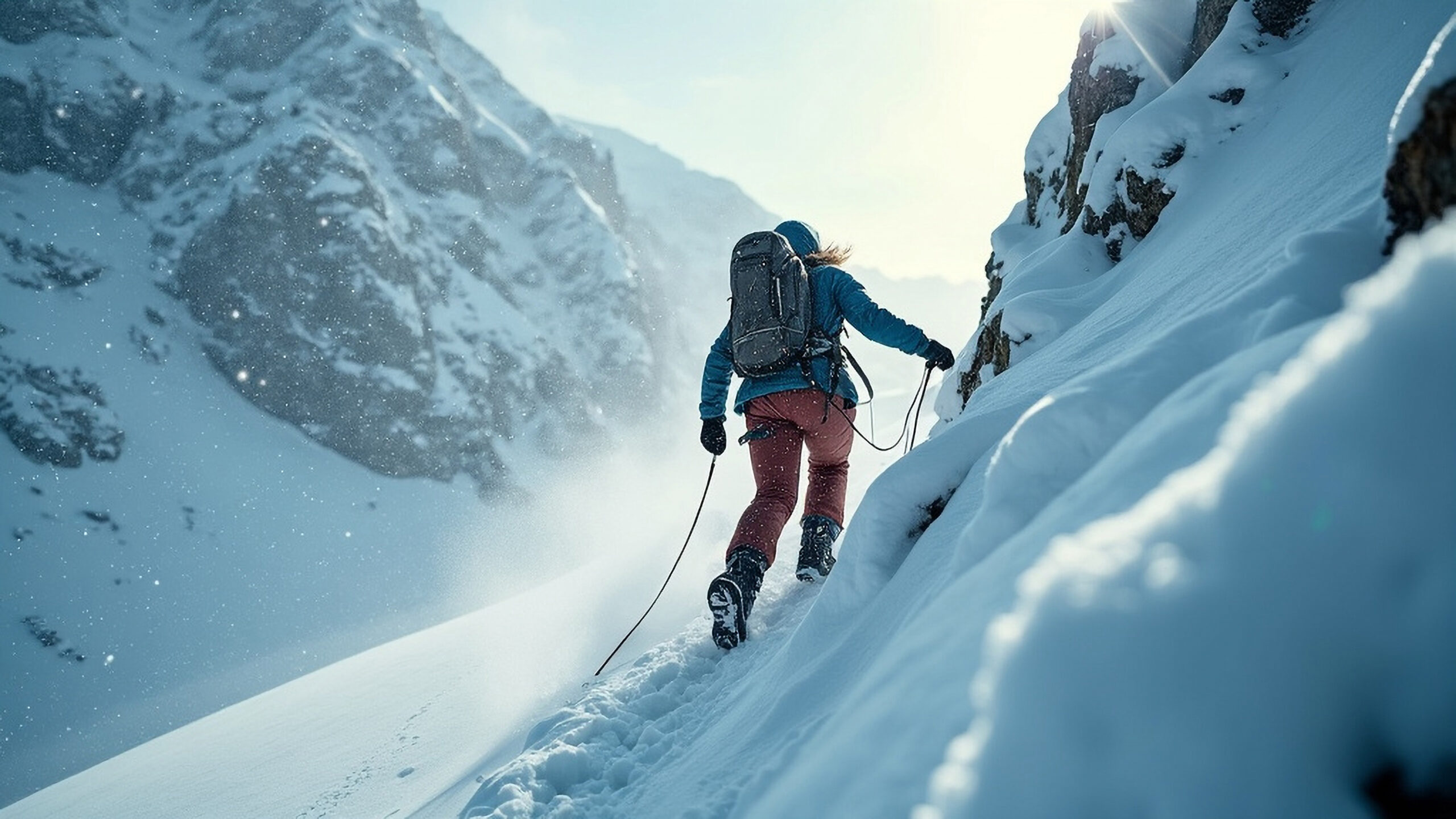
High Altitude Adds Warmth and Redundancy—Not a Universal Formula.
As trips become colder, longer and less forgiving, the biggest change is not “wear more all day.” It is carrying more static warmth, more dry backups and more ways to protect exposed systems.
Moisture Accumulates
Multi-day trips make drying and rotation more important. Protect at least one dry layer for camp, sleep or summit day.
Stops Become Colder
Altitude, fatigue, queues and technical transitions can reduce heat production even when the air temperature has not changed.
Redundancy Matters More
A soaked glove, failed shell zipper or wet base layer is harder to solve when the next warm room is days away.
One Brand Can Illustrate the Layering Logic—Without Turning the System Into a Brand Prescription.
Mammut currently organizes its own clothing around the same basic logic: first layer, midlayer and outer layer, with insulation added as conditions require.
Aenergy Light · Alto Guide · Broad Peak
Active layer: Mammut’s Aenergy Light ML line is a lightweight Polartec Power Grid midlayer built around breathability, quick drying and low weight.
Weather layer: the Alto Guide HS is a technical 3-layer mountaineering hardshell with a helmet-compatible hood and harness-aware pocket placement.
Insulation: the current Broad Peak family provides packable down insulation for hiking, ski touring and alpine climbing, while heavier conditions require a warmer expedition-specific stop layer.
Use this as a system example, not a requirement: equivalent pieces from other brands can perform the same four jobs.
Shop the Layer You Actually Need
Instead of placing another unverified Gear Ads shortcode here, this keeper page routes readers into the focused buyer guides where each clothing category can be monetized and maintained separately.
Base Layers
Compare merino, synthetic and blended options by fabric weight, drying speed and trip type.
Best Base LayersDown & Stop Insulation
Compare lightweight alpine insulation, general hiking puffies and warmer belay-focused jackets.
Best Down JacketsRain & Hardshell Jackets
Compare 2.5-layer and 3-layer shells, ventilation, hood design and mountain-specific durability.
Best Rain JacketsClean the Clothing—and Test the Entire System Together.
A clothing list is incomplete until the pieces have been worn together with the pack, harness, helmet, gloves and boots.
Wash for Moisture Performance
Body oils and residue can reduce comfort and moisture movement. Follow the garment label and dry completely before storage.
Preserve Loft
Down and synthetic garments have different wash and drying needs. Store lofted insulation uncompressed when practical.
Maintain the Face Fabric
Wash contamination away and restore DWR only according to the shell manufacturer’s current instructions.

One Keeper Page for the Entire Mountaineering Layering System
This rebuild absorbs the useful framework from the separate “Mountaineering Layering System: What to Wear & When” page into the stronger high-altitude keeper.
What was consolidated
The keeper retains the existing High-Altitude Layering Guide’s four-layer structure, lower-body and extremity coverage, “slightly cool while moving / warm while stopped” rule, and objective scaling. It also absorbs the separate layering-systems page’s stronger real-time decision matrix, active-versus-static framing, down-versus-synthetic discussion, full-system rehearsal and mountain-environment examples.
The general framework was cross-checked against current layering guidance from The Mountaineers, REI and Mammut, plus manufacturer-first shell-care principles used by GORE-TEX. Product-specific buyer intent remains on separate base-layer, down-jacket and rain-shell pages.
No fixed temperature prescriptions: the final system depends on weather, wind, precipitation, exertion, duration, personal cold tolerance, support model and current guide-service requirements.
High-Altitude Layering FAQ
How should I layer for high-altitude climbing?
Think in four functions: base layer, active insulation, weather shell and large stop insulation. You may wear only one or two while moving, then add the others as wind, precipitation or stop duration increases.
What is the biggest layering mistake?
Starting too warm is one of the most common. Sweating heavily early creates a moisture problem that becomes much harder to manage when the pace slows or wind rises.
Should I use merino or synthetic next to skin?
Both work. Synthetic usually dries quickly and is durable; merino is comfortable over long periods and manages odor well. Blends split the difference.
Should I use down or synthetic insulation?
Down is highly compressible and efficient for packed weight. Synthetic insulation is generally more forgiving in wet-cold environments and often dries faster. Choose around moisture exposure and drying opportunity.
Do I need a hardshell all day?
No. A waterproof shell is vital when sustained precipitation or severe wind requires it, but wearing it during high-output movement in dry conditions can trap unnecessary moisture.
When should I put on the big insulated jacket?
As soon as a meaningful stop begins, before you become chilled. Remove or vent it before hard movement resumes.
How should I layer my legs?
Legs usually require less insulation while climbing because they generate substantial heat. Base bottoms, climbing pants and a shell cover many objectives; insulated over-pants become more important as static exposure and expedition cold increase.
How do I choose layers for a specific mountain?
Start with the route’s current weather, wind, precipitation, duration, altitude, support model and exposure. Then reconcile your clothing with the current mountain-specific gear list and any guide-service requirements.
Build the Rest of the Mountain System
Mountaineering & Hiking Gear Guide
Connect clothing to footwear, traction, packs and technical equipment.
Planning toolMountain Gear Planner
Turn the four-layer framework into an objective-specific gear list.
ChecklistMountaineering Gear Checklist
Reconcile clothing with the complete climbing equipment system.
Layer 1Best Base Layers
Compare merino, synthetic and blends for the next-to-skin layer.
Layer 4Best Down Jackets
Compare warm stop layers and alpine insulation.
Layer 3Best Rain Jackets
Compare hiking shells and more technical mountain hardshells.
Deep recoveryMountain Weather for Climbers
Translate forecast, wind and precipitation into clothing decisions.
Deep recoveryFrostbite Prevention
Understand why dry gloves, circulation and early cold-injury recognition matter.
Deep recoveryGear Safety
Audit the clothing system alongside the rest of the mountain equipment.

Stay Slightly Cool While Moving. Get Warm Before You Become Cold.
The strongest layering system is not the one with the most garments. It is the system that keeps moisture under control, blocks the weather when necessary and lets you add warmth faster than the mountain can take it away.
Was this helpful?
Global Summit Guide is an independent mountaineering resource founded in 2026. The team combines first-hand trekking and climbing experience with in-depth research and professional health and nutrition review to help climbers choose objectives, prepare properly, and stay safe.
Health, altitude, and nutrition content is reviewed by Taylor Ludlow (Registered Nurse) and Brigg Hoopes (Nutritionist).
What We Don't Know Yet
Mountain information changes quickly. This box explains the limits of what this page can responsibly promise.
- Gear requirements can change by season, route variation, weather window, personal cold tolerance, and guide-service requirements.
- Fitness and altitude response vary by person; no guide, itinerary, or training plan can guarantee acclimatization or summit success.
- Visa, passport, vaccination, border, insurance, and local transportation rules may change before your trip.
Verify current conditions with official land managers, guide services, local forecasts, and current route reports before booking or climbing.
Mountaineering, rock and ice climbing, glacier travel, and high-altitude activity are inherently dangerous and can result in serious injury or death. The information on Global Summit Guide is provided for general informational and educational purposes only and is not a substitute for professional instruction, qualified guiding, proper equipment, or your own judgment and experience.
Route conditions, weather, snowpack, permits, regulations, and hazards change constantly and may differ from what is described here. Details may be incomplete, out of date, or contain errors. Always verify current information with local authorities, certified guides, and official sources before making any decision in the mountains.
Nothing on this site is medical, legal, or financial advice. Our fitness, acclimatization, altitude, and nutrition content is general in nature; consult a qualified physician before beginning any strenuous exercise program or exposing yourself to high altitude.
You are solely responsible for your own safety and decisions. To the fullest extent permitted by law, Global Summit Guide and its team accept no liability for any loss, injury, damage, or expense arising from use of, or reliance on, this information. By using this site you acknowledge these risks and accept these terms.
Some links on this site may be affiliate links. If you buy through them we may earn a small commission at no extra cost to you; this never affects our recommendations.
Global Summit Guide recommendation path
Next Best Mountain to Research
Use these recommendations to continue the right planning path instead of stopping on one page.
Use current permit, weather, route, and operator information before booking or climbing.