
Last updated October 21, 2026
Mont Blanc Climbing Guide: Routes, Huts, Cost & Preparation
Mont Blanc is the highest mountain in the Alps—not an easy first hike. Compare the Goûter and Trois Monts routes, understand the regulated refuge system, and build a realistic plan around glacier skills, acclimatization and live conditions.
Compare routesBuild your plan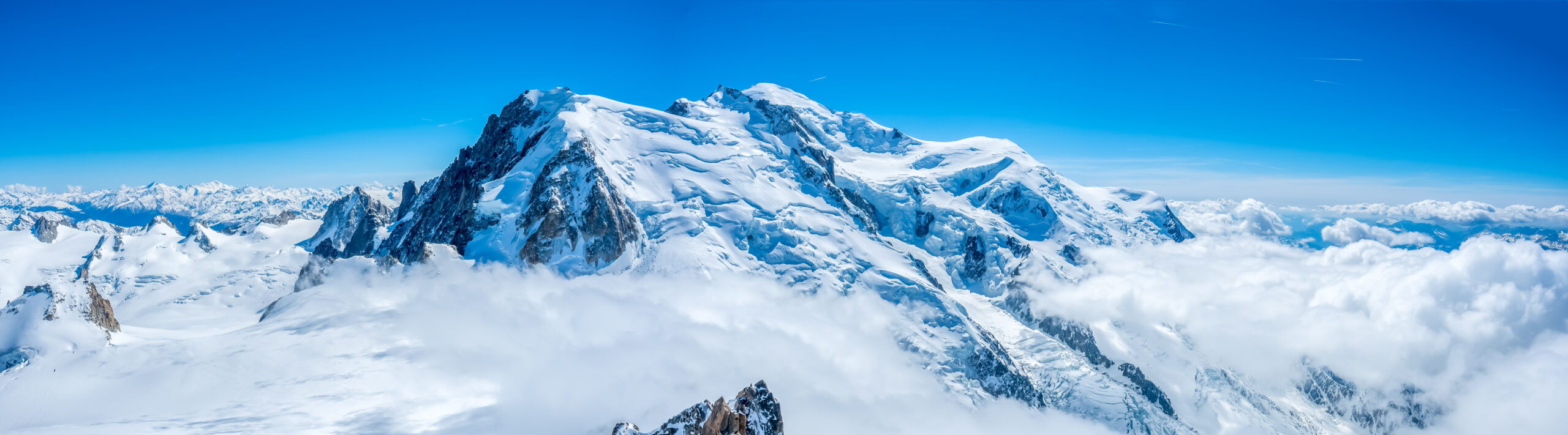
Is Mont Blanc the right mountain for you?
Choose Mont Blanc after you can move confidently on steep snow in crampons, understand roped glacier travel, and handle long summit days. For many aspiring climbers, a guided five-to-nine-day training and acclimatization trip offers a more defensible first attempt than a rushed two-day summit booking.
Four main ways climbers approach Mont Blanc
The label “normal route” describes popularity, not a safe passage on any particular day. Grade estimates change with snow, ice, rockfall and chosen variations.
| Route | Typical style | Core hazard | Best suited for |
|---|---|---|---|
| Goûter / Voie Normale | PD to PD+ · huts | Grand Couloir rockfall; Bosses Ridge exposure | Prepared first-timers with guide or experienced team |
| Trois Monts / Cosmiques | AD, condition dependent | Seracs, steep snow/ice, avalanche exposure | Experienced snow-and-ice climbers |
| Gonella / Italian normal route | Longer alpine itinerary | Crevasses, navigation, endurance | Independent teams or guides with relevant experience |
| Grands Mulets | Often spring ski mountaineering | Crevasses, avalanche and serac exposure | Specialist spring teams |
Detailed Goûter vs. Trois Monts comparison → · Goûter route step-by-step →
What happens on the Goûter ascent
Approach: Tramway du Mont-Blanc to Nid d’Aigle, then a climb toward Tête Rousse. Reservations and transportation schedules must align.
Crux: The Grand Couloir is exposed to dangerous rockfall. Risk varies sharply with temperature and conditions; early timing alone does not eliminate it.
Upper mountain: Climb toward the Goûter Refuge, then move over the Dôme du Goûter, past the Vallot emergency shelter and along the exposed Bosses Ridge.
Descent: Most accidents and fatigue problems do not disappear after the summit. Preserve energy for the return.
Read the full Goûter breakdown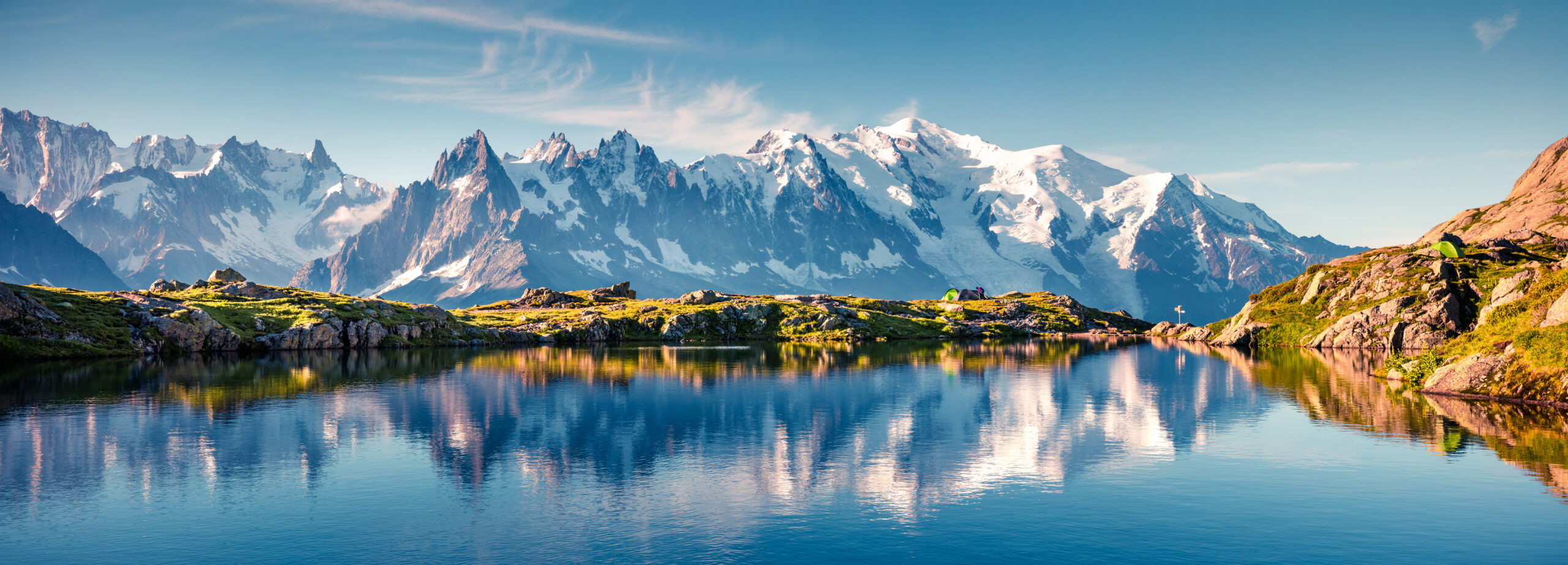
Hut reservations are essential on the normal route
There is no general “Mont Blanc summit permit,” but the French normal-route refuge corridor operates under special booking and identification rules. Reservation records require the names of participants, and authorities can restrict access for safety reasons.
Tête Rousse Refuge
Lower refuge commonly used for acclimatization and staging. Confirm opening dates and approved reservations before planning the approach.
Goûter Refuge
Upper refuge on the normal route. Sleeping this high demands preparation; hut availability cannot substitute for acclimatization.
Official rules, closures and hut schedules take precedence over this guide.
When to climb—and when to turn around
Early summer
Snow cover may be more continuous but storms, unstable snow and ice conditions can persist. Do not equate early season with safety.
Mid-summer
Longer daylight and commonly operated huts coincide with rockfall and heat-related instability concerns.
Late summer
Crevasse bridges, rockfall, fresh snowfall and lift schedules may change. Consult fresh route reports rather than last year’s conditions.
Five hazards that actually determine the outcome
1. Grand Couloir rockfall
There is no risk-free crossing. Follow current guidance and turn back when the route is unstable.
2. Glacier and crevasse travel
Use appropriate rope systems, navigation, rescue training and active hazard assessments.
3. Altitude and fatigue
Strong fitness does not guarantee acclimatization. Build staged altitude exposure and do not ignore symptoms.
4. Storms and wind
Cloud, ice, high wind and poor visibility can make a moderate-grade line hazardous.
Also critical: serac/avalanche exposure on alternative routes, slippery downclimbing, and descent timing. Seek current local guidance from La Chamoniarde and your professional guide.
Mont Blanc readiness checklist
| Skill | Recommended evidence of readiness |
|---|---|
| Fitness | Repeated steep days with 1,200–1,500 m ascent; controlled descents when tired |
| Crampons and axe | Confident ascent and descent on snow under appropriate supervision |
| Glacier travel | Rope movement and crevasse awareness; rescue competence for independent teams |
| Altitude | Recent staged acclimatization; willingness to postpone for symptoms |
| Judgment | Weather and rockfall turnaround criteria agreed before departure |
Gran Paradiso or a suitable Monte Rosa training objective can provide useful glacier experience, but neither guarantees readiness for Mont Blanc’s particular hazards.
Take the readiness assessmentExplore planning toolsA realistic 7-day guided preparation outline
Days 1–2
Arrive in Chamonix, inspect equipment, refresh rope, crampon and ice-axe technique.
Days 3–4
Acclimatization and a suitable training climb, selected for live conditions.
Day 5
Rest, assess weather and route access, confirm reservations and logistics.
Days 6–7
Mont Blanc attempt only if acceptable conditions and team readiness align.
Alternative days
Reserve flexibility for a different objective, training or weather delay.
Non-negotiable
Guide itinerary and current route information supersede this sample plan.
How much does it cost to climb Mont Blanc?
Costs vary widely by guide ratio, number of preparation days, refuge availability, gear ownership, transport and season. The ranges below are broad planning allowances—not current operator quotations.
| Budget component | Planning consideration |
|---|---|
| Guide and instruction | Often the largest cost; confirm duration, route flexibility and guide ratio |
| Refuge beds and meals | Subject to official availability, identity-linked reservation and specific package inclusions |
| Lifts and local transfers | Tramway, mountain lifts, valley transport and schedule changes |
| Technical equipment | Boots, crampons, harness, axe, clothing; consider fit-tested rental |
| Travel and buffer nights | Flights/trains, lodging, insurance and weather-delay reserves |
What to bring to Mont Blanc
Movement: compatible mountaineering boots and crampons, ice axe, harness, helmet and a competent rope system.
Protection: weatherproof shell, warm insulation, spare gloves, eye protection and sun protection.
Safety: navigation, communication, emergency equipment and whatever your guide requires for the route.
Essentials: calories, hydration, lighting and layers appropriate to a cold night start.
Mountaineering gear guideChoosing mountaineering bootsGear links may contain affiliate relationships on linked buying guides; equipment recommendations here are editorial and must be checked with the guide service.
A four-step Mont Blanc decision pathway
03 · Verify access
Review current FFCAM reservations and local safety information.
Official refuge portal →Mont Blanc climbing FAQ
Is Mont Blanc a beginner mountain?
It can be a first major Alpine objective for fit climbers who have completed appropriate glacier instruction and acclimatization, often with a guide. It is not a first-ever hiking objective.
Do you need a permit to climb Mont Blanc?
There is not a universal summit permit, but normal-route refuge bookings and identity verification are regulated. Safety closures or other restrictions can apply.
Which route is easiest?
The Goûter is the usual standard route and has lower technical grades than Trois Monts, but Grand Couloir rockfall can make it unsuitable. Conditions decide.
Can I climb without a guide?
Independent climbing requires strong glacier and alpine judgment skills, route finding, rescue competence and legal hut logistics. For a first serious Alpine objective, professional guiding is often more appropriate.
What is the best month?
There is no universally safest month. Summer is the usual season, but rockfall, storms and snow stability vary by year and week. Use current local reports.
How tall is Mont Blanc?
Its snow summit is variable. An approximate elevation of 4,806 m is suitable for planning; do not treat older 4,810 m figures as fixed.
How this guide is maintained
This guide separates stable mountain geography and skills guidance from time-sensitive conditions, regulations and booking availability. No first-hand summit experience is claimed. Current official sources and qualified local mountain professionals take precedence over any static article.
Primary references: FFCAM normal-route refuge portal, La Chamoniarde and GSG route research.
Editorial update: October 2026. No live refuge availability or safe passage is guaranteed. Prices, guides, route grades and weather should be reconfirmed before travel.
Was this helpful?
🏔Related peaks nearby
🧭Explore & compare
Global Summit Guide is an independent mountaineering resource founded in 2026. The team combines first-hand trekking and climbing experience with in-depth research and professional health and nutrition review to help climbers choose objectives, prepare properly, and stay safe.
Health, altitude, and nutrition content is reviewed by Taylor Ludlow (Registered Nurse) and Brigg Hoopes (Nutritionist).
What We Don't Know Yet
Mountain information changes quickly. This box explains the limits of what this page can responsibly promise.
- Weather, snowpack, avalanche risk, road access, and route conditions can change quickly and may be different on your climbing dates.
- Route conditions, trailhead access, crevasse exposure, stream crossings, and rescue access may vary from published planning guidance.
- Total trip cost can change with flights, lodging, guide pricing, permits, gear rentals, transportation, and exchange rates.
- Fitness and altitude response vary by person; no guide, itinerary, or training plan can guarantee acclimatization or summit success.
- Comparisons simplify complex decisions; the better mountain depends on current conditions, skills, timing, budget, and risk tolerance.
Verify current conditions with official land managers, guide services, local forecasts, and current route reports before booking or climbing.
Mountaineering, rock and ice climbing, glacier travel, and high-altitude activity are inherently dangerous and can result in serious injury or death. The information on Global Summit Guide is provided for general informational and educational purposes only and is not a substitute for professional instruction, qualified guiding, proper equipment, or your own judgment and experience.
Route conditions, weather, snowpack, permits, regulations, and hazards change constantly and may differ from what is described here. Details may be incomplete, out of date, or contain errors. Always verify current information with local authorities, certified guides, and official sources before making any decision in the mountains.
Nothing on this site is medical, legal, or financial advice. Our fitness, acclimatization, altitude, and nutrition content is general in nature; consult a qualified physician before beginning any strenuous exercise program or exposing yourself to high altitude.
You are solely responsible for your own safety and decisions. To the fullest extent permitted by law, Global Summit Guide and its team accept no liability for any loss, injury, damage, or expense arising from use of, or reliance on, this information. By using this site you acknowledge these risks and accept these terms.
Some links on this site may be affiliate links. If you buy through them we may earn a small commission at no extra cost to you; this never affects our recommendations.
Global Summit Guide recommendation path
Next Best Mountain to Research
Use these recommendations to continue the right planning path instead of stopping on one page.
Use current permit, weather, route, and operator information before booking or climbing.
Search Flights, Hotels & Rental Cars
Have the mountain or destination picked? Use Expedia to compare the flights, lodging and rental cars that fit your actual trip dates. For mountain travel, consider arriving early enough for delays and adding a buffer night after the climb before a fixed flight home.
Compare current flight, hotel and car options.
Affiliate disclosure: Global Summit Guide may earn a commission if you book through this link, at no additional cost to you.