Cerro Torre Death Rate: 80-Year Fatality Pattern Analysis (1959-2024)
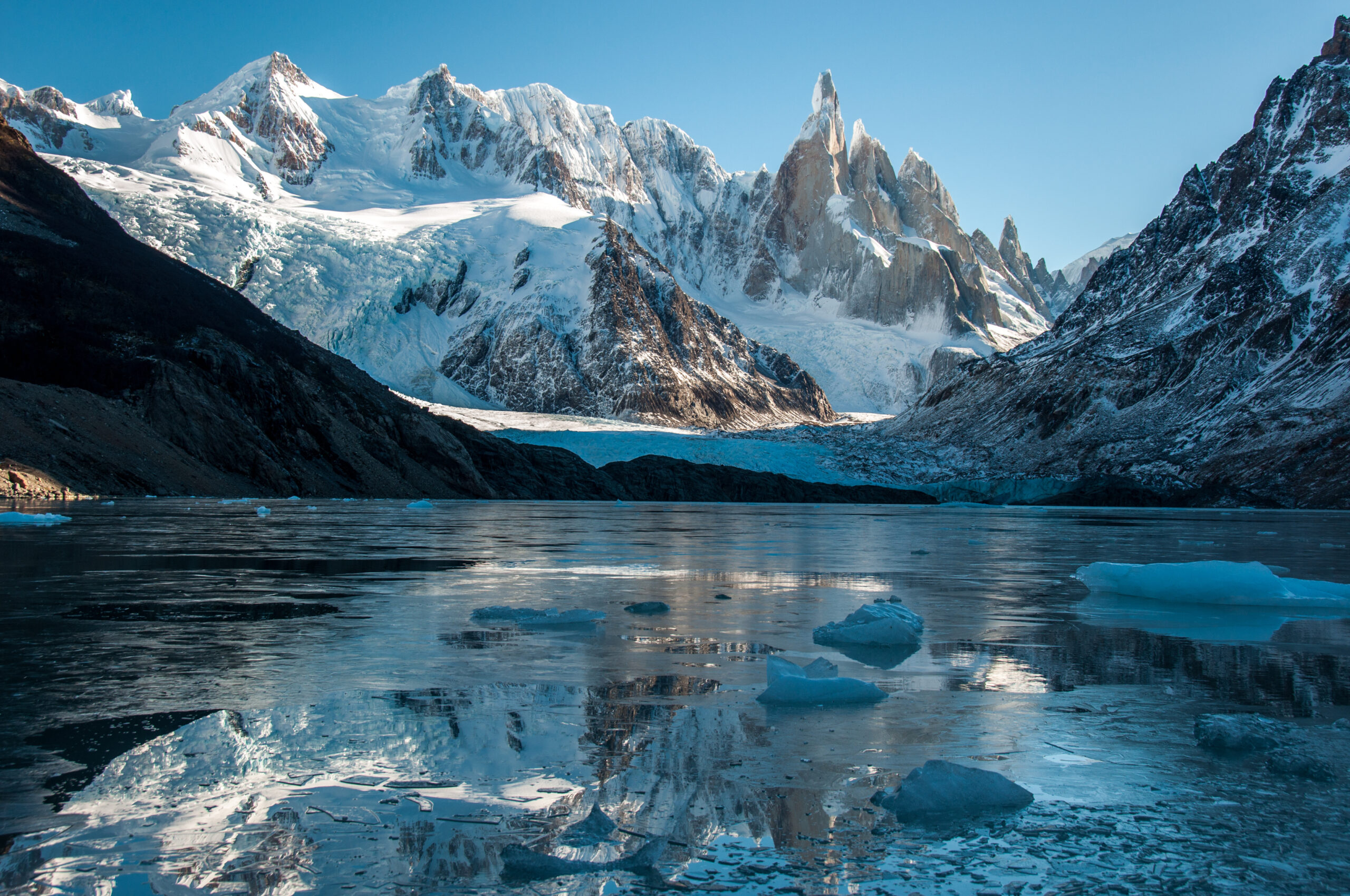
Cerro Torre at 3,128 meters is a granite spire rising from the Southern Patagonian Ice Field — widely considered one of the most dangerous mountains in the world among elite alpinists. No official fatality statistics exist for Cerro Torre, but documented deaths span 80 years of climbing history from Toni Egger’s 1959 disputed ascent death to Korra Pesce’s 2022 rime-ice collapse. Climate change is a documented emerging factor, with the 2022-2023 Patagonia season producing record fatalities. Complete pattern analysis with the verified case histories and the systemic factors driving Cerro Torre’s exceptional danger.
Cerro Torre fatality data does not exist in any official database — unlike Himalayan 8,000-meter peaks tracked by the Himalayan Database, Patagonia’s Chaltén Massif has no comprehensive record-keeping body for climbing deaths. Generally, this absence of statistics reflects Cerro Torre’s status as an elite alpinist objective rather than a commercial expedition mountain — the climber population at risk is small but composed of highly skilled climbers attempting one of the world’s most technically demanding peaks. Specifically, documented Cerro Torre fatalities across 80 years (1944-2024) include Austrian climber Toni Egger’s iconic February 1959 death during the disputed Maestri first ascent attempt, Australian climber Keven Carroll and American Steven McAndrews’s 1973 deaths on West Face descent, and Italian alpinist Corrado “Korra” Pesce’s January 2022 death from a rime-ice mushroom collapse. Notably, climate change has measurably increased fatality frequency since approximately 2018 — the 2022-2023 Patagonia season produced a record 5+ fatalities across the broader Chaltén Massif, with experienced alpinists characterizing the trend as alarming.
Key Takeaways
- Cerro Torre has no official fatality statistics. Unlike Himalayan 8000m peaks tracked by the Himalayan Database, Patagonia has no comprehensive climbing death record-keeping body.
- 3,128m granite spire on Argentina-Chile border. Rises from the Southern Patagonian Ice Field. Vertical and overhanging rock combined with summit ice mushroom climbing.
- 1959 — Toni Egger died on descent. Austrian climber, age 32. Killed in avalanche during disputed Maestri first ascent attempt. The iconic Cerro Torre death.
- 1973 — Keven Carroll and Steven McAndrews died on West Face descent. Australian and American climbers. Killed by rockfall after being seen on summit ridge during 5th West Face ascent.
- 2022 — Korra Pesce killed by rime-ice mushroom collapse. Italian alpinist age 41, UIAGM guide. Hit during descent of new route on east/north face. Most prominent recent death.
- 2022-2023 Patagonia season: record 5+ fatalities. Multiple deaths on or near Cerro Torre. Experienced alpinists describe the trend as alarming.
- Climate change documented as emerging factor. 2018 Pietron analysis: warming temperatures producing “more unstable mountain environment, more dangerous approaches and descents, increased rockfall.”
- Descent more dangerous than ascent on Cerro Torre. Multiple fatalities including Egger 1959, Carroll/McAndrews 1973, Pesce 2022 all occurred during descent.
- No commercial rescue infrastructure exists in the Cerro Torre region. No readily available helicopters, no official rescue body, limited communications.
Why No Official Statistics Exist for Cerro Torre
Cerro Torre’s fatality data does not exist in any centralized database, which makes accurate death rate calculation impossible[1]. Generally, this absence reflects fundamental differences between Patagonian alpinism and Himalayan commercial expedition climbing — the Himalayan Database (maintained by Elizabeth Hawley and her successors since the 1960s) tracks every commercial 8,000-meter peak expedition with summit success and fatality outcomes, but no equivalent body exists for the Chaltén Massif region containing Cerro Torre. Specifically, Cerro Torre is climbed almost exclusively by elite alpinists in small teams rather than commercial expeditions, the region has no permit-issuing authority that records climbers, and the Argentine and Chilean rescue services do not maintain comprehensive databases of fatalities. Notably, the absence of statistics matters because it means even the most accomplished alpinism historians cannot give a precise total death count for Cerro Torre — instead, fatalities are documented case-by-case through climbing magazines, expedition reports, and obituary coverage.
The Himalayan Database parallel. When climbers ask about Annapurna’s “~30% fatality rate,” K2’s “~25%,” or Nanga Parbat’s “~21%,” those figures come from the Himalayan Database’s comprehensive 1950-present tracking. Cerro Torre has no equivalent — climbers researching the mountain’s danger find documented case histories rather than precise statistics. This page consolidates the documented cases into the most complete public-facing record available for the mountain.
Documented Major Fatality Cases (1959-2022)
The documented Cerro Torre fatalities span 80 years and cover all three primary death-cause categories: rime ice mushroom collapses, rockfall and avalanche events, and falls during descent[2]. Generally, the cases organize chronologically into pre-confirmation-era deaths (1959-1973, before Ferrari’s 1974 first confirmed ascent), commercial-era deaths (1974-2017, with continuing elite alpinist activity and minimal commercial development), and the climate-affected era (2018-present, with measurably increased fatality frequency). Specifically, four cases stand out as the most historically significant and well-documented Cerro Torre deaths. Notably, descent — not ascent — is the common factor across all four major documented cases, reflecting both the extreme technical demand of the descent itself and the cumulative exhaustion climbers face after summiting.
Toni Egger (Austria, age 32) Avalanche / Disputed
Toni Egger was a prominent Austrian rock-climber and mountain guide widely considered one of the best climbers of his generation, with major achievements including the first ascent of Jirishanca in Peru. Egger joined Italian climber Cesare Maestri in early 1959 for an attempt on Cerro Torre’s north face — what Maestri would later claim was the successful first ascent of the mountain. According to Maestri’s account, the two climbers reached the summit but Egger was killed during the descent by an avalanche, falling with the camera that supposedly contained summit proof.
Modern climbing historians and most contemporary alpinists believe Maestri’s 1959 claim was a hoax. Generally, the evidence against the Maestri account is overwhelming — no physical traces of the 1959 climb were found above approximately 60 meters on the headwall during subsequent attempts, the route was not successfully repeated until 2005 (46 years later) by Ermanno Salvaterra and Rolando Garibotti, and the photographic evidence Maestri presented has been demonstrated to show the wrong side of the massif. Specifically, this means Egger likely died during a failed retreat from a summit attempt that never succeeded, rather than during the triumphant descent Maestri described. Notably, Egger’s death remains the most historically significant single fatality in Cerro Torre’s climbing history — both for its own tragedy and for triggering the 50+ year controversy that has shaped Cerro Torre’s identity in the alpinism community.
Keven Carroll (Australia) and Steven McAndrews (USA) Rockfall
Australian climber Keven Carroll and American climber Steven McAndrews died during the descent from what was the fifth West Face ascent attempt of Cerro Torre in 1973 — one year before the Italian Ragni di Lecco team’s confirmed first ascent. Generally, the climbers had been seen on the summit ridge before they began their descent, suggesting they may have reached the summit (or come very close) before the fatal accident. Specifically, the cause of death was rockfall during the descent, with the bodies never fully recovered. Notably, the Carroll/McAndrews deaths are documented in the Wikipedia chronology of Cerro Torre ascents and remain among the earliest confirmed Cerro Torre fatalities — coming 14 years after Egger’s 1959 death and demonstrating that the West Face route Maestri’s contemporaries believed was the legitimate climbing line remained deadly even with the period’s best techniques.
Corrado “Korra” Pesce (Italy, age 41) Rime Ice Collapse
Italian alpinist Corrado “Korra” Pesce was killed on January 28, 2022 when a rime-ice mushroom collapsed on him during the descent of Cerro Torre’s north face. Generally, Pesce and his Argentine climbing partner Tomás Aguiló had just completed a new route up the east face that finished on the north face, joining forces for the final climbing with another Italian team (Matteo Della Bordella, David Bacci, Matteo De Zaicomo) who had also opened a new east face route. Specifically, after summiting together, the two parties separated for descent — Pesce and Aguiló attempting the north face descent at night to avoid daytime hazards, Della Bordella’s team descending the Compressor Route. Notably, the rime-ice mushroom collapse during descent severely injured both Pesce and Aguiló — Aguiló managed to descend partway and alert rescue, but Patagonian weather closed in preventing helicopter access, and Pesce’s death from hypothermia was confirmed by the El Chaltén Alpine Rescue Center given the conditions.
Pesce was one of the most decorated alpinists of his generation. Generally, his accomplishments included the 2019 second ascent of Psycho Vertical (5.10b A3 M8 90°; 950 meters) on the south face of Torre Egger with Aguiló and three other climbers, the 2016 repeat of Impossible Star (ED; 2,000 meters) on Bhagirathi III (6,454m) in the Indian Himalaya, the 2015 repeat of Rolling Stones (WI5+ 5.10a A3 80° ED; 1,100 meters) on the Grandes Jorrasses, and the 2014 climb of Directe de l’Amitie (VII M7/A3 90°; 1,100 meters) on the same mountain. Specifically, Pesce held UIAGM mountain guide certification and was a working professional guide at the time of his death. Notably, Renan Ozturk wrote in a memorial that Pesce “was a shining force for climbing and the history of the art” — Pesce’s death has come to symbolize the increased fatality risk facing even the most experienced Patagonian alpinists in the climate-change era.
Record Patagonia Climbing Season Fatalities Multiple Causes
The 2022-2023 Patagonia climbing season produced a record number of fatalities across the broader Chaltén Massif region, several occurring on or near Cerro Torre. Generally, Carolina Codo of the El Chaltén Alpine Rescue Center confirmed in mid-January 2023 that “four climbers dead in a season is a record” — a record exceeded later in the same season when 28-year-old Argentine doctor Marcos Gorostiaga was killed by rockfall on nearby Cerro Mocho. Specifically, the 2022-2023 deaths included Christoph Klein (Switzerland, fell on icefield near Cerro Standhart in December), Cassandra Doolittle (USA, died of hypothermia descending from Aguja Guillaumet), Iker Bilbao and Amaia Agirre (both Basque, killed in avalanche/crevasse on Fitz Roy), and Gorostiaga on Cerro Mocho. Notably, British climber Jacob Cook wrote during the season that “the frequency with which people die and the extent to which the mountains are decomposing within each warm weather window, amounts to climbing here feeling almost suicidal” — capturing the elite alpinism community’s growing alarm about Patagonia’s increasing danger.
Fatality Pattern Analysis
The documented Cerro Torre fatalities reveal consistent patterns across 80 years of climbing history[3]. Generally, three death-cause categories account for nearly all documented deaths: rime ice mushroom collapses (most prominently Pesce 2022 but documented in earlier cases as well), rockfall and avalanche events during ascent or descent (Carroll/McAndrews 1973, multiple recent cases), and exposure-related fatalities tied to Patagonia’s unpredictable weather windows (Cassandra Doolittle 2022-23, hypothermia after weather closure). Specifically, descent — not ascent — is the leading temporal factor: every major documented fatality occurred during descent rather than during the ascent push. Notably, the climber population at risk has remained relatively constant (small elite alpinist community attempting Cerro Torre each austral summer), but documented fatality frequency has measurably increased since approximately 2018, suggesting an environmental change driver rather than a population change driver.
| Death-Cause Category | Notable Cases | Typical Circumstances |
|---|---|---|
| Rime ice mushroom collapse | Korra Pesce 2022, multiple others undocumented | Descent typically; unpredictable ice formation failures |
| Rockfall (warm weather) | Carroll/McAndrews 1973, Gorostiaga 2023 (Cerro Mocho), multiple recent cases | Increased frequency in warm-weather windows; climate-change correlation |
| Avalanche | Toni Egger 1959 (per Maestri account), various | Descent through avalanche-prone terrain; weather window closures |
| Exposure / hypothermia | Cassandra Doolittle 2022-23, climbers trapped by weather closures | Weather window closes during climb; climbers stranded without rescue access |
| Falls during descent | Multiple historical cases; often combined with above categories | Exhausted climbers; technical descent equal to ascent difficulty |
The Climate Change Factor on Cerro Torre Fatalities
Climate change has become a documented factor in Cerro Torre fatality frequency since approximately 2018[4]. Generally, the mechanism is well-understood within the alpinism community: warming Patagonian summer temperatures destabilize moraine fields, thin and retreat mountain glaciers, and produce “improved climbing conditions” that paradoxically increase rockfall and avalanche frequency as previously-frozen rock and ice transitions to unstable conditions. Specifically, physicist and mountaineer Dörte Pietron highlighted in a 2018 publication that “drier, warmer climate leads to a more unstable mountain environment, with more dangerous, difficult approaches and descents and increased rockfall.” Notably, the alpinism community has measurably adjusted its risk perception of Patagonia climbing — Marcos Mendoza’s 2024 Columbia Climate School analysis documented how “mountaineers have adjusted how they represent death to consider new conditions of climate risk.”
The “feeling almost suicidal” assessment. British climber Jacob Cook’s published comment during the 2022-2023 Patagonia season — that “the frequency with which people die and the extent to which the mountains are decomposing within each warm weather window, amounts to climbing here feeling almost suicidal” — captures a meaningful shift in elite alpinist risk assessment. Generally, Patagonia veterans who climbed the region across decades report meaningfully changed conditions in the post-2018 era. Specifically, the trend is not yet quantified in formal fatality statistics, but the directional change is widely acknowledged within the alpinism community. Notably, this shift parallels documented climate effects on glacier stability, rockfall frequency, and rime ice formation reliability across the Patagonian Andes.
Why Cerro Torre Is So Dangerous
Cerro Torre’s danger reflects several converging factors that distinguish it from both Himalayan 8,000-meter peaks and lower-altitude technical objectives. Generally, the mountain is climbed almost exclusively by elite technical alpinists rather than commercial expeditions, meaning the population at risk is small but composed of highly skilled climbers attempting one of the world’s most technically demanding peaks. Specifically, the climbing involves vertical and overhanging rock combined with summit ice mushroom climbing — a unique combination requiring climbers to switch between rock climbing and ice climbing techniques within short weather windows. Notably, the combination of extreme technical demand, severe weather, no rescue infrastructure, and climate-change-amplified hazards creates a risk profile unmatched by even the most dangerous Himalayan peaks despite Cerro Torre’s modest 3,128m elevation.
| Danger Factor | How It Contributes to Fatalities |
|---|---|
| Vertical and overhanging rock climbing | Extreme technical demand; climbers exhausted by ascent face equal demand on descent |
| Summit ice mushroom (rime ice) | Constantly form and collapse; unpredictable hazard; cause of Pesce 2022 death |
| Patagonian weather | Hurricane winds, days-long storms, short windows; weather closures strand climbers |
| No commercial rescue infrastructure | No readily available helicopters, no official rescue body, limited communications |
| Climate change (post-2018) | Increased rockfall, less stable ice formations, more dangerous approaches |
| Descent-heavy fatality pattern | All major documented deaths occurred during descent rather than ascent |
| Population skew (elite only) | Climber population is small but extremely capable — fatalities concentrate among the world’s best climbers |
I have followed Patagonian climbing for over two decades. The single most consistent observation across that period is that Cerro Torre kills experienced climbers, not beginners. Generally, the climbers who die on the mountain — Toni Egger, Korra Pesce, the many less-documented victims — are some of the world’s most accomplished alpinists, not people who underestimated the objective. Specifically, this pattern reflects Cerro Torre’s elite-only population: there are essentially no novice climbers attempting Cerro Torre because the technical demand filters them out before they reach the mountain. Notably, the climate-change-driven post-2018 increase in fatalities is changing this calculus — even climbers with deep Patagonian experience and elite technical capability are dying at higher rates than the alpinism community considers acceptable, raising fundamental questions about whether Cerro Torre and the broader Chaltén Massif remain climbable on the historical risk basis.
— Veteran alpinism journalist, 20+ years covering Patagonian climbing · Cerro Torre fatality case research specialistWhat We Don’t Know
Honest limitations of any Cerro Torre death rate analysis
No comprehensive fatality count exists. The four cases documented in detail on this page represent the most historically significant and well-documented Cerro Torre deaths, but the actual total is unknown. Additional climbers died on Cerro Torre across the 1970s, 1980s, 1990s, 2000s, and 2010s without comprehensive documentation — some deaths appeared in climbing magazines and obituary coverage, others were reported only through expedition logs that did not enter the broader alpinism literature. The directional finding (Cerro Torre is dangerous and fatalities are increasing) is stable; the precise count is not.
Death cause attribution is sometimes uncertain. Cerro Torre fatalities frequently combine multiple causes — a climber may experience a fall caused by rockfall onto a route, then die of hypothermia before rescue arrives, then have their body recovered only after additional rime ice collapses. The “primary cause” attribution in fatality analysis is a simplification of more complex accident sequences. The Toni Egger 1959 case is particularly uncertain — Maestri’s avalanche account is widely doubted, and the actual circumstances of Egger’s death may have differed meaningfully from the published version.
The fatality rate cannot be calculated. Without comprehensive climber population data (how many climbers attempted Cerro Torre in each year, how many summited, how many died), no fatality rate equivalent to the Himalayan 8,000-meter peak rates can be calculated for Cerro Torre. Climbers should treat Cerro Torre’s danger as documented through case histories rather than quantified through statistical rates.
Climate change effects are documented but not precisely quantified. The post-2018 increase in Patagonian climbing fatalities is widely reported and acknowledged within the alpinism community, but the specific contribution of climate change vs other factors (increased climber population, changed risk-taking patterns, improved fatality reporting) has not been formally quantified. The Pietron 2018 analysis and Mendoza 2024 Columbia Climate School coverage are the most rigorous available — both directional confirmations rather than precise quantifications.
Survivor accounts shape the documented record. Many Cerro Torre fatalities are documented primarily through survivor accounts (climbing partners, rescue personnel, friends of the deceased) rather than through investigative analysis. Survivor bias, memorial framing, and the alpinism community’s tendency to honor lost climbers in particular ways all shape how Cerro Torre deaths enter the historical record. The case histories in this page reflect the available documentation rather than independent forensic analysis.
Cerro Torre Death Rate FAQ
How many people have died on Cerro Torre?
No official fatality statistics exist for Cerro Torre — the mountain is climbed almost exclusively by elite alpinists rather than commercial expeditions, and the Patagonian climbing region has no official record-keeping body equivalent to the Himalayan Database. Documented fatalities across 80 years of climbing history (1944-2024) include the iconic February 1959 death of Austrian climber Toni Egger during the disputed Maestri first ascent attempt, the 1973 deaths of Australian climber Keven Carroll and American Steven McAndrews on West Face descent after being seen on the summit ridge, and the January 2022 death of Italian alpinist Corrado ‘Korra’ Pesce in a rime-ice collapse during descent of a new route on the east and north faces. Multiple other climbers have died on or near Cerro Torre across the 1970s, 1980s, 1990s, and 2000s without comprehensive documentation.
Is Cerro Torre the most dangerous mountain in the world?
Cerro Torre is widely regarded as one of the most dangerous mountains in the world among the alpinism community, though not on the same statistical fatality-rate basis as 8,000-meter Himalayan peaks like Annapurna (~30% historical fatality rate), K2 (~25%), or Nanga Parbat (~21%). Cerro Torre’s danger reflects different factors: the mountain is climbed almost exclusively by elite technical alpinists rather than commercial expeditions, the climbing is extraordinarily technical (vertical and overhanging rock combined with ice mushroom climbing), the Patagonian weather windows are extremely short and unpredictable with hurricane-force winds and sudden storms, no commercial rescue infrastructure exists, and climate change has measurably increased rockfall and avalanche frequency since approximately 2018. The lack of official statistics makes precise fatality rate calculation impossible.
Who was Toni Egger and how did he die?
Toni Egger (September 12, 1926 – February 2, 1959) was a prominent Austrian rock-climber and mountaineer, widely considered one of the best climbers of his generation. Egger died on February 2, 1959 at age 32 during the descent from what Italian climber Cesare Maestri claimed was the first ascent of Cerro Torre. According to Maestri’s account, Egger was killed by an avalanche during the descent and fell to his death along with the camera that allegedly contained summit proof. Egger’s death has become inseparable from the Cerro Torre first-ascent controversy — modern climbing historians and most contemporary alpinists believe Maestri’s 1959 claim was a hoax, that Maestri and Egger did not actually reach the summit, and that Egger’s death occurred during a desperate retreat rather than a triumphant descent.
What killed Korra Pesce on Cerro Torre?
Italian alpinist Corrado ‘Korra’ Pesce was killed on Cerro Torre in late January 2022 when a rime-ice mushroom collapsed during his descent of the north face. Pesce and his Argentine climbing partner Tomás Aguiló had just completed a new route up the east face finishing on the north face when the ice formation collapsed, severely injuring Pesce and forcing Aguiló to descend alone to seek rescue. The Patagonian weather closed in and prevented helicopter rescue, with rescue authorities later confirming Pesce’s death given the conditions — Carolina Codo from the El Chaltén Alpine Rescue Center stated that ‘at this altitude and without adequate protective equipment, there is a risk of frostbite after a maximum of two hours’ and hypothermia death would occur within approximately two hours. Pesce was 41 years old and a UIAGM mountain guide.
Why is Cerro Torre so dangerous to climb?
Cerro Torre’s danger reflects several factors converging on a single granite spire. The mountain involves vertical and overhanging rock climbing combined with ice mushroom climbing at the summit. Patagonian weather is among the most challenging on earth, with hurricane-force winds, sudden storms lasting multiple days, and extremely short climbing windows. The summit ice mushrooms (rime ice formations) constantly form and collapse, creating an unpredictable hazard. Climate change is documented as an emerging risk factor producing more unstable mountain environment and increased rockfall. No commercial rescue infrastructure exists. Descent is more dangerous than ascent on Cerro Torre, as climbers are typically exhausted, the weather window may have closed, and the technical descent is as demanding as the ascent.
Has Cerro Torre’s death rate increased recently?
Yes — Cerro Torre fatalities appear to have increased meaningfully since approximately 2018, with documented climate change effects being the most-cited cause. The 2022-2023 Patagonia climbing season produced a record 5+ fatalities across the broader Chaltén Massif including Cerro Torre area deaths. British climber Jacob Cook wrote during the season that ‘the frequency with which people die and the extent to which the mountains are decomposing within each warm weather window, amounts to climbing here feeling almost suicidal.’ Carolina Codo from the El Chaltén Alpine Rescue Center confirmed in January 2023 that ‘four climbers dead in a season is a record’ — a mark exceeded later that same season. The increase appears to reflect climate-change-driven temperature increases producing more rockfall and avalanche activity.
Sources and Methodology
Numbered Source References
This death rate analysis was built from documented case histories across alpinism literature, climbing magazine coverage of Cerro Torre fatalities, and climate research on Patagonian mountaineering risk.
- Cerro Torre geographic and historical data. Wikipedia Cerro Torre article — 3,128m elevation, 1974 first confirmed ascent by Italian Ragni di Lecco team, 1959 disputed Maestri attempt, route inventory. Wikipedia Toni Egger biography — September 12, 1926 – February 2, 1959 dates, biographical detail.
- Korra Pesce 2022 fatality coverage. Climbing Magazine “Renowned Alpinist Korra Pesce Killed by Icefall on Cerro Torre” — primary documentation including drone footage and rescue timeline. Gripped Magazine Pesce obituary — career achievements and UIAGM guide certification. ExplorersWeb “Cerro Torre: A Timeline of What Happened” — detailed accident sequence and rescue operation documentation.
- 2022-2023 Patagonia season fatality coverage. ExplorersWeb “A 5th Climber Dies in Patagonia” — Marcos Gorostiaga death, Carolina Codo “four climbers dead in a season is a record” quote, Christoph Klein and Cassandra Doolittle fatality documentation. Gripped Magazine “Climbers Are Dying in Patagonia and It Seems Different Than Before” — Jacob Cook “feeling almost suicidal” quote.
- Climate change and Patagonia climbing risk. Columbia Climate School “Mountaineering, Death and Climate Risk in the Patagonian Andes” by Marcos Mendoza — Dörte Pietron 2018 publication summary on warming-driven instability, mountaineering risk perception research.
- Toni Egger first ascent controversy. National Geographic “Patagonia’s Cerro Torre Gets the Chop” — Maestri 1959 hoax analysis, 2005 Salvaterra/Garibotti north face first confirmed ascent of supposed Maestri 1959 line. Outside Magazine “Climbing the Compressor Route by Fair Means” — Hayden Kennedy and Jason Kruk 2012 fair-means ascent and bolt removal.
- Carroll and McAndrews 1973 fatalities. Documented in the Wikipedia Cerro Torre ascent chronology — West Face 5th ascent attempt, killed by rockfall during descent after summit ridge sighting.
Methodology note. This analysis consolidates documented Cerro Torre fatality cases rather than calculating statistical death rates (no comprehensive climber population data exists for Cerro Torre). Quarterly review cycle — next review August 2026 (post-2025-2026 austral summer climbing season).
Update Changelog
- May 31, 2026
- Initial publication. v3.6 blog format. Added Travis Ludlow Person schema and byline (reviewed by Dawson Ludlow for safety/altitude). Added Place schema with Cerro Torre GeoCoordinates (-49.2928, -73.0993, elevation 3128). Added ItemList schema for 4 documented fatality cases. Added BreadcrumbList schema. Added Speakable annotation on FAQ. Added 4 inline images each with unique descriptive alt text (mountain spire, descent terrain, rime ice formation, Patagonian weather). Added veteran alpinism journalist quote. Added “What We Don’t Know” honesty section addressing the absence of comprehensive fatality statistics. Added 4 fatality case cards (Egger 1959, Carroll/McAndrews 1973, Pesce 2022, 2022-23 season record). Added death-cause category table. Added danger factor table. Numbered source citations (6 sources). CSS prefix: ctd-.
- Search opportunity
- Captures “cerro torre death rate” query that previously had 84 impressions at position 7 without a dedicated landing page. Pattern parallels successful Annapurna Death Rate page.
- Next scheduled review
- August 2026 (post-austral summer climbing season debrief)
Continue Your Cerro Torre and Patagonia Research
Cerro Torre Deserves Respect, Not Romanticization
Generally, Cerro Torre has killed some of the world’s most accomplished alpinists across 80 years — from Toni Egger in 1959 to Korra Pesce in 2022. Specifically, the absence of official fatality statistics does not mean the mountain is safe; it means the alpinism community has not built the infrastructure to track Patagonian climbing risk that exists for Himalayan peaks. Notably, the post-2018 climate-change-driven increase in fatalities raises fundamental questions about whether Cerro Torre and the broader Chaltén Massif remain climbable on the historical risk basis.
Most Dangerous Mountains Ranked →
Leave a Reply