
Last updated October 16, 2026
Annapurna Death Rate: 13.4%, Not 32%.
Annapurna I has 75 recorded deaths. Its current Himalayan Database death-to-summit ratio is 13.46%, while Guinness publishes 13.42% from a slightly different ascent count. Neither number describes your personal chance of dying on an attempt.
Latest comparable HDB report: through 2025Guinness record: 7 February 2026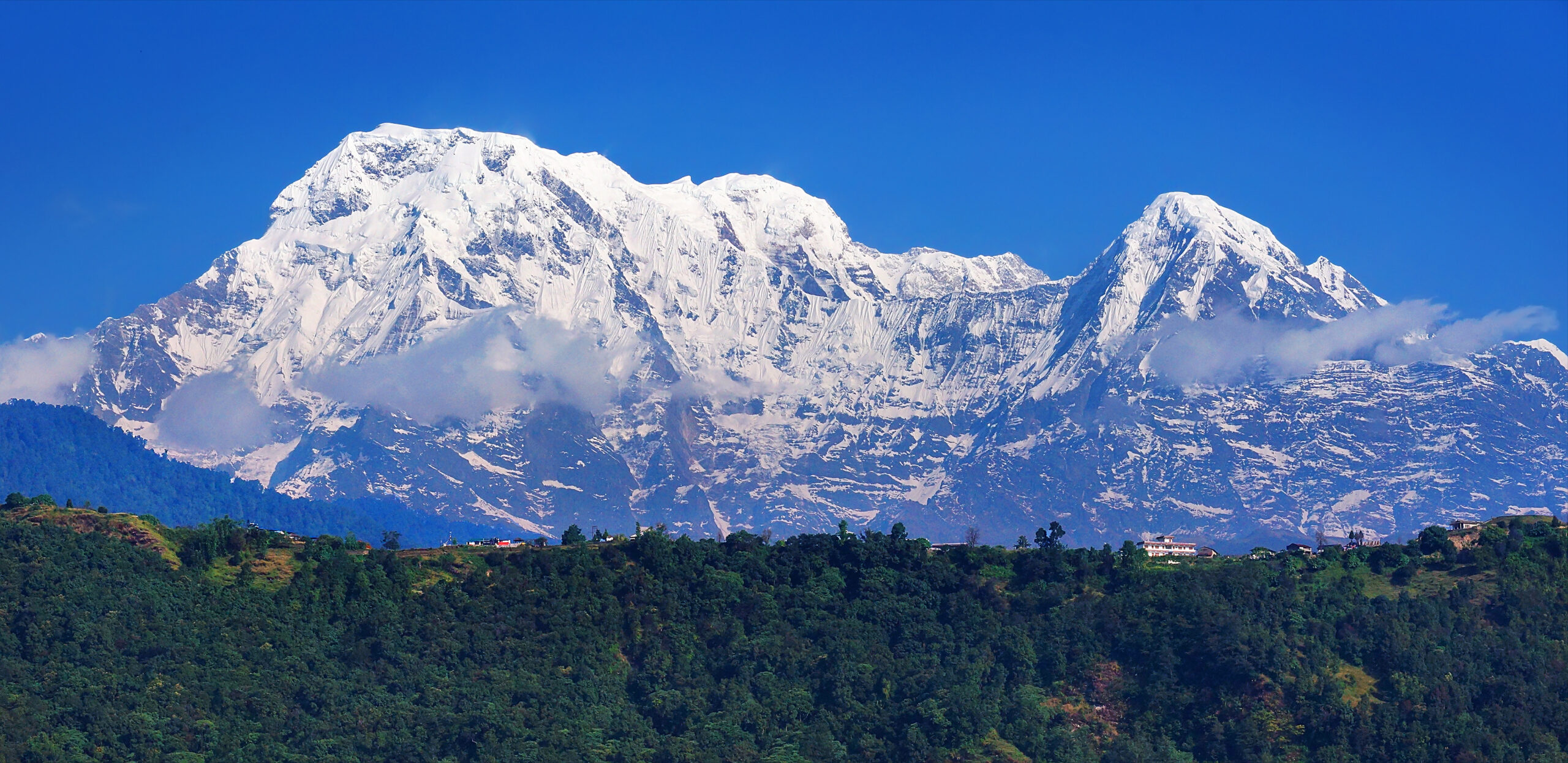
What is Annapurna’s death rate in 2026?
The current Himalayan Database records 75 deaths and 557 successful summits on Annapurna I, a 13.46% deaths-to-summits ratio. The 2026 Guinness record uses 75 deaths and 559 ascents, or 13.42%. HDB also lists 2,059 expedition member records, giving 3.64% deaths per member. These percentages have different denominators.
Critical interpretation: A death-to-summit percentage is deaths divided by successful summits, not deaths divided by everyone who attempts the mountain. You cannot subtract 13.46% from 100% to claim a climbing survival rate. Repeat climbers, workers, turnarounds and historical counting practices make the populations different.
One Mountain. Three Very Different Numbers.
Most stories about Annapurna’s mortality become misleading at the division sign. Each figure answers its own question—and none predicts an individual expedition’s fate.
75 deaths ÷ 559 ascents. The publication describes Annapurna as the deadliest in its Nepal-Himalaya comparison. Its displayed record date and underlying data cutoff are separate.
Review Guinness source →75 deaths ÷ 557 summits. A closely related death-to-summit ratio. It is slightly different because the summit denominator in the report is two fewer.
See the HDB table →75 deaths ÷ 2,059 member records. Broader than successful summits, but it mixes decades, expedition roles, repeat members and different operating systems.
See Annapurna summit-rate definitions →Direct source notes: Guinness lists 75 fatalities from 559 successful ascents and says its underlying Himalayan Database data are as of February 7, 2025. The current HDB public report lists 75 deaths, 557 summits and 2,059 expedition member records. Neither table is a controlled cohort of modern first-time attempts.
Why the difference does not mean the database is wrong
The two public presentations can differ in snapshot dates, classification or counting. Do not edit one denominator to make the rows look identical. Give readers both values and the direct source links.
For apples-to-apples comparisons between Nepal’s 8,000-metre mountains, the HDB’s own tabulation is the stronger choice. For the headline record specifically attributed to Guinness, use its 13.42% value.
A fourth figure that is not a fatality rate
HDB summits / member records = 557 / 2,059
That is the database’s summit-records-to-member-records ratio. It is not the complement of the death rate. An individual attempt can end in retreat, rescue, illness, injury or summit without fitting a simplistic two-outcome table.
What changes when you change the denominator? The sitewide analysis places Annapurna next to Dhaulagiri, Everest and K2 using explicitly labeled metrics.
Compare fatality statistics →
Why Do People Still Say 32%?
Older publications often described Annapurna as roughly one death for every three successful summits. Those figures reflected an era when summit counts were much smaller—not a timeless per-person probability.
Guinness’ 2018 record listed 69 deaths / 261 ascents, or 27.6%. Its newer record lists 75 deaths / 559 ascents, or 13.42%. The numerator rose by six while the successful-ascent denominator more than doubled.
That arithmetic explains much of the apparent improvement. Better forecasts, route support and rescue capabilities may matter, but the change in a cumulative fraction must not be presented as proof that an individual climber’s hazard has halved.
Read Guinness’ 2018 historical snapshotThe Ratio Fell. The Mountain Did Not Become Predictable.
A percentage can move dramatically as the summit denominator grows. See each figure in its own period rather than turning old and new statistics into competing absolutes.
Roughly 27–32% in older coverage
Useful only when it is identified as a historical deaths-to-summits series. The often repeated “one in three climbers dies” interpretation was not supported by that denominator.
69 deaths, 261 ascents → 27.6%
An earlier published snapshot with far fewer successful ascents. The number describes the accumulated record to that cutoff date.
75 deaths, 559 ascents → 13.42%
The successful ascent denominator grew strongly. Guinness describes improvements in forecasting, equipment, expedition support and rescue across the Nepal Himalaya.
75 deaths, 557 summits → 13.46%
The current direct Himalayan Database report also provides the 3.64% deaths-per-member metric, helping separate severity relative to summits from the broader expedition-member population.

What Actually Makes Annapurna So Dangerous?
Its defining hazard is objective snow and ice exposure: terrain that remains consequential even when the climbers and support team are highly skilled.
Avalanche & serac collapse
Large natural avalanches and unstable hanging ice can threaten entire terrain corridors. Skill can improve choices, but cannot make a serac objectively safe.
Camp rotations
Load carries, oxygen ferrying, rope work and acclimatization can require repeated passage under threatened slopes. A summit attempt is not the only time workers are exposed.
Altitude & rescue
At extreme elevation, delays, illness and limited evacuation options compound a serious accident. Weather and slope stability can make rescue dangerous for responders.
The often-cited 5,900-metre zone
Guinness identifies a fatality concentration around an avalanche point near 5,900 m, between Camps II and III in the route description it cites. Treat that as a historical hazard reference, not a permanent GPS coordinate or an assurance that other parts of the mountain are safe.
Specific camps and climbing lines shift with season, glacier change, route-fixing decisions and conditions. A fatality ratio applied to the whole mountain cannot precisely describe the risk of one particular modern line.
For route choices and season-specific terrain, use the dedicated Annapurna I routes comparison rather than treating the mortality data page as a route guide.

The 2025 Avalanche Shows Why the Hazard Is Still Real.
The Himalayan Database’s expedition record describes a major avalanche above Camp I, around 5,600 metres, as workers ferried oxygen for a summit push.
Ngima Tashi Sherpa and Rima Rinje Sherpa were caught and recorded as dead or missing. Another worker, Pemba Thenduk, was also swept but survived. Search teams included climbers and helicopters; the operation was eventually suspended because continued search exposure had become too dangerous.
It is not responsible to turn their loss into a dramatic marketing statistic. The event does, however, show why Annapurna’s modern expedition systems cannot eliminate avalanche risk for hired climbers and summit members.
Read the 2025 HDB expedition record →
Annapurna vs. Dhaulagiri, Everest & K2.
The highest recorded death total does not necessarily create the highest death-to-summit ratio. The table below keeps the Himalayan Database mountains together and treats K2 separately.
| Mountain | Deaths | Summits | Member records | Deaths / summits | Deaths / members |
|---|---|---|---|---|---|
| Annapurna I | 75 | 557 | 2,059 | 13.46% | 3.64% |
| Dhaulagiri I | 92 | 706 | 2,999 | 13.03% | 3.07% |
| Kangchenjunga | 54 | 682 | 1,749 | 7.92% | 3.09% |
| Makalu | 51 | 886 | 2,898 | 5.76% | 1.76% |
| Manaslu | 90 | 3,238 | 7,085 | 2.78% | 1.27% |
| Everest | 344 | 13,550 | 26,316 | 2.54% | 1.31% |
| Lhotse | 25 | 1,465 | 3,477 | 1.71% | 0.72% |
| Cho Oyu | 52 | 4,056 | 9,208 | 1.28% | 0.56% |
Scope: Same-source report covers Nepal Himalayan mountain expeditions. Excluded from this table: K2 and Nanga Parbat, which are outside the HDB Nepal compilation. For K2 comparisons, GSG uses a separate closed-through-2025 dataset. These ratios describe cumulative records, not matched modern route-level risk.
Dhaulagiri I · 13.03%
92 recorded deaths and 706 summits put Dhaulagiri remarkably close to Annapurna’s 13.46% in the same Himalayan Database report. This is the fairest nearby comparison.
Compare Dhaulagiri and Annapurna →Everest · 344 deaths
Everest’s absolute death count is greater, but it also has far more recorded successful summits, producing a lower 2.54% cumulative deaths/summits ratio.
Explore the Everest death map →K2 · 9.54%
GSG’s K2 compilation (92 deaths / 964 summits, through 2025) produces 9.54%. K2 remains exceptionally serious technically, but the data aren’t part of this HDB table.
See K2’s methods and historical shift →Still wondering which mountain is “the most dangerous”? Compare fatality ratio, total deaths, technical difficulty and objective hazard as separate dimensions.
See the dangerous-peaks ranking →Technical Difficulty and Objective Danger Are Different Questions.
Two experienced teams could face very different exposure on Annapurna. The fixed route, snowpack and support system matter as much as the mountain’s historic reputation.
North-side expedition terrain
Modern guided systems usually use evolving north-side lines, adapting to season-specific icefall and snow. Higher support does not remove overhead objective hazards.
South Face technical climbs
Steep, complex, often less standardized terrain introduces different risks. A whole-mountain mortality percentage cannot be assigned unchanged to every route.
Exposure, retreat and rescue
Forecasting, timing, turnaround policy, staff arrangements and emergency plans change the decisions a team can make before and during a climb.
Start with the Annapurna I main guide for the mountain’s broader expedition context, and the route comparison before evaluating any operator claims.

Annapurna Was the First 8,000er Ever Climbed.
On June 3, 1950, Maurice Herzog and Louis Lachenal reached Annapurna I, three years before Everest was first climbed. It became the first of the world’s fourteen 8,000-metre peaks to receive a successful ascent.
The contemporary American Alpine Journal account describes avalanche-prone snow and ice, crevasses, difficult retreat and a descent that seriously injured the summit climbers. Those early events belong to the same mountain history but a very different operating era.
Modern communications and expedition support have changed. The ability to predict or eliminate natural ice collapse has not. That distinction is why the historical data should guide respect without being presented as exact modern odds.
Read the 1950 first-ascent story →What Can a Modern Team Actually Control?
Reading a death rate is a beginning. A sound decision process considers route evidence, support, staff exposure, forecast uncertainty, rescue limits and explicit turnaround rules.
Operator & crew systems
Ask who fixes the route, who assesses the avalanche problem, which labor and staff protections apply, and whether workers’ coverage and evacuation obligations are documented.
Understand operator evaluation →Weather & slope exposure
Use regional warnings, route-elevation forecast detail, current snow information and field reports. Plan the complete ascent/descent exposure rather than only the summit weather.
Read mountain-weather decisions →Rescue & insurance terms
Verify technical mountaineering eligibility, altitude limits, helicopter and search wording, authorization procedures and what support is available when extraction is physically impossible.
Check high-altitude coverage →Insurance and rescue membership are not the same.
GSG’s altitude-coverage research explains why a rescue/transport membership such as Global Rescue may require specific high-altitude options, and why medical and trip insurance still need separate verification. Provider links on that guide may be affiliate links and are disclosed there; editorial comparisons are not determined by commissions.
Educational planning link. No guarantee of rescue, aviation availability or coverage at 8,091 m.Need the next mountain-specific decision? The route guide explains which lines are used on Annapurna today and why the standard climb changes with the snow and ice.
See Annapurna’s routes →Has Annapurna Become Safer?
Modern mountaineering has real improvements: more capable forecasting, more experience with route systems, better communications, professional high-altitude teams and expanded helicopter response in suitable circumstances.
But a fall from about 27–32% to about 13.4% in the cumulative deaths-to-summits ratio is not equivalent to a 50% fall in an individual’s likelihood of dying. The denominator grew enormously, and the dataset pools eras, routes, members and workers.
The remaining objective dangers—avalanches, hanging ice, severe altitude and rescue limitations—cannot be designed away. Anyone assessing a specific expedition needs current route intelligence, suitable experience, formal avalanche judgment, and an operator willing to cancel a summit push.
The correct conclusion is not “Annapurna is safe now.” It is “Annapurna’s published history needs to be measured correctly.”

Annapurna Death Rate FAQ
These answers keep the numerator and denominator visible to avoid repeating the misleading “one in three climbers” myth.
What is the death rate on Annapurna I?
The latest Himalayan Database report lists 75 deaths and 557 successful summits, yielding a 13.46% cumulative deaths/summits ratio. Guinness’ 2026 record uses 75 deaths and 559 ascents (13.42%). Neither figure is a personal probability per attempt.
Why do some websites still say Annapurna has a 32% death rate?
Those figures reflect much earlier cumulative snapshots with fewer successful summit records. Guinness’ 2018 entry listed 69 deaths and 261 ascents (27.6%); its newer published record is 13.42%. Even the old percentage was a death-to-ascent ratio, not deaths divided by everyone who tried.
Does a 13.4% death rate mean 13.4% of climbers die?
No. “Deaths / successful summits” uses a summit denominator rather than a complete sample of climbers who attempted and did not attempt the mountain. The HDB’s broader 75 deaths / 2,059 member records produces 3.64%, which also should not be presented as an individualized probability.
How many climbers have died on Annapurna?
The publicly available HDB report checked for this analysis lists 75 recorded deaths on Annapurna I. Always attach the dataset and reporting cutoff when quoting a cumulative count, because later expeditions can change it.
Where do most deaths occur on Annapurna?
Guinness identifies a concentration around an avalanche area near 5,900 m in the historic north-side route system. Exact route lines and camp elevations change; this is not a precise current risk map.
What was Annapurna’s deadliest year?
Guinness identifies 1991, when seven climbers died; six were killed in a single avalanche on September 19.
Is Annapurna more dangerous than K2?
Annapurna’s current HDB death-to-summit ratio is 13.46%. GSG’s separate K2 closed-through-2025 series is 9.54%. Ratios are only one dimension: K2 has exceptional technical difficulty, exposure and rescue constraints. These are not identical regional databases and should be compared with care.
What was the 2025 Annapurna avalanche?
The HDB expedition record describes a major April 7 avalanche above Camp I around 5,600 m that killed or left missing Ngima Tashi Sherpa and Rima Rinje Sherpa. The team suspended searching after continued avalanche exposure became untenable.
Has Annapurna become less dangerous for a 2026 expedition?
Forecasting, equipment and response systems have improved over many decades, and the cumulative ratio has fallen as successful summit counts increased. A historical aggregate cannot tell you the current route’s snow stability or a specific team’s chance of survival.
Every Number Should Be Reproducible.
Primary statistics come from the Himalayan Database and Guinness. Historical and incident facts are linked to their underlying expedition or contemporary accounts.
GSG methods note: The HDB death-to-summit ratio is 75 ÷ 557 × 100 = 13.46%; deaths-to-members is 75 ÷ 2,059 × 100 = 3.64%; member summit ratio is 557 ÷ 2,059 × 100 = 27.05%. Guinness’ separately published 75 ÷ 559 × 100 = 13.42%. Figures are publication snapshots, not claims of individual risk. No GSG editorial mountain difficulty or fatality ranking is for sale. Corrections should identify the source, date and affected denominator.
Where Do You Go After the Death Rate?
The ratio answers a historical statistics question. The next decision is about routes, conditions and what the expedition can realistically manage.
- Read the complete Annapurna I guideTerrain, altitude, the mountain’s history and modern expedition planning
- Compare Annapurna I routesNorth Face systems, Dutch Rib and South Face differences
- Understand summit success statisticsWhy a 27.1% member summit rate is a separate measure
- Compare K2’s death-rate calculationsTechnical hazard and separately compiled regional data
- Read the first-ascent historyHerzog, Lachenal and the first 8,000-metre summit
- Learn to read mountain weatherTurn forecasts into route exposure and descent decisions
Read the Number. Understand the Mountain. Make a Better Decision.
Annapurna’s historic ratio is about 13.4%, but the avalanche terrain, expedition systems and rescue limits are what matter when a real team considers the climb. Read the full mountain guide—or compare other peaks with the same denominator.
How Annapurna Compares to the Deadliest Mountains
One peak is only one denominator. See how Annapurna compares with the other deadliest mountains, or step up to the ranked overview and the full collection.
The 1950 Expedition Behind the First 8,000-Meter Summit
The first ascent belongs directly beside Annapurna’s modern mortality data: a historic summit achieved at extraordinary physical cost.
Historic ExpeditionAnnapurna 1950: The First 8000erMaurice Herzog and Louis Lachenal reached the first 8,000-meter summit in history, followed by a harrowing descent and severe frostbite injuries.→Was this helpful?
🏔Related safety data
🧭Explore & compare
Global Summit Guide is an independent mountaineering resource founded in 2026. The team combines first-hand trekking and climbing experience with in-depth research and professional health and nutrition review to help climbers choose objectives, prepare properly, and stay safe.
Health, altitude, and nutrition content is reviewed by Taylor Ludlow (Registered Nurse) and Brigg Hoopes (Nutritionist).
What We Don't Know Yet
Mountain information changes quickly. This box explains the limits of what this page can responsibly promise.
- Comparisons simplify complex decisions; the better mountain depends on current conditions, skills, timing, budget, and risk tolerance.
- Visa, passport, vaccination, border, insurance, and local transportation rules may change before your trip.
- Route conditions, snowpack, closures, and weather can change quickly after this page is updated.
- Permit rules, fees, quotas, and reservation windows may change between review cycles.
- Operator availability, pricing, guide ratios, and cancellation terms can change by season.
Verify current conditions with official land managers, guide services, local forecasts, and current route reports before booking or climbing.
Mountaineering, rock and ice climbing, glacier travel, and high-altitude activity are inherently dangerous and can result in serious injury or death. The information on Global Summit Guide is provided for general informational and educational purposes only and is not a substitute for professional instruction, qualified guiding, proper equipment, or your own judgment and experience.
Route conditions, weather, snowpack, permits, regulations, and hazards change constantly and may differ from what is described here. Details may be incomplete, out of date, or contain errors. Always verify current information with local authorities, certified guides, and official sources before making any decision in the mountains.
Nothing on this site is medical, legal, or financial advice. Our fitness, acclimatization, altitude, and nutrition content is general in nature; consult a qualified physician before beginning any strenuous exercise program or exposing yourself to high altitude.
You are solely responsible for your own safety and decisions. To the fullest extent permitted by law, Global Summit Guide and its team accept no liability for any loss, injury, damage, or expense arising from use of, or reliance on, this information. By using this site you acknowledge these risks and accept these terms.
Some links on this site may be affiliate links. If you buy through them we may earn a small commission at no extra cost to you; this never affects our recommendations.
Global Summit Guide recommendation path
Next Best Mountain to Research
Use these recommendations to continue the right planning path instead of stopping on one page.
Use current permit, weather, route, and operator information before booking or climbing.