
Last updated September 18, 2026
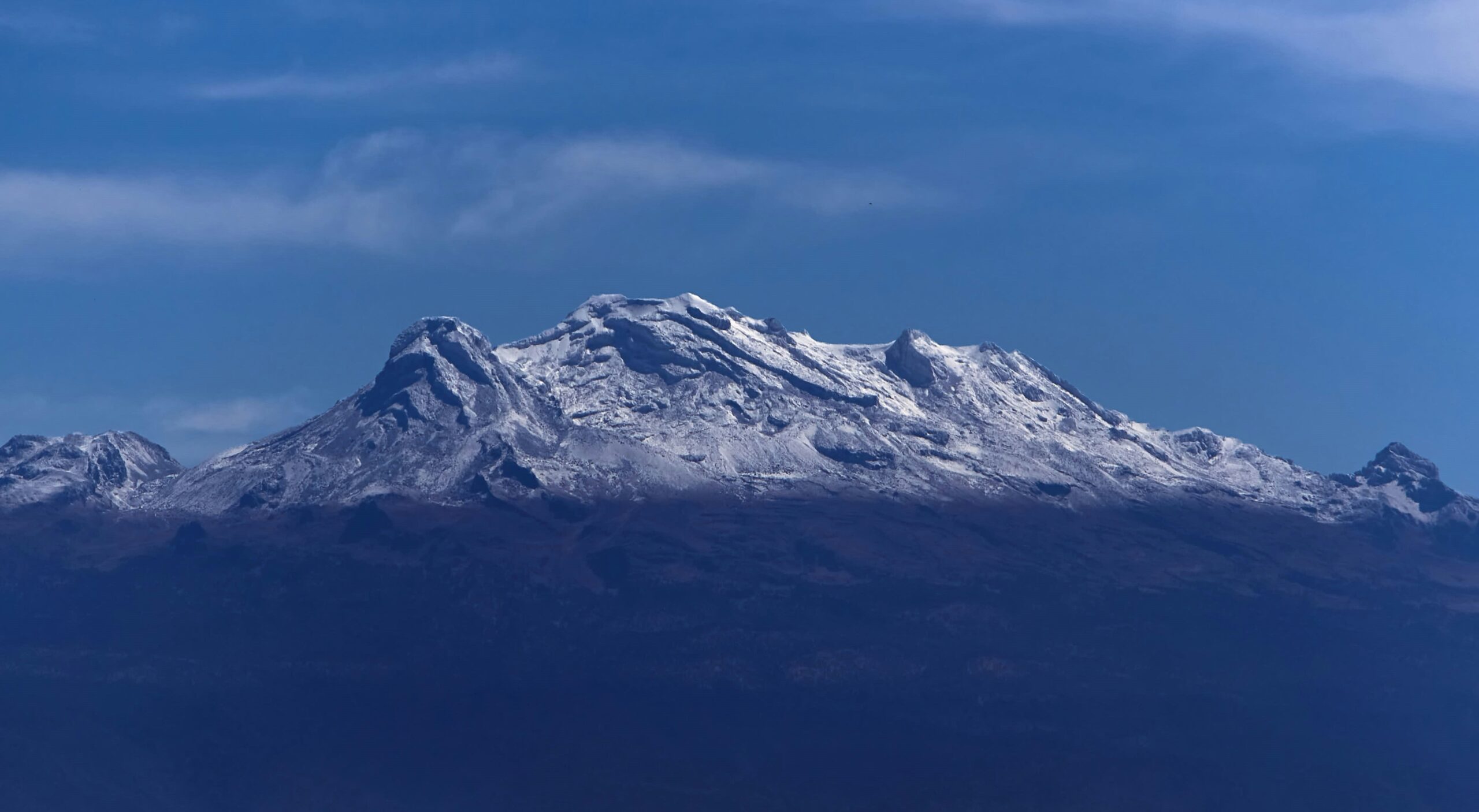
Pico de Orizaba: Your First 5,000-Meter Peak
Orizaba is one of the best first big mountains in the world — a glaciated 5,636-meter (18,491-foot) summit with short logistics, a strong support network and a route that rewards preparation rather than raw talent. This is the complete four-stage plan to take you from general fitness to the summit: what to train, which skills to learn, the altitude test peak to climb first, and the costs and gear along the way.
Orizaba is a realistic first 5,000-meter summit — for a prepared beginner, not an unprepared one.
Why it works as a first big mountain: a non-technical-to-moderate glacier route, short travel from Mexico City, reliable guiding, and an altitude that is serious but not extreme. It is the classic bridge between trekking peaks and real mountaineering.
The catch: it is glaciated. You need crampons, an ice axe, rope-team skills and a genuine altitude test before you arrive. Climbers who fail on Orizaba almost always underestimated the altitude or skipped the skills — they rarely lack fitness.
Is Pico de Orizaba the right first big mountain?
How it compares to the other peaks beginners consider first.
Most people choosing a first serious mountain weigh three: Kilimanjaro, Orizaba and Aconcagua. They sit at very different points on the difficulty curve, and the right one depends on whether you want a trek, a first glacier climb, or a full expedition.
Kilimanjaro
Higher (5,895 m) but a walk-up: no crampons or rope work. A superb first altitude experience, but it teaches you nothing about glacier travel. See our Fuji vs Kilimanjaro comparison and the Kilimanjaro guide.
Pico de Orizaba
The sweet spot: real glacier travel, crampons and ice axe on a moderate route, short logistics, strong guiding. Serious enough to matter, contained enough to survive as a first mountaineering objective.
Aconcagua
Much higher (6,961 m) and a multi-week expedition. Most climbers do Orizaba before Aconcagua to prove glacier skills and altitude response. See when to climb Aconcagua.
The four stages to your first 5,000-meter summit
Every successful first-timer moves through these in order. Skipping one is the usual reason people turn around.
Base aerobic fitness and load-carrying endurance
Long, steady hiking with a weighted pack is the foundation. You are building the ability to move for eight to ten hours and to keep climbing when the summit slope steepens. This stage is non-negotiable and comes before anything technical.
Mountaineering skills: crampons, ice axe, rope team
Orizaba is glaciated, so you must be able to walk in crampons, use an ice axe to balance and self-arrest, and move safely on a rope team. A guided glacier-skills or crevasse course is the standard route — see glacier travel basics and crevasse rescue basics.
A home or test peak to prove your altitude response
Before the trip, summit something in the 4,000-meter range. How your body handles 4,200–4,500 m tells you far more than any low-elevation fitness test. This is the stage most first-timers skip — and the one that most often decides summit day.
Pico de Orizaba: your first glaciated 5,636 m summit
With fitness, skills and a proven altitude response, Orizaba becomes an achievable objective rather than a gamble. The detailed route, gear and acclimatization live in the full Pico de Orizaba climb guide.
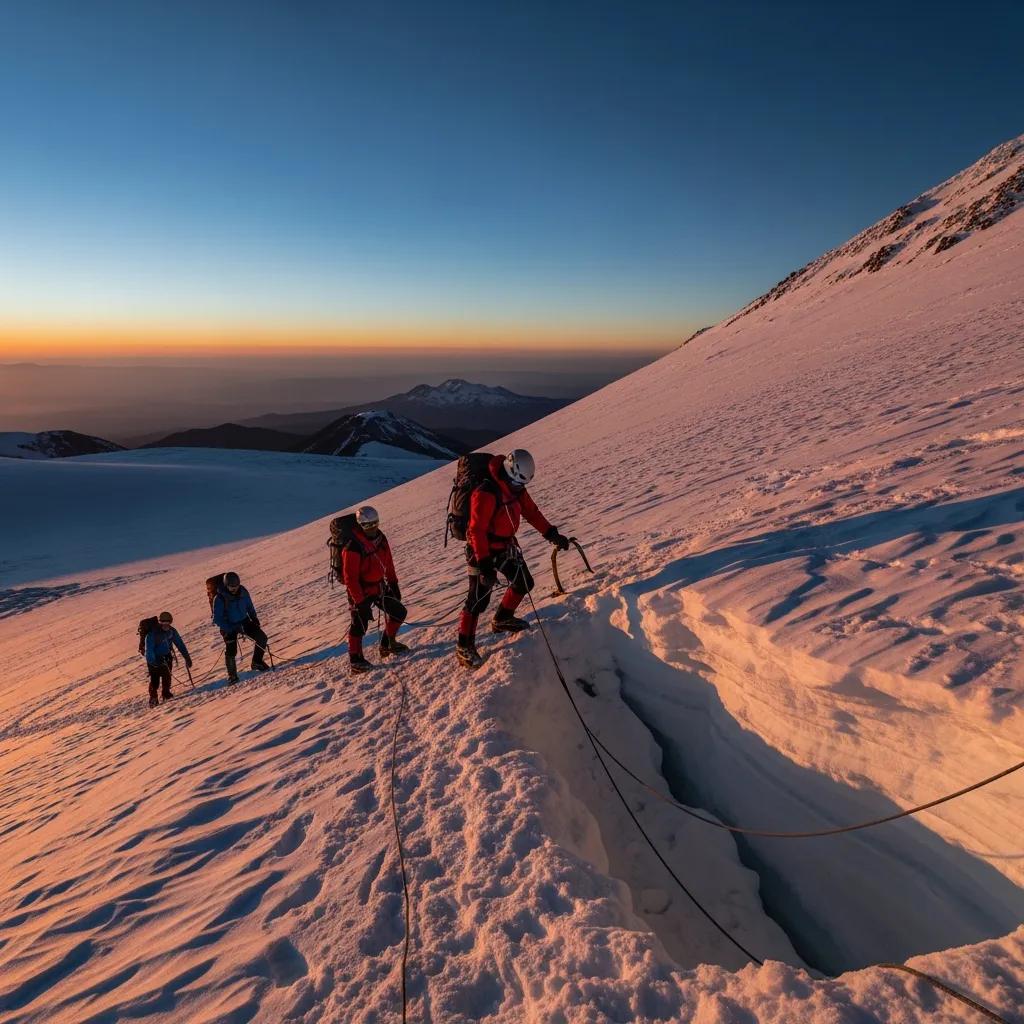
How long should you train for your first 5,000 m peak?
The honest range is six to twelve months, and where you land depends on your starting point.
If you are starting from general fitness with little mountain experience, plan on nine to twelve months. If you already train seriously and have some altitude exposure, about six months is realistic. A twelve-week block only works for climbers who already have a deep aerobic base and prior time at altitude — it is an accelerator, not a beginner plan. Pick the calendar below that matches you honestly; the most common mistake is choosing a shorter plan than your starting fitness supports.
Choose the training path that matches your starting point
Three calendars, one destination. Be honest about which line you are on today.
| Starting point | Plan | Looks like |
|---|---|---|
| Already climb & train | 12-week accelerated | Strong aerobic base, prior altitude, known glacier skills — sharpening for a date |
| Fit hiker, some mountains | Six-month standard | Regular hiker who needs to add load-carrying, glacier skills and an altitude test |
| General fitness, new to peaks | Nine-month beginner | Building endurance, learning skills from scratch, and reaching a first 4,000 m summit |
12-week accelerated calendar
For climbers who already have the base and only need to peak for a date.
| Weeks | Focus | Key sessions |
|---|---|---|
| 1–4 | Build volume | Long weekend hikes with a 12–15 kg pack; two aerobic sessions midweek; one strength session |
| 5–8 | Load & vertical | Increase pack weight and elevation gain; add back-to-back hiking days; refresh crampon and axe skills |
| 9–10 | Peak | Longest carries; a high test hike or altitude outing if reachable; dial in summit-day nutrition |
| 11–12 | Taper | Reduce volume, keep intensity light, rest, and travel with margin before the climb |
Six-month standard plan
The most common path for a fit hiker stepping up to their first glaciated peak.
| Month | Focus | Milestone |
|---|---|---|
| 1 | Aerobic base | Consistent weekly hiking and easy cardio; establish the training habit |
| 2 | Load carrying | Add a weighted pack; build to steady 10–12 kg carries on hills |
| 3 | Mountain skills | Book and complete a glacier-skills or crampon/ice-axe course |
| 4 | Volume & vertical | Longer days, more elevation gain, back-to-back weekends |
| 5 | Altitude test | Climb a 4,000 m-range test peak and learn your altitude response |
| 6 | Peak & taper | Biggest carries, then taper and travel rested |
Nine-month beginner progression
Starting from general fitness with little or no mountain experience — the true first-timer plan.
| Phase | Months | What you build |
|---|---|---|
| Foundation | 1–3 | Aerobic fitness, a hiking habit, and comfort on long days out |
| Load & strength | 4–5 | Weighted-pack carries, leg and core strength, more vertical |
| Skills | 6 | Formal glacier-travel and crampon/ice-axe training |
| Altitude | 7 | A 4,000 m-range test peak to prove your response |
| Build | 8 | Longest carries, back-to-back summit-day simulations |
| Taper | 9 | Reduce volume, rest, and travel to Mexico with margin |
Pass/fail readiness scorecard
Before you book summit day, you should be able to check every box honestly.
You are ready when you can
- Hike 8–10 hours with a loaded pack
- Gain 1,000+ m in a day and still function
- Walk confidently in crampons
- Self-arrest with an ice axe
- Move correctly on a rope team
- Describe basic crevasse-rescue steps
- Manage layers and cold hands in wind
- Recall how you felt at 4,000+ m
- Descend steep snow under control
- Commit to turning around if needed
Altitude testing is not acclimatization
A test peak tells you how you respond; the trip itinerary is what actually acclimatizes you.
These are two different things and both matter. A test peak months before the trip reveals your personal altitude response — whether you get headaches early, how your sleep and appetite hold up, how fast you can safely go high. Acclimatization is the staged gain during the trip itself that lets your body adapt to Orizaba’s altitude. You need the test to know your tendencies, and you need a conservative itinerary to actually adapt. Neither replaces the other, and the itinerary below is built to provide the second.
A conservative nine-day Mexico acclimatization itinerary
Structured to build altitude gradually rather than rush the summit.
| Day | Plan | Purpose |
|---|---|---|
| 1 | Arrive Mexico City, rest | Recover from travel; the city already sits above 2,200 m |
| 2 | Gear check and acclimatization walk | Confirm equipment; move gently at city altitude |
| 3 | Transfer toward the high volcanoes | Begin the staged altitude gain |
| 4 | Acclimatization hike to ~4,000 m | Climb high, sleep lower |
| 5 | Higher acclimatization outing | Push the high point, then rest |
| 6 | Move to Orizaba base / hut | Position for the summit attempt |
| 7 | Rest, skills review, early night | Final preparation for a night start |
| 8 | Summit day | Glacier, summit slope and descent |
| 9 | Reserve / return | Weather buffer or return to Mexico City |
What it costs to climb Orizaba
The climb itself is only part of the number; plan for the whole trip.
| Layer | Typical range | Notes |
|---|---|---|
| Local guided climb | ~$1,500–$2,500 | Shorter programs starting near the mountain; fewer acclimatization days |
| Full international package | ~$3,000–$3,500+ | More acclimatization, western booking support, broader inclusions |
| Flights & personal gear | varies | Often adds $1,000–$2,000 depending on origin and what you already own |
| Total realistic trip | ~$3,500–$5,500 | All-in for most first-timers, including buffer days |
Compare inclusions, not just headline prices — a cheaper program with fewer acclimatization days can lower your summit odds. Budget the whole trip with our expedition budget calculator.
First-5,000 m-peak FAQ
The questions beginners ask before committing to Orizaba.
Is Pico de Orizaba a good first big mountain?
For many climbers, yes. It is a glaciated 5,636 m summit reached by a non-technical-to-moderate glacier route, with short logistics and a strong support network. It is a serious step up from trekking peaks, so it suits a first big mountain only after real crampon, ice-axe and rope-team training – not as a first exposure to those skills.
How long should you train for your first 5,000 m peak?
Plan on nine to twelve months if you are starting from general fitness, or about six months if you already train seriously and have some mountain experience. A twelve-week accelerated block is only realistic for climbers who already have a strong aerobic base and prior altitude exposure.
Is Orizaba harder than Kilimanjaro?
Technically, yes. Kilimanjaro’s normal routes are high-altitude treks. Orizaba adds glacier travel, crampons, ice-axe use and a steeper summit slope, so it demands mountaineering skills Kilimanjaro does not – even though Kilimanjaro is higher.
Do you need mountaineering experience for Orizaba?
You need the skills, not necessarily a long resume. Before summit day you should be comfortable walking in crampons, using an ice axe to balance and self-arrest, and moving on a rope team. A guided course can teach these, but summit day is not the place to learn them.
What altitude should you reach before Orizaba?
A test peak in the 4,000 m range before your trip is strongly recommended so you learn how your body responds to real altitude. Reaching a 4,200 m to 4,500 m summit beforehand tells you far more than any fitness test at low elevation.
How much does climbing Pico de Orizaba cost?
A guided Orizaba climb commonly runs from roughly $1,500 for a short local program to $3,500 or more for a full international package with acclimatization. Total trip cost, including flights, gear and extra days, often lands between $3,500 and $5,500.
What comes after Orizaba?
Orizaba is a common stepping stone toward Aconcagua and other 6,000 m peaks, because it proves glacier skills and altitude response without a long expedition. Ecuador’s Cotopaxi and Chimborazo are natural companion or next-step volcanoes.
Can a beginner realistically summit Orizaba?
A determined beginner who trains properly for nine to twelve months, learns the technical skills and takes acclimatization seriously has a genuine chance. The climbers who fail are usually those who underestimate the altitude or arrive without glacier skills, not those who lack talent.
How this plan is built
The four-stage structure and the three calendars follow established mountaineering-preparation principles: an aerobic and load-carrying base first, technical glacier skills second, a real altitude test third, and a conservative acclimatization itinerary for the climb itself. Cost ranges reflect current operator documentation and vary by season, group size and inclusions.
Research position: Global Summit Guide has not climbed Pico de Orizaba; this is a planning framework, not a first-hand trip report. Reviewed each season; last updated July 28, 2026. Confirm medical, fitness and altitude decisions with a qualified professional, and verify current prices and conditions before booking.
Your first 5,000-meter summit starts with a plan
Orizaba rewards preparation over talent. Pick the calendar that matches your starting point, build the skills before you need them, prove your altitude response, and the summit becomes a realistic goal rather than a gamble.
Read the Full Orizaba Guide Compare Beginner MountainsThe Orizaba Progression in One View
The page above already gives you the detailed calendars. This summary shows the decision sequence: build endurance, learn glacier systems, prove your altitude response, then arrive in Mexico with enough acclimatization margin to make summit day a test of execution rather than a test of luck.
| Stage | What you must prove | Good evidence | Do not move on if… |
|---|---|---|---|
| 1 · Aerobic base | You can keep moving for a full mountain day. | 8–10 hour hike, 1,000 m+ gain, steady pacing with a loaded pack. | Long hiking days still leave you depleted or unable to recover. |
| 2 · Glacier skills | Crampons, ice axe and rope-team systems are familiar before Mexico. | Formal glacier / snow skills day plus repeated practice in boots and gloves. | You would be learning self-arrest, crampons or rope movement on summit day. |
| 3 · Altitude test | You have real evidence of how you perform above 4,000 m. | A 4,200–4,500 m peak or equivalent recent altitude exposure. | You have never tested exertion at meaningful altitude. |
| 4 · Orizaba acclimatization | Your sleeping altitudes and high days rise conservatively before the summit. | Mexico City plus La Malinche / Iztaccíhuatl or another sensible staged plan. | The itinerary jumps rapidly from low elevation to Piedra Grande and summit day. |
| 5 · Summit readiness | Fitness, skills, altitude response and current route conditions all line up. | Weather buffer, current local beta, functional gear and a clear turnaround plan. | You are depending on motivation to make up for a missing layer above. |
The Mexico Volcano Progression Corridor
Mexico City, La Malinche, Iztaccíhuatl and Pico de Orizaba sit close enough to combine into one staged altitude trip. That geography is one reason Orizaba works so well as a first 5,000-meter mountaineering objective.
Central Mexico · Acclimatization to Orizaba
The map shows the regional relationship; it is not a road or climbing-navigation map.
Mexico City
Useful arrival elevation around 2,240 m, but still only the start of the altitude progression.
La Malinche
A common 4,000 m+ acclimatization hike that tests pacing and symptoms before the bigger volcanoes.
Iztaccíhuatl
A much higher acclimatization and endurance test when your experience, itinerary and conditions support it.
Pico de Orizaba
The final 5,636 m objective—where fitness, glacier skill and altitude preparation come together.
Train for the Glacier That Exists Now, Not the One in an Old Guidebook
The north-side glacier route is still being climbed, but the surviving ice body is smaller and higher than many older descriptions suggest.
Current science changes the progression plan.
A peer-reviewed update measured approximately 0.37 km² of remaining Glaciar Norte ice in May 2024 and placed the glacier front near 5,130 m. Global Summit Guide’s September 3, 2026 condition review confirms that commercial programs still use the north-side glacier route, but the exact surface—fresh snow, firm snow, névé, hard ice or crevasse condition—cannot be responsibly inferred without recent field beta.
That makes Stage 2 more important, not less. Your preparation should build real crampon, ice-axe and rope-team competence before the trip, then adapt to the surface your guide actually finds.
Elevation note
Global Summit Guide uses 5,636 m throughout the Orizaba cluster for consistency. Mexico’s CONANP page lists Pico de Orizaba at 5,640 m. The small published difference does not change the progression or acclimatization strategy.
Pico de Orizaba: Progression, Acclimatization, Routes & Conditions
This page owns the training progression. Use the mountain hub and child guides below when you need current route, altitude, weather, safety or glacier detail.
Was this helpful?
🏔Progression guides
🧭Explore & compare
Global Summit Guide is an independent mountaineering resource founded in 2026. The team combines first-hand trekking and climbing experience with in-depth research and professional health and nutrition review to help climbers choose objectives, prepare properly, and stay safe.
Health, altitude, and nutrition content is reviewed by Taylor Ludlow (Registered Nurse) and Brigg Hoopes (Nutritionist).
What We Don't Know Yet
Mountain information changes quickly. This box explains the limits of what this page can responsibly promise.
- Route conditions, trailhead access, crevasse exposure, stream crossings, and rescue access may vary from published planning guidance.
- Gear requirements can change by season, route variation, weather window, personal cold tolerance, and guide-service requirements.
- Fitness and altitude response vary by person; no guide, itinerary, or training plan can guarantee acclimatization or summit success.
Verify current conditions with official land managers, guide services, local forecasts, and current route reports before booking or climbing.
Mountaineering, rock and ice climbing, glacier travel, and high-altitude activity are inherently dangerous and can result in serious injury or death. The information on Global Summit Guide is provided for general informational and educational purposes only and is not a substitute for professional instruction, qualified guiding, proper equipment, or your own judgment and experience.
Route conditions, weather, snowpack, permits, regulations, and hazards change constantly and may differ from what is described here. Details may be incomplete, out of date, or contain errors. Always verify current information with local authorities, certified guides, and official sources before making any decision in the mountains.
Nothing on this site is medical, legal, or financial advice. Our fitness, acclimatization, altitude, and nutrition content is general in nature; consult a qualified physician before beginning any strenuous exercise program or exposing yourself to high altitude.
You are solely responsible for your own safety and decisions. To the fullest extent permitted by law, Global Summit Guide and its team accept no liability for any loss, injury, damage, or expense arising from use of, or reliance on, this information. By using this site you acknowledge these risks and accept these terms.
Some links on this site may be affiliate links. If you buy through them we may earn a small commission at no extra cost to you; this never affects our recommendations.
Global Summit Guide recommendation path
Next Best Mountain to Research
Use these recommendations to continue the right planning path instead of stopping on one page.
Use current permit, weather, route, and operator information before booking or climbing.