
Last updated July 20, 2026
Expedition Training Plans by Mountain Type: the complete framework
The most common training mistake climbers make is assuming one universal mountaineering plan works for every objective. It does not. A long non-technical summit, a glacier climb, a cold high-altitude volcano, a technical alpine route, and a multi-week expedition each stress the body in different ways. This guide covers the five core training pillars, the five mountain types with distinct demands, the 16-to-24-week structure, and specific vertical and pack targets for major peaks from Kilimanjaro to Everest.
Train for the specific mountain, not for climbing in general.
The climbers who consistently summit are not always the fittest. They are the ones who matched their training to the mountain’s demands. Match your emphasis to one of five types: non-technical (aerobic volume), glacier (load and boot specificity), altitude (engine size), technical (movement quality), expedition (accumulated fatigue).
Two numbers matter most. The right intensity distribution is roughly 70-80% Zone 2 volume, not high-intensity intervals. And the right runway for a major peak is 16-24 weeks, not the 8-10 most climbers give it. Add runway, not intensity.
Why training should change by mountain type
Applying one plan to every peak produces climbers who are prepared for some demands and badly undertrained for others.
Assuming a single mountaineering plan works everywhere produces predictable failures: strong aerobic capacity but poor descent durability, good gym strength but limited vertical economy, fast on short efforts but unable to sustain output past hour six of a summit day. A long non-technical summit, a glacier route, a cold Andean volcano, a steep alpine route, and an expedition mountain all fall under climbing, but they stress the body differently. Route length, altitude, technical demand, load carrying, recovery pattern, and weather exposure all change what a training block should emphasize. The smartest plans start with the mountain: before asking how hard to train, ask what the mountain will demand, then build the program around that honest answer rather than a generic template.
The five core training pillars
Every objective draws on the same five pillars in different proportion. They interact, so develop them together rather than in isolation.
Aerobic endurance
The ability to move at moderate intensity for long durations, 6 to 15-plus hours on summit days, without redlining, burning fuel too fast, or losing clarity. Built through consistent Zone 2 training at a conversational pace (roughly 60-70% of max heart rate), accumulating to 8 to 15 hours a week for serious objectives over 16 to 24 weeks. Climbers who overemphasize intensity can hold hard efforts for 30 to 60 minutes but degrade after hour four of a summit day.
Uphill strength and vertical capacity
Mountains are not flat endurance events. Training needs real climbing: hills, stairs, or inclined treadmill work. Accumulate progressive vertical gain, roughly 4,000 to 8,000 feet a week in base phase for major peaks, building to 8,000 to 15,000 in specificity phase. Incline treadmill at 12-15% grade and stair climbing transfer better than flat running, and the descent component is often the differentiator in summit-day durability. Include back-to-back vertical days to build accumulated-fatigue tolerance.
Load carrying capacity
Most objectives beyond a simple day trip require carrying technical gear, camp loads, or acclimatization carries. Train with progressively heavier packs over 8 to 12 weeks toward the mountain’s load plus a 20-30% margin: roughly 15-25 lb for Kilimanjaro, 20-30 for Mont Blanc, 30-45 for Aconcagua, 40-60-plus for Denali sled work, and 30-50 for Everest across accumulated fatigue. Emphasize quality of movement over maximum weight, and build gradually.
Durability and recovery
Mountain objectives require recovering well enough overnight to move again the next day, descending after hours of fatigue, and absorbing multi-day workload without breaking down. Build durability through deliberate back-to-back hard days (a long Saturday plus a long Sunday in build phase), sound sleep and nutrition, and progressively longer training days. Descent durability is especially undertrained, so include explicit long-descent days (3 to 6 hours sustained downhill) to build the eccentric strength that protects the knees and quads.
Specificity
Specificity bridges general fitness and mountain readiness. It means hiking in mountaineering boots rather than running shoes, carrying real packs with realistic gear, training on similar terrain when possible, practicing technical systems, and simulating summit-day conditions like early starts and cold. It does not mean every workout mimics the climb; base-phase aerobic work can be done in running shoes to preserve the joints. The program should add mountain-specific elements as the date approaches, with the specificity phase dominated by route-like training.
The five mountain types
Identify which category your objective falls into and weight your training accordingly. Some peaks combine two.
1 · Long non-technical mountains
Walk-ups with major elevation gain, rough footing, and punishing descents. Often underestimated because they need no ropes or crampons, yet long summit days still expose weak preparation. Emphasize aerobic volume, uphill work, foot resilience, and the ability to descend when already tired. Learn to pace and fuel rather than attacking early.
2 · Glacier climbs
Endurance plus structure: boots feel different than trail shoes, packs are heavier, and rope systems and cold create friction. Build the aerobic base while reflecting how the route will feel, hiking in mountaineering boots part of the time, carrying realistic loads, and practicing efficient gear transitions. Organization starts to matter as much as fitness.
3 · Volcanoes and high-altitude peaks
Often appear straightforward because technical demands are limited, but altitude changes everything. Even a simple route becomes brutal without enough aerobic base, uphill economy, and pacing control. Train long aerobic work, vertical gain, and durability, accounting for the reality that altitude slows everything, the body works harder at lower output, and summit days become long grinds. Build a larger engine, not more intensity.
4 · Technical alpine routes
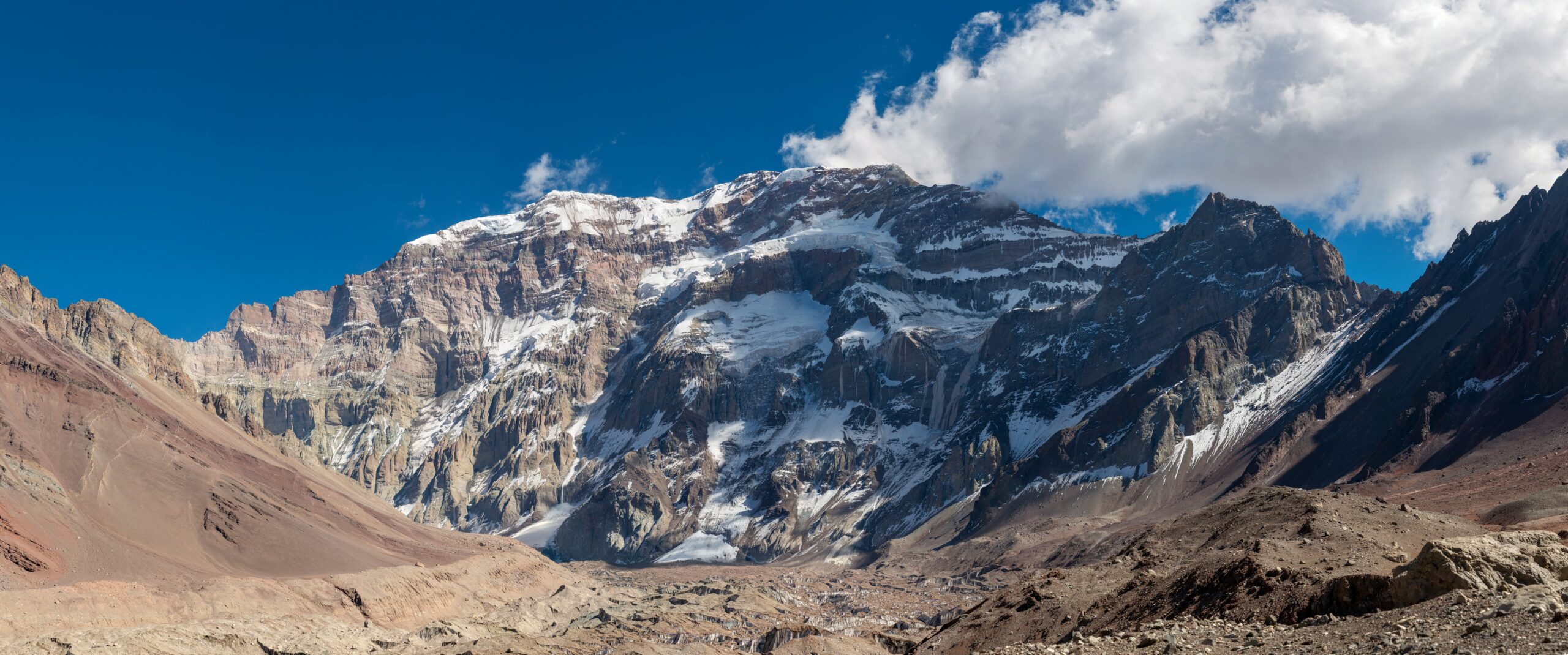
A different balance from raw endurance. Volume alone is not enough; you also need movement quality, balance, stability, transition speed, and reserve to stay precise after hours of effort. Blend endurance and uphill work with route-specific movement: scrambling practice, moving in boots, and carrying technical gear without losing efficiency. Here, mountain fitness means how well you move, not only how long you can keep going.
5 · Major expeditions (multi-week)
These ask for more than one great day: carrying loads repeatedly, recovering between efforts, operating on poor sleep, and staying patient through waiting and acclimatization. Emphasize long consistency over flashy intensity, with pack carries, back-to-back days, and recovery habits mattering most. Expedition fitness includes patience and enough reserve to keep functioning deep into the trip.
The 16-24 week structure
A good plan progresses through four phases. Compressing them produces undertrained outcomes regardless of intensity, so add runway rather than intensity.
| Phase | Duration | Primary focus | Weekly volume | Why it matters |
|---|---|---|---|---|
| Base | 8-10 weeks | Aerobic endurance, consistency, general strength | 6-10 hrs/week | Builds the engine that supports everything else |
| Build | 4-6 weeks | Vertical work, mountain-specific loading, longer days | 10-14 hrs/week | Begins reflecting actual objective demands |
| Specificity | 3-5 weeks | Boot work, pack carries, back-to-back days, route-like movement | 12-18 hrs/week peak | Teaches the body how the mountain will really feel |
| Taper | 1-2 weeks | Reduce fatigue, maintain readiness, organize gear | 50-70% of peak | Arrive prepared, not exhausted |
Peak-specific training plans
Starting points for major commercial objectives. Adapt to your baseline fitness, available time, and access to mountain terrain. Climbers starting from sedentary should add 4 to 12 weeks of base building first.
| Mountain | Type | Training duration | Weekly vertical (peak) | Pack weight (peak) |
|---|---|---|---|---|
| Kilimanjaro | Long non-technical | 12-16 weeks | 5,000-8,000 ft | 15-25 lb |
| Mount Elbrus | Glacier (low-tech) | 12-16 weeks | 6,000-10,000 ft | 25-35 lb |
| Mount Rainier | Glacier | 16-20 weeks | 8,000-12,000 ft | 30-40 lb |
| Mont Blanc | Glacier (alpine) | 16-20 weeks | 8,000-12,000 ft | 25-35 lb |
| Matterhorn | Technical alpine | 20-24 weeks | 8,000-12,000 ft | 20-30 lb |
| Aconcagua | High-altitude | 16-20 weeks | 10,000-14,000 ft | 35-45 lb |
| Denali | Expedition / high-altitude | 20-24 weeks | 12,000-15,000 ft | 50-60+ lb (sled) |
| Cho Oyu | Major expedition | 24-32 weeks | 12,000-18,000 ft | 30-50 lb |
| Manaslu | Major expedition | 24-32 weeks | 12,000-18,000 ft | 30-50 lb |
| Everest | Major expedition (extreme) | 9-18 months | 15,000-20,000 ft | 30-50 lb sustained |
| K2 | Technical expedition | 12-24 months | 15,000-20,000 ft | 30-50 lb sustained |
| Vinson Massif | Expedition / cold | 20-24 weeks | 10,000-15,000 ft | 40-60 lb |
| Carstensz Pyramid | Technical alpine | 20-24 weeks | 8,000-12,000 ft | 25-35 lb |
The four-step protocol
Work these in order for each new mountain, rather than starting from workout selection, which is usually the wrong starting point.
Identify the mountain’s specific demands
Categorize the objective by type, then identify summit-day duration, total vertical gain, expected pack weight, technical demands, altitude, and recovery requirements.
Assess your honest baseline against those demands
Measure current fitness in mountain terms: how long you can sustain steady uphill effort, what weight you can carry at 1,000-plus vertical feet per hour, your recovery pattern between hard days, and what relevant experience you have. Compare to the demands to find the gaps.
Structure 16-24 weeks across four phases
Base (aerobic and general strength), Build (mountain-specific vertical and loading), Specificity (route-like training with boots, packs, back-to-back days), Taper (reduce fatigue while holding readiness). Do not skip phases even when time-constrained.
Customize emphasis to the mountain type
Non-technical: aerobic volume plus descent durability. Glacier: aerobic plus boot and load specificity. High-altitude: large engine plus pacing economy. Technical alpine: movement quality under fatigue. Major expedition: accumulated fatigue tolerance plus recovery habits.
Eight common mistakes
Each of these quietly produces an undertrained climber on summit day.
Applying one universal plan across all objectives. A plan that prepares you for Kilimanjaro will undertrain you for Denali.
Starting too late. Most climbers start 8 to 10 weeks out when 16 to 24 weeks produces far better outcomes. Add runway, not intensity.
Overemphasizing high-intensity intervals at the expense of Zone 2 volume. The right pyramid is 70-80% Zone 2. Mostly-hard training holds 30 to 60 minute efforts but fades after hour four.
Neglecting descent training. Descent failure causes more summit-day problems than ascent fitness. Long downhill sessions (3 to 6 hours) build the eccentric strength that protects the legs.
Training only in running shoes. Mountaineering boots feel different and can be surprisingly heavy on summit day. Build boot tolerance progressively.
Jumping to maximum pack weight too early. Load should progress over 8 to 12 weeks. Peak weight too soon grooves poor form and injury risk.
Skipping back-to-back hard days. One-day endurance does not predict multi-day performance. Back-to-back weekend sessions simulate accumulated fatigue.
Confusing gym strength with mountain strength. One-rep max matters far less than functional strength-to-weight under load and sustained effort.
Expedition training FAQ
The questions climbers ask most.
How long should I train for a major expedition?
Kilimanjaro 12-16 weeks, Mont Blanc and Aconcagua 16-20, Denali 20-24, Cho Oyu and other 8,000m peaks 24-32, and Everest usually 9-18 months. Most climbers underestimate this, starting 8-10 weeks out. Add runway, not intensity, so you arrive conditioned rather than depleted.
What is the single most important fitness component?
Aerobic endurance: moving at moderate intensity for 6-15 hours without redlining or losing clarity. Built through Zone 2 training accumulating to 8-15 hours a week over 16-24 weeks. A useful distribution is about 70-80% Zone 2, 10-20% Zone 3 tempo, and 5-10% high-intensity.
Do I need strength training?
Yes, with a mountain emphasis: leg strength for uphill and descent, core stability under load, posterior-chain strength for pack carrying, and shoulder and back stability for gear and rope work. The goal is functional strength-to-weight for the mountain, not maximal one-rep strength or muscle size.
How much vertical gain per week?
Match the objective: Kilimanjaro 5,000-8,000 ft, Mont Blanc and Aconcagua 8,000-12,000, Denali 10,000-15,000, Everest 12,000-20,000. Build it through long hikes, inclined treadmill, and stairs rather than flat running, and include back-to-back vertical days.
Should I train with a weighted pack?
Yes, matched to the mountain plus a 20-30% margin: 15-25 lb Kilimanjaro, 20-30 Mont Blanc, 30-45 Aconcagua, 40-60+ Denali sled work, 30-50 Everest. Emphasize movement quality over maximum weight and build over 8-12 weeks.
Altitude training vs technical training?
Altitude training builds a large aerobic engine, pacing economy, and durability for long grinds. Technical training builds movement quality, balance, transition speed, and precision under fatigue. Many peaks need both, but non-technical altitude peaks weight aerobic volume while technical routes weight movement quality.
Sources & methodology
- Endurance intensity distribution: polarized-training research (Seiler and others) establishing the roughly 70-80% low-intensity distribution, applied to mountaineering by coaching organizations such as Uphill Athlete.
- Mountain-specific protocols: coaching standards from Uphill Athlete (Steve House and Scott Johnston), AMGA education materials, and IFMGA training curriculum.
- Altitude physiology: UIAA Medical Commission publications and Wilderness Medical Society guidance.
- Strength for mountaineering: functional strength research emphasizing posterior chain, core stability under load, and eccentric strength for descents.
- Coaching literature: “Training for the New Alpinism” and “Training for the Uphill Athlete” (House, Johnston, Jornet), plus ongoing coaching publications.
About Global Summit Guide
Global Summit Guide is an independent mountaineering resource. This page anchors our Training & Fitness series and connects to the fitness standards, progression plans, and acclimatization guides. It is built from published endurance and mountaineering coaching science rather than first-hand coaching credentials; health and altitude content is reviewed by Taylor Ludlow (Registered Nurse), and safety framing by Dawson Ludlow. General training guidance, not medical advice. Read more about the team and mission.
Was this helpful?
🏔Related training
🧭Explore & compare
Global Summit Guide is an independent mountaineering resource founded in 2026. The team combines first-hand trekking and climbing experience with in-depth research and professional health and nutrition review to help climbers choose objectives, prepare properly, and stay safe.
Health, altitude, and nutrition content is reviewed by Taylor Ludlow (Registered Nurse) and Brigg Hoopes (Nutritionist).
What We Don't Know Yet
Mountain information changes quickly. This box explains the limits of what this page can responsibly promise.
- Route conditions, trailhead access, crevasse exposure, stream crossings, and rescue access may vary from published planning guidance.
- Gear requirements can change by season, route variation, weather window, personal cold tolerance, and guide-service requirements.
- Fitness and altitude response vary by person; no guide, itinerary, or training plan can guarantee acclimatization or summit success.
Verify current conditions with official land managers, guide services, local forecasts, and current route reports before booking or climbing.
Mountaineering, rock and ice climbing, glacier travel, and high-altitude activity are inherently dangerous and can result in serious injury or death. The information on Global Summit Guide is provided for general informational and educational purposes only and is not a substitute for professional instruction, qualified guiding, proper equipment, or your own judgment and experience.
Route conditions, weather, snowpack, permits, regulations, and hazards change constantly and may differ from what is described here. Details may be incomplete, out of date, or contain errors. Always verify current information with local authorities, certified guides, and official sources before making any decision in the mountains.
Nothing on this site is medical, legal, or financial advice. Our fitness, acclimatization, altitude, and nutrition content is general in nature; consult a qualified physician before beginning any strenuous exercise program or exposing yourself to high altitude.
You are solely responsible for your own safety and decisions. To the fullest extent permitted by law, Global Summit Guide and its team accept no liability for any loss, injury, damage, or expense arising from use of, or reliance on, this information. By using this site you acknowledge these risks and accept these terms.
Some links on this site may be affiliate links. If you buy through them we may earn a small commission at no extra cost to you; this never affects our recommendations.
Global Summit Guide recommendation path
Next Best Mountain to Research
Use these recommendations to continue the right planning path instead of stopping on one page.
Use current permit, weather, route, and operator information before booking or climbing.