
Last updated July 18, 2026
Glacier travel basics: crevasses, rope teams & the skills you need first
Glacier travel brings a different kind of seriousness to the mountains. Even routes that look gentle can hide crevasses, snow bridges, and shifting conditions that do not exist on ordinary trail or snow climbs. This guide explains what glacier travel really means, how crevasses and rope teams work, and the skills to understand before you go – with one central lesson: glacier travel is a systems-and-judgement skill, and it has to be learned hands-on before you rely on it.
This guide builds awareness. It does not replace training.
Glacier travel and crevasse rescue are hands-on skills that must be learned from a qualified guide or mountaineering organisation and then practised. Reading about rope teams and crevasses helps you understand the terrain – it does not make you ready to move safely across a glacier or to rescue a fallen partner. A crevasse fall unfolds in seconds, and an untrained, disorganised response endangers the whole team.
The one-line version: a glacier hides crevasses beneath a calm surface, so climbers move in roped teams with spacing and judgement. Even gentle glaciers are serious. Use this page to understand the terrain – then take a course before you step onto the ice.
What glacier travel really means
For climbers, glacier travel usually means more than one change at once – and one of the changes is invisible.
It involves rope-team movement, more deliberate spacing, and more emphasis on route choice, plus more attention to timing, because a glacier can behave differently early in the day than later. It also means accepting that the danger may not be visible the way rockfall or exposed scrambling is – hidden hazards are part of what makes glaciers serious. This is why even moderate glacier routes are approached with structure and team discipline: the terrain may look ordinary while the consequences are not. This is the skills-and-awareness companion to our glacier travel gear guide and crevasse rescue basics – read all three together, and treat each as a prompt to get hands-on training.
Why glaciers are different
On ordinary ground the terrain shows its main challenges. On a glacier, some of the most serious problems are below the surface.
You can see the ridge, the scree, the steep snow, or the exposed scrambling on non-glaciated ground. On a glacier, crevasses may be open and obvious, or partially hidden and completely bridged by snow. Glaciers also change over time, so the safest line in one season may not be the same in another, and a track that works in the cold morning can become less secure as the surface softens.
| Factor | Ordinary snow / rock | Glaciated terrain |
|---|---|---|
| Main hazards | Usually visible (rockfall, steep snow, exposure) | Often hidden below the surface |
| Crevasses | None | Open or bridged by snow, sometimes invisible |
| Stability over time | Relatively static within a season | Moves and changes; the safe line shifts |
| Travel mode | Often solo or loosely grouped | Roped team with spacing and discipline |
| Timing | Less critical | Firmer early, softer and less reliable later |
| Main skill | Movement and fitness | Systems, judgement, and team response |
Crevasses & snow bridges
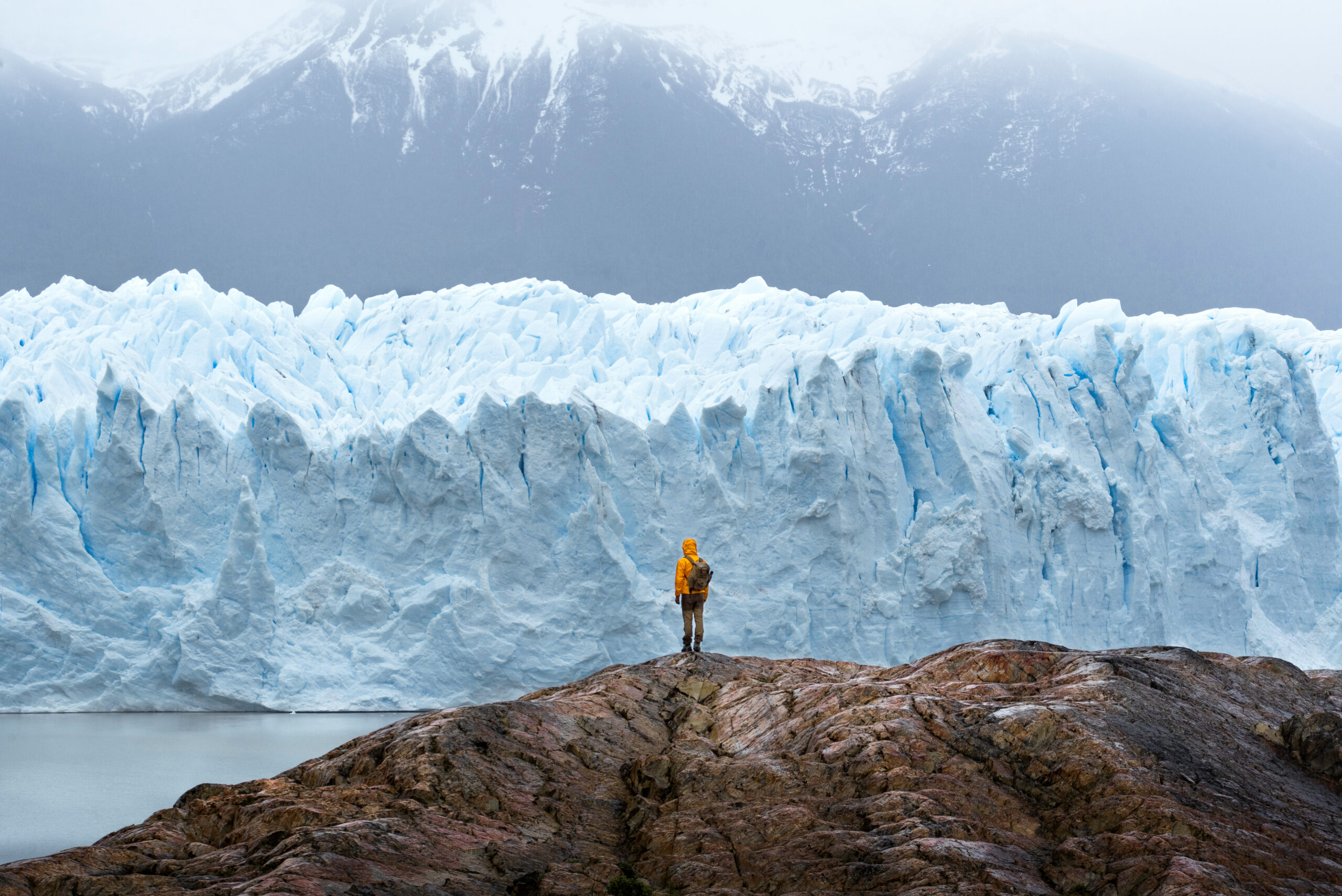
Crevasses are the defining glacier hazard – and the dangerous ones are the ones you cannot see.
Some crevasses are visible and easy to avoid; others are disguised by snow bridges that look stable from above but are weaker than they appear. A snow bridge is not automatically unsafe, but it is never something to treat casually – its strength varies with season, temperature, recent snowfall, sun exposure, and how often the line has already been travelled. The glacier may not look technical, yet the consequence of stepping into the wrong place can be severe.
| Hazard | What it is | What affects it |
|---|---|---|
| Open crevasse | A visible crack in the ice | Easier to see and avoid, but still a navigation problem |
| Hidden crevasse | A crack concealed by snow | Season, snowfall, and surface conditions |
| Snow bridge | A snow span over a crevasse | Temperature, sun, recent snow, traffic on the line |
| Sagging / weak snow | Softening or settling surface | Warming through the day, recent weather |
Why rope teams matter
The rope is not decoration or tradition – it is a system designed to survive a crevasse fall.
Used properly, rope-team travel gives the team more protection than an unroped climber would have on hidden terrain: if one person breaks through a bridge, the others can arrest the fall and begin a rescue. But a rope is only as useful as the team using it. Too much slack, poor spacing, sloppy movement, and weak communication all reduce the value of the system quickly.
| Element | Why it matters |
|---|---|
| Correct spacing | Keeps enough rope between climbers to arrest a fall |
| Managed slack | Too much slack lets a fall gather speed before the rope catches |
| Steady rhythm | Abrupt movement and hesitation make the team harder to protect |
| Clear communication | Signals line changes, spacing fixes, and rising risk |
| Attention | Keeps the rope an active safety system, not an afterthought |
For newer climbers, one of the most important lessons is that glacier travel is a team skill. You are not only managing yourself – you are managing how your movement affects the safety of everyone tied in with you. Having a rope in the pack is not the same as knowing how the team moves together on the terrain, which is learned through instruction and practice.
Movement, spacing & communication
Strong glacier movement looks calm rather than dramatic – and that calm is the visible sign of a trained team.
Rope teams move with steady pace, appropriate spacing, and clear communication. They avoid bunching up or drifting into poor positions, and they keep enough attention on the rope that it stays part of the safety system. Pacing matters because abrupt movement, hesitation, and unnecessary slack all affect how well the team is prepared if something goes wrong. Communication matters for the same reason: teams share when the line is changing, when spacing needs correcting, when the route is becoming more suspect, and when conditions deserve more caution. The best glacier teams are not the loudest or fastest – they are the ones that move with enough consistency that the rope actually serves its purpose.
Weather, timing & surface conditions
On glaciated ground, weather is not comfort information – it is route-condition information.
Visibility influences route-finding and whether hidden terrain can be read well enough to avoid poor lines. Fresh snow covers tracks and disguises bridges, and warm conditions change surface firmness through the day. Timing matters because glacier surfaces are firmer and more predictable earlier, while warming creates softer, less reliable travel later.
| Condition | Effect on the glacier | What it means for the plan |
|---|---|---|
| Poor visibility | Hard to read hidden terrain and route features | Slower, more conservative route-finding |
| Fresh snow | Covers tracks and disguises bridges | Makes the glacier feel simpler than it is |
| Warming through the day | Softens the surface, weakens bridges | Cross suspect ground early; plan turnaround times |
| Cold, firm morning | More predictable, firmer travel | Often the safest window for crossings |
The skills to learn before you go
Glacier travel rests on skills that have to be in place before you step onto the ice – none can be learned from an article alone.
| Skill | What it covers | Where to build it |
|---|---|---|
| Roped team travel | Spacing, slack management, moving as a unit | Hands-on course with a guide |
| Self-arrest | Stopping a slide with an ice axe | Practice on a safe run-out slope |
| Crevasse rescue | Anchoring, escaping the belay, hauling | Course plus regular practice |
| Terrain reading | Spotting bridges, weak lines, route choice | Mentored experience and conditions awareness |
| Gear use | Harness, rope, prusiks, anchors | The glacier gear guide plus practice |
| Fitness & cold management | Endurance and staying functional in cold | The glacier training guide |
Common glacier travel mistakes
Most trace back to a single error: judging the glacier by its surface.
| Mistake | The fix |
|---|---|
| Assuming gentle terrain is low-risk | Treat moderate glaciers as serious; the consequence is what matters |
| Following tracks without thinking | Ask whether the line still makes sense in current conditions |
| Treating rope travel casually | Keep correct spacing and managed slack at all times |
| Ignoring warming, snowfall, visibility | Make conditions and timing part of the plan |
| Thinking it is just a gear problem | Treat it as a systems-and-judgement skill |
| Overestimating readiness from a distance | Judge by hidden hazards, not how the route looks |
| Not knowing how the team would respond | Train crevasse rescue before you need it |
Ready to build the skills?
Pair this with crevasse rescue basics, the glacier travel gear guide, and how to train for your first glacier climb, then plan a guided course or first glacier climb. For flights and lodging near your objective, compare options through the Global Summit Guide Expedia travel shop.
Disclosure: the Expedia link is an affiliate link; we may earn a small commission at no extra cost to you, and it never affects our recommendations.
Crevasse Rescue Basics Train for Your First Glacier ClimbGlacier travel basics FAQ
The questions new glacier climbers search most.
What is glacier travel in mountaineering?
Moving across glaciated terrain – where hidden hazards like crevasses and snow bridges exist – usually as a roped team. A glacier is a slow-moving mass of ice, not a static snow slope, so it takes rope-team movement, deliberate spacing, careful route choice, and attention to timing. The core idea is that it is a systems-and-judgement skill, not just a question of fitness or gear.
Why are glaciers dangerous even when they look easy?
Because the most serious hazards are hidden below the surface. A calm, smooth glacier can conceal crevasses, weak snow bridges, or sagging snow. A snow bridge can look solid from above yet be far weaker than it appears – its strength varies with season, temperature, snowfall, sun, and traffic. You cannot judge a glacier by its surface alone.
Why do climbers rope up on glaciers?
To reduce the consequences of a crevasse fall and make a team rescue possible. If one person breaks through a bridge, the others arrest the fall and begin the rescue. The rope only works with correct spacing, managed slack, steady movement, and clear communication – it is a team system, not a solo safeguard.
Does glacier travel always require technical climbing?
No. Many glacier routes are moderate in angle with no steep climbing, yet still serious because of the hidden hazards and the systems needed to cross them. A gentle walk can still require rope-team travel, route judgement, and crevasse-rescue readiness – which is exactly why beginners underestimate glaciers.
What is the biggest mistake beginners make?
Judging the glacier by its surface instead of respecting the hidden risks. Gentle, smooth terrain feels low-risk while snow-covered crevasses and weak bridges are invisible. Related errors: following tracks without thinking, casual rope handling, ignoring warming and snowfall, and not knowing how the team would respond to a fall. The fix is hands-on training and conservative judgement.
How do I start learning glacier travel?
Take a hands-on glacier-skills or crevasse-rescue course with a qualified guide, ideally followed by a guided first glacier climb. Build fitness and crampon comfort first, learn the systems on a course, practise until they feel familiar, then apply them on a moderate guided objective before going independent. The practical skills have to come from real instruction and repetition.
About this guide
- Compiled from established glacier-travel and mountaineering instruction taught by guides and mountaineering organisations.
- Hazard, rope-team, and timing guidance reflects standard glacier-skills practice, and aligns with our glacier gear, crevasse-rescue, and training series.
- This page builds awareness and is not a substitute for hands-on training. Learn roped travel and crevasse rescue from a qualified guide before you rely on them, and check current conditions before any glacier objective. Safety framing reviewed by Dawson Ludlow.
Last updated: July 18, 2026 · reviewed each season · Travis Ludlow, Global Summit Guide.
Confidence: High on the terrain framework, rope-team principles, and skills pathway; conditions and hazards are always site- and season-specific, so verify locally.Understand the terrain, then get trained
Many glacier routes look gentle until you understand what is hidden beneath the surface. Climbers who approach glaciers with patience, spacing, and route awareness make far better decisions than those who judge the terrain from afar. Use this page to understand the terrain – then take a course and build the skills before you step onto the ice.
Train for Your First Glacier Climb Learn Crevasse RescueWas this helpful?
🏔Related training
🧭Explore & compare
Global Summit Guide is an independent mountaineering resource founded in 2026. The team combines first-hand trekking and climbing experience with in-depth research and professional health and nutrition review to help climbers choose objectives, prepare properly, and stay safe.
Health, altitude, and nutrition content is reviewed by Taylor Ludlow (Registered Nurse) and Brigg Hoopes (Nutritionist).
What We Don't Know Yet
Mountain information changes quickly. This box explains the limits of what this page can responsibly promise.
- Weather, snowpack, avalanche risk, road access, and route conditions can change quickly and may be different on your climbing dates.
- Route conditions, trailhead access, crevasse exposure, stream crossings, and rescue access may vary from published planning guidance.
- Gear requirements can change by season, route variation, weather window, personal cold tolerance, and guide-service requirements.
- Fitness and altitude response vary by person; no guide, itinerary, or training plan can guarantee acclimatization or summit success.
Verify current conditions with official land managers, guide services, local forecasts, and current route reports before booking or climbing.
Mountaineering, rock and ice climbing, glacier travel, and high-altitude activity are inherently dangerous and can result in serious injury or death. The information on Global Summit Guide is provided for general informational and educational purposes only and is not a substitute for professional instruction, qualified guiding, proper equipment, or your own judgment and experience.
Route conditions, weather, snowpack, permits, regulations, and hazards change constantly and may differ from what is described here. Details may be incomplete, out of date, or contain errors. Always verify current information with local authorities, certified guides, and official sources before making any decision in the mountains.
Nothing on this site is medical, legal, or financial advice. Our fitness, acclimatization, altitude, and nutrition content is general in nature; consult a qualified physician before beginning any strenuous exercise program or exposing yourself to high altitude.
You are solely responsible for your own safety and decisions. To the fullest extent permitted by law, Global Summit Guide and its team accept no liability for any loss, injury, damage, or expense arising from use of, or reliance on, this information. By using this site you acknowledge these risks and accept these terms.
Some links on this site may be affiliate links. If you buy through them we may earn a small commission at no extra cost to you; this never affects our recommendations.
Global Summit Guide recommendation path
Next Best Mountain to Research
Use these recommendations to continue the right planning path instead of stopping on one page.
Use current permit, weather, route, and operator information before booking or climbing.