
Last updated October 4, 2026
Mount Elbrus Progression Plan: A 12-Month Path to Europe’s Highest Peak
Elbrus is non-technical — and routinely underestimated. This 12-month plan builds the aerobic engine, snow skills, and altitude experience in four deliberate stages, so the highest point in Europe becomes the payoff of a smart progression rather than a roll of the dice on summit day.
Twelve months, four stages. Spend Months 1–3 building a big aerobic base and leg strength while buying gear; Months 4–6 learning snow skills on a proper course; Months 7–9 testing yourself on an altitude or glacier prep peak; and Months 10–12 sharpening with pack-loaded, back-to-back days before climbing Elbrus in the summer window.
Do it this way and Elbrus (5,642 m) is very achievable — it’s non-technical and one of the cheaper Seven Summits. The catches are altitude, cold, and a long summit day, plus a real 2026 access wrinkle: the mountain is in Russia, so travel logistics need checking well before you commit. Budget roughly $6,000–$11,000 all-in.
On this page
Where Elbrus is
The Caucasus of southern Russia — climbed from the Baksan Valley.
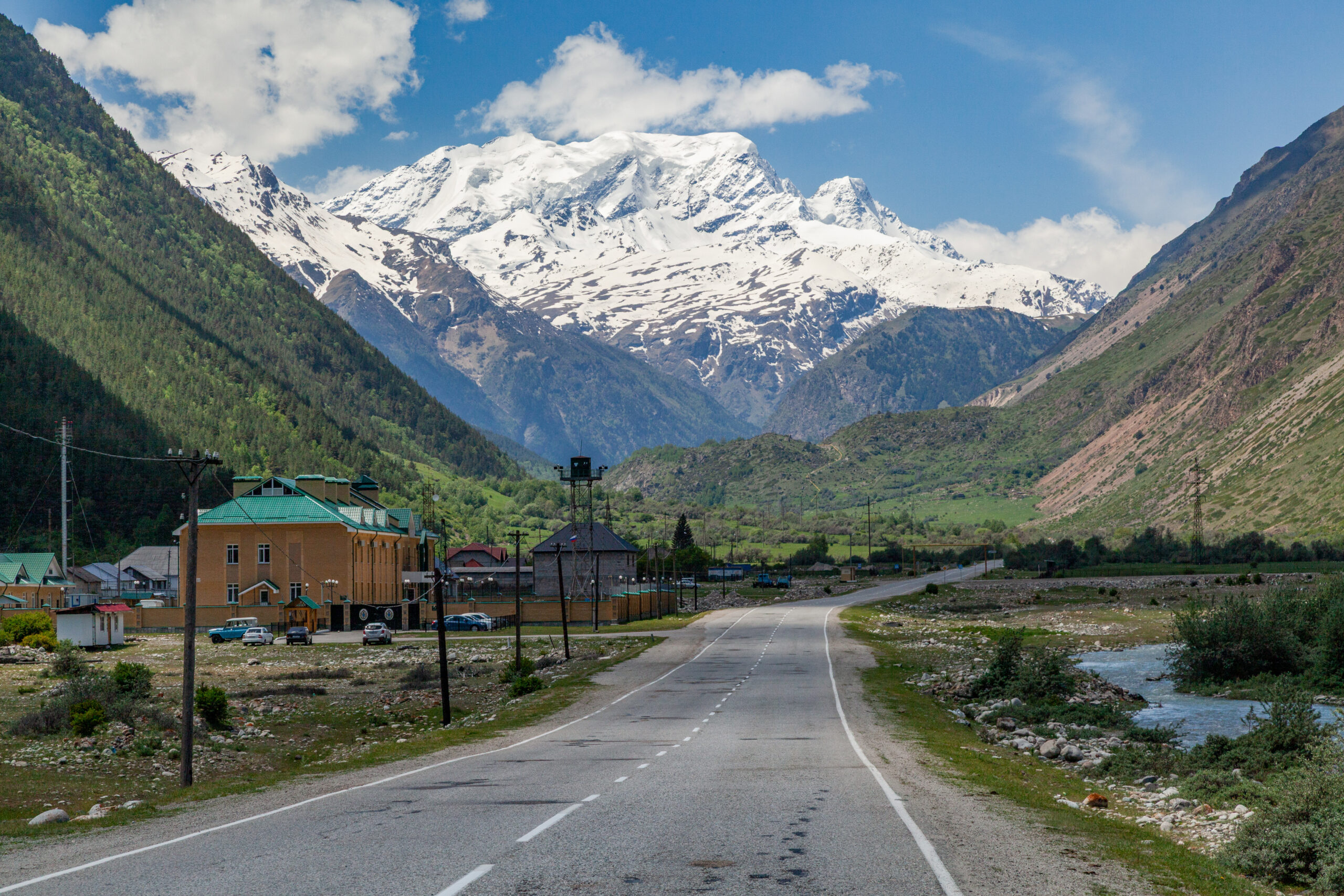
Mount Elbrus is a glaciated, twin-summited dormant volcano in the Caucasus range of southern Russia, near the Georgian border. The West Summit (5,642 m) is the true top; the East Summit is 5,621 m. Climbs stage from the Baksan Valley — the villages of Terskol and Azau (~2,300 m) — with a cable car up to the Garabashi station and the “Barrels” high camp (~3,800 m). The standard South route uses lifts and an optional snowcat that shorten summit day; the North route is wilder and lift-free.
Why a 12-month plan
Operators quote 3–4 months — but that assumes you already have the base and the skills.
Guide services say you need three to four months of Elbrus-specific training. That’s true — if you already have a deep aerobic base, know how to use crampons and an ice axe, and have felt real altitude. Most people don’t. A 12-month runway builds those foundations first, so the final training block is truly Elbrus-specific rather than a scramble to get fit. It also lets you slot in a prep peak — the single biggest predictor of a smooth Elbrus climb — and time your summit for the reliable mid-summer window.
Stage 1 · Base & gear
Months 1–3 — build the engine and start buying kit.
Aerobic base, strength & gear acquisition
The goal now is a large, durable aerobic engine — the thing that carries you through an 8–12 hour summit day. Prioritise volume at an easy, conversational (Zone 2) effort over intensity:
- Aerobic base: 3–4 sessions/week of hiking, incline treadmill, running, or cycling, mostly easy-effort, building duration steadily (~10%/week).
- Strength: 2 sessions/week focused on legs, core, and step-ups — the uphill-with-weight movement that dominates climbing.
- Long day: one longer weekend hike, adding pack weight over time toward ~10–12 kg.
- Gear: start acquiring big-ticket items — mountaineering double boots, crampons, ice axe, down jacket, hardshell. Buy boots first and break them in.
Stage 2 · Snow skills
Months 4–6 — learn the tools you’ll actually use.
A mountaineering skills course
Book a proper introductory mountaineering or snow-skills course with a guide service. Elbrus is non-technical, but you must be automatic with the fundamentals:
- Cramponing on varied snow angles, and efficient uphill movement.
- Ice-axe use and self-arrest — the skill that stops a slip becoming a slide.
- Roped glacier travel and basic crevasse awareness (useful for prep peaks and the North route).
- Cold systems — layering, managing hands and feet, and eating and drinking in the cold.
Keep the aerobic base rolling through this stage; the course is a few days, not a training pause.
Stage 3 · Prep peak
Months 7–9 — test altitude and skills on a real mountain.
An altitude / glacier prep peak
This is the highest-value stage — a real climb that tells you how your body handles altitude before Elbrus. Pick based on what you most need:
| Prep peak | What it builds | Why it fits |
|---|---|---|
| Pico de Orizaba | Altitude | 5,636 m — almost exactly Elbrus’s height; the ideal altitude rehearsal |
| Kilimanjaro | Altitude + multi-day | Non-technical 5,895 m; proves multi-day altitude tolerance |
| Mount Rainier / Baker | Glacier & snow | Real glacier systems, crampons, and a long summit day |
| A Colorado 14er | Home-country altitude | Accessible repeat exposure above 4,000 m for US climbers |
Ideally you reach Elbrus having already spent a night or two above 4,500 m and moved on a glacier in crampons. If altitude troubled you here, that’s priceless information — not a failure.
Stage 4 · Elbrus block
Months 10–12 — peak the training, then climb.
Elbrus-specific peak & the expedition
Now the training gets Elbrus-specific, then you taper and climb:
- Pack-loaded uphill: build toward hiking 3,000+ ft (900+ m) of gain carrying 15 kg, comfortably.
- Back-to-back days: schedule weekends of two big days in a row to rehearse cumulative fatigue.
- Intervals: add some threshold work for the power to push through the summit-day plateau.
- Taper: ease off in the final 1–2 weeks so you arrive fresh.
- The climb: a typical guided South-route trip runs 7–9 days with acclimatisation hikes (to Cheget, the Observatory, and Pastukhov Rocks ~4,700 m) before a summit day from the high camps — often with a snowcat lift to ~5,100 m, then the climb to the West Summit.
Cost breakdown
Where the ~$6,000–$11,000 goes.
| Stage | Item | 2026 cost |
|---|---|---|
| Stage 1 | Gear (boots, crampons, axe, down, shells) | $1,500–3,000 |
| Stage 2 | Mountaineering skills course | $500–1,500 |
| Stage 3 | Altitude / glacier prep peak | $1,000–3,000 |
| Stage 4 | Guided Elbrus expedition | $2,000–4,000 |
| Throughout | Flights, insurance, incidentals | $1,000–2,500 |
The Elbrus climb itself is one of the cheaper Seven Summits, but note that some gear (double boots, ice axe) can be rented on-mountain, trimming Stage 1 if budget is tight. Run your own numbers with the Expedition Budget Calculator.
The 2026 access reality
Elbrus is in Russia — plan around it honestly.
Season & conditions
A summer mountain — with a summit far colder than the valley.
The Elbrus season runs roughly May–September, with July and August the most reliable and popular. Time Stage 4 so your climb lands in that window. The live forecast below is for the Barrels high camp and refreshes on load.
Elbrus — the Barrels high camp (~3,800 m)
Loading live data…Frequently asked questions
How long does it take to train for Elbrus?
From reasonable general fitness, about 12 months is a realistic, unhurried timeline — enough to build a deep aerobic base, learn snow skills, and get real altitude on a prep peak. Operators quote 3–4 months of Elbrus-specific work, but that assumes you already have the base and the skills.
How hard is Elbrus?
Non-technical on the standard South route — snow slopes, no roped rock, plus lifts and an optional snowcat. But it’s a serious 5,642 m mountain with a long, cold summit day and fast weather. It’s underestimated far more often than it’s overestimated.
What should I climb before Elbrus?
A snow-skills course, then an altitude/glacier prep peak — Orizaba (near-identical height), Kilimanjaro (multi-day altitude), or Rainier/Baker (glacier). Ideally arrive having spent time above 4,500 m and moved on a glacier in crampons.
How much does the whole progression cost?
Roughly $6,000–$11,000 all-in over 12 months: gear ($1,500–3,000), skills course ($500–1,500), prep peak ($1,000–3,000), and the guided Elbrus trip ($2,000–4,000) plus flights. Renting boots/axe can trim early costs.
When’s the best time to climb?
May–September, with July–August the most reliable. Plan your final stage to land in mid-summer.
Can you climb Elbrus in 2026 given it’s in Russia?
It’s more complicated than the other Seven Summits: advisories are elevated, many Western operators have paused Russia programs, and visas/flights/insurance are harder. Climbers still go, mostly via Russian operators — check your government’s advisory, your insurance, and operator status before committing.
How we built this plan
Research-based. This progression was built from 2026 Elbrus operator training programs (Alpine Ascents International, RMH, Climbing the Seven Summits, and others) and standard mountaineering fitness methodology, cross-checked for route, season, and cost, and framed with the same staged approach we use across our progression plans. Fitness benchmarks reviewed by Taylor Ludlow, RN.
Operator pricing, program details, and — for Russia especially — travel-access conditions change. Confirm current advisories, insurance, and operator status before booking, and verify conditions before you climb.
Start the clock on Europe’s highest peak
Twelve months, four stages: build the engine, learn the snow skills, prove yourself on a prep peak, then climb Elbrus in the summer window. Begin Stage 1 gear and fitness this month — and, because it’s Russia, start checking access conditions early.
Start the fitness checklist →All progression plans →What Should You Do Before Mount Elbrus?
A training plan tells you how to improve fitness. A progression plan tells you what experience you should prove before the goal mountain.
For Mount Elbrus, the useful progression is not simply twelve months of harder workouts. It is a sequence of four capability gains: aerobic durability, snow competence, real altitude exposure and an Elbrus-specific final block.
If you already possess one of those capabilities, you do not need to repeat it for the sake of completing a checklist. Start at the first genuine gap.
Long uphill movement, leg durability, pack work and recovery between consecutive mountain days.
Efficient crampon movement, ice-axe use, self-arrest, layering and basic glacier awareness.
A meaningful mountain experience above roughly 4,500 metres that shows how your body performs at altitude.
Pack-loaded uphill work, back-to-back days, cold systems, final acclimatization planning and a conservative summit strategy.
You May Not Need All 12 Months
Twelve months is a conservative runway for a fit hiker who has not yet built the complete snow-and-altitude package. Experienced climbers should enter the progression where their first unproven capability appears.
| Your current background | Likely entry point | Main gap to close | Best next evidence |
|---|---|---|---|
| Fit hiker · no crampons or ice axe | Stage 1–2 | Snow movement and mountaineering systems. | Intro mountaineering course followed by a real snow climb. |
| Strong snow climber · little altitude experience | Stage 3 | Response to sustained elevation above 4,500 m. | Kilimanjaro, Pico de Orizaba or another appropriate high-altitude objective. |
| High-altitude trekker · weak crampon skills | Stage 2 | Efficient snow travel and cold-weather technical systems. | Guided snow/glacier course plus a snow-climbing objective. |
| Rainier or Baker experience | Stage 3–4 | Primarily altitude-specific preparation if glacier systems are already solid. | A 5,000 m+ altitude rehearsal or equivalent acclimatization experience. |
| Kilimanjaro experience | Stage 2–4 | Snow competence if the Kilimanjaro climb did not require it. | Formal crampon/ice-axe instruction and a snow or glacier objective. |
| Pico de Orizaba experience with solid snow skills | Stage 4 | Elbrus-specific cold, weather, logistics and summit-day preparation. | Final training block plus current route/access planning. |
Pick the Preparation Mountain by the Skill You Still Need
There is no single mandatory “peak before Elbrus.” Different climbers need different evidence.
| Preparation objective | What it tests best | Why it transfers to Elbrus | What it does not prove |
|---|---|---|---|
| Pico de Orizaba · 5,636 m | Altitude + crampon movement | Summit elevation is almost identical to Elbrus. | It does not duplicate Elbrus logistics, weather or Caucasus access. |
| Kilimanjaro · 5,895 m | Multi-day altitude tolerance | Shows how you acclimatize above Elbrus summit elevation. | Standard routes do not test the same snow and crampon systems. |
| Mount Rainier | Glacier systems + endurance | Builds rope-team movement, crampon efficiency and long summit-day discipline. | Summit elevation is much lower than Elbrus. |
| Mount Baker | Glacier systems | Strong environment for rope-team glacier travel and crevasse skills. | Provides limited evidence about performance above 5,000 m. |
| Repeated 4,000 m+ peaks | Fitness + moderate altitude | Useful low-cost evidence of pacing, recovery and altitude response. | Does not replace either snow competence or a true high-altitude rehearsal. |
You Can Build the Elbrus Progression Without Booking Elbrus Yet
Training and experience development remain useful even when the goal mountain is not currently an appropriate destination for your nationality.
Check the current U.S. Russia Travel Advisory →
| If Elbrus is not currently appropriate… | Keep building this capability | Possible substitute objective |
|---|---|---|
| You still need altitude experience | 5,000 m+ acclimatization and summit pacing | Pico de Orizaba or Kilimanjaro |
| You still need glacier skills | Rope-team travel, crevasse rescue and crampon efficiency | Mount Baker or an appropriate guided glacier course |
| You need a bigger expedition step | Multiple mountain days, cold systems and team logistics | Mount Rainier or another supported glacier objective |
| You have completed the Elbrus capability stack | Maintain fitness and experience rather than forcing the destination | Continue toward another Seven Summits or high-altitude objective until access conditions change. |
Mount Elbrus Progression FAQ
What is the difference between the Elbrus progression plan and the Elbrus training plan?
The progression plan identifies the experience you should build before Elbrus: aerobic durability, snow skills, altitude exposure and a final mountain-specific preparation phase. The training plan focuses more narrowly on physical preparation such as aerobic work, strength, pack-loaded climbing and workout progression.
Do I need to climb a specific mountain before Elbrus?
No single preparation mountain is universally mandatory. Choose an objective that proves your biggest missing capability. Pico de Orizaba is useful for altitude, Kilimanjaro for multi-day altitude exposure, and Rainier or Baker for glacier and snow systems.
Can I prepare for Elbrus even if I should not travel to Russia now?
Yes. Aerobic training, snow instruction, glacier experience and high-altitude climbing remain transferable skills. Complete those stages on appropriate objectives and reconsider Elbrus only when current government guidance, insurance and personal circumstances make the trip appropriate.
How do I know when I am ready to move to the final Elbrus stage?
You should already be comfortable using crampons and an ice axe, have completed long mountain days without major deterioration in pace or decision quality, and ideally have meaningful prior exposure above roughly 4,500 metres. The final stage should sharpen existing capability rather than introduce core skills for the first time.
Use the Progression Plan to Choose the Next Capability—Then Open the Exact Guide
This page should own the sequence of experience before Elbrus. The training page should own workouts; the mountain guide should own the climb; and the route, safety and paperwork pages should own those specific decisions.
Was this helpful?
🏔Progression guides
🧭Explore & compare
Global Summit Guide is an independent mountaineering resource founded in 2026. The team combines first-hand trekking and climbing experience with in-depth research and professional health and nutrition review to help climbers choose objectives, prepare properly, and stay safe.
Health, altitude, and nutrition content is reviewed by Taylor Ludlow (Registered Nurse) and Brigg Hoopes (Nutritionist).
What We Don't Know Yet
Mountain information changes quickly. This box explains the limits of what this page can responsibly promise.
- Guide-company prices, departure dates, guide ratios, included services, and cancellation rules can change without notice.
- Weather, snowpack, avalanche risk, road access, and route conditions can change quickly and may be different on your climbing dates.
- Route conditions, trailhead access, crevasse exposure, stream crossings, and rescue access may vary from published planning guidance.
- Total trip cost can change with flights, lodging, guide pricing, permits, gear rentals, transportation, and exchange rates.
- Gear requirements can change by season, route variation, weather window, personal cold tolerance, and guide-service requirements.
Verify current conditions with official land managers, guide services, local forecasts, and current route reports before booking or climbing.
Mountaineering, rock and ice climbing, glacier travel, and high-altitude activity are inherently dangerous and can result in serious injury or death. The information on Global Summit Guide is provided for general informational and educational purposes only and is not a substitute for professional instruction, qualified guiding, proper equipment, or your own judgment and experience.
Route conditions, weather, snowpack, permits, regulations, and hazards change constantly and may differ from what is described here. Details may be incomplete, out of date, or contain errors. Always verify current information with local authorities, certified guides, and official sources before making any decision in the mountains.
Nothing on this site is medical, legal, or financial advice. Our fitness, acclimatization, altitude, and nutrition content is general in nature; consult a qualified physician before beginning any strenuous exercise program or exposing yourself to high altitude.
You are solely responsible for your own safety and decisions. To the fullest extent permitted by law, Global Summit Guide and its team accept no liability for any loss, injury, damage, or expense arising from use of, or reliance on, this information. By using this site you acknowledge these risks and accept these terms.
Some links on this site may be affiliate links. If you buy through them we may earn a small commission at no extra cost to you; this never affects our recommendations.
Global Summit Guide recommendation path
Next Best Mountain to Research
Use these recommendations to continue the right planning path instead of stopping on one page.
Use current permit, weather, route, and operator information before booking or climbing.
Explore Travel Options for Your Destination
Once your mountain, dates and route are taking shape, compare flights, hotels and other travel options that fit the trip.
Affiliate link. We may earn a commission at no additional cost to you.