
Last updated September 12, 2026
{ “@context”:”https://schema.org”, “@graph”:[ { “@type”:[“WebPage”,”Article”], “@id”:”https://globalsummitguide.com/mountain-collections/european-volcanoes-climbing-the-continents-dramatic-peaks/#article”, “url”:”https://globalsummitguide.com/mountain-collections/european-volcanoes-climbing-the-continents-dramatic-peaks/”, “headline”:”European Volcanoes: 12 Major Peaks Across the Continent”, “description”:”Explore 12 major European volcanoes—from Etna and Vesuvius to Teide, Iceland and Elbrus—with climbing difficulty, access, routes and current planning links.”, “dateModified”: “2026-09-12T09:26:30+00:00”, “inLanguage”:”en-US”, “articleSection”:”Mountain Collections”, “image”:[ “https://globalsummitguide.com/wp-content/uploads/2026/03/AdobeStock_269108309-scaled.jpeg”, “https://globalsummitguide.com/wp-content/uploads/2026/03/photo-1721086130975-83605296fdbb-scaled.jpeg”, “https://globalsummitguide.com/wp-content/uploads/2026/03/AdobeStock_789112705-1024×574.jpeg”, “https://globalsummitguide.com/wp-content/uploads/2026/03/AdobeStock_1890021885-1024×600.jpeg” ], “author”:{“@type”:”Person”,”name”:”Travis Ludlow”,”url”:”https://globalsummitguide.com/about/”}, “publisher”:{“@type”:”Organization”,”name”:”Global Summit Guide”,”url”:”https://globalsummitguide.com/”} }, { “@type”:”BreadcrumbList”, “itemListElement”:[ {“@type”:”ListItem”,”position”:1,”name”:”Home”,”item”:”https://globalsummitguide.com/”}, {“@type”:”ListItem”,”position”:2,”name”:”Mountain Collections”,”item”:”https://globalsummitguide.com/mountain-collections/”}, {“@type”:”ListItem”,”position”:3,”name”:”European Volcanoes”,”item”:”https://globalsummitguide.com/mountain-collections/european-volcanoes-climbing-the-continents-dramatic-peaks/”} ] }, { “@type”:”FAQPage”, “mainEntity”:[ { “@type”:”Question”, “name”:”Are there volcanoes in Europe?”, “acceptedAnswer”:{“@type”:”Answer”,”text”:”Yes. Europe has major volcanic areas in Italy and Greece, Iceland, the Canary and Azores islands, Jan Mayen and the Caucasus under common mountaineering geography. A single Europe-wide volcano count is misleading because scientific inventories use different geographic and geological boundaries.”} }, { “@type”:”Question”, “name”:”How many volcanoes are in Europe?”, “acceptedAnswer”:{“@type”:”Answer”,”text”:”There is no single useful total. The Smithsonian Global Volcanism Program lists 25 Holocene volcanoes in its European Volcanic Regions, while Iceland is cataloged separately in the North Atlantic volcanic regions and its national monitoring system describes 32 active volcanic systems. Counts also change depending on whether the Canaries, Azores, Caucasus, volcanic fields and calderas are included.”} }, { “@type”:”Question”, “name”:”What is the highest volcano in Europe?”, “acceptedAnswer”:{“@type”:”Answer”,”text”:”Under the mainstream Seven Summits mountaineering convention, Mount Elbrus is Europe’s highest summit and highest major volcanic mountain at 5,642 meters. Its main climbing problems are altitude, glacier travel, weather and current travel access rather than eruptive activity.”} }, { “@type”:”Question”, “name”:”Which European volcano is best for a first volcano hike?”, “acceptedAnswer”:{“@type”:”Answer”,”text”:”Vesuvius is the easiest major crater experience in this collection, while Teide and Pico are better choices for hikers who want a longer summit day. Etna adds active-volcano terrain but upper access can change with activity and local rules.”} }, { “@type”:”Question”, “name”:”Can you climb Mount Etna?”, “acceptedAnswer”:{“@type”:”Answer”,”text”:”Yes, but the permitted high point and route access can change with volcanic activity, weather and local restrictions. Lower Etna hiking is widely accessible; upper-crater travel should be planned from current INGV information and local authorized access rules.”} }, { “@type”:”Question”, “name”:”Do you need a permit to reach the summit of Mount Teide?”, “acceptedAnswer”:{“@type”:”Answer”,”text”:”Yes. Access to the Telesforo Bravo trail from La Rambleta to Pico del Teide requires a permit. Current reservations are managed through Tenerife ON, and the exact access window and trail status should be checked before the trip.”} }, { “@type”:”Question”, “name”:”Is Stromboli open for hiking?”, “acceptedAnswer”:{“@type”:”Answer”,”text”:”Stromboli hiking access changes with volcanic conditions and local rules. Do not rely on an old summit-route description or an old permitted elevation. Check current INGV monitoring and municipal or Civil Protection access rules before going above the normal village trail network.”} }, { “@type”:”Question”, “name”:”Can tourists climb Beerenberg on Jan Mayen?”, “acceptedAnswer”:{“@type”:”Answer”,”text”:”Beerenberg is not a normal fly-in hiking objective. Jan Mayen is a protected, restricted-access Arctic island, and current construction has further limited visitor arrivals through the 2027–28 period. Foreign visitors need prior permission, and a climb requires expedition-level logistics and glacier competence.”} }, { “@type”:”Question”, “name”:”Is Mount Elbrus currently a normal trip for U.S. climbers?”, “acceptedAnswer”:{“@type”:”Answer”,”text”:”No. The U.S. Department of State currently advises U.S. citizens not to travel to Russia and specifically says not to attempt Mount Elbrus because access passes through the North Caucasus. Travelers of other nationalities should check their own government guidance and insurance before booking.”} } ] } ] } @import url(‘https://fonts.googleapis.com/css2?family=DM+Serif+Display:ital@0;1&family=Outfit:wght@300;400;500;600;700&display=swap’); .gsgev70{–navy:#071a2b;–navy2:#0d263d;–blue:#214f75;–gold:#d4913a;–gold2:#f0b45d;–cream:#f7f2e8;–paper:#fffdfa;–ink:#122a44;–muted:#657482;–line:#e4d7bd;–soft:#eef5f8;–red:#934a3d;–green:#356b57} .gsgev70,.gsgev70 *{box-sizing:border-box} .gsgev70{background:var(–paper);color:var(–ink);font-family:’Outfit’,Arial,sans-serif;line-height:1.64;overflow-x:clip} .gsgev70 a{color:var(–blue);text-decoration:none}.gsgev70 a:hover{color:var(–navy)} .gsgev70 img{max-width:100%;display:block} .gsgev70 h1,.gsgev70 h2,.gsgev70 h3{font-family:’DM Serif Display’,Georgia,serif;font-weight:400;line-height:1.08;margin-top:0} .gsgev70 p{margin-top:0} .gsgev70-con{width:min(1120px,calc(100% – 44px));margin:auto} .gsgev70-sec{padding:70px 0}.gsgev70-band{background:#f8f4ec}.gsgev70-soft{background:var(–soft)} .gsgev70-k{display:block;color:#98611c;font-size:.72rem;font-weight:800;letter-spacing:1.2px;text-transform:uppercase;margin-bottom:9px} .gsgev70-head{display:grid;grid-template-columns:1fr minmax(280px,430px);gap:32px;align-items:end;margin-bottom:28px} .gsgev70-head h2{font-size:clamp(2.2rem,4vw,3.7rem);color:var(–navy);margin:0}.gsgev70-head p{color:var(–muted);font-size:.92rem;margin:0} .gsgev70-hero{position:relative;min-height:72svh;display:flex;align-items:center;overflow:hidden;background:#e8e3da} .gsgev70-hero img{position:absolute;inset:0;width:100%;height:100%;object-fit:cover;object-position:center 48%} .gsgev70-hero:after{content:””;position:absolute;inset:0;background:linear-gradient(90deg,rgba(248,244,236,.99),rgba(248,244,236,.96) 43%,rgba(248,244,236,.59) 70%,rgba(248,244,236,.06));z-index:1} .gsgev70-heroin{position:relative;z-index:2;width:min(1120px,calc(100% – 44px));margin:auto;padding:60px 0} .gsgev70-crumb{font-size:.74rem;color:#536b7a;margin-bottom:18px} .gsgev70-hero h1{max-width:1100px;color:var(–navy);font-size:clamp(3rem,5.5vw,5.5rem);letter-spacing:-.04em;margin:0 0 18px} .gsgev70-hero h1 em{color:#98611c} .gsgev70-lead{max-width:1010px;color:#405a6b;font-size:clamp(1rem,1.5vw,1.18rem);margin-bottom:23px} .gsgev70-actions{display:flex;flex-wrap:wrap;gap:10px} .gsgev70-btn{display:inline-flex;align-items:center;justify-content:center;min-height:48px;padding:11px 19px;font-size:.82rem;font-weight:800;border:1px solid transparent} .gsgev70-btn1{background:var(–navy);color:#fff!important}.gsgev70-btn2{background:#fff;color:var(–navy)!important;border-color:rgba(7,26,43,.22)} .gsgev70-trust{display:flex;flex-wrap:wrap;gap:9px 18px;margin-top:18px;color:#445d6c;font-size:.75rem}.gsgev70-trust span:before{content:”✓”;color:#98611c;margin-right:6px} .gsgev70-stats{display:grid;grid-template-columns:repeat(5,1fr);max-width:1120px;margin:-30px auto 0;position:relative;z-index:4;background:var(–cream);border:1px solid var(–line)} .gsgev70-stats div{padding:20px 12px;text-align:center;border-right:1px solid var(–line)} .gsgev70-stats strong{display:block;color:var(–navy);font:400 1.38rem ‘DM Serif Display’,serif}.gsgev70-stats span{display:block;color:var(–muted);font-size:.61rem;text-transform:uppercase} .gsgev70-by{display:flex;flex-wrap:wrap;justify-content:space-between;gap:10px;padding:16px 0;border-bottom:1px solid var(–line);font-size:.76rem;color:var(–muted)} .gsgev70-answer{display:grid;grid-template-columns:1.16fr .84fr;gap:26px;background:#fff;border:1px solid var(–line);border-top:5px solid var(–gold);padding:31px;margin-top:27px} .gsgev70-answer h2{font-size:2.35rem;color:var(–navy);margin-bottom:12px}.gsgev70-answer p{color:#526a7a} .gsgev70-chips{display:grid;grid-template-columns:1fr 1fr;gap:8px}.gsgev70-chip{background:var(–cream);border:1px solid var(–line);padding:11px} .gsgev70-chip span{display:block;color:#98611c;font-size:.61rem;text-transform:uppercase;font-weight:800}.gsgev70-chip b{font-size:.79rem;color:var(–navy)} .gsgev70-alert{margin-top:20px;padding:20px;background:#fff8ef;border:1px solid #e8cda6;border-left:5px solid var(–gold);font-size:.83rem;color:#665a4b}.gsgev70-alert.red{background:#fff3f1;border-color:#e1b6af;border-left-color:var(–red);color:#704d47} .gsgev70-toc{margin-top:23px;background:#fff;border:1px solid var(–line);padding:22px}.gsgev70-toc h2{font-size:1.45rem;color:var(–navy)} .gsgev70-toc-grid{display:grid;grid-template-columns:repeat(4,1fr);gap:7px}.gsgev70-toc-grid a{padding:9px 10px;border:1px solid #edf0f1;font-size:.74rem;font-weight:800} .gsgev70-tablewrap{overflow:auto;background:#fff;border:1px solid var(–line)}.gsgev70 table{width:100%;border-collapse:collapse;min-width:980px} .gsgev70 th{padding:13px;background:var(–navy);color:#fff;text-align:left;font-size:.67rem;text-transform:uppercase;letter-spacing:.5px}.gsgev70 td{padding:13px;border-bottom:1px solid #edf0f1;color:var(–muted);font-size:.78rem;vertical-align:top}.gsgev70 td strong{color:var(–navy)} .gsgev70-tag{display:inline-block;padding:4px 8px;background:#eaf4ef;color:#2c5e4a;font-size:.61rem;font-weight:800;text-transform:uppercase} .gsgev70-grid{display:grid;grid-template-columns:repeat(2,1fr);gap:14px}.gsgev70-card{background:#fff;border:1px solid var(–line);padding:22px;display:flex;flex-direction:column} .gsgev70-card>span{color:#98611c;font-size:.63rem;text-transform:uppercase;font-weight:800}.gsgev70-card h3{font-size:1.48rem;color:var(–navy);margin:15px 0 8px}.gsgev70-card p,.gsgev70-card li{font-size:.8rem;color:var(–muted)}.gsgev70-card ul{padding-left:18px}.gsgev70-card b{margin-top:auto;font-size:.74rem} .gsgev70-regions{display:grid;grid-template-columns:repeat(3,1fr);gap:12px}.gsgev70-region{background:#fff;border:1px solid var(–line);border-top:4px solid var(–gold);padding:20px}.gsgev70-region span{font-size:.62rem;text-transform:uppercase;color:#98611c;font-weight:800}.gsgev70-region h3{font-size:1.35rem;color:var(–navy);margin:12px 0 8px}.gsgev70-region p{font-size:.78rem;color:var(–muted);margin:0} .gsgev70-types{display:grid;grid-template-columns:repeat(4,1fr);gap:10px}.gsgev70-type{background:#fff;border:1px solid var(–line);border-top:4px solid var(–blue);padding:18px}.gsgev70-type strong{display:block;font:400 1.35rem ‘DM Serif Display’,serif;color:var(–navy)}.gsgev70-type span{display:block;font-size:.74rem;color:var(–muted);margin-top:6px} .gsgev70-photo{position:relative;min-height:500px;display:flex;align-items:end;overflow:hidden}.gsgev70-photo img{position:absolute;inset:0;width:100%;height:100%;object-fit:cover}.gsgev70-photo:after{content:””;position:absolute;inset:0;background:linear-gradient(0deg,rgba(7,26,43,.90),rgba(7,26,43,.05) 72%)} .gsgev70-photoin{position:relative;z-index:2;width:min(1120px,calc(100% – 44px));margin:auto;padding:50px 0}.gsgev70-photopanel{max-width:900px;background:rgba(7,26,43,.84);border-left:5px solid var(–gold);padding:25px}.gsgev70-photopanel h2{font-size:clamp(2.3rem,4.5vw,4rem);color:#fff}.gsgev70-photopanel p{color:#e4edf1} .gsgev70-figure{margin:30px 0;background:#fff;border:1px solid var(–line)}.gsgev70-figure img{width:100%;height:440px;object-fit:cover}.gsgev70-figure figcaption{padding:12px 15px;font-size:.72rem;color:var(–muted)} .gsgev70-faq{display:grid;gap:8px}.gsgev70-faq details{background:#fff;border:1px solid var(–line)}.gsgev70-faq summary{padding:17px 19px;font-weight:800;color:var(–navy);cursor:pointer}.gsgev70-faq p{padding:0 19px 18px;color:var(–muted);font-size:.82rem} .gsgev70-final{padding:76px 22px;text-align:center;background:var(–cream)}.gsgev70-final h2{font-size:clamp(2.3rem,5vw,4rem);color:var(–navy)}.gsgev70-final p{max-width:860px;margin:0 auto 20px;color:var(–muted)} @media(max-width:1000px){.gsgev70-stats{grid-template-columns:repeat(3,1fr)}.gsgev70-regions{grid-template-columns:repeat(2,1fr)}.gsgev70-types{grid-template-columns:repeat(2,1fr)}} @media(max-width:920px){.gsgev70-head,.gsgev70-answer{grid-template-columns:1fr}} @media(max-width:700px){.gsgev70-con,.gsgev70-heroin,.gsgev70-photoin{width:min(100% – 28px,1120px)}.gsgev70-sec{padding:50px 0}.gsgev70-hero{min-height:82svh;align-items:flex-end}.gsgev70-stats{grid-template-columns:repeat(2,1fr);margin-top:0}.gsgev70-grid,.gsgev70-toc-grid,.gsgev70-regions,.gsgev70-types{grid-template-columns:1fr}.gsgev70-figure img{height:320px}}
European Volcanoes: 12 Major Peaks Across the Continent
Europe’s volcanic mountains are not one kind of trip. Vesuvius is a short crater walk. Teide and Pico are serious high hikes. Etna and Stromboli add active-volcano access rules. Iceland and Jan Mayen add glaciers and fast weather. Elbrus rises to 5,642 m and becomes a full altitude expedition. This collection compares the twelve volcanic objectives that matter most to hikers and climbers, then points you to the current access source for each.
Yes, Europe Has Major Volcanoes—But One Europe-Wide Count Is Misleading.
The Smithsonian Global Volcanism Program currently lists 25 Holocene volcanoes in its European Volcanic Regions. That scientific region group does not include every place travelers commonly think of as volcanic Europe. Iceland, the Azores and the Canaries sit in separate Atlantic region groups, while Elbrus sits in the Caucasus volcanic province.
For a mountain traveler, a more useful list is the one below: twelve volcanic objectives that are significant because they offer a real hike, climb, expedition or volcanic landscape experience. They range from ticketed crater walks to glaciated summit days.
Current eruption status is deliberately kept on the Europe Volcano Watch. A regional guide can explain what Etna or Stromboli is; it should not pretend a status checked weeks ago is the status you will find at the trailhead.
The Main European Volcano Regions
The word “European” can describe political geography, travel geography or a volcanological database region. That is why totals disagree. For trip planning, these six areas are the most useful framework.
Italy & Greece
Etna, Stromboli, Vesuvius and Santorini combine active geology with the easiest travel logistics in the collection. This is the best region for short volcano-focused trips.
Iceland
Hekla, Eyjafjallajökull, Öræfajökull and Reykjanes show why Iceland is a system-based volcanic landscape rather than a tidy list of isolated cones.
Tenerife
Teide is Spain’s 3,715 m high point. The mountain is easy to reach but the summit path is protected and permit-controlled.
Pico
Pico rises directly from an Atlantic island to 2,351 m. The summit is a long, steep hike with managed visitor capacity rather than a technical mountaineering route.
Jan Mayen
Beerenberg is a glacier-covered active volcano on a restricted-access island. The hard part is not merely climbing—it is gaining lawful access and operating in an Arctic expedition setting.
Elbrus
Elbrus is the conventional European Seven Summits high point. Its volcanic origin is secondary to altitude, glacier travel, cold and the current Russia/North Caucasus travel question.
12 Major European Volcanic Mountain Objectives
This is a mountain-travel list, not a complete geological inventory. The selection favors volcanoes that create a meaningful hiking, mountaineering or volcanic-landscape trip.
| Volcano / system | Region | Elevation | Typical experience | Main planning issue |
|---|---|---|---|---|
| Mount Elbrus | Caucasus | 5,642 m | High-altitude glacier expedition | Altitude, weather, glacier travel and current Russia/North Caucasus travel guidance. |
| Mount Teide | Tenerife, Spain | 3,715 m | High volcanic hike / summit trail | Telesforo Bravo summit permit, cable-car planning, altitude and weather. |
| Mount Etna | Sicily, Italy | Summit changes | Active-volcano hiking / guided upper mountain | Volcanic activity, current legal high point, wind and ash. |
| Pico | Azores, Portugal | 2,351 m | Long steep summit hike | Reservation/capacity system, weather and descent on rough volcanic terrain. |
| Beerenberg | Jan Mayen, Norway | About 2,200 m | Remote Arctic glacier expedition | Restricted island access, landing logistics, glacier competence and weather. |
| Öræfajökull / Hvannadalshnúkur | Iceland | 2,110 m | Glaciated summit mountaineering | Crevasses, long glacier day, rapidly changing weather and route conditions. |
| Eyjafjallajökull | Iceland | 1,651 m | Glacier-capped volcano climb | Glacier travel, whiteout navigation and local weather. |
| Hekla | Iceland | 1,490 m | Volcanic mountain hike | Forecast, current monitoring and exposed volcanic terrain. |
| Mount Vesuvius | Campania, Italy | 1,281 m | Ticketed crater-rim walk | Timed entry, transport, heat and park closure rules. |
| Stromboli | Aeolian Islands, Italy | ~924 m | Active-volcano viewpoint hike | Permitted elevation and guide rules can change with activity. |
| Santorini / Nea Kameni | Greece | Low crater terrain | Boat-access volcanic walk | Boat schedule, heat, exposed terrain and caldera-focused sightseeing. |
| Reykjanes volcanic zone | Iceland | Low volcanic terrain | Dynamic lava-field / eruption landscape | Hazard maps, gas, roads and closures can change quickly. |
Etna’s highest point is not frozen into a permanent number here because crater construction and collapse can change summit elevation. Beerenberg elevations vary across published records; for trip planning, the access and glacier problem matters more than a few metres of disagreement.
Four Completely Different Volcano Trips
Sorting volcanoes only by height hides the real decision. The useful distinction is what you will actually be doing on the mountain.
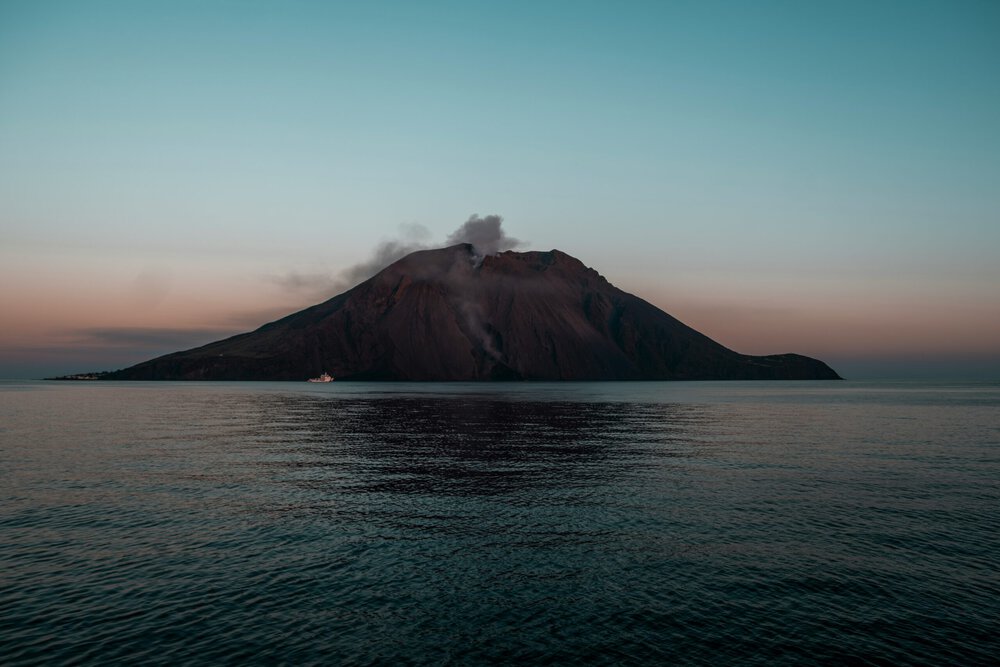
Climbing Europe’s Volcanoes: Top Routes, Safety & Summit Tips
The Mediterranean is the easiest place in Europe to build a dedicated volcano trip, but treating all four as “summit hikes” produces bad planning. Only Etna behaves like a large mountain objective. Stromboli is controlled by active-volcano access, Vesuvius by park logistics, and Santorini by caldera geography.
Mount Etna
Etna is the strongest choice for a traveler who wants a real mountain hike on an active volcano. Roads and cable-car infrastructure make the south side unusually accessible, but the easy approach can create false confidence. Upper routes, crater access, guide requirements and the legal stopping point can change after eruptions, ash events or local orders.
Plan the mountain in layers: choose a lower independent hike that remains useful if summit access changes, then treat any upper-crater itinerary as conditional. Check INGV first, then current local access and the weather. An airport operating normally does not prove the upper mountain is open.
Open the Mount Etna guide →Stromboli
Stromboli’s appeal is persistent explosive activity viewed from an island trail system. That same activity makes old route descriptions especially unreliable. A guidebook that says “walk to the summit” may describe rules that no longer apply.
Use the current permitted elevation, guide requirement and closure status issued locally at the time of your visit. Ordinary Strombolian activity is still real eruptive activity; “normal for Stromboli” does not mean risk-free. Build the trip so the island, coastal viewpoints and lower trails still make sense if high access is restricted.
Mount Vesuvius
Vesuvius is the most approachable major volcano in this collection physically. The Gran Cono visit is short compared with Teide, Pico or Etna. The planning friction comes from timed tickets, transport, heat and the possibility of weather or park closures.
That makes it an excellent first volcano experience, especially when paired with Pompeii or Herculaneum. It is not a useful test of mountaineering ability. The value is geological scale and historical context rather than difficulty.
Plan a Vesuvius visit →Santorini / Nea Kameni
Santorini belongs in a European volcano collection because the caldera is one of the continent’s defining volcanic landscapes, not because it offers a classic mountain summit. Boat trips to Nea Kameni give a short walk on young volcanic terrain; the broader island gives the more important view of the caldera system.
If your goal is climbing progression, Santorini contributes almost nothing. If your goal is understanding how volcanic geology shapes a landscape, settlement and travel experience, it earns its place.
In Iceland, the Volcano and the Climb Are Often Different Problems.
Iceland’s monitored volcanic systems are dynamic, but many mountain objectives are best approached first as weather and glacier problems. Reykjanes is the exception: current volcanic hazard and access can dominate the entire outing.
Hekla
Hekla is a hiking mountain with serious volcanic history rather than a technical climb. The route is exposed, the weather can deteriorate quickly and the mountain sits in an active volcanic system. A normal hiking forecast and the current Icelandic Meteorological Office status both matter.
Hekla works well for hikers who want a summit objective without glacier systems, but it should never be treated as a generic hill simply because the terrain is nontechnical.
Eyjafjallajökull
The name is famous because of the 2010 eruption, but the climb itself is a glacier mountaineering problem. Snow cover, crevasses, rope travel, cloud and navigation determine the day more than the memory of the eruption.
For visitors without glacier experience, this is the point where a volcano trip becomes a guided alpine objective rather than a hike.
Öræfajökull / Hvannadalshnúkur
Iceland’s highest summit sits on the Öræfajökull volcanic massif and requires a long glacier day. The technical grade may be modest in good conditions, but crevasse hazard and changeable weather make rope-team competence essential.
If your goal is the strongest mountaineering experience in Iceland’s volcanic landscape, this is a better target than chasing a currently active lava field.
Reykjanes
Reykjanes is not one stable summit route. New lava, gas, road closures and hazard zones can rearrange the visitor experience faster than an evergreen guide can keep up. Treat the area as a current-status destination.
Check the Icelandic Meteorological Office hazard map and Civil Protection/road access on the day you go. A previously open viewpoint is not evidence that the same route remains legal.
Check the current Europe volcano status →Teide and Pico Are the Best Pure Summit Hikes in the Collection.
Both are genuine high points with clear summit goals, but they reward different strengths: Teide adds altitude and a protected summit permit; Pico adds relentless steepness and rough volcanic footing.

Mount Teide
Teide can be approached as a cable-car-assisted summit visit or a much longer mountain hike. The final Telesforo Bravo path between La Rambleta and the summit requires a permit, and current reservations are managed through Tenerife ON.
The altitude catches visitors who arrive from sea level and use the cable car to gain height quickly. Even strong hikers can feel headache, nausea or unusual fatigue above 3,500 m. The mountain is also much colder and windier than the resort coast.
Open the Teide guide →Pico
Pico is lower than Teide but more continuously steep for a hiker starting low on the mountain. The route climbs rough lava and volcanic rock to the crater, with a final steeper push to Piquinho for the true high point.
The protected route uses a visitor-capacity system, so treat registration or reservation as part of the trip rather than arriving with a purely spontaneous plan. Wet rock, fog and wind can make the descent more consequential than the elevation suggests.
Beerenberg and Elbrus Are Expeditions, Not Volcano Day Trips.
Both belong in the collection geologically and geographically, but their trip design is dominated by access, remoteness, glacier systems and logistics rather than crater tourism.
Beerenberg
Beerenberg rises above Jan Mayen, a remote nature-reserve island in the Norwegian Sea. Visitor access is restricted, there is no normal civilian flight service, and landing by ship is tightly controlled. The official Jan Mayen site currently warns that major construction from summer 2025 through winter 2027/28 further restricts arrivals and island access.
Foreign visitors need prior permission. A mountain party then faces a glacier-covered Arctic volcano with limited rescue options, no casual trailhead access and weather that can stop movement for days. This is the rarest objective in the list by logistics, not the hardest by climbing grade.
Mount Elbrus
Elbrus is the conventional European Seven Summits high point and the highest mountain in this collection. The normal South Route benefits from lift infrastructure, but the summit remains a cold, glaciated 5,642 m climb that demands acclimatization and strong weather judgment.
Current travel conditions are an essential part of the climb. The U.S. Department of State advises U.S. citizens not to travel to Russia and specifically says not to attempt Mount Elbrus because access passes through the North Caucasus. Climbers of other nationalities should check their own government advice, insurance coverage and payment/travel practicality before treating an advertised departure as available.
Read the current Elbrus access guide →Which European Volcano Should You Climb?
The best first choice is rarely the highest or most active. Start with the experience you want, then confirm that the current access rules support it.
| If you want… | Best starting point | Why it fits | What can derail the plan |
|---|---|---|---|
| A simple first crater experience | Vesuvius | Short trail, strong park infrastructure, exceptional geological and historical context. | Timed tickets, transport, heat or closure. |
| A high non-glacier summit | Teide | 3,715 m, clear summit objective, strong access infrastructure. | Permit availability, wind, altitude, trail restrictions. |
| A steep island summit hike | Pico | Continuous volcanic ascent with a true national high-point feel. | Capacity limits, fog, wet rock, descent fatigue. |
| An active-volcano mountain day | Etna | Large mountain, multiple route levels, active geology and guide infrastructure. | Ash, wind, eruptive activity and changing upper access. |
| A volcano plus glacier skills | Öræfajökull | True Icelandic glacier mountaineering on a volcanic massif. | Crevasses, weather, route condition and team skill. |
| An Arctic expedition | Beerenberg | Remote active volcano with a rare expedition character. | Island permission, landing logistics, construction restrictions, weather. |
| A 5,000 m+ expedition | Elbrus | Highest mountain in the collection and a Seven Summits objective. | Current travel advisories, insurance, altitude, weather and glacier systems. |
What Makes Volcano Climbing Different?
Volcanic danger is only one layer. On many European volcanoes, weather, loose terrain, altitude or glaciers are more likely to shape your day than an eruption.
Active Terrain Can Become Unusable Quickly
SO₂, CO₂ and other gases can concentrate near vents and depressions. Ash can reduce visibility, irritate eyes and lungs and affect transport. Respect closures even if the mountain looks calm from below.
Distance From the Vent Matters
Small explosive events can throw hot blocks or ash without the long warning a traveler imagines. That is why access limits on Etna and Stromboli are operational safety rules, not red tape to work around.
Easy Grades Can Still Be Exhausting
Ash, scoria and broken lava waste energy on ascent and punish tired legs on descent. Pico, Etna and Hekla can feel harder than their map gradient suggests because the footing is unstable.
High Volcanoes Make Their Own Mountain Weather
Teide, Etna, Iceland’s ice caps and Elbrus all rise far above nearby lowlands. A warm city forecast is not a summit forecast. Use elevation-specific wind, cloud and temperature information. Our Mountain Weather for Climbers guide explains how to read freezing level, wind and storm timing.
A Volcano Can Still Be a Rope-Team Mountain
Eyjafjallajökull, Öræfajökull, Beerenberg and Elbrus add crevasses, snow bridges and whiteout navigation. The volcanic label does not reduce the glacier skill required.
The Route You Planned May Not Be the Route You Get
Fog, new lava, temporary closures or changed access points can invalidate an old track. Use official closures first, then a current map and navigation plan. See Mountain Navigation for map, GPS and emergency-communication planning.
What to Check Before You Go
Long-term volcano classification and same-day trail access are different jobs. Use the source that is closest to the decision you are making.
Smithsonian Global Volcanism Program
Use GVP for volcano profiles, Holocene eruption history, regional classifications and scientific context. Its current European Volcanic Regions page lists 25 Holocene volcanoes within that defined group.
Open GVP European regions →INGV + Local Access Authorities
Use INGV for Etna, Stromboli, Vesuvius and Campi Flegrei monitoring. Then check park, municipal or Civil Protection rules for the trail or elevation you plan to enter.
Open our current-status page →Icelandic Meteorological Office
Use IMO for volcanic monitoring, hazard maps, seismicity, gas and eruption status. For glacier objectives, combine it with the mountain forecast and current route conditions.
Open Icelandic Met Office →Teide National Park / Tenerife ON
The summit section of Telesforo Bravo requires a permit. Current reservations are managed through Tenerife ON, so do not rely on an old screenshot or third-party booking description.
Open Tenerife ON →Official Jan Mayen Visitor Guidance
Current official guidance says arrival and island access are restricted during extensive construction from summer 2025 through winter 2027/28. Foreign visitors require prior permission.
Open Jan Mayen guidance →Your Government Travel Advisory
Travel feasibility is nationality-specific. U.S. State Department guidance currently says not to attempt Elbrus. Other climbers should check the equivalent authority for their passport and confirm insurance coverage in writing.
Open U.S. Russia advisory →European Volcanoes FAQ
Are there volcanoes in Europe?
Yes. Europe has major volcanic areas in Italy and Greece, Iceland, the Canary and Azores islands, Jan Mayen and the Caucasus under common mountaineering geography. A single Europe-wide total is misleading because databases use different boundaries and definitions.
How many volcanoes are in Europe?
There is no single useful total. The Smithsonian Global Volcanism Program lists 25 Holocene volcanoes in its specifically defined European Volcanic Regions, while Iceland is cataloged separately and its national monitoring system describes 32 active volcanic systems. The answer changes again if you include the Canaries, Azores, Caucasus, volcanic fields and calderas.
What is the highest volcano in Europe?
Under the mainstream Seven Summits mountaineering convention, Mount Elbrus is Europe’s highest summit and highest major volcanic mountain at 5,642 m. Its main climbing challenges are altitude, glacier travel, cold and weather rather than current eruptive activity.
Which European volcano is best for a first volcano hike?
Vesuvius is the easiest major crater experience in this collection. Teide and Pico are better choices for hikers who want a longer summit objective, while Etna is the stronger choice for a big active-volcano mountain day when upper access is open.
Can you climb Mount Etna?
Yes, but the legal high point and route access can change with volcanic activity, weather and local restrictions. Plan a lower route that remains useful if summit access changes, and confirm INGV plus current local access before entering the upper mountain.
Do you need a permit to reach the summit of Mount Teide?
Yes. The Telesforo Bravo trail from La Rambleta to Pico del Teide requires a permit. Current reservations are managed through Tenerife ON. Check both the permit and the trail status before traveling.
Is Stromboli open for hiking?
Access changes with activity and local rules. Do not use an old permitted elevation or summit-route description as proof of current access. Check INGV and current municipal or Civil Protection rules immediately before the hike.
Can tourists climb Beerenberg on Jan Mayen?
Beerenberg is a restricted-access Arctic expedition, not a normal tourist hike. Current Jan Mayen guidance says island access is limited during construction through the 2027–28 period, foreign visitors need prior permission, and the climb adds glacier and remote-expedition requirements.
Is Mount Elbrus currently a normal trip for U.S. climbers?
No. The U.S. Department of State currently advises against travel to Russia and specifically says not to attempt Mount Elbrus because access passes through the North Caucasus. Other nationalities should check their own government advice and insurance.
Start With the Experience, Then Check the Mountain.
Choose Vesuvius for a first crater visit, Teide or Pico for a high summit hike, Etna for active-volcano mountain terrain, Iceland for glacier-volcano climbing, Beerenberg for a remote Arctic expedition and Elbrus only after the altitude and current travel-access questions are resolved. Then verify the live status that can change your plan.
Was this helpful?
🏔Peaks in this region
🧭Explore & compare
Global Summit Guide is an independent mountaineering resource founded in 2026. The team combines first-hand trekking and climbing experience with in-depth research and professional health and nutrition review to help climbers choose objectives, prepare properly, and stay safe.
Health, altitude, and nutrition content is reviewed by Taylor Ludlow (Registered Nurse) and Brigg Hoopes (Nutritionist).
What We Don't Know Yet
Mountain information changes quickly. This box explains the limits of what this page can responsibly promise.
- Permit availability, reservation windows, quotas, and official fee rules may change after this page is updated.
- Weather, snowpack, avalanche risk, road access, and route conditions can change quickly and may be different on your climbing dates.
- Route conditions, trailhead access, crevasse exposure, stream crossings, and rescue access may vary from published planning guidance.
- Fitness and altitude response vary by person; no guide, itinerary, or training plan can guarantee acclimatization or summit success.
- Visa, passport, vaccination, border, insurance, and local transportation rules may change before your trip.
Verify current conditions with official land managers, guide services, local forecasts, and current route reports before booking or climbing.
Mountaineering, rock and ice climbing, glacier travel, and high-altitude activity are inherently dangerous and can result in serious injury or death. The information on Global Summit Guide is provided for general informational and educational purposes only and is not a substitute for professional instruction, qualified guiding, proper equipment, or your own judgment and experience.
Route conditions, weather, snowpack, permits, regulations, and hazards change constantly and may differ from what is described here. Details may be incomplete, out of date, or contain errors. Always verify current information with local authorities, certified guides, and official sources before making any decision in the mountains.
Nothing on this site is medical, legal, or financial advice. Our fitness, acclimatization, altitude, and nutrition content is general in nature; consult a qualified physician before beginning any strenuous exercise program or exposing yourself to high altitude.
You are solely responsible for your own safety and decisions. To the fullest extent permitted by law, Global Summit Guide and its team accept no liability for any loss, injury, damage, or expense arising from use of, or reliance on, this information. By using this site you acknowledge these risks and accept these terms.
Some links on this site may be affiliate links. If you buy through them we may earn a small commission at no extra cost to you; this never affects our recommendations.
Global Summit Guide recommendation path
Next Best Mountain to Research
Use these recommendations to continue the right planning path instead of stopping on one page.
Use current permit, weather, route, and operator information before booking or climbing.
Search Flights, Hotels & Rental Cars
Have the mountain or destination picked? Use Expedia to compare the flights, lodging and rental cars that fit your actual trip dates. For mountain travel, consider arriving early enough for delays and adding a buffer night after the climb before a fixed flight home.
Compare current flight, hotel and car options.
Affiliate disclosure: Global Summit Guide may earn a commission if you book through this link, at no additional cost to you.