<
Mountain Collections · Updated 2026

Nepal Trekking Peaks Guide: Island, Mera & Lobuche East

Nepal’s “trekking peaks” are not trekking — they’re genuine 6,000-meter mountaineering objectives that serve as the standard introduction to Himalayan climbing. The Nepal Mountaineering Association (NMA) regulates 27 trekking peaks under Group A and Group B classifications, with Island Peak (6,189m), Mera Peak (6,476m), and Lobuche East (6,119m) forming the “Big Three” that 90% of visitors target. This guide covers the full trekking peak roster, the EBC + Island Peak combo (Nepal’s #1 climbing program), permit costs, seasonal considerations, and detailed comparisons between the main peaks.

6,476m
Mera Peak
Highest NMA peak
27
NMA-regulated
trekking peaks
$175+
Group B permit
(off-season)
18–21
Days for EBC
+ Island Peak

Nepal’s trekking peaks occupy a specific and valuable role in global mountaineering: they’re the entry point to Himalayan climbing. The NMA-regulated peaks below 6,500m provide a realistic gateway between the 5,000m altitude exposure of Kilimanjaro or Aconcagua and the expedition-scale commitment of Ama Dablam, Manaslu, or the eight-thousanders. The name “trekking peak” is genuinely misleading — Island Peak involves a 45° fixed-rope headwall, Lobuche East has serious technical ridge work, and Mera Peak’s sustained altitude makes it harder than many peaks twice its apparent grade. What these peaks share is access: permits are managed by the NMA rather than the Department of Tourism, costs run in the hundreds rather than thousands of dollars, and climbs integrate with the iconic trekking routes (Everest Base Camp, the Khumbu region, Annapurna Circuit) that bring most visitors to Nepal in the first place. This guide covers the full NMA trekking peak roster, the three peaks that dominate climbing visits, how to combine them with Everest Base Camp, and how to prepare.

What Is a Nepal Trekking Peak?

Nepal’s climbing peaks break into two distinct regulatory categories that determine everything about the climbing experience, cost, and logistics:

NMA Trekking Peaks vs. DoT Expedition Peaks

The Nepal Mountaineering Association (NMA) regulates 27 “trekking peaks” below 6,500m. These are the approachable, affordable, permit-lightweight peaks that most first-time Himalayan climbers target. The Department of Tourism (DoT) regulates the expedition peaks above 6,500m — Everest, Ama Dablam, Manaslu, the eight-thousanders — where permit fees are measured in thousands (Everest is $15,000 in 2026), logistics require month-long expeditions, and entry barriers are significant.

The trekking peak label is a regulatory category, not a difficulty rating. Some NMA peaks — Island Peak’s headwall, Lobuche East’s technical ridge, Kusum Kanguru’s serious mixed routes — involve genuine technical climbing that exceeds the difficulty of some expedition peaks. The category exists because the NMA’s simpler permit structure and lower fees make these peaks accessible to the international mountaineering community that supports Nepal’s tourism economy.

NMA Group A vs. Group B

The 27 NMA peaks split into two subgroups with different permit fees and structures:

  • Group A peaks (12 peaks) — higher and more technically demanding peaks where permits cost $500 per team of 7 climbers with $100 per additional member up to 12. Includes peaks like Chulu East, Chulu West, Hiunchuli, Kusum Kanguru, Singu Chuli, and Cholatse.
  • Group B peaks (15 peaks) — the more accessible trekking peaks where per-person permits cost $350 in spring (March-May) or $175 in autumn, winter, and summer per the NMA’s September 2025 fee revision. Includes Island Peak, Mera Peak, Lobuche East, Pisang Peak, and the remaining mainstream objectives.

Additionally, a 2025 reform created a “free peaks” category waiving NMA royalty fees entirely for peaks like Yala Peak (5,732m), Tharpu Chuli / Tent Peak (5,663m), Pokhalde (5,806m), Mardi Himal, Machhermo, and Chhuking Ri. This royalty waiver runs through 2027 to encourage climbing on less-trafficked peaks and reduce pressure on Island Peak and Mera Peak specifically.

Permit fees aren’t the full cost

Beyond the NMA permit, every Nepal trekking peak climb involves additional fees: Sagarmatha National Park entry ($30), Khumbu Pasang Lhamu Rural Municipality fee ($20-30), a $500 refundable garbage deposit (paid by the operator), and since 2023, mandatory licensed guide services via a registered trekking agency. For Island Peak via EBC, total permit-related costs typically run $500-$800, bundled into the $2,500-$4,500 guided trip price. Climbers no longer legally arrange their own trekking peak climbs in Nepal — a registered operator is required.


The Big Three: Island Peak, Mera Peak, and Lobuche East

Nepal has 27 trekking peaks, but three of them account for approximately 90% of all trekking peak climbs. Understanding why these three — Island Peak, Mera Peak, and Lobuche East — dominate helps every climber make a smart first choice for their Nepal trip.

Why These Three Dominate

All three Big Three peaks share a specific set of characteristics that make them ideal first Himalayan objectives: they’re all in the Khumbu region (the Everest area accessed via Lukla airstrip), they all integrate naturally with the Everest Base Camp trek for acclimatization, they all sit in the 6,100-6,500m range (true Himalayan altitude without the extreme altitude of 7,000m+ objectives), and they all have established commercial operator networks with competitive pricing. A climber can research any of them extensively and book a reputable expedition with minimal logistical friction.

How They Differ

What distinguishes the three peaks is the kind of climbing experience each provides. Island Peak (Imja Tse) is iconic and technical — famous for its Everest-area position, its steep fixed-rope headwall, and its seamless pairing with the EBC trek. Mera Peak is the altitude test — a long glacier walk-up to Nepal’s highest official trekking peak at 6,476m, offering breathtaking views of five eight-thousanders without the technical demand. Lobuche East is the technical preparation peak — a serious route with ridge climbing that’s often used as training for Ama Dablam, Manaslu, or Everest attempts.

The remainder of this guide covers each of the Big Three peaks in detail, compares them head-to-head, and surveys the secondary NMA trekking peaks that make sense as alternatives or add-ons. For full route-level planning, each peak’s dedicated climb guide linked from this page is the authoritative source.


Nepal’s Major Trekking Peaks: Comparison Table

The table below lists the 9 most significant Nepal trekking peaks by climber volume and profile — 3 Big Three + 6 secondary objectives. Group classification determines permit fees and structure.

#PeakElevationRegionNMA GroupDifficultyBest Use
1Mera Peak6,476 m / 21,247 ftKhumbu (Hinku)Group BNon-technical altitudeHighest NMA peak, altitude test
2Island Peak (Imja Tse)6,189 m / 20,305 ftKhumbu (Chukhung)Group BTechnical (PD+)Most iconic, EBC combo
3Lobuche East6,119 m / 20,075 ftKhumbuGroup BTechnical (PD+/AD)Ama Dablam prep
4Chulu West6,419 m / 21,060 ftAnnapurnaGroup AModerate mountaineeringAnnapurna circuit pairing
5Chulu East6,584 m / 21,601 ftAnnapurnaGroup AModerate mountaineeringHigher Annapurna alternative
6Pisang Peak6,091 m / 19,984 ftAnnapurnaGroup BModerate snow & rockAlternative to Khumbu crowds
7Singu Chuli (Fluted Peak)6,501 m / 21,329 ftAnnapurnaGroup ATechnicalAdvanced climbers
8Naya Kanga5,863 m / 19,236 ftLangtangGroup BModerateLangtang valley climbing
9Tharpu Chuli (Tent Peak)5,663 m / 18,580 ftAnnapurnaFreeEasy-ModerateFirst Himalayan peak
10Yala Peak5,732 m / 18,806 ftLangtangFreeEasyBeginner-friendly

The Big Three: Detailed Peak Coverage

The sections below cover the three dominant Nepal trekking peaks in detail. Each peak has a dedicated full climb guide linked from its card for route-level planning; this section focuses on the comparative context and what each peak offers a visiting climber.

01
Khumbu · Nepal’s highest trekking peak

Mera Peak

Hinku Valley · Makalu Barun National Park First ascent: 1953 Jimmy Roberts & Sen Tenzing
6,476 m
21,247 ft

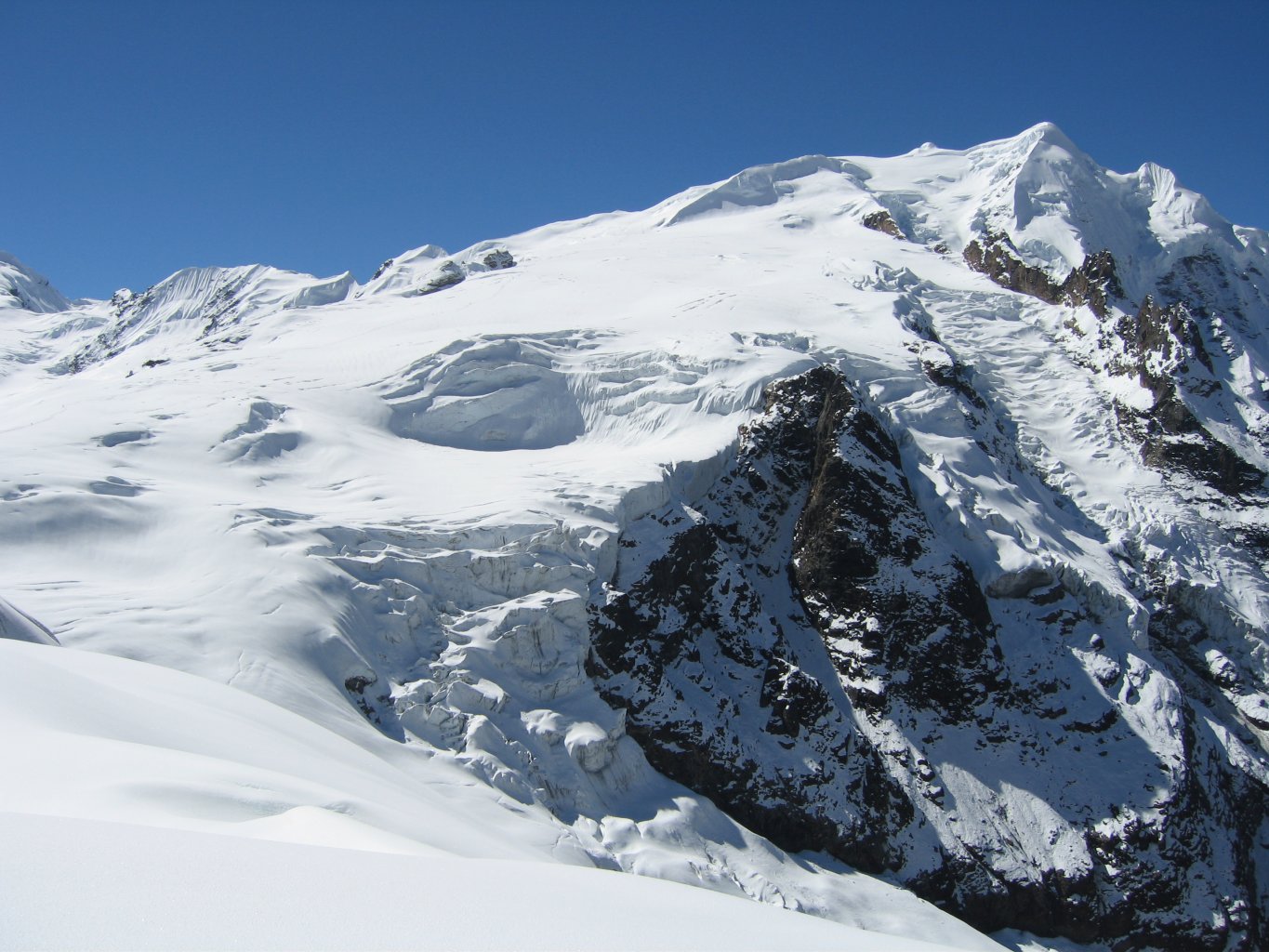
Mera Peak is the highest of Nepal’s 27 NMA-regulated trekking peaks and a paradox: the highest is also often described as the easiest. The peak has three summits — Mera North (6,476m, the true summit), Mera Central (6,461m), and Mera South (6,065m). The standard climb reaches Mera North via a long, sustained glacier approach with moderate snow slopes and a final summit headwall that’s technically forgiving compared to Island Peak. First climbed in 1953 by Jimmy Roberts and Sen Tenzing — the same year as Everest’s first ascent — Mera Peak has become the default choice for climbers seeking serious Himalayan altitude without technical mountaineering demands.

What makes Mera distinctive is the approach. Unlike Island Peak and Lobuche East (which integrate with the Everest Base Camp trek), Mera sits in the Hinku Valley — a separate, less-visited region south of the Khumbu. Reaching Mera involves flying to Lukla and then trekking over the Zatrwa La pass (4,610m) or the Paiya La to reach the Hinku Valley. The approach adds 5-7 days but trades Everest trail crowds for genuine solitude: a Mera climb often feels more like a remote expedition than the busy EBC + Island Peak program. Total trip length typically runs 18-21 days.

Mera’s summit views are legendary: on clear mornings you can see five of the world’s 14 eight-thousanders — Everest, Lhotse, Makalu, Cho Oyu, and Kangchenjunga — from a single vantage. Success rates run 80-90% for properly acclimatized climbers. See the Mera Peak summit success rate analysis for detailed performance data. Permit cost (Group B): $350 spring, $175 autumn/winter/summer. Typical trip cost: $2,500-$4,000 guided.

Full Mera Peak climb guide → Mera vs Island comparison →
Key Facts
RegionHinku Valley
Standard RouteNorth via Mera La
NMA GroupGroup B
GradePD (alpine)
Success rate80–90%
Trip length18–21 days
02
Khumbu · Nepal’s most iconic trekking peak

Island Peak (Imja Tse)

Chukhung · Sagarmatha National Park First ascent: 1953 (acclimatization for Everest) Eric Shipton’s party
6,189 m
20,305 ft

Island Peak is Nepal’s most iconic trekking peak and the single most commonly climbed 6,000m mountain in the Himalaya. The peak’s proper name is Imja Tse — the name “Island Peak” was given in 1953 by Eric Shipton’s reconnaissance party because the mountain appeared to them as an island rising from the sea of ice in the Imja glacier system. Shipton’s team made the first ascent that same year as acclimatization practice for the Everest expedition that followed. The peak has been climbed by tens of thousands of mountaineers since, and its route — particularly the famous headwall — is burned into the Himalayan climbing consciousness.

The standard Island Peak climb involves an early-morning summit push from High Camp at 5,600m up through a crevassed glacier section, across a knife-edge traverse, and finally up a steep 45-50° fixed-rope headwall to the narrow summit ridge. The headwall is the peak’s defining feature — 100-150m of sustained steep snow and ice climbing requiring crampon technique, jumar use on fixed ropes, and managing exposure. For climbers with basic mountaineering skills and good fitness, the route is achievable; for complete beginners, it can be overwhelming. Success rates run 75-85% among climbers arriving with appropriate preparation. See the Island Peak summit success rate data for more detail.

Island Peak’s primary appeal is its seamless integration with the Everest Base Camp trek. The standard 18-21 day itinerary combines EBC, Kala Patthar (5,644m), and Island Peak into a single cohesive program — delivering two iconic Nepal achievements at once. For detailed planning, see the Island Peak routes guide and permits and logistics guide. Permit cost (Group B): $350 spring, $175 off-season.

Full Island Peak climb guide → What to climb before →
Key Facts
RegionChukhung / Khumbu
Standard RouteSouthwest Face
Crux45-50° headwall
GradePD+
Success rate75–85%
Trip length18–21 days (with EBC)
03
Khumbu · The technical preparation peak

Lobuche East

Khumbu · Sagarmatha National Park First ascent: April 1984 Lori Laurie & Ang Nima Sherpa
6,119 m
20,075 ft

Lobuche East is the most technically demanding of the Big Three trekking peaks and the peak most often chosen as preparation for serious expedition objectives — Ama Dablam (6,812m), Manaslu (8,163m), or Everest itself. The peak has two summits separated by a ridge: Lobuche East (6,119m, the NMA-permitted summit) and Lobuche West (6,145m, a DoT expedition peak). The climbing community generally refers to the East peak when discussing “Lobuche” as a trekking objective. First climbed in April 1984, the peak’s reputation is built on its summit ridge — a genuine technical climbing section with mixed rock and ice that exceeds Island Peak’s difficulty.

The standard Lobuche East climb involves an acclimatization trek through the Khumbu, approach to Lobuche village (4,940m), and then a climb from High Camp via moderate snow slopes to the summit ridge. The ridge itself is the crux: narrow, exposed, with mixed rock and ice sections that require solid climbing technique and experience managing terrain that isn’t just snow. Fixed ropes are placed on the harder sections by climbing parties. Success rates run 70-80% — noticeably lower than Mera or Island Peak, reflecting the greater technical demand.

For climbers planning Ama Dablam, Manaslu, or similar expedition objectives, Lobuche East is often the preferred preparation peak because the technical ridge climbing directly mirrors what those expeditions will demand. The altitude (6,119m) also provides excellent acclimatization. See the what to climb before Lobuche East guide for the preparation pathway. Permit cost (Group B): $350 spring, $175 off-season. Typical trip cost: $3,000-$4,500 guided with EBC integration.

Full Lobuche East climb guide → Island Peak vs Lobuche East →
Key Facts
RegionKhumbu
Standard RouteSW Ridge
CruxTechnical ridge (mixed)
GradePD+/AD
Success rate70–80%
Best useAma Dablam prep

Peak-by-Peak Comparisons: Which One Is Right for You?

Choosing between Nepal’s Big Three trekking peaks is the single most important decision in planning a Nepal climb. The three peaks are genuinely different experiences despite their superficial similarity, and picking the wrong one for your goals is the most common mistake first-time Nepal climbers make. These two comparisons cover the main decision points climbers face.

Mera Peak vs Island Peak: Altitude vs Technical

Full comparison →
Mera Peak 6,476m · Group B

Choose Mera if: You want to reach a genuine Himalayan altitude without technical climbing demands, prefer quieter trails away from EBC crowds, and are comfortable with a longer approach trek. Mera is better for climbers without mountaineering experience but with strong fitness and altitude tolerance.

Trade-offs: The approach takes 5-7 days longer than Island Peak. You’ll miss seeing Everest up close (though Mera’s summit views include five 8,000m peaks). Fewer operators run Mera trips than Island Peak.

Island Peak 6,189m · Group B

Choose Island Peak if: You want to combine your climb with the iconic Everest Base Camp trek, are interested in developing technical mountaineering skills (fixed ropes, jumaring, exposed climbing), and want the Himalayan experience most associated with Nepal in climbing media.

Trade-offs: The crowded Khumbu trails during peak season (October-November especially). The 45° headwall is legitimately technical and can be intimidating. Some climbers find the combined EBC + Island Peak itinerary exhausting by the summit day.

Island Peak vs Lobuche East: Iconic vs Technical Prep

Full comparison →
Island Peak 6,189m

Choose Island Peak if: This is your first Himalayan climb and you want the iconic Nepal mountaineering experience. The fixed-rope headwall is technical but not unreasonable for climbers with basic crampon and jumar skills. Large operator pool means competitive pricing.

Technical character: One distinct technical section (the headwall) with mostly straightforward glacier and snow climbing otherwise. Fixed ropes placed by parties. Good preparation for peaks with single-crux technical moves.

Lobuche East 6,119m

Choose Lobuche East if: You’re specifically preparing for Ama Dablam, Manaslu, or another technical expedition peak. The summit ridge provides realistic mixed climbing practice that Island Peak’s headwall doesn’t replicate. Smaller crowds, more serious climbing culture.

Technical character: Sustained technical ridge climbing with mixed rock and ice sections. Requires more climbing experience than Island Peak. Better preparation for peaks with sustained technical difficulty rather than single-crux features.

The pathway question

The single most important consideration in choosing between these peaks is what comes next. If Nepal is your one Himalayan climb — pick Island Peak for the iconic combo with EBC. If Nepal is step 2 or 3 toward Ama Dablam or Everest — pick Lobuche East for the technical preparation. If you’re altitude-tolerant but not technically experienced — pick Mera Peak and skip the technical complexity entirely. Many climbers do multiple Nepal trekking peaks over the years as they progress, so this isn’t a one-time decision.


What to Climb Before Nepal’s Trekking Peaks

Nepal’s trekking peaks are not beginner mountains. Showing up to Island Peak’s headwall without prior mountaineering experience — a situation that happens more often than it should — almost guarantees a failed summit and a miserable trip. The preparation pathway for Nepal trekking peaks has two components: altitude experience and technical mountaineering skills.

Altitude Experience

Your body needs to know how it handles 5,000m+ altitude before you’re on Island Peak’s headwall. The ideal preparation is Kilimanjaro (5,895m) via an 8-day Lemosho route, the Mexico volcanoes progression (La Malinche → Iztaccihuatl → Pico de Orizaba), or Mount Kenya’s Point Lenana (4,985m). For climbers with Aconcagua (6,961m) background, altitude is already a known quantity.

Technical Mountaineering Skills

For Island Peak and Lobuche East specifically, you need crampon technique on steep snow, jumar skills for fixed ropes, glacier travel in a rope team, and self-arrest. The standard learning path is a week-long mountaineering course in the Cascades (Mount Baker or Rainier-area schools) or Chamonix, plus a technical climb like Mount Rainier via Emmons Glacier or Mont Blanc via the standard route.

Nepal Trekking Peak Progression

Some climbers use Nepal trekking peaks themselves as a progression: start with Yala Peak (5,732m, free peak) or Tharpu Chuli (5,663m, free peak) as a first Himalayan altitude experience, then progress to Mera Peak or Island Peak the following year. This approach is slower but delivers genuine Himalayan acclimatization before attempting the Big Three.

What NOT to Skip

Climbers regularly arrive at Island Peak Base Camp with a Kilimanjaro summit but zero technical mountaineering background, expecting the peak to be a “harder Kilimanjaro.” It isn’t. The headwall demands real skills. Conversely, climbers with strong alpine backgrounds sometimes arrive without sufficient altitude exposure and struggle at 6,000m despite being technically qualified. Both components matter.

For peak-specific preparation details, see our dedicated guides: what to climb before Island Peak and what to climb before Lobuche East. Each guide covers the specific skills and suggested preparation peaks for that objective.


Beyond the Big Three: Nepal’s Secondary Trekking Peaks

If the Big Three are the famous introductory Himalayan peaks, the secondary NMA peaks offer compelling alternatives: less crowded trails, unique regional character, and often more challenging climbing for experienced parties. These peaks matter especially for climbers returning to Nepal for a second or third trip.

Chulu East & Chulu West (Annapurna Region)

Chulu East (6,584m) and Chulu West (6,419m) are Group A NMA peaks in the Annapurna region, climbed as extensions of the Annapurna Circuit trek. Both involve moderate mountaineering — glacier travel, some technical sections — and reward climbers with views of Annapurna II, Annapurna III, and the Thorong La region. For climbers who’d prefer the Annapurna region to the Khumbu, the Chulus are the obvious Big Three alternative. Chulu East is higher and more technical than Chulu West; both are excellent mid-trip acclimatization objectives during an Annapurna Circuit.

Pisang Peak (Annapurna Region)

Pisang Peak (6,091m) is a Group B NMA peak on the Annapurna Circuit route, accessible from Pisang village. The standard climb involves moderate snow and rock sections and is technically comparable to Island Peak without the headwall crux. For climbers doing the full Annapurna Circuit trek (15-21 days) who want to add a climb, Pisang Peak is the natural choice — it sits directly on the trekking route and requires minimal detour. Annual ascent numbers are far lower than Island Peak or Mera.

Singu Chuli (Fluted Peak, Annapurna Sanctuary)

Singu Chuli (6,501m) in the Annapurna Sanctuary is one of Nepal’s more technically demanding Group A trekking peaks. The peak gets its English name “Fluted Peak” from the dramatic flutings on its main face. The standard route involves technical snow and ice climbing and is best suited for climbers who’ve already summited Island Peak or similar. Singu Chuli is often paired with Tharpu Chuli as a 2-peak Annapurna Sanctuary program.

Naya Kanga (Langtang Region)

Naya Kanga (5,863m) is the main climbing objective in the Langtang region, accessed via the Langtang Valley from Kathmandu. The peak sits just below the 6,000m threshold and offers moderate mountaineering with excellent views of the Langtang range. Naya Kanga is ideal for climbers who’ve done the Langtang Valley trek and want to add a climbing objective — it’s less crowded than Khumbu trekking peaks and provides genuine Himalayan climbing without the Khumbu’s logistical complexity.

Free Peaks: Yala, Tharpu Chuli, Pokhalde

The NMA’s 2025 royalty-free peak category (valid through 2027) opened several smaller peaks as zero-permit-cost climbing objectives. Yala Peak (5,732m) in Langtang is the most accessible — a relatively straightforward snow walk that serves as many climbers’ first Himalayan summit. Tharpu Chuli / Tent Peak (5,663m) in the Annapurna Sanctuary has similar accessibility. Pokhalde (5,806m) in the Khumbu sits near the EBC trail and makes a good acclimatization add-on for climbers building toward Island Peak or Ama Dablam. These peaks require licensed guides and other fees but no NMA royalty through 2027.


The Classic EBC + Island Peak Combined Itinerary

The Everest Base Camp trek combined with an Island Peak summit is the single most popular Nepal climbing program — approximately 60-70% of international trekking peak climbers choose some version of this itinerary. The combo delivers two bucket-list Nepal achievements (EBC and a 6,000m summit) in a single 18-21 day trip, and the EBC trek’s altitude profile provides ideal acclimatization for Island Peak’s 6,189m summit. The itinerary below represents the most common program; individual operators vary the rest-day placement and acclimatization hikes.

01Kathmandu

Arrive Kathmandu 1,400m

Arrive at Tribhuvan International Airport. Transfer to Thamel district hotel. Gear check and expedition briefing. Rest day; no trekking yet.

02Fly-in

Kathmandu → Lukla → Phakding 2,650m

Early-morning flight from Kathmandu to Lukla (2,860m) — one of the world’s most scenic and technically demanding commercial flights. Trek from Lukla to Phakding (2,650m), 3-4 hours easy.

03Namche

Phakding → Namche Bazaar 3,440m

Trek to Namche Bazaar, the Sherpa capital and main hub of the Khumbu. 5-6 hours including a significant climb from the Dudh Kosi valley. First real altitude gain. Check into teahouse, rest.

04Acclim

Namche Bazaar acclimatization day 3,440m

Essential acclimatization day. Morning hike to Everest View Hotel (3,880m) or similar viewpoint for altitude exposure — “climb high, sleep low.” First clear views of Everest, Lhotse, and Ama Dablam. Return to Namche for the night.

05Up-valley

Namche → Tengboche 3,860m

Trek to Tengboche, home to Tengboche Monastery — the Khumbu’s most important Buddhist monastery. 5-6 hours with significant altitude gain. Ama Dablam dominates the views. Evening monastery visit if timing permits.

06Dingboche

Tengboche → Dingboche 4,410m

Trek to Dingboche in the Imja Valley. 5-6 hours. Cross the 4,000m threshold. Trees end; landscape becomes high-altitude alpine.

07Acclim

Dingboche acclimatization day 4,410m

Second essential acclimatization day. Hike up Nangkartshang Hill (5,083m) or Chukhung Ri (5,550m) for altitude exposure. Return to Dingboche for the night.

08Lobuche

Dingboche → Lobuche 4,910m

Trek to Lobuche village via Thukla Pass and the memorial site for climbers lost on Everest. 5-6 hours. Lobuche is a rough, high-altitude village — conditions in teahouses are basic at this elevation.

09EBC

Lobuche → Gorak Shep → EBC → Gorak Shep 5,364m (EBC)

Trek to Gorak Shep (5,140m), drop gear, then trek out to Everest Base Camp (5,364m) — the iconic destination. No actual Everest climbing happens at EBC; the base camp is a seasonal camp for Everest expeditions. Return to Gorak Shep for the night.

10Kala Patthar

Kala Patthar sunrise → Chukhung 5,644m

Pre-dawn start for Kala Patthar summit (5,644m) — the classic Everest viewpoint with the best direct view of Everest anywhere accessible without climbing. Descend, cross over to Chukhung (4,730m). Long day but critical for acclimatization.

11Climb prep

Chukhung: climbing skills refresher 4,730m

Rest and climbing skills refresher day with guides. Practice with crampons, ice axe, jumar technique on fixed lines. Final gear check for summit push.

12Base camp

Chukhung → Island Peak Base Camp 5,200m

Trek to Island Peak Base Camp (~5,200m). 4-5 hours on rough moraine terrain. Tent camp rather than teahouse. Early evening gear preparation, early dinner, sleep by 7 PM.

13High camp

Base Camp → High Camp 5,600m

Move to Island Peak High Camp at 5,600m. Short day (3-4 hours) by design — saves energy for the summit push. Afternoon gear prep, very early dinner.

14SUMMIT

Island Peak summit & return to Chukhung 6,189m

Alpine start around midnight or 1 AM. Climb across the glacier, up the crevassed section, then the infamous 45-50° headwall on fixed ropes. Narrow summit ridge to the top. Descend via the same route to Base Camp then Chukhung. 14-18 hour day.

15-18Descent

Chukhung → Namche → Lukla 2,860m

Multi-day descent through the Khumbu: Chukhung to Tengboche, Namche, and finally back to Lukla. 3-4 days depending on pace. Rest in Namche is appreciated after 2 weeks at altitude.

19-21Buffer

Lukla flight + Kathmandu + departure

Fly Lukla to Kathmandu (weather-dependent — Lukla flights are frequently delayed or cancelled; build in at least 1-2 buffer days). Post-climb debrief in Kathmandu. Celebratory dinner. Depart for home.

Why this itinerary works

The EBC + Island Peak itinerary succeeds because the EBC trek’s altitude profile provides near-perfect acclimatization for Island Peak: you reach 5,644m on Kala Patthar before attempting Island Peak’s 6,189m summit. This 545m buffer is within the safe acclimatization range for most climbers. Direct Island Peak attempts (without prior EBC acclimatization) have dramatically lower success rates — the classic itinerary isn’t just iconic, it’s optimized for summit success.


When to Climb Nepal’s Trekking Peaks

Nepal has two primary climbing seasons and two less-suitable seasons. Understanding the differences is essential — especially because permit costs vary by season under the NMA’s current fee structure.

Spring (March–May): Warmer but Hazier

Spring is the pre-monsoon season and Nepal’s primary Everest expedition window. Climbing conditions are generally stable with warmer daytime temperatures than autumn. Days are long. Wildflowers bloom at lower elevations. However, pre-monsoon haze often reduces visibility on upper peaks — summit views are frequently less clear than in autumn. Permit fees are highest in spring ($350 for Group B peaks vs $175 off-season). May can see early-monsoon storms creating unpredictable conditions.

Autumn (September–November): The Classic Season

Autumn is Nepal’s most popular trekking and climbing season. Post-monsoon skies are at their clearest, delivering the best summit views and most reliable weather windows. Temperatures are cooler than spring but still tolerable with proper gear. October and early November are peak season — trails, teahouses, and Island Peak Base Camp can feel crowded. Late November gets colder but remains climbable. Permit fees drop to $175 for Group B peaks — a significant savings.

Summer (June–August): Monsoon

Summer is monsoon season. Heavy rain, afternoon storms, flooded valleys, and clouds obscuring peaks make climbing difficult and dangerous in most regions. The rain-shadow regions (Upper Mustang, Dolpo, parts of the Nar Phu valley) remain climbable but most trekking peak objectives are impractical. Summer permit fees are lower ($175) but the reduced weather access offsets savings.

Winter (December–February): Cold and Quiet

Winter climbing is possible on lower trekking peaks (Yala Peak, Tharpu Chuli) but extremely cold at 6,000m. Deep snow on passes can block access to some base camps. Daylight hours are short. Winter permit fees are the lowest ($175 for Group B), and trails are refreshingly quiet. For climbers with serious cold-weather gear and experience, winter offers solitude — but it’s not recommended for first-time Nepal climbers.


Frequently Asked Questions About Nepal Trekking Peaks

What is a Nepal trekking peak?

A Nepal “trekking peak” is a mountain under 6,500 meters that is regulated by the Nepal Mountaineering Association (NMA) rather than Nepal’s Department of Tourism (DoT). The NMA currently regulates 27 peaks categorized into Group A (higher, harder) and Group B (lower, more accessible). The name “trekking peak” is misleading — these are genuine technical mountaineering objectives that require rope, crampons, ice axe, and mountaineering skills. The classification simply reflects a simpler permit structure and lower fees than expedition peaks like Everest, Ama Dablam, or Manaslu. Popular trekking peaks include Island Peak (6,189m), Mera Peak (6,476m), and Lobuche East (6,119m).

Which is the easiest trekking peak in Nepal?

Mera Peak (6,476m) is often considered the “easiest” high trekking peak in Nepal despite being the highest — the standard route is a long glacier walk with minimal technical climbing. However, Mera’s altitude and length make it physically demanding. For truly easier options, Nepal’s ‘Group A’ minor peaks like Tharpu Chuli/Tent Peak (5,663m), Yala Peak (5,732m), and Pokhalde (5,806m) offer high-altitude climbing without Mera’s technical or altitude demands. These sub-6,000m peaks are also currently free of NMA royalty fees (for the 2025-2027 period). Most first-time Himalayan climbers pick Mera Peak or Island Peak based on preferred trip structure, not difficulty.

Which is harder: Island Peak or Mera Peak?

Island Peak (6,189m) is technically harder than Mera Peak (6,476m) despite being 287 meters lower. Island Peak’s summit push involves a steep 45-50° headwall with fixed ropes, crevassed glacier travel, and a narrow summit ridge — legitimate mountaineering requiring jumar use and exposure management. Mera Peak’s summit is a long glacier walk-up with minimal technical climbing; most climbers summit via moderate snow slopes without fixed ropes. However, Mera’s 6,476m altitude is more physically taxing, and the approach trek is longer and less direct. For climbers with basic glacier skills, Mera is more accessible. For climbers wanting technical mountaineering experience at altitude, Island Peak is more valuable. See the Mera Peak vs Island Peak comparison for detailed analysis.

How much does it cost to climb Island Peak?

A guided Island Peak climb typically costs $2,500-$4,500 per person when combined with the Everest Base Camp trek as an 18-21 day program. Budget operators offer smaller-group trips from $2,000. Premium operators charge $4,500-$6,000 for smaller groups with higher service levels. These costs include all permits (NMA climbing permit at $175-$350 depending on season, Sagarmatha National Park entry, Khumbu Pasang Lhamu Rural Municipality fee), domestic flights from Kathmandu to Lukla, all food and lodging on trek, climbing guide and equipment, and Kathmandu accommodation. International flights to Kathmandu add $800-$1,500 from North America or Europe. Island Peak standalone (without EBC) costs $2,000-$3,500.

How much does a Mera Peak permit cost in 2026?

The NMA Mera Peak permit (a Group B permit) costs $350 per person during spring season (March-May) and $175 during autumn (September-November), winter, and summer (monsoon) seasons, per the NMA’s September 2025 revision that remains in effect for 2026. Additional fees include: Makalu Barun National Park entry ($30), local rural municipality entry ($20), and a $500 refundable garbage deposit (paid by the expedition organizer). Island Peak and Lobuche East use the same Group B fee structure. Total permit costs are typically included in guided expedition packages.

Can you combine Island Peak and Everest Base Camp?

Yes — combining Island Peak with the Everest Base Camp (EBC) trek is the single most popular Nepal trekking peak program. The classic 18-21 day itinerary flies climbers to Lukla, treks to EBC and Kala Patthar (5,644m) for acclimatization and views, then diverts to Chukhung and Island Peak Base Camp before summitting Island Peak (6,189m). This pairing is ideal because EBC trek already reaches 5,400m+ altitude, providing excellent acclimatization for Island Peak’s 6,189m summit. The combined trip offers two iconic Nepal achievements in one expedition and typically runs $2,500-$4,500 with a reputable operator.

Do you need a guide to climb trekking peaks in Nepal?

Yes — since April 2023, Nepal has required licensed guides for all trekking and climbing in most mountain regions, including for NMA trekking peaks. Independent climbing is no longer permitted on Island Peak, Mera Peak, Lobuche East, or other trekking peaks. All climbers must book through a registered trekking agency that provides a licensed climbing guide (sirdar) and registers the climb with the NMA. This applies to the Khumbu region (Everest area) where most trekking peaks are located, as well as Annapurna, Langtang, and most other popular trekking regions. The requirement was introduced to improve safety and regulate the mountain tourism industry.

What should you climb before Island Peak?

The ideal preparation peaks before Island Peak are: a 5,000m+ non-technical peak for altitude exposure (Kilimanjaro at 5,895m, Mount Kenya’s Point Lenana at 4,985m, or a Mexico volcanoes progression), followed by a technical snow/ice course or guided climb with crampons, fixed ropes, and jumaring (Mont Blanc, Mount Rainier, or an alpine mountaineering course). The specific skills Island Peak requires include crampon technique on steep snow, jumaring up fixed lines on the 50° headwall, glacier travel in a rope team, and managing altitude at 6,000m+. Climbers with a Kilimanjaro summit plus a technical mountaineering course typically have sufficient preparation. See the what to climb before Island Peak guide for detail.

What is the success rate for Island Peak?

Island Peak summit success rates run approximately 75-85% for climbers who attempt the peak after proper acclimatization (typically via the Everest Base Camp trek) with guided support. Mera Peak success rates are higher, typically 80-90%, reflecting the peak’s less technical nature despite its greater altitude. Lobuche East success rates are slightly lower, around 70-80%, due to the technical requirements on the steep summit ridge. Primary causes of summit failure are altitude issues, weather windows (particularly in autumn when post-monsoon storms arrive), and climbers who arrive without sufficient mountaineering skills for the technical sections. See our detailed analyses for Island Peak and Mera Peak success rates.

When is the best time to climb Nepal trekking peaks?

Nepal’s two main climbing seasons are spring (March-May) and autumn (September-November), with most climbers preferring post-monsoon autumn for stable weather and clearer views. Spring (late April-May) offers longer days and warmer temperatures but often poorer visibility due to pre-monsoon haze. Autumn (October-November) delivers the clearest views but cooler conditions and shorter daylight hours. The summer monsoon (June-August) brings heavy rain and is not suitable for climbing in most regions. Winter climbing (December-February) is possible on lower trekking peaks but requires heavy cold-weather gear and flexible scheduling for extreme conditions.


Start Planning

Your Nepal Trekking Peak, Chosen

First-time Himalayan climbers: Island Peak combined with the 18-21 day Everest Base Camp trek. Altitude-focused climbers: Mera Peak for less-technical 6,476m altitude. Ama Dablam aspirants: Lobuche East for the technical ridge preparation. Each path starts with the relevant peak’s detailed climb guide.

Island Peak guide →


Language »