
Last updated September 7, 2026
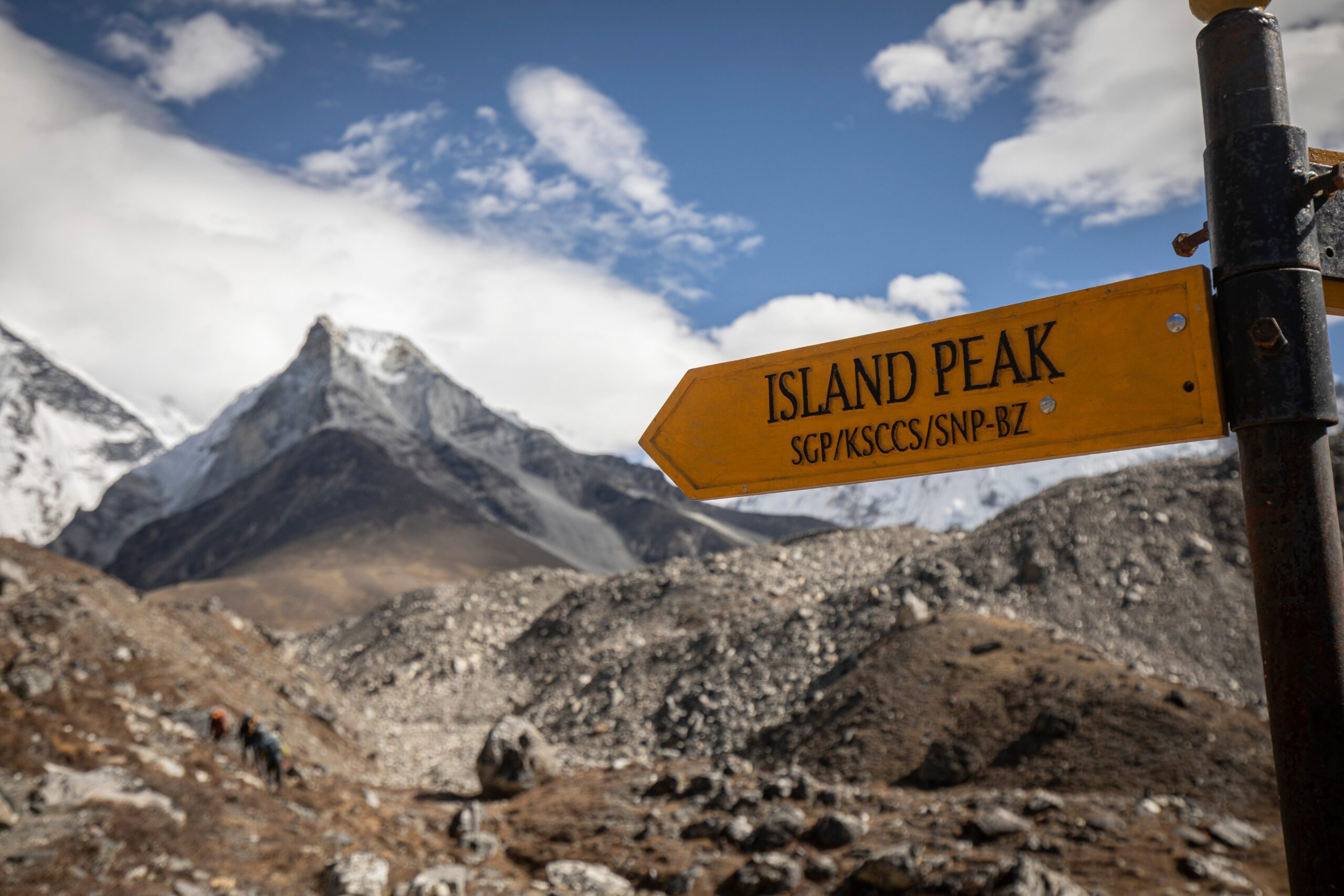
Island Peak vs Mera Peak: Which Should You Climb?
The complete 2026 comparison of Nepal’s two most popular trekking peaks — Mera Peak (6,476m / 21,247 ft, the highest trekking peak in Nepal) and Island Peak / Imja Tse (6,189m / 20,305 ft, the more technical of the two). Covering difficulty, success rates, the Everest Base Camp combo trek, beginner suitability, permit logistics, and the question every first-time Himalayan climber asks: which one should you climb first?
This comparison synthesizes information from authoritative Nepal climbing sources including the Nepal Mountaineering Association (NMA) official trekking peak data, the UIAA alpine grading system, The Himalayan Database historical records, and published trip reports from major Nepal-based expedition operators. Trail mileages, elevation figures, success rates, and permit specifics are cross-referenced with multiple sources. No affiliate partnerships influence recommendations.
⚡ The Verdict in One Sentence
Mera Peak is the better first choice for most climbers — it is higher (6,476m vs 6,189m), technically easier (Grade PD basic glacier walk vs Grade PD+ with fixed-rope headwall and ladder crevasse crossing), and offers spectacular 360-degree views of five 8,000-meter peaks including Everest from the summit. Island Peak (Imja Tse) is the better choice for technical preparation — its fixed-rope sections, ice axe and crampon work, and ladder crossings teach skills that transfer directly to bigger Himalayan climbs.
Many climbers do BOTH on a single expedition (Mera first for acclimatization, then Island Peak for technical experience). Each requires similar permit fees (~$250 NMA permit), similar duration (16-21 days), and similar physical fitness — the choice ultimately depends on whether you prioritize altitude experience and views (Mera) or technical climbing preparation (Island Peak).
MERA PEAK
Hinku Valley · Nepal · Highest Trekking Peak
- Standard route
- Mera La pass
- Trek duration
- 17-21 days
- Difficulty grade
- PD (Peu Difficile)
- Technical level
- Basic glacier walk
- NMA permit
- ~$250
- High camp
- ~5,800 m
- Success rate
- ~50-70%
- Views from summit
- 5 of 14 eight-thousanders
- Best season
- Oct-Nov, Apr-May
- Combo with
- Three Passes or solo
ISLAND PEAK (Imja Tse)
Khumbu Valley · Nepal · Local Name: Imja Tse
- Standard route
- Chhukung approach
- Trek duration
- 16-20 days
- Difficulty grade
- PD+ to AD-
- Technical level
- Fixed ropes + ladder
- NMA permit
- ~$250
- High camp
- ~5,500 m
- Success rate
- ~50-70%
- Best season
- Apr-May, Oct-Nov
- Combo with
- Everest Base Camp trek
📑 On This Page
- The Fundamental Difference
- Side-by-Side Comparison Table
- Mera Peak Complete Climbing Guide
- Mera Peak Elevation Explained
- Mera Peak Success Rate
- Is Mera Peak Harder Than Kilimanjaro?
- Can You See Everest from Mera Peak?
- Island Peak (Imja Tse) — The Technical Trekking Peak
- Everest Base Camp and Island Peak Combo Trek
- Can a Beginner Climb Island Peak?
- Difficulty Comparison
- Permits and Costs
- Gear Requirements
- Best Season for Each
- Which Prepares You for the Other?
- Choose Mera Peak If…
- Choose Island Peak If…
- Common Mistakes
- Himalayan Mountaineering Progression
- FAQ
- Methodology + Sources
⚡ Quick Answer: Mera Peak vs Island Peak (Imja Tse)
Which to climb first? Mera Peak as default — higher, easier technically, with the best summit views in the Himalaya (5 eight-thousanders visible). Island Peak if you want technical preparation for future bigger climbs.
Mera Peak (6,476m): Grade PD, basic glacier walk, $250 permit, 17-21 days, 5 of 14 eight-thousanders visible from summit including Everest. Island Peak / Imja Tse (6,189m): Grade PD+, fixed-rope headwall + ladder crevasse crossing + 45° ice slope, $250 permit, 16-20 days combined with Everest Base Camp.
Success rate: Both ~50-70% with good acclimatization. Cost: Both ~$1,500-3,500 total with guide and permits. Best season: Both October-November and April-May.
How This Comparison Was Built — Honest Editorial Framing
This Island Peak vs Mera Peak comparison is built on comprehensive cross-referenced research rather than personal first-hand ascent of either peak. Specifically, neither Mera Peak nor Island Peak (Imja Tse) is in our editorial team’s direct climbing experience to date — both are technical Himalayan trekking peaks outside the peaks we have personally climbed (Mount Kilimanjaro, Pico de Orizaba, Iztaccíhuatl, Mount Rainier-class peaks, and Utah peaks). We are explicit about this distinction.
Notably, this comparison synthesizes authoritative data sources: the Nepal Mountaineering Association (NMA) official trekking peak data, The Himalayan Database historical records, the UIAA alpine grading system, and published trip reports from major Nepal-based expedition operators including IMG, Mountain Madness, Alpine Ascents International, Adventure Consultants, and Madison Mountaineering — all of which operate on both peaks. Where data sources differ — for instance on Mera Peak’s exact elevation (6,476m vs 6,461m depending on which summit is referenced) — we present the range and explain the reasoning.
🏔 The Trekking Peak Decision Framework
The Mera Peak vs Island Peak decision sits across four primary dimensions. First, altitude vs technical: Mera is higher (more altitude experience) while Island Peak is more technical (more skill-building). Second, scenery emphasis: Mera offers panoramic 5-eight-thousander views from the summit; Island Peak offers close-up Lhotse face and Makalu views. Third, combination strategy: Island Peak combines naturally with Everest Base Camp trek (the most popular Himalayan combination); Mera Peak combines with Three Passes Trek or stands alone.
Fourth, preparation goals: Mera builds the altitude tolerance and trekking endurance for 7,000m+ peaks; Island Peak builds the technical skills (fixed-rope ascending, ice axe work, ladder crossings) for technical Himalayan climbs. Generally, the right question isn’t “which is harder” — both are demanding 6,000m peaks requiring respect — but “which fits my specific preparation goals and travel style.” Notably, many climbers do BOTH on a 22-28 day expedition, getting altitude experience from Mera before technical experience on Island Peak.
Mera Peak (6,476m / 21,247 ft) and Island Peak / Imja Tse (6,189m / 20,305 ft) are Nepal’s two most popular trekking peaks — the entry points into Himalayan mountaineering for tens of thousands of climbers annually. Generally, “trekking peaks” are Nepal Mountaineering Association (NMA) designated 5,000-7,000 meter mountains that require climbing permits but are accessible to fit trekkers with basic mountaineering skills — distinct from “expedition peaks” (over 7,000m) that require more extensive permits and technical experience. Specifically, Mera Peak is the highest peak in the NMA trekking peak classification and presents primarily as a long high-altitude trek with basic glacier walking; Island Peak (called Imja Tse in Nepali, its formal NMA-registered name) is lower in altitude but technically more demanding with fixed-rope sections, ladder crevasse crossings, and a 45-degree ice slope to the summit ridge. Notably, both peaks attract first-time Himalayan climbers because they offer 6,000m+ summit experience with manageable technical requirements compared to expedition peaks like Ama Dablam, Baruntse, or any 7,000m+ objective.
Key Takeaways
- Mera Peak is higher: 6,476m vs 6,189m (Island Peak) — a 287m difference.
- Mera Peak is easier technically: Grade PD vs PD+ (Island Peak / Imja Tse).
- Island Peak’s local name is Imja Tse — the formal NMA-registered name.
- 5 eight-thousanders visible from Mera summit including Everest.
- Island Peak combines naturally with Everest Base Camp trek — most popular combo.
- Both require NMA permits (~$250 each).
- Success rates similar: ~50-70% with good acclimatization.
- Best season Oct-Nov and Apr-May for both peaks.
- Mera Peak harder than Kilimanjaro — higher altitude and basic technical demands.
- Default first choice: Mera Peak for altitude focus; Island Peak for technical focus.
✓ Editorial Trust Signals
- Research-based: Honest framing on both peaks
- Independent: No affiliate sponsorship
- Cross-referenced: NMA, UIAA, Himalayan Database
- Last verified: June 9, 2026
- Review cycle: Quarterly
- Safety review: Dawson Ludlow (WFA)
- Gear review: Walker Ludlow
- 700+ source pages: Cross-linked
The Fundamental Difference Between Mera Peak and Island Peak (Imja Tse)
Mera Peak and Island Peak — known locally as Imja Tse — are Nepal’s two most popular trekking peaks, the standard entry points into Himalayan mountaineering for first-time climbers. Generally, they are often grouped together as “the two big trekking peaks,” but they offer fundamentally different climbing experiences. Specifically, the comparison comes down to a single key observation: Mera Peak is higher but technically easier; Island Peak is lower but technically more demanding. Neither is a casual hike — both are 6,000-meter peaks requiring NMA permits, qualified Nepalese guide services, multi-week expedition duration, and basic mountaineering skills — but they emphasize different aspects of what makes a Himalayan climb challenging.
What distinguishes them most clearly is where the difficulty concentrates. Generally, Mera Peak’s difficulty is distributed across the entire long high-altitude trek — fatigue accumulates over 17-21 days of expedition, altitude effects build above 5,000 meters, and the summit day requires only basic glacier walking with crampons and ice axe but no rope work beyond rope team travel for crevasse protection. Specifically, Island Peak / Imja Tse’s difficulty concentrates in the final summit day — a moderate trekking approach to base camp, then a steep 100-meter fixed-rope headwall, an aluminum ladder crossing over a major crevasse, and a 45-degree ice slope leading to the exposed summit ridge. Notably, this difference shapes the entire trip calculus: Mera Peak requires endurance and altitude conditioning; Island Peak requires basic mountaineering skill alongside altitude tolerance.
Side-by-Side Comparison Table
The complete comparison across every dimension that matters when choosing between Mera Peak and Island Peak (Imja Tse):
| Dimension | Mera Peak | Island Peak (Imja Tse) |
|---|---|---|
| Summit elevation | 6,476 m (21,247 ft) | 6,189 m (20,305 ft) |
| Local Nepali name | Mera Peak | Imja Tse |
| Region | Hinku Valley, Sagarmatha NP | Khumbu Valley, between Lhotse & Makalu |
| Alpine grade | PD (Peu Difficile) | PD+ to AD- |
| Technical demand | Basic glacier walk + crampons | Fixed ropes + ladder + 45° ice slope |
| Standard route | Mera La pass approach | Chhukung → Base Camp → High Camp |
| Base camp elevation | ~5,300 m | ~5,200 m |
| High camp elevation | ~5,800 m | ~5,500 m |
| Trek duration | 17-21 days | 16-20 days (with EBC) / 14-18 days (standalone) |
| Approach style | Remote Hinku Valley | Through Everest Base Camp region |
| Typical combination | Standalone or Three Passes Trek | Everest Base Camp + Island Peak combo |
| NMA permit cost | ~$250 (peak season) | ~$250 (peak season) |
| Total trip cost | $1,800-3,500 | $1,800-3,500 |
| Success rate | ~50-70% | ~50-70% |
| Eight-thousanders visible | 5 of 14 (Everest, Lhotse, Makalu, Cho Oyu, Kangchenjunga) | Lhotse face, Makalu close-up, Ama Dablam |
| First ascent | 1953 (Jimmy Roberts & Sen Tenzing) | 1953 (Tenzing Norgay & team, Everest prep) |
| Required gear | Crampons, ice axe, harness, rope (team) | Crampons, ice axe, harness, ascender, rope |
| Crevasse hazard | Moderate (rope team travel) | Significant (ladder crossing) |
| Best season | Oct-Nov primary, Apr-May secondary | Apr-May primary, Oct-Nov secondary |
| Trekking days to base | 8-10 days from Lukla | 9-11 days from Lukla (with EBC) |
| Summit day duration | 10-14 hours from high camp | 10-14 hours from high camp |
| Technical sections | One ~20m ice/snow section near summit | 100m headwall + ladder + ice slope |
| Best for | Altitude experience, scenic 360° views | Technical preparation for bigger climbs |
Mera Peak: The Complete Climbing Guide
Mera Peak (6,476 meters / 21,247 feet) is the highest trekking peak in Nepal under Nepal Mountaineering Association (NMA) classification. Generally, the mountain sits in the Hinku Valley region of Sagarmatha National Park, accessed via the small village of Lukla followed by 8-10 days of trekking through remote valleys southeast of the main Everest trekking corridor. Specifically, Mera Peak has three summits — Mera North at approximately 6,476 meters (the highest), Mera Central at approximately 6,461 meters, and Mera South at approximately 6,065 meters — though most commercial climbs target either Mera North or Mera Central depending on guide service and current glacier conditions.
What makes Mera Peak distinctive among Himalayan climbs is the combination of significant altitude with relatively low technical demands. Generally, the climb is rated Grade PD (Peu Difficile) in the alpine grading system — meaning it requires basic mountaineering skills (rope team travel for crevasse protection, crampon and ice axe proficiency, basic snow climbing technique) but no advanced technical climbing. Specifically, the entire route is essentially a long glacier walk with one short steeper section near the summit — fundamentally different from technical alpine climbs requiring fixed-rope ascending or roped lead climbing. Notably, this combination makes Mera Peak an ideal “first 6,000m peak” for climbers with prior altitude experience but limited technical mountaineering background.
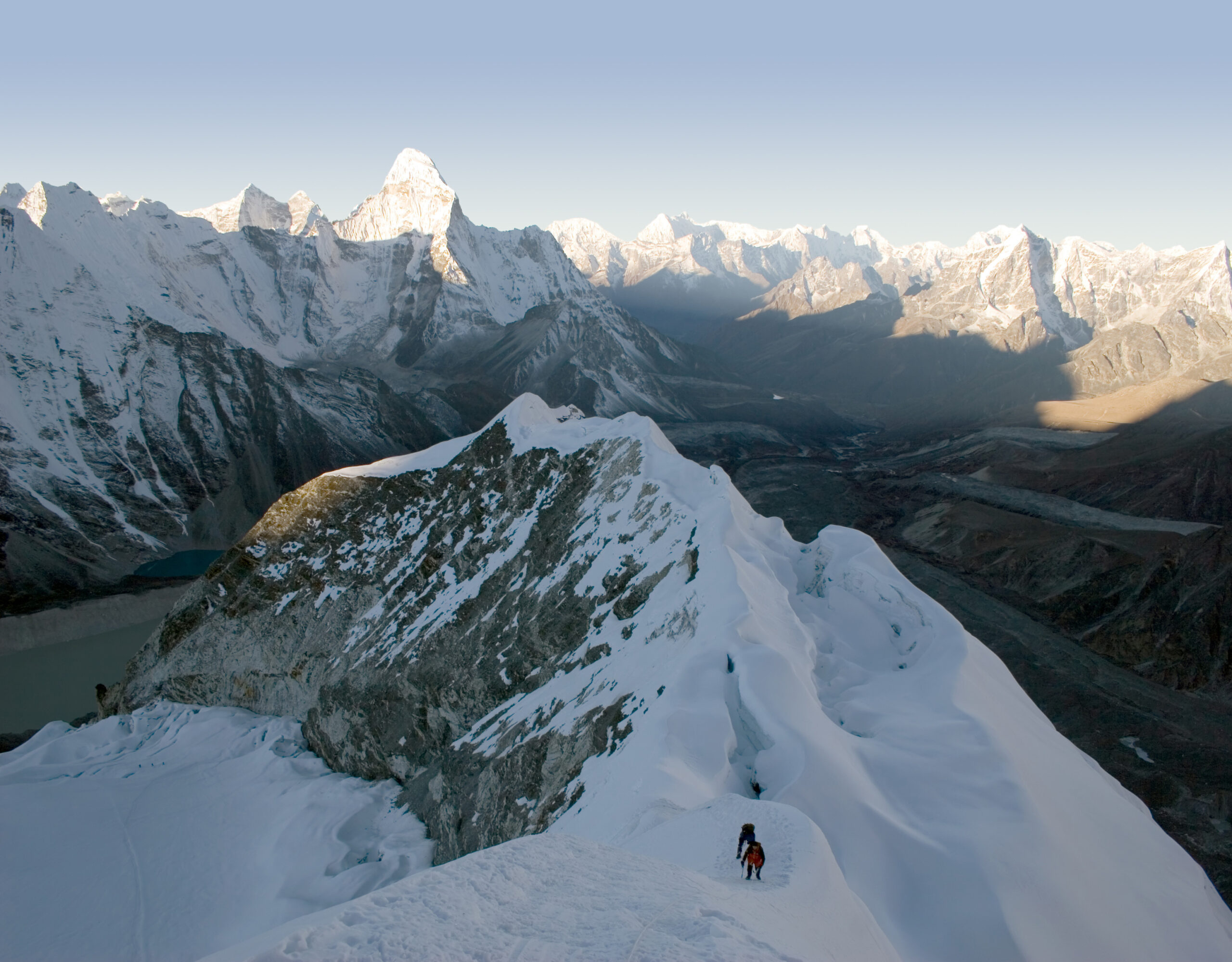
Mera Peak Elevation Explained
Mera Peak’s official elevation is 6,476 meters (21,247 feet) at the highest summit (Mera North), making it the highest peak in the Nepal Mountaineering Association trekking peak classification. Specifically, there are three distinct summits with slightly different elevations:
| Summit Designation | Elevation | Climbing Status |
|---|---|---|
| Mera North | 6,476 m (21,247 ft) | Highest summit; most commonly climbed |
| Mera Central | 6,461 m (21,198 ft) | Frequently summited; some guide services target this |
| Mera South | 6,065 m (19,898 ft) | Less commonly climbed; separate from main summit objective |
Generally, Mera Peak’s elevation places it in a unique position among Himalayan objectives. Specifically, the 6,476-meter summit is high enough to provide genuine 6,000m+ altitude experience (required for progression to 7,000m and 8,000m peaks) while remaining below the threshold where extreme altitude effects (above 5,500m sustained) become severely debilitating. Notably, Mera Peak is approximately 287 meters higher than Island Peak (Imja Tse), 1,098 meters higher than Mount Kilimanjaro (Africa’s highest at 5,895m), and 581 meters higher than Aconcagua’s closest 6,000m base camp — making it a meaningful step up in altitude experience for climbers progressing from these other peaks.
Mera Peak Success Rate
Mera Peak success rate is approximately 50-70% depending on guide service, weather conditions, and acclimatization profile. Generally, well-acclimatized parties with adequate weather windows typically achieve 65-80% summit success; rushed itineraries (under 16 days total) or parties without prior altitude experience see lower rates around 40-55%. Specifically, the factors that most affect Mera Peak success rate:
| Factor | Impact on Success |
|---|---|
| Acclimatization profile | 17+ day itinerary → 65-80% success; 12-14 day itinerary → 40-55% success |
| Weather window | Stable summit weather → high success; storms common in October-November |
| Prior altitude experience | Prior 5,000m+ peaks → significantly higher success |
| Fitness level | Strong aerobic fitness essential for 10-14 hour summit day |
| Cold management | High camp temperatures regularly -20°F; gear and technique matter |
| Diamox / altitude medication | Properly used acetazolamide improves success modestly |
| Guide service quality | Experienced Sherpa guides increase summit success substantially |
Notably, the most common reasons climbers fail to summit Mera Peak are: inadequate acclimatization (too rapid ascent), weather-related summit cancellations (storms in late October-November), altitude sickness symptoms (AMS, HAPE, HACE) above 5,500m, exhaustion from the long approach trek, and cold injury risk on summit day. Generally, climbers can maximize their Mera Peak success rate by selecting an itinerary of 18+ days, choosing peak weather windows (mid-October to mid-November, or April through mid-May), arriving with prior altitude experience to at least 5,000m, and using qualified Sherpa guide services with strong safety records.
Is Mera Peak Harder Than Kilimanjaro?
Yes, Mera Peak is harder than Kilimanjaro in most meaningful dimensions — though both are non-technical high-altitude climbs accessible to fit trekkers. Generally, the difficulty difference comes from several specific factors:
| Dimension | Mera Peak | Kilimanjaro | Harder Peak |
|---|---|---|---|
| Elevation | 6,476 m | 5,895 m | Mera (+581 m) |
| Technical demands | Basic glacier travel, crampons, ice axe | None (well-graded trails) | Mera (decisively) |
| Trek duration | 17-21 days | 5-9 days | Mera (3x longer) |
| Approach remoteness | Remote Hinku Valley | Established tourist trail | Mera |
| Cold exposure | High camp 5,800m -20°F typical | Summit -15°F typical, briefer | Mera |
| Permit / logistics complexity | NMA permit + Nepal trek permits | National park permit only | Mera |
| Success rate | ~50-70% | ~40-70% (route-dependent) | Similar overall |
| Cost | $1,800-3,500 total | $1,500-4,000 total | Similar |
Specifically, the biggest difference is technical skill requirement. Generally, Kilimanjaro is a pure hike — no rope, no crampons, no ice axe, no technical mountaineering skills required on any of the standard routes. Mera Peak requires basic mountaineering: rope team travel for crevasse protection, crampon and ice axe use, ability to walk in roped formation on glacier terrain, and basic snow climbing for one short section near the summit. Notably, the climbing skills required for Mera Peak can be learned in 1-2 days of mountaineering instruction in Nepal before the climb, but the requirement still distinguishes Mera Peak from Kilimanjaro as a “real” mountaineering objective.
For climbers who have successfully summited Kilimanjaro and want to take the next step in Himalayan mountaineering, Mera Peak is widely considered the ideal next objective. Generally, the altitude jump (5,895m → 6,476m) is substantial but achievable; the technical jump (no skills → basic mountaineering) is manageable with pre-climb instruction; and the experience builds the foundation for future Himalayan objectives including Island Peak, Aconcagua, Cho Oyu, or other 6,000-7,000m peaks. Specifically, many veteran Himalayan climbers describe their personal progression as Kilimanjaro → Mera Peak → Island Peak → Aconcagua → bigger objectives.
Can You See Everest from Mera Peak?
Yes — and the views are arguably the best in the Himalaya. Generally, Mera Peak’s summit at 6,476 meters offers a unique 360-degree panorama showing five of the world’s fourteen 8,000-meter peaks on a clear day. Specifically, from the Mera summit on a clear day climbers can see:
| 8,000-meter Peak | Elevation | World Rank | Direction from Mera |
|---|---|---|---|
| Mount Everest | 8,848.86 m (29,031 ft) | 1st highest | ~35 km north |
| Lhotse | 8,516 m (27,940 ft) | 4th highest | Immediately right of Everest |
| Makalu | 8,485 m (27,838 ft) | 5th highest | East of Everest, distinctive pyramid |
| Cho Oyu | 8,188 m (26,864 ft) | 6th highest | Far west, on Nepal-Tibet border |
| Kangchenjunga | 8,586 m (28,169 ft) | 3rd highest | Far east, on Nepal-India border |
This five-eight-thousander view from a non-technical trekking peak summit is unique to Mera Peak among accessible Himalayan climbs. Generally, no other trekking peak in Nepal offers this combination of accessible summit (basic mountaineering skills only) and panoramic viewing across the highest peaks in the Himalaya. Notably, the only places offering similar panoramic 8,000-meter views are more technical objectives requiring extensive climbing experience (Mera Central traverse, Baruntse summit, or 7,000m+ peaks). Specifically, this scenic advantage is a major factor in Mera Peak’s popularity — climbers often describe the summit experience as the single most spectacular mountain view they have ever experienced. Generally, photographs from the Mera summit on clear days are some of the most striking Himalayan images in mountaineering photography.
Island Peak (Imja Tse) — The Technical Trekking Peak
Island Peak — known locally as Imja Tse — is the more technical of Nepal’s two most popular trekking peaks, located at 6,189 meters (20,305 feet) in the Khumbu Valley region of the Everest area. Generally, the peak sits between Lhotse and Makalu, surrounded by glacial terrain that makes it appear as an island rising from a sea of ice when viewed from the Dingboche/Chhukung area below — the origin of the English name given by early British climbers from Eric Shipton’s 1951 expedition. Specifically, the formal Nepal Mountaineering Association registration uses Imja Tse as the official Nepali name, while English-speaking commercial guide services and international climbers typically use Island Peak.
What makes Imja Tse distinctive among trekking peaks is the technical character of the summit day. Generally, the approach trek from Lukla through the standard Everest Base Camp trail to Chhukung is moderate trekking accessible to fit hikers — no different from the standard EBC trek experience. Specifically, what changes is the summit day itself: from Island Peak high camp at 5,500 meters, climbers ascend a steepening glacier to a notable 100-meter fixed-rope headwall (using ascenders/jumars), cross an aluminum ladder over a major crevasse, ascend a 45-degree ice slope, and traverse an exposed summit ridge to the highpoint. Notably, this technical character is fundamentally different from Mera Peak’s basic glacier walk approach.
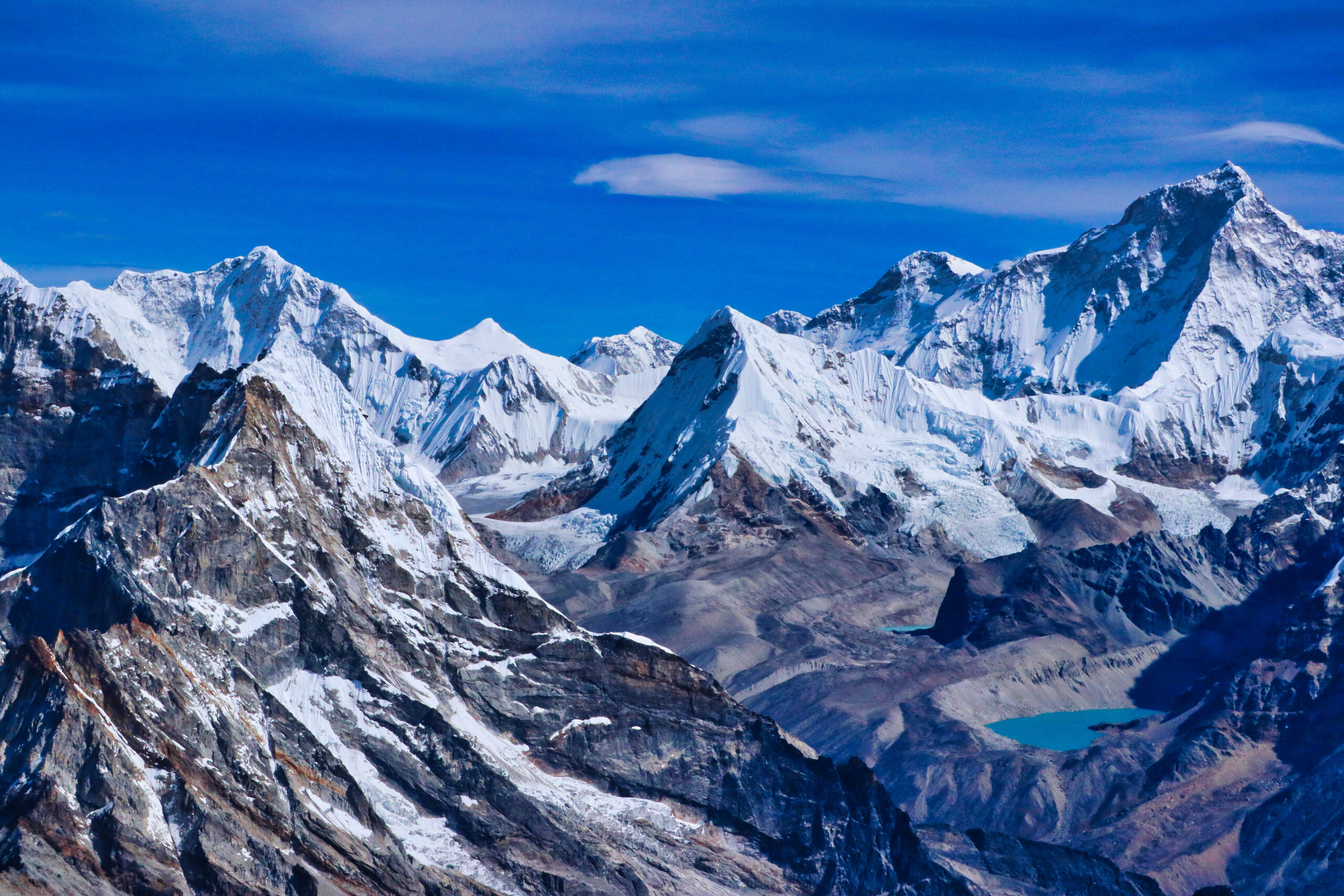
Everest Base Camp and Island Peak — The Most Popular Combo Trek
The Everest Base Camp and Island Peak combined trek is the most popular Himalayan mountaineering itinerary in Nepal, combining the classic EBC trek with an Island Peak (Imja Tse) summit attempt. Generally, the combined trek lasts 16-20 days total and is the standard “first Himalayan climb + iconic trek” package offered by virtually every Nepal-based expedition operator. Specifically, the standard combined itinerary:
| Day | Activity | Elevation |
|---|---|---|
| Day 1-2 | Kathmandu arrival, briefing, fly to Lukla | 2,860 m (Lukla) |
| Day 3-4 | Trek Lukla to Namche Bazaar; acclimatization | 3,440 m (Namche) |
| Day 5-7 | Trek Namche → Tengboche → Dingboche | 4,410 m (Dingboche) |
| Day 8-9 | Acclimatization Dingboche; trek to Lobuche | 4,940 m (Lobuche) |
| Day 10-11 | Trek to Gorak Shep; Everest Base Camp visit (5,364 m); climb Kala Patthar (5,545 m) | 5,364 m (EBC) |
| Day 12-13 | Descend to Chhukung; rest/prep day | 4,730 m (Chhukung) |
| Day 14 | Trek to Island Peak Base Camp | 5,200 m (Base Camp) |
| Day 15 | Climbing instruction day; trek to High Camp | 5,500 m (High Camp) |
| Day 16 | Summit Island Peak (Imja Tse), 6,189 m, return to Base Camp | 6,189 m → 5,200 m |
| Day 17-18 | Descend to Chhukung; trek to Namche | 3,440 m (Namche) |
| Day 19-20 | Trek to Lukla; fly to Kathmandu | 1,400 m (Kathmandu) |
Specifically, the combined EBC + Island Peak trek uses the Everest Base Camp portion for natural acclimatization — climbers spend approximately 10 days acclimatizing through Namche, Tengboche, Dingboche, and Lobuche before attempting Island Peak from a now-acclimatized state. Generally, this dramatically improves Island Peak summit success rates compared to standalone Island Peak climbs that require the full acclimatization burden in fewer days. Notably, the combined trek is the most popular Himalayan mountaineering objective for first-time climbers because it combines two iconic experiences (Everest Base Camp + first 6,000m summit) in a single 16-20 day trip.
Can a Beginner Climb Island Peak?
A beginner CAN climb Island Peak (Imja Tse) — but “beginner” needs careful definition. Generally, Island Peak is not appropriate for someone with zero outdoor or altitude experience, but it IS achievable for hikers and trekkers with proper preparation. Specifically, the qualifications for a beginner Island Peak attempt include:
- Prior altitude experience to 4,500-5,000m: Everest Base Camp trek (5,364m), Kilimanjaro (5,895m), or similar acclimatization experience — climbers without prior altitude exposure face dramatically higher AMS risk
- Basic mountaineering exposure: An introductory mountaineering course covering ice axe, crampons, fixed-rope ascending (jumar use), and basic crevasse rescue — typically 3-5 day courses available in Nepal, Colorado, or Washington State
- Trekking fitness for 14+ days: Comfortable hiking 6-8 hours daily with a 15-20 lb pack at altitude
- Comfort with exposure: The headwall, ladder crossing, and summit ridge all involve significant exposure; severe acrophobia is disqualifying
- Willingness to follow Sherpa guide instruction: First-time climbers should never attempt Island Peak independently — qualified Nepal-based guide services are essential
- Realistic preparation timeline: 6-12 months of fitness preparation and at least one prior major altitude climb recommended
Some marketing materials describe Island Peak as a “beginner trekking peak” suitable for first-time mountaineers. This framing is somewhat misleading. Generally, Island Peak / Imja Tse is the easier of the technical Himalayan peaks (compared to Ama Dablam, Baruntse, or 7,000m peaks), but it is NOT the easiest 6,000m peak in Nepal. Specifically, Mera Peak is significantly less technical and therefore more appropriate for true first-time mountaineers without prior altitude or technical experience. Notably, climbers should be honest about their experience level — attempting Island Peak as a true first climb is associated with higher abort rates and increased accident risk.
Detailed Difficulty Comparison
| Difficulty Dimension | Mera Peak | Island Peak (Imja Tse) | Winner (Harder) |
|---|---|---|---|
| Altitude | 6,476 m | 6,189 m | Mera (+287 m) |
| Technical sections | One short ~20m snow/ice section | 100m headwall + ladder + 45° slope | Island Peak (decisively) |
| Fixed-rope ascending | Minimal | Required on headwall | Island Peak |
| Crevasse hazard | Rope team protection sufficient | Ladder crossing required | Island Peak |
| Ice axe self-arrest | Basic capability needed | Solid capability needed | Island Peak |
| Endurance demand | Very high (17-21 days, remote approach) | High (16-20 days, EBC approach) | Similar; Mera slightly more |
| Cold exposure | 5,800m high camp | 5,500m high camp | Mera (higher high camp) |
| Acclimatization burden | Self-contained (must acclimatize during trek) | Often paired with EBC for natural acclimatization | Mera (less natural acclimatization) |
| Summit day duration | 10-14 hours | 10-14 hours | Similar |
| Weather window risk | Severe in late October | Severe in late October | Similar |
| Overall difficulty | Higher altitude, easier technical | Lower altitude, harder technical | Depends on climber’s profile |
Permits and Costs
| Cost Item | Mera Peak | Island Peak (Imja Tse) |
|---|---|---|
| NMA climbing permit | ~$250 (autumn) / $125 (winter/summer) | ~$250 (autumn) / $125 (winter/summer) |
| Sagarmatha NP fee | ~$30 | ~$30 |
| Khumbu Pasang Lhamu fee | ~$20 | ~$20 |
| TIMS card | ~$20 | ~$20 |
| Guide service (group) | $1,500-2,500 per person | $1,500-2,500 per person |
| Guide service (premium private) | $3,500-5,500 per person | $3,500-5,500 per person |
| Lukla flights | ~$400-500 round trip | ~$400-500 round trip |
| Tea house accommodation | ~$15-25/night | ~$15-25/night |
| Equipment rental | ~$150-300 (technical gear) | ~$200-400 (more technical gear) |
| Tips for staff | ~$100-200 per climber | ~$100-200 per climber |
| Total realistic range | $1,800-3,500 | $1,800-3,500 |
Gear Requirements
| Gear Item | Mera Peak | Island Peak (Imja Tse) |
|---|---|---|
| Mountaineering boots | B2 rated double boots | B2 rated double boots |
| Crampons | Steel 10-12 point | Steel 10-12 point |
| Ice axe | Walking axe (~60 cm) | Walking axe (~50-60 cm) |
| Climbing harness | Standard alpine | Standard alpine |
| Ascender (jumar) | Not required | REQUIRED for headwall |
| 30m rope | Group rope sufficient | Group rope sufficient |
| Helmet | Required | Required |
| Down suit / parka | Down parka rated -20°F | Down parka rated -20°F |
| Sleeping bag | Rated to -20°F or colder | Rated to -20°F or colder |
| Trekking poles | Recommended | Recommended |
| Headlamp + spare | Required (pre-dawn summit) | Required (pre-dawn summit) |
Best Season for Each Peak
| Month | Mera Peak Conditions | Island Peak Conditions |
|---|---|---|
| January-February | Winter conditions; cold; expedition style climbing | Winter conditions; cold; rarely climbed |
| March | Pre-monsoon prep; conditions improving | Pre-season; conditions improving |
| April | Good conditions; pre-monsoon spring | OPTIMAL spring season; best stable weather |
| May | Good conditions; warming up | Good conditions; peak commercial season |
| June-August | Monsoon season; not recommended | Monsoon season; not recommended |
| September | Post-monsoon clearing; conditions improving | Post-monsoon; conditions improving |
| October | OPTIMAL autumn season; peak weather | Excellent autumn season; busy |
| November | Excellent early; deteriorating late month | Excellent early; deteriorating late month |
| December | Winter conditions returning | Winter conditions returning |
Which One Prepares You for the Other?
Both peaks build skills that transfer, but they emphasize different competencies. Generally, climbers who do both peaks typically follow a Mera-first sequence for altitude experience, then Island Peak for technical experience.
What Mera Peak Teaches That Transfers to Island Peak
- 6,000m+ altitude tolerance: Demonstrates ability to function at extreme altitude
- Cold management: High camp at 5,800m and summit at 6,476m teaches cold endurance
- Basic mountaineering competence: Crampon, ice axe, rope team travel basics
- Long expedition logistics: 17-21 day expeditions build endurance and patience
- Summit day psychology: 10-14 hour summit day teaches mental endurance
What Island Peak Teaches That Transfers to Mera Peak (or Vice Versa)
- Fixed-rope ascending: Ascender/jumar skills not built on Mera
- Ladder crossing technique: Unique to Island Peak and similar peaks
- Steep ice climbing: 45-degree ice slope ascent skills
- Technical Himalayan competence: Builds skills for Ama Dablam, Baruntse, 7,000m peaks
The Combined Expedition Approach
Ambitious climbers increasingly combine BOTH peaks into a single 22-28 day expedition. Generally, the typical sequence is: arrive Kathmandu → fly Lukla → trek Hinku Valley → climb Mera Peak → trek to Khumbu Valley → join EBC trek → climb Island Peak (Imja Tse) → return Kathmandu. Specifically, this approach uses Mera Peak for altitude acclimatization that transfers to Island Peak’s lower-altitude summit, while developing both basic and technical mountaineering skills. Notably, several Nepal-based operators offer this combined expedition as their flagship Himalayan trekking peak package.
Choose Mera Peak If…
- You want the highest trekking peak in Nepal — Mera at 6,476m is THE highest NMA trekking peak
- You want the best summit views in the Himalaya — 5 of 14 eight-thousanders visible
- You don’t want fixed-rope or ladder sections — Mera is basic glacier walking
- You’re progressing from Kilimanjaro — Mera is the ideal next step
- You prefer remote trekking — Hinku Valley is far less crowded than the EBC corridor
- You want altitude experience without technical commitment — Mera builds the altitude base
- You can commit 17-21 days — the full Mera expedition timeline
- You’re considering future 7,000m+ peaks — Mera is excellent altitude preparation
- You prefer fewer crowds on the trail — Hinku Valley sees far fewer trekkers
- You want a single major summit objective — Mera stands alone as a complete expedition
Choose Island Peak (Imja Tse) If…
- You want to combine your climb with Everest Base Camp trek — most popular EBC + Island Peak combo
- You want technical mountaineering experience — fixed ropes, ladder crossings, ice slope
- You’re preparing for Ama Dablam, Baruntse, or 7,000m peaks — Island Peak builds the skills
- You’ve already done a non-technical 6,000m peak — Mera, Aconcagua, or similar
- You’re comfortable with exposure and basic technical climbing — headwall and summit ridge
- You want the iconic Lhotse face views — Island Peak summit offers spectacular close-up views
- You want the most popular Himalayan climb option — Island Peak + EBC is the standard combo
- You’re working through a Himalayan mountaineering progression — Island Peak is a key step
- You want to maximize natural acclimatization — EBC trek builds altitude before Island Peak
- You can secure a guide with strong Imja Tse experience — quality matters on technical peaks
Common Mistakes on Both Peaks
(1) Rushing acclimatization — both peaks require minimum 16-day itineraries; shorter trips have substantially lower success rates. (2) Underestimating altitude — fit climbers regularly fail at 5,500m+ altitude despite excellent fitness. (3) Skipping Island Peak technical training — climbers without prior fixed-rope or crampon experience struggle on summit day. (4) Underestimating Mera Peak cold — high camp at 5,800m is brutally cold; inadequate gear leads to frostbite. (5) Choosing wrong season — late October-November storms cause many summit cancellations; April-May offers more stable weather for Island Peak. (6) Inadequate guide service quality — budget guide services have lower success rates and higher safety risks. (7) Climbing solo or unguided — illegal under NMA rules and dangerous; always use registered Nepal-based guide services. (8) Skipping Diamox / altitude medication consultation — acetazolamide significantly aids acclimatization on both peaks. (9) Underestimating mental challenge — 17+ day expeditions test patience and psychological endurance. (10) Ignoring weather forecasts — afternoon storms in monsoon transition seasons are deadly on exposed summit terrain.
Himalayan Mountaineering Progression
For climbers building toward both peaks (or considering them as part of broader Himalayan mountaineering development), here’s a typical progression pathway:
| Stage | Suggested Objectives | Why |
|---|---|---|
| Stage 1: Foundation | Mount Rainier, Mount Hood, Mount Baker | Glacier mountaineering basics, fixed lines, technical skills |
| Stage 2: Altitude introduction | Mount Kilimanjaro (5,895m) | Pure altitude experience, 5,000m+ tolerance |
| Stage 3: Technical altitude | Pico de Orizaba (5,636m) | Technical glacier climb + altitude |
| Stage 4: First 6,000m peak | Mera Peak (6,476m) | Highest trekking peak; altitude base |
| Stage 5: Technical Himalayan | Island Peak / Imja Tse (6,189m) | Technical Himalayan skills; EBC combo |
| Stage 6: Major altitude | Aconcagua (6,961m) | Sustained altitude, expedition logistics |
| Stage 7: First 8,000m | Cho Oyu (8,188m) or Manaslu (8,163m) | Death zone introduction, supplemental oxygen |
| Stage 8: Expedition mountaineering | Denali (6,190m) for self-sufficiency | Self-supported expedition skills |
| Stage 9: Major Himalayan | Mount Everest (8,848m), Ama Dablam, others | Culmination objectives |
Frequently Asked Questions About Mera Peak vs Island Peak
Which should you climb first, Island Peak or Mera Peak?
For most first-time Himalayan trekking peak climbers, Mera Peak is the better first choice despite being higher (6,476m vs 6,189m). Mera Peak is technically easier — primarily a long high-altitude trek with basic glacier walking rather than the fixed-rope headwall and ladder crevasse crossing that define Island Peak (Imja Tse). Mera Peak builds altitude tolerance and trekking endurance for Himalayan climbing while requiring only basic glacier travel skills. Island Peak / Imja Tse is the better choice if you want technical climbing preparation for future 7,000m or 8,000m peaks — its fixed-rope sections, ice axe and crampon proficiency requirements, and ladder crossings teach skills that transfer directly to bigger Himalayan climbs. Many climbers do BOTH peaks on a combined expedition, typically Mera first for acclimatization then Island Peak for technical experience.
What is the elevation of Mera Peak?
Mera Peak has an elevation of 6,476 meters (21,247 feet) at its highest summit (Mera North), making it the highest trekking peak in Nepal under Nepal Mountaineering Association (NMA) classification. Mera Peak has three summits: Mera North at approximately 6,476m, Mera Central at approximately 6,461m, and Mera South at approximately 6,065m. Most commercial climbs target Mera Central or Mera North depending on guide service and conditions. The summit sits in the Hinku Valley region of Sagarmatha National Park, Nepal. Mera Peak is approximately 287 meters higher than Island Peak (6,189m), making it the higher of the two most popular trekking peaks in Nepal.
What is the Mera Peak success rate?
Mera Peak success rate is approximately 50-70% depending on guide service, weather, and acclimatization profile. Well-acclimatized parties with adequate weather typically see 65-80% success; rushed itineraries (under 16 days) or parties without prior altitude experience see lower rates around 40-55%. The main reasons climbers fail to summit Mera Peak are: inadequate acclimatization, weather-related summit cancellations, altitude sickness symptoms (AMS, HAPE, HACE), exhaustion from the long approach trek, and cold injury risk on summit day. The Mera Peak success rate is comparable to Kilimanjaro but at significantly higher altitude (6,476m vs 5,895m for Kilimanjaro). Climbers can maximize success by selecting itineraries of 18+ days, choosing peak weather windows, arriving with prior altitude experience, and using qualified Sherpa guide services.
Is Mera Peak harder than Kilimanjaro?
Yes, Mera Peak is harder than Kilimanjaro in most meaningful dimensions. Mera Peak (6,476m) is 581 meters higher than Kilimanjaro (5,895m). Mera Peak requires basic mountaineering skills (rope team travel, ice axe and crampon use, basic glacier navigation) that Kilimanjaro does not require. The trek duration is longer (17-21 days for Mera vs 5-9 days for Kilimanjaro), the approach is more remote, and the cold exposure at high camp (5,800m) is more severe than anything Kilimanjaro presents. Kilimanjaro success rates can be lower (40-50% on shorter routes) than Mera Peak due to faster ascent profiles. Climbers comfortable with Kilimanjaro acclimatization (7+ day routes) are generally prepared for Mera Peak with additional technical skills training.
Can a beginner climb Island Peak?
A beginner CAN climb Island Peak (Imja Tse) but only with specific qualifications — Island Peak is not appropriate for someone with no prior outdoor or altitude experience. Qualifications for a beginner Island Peak attempt include: prior altitude experience to at least 4,500-5,000 meters (Everest Base Camp trek, Kilimanjaro, or similar), basic familiarity with ice axe and crampon use through introductory mountaineering courses, fitness sufficient for 14+ day trekking, comfort with exposure and heights, and willingness to follow a qualified Sherpa guide. Island Peak’s technical sections — the 100m fixed-rope headwall, the aluminum ladder crossing over a major crevasse, and the 45-degree ice slope to summit ridge — require basic technical climbing skills that pure trekkers do not develop. Many climbers find Mera Peak a better first 6,000m choice for those without prior technical mountaineering experience.
What is Imja Tse and is it the same as Island Peak?
Imja Tse is the Nepali name for Island Peak — they are the same mountain. Imja Tse translates roughly to “Imja Peak” in English, referring to the peak’s location in the Imja Glacier area of the Khumbu region. The name Island Peak was given by early British climbers (notably from Eric Shipton’s 1951 expedition) who described the peak as appearing like an island rising from a sea of ice when viewed from Dingboche. The official Nepal Mountaineering Association (NMA) registration uses Imja Tse as the formal name, while English-speaking commercial guide services use Island Peak. Climbers in Nepal and Sherpa guides often use both names interchangeably. When researching the climb, English-speakers will find more information under “Island Peak” but local guide services and Nepali sources use Imja Tse — both terms refer to the same 6,189-meter mountain located between Lhotse and Makalu in the Everest region.
Can you see Everest from Mera Peak?
Yes, you can see Everest from Mera Peak — in fact, Mera Peak’s summit offers one of the best 360-degree views in the Himalaya, with five 8,000-meter peaks visible on a clear day. From the 6,476-meter summit, climbers can see Mount Everest (8,848m, the highest peak on Earth, approximately 35km north), Lhotse (8,516m, immediately east of Everest), Makalu (8,485m, the fifth-highest peak in the world), Cho Oyu (8,188m, the sixth-highest peak), and Kangchenjunga (8,586m, the third-highest peak, visible far to the east). This 5-eight-thousander view from a non-technical trekking peak summit is unique to Mera Peak among accessible Himalayan climbs. Island Peak’s lower elevation and surrounding terrain mean it offers a more enclosed view emphasizing the nearby Lhotse face and Makalu rather than the broader Himalayan panorama Mera offers.
What is the Everest Base Camp and Island Peak trek?
The Everest Base Camp and Island Peak trek is the most popular combined itinerary in Nepal — joining the classic Everest Base Camp trek with an Island Peak (Imja Tse) summit attempt. The trek lasts 16-20 days total: 12-14 days for the EBC trek and acclimatization, followed by 4-6 additional days for the Island Peak summit push. The standard itinerary includes Lukla flight in, trek to Namche Bazaar (3,440m), acclimatization, continue to Dingboche and Lobuche, reach Everest Base Camp at 5,364m, climb Kala Patthar viewpoint at 5,545m for Everest views, descend to Chhukung, ascend to Island Peak Base Camp at 5,200m, summit Island Peak from high camp at 5,500m, return to Chhukung and trek back to Lukla. The EBC + Island Peak combination uses the EBC trek for natural acclimatization, making Island Peak’s altitude more manageable than a stand-alone climb.
How long does it take to climb Mera Peak vs Island Peak?
Mera Peak typically takes 17-21 days from Kathmandu including all approach, acclimatization, summit, and return; Island Peak (Imja Tse) typically takes 16-20 days when climbed as part of the popular Everest Base Camp and Island Peak combined trek, or 14-18 days when climbed as a stand-alone objective without the EBC trek. Both climbs require similar total time commitments. The difference comes from: Mera Peak’s more remote Hinku Valley approach (more trekking days to and from the climb), Island Peak’s faster approach via the EBC trail (more efficient logistics), and the combined EBC trek itinerary that uses Everest Base Camp acclimatization to support Island Peak’s summit attempt. Ambitious climbers can combine BOTH peaks into a single 22-28 day expedition using Mera Peak for acclimatization then Island Peak for technical experience.
What permits do you need for Mera Peak and Island Peak?
Both Mera Peak and Island Peak (Imja Tse) require Nepal Mountaineering Association (NMA) climbing permits plus additional trekking permits. The NMA climbing permit costs approximately USD 250 per climber for both peaks (varies by season — higher in spring April-May and autumn September-November peak seasons, lower in winter and summer). Additional required permits include: Sagarmatha National Park entry permit (approximately USD 30), TIMS (Trekkers Information Management System) card (approximately USD 20), and a Khumbu Pasang Lhamu Rural Municipality fee (approximately USD 20 in the EBC region). All climbing must be done with a registered Nepal guide service that handles permit logistics — independent unguided climbing is not permitted under NMA rules. Total permit and guide costs typically run USD 1,500-3,500 per climber depending on group size and service level.
Methodology & Editorial Standards
How This Comparison Was Built
1. Editorial Approach: Research-Based Comparison
This Island Peak vs Mera Peak comparison is built on extensive cross-referenced research rather than personal first-hand ascent. Neither Mera Peak nor Island Peak (Imja Tse) is in our editorial team’s direct climbing experience to date — both are technical Himalayan trekking peaks outside the peaks we have personally climbed. Our team’s direct hiking and mountaineering experience includes Mount Kilimanjaro, Pico de Orizaba, Iztaccíhuatl, Mount Rainier-class peaks, and Utah peaks.
2. Nepal Mountaineering Association (NMA) Data
Permit requirements, peak classifications, regulations, and historical climbing data are sourced from the Nepal Mountaineering Association — the official authority for Nepalese trekking peaks including Mera Peak and Island Peak (Imja Tse).
3. The Himalayan Database
Historical climbing data, summit success rates, and fatality records are cross-referenced with The Himalayan Database — the standard Himalaya historical record originally curated by Elizabeth Hawley.
4. UIAA Alpine Grading
Technical difficulty grades (PD, PD+, AD-) are sourced from UIAA (International Climbing and Mountaineering Federation) standards.
5. Nepal-Based Expedition Operators
Operational details, success rate ranges, and route specifics are cross-referenced with published trip reports from major Nepal-based expedition operators including IMG, Mountain Madness, Alpine Ascents International, Adventure Consultants, Madison Mountaineering, and Nepalese-owned operators.
6. Editorial Independence
No affiliate partnerships with guide services or expedition operators influence recommendations. Cost ranges are presented from public information across multiple operators. The article generates revenue only through Google AdSense display ads when applicable.
7. Update Cycle
This comparison is reviewed quarterly. Next scheduled review: September 2026. Permit fees, regulations, and operator pricing change; verify current information with the Nepal Mountaineering Association and expedition operators before planning.
Sources and References
Numbered Source References
This Mera Peak vs Island Peak (Imja Tse) comparison synthesizes data from authoritative Nepal mountaineering organizations and established Himalayan expedition operator resources.
- Nepal Mountaineering Association (NMA) · https://nepalmountaineering.org/ — Official trekking peak classifications and permits.
- The Himalayan Database · https://himalayandatabase.com/ — Standard Himalaya historical record.
- UIAA (International Climbing and Mountaineering Federation) · https://www.theuiaa.org/ — Alpine grading standards.
- Sagarmatha National Park · Nepal park management authority for Everest region.
- Nepal Tourism Board · Official tourism data and permit information.
- American Alpine Journal · Historical Himalayan expedition reports.
- Wilderness Medical Society · 2024 altitude sickness consensus guidelines.
- Major Nepal-based expedition operators · IMG, Mountain Madness, Alpine Ascents, Adventure Consultants, Madison Mountaineering — trip reports and operational data.
- Nepali-owned guide services · Trekking peak operational data and local expertise.
- Global Summit Guide internal research — Cross-referenced from existing Himalayan content, altitude pillar, and progression plans.
Methodology note. Quarterly review cycle — next review September 2026. NMA permit fees, regulations, and operator pricing update annually; verify current information with the Nepal Mountaineering Association before trip planning.
About the Author
Continue Your Himalayan Mountaineering Research
Choose Your Himalayan Path
Mera Peak and Island Peak (Imja Tse) are Nepal’s two best entry points into Himalayan mountaineering — both demand respect, both reward preparation, and both can serve as the foundation for years of progression toward bigger peaks. Generally, most climbers benefit from starting with Mera Peak for its altitude experience and spectacular views, then progressing to Island Peak / Imja Tse for technical skills development. Specifically, ambitious climbers can combine both peaks into a single 22-28 day expedition, getting maximum altitude and technical experience in one trip. Notably, the most important next step is choosing a qualified Nepal-based guide service with strong safety records and operator relationships — start research 6-12 months ahead of your target season.
Nepal Mountaineering Association →Altitude Sickness Pillar →Island Peak vs Mera Peak: Which Trekking Peak First
The two classic first Himalayan peaks, compared. See the progression, the guides and the Nepal ladder below.
Was this helpful?
🏔More comparisons
🧭Explore & compare
Global Summit Guide is an independent mountaineering resource founded in 2026. The team combines first-hand trekking and climbing experience with in-depth research and professional health and nutrition review to help climbers choose objectives, prepare properly, and stay safe.
Health, altitude, and nutrition content is reviewed by Taylor Ludlow (Registered Nurse) and Brigg Hoopes (Nutritionist).
What We Don't Know Yet
Mountain information changes quickly. This box explains the limits of what this page can responsibly promise.
- Route conditions, trailhead access, crevasse exposure, stream crossings, and rescue access may vary from published planning guidance.
- Gear requirements can change by season, route variation, weather window, personal cold tolerance, and guide-service requirements.
- Fitness and altitude response vary by person; no guide, itinerary, or training plan can guarantee acclimatization or summit success.
- Comparisons simplify complex decisions; the better mountain depends on current conditions, skills, timing, budget, and risk tolerance.
Verify current conditions with official land managers, guide services, local forecasts, and current route reports before booking or climbing.
Mountaineering, rock and ice climbing, glacier travel, and high-altitude activity are inherently dangerous and can result in serious injury or death. The information on Global Summit Guide is provided for general informational and educational purposes only and is not a substitute for professional instruction, qualified guiding, proper equipment, or your own judgment and experience.
Route conditions, weather, snowpack, permits, regulations, and hazards change constantly and may differ from what is described here. Details may be incomplete, out of date, or contain errors. Always verify current information with local authorities, certified guides, and official sources before making any decision in the mountains.
Nothing on this site is medical, legal, or financial advice. Our fitness, acclimatization, altitude, and nutrition content is general in nature; consult a qualified physician before beginning any strenuous exercise program or exposing yourself to high altitude.
You are solely responsible for your own safety and decisions. To the fullest extent permitted by law, Global Summit Guide and its team accept no liability for any loss, injury, damage, or expense arising from use of, or reliance on, this information. By using this site you acknowledge these risks and accept these terms.
Some links on this site may be affiliate links. If you buy through them we may earn a small commission at no extra cost to you; this never affects our recommendations.
Global Summit Guide recommendation path
Next Best Mountain to Research
Use these recommendations to continue the right planning path instead of stopping on one page.
Use current permit, weather, route, and operator information before booking or climbing.
Explore Travel Options for Your Destination
Once your mountain, dates and route are taking shape, compare flights, hotels and other travel options that fit the trip.
Affiliate link. We may earn a commission at no additional cost to you.