
Last updated May 25, 2026
Climbing Mera Peak 2026: Nepal’s Highest Trekking Peak, the Khare Approach & Your First 6,000-Meter Summit
At 6,476 meters, Mera Peak is Nepal’s highest trekking peak — and one of the great introductions to Himalayan mountaineering. The Hinku Valley approach. Khare base camp at 4,900m. High Camp at 5,800m. A glaciated summit slope that opens to views of five of the six tallest mountains on Earth. The complete 2026 guide.
Mera Peak occupies a specific and important niche in world mountaineering. It’s the highest peak in Nepal that can be climbed without crossing into “expedition peak” permits and protocols. The Nepal Mountaineering Association (NMA) officially classifies it as a trekking peak. That single bureaucratic distinction has shaped the climb’s reputation, its accessibility, and the kind of climber who arrives at Khare each season ready to attempt it. Mera Peak is the gateway to Himalayan altitude — the mountain where trekkers become mountaineers.
At 6,476 meters, Mera doesn’t have the glamour of Everest or the technical reputation of Ama Dablam. What it offers is something else entirely: a non-technical glaciated route that delivers a genuine 6,000-meter summit experience. The technical demands are modest — a glaciated walk-up with a 30-degree final slope where Sherpa teams typically install fixed ropes. The real challenge is altitude. At 6,476 meters you’re breathing roughly 47% of sea-level oxygen, and summit day from High Camp runs 10-12 hours through pre-dawn cold and thin air. Fitness matters, but acclimatization matters more.
The route itself is part of the appeal. Unlike the heavily-traveled Everest Base Camp trail, Mera Peak’s approach traces the remote Hinku Valley south of Everest. Villages including Paiya, Panggom, and Kothe see far fewer trekkers than Namche or Tengboche. The Mera La Pass at 5,415 meters delivers one of the great Himalayan views before climbers even reach the peak itself. From the summit, five of the six tallest mountains on Earth — Everest, Lhotse, Makalu, Cho Oyu, and Kanchenjunga — line up across the horizon. Few peaks in the world offer that view.
This guide covers everything needed to climb Mera in 2026. The full 15-18 day expedition from Kathmandu through Lukla and the Hinku Valley. Verified operator pricing from $2,200 budget local operators to $5,000+ premium Western companies. The gear, permits, acclimatization strategy, and summit-day timing. Plus what the climb actually feels like — when the weather cooperates, and when it doesn’t.
Mera Peak At a Glance
The essential reference facts for Mera Peak. Detailed sections follow below.
| Summit elevation | 6,476 m (21,247 ft) — Mera North |
|---|---|
| Three summits | Mera North (6,476m, main), Mera Central (6,461m), Mera South (6,065m) |
| Location | Solukhumbu District, Mahalangur Himalaya, Nepal |
| Coordinates | 27.7167°N, 86.8717°E |
| Mountain range | Mahalangur Himalaya (Everest region) |
| NMA classification | Nepal Mountaineering Association — Trekking Peak Group B |
| Status | Highest trekking peak in Nepal |
| First ascent | May 20, 1953 — Col. Jimmy Roberts & Sen Tenzing (Mera Central; first ascent of Mera North recorded slightly later) |
| Technical grade | Alpine Grade F (Facile) — non-technical glaciated route |
| Gateway | Lukla (2,860m), reached by flight from Kathmandu |
| Base camp | Khare (4,900m) — also functions as acclimatization town |
| High camp | Mera High Camp (~5,800-5,900m) |
| Standard route | Hinku Valley approach via Mera La Pass |
| Expedition duration | 15-18 days from Kathmandu typical (17-19 days with buffer) |
| Summit day length | 10-12 hours round trip from High Camp |
| Best season | March-May (spring) and September-November (autumn); peak window mid-October to late November |
| NMA climbing permit (2026) | ~$250 USD (spring); ~$125 (autumn); reduced rates winter/monsoon |
| Sagarmatha National Park fee | ~$30 USD (3,000 NPR) |
| 2026 guided cost | $2,200-$5,500 USD depending on operator tier |
| Prerequisites | Prior trekking above 4,000m strongly recommended; no technical climbing experience required |
| Summit view | 5 of the 6 tallest mountains on Earth: Everest, Lhotse, Makalu, Cho Oyu, Kanchenjunga |
What “trekking peak” actually means. The Nepal Mountaineering Association classifies certain peaks as “trekking peaks” — a permitting category separate from “expedition peaks” like Everest or Ama Dablam. The classification refers to administrative simplicity, not technical difficulty. NMA trekking peak permits cost a fraction of expedition peak fees, can be obtained quickly in Kathmandu, and don’t require government Liaison Officers. The actual climbs remain genuine mountaineering — Mera Peak at 6,476 meters is more demanding than many “real mountains” elsewhere in the world. Don’t be misled by the word “trekking.” This is a glaciated 6,000-meter Himalayan climb.
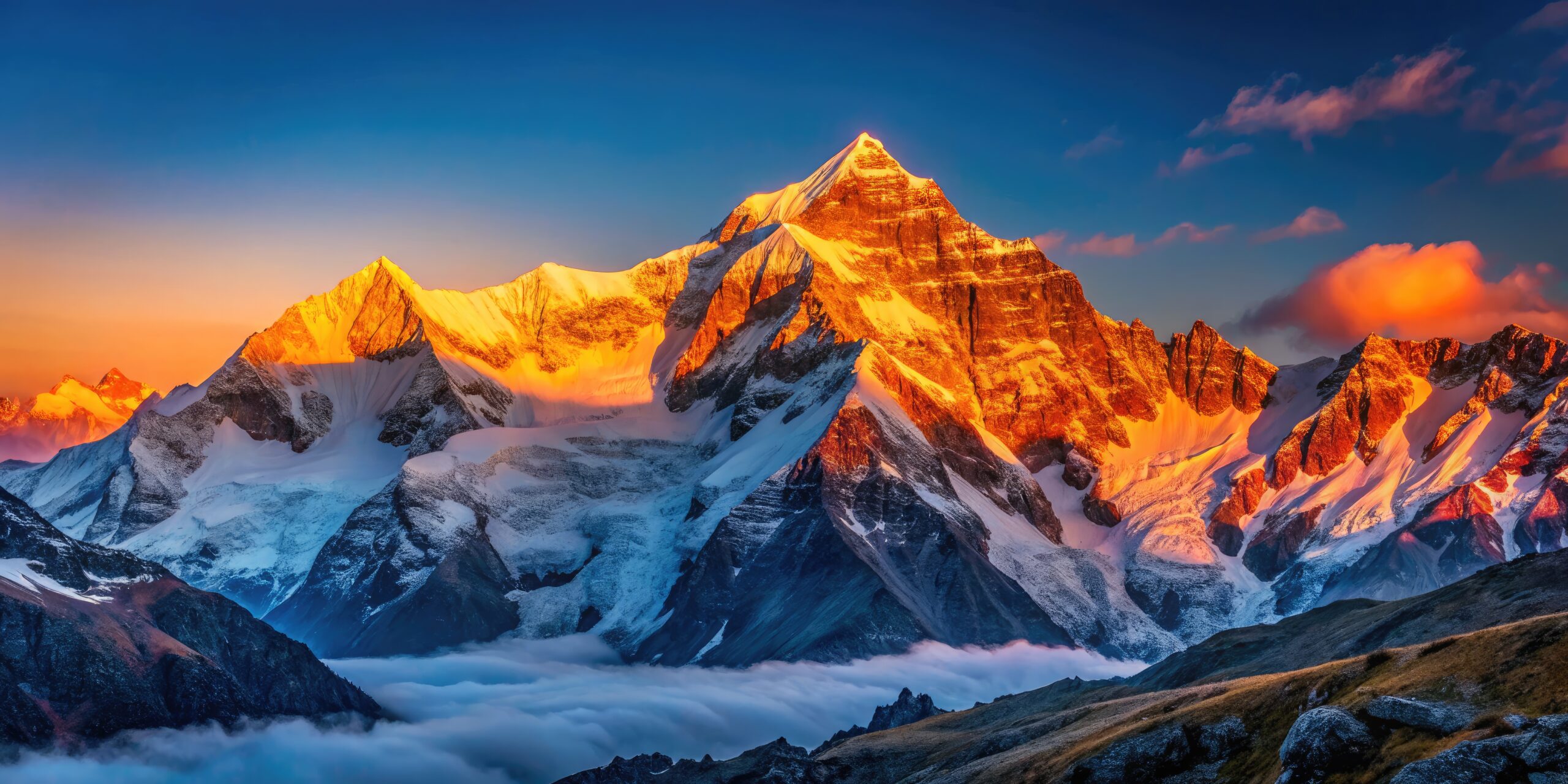
Why Mera Peak Is the Ideal First Himalayan 6,000-Meter Climb
Mera Peak’s position in international mountaineering is well-defined. It’s the standard answer for fit trekkers asking “what’s my next step?” after completing Kilimanjaro, Everest Base Camp, or Annapurna Circuit. Four distinct factors converge on this single mountain that don’t combine quite the same way anywhere else.
Non-Technical at Real Himalayan Altitude
The combination of “high altitude” and “non-technical” is rarer than it sounds. Kilimanjaro is non-technical but tops out at 5,895m, well below the 6,000-meter threshold. Aconcagua is non-technical and tall (6,961m) but lacks the Himalayan environment. Most genuine 6,000-meter peaks require real glacier travel, fixed-rope work, or technical climbing — Island Peak’s headwall, Ama Dablam’s southwest ridge, Manaslu’s higher camps. Mera Peak is the exception. The standard route is a glaciated walk-up with one steep slope, easily managed with crampons, ice axe, and rope team. The climbing itself is genuinely accessible. The challenge is altitude, weather, and willingness to spend two-plus weeks above 4,000 meters.
The View from the Summit
From Mera Peak’s summit at 6,476 meters, climbers see five of the six tallest mountains on Earth visible in a single panoramic sweep. Mount Everest (8,848m) dominates the northern view, with Lhotse (8,516m) immediately south. Makalu (8,485m) sits to the east. Cho Oyu (8,188m) and Kanchenjunga (8,586m) anchor the western and far-eastern horizons. The only 8,000-meter peak not visible from Mera is K2 — which is in Pakistan, several hundred kilometers away. No other climbing peak in the world offers a comparable summit view of the world’s highest mountains. The photograph from Mera’s summit on a clear morning has become one of the iconic images in Himalayan mountaineering.
The Hinku Valley Approach
Most Everest-region trekkers walk the Everest Base Camp trail to Namche, Tengboche, and Gorakshep. The trail is spectacular but crowded — many travelers describe more lodge bookings to scramble for than mountains to look at during peak season. Mera Peak’s approach traces the remote Hinku Valley south of the Everest highway. Villages including Paiya, Panggom, Kothe, and Thaknak see a fraction of EBC’s traffic. Trails wind through rhododendron forest, terraced farmland, and traditional Sherpa villages that feel like the Solukhumbu of the 1980s. For climbers who’ve done EBC and want a quieter Himalayan experience, the Hinku Valley delivers it.
The Right Prep for Bigger Peaks
Climbers who summit Mera Peak often progress to Island Peak (technical), Ama Dablam (highly technical), or 7,000-meter peaks. The skills learned at Mera — crampon work, fixed-rope ascending and descending, glacier rope-team travel, high-altitude living — transfer directly to every subsequent objective. A successful Mera summit validates that you can perform at 6,000 meters, which is the single hardest data point to acquire before committing to a major expedition. Many international guides treat Mera as the unofficial prerequisite for their 7,000m+ programs.
The “five 8000ers” framing. Mountaineers describe Mera Peak’s summit view by counting visible 8,000-meter peaks. The standard count is five: Everest, Lhotse, Makalu, Cho Oyu, Kanchenjunga. Some climbers also count Shishapangma (8,027m) from Mera on the clearest days, though it sits far on the Tibetan plateau and is rarely distinctly visible. The count of “five” is the standard reference across operator marketing and trip reports. Take photographs at the summit — they become some of the most distinctive images in your climbing portfolio.
Who Should Climb Mera Peak?
Mera Peak is more accessible than most Himalayan climbs, but it’s not for everyone. The combination of two-plus weeks at altitude, summit days lasting 10-12 hours, and the genuine commitment of a multi-week expedition demands specific preparation. Honest self-assessment matters here.
Mera Peak Is Appropriate For:
Fit trekkers progressing from Kilimanjaro or EBC. If you’ve completed Kilimanjaro, the Everest Base Camp Trek, Annapurna Circuit, or comparable altitude treks, you have the foundation. Mera adds glacier travel and the 6,000-meter altitude threshold, but the trekking-level fitness translates directly.
Climbers wanting a first technical Himalayan ascent. If you’ve done Cascade volcanoes, Mexican volcanoes, or Andean peaks but never climbed in the Himalaya, Mera is the standard introduction. The cultural context, expedition rhythm, and Sherpa-supported logistics differ from other ranges significantly.
Working professionals on tight schedules. A guided Mera Peak expedition can be completed in 15-18 days including international travel. Compared to Everest’s 60-70 days or Aconcagua’s 19-23 days, Mera fits realistic vacation time.
Climbers building toward Island Peak or Ama Dablam. Mera Peak is the natural prep climb before more technical Himalayan objectives. The glacier and altitude experience transfers directly, and you’ll arrive at Island Peak base camp the following season with the right mental model.
Photographers wanting an exceptional summit image. The “five 8000ers” panorama is among the most distinctive summit views in mountaineering. Photographers who care about portfolio differentiation choose Mera over more famous but visually conventional peaks.
Group of friends with mixed climbing experience. Mera Peak handles parties with mixed backgrounds well. The non-technical route lets a strong leader bring less-experienced friends along, where Ama Dablam or Island Peak would punish the weakest team member.
Mera Peak Is Not Appropriate For:
Climbers without prior altitude experience. The jump from sea level to 6,476 meters is significant. Climbers who haven’t spent meaningful time above 4,000 meters face significantly elevated AMS risk. Take a Kilimanjaro trip or Annapurna Circuit trek first.
Climbers expecting technical alpine climbing. The route is genuinely non-technical. Climbers wanting steep ice, rock pitches, or mixed climbing should choose Ama Dablam, Island Peak, or a Cordillera Blanca objective instead.
Climbers on rigid schedules. Lukla flights are notoriously weather-dependent. Multi-day delays are routine in the Himalaya. Climbers who can’t absorb a 3-5 day buffer for weather or flight cancellations face genuinely difficult choices.
Climbers uncomfortable with basic alpine skills. While non-technical, the climb does require crampon use, ice-axe positioning, and fixed-rope ascending. Climbers who refuse this minimal skill set should choose Kilimanjaro instead.
Climbers expecting Western-style rescue infrastructure. Helicopter rescue is available from Khare and Lukla but limited above High Camp. Rescue depends on weather and team capability. Self-reliance and conservative decision-making matter.
Where Mera Peak Fits in Your Climbing Progression
| Stage | Peak / Experience | Elevation | What it builds |
|---|---|---|---|
| Trekking foundation | EBC Trek, Annapurna Circuit, Kilimanjaro | 5,500-5,900m | Multi-day trekking, altitude exposure, expedition rhythm |
| Glacier basics | Cascade volcanoes (Hood, Rainier, Baker) | 3,400-4,400m | Crampons, ice axe, glacier travel, rope teams |
| Altitude foundation | Mexican volcanoes (Iztaccíhuatl, Pico de Orizaba) | 5,230-5,636m | First experience above 5,000m |
| The Mera step | Mera Peak Hinku Valley route | 6,476m | First 6,000m summit; Himalayan expedition rhythm |
| Technical 6,000m | Island Peak (Imja Tse) | 6,189m | Headwall technical climbing; fixed-rope technique |
| Advanced Himalayan | Ama Dablam | 6,812m | Sustained technical climbing; advanced expedition skills |
| 7,000m peaks | Baruntse, Himlung Himal, Aconcagua Polish Glacier | 7,129-7,162m | Multi-week expedition; high-altitude camps |
| 8,000m peaks | Cho Oyu, Manaslu, Everest | 8,000m+ | Where Mera’s lessons pay off |
The Standard Route Up Mera Peak
The Mera Peak expedition follows a clear progression from Lukla through the Hinku Valley to the Khare-based climb. While alternative approaches exist, the standard route handles 95%+ of expeditions. Here’s the complete breakdown.
| Route | Approach | Days | Difficulty | Usage |
|---|---|---|---|---|
| Standard Hinku Valley | Lukla → Paiya → Khare → High Camp → Summit | 15-18 | Alpine F | ~95% of climbers |
| Zatrwa La Pass route | Lukla → Zatrwa La (4,610m) → Tuli Kharka → Khare | 13-15 | Alpine F (faster acclim) | Compressed schedule alternative |
| Mera + Island Peak combination | Mera summit → Amphu Lapcha Pass → Island Peak | 22-26 | Alpine PD+ overall | Strong climbers seeking two summits |
Route 1: The Standard Hinku Valley Approach (95% of climbers)
The standard Mera Peak expedition follows a carefully-paced acclimatization itinerary through the Hinku Valley. The progression spans approximately 15-18 days from Kathmandu and serves two purposes: gradual altitude exposure to minimize AMS, and a culturally-rich trek through remote Sherpa villages that few EBC trekkers ever see.
The Full Day-by-Day Progression
- Days 1-2 — Kathmandu (1,400m): Arrival, briefings, gear check, permit processing. Most operators add a Kathmandu city day for jet-lag recovery.
- Day 3 — Fly Kathmandu to Lukla (2,860m), trek to Paiya (2,730m): Famous 30-minute mountain flight. Begin the Hinku Valley trek south through rhododendron forest.
- Day 4 — Paiya to Panggom (2,846m): Quiet trail through Sherpa villages. Limited tea house infrastructure compared to EBC trail.
- Day 5 — Panggom to Ningsow (2,863m): Continue through cultivated valleys and dense forest.
- Day 6 — Ningsow to Chhatra Khola (2,800m): Cross several streams. Trail enters more remote terrain.
- Day 7 — Chhatra Khola to Kothe (3,691m): Significant altitude gain. First major glimpses of Mera Peak from the trail.
- Day 8 — Kothe to Thaknak (4,358m): Climb above the treeline. Yaks replace traditional pack animals.
- Day 9 — Thaknak to Khare (4,900m): Arrive at the climbing base. Khare has lodges, gear rental, and basic facilities.
- Day 10 — Khare acclimatization day: Rest day with optional acclimatization hike to ~5,200m. Equipment training with Sherpa guides on crampons, ice axe, and fixed-rope technique.
- Day 11 — Khare to Mera Base Camp (5,300m): Cross the Mera La Pass (5,415m). Spectacular views of the entire Hinku Valley.
- Day 12 — Mera Base Camp to High Camp (5,800-5,900m): Move up the glaciated upper mountain to High Camp. Tents pre-positioned by Sherpa team.
- Day 13 — Summit Day: 02:00 wake-up, 03:00 departure. 5-6 hours up via glaciated slopes. Summit at 06:30-08:30 depending on team speed. Descend to Khare same day.
- Days 14-16 — Descent to Lukla: Return through the Hinku Valley. Most operators allocate 3 days for the descent to allow weather buffers.
- Day 17 — Lukla to Kathmandu: Morning flight back to Kathmandu (weather permitting).
- Day 18 — Buffer/departure day: Built-in margin for Lukla flight cancellations.
Strengths
- Well-established route with proven success rates
- Slow acclimatization profile minimizes AMS
- Hinku Valley sees fewer climbers than EBC trail
- Khare provides equipment training before climb
- Cultural depth through remote Sherpa villages
Considerations
- 15-18 day commitment is significant
- Lukla flight delays can extend the trip 2-5 days
- Limited tea house comfort vs EBC trail
- Sherpa support more expensive than other ranges
- Monsoon season impassable June-August
Route 2: Zatrwa La Pass Variation (compressed schedule)
The Zatrwa La Pass route is a shortened variation that crosses the 4,610m Zatrwa La pass on day 2 from Lukla, reducing the approach by 2-3 days. The trade-off is significantly faster acclimatization that increases AMS risk. Some operators offer this route for experienced climbers with prior altitude exposure, while most reputable operators recommend the longer standard route for first-time Himalayan climbers.
Route 3: Mera + Island Peak Combination
Strong climbers sometimes combine Mera Peak with Island Peak (Imja Tse, 6,189m) in a single extended expedition. After the Mera summit, the route crosses the dramatic Amphu Lapcha Pass (5,845m) into the Hongu Valley, then continues to Island Peak Base Camp. The combination delivers two distinct 6,000-meter summits — one non-technical (Mera) and one technical (Island Peak’s headwall). The total expedition runs 22-26 days. Combined permits and logistics cost less per peak than two separate expeditions, but the schedule is genuinely demanding and unsuitable for first-time Himalayan climbers.
Mera Peak Climbing History: From 1953 to 2026
For centuries before European expeditions arrived, the Hinku Valley south of Everest belonged to Sherpa communities who used the high passes as trade routes between the Solukhumbu and the lowlands. Local knowledge of Mera Peak’s slopes and the surrounding peaks existed long before any climber recorded an ascent. Sherpa names for the mountain and surrounding features predate the British colonial mapping of the region by generations.
Colonel Jimmy Roberts and Sen Tenzing made the first recorded ascent of Mera Peak on May 20, 1953 — remarkably, just nine days before Hillary and Norgay reached the summit of Mount Everest. The Roberts-Tenzing climb is generally credited as the first ascent of Mera Central (6,461m), with the slightly higher Mera North (6,476m) being summited shortly afterward. Roberts went on to become one of the most influential figures in Nepal mountaineering, founding Mountain Travel Nepal — widely considered the world’s first commercial trekking company — in 1965.
Jimmy Roberts’s Mountain Travel Nepal pioneered commercial trekking expeditions through the 1960s, including early attempts at Mera Peak. The mountain remained relatively unknown internationally during this period — most commercial climbing focused on the famous 8,000-meter peaks. Mera Peak operated as a working mountain for guides and Sherpas more than a tourist destination.
The Nepal Mountaineering Association formalized the trekking peak classification system, including Mera Peak in the official list. The administrative distinction between “trekking peaks” (simpler permits, smaller fees) and “expedition peaks” (full government permits, Liaison Officers, restricted access) shaped how the mountain would be marketed and climbed for decades. Mera Peak’s status as the highest trekking peak in Nepal became an essential marketing point.
Through the 1980s, Mera Peak began appearing in international mountaineering literature as a “first Himalayan peak” recommendation for fit trekkers. British, American, and European operators began running commercial Mera expeditions. The Hinku Valley approach trail saw gradual improvements as Sherpa villages built basic lodges to accommodate trekking traffic.
Mera Peak transformed during the 1990s from an occasional objective into a regular commercial program. International operators offered structured 15-18 day expeditions with full Sherpa support, gear-rental options at Khare, and English-speaking guides. The standard itinerary — Lukla, Hinku Valley, Khare base, High Camp, summit — was codified during this period and remains essentially unchanged in 2026.
Khare evolved from a basic Sherpa shelter into a small climbing town with multiple lodges, equipment rental shops, and a permanent guide presence. Lukla’s airport saw significant safety upgrades. Helicopter rescue services expanded, providing meaningful safety improvements for high-altitude emergencies. Annual summit numbers grew steadily as more international climbers chose Mera as their first Himalayan peak.
The April 25, 2015 Gorkha earthquake (magnitude 7.8) devastated central Nepal, killing nearly 9,000 people and damaging trails and infrastructure throughout the Khumbu region. The Hinku Valley experienced significant disruption, with trail damage requiring months of repair. Mera Peak expeditions paused for the 2015 spring season and largely resumed by autumn. Reconstruction efforts continued through 2017.
Nepal closed to international tourism for most of 2020 due to the COVID-19 pandemic. Commercial Mera Peak climbing paused entirely. Limited operations resumed in autumn 2021, with international flights and visa requirements creating ongoing complications. Local Sherpa guides lost significant income during this period. The 2022 spring and autumn seasons saw partial recovery, with 2023 marking effectively full return to pre-pandemic operations.
The 2023-2025 seasons saw strong international demand for Mera Peak expeditions. Operators including Outfitter Himalaya, Adventure Pulse, Nepal Trek Adventures, and international companies (Adventure Consultants, Jagged Globe) reported full booking calendars. The 2026 season is currently active with spring departures running March through May and autumn departures from September through November. Climate-related glacier changes continue affecting the upper route, but the climbing line itself remains stable. The Sagarmatha National Park entry process was streamlined in 2024 for international climbers.
Mera Peak Summit Day Timeline: Hour-by-Hour from High Camp
Summit day on Mera Peak typically runs 10-12 hours round trip from High Camp at 5,800-5,900 meters to the 6,476m summit and back. Strong teams complete the round trip faster; slower parties or those affected by altitude may take 13-14 hours. Most operators include a buffer summit day in case the first attempt is weathered out. Here’s the standard timeline.
Standard Mera Peak Summit Day — High Camp (5,800m) to Summit (6,476m) and Return to Khare
Why pre-dawn starts matter on Mera Peak. The summit must be reached before mid-morning weather typically deteriorates. Afternoon clouds build quickly at altitude, reducing visibility on the glaciated summit slope. Wind picks up through the morning. Climbers who reach the summit by 09:00 typically have safe descents in clear conditions. Climbers still climbing at noon often face deteriorating weather and reduced safety margins. The 02:00 wake-up isn’t optional discipline — it’s the standard timing that makes Mera Peak achievable for most climbers. Ignoring it dramatically increases risk.
Which Mera Peak Approach Fits Your Situation?
The choice on Mera Peak isn’t whether to climb the standard route — that’s nearly universal. The real choices are operator tier, expedition variant, and timing. Use this matrix to match yourself.
Match Yourself to a Mera Peak Approach
When to Climb Mera Peak: Season-by-Season Analysis
March to May: Spring Season
The spring window opens in March as winter snow consolidates and Lukla flights resume reliable operations. April through mid-May represents the optimal spring climbing period. Temperatures are warmer than autumn — both an advantage (more comfortable nights) and a disadvantage (softer snow on summit day). Pre-monsoon clouds build through May, with visibility deteriorating as the season progresses. The April rhododendron bloom adds cultural value to the Hinku Valley approach. Some operators consider spring slightly more competitive than autumn due to slightly less stable weather.
September to November: Autumn Season (peak window)
The autumn window is the most popular Mera Peak climbing season. Post-monsoon weather brings exceptional visibility, stable conditions, and cold but predictable nights. Mid-October to late November represents the peak window — many climbers consider this the single best month to climb in the Himalaya. Crowds are at their seasonal high during this period, with Khare lodges fully booked 6-8 weeks ahead. Cold increases through November, with December approaching. Most international operators schedule fixed-date programs during this window.
December to February: Winter Season
Winter climbing on Mera Peak is technically possible but appropriate only for experienced cold-weather mountaineers. Temperatures drop below -25°C at High Camp. Heavy snow accumulation creates avalanche risk on the upper slopes. Most lodges close along the Hinku Valley. Some specialist operators offer winter programs for experienced clients, but the vast majority of expeditions avoid this window.
June to August: Monsoon Season
The summer monsoon brings impassable trail conditions, low visibility, and dangerous river crossings. Helicopter rescue becomes extremely difficult. Commercial Mera Peak expeditions don’t operate during monsoon. Climbers planning Himalayan trips need to be aware of this seasonal closure when planning their schedules.
Mera Peak in 2026: Cost Breakdown
Mera Peak is one of the most affordable major Himalayan climbs available. Compared to Everest’s $40,000-$130,000 or Ama Dablam’s $7,000-$12,000, Mera offers a real Himalayan summit experience at a price point many working professionals can budget for.
2026 Guided Expedition Pricing
| Operator Tier | 2026 Cost (USD) | What’s Included |
|---|---|---|
| Budget local Nepali (Green Valley, Nepal Trek) | $1,800-$2,500 | Nepali guide, basic logistics, lodge accommodation, gear assistance |
| Mid-tier local (Outfitter Himalaya, Adventure Pulse) | $2,800-$3,800 | IFMGA Nepali guide, full Sherpa support, equipment rentals, comfortable lodges |
| International (Jagged Globe, Mountain Madness) | $3,500-$4,800 | Mixed Western + Sherpa guides, smaller group ratios, premium logistics |
| Premium international (Adventure Consultants, Alpine Ascents) | $4,800-$5,500 | Western guides, 1:2 ratios, hotel upgrades, full logistics support |
| Mera + Island Peak combined | $4,500-$7,000 | 22-26 day program, two summits, additional permits, Amphu Lapcha Pass crossing |
| Private 1:1 guiding | $6,000-$9,000 | Custom dates, flexible itinerary, dedicated Sherpa team |
2026 Total Trip Budget Breakdown
| Cost Component | 2026 Amount (USD) | Notes |
|---|---|---|
| Guided expedition (mid-tier) | $2,800-$3,800 | Standard 15-18 day program |
| International flights to Kathmandu (KTM) | $800-$2,000 | From US: $1,200-$1,800; from Europe: $700-$1,400; from Australia: $900-$1,600 |
| NMA climbing permit (spring) | $250 | Half price autumn ($125); lower for winter/monsoon |
| Sagarmatha National Park entry | $30 | ~3,000 NPR; required for all climbers |
| Lukla flights (KTM-LUA round trip) | $400-$600 | Weather-dependent; sometimes substituted with helicopter |
| Kathmandu hotel (pre/post) | $100-$300 | 3-5 nights; mid-range hotels in Thamel |
| Personal climbing gear | $400-$1,800 | If you don’t own crampons, ice axe, harness, hard shell |
| Gear rental at Khare | $50-$120 | Crampons, harness, ice axe, plastic boots available |
| Travel and rescue insurance | $150-$400 | High-altitude rescue coverage required ($10,000+ minimum) |
| Tips for Sherpas, porters, guides | $200-$400 | Customary; significant portion of Sherpa team income |
| Realistic 2026 trip budget | $4,500-$8,000 | Including international flights and full preparation |
How Mera Peak compares. A guided Mera Peak expedition costs roughly one-third of an Aconcagua climb, one-quarter of a guided Denali expedition, and one-twentieth of a guided Everest climb. The technical demands sit between Aconcagua’s Normal Route (slightly easier — no glacier work) and Aconcagua’s Polish Glacier (slightly harder — more sustained technical climbing). For climbers wanting a real Himalayan 6,000-meter summit at a reasonable cost, Mera Peak delivers exceptional value. No other major Himalayan peak offers this combination of accessibility, altitude achievement, and cultural depth at this price point.
Gear Checklist for Mera Peak
Mera Peak gear sits between standard Himalayan trekking kit and full alpine mountaineering equipment. The non-technical route doesn’t require ice-climbing specialist gear, but altitude and Sherpa-supported expedition standards mean serious clothing and equipment are essential.
Footwear
- Double mountaineering boots (B3) — La Sportiva G2 SM, Scarpa Phantom Tech HD, or similar; rentable at Khare for $30-$50
- 12-point crampons — Petzl Vasak, Grivel G12, or similar (see our Crampons Buyer’s Guide)
- Approach shoes / trekking boots — for the 8-day approach from Lukla
- Gaiters — full-length
- Trekking socks (4-5 pairs) — merino wool
- Climbing socks (2 pairs) — heavy weight for summit day
Clothing System
- Base layers (top and bottom) — merino or synthetic, 2-3 sets for the multi-week expedition
- Mid-layer fleece — for temperature variability
- Light insulated jacket — synthetic or down sweater for active climbing
- Heavy down parka — for summit day and High Camp; -25°C rating minimum
- Hardshell jacket — Gore-Tex Pro for the upper mountain
- Hardshell pants — required above Khare
- Soft shell pants — for the approach trek
- Warm hat
- Sun hat — UV exposure at 5,000m+ is severe
- Balaclava — for summit day
- Light gloves — for trekking and active climbing
- Heavy mittens or down mitts — for summit and High Camp
Technical Climbing Gear
- Ice axe — straight-shaft general mountaineering axe, 60-70cm
- Climbing harness — adjustable, comfortable for extended wear
- Helmet — required on the upper mountain
- Locking carabiners (4-6)
- Non-locking carabiners (4-6)
- Jumar / ascender — for fixed-rope sections on summit day
- Belay/rappel device — ATC or similar
- Prusik cord / mechanical ascender — for backup self-rescue
- Slings / runners (4)
- Trekking poles — essential for the 8-day approach
Sleep & Camp Gear
- Backpack 60-75L — for personal gear; porters carry overnight kit
- Daypack 25-35L — for summit day and acclimatization hikes
- Sleeping bag rated to -20°C — for High Camp; lodges provide bedding at Khare
- Sleeping bag liner — adds warmth and hygiene
- Insulated water bottles (2L total)
- Insulated mug — for tea breaks
Personal Items & Safety
- Headlamp with spare batteries — essential for 02:00 summit day starts
- Sunscreen SPF 50+ and lip balm with SPF
- Glacier glasses (Cat 4) — and a backup pair
- Personal first aid kit — blisters, ibuprofen, electrolytes, antiseptic
- Diamox / acetazolamide — discuss with your doctor; common prophylaxis at altitude
- Emergency bivy — for unexpected delays
- Passport and visa — Nepal e-visa available on arrival
- Cash (USD and Nepali rupees) — for tips, gear rental, lodge expenses
- Travel insurance documentation — high-altitude rescue coverage required
Frequently Asked Questions About Climbing Mera Peak
How tall is Mera Peak and where is it located?
Mera Peak rises to 6,476 meters (21,247 feet) in the Mahalangur Himalaya range of eastern Nepal. The coordinates are 27.7167°N, 86.8717°E. The peak consists of three summits: Mera North (6,476m) which is the main summit, Mera Central (6,461m), and Mera South (6,065m). Climbers reaching the “Mera Peak summit” are climbing Mera North. The mountain is officially recognized as Nepal’s highest trekking peak by the Nepal Mountaineering Association (NMA). The approach travels through the remote Hinku Valley south of Everest, accessed by flying to Lukla and trekking through villages including Paiya, Panggom, and Kothe before reaching the climbing base at Khare (4,900m).
How difficult is climbing Mera Peak?
Mera Peak is considered the most accessible 6,000-meter Himalayan climb for fit trekkers with no prior mountaineering experience. The route is technically straightforward — Alpine Grade F (Facile) — and involves walking on a glaciated route with crampons, an ice axe, and rope-team travel. The final summit slope steepens to approximately 30 degrees with fixed ropes installed by Sherpa support teams. The real challenge is altitude. At 6,476 meters, climbers are firmly in the death zone’s lower threshold, breathing approximately 47% of sea-level oxygen. The summit day from High Camp (5,800m) takes 10-12 hours round trip. Prior trekking experience above 4,000 meters is strongly recommended.
What’s the best route to climb Mera Peak?
The standard route climbs from Khare via the Mera La Pass, Mera Base Camp, and Mera High Camp to the summit. The full expedition typically runs 15-18 days from Kathmandu. The progression starts with a flight to Lukla (2,860m), then trekking south through the Hinku Valley (Paiya, Panggom, Ramailo Danda, Kothe, Thaknak, Khare). After acclimatization training at Khare (4,900m), climbers cross to Mera Base Camp at the foot of the glacier, then ascend to Mera High Camp at approximately 5,800-5,900m. The summit push begins around 02:00 from High Camp, follows the glaciated upper slopes for 5-6 hours to the 6,476m summit. The descent route reverses the same trail back through Khare to Lukla.
When is the best time to climb Mera Peak?
The Mera Peak climbing season runs during the two Himalayan windows: pre-monsoon spring (March to May) and post-monsoon autumn (September to November). The autumn window (mid-October to late November) is the more popular season, offering stable post-monsoon weather, exceptional visibility, and reliable summit conditions. The spring window (April to mid-May) provides warmer temperatures and longer daylight but slightly less stable weather as the pre-monsoon approaches. December through February brings extreme cold and significant snow accumulation. June through August is monsoon season — heavy precipitation, low visibility, and impassable approach trails make climbing impractical.
How much does climbing Mera Peak cost in 2026?
Guided Mera Peak expeditions in 2026 typically cost between $2,200 and $5,000 USD per person, depending on operator quality, group size, and inclusions. Budget local Nepali operators offer expeditions from $1,800-$2,500. Mid-range operators typically run $2,800-$3,800 with full Sherpa support. Premium international operators charge $4,000-$5,500 with smaller group ratios. The NMA climbing permit fee for Mera Peak runs approximately $250 USD in 2026 (spring season; $125 autumn). Additional costs include Lukla flights ($400-$600 round trip), Sagarmatha National Park entry, gear rental at Khare, and tips for porters and guides. International flights to Kathmandu add another $800-$2,000.
Do I need climbing experience to summit Mera Peak?
No prior technical climbing experience is required, but prior altitude experience is strongly recommended. Mera Peak’s route is non-technical — a glaciated walk-up with one steep section where Sherpa teams install fixed ropes. Climbers learn the basics of crampons, ice axe, and rope-team travel during the acclimatization day at Khare. The harder challenge is altitude. Climbers who haven’t spent meaningful time above 4,000 meters face elevated AMS risk that significantly reduces summit success. Prior Kilimanjaro, Everest Base Camp Trek, Annapurna Circuit, or comparable altitude experience is the standard preparation.
What’s the summit success rate on Mera Peak?
Summit success rates on Mera Peak vary by operator and season. Guided expeditions with proper 15-18 day acclimatization typically report 70-85% summit success — among the highest rates for any 6,000-meter Himalayan peak. Compressed 12-14 day programs report lower success rates of 50-65%, primarily due to inadequate acclimatization. Weather is the second-largest factor, with mid-October to late November consistently producing the best success rates. Climbers who arrive properly acclimatized, work with reputable operators, and allow weather buffers achieve consistently high success rates. This is one of Mera Peak’s strongest selling points — it’s a challenging Himalayan climb where preparation pays off.
How does Mera Peak compare to Island Peak?
Mera Peak (6,476m) and Island Peak (6,189m, also called Imja Tse) are the two most popular Nepal trekking peaks. Mera is taller but technically easier — a non-technical glaciated walk-up. Island Peak is slightly shorter but technically more demanding, with a steep headwall and significant fixed-rope climbing on summit day. Mera’s approach is longer and more remote (Hinku Valley); Island Peak’s approach is shorter but uses the busy Everest Base Camp trail. Many climbers do both peaks in a combined 22-26 day expedition crossing the Amphu Lapcha Pass between them. For first Himalayan climbers, Mera is the standard recommendation. Climbers wanting more technical content choose Island Peak.
Can I climb Mera Peak independently without a guide?
NMA regulations require all foreign climbers on Mera Peak to use a registered Nepali agency for permit issuance. Pure independent climbing without any agency involvement is not legally possible. However, climbers can hire minimal services (permit-only support, basic guide hire) rather than full guided expeditions. The cost savings are real — independent climbers can complete Mera for $1,200-$1,800 versus $3,000-$5,000 for guided programs. The trade-offs are real too: no Sherpa support, no equipment rental, no English-speaking guide assistance, and significantly more logistics burden. Most first-time Himalayan climbers benefit from full guided service.
What’s the view like from Mera Peak’s summit?
The Mera Peak summit delivers one of the most distinctive views in commercial mountaineering — five of the six tallest mountains on Earth visible in a single panoramic sweep. Mount Everest (8,848m) dominates the northern view, with Lhotse (8,516m) immediately south. Makalu (8,485m) sits to the east. Cho Oyu (8,188m) and Kanchenjunga (8,586m) anchor the western and far-eastern horizons. The only 8,000-meter peak not visible from Mera is K2, which is in Pakistan. On the clearest mornings, climbers also see Shishapangma (8,027m) on the Tibetan plateau. The summit photograph has become one of the iconic images in Himalayan climbing — distinctive in a way that most summit photos aren’t.
Mera Peak Planning Resources
Sources & Further Reading
- Nepal Mountaineering Association (NMA) — official trekking peak permit information and route classifications
- Outfitter Himalaya — 19-day Mera Peak climbing itinerary and 2026 pricing
- Adventure Pulse — Mera Peak Expedition 2026 detailed route guide
- Nepal Trek Adventures — Khare to Mera Peak 2026 program
- Green Valley Nepal Treks — Mera Peak Climbing from Khare 2026/2027
- Trek the Himalayas — Mera Peak Expedition itinerary and safety guidance
- Namas Adventure — Mera Peak guided climbing programs
- Yentra Travel Forum — Mera Peak detailed climbing guide 2026
- Wikipedia — Mera Peak comprehensive reference for elevation, first ascent history, geography
- Jimmy Roberts — Mountain Travel Nepal historical archives on first commercial Mera ascents
- UNESCO World Heritage Centre — Sagarmatha National Park designation
- Sagarmatha National Park — visitor information and 2026 entry fee details
Last updated: May 24, 2026. Next scheduled update: March 2027 (pre-spring season verification of operator pricing and permit fees).
Planning Your First Himalayan Climb?
Mera Peak is the natural entry point to Himalayan mountaineering. Climbers who summit Mera typically progress to Island Peak, Ama Dablam, or 7,000m peaks. See our comprehensive collection of 8,000m peaks for the bigger picture of Himalayan climbing progression.
View 8000m Peaks Collection →Was this helpful?
🏔Related guides
🧭Explore & compare
Global Summit Guide is an independent mountaineering resource founded in 2026. The team combines first-hand trekking and climbing experience with in-depth research and professional health and nutrition review to help climbers choose objectives, prepare properly, and stay safe.
Health, altitude, and nutrition content is reviewed by Taylor Ludlow (Registered Nurse) and Brigg Hoopes (Nutritionist).
What We Don't Know Yet
Mountain information changes quickly. This box explains the limits of what this page can responsibly promise.
- Route conditions, trailhead access, crevasse exposure, stream crossings, and rescue access may vary from published planning guidance.
- Visa, passport, vaccination, border, insurance, and local transportation rules may change before your trip.
- Route conditions, snowpack, closures, and weather can change quickly after this page is updated.
- Permit rules, fees, quotas, and reservation windows may change between review cycles.
- Operator availability, pricing, guide ratios, and cancellation terms can change by season.
Verify current conditions with official land managers, guide services, local forecasts, and current route reports before booking or climbing.
Mountaineering, rock and ice climbing, glacier travel, and high-altitude activity are inherently dangerous and can result in serious injury or death. The information on Global Summit Guide is provided for general informational and educational purposes only and is not a substitute for professional instruction, qualified guiding, proper equipment, or your own judgment and experience.
Route conditions, weather, snowpack, permits, regulations, and hazards change constantly and may differ from what is described here. Details may be incomplete, out of date, or contain errors. Always verify current information with local authorities, certified guides, and official sources before making any decision in the mountains.
Nothing on this site is medical, legal, or financial advice. Our fitness, acclimatization, altitude, and nutrition content is general in nature; consult a qualified physician before beginning any strenuous exercise program or exposing yourself to high altitude.
You are solely responsible for your own safety and decisions. To the fullest extent permitted by law, Global Summit Guide and its team accept no liability for any loss, injury, damage, or expense arising from use of, or reliance on, this information. By using this site you acknowledge these risks and accept these terms.
Some links on this site may be affiliate links. If you buy through them we may earn a small commission at no extra cost to you; this never affects our recommendations.
Global Summit Guide recommendation path
Next Best Mountain to Research
Use these recommendations to continue the right planning path instead of stopping on one page.
Use current permit, weather, route, and operator information before booking or climbing.
Explore Travel Options for Your Destination
Once your mountain, dates and route are taking shape, compare flights, hotels and other travel options that fit the trip.
Affiliate link. We may earn a commission at no additional cost to you.