<
Home · Mountains · Africa · Kilimanjaro

How to Climb Mount Kilimanjaro: Routes, Permits, Costs & Safety

Africa’s highest peak at 5,895 m — Uhuru Peak. Non-technical trekking with substantial altitude challenge. ~50,000 climbers per year on seven main routes. Success depends entirely on route choice, acclimatization timing, and operator quality.

5,895m
Uhuru Peak Summit
7
Climbing Routes
~50K
Annual Climbers
~65-70%
Industry Success Rate
Africa’s Highest Peak · Seven Summits · Volcanic Massif · View Seven Summits Collection →

Mount Kilimanjaro is the highest mountain in Africa, the highest free-standing mountain in the world, and the most-climbed of the Seven Summits — drawing approximately 50,000 climbers per year to attempt Uhuru Peak at 5,895 meters (19,341 feet). The mountain rises from northern Tanzania near the Kenya border as a massive volcanic massif comprising three distinct volcanic cones: Kibo (5,895m, the highest and the location of Uhuru Peak), Mawenzi (5,149m, the dramatic eastern peak), and Shira (3,962m, the eroded western remnant of a collapsed caldera). Unlike most major mountains of comparable altitude, Kilimanjaro is non-technical on every commercial route — climbers walk to the summit on established trails without ropes, crampons, or ice axes. Yet the mountain produces approximately 10 climber deaths per year, and the December 24, 2025 helicopter crash near Barafu Camp that killed 5 reinforced that altitude operations at this scale always carry substantial risk. This guide covers all seven established Kilimanjaro routes, the 2026 TANAPA park fee structure with VAT, operator pricing across budget through premium tiers, summit day timeline from Barafu Camp, success rates by route and duration, and why route choice — not climber fitness — is the strongest predictor of summit success.

Mount Kilimanjaro Location & Live Weather

Mount Kilimanjaro is located in Kilimanjaro National Park in the Kilimanjaro Region of northern Tanzania, approximately 11 km south of the Kenyan border. The summit coordinates are -3.0674°S, 37.3556°E. Climbers arrive via Kilimanjaro International Airport (JRO) with most expeditions starting from the towns of Moshi or Arusha.

Current Temp
Loading…
Wind
Conditions
Forecast

Weather data from Open-Meteo at coordinates -3.0674°S, 37.3556°E. Summit conditions at 5,895m are typically 25-30°C colder than valley readings.

Mount Kilimanjaro At a Glance

Summit elevation5,895 m (19,341 ft) — Uhuru Peak on Kibo cone
Three volcanic conesKibo (5,895m, active), Mawenzi (5,149m, extinct), Shira (3,962m, collapsed)
LocationKilimanjaro National Park, Kilimanjaro Region, northern Tanzania
Coordinates-3.0674°S, 37.3556°E
Geographic significanceHighest mountain in Africa; highest free-standing mountain in the world; Seven Summits peak
First ascentOctober 6, 1889 — Hans Meyer (Germany), Ludwig Purtscheller (Austria), Yohani Kinyala Lauwo (Chagga guide)
Annual climbers~50,000 per year
Annual deaths~10 per year (~0.02-0.03% mortality)
Climbing routes7 established routes: Lemosho, Machame, Marangu, Rongai, Northern Circuit, Umbwe, Shira
Standard duration5-9 days on mountain depending on route choice
Technical characterNon-technical trekking on all commercial routes; no ropes, crampons, or technical climbing
Best seasonJanuary-March and June-October (dry seasons)
2026 cost range$1,800-$6,500+ depending on operator tier and route length
Park fees (2026)$70/day conservation + $50/night camping + $20 rescue + $10 forest (where applicable) + 18% VAT
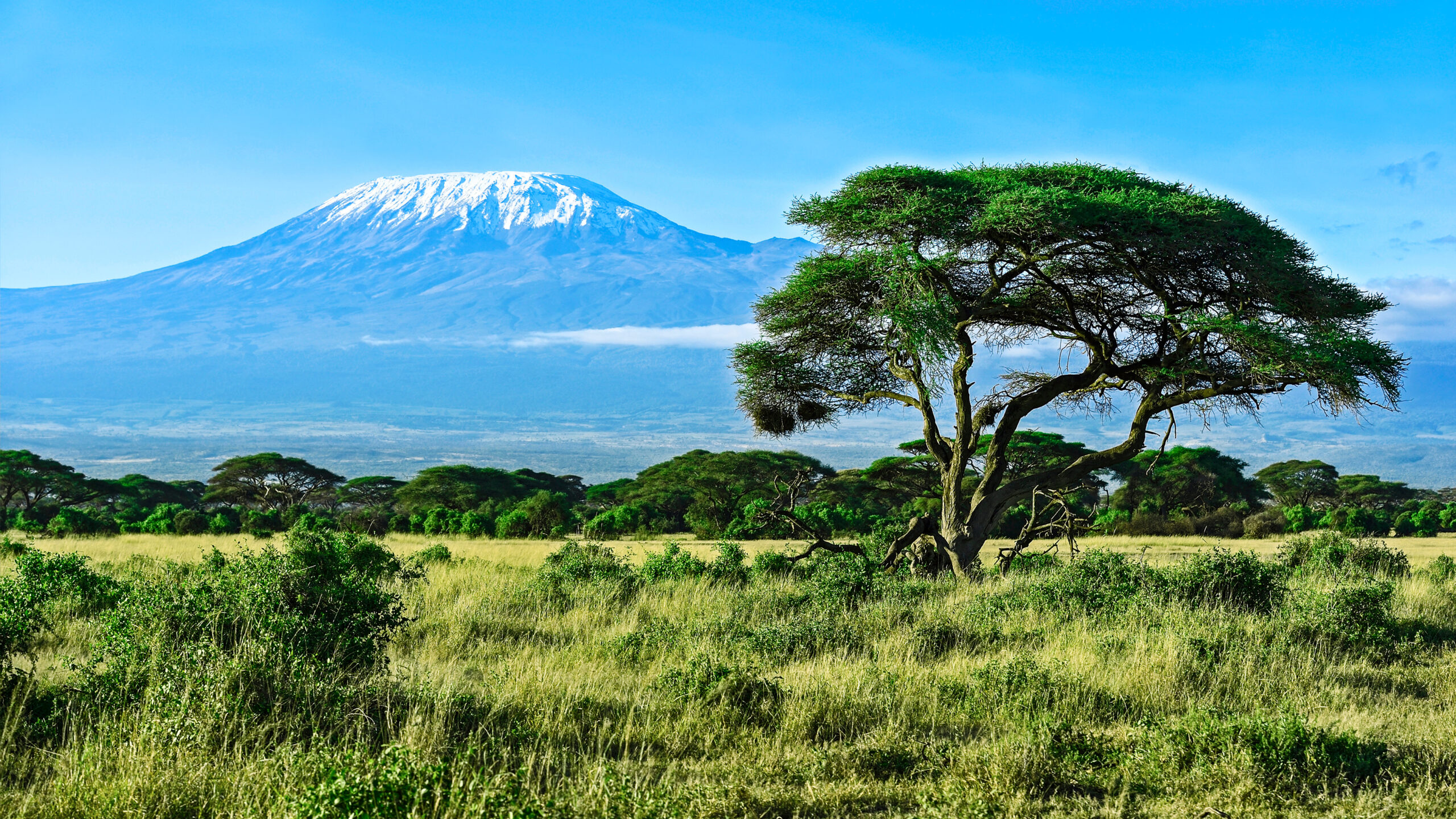
Mount Kilimanjaro at sunrise — Africa's highest peak rising above the Tanzanian plains
Mount Kilimanjaro at sunrise — Africa’s highest peak rises 5,895 meters from the Tanzanian plains, the world’s tallest free-standing mountain.

Why Kilimanjaro Deserves More Respect Than Its “Easy” Reputation

Mount Kilimanjaro is the most-marketed “accessible” big mountain in the world. Outdoor publications routinely describe it as the easiest of the Seven Summits, charity organizations use it as a fundraising challenge, and travel agencies emphasize its non-technical character. All true — but substantially misleading. Kilimanjaro kills approximately 10 climbers per year and produces hundreds of altitude-related evacuations. The mountain rewards proper preparation and punishes the assumption that “easy” means “safe.”

Altitude Is the Real Difficulty

Kilimanjaro’s summit at 5,895 meters places climbers at approximately 50% of sea-level atmospheric pressure. The summit zone above 5,500m is functionally the death zone for unacclimatized climbers — climbers who ascend too quickly produce HAPE (High Altitude Pulmonary Edema) and HACE (High Altitude Cerebral Edema) at rates that substantially exceed what the mountain’s “trekking” reputation suggests. The biggest predictor of summit success is acclimatization time, not climber fitness. A marathon runner on a 5-day Marangu Route has substantially lower summit odds than an average-fitness climber on a 9-day Northern Circuit. Climbers who choose routes based on price or schedule rather than acclimatization profile are functionally gambling against their own physiology.

Summit Night Is Brutal

The summit night ascent from Barafu Camp (4,673m) to Uhuru Peak (5,895m) involves approximately 1,222 meters of vertical gain across 6-7 hours, beginning at midnight in temperatures that routinely drop below -20°C. Climbers ascend through scree slopes that consume substantial energy with each step, often in 30-40 km/h winds, while suffering substantial altitude-related sleep deprivation from camping at 4,673m the night before. The descent that follows immediately after summiting produces most Kilimanjaro accidents — fatigued climbers stumbling on scree, hypothermia in inadequate gear, and altitude illness presenting too late for safe evacuation.

The December 2025 Helicopter Crash

On December 24, 2025, an Airbus H125 helicopter operated by Kilimanjaro Aviation crashed at approximately 4,700 meters between Barafu Camp and Kibo Summit during a medical evacuation mission. The crash killed all five people on board: two Czech tourists being evacuated for altitude-related health complications, a local doctor, a Tanzanian guide, and a Zimbabwean pilot. The incident — the first aviation accident on Kilimanjaro since 2008 — substantially illustrated that helicopter rescue at altitude is itself a high-risk operation, not a guaranteed safety net. KilimedAir (the colloquial name for Kilimanjaro Aviation’s medical service) typically conducts up to 5 rescues per day during peak climbing season. The crash reinforced the fundamental principle of altitude mountaineering: prevention through smart acclimatization is substantially safer than relying on evacuation infrastructure.

The honest mortality picture. Kilimanjaro produces approximately 10 climber deaths per year out of approximately 50,000 climbers — a mortality rate of approximately 0.02-0.03%. This is substantially lower than Elbrus, Aconcagua, or any 8,000m peak. But the absolute death count is substantial: Kilimanjaro fatalities reflect the combination of high traffic, inadequate acclimatization on shorter routes, climbers attempting summit night despite warning symptoms, cold-weather injuries from inadequate gear, cardiac events triggered by altitude in climbers with undiagnosed cardiovascular disease, and falls during exhausted descent. The December 2025 helicopter crash added 5 to the year’s toll — including two climbers who had survived the summit but did not survive the rescue. Climbers should treat Kilimanjaro with the same respect appropriate for any 5,000m+ glaciated peak: choose routes long enough for acclimatization (8+ days strongly recommended); engage operators with verified safety protocols; be prepared to turn back on summit night if symptoms develop; carry comprehensive travel insurance with high-altitude evacuation coverage.

Who Can Realistically Climb Mount Kilimanjaro?

Mount Kilimanjaro is the most accessible of the Seven Summits, but accessibility does not mean universal suitability. Understanding who Kilimanjaro genuinely suits — and who should consider preparation before attempting it — helps climbers make realistic decisions about route selection, operator quality, and personal readiness.

Kilimanjaro Is Appropriate For:

First-time high-altitude climbers with prior multi-day hiking experience. Kilimanjaro is the classic introduction to altitude mountaineering. Climbers with prior experience hiking 3-6 days at moderate altitudes (Inca Trail, Annapurna Circuit, John Muir Trail) and reasonable cardiovascular fitness can succeed on Kilimanjaro with proper route selection. The 8-day Lemosho Route is the most-recommended option for this profile.

Seven Summits aspirants beginning their progression. Kilimanjaro is universally the first peak attempted in a Seven Summits progression because it provides altitude exposure (5,895m) without requiring technical glacier skills. Climbers completing Kilimanjaro have the altitude foundation to assess whether they want to continue toward Aconcagua, Denali, Elbrus, and the higher peaks.

Charity climbers and group expeditions. Kilimanjaro is the world’s most popular fundraising climb. Charity organizations have substantially refined the model for getting average-fitness donors to Uhuru Peak with appropriate preparation — typically 6-month training programs plus 8-9 day routes.

Climbers seeking a substantial physical and mental challenge without technical climbing. Kilimanjaro demands sustained multi-day effort, summit-night endurance, and altitude tolerance — but does not require crampon technique, rope skills, or technical climbing. For climbers who want a real challenge without becoming a technical mountaineer, Kilimanjaro fills a substantial niche.

Kilimanjaro Is Not Appropriate For:

Climbers with significant cardiovascular disease or uncontrolled hypertension. The altitude exposure produces substantial cardiac stress. Climbers with prior cardiac events, current arrhythmias, uncontrolled hypertension, or recent respiratory illness should consult a cardiologist before considering Kilimanjaro. Multiple Kilimanjaro deaths each year involve climbers with undiagnosed cardiac conditions.

Climbers booking the cheapest available 5-day route. The 5-day Marangu Route has approximately 27% summit success rate — the worst statistic among major peaks at this scale. Climbers prioritizing cost over acclimatization are buying a 73% probability of altitude failure plus elevated AMS risk. Short routes are appropriate only for climbers with prior substantial altitude experience.

Climbers unwilling to use Diamox prophylaxis or descend on symptoms. Acetazolamide (Diamox) substantially reduces AMS risk and is recommended by altitude medicine specialists for most Kilimanjaro climbers. Climbers refusing prophylactic medication and refusing to descend on persistent symptoms produce most Kilimanjaro fatalities.

Climbers booking sub-$1,800 budget operators. Park fees alone for an 8-day climb total approximately $1,200-$1,400 per climber. Operators charging under $1,800 are either excluding mandatory fees from quoted prices, cutting corners on crew wages, providing inadequate gear quality, or maintaining substandard safety protocols. The December 2025 helicopter crash victims were on a Boby Camping itinerary, illustrating that even legitimate operators can be affected by emergency evacuation risks.

Kilimanjaro’s Role in the Seven Summits

Mount Kilimanjaro is Africa’s representative in the Seven Summits — the highest peak on each continent. Kilimanjaro is universally climbed first in any Seven Summits progression because it provides the foundational altitude exposure (5,895m) needed before more demanding peaks, requires no technical mountaineering skills, and operates under commercial infrastructure that scales the experience for first-time high-altitude climbers.

Where Kilimanjaro Fits in the Sequence

Most Seven Summits aspirants follow this approximate progression:

#PeakElevationWhy this position
1Mount Kilimanjaro (Africa)5,895mAltitude introduction; non-technical; assess altitude tolerance
2Aconcagua (South America)6,961mFirst 7,000m peak; cold-weather expedition test
3Denali (North America)6,190mCold-weather expedition; glacier travel; self-supported logistics
4-5Mount Elbrus (Europe)5,642mEuropean peak; introduces crampons + ice axe
5-6Vinson Massif (Antarctica)4,892mPolar expedition; expensive but technically moderate
6-7Carstensz Pyramid (Oceania)4,884mTechnical rock climbing required
7Mount Everest (Asia)8,849mFinal ultimate objective

The Carstensz vs Kosciuszko debate — whether Oceania’s representative should be Carstensz Pyramid (technical) or Mount Kosciuszko (a hike) — splits Seven Summits aspirants. The Messner list (most commonly accepted) includes Carstensz; the Bass list includes Kosciuszko. Some climbers complete both.

Mount Kilimanjaro History: From Chagga Recognition to the 2025 Helicopter Crash

Mount Kilimanjaro’s documented climbing history spans 137 years from the first recorded European summit attempt in 1889 to the modern era of mass mountaineering. But the mountain has been known to the Chagga, Maasai, and other indigenous peoples for substantially longer — Chagga traditions reference Kilimanjaro across centuries of local recognition that European exploration “discovered” and renamed but did not initiate.

Pre-1800s
Indigenous Recognition

The Chagga people, who inhabit Kilimanjaro’s southern and eastern slopes, recognized the mountain across generations of oral history. Local traditions reference the snow-capped peak (“Kibo” means “spotted” in Kichagga, referencing the snow). The Maasai people of the surrounding plains also recognized the mountain in their cultural geography.

1848
First European Recorded Sighting — Johannes Rebmann

German missionary Johannes Rebmann became the first European to document Kilimanjaro after sighting it in May 1848. His reports of an equatorial snow-covered mountain were met with substantial skepticism by the Royal Geographical Society in London, who considered snow at the equator implausible. Subsequent expeditions verified Rebmann’s account, but the academic acceptance of Kilimanjaro’s snow took over a decade.

1861-1862
Von der Decken Attempts

Prussian Baron Karl Klaus von der Decken made the first European climbing attempts in 1861 (reaching approximately 2,500m) and 1862 (reaching approximately 4,300m with Otto Kersten). Neither reached the summit but established the climbing potential of the mountain.

1887-1888
Hans Meyer’s First Two Attempts Fail

German geographer Hans Meyer made his first Kilimanjaro attempt in 1887, reaching approximately 5,500m at the edge of the ice cap but being forced back by glacier barriers without proper ice climbing equipment. A 1888 second attempt was abandoned due to a local uprising. Meyer recognized that successful ascent required Alpine technical skills and better preparation.

October 6, 1889
First Recorded Ascent — Meyer, Purtscheller, and Lauwo

The first successful recorded ascent of Mount Kilimanjaro took place on October 6, 1889, when Hans Meyer and his team reached the summit of Kibo, the highest volcanic cone of the mountain. The team consisted of Meyer (German geologist), Ludwig Purtscheller (Austrian teacher and mountaineer), and Yohani Kinyala Lauwo (local Chagga guide). The summit was reached on Purtscheller’s 40th birthday. Meyer named the summit “Kaiser-Wilhelm-Spitze” (Kaiser Wilhelm Peak) — a designation that persisted until Tanzanian independence renamed it Uhuru Peak (“uhuru” meaning “freedom” in Swahili). Meyer’s success in this third attempt was substantially attributable to better food and camp logistics — he established multiple camps along the route to avoid the food shortage problems of his earlier expeditions.

Late 1800s
Yohani Kinyala Lauwo — Recognition and Controversy

Yohani Kinyala Lauwo was a young Chagga man (often cited as 18 years old in 1889) who served as Meyer and Purtscheller’s local guide. Like the long-pattern of Indigenous mountain guides credited insufficiently in European mountaineering history, Lauwo’s role was substantially under-recognized for nearly a century. In 1989, the organizing committee of the 100-year celebration of the first ascent decided to award posthumous certificates to the African porter-guides who had accompanied Meyer and Purtscheller; one person in pictures or documents of the 1889 expedition was thought to match a living inhabitant of Marangu, Yohani Kinyala Lauwo. Some historians have noted inconsistencies between Lauwo’s documented life dates and the 1889 expedition timeline, raising questions about whether he was actually present in 1889 or whether his guide career began later. Regardless of the dating controversy, Lauwo became a substantial symbol of indigenous Tanzanian contribution to Kilimanjaro’s history, with the Tanzanian government formally honoring his memorial role.

1898
Meyer’s Return — Geological and Glaciological Studies

Meyer returned to Kilimanjaro in 1898, conducting extensive geological and glaciological studies that provide valuable baseline data for measuring glacier retreat over the past century. His 1898 observations have become substantially important in climate science — the mountain’s glaciers have retreated dramatically since that period, with current estimates suggesting they could disappear entirely by 2040-2050.

1927
First Female Summit — Sheila MacDonald

Scottish climber Sheila MacDonald became the first woman to reach Uhuru Peak in 1927. Her ascent followed substantially the same route used by Meyer, Purtscheller, and Lauwo nearly four decades earlier. MacDonald’s achievement opened Kilimanjaro to substantial female participation in subsequent decades.

1961
Tanzanian Independence and Uhuru Peak Naming

Following Tanzanian independence in 1961, the summit was officially renamed from “Kaiser-Wilhelm-Spitze” to “Uhuru Peak” — using the Swahili word for “freedom” to commemorate independence. The renaming substantially symbolized the post-colonial reclamation of African geographic identity.

1973
Kilimanjaro National Park Established

Mount Kilimanjaro and its surrounding 1,688 km² area was designated Kilimanjaro National Park in 1973 and incorporated into the UNESCO World Heritage System in 1987. The park created the modern regulated climbing infrastructure including mandatory guides, established route system, and the TANAPA fee structure that funds park maintenance and rescue operations.

1996
Death of Yohani Kinyala Lauwo

Yohani Kinyala Lauwo died in 1996, reportedly at over 120 years old. His memorial sits at the Marangu Gate of Kilimanjaro National Park. The Tanzanian government posthumously honored Lauwo as a national figure in Kilimanjaro’s mountaineering history.

2014
Northern Circuit Route Established

The Northern Circuit Route — Kilimanjaro’s newest official route — was established in 2014, traversing the northern slopes for substantial acclimatization benefit. The 9-day Northern Circuit immediately produced the highest summit success rates of any Kilimanjaro route (90-95%), substantially shifting recommendation patterns toward longer routes.

2022
High-Speed Internet Installed on Kilimanjaro

The Tanzanian government installed high-speed internet services across Kilimanjaro National Park in 2022 — a controversial development that substantially changed the wilderness character of the climb while improving emergency communication capability. Climbers can now livestream summit attempts and remain in continuous contact with family and operators.

December 24, 2025
Helicopter Crash Near Barafu Camp Kills 5

An Airbus H125 helicopter crashed on a rescue mission at Barafu Camp at approximately 4,700m elevation. Among the dead were a guide, a doctor, the pilot, and two tourists from the Czech Republic. The accident happened between the mountain’s Barafu Camp and Kibo Summit at an altitude of more than 4,000 meters. Kilimanjaro Regional Police Commander Simon Maigwa told journalists the aircraft belonged to the Kilimanjaro Aviation company. The crash was the first aviation accident on Kilimanjaro since 2008 and substantially highlighted the risks of high-altitude rescue operations.

The Seven Routes of Mount Kilimanjaro

Mount Kilimanjaro has seven established climbing routes, each with distinct character, success rates, acclimatization profiles, and scenery. Choosing the right route is the single most important decision a Kilimanjaro climber makes — substantially more important than fitness preparation, gear selection, or operator choice. Below is the comprehensive comparison of all seven routes, ordered by their typical recommendation priority for first-time climbers.

RouteDaysSuccess RateAccommodationScenic VarietyBest For
Lemosho7-880-90%CampingExcellentMost-recommended; best balance of success rate, scenery, and acclimatization
Northern Circuit990-95%CampingExcellentHighest success rate; climbers prioritizing summit success above all
Machame6-765-85%CampingVery good“Whiskey Route”; popular; varied terrain; good climb-high-sleep-low profile
Rongai6-770-85%CampingGoodNorthern approach; quieter; drier in wet seasons
Marangu5-627-60%HutLimited“Coca-Cola Route”; only hut option; suitable only for 6-day minimum
Umbwe5-7~60%CampingSpectacularSteepest and most direct; experienced climbers only
Shira6-8~70%CampingGoodStarts at 3,500m — substantial AMS risk; no longer widely recommended

Route 1: The Lemosho Route — Most Recommended

7-8 days · 80-90% success rate · Camping · The optimal first-time choice

The Lemosho Route is the most-recommended Kilimanjaro route for first-time climbers and the route most commercial operators emphasize in their default packages. The route begins on the western side of the mountain at Londorossi Gate (2,100m) and approaches Kibo through substantially varied terrain — rainforest, moorland, alpine desert, and arctic summit zone — providing climbers with the full spectrum of Kilimanjaro’s ecological diversity. The substantially excellent acclimatization profile combines with scenic variety to produce summit success rates that consistently lead the industry.

The Lemosho 8-day itinerary:

  • Day 1: Londorossi Gate (2,100m) → Mti Mkubwa Camp (2,750m). Rainforest hiking; substantial elephant and colobus monkey sightings.
  • Day 2: Mti Mkubwa → Shira 1 Camp (3,505m). Cross the Shira Plateau (collapsed caldera floor); substantial transition from forest to moorland.
  • Day 3: Shira 1 → Shira 2 Camp (3,900m). Short day for acclimatization; substantial views of Kibo to the east.
  • Day 4: Shira 2 → Lava Tower (4,640m) → Barranco Camp (3,950m). Substantial climb-high-sleep-low day — peak elevation reaches Lava Tower then descent for substantially better acclimatization.
  • Day 5: Barranco → Karanga Camp (3,995m) via the Barranco Wall. The Barranco Wall is the only substantial scrambling section on the entire route — typically 60-90 minutes of hands-on terrain that climbers consistently rate as the most memorable section.
  • Day 6: Karanga → Barafu Camp (4,673m). Short day to preserve energy for summit night.
  • Day 7: Summit night — Barafu (4,673m) → Stella Point (5,756m) → Uhuru Peak (5,895m) → descent to Mweka Camp (3,100m). The substantially demanding 12-15 hour summit day.
  • Day 8: Mweka Camp → Mweka Gate (1,640m). Descent through rainforest; substantial joint-stressing downhill.
Start
Londorossi Gate 2,100m
Duration
7-8 days
Success rate
85-90% (8-day)
Accommodation
Camping

Route 2: The Northern Circuit — Highest Success Rate

9 days · 90-95% success rate · Camping · Maximum acclimatization profile

The Northern Circuit is Kilimanjaro’s newest official route, established in 2014, and the longest at 9 days. The route follows the Lemosho approach to Shira Plateau, then traverses the entire northern slopes of Kilimanjaro on a circumferential route before approaching the summit from the eastern side. The substantial additional time on the mountain produces the highest summit success rate of any Kilimanjaro route — typically 90-95% with experienced operators.

What distinguishes Northern Circuit:

  • Maximum acclimatization time — climbers spend 4-5 days above 3,500m before summit night, substantially more than other routes.
  • Quieter trails — the northern slopes see substantially fewer climbers than the southern routes.
  • 360-degree views — the only Kilimanjaro route that circumnavigates the mountain, providing perspectives substantially unavailable from other routes.
  • Substantial cost premium — the 9-day duration produces $200-$400 higher park fees and operator costs versus 7-day routes.
  • Camping required — no hut accommodation; climbers must be comfortable with 8 consecutive nights camping at altitude.
Start
Londorossi Gate 2,100m
Duration
9 days
Success rate
90-95%
Accommodation
Camping

Route 3: The Machame Route — “Whiskey Route”

6-7 days · 65-85% success rate · Camping · Popular and scenic

The Machame Route (“Whiskey Route” — named in contrast to Marangu’s “Coca-Cola Route”) is the most popular Kilimanjaro route by absolute climber numbers. The route begins at Machame Gate (1,640m) on the southern side and approaches Kibo through varied terrain that has substantially defined the standard Kilimanjaro experience for most climbers. The 7-day Machame Route produces 75-85% success rates and substantially good climb-high-sleep-low acclimatization profile.

What makes Machame popular: Substantial scenic variety (rainforest, moorland, alpine desert, arctic summit zone), strong climb-high-sleep-low profile (climbers ascend to Lava Tower at 4,640m on Day 3 then descend to Barranco at 3,950m for acclimatization), the famous Barranco Wall scrambling section, and an established route system with substantial operator infrastructure. The 7-day Machame produces summit success rates approaching Lemosho while costing $200-$400 less.

Start
Machame Gate 1,640m
Duration
6-7 days
Success rate
75-85% (7-day)
Accommodation
Camping

Route 4: The Rongai Route — The Quiet Northern Approach

6-7 days · 70-85% success rate · Camping · Drier in wet seasons

The Rongai Route is the only Kilimanjaro route that approaches from the northern (Kenya-facing) side of the mountain. The route begins at Rongai Gate (2,020m) and ascends through substantially drier terrain than the southern routes, making it the preferred choice during the wet seasons (April-May, November). Rongai produces 70-85% summit success rates on 6-7 day itineraries.

What makes Rongai distinctive: Substantially fewer climbers (perhaps 10% of total Kilimanjaro traffic), drier weather (the northern slopes receive less precipitation than the southern slopes), distinctive scenery including more open landscapes, and route convergence with other routes at Kibo Hut for the final summit push. The substantial trade-off is reduced acclimatization profile compared to Lemosho — climbers should choose 7-day Rongai rather than 6-day for substantially better summit odds.

Start
Rongai Gate 2,020m
Duration
6-7 days
Success rate
70-85% (7-day)
Accommodation
Camping

Route 5: The Marangu Route — “Coca-Cola Route”

5-6 days · 27-60% success rate · Hut accommodation · The only hut option

The Marangu Route is the oldest established Kilimanjaro route and the only route offering hut accommodation rather than tent camping. The “Coca-Cola Route” nickname (in contrast to Machame’s “Whiskey Route”) reflects Marangu’s reputation as the easiest route with the most amenities — including the Mandara, Horombo, and Kibo Huts with bunkbed dormitory accommodation. However, Marangu produces the worst summit success rates of any Kilimanjaro route: 5-day Marangu achieves approximately 27% success, while the 6-day option improves to roughly 60%.

The Marangu paradox: The route’s hut accommodation, established trail system, and shorter duration make it attractive to first-time climbers seeking comfort — but the same characteristics produce inadequate acclimatization. The 5-day Marangu averages roughly 1,050m of elevation gain per day, too fast for most bodies to acclimatize properly. Climbers choosing Marangu should book the 6-day minimum (never the 5-day option) and supplement with Diamox prophylaxis. The substantial appeal of hut accommodation does not compensate for the substantially worse summit odds.

Start
Marangu Gate 1,860m
Duration
5-6 days
Success rate
27% (5-day) / 60% (6-day)
Accommodation
Huts

Route 6: The Umbwe Route — Steepest and Most Direct

5-7 days · ~60% success rate · Camping · Experienced climbers only

The Umbwe Route is Kilimanjaro’s steepest and most direct route — substantially the most demanding option physically. The route begins at Umbwe Gate (1,800m) and ascends sharply through the rainforest before connecting with the Machame Route at Barranco Camp. The substantially aggressive elevation gain provides substantially limited acclimatization opportunity, producing approximately 60% summit success and substantial AMS risk.

Umbwe is appropriate for: Climbers with substantial prior altitude experience seeking a more challenging Kilimanjaro experience; climbers prioritizing solitude (Umbwe sees minimal traffic); climbers with strong fitness and confidence in their altitude tolerance. Umbwe is not appropriate for: First-time high-altitude climbers; climbers prioritizing summit success; climbers on tight schedules without flexibility for AMS-driven turnaround.

Start
Umbwe Gate 1,800m
Duration
5-7 days
Success rate
~60%
Accommodation
Camping

Route 7: The Shira Route — No Longer Recommended

6-8 days · ~70% success rate · Camping · Substantial AMS risk from high starting elevation

The Shira Route is the original western approach to Kilimanjaro, beginning at Shira Gate (3,500m) — substantially higher than any other Kilimanjaro starting point. The high starting elevation creates substantial AMS risk as climbers begin the route already at altitudes where altitude illness commonly develops. Most modern operators have shifted toward the Lemosho Route (which approaches the same Shira Plateau but begins at 2,100m) for substantially better acclimatization. The Shira Route is no longer widely recommended.

Why Shira fell out of favor: The 3,500m starting elevation is reached by 4WD vehicle without acclimatization, producing substantial AMS risk in the first 24 hours of the climb. Climbers without prior altitude experience commonly develop symptoms before reaching Shira Camp 1. The Lemosho Route’s lower starting elevation eliminates this problem while reaching the same Shira Plateau on Day 2.

Start
Shira Gate 3,500m
Duration
6-8 days
Success rate
~70%
Accommodation
Camping

The Kilimanjaro Summit Day: Hour-by-Hour

Kilimanjaro summit night is the substantially most demanding portion of the climb — beginning at midnight from Barafu Camp (4,673m), ascending approximately 1,222 vertical meters to Uhuru Peak (5,895m) in temperatures routinely below -20°C, then descending all the way to lower camps the same day. The total time on the mountain ranges from 14-17 hours. Below is the standard hour-by-hour pattern for 7-day Machame, 8-day Lemosho, and 9-day Northern Circuit summit nights — all converging at Barafu Camp before the final push.

Standard Kilimanjaro Summit Day — Barafu Camp (4,673m) to Uhuru Peak (5,895m)

23:00
Wake-up at Barafu Camp. Substantial discomfort common due to short sleep at 4,673m. Light breakfast (tea, oatmeal, biscuits). Substantial layering preparation.
23:30
Final gear check — headlamp with spare batteries, insulated water bottles, summit-day snacks, fully charged camera. Sunglasses or goggles for blowing scree.
00:00
Depart Barafu Camp. Headlamps essential. Single-file ascent through scree slopes. Temperatures typically -10°C to -15°C at Barafu, dropping to -20°C+ at higher altitudes.
01:30
First substantial elevation gain. Pole-pole pacing (“slowly slowly” in Swahili) — guides enforce extremely slow steady pace to manage altitude. Many climbers feel their first substantial altitude symptoms here.
03:00
Approximately 5,200m elevation. Substantial mental challenge begins — climbers tired, cold, in the dark, with no visual reference for progress. Sip water frequently to prevent dehydration.
04:00
Approximately 5,400m. Substantial fatigue zone — many climbers consider turning back here. Guides assess each climber for AMS symptoms (ataxia, severe headache, persistent vomiting).
05:00
Reach Stella Point at 5,756m on the crater rim. Substantial psychological milestone — climbers know they have only 139 vertical meters to Uhuru. Brief rest, hot drink from thermos.
05:30
Sunrise (typically 06:00 in July-August, 05:30 in shoulder seasons). Substantial morning light reveals the crater glaciers and the Furtwängler Glacier remnants.
06:30
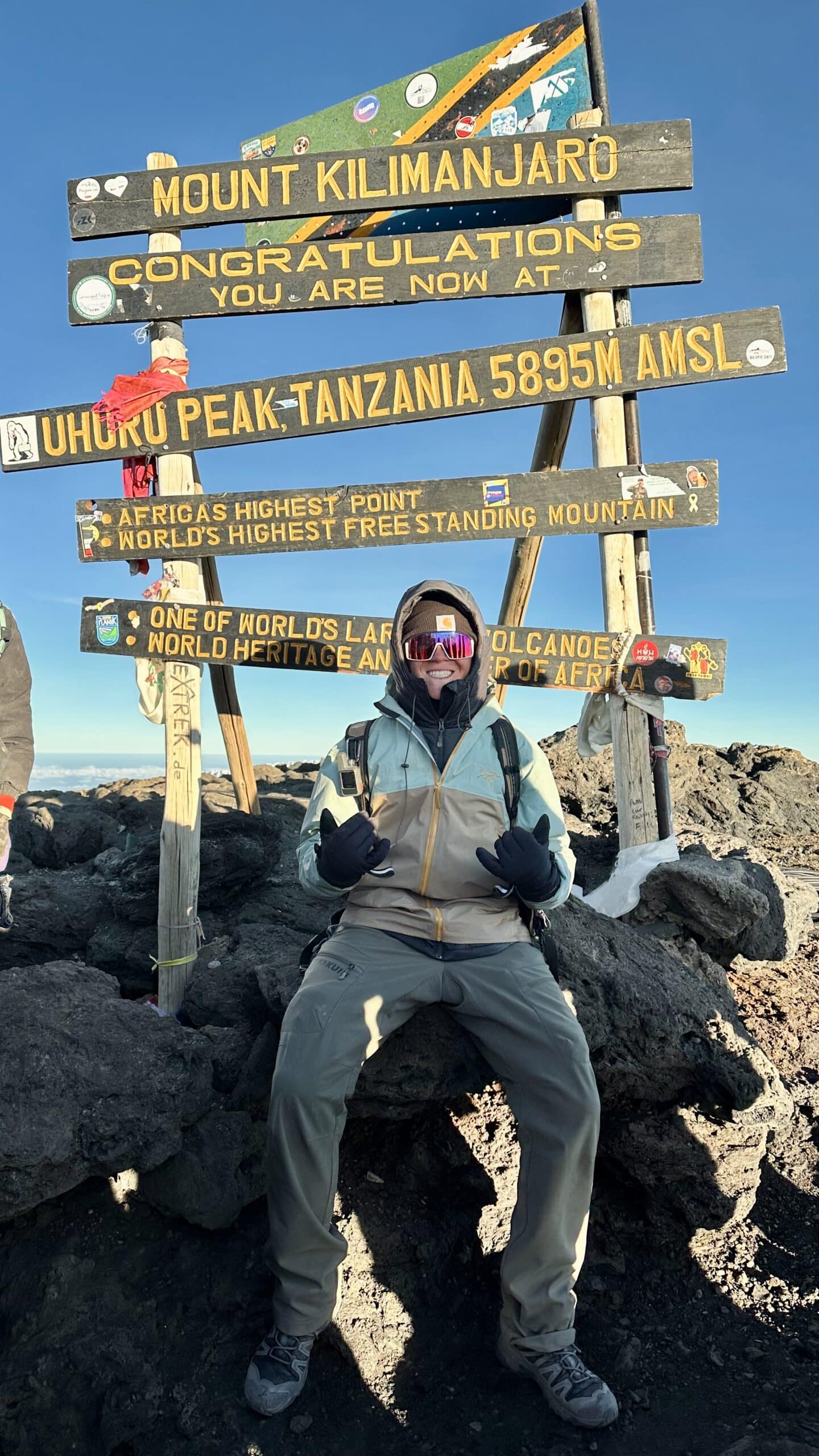
UHURU PEAK SUMMIT — 5,895m / 19,341 ft. Africa’s highest point. Photos at the famous green summit sign. Substantial emotional moment for most climbers. Maximum 15-30 minutes at summit before descent.
07:00
Begin descent. Substantial transition — climbers shift from ascent fatigue to descent caution. Most Kilimanjaro injuries occur on descent due to substantial cumulative fatigue.
09:00
Return to Stella Point, then continue descent through scree slopes. Climbers can “scree-ski” — sliding through loose scree for substantially faster descent.
10:30
Return to Barafu Camp (4,673m). Hot meal, rest, gear repacking. Substantial fatigue — climbers often sleep 1-2 hours before continuing descent.
12:30
Depart Barafu for lower camp — typically Mweka Camp (3,100m) or Millennium Camp (3,820m). Substantial elevation loss produces substantial AMS relief and substantially better sleep.
15:30
Arrive at lower camp. Hot shower (where available), substantial meal, celebration. Most climbers report this evening as substantially the most rewarding of the entire climb.

The Stella Point decision. Stella Point at 5,756m on the crater rim is a substantially significant decision point on summit day. Climbers reaching Stella Point have technically completed the major elevation gain of summit night and are eligible for a Kilimanjaro completion certificate. The remaining 139 meters to Uhuru Peak takes 30-60 minutes of horizontal walking along the crater rim — but at substantially extreme altitude. Climbers experiencing substantial AMS symptoms, severe fatigue, or weather deterioration at Stella Point should accept the Stella Point completion and descend. Many Kilimanjaro deaths involve climbers who pushed beyond their capability for the final 139 meters when they should have accepted the substantially honorable Stella Point conclusion.

Kilimanjaro Costs in 2026: TANAPA Fees, Operators, and Total Budget

Mount Kilimanjaro expedition costs in 2026 range from $1,800 budget operators to $6,500+ premium international operators. The substantial price variation reflects significantly different service levels — but also reflects the substantial fixed costs that all operators must pay (TANAPA park fees) versus the substantially variable costs (operator margin, crew quality, gear standards). Understanding what’s mandatory versus what’s optional is essential for accurate budgeting.

2026 TANAPA Park Fees

The Tanzania National Parks Authority (TANAPA) sets standardized fees for Kilimanjaro climbing that apply to all operators. These fees are mandatory and non-negotiable.

Fee Type2026 RateNotes
Conservation Fee$70/day per personThe primary park entry charge. Charged for each day spent in the park.
Camping Fee$50/night per personFor all camping routes (Lemosho, Machame, Rongai, Northern Circuit, Umbwe, Shira)
Hut Fee (Marangu only)$40/night per personFor Marangu Route hut accommodation; substantially basic dormitory conditions
Rescue Fee$20 one-time per personThe mandatory TANAPA rescue fee funds the national park rescue team. This team coordinates ground evacuations for climbers who need to descend due to altitude sickness or injury. It does not cover helicopter evacuations.
Forest Fee$10 one-time per personApplies to routes passing through forest zone: Rongai, Shira, Lemosho (one-time fee)
Crew Entry Fees~$2/day per crew memberOperators pay for guides, porters, cooks; passed through to climbers
VAT18% added to all feesAn additional 18% will be added to each fee. Many tables show fees excluding VAT — climbers should verify whether quoted prices include VAT.

Park fee calculation example: 8-day Lemosho Route. Using verified 2026 TANAPA rates: Conservation fee $70 × 8 days × 1 climber = $560. Camping fee $50 × 7 nights × 1 climber = $350. Rescue fee $20 × 1 = $20. Forest fee $10 × 1 = $10. Crew fees approximately $2/day × 7 crew × 8 days = $112. Subtotal: $1,052. Add 18% VAT: $1,052 × 1.18 = $1,241 per climber in park fees alone for an 8-day Lemosho climb. This represents substantially 40-60% of total operator pricing — climbers seeing quoted prices below $1,800-$2,000 should explicitly verify whether park fees are included or excluded.

2026 Operator Pricing Tiers

Tier2026 Price (8-day climb)What’s IncludedExamples
Budget Tanzanian$1,800-$2,500Park fees, basic guides, basic camping gear, minimum required crew; substantially basic food; verify safety equipment standardsVarious local Tanzanian operators in Moshi/Arusha
Mid-Range Tanzanian$2,800-$4,500Park fees, experienced guides, quality camping gear, full crew, hot meals, pre-climb hotel night, transfers from JRO airportAltezza Travel, Kilimanjaro Wonders, Climb Kili
Premium International$4,500-$6,500+Park fees, lead Western guide + Tanzanian local guides, premium camping/dining setup, pre-trip preparation support, comprehensive insurance reviewAdventure Consultants, Mountain Madness, RMI Expeditions, Peak Planet
Luxury / Boutique$6,500-$12,000+Boutique luxury camping (heated tents, gourmet dining, hot showers); 1:1 guide ratios; substantial personalizationThomson Safaris, Wilderness Travel, custom private climbs

Total 2026 Trip Budget

Cost Component2026 Amount (USD)Notes
Operator package (8-day mid-range)$2,800-$4,500Includes park fees, guides, food, gear, transfers
International flights to JRO$1,200-$2,500Substantial price variation by departure city and season
Pre/post-climb hotels$200-$4002-3 nights in Moshi or Arusha
Tanzania tourist visa$50-$100Online or visa-on-arrival
Comprehensive travel insurance$150-$400Must cover high-altitude evacuation; helicopter rescue not covered by TANAPA fee
Personal gear purchase or rental$300-$1,500Substantial rental availability in Moshi if not purchasing
Tips for guides and porters$250-$400Standardized expectations; substantially important to crew livelihoods
Travel medications (Diamox, etc.)$30-$80Substantially recommended for AMS prophylaxis
Total realistic 2026 trip budget$5,000-$10,000Mid-range; budget tier $4,000-$6,000; premium $7,000-$14,000+

Mount Kilimanjaro Gear Checklist

Kilimanjaro gear requirements span substantial temperature range: 20-25°C in the rainforest base zones; -10°C to -25°C on summit night. The substantially modular layering system is more important than any single piece of equipment. Most reputable Tanzanian operators include base gear in expedition packages or offer rental in Moshi; climbers should verify specific inclusions before purchasing duplicate gear at home.

Clothing System

  • Base layer — 2-3 sets merino wool or synthetic; long sleeve tops and bottoms
  • Mid-insulation layer — fleece jacket and trekking pants
  • Insulated jacket — down or synthetic, 700+ fill for summit night
  • Hard shell jacket — Gore-Tex or equivalent waterproof
  • Hard shell pants — full-length side zip for layering
  • Trekking pants — convertible/zip-off recommended for warm lower elevations
  • Gaiters — for scree on summit night
  • Warm hat — covers ears; balaclava for summit night
  • Sun hat — wide brim for substantial UV protection at altitude
  • Buff or neck gaiter — face protection in wind/cold
  • Glove system — liner gloves + insulated outer mittens for summit night

Footwear

  • Hiking boots — substantially broken in; waterproof; ankle-supporting
  • Camp shoes — Crocs or lightweight sandals for camp comfort
  • Hiking socks — 4-5 pairs Merino wool; thicker socks for summit night
  • Sock liners — substantially reduce blister risk

Pack and Sleep System

  • Duffel bag — 80-90L for porter carry (most operators include free porter carry up to 15kg)
  • Daypack — 30-40L for items climbers carry themselves (water, snacks, camera, layers)
  • Sleeping bag — rated to -18°C minimum; -25°C recommended for July-August summit nights
  • Sleeping bag liner — adds 5-10°C warmth; substantial hygiene benefit
  • Sleeping pad — usually provided by operator; verify thickness for camp comfort

Hydration and Nutrition

  • Water bladder (3L) — substantial hydration capacity; insulated tube for summit night
  • Backup water bottles — 2 × 1L Nalgene; substantially insulated for summit night
  • Thermos — hot tea/soup for summit night substantial morale boost
  • Energy bars and gels — bring favorite brands from home; substantially limited local availability
  • Water purification — operator typically boils all drinking water; backup tablets recommended

Health and Documentation

  • Diamox (Acetazolamide) — AMS prophylaxis; consult physician for dosing (typically 125-250mg twice daily starting 1-2 days before climb)
  • Personal first aid kit — blister treatment, ibuprofen, anti-diarrheal, electrolyte tablets
  • Sunscreen SPF 50+ — substantial UV exposure at altitude
  • Lip balm with SPF — substantial UV and cold exposure
  • Passport and Tanzania visa — verify before departure
  • Travel insurance documentation — including emergency contact numbers
  • Yellow fever vaccination certificate — required if arriving from yellow fever zones
  • Headlamp with spare batteries — cold-resistant lithium for summit night
  • Trekking poles — substantially recommended for descent

When to Climb Mount Kilimanjaro: Season-by-Season Analysis

Kilimanjaro can be climbed year-round, but two distinct dry seasons produce substantially better climbing conditions. Understanding the seasonal patterns helps climbers select timing that matches their goals — whether prioritizing summit weather, crowd avoidance, or shoulder-season pricing.

Dry Season: January-March

The substantial dry season runs January through early March, producing clear weather, dry trails, and substantial sunshine. Temperatures are warmer (20-25°C at base) but summit nights remain cold. Pros: excellent weather, dry trails, substantially clear summit photos. Cons: peak crowds during February-March, higher operator pricing, busy camps.

Long Rains: April-May

The long rains substantially affect Kilimanjaro April through early May. Trails become muddy, rain is common in the lower elevations, and visibility is often substantially reduced. Climbing not recommended for first-time climbers during this period. Some operators reduce prices substantially or close completely. Rongai Route (drier northern side) is the substantially least-affected option for climbers committed to this window.

Dry Season: June-October

The longer dry season runs June through October — the most-climbed period of the year. Substantially clear weather, cool temperatures, and substantially predictable summit conditions. July-September is the absolute peak season with substantial crowds and higher pricing. August is particularly popular with European and North American climbers using summer vacation windows. Booking 4-6 months ahead recommended for peak season.

Short Rains: November

The short rains in November produce intermittent showers but substantially less disruption than the April-May long rains. Many operators continue running climbs through November with substantial weather contingency built into itineraries. Pricing is substantially lower than peak season. Rongai Route remains the substantially preferred option.

December: Substantial Variability

December weather varies substantially — the early month can be substantially clear (extending the November shoulder season) while late December often transitions to the January dry season. The December 24, 2025 helicopter crash near Barafu Camp occurred during what should have been favorable weather, illustrating that altitude operations always carry substantial risk regardless of seasonal patterns. December climbing is appropriate but climbers should plan for substantial weather contingency.

Mount Kilimanjaro 2025 Season Retrospective

The 2025 Kilimanjaro climbing season produced substantial volume (~50,000 climbers), continued strong industry growth, and the substantial tragedy of the December 24 helicopter crash near Barafu Camp. Below are the substantial patterns and lessons from the 2025 season.

Pattern 1: Strong Lemosho and Northern Circuit Growth

The 2025 season continued the multi-year trend toward longer routes with better acclimatization profiles. Lemosho substantially overtook Machame as the most-recommended route by major international operators. The Northern Circuit grew substantially as climbers prioritized success rate over cost. Substantially fewer climbers chose the 5-day Marangu option as operator education about success rates filtered through to consumers.

Pattern 2: Premium Operator Tier Growth

The 2025 season saw substantial growth in the premium operator tier ($4,500-$6,500) as North American and European climbers prioritized safety, comfort, and substantial guide quality over budget pricing. Boutique luxury operators (Thomson Safaris, Wilderness Travel) reported substantially expanded waitlists for 2026.

Pattern 3: Charity Climb Continued Strength

Kilimanjaro remained the world’s most popular fundraising climb in 2025, with substantial charity organization activity continuing the multi-decade pattern. Routes selected by charity groups skewed substantially toward 7-day Machame and 8-day Lemosho — the substantially appropriate routes for average-fitness fundraisers.

Pattern 4: December 24, 2025 Helicopter Tragedy

A medical evacuation helicopter crashed on Mount Kilimanjaro on Christmas Eve killing all five people aboard. The Airbus H125 went down between Barafu Camp and Kibo peak at more than 13,000 feet in altitude. The victims included two Czech tourists, a local doctor, a Tanzanian guide and the aircraft’s Zimbabwean pilot. The substantial tragedy reinforced fundamental lessons about altitude rescue operations: helicopter rescue is substantially not a guaranteed safety net; prevention through proper acclimatization remains substantially safer than reliance on evacuation infrastructure; high-altitude aviation operations carry substantial risk regardless of operator quality.

Pattern 5: Continued AMS Evacuation Volume

2025 saw the substantial continuation of multi-year patterns: altitude sickness remained the substantially primary cause of evacuation; 5-day Marangu Route continued producing disproportionate AMS cases; Diamox use substantially expanded among informed climbers; and rescue team capacity remained substantial across all routes. The December tragedy substantially highlighted that “rescue helicopter available” is not equivalent to “rescue guaranteed.”

The substantial 2025 lesson. Mount Kilimanjaro in 2025 continued the substantial pattern that defines the mountain: it welcomes substantial climber numbers each year, but success and safety depend on substantially basic principles — choose routes long enough for acclimatization; engage operators with verified safety protocols; respect altitude symptoms; turn back when warning signs develop; carry comprehensive travel insurance. The mountain’s “easy” reputation does not eliminate these principles — it makes them more essential, because climbers attracted to “accessible” Kilimanjaro substantially underestimate the discipline required for safe summit success.

Frequently Asked Questions About Climbing Kilimanjaro

How much does it cost to climb Mount Kilimanjaro in 2026?

Mount Kilimanjaro expeditions in 2026 cost $1,800-$6,500+ per climber depending on operator tier and route length. Budget Tanzanian operators run $1,800-$2,500 for 6-day climbs; mid-range reputable Tanzanian operators run $2,800-$4,500 for 7-8 day climbs; premium international operators run $4,500-$6,500+ for 8-9 day climbs. The mandatory TANAPA park fees for an 8-day climb total approximately $1,200-$1,400 per climber including the $70/day conservation fee, $50/night camping fee, $20 one-time rescue fee, $10 forest fee (where applicable), crew entry fees, and 18% VAT. Marangu Route uses hut accommodation at $40/night instead of camping. Park fees account for approximately 50-60% of total operator pricing — operators quoting below $1,800 for multi-day climbs are typically excluding mandatory fees or cutting corners on crew wages and safety equipment.

What is the best route to climb Kilimanjaro?

The 8-day Lemosho Route has the best combination of summit success rate (85-90%), scenery, and acclimatization profile, making it the most-recommended route for first-time Kilimanjaro climbers. The 9-day Northern Circuit has the highest absolute success rate (90-95%) but adds substantial time and cost. The 7-day Machame Route (“Whiskey Route”) is popular with 75-85% success rate, scenic varied terrain, and good climb-high-sleep-low acclimatization profile. The Marangu Route (“Coca-Cola Route”) uses hut accommodation but has the lowest success rate among the major routes (27% for 5-day, 50-60% for 6-day). The Rongai Route approaches from the north with quieter trails and 70-85% success on 6-7 day itineraries. The Umbwe Route is the steepest and most direct — recommended only for experienced climbers. The Shira Route starts at high elevation (3,500m) creating substantial AMS risk and is no longer recommended by most operators.

What are the success rates for climbing Kilimanjaro?

Kilimanjaro summit success rates vary dramatically by route length: 5-day Marangu Route 27-30%; 6-day Marangu Route 50-60%; 6-day Machame Route 65-73%; 7-day Machame Route 75-85%; 6-day Lemosho Route 70-75%; 7-day Lemosho Route 80-85%; 8-day Lemosho Route 85-90%; 7-day Rongai Route 70-85%; 9-day Northern Circuit Route 90-95%. The overall industry-wide success rate across all routes is approximately 65-70%. The biggest determinant of summit success is acclimatization time, not climber fitness — climbers on 5-day routes are functionally gambling against altitude physiology regardless of preparation. Climbers prioritizing summit success should choose routes of 8+ days.

How dangerous is Mount Kilimanjaro?

Mount Kilimanjaro produces approximately 10 climber deaths per year out of approximately 50,000 annual climbers — a mortality rate of approximately 0.02-0.03%. This is substantially lower than Mount Elbrus (15-30 deaths per year) or Aconcagua. However, Kilimanjaro’s absolute death count remains substantial due to high climbing traffic, and the December 24, 2025 helicopter crash near Barafu Camp that killed 5 reinforced that rescue operations themselves carry substantial risk at altitude. Primary causes of Kilimanjaro deaths: altitude illness (HAPE, HACE) that climbers ignored or descended too late from; cardiac events triggered by altitude in climbers with undiagnosed cardiovascular disease; falls during summit night fatigue; hypothermia from inadequate cold-weather gear.

What does a Kilimanjaro summit day actually look like?

Kilimanjaro summit days typically follow this hour-by-hour pattern from Barafu Camp (4,673m): 23:00 wake-up, breakfast, layer up; 00:00 depart Barafu as roped/grouped team with headlamps; 00:00-05:00 ascent through scree slopes; 05:00-05:30 reach Stella Point at 5,756m on the crater rim; 05:30-06:30 sunrise and ascent along the crater rim; 06:30-07:00 reach Uhuru Peak summit at 5,895m; 07:00-10:30 descent back to Barafu Camp; 12:30-15:30 continue descent to Mweka Camp or Millennium Camp. Total summit day exposure: 14-17 hours. The Barafu-to-Uhuru ascent represents approximately 1,222 meters of vertical gain in 6-7 hours at the highest altitudes any first-time climber will likely experience.

Do I need to use Diamox for Kilimanjaro?

Diamox (acetazolamide) is substantially recommended for most Kilimanjaro climbers, especially those on routes shorter than 8 days. Standard prophylactic dose is 125-250mg twice daily, beginning 1-2 days before the climb and continuing through summit day. Diamox substantially reduces AMS risk and improves sleep quality at altitude. Common side effects include increased urination, tingling in fingers and toes, and altered taste (especially with carbonated drinks). Climbers should consult their physician before climb, especially if taking other medications or with sulfa allergies (Diamox is a sulfonamide). Diamox does not eliminate the need for proper acclimatization — it supplements, not replaces, the natural acclimatization process. Climbers refusing Diamox should choose 8+ day routes for substantially better odds.

What’s the best time of year to climb Kilimanjaro?

The two best windows are January-March and June-October — both dry seasons with substantially better weather conditions. July-September is the peak season with the most climbers and highest pricing. January-February offers substantially less crowded conditions. April-May (long rains) and November (short rains) substantially reduce visibility and trail conditions; April-May particularly should be avoided by first-time climbers. December is variable — early month often clear, late month transitions back to dry season. Climbers should book 4-6 months ahead for peak July-September dates.

How fit do I need to be to climb Kilimanjaro?

Kilimanjaro requires substantial multi-day endurance fitness — but not exceptional cardiovascular capacity. The substantial preparation framework: 12-16 weeks of progressive training before the climb. Build to 6-8 hour weekly hikes with 15-18kg pack on varied terrain. Include 2-3 cardiovascular sessions per week (45-60 minutes moderate intensity). Add strength training emphasizing legs (squats, lunges, step-ups) and core. The substantial preparation benchmark: ability to hike 8 hours with 15kg pack at altitude. Climbers with chronic running, cycling, or hiking habits often arrive substantially well-prepared without specific Kilimanjaro training; complete beginners may need 6+ months of preparation. Fitness matters substantially less than acclimatization on Kilimanjaro — even elite athletes fail summit night when altitude physiology overwhelms acclimatization. Choose a long route (8+ days) and your fitness becomes substantially less determinative.

Can children climb Kilimanjaro?

Tanzania’s official policy requires Kilimanjaro climbers to be at least 10 years old. Children under 10 are not permitted above 3,700m elevation for substantial safety reasons. Children aged 10-15 can climb but should be carefully assessed for altitude tolerance — children produce substantially more variable AMS responses than adults, and severe altitude illness in children can develop rapidly. Many reputable operators set their own minimum age at 12-14 years. Family Kilimanjaro climbs require substantial planning around child pacing, additional medical considerations, and longer route selection (8+ days strongly recommended for any family climb). The youngest documented Kilimanjaro summit is reportedly 6 years old (with substantial controversy), but mainstream operator practice firmly recommends 10+ as minimum and 12-14+ for substantial safety margin.

What happens if I get altitude sickness on Kilimanjaro?

Altitude sickness on Kilimanjaro presents in three forms: AMS (Acute Mountain Sickness — headache, nausea, fatigue, dizziness; mild and treatable), HAPE (High Altitude Pulmonary Edema — breathlessness at rest, wet cough with frothy sputum, severe chest tightness; life-threatening), and HACE (High Altitude Cerebral Edema — severe headache, confusion, ataxia, hallucinations; life-threatening). The substantial treatment for any moderate-to-severe symptoms is immediate descent to lower altitude. Reputable guides carry portable pulse oximeters and check climbers twice daily for substantial early warning signs. Mild AMS can be managed with hydration, rest, and Diamox. Severe AMS, any HAPE symptoms, or any HACE symptoms require immediate descent. The TANAPA rescue fee funds ground evacuations; helicopter evacuation requires separate insurance coverage. The December 2025 helicopter crash demonstrated that helicopter rescue itself carries substantial risk — descent on foot remains substantially the safest evacuation method when possible.

Mount Kilimanjaro Detailed Planning Guides

Sources & Further Reading

  • Tanzania National Parks Authority (TANAPA) — Official park fee structure, regulations, and permit requirements: tanzaniaparks.go.tz/national_parks/kilimanjaro-national-park
  • UNESCO World Heritage — Mount Kilimanjaro National Park inscription documentation
  • Tanzania Civil Aviation Authority — December 2025 helicopter crash investigation reports
  • Hans Meyer, “Ostafrikanische Gletscherfahrten” (1890) — primary source for 1889 first ascent documentation
  • Kilimanjaro Aviation / KilimedAir — helicopter rescue operations on Mount Kilimanjaro
  • News coverage of December 24, 2025 helicopter crash — ABC News, UPI, Yahoo News, Aviation Safety Network
  • Altezza Travel research — 2026 TANAPA fee verification and historical chronology
  • Climbing Kilimanjaro — comprehensive success rate analysis across all routes
  • Ultimate Kilimanjaro — independent operator research on route selection and acclimatization
  • Mount Kilimanjaro Climb — verified 2026 park fee breakdown
  • Tanzania Tourist Board — visa requirements and travel documentation

Last updated: May 23, 2026. Next scheduled review: July 2026 (mid-peak season).

Language »