
Last updated September 9, 2026
Mount Kailash Pilgrim’s Guide: The Sacred Kora & Year of the Horse 2026
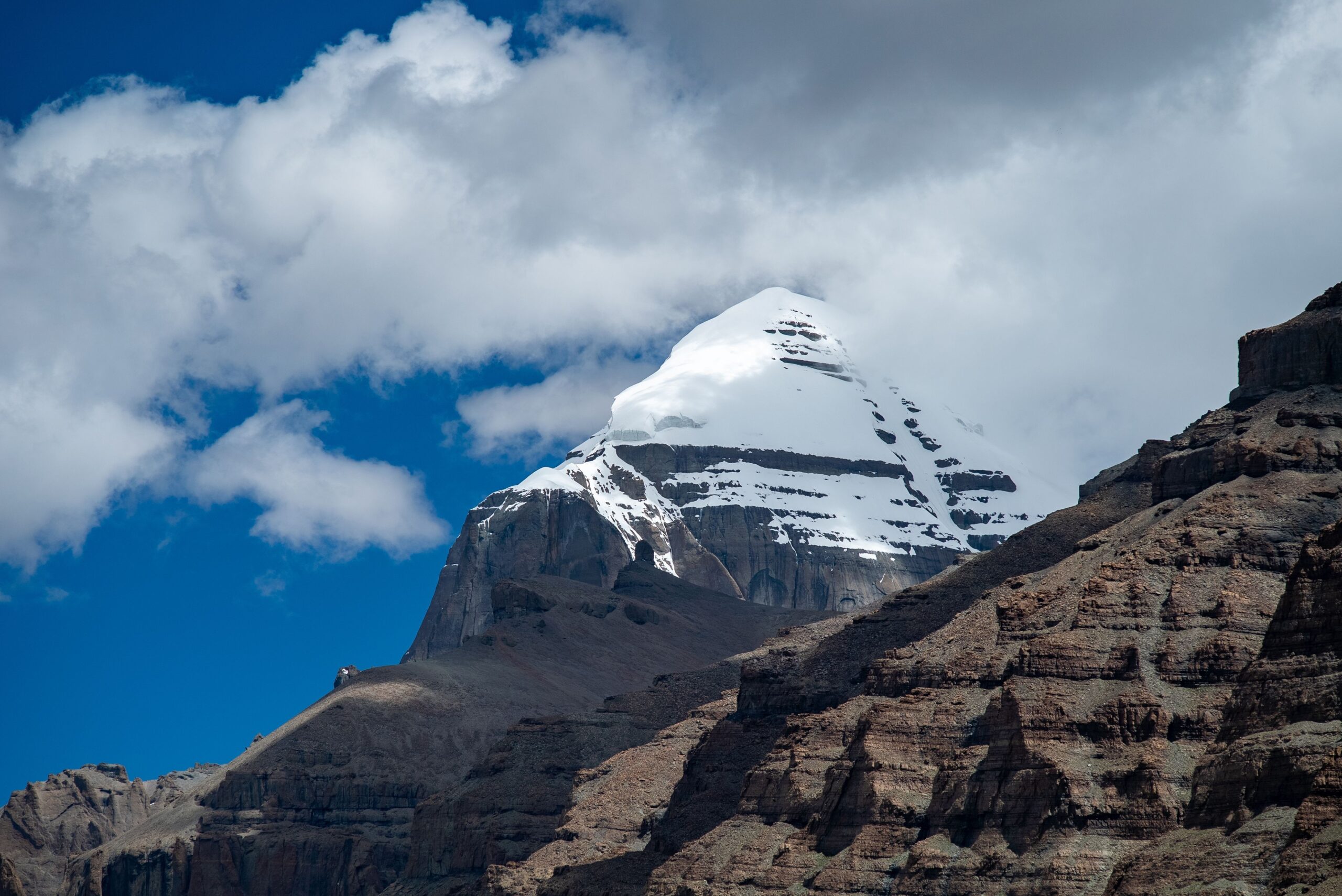
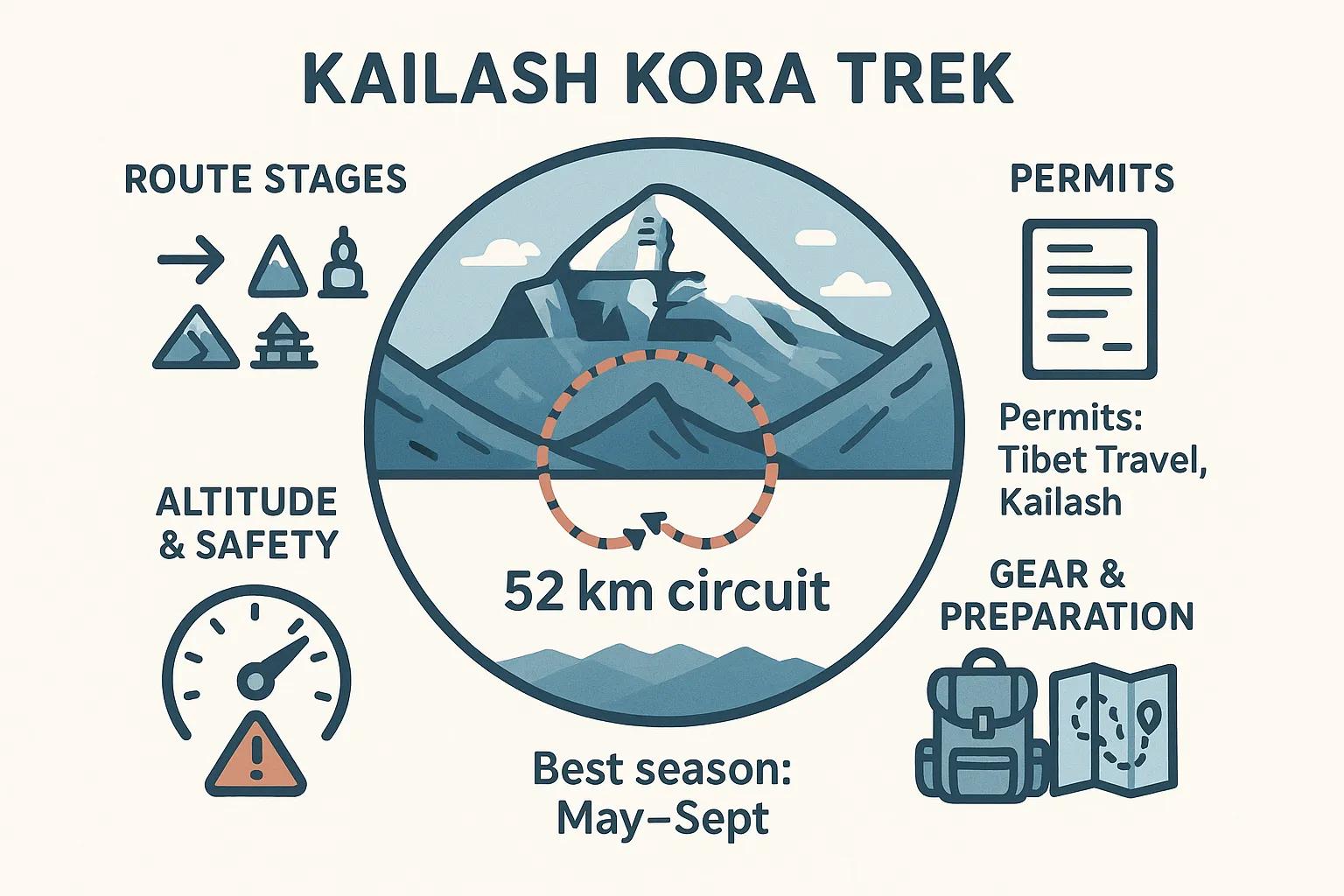
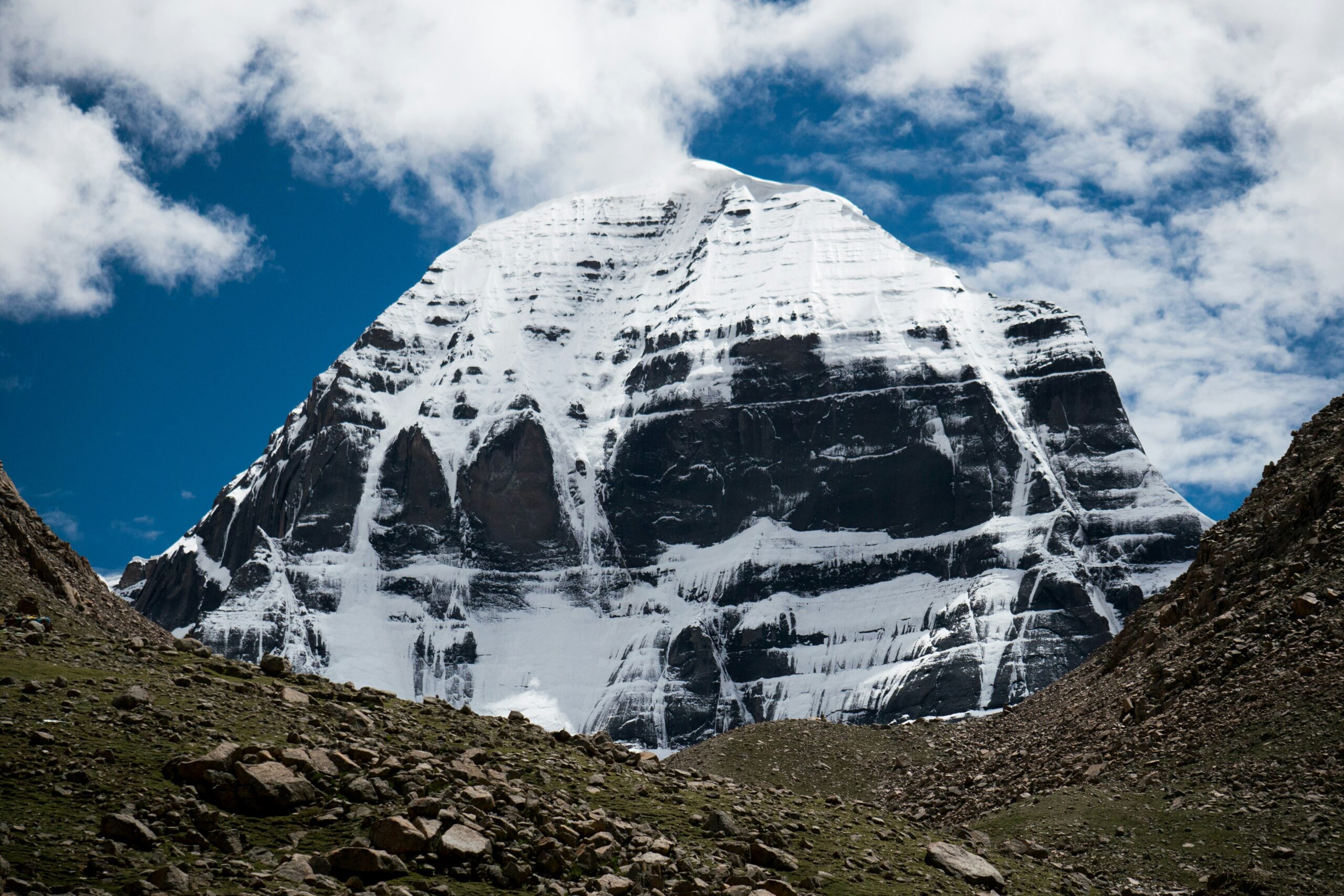
6,638 m / 21,778 ft — the unclimbed sacred mountain in western Tibet, revered by four religions as the cosmic axis. The 52-km Kora pilgrimage circles its base across three days, crossing Dolma La Pass at 5,630m. 2026 is the Year of the Horse — one Kora equals thirteen in spiritual merit. The next opportunity arrives in 2038.
Mount Kailash rises to 6,638 meters in remote western Tibet’s Ngari Prefecture, occupying a position in world religious geography that no other mountain shares. Hindus revere it as the earthly abode of Lord Shiva, Buddhists identify it with Mount Meru at the center of the universe, Jains know it as Ashtapada where Rishabhadeva achieved liberation, and Bon practitioners — followers of Tibet’s pre-Buddhist religion — call it the nine-story swastika mountain. The peak has never been climbed and likely never will be: Chinese authorities prohibit climbing to honor the sacred traditions, and the world’s leading mountaineers including Reinhold Messner have refused offered permits out of respect. Pilgrims instead walk the Kora — a 52-kilometer circumambulation around the mountain’s base across three days, crossing Dolma La Pass at 5,630m on day two. Tradition holds that one complete Kora cleanses the sins of a lifetime; 108 Koras guarantee buddhahood in the current life.
🐎 2026 is the Year of the Fire Horse — Once Every 12 Years
The Tibetan Year of the Horse — believed to be Mount Kailash’s birth year — multiplies pilgrimage merit thirteenfold. A single Kora completed during 2026 carries the spiritual weight of thirteen Koras performed in any ordinary year. Saga Dawa Festival falls on May 31, 2026, with the full festival window running May 17 through June 16.
The previous Year of the Horse fell in 2014. The next arrives in 2038. Pilgrims who miss 2026 face a 12-year wait for the next convergence — making 2026 the most consequential Kailash pilgrimage year of the decade. Book 6-10 months ahead; many operators stopped accepting Saga Dawa bookings by early 2026.

2026 carries a triple convergence that draws pilgrims from across Asia: Year of the Horse merit multiplication, Saga Dawa Festival commemorating Buddha Shakyamuni’s birth and enlightenment, and a full moon on May 31 that further amplifies spiritual significance. This guide covers the complete Kora pilgrimage — what makes Kailash sacred to each of the four religions, who can realistically complete the 52-km circuit, the standard 3-day route through Dirapuk and Zutulpuk monasteries, the 2026 Inner Kora restrictions, all required Tibet permits and access routes, 2026 cost breakdowns from budget ($3,850 total) through premium Saga Dawa ($8,450 total), gear requirements, altitude safety, the pilgrimage history from Bon antiquity through Sven Hedin to Messner’s refusal, and ten detailed FAQ answers.
Mount Kailash Location & Darchen Weather
Mount Kailash sits at 31.0672°N, 81.3119°E in Ngari Prefecture, Tibet Autonomous Region — approximately 1,400 km west of Lhasa and 500 km north of Kathmandu. The Kora begins at Darchen (4,675m), the small settlement that serves as base for all pilgrims. The broader sacred landscape includes Lake Manasarovar (4,590m), Rakshas Tal, and the source regions of the Indus, Sutlej, Brahmaputra, and Karnali rivers — four of Asia’s great river systems.
Weather data from Open-Meteo at Darchen coordinates 31.0672°N, 81.3119°E. Dolma La Pass at 5,630m runs 15-20°C colder than Darchen and can reach -15°C even in summer. The Kailash region is closed November through April when Dolma La becomes impassable.
Mount Kailash At a Glance
| Elevation | 6,638 m (21,778 ft) — some sources cite 6,656 m |
|---|---|
| Tibetan name | Gang Rinpoche — “Precious Snow Mountain” |
| Hindi/Sanskrit name | Kailasa, Kailash; Hindu tradition: abode of Lord Shiva |
| Jain name | Ashtapada — liberation site of Rishabhadeva |
| Bon name | Yungdrung Gutseg — “nine-story swastika mountain” |
| Location | Ngari Prefecture, Purang County, Tibet Autonomous Region |
| Coordinates | 31.0672°N, 81.3119°E |
| Mountain type | Sedimentary stratum — Gangdise (Kailash) Range |
| Sacred to | Hinduism, Buddhism, Jainism, Bon — four major religions |
| Climbing status | Never officially climbed; prohibited by Chinese authorities |
| Distinctive shape | Pyramidal with four faces roughly aligned to cardinal directions |
| Standard pilgrimage | Outer Kora — 52 km circumambulation across 3 days |
| Starting point | Darchen — 4,675 m settlement, all pilgrims base here |
| Highest point on Kora | Dolma La Pass — 5,630 m, crossed on day 2 |
| Standard duration | 3 days; prostrating pilgrims take 2-4 weeks for the same circuit |
| Pilgrim direction | Hindus & Buddhists: clockwise; Bon & Jains: counterclockwise |
| 2026 significance | Year of the Fire Horse — one Kora = thirteen in merit (once every 12 years) |
| Saga Dawa Festival 2026 | May 31, 2026 (festival window May 17 – June 16) |
| Next Year of the Horse | 2038 |
| Rivers sourced | Indus, Sutlej, Brahmaputra (Yarlung Tsangpo), Karnali (feeds Ganges) |
| Lake Manasarovar | 4,590 m — sacred freshwater lake adjacent to Kailash |
| 2026 tour cost | $1,500-$4,500 (organized package); $3,850-$8,450 total trip |
| Permit requirement | Multiple — Chinese visa, TTP, ATP, Military, Foreign Affairs Permits |
| Best season | Late April through October; closed November-April |
2026: Year of the Fire Horse — The Pilgrimage of a Generation
2026 is the most spiritually significant Mount Kailash pilgrimage year of the current decade. The Tibetan calendar runs on a 12-year animal zodiac cycle, and 2026 marks the Year of the Fire Horse — believed in Tibetan Buddhist tradition to be Mount Kailash’s birth year. One complete Kora performed during this year carries the spiritual merit of thirteen Koras completed in any ordinary year. The tradition derives from teachings preserved in Tibetan Buddhist monastic lineages over many centuries.
The 12-Year Cycle and Why 2026 Matters
Recent Years of the Horse fell in 2002, 2014, and now 2026. The next opportunity arrives in 2038. Pilgrims weighing whether 2026 is “worth” the substantial cost and logistical complexity should recognize that this is genuinely a once-in-12-years event — the most consequential Kailash pilgrimage window most travelers will face in their lifetimes. The 2014 Year of the Horse drew pilgrim numbers 2-3 times higher than ordinary years; 2026 is projected to exceed those figures given expanded international interest and post-pandemic pent-up demand.
Saga Dawa Festival May 31, 2026
The Saga Dawa Festival commemorates the birth, enlightenment, and parinirvana (passing into final nirvana) of Buddha Shakyamuni — substantially the holiest month in the Tibetan Buddhist calendar. The 2026 festival falls on the 15th day of the 4th Tibetan lunar month, which corresponds to May 31, 2026, on the Gregorian calendar. The full festival window runs May 17 through June 16. The central ceremony at Kailash is the raising of the Tarboche prayer pole near Darchen — senior monks chant mantras while crowds toss Longda (prayer papers) and Tsampa (white barley flour) into the sky. The Tarboche pole is raised once per year; pilgrims interpret whether it stands perfectly straight (auspicious year) or leans (warning).
The Triple Convergence Reality
2026 produces a rare three-way alignment: Year of the Horse (thirteenfold merit), Saga Dawa Festival (the holiest Buddhist month), and full moon on May 31 (when prayer and meditation are considered most effective). Tibetan Buddhist teachers interpret this convergence as substantially the most spiritually significant Kailash window in the foreseeable future. Pilgrims who complete a Kora during the May 31 – June 1 period — Year of the Horse + Saga Dawa + full moon — are said to accumulate extraordinary merit beyond even the standard thirteenfold multiplication.
2026 booking reality. Year of the Horse pilgrimage demand has compressed normal booking timelines. Saga Dawa dates (late May through early June 2026) substantially booked out by January 2026 at most operators. The post-Saga Dawa secondary window (mid-June through September) still offers Year of the Horse merit and may have availability. Pilgrims booking in mid-2026 for late-season departures (August-October) face fewer crowds but lose Saga Dawa atmosphere. Operators in Kathmandu (Nepal-side tours) historically have more flexible last-minute availability than Lhasa-based operators.
Mount Kailash: Sacred to Four Religions
No other mountain on Earth holds active sacred status across four major religious traditions simultaneously. The convergence of Hindu, Buddhist, Jain, and Bon reverence on a single peak makes Mount Kailash a unique spiritual landscape — pilgrims from each tradition approach with distinct beliefs while sharing the same circuit.
🕉 Hindu Tradition — Abode of Shiva
In Hindu cosmology, Mount Kailash is the earthly abode of Lord Shiva, who is said to sit in eternal meditation at the summit with his consort Parvati. The mountain features prominently in the Vedas, the Puranas (particularly the Skanda Purana), and the Mahabharata. Hindu tradition associates Kailash with the cosmic linga — symbol of divine creative power. Hindu pilgrims walk the Kora clockwise; the most devout perform full-body prostrations along the entire 52-km circuit, extending the pilgrimage to 2-4 weeks. The pilgrimage is known in Sanskrit as the Kailash Mansarovar Yatra, combining Kailash with the adjacent sacred Lake Manasarovar.
☸ Buddhist Tradition — Mount Meru
Tibetan Buddhists identify Mount Kailash with Mount Meru, the cosmic axis at the center of the universe in Buddhist cosmology. The mountain is associated with Buddha Demchok (Chakrasamvara) and his consort Dorje Phagmo. Buddhist pilgrims walk the Kora clockwise, performing prostrations and offering prayers at each sacred station. Traditional teaching holds that 108 Koras guarantee buddhahood in the current lifetime. Kailash is also associated with Milarepa, the great 11th-century Tibetan Buddhist yogi who famously won a spiritual duel against the Bon master Naro Bonchung on the mountain — a contest that established Buddhist primacy at Kailash in Tibetan tradition.
☸ Jain Tradition — Ashtapada
Jains call Mount Kailash Ashtapada and consider it the site where Rishabhadeva, the first of the 24 Tirthankaras (spiritual teachers), achieved moksha — liberation from the cycle of rebirth. Jain tradition holds that Rishabhadeva attained enlightenment on Kailash before entering nirvana. Jain pilgrims walk the Kora counterclockwise, opposite to Hindu and Buddhist convention. Jain presence at Kailash is less numerous than Hindu or Buddhist pilgrims but maintains ancient continuity — Jain texts describing Ashtapada date back over 2,500 years, making Jain veneration of the mountain potentially older than the modern Hindu and Buddhist traditions at the site.
卐 Bon Tradition — Nine-Story Swastika Mountain
The Bon tradition — Tibet’s pre-Buddhist indigenous religion — reveres Mount Kailash as Yungdrung Gutseg, the nine-story swastika mountain, and as the seat of the sky goddess Sipaimen. Bon cosmology describes the mountain as the axis mundi where divine and earthly realms meet. Bon pilgrims walk the Kora counterclockwise, following an ancient tradition that predates Buddhism’s arrival in Tibet. The Bon swastika is an ancient solar and life-symbol unrelated to its 20th-century European political appropriation. Bon practitioners have maintained Kailash rituals for over 3,000 years — substantially the oldest continuous religious tradition at the mountain.
Why four religions converge on one mountain. Mount Kailash sits at the hydrological heart of Asia — the source region for four of the continent’s great rivers (Indus, Sutlej, Brahmaputra, Karnali). This water-source role made the mountain naturally sacred to populations living downstream across the Indian subcontinent and the Tibetan plateau. The distinctive pyramidal shape with four faces aligned to the cardinal directions reinforced symbolic associations with cosmic order. Across roughly 3,000 years, successive religious traditions — Bon first, then Hindu and Jain influence from the south, then Buddhism arriving in Tibet in the 7th century AD — built spiritual frameworks around the same physical mountain. The result is the unique multi-religion convergence visible today.
Who Can Realistically Complete the Kora?
The Kora is physically demanding but accessible to most reasonably fit pilgrims. The trail is well-marked, heavily trafficked during pilgrimage season, and follows established paths without technical climbing. The genuine challenge is altitude — Darchen sits at 4,675m before the Kora even begins, and the route crosses 5,630m at Dolma La.
The Kora Is Appropriate For
Spiritual pilgrims of any of the four traditions. The Kora’s primary purpose is religious — Hindu, Buddhist, Jain, and Bon practitioners use it for genuine devotional engagement. Most Western tourists who complete the Kora report that the spiritual atmosphere — pilgrims chanting, prostrating, performing rituals at each sacred station — substantially defines the experience regardless of the visitor’s own beliefs.
Trekkers with prior altitude experience above 4,000m. Kailash is a high-altitude trek before it is anything else. Climbers who have completed Kilimanjaro (5,895m), Everest Base Camp Trek (5,364m), Mount Toubkal (4,167m), or Mount Whitney (4,421m) have substantially appropriate physiological foundation. First-time high-altitude travelers should not start with Kailash — the failure rate from altitude illness among unprepared pilgrims is significant.
Year of the Horse pilgrims accepting limitations. 2026 demand substantially compresses accommodations, vehicles, and Sherpa availability. Pilgrims booking 2026 dates need flexibility — sometimes accommodations downgrade, dates shift, or group sizes grow. The Year of the Horse merit makes these compromises worthwhile for substantially most pilgrims.
Travelers combining Kailash with Lhasa, EBC Tibet, or Nepal. Many Tibet itineraries pair Kailash with Everest Base Camp from the Tibet side, the Potala Palace and Lhasa monasteries, or trekking in Nepal before or after. The complete multi-week journey can substantially produce a more meaningful pilgrimage than Kailash alone.
Elderly pilgrims with realistic support plans. Tibetan pilgrims in their 70s and 80s complete the Kora every year. Horses (500-800 RMB/day) and porters (150-300 RMB/day) are available in Darchen and substantially make the circuit accessible to elderly and mobility-limited pilgrims. Multi-generational family pilgrimages — grandparents on horseback with younger family members walking — are a common Tibetan tradition.
The Kora Is NOT Appropriate For
Independent travelers. Tibet requires organized tours through licensed agencies — independent travel is prohibited throughout Tibet Autonomous Region. Pilgrims who insist on solo travel cannot legally complete the Kora.
Travelers with active heart, lung, or severe blood pressure conditions. The 5,630m altitude at Dolma La is genuinely dangerous for people with underlying cardiovascular or respiratory conditions. Pilgrims with prior history of severe altitude sickness, recent major surgery, or unstable cardiac conditions should consult their doctor — and accept that the doctor may medically restrict participation.
Travelers on tight schedules. The minimum realistic itinerary is 10 days from Kathmandu or 14 days from Lhasa. Shortcuts (helicopter routes, domestic flights) reduce acclimatization time and substantially increase altitude illness risk. Pilgrims with under 8 days available should not attempt Kailash.
Travelers expecting luxury tourism. Accommodations at Dirapuk and Zutulpuk are basic monastery guesthouses with shared bathrooms, no hot water above Darchen, and modest meals. Sleeping bags are essential. Pilgrims who require Western-style accommodations should plan extended stays in Lhasa or Kathmandu hotels rather than expecting comfort on the Kora itself.
The Standard 3-Day Outer Kora: Day-by-Day
The standard outer Kora covers 52 kilometers across three days, beginning and ending in Darchen. The route follows established pilgrimage paths used for over a millennium. Day-by-day distances and elevation profiles below reflect the most common contemporary itinerary.
Day 1: Darchen → Dirapuk Monastery (20 km, 5-7 hours)
Profile
Start: Darchen, 4,675 m. End: Dirapuk Monastery, 4,890 m. Elevation gain: 215 m net; multiple intermediate rises and descents. Walking time: 5-7 hours depending on pace and rest stops.
The Route
The Kora begins near the Tarboche prayer pole area — substantially the central ceremonial point of the Saga Dawa Festival. The trail follows the Lha Chu valley northwest, with Mount Kailash’s dramatic north face visible throughout the day. The walk is gradually uphill but not steep; pilgrims who maintain steady pace without altitude illness substantially complete the day comfortably.
Chuku Monastery sits on a hilltop visible from the trail at approximately the halfway point — pilgrims often pause for prayers and views. The valley opens dramatically as the day progresses, with Kailash’s north face appearing larger with each kilometer. The day ends at Dirapuk Monastery, where pilgrims overnight in monastery guesthouses or in tent camps run by local Tibetan nomads. Dirapuk offers the closest accessible view of Kailash’s north face on the entire Kora — many pilgrims spend extended time here for meditation and prayer.
Accommodation
Dirapuk Monastery guesthouses provide basic dormitory-style accommodation with shared bathrooms. Nomad tent camps offer alternative lodging with a more traditional atmosphere. All accommodations are modest; pilgrims bring their own sleeping bags rated to -10°C minimum.
Day 2: Dirapuk → Zutulpuk via Dolma La Pass (18 km, 10-12 hours)
Profile
Start: Dirapuk, 4,890 m. End: Zutulpuk Monastery, 4,790 m. Highest point: Dolma La Pass, 5,630 m. Walking time: 10-12 hours. The hardest day of the Kora.
The Route
Pilgrims typically wake at 4-5 AM to allow adequate time for the substantial climb to Dolma La and complete the day before dark. The ascent passes through the “Bardo” section — symbolically representing the intermediate state between death and rebirth in Tibetan Buddhism. The trail climbs gradually at first, then steepens significantly above 5,200m.
Pilgrims pass through the Shiwatsal cemetery ground near the top of the climb — a sacred site where many leave personal items (clothing, hair, photographs) as symbolic death offerings. The ritual represents leaving behind one’s old self before crossing the threshold of Dolma La. Hindu and Buddhist pilgrims may perform additional prayers here.
Crossing Dolma La Pass at 5,630m marks the spiritual and physical apex of the Kora. The pass is covered in prayer flags, stone cairns built by previous pilgrims, and offerings. Tibetan Buddhist pilgrims add stones to the cairns and tie new prayer flags. Wind at the pass can substantially exceed 60 km/h; temperatures even in summer can drop to -10°C with wind chill effects below -20°C.
Descent from Dolma La brings pilgrims past Gauri Kund — a small turquoise glacial lake where Hindu tradition holds that Goddess Parvati once bathed. Devout Hindu pilgrims attempt ritual ablutions here, though most modern pilgrims simply pause for prayers. The descent continues for 4-6 hours through rugged terrain to Zutulpuk Monastery at 4,790m.
Accommodation
Zutulpuk Monastery guesthouse provides basic shared accommodation. The monastery contains a cave where Milarepa is said to have meditated and practiced his spiritual disciplines. Pilgrims often visit the cave in the evening before sleep.
Day 3: Zutulpuk → Darchen (14 km, 4-5 hours)
Profile
Start: Zutulpuk, 4,790 m. End: Darchen, 4,675 m. Elevation loss: 115 m net descent. Walking time: 4-5 hours. The easiest day.
The Route
Day 3 begins with a morning visit to Zutulpuk Monastery and the Milarepa meditation cave. The cave contains ancient murals and offerings; pilgrims often perform a final round of prayers here before departing. The trail then follows the Zhong Chu valley back toward Darchen — gradual downhill terrain with no significant climbs.
The walk takes approximately 4-5 hours at moderate pace. Most pilgrims arrange vehicle pickup at the trail’s endpoint, where the Kora returns to the Darchen road system. The completion of the Kora is a substantial spiritual milestone for pilgrims — Tibetan Buddhist tradition holds that one Kora cleanses the sins of a lifetime, and in 2026 the Year of the Horse multiplies this merit thirteenfold.
Post-Kora Options
Many pilgrims continue from Darchen to Lake Manasarovar (4,590m) for a separate sacred lake visit and ritual ablution. Some attempt the restricted Inner Kora to Selung Monastery (4.5 km section only in 2026). Most Year of the Horse pilgrims complete a second or third outer Kora before departing the region.
The Inner Kora: 2026 Restrictions
The Inner Kora is a 34-kilometer alternative circuit that traditionally provides closer access to Mount Kailash’s south face. Tibetan Buddhist tradition requires completion of 13 outer Koras before attempting the Inner Kora — substantially making it a pilgrimage reserved for serious practitioners. Chinese authorities have restricted the Inner Kora for 2026.
Inner Kora 2026 — Selung Monastery Section Only
Only the first 4.5 km section from Darchen to Selung Monastery is permitted in 2026. The full Inner Kora — including the 13 Golden Chortens (stupas), Saptarishi Cave, and approach to the south face — remains closed. This restriction may extend beyond 2026; pilgrims should verify current status with their tour operator before booking.
The permitted section provides views of Kailash’s south face from Selung Monastery at 5,020m. Pilgrims can substantially combine this partial Inner Kora with the full Outer Kora during the same visit — most operators include the Selung section as a day excursion from Darchen between Outer Kora completion and departure.
2026 Tibet Permits & Access Routes
Independent travel prohibited. All Tibet travel — including Mount Kailash pilgrimage — requires organized tours through licensed Tibet travel agencies. Independent travel is not permitted in Tibet Autonomous Region. Pilgrims book through agencies that handle the entire permit process; 2026 permit processing typically takes 4-6 weeks, with Year of the Horse demand potentially extending timelines.
Required 2026 Permits
| Permit | Required For | Cost / Process |
|---|---|---|
| Chinese Group Visa | Travelers entering via Nepal | $140-$185; processed in Kathmandu 3-5 days |
| Chinese Tourist Visa | Travelers entering from mainland China | $140-$185; processed in home country in advance |
| Tibet Travel Permit (TTP) | Entering Tibet Autonomous Region | Included in tour; issued by Tibet Tourism Bureau |
| Alien’s Travel Permit (ATP) | Visiting Ngari Prefecture | Included in tour; required for Kailash area |
| Military Permit | Ngari border region | Included in tour; processing 4-6 weeks |
| Foreign Affairs Permit | Certain border zones | Included in tour |
| Mount Kailash Scenic Ticket | Park entry | 150 RMB (~$22) |
| Kora Permit | Walking the circumambulation | 100 RMB (~$15) |
| Ngari Border Permit Processing | Administrative fee | 100-200 RMB |
Access Routes to Mount Kailash
Route A — Kathmandu Overland via Gyirong (10-14 days)
The popular budget route. Pilgrims cross the Nepal-China border at Kerung (Gyirong), drive through Saga, and arrive at Darchen. Substantially cheaper than Lhasa-based tours and substantially preferred by Indian and Asian pilgrims. Total tour cost typically $1,500-$2,800. Acclimatization is somewhat compressed compared to the Lhasa route; pilgrims should arrive in Kathmandu fit and consider arriving 2-3 days early for partial acclimatization.
Route B — Lhasa Overland Route (14-17 days)
The classic Tibet pilgrimage. Itinerary passes Gyantse, Shigatse, Everest Base Camp (Tibet side), and Saga before reaching Darchen. Provides gradual altitude acclimatization through ascending Tibetan altitudes. Travelers experience major Tibetan cultural sites (Potala Palace, Jokhang Temple, Tashilhunpo Monastery) along the way. Total tour cost typically $2,200-$3,500. Substantially the preferred route for first-time visitors who want broader Tibet exposure.
Route C — Simikot-Hilsa Helicopter (8-10 days)
For pilgrims with limited time. Flights from Nepalgunj reach Simikot, then helicopter to Hilsa, then vehicle into Tibet. Compressed acclimatization makes this route the highest-risk for altitude illness. Most appropriate for elderly pilgrims who cannot tolerate long overland drives, or for travelers with tight schedules. Tour cost $2,500-$3,500 due to helicopter logistics.
Route D — Lhasa to Ngari Gunsa Flight (Fastest)
The fastest option uses a domestic flight from Lhasa to Ngari Gunsa Airport (approximately 2 hours). Total travel time to Kailash drops dramatically. However, this route substantially lacks acclimatization time and carries the highest altitude sickness risk. Recommended only for pilgrims who have already acclimatized at altitude elsewhere within the past 2-3 weeks.
Route E — Indian Government Yatras
The Indian government organizes annual Kailash Mansarovar Yatras through India’s Ministry of External Affairs. The Lipulekh Pass route (Uttarakhand) involves substantial high-altitude trekking through Indian Himalayas. The Nathu La Pass route (Sikkim) uses road transport. Both programs require separate application through the MEA; the substantial preference is for Indian nationals.
Mount Kailash 2026 Costs & Budget
Organized 2026 Mount Kailash tours run $1,500-$4,500 for the package itself. Total trip costs including international flights, gear, and incidentals reach $3,850-$8,450 depending on tier and timing.
2026 Tour Tier Pricing
| Tour Tier | 2026 Price | Duration | Features |
|---|---|---|---|
| Budget Kathmandu | $1,500-$1,900 | 10-12 days | Shared accommodation, basic services, group sizes 8-15 |
| Standard Kathmandu | $2,000-$2,800 | 12-14 days | Standard accommodation, group sizes 6-12, English guide |
| Premium Kathmandu | $2,800-$3,500 | 14-16 days | Enhanced accommodations, smaller groups (4-8), more comfort |
| Standard Lhasa | $2,200-$3,500 | 15-17 days | Cultural sightseeing included (Potala, Jokhang, EBC Tibet) |
| Premium Lhasa Saga Dawa | $3,500-$4,500 | 17-21 days | Year of the Horse festival dates, premium accommodations |
Standard Tour Inclusions
- All required Tibet permits (Chinese Group Visa, TTP, ATP, Military, Foreign Affairs)
- Mount Kailash scenic area ticket and Kora permit
- Ground transportation (4WD or bus for the Kailash region)
- Lhasa or Kathmandu hotel accommodation
- Darchen settlement accommodation
- Dirapuk and Zutulpuk monastery guesthouse stays
- All meals during the tour
- English-speaking Tibetan guide
- Kora support coordination (porter or horse hire arrangement)
- Tibet sightseeing (Potala Palace, Jokhang Temple, monasteries if from Lhasa)
Additional Out-of-Pocket Costs
- International flights to Kathmandu or Lhasa: $800-$2,500 depending on origin
- China visa fee (separate from group visa): $140-$185
- Travel insurance with helicopter evacuation: $100-$300
- Personal trekking gear: $300-$1,500 (or $200-$500 rental in Kathmandu)
- Porter hire for Kora: 150-300 RMB per day (~$22-44/day)
- Horse hire for Dolma La section: 500-800 RMB (~$73-117)
- Guide tips: $100-$200 total
- Personal expenses (snacks, souvenirs, monastery offerings): $200-$400
- Supplemental oxygen canisters: $50-$100 each
Total 2026 Trip Budget Scenarios
| Scenario | Tour | Flights | Other | Total |
|---|---|---|---|---|
| Budget Kathmandu | $1,700 | $1,200 | $950 | ~$3,850 |
| Standard Lhasa | $2,500 | $1,800 | $1,500 | ~$5,800 |
| Premium Saga Dawa | $4,000 | $2,500 | $1,950 | ~$8,450 |
Mount Kailash Gear Checklist
Kora gear balances altitude-appropriate warmth with weight constraints — porters carry limited weight, so pilgrims pack strategically. Rental options exist in Kathmandu and Lhasa for travelers not planning repeat expeditions.
Footwear System
- Broken-in trekking boots (waterproof) — most critical gear item
- Camp shoes for evenings (lightweight)
- 4-5 pairs hiking socks (merino wool)
- Liner socks for blister prevention
- Gaiters for snow sections
Clothing System
- Base layers (2-3 sets merino wool or synthetic)
- Mid-weight fleece
- Down jacket (600+ fill, rated to -10°C minimum)
- Hard-shell waterproof jacket
- Hard-shell waterproof pants
- Trekking pants (convertible recommended)
- Warm hat for cold mornings; sun hat for daytime
- Gloves: lightweight liner pair + insulated outer pair
- Buff or neck gaiter (dust and cold)
Sleep System
- Sleeping bag rated to -10°C minimum (monastery guesthouses cold)
- Sleeping bag liner (hygiene + warmth boost)
- Inflatable sleeping pad (optional but recommended for cold monastery floors)
Day Trekking Equipment
- Daypack 30-40 L
- Trekking poles (adjustable, two recommended)
- Headlamp + spare batteries (early morning Dolma La start)
- Sunglasses (UV400 glacier-grade)
- Sunscreen SPF 50+ (high-altitude UV severe)
- Lip balm with SPF
- Water bottles 2L total (insulated; metal bottles freeze less)
- Water purification tablets
Health & Medications
- Diamox (Acetazolamide) for altitude — prescription required
- Dexamethasone for emergency HACE treatment — prescription
- Personal first aid kit with blister treatment
- Ibuprofen and paracetamol for headache management
- Anti-diarrhea medication (Imodium)
- Personal prescription medications (bring extras)
- Hand sanitizer and wet wipes
- Toilet paper (not available on Kora)
Spiritual & Cultural Items
- Prayer beads (mala) if desired
- Khatas (white silk offering scarves) for monasteries
- Candles or butter lamps for offerings
- Personal spiritual texts in language of preference
- Camera (respect monastery photo restrictions)
- Modest clothing for monastery visits (covered shoulders and knees)
Documents & Cash
- Valid passport (6+ months remaining)
- Chinese visa and Tibet Travel Permit (carried by guide typically)
- 4-6 extra passport-size photos
- Travel insurance documents
- Cash in USD + RMB — ATMs unreliable in Tibet outside Lhasa
- Emergency contact list
Kora Safety & Altitude Management
Altitude Risks
Altitude sickness is the primary Kora danger. HAPE (High Altitude Pulmonary Edema) and HACE (High Altitude Cerebral Edema) can develop rapidly above 5,000m and both require immediate descent for survival. The Kora crosses 5,630m at Dolma La — substantially above the threshold where altitude illness becomes serious risk.
Prevention essentials:
- Minimum 3 days acclimatization in Lhasa at 3,650m before traveling higher (skip this only if pre-acclimatized through recent altitude exposure)
- Gradual altitude gain during the approach to Kailash
- Adequate hydration — 3-4 liters of water daily
- Avoid alcohol at altitude (it dehydrates and worsens AMS)
- Diamox prophylaxis as prescribed by a doctor (typically 125 mg twice daily starting 1-2 days before altitude exposure)
- Immediate descent if severe symptoms develop — substantially the only effective treatment for severe HAPE/HACE
Warning signs requiring immediate descent: persistent severe headache not relieved by ibuprofen, vomiting, confusion or disorientation, loss of coordination, severe shortness of breath at rest, cough producing pink frothy sputum (HAPE indicator), inability to walk straight line.
Weather Hazards
Weather changes rapidly on the Kora. Dolma La Pass temperatures can drop to -15°C with wind chill effects below -25°C even in summer. Afternoon thunderstorms develop quickly in monsoon-edge months (June-August). Snow can block the pass unexpectedly in any month outside July-August. Pilgrims must dress in layers and carry full waterproof gear regardless of starting conditions.
Cultural Protocols
Respectful engagement with Tibetan Buddhist traditions matters substantially to local communities and your spiritual experience:
- Walk Koras in the correct direction — clockwise for Hindu/Buddhist convention, counterclockwise for Bon/Jain
- Remove shoes when entering monasteries and temples
- Ask permission before photographing monks, pilgrims, or ceremonies
- Never photograph inside monasteries unless explicitly permitted
- Do not point feet toward Buddhist statues or sacred objects
- Walk around stupas and prayer wheels clockwise
- Spin prayer wheels with right hand only
- Speak quietly in religious spaces
- Dress modestly — covered shoulders and knees for both men and women
Insurance Requirements
Travel insurance with helicopter evacuation coverage to at least 6,000m is substantially essential for Kailash. Standard travel insurance does not cover trekking above 4,500m. Specialty providers include World Nomads Explorer, Global Rescue, and IMG Patriot Adventure. Verify coverage explicitly lists Tibet and high-altitude trekking. Emergency helicopter evacuation from Dolma La can cost $20,000-$50,000 without insurance.
When to Visit Mount Kailash: 2026 Season Strategy
Late April – Early May (Pre-Saga Dawa)
Trail recently opened after winter closure. Cold conditions persist with potential snow on Dolma La. Fewer crowds than peak season but accommodations limited as some operators don’t begin until May. Suitable for substantially experienced cold-weather trekkers prioritizing solitude. Year of the Horse merit applies throughout 2026 regardless of timing.
May 17 – June 16 (Saga Dawa Festival Window)
The peak pilgrimage period with substantially largest crowds, highest accommodation costs, and most demanding logistics. May 31, 2026 (Saga Dawa peak day) draws maximum pilgrim numbers. The Tarboche prayer pole ceremony, mass chanting, and full moon convergence create substantially the most spiritually intense atmosphere of the year. Bookings substantially closed at most operators by January 2026. Pilgrims who secured early bookings experience substantially the most authentic Tibetan Buddhist pilgrimage atmosphere available anywhere.
Mid-June – August (Summer)
Warmest temperatures with mild Kora conditions (10-20°C daytime). Green valleys and wildflowers at lower elevations. Monsoon-edge afternoon showers possible — full waterproof gear essential. Standard pilgrim numbers post-Saga Dawa. Year of the Horse merit continues. Substantially good window for pilgrims who missed Saga Dawa booking.
September – October (Post-Monsoon)
Substantially the clearest mountain views after monsoon-clearing the air. Cooler but stable temperatures (5-15°C daytime). Excellent photography conditions. Drier trail conditions. Strong secondary pilgrim season — many devout pilgrims time visits here for both Year of the Horse merit and reduced crowds. Substantially recommended for visual photography priorities.
November – April (Closed)
Winter conditions close the Kailash region. Dolma La Pass becomes impassable with heavy snow. Temperatures drop to -30°C. Most accommodations close. Permits become difficult or impossible to obtain. Substantially not appropriate for pilgrimage attempts.
Mount Kailash Through Pilgrimage History
Mount Kailash was revered as Yungdrung Gutseg — the nine-story swastika mountain — in Bon tradition, Tibet’s pre-Buddhist indigenous religion. Bon cosmology placed Kailash at the cosmic axis where the divine realm met earthly geography. Bon pilgrims maintained counterclockwise circumambulations and ritual offerings for over 3,000 years before Buddhism arrived in Tibet. Continuous Bon worship at Kailash makes the mountain substantially one of the world’s longest continuously revered religious sites.
Jain texts referring to Mount Kailash as Ashtapada — site of Rishabhadeva’s liberation — date back over 2,500 years. The Jain tradition predates the modern Hindu and Buddhist traditions at the mountain, making Jain veneration of Kailash potentially the second-oldest continuous religious tradition at the site after Bon.
Tibetan Buddhism emerged from the 7th century onward as Buddhism spread from India into Tibet. The new tradition incorporated Mount Kailash as a sacred site identified with Mount Meru — the cosmic axis in Buddhist cosmology. The 11th-century yogi Milarepa famously won a spiritual duel with the Bon master Naro Bonchung at Kailash, a contest that established Buddhist primacy at the mountain in Tibetan tradition. The Milarepa cave at Zutulpuk Monastery preserves the memory of this duel.
Swedish explorer Sven Hedin conducted extensive geographic surveys of the Mount Kailash region between 1900 and 1907. Hedin documented the four river source locations (Indus, Sutlej, Brahmaputra, Karnali) and mapped the Trans-Himalayan range. His published accounts brought Mount Kailash to Western geographical and academic attention. Hedin maintained scholarly respect for the mountain’s religious significance and did not attempt or advocate climbing.
British surveyor Hugh Ruttledge — later leader of the 1933 Mount Everest expedition — surveyed Mount Kailash and documented the Kora route in 1926. His detailed descriptions informed later mountaineering interest. Ruttledge never attempted a summit, recognizing the religious significance of the mountain. His Everest leadership experience gave his refusal to climb Kailash substantial weight in the mountaineering community.
Chinese authorities offered Reinhold Messner — substantially the most accomplished high-altitude mountaineer of the 20th century — a Mount Kailash climbing permit in the 1980s. Messner declined out of respect for the mountain’s religious significance. The refusal by mountaineering’s most celebrated figure substantially reinforced the international consensus against climbing Kailash. Messner’s decision became a touchstone reference in subsequent debates about whether the mountain should be climbed.
Spanish climber Jesús Martínez Novas received climbing permission from Chinese authorities in 2001. Religious communities worldwide — particularly Hindu organizations — led international protest campaigns. Coverage in Indian and Tibetan exile media drew global attention. The Spanish team withdrew before attempting the summit. The 2001 incident substantially established that Kailash will remain unclimbed despite occasional permit issuance, because the international religious and mountaineering communities will not accept any climbing attempt.
2014 marked the previous Year of the Horse pilgrimage cycle. Pilgrim numbers reached 2-3 times normal years, substantially overwhelming local accommodations and tour infrastructure. The 2014 experience established baseline expectations for 2026 demand patterns. Many operators booked out 8-12 months ahead in 2014; 2026 booking timelines have followed similar patterns.
2026 brings the rare convergence of Year of the Horse, Saga Dawa Festival (May 31), and full moon on the Saga Dawa peak day. Pilgrim numbers expected to substantially exceed 2014 levels. Inner Kora restricted to the first 4.5 km section to Selung Monastery. Pilgrimage infrastructure operating at maximum capacity. The next equivalent convergence — Year of the Horse + Saga Dawa — won’t occur until 2038.
Frequently Asked Questions About Mount Kailash
Has anyone ever climbed Mount Kailash?
No — Mount Kailash has never been officially climbed in recorded history, and it likely never will be. The mountain is sacred to four major religions (Hinduism, Buddhism, Jainism, and Bon), and Chinese authorities prohibit climbing to respect these traditions. Reinhold Messner was offered a climbing permit in the 1980s but declined out of respect for the mountain’s sacred status. Spanish climber Jesús Martínez Novas received permission in 2001 but withdrew under international pressure from religious communities worldwide. The Kora — a 52-kilometer circumambulation around the mountain’s base — is the sanctioned alternative for reverential engagement with the peak, following a tradition that dates back over 3,000 years.
Why is 2026 special for the Mount Kailash pilgrimage?
2026 is the Tibetan Year of the Fire Horse — considered Mount Kailash’s birth year and the most spiritually auspicious time for the Kora pilgrimage. Tibetan Buddhism teaches that one complete Kora during the Year of the Horse carries the spiritual merit of thirteen Koras performed in any other year. This tradition occurs only once every 12 years; the previous Year of the Horse fell in 2014, and the next will arrive in 2038. The 2026 significance is amplified by the Saga Dawa Festival falling on May 31, 2026, commemorating Buddha Shakyamuni’s birth, enlightenment, and nirvana. Pilgrim numbers in 2026 are expected to dramatically exceed normal years.
How much does a Mount Kailash pilgrimage cost in 2026?
A 2026 Mount Kailash pilgrimage tour costs $1,500-$4,500 for the organized package. Tours from Kathmandu via the Gyirong border crossing run $1,500-$2,800 for 10-14 day itineraries. Tours from Lhasa via overland route run $2,200-$3,500 for 14-17 day programs. Premium tours including Saga Dawa Festival dates reach $3,500-$4,500. Total trip costs reach $3,850-$8,450 when adding international flights, gear, insurance, porter or horse hire, and incidentals. All tours include required permits (Chinese Group Visa, TTP, ATP, Military Permit), ground transport, accommodations, meals, and English-speaking Tibetan guide.
How difficult is the Kailash Kora?
The Kailash Kora is physically challenging due to altitude rather than technical difficulty — there is no climbing or scrambling, and the trail is well-marked. Darchen starts at 4,675m; Dolma La Pass reaches 5,630m. The 52-km circuit is completed in 3 days: Day 1 covers 20 km from Darchen to Dirapuk (5-7 hours), Day 2 is the hardest at 18 km from Dirapuk over Dolma La to Zutulpuk (10-12 hours), Day 3 is easiest at 14 km back to Darchen (4-5 hours). Tibetan pilgrims in their 70s and 80s complete the Kora every year. Horses (500-800 RMB/day) and porters (150-300 RMB/day) are available in Darchen for those needing assistance. The genuine challenge is altitude — HAPE and HACE require respect.
What permits do I need for Mount Kailash in 2026?
Mount Kailash requires multiple permits arranged through a licensed Tibet travel agency — independent travel is prohibited in Tibet Autonomous Region. The complete 2026 permit set includes Chinese Group Visa (for travelers via Nepal) or Chinese Tourist Visa (from mainland China); Tibet Travel Permit (TTP); Alien’s Travel Permit (ATP) for Ngari Prefecture; Military Permit for Ngari border areas; Foreign Affairs Permit; Mount Kailash Scenic Area Ticket (150 RMB); and Kora Permit (100 RMB). Allow 4-6 weeks for permit processing in normal years, longer during 2026 Year of the Horse demand. The 2026 Inner Kora has been restricted to the first 4.5 km section to Selung Monastery only.
What is the Kora and why is it walked?
The Kora is a sacred circumambulation around Mount Kailash — pilgrims walk a 52-kilometer circuit at elevations between 4,675m and 5,630m rather than attempting to climb the unclimbed peak. Tradition holds that one complete Kora cleanses the sins of a lifetime; 108 Koras guarantee buddhahood in the current life. The Kora is the sanctioned alternative for reverential engagement with the mountain. Hindus and Buddhists walk clockwise; Bon and Jain practitioners walk counterclockwise. The standard outer Kora takes three days through Dirapuk Monastery, Dolma La Pass, and Zutulpuk Monastery. In 2026 the Year of the Horse multiplies Kora merit thirteenfold.
How high is Mount Kailash?
Mount Kailash rises to 6,638 meters (21,778 feet) above sea level. Some sources cite 6,656m. The peak is the highest in the Gangdise (Kailash) Range and sits on the Tibetan Plateau in Ngari Prefecture. The mountain features four nearly symmetrical faces aligned with the cardinal directions. Mount Kailash is the watershed origin region for four major Asian rivers: the Indus (north), Sutlej (west), Brahmaputra/Yarlung Tsangpo (east), and Karnali which feeds the Ganges (south). The peak remains snow-capped year-round.
Why is Mount Kailash sacred to so many religions?
Mount Kailash holds sacred status in four major religions simultaneously — a convergence unique among the world’s mountains. Hindus revere Kailash as the earthly abode of Lord Shiva, who sits in eternal meditation at the summit. Tibetan Buddhists identify it with Mount Meru, the cosmic axis at the center of the universe. Jains consider Ashtapada (their name for Kailash) the liberation site of Rishabhadeva, the first Tirthankara. Bon practitioners — Tibet’s pre-Buddhist religion — revere it as the nine-story swastika mountain. The convergence reflects the mountain’s position at the hydrological heart of Asia (sourcing four great rivers) combined with its distinctive pyramidal four-faced shape that successive religious traditions interpreted as cosmically significant.
When is the best time to do the Kailash Kora?
The Kailash Kora is open May through October. May 31, 2026 is the Saga Dawa Festival peak day — the most spiritually intense atmosphere of the year with maximum pilgrim numbers and the Tarboche prayer pole ceremony. The full Saga Dawa window runs May 17 – June 16, 2026. June-August offers warmer temperatures (10-20°C daytime) but monsoon-edge afternoon showers. September-October provides the clearest mountain views with cooler temperatures and reduced crowds — substantially recommended for photography priorities. November-April is closed when Dolma La becomes impassable with snow and temperatures reach -30°C. 2026 Year of the Horse merit applies throughout the season regardless of timing.
How do I get to Mount Kailash?
Mount Kailash is located in Ngari Prefecture, Tibet — approximately 1,400 km from Lhasa and 500 km from Kathmandu. Five access routes: Kathmandu Overland via Gyirong (10-14 days, $1,500-$2,800) — popular budget option; Lhasa Overland Route (14-17 days, $2,200-$3,500) — classic Tibet pilgrimage with cultural sightseeing; Simikot-Hilsa Helicopter (8-10 days, $2,500-$3,500) — fastest for elderly pilgrims; Lhasa to Ngari Gunsa Flight (2-hour flight) — fastest but compressed acclimatization; Indian Government Yatras via Lipulekh Pass or Nathu La Pass — for Indian nationals through MEA application. All routes require organized tour arrangements through licensed Tibet travel agencies. Independent travel is prohibited.
Mount Kailash Related Resources
Sources & Further Reading
- Tibet Tourism Bureau — Official 2026 permit requirements and Kora regulations
- China National Tourism Administration — Tibet travel policies and restricted area rules
- Tibet Travel — Professional Tibet guide operator: tibettravel.org
- China Dragon Travel — 2026 pilgrimage cost documentation
- Great Tibet Tour — Year of the Horse 2026 tradition analysis
- Tibet Tour — Saga Dawa Festival 2026 dates and significance
- Boundless Adventure Nepal — Kathmandu-Kailash tour logistics
- Nepal Mountain Guide Team — Kailash Mansarovar pilgrimage programs
- Adventure Altitude Treks — Inner Kora 2026 restriction documentation
- Dream Tibet — Saga Dawa Festival 2026/2027/2028 verified dates
- Hindu, Buddhist, Jain, and Bon traditional texts — Religious significance and sacred geography
- Sven Hedin expedition records (1900-1907) — Historical Western documentation
- Hugh Ruttledge 1926 Kailash survey records
- Reinhold Messner published interviews on Kailash climbing refusal
- 2001 Spanish expedition withdrawal documentation
- Wikipedia: Mount Kailash — Verified historical and cultural references
Last updated: May 23, 2026. Next scheduled review: January 2027.
Mount Kailash: The Flagship of the Sacred Peaks
Kailash is the heart of our sacred-mountains collection – the peak so holy to four faiths that it has never been climbed. Explore the full collection, the reflection behind it, and the other sacred summits of the world below.
The Kailash Kora: One of the World’s Great Pilgrimages
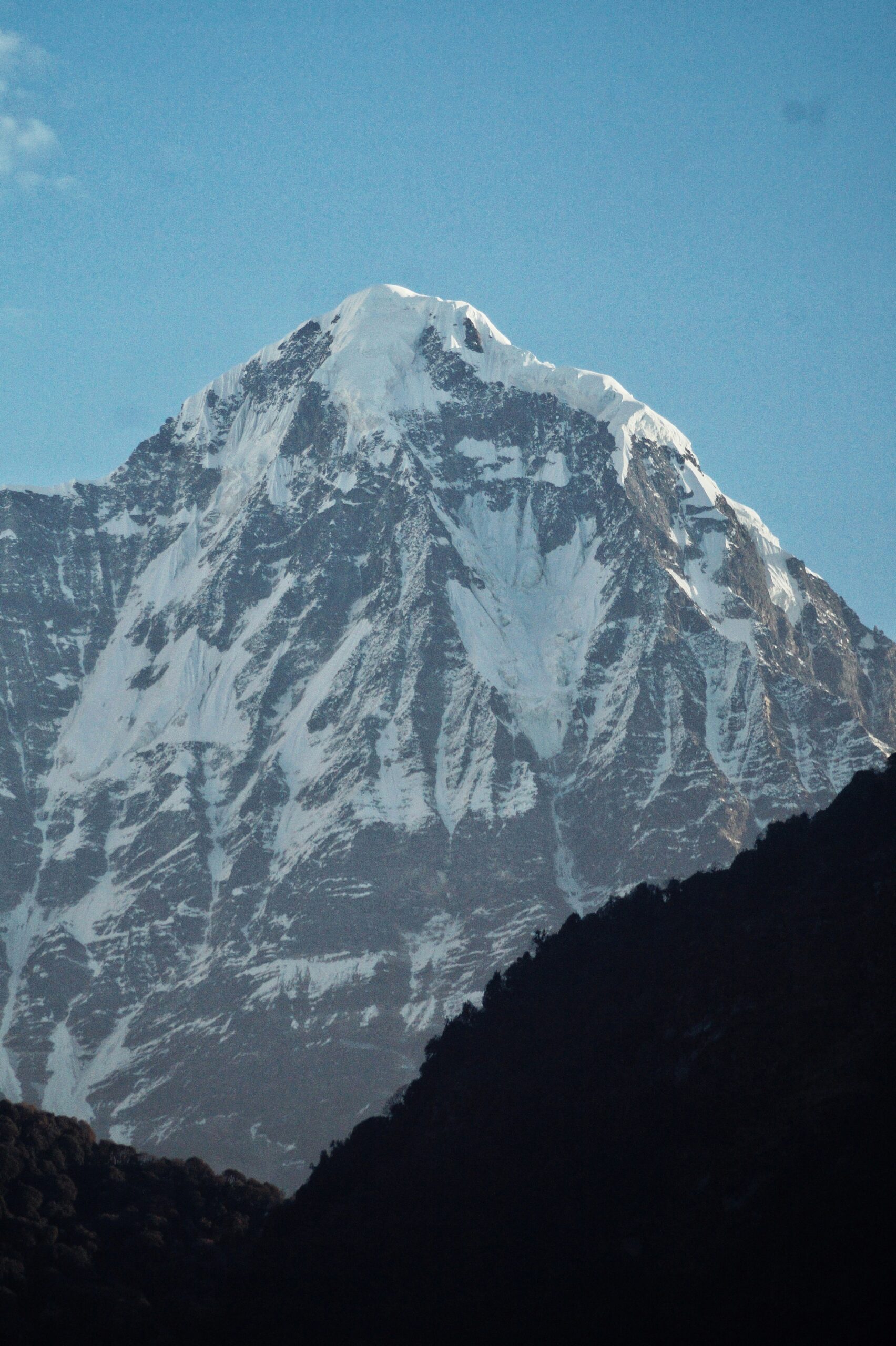
The 52 km circuit around Kailash is among the most sacred pilgrimage walks on Earth. Explore the great pilgrimage trails of the world, and the sister sacred peaks below.
Was this helpful?
Global Summit Guide is an independent mountaineering resource founded in 2026. The team combines first-hand trekking and climbing experience with in-depth research and professional health and nutrition review to help climbers choose objectives, prepare properly, and stay safe.
Health, altitude, and nutrition content is reviewed by Taylor Ludlow (Registered Nurse) and Brigg Hoopes (Nutritionist).
What We Don't Know Yet
Mountain information changes quickly. This box explains the limits of what this page can responsibly promise.
- Route conditions, snowpack, closures, and weather can change quickly after this page is updated.
- Permit rules, fees, quotas, and reservation windows may change between review cycles.
- Operator availability, pricing, guide ratios, and cancellation terms can change by season.
- Your fitness, altitude response, risk tolerance, and experience level may change what is safe or realistic.
- Use this page for planning guidance, then verify current information with official sources and qualified local experts before committing.
Verify current conditions with official land managers, guide services, local forecasts, and current route reports before booking or climbing.
Mountaineering, rock and ice climbing, glacier travel, and high-altitude activity are inherently dangerous and can result in serious injury or death. The information on Global Summit Guide is provided for general informational and educational purposes only and is not a substitute for professional instruction, qualified guiding, proper equipment, or your own judgment and experience.
Route conditions, weather, snowpack, permits, regulations, and hazards change constantly and may differ from what is described here. Details may be incomplete, out of date, or contain errors. Always verify current information with local authorities, certified guides, and official sources before making any decision in the mountains.
Nothing on this site is medical, legal, or financial advice. Our fitness, acclimatization, altitude, and nutrition content is general in nature; consult a qualified physician before beginning any strenuous exercise program or exposing yourself to high altitude.
You are solely responsible for your own safety and decisions. To the fullest extent permitted by law, Global Summit Guide and its team accept no liability for any loss, injury, damage, or expense arising from use of, or reliance on, this information. By using this site you acknowledge these risks and accept these terms.
Some links on this site may be affiliate links. If you buy through them we may earn a small commission at no extra cost to you; this never affects our recommendations.
Global Summit Guide recommendation path
Next Best Mountain to Research
Use these recommendations to continue the right planning path instead of stopping on one page.
Use current permit, weather, route, and operator information before booking or climbing.
Search Flights, Hotels & Rental Cars
Have the mountain or destination picked? Use Expedia to compare the flights, lodging and rental cars that fit your actual trip dates. For mountain travel, consider arriving early enough for delays and adding a buffer night after the climb before a fixed flight home.
Compare current flight, hotel and car options.
Affiliate disclosure: Global Summit Guide may earn a commission if you book through this link, at no additional cost to you.