
Last updated September 9, 2026
Sacred Mountains of the World: The Peaks We Worship, Climb & Never Climb
Long before mountains were objectives, they were altars. This Mountain Collections guide gathers the holy peaks of the world – some climbed as pilgrimage, some worshipped and never climbed, some sacred sites where the most reverent thing you can do is not climb at all – and the traditions that hold each one sacred.
What Makes a Mountain Sacred?
Nearly every culture on Earth has looked up at a high summit and sensed the presence of the divine. The high places are where the earth reaches toward the sky, and for thousands of years people have followed that reach – with awe, with offerings, and sometimes with the decision to stay off the summit entirely.
Sacred mountains fall into three broad kinds. There are pilgrimage peaks, where the climb itself is the prayer. There are peaks worshipped and never climbed, where the summit is left untouched out of reverence. And there are sacred sites, mountains woven so deeply into a people’s spiritual life that visitors are asked to honor them from below.
This collection gathers them all – and, where you can climb or visit, how to do so with respect.
Worshipped & Never Climbed
The rarest kind of sacred mountain: peaks so holy that reaching the top is considered a violation, not a triumph.
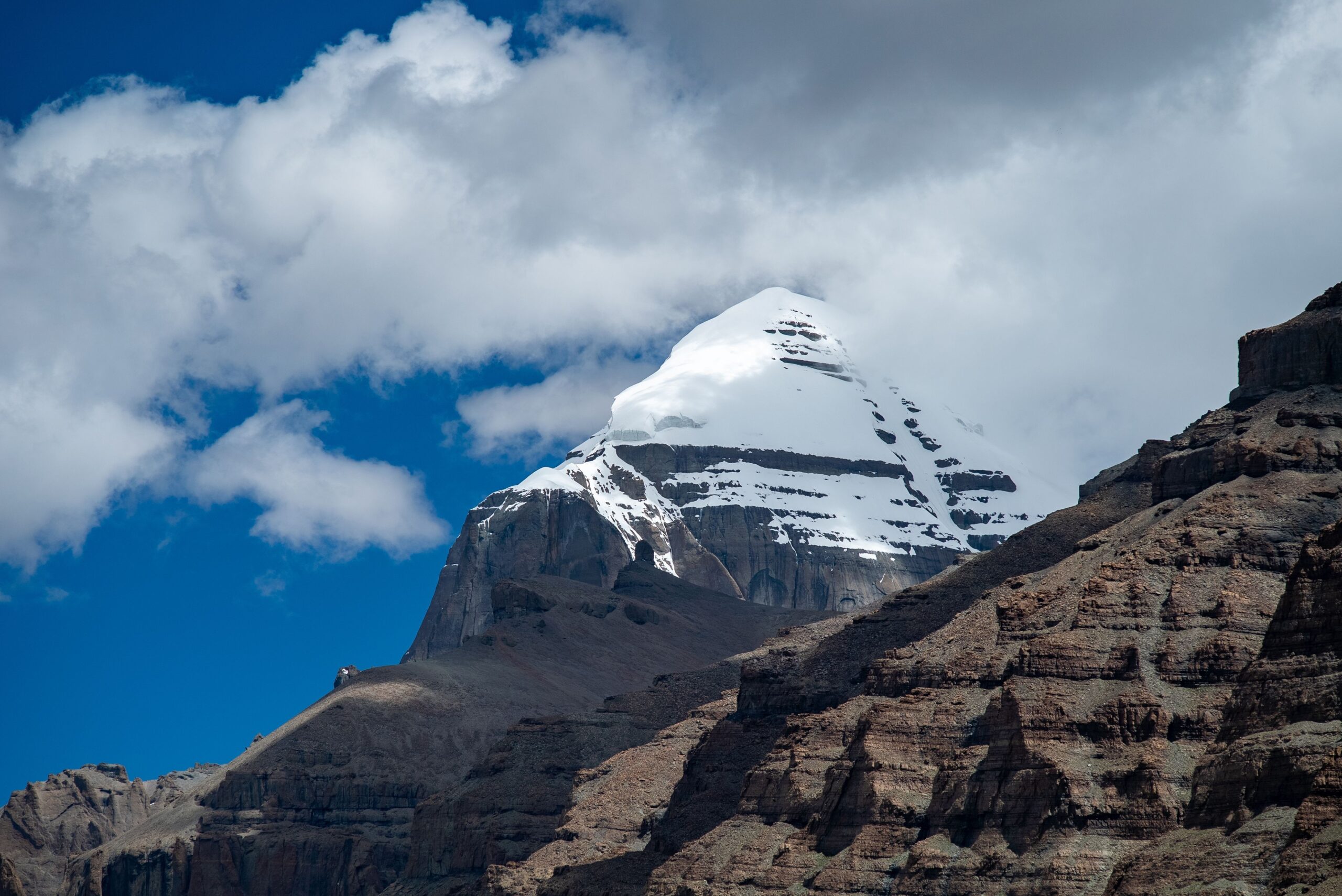
Mount Kailash
6,638 m · Tibet
Perhaps the most sacred mountain on Earth – and never summited. Revered by four religions as the axis of the world; pilgrims walk the 52 km kora rather than climb.
Read the guide →Machapuchare
6,993 m · Nepal
The fishtail of the Annapurna Sanctuary. Climbing is forbidden by Nepal; a 1957 team stopped just short of the summit out of respect, and no one has stood on top since.
Read the guide →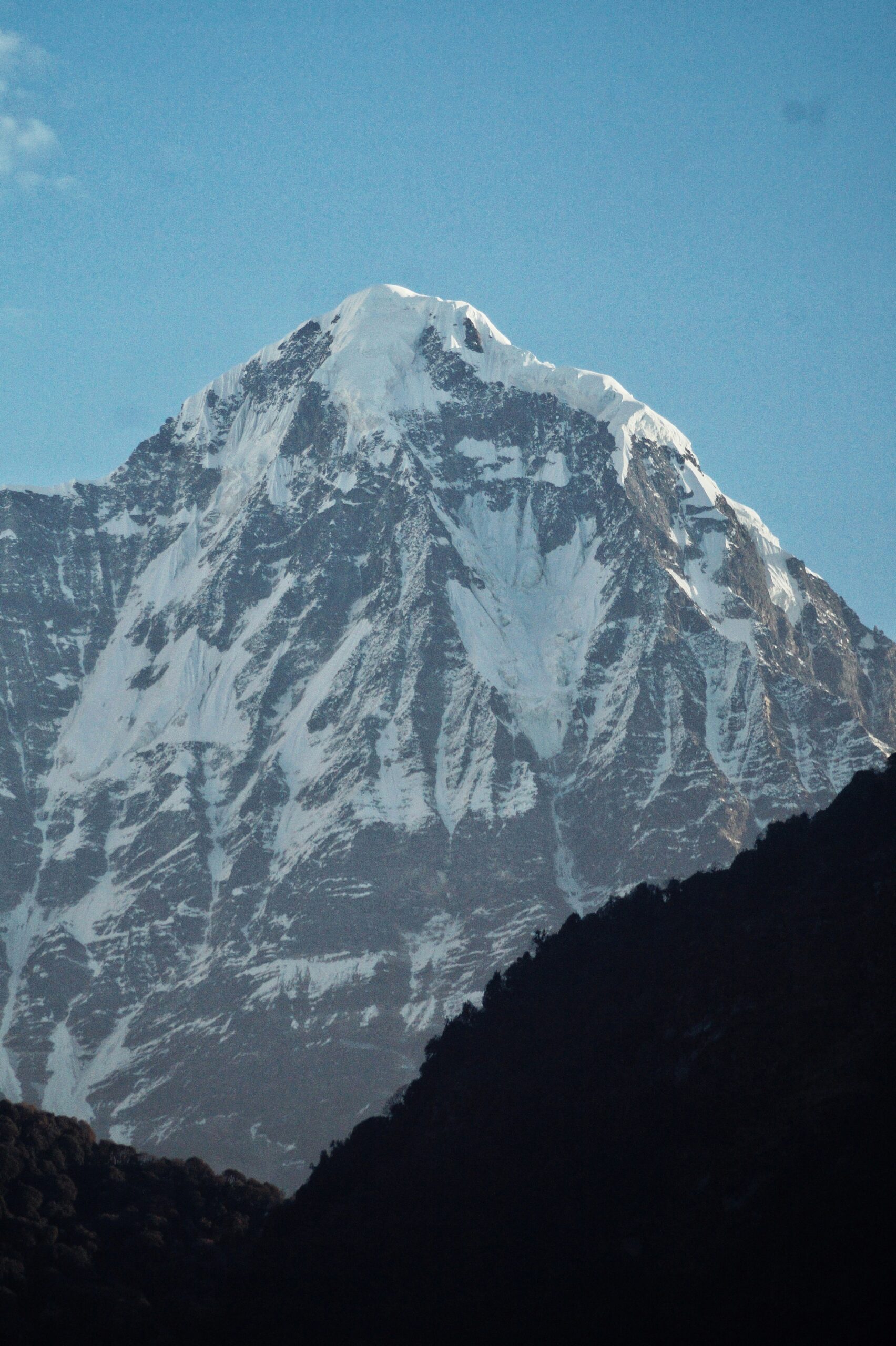
The Instinct to Climb Toward the Sacred Is Older Than Any One Faith.
Across every continent, the same pattern recurs: that on the summit, or in its shadow, we stand a little closer to something greater than ourselves.
Pilgrimage Summits
On these mountains, pilgrims have walked up through the dark for centuries to meet the dawn at the top – devotion measured in steps.
Mount Fuji
3,776 m · Japan
Japan’s holy mountain and a pilgrimage peak for centuries – climbed through the night to greet the sunrise from a summit ringed with shrines.
Read the guide →Adam’s Peak (Sri Pada)
2,243 m · Sri Lanka
A single sacred footprint at the summit is venerated by Buddhists, Hindus, Muslims and Christians. Pilgrims climb by lantern to reach the top at dawn.
Guide coming soonCroagh Patrick
764 m · Ireland
Ireland’s holy mountain, climbed on ‘Reek Sunday’ – some pilgrims barefoot – in a tradition tied to Saint Patrick that reaches back before Christianity.
Guide coming soonMount Sinai
2,285 m · Egypt
Where Moses is said to have received the Ten Commandments. Pilgrims climb the Steps of Penitence above St Catherine’s Monastery.
Guide coming soonSacred Sites & Cultural Peaks
Mountains carrying meaning far beyond their elevation – some climbed with reverence, some approached only from below.
Mount Ararat
5,137 m · Turkey
The traditional resting place of Noah’s Ark and the spiritual heart of the Armenian people – a dormant volcano crowned in permanent snow.
Read the guide →Nanda Devi
7,816 m · India
The ‘bliss-giving goddess’ of the Garhwal Himalaya. Her inner sanctuary is largely closed to protect a place considered too sacred to disturb.
Read the guide →Mount Olympus
2,918 m · Greece
The mythic home of the Olympian gods – a cultural and spiritual summit at the root of the Western imagination.
Read the guide →Mount Shasta
4,322 m · USA
Sacred to the peoples of northern California for millennia and a magnet for modern seekers – a solitary volcano wrapped in reverence.
Read the guide →Mount Agung
3,031 m · Bali
The holiest mountain in Bali, home to the mother temple of Besakih. Its eruptions have long been read as the will of the gods.
Read the guide →Kilimanjaro & Mount Meru
5,895 m · Tanzania
Africa’s rooftop has long held reverence for the Chagga people who live in its shadow – a mountain woven into local spiritual life.
Read the guide →Uluru
863 m · Australia
Not a climb but a sacred site. At the request of its Anangu custodians, the climb was permanently closed in 2019 – reverence chosen over conquest.
Guide coming soonMount Athos
2,033 m · Greece
The Holy Mountain – a self-governing monastic republic of twenty monasteries, where a way of life older than most nations continues undisturbed.
Guide coming soonCompare the Sacred Peaks
Elevation is the summit height; sacred status reflects the living tradition of each place.
| Mountain | Where | Tradition | Sacred status |
|---|---|---|---|
| Mount Kailash | Tibet | Hindu, Buddhist, Jain, Bon | Never climbed – pilgrims walk the kora |
| Machapuchare | Nepal | Hindu (Shiva) | Climbing forbidden |
| Mount Fuji | Japan | Shinto, Buddhist | Pilgrimage summit |
| Adam’s Peak | Sri Lanka | Four faiths | Pilgrimage summit |
| Croagh Patrick | Ireland | Christian | Pilgrimage summit |
| Mount Sinai | Egypt | Abrahamic | Pilgrimage summit |
| Mount Ararat | Turkey | Armenian Christian | Sacred summit, climbable |
| Nanda Devi | India | Hindu | Sanctuary largely closed |
| Uluru | Australia | Anangu | Sacred site – climb closed |
| Mount Athos | Greece | Orthodox Christian | Monastic republic |
New guides for Adam’s Peak, Croagh Patrick, Mount Sinai, Mount Tai, Uluru and Mount Athos are being written and will be linked here as each goes live.
Faith & the Mountains
Beyond the peaks themselves is a quieter question: why do the high places move us so? This is a small set of reflections on what mountains ask of us, and what they give back – written from the conviction that the summit is a place of gratitude, not conquest. Each essay will be linked here as it publishes.
Representing Every Tradition with Care
This collection describes living faiths that belong to millions of people. We aim to get them right.
The Tradition Leads
Each mountain is described on the terms of the people who hold it sacred. Where a tradition asks that a peak not be climbed, we honor that as the point of the page, not a caveat.
We Do Not Pretend to Have Climbed These
Where we can offer climbing or pilgrimage detail, we do – grounded in current access and route facts. Where we have not been, we say so plainly.
An Invitation, Not an Assumption
Readers of every faith and none are welcome here. These pages share the awe the high places inspire without presuming what any reader believes.
Corrected & Expanded Over Time
If we get a detail of tradition wrong, we fix it. New sacred peaks and reflections are added as they are written.
Sacred Mountains FAQ
What is the most sacred mountain in the world?
Mount Kailash in Tibet is among the most widely revered peaks on Earth, holy to Hindus, Buddhists, Jains and followers of the Bon faith. Remarkably, it has never been climbed – pilgrims circle its base on the 52 km kora rather than attempt the summit.
Which sacred mountains have never been climbed?
Mount Kailash has never been summited, out of reverence. Machapuchare in Nepal is closed to climbing; a 1957 British expedition stopped just short of the top at the request of the Nepalese authorities, and no one has stood on its summit since.
Can you climb Uluru?
No. At the request of its Anangu traditional owners, for whom Uluru is deeply sacred, the climb was permanently closed in October 2019. Visitors are warmly welcomed to experience Uluru from its base.
Is it disrespectful to climb a sacred mountain?
It depends entirely on the mountain and its tradition. Some sacred peaks – Fuji, Adam’s Peak, Croagh Patrick – are climbed as an act of devotion, and visitors are welcome. Others, like Kailash and Uluru, are honored precisely by not climbing them. The respectful approach is to learn each place’s wishes before you go.
What are the three kinds of sacred mountain?
Pilgrimage summits, where the climb is an act of devotion (Fuji, Adam’s Peak, Croagh Patrick, Sinai); peaks worshipped and never climbed, left untouched out of reverence (Kailash, Machapuchare); and sacred sites woven into a people’s spiritual life, often honored from below (Uluru, Nanda Devi, Agung).
The High Places Have Always Drawn Us Upward.
Start with the peaks above – the mountains never climbed, the great pilgrimage summits, and the sacred sites of the world – and return as the collection grows and the Faith & the Mountains reflections publish.
Sacred Mountains: The Parent Hub & Sister Collections
This collection sits within Mountain Collections, beside the site’s other great peak sets. Explore the neighbours below.
Was this helpful?
Global Summit Guide is an independent mountaineering resource founded in 2026. The team combines first-hand trekking and climbing experience with in-depth research and professional health and nutrition review to help climbers choose objectives, prepare properly, and stay safe.
Health, altitude, and nutrition content is reviewed by Taylor Ludlow (Registered Nurse) and Brigg Hoopes (Nutritionist).
What We Don't Know Yet
Mountain information changes quickly. This box explains the limits of what this page can responsibly promise.
- Visa, passport, vaccination, border, insurance, and local transportation rules may change before your trip.
- Route conditions, snowpack, closures, and weather can change quickly after this page is updated.
- Permit rules, fees, quotas, and reservation windows may change between review cycles.
- Operator availability, pricing, guide ratios, and cancellation terms can change by season.
- Your fitness, altitude response, risk tolerance, and experience level may change what is safe or realistic.
Verify current conditions with official land managers, guide services, local forecasts, and current route reports before booking or climbing.
Mountaineering, rock and ice climbing, glacier travel, and high-altitude activity are inherently dangerous and can result in serious injury or death. The information on Global Summit Guide is provided for general informational and educational purposes only and is not a substitute for professional instruction, qualified guiding, proper equipment, or your own judgment and experience.
Route conditions, weather, snowpack, permits, regulations, and hazards change constantly and may differ from what is described here. Details may be incomplete, out of date, or contain errors. Always verify current information with local authorities, certified guides, and official sources before making any decision in the mountains.
Nothing on this site is medical, legal, or financial advice. Our fitness, acclimatization, altitude, and nutrition content is general in nature; consult a qualified physician before beginning any strenuous exercise program or exposing yourself to high altitude.
You are solely responsible for your own safety and decisions. To the fullest extent permitted by law, Global Summit Guide and its team accept no liability for any loss, injury, damage, or expense arising from use of, or reliance on, this information. By using this site you acknowledge these risks and accept these terms.
Some links on this site may be affiliate links. If you buy through them we may earn a small commission at no extra cost to you; this never affects our recommendations.
Global Summit Guide recommendation path
Next Best Mountain to Research
Use these recommendations to continue the right planning path instead of stopping on one page.
Use current permit, weather, route, and operator information before booking or climbing.