
Last updated September 20, 2026
Climbing Mount Meru, Tanzania: Route, Huts, Cost & Planning Guide
For most climbers, the four-day Momella Route is the best way to climb Mount Meru. Tanzania National Parks recommends four days for acclimatization, using Miriakamba and Saddle huts before the pre-dawn climb to Socialist Peak. Meru is lower than Kilimanjaro, but its upper crater rim is steeper, narrower and more exposed than a normal hiking trail.
Is Mount Meru Worth Climbing?
Yes. Meru packs a surprising amount of mountain into four days: wildlife habitat on the approach, two simple mountain huts, a volcanic crater, an exposed upper ridge and a 4,500-metre summit. It is a strong standalone objective for a fit trekker who wants something shorter than Kilimanjaro, and it can also provide useful altitude exposure before a Kilimanjaro climb.
The mistake is treating Meru as an easy warm-up. The final summit push starts at night, climbs nearly 1,000 vertical metres from Saddle Hut, follows steep volcanic ground near the crater rim and is followed by a substantial descent. The mountain is non-glaciated and usually nontechnical on the standard route, but it still demands mountain fitness, careful footing and respect for altitude.
Plan Your Mount Meru Climb
Mount Meru in 3 Days or 4 Days?
The route is essentially the same. What changes is how much work is compressed into the final descent and how much recovery margin you keep around the summit day.
Momella Gate → Miriakamba
Enter the park on foot with the mountain team and ranger system, moving from the lower wildlife zone into montane forest. Miriakamba is the first overnight at roughly 2,500 m in TANAPA’s park itinerary.
Miriakamba → Saddle Hut
The trail climbs into heath and moorland toward Saddle Hut, commonly quoted by operators around 3,570 m. A side trip to Little Meru, which TANAPA lists at about 3,800 m, is often used as an afternoon acclimatization walk.
Saddle Hut → Socialist Peak → Miriakamba
Start before dawn, climb the steeper upper mountain through Rhino Point and the crater-rim terrain to Socialist Peak, then reverse the ridge, return to Saddle and continue down to Miriakamba. This is the hardest day.
Miriakamba → Momella Gate
Finish the descent through the lower park and return to Arusha. The final morning keeps the summit-day descent from becoming an all-the-way-to-the-gate push.
Momella Gate → Miriakamba
The opening day is broadly the same as the four-day plan: lower park, forest and a first night at Miriakamba.
Miriakamba → Saddle Hut
Climb to Saddle, with Little Meru often offered as an afternoon side objective if time, weather and energy allow.
Summit + Full Descent
The compressed version normally combines the summit push with a much longer descent toward the park exit. Exact three-day structures vary by operator, so compare the written itinerary rather than assuming every “3-day Meru” package is identical.
Which Meru Schedule Fits You?
Pick the description that is closest to your trip. This is an itinerary screen, not a medical clearance.
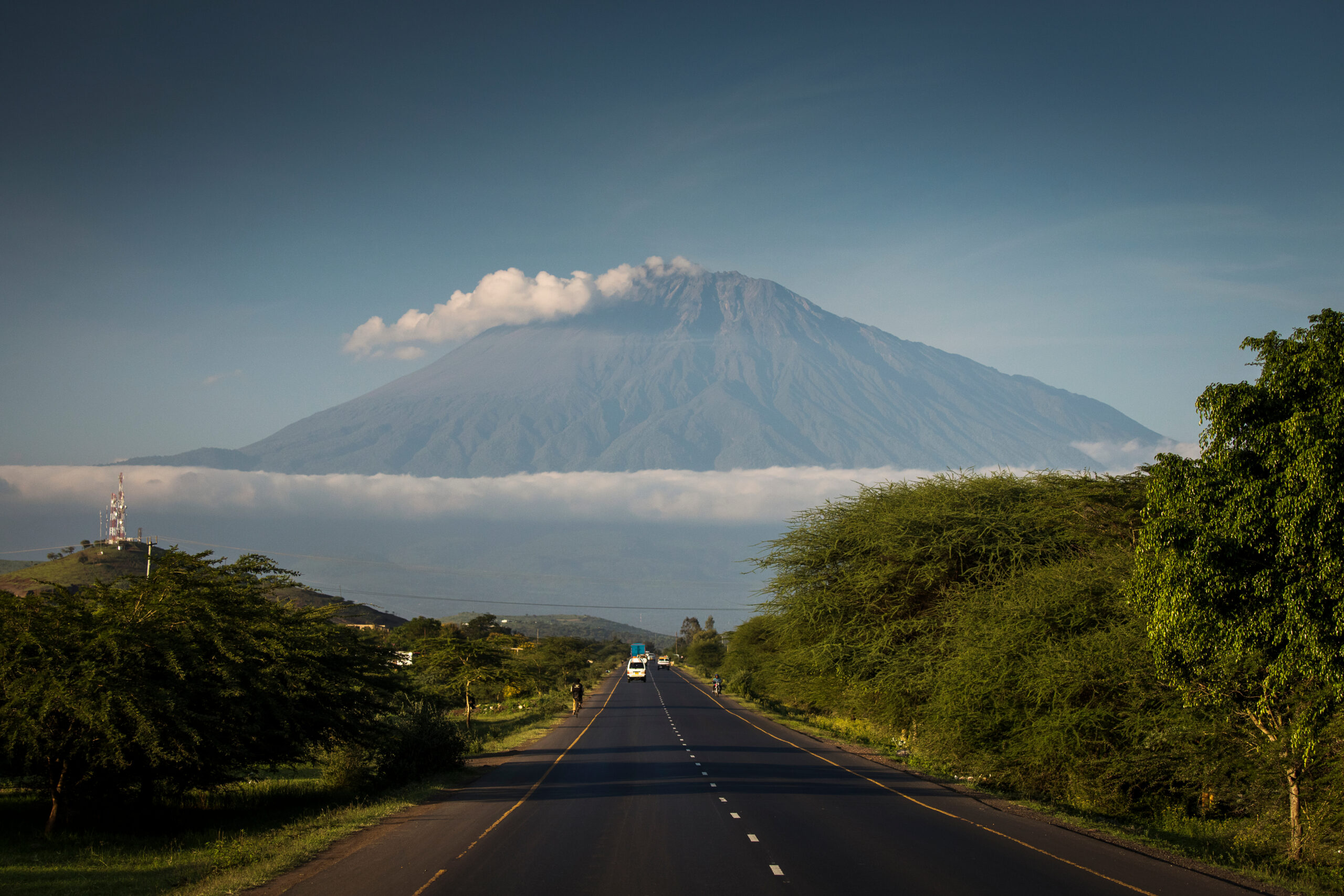
The Climb Starts Like a Safari and Finishes on a Crater Rim.
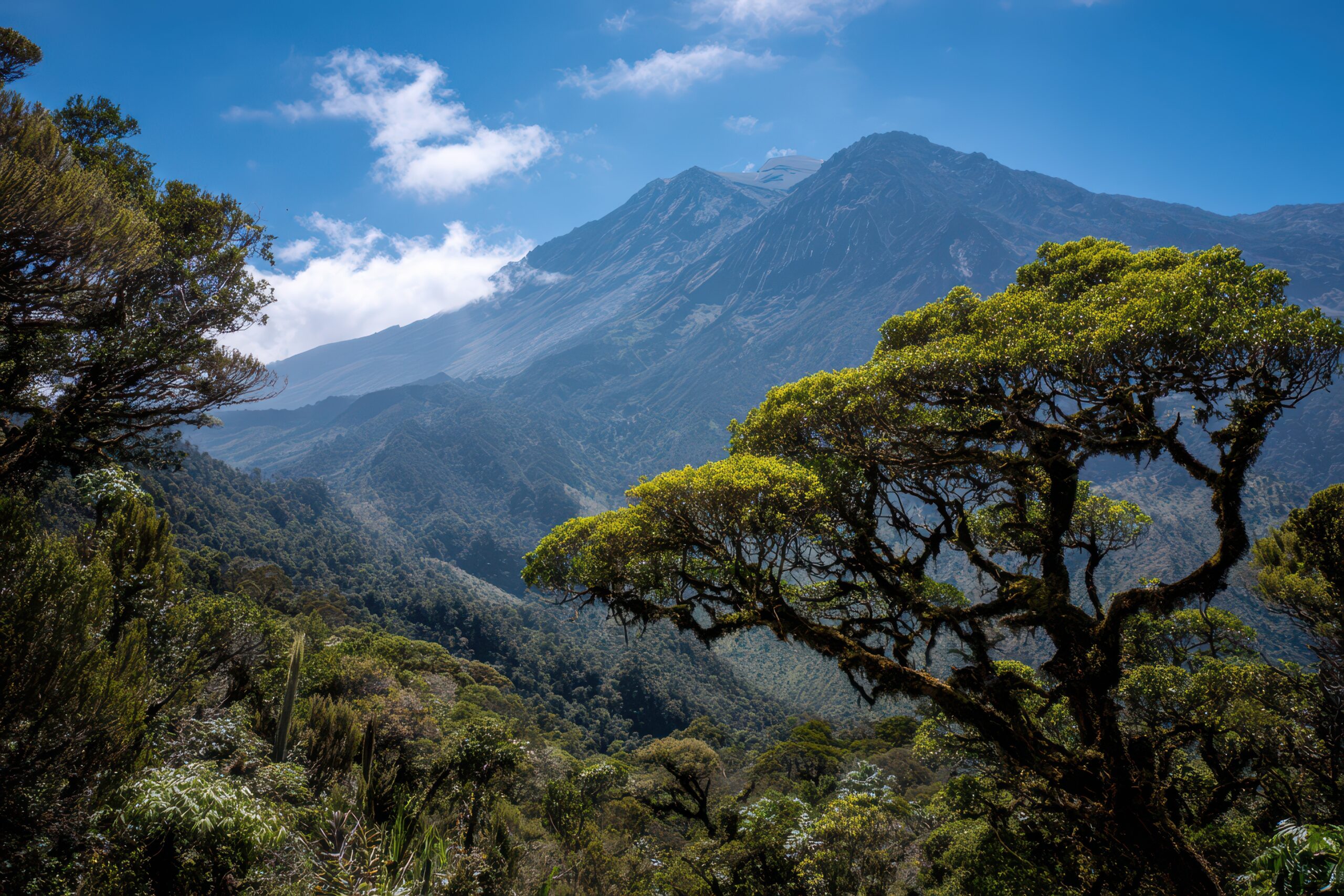
That transition is Meru’s defining feature. TANAPA describes a 25-kilometre-wide stratovolcano with a horseshoe-shaped collapse scar, a central ash cone and western internal walls approaching 1,300 metres. The lower trail is still part of Arusha National Park wildlife habitat; the upper mountain feels stark, volcanic and exposed.
The Momella Route, Stage by Stage
There is no menu of normal trekking routes here. The planning question is how you pace the Momella Route and how you handle the upper ridge.
Momella Gate
≈1,500 m
Registration, team and park entry.
Miriakamba
≈2,500 m
Forest and first high night.
Saddle Hut
≈3,570 m
High hut and summit base.
Rhino Point
≈3,800 m
Steeper ground and exposure.
Cobra Point
≈4,350 m
Volcanic ridge near the summit.
Socialist Peak
4,565 m
TANAPA-listed high point.
Wildlife Changes the Rules
Arusha National Park is not a normal trailhead environment. TANAPA mountain regulations allow the park to determine the segments where an armed ranger guides climbers through wildlife habitat. Treat the ranger as part of the mountain system, not as an optional add-on.
On the lower slopes, the park is known for buffalo and giraffe, along with forest wildlife and birdlife. Sightings are never guaranteed, and the right response to wildlife is to follow the ranger’s direction rather than trying to create a closer encounter.
The Crater Rim Is the Real Summit Problem
Above Saddle Hut, Meru becomes a different mountain. Operator itineraries consistently describe a pre-dawn climb through Rhino Point and Cobra Point followed by a narrow ridge between the outer slope and the steep inner crater wall. Short scrambling may be needed on the upper route.
This is why “nontechnical” can be misleading. It means the normal trek is not a sustained roped rock, ice or glacier climb—not that the summit day is an ordinary trail walk.
Miriakamba & Saddle Huts
Meru’s hut system is one reason the climb feels simpler logistically than a tent-based expedition, but “hut” should not be confused with hotel comfort.
Miriakamba
TANAPA’s four-day structure places the first and third mountain nights at Miriakamba, around 2,500 metres. It is the transition point between the wildlife-rich lower mountain and the steeper second-day climb.
- First overnight on the standard four-day progression
- Return night after the summit in the park-recommended structure
- Useful place to repack for the summit-focused upper mountain
Saddle Hut
Saddle is the summit base, commonly listed near 3,570 metres by current operators. You arrive here before the night-start summit attempt, with Little Meru often used as an afternoon side hike.
- Summit-night staging point
- Little Meru side trip begins from this area
- Expect a simple shared mountain-hut environment
How Hard Is Mount Meru?
Meru is best treated as a strenuous high-altitude trek with a steeper, exposed upper-ridge finish.
Train for Repeated Uphill Days
The useful fitness is steady climbing capacity followed by a long descent on tired legs. If your training is mostly short gym sessions, add sustained uphill work, stairs or steep hiking plus back-to-back days.
4,565 m Still Counts
Meru is high enough for altitude illness to matter. Fitness does not prevent AMS. If you develop altitude symptoms, itinerary decisions should follow symptoms and professional guidance rather than a summit schedule.
Be Comfortable With Exposure
The upper ridge rewards secure footing in the dark and comfort moving on steep volcanic terrain. If narrow ridges make you freeze or rush, build scrambling and exposed-hiking experience before the trip.
Best Time to Climb Mount Meru
June through October is the strongest broad dry-season choice. January and February can also be attractive. Rain can still occur in any month on a high tropical mountain.
| Period | Typical planning picture | Trail implication | Use it when… |
|---|---|---|---|
| January–February | A generally drier early-year window within northern Tanzania’s variable wet/dry cycle. | Often a good balance of visibility and workable trail conditions. | You want a pre-Kilimanjaro climb early in the year. |
| March–May | Long-rains period, with March–April especially wet in regional guidance. | Mud, cloud and wet gear can make the same route feel much harder. | Your dates are fixed and your operator confirms conditions are suitable. |
| June–October | Main dry-season window and the strongest broad recommendation for Arusha National Park. | Firmer trails and generally better visibility odds. | You want the most dependable overall trekking window. |
| November–December | Short-rains variability followed by transition toward the early-year drier period. | Expect mixed conditions; flexible expectations matter. | You are building Meru into a broader Tanzania trip and can tolerate weather uncertainty. |
How Much Does It Cost to Climb Mount Meru?
There is no single Meru price because group size and inclusions change the quote more than the route itself.
Roughly $878–$1,463 per person
SafariBookings was displaying multiple four-day Meru options across this range when checked. Some are private, some shared, and some differ on hut versus camping presentation, hotel nights and transfers. Treat this as a market snapshot, not a rate card.
See current listings →$1,220–$2,190 per person
Tanzania Experience publishes 2026 pricing for its four-day private Meru climb plus pre/post hotel stay: $2,190 solo, falling to $1,220 per person for groups larger than six. It is a useful demonstration of how strongly group size changes the price.
See published 2026 example →What a Quote Should Show
| Cost line | Why it matters | Question to ask |
|---|---|---|
| Park conservation fees | Charged by day and dependent on visitor category. | How many park days are included, and which visitor category is the quote using? |
| Miriakamba + Saddle huts | Core accommodation on the normal hut itinerary. | Are all mountain nights included? |
| Ranger / guide / porter staffing | Group size changes per-person economics. | What staffing is included, and is the armed-ranger arrangement already covered? |
| Meals + drinking water system | Mountain food and water logistics should be explicit. | Which meals begin/end with the package, and how is drinking water handled? |
| Arusha transfers | Some quotes start at the gate; others include hotel pickup. | Is hotel ↔ park transport included both ways? |
| Hotel nights | Can make two similarly priced packages materially different. | Are pre/post climb nights included, and at which hotel level? |
| Tips, rental gear, insurance | Common exclusions can meaningfully raise total trip cost. | What is explicitly excluded? |
$30 hut / person / night
The posted FY2023/24 Northern Zone schedule lists Miriakamba and Saddle at $30 for adult non-EA visitors. Use this to understand the fee structure, not as a guarantee of the rate charged in 2026.
$15 ranger / group / day
The same posted schedule lists the Mount Meru ranger service at $15 per group per day, with a separate guide-fee line. Again, verify the live payable figure before travel.
$20 rescue / person / trip
The posted schedule includes a non-refundable rescue-fee line for Kilimanjaro and Meru. Insurance remains a separate decision; a park rescue fee is not the same thing as travel or evacuation coverage.
Arusha → Arusha National Park → Momella Gate
Meru is unusually convenient for a high-altitude African summit because the mountain sits immediately beside one of Tanzania’s main safari and climbing bases.
Kilimanjaro International Airport
JRO is the normal international gateway for Arusha, Kilimanjaro and Mount Meru itineraries. Current Tanzania tourism material places Arusha National Park roughly 60 km from the airport.
Arusha
Use Arusha for the pre-climb briefing, final equipment check and post-climb recovery. Tourism guidance describes the national park as an easy drive from town, making an early gate transfer practical.
Momella Gate
This is the practical start of the standard climbing route. Your operator handles the park-entry process, team logistics and the ranger arrangement before the walking begins.
What to Settle Before You Leave Arusha
Pack for Tropical Forest and a Cold Summit Start
Meru crosses a large climate range in a short distance. Your system needs rain protection low down, warm layers and gloves for the upper mountain, a reliable headlamp for the pre-dawn start, and footwear you already trust on steep descents.
Get the Written Itinerary
Confirm whether your “four days” means the TANAPA-style Miriakamba–Saddle–Miriakamba structure, what happens if weather prevents the summit, when tips are expected, and exactly where the package begins and ends.

Use Meru for Altitude Exposure—Not as a Guarantee.
TANAPA itself describes Mount Meru trekking as useful acclimatization for Kilimanjaro. The practical value is several days at increasing sleeping altitude plus a summit above 4,500 m. What it cannot promise is a fixed improvement in somebody’s summit odds.
Should You Climb Meru Before Kilimanjaro?
It can be an excellent sequence when the extra mountain fits the trip without leaving you depleted.
| Meru first makes more sense when… | Skip Meru or rethink the sequence when… |
|---|---|
| You want a second summit rather than a “training hike.” | Your Tanzania schedule is already tight and adding Meru would force a shorter Kilimanjaro route. |
| You want several days of recent altitude exposure before Kili. | You are carrying an injury, illness or significant fatigue into the trip. |
| You have enough recovery time between the two mountains. | You would arrive at Kilimanjaro immediately after an exhausting three-day Meru descent. |
| You prefer hut-based climbing and wildlife-rich approaches. | Your main goal is safari plus Kilimanjaro and Meru would crowd out the rest of the trip. |
Mount Meru vs Nearby East African Objectives
Meru’s strongest niche is not “cheap Kilimanjaro.” It is a compact, high-altitude volcano with wildlife, huts and a sharper upper ridge.
| Mountain | High point | Typical character | Choose it for… |
|---|---|---|---|
| Mount Meru | 4,565 m | 3–4 day hut trek, wildlife approach, volcanic ridge | A short Tanzania mountain or altitude exposure before Kili |
| Kilimanjaro | 5,895 m | Longer nontechnical high-altitude trek on multiple routes | Africa’s highest point and a bigger acclimatization problem |
| Mount Kenya — Point Lenana | 4,985 m | Multi-route high-altitude trek with different scenery and more route choice | A Kenya-based trekking objective with a wilder alpine feel |
| Mount Kenya — Batian | 5,199 m | Technical rock mountaineering | A genuine climbing objective requiring a different skill set |
Why Mount Meru Looks the Way It Does
The geology is not background trivia here; it explains the crater-rim route you are walking.
A Horseshoe-Shaped Collapse Scar
TANAPA describes Meru as a free-standing stratovolcano about 25 kilometres in diameter. The mountain’s eastern-wall collapse created the horseshoe-shaped scar that gives the summit ridge and crater their dramatic form.
Big Meru, Little Meru & the Ash Cone
TANAPA treats Big Meru, Little Meru and the Ash Cone as distinct volcanic features developed at different times. The agency dates Meru’s last known ash eruption to 1910. The ash cone now rises from the crater floor below the summit ridge.
A Better Mount Meru Checklist
Choose Four Days Unless You Have a Reason Not To
It is TANAPA’s recommended structure and avoids turning the summit into an unnecessarily compressed exit day.
Compare the Whole Quote
Do not choose from the headline price. Match park days, huts, staffing, transfers, hotel nights, gear rentals, tips and exclusions.
Train the Descent
Climbers often prepare for the uphill and underestimate what tired quads do to footing after the summit. Build downhill durability before Tanzania.
Respect the Ranger System
The lower route passes through national-park wildlife habitat. Follow instructions immediately and keep the group together.
Bring a Real Summit-Night System
Headlamp, insulation, gloves, wind/rain protection and tested footwear matter more than packing a long list of duplicate clothing.
Leave Space After Meru
If Kilimanjaro follows, build the sequence around recovery as well as acclimatization. Arriving at the bigger mountain exhausted defeats part of the purpose.
Build the Rest of the Trip
Kilimanjaro Climbing Guide
Routes, trip length, cost, season and the much larger altitude problem.
Open Kilimanjaro →Two-mountain sequenceMeru Before Kilimanjaro
Plan the order, recovery and altitude logic without treating Meru as a guaranteed summit-success shortcut.
Plan the sequence →Africa collectionAfrica’s Highest Mountains
See where Meru sits among Kilimanjaro, Mount Kenya, the Rwenzori and other major African summits.
Compare Africa’s peaks →Regional trekkingBest Hikes in Tanzania & Kenya
Compare Meru with Kilimanjaro, Mount Kenya and lower-elevation trekking options.
Explore East Africa →PreparationAltitude Acclimatization
Understand sleeping-altitude gain, symptoms and why a four-day Meru itinerary is different from a rushed ascent.
Understand altitude →PreparationMountaineering Fitness Standards
Assess endurance, vertical capacity, pack strength and recovery for repeated mountain days.
Check fitness →PreparationMountain Weather
Use wind, precipitation, cloud and forecast uncertainty to judge the actual summit window.
Read weather →ComparisonMount Kenya vs Mount Meru
Choose between the compact Tanzania volcano and a more varied Kenyan mountain trip.
Compare the peaks →Rules, Fees & Source Checks
Use primary park information for what the park controls, and current operator quotes for what the market charges.
Mount Meru & Arusha National Park
Used for the 4,565 m elevation, volcanic features, four-day recommendation, Miriakamba/Saddle structure and Kilimanjaro-acclimatization context.
Open TANAPA GeoParks →Mountain Regulations
Used for operator/guide requirements and the park’s authority to assign armed-ranger escort on mountain segments.
Open mountain regulations →Tariffs
The tariff site checked in September 2026 still surfaces a schedule labeled FY2023/24. We use it only to explain the fee structure and tell readers to verify live payable rates.
Open TANAPA tariffs →2026 Operator Pricing
Commercial package examples were checked separately because operator pricing includes staffing, transfers, food, hotels and other components not captured by a park-fee table.
Check current market →Mount Meru Tanzania FAQ
How many days does it take to climb Mount Meru?
Three or four days are common. Tanzania National Parks recommends four days to allow more time for acclimatization, with Miriakamba, Saddle and Miriakamba used as the three mountain nights before the walk out on day four.
What route is used to climb Mount Meru?
The standard route is the Momella Route through Arusha National Park. It links Momella Gate, Miriakamba, Saddle Hut and the upper crater-rim route to Socialist Peak.
How high is Mount Meru?
TANAPA currently lists Mount Meru at 4,565 metres. Many tourism and operator sources use 4,566 metres; the one-metre difference has no practical effect on the climb.
Do you need an armed ranger?
Mount Meru climbing is governed by TANAPA mountain regulations. Climbing groups are guided by guide(s) and/or an armed park ranger, and the park determines the forest or wildlife segments where armed-ranger escort is required.
Is Mount Meru technical?
The normal Momella Route is usually treated as a trekking objective rather than sustained technical mountaineering. The upper ridge is still steep and exposed, and short scrambling may be needed. “Nontechnical” should not be read as “easy.”
Where do you sleep on Mount Meru?
Miriakamba and Saddle are the main huts on the standard route. TANAPA lists both as park accommodation facilities requiring prior booking.
How much does Mount Meru cost in 2026?
Package pricing depends heavily on group size and inclusions. A September 2026 market check found multiple four-day listings from roughly $878 to $1,463 per person, while one published 2026 private product ranged from $1,220 to $2,190 depending on group size and included pre/post hotel nights. Compare written inclusions before comparing price.
What is the best time to climb?
June through October is the strongest broad dry-season window. January and February can also be good choices. March through May is the long-rains period and typically brings wetter trails and more cloud.
Can Mount Meru help before Kilimanjaro?
Yes. It gives several days of staged altitude exposure and reaches more than 4,500 metres. TANAPA explicitly describes Meru trekking as acclimatization for Kilimanjaro. It does not guarantee a particular summit-success increase.
Is Mount Meru harder than Kilimanjaro?
They are hard in different ways. Kilimanjaro is much higher and creates the larger altitude problem. Meru is shorter but has a steeper, narrower and more exposed upper ridge. The right comparison depends on whether altitude, exposure or total trip duration is the limiting factor for you.
Give Meru Four Days and Treat the Summit Ridge Seriously.
Start from Arusha, use the Momella Route, sleep at Miriakamba and Saddle, and keep the fourth day unless you are already acclimatized and deliberately choosing a compressed schedule. Compare operator quotes by what they include, not by the headline number. If Kilimanjaro comes next, use Meru for altitude exposure without pretending it guarantees the outcome on the higher mountain.
Where Mount Meru Fits in an East Africa Climbing Progression
Meru works best when the trip goal is clear. It can be a standalone volcanic summit, a first serious African altitude experience, or a useful pre-Kilimanjaro mountain—but those are three different planning problems.
Choose Meru for a compact mountain trip.
Four days gives you wildlife habitat, huts, a volcanic crater rim, a pre-dawn summit and a 4,500-metre high point without committing to a week-plus expedition.
Choose four days, then protect recovery.
The value is staged altitude exposure and a summit above 4,500 m. Do not erase that benefit by compressing Meru into three days and arriving at Kilimanjaro exhausted.
Expect more exposure than the word “trek” suggests.
Meru is normally nontechnical, but the upper ridge is steeper and narrower than a normal trail. Fitness, footing, cold tolerance and comfort with darkness matter.
Three days can work—but it is a compression choice.
A shorter itinerary makes more sense for a fit climber who already has recent altitude exposure and a specific scheduling reason to combine summit day with a longer descent.
Compare Mount Kenya next.
Point Lenana adds more route choice and a different alpine landscape; Batian and Nelion move into true technical rock climbing. Meru is the cleaner short Tanzania objective.
Meru is not the endpoint.
Climbers seeking glaciers, ropes or technical climbing should look farther into the Rwenzori or Mount Kenya progression rather than expecting Meru’s standard route to provide those skills.
The strongest default remains four days.
Use 4 days / 3 nights unless you have a concrete reason not to. The page already documents the same Momella Route in both formats; the fourth day mainly preserves recovery margin after the summit and aligns with TANAPA’s recommended structure.
Arusha → Momella Gate → Mount Meru → Kilimanjaro
Meru’s logistical advantage is proximity. Arusha is the practical base, Momella Gate is the mountain entry point, and Kilimanjaro sits far enough east to be a separate expedition but close enough for a deliberate two-mountain itinerary.
Continue From Mount Meru
Use the first row to compare the next mountain. The second row strengthens three underlinked planning pages from the Global Summit Guide recovery pool.
This peak is one of Africa’s highest and most notable mountains
Africa’s highest peaks span four regions and host some of the most diverse mountaineering objectives in the world. See the complete collection covering Africa’s Triple Crown (the only three 5,000m+ peaks), all 11 major African peaks with elevations and first ascents, regional groupings, volcanic peaks, and a 6-step climbing progression order from Toubkal through Kilimanjaro.
View All Africa’s Highest Peaks →🏔 Part of Africa’s Highest Peaks
One of Africa’s 11 major climbing peaks across 4 regions. See the full collection with Triple Crown, volcanic peaks, and costs.
View All Africa’s Peaks →Mount Kilimanjaro belongs to both the Seven Summits and Africa’s Highest Peaks
As Africa’s highest peak (5,895m) and the world’s tallest free-standing mountain, Kilimanjaro is the headline summit of two iconic mountaineering collections. The Seven Summits requires climbing the highest peak on every continent; Africa’s Highest Peaks covers all 11 major African peaks across 4 regions including the Triple Crown.
Seven Summits → Africa’s Peaks →Was this helpful?
🏔Related peaks nearby
🧭Explore & compare
Global Summit Guide is an independent mountaineering resource founded in 2026. The team combines first-hand trekking and climbing experience with in-depth research and professional health and nutrition review to help climbers choose objectives, prepare properly, and stay safe.
Health, altitude, and nutrition content is reviewed by Taylor Ludlow (Registered Nurse) and Brigg Hoopes (Nutritionist).
What We Don't Know Yet
Mountain information changes quickly. This box explains the limits of what this page can responsibly promise.
- Permit availability, reservation windows, quotas, and official fee rules may change after this page is updated.
- Guide-company prices, departure dates, guide ratios, included services, and cancellation rules can change without notice.
- Weather, snowpack, avalanche risk, road access, and route conditions can change quickly and may be different on your climbing dates.
- Route conditions, trailhead access, crevasse exposure, stream crossings, and rescue access may vary from published planning guidance.
- Total trip cost can change with flights, lodging, guide pricing, permits, gear rentals, transportation, and exchange rates.
Verify current conditions with official land managers, guide services, local forecasts, and current route reports before booking or climbing.
Mountaineering, rock and ice climbing, glacier travel, and high-altitude activity are inherently dangerous and can result in serious injury or death. The information on Global Summit Guide is provided for general informational and educational purposes only and is not a substitute for professional instruction, qualified guiding, proper equipment, or your own judgment and experience.
Route conditions, weather, snowpack, permits, regulations, and hazards change constantly and may differ from what is described here. Details may be incomplete, out of date, or contain errors. Always verify current information with local authorities, certified guides, and official sources before making any decision in the mountains.
Nothing on this site is medical, legal, or financial advice. Our fitness, acclimatization, altitude, and nutrition content is general in nature; consult a qualified physician before beginning any strenuous exercise program or exposing yourself to high altitude.
You are solely responsible for your own safety and decisions. To the fullest extent permitted by law, Global Summit Guide and its team accept no liability for any loss, injury, damage, or expense arising from use of, or reliance on, this information. By using this site you acknowledge these risks and accept these terms.
Some links on this site may be affiliate links. If you buy through them we may earn a small commission at no extra cost to you; this never affects our recommendations.
Global Summit Guide recommendation path
Next Best Mountain to Research
Use these recommendations to continue the right planning path instead of stopping on one page.
Use current permit, weather, route, and operator information before booking or climbing.