
Last updated September 17, 2026
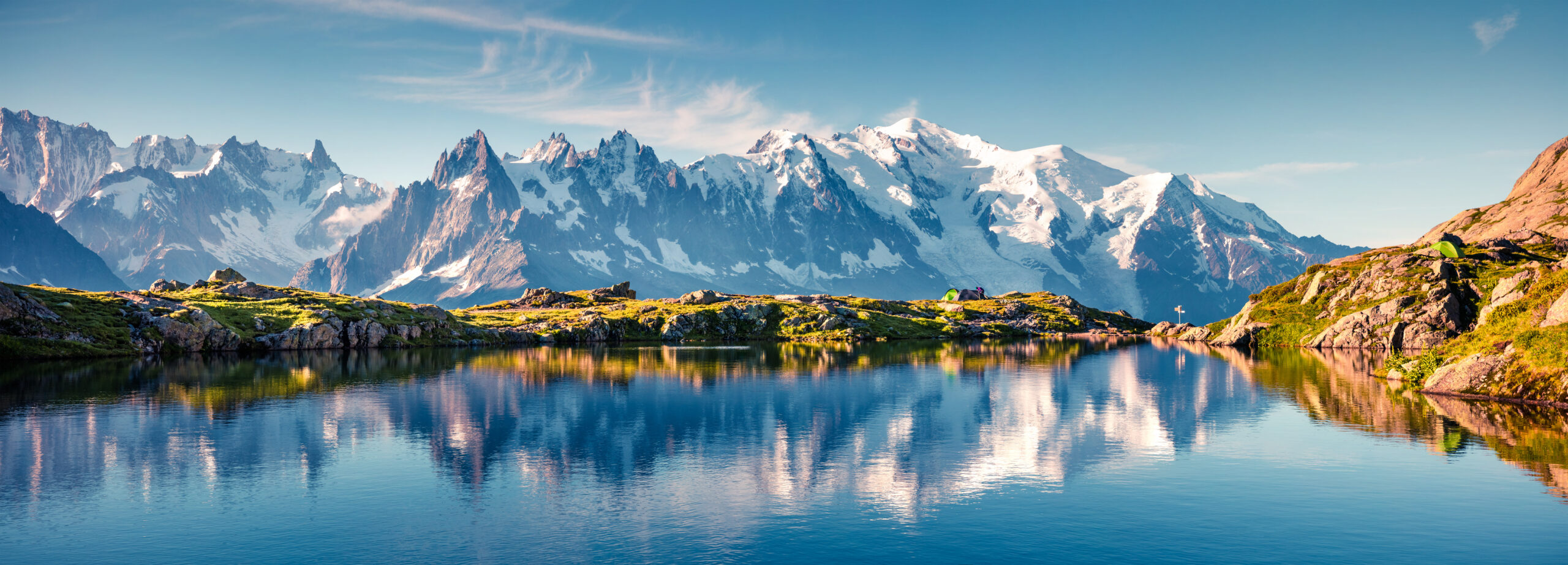
Mont Blanc Conditions This Week: Goûter Route Update
The Goûter normal-route huts are open and staffed, but the Grand Couloir is not “cleared.” After the extreme 2026 summer, Saint-Gervais and FFCAM continue to stress that rockfall can still occur. Mid-September also shifts the problem toward shorter daylight, colder conditions, fresh snow and icing.
Open Does Not Mean Low-Risk.
FFCAM lists the Tête Rousse and Goûter refuges as open in the guarded season after their August 26 reopening. The reopening ended the administrative closure, but the official notices explicitly say it does not guarantee the absence of rockfall.
For this week, treat the Goûter Route as a late-season high-mountain objective with an unresolved objective-hazard problem in the Grand Couloir. The decision to climb should be based on fresh local observations, overnight freeze, recent rockfall, upper-mountain snow/ice, wind and the advice of the Office de Haute Montagne, hut staff or your guide.
Why This September Is Not a Normal “Open = Good” Season.
The current route status makes more sense when you understand how the summer evolved.
Repeated Heat
Drought and successive heatwaves degraded high-mountain conditions across the massif and increased rockfall concern.
Major Rockfall Period
Saint-Gervais reported significant rockfall on the Aiguille du Goûter / Grand Couloir sector.
Refuges Closed
Tête Rousse and Goûter were closed while authorities, guides and hut staff responded to the objective hazard.
Administrative Reopening
The huts reopened after calmer conditions, but the official warning about renewed rockfall remained.
Where the Grand Couloir Sits in the Goûter Route
The route approaches from Saint-Gervais / Les Houches, reaches Tête Rousse, crosses the Grand Couloir, climbs to Goûter, then continues over the Dôme du Goûter and Bosses Ridge.
There Is No Clock Time That Makes the Couloir Safe.
Cooler overnight conditions can reduce some heat-driven activity, but the correct crossing decision depends on recent rockfall, freeze–thaw, traffic, weather and what local professionals are seeing. A fixed “before 06:00” rule is not a substitute for current evidence.
Less Summer Heat Does Not Mean Fewer Mountain Problems.
By mid-September, the hazard mix begins to change. Cooler conditions may help heat-driven rockfall while creating more alpine winter-like problems higher up.
Fresh Snow & Verglas
Early-autumn precipitation can rapidly coat rock or create hard snow on the upper route. Recheck conditions after every meaningful weather change.
Shorter Daylight
September reduces daylight margin. A slow team can reach technical descent terrain later and colder than it would in July.
Wind & Visibility
Bosses Ridge and the upper glacier terrain become much more serious in wind, whiteout or blowing snow. Valley weather is not enough.
Harder Snow Surface
Cooler nights can create firmer surfaces and better cramponing—or difficult hard ice. Movement skill must match the actual surface.
Season Logistics
Hut and transport schedules tighten as autumn approaches. Confirm the full ascent and descent chain, not just the summit window.
Fewer Parties
Reduced traffic can feel calmer, but it also means less informal information and less reliance on following other teams for route-finding.
Do Not Transfer the Goûter Reopening to Other Mont Blanc Routes.
One route reopening does not establish conditions on the Trois Monts traverse or the Italian normal route.
| Route | What is verified | What still needs a fresh check | Best source |
|---|---|---|---|
| Goûter Route | Tête Rousse and Goûter huts reopened Aug. 26 and remain in their guarded season. | Grand Couloir rockfall, upper snow/ice, wind, track and current operating access. | FFCAM + La Chamoniarde + Saint-Gervais |
| Trois Monts | La Chamoniarde reported it out of condition in the late-August reopening notice. | Do not assume that late-August assessment still applies; glacier/serac and route condition require a new local check. | OHM / La Chamoniarde + current guides |
| Italian Route | La Chamoniarde also reported it out of condition in late August. | Verify current glacier, snow, hut and route access separately. | Italian/local route sources + guides |
Make These Checks in the Final 24 Hours.
For a page called “conditions this week,” the most useful answer is knowing what must be rechecked after you close the browser.
Goûter corridor
- Any fresh Saint-Gervais closure or restriction.
- Recent Grand Couloir rockfall observations.
- Overnight freeze and freezing-level trend.
- Current hut operation and your named reservation.
- Actual access / transport schedule for ascent and descent.
Upper mountain
- Fresh snow or hard ice above Goûter.
- Wind speed and visibility near summit elevation.
- Bosses Ridge track and cornice condition.
- Team pace and turnaround margin.
- Current advice from OHM, hut staff or your guide.
Where to Verify Mont Blanc Before You Leave.
Use primary/local sources for closure, hut and route information. A static article should never be the final authority for a same-day alpine decision.
Current source stack
Confidence by topic
- High: Aug. 26 administrative reopening.
- High: Tête Rousse and Goûter guarded-season dates.
- High: official warning that reopening does not remove rockfall risk.
- Dynamic: Grand Couloir activity today.
- Dynamic: upper-mountain snow, ice, wind and visibility.
- Route-specific: Trois Monts and Italian route conditions.
Mont Blanc Conditions This Week FAQ
Current-status answers are date-sensitive; the route can change faster than the page.
What are the Mont Blanc conditions this week?
As of September 17, the Goûter normal-route huts are open and staffed, but reopening is not a safety clearance. Local authorities continue to warn that Grand Couloir rockfall remains possible after the extreme summer heat. Late-season weather, shorter daylight, fresh snow and icing must also be checked immediately before climbing.
Is the Goûter Route open right now?
The administrative closure of the Tête Rousse and Goûter huts ended on August 26. FFCAM currently lists both huts as operating in their guarded season. Climbers still need to evaluate actual route conditions before committing.
Are Tête Rousse and Refuge du Goûter open?
Yes. FFCAM lists Tête Rousse as guarded through October 3, 2026 at 07:00 and Refuge du Goûter through October 4, 2026 at 07:00. Reservations are required.
Is the Grand Couloir safe now that the huts reopened?
No source can guarantee that. Saint-Gervais explicitly states that reopening the huts does not guarantee the absence of rockfall and that further rockfall or slope collapse can still occur.
What time should I cross the Grand Couloir?
Cooler hours can reduce some heat-driven exposure, but there is no universally safe clock time. Current overnight freeze, observed rockfall, weather, traffic and local professional advice matter more than a fixed time printed online.
Is September a good time to climb Mont Blanc?
September can bring cooler rock and fewer climbers, but it also brings shorter daylight and a greater chance of early-autumn snow, hard ice, wind and changing schedules. The actual condition window matters more than the month.
Are the Trois Monts and Italian routes in condition?
La Chamoniarde reported in late August that both were not in condition at that time. Glacier and snow conditions can change quickly, so verify those routes separately rather than carrying the August assessment forward.
Where should I check conditions before climbing?
Check La Chamoniarde and the Office de Haute Montagne, FFCAM for hut and normal-route status, Saint-Gervais for official restrictions, current high-mountain weather and webcams, and your guide or guide company for the final route decision.
Travis Ludlow · Global Summit Guide
This conditions watch is research-based and uses current local authority, hut and high-mountain information. It does not claim first-hand observation of the Grand Couloir today. Route status, rockfall, snow, wind and visibility must be rechecked locally before climbing.
Continue the Mont Blanc Planning Path
Use the current watch for freshness, then move to the evergreen route, season, medical and comparison guides for the rest of the climb.
Use the Date, Then Verify the Mountain Again.
A “this week” conditions report is only useful while its evidence is fresh. Check the local feed, hut status, weather and actual route observations again before leaving for the climb.
Mont Blanc Conditions & the Alpine Cluster
This week’s conditions are one input. See the climb guide, the trek and the wider Mont Blanc / Alps content below.
Was this helpful?
🏔Related peaks nearby
🧭Explore & compare
Global Summit Guide is an independent mountaineering resource founded in 2026. The team combines first-hand trekking and climbing experience with in-depth research and professional health and nutrition review to help climbers choose objectives, prepare properly, and stay safe.
Health, altitude, and nutrition content is reviewed by Taylor Ludlow (Registered Nurse) and Brigg Hoopes (Nutritionist).
What We Don't Know Yet
Mountain information changes quickly. This box explains the limits of what this page can responsibly promise.
- Weather, snowpack, avalanche risk, road access, and route conditions can change quickly and may be different on your climbing dates.
- Route conditions, trailhead access, crevasse exposure, stream crossings, and rescue access may vary from published planning guidance.
- Visa, passport, vaccination, border, insurance, and local transportation rules may change before your trip.
Verify current conditions with official land managers, guide services, local forecasts, and current route reports before booking or climbing.
Mountaineering, rock and ice climbing, glacier travel, and high-altitude activity are inherently dangerous and can result in serious injury or death. The information on Global Summit Guide is provided for general informational and educational purposes only and is not a substitute for professional instruction, qualified guiding, proper equipment, or your own judgment and experience.
Route conditions, weather, snowpack, permits, regulations, and hazards change constantly and may differ from what is described here. Details may be incomplete, out of date, or contain errors. Always verify current information with local authorities, certified guides, and official sources before making any decision in the mountains.
Nothing on this site is medical, legal, or financial advice. Our fitness, acclimatization, altitude, and nutrition content is general in nature; consult a qualified physician before beginning any strenuous exercise program or exposing yourself to high altitude.
You are solely responsible for your own safety and decisions. To the fullest extent permitted by law, Global Summit Guide and its team accept no liability for any loss, injury, damage, or expense arising from use of, or reliance on, this information. By using this site you acknowledge these risks and accept these terms.
Some links on this site may be affiliate links. If you buy through them we may earn a small commission at no extra cost to you; this never affects our recommendations.
Global Summit Guide recommendation path
Next Best Mountain to Research
Use these recommendations to continue the right planning path instead of stopping on one page.
Use current permit, weather, route, and operator information before booking or climbing.