
Last updated September 15, 2026
Mont Blanc Goûter Route: The Complete Normal-Route Climbing Guide
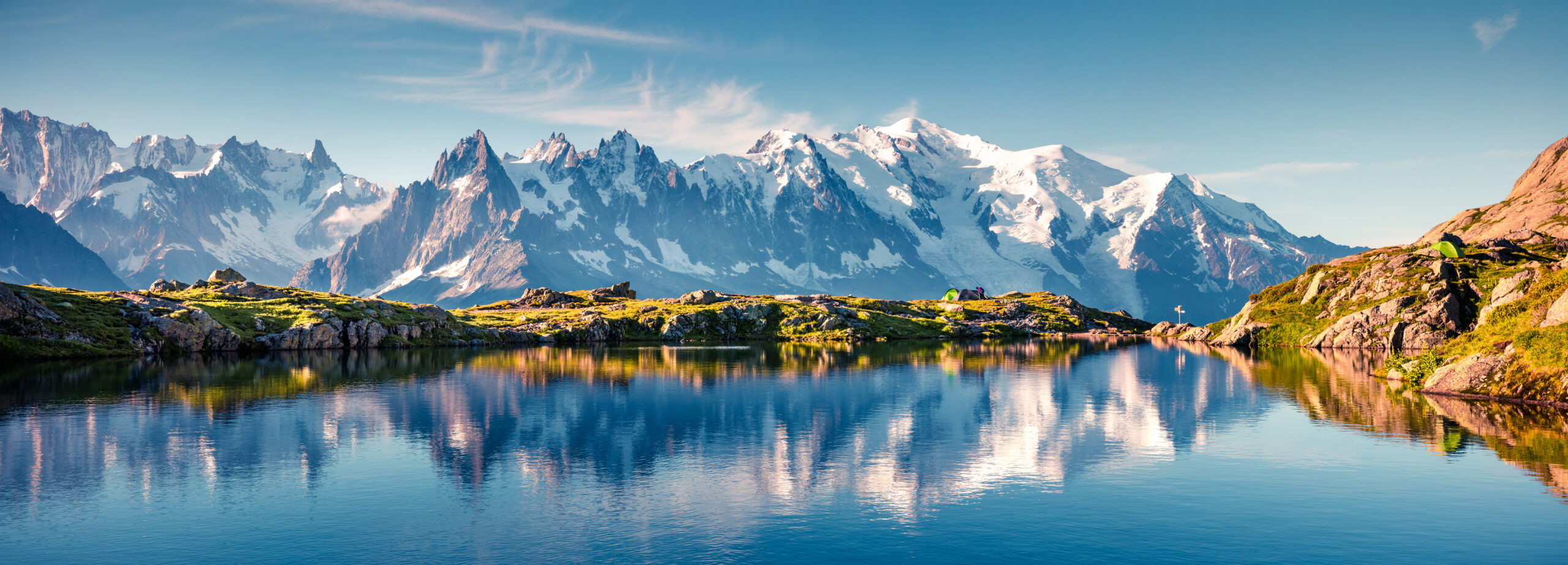
The Goûter Route is Mont Blanc’s standard French normal route, but “normal” should never be confused with easy or automatically safe. The route combines regulated refuge access, the rockfall-prone Grand Couloir, mixed scrambling to the Goûter Refuge, overnight exposure near 3,800 metres, glacier travel over the Dôme du Goûter and an exposed finish along the Bosses Ridge to a summit that is approximately 4,806 metres high.
What does the Goûter Route actually involve?
The normal sequence begins at Nid d’Aigle at 2,372 m, reaches Refuge de Tête Rousse at 3,165 m, crosses the Grand Couloir and climbs the Aiguille du Goûter to Refuge du Goûter at 3,815 m.
From the high refuge, climbers travel over snow and glacier terrain across the Dôme du Goûter, pass the emergency-only Vallot shelter and climb the exposed Bosses Ridge to Mont Blanc.
The technical grade is moderate by major Alpine standards. The consequences are not. The real difficulty comes from the interaction of altitude, rockfall, changing snow and glacier conditions, exposure, weather, long descents and the need to move efficiently enough to preserve margin.
The standard French approach from the Saint-Gervais side.
Rockfall exposure changes rapidly with heat, dryness and current conditions.
FFCAM reservations and identification are central to normal-route logistics.
A confirmed bed does not mean the route should be climbed.
Mont Blanc’s Goûter Route in six stages
The route is easier to understand when every stage is treated as its own logistics and hazard problem.
2,372 m. Common walking start when tramway access is operating.
3,165 m. Lower refuge and staging point before the Grand Couloir.
Rockfall-exposed crossing followed by the Aiguille du Goûter.
3,815 m. High refuge and common launch point for the summit phase.
4,304 m Dôme; Vallot is an emergency shelter, not a planned hut.
Exposed snow ridge leading to Mont Blanc’s variable snow summit.
A responsible 3-day Goûter structure
This is route architecture, not a guarantee of exact times. Acclimatization should happen before entering the summit phase.
Nid d’Aigle → Tête Rousse
Approach from the tramway terminus toward Refuge de Tête Rousse. This is the lowest technical day, but nearly 800 metres of altitude gain still matters. Arrive with enough energy to eat, hydrate, sleep and prepare for the Grand Couloir rather than treating the approach as a fitness test.
Tête Rousse → Grand Couloir → Goûter Refuge
Current rockfall and weather information should determine departure strategy. Cross the couloir only when your team accepts the observed conditions, then climb the rocky Aiguille du Goûter toward the high refuge.
Do not treat a historical “cross before X o’clock” rule as permission. Heat and drought matter, but dangerous rockfall does not operate on a guaranteed schedule.
Goûter → Dôme → Vallot → Bosses Ridge → summit
Leave according to the guide or team’s current plan, move roped across snow and glacier terrain, cross the Dôme du Goûter and continue past Vallot toward the Bosses Ridge.
The summit is only the midpoint of the decision. The entire ridge, glacier system, Aiguille du Goûter and Grand Couloir still separate the climber from the valley.
The refuge system functions as normal-route access control
There is no universal Mont Blanc summit royalty, but that does not mean the Goûter corridor is unrestricted.
| Rule | Current FFCAM position | What you should do |
|---|---|---|
| Named participants | Participant identity is compulsory in the reservation system. | Book using the actual climbers who will stay. |
| Identity verification | A valid ID document is required for non-professional participants during booking. | Use a valid passport, identity card or accepted ID and carry it on the trip. |
| Reservation evidence | Confirmation documentation may be requested during controls and at refuge arrival. | Carry an electronic copy and a practical backup. |
| Pre-booking | FFCAM validates the pre-booking before final completion. | Watch your email after pre-booking. |
| 48-hour completion | Once FFCAM sends the validation link, the reservation must be finalized within the stated window. | Complete the booking promptly or the places may be released. |
| Resale | FFCAM does not authorize resale of refuge reservations. | Avoid third-party offers claiming to transfer guaranteed beds. |
| Arrival time | Current refuge pages state reservations are no longer valid after 17:00 unless the refuge is contacted. | Build enough margin to arrive on time and call if delayed. |
What the Goûter and Tête Rousse refuges actually cost
These are FFCAM’s published public adult prices—not estimates from operator marketing pages.
| Refuge | Bed | Breakfast | Evening meal | Tourist tax |
|---|---|---|---|---|
| Tête Rousse | €60 | €21 | €46.20 | €0.80 / person / night |
| Goûter | €70 | €21 | €52.20 | €0.80 / person / night |
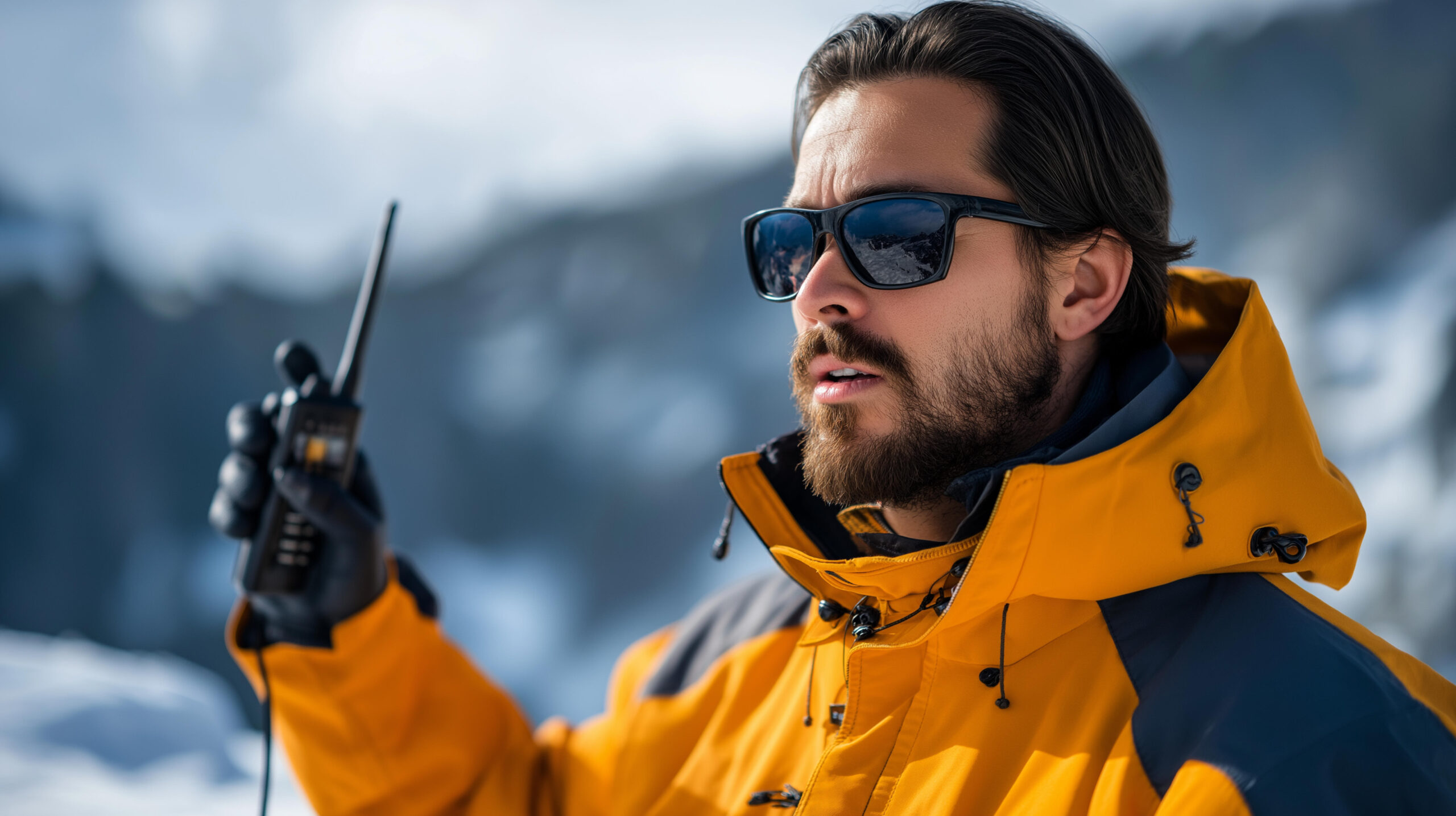
The Grand Couloir has no guaranteed safe crossing time.
La Chamoniarde advises climbers to check current conditions, avoid very hot and dry periods, avoid the hottest part of the day, move efficiently and observe active rockfall. That is a better rule than turning one historic departure time into a guarantee.
How to think about the route’s main objective hazard
Rockfall cannot be eliminated through fitness, guiding or a cable across the couloir.
Heat matters
Very warm, dry periods can increase rockfall activity as unstable terrain loses snow and ice support.
Listen and watch
Visible or audible active rockfall is meaningful information. Do not reduce the crossing to a timetable.
Move efficiently
The goal is to minimize time in exposed terrain without rushing so badly that movement becomes uncontrolled.
Turn around
A poor couloir is a valid reason to abandon Mont Blanc even with perfect weather higher on the mountain.
The summit phase is mostly about efficiency and reserve
The upper route is less technically complex than the Grand Couloir section, but altitude and fatigue become dominant.
High snow and glacier travel
The upper mountain begins with sustained movement above 4,000 metres where pace and cold management become critical.
Emergency shelter
Vallot is not a planned overnight refuge or a way to compensate for poor acclimatization.
Exposure near the summit
The narrowing snow ridge adds wind and fall consequences at the exact point where climbers are most tired and hypoxic.
What can stop a Goûter Route climb?
“PD” does not mean low consequence. Moderate technical difficulty can coexist with substantial objective hazard.
Rockfall
The Grand Couloir can become unacceptable during warm, dry or unstable periods.
Rapid elevation gain
Infrastructure allows climbers to gain elevation much faster than their bodies necessarily adapt.
Crevasses and snow bridges
Upper snow and glacier conditions change with season, snowfall and temperature.
Wind and whiteout
The upper mountain offers very little shelter once the team is committed beyond Goûter.
Technical descent
The route must be reversed after the summit, including the Aiguille du Goûter and Grand Couloir.
Reservation pressure
Hard-to-obtain hut reservations can create psychological pressure to climb when conditions say otherwise.
The reservation is sunk cost. The descent margin is not.
Decide in advance which conditions are enough to stop the climb.
Do not cross simply because your refuge bed is waiting above it.
Altitude and the technical descent are more likely to amplify the problem than fix it.
Use the remaining margin for descent rather than consuming it in pursuit of the summit.
Do not use Vallot or the next waypoint as justification to continue upward.
Current crevasse and snow-bridge conditions matter more than the line on a summer topo.
A fallback summit is a better outcome than forcing Mont Blanc because flights and reservations are fixed.
Goûter is a first major Alpine summit—not a first mountain
Infrastructure makes Mont Blanc accessible. It does not replace the movement skills needed to use that infrastructure safely.
| Capability | Useful evidence before Mont Blanc | Red flag |
|---|---|---|
| Mountain endurance | Repeated long days with substantial vertical gain and controlled descents. | Your movement deteriorates badly late in a long hiking day. |
| Crampons | Recent movement on firm snow in mountaineering boots. | Summit morning would be your first real crampon use. |
| Ice axe | Comfort carrying and moving with an axe on snow terrain. | You expect the axe itself to prevent every fall. |
| Roped glacier travel | Basic rope spacing and team movement are already familiar. | You would be learning rope movement while exhausted at altitude. |
| Altitude | Recent exposure above roughly 3,000 metres before entering the summit phase. | You plan to travel from near sea level directly onto the route. |
| Judgment | You have already accepted a Plan B before arriving in Chamonix. | Mont Blanc is the only acceptable outcome of the trip. |
See What to Climb Before Mont Blanc and the Mont Blanc Progression Plan before booking the summit phase.
Goûter is the normal route—not the only Mont Blanc route
Alternatives carry different hazards. A poor Goûter Route does not automatically make another route appropriate.
| Route family | Typical character | Primary planning issue | Best use |
|---|---|---|---|
| Goûter | Normal route · PD/PD+ | Grand Couloir, regulated refuges, altitude | Standard first Mont Blanc route when conditions are acceptable |
| Trois Monts | More technical snow/ice | Serac, avalanche and steeper terrain | Experienced teams when the route itself is in condition |
| Gonella / Italian route | Longer and more committing | Glacier condition and Italian-side access | Experienced teams seeking the Italian normal route |
| Grands Mulets | Historic glacier route | Serac and crevasse exposure | Primarily spring ski mountaineering |
Mont Blanc Goûter Route questions
Current rules and conditions should always override static planning guidance.
What is the Goûter Route?
It is Mont Blanc’s standard French normal route, normally using Nid d’Aigle, Tête Rousse, the Grand Couloir, Aiguille du Goûter, Refuge du Goûter, Dôme du Goûter, Vallot and the Bosses Ridge.
How high is Mont Blanc?
The summit is a snow and ice dome whose measured elevation changes. For planning, approximately 4,806 metres is more responsible than treating an older 4,810-metre figure as permanent.
How high is Refuge du Goûter?
FFCAM currently lists Refuge du Goûter at 3,815 metres. Tête Rousse is listed at 3,165 metres.
Do I need to reserve the huts?
Yes. The normal-route refuge system uses identity-linked reservations under specific regulations. Participant information and valid identification are required, and booking documentation should be carried.
What does Refuge du Goûter cost in 2026?
FFCAM lists the adult public bed rate at €70, plus €21 breakfast, €52.20 evening meal and €0.80 tourist tax. Tête Rousse lists €60 for the bed, €21 breakfast, €46.20 dinner and the same tourist tax.
What is the safest time to cross the Grand Couloir?
No universal clock time makes the couloir safe. Current heat, snow cover, drought, rockfall activity and local guidance matter more than a fixed time printed months earlier.
What is the Goûter Route success rate?
We do not publish one universal percentage because we did not find a current official mountain-wide dataset with a reproducible Goûter denominator. Individual operators may publish client success rates, but those describe that operator’s cohort rather than every climber on the route.
How many days should I allow?
The final route phase commonly takes two or three days, but a stronger Mont Blanc trip includes additional acclimatization and weather flexibility. The hut itinerary should not be mistaken for the complete preparation plan.
Check these before you leave the valley
The route can change faster than a static article can be updated.
FFCAM Normal Route Portal
Hut status, booking rules, identity requirements, opening periods, current notices and reservation links.
Open FFCAM normal-route portal →La Chamoniarde
Local mountain prevention, conditions information and guidance on the Grand Couloir and Mont Blanc massif.
Open La Chamoniarde →Goûter Route Conditions
Use the dedicated conditions child page for the fast-changing layer rather than expecting this route guide to function as a live bulletin.
Check current Goûter conditions →Build the complete Mont Blanc plan
The Goûter Route page owns the route architecture. Use the child guides below for conditions, cost, weather, gear, medicine, operator choice and alternatives.
Was this helpful?
🏔Related guides
🧭Explore & compare
Global Summit Guide is an independent mountaineering resource founded in 2026. The team combines first-hand trekking and climbing experience with in-depth research and professional health and nutrition review to help climbers choose objectives, prepare properly, and stay safe.
Health, altitude, and nutrition content is reviewed by Taylor Ludlow (Registered Nurse) and Brigg Hoopes (Nutritionist).
What We Don't Know Yet
Mountain information changes quickly. This box explains the limits of what this page can responsibly promise.
- Route conditions, trailhead access, crevasse exposure, stream crossings, and rescue access may vary from published planning guidance.
- Visa, passport, vaccination, border, insurance, and local transportation rules may change before your trip.
- Route conditions, snowpack, closures, and weather can change quickly after this page is updated.
- Permit rules, fees, quotas, and reservation windows may change between review cycles.
- Operator availability, pricing, guide ratios, and cancellation terms can change by season.
Verify current conditions with official land managers, guide services, local forecasts, and current route reports before booking or climbing.
Mountaineering, rock and ice climbing, glacier travel, and high-altitude activity are inherently dangerous and can result in serious injury or death. The information on Global Summit Guide is provided for general informational and educational purposes only and is not a substitute for professional instruction, qualified guiding, proper equipment, or your own judgment and experience.
Route conditions, weather, snowpack, permits, regulations, and hazards change constantly and may differ from what is described here. Details may be incomplete, out of date, or contain errors. Always verify current information with local authorities, certified guides, and official sources before making any decision in the mountains.
Nothing on this site is medical, legal, or financial advice. Our fitness, acclimatization, altitude, and nutrition content is general in nature; consult a qualified physician before beginning any strenuous exercise program or exposing yourself to high altitude.
You are solely responsible for your own safety and decisions. To the fullest extent permitted by law, Global Summit Guide and its team accept no liability for any loss, injury, damage, or expense arising from use of, or reliance on, this information. By using this site you acknowledge these risks and accept these terms.
Some links on this site may be affiliate links. If you buy through them we may earn a small commission at no extra cost to you; this never affects our recommendations.
Global Summit Guide recommendation path
Next Best Mountain to Research
Use these recommendations to continue the right planning path instead of stopping on one page.
Use current permit, weather, route, and operator information before booking or climbing.
Explore Travel Options for Your Destination
Once your mountain, dates and route are taking shape, compare flights, hotels and other travel options that fit the trip.
Affiliate link. We may earn a commission at no additional cost to you.