
Last updated September 21, 2026

Best Time to Climb Mont Blanc: Weather, Seasons & Conditions
There is no single “best month” for Mont Blanc. June can offer cooler snow-covered terrain but more lingering snow; July brings full mountain infrastructure but increasing heat exposure; August can be excellent or dangerously warm; and September is quieter but colder, darker and increasingly autumnal. The best time is the period when current route conditions and a usable weather window overlap.
When Is the Best Time to Climb Mont Blanc?
Most climbers target June through September, but there is no universally best month. Professional Chamonix guidance explicitly warns that conditions vary year to year and that heatwaves can make parts of the normal route unacceptable even during the traditional summer peak.
If you want the best planning strategy, choose a flexible several-day Alpine program rather than trying to identify one magic date months in advance. Cooler early-season conditions can preserve snow and reduce some heat-driven hazards, while late summer may offer established infrastructure but greater sensitivity to high freezing levels, glacier deterioration and rockfall.
Mont Blanc Weather by Month.
Treat these as recurring seasonal patterns, not predictions. One cool August can be better than a hot June, and one snowy September can close the practical window earlier than expected.
Cooler Early Season
More snow may remain on the route and some infrastructure can still be coming online. Cooler temperatures can benefit snow cover and rock stability, but excess snow, avalanche conditions or poorly established tracks can make the climb more serious.
Full Operations
Huts, transport and guide programs are normally in full operation. Long daylight helps logistics, but prolonged heat can raise the freezing level, weaken snow bridges and increase rockfall exposure.
Heat Sensitive
August can deliver excellent stable weather, but it can also produce the season’s most consequential heat cycles. Current route conditions matter far more than the fact that August is traditionally considered peak season.
Quieter & Colder
Fewer climbers and cooler temperatures can improve some hazards, while shorter daylight, fresh snow, icing and early-autumn storms increase other demands.
| Period | Main advantage | Main problem | Infrastructure | Best planning use |
|---|---|---|---|---|
| May–early June | Cooler mountain; more snow coverage | Heavy snow, avalanche or route-establishment issues | Some transport/huts may not yet run normally | Experienced or professionally guided teams checking exact conditions |
| Mid–late June | Long daylight and increasingly complete operations | Variable remaining snow and developing heat cycles | Generally improving | Strong balance when current conditions cooperate |
| July | Full commercial infrastructure | Heat, crowding and rockfall sensitivity | Full season | Flexible climbers who can wait out unsuitable hot periods |
| August | Established route operations | Potentially severe heat-driven deterioration | Full season | Only when current route and freezing-level conditions support the plan |
| September | Quieter and often cooler | Shorter days, cold, fresh snow and icing | Season winding down | Experienced teams comfortable with more autumnal conditions |
| October–spring | Specialized winter/ski objectives | Winter alpine hazards and reduced normal infrastructure | Outside normal summer system | Experienced alpinists using winter-specific planning |
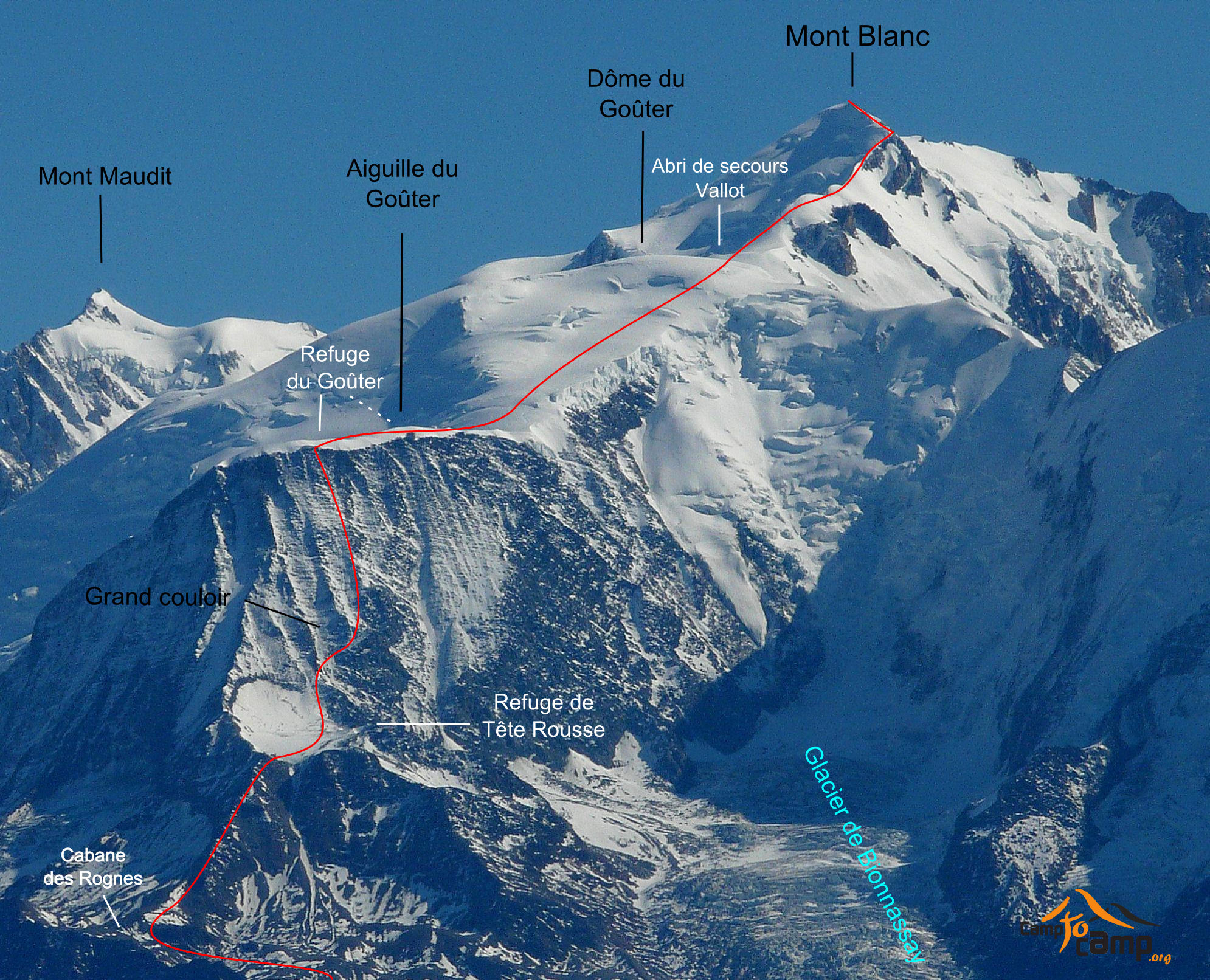
The Same Forecast Can Affect Different Parts of the Goûter Route in Opposite Ways.
Warmth may make the summit ridge more comfortable while simultaneously worsening rockfall lower on the route. Cooling can reduce heat-driven instability yet create hard, icy surfaces that demand better crampon technique. “Good weather” is therefore not the same thing as “good climbing conditions.”
A Mont Blanc Weather Window Must Include the Descent.
A clear summit forecast is not enough. Your stable period must cover the exposed upper route and the return through whichever hazards your descent requires.
Ridge Control
Check sustained wind and gusts at upper-mountain elevation. Ask whether the team can maintain balance, warmth and communication on exposed snow ridges.
Surface & Rockfall
A very high freezing level can affect snow bridges, glacier surfaces and rock stability. A lower freezing level can create harder, icier terrain.
New Snow Changes the Route
Rain or snow can alter rockfall, avalanche, glacier and visibility conditions. Consider what has already fallen—not only what is forecast next.
Navigation Matters
Cloud and blowing snow can erase tracks and visual references. A route that is obvious in clear weather can become a navigation problem quickly.
How to Check Mont Blanc Weather Before a Summit Attempt.
Use several different information layers rather than opening multiple apps that may all display the same underlying model.
Weather Layer
- Météo-France mountain forecast
- Météo Chamonix
- Elevation-specific model guidance
- Lightning and severe-weather warnings
Mountain Layer
- La Chamoniarde / OHM
- FFCAM normal-route refuge status
- Guide observations
- Recent route reports

An Open Goûter Hut Does Not Mean the Route Has Been Cleared as Safe.
The refuge is infrastructure—not a route-condition certificate. The 2026 reopening after the August rockfall closure came with an explicit warning from FFCAM that climbers still had to evaluate conditions and decide whether to continue or turn back.
Heat Has Changed the Meaning of “Peak Season.”
Traditional calendar advice often assumed July and August were automatically the safest or most reliable months. Modern Chamonix guiding increasingly treats season choice as condition-dependent because warm periods can destabilize rock, accelerate snow and glacier change and remove once-reliable summer route assumptions.

Timing Can Reduce Exposure. It Cannot Make Active Rockfall Safe.
Older Mont Blanc advice often turns the couloir into a simple clock problem: cross early and the problem is solved. Current planning should be more conservative. Time of day is one input; observed rockfall, temperature history, freezing level and local guidance matter as well.
The Best Season Changes With the Mont Blanc Route.
“Mont Blanc weather” is only half the question. Goûter, Trois Monts and Gonella expose climbers to different weather-sensitive hazards.
Goûter Route
Heat and rockfall in the Grand Couloir are central. The upper Bosses Ridge adds wind, visibility, cold and icy-surface concerns. Cooler is not automatically easier, but prolonged heat can be a major warning signal.
Trois Monts
Steeper glacier terrain, serac exposure, bergschrunds and avalanche conditions make recent snow and temperature history especially important. It is not simply the “weather-safe” alternative to Goûter.
Gonella Route
A longer and more remote route with complex glacier travel. Its practical season can be narrower because glacier condition and route establishment play a larger role in viability.

A Route Change Changes the Weather Problem.
Avoiding Grand Couloir rockfall does not remove objective hazard. The Trois Monts line trades the Goûter problem for steeper, highly condition-dependent glacier terrain beneath Tacul and Maudit.
The 2026 Heat Closure Shows Why Month-Based Advice Is Not Enough.
A mountain can be in the middle of its traditional climbing season and still become temporarily unsuitable because conditions have changed.
Huts Closed
Tête Rousse and Goûter were closed by municipal order after rockfall danger exceeded what authorities considered normally foreseeable for the route.
Route Deterioration
FFCAM linked the instability to drought and high temperatures affecting the thermal balance and cohesion of mountain rock.
Huts Reopened
Improved conditions allowed the refuges to reopen, but authorities explicitly said reopening did not remove mountain risk.
Conditions Beat Calendar
“August is climbing season” was true. “Therefore the normal route is acceptable” was not always true.
Check Mont Blanc conditions this week →

Wind and Visibility Matter More Once the Terrain Narrows.
The Bosses Ridge is an exposed high-altitude snow ridge. Strong wind, hard surfaces, cloud and blowing snow can change balance, route finding and communication even when the valley forecast looks pleasant.
There Is No Universal Mont Blanc Wind Cutoff.
The old version of this page turned wind into fixed go/no-go numbers. That is too simple for an exposed Alpine climb.
A useful wind decision combines sustained wind, gusts, direction, surface hardness, visibility, temperature, ridge exposure, team stability and the distance still required to reach safer terrain.

Mont Blanc Weather Must Be Read Across the Whole Massif.
Chamonix, Saint-Gervais, Courmayeur and the summit sit at dramatically different elevations and exposures. Valley weather does not describe the summit.
Mont Blanc Spans Thousands of Vertical Meters of Weather.
A warm, calm afternoon in Chamonix can coexist with freezing temperatures, strong wind and cloud on the summit. Always forecast the elevations and terrain you will actually occupy.
Mont Blanc Weather & Best Season FAQ.
The calendar gives context. Current mountain conditions make the final decision.
What is the best month to climb Mont Blanc?
There is no universally best month. June through September is the main summer climbing period, but current Chamonix professional guidance emphasizes that snow, heatwaves and early-autumn conditions can make any particular week better or worse than another.
When is the Mont Blanc climbing season?
The main guided summer season generally runs from June through September, with a broader possible mountaineering window roughly from late spring into early autumn depending on route conditions, refuge operations and team experience.
Is July a good time to climb Mont Blanc?
July normally has full refuge and guide infrastructure and long daylight, but prolonged heat can worsen Grand Couloir rockfall and glacier conditions. Do not choose July solely because it is traditionally called peak season.
Is August a good time to climb Mont Blanc?
August can produce good climbing windows, but it can also be highly heat-sensitive. The August 2026 closure of the Tête Rousse and Goûter huts because of rockfall illustrates why current conditions matter more than the month name.
Can you climb Mont Blanc in September?
Yes, when refuges, transport, weather and route conditions remain suitable. September usually brings fewer climbers and cooler temperatures, but shorter daylight, fresh snow and colder or icier upper-mountain conditions become more likely.
How cold is Mont Blanc in summer?
Summit conditions can remain below freezing even when Chamonix is warm. Wind can dramatically increase heat loss. Use an elevation-specific forecast for your actual climbing dates rather than a fixed monthly temperature number.
How far ahead can you trust the Mont Blanc weather forecast?
Longer-range forecasts are useful for identifying patterns, but the summit decision should rely heavily on the short-range forecast, current route observations and what the mountain is actually doing immediately before departure.
What weather factors matter most on Mont Blanc?
Check wind and gusts, temperature, freezing level, precipitation, cloud and visibility, recent snow or rain, lightning risk and whether the usable weather window includes the descent through critical terrain.
Where should I check current Mont Blanc conditions?
Use La Chamoniarde/OHM, official FFCAM refuge information, professional mountain forecasts and recent guide observations. Global Summit Guide’s separate Mont Blanc Conditions This Week page tracks the current Goûter-route context.
Keep Weather Connected to the Rest of the Climb.
This page owns season and weather. Use the dedicated children for route choice, equipment, difficulty and current conditions.
Use Local Professional Information Before Static Month Rankings.
This guide treats season as a dynamic interaction between weather, snow and ice, heat, route condition and operating infrastructure. Current local sources should override generalized seasonal guidance.
- Compagnie des Guides de Chamonix — current Mont Blanc season guidance
- La Chamoniarde / OHM — mountain conditions and prevention information
- FFCAM Mont Blanc Normal Route — refuge status and reservations
- Météo-France — official regional weather information
2026 source lesson: the August closure and reopening of the normal-route refuges demonstrate why an open season, an operating hut and a good valley forecast cannot by themselves answer whether a summit attempt is appropriate.
Do Not Choose Mont Blanc by Month Alone.
Choose a broad summer window, build flexibility into the trip, then let the actual freezing level, snow and ice, Grand Couloir activity, wind, visibility and local professional observations decide whether Mont Blanc is the right mountain that day.
Was this helpful?
🏔Related conditions
🧭Explore & compare
Global Summit Guide is an independent mountaineering resource founded in 2026. The team combines first-hand trekking and climbing experience with in-depth research and professional health and nutrition review to help climbers choose objectives, prepare properly, and stay safe.
Health, altitude, and nutrition content is reviewed by Taylor Ludlow (Registered Nurse) and Brigg Hoopes (Nutritionist).
What We Don't Know Yet
Mountain information changes quickly. This box explains the limits of what this page can responsibly promise.
- Weather, snowpack, avalanche risk, road access, and route conditions can change quickly and may be different on your climbing dates.
- Visa, passport, vaccination, border, insurance, and local transportation rules may change before your trip.
- Route conditions, snowpack, closures, and weather can change quickly after this page is updated.
- Permit rules, fees, quotas, and reservation windows may change between review cycles.
- Operator availability, pricing, guide ratios, and cancellation terms can change by season.
Verify current conditions with official land managers, guide services, local forecasts, and current route reports before booking or climbing.
Mountaineering, rock and ice climbing, glacier travel, and high-altitude activity are inherently dangerous and can result in serious injury or death. The information on Global Summit Guide is provided for general informational and educational purposes only and is not a substitute for professional instruction, qualified guiding, proper equipment, or your own judgment and experience.
Route conditions, weather, snowpack, permits, regulations, and hazards change constantly and may differ from what is described here. Details may be incomplete, out of date, or contain errors. Always verify current information with local authorities, certified guides, and official sources before making any decision in the mountains.
Nothing on this site is medical, legal, or financial advice. Our fitness, acclimatization, altitude, and nutrition content is general in nature; consult a qualified physician before beginning any strenuous exercise program or exposing yourself to high altitude.
You are solely responsible for your own safety and decisions. To the fullest extent permitted by law, Global Summit Guide and its team accept no liability for any loss, injury, damage, or expense arising from use of, or reliance on, this information. By using this site you acknowledge these risks and accept these terms.
Some links on this site may be affiliate links. If you buy through them we may earn a small commission at no extra cost to you; this never affects our recommendations.
Global Summit Guide recommendation path
Next Best Mountain to Research
Use these recommendations to continue the right planning path instead of stopping on one page.
Use current permit, weather, route, and operator information before booking or climbing.
Search Flights, Hotels & Rental Cars
Have the mountain or destination picked? Use Expedia to compare the flights, lodging and rental cars that fit your actual trip dates. For mountain travel, consider arriving early enough for delays and adding a buffer night after the climb before a fixed flight home.
Compare current flight, hotel and car options.
Affiliate disclosure: Global Summit Guide may earn a commission if you book through this link, at no additional cost to you.