
Last updated October 4, 2026
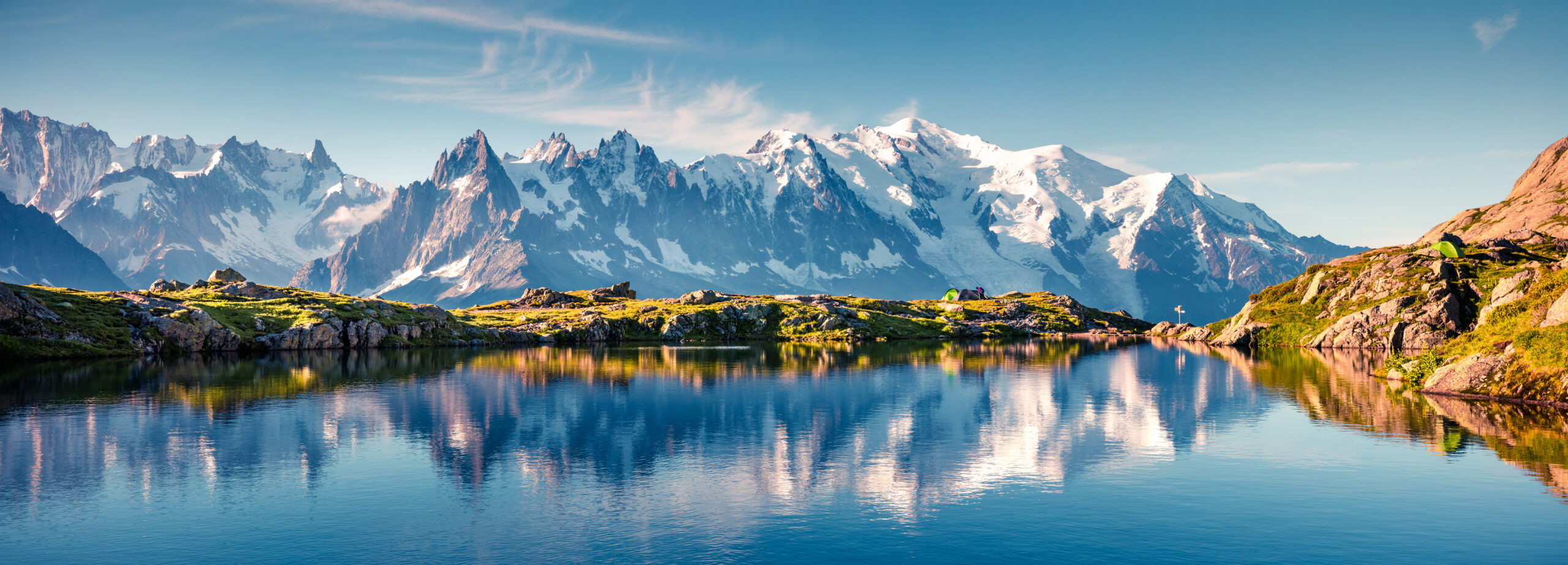
Mont Blanc vs Matterhorn: Height, Difficulty, Routes & Risk
The Matterhorn is the harder standard-route climb even though Mont Blanc is about 328 metres higher. Mont Blanc’s Goûter Route puts more weight on altitude, glacier travel, endurance and the Grand Couloir. The Matterhorn’s Hörnli Ridge demands much more sustained exposed rock and mixed movement, route-finding and technical descent efficiency. For many climbers, Mont Blanc comes first—but it is not a Matterhorn qualification.
The Matterhorn Is Harder. Mont Blanc Is Higher—and Usually the Earlier Step.
If the question is standard-route technical difficulty, choose the Matterhorn. The Hörnli Ridge requires sustained climbing and scrambling on exposed terrain, quick route recognition, efficient short-rope movement and a controlled descent over the same complex ridge.
If the question is altitude and glacier endurance, Mont Blanc is the bigger test. The Goûter Route reaches a higher summit and combines acclimatization, glacier travel, snow ridges, the Grand Couloir and a long summit day.
For a climber building Alpine experience, Mont Blanc can be an excellent step before the Matterhorn. But the missing piece is technical rock and mixed movement. ZERMATTERS explicitly warns that Mont Blanc by the normal route is not comparable to the Matterhorn because Mont Blanc is not a rock climb, and it requires a preparatory tour for online Matterhorn bookings.
Mont Blanc vs Matterhorn: The Differences That Matter
Elevation alone gives the wrong answer. The route character is what separates these two Alpine objectives.
| Dimension | Mont Blanc | Matterhorn | Edge |
|---|---|---|---|
| Elevation | ≈4,806 m; snow summit varies | 4,478 m | Mont Blanc higher |
| Standard route | Goûter Route | Hörnli Ridge | Different route types |
| Common Alpine grade | PD to PD+ | AD− to AD | Matterhorn harder |
| Primary demand | Altitude, glacier movement, endurance, snow and rockfall exposure | Exposed rock/mixed climbing, route-finding, speed and descent | Skill profile dependent |
| Rock climbing | Shorter sections around the Aiguille du Goûter | Sustained for much of the Hörnli Ridge | Matterhorn |
| Glacier / snow emphasis | High | Present, but less dominant than the ridge climbing | Mont Blanc |
| Route-finding pressure | Lower on a guided normal-route ascent | Central to moving efficiently on ascent and descent | Matterhorn |
| Typical guided ratio | Program dependent; some normal-route programs allow up to 1:2 | ZERMATTERS: 1 participant per guide | Matterhorn more restrictive |
| Usually earlier in progression | Yes | After additional technical preparation | Mont Blanc first |
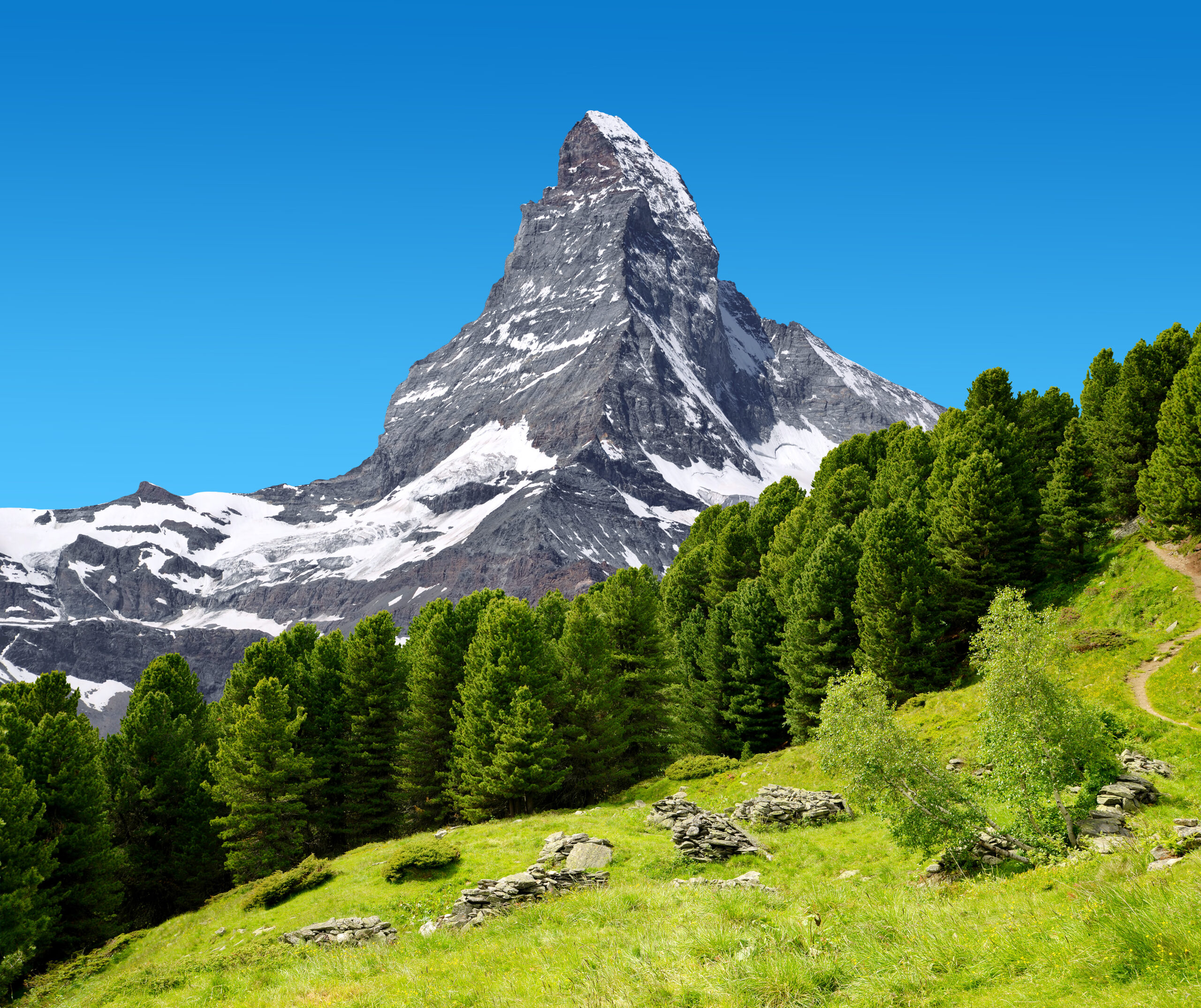
The Matterhorn Is a Speed-and-Technique Problem.
The Hörnli Ridge is not defined by one isolated crux. The challenge is maintaining efficient movement through a long sequence of exposed scrambling, climbing, route-finding and descent while fatigue builds.
Technical Efficiency Matters for Most of the Hörnli Day
ZERMATTERS rates its current Matterhorn program at high endurance and high technique, with prior 4,000 m experience and grade-III ridge climbing expected.
Long Stretches of Exposed Rock
On the Hörnli, the climber repeatedly scrambles and climbs in mountaineering boots while moving short-roped with a guide. Small technical delays add up across the day.
The Fastest Line Is Not Always Obvious
Predawn movement and the complexity of the ridge make route recognition important. Being off line costs time and can expose a team to loose rock or slower terrain.
Fixed Ropes Do Not Make It Simple
Some steeper sections are equipped with fixed ropes, but the mountain still demands sure-footed climbing, crampon transitions when needed and confidence on exposed terrain.
The Summit Is Only Half the Technical Day
ZERMATTERS lists about four hours up and four hours down. The same ridge has to be reversed efficiently when fatigue and concentration become more important.
Goûter Route vs Hörnli Ridge
The route sequence explains more than the headline grade.
| Stage | Mont Blanc · Goûter Route | Matterhorn · Hörnli Ridge |
|---|---|---|
| Approach | Nid d’Aigle to Tête Rousse by trail and moraine. | Walk from Schwarzsee to Hörnli Hut on exposed mountain trail. |
| Lower crux | Grand Couloir crossing followed by scrambling up the Aiguille du Goûter. | Immediate predawn route-finding and sustained scrambling from the hut. |
| Middle mountain | Goûter Hut, Dôme du Goûter, glacier and snow travel. | Steeper rock, ridge movement and the Solvay emergency shelter area. |
| Upper mountain | Vallot area and the exposed Bosses snow ridge. | Steeper upper ridge, fixed ropes in places, snow or crampon terrain as conditions dictate. |
| Descent | Long reversal through glacier, Goûter ridge and Couloir terrain. | Technical reversal of the Hörnli Ridge back to the hut. |
| Main pressure | Altitude, endurance, rockfall timing, weather and snow condition. | Technical pace, exposure, route-finding, weather and descent efficiency. |
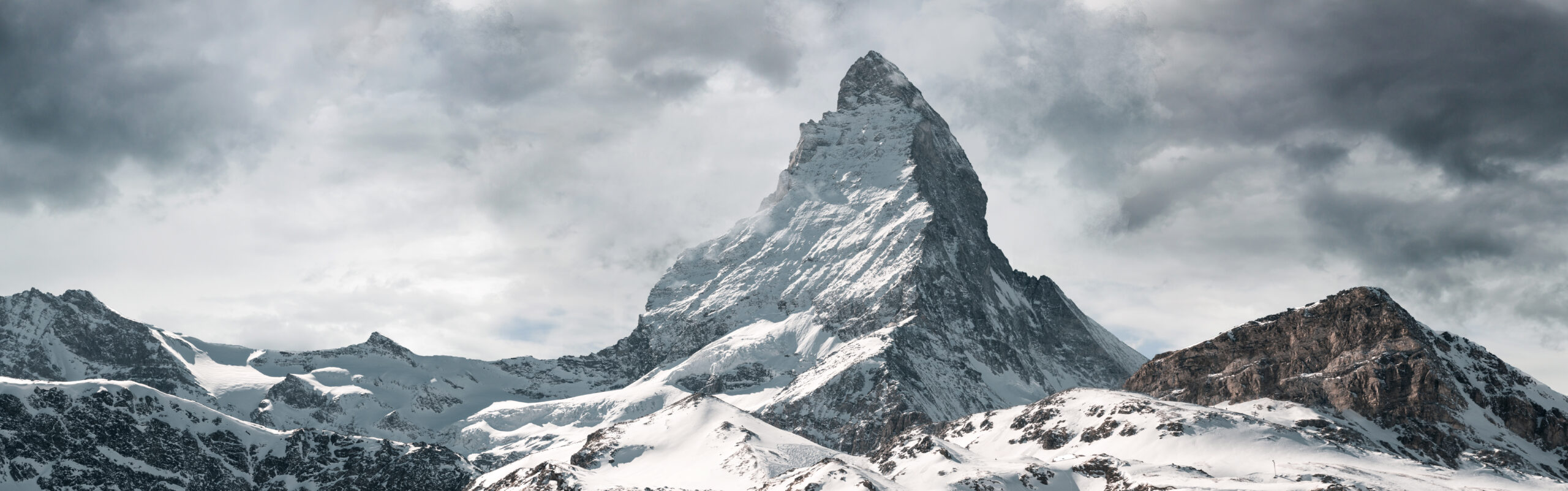
A Grade Does Not Describe the Mountain on a Bad Day.
Fresh snow, verglas, wind, heat and rockfall can change either route quickly. The comparison is useful only when both normal routes are in appropriate climbing condition.
Which Should You Climb First?
For many climbers, Mont Blanc belongs earlier in the sequence—but there should usually be a technical bridge before the Matterhorn.
Build crampon, glacier-rope and altitude experience on an objective suited to your current level.
Develop high-altitude pacing, glacier movement, hut logistics and long-descent durability.
Add exposed rock or mixed climbing in mountaineering boots. ZERMATTERS uses Riffelhorn, Pollux and Breithorn Traverse as preparation examples.
Confirm climbing speed, sure-footedness, stamina and acclimatization before committing to the Hörnli.
Attempt the Hörnli only when both readiness and current route conditions align.
What Each Mountain Exposes
Altitude and Glacier Efficiency
- Long uphill and downhill days
- Crampon and ice-axe competence
- Roped glacier movement
- Acclimatization above 4,000 m
- Energy left for a long descent
Exposed Rock at Guide Pace
- Confident climbing in mountaineering boots
- Fast movement while short-roped
- Grade-III ridge competence
- Efficient rock-to-snow transitions
- Technical descent while fatigued
Grand Couloir and High Snow Terrain
Rockfall timing in the Grand Couloir can dominate the lower Goûter route, while wind, cold, altitude and snow condition shape the upper mountain.
Exposure, Loose Rock and Lost Time
A climber who is too slow on the Hörnli can become increasingly exposed to afternoon weather, other teams, fatigue and difficult descent conditions.
What 2026 Guiding Requirements Say About the Difference
The guide policies reinforce the same conclusion as the route comparison.
| Guide detail | Mont Blanc | Matterhorn |
|---|---|---|
| Client ratio | Varies by program; some local normal-route programs allow up to two clients per guide. | ZERMATTERS currently lists one participant per guide. |
| Preparation | Chamonix programs commonly include acclimatization and technical review before the summit attempt. | Online ZERMATTERS booking requires a preparatory tour. |
| Stated technique | Rock and glacier competence remain necessary even though the normal route is less technical. | Prior 4,000 m experience, crampons/ice axe and ridge climbing up to grade III are expected. |
| Typical guided summit-day character | Long high-altitude snow/glacier day with scrambling and objective hazards. | About eight hours of sustained ridge climbing and descent from Hörnli Hut. |
For current single-mountain planning, use the Mont Blanc climbing guide and the Matterhorn climbing guide.
The Calendar Gives a Window. The Mountain Gives the Answer.
Both climbs are condition-sensitive, but the failure modes differ.
| Condition factor | Mont Blanc | Matterhorn |
|---|---|---|
| Main summer window | Commonly June through September, subject to huts, access and route condition. | ZERMATTERS currently lists mid-July through mid-September, subject to route and summit condition. |
| Heat | Can worsen rockfall exposure in the Grand Couloir. | Dry rock can help, but heat does not remove storm or rockfall concerns. |
| Fresh snow | Can complicate glacier and ridge travel. | Can transform the Hörnli through snow and verglas and shut down attempts. |
| Wind / storm | High snow ridges and the summit can become untenable quickly. | Exposed ridge movement becomes slower and more serious. |
| Best final check | Goûter Route conditions | Hörnli Ridge conditions |
Guide Requirements and Route Details
ZERMATTERS · Hörnli Ridge
Current duration, one-client guide ratio, technical expectations, season and preparatory-tour requirement.
Open ZERMATTERS →Compagnie des Guides de Chamonix
Current Goûter program structure, acclimatization, route sequence and the 2023 summit measurement used by the guide service.
Open Chamonix Guides →Chamonix Guides · Mont Blanc
Current statement that the normal route remains a high-mountain challenge requiring good physical condition and solid technical skills on rock and glacier terrain.
Open Mont Blanc page →ZERMATTERS · Riffelhorn Training
Current example of Matterhorn-specific rock preparation in mountain boots with a guide before attempting the Hörnli.
Open training page →Mont Blanc, Matterhorn & Alpine Preparation
Mont Blanc Climbing Guide
Routes, huts, Goûter logistics, preparation, hazards and current planning.
Open Mont Blanc →MatterhornMatterhorn Climbing Guide
Hörnli, Lion and Zmutt route context, guiding, preparation and logistics.
Open Matterhorn →ProgressionMont Blanc Progression Plan
Build glacier, altitude and endurance experience before the Goûter Route.
Build progression →AlpsGreatest Alps Mountains Compared
Place Mont Blanc and the Matterhorn beside the Eiger and other major Alpine objectives.
Compare the Alps →Glacier preparationFirst Glacier Climb Training
Prepare for the boot, pack, cold and endurance demands that appear before Mont Blanc ever becomes a sensible target.
Train for glacier climbing →WeatherMountain Weather for Climbers
Translate wind, freezing level, precipitation and uncertainty into route-specific decisions.
Read mountain weather →Mountain judgmentMountain Accident Lessons
Study how fatigue, timing, route difficulty and descent decisions combine on serious mountain days.
Review accident lessons →ConditionsMatterhorn Hörnli Ridge Conditions
Check snow, verglas, hut and ridge status close to a planned climb.
Check Hörnli →Mont Blanc vs Matterhorn FAQ
Is the Matterhorn harder than Mont Blanc?
Yes. On their standard routes, the Hörnli Ridge is the more technically demanding climb. Mont Blanc is higher and has serious glacier, altitude and objective hazards, but the Matterhorn requires more sustained exposed rock and mixed movement, route-finding and technical descent efficiency.
Which should I climb first, Mont Blanc or the Matterhorn?
For many climbers building Alpine experience, Mont Blanc comes first. The better progression then adds technical rock or mixed climbing before a Matterhorn-specific assessment. Strong technical alpinists may arrive with a different background, so there is no universal summit checklist.
Does climbing Mont Blanc prepare you for the Matterhorn?
It helps with altitude, glacier travel, crampon use, hut logistics and long mountain days. It does not by itself provide the sustained rock movement, route-finding or technical descent speed expected on the Hörnli Ridge.
How much higher is Mont Blanc than the Matterhorn?
The Matterhorn is 4,478 m. Mont Blanc has a variable snow summit; the 2023 survey measured 4,805.59 m, putting the measured difference at about 328 m.
What are the standard routes?
The standard French route on Mont Blanc is the Goûter Route. The Swiss normal route on the Matterhorn is the Hörnli Ridge.
What are the usual Alpine grades?
The Goûter Route is commonly described around PD to PD+, while the Hörnli Ridge is commonly described around AD− to AD. Conditions can make either route substantially more serious than a grade suggests.
Do guides take two clients on the Matterhorn?
ZERMATTERS currently lists one participant per mountain guide for its Matterhorn ascent. Mont Blanc ratios vary by program, and some local normal-route programs allow up to two participants per guide.
When is the best season for the Matterhorn?
ZERMATTERS currently lists mid-July to mid-September, depending on route and summit conditions. Fresh snow or verglas can quickly make the Hörnli unsuitable, so the live condition matters more than the date alone.
Is Mont Blanc easy compared with the Matterhorn?
No. The comparison is relative. Mont Blanc’s Goûter Route still involves altitude, glacier travel, exposed snow, rock scrambling, the Grand Couloir and a long descent. It is less technically sustained than the Hörnli, not a simple hike.
Mont Blanc First for Many Climbers. Technical Bridge Next. Matterhorn After Assessment.
Mont Blanc is higher and more glacier-and-altitude driven. The Matterhorn is lower but asks for much more sustained technical efficiency on exposed rock and mixed terrain. That is why Mont Blanc often sits earlier in an Alpine progression—and why a Mont Blanc summit should be followed by technical preparation rather than treated as automatic proof of Hörnli readiness.
Whether the Hörnli goes at all comes down to conditions — check the current Matterhorn Hörnli Ridge conditions before you commit. And if you’re weighing it against the Alps’ other giant, see Matterhorn vs Mont Blanc: 330 m shorter, and meaningfully harder.
Was this helpful?
🏔More comparisons
🧭Explore & compare
Global Summit Guide is an independent mountaineering resource founded in 2026. The team combines first-hand trekking and climbing experience with in-depth research and professional health and nutrition review to help climbers choose objectives, prepare properly, and stay safe.
Health, altitude, and nutrition content is reviewed by Taylor Ludlow (Registered Nurse) and Brigg Hoopes (Nutritionist).
What We Don't Know Yet
Mountain information changes quickly. This box explains the limits of what this page can responsibly promise.
- Comparisons simplify complex decisions; the better mountain depends on current conditions, skills, timing, budget, and risk tolerance.
- Route conditions, snowpack, closures, and weather can change quickly after this page is updated.
- Permit rules, fees, quotas, and reservation windows may change between review cycles.
- Operator availability, pricing, guide ratios, and cancellation terms can change by season.
- Your fitness, altitude response, risk tolerance, and experience level may change what is safe or realistic.
Verify current conditions with official land managers, guide services, local forecasts, and current route reports before booking or climbing.
Mountaineering, rock and ice climbing, glacier travel, and high-altitude activity are inherently dangerous and can result in serious injury or death. The information on Global Summit Guide is provided for general informational and educational purposes only and is not a substitute for professional instruction, qualified guiding, proper equipment, or your own judgment and experience.
Route conditions, weather, snowpack, permits, regulations, and hazards change constantly and may differ from what is described here. Details may be incomplete, out of date, or contain errors. Always verify current information with local authorities, certified guides, and official sources before making any decision in the mountains.
Nothing on this site is medical, legal, or financial advice. Our fitness, acclimatization, altitude, and nutrition content is general in nature; consult a qualified physician before beginning any strenuous exercise program or exposing yourself to high altitude.
You are solely responsible for your own safety and decisions. To the fullest extent permitted by law, Global Summit Guide and its team accept no liability for any loss, injury, damage, or expense arising from use of, or reliance on, this information. By using this site you acknowledge these risks and accept these terms.
Some links on this site may be affiliate links. If you buy through them we may earn a small commission at no extra cost to you; this never affects our recommendations.
Global Summit Guide recommendation path
Next Best Mountain to Research
Use these recommendations to continue the right planning path instead of stopping on one page.
Use current permit, weather, route, and operator information before booking or climbing.
Explore Travel Options for Your Destination
Once your mountain, dates and route are taking shape, compare flights, hotels and other travel options that fit the trip.
Affiliate link. We may earn a commission at no additional cost to you.