Mont Blanc expedition update
The most-climbed major peak in the Alps, and one of the most underestimated. This page tracks the permit reality, the two main routes, the Grand Couloir, the cost, and where Mont Blanc fits your progression. A single-mountain page in our Expedition Updates directory. Elevations in metres (feet).
The Voie Royale that kills the unprepared.
Mont Blanc is the highest mountain in the Alps and Western Europe, and the most climbed, with tens of thousands attempting it each summer. Its normal route is graded PD, low on the alpine scale, and that low grade is exactly the trap: in absolute numbers it is one of the deadliest mountains in Europe.
There is no permit, but a hut reservation is now a legal requirement to climb the Gouter route with an overnight, checked by the Garde Blanche patrol. And the Grand Couloir, a rockfall gully on that route, has claimed over a hundred lives. For current Grand Couloir status and hut dates, see our Gouter route conditions page.
Summit (15,774 ft)
Highest in the Alps and Western Europe; re-surveyed every couple of years.
Required on the Gouter
No permit, but a mandatory reservation, enforced.
Prime season
Timed around the Grand Couloir overnight freeze.
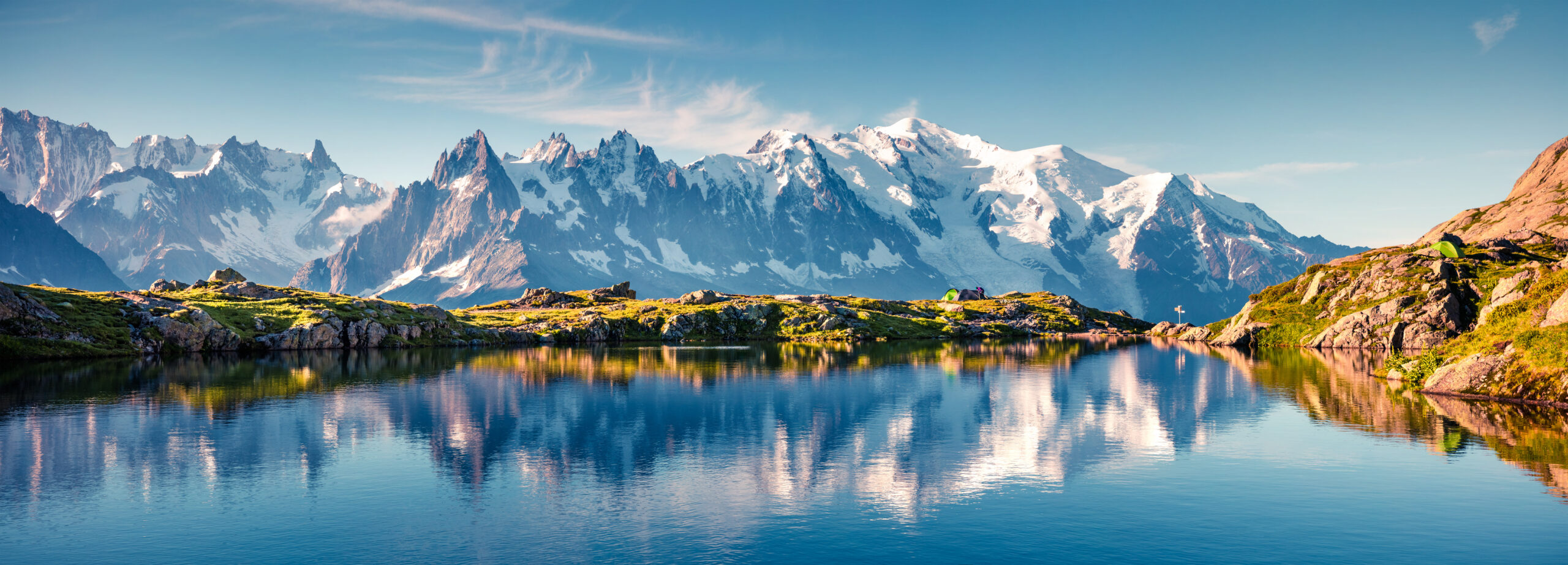
Mont Blanc, the White Mountain, straddles the border of France and Italy above Chamonix and Courmayeur. It is the birthplace of modern mountaineering, first climbed in 1786, and it remains the great rite-of-passage 4,000 m peak for climbers stepping up from trekking and scrambling. That accessibility is its appeal and its danger. This page owns the mountain-level picture, the permit reality, the routes, and the progression. For live Grand Couloir status, refuge dates, and the 2026 season window, see our Gouter route conditions page, and for the full route detail, the Mont Blanc climb guide.
Season and status
A summer mountain, timed as much by temperature as by the calendar.
Mont Blanc is climbed in summer, roughly late May or June through late September into early October, with the most stable conditions from mid-June to early September. But the calendar is only half the story. Because hot weather sharply increases rockfall in the Grand Couloir, the safe window is really defined by cold, frozen conditions, and heatwaves can make the normal route dangerous even in peak season. Rather than duplicate the live tracking, we keep the current hut opening dates and Grand Couloir status on our Gouter route conditions page.
The permit reality
No permit, but not a free-for-all either.
This is the point most first-timers get wrong. Mont Blanc has no climbing permit; it is technically an open mountain. But to climb the Gouter route with an overnight stay, a hut reservation is now a legal requirement, and a dedicated patrol called the Garde Blanche checks for proof of a booking, usually near Nid d’Aigle or Tete Rousse. Climbers who cannot show a valid reservation can be turned back. Only a single-push speed ascent with no overnight avoids the requirement. In practice, planning a Mont Blanc climb means securing a hut booking months ahead, not simply turning up with crampons.
The two main routes
The normal route, and the one that avoids the couloir.

| Route | Start | Character | Main hazard |
|---|---|---|---|
| Gouter (normal route) | Nid d’Aigle (Mont Blanc Tramway) | The most popular and least technical line, hut-based via Tete Rousse and the Gouter Refuge. | The Grand Couloir rockfall crossing. |
| Trois Monts | Aiguille du Midi cable car | More committing, crossing Mont Blanc du Tacul and Mont Maudit, and it avoids the Grand Couloir. | Serac and avalanche hazard on the Tacul and Maudit slopes. |
| Gonella (Italian) | The Italian side | Quieter and more physically demanding, a longer and less trafficked approach. | Length and remoteness. |
The Gouter is the route most people mean when they say they are climbing Mont Blanc: hut-based, less technical, and busy, but committed to crossing the Grand Couloir. The Trois Monts is the connoisseur’s line from the Aiguille du Midi, more committing and exposed to serac and avalanche hazard over Mont Blanc du Tacul and Mont Maudit, but free of the couloir. Neither is a walk, and both demand the same fundamental skills.
The Grand Couloir
The single most dangerous section of the normal route.
The Grand Couloir is a rockfall gully at around 3,340 m, a crossing of roughly 50 m equipped with fixed ropes, between the Tete Rousse and Gouter huts. It must be crossed early, before about 7am, while the overnight freeze still binds the loose rock; once the sun warms the slope, stones come down the gully with little warning. French mountain police recorded 347 rescues, 102 deaths, and 230 injuries here between 1990 and 2017, and hot summers make it markedly worse.
Cross fast, cross early, wear a helmet, and do not linger. In dangerous heat the authorities have closed the Gouter Refuge to discourage the route entirely. Check the current status on our Gouter route conditions page before you go. This page is educational and is not a substitute for a guide.
Cost and guiding
Affordable by 4,000 m standards, with IFMGA guides the norm.
A guided Gouter climb, usually three days and two nights with some acclimatization, runs roughly 1,200 to 2,000 euros or more, using an IFMGA-certified guide, the required standard in the Alps. On top of the guiding fee, budget the hut fees, the Mont Blanc Tramway to Nid d’Aigle, any gear rental, and travel to Chamonix. Climbing independently is cheaper, but it assumes you already have the crampon, glacier, and route-finding skills a guide would otherwise supply, and it still requires the same hut booking. Weigh the choice in our guided versus independent climbing guide, and vet teams with how to choose an operator.
Altitude and difficulty
Low grade, high seriousness.
Mont Blanc is graded PD, non-technical by alpine standards, but that grade describes the moves, not the mountain. At about 4,808 m the altitude is a real factor, and climbers who arrive without acclimatization often struggle on the long summit day. Add crevasses on the glaciers, the Grand Couloir on the Gouter, and the notorious speed of Alpine weather, and a low-grade climb becomes a serious one. It is often a climber’s first 4,000 m peak, and it rewards proper acclimatization and fitness more than technical skill. Read our acclimatization guide and check your base against our fitness standards, and gauge your altitude risk with the AMS risk calculator.
Weather and timing
The live picture over the massif.
Alpine weather changes fast, and Mont Blanc’s summit can be in cloud and high wind while Chamonix sits in sunshine. Summit day depends on catching a calm, cold window, which also keeps the Grand Couloir safer. The live map below shows current conditions; rely on the Chamonix mountain forecast and your guide or hut staff for the actual call.
Where Mont Blanc fits your progression
The classic first big Alpine 4000er.
For most climbers Mont Blanc is the first serious 4,000 m peak, the altitude and glacier milestone before more technical objectives. The natural step up in the Alps is the Matterhorn, which trades Mont Blanc’s altitude for sustained technical rock, and our Mont Blanc versus Matterhorn comparison lays out the difference. Track current conditions on the next objective in our Matterhorn expedition update, and see the wider range in our Alps Classics collection.
Go or no-go checklist
Work through these before you commit.
Before you go
- Book the hut early – a Tete Rousse or Gouter reservation is a legal requirement and the spots fill months ahead.
- Acclimatize first – the altitude near 4,808 m turns back climbers who arrive straight from sea level.
- Have the skills – crampons, ice axe, glacier travel, and roped movement, or climb guided.
- Plan the Grand Couloir – cross before 7am, wear a helmet, and check the current status before you go.
- Watch the heat – hot spells raise rockfall risk; a cold, frozen window is safer than a warm one.
- Respect the PD grade – low technical difficulty does not mean low risk on this mountain.
Alps expedition updates
Mont Blanc’s neighbours in the range, each with its own update page. Back to the full Expedition Updates dashboard.
Mont Blanc update FAQ
The questions climbers ask most about permits, routes, and the Grand Couloir.
Do you need a permit to climb Mont Blanc?
There is no climbing permit, but this is where people go wrong. To climb the Gouter route with an overnight stay, a hut reservation is now a legal requirement, and a patrol called the Garde Blanche checks for proof of a booking near Nid d’Aigle and Tete Rousse. If you cannot show a valid reservation, you can be turned back. Only a single-push speed ascent with no overnight avoids the booking requirement. So while Mont Blanc is technically an open mountain, the practical answer is that you plan around a mandatory hut reservation, not a free-for-all.
What is the Grand Couloir?
The Grand Couloir is the notorious rockfall gully on the Gouter route, at around 3,340 m, a crossing of roughly 50 m equipped with fixed ropes. It must be crossed early, before about 7am, while the overnight freeze still holds the loose rock in place; once the sun warms the slope, rockfall increases sharply. French mountain police recorded 347 rescues, 102 deaths, and 230 injuries in the couloir between 1990 and 2017. It is the single most dangerous section of the normal route. For its current status, see our Gouter route conditions page.
Which Mont Blanc route should I climb?
The Gouter, or normal, route is the most popular and least technically demanding, but it crosses the Grand Couloir. The Trois Monts route from the Aiguille du Midi avoids the couloir but is more committing, with serac and avalanche hazard over Mont Blanc du Tacul and Mont Maudit. The Italian Gonella route is quieter and longer. All of them require crampon and ice-axe skill, glacier travel, and roped movement; none is a walk-up.
Is Mont Blanc dangerous?
In absolute terms it is one of the deadliest mountains in Europe, though not because it is technically hard. It is graded PD, relatively low on the alpine scale, but it is climbed by huge numbers of people who underestimate it. The Grand Couloir rockfall, the altitude at 4,808 m, crevasses, and fast-changing weather are what cause accidents. The low technical grade and the Voie Royale nickname hide a serious high-altitude climb.
When is the Mont Blanc climbing season?
Summer, roughly late May or June through late September into early October, with the most stable conditions from mid-June to early September. Because hot weather sharply increases rockfall in the Grand Couloir, timing around cooler, frozen conditions matters as much as the calendar. Our Gouter route conditions page tracks the current 2026 hut opening and route dates.
How much does it cost to climb Mont Blanc with a guide?
A guided Gouter climb, typically three days and two nights including some acclimatization, runs roughly 1,200 to 2,000 euros or more, using an IFMGA-certified guide, which is the required standard in the Alps. On top of the guiding fee, budget hut fees, the Mont Blanc Tramway, gear rental if needed, and travel to Chamonix. Going independently is cheaper but assumes you bring the skills a guide would otherwise provide.
How hard is Mont Blanc, and do I need experience?
It is graded PD, meaning non-technical by alpine standards, but it is a serious undertaking. You need to be fluent with crampons and an ice axe, comfortable on a rope for glacier travel, fit enough for a long summit day, and able to handle the altitude near 4,808 m. Most first-timers climb it guided or after completing a mountaineering course. It is often a climber’s first serious 4,000 m peak.
How high is Mont Blanc and where is it?
Mont Blanc is about 4,808 m (15,774 ft), the highest mountain in the Alps and in Western Europe, on the border of France and Italy above Chamonix and Courmayeur. Its snow-capped summit is re-surveyed every couple of years, so the exact figure shifts slightly. It was first climbed in 1786 by Jacques Balmat and Michel-Gabriel Paccard, the ascent widely seen as the birth of modern mountaineering.
📋 How this update is built
This page is compiled by Travis Ludlow, Founder and Head of Research at Global Summit Guide, from Saint-Gervais and prefecture access rules, French mountain-police accident records, and IFMGA guiding information, with sources named below. It was reviewed for safety by Dawson Ludlow, our Climbing and Mountaineering Lead (Wilderness First Aid), whose highest first-hand summit is Kilimanjaro.
Our team has not climbed Mont Blanc, so we report official rules and route records rather than personal experience, and we review this page through the Alpine season. Access rules and conditions change, so confirm the current hut-reservation requirement and Grand Couloir status on our conditions page and with the authorities before you commit.
Sources and further reading
- Commune of Saint-Gervais and the Garde Blanche – Gouter route hut-reservation requirement and enforcement.
- French mountain police (PGHM) – Grand Couloir accident and rescue records.
- Compagnie des Guides de Chamonix and IFMGA guiding standards.
- Our own Mont Blanc climb guide and Gouter route conditions page.
- We report official rules and route records; our team has not climbed Mont Blanc.
Planning a Mont Blanc climb?
Start with our Mont Blanc climb guide, check the live Gouter route conditions, and compare it with the step up in Mont Blanc versus Matterhorn. Most climbers stage through Chamonix via Geneva, so for flights and lodging, browse travel on Expedia.
Disclosure: the Expedia link above is a sponsored affiliate link. We may earn a commission at no extra cost to you.