
Last updated October 4, 2026
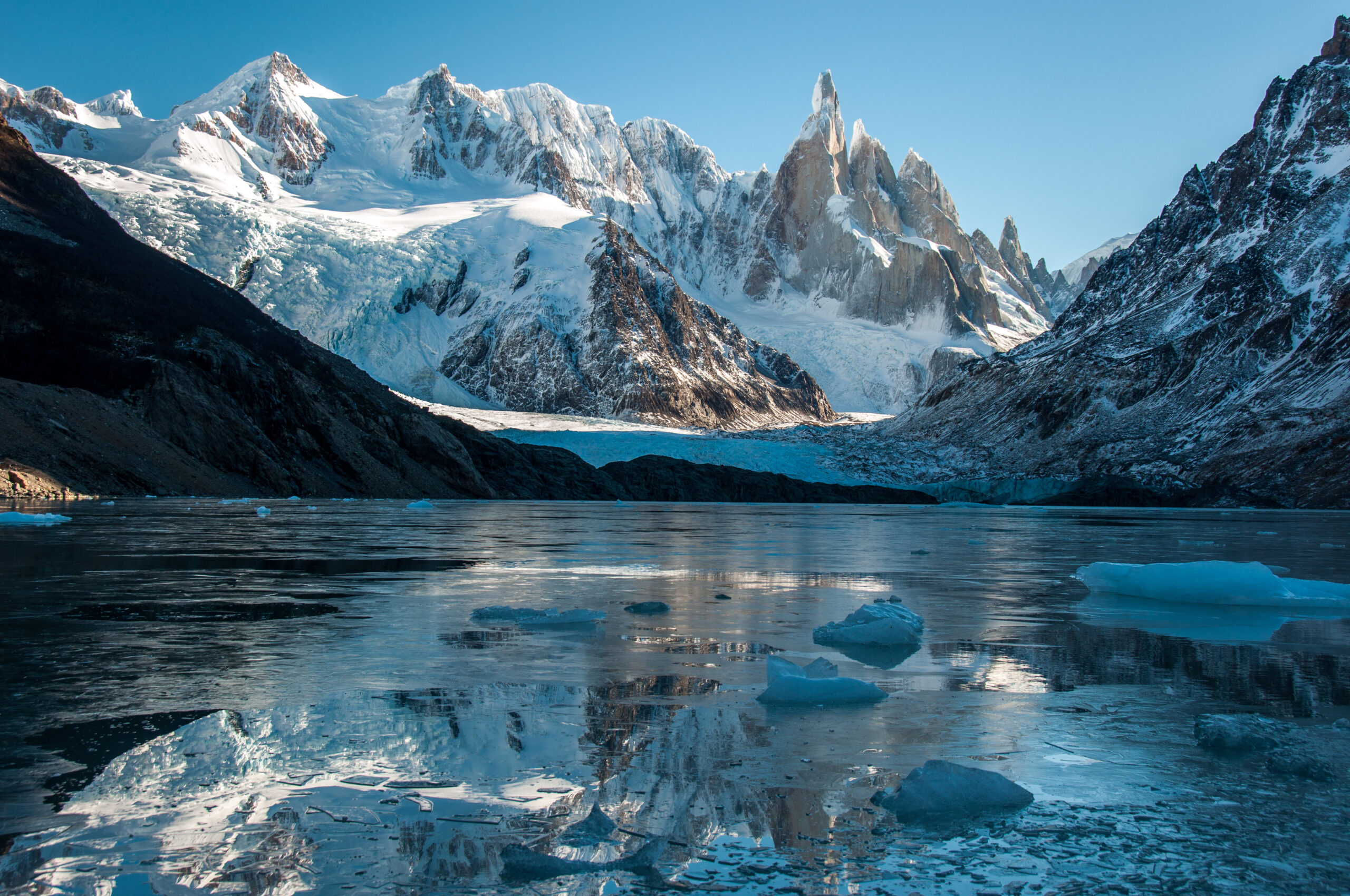
Cerro Torre Death Rate: Why There Is No Reliable Percentage
Cerro Torre is unquestionably a serious technical mountain, but there is no defensible mountain-wide fatality-rate percentage. The historical record does not contain a complete, standardized count of attempts, climbers, successful summits and deaths from which a trustworthy denominator can be built.
Updated October 4, 2026 · Research-based fatality analysis · No fabricated percentage
What Is Cerro Torre’s Death Rate?
No reliable percentage is currently available. A valid fatality rate requires both a numerator and a denominator: how many people died, and how many people were exposed to the mountain under a consistently defined system.
Cerro Torre does not have a Himalayan Database-style historical record of every expedition member, attempt and successful summit. Its climbing history is instead reconstructed from expedition reports, alpine journals, accident accounts and route histories.
That material is extremely useful for understanding how climbers have died, but it is not sufficient for claiming that an individual climber faces a 4%, 6%, 10% or any other precise historical probability.
What We Know—and What We Do Not
Separating strong evidence from incomplete evidence is more useful than forcing Cerro Torre into a global league table.
| Question | Evidence quality | Responsible answer |
|---|---|---|
| Cerro Torre elevation | High | 3,128 m / 10,262 ft. |
| First undisputed ascent | High | January 1974 by the Italian Ragni di Lecco team via the west side. |
| Did Toni Egger die in 1959? | High | Yes. His death is established; the claimed summit and exact accident sequence remain tied to the disputed Maestri account. |
| Are major later fatalities documented? | High for individual cases | Yes, including Carroll and McAndrews in 1973 and Korra Pesce in 2022. |
| Total all-history Cerro Torre deaths | Incomplete | No single authoritative audited total should be presented as complete. |
| Total historical attempts | Incomplete | No standardized all-history attempt denominator exists. |
| Cerro Torre fatality percentage | Not defensible | Do not publish a precise percentage. |
| Personal probability of death | Not calculable from historical cases | Depends on route, conditions, team competence, weather and many other variables. |

Three Major Cerro Torre Fatality Cases
These are important documented cases—not a claim that they form the complete Cerro Torre fatality record.
Austrian alpinist Toni Egger died during the 1959 Cerro Torre expedition with Cesare Maestri. Maestri later claimed the pair had reached the summit and that Egger was killed by an avalanche during descent.
The claimed ascent is now widely disputed. Later climbers found major inconsistencies between Maestri’s descriptions and the physical evidence on the mountain. Egger’s death is real; a successful 1959 summit should not be presented as established fact.
Australian Keven Carroll and American Steven McAndrews died after climbing high on Cerro Torre’s west side. Historical ascent chronologies record that the pair were seen on the summit ridge before they were killed by rockfall during the descent.
Their accident is one of the clearest early examples of the consequence of retreat on Cerro Torre: finishing the upward climbing does not end the technical exposure.
Corrado Pesce and Tomás Aguiló completed a new route on Cerro Torre in January 2022. During the descent they were struck by rock and ice. Aguiló escaped despite serious injuries and sought help; Pesce remained badly injured on the mountain and died.
Eyewitness reporting from the climbing party and later analysis make this one of the best-documented modern Cerro Torre accidents.

Why Cerro Torre Can Be Extremely Dangerous Without a Death-Rate Number
Statistical uncertainty does not make the mountain less serious.
Vertical Granite
Cerro Torre is an elite technical climbing objective. The difficulty comes from sustained rock, mixed and ice climbing rather than extreme altitude.
Rime Ice
Wind-built rime formations can create complex climbing and unstable ice around the summit structure and upper routes.
Short Patagonian Windows
Strong wind and rapidly changing weather can make a route impractical even when a team is technically capable of climbing it.
Descent Remains Technical
Several famous Cerro Torre accidents occurred while descending or retreating. The route is not “finished” when the upward climbing ends.
Rock, Ice & Avalanche
Different routes and temperatures expose climbers to combinations of rockfall, falling ice, snow instability and avalanche terrain.
Small Margin for Error
Rescue exists in the El Chaltén region, but severe weather and technical terrain can make timely access impossible. Pesce’s 2022 accident demonstrated that limitation clearly.

Climate Change: Important, but Do Not Invent a Cerro Torre Trend Line
The strongest evidence concerns changing Patagonian mountain conditions, not a mathematically measured Cerro Torre death-rate increase.
Columbia Climate School has documented how warming is reshaping mountaineering conditions in the Patagonian Andes. Veteran climbers report glacier retreat, unstable moraine approaches and increased rockfall risk, while researcher Dörte Pietron has described a warmer, drier environment producing more difficult and unstable approaches and descents.
That is enough to say that climate change is changing the risk environment in Patagonia. It is not enough to say that Cerro Torre’s fatality rate has risen by a measured percentage since a particular year. There is no standardized Cerro Torre denominator against which such a trend could be calculated.
Cerro Torre vs K2, Annapurna and Other “Deadliest Mountains”
The important distinction is data quality, not which mountain produces the scariest historical percentage.
| Mountain / dataset | Historical data structure | Can a ratio be shown? |
|---|---|---|
| Nepal 8,000ers | Standardized expedition datasets expose deaths, members and summit counts using defined collection systems. | Yes, when denominator and cutoff are stated. |
| K2 | A separate compiled historical summit/death series can be used when the source rules and cutoff year are explicit. | Yes, but keep it separate from Nepal datasets. |
| Denali / Rainier | Strong modern park and incident reporting, but not always one universal all-history summit denominator. | Depends on the exact metric. |
| Cerro Torre | Case histories, expedition reports and climbing literature without a complete standardized exposure denominator. | No reliable mountain-wide percentage. |
Cerro Torre Death Rate FAQ
What is Cerro Torre’s death rate?
No defensible mountain-wide percentage can currently be calculated. Historical attempt, summit and fatality records are not standardized enough to provide a trustworthy denominator.
How many people have died on Cerro Torre?
There is no complete authoritative all-history total. Important documented cases include Toni Egger in 1959, Keven Carroll and Steven McAndrews in 1973, and Corrado “Korra” Pesce in 2022.
Why is Cerro Torre so dangerous?
The mountain combines sustained technical rock and ice climbing, rime-ice formations, severe Patagonian weather, objective hazards and highly consequential retreat terrain.
Did Toni Egger die after summiting Cerro Torre?
Cesare Maestri claimed that he and Egger summited in 1959 and that Egger died during the descent, but the ascent claim is widely disputed. Egger’s death is established; a successful summit is not.
What happened to Korra Pesce?
Pesce and Tomás Aguiló were struck by rock and ice while descending Cerro Torre in January 2022 after completing a new route. Aguiló escaped despite serious injuries; Pesce remained critically injured on the mountain and died.
Is Cerro Torre statistically deadlier than K2?
That comparison cannot be made honestly with one percentage because K2 has a more defensible historical summit/death series while Cerro Torre lacks the required standardized denominator.
Does climate change make Cerro Torre more dangerous?
Warming conditions are changing the risk environment in the Patagonian Andes, including glacier, approach and rockfall hazards. Current evidence does not justify assigning a measured Cerro Torre fatality-rate increase.
Is descent especially dangerous on Cerro Torre?
Several of Cerro Torre’s best-known fatal accidents occurred on descent or retreat. That is an important qualitative pattern, but the incomplete dataset does not support claiming that a known percentage of all fatalities occurs during descent.
Sources & Methodology
- American Alpine Journal — Cerro Torre’s North Face — discussion of the Maestri/Egger controversy and the evidence found by later climbers.
- National Geographic — Patagonia’s Cerro Torre Gets the Chop — detailed historical discussion of the disputed 1959 claim, Compressor Route and later climbing history.
- Black Diamond — Goodbye Corrado “Korra” Pesce — Matteo Della Bordella’s first-hand account of the 2022 climb, accident and rescue attempt.
- Columbia Climate School — Mountaineering, Death and Climate Risk in the Patagonian Andes — analysis of changing Patagonian risk conditions and climbing culture.
Methodology: this page does not calculate a Cerro Torre fatality rate because the historical exposure denominator is incomplete. It uses documented case histories to describe accident patterns and objective seriousness without turning incomplete records into a false percentage.
Cerro Torre, Patagonia & Mountain-Risk Data
Cerro Torre Is Serious Enough Without Inventing a Percentage
Cerro Torre’s historical record contains real fatal accidents involving exceptional climbers. What it does not contain is a complete, standardized denominator that allows Global Summit Guide to tell readers that “X% of Cerro Torre climbers die.”
The more useful conclusion is narrower and stronger: Cerro Torre combines elite technical difficulty, unstable rock and ice, severe Patagonian weather and consequential retreat terrain—and the historical data should be presented as documented cases, not false mathematical precision.
Compare Death-Rate Methodology Open Cerro Torre GuideHow Cerro Torre Compares to the Deadliest Mountains
One peak is only one denominator. See how Cerro Torre compares with the other deadliest mountains, or step up to the ranked overview and the full collection.
Was this helpful?
🏔Related safety data
🧭Explore & compare
Global Summit Guide is an independent mountaineering resource founded in 2026. The team combines first-hand trekking and climbing experience with in-depth research and professional health and nutrition review to help climbers choose objectives, prepare properly, and stay safe.
Health, altitude, and nutrition content is reviewed by Taylor Ludlow (Registered Nurse) and Brigg Hoopes (Nutritionist).
What We Don't Know Yet
Mountain information changes quickly. This box explains the limits of what this page can responsibly promise.
- Route conditions, snowpack, closures, and weather can change quickly after this page is updated.
- Permit rules, fees, quotas, and reservation windows may change between review cycles.
- Operator availability, pricing, guide ratios, and cancellation terms can change by season.
- Your fitness, altitude response, risk tolerance, and experience level may change what is safe or realistic.
- Use this page for planning guidance, then verify current information with official sources and qualified local experts before committing.
Verify current conditions with official land managers, guide services, local forecasts, and current route reports before booking or climbing.
Mountaineering, rock and ice climbing, glacier travel, and high-altitude activity are inherently dangerous and can result in serious injury or death. The information on Global Summit Guide is provided for general informational and educational purposes only and is not a substitute for professional instruction, qualified guiding, proper equipment, or your own judgment and experience.
Route conditions, weather, snowpack, permits, regulations, and hazards change constantly and may differ from what is described here. Details may be incomplete, out of date, or contain errors. Always verify current information with local authorities, certified guides, and official sources before making any decision in the mountains.
Nothing on this site is medical, legal, or financial advice. Our fitness, acclimatization, altitude, and nutrition content is general in nature; consult a qualified physician before beginning any strenuous exercise program or exposing yourself to high altitude.
You are solely responsible for your own safety and decisions. To the fullest extent permitted by law, Global Summit Guide and its team accept no liability for any loss, injury, damage, or expense arising from use of, or reliance on, this information. By using this site you acknowledge these risks and accept these terms.
Some links on this site may be affiliate links. If you buy through them we may earn a small commission at no extra cost to you; this never affects our recommendations.
Global Summit Guide recommendation path
Next Best Mountain to Research
Use these recommendations to continue the right planning path instead of stopping on one page.
Use current permit, weather, route, and operator information before booking or climbing.