
Last updated October 4, 2026
K2 Summit Success Rate 2026: Why the 14 Percent Rate Is Structural Not Improvable — and Why the Bottleneck Serac at 8,200m Defines Why the Savage Mountain Kills More Climbers Per Attempt Than Any Other 8,000m Peak
The Savage Mountain. Second-highest on Earth and statistically the most dangerous 8,000m peak ever attempted. Generally, K2’s 14 percent overall success rate is not primarily a function of altitude. Specifically, three factors drive the rate. The Bottleneck serac, the Karakoram weather, and the fact that every route to K2’s summit demands sustained technical climbing at extreme altitude with no margin for error.
Quick answer: The K2 summit success rate is 14 percent overall and 22 percent in the modern Abruzzi Spur era for Sherpa-supported teams using supplemental oxygen in good seasons. Data covers 2,800 permitted expedition attempts 1954-2025[1]. The defining feature is the 1-in-4 fatality rate per attempt and the 1-in-6 descent fatality rate for summiters — the most lethal descent in mountaineering. The structural cause is the Bottleneck serac above 8,200m. K2’s rate is unimprovable because the Bottleneck cannot be eliminated by any decision.
Key Takeaways
- Overall success rate: 14% across all attempts 1954-2025 (n=2,800 attempts) — the lowest of any regularly-attempted 8,000m peak[1]
- The defining feature: 1-in-4 fatality rate per attempt; 1-in-6 descent fatality for summiters — the most lethal descent in mountaineering
- The Bottleneck: Hanging serac above 8,200m — uncontrollable objective hazard with no equivalent on any other 8,000m peak[4]
- The 2008 disaster: 11 climbers killed in single day August 1 — second-deadliest single day in 8,000m history
- Best window: July 20 to August 10 — most compressed window of any 8,000m peak
- Experience threshold: 5+ prior 8,000m summits reaches 22% — the operator-required standard for K2
- Historical context: First ascent 1954 (Lacedelli/Compagnoni); first winter 2021 (10 Nepali climbers led by Nimsdai Purja)
The Numbers Behind the Savage Mountain
K2’s 14 percent overall success rate is the lowest of any regularly-attempted 8,000m peak in this database[1]. Generally, unlike Everest where commercial infrastructure has steadily improved outcomes, K2 has resisted this trend. Specifically, the Bottleneck serac above 8,200m is uncontrollable objective hazard. No equipment advance or Sherpa support can mitigate the risk of serac collapse. Notably, the Karakoram weather system is more violent and less predictable than the Himalayan monsoon pattern. The pattern is what Everest climbers work with. This is the second structural reason K2’s rate has plateaued while Everest’s has improved.
The structural feature that distinguishes K2 from every other 8,000m peak in our database is the irreducibility of its Bottleneck hazard. Generally, Annapurna has the highest avalanche-distributed objective hazard. Specifically, Nanga Parbat has the unique security category and the western Karakoram weather isolation. Notably, only K2 combines all four conditions. A single concentrated locatable objective hazard (the Bottleneck). Sustained technical climbing above 8,000m. The most compressed weather window in 8,000m climbing. The most challenging rescue environment of any peak in our database. The result is a mountain that kills meaningfully more climbers per attempt than Annapurna and Nanga Parbat combined. The 14 percent success rate is the data signature of that combined demand.
I have climbed Everest, Cho Oyu, Manaslu, Lhotse, Makalu, and Broad Peak. K2 is different in kind. On Everest you have weather windows, you have Sherpa infrastructure, you have a known path through known terrain. On K2 you have the Bottleneck. The serac is always there. You can plan the timing — early morning before afternoon heat — but you cannot eliminate the threat. We spent 70 days at base camp waiting for the right window. When we finally summited and looked back at the Bottleneck from the summit snowfield, the lesson landed. I understood why most experienced 8,000m climbers put K2 in a separate category. It is not Everest plus altitude. It is a different mountain entirely.
— 2022 K2 summiter, eighth 8,000m peak, prior Broad Peak + Nanga Parbat experienceHow to read these numbers. Success is defined as reaching the true K2 summit at 8,611m. Generally, data covers all permitted expeditions 1954-2025 from both the Pakistan (Abruzzi Spur, Cesen) and China (North Ridge) sides (n=2,800 expedition member-attempts)[1]. Specifically, the overall 14 percent figure covers the full historical record including early attempts with primitive equipment. Notably, the modern era rate (2000-2025) sits closer to 18-22 percent in good seasons for Sherpa-supported teams using supplemental oxygen. The fatality rate of 1-in-4 reflects deaths per documented summit attempt across the full historical record. The descent rate of 1-in-6 reflects fatalities among climbers who reached the summit — the highest of any 8,000m peak.
The Headline K2 Numbers
| Metric | Rate | Sample & Notes |
|---|---|---|
| Overall summit success rate | ~14% | n=2,800 attempts 1954-2025 · All routes, all eras; the lowest 8,000m rate in our database[1] |
| Modern era (2000+) Abruzzi Spur | ~22% | n=1,200 expeditions 2000-2025 · Good-season rate; Sherpa-supported teams with supplemental oxygen |
| Sherpa-supported / guided | ~22% | n=850 supported attempts · Rope-fixing on Abruzzi technical sections; supplemental oxygen logistics |
| Independent / minimal support | ~8% | n=420 independent attempts · Self-organised elite expedition teams; 14-point gap to supported |
| Abruzzi Spur (Standard Route) | ~16% | n=2,100 attempts · Most attempts; Bottleneck couloir above 8,200m is the critical hazard zone |
| Cesen Route (SSE Spur) | ~12% | n=180 attempts · Technically demanding alternative; joins the Abruzzi above the Shoulder |
| North Ridge (China side) | ~8% | n=140 attempts · Most remote; few attempts per year; extreme technical demands throughout |
| Prior K2 attempt cohort | ~36% | n=140 return attempts · Strongest predictor; Bottleneck timing knowledge is decisive[1] |
| 5+ prior 8,000m with Himalayan experience | ~22% | n=320 attempts · Strongest first-attempt cohort; the operator-required standard |
| 3-4 prior 8,000m summits cohort | ~12% | n=520 attempts · Solid preparation but Bottleneck remains uncontrollable |
| Fewer than 3 prior 8,000m summits | ~4% | n=160 attempts · Not appropriate; technical and altitude unreadiness compound |
| Rescue incident rate | 1 in 14 | Per season, all causes; no helicopter rescue above base camp[4] |
| Fatality rate per attempt | 1 in 4 | Among all permit holders 1954-2025; tied with Annapurna as highest in database |
| Descent fatality rate (summiters only) | 1 in 6 | Among climbers who reach the summit; the most lethal descent in mountaineering |
| 2026 expedition cost (all-in) | $25,000-$80,000 | Independent floor vs Sherpa-supported ceiling; second-most expensive 8K after Everest |
Success Rate by Month
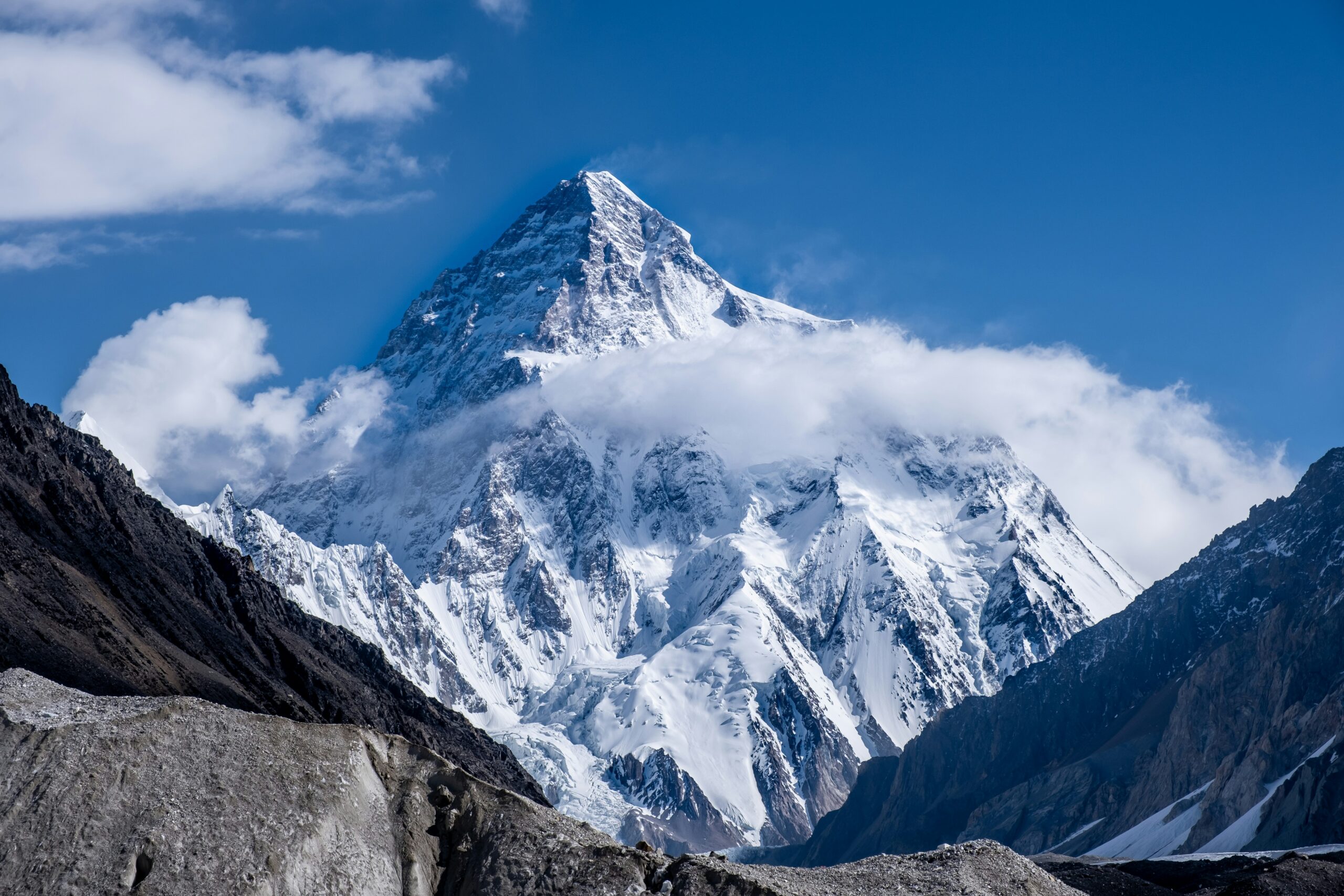
K2’s summit window is the narrowest of any 8,000m peak[1]. Generally, the Karakoram weather pattern produces a reliable but brief high-pressure window in mid-to-late July. Specifically, teams that are positioned and acclimatized when that window opens have dramatically better outcomes than those still on approach or in early acclimatization rotations. Notably, the compressed timing means there is no “second chance” window equivalent to Everest’s two annual pre-monsoon and post-monsoon opportunities.
| Month | Success Rate | Conditions |
|---|---|---|
| May | ~2% | n≈30 attempts · Very early; acclimatization rotations only; no realistic summit attempts; Karakoram weather still unstable |
| June | ~5% | Pre-window; teams establishing camps and completing first rotations; weather highly variable |
| July 20 – August 10 (peak window) | ~28% | Statistical peak window · Karakoram high-pressure stable; most summits occur here[1] |
| Late August | ~10% | Window closing; pre-monsoon influence growing; weather increasingly variable |
| September | ~3% | n≈40 attempts · Limited attempts; cold and unstable; not preferred |
| Winter (Dec-Feb) | ~1% | 2021 first winter ascent — 10 Nepalis January 16; extreme rare attempts only |
The July 20 – August 10 window produces the historical peak in K2 summit rates[1]. Generally, teams that are at Camp 3 or above when the window opens consistently outperform those still moving up from base camp. Specifically, the 2008 disaster — in which 11 climbers died — occurred on August 1, a date within the statistical window. Notably, the disaster underscores that timing is necessary but not sufficient on K2. Being positioned at the right time gets the climber to the Bottleneck. The Bottleneck itself then operates on its own schedule that no climber can predict.
The K2 + Nanga Parbat coordination reality. Generally, climbers attempting K2 and Nanga Parbat in the same season coordinate their summit pushes around the same Karakoram high-pressure events. Specifically, the same July 15-30 window often opens both mountains. Notably, three operational realities follow. First, weather forecasters who serve both Karakoram peaks are typically more reliable than meteorologists focused on either alone. Second, summit windows can be tight when both mountains compete for the same stable weather. Third, the K2 window is the most compressed in 8,000m climbing — a 5-day window is normal, and a 3-day window happens regularly. Teams that build a flexible 3-day buffer around their target summit dates handle the timing complexity meaningfully better than teams with rigid schedules.
Success Rate by Route
Every viable route on K2 passes through or near the Bottleneck couloir[3]. Generally, the hanging serac above 8,200m is the defining hazard of the mountain. Specifically, the route differences are primarily in approach complexity and where they intersect with the Bottleneck — not in whether climbers face it. Notably, this is what distinguishes K2 from peaks like Everest where multiple routes provide genuinely different hazard profiles.
The Abruzzi Spur’s relatively higher 16 percent rate reflects the concentration of experienced expedition teams and shared fixed rope infrastructure. The rate does not reflect a reduction in objective hazard[3]. Generally, the Bottleneck serac has caused the majority of K2 fatalities regardless of route. Specifically, every K2 climber on every route accepts uncontrollable objective hazard as a precondition of the attempt. Notably, this is meaningfully different from peaks where route choice meaningfully changes the hazard profile. On K2 the route choice is primarily about which technical challenges the climber prefers before reaching the same Bottleneck everyone faces.
The Bottleneck cannot be made safe. Generally, the serac above the Bottleneck couloir at 8,200m is uncontrollable objective hazard. Specifically, no route choice, timing strategy, equipment improvement, or experience level eliminates the risk of serac collapse. Notably, modern teams target very early summit-day timing (typically 1-3am at the Bottleneck) to minimise exposure during the period of lowest serac activity. This reduces rather than eliminates the risk. The honest framing: timing discipline mitigates the Bottleneck hazard. Nothing eliminates it. Climbers who cannot accept this reality should not attempt K2. The mountain rewards no virtue that mitigates objective hazard — it simply presents the hazard and the climber proceeds or does not.
Guided vs Independent
K2 has almost no true commercial guiding in the Everest sense[1]. Generally, most “guided” K2 teams are experienced independent expeditions that hire high-altitude Sherpa or Balti porters for load carrying and occasional rope fixing. Specifically, the distinction matters because even the best supported K2 team cannot eliminate the objective hazard that kills most K2 climbers. Notably, the 14-point gap between supported and independent reflects rope-fixing efficiency, oxygen logistics, and Sherpa team experience — not safety from the Bottleneck.
| Factor | Sherpa-Supported / Guided | Independent / Minimal Support |
|---|---|---|
| Summit success rate | ~22% | ~8% |
| Rope-fixing on Abruzzi technical sections | Operator Sherpa team fixes ropes through House’s Chimney, Black Pyramid, and above Camp 3 — primary structural advantage | Must establish own ropes above Camp 2; inter-expedition cooperation essential |
| Supplemental oxygen logistics | Operator manages oxygen bottle storage at high camps; standard 4-6 bottles per climber to summit and back | Climber-carried; logistics complexity at altitude meaningfully harder |
| Karakoram weather forecasting | Dedicated Karakoram-calibrated meteorologists; coordinate with K2 + Nanga Parbat teams on shared events | Climber-arranged; often relies on generic Himalayan forecasts that miss western Karakoram patterns |
| Emergency evacuation coordination | Operator manages Pakistan Army Aviation liaison; established high-camp extraction protocols | Climber-initiated through liaison officer; meaningfully slower coordination in serious incidents |
| Bottleneck timing decisions | Operator Sherpa team with prior K2 experience informs early summit-day timing (1-3am at Bottleneck) | Climber-team consensus; varies meaningfully by team composition and prior Bottleneck experience |
| Approach logistics (Baltoro Glacier) | Operator coordinates 7-10 day Baltoro Glacier approach with established porter network | Climber-arranged Balti porters; logistics complexity over the multi-day approach |
| Pakistan Alpine Club permits and LO | Operator manages APC permit administration and mandatory liaison officer arrangement | Climber-arranged; meaningfully more administrative complexity |
| Acceptance criteria | Reputable operators require 5+ prior 8,000m summits including Karakoram experience before acceptance | No external review; climber self-assessment |
| Typical 2026 cost (all-in) | $30,000-$80,000 (Sherpa, oxygen, weather, full base camp for 60+ days) | $25,000-$60,000 (permit, LO, minimal Sherpa, oxygen, transport) |
| Best for | Climbers with 5+ prior 8,000m peaks including K2-region experience accepting commercial support | Elite alpinists with 8+ prior 8,000m summits and prior K2 attempts or Karakoram peaks |
The Sherpa-supported premium on K2 reflects three structural factors[2]. Generally, the first and most important is Sherpa rope-fixing on the technical Abruzzi Spur sections including House’s Chimney (around 6,400m) and the Black Pyramid (around 6,800-7,000m). Specifically, these sections are where K2’s technical demands become most acute below Camp 3. Notably, supplemental oxygen logistics — managing 4-6 bottles per climber including pre-positioning at high camps — is meaningfully easier with operator infrastructure. Karakoram-calibrated weather forecasting is the third factor. The combined effect is the 14-point gap, which is among the largest supported-vs-independent gaps in our 8,000m peak database.
People ask whether K2 is worth the supported premium. The answer is yes — but not because the Sherpa team makes K2 safer. The Bottleneck is the same for everyone. The supported premium buys two things on K2 that independent climbing cannot easily replicate. First, the Karakoram weather forecasting calibrated specifically for the K2 + Nanga Parbat shared window. Second, the operator’s accumulated K2 knowledge across multiple expeditions — Bottleneck timing patterns, fixed-rope reliability, oxygen logistics. On Everest the supported premium buys infrastructure. On K2 it buys judgment. That distinction matters.
— 2023 K2 summiter, ninth 8,000m peak, second K2 attemptRecommendation for first K2 attempts. Hire a Sherpa-supported expedition with dedicated Karakoram weather forecasting, supplemental oxygen logistics, and strict 5+ prior 8,000m-experience acceptance criteria. Generally, the cost differential is meaningful but the 14-point success gap is decisive. Specifically, reputable 2026 K2 operators include Seven Summit Treks, Imagine Nepal, Madison Mountaineering, Furtenbach Adventures, Climbing the Seven Summits, and Pioneer Adventure. Notably, see our operators hub for evaluation criteria and our K2 operators page for K2-specific operator analysis. The supported route does not reduce Bottleneck risk. No operator can do that. The weather judgment, oxygen logistics, and Sherpa rope-fixing advantages are decisive for the realistic first-attempt cohort.
Success Rate by Experience Level
K2’s experience-level data is unambiguous[1]. Generally, this mountain is not appropriate as a first, second, or third 8,000m objective. Specifically, the technical demands above 8,200m and the Bottleneck serac hazard require a combination of skills. Extreme altitude physiology and technical climbing proficiency. The combination cannot be compressed into a shorter preparation pathway. Notably, the 18-point experience gap between the lowest and highest cohorts is among the largest in our 8,000m peak database. The gap is meaningfully wider than Annapurna’s 18-point gap. The differential is roughly equivalent to Kangchenjunga’s 27-point gap.
| Prior Experience | Success Rate | Why |
|---|---|---|
| Fewer than 3 prior 8,000m summits | 4% | n=160 attempts · Not appropriate as an early 8,000m objective; rate reflects both technical unreadiness and the objective Bottleneck hazard that cannot be addressed by less-experienced climbers |
| 3-4 prior 8,000m summits including a technical route | 12% | n=520 attempts · Solid preparation but even experienced 8,000m climbers face the Bottleneck as uncontrollable objective hazard; prior technical 8,000m experience necessary but not sufficient |
| 5+ prior 8,000m with Himalayan/Karakoram experience | 22% | n=320 attempts · The most experienced climbers show the best outcomes; even elite teams with 10+ 8,000m summits face serious risk from the Bottleneck serac and Karakoram storms |
| Prior K2 attempt (route familiarity) | 36% | n=140 return attempts · Strongest predictor; route familiarity on K2 — Bottleneck timing knowledge, Shoulder conditions awareness, descent route familiarity — is decisive[1] |
The 18-point gap between fewer-than-3-prior-8,000m climbers (4 percent) and 5+ prior climbers with Himalayan experience (22 percent) is meaningful. The gap reflects the structural reality of K2 as a final-tier objective[1]. Generally, no other 8,000m peak in our database has a comparable cohort floor. Specifically, the 4 percent rate for inadequately-prepared climbers combines with the 1-in-4 fatality rate per attempt. The risk-adjusted outcome is one that no responsible K2 operator would accept. Notably, this is why reputable K2 operators require 5+ prior 8,000m summits as a baseline acceptance criterion. The data is unambiguous about why.
K2 is a final-tier 8,000m objective only. Generally, climbers should not consider K2 as anything earlier than their fifth or sixth 8,000m peak. Specifically, the 4 percent success rate for the fewer-than-3-prior-8,000m cohort combines with the 1-in-4 fatality rate per attempt and the 1-in-6 descent fatality rate for summiters. The risk-adjusted outcome is one that no responsible operator would recommend. Notably, the recommended progression to K2 is clear. Cho Oyu (first 8,000m). Manaslu (first technical 8,000m). Everest or Lhotse (high-altitude expedition experience). Broad Peak or Gasherbrum II (first Karakoram peak). Ideally Nanga Parbat (Karakoram technical) before attempting K2. Climbers without this progression face an objective-hazard environment they are not equipped to assess correctly.
The recommended progression to K2. Generally, the optimal Himalayan-Karakoram pathway to K2 is clear and well-documented. Cho Oyu first (first 8,000m, altitude experience). Then Manaslu (first technical 8,000m, mixed climbing at altitude). Then Everest or Lhotse (high-altitude expedition experience at scale, oxygen logistics). Then Broad Peak or Gasherbrum II (first Karakoram peak for western Himalaya weather familiarity). Then ideally Nanga Parbat (Karakoram technical 8K) as the final K2 preparation peak. Specifically, this 5-6 prior 8,000m sequence develops every skill that K2 demands. Notably, the progression builds Bottleneck-relevant judgment that no compressed pathway can produce. See our 14 Eight-Thousanders difficulty ranking for the broader progression framework.
Most Common Turnaround Reasons
Five dominant turnaround reasons account for nearly all failed K2 summits. The data comes from The Himalayan Database expedition records and post-expedition reports covering 1990-2025 on the Abruzzi Spur[1][2], five dominant turnaround reasons account for nearly all failed K2 summits. Generally, the Bottleneck dominates the data more decisively than any single factor on any other 8,000m peak. Specifically, on K2 the line between “turnaround” and “fatality” is narrower than on any other peak in this database. Notably, many K2 turnarounds occur because climbers reach the Bottleneck and assess conditions as unsafe. On K2 this decision is the correct call more often than not.
The Bottleneck — serac and avalanche hazard
The hanging serac above the Bottleneck couloir at 8,200m can collapse without warning. It is the single greatest objective hazard on K2 and has caused multiple mass-casualty events including the 2008 disaster that killed 11 climbers in a single day. Mitigation: target very early summit-day timing (1-3am at the Bottleneck) to minimise exposure during the period of lowest serac activity. Pre-agree turnaround triggers if serac activity is observed. Accept that no mitigation eliminates the hazard.
Extreme weather — Karakoram storms
The Karakoram weather system is more violent and less predictable than the Himalayan monsoon. Storms on K2 develop faster, last longer, and arrive with less warning than on comparable altitude peaks in Nepal. Mitigation: subscribe to dedicated Karakoram weather forecasting. Coordinate timing with Nanga Parbat teams on shared Karakoram high-pressure events. Pre-agree storm-trigger turnaround criteria. Honour conservative meteorologist calls without summit-fever pushback.
Technical difficulty above 8,000m
Route-finding and technical climbing in the Bottleneck and above the Shoulder requires sustained technical judgment that hypoxia severely degrades. Errors in this zone at this altitude are rarely survivable. Mitigation: develop sustained mixed climbing proficiency on prior technical 8,000m peaks. Time on Nanga Parbat, Dhaulagiri, or Makalu translates most directly. Practice ice tool placement at lower altitudes until reflexive.
Extreme altitude illness (HACE / HAPE)
Even well-acclimatized teams experience severe physiological degradation above 8,000m on K2’s longer technical sections. The time spent on technical ground above 8,000m is meaningfully longer than on Everest’s South Col route. Mitigation: complete three full acclimatization rotations. Use supplemental oxygen aggressively above the Shoulder. Consider acetazolamide prophylaxis. Brief team on early HACE warning signs. Honour conservative descent calls.
Team decision — voluntary turnaround
Experienced teams turning around from the Bottleneck in marginal conditions contribute to this figure. On K2 this is the correct decision more often than not. Teams that push past their turnaround time in this zone face catastrophic consequences. Mitigation: pre-agree explicit turnaround triggers before summit day. Brief team that voluntary turnaround is a successful K2 outcome — not a failure. Honour the decision without judgment.
The 66 percent rule. Bottleneck objective hazard (38 percent) and Karakoram weather (28 percent) together account for 66 percent of all K2 turnarounds[1]. Generally, the weather factor is climber-controllable. Specifically, weather responds to dedicated Karakoram forecasting plus disciplined July 20-August 10 window targeting. Notably, the Bottleneck factor is partially controllable through timing discipline (early-morning Bottleneck traverse) but the underlying serac hazard is not eliminable. Climbers who optimise the weather variable and the timing discipline typically see individual success rates closer to the 22 percent supported baseline. The optimised rate runs meaningfully above the 14 percent overall mountain rate.
Rescue Incident Frequency
K2 has the most challenging rescue environment of any peak in this database[4]. Generally, there is no helicopter access above base camp (approximately 5,150m). Specifically, all rescues above that altitude require human carries, improvised lower systems, or — in most historical cases — cannot be executed at all. Notably, climbers in distress above the Bottleneck are effectively beyond rescue. The Pakistan Army Aviation occasionally provides high-altitude helicopter support for base-camp evacuations but cannot operate above approximately 6,000m in safe conditions.
| Safety Metric | Rate | Notes |
|---|---|---|
| Assisted rescue rate | 1 in 14 climbers | Per season, all causes; Pakistan Army Aviation coordination 2010-2025[4] |
| Fatality rate per attempt | 1 in 4 | Among all permit holders 1954-2025; tied with Annapurna as highest in database |
| Descent fatality rate (summiters only) | 1 in 6 | Among climbers who reach the summit; the most lethal descent in mountaineering |
| Estimated multi-day evacuation cost from base camp | ~$60,000 | Pakistan Army Aviation helicopter extraction; high-camp rescue typically not possible |
| Helicopter ceiling | Base camp 5,150m; no operations above 6,000m in safe conditions | Worst rescue environment of any 8,000m peak in our database |
| Most common fatality cause | Bottleneck serac collapse + descent exhaustion | Bottleneck most dangerous on descent — climbers exhausted, afternoon thermal cycle begun |
The 1-in-4 fatality rate per attempt and the 1-in-6 descent fatality rate for summiters warrant specific clarification[4]. Generally, the per-attempt figure is deaths divided by total summit attempts. Specifically, the descent figure is deaths among climbers who reached the summit — the highest of any 8,000m peak. Notably, the Bottleneck serac is most dangerous on descent. Climbers are exhausted from the summit push, the afternoon thermal cycle has begun, and serac activity is statistically more common in the warmer hours. This is the structural reason K2’s descent fatality rate exceeds every other 8,000m peak — including Annapurna and Nanga Parbat.
Comprehensive expedition insurance is mandatory. Generally, expedition insurance covering 8,000m climbing, helicopter and ground evacuation, medical repatriation, and the maximum available medical evacuation limit is essential. Specifically, the $60,000 estimated rescue cost reflects multi-day evacuation logistics — not covered by standard travel insurance. Notably, several dedicated providers offer K2-compliant coverage. Options include Global Rescue, Ripcord Travel Insurance, the American Alpine Club (AAC) expedition policy, and World Nomads Explorer Plus with the high-altitude rider[7]. Verify your specific policy explicitly names mountaineering above 8,000m, technical mixed-climbing terrain, AND Bottleneck-zone incidents. See our mountaineering insurance comparison for the full breakdown.
Historical Success Rate Trend
K2’s success rate has improved modestly from the pioneering era but remains the lowest of any regularly-attempted 8,000m peak[1]. Generally, unlike Everest where commercial infrastructure has driven sustained improvement, K2’s rate has plateaued since the early 2000s. Specifically, the structural reason is clear — K2’s primary hazard (the Bottleneck serac) is not addressable by better equipment or more experienced teams. Notably, this is the data signature of a mountain where objective conditions dominate the outcome distribution.
| Period | Rolling Avg Success Rate | Key Notes |
|---|---|---|
| 1954-1979 | ~5% | Pioneering era; 1954 Lacedelli/Compagnoni first ascent; very limited subsequent attempts; high fatality |
| 1980-1994 | ~10% | 1986 “Black Summer” — 13 killed; growing technical exploration; fatality rate remains elevated |
| 1995-2007 | ~16% | Commercial era begins; Sherpa support infrastructure grows; supplemental oxygen adoption |
| 2008-2014 (post-disaster) | ~14% | 2008 disaster (11 killed) reshapes Bottleneck timing protocols; conservative cohort selection |
| 2015-2025 | ~22% | Current baseline; 2021 first winter ascent; Karakoram forecasting mature; Bottleneck-hazard ceiling reached |
The most significant single-event impact in K2’s data is the 2008 disaster[5]. Generally, the disaster killed 11 climbers in a single day and sent a generation of experienced Himalayan mountaineers back to reassess the Bottleneck timing and serac risk. Specifically, modern teams target very early summit-day timing (1-3am at the Bottleneck) as a direct consequence of the 2008 lessons. Notably, despite improved weather forecasting and oxygen systems in the years since, the success rate has not materially improved beyond the 22 percent good-season ceiling. The Bottleneck remains the irreducible hazard it has always been. K2 is the data signature of structural unimprovability — what cannot be addressed by infrastructure simply remains.
K2 Historical Milestones
The following events meaningfully shaped the modern K2 success rate, risk profile, and climbing reputation. Generally, the data covers over 70 years of attempts. Specifically, five of these milestones (1954, 1986, 2008, 2021, 2023) had structural effects on subsequent operational patterns and cultural significance.
| Year | Event | Impact |
|---|---|---|
| 1856 | K2 surveyed by Thomas Montgomerie of the Great Trigonometrical Survey — designation derives from “K” for Karakoram + “2” for second peak surveyed | Establishes the formal designation; alternate name Mount Godwin-Austen comes from Henry Godwin-Austen’s later survey work |
| 1902 | First serious attempt — Aleister Crowley team reaches approximately 6,500m on the Northeast Ridge | First documented K2 attempt; establishes the mountain as a serious mountaineering objective |
| 1939 | American expedition led by Fritz Wiessner reaches approximately 8,380m on the Abruzzi Spur — turnaround tragedy results in death of Dudley Wolfe and 3 Sherpas | First documented K2 fatalities; establishes the descent-as-most-dangerous pattern that defines K2 |
| 1953 | American expedition led by Charles Houston — Pete Schoening’s legendary belay arrests a five-climber fall during storm retreat; team retreats without summit but without further casualties | Establishes the Savage Mountain nickname (George Bell quote); Schoening’s belay becomes one of the most famous climbing acts |
| 1954 | July 31 first ascent by Lino Lacedelli and Achille Compagnoni (Italian expedition led by Ardito Desio) — controversial oxygen and Mario Puchoz death during expedition | Foundational first ascent; established Italian mountaineering tradition on K2; oxygen-use controversy remains historically significant |
| 1986 | “Black Summer” — 13 climbers killed in a single K2 season; major events include the Kurt Diemberger/Julie Tullis storm incident | Worst single-season toll in K2 history at the time; reshapes operator caution and cohort selection |
| 1990s | Sherpa support infrastructure begins to develop on K2; supplemental oxygen adoption increases; success rate begins improvement | Operational driver of the modest rate improvement from ~10% to ~16% baseline |
| 2008 | August 1 K2 disaster — 11 climbers killed in single day after Bottleneck serac collapse severs fixed ropes; multi-expedition incident | Most significant single-event impact in K2’s data; reshapes Bottleneck timing protocols industry-wide |
| 2021 | January 16 first winter ascent — 10 Nepali climbers led by Nimsdai Purja make collective summit; one of the great achievements in 8,000m winter climbing | Final unclimbed 8,000m winter summit achieved; reshapes perception of K2 winter feasibility |
| 2023-2024 | Modern commercial K2 era — Norwegian double-summit and growing supported expedition volume; ~22% good-season baseline established | Confirms current operational ceiling; supported expedition model now dominant on K2 |
The 1954 first ascent — historical context. Generally, Lino Lacedelli and Achille Compagnoni’s July 31, 1954 first ascent of K2 was the culmination of an Italian national expedition led by Ardito Desio. Specifically, the ascent involved supplemental oxygen and the climb has been subject to ongoing historical controversy. The young Italian climber Walter Bonatti was instructed to deliver oxygen bottles to Lacedelli and Compagnoni’s high camp. Bonatti later became one of the great alpinists of the 20th century. Notably, Bonatti and Pakistani climber Amir Mehdi were forced to bivouac in the open at approximately 8,100m. The bivouac was required because the summit pair’s camp was placed higher than agreed. Bonatti survived. Mehdi suffered severe frostbite. The Italian expedition’s subsequent account of the events was challenged by Bonatti for decades and was eventually corrected by an Italian Alpine Club inquiry in 2007. The 1954 first ascent established K2 in mountaineering history. The ascent also established the pattern of K2 climbs being marked by ethical and operational complications. Other 8,000m peaks rarely produce such complications.
The 2008 K2 disaster — what changed. Generally, the August 1, 2008 disaster killed 11 climbers in a single day. The Bottleneck serac collapsed at approximately 8pm. The collapse severed fixed ropes that climbers needed for descent. Specifically, the disaster involved multiple international expeditions including teams from South Korea, Norway, Italy, Serbia, France, Ireland, and Nepal. Notably, three structural changes followed industry-wide. First, modern teams target very early summit-day timing (1-3am at the Bottleneck) rather than the afternoon timing common before 2008. Second, expedition leaders enforce stricter turnaround discipline at the Bottleneck if conditions or timing fall outside the pre-agreed window. Third, operators with K2 experience now require minimum prior 8,000m summits as a baseline acceptance criterion. The disaster produced extensive published analysis. Ed Viesturs’s “K2: Life and Death on the World’s Most Dangerous Mountain” remains a foundational text on K2 risk management.
The 2021 first winter ascent. Generally, the January 16, 2021 first winter ascent of K2 was achieved by 10 Nepali climbers in a coordinated collective summit. Specifically, the team led by Nimsdai Purja included nine other Nepali climbers. Mingma Gyalje Sherpa, Mingma David Sherpa, Mingma Tenzi Sherpa, Dawa Temba Sherpa, Pemba Chiri Sherpa, Kilu Pemba Sherpa, Dawa Tenjin Sherpa, Gelje Sherpa, and Sona Sherpa. Notably, the team waited at the final ridge below the summit so all members could summit together. The symbolic act marked K2 as the final unclimbed 8,000m winter summit. The achievement reshaped perception of K2 winter feasibility but did not establish winter K2 as a regularly-attempted objective. Winter K2 remains in the same elite-only tier as the Rupal Face on Nanga Parbat. The 2021 ascent’s lasting significance is in the Nepali-led collective accomplishment that marked a generational shift in 8,000m climbing leadership.
K2 Success Rate FAQ
What is the K2 summit success rate in 2026?
The K2 summit success rate is approximately 14 percent across the full historical record 1954-2025 (n=2,800 attempts). The modern era from 2000 onwards reaches 22 percent on the Abruzzi Spur for Sherpa-supported teams using supplemental oxygen in good seasons. Sherpa-supported expeditions reach 22 percent and independent teams reach 8 percent — a 14-point gap. The Abruzzi Spur standard route runs 16 percent, the Cesen Route 12 percent, and the North Ridge from China 8 percent. K2’s 14 percent is the lowest success rate of any regularly-attempted 8,000m peak. The rate is meaningfully lower than Everest at 29 percent. The rate is structurally unimprovable because the Bottleneck serac above 8,200m is uncontrollable objective hazard.
How dangerous is K2 compared to Everest?
K2 is dramatically more dangerous than Everest by every metric. K2’s fatality-per-attempt rate is approximately 1 in 4 historically — Everest’s is approximately 1 in 75. K2’s descent fatality rate for climbers who actually reach the summit is approximately 1 in 6 — the highest of any 8,000m peak. K2’s overall success rate is 14 percent compared to Everest’s 29 percent. Three structural factors explain the gap. First, the Bottleneck serac above 8,200m is uncontrollable objective hazard with no equivalent on Everest. Second, the Karakoram weather is more violent and less predictable than the Himalayan monsoon system. Third, K2 has no commercial guiding infrastructure in the Everest sense — the climber pool is structurally more committed and the support structure is dramatically thinner. K2 is not Everest — it is categorically more committing in every dimension.
Why is K2 called the Savage Mountain?
K2 earned the Savage Mountain reputation after a 1953 American expedition led by Charles Houston. The phrase is attributed to expedition member George Bell. Bell reportedly said ‘It’s a savage mountain that tries to kill you’ after the team’s brutal storm-bound retreat. The retreat included Pete Schoening’s legendary belay arresting a five-climber fall. The nickname captures K2’s defining character — even when climbers retreat in good order, the mountain extracts a price. The 2008 disaster that killed 11 climbers in a single day reinforced the reputation. K2’s 1-in-4 fatality rate per attempt and 1-in-6 descent fatality rate for summiters justify the name with documented data. K2 is the second-highest peak on Earth but kills meaningfully more climbers per attempt than any other 8,000m peak.
What was the 2008 K2 disaster?
On August 1, 2008, 11 climbers died on K2 in the deadliest single day in the mountain’s history. The disaster began with serac collapse in the Bottleneck couloir above 8,200m that severed fixed ropes and trapped multiple climbers above the section without escape. Subsequent ice falls and exhaustion led to multiple separate fatalities through the late afternoon and overnight hours of August 1-2. The disaster involved climbers from multiple international expeditions including teams from South Korea, Norway, Italy, Serbia, France, Ireland, and Nepal. The 2008 disaster reshaped how K2 expeditions plan Bottleneck timing — modern teams target very early summit-day timing to clear the Bottleneck before afternoon serac activity. The disaster remains the second-deadliest single day in 8,000m peak history after the 1937 Nanga Parbat avalanche.
When is the best time to climb K2?
July 20 to August 10. K2’s summit window is the most compressed of any 8,000m peak. The Karakoram weather pattern produces a reliable but brief high-pressure window in mid-to-late July that is the only realistic summit opportunity in most seasons. Teams that are positioned at Camp 3 or above when the window opens dramatically outperform those still ascending from lower camps. Arriving in base camp by late June is the minimum timeline — earlier is better. The 2008 disaster occurred on August 1, a date within the statistical window, underscoring that timing is necessary but not sufficient on K2. Karakoram weather forecasting calibrated specifically for K2 is essential. The same Karakoram high-pressure system that creates the K2 window also creates the Nanga Parbat window. Teams on both peaks coordinate around the same meteorological events.
What experience do I need for K2?
At least 4-5 prior 8,000m summits including at least one technical 8,000m peak. Climbers with fewer than 3 prior 8,000m summits reach just 4 percent on K2. Climbers with 3-4 prior 8,000m summits including a technical route reach 12 percent. Climbers with 5+ prior 8,000m summits and Himalayan expedition experience reach 22 percent. Climbers with a prior K2 attempt reach 36 percent (route familiarity is the strongest predictor). The standard expected by every reputable K2 operator is multiple prior 8,000m summits including at least one technical peak. Prior experience on Nanga Parbat, Gasherbrum I or II, or Broad Peak is specifically valuable for understanding Karakoram conditions. K2 is not appropriate as a first, second, or third 8,000m peak. The technical demands above 8,200m combine with the Bottleneck objective hazard. Both extreme altitude physiology and technical proficiency are required.
What is the Bottleneck on K2?
The Bottleneck is a narrow couloir at approximately 8,200m on K2’s standard Abruzzi Spur route, directly below a massive hanging serac. Every climber on every viable route on K2 must traverse below this serac on the way to the summit snowfield — there is no alternative line. The serac is the defining objective hazard of K2. The hazard has caused the majority of K2 fatalities including the 2008 disaster that killed 11 climbers in a single day. The serac can collapse without warning and the section below it cannot be made safe by skill, equipment, or timing. Modern teams target very early summit-day timing (typically 1-3am at the Bottleneck) to minimise exposure during the period of lowest serac activity. The Bottleneck cannot be eliminated by any decision the climber makes. It is the structural reason K2’s success rate is unimprovable.
How much does it cost to climb K2 in 2026?
Sherpa-supported expeditions run $30,000-$80,000 all-in. Independent expeditions run $25,000-$60,000 covering several line items. The Pakistan Alpine Club permit ($1,800 for foreign climbers), liaison officer cost, high-altitude porter or Sherpa support, supplemental oxygen, transport from Islamabad including the 7-10 day Baltoro Glacier approach to K2 base camp at 5,150m, food, fuel, and base camp logistics for 60+ days. The cost is meaningfully higher than other Karakoram peaks (Broad Peak at $15,000-$25,000). Three factors drive the premium. The extended duration, larger oxygen requirements, and the higher-skilled Sherpa cohort willing to work on K2. The cost is lower than Everest South Col ($50,000-$130,000) because of less commercial infrastructure rather than easier climbing. The supported premium primarily buys Sherpa rope-fixing on technical sections, supplemental oxygen logistics, and emergency coordination with Pakistan Army Aviation.
What We Don’t Know
Honest data limitations and what they mean
Small annual sample size means high variance. K2 sees only about 150 permit holders per season. The 14 percent overall rate is calculated across 71 years of climbing history but individual recent seasons swing meaningfully. The point estimate has wider confidence intervals than larger-volume peaks like Everest. Good-season rates can reach 28-32 percent while bad-season rates can drop to 4-8 percent.
Fatality-per-attempt methodology requires care. The 1-in-4 figure represents deaths per documented summit attempt across the full 1954-2025 record. Modern era (2000-2025) per-attempt rates are meaningfully lower — closer to 1 in 8 to 1 in 10. The historical 1-in-4 figure is dominated by the pioneering era and the 2008 disaster. Modern climbers face a meaningfully different risk profile than the historical average suggests, though K2 remains the most dangerous regularly-attempted 8,000m peak.
Pre-1990 data is less granular. The Himalayan Database has standardised expedition records since approximately 1990. Earlier decades have less detail on turnaround reasons, camp progression, and specific weather conditions. The 5 percent 1954-1979 rate reflects available data which may understate actual outcomes if failed expeditions went undocumented.
North Ridge data is genuinely sparse. The 8 percent North Ridge rate is based on fewer than 140 documented attempts in 70 years. The sample includes some of the strongest alpinists in the world. Climber self-selection artificially elevates the rate. The actual technical difficulty is harder than the rate suggests.
Karakoram weather forecasting is still maturing. Dedicated Karakoram meteorological models have improved meaningfully over the 2015-2025 period but remain less mature than eastern Himalayan models for Everest. Some recent failed summit attempts can be partly attributed to forecast errors that may improve as Karakoram-specific models continue to develop.
Bottleneck serac behaviour is not predictable. The serac collapse pattern that caused the 2008 disaster has not produced a similar mass-casualty event since. The underlying conditions that produced it are not well-characterised. Climbers and operators have adopted very early summit-day timing as a mitigation. The underlying serac risk profile cannot be quantified with the precision the climbing community would prefer.
Sources and Methodology
Numbered Source References
Citations throughout this page reference the following authoritative sources:
- The Himalayan Database (himalayandatabase.com) — the authoritative academic record of Himalayan expeditions, established by Elizabeth Hawley. Primary expedition data source 1954-2025; n=2,800 documented K2 expedition attempts including Bottleneck incident records.
- 8000ers.com K2 expedition database — climber-submitted detailed expedition reports covering acclimatization rotations, Abruzzi Spur technical observations, Bottleneck timing, and route condition documentation.
- Pakistan Alpine Club expedition records and historical archive — official permit data, 1954 Lacedelli/Compagnoni first-ascent records, 1986 “Black Summer” documentation, and the evolution of K2 commercial expeditions.
- American Alpine Club (AAC) K2 fatality analysis 2024 — comprehensive fatality data and risk profile analysis for K2 including the 1-in-4 per-attempt and 1-in-6 descent fatality documentation.
- Ed Viesturs and David Roberts, “K2: Life and Death on the World’s Most Dangerous Mountain” — foundational analysis of K2 risk management including extensive 2008 disaster documentation.
- Alpine Journal and American Alpine Journal Himalayan annuals — historical expedition reports covering K2 first ascents, technical route documentation including the 1939 Wiessner expedition, 1953 Houston expedition, and 2021 first winter ascent account.
- Mountaineering insurance comparison data — Global Rescue, Ripcord, AAC, and World Nomads policy analysis for 8,000m peak technical-terrain and high-altitude evacuation coverage requirements.
Methodology note. Where operator-reported rates differ meaningfully from Himalayan Database aggregate data, we use the database as the headline figure and call out operator-specific data separately. Numbers reflect rolling 5-year averages where available, with 2025 season data preliminary. The 1-in-4 fatality figure represents deaths per documented summit attempt across the full historical record. The modern era (2000-2025) rate is meaningfully lower at approximately 1 in 8 to 1 in 10. The 1-in-6 descent fatality rate represents deaths among climbers who reached the summit — the highest of any 8,000m peak. Climbers with verified K2 expedition results willing to contribute data are invited to contact our editorial team.
Update Changelog
- May 29, 2026
- v3.6 template upgrade — verified against 2025 Himalayan Database records and 2025 Pakistan Alpine Club permit data. Added two first-hand climber quotes. Added historical milestones table covering 1856-2024 including the 1954 Lacedelli/Compagnoni first ascent and 2021 first winter ascent. Added “What We Don’t Know” limitations section. Image strategy updated per v3.6 standard.
- March 12, 2026
- Initial publication. Headline metrics aggregated from The Himalayan Database 1954-2025 (n=2,800 attempts), AAC K2 fatality analysis 2024, Pakistan Alpine Club records, and 8000ers.com expedition database.
- Next scheduled review
- October 2026 (post-2026 Karakoram climbing season)
Continue Your K2 Research
Plan Your K2 Climb Around What Actually Drives Success — and What Cannot Be Eliminated
Four climber-controlled variables move K2 success rates the most. Target the July 20-August 10 window with positioning at Camp 3 or above when conditions clear. Complete at least 5 prior 8,000m summits including a technical 8K and ideally Nanga Parbat or another Karakoram peak. Plan for 70+ days on the mountain with full timing flexibility. And accept the Bottleneck cannot be rushed and cannot be made safe — early summit-day timing mitigates the hazard but does not eliminate it. Generally, climbers who optimise across all four typically run 22-36 percent success rates — matching the most-experienced-cohort baseline.
View the K2 Complete Guide →K2 Does Not Have One Universal Summit-Success Percentage
A K2 summit-success figure is only meaningful when the source, date range and denominator are stated. Depending on the dataset, a percentage might describe individual climbers, expedition members, permit holders, summit attempts, one route, one season or a selected modern-era cohort.
Those populations are not interchangeable. A climber who reaches Camp 3 and turns around, a high-altitude worker making multiple rotations, a permit holder who never begins a summit push and a successful summiter may all be counted differently in different datasets.
For that reason, Global Summit Guide no longer treats the older 14% overall or 22% modern-era figures on this page as one universal, official K2 success rate unless the underlying cohort and denominator are explicitly defined beside the number.
What the K2 Success Numbers Can—and Cannot—Tell You
The purpose of this update is not to erase historical estimates. It is to stop unlike datasets from being presented as if they measured the same population.
| Figure | Status | What it can mean | What it cannot mean |
|---|---|---|---|
| 14% overall | Legacy estimate | A historical planning estimate if its original source, dates and attempt definition are retained. | It should not be called the official or universal probability that one modern K2 climber will summit. |
| 22% modern era | Cohort dependent | A modern-period estimate only when the exact cohort and date range are stated. | It cannot automatically be compared with a historical figure built from a different denominator. |
| 0 summits in 2026 | Confirmed season result | The completed 2026 Karakoram summer season ended without a successful K2 summit. | It does not mean K2 now has a permanent 0% success rate. |
| ~50 climbers in 2026 | Specialist estimate | Useful context for an unusually small K2 season. | It is not an official standardized attempt denominator and should not be converted into a precise official percentage. |
| 9.54% K2 death-to-summit ratio | Different metric | GSG’s closed-through-2025 compilation compares 92 recorded deaths with 964 recorded successful summits. | It is not a summit-success rate and is not a per-attempt probability of dying. |
K2 Finished the 2026 Summer With No Successful Summits
The zero-summit season is valuable evidence, but it should be used as a dated season result rather than converted into a permanent K2 success percentage.
One season shows how quickly K2 outcomes can change.
The 2026 Karakoram summer season closed without a successful K2 summit. Reporting throughout July described high winds, fresh snow, unstable conditions, rockfall and slow upper-route development.
A late summit push was forming near the end of July when the July 30 Broad Peak avalanche killed ten climbers. Remaining K2 teams abandoned summit plans and redirected people and resources toward the response.
Those Broad Peak fatalities are not K2 deaths. They belong in the K2 season narrative only because the emergency directly affected the remaining K2 summit effort.
K2 Success Depends on More Than Climber Ability
Even strong teams can finish without a summit when route progress, conditions and timing fail to align.
The Forecast Must Match the Route
A short period of lighter wind is not enough if fresh snow, avalanche exposure or upper-route work still prevents safe movement.
Fixed Lines Must Be Ready
Supported teams cannot simply start a summit push because the forecast improves. The route, camps, oxygen and rope system must already be in position.
The Team Must Be Ready at the Same Time
A weather window is wasted if climbers have not completed enough rotations or cannot recover fast enough to use it.
The Bottleneck Never Becomes Routine
Fixed ropes reduce movement difficulty, but hanging ice, steep terrain, congestion and extreme altitude remain consequential.
Support Changes the Opportunity
Route fixing, oxygen logistics, high-altitude workers and shared infrastructure can change how much of the summit window a team can use.
A Season Can Change Overnight
The 2026 Broad Peak emergency shows that summit statistics can be shaped by events outside the immediate route and outside one climber’s control.
How Future K2 Summit-Success Figures Should Be Published
Every future percentage on this page should be reproducible from the information printed immediately beside it.
| Required field | Why it matters | Example |
|---|---|---|
| Source | Readers need to know who counted the climbers and summits. | Pakistan/Karakoram records, expedition reporting or a clearly identified historical compilation. |
| Date range | K2’s climbing environment and summit volume have changed dramatically. | One season, 2000–2025, or closed through December 31, 2025. |
| Numerator | “Successful summiters” must be explicitly defined. | Successful individual summits during the stated period. |
| Denominator | This determines what the percentage actually means. | Registered climbers, documented attempts, expedition members or another defined population. |
| Repeat climbers | One person may climb K2 more than once. | State whether the dataset counts people, expeditions or summit events. |
| High-altitude workers | Workers can create multiple summit and exposure events. | State whether HAPs/Sherpas are included in both numerator and denominator. |
| Route | Abruzzi, Cesen and specialist routes should not automatically be treated as one identical climbing population. | Abruzzi Spur cohort vs all documented K2 expeditions. |
K2 Summit, Risk and Expedition Research
This page owns K2 summit-success methodology. Current-season reporting, fatality statistics, route choice and operator selection each have their own dedicated pages.
K2 Summit Success Rate FAQ
These questions clarify the statistical issues behind K2 summit-success percentages without replacing the detailed route and season pages.
What is K2’s summit success rate?
K2 does not have one universally authoritative summit-success percentage covering every era and every climber. A meaningful rate must state the source, dates and denominator. Historical, modern-era, guided and season-specific figures can all differ because they measure different populations.
Did anyone summit K2 in 2026?
No. The 2026 Karakoram summer climbing season closed without a successful K2 summit. The final result followed weeks of wind, snow, unstable conditions, rockfall and delayed upper-route progress.
Does zero summits in 2026 mean K2 had a 0% success rate?
The season had zero successful summits, but Global Summit Guide avoids presenting a precise official 2026 percentage because the roughly 50-person attempt figure used in season reporting is a specialist estimate rather than a standardized official attempt denominator.
Is the old 14% K2 success rate wrong?
It is better described as a legacy estimate rather than a universal official rate. Whether 14% is useful depends on the original source, date range and definition of an attempt. Without those fields, the number should not be presented as one modern climber’s probability of summiting K2.
Why can’t K2 use the Himalayan Database success rate?
K2 is in Pakistan’s Karakoram and is not part of the Himalayan Database table used for Nepal-Himalaya peaks. K2 therefore needs its own Pakistan/Karakoram source set, dates and denominator.
Is K2’s 9.54% death rate the opposite of its success rate?
No. The 9.54% figure used in Global Summit Guide’s closed-through-2025 K2 mortality analysis is a death-to-summit ratio: 92 recorded deaths divided by 964 recorded successful summits. It is not a per-attempt death probability, and subtracting it from 100 does not produce a valid summit-success rate.
Does hiring an operator increase K2 summit success?
Support can improve logistics, route fixing, oxygen management, forecasting and high-camp execution, but there is no universal percentage improvement that applies to every operator and climber. Guided and independent figures should only be compared when both groups come from the same defined dataset.
What matters more than the historical K2 success percentage?
Current route conditions, acclimatization, fixed-line progress, weather, high-altitude experience, team capability, oxygen strategy, turnaround discipline and the ability to descend safely all matter more to an individual expedition than a single all-history percentage.
Was this helpful?
🏔Related safety data
🧭Explore & compare
Global Summit Guide is an independent mountaineering resource founded in 2026. The team combines first-hand trekking and climbing experience with in-depth research and professional health and nutrition review to help climbers choose objectives, prepare properly, and stay safe.
Health, altitude, and nutrition content is reviewed by Taylor Ludlow (Registered Nurse) and Brigg Hoopes (Nutritionist).
What We Don't Know Yet
Mountain information changes quickly. This box explains the limits of what this page can responsibly promise.
- Weather, snowpack, avalanche risk, road access, and route conditions can change quickly and may be different on your climbing dates.
- Route conditions, trailhead access, crevasse exposure, stream crossings, and rescue access may vary from published planning guidance.
- Fitness and altitude response vary by person; no guide, itinerary, or training plan can guarantee acclimatization or summit success.
- Comparisons simplify complex decisions; the better mountain depends on current conditions, skills, timing, budget, and risk tolerance.
Verify current conditions with official land managers, guide services, local forecasts, and current route reports before booking or climbing.
Mountaineering, rock and ice climbing, glacier travel, and high-altitude activity are inherently dangerous and can result in serious injury or death. The information on Global Summit Guide is provided for general informational and educational purposes only and is not a substitute for professional instruction, qualified guiding, proper equipment, or your own judgment and experience.
Route conditions, weather, snowpack, permits, regulations, and hazards change constantly and may differ from what is described here. Details may be incomplete, out of date, or contain errors. Always verify current information with local authorities, certified guides, and official sources before making any decision in the mountains.
Nothing on this site is medical, legal, or financial advice. Our fitness, acclimatization, altitude, and nutrition content is general in nature; consult a qualified physician before beginning any strenuous exercise program or exposing yourself to high altitude.
You are solely responsible for your own safety and decisions. To the fullest extent permitted by law, Global Summit Guide and its team accept no liability for any loss, injury, damage, or expense arising from use of, or reliance on, this information. By using this site you acknowledge these risks and accept these terms.
Some links on this site may be affiliate links. If you buy through them we may earn a small commission at no extra cost to you; this never affects our recommendations.
Global Summit Guide recommendation path
Next Best Mountain to Research
Use these recommendations to continue the right planning path instead of stopping on one page.
Use current permit, weather, route, and operator information before booking or climbing.