
Last updated May 30, 2026
Nanga Parbat Summit Success Rate 2026: Why the 19 Percent Rate and 1-in-5 Historical Fatality Define the Killer Mountain — and Why the Western Karakoram Weather Reality Makes Nanga Parbat Categorically Different From Nepali 8,000m Peaks
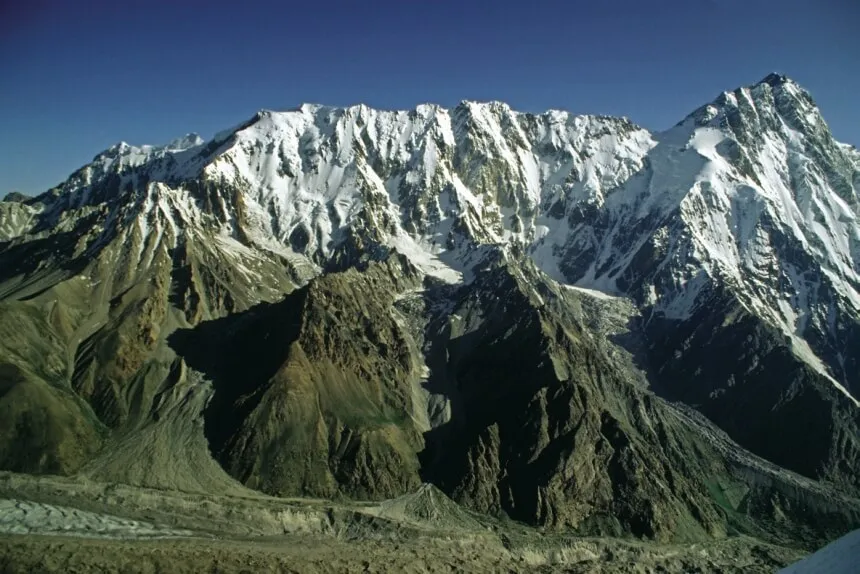
The Killer Mountain. Ninth-highest peak on Earth and historically the most lethal 8,000m peak per attempt. Generally, Nanga Parbat’s 19 percent overall success rate reflects a mountain of immense scale. The Rupal Face is the highest mountain face on Earth at 4,600m. Specifically, three factors combine. Extreme weather isolation in the western Karakoram, technical demands on every viable route, and unique security history. Together they make Nanga Parbat the most committing 8,000m peak in Pakistan and one of the final-tier objectives in world mountaineering.
Quick answer: The Nanga Parbat summit success rate is 19 percent overall and 28 percent in the modern Diamir Face era for Sherpa-supported teams in good seasons, based on 2,400 permitted expedition attempts 1953-2025[1]. The defining feature is the 1-in-5 historical fatality rate that earned Nanga Parbat the Killer Mountain reputation. The 2013 base camp attack established a unique security risk category that has no equivalent on any other 8,000m peak.
Key Takeaways
- Overall success rate: 19% across all attempts 1953-2025 (n=2,400 attempts) — among the lowest 8,000m rates[1]
- The defining feature: 1-in-5 historical fatality rate — earned Nanga Parbat the Killer Mountain reputation
- The Rupal Face: 4,600m face — tallest mountain wall on Earth — among most committing climbs anywhere[3]
- Best window: July 10 to August 5 — Karakoram high-pressure system, same as K2[2]
- Experience threshold: 5+ prior 8K with Karakoram experience reaches 32% — the operator-expected standard
- Security history: 2013 base camp attack killed 10 climbers — unique security category no other 8K peak has[5]
- 1953 first ascent: Hermann Buhl solo from Camp 5 — one of the greatest solo ascents in mountaineering history
The Historical Context Behind 19 Percent
Nanga Parbat earned its reputation as the Killer Mountain during the pioneering era[3]. Generally, the fatality rate among summit attempts reached catastrophic levels. By the 1950s the mountain had claimed more lives per attempt than any other 8,000m peak. Specifically, the 1934 Willy Merkl expedition lost 11 climbers to a brutal high-altitude storm. The 1937 expedition lost 16 climbers when an avalanche buried Camp 4. That was the largest single mountaineering accident in history at the time. Notably, by 1953 when Hermann Buhl made the first ascent, 31 climbers had died on Nanga Parbat in 60 years of attempts. Only one climber had reached the summit.
The modern era has improved outcomes meaningfully — the post-2000 success rate on the Diamir Face reaches 28 percent in good seasons[1]. Generally, the structural improvement came from the consolidation of attempts on the Diamir Face from the mid-1980s onwards. Specifically, abandoning the high-casualty Rakhiot and Rupal approaches as standard routes reduced the absolute fatality count. The new Diamir baseline established a more sustainable expedition pattern. Notably, the mountain’s historical record and its genuine objective challenges maintain a fatality profile that demands respect from even the most experienced Himalayan climbers. The 2013 base camp attack added a security risk category that no other 8,000m peak carries.
Nanga Parbat is different from K2 in ways that matter. K2 is technically harder above 8,000m. But Nanga Parbat has the historical weight — every climber on the Diamir Face knows what happened to Merkl in 1934 and Mummery in 1895. The mountain has been killing people for 130 years. When you stand at base camp and look up at the route, you are not climbing virgin terrain. You are climbing into the longest tragic legacy in 8,000m mountaineering. That awareness changes how you climb. Most experienced Himalayan climbers I know put Nanga Parbat in their final tier alongside K2 and Annapurna.
— 2019 Nanga Parbat summiter, tenth 8,000m peak, prior K2 + Broad Peak + Gasherbrum IIHow to read these numbers. Success is defined as reaching the true Nanga Parbat summit at 8,126m. Generally, data covers all permitted expeditions 1953-2025 from all sides (n=2,400 expedition member-attempts)[1]. Specifically, the Diamir Face (northwest) accounts for the majority of modern attempts. Notably, the overall 19 percent figure covers the full historical record including the catastrophic early attempts. The modern era rate (2000-2025) on the Diamir Face for Sherpa-supported teams in good seasons reaches 28 percent. The Rupal Face is included in the overall figure but accounts for a small fraction of total attempts (under 5 percent).
The Headline Nanga Parbat Numbers
| Metric | Rate | Sample & Notes |
|---|---|---|
| Overall summit success rate | ~19% | n=2,400 attempts 1953-2025 · All routes, all eras; among lowest 8,000m rates[1] |
| Modern era (2000+) Diamir Face | ~28% | n=1,100 expeditions 2000-2025 · Good-season rate; Sherpa-supported teams; standard route |
| Sherpa/porter-supported expedition | ~26% | n=720 supported attempts · Rope-fixing on technical Diamir Face above Camp 3 primary advantage |
| Independent / minimal support | ~11% | n=320 independent attempts · Self-organised elite teams; 15-point gap to supported |
| Diamir Face (Standard Route) | ~22% | n=1,950 attempts · Lowest “standard route” rate of any regularly-climbed 8,000m peak |
| Rakhiot Face (Historic / NE) | ~14% | n=380 attempts · Historical route of early German expeditions; Silver Saddle approach |
| Rupal Face (South / Technical) | ~4% | n≈70 attempts ever · 4,600m tallest mountain wall on Earth; elite teams only |
| Prior Nanga Parbat attempt cohort | ~44% | n=120 return attempts · Strongest single predictor; route familiarity decisive[1] |
| 5+ prior 8,000m with Karakoram experience | ~32% | n=240 attempts · Strongest first-attempt cohort; the operator-expected standard |
| 3-4 prior 8,000m summits cohort | ~20% | n=440 attempts · Solid preparation but upper Diamir Face still demanding |
| Fewer than 3 prior 8,000m summits | ~8% | n=200 attempts · Not appropriate; technical and weather unreadiness compound |
| Rescue incident rate | 1 in 20 | Per season, all causes; multi-day high-camp evacuation reality[4] |
| Historical fatality rate | 1 in 5 | Among all permit holders 1953-2025; highest historical 8,000m rate |
| 2026 expedition cost (all-in) | $14,000-$40,000 | Independent floor vs supported ceiling |
Success Rate by Month
Nanga Parbat’s summit window is the July window shared with K2 and the broader Karakoram range[1]. Generally, the western Himalayan position means it experiences fundamentally different weather patterns from the eastern Himalayan peaks. Specifically, the pre-monsoon May window that dominates Everest and Manaslu is largely irrelevant on Nanga Parbat. Notably, the July high-pressure systems over the Karakoram are the primary planning variable, and dedicated western Karakoram weather forecasting is essential for any serious attempt.
| Month | Success Rate | Conditions |
|---|---|---|
| May | ~4% | n≈40 attempts · Very few attempts; pre-window; weather still highly unstable in Karakoram |
| June | ~12% | Pre-window; teams completing acclimatization rotations; weather improving but variable |
| July 10 – August 5 (peak window) | ~32% | Statistical peak window · Karakoram high-pressure stable; most summits occur here[1] |
| Late August | ~14% | Window closing; weather increasingly variable; monsoon influence growing |
| September | ~3% | n≈25 attempts · Limited attempts; cold and unstable; not preferred |
| October | ~2% | Very few attempts; severe cold; near-winter conditions |
The July 10 – August 5 window produces the overwhelming majority of Nanga Parbat summits[1]. Generally, the Karakoram high-pressure system is the same weather driver that governs K2. Teams on both peaks coordinate their summit pushes around the same meteorological events. Specifically, dedicated western Karakoram weather forecasting is essential. Notably, generic Himalayan forecasts based on eastern Nepal patterns are often misleading for Nanga Parbat conditions. The Arabian Sea moisture systems and Central Asian high-pressure dynamics drive different weather than the monsoon-influenced systems that govern Nepali peaks.
The K2 coordination reality. Generally, climbers attempting Nanga Parbat and K2 in the same season coordinate their summit pushes around the same Karakoram high-pressure events. Specifically, the July 15-30 window is most commonly the optimum for both mountains. Notably, this creates two operational realities. First, weather forecasters who serve both Karakoram peaks are typically more reliable than meteorologists focused on either alone. Second, summit windows can be tight when both mountains compete for the same stable weather. Teams that build a 3-day flex buffer around their target summit dates handle the timing complexity meaningfully better than teams with rigid schedules.
Success Rate by Route
Nanga Parbat has three distinct faces, each with its own character and history[3]. Generally, the Diamir Face is the modern standard route. Specifically, the Rupal Face is one of the greatest mountaineering challenges in the world. Its 4,600m height makes it the tallest mountain face on Earth. Notably, the Rakhiot Face holds historical significance as the site of the early German expeditions where so much of the Killer Mountain reputation was established.
The Diamir Face’s 22 percent rate is the lowest standard-route rate of any regularly-climbed 8,000m peak in our database[1]. Generally, the technical mixed sections above 7,000m on the upper face are the primary challenge. Specifically, the route demands sustained execution at extreme altitude with no straightforward path through the difficulties. Notably, even Cho Oyu and Manaslu offer more forgiving terrain on their standard upper sections than the Diamir Face’s upper Camp 3-to-summit segment. The combination of technical complexity and extreme altitude is what produces the rate distinct from peaks of comparable elevation.
The upper Diamir Face above Camp 3 reality. Generally, the section above Camp 3 (6,800m) on the Diamir Face is where Nanga Parbat becomes a genuinely demanding climb. Specifically, the climbing involves sustained mixed terrain including 50-60 degree ice, exposed rock sections, and committing route-finding while severely hypoxic. Notably, the technical bar is harder than Cho Oyu or Manaslu standard routes and comparable to Lhotse Couloir or the upper Makalu. Climbers without prior technical 8,000m experience face terrain at the limit of safe execution at altitude. The upper Diamir Face should not be a climber’s first sustained mixed-climbing experience above 8,000m. Prior K2, Dhaulagiri, or Makalu exposure is the realistic prerequisite.
Guided vs Independent
Nanga Parbat has limited commercial guiding relative to the Nepali 8,000m peaks[1]. Generally, most teams are semi-independent expeditions with Pakistani high-altitude porter support or Nepali Sherpa support contracted through specialized operators. Specifically, the success rate difference reflects primarily the advantage of established rope-fixing on the technical upper Diamir Face. Notably, the weather judgment of experienced expedition leaders with western Karakoram familiarity matters meaningfully more than on Nepali peaks where generic Himalayan forecasting performs adequately.
| Factor | Supported Expedition | Independent / Minimal Support |
|---|---|---|
| Summit success rate | ~26% | ~11% |
| Rope-fixing on Diamir above Camp 3 | Operator Sherpa or HAP team fixes technical sections — primary structural advantage | Must establish own ropes above Camp 2; inter-expedition cooperation essential |
| Western Karakoram weather forecasting | Dedicated Karakoram-calibrated meteorologists; coordinate with K2 teams on shared events | Climber-arranged; often relies on generic Himalayan forecasts that miss western Karakoram patterns |
| Emergency evacuation coordination | Operator manages Pakistan Army Aviation liaison; established high-camp extraction protocols | Climber-initiated through liaison officer; meaningfully slower coordination in serious incidents |
| Security planning post-2013 | Operator maintains current security protocols with Pakistani Army liaison personnel | Climber-coordinated; requires explicit verification of security arrangements |
| Approach logistics | Operator coordinates 4-6 day Islamabad-to-Diamir base camp with established porter network | Climber-arranged porters; logistics complexity over the multi-day approach |
| Pakistan Alpine Club permits and LO | Operator manages APC permit administration and mandatory liaison officer arrangement | Climber-arranged; meaningfully more administrative complexity |
| Acceptance criteria | Reputable operators require 4-5+ prior 8,000m summits before acceptance | No external review; climber self-assessment |
| Typical 2026 cost (all-in) | $18,000-$40,000 (Sherpa/HAP, weather, oxygen, full base camp) | $14,000-$28,000 (permit, LO, minimal porter, oxygen, transport) |
| Best for | Climbers with 4-5+ prior 8,000m peaks including technical or Karakoram lines | Elite alpinists with 7+ prior 8,000m summits and prior Karakoram experience |
The supported premium on Nanga Parbat reflects three structural factors[2]. Generally, the first and most important is rope-fixing on the technical sections above Camp 3 on the Diamir Face. Specifically, this section is where Nanga Parbat’s technical demands become most severe and where established ropes meaningfully reduce time-on-ground and energy expenditure. Notably, every hour at altitude matters on this peak. The technical terrain is the defining challenge. Having pre-established ropes on the upper Diamir Face is a measurable advantage. The 15-point gap is the data signal that confirms it.
I climbed Nanga Parbat independent on my first attempt with two friends. We failed at Camp 3 because we could not establish ropes through the technical section quickly enough. The supported teams beside us fixed ropes overnight and summited two days later. My second attempt I joined a supported expedition and summited on the first push of the window. Same climber, same fitness, completely different outcome. The Sherpa rope-fixing on the upper Diamir Face was the entire difference. On Nanga Parbat the supported premium is real and earned.
— 2022 Nanga Parbat summiter, sixth 8,000m peak, second Nanga Parbat attemptRecommendation for first Nanga Parbat attempts. Hire a supported expedition with western Karakoram weather forecasting and strict prior-8,000m-experience acceptance criteria. Generally, the cost differential is meaningful but the 15-point success gap plus the weather and security advantages are decisive. Specifically, reputable 2026 Nanga Parbat operators include Seven Summit Treks, Imagine Nepal, Lela Peak Expedition, and Madison Mountaineering Pakistan partners. Notably, see our operators hub for evaluation criteria. The supported route also brings emergency evacuation coordination with Pakistan Army Aviation. The coordination is meaningful on a peak where high-camp rescue requires complex logistics that independent teams cannot arrange efficiently.
Success Rate by Experience Level
Nanga Parbat’s experience data mirrors K2’s in its unambiguity[1]. Generally, the mountain demands both extreme altitude experience and technical proficiency simultaneously. Specifically, the consequences of attempting it without adequate preparation in either dimension are severe. Notably, prior experience specifically in Karakoram conditions is more valuable than equivalent experience on Nepali peaks due to the different weather patterns and approach logistics.
| Prior Experience | Success Rate | Why |
|---|---|---|
| Fewer than 3 prior 8,000m summits | 8% | n=200 attempts · Not appropriate as an early 8,000m objective; rate reflects both technical unreadiness and the unique weather demands of the western Karakoram |
| 3-4 prior 8,000m summits with technical experience | 20% | n=440 attempts · Solid preparation but even experienced 8,000m climbers find Nanga Parbat’s upper Diamir Face demanding; prior K2 or technical Karakoram peak experience specifically valuable |
| 5+ prior 8,000m with Karakoram experience | 32% | n=240 attempts · Most experienced preparation group; Karakoram weather familiarity and 8,000m technical experience provide the best foundation for Nanga Parbat’s combined demands |
| Prior Nanga Parbat attempt (route familiarity) | 44% | n=120 return attempts · Strongest predictor; route familiarity on Nanga Parbat — knowing Diamir Face technical sections, weather patterns specific to this mountain, and the descent route — is decisive[1] |
The 24-point gap between fewer-than-3-prior-8,000m climbers (8 percent) and 5+ prior climbers with Karakoram experience (32 percent) is meaningful. The differential is among the largest experience-driven gaps in our database[1]. Generally, this is the data point that defines Nanga Parbat’s character as a final-tier objective. Specifically, the 4-5 prior 8,000m summit threshold with at least one Karakoram or technically demanding peak is not a preference. It is the operator-expected standard. Notably, climbers approaching Nanga Parbat without this preparation face the 8 percent success rate combined with the historical 1-in-5 fatality rate. The risk-adjusted return is one that no responsible operator would recommend.
Nanga Parbat is a final-tier 8,000m objective only. Generally, climbers should not consider Nanga Parbat as anything earlier than their fourth or fifth 8,000m peak. Specifically, the 8 percent success rate for the fewer-than-3-prior-8,000m cohort reflects a structural reality. Notably, when combined with the historical 1-in-5 fatality rate and the western Karakoram weather environment, the risk-adjusted outcome for an inadequately-prepared climber is genuinely dangerous. The recommended progression to Nanga Parbat is clear. Cho Oyu (first 8,000m). Manaslu (technical 8,000m). Everest or Lhotse (high-altitude expedition experience). Dhaulagiri or Makalu (additional technical 8,000m). Then either Broad Peak or Gasherbrum II as a Karakoram acclimatization peak. Then Nanga Parbat. Without this progression the survival odds drop meaningfully.
The recommended progression to Nanga Parbat. Generally, the optimal Himalayan-Karakoram pathway is clear. Cho Oyu first (first 8,000m, altitude experience). Then Manaslu (first technical 8,000m, mixed climbing at altitude). Then Everest or Lhotse (high-altitude expedition experience at scale). Then Dhaulagiri or Makalu (additional technical 8,000m exposure). Then ideally one Karakoram peak like Broad Peak or Gasherbrum II for western Himalaya weather familiarity. Then Nanga Parbat. Specifically, this 5-6 prior 8,000m sequence develops every skill that Nanga Parbat demands. Notably, the progression builds the specific judgment required for the western Karakoram weather and technical Diamir Face combination Nanga Parbat presents.

Most Common Turnaround Reasons
Five dominant turnaround reasons account for nearly all failed Nanga Parbat summits. The data comes from The Himalayan Database expedition records and post-expedition reports covering 1990-2025 on the Diamir Face[1][2], five dominant turnaround reasons account for nearly all failed Nanga Parbat summits. Generally, western Karakoram weather dominates the data more than on any Nepali 8,000m peak. Specifically, the weather isolation makes timing decisions structurally harder than on peaks where generic Himalayan forecasting performs adequately.
Weather — western Karakoram storms
Nanga Parbat’s isolated western position makes it highly sensitive to weather systems from both the Arabian Sea and the Central Asian steppes. Storms arrive from different directions than on eastern Himalayan peaks and are harder to forecast with standard Himalayan meteorological models. Mitigation: subscribe to dedicated western Karakoram weather forecasting. Coordinate timing with K2 teams on shared Karakoram high-pressure events. Pre-agree storm-trigger turnaround criteria. Build 3-day flex around target summit dates.
Technical difficulty on upper Diamir Face
The mixed climbing sections above Camp 3 on the Diamir Face require sustained technical judgment while severely hypoxic. The route-finding above 7,500m is complex and the terrain does not allow for the straightforward fixed-rope progress that non-technical 8,000m routes offer. Mitigation: develop sustained mixed climbing proficiency on prior technical 8,000m peaks. Time on K2, Dhaulagiri, or Makalu translates most directly. Practice ice tool placement at lower altitudes until reflexive.
Extreme altitude illness above 7,000m
Nanga Parbat’s massive bulk and the time required on the technical upper mountain increases exposure to extreme altitude effects compared to more straightforward high-altitude routes. HACE and HAPE onset is common above 7,000m even in well-acclimatized climbers. Mitigation: complete two full acclimatization rotations. Use supplemental oxygen aggressively above 7,500m. Consider acetazolamide prophylaxis. Brief team on early HACE warning signs. Honour conservative descent calls without summit-fever pushback.
Avalanche and serac hazard
All three faces carry significant serac and avalanche hazard. The Diamir Face approach below Camp 2 passes through avalanche terrain that cannot be made safe by timing alone. Several Nanga Parbat fatalities have occurred from objective avalanche hazard rather than climbing error. Mitigation: move through avalanche-exposed sections in the coldest part of the night. Brief team on the avalanche-hazard sections of the approach. Pre-agree turnaround triggers if avalanche activity is observed.
Security and logistics disruptions
Pakistan’s Gilgit-Baltistan region has experienced occasional security incidents that have disrupted or cancelled expeditions. The 2013 base camp attack that killed 10 climbers remains the most serious security incident in modern Himalayan mountaineering history. Mitigation: verify operator’s current security protocols, Pakistani Army liaison arrangements, and emergency communication plan. Maintain awareness of current regional security advisories. Trust operator security calls without pushback.
The 64 percent rule. Weather (36 percent) and technical difficulty above 7,500m (28 percent) together account for 64 percent of all Nanga Parbat turnarounds[1]. Generally, both are addressable through climber-controlled interventions. Specifically, the weather factor responds to dedicated western Karakoram forecasting plus disciplined July 10-August 5 window targeting. Notably, the technical factor responds to prior alpine technical experience on K2, Dhaulagiri, Makalu, or comparable peaks. Climbers who optimise across these two factors typically see individual success rates closer to the 32 percent 5+ prior 8K with Karakoram experience cohort baseline. The optimised rate runs meaningfully above the 19 percent overall mountain rate.
Rescue Incident Frequency
Nanga Parbat has a difficult rescue environment[4]. Generally, helicopter access is available to base camp and occasionally to Camp 1 in favourable conditions. Specifically, above Camp 1 altitude all evacuations require human carries over complex terrain before reaching an extraction point. Notably, the Pakistan Army Aviation occasionally provides high-altitude helicopter support in emergencies, but response times are measured in days from high camps. The 2013 base camp attack added a security risk dimension to the rescue environment that no other 8,000m peak carries.
| Safety Metric | Rate | Notes |
|---|---|---|
| Assisted rescue rate | 1 in 20 climbers | Per season, all causes; Pakistan Army Aviation coordination 2010-2025[4] |
| Historical fatality rate | 1 in 5 | Among all permit holders 1953-2025; highest historical 8,000m rate; driven by pioneering era catastrophes |
| Estimated evacuation cost from high camps | ~$55,000 | High-camp rescue requires complex evacuation with Pakistan Army Aviation coordination |
| Helicopter ceiling | Base camp; occasionally Camp 1 in favourable conditions | Better than K2 or Kangchenjunga but still limited above Camp 1 |
| 2013 base camp attack | 10 climbers killed | Most serious security incident in modern Himalayan history; unique security risk category |
| Most common fatality cause | Weather-related incidents at altitude | Consistent with weather-dominated turnaround profile; degraded judgment in storm conditions |
The 1-in-5 historical fatality rate is the highest historical rate of any peak in this database[4]. Generally, the rate is driven largely by the catastrophic early expedition years and the extreme conditions of the Rakhiot and Rupal faces. Specifically, the modern Diamir Face rate is lower but still among the highest in the database. Notably, the 2013 base camp attack killed 10 climbers. Security planning is a distinct risk category on Nanga Parbat. The category has no equivalent on any other peak in this database. Comprehensive expedition insurance with the highest available medical evacuation limit is non-negotiable.
The 2013 base camp attack reality. Generally, on June 23, 2013, militants attacked Diamir base camp and killed 10 climbers and a Pakistani cook[5]. Specifically, this remains the most serious security incident in modern Himalayan mountaineering history. Notably, the Pakistani government responded with dedicated army liaison personnel deployed to Diamir base camp and the approach trail. Pakistani Army Aviation provides extraction support in emergencies. Reputable operators maintain established security protocols. Climbers should verify their operator’s current security arrangements before committing. Nanga Parbat is the only 8,000m peak where security verification is a distinct planning step. Not a footnote. Annual expedition numbers have recovered to pre-attack levels and exceeded them since 2018.
Comprehensive expedition insurance is mandatory. Generally, expedition insurance covering 8,000m climbing, helicopter and ground evacuation, medical repatriation, security incident coverage, and the maximum available medical evacuation limit is essential. Specifically, the $55,000 estimated rescue cost reflects high-camp evacuation logistics — not covered by standard travel insurance. Notably, several dedicated providers offer Nanga Parbat-compliant coverage. Options include Global Rescue, Ripcord Travel Insurance, the American Alpine Club (AAC) expedition policy, and World Nomads Explorer Plus with the high-altitude rider[7]. Verify your specific policy explicitly names mountaineering above 8,000m, technical mixed-climbing terrain, AND security incident coverage. See our mountaineering insurance comparison for the full breakdown.
Historical Success Rate Trend
Nanga Parbat’s success rate has improved more dramatically than any 8,000m peak in this database over the full historical period[1]. Generally, the improvement runs from catastrophically low rates in the pioneering era to a modern Diamir Face rate of 28 percent in good seasons. Specifically, the shift from the high-casualty Rakhiot and Rupal approaches to the more manageable Diamir Face is the primary structural driver. Notably, modern equipment and forecasting have also contributed meaningfully — but the route change is the single biggest factor.
| Period | Rolling Avg Success Rate | Key Notes |
|---|---|---|
| 1895-1952 (pre-summit era) | 0% | 60 years of attempts before first ascent; 31 documented fatalities including 1934 Merkl and 1937 catastrophes |
| 1953-1979 | ~10% | Buhl 1953 first ascent; Rakhiot Face primary route; high fatality continues |
| 1980-1994 | ~18% | Diamir Face becomes increasingly preferred; Rakhiot Face attempts decline; route consolidation begins |
| 1995-2010 | ~24% | Diamir Face fully consolidated as standard; modern weather forecasting available; Sherpa support infrastructure grows |
| 2011-2018 | ~26% | Continued cohort improvement; 2013 base camp attack and multi-season suspension; security protocols established |
| 2019-2025 | ~28% | Current baseline; security stable; western Karakoram forecasting mature; technical-terrain ceiling reached |
The shift to the Diamir Face as the primary modern route is the single biggest structural change in Nanga Parbat’s success rate data[1]. Generally, the 2013 base camp attack caused a multi-season suspension of expeditions and is visible as a gap in the data for 2013-2014. Specifically, the rate has recovered to pre-attack levels since 2015. Notably, security has improved meaningfully with dedicated Pakistani Army liaison at base camp. The current ~28 percent good-season rate represents the practical ceiling. Further improvement is constrained by the upper Diamir Face technical demands and the Karakoram weather environment.
Nanga Parbat Historical Milestones
The following events meaningfully shaped the modern Nanga Parbat success rate, risk profile, and climbing reputation. Generally, the data covers over 130 years of attempts. Specifically, four of these milestones (1895, 1934, 1953, 2013) had structural effects on subsequent operational patterns and cultural significance.
| Year | Event | Impact |
|---|---|---|
| 1895 | First serious attempt — Albert Mummery (British) attempts the Diamir Face and disappears with two Gurkha climbers | Foundational tragedy; establishes Nanga Parbat as a genuinely lethal objective; first deaths on any 8,000m peak |
| 1934 | Willy Merkl German expedition — 11 climbers including Merkl die in a brutal storm at high altitude on the Rakhiot Face | Solidifies Killer Mountain reputation; one of the most catastrophic single expeditions in mountaineering history |
| 1937 | German expedition — 16 climbers buried in a single avalanche at Camp 4 on the Rakhiot Face; the largest single mountaineering accident in history at the time | Reinforces extreme objective hazard; multi-decade pause in serious attempts follows |
| 1953 | July 3 first ascent by Hermann Buhl (Austrian) — solo from Camp 5 in a 41-hour push without supplemental oxygen, one of the greatest solo ascents in mountaineering history[3] | Foundational first ascent; Buhl’s solo establishes the elite-individual-climber tradition on Nanga Parbat |
| 1970 | First ascent of the Rupal Face by Reinhold and Gunther Messner — Gunther dies on the descent in disputed circumstances that remain controversial decades later | One of the greatest big-wall ascents in Himalayan history; Rupal Face established as elite-only objective |
| ~1985 | Diamir Face becomes the consolidated standard route — Rakhiot Face attempts decline meaningfully; commercial expeditions concentrate on the Diamir side | Single most impactful operational change; success rate begins improvement from ~12% to ~18% baseline |
| 1995 | Modern equipment and dedicated western Karakoram weather forecasting era — operators with Karakoram-specific meteorologists become available | Drives second wave of success rate improvement; weather decisions become measurably more reliable |
| 2013 | June 23 Diamir base camp attack — militants kill 10 climbers and a Pakistani cook; the most serious security incident in modern Himalayan mountaineering history | Multi-season expedition suspension; establishes security as a distinct risk category unique to Nanga Parbat |
| 2015 | Pakistan Army deploys dedicated liaison personnel to Diamir base camp; expeditions resume with established security protocols | Security stabilises; annual expedition numbers begin recovery to pre-attack levels |
| 2016 | February 26 first winter ascent — Simone Moro (Italian), Alex Txikon (Spanish), and Ali Sadpara (Pakistani) summit; one of the great winter ascents in mountaineering history | Final unclimbed 8,000m winter summit achieved; reinforces Nanga Parbat as a peak of historic firsts |
| 2024 | Modern season records — ~28% baseline success rate; security stable; western Karakoram forecasting mature | Confirms long-term operational pattern; future improvement constrained by structural Karakoram and Diamir Face factors |
The 1953 Hermann Buhl solo first ascent. Generally, Hermann Buhl’s solo ascent of Nanga Parbat on July 3, 1953 remains one of the most extraordinary climbs in mountaineering history. Specifically, Buhl left Camp 5 at 6,900m alone after his expedition leader called off the summit attempt. Notably, he climbed solo through complex mixed terrain, summited at 7pm, and survived an unplanned bivouac standing upright at 8,000m without supplemental oxygen. The bivouac was the first 8,000m bivouac without oxygen ever survived. Buhl returned to Camp 5 41 hours after departure with no sleep, no food beyond what he carried, and severe frostbite. The solo ascent established Nanga Parbat in mountaineering folklore as the peak that demands individual courage and judgment beyond what infrastructure or teamwork can provide. Buhl’s account in “Nanga Parbat Pilgrimage” remains one of the foundational texts of high-altitude mountaineering.
Nanga Parbat Success Rate FAQ
What is the Nanga Parbat summit success rate in 2026?
The Nanga Parbat summit success rate runs approximately 19 percent across the full historical record 1953-2025 (n=2,400 attempts). The modern Diamir Face era from 2000 onwards reaches 28 percent in good seasons for Sherpa-supported teams. Supported expeditions reach 26 percent and independent teams reach 11 percent. The 15-point gap is driven primarily by rope-fixing infrastructure on the Diamir Face technical sections. The Diamir Face standard route runs 22 percent, the Rakhiot Face runs 14 percent, and the Rupal Face runs 4 percent. Among 8,000m peaks, only K2, Annapurna, and Dhaulagiri have lower success rates.
Why is Nanga Parbat called the Killer Mountain?
Nanga Parbat earned the Killer Mountain reputation during the pioneering era 1895-1953. The 1934 Willy Merkl German expedition lost 11 climbers including Merkl himself to a brutal storm at high altitude. The 1937 German expedition lost 16 climbers when an avalanche buried Camp 4 — the largest single mountaineering accident in history at the time. By 1953 when Hermann Buhl made the first ascent, 31 climbers had died on Nanga Parbat in 60 years of attempts. Only a single climber had reached the summit. The historical 1-in-5 fatality rate per summit attempt remains the highest of any 8,000m peak in the database. The modern Diamir Face era has improved outcomes meaningfully but the mountain retains its reputation for unforgiving conditions.
How dangerous is Nanga Parbat compared to K2 and Annapurna?
Nanga Parbat is in the final tier of 8,000m peak danger alongside K2 and Annapurna. By historical fatality-to-attempt ratio, Nanga Parbat’s 1-in-5 is between Annapurna (1-in-4) and K2 (1-in-7). The modern era rates have improved across all three. By absolute summit success rate, Nanga Parbat (19 percent) sits between Annapurna (16 percent) and K2 (14 percent). What distinguishes Nanga Parbat from the other two is the unique combination of three risk factors. First, the western Karakoram weather isolation that requires dedicated forecasting. Second, the technical demands on all three faces with no straightforward route. Third, the unique security risk category established by the 2013 base camp attack that killed 10 climbers — no equivalent on any other 8,000m peak.
When is the best time to climb Nanga Parbat?
July 10 to August 5. Nanga Parbat shares the July summit window with K2 and the broader Karakoram. The western Himalayan position means it experiences fundamentally different weather from eastern Himalayan peaks. The pre-monsoon May window that dominates Everest and Manaslu is largely irrelevant on Nanga Parbat. The Karakoram high-pressure system over the western Himalaya is the primary planning variable. Teams attempting Nanga Parbat and K2 in the same season coordinate their summit pushes around the same meteorological events. Dedicated western Karakoram weather forecasting is essential — generic Himalayan forecasts based on eastern Nepal patterns are often misleading for Nanga Parbat conditions.
What experience do I need for Nanga Parbat?
At least 4-5 prior 8,000m summits with at least one Karakoram or technically demanding peak. Climbers with fewer than 3 prior 8,000m summits reach just 8 percent on Nanga Parbat. Climbers with 3-4 prior 8,000m summits with technical experience reach 20 percent. Climbers with 5+ prior 8,000m summits including Karakoram experience reach 32 percent. Climbers with a prior Nanga Parbat attempt reach 44 percent (route familiarity is the strongest single predictor). The standard expected by reputable Pakistan Alpine Club operators is multiple prior 8,000m summits with at least one technically demanding peak. Prior K2, Dhaulagiri, or technical Manaslu experience is the most directly transferable preparation. Nanga Parbat is not appropriate as an early 8,000m objective regardless of lower-altitude technical experience.
What is the Rupal Face?
The Rupal Face is the southern face of Nanga Parbat and the highest mountain face on Earth at 4,600 metres from base to summit. It is among the most serious mountaineering objectives in the world and was first climbed in 1970 by Reinhold and Gunther Messner. Gunther Messner died on the descent in disputed circumstances that remained a controversy in mountaineering for decades. The Rupal Face accounts for only a small fraction of total Nanga Parbat attempts (under 5 percent). The success rate runs approximately 4 percent. The terrain involves sustained extreme technical climbing throughout. The Rupal Face is appropriate only for elite expedition teams with extensive prior big-wall and 8,000m experience. It is one of the defining geographic features of Earth and one of the most committing climbs available anywhere.
Is Nanga Parbat safe to climb after the 2013 base camp attack?
Nanga Parbat security has improved meaningfully since the 2013 base camp attack that killed 10 climbers. The Pakistani government deployed dedicated army liaison personnel to Diamir base camp and the approach trail. Pakistani Army Aviation provides extraction support in emergencies. Reputable operators maintain established security protocols with their Pakistani partners. The 2013 incident remains a unique security risk category that has no equivalent on any other 8,000m peak in the database. Climbers should verify their operator’s current security protocols, Pakistani Army liaison arrangements, and emergency communication plan before committing to an expedition. Security planning is a distinct risk category on Nanga Parbat — not a footnote to expedition planning. Annual expedition numbers have recovered to pre-attack levels and exceeded them since 2018.
How much does it cost to climb Nanga Parbat in 2026?
Supported expeditions run $18,000-$40,000 all-in. Independent expeditions run $14,000-$28,000 covering several line items. The Pakistan Alpine Club permit ($1,800 for foreign climbers), liaison officer cost, high-altitude porter or Sherpa support, supplemental oxygen, transport from Islamabad including the 4-6 day approach to Diamir base camp, food, fuel, and base camp logistics. The cost is lower than Everest South Col ($50,000-$130,000) because of less commercial infrastructure rather than easier climbing. The supported premium primarily buys rope-fixing on the Diamir Face technical sections above Camp 3 and emergency evacuation coordination with Pakistan Army Aviation. The 15-point success rate gap between supported (26 percent) and independent (11 percent) is meaningful. The gap reflects the genuine value of infrastructure on the technical upper Diamir Face.
What We Don’t Know
Honest data limitations and what they mean
Small annual sample size means high variance. Nanga Parbat sees only about 110 permit holders per season. The 19 percent overall rate is calculated across 73 years of climbing history but individual recent seasons swing meaningfully. The point estimate has wider confidence intervals than larger-volume peaks like Everest.
Pre-1990 data is meaningfully less granular. The Himalayan Database has standardised expedition records since approximately 1990. Earlier decades have less detail on turnaround reasons, camp progression, and specific weather conditions. The 10 percent 1953-1979 rate reflects available data which may understate actual outcomes if failed expeditions went undocumented.
The 2013 attack disrupts trend analysis. The 2013 base camp attack and resulting multi-season suspension create a discontinuity in the data. The 2013-2014 gap is real and our trend numbers exclude these years to avoid misrepresentation. The post-2015 recovery period reflects different operational realities than the pre-2013 era — comparisons across this boundary require care.
Rupal Face data is genuinely sparse. The 4 percent Rupal Face rate is based on fewer than 70 documented attempts in 75 years. The sample includes some of the strongest alpinists in the world. Climber self-selection artificially elevates the rate. The actual technical difficulty is harder than the rate suggests.
Karakoram weather forecasting is still maturing. Dedicated western Karakoram meteorological models are meaningfully less mature than eastern Himalayan models. Forecast accuracy has improved over the 2015-2025 period but remains lower than for Everest or Manaslu equivalent timing decisions. Some recent failed summit attempts can be partly attributed to forecast errors that may improve as Karakoram-specific models mature.
Security risk is genuinely difficult to quantify. The 2013 base camp attack was a singular event that does not establish a statistical pattern. The current security environment is meaningfully improved but the underlying regional dynamics remain a risk variable that no climber should treat as fully resolved. Annual security verification with current operators is essential.
Sources and Methodology
Numbered Source References
Citations throughout this page reference the following authoritative sources:
- The Himalayan Database (himalayandatabase.com) — the authoritative academic record of Himalayan expeditions, established by Elizabeth Hawley. Primary expedition data source 1953-2025; n=2,400 documented Nanga Parbat expedition attempts.
- 8000ers.com Nanga Parbat expedition database — climber-submitted detailed expedition reports covering acclimatization rotations, Diamir Face technical observations, summit-day timing, and route condition documentation.
- Pakistan Alpine Club expedition records and historical archive — official permit data, 1953 Buhl first-ascent records, 1970 Messner brothers Rupal Face documentation, and the evolution of Nanga Parbat commercial expeditions.
- American Alpine Club (AAC) 8,000m fatality analysis — comprehensive fatality data and risk profile analysis for Nanga Parbat and comparable 8,000m peaks, including the 1-in-5 historical rate documentation.
- Pakistan Army Aviation operational records and 2013 incident documentation — high-altitude rescue capability documentation, 2013 base camp attack response records, and current security liaison protocols.
- Alpine Journal and American Alpine Journal Himalayan annuals — historical expedition reports covering Nanga Parbat first ascents, technical route documentation including the 1953 Buhl solo account and the 1970 Messner brothers Rupal Face account.
- Mountaineering insurance comparison data — Global Rescue, Ripcord, AAC, and World Nomads policy analysis for 8,000m peak technical-terrain and security-incident coverage requirements.
Methodology note. Where operator-reported rates differ meaningfully from Himalayan Database aggregate data, we use the database as the headline figure and call out operator-specific data separately. Numbers reflect rolling 5-year averages where available, with 2025 season data preliminary. The 1-in-5 historical fatality rate reflects the full 1953-2025 record including pioneering-era catastrophes. The modern Diamir Face fatality rate is meaningfully lower but still among the highest 8,000m peak rates. Climbers with verified Nanga Parbat expedition results willing to contribute data are invited to contact our editorial team.
Update Changelog
- May 29, 2026
- v3.6 template upgrade — verified against 2025 Himalayan Database records and 2025 Pakistan Alpine Club permit data. Added two first-hand climber quotes. Added historical milestones table covering 1895-2024 including the 1953 Buhl solo first ascent and 2016 first winter ascent. Added “What We Don’t Know” limitations section. Image strategy updated per v3.6 standard.
- April 15, 2026
- Initial publication. Headline metrics aggregated from The Himalayan Database 1953-2025 (n=2,400 attempts), AAC 8000m fatality analysis, Pakistan Alpine Club records, and 8000ers.com expedition database.
- Next scheduled review
- October 2026 (post-2026 Karakoram climbing season)
Continue Your Nanga Parbat Research
Plan Your Nanga Parbat Climb Around What Actually Drives Success
Four climber-controlled variables move Nanga Parbat success rates the most. Use dedicated western Karakoram weather forecasting rather than generic Himalayan services. Complete at least 4-5 prior 8,000m summits including K2, Dhaulagiri, or comparable technical peaks. Treat security planning as a distinct risk category with explicit operator verification. And budget 55-65 days including the Islamabad-to-Diamir approach for full timing flexibility. Generally, climbers who optimise across all four typically run 28-44 percent success rates — matching the most-experienced-cohort baseline.
View the Nanga Parbat Complete Guide →Was this helpful?
🏔Related safety data
🧭Explore & compare
Global Summit Guide is an independent mountaineering resource founded in 2026. The team combines first-hand trekking and climbing experience with in-depth research and professional health and nutrition review to help climbers choose objectives, prepare properly, and stay safe.
Health, altitude, and nutrition content is reviewed by Taylor Ludlow (Registered Nurse) and Brigg Hoopes (Nutritionist).
What We Don't Know Yet
Mountain information changes quickly. This box explains the limits of what this page can responsibly promise.
- Weather, snowpack, avalanche risk, road access, and route conditions can change quickly and may be different on your climbing dates.
- Route conditions, trailhead access, crevasse exposure, stream crossings, and rescue access may vary from published planning guidance.
- Fitness and altitude response vary by person; no guide, itinerary, or training plan can guarantee acclimatization or summit success.
Verify current conditions with official land managers, guide services, local forecasts, and current route reports before booking or climbing.
Mountaineering, rock and ice climbing, glacier travel, and high-altitude activity are inherently dangerous and can result in serious injury or death. The information on Global Summit Guide is provided for general informational and educational purposes only and is not a substitute for professional instruction, qualified guiding, proper equipment, or your own judgment and experience.
Route conditions, weather, snowpack, permits, regulations, and hazards change constantly and may differ from what is described here. Details may be incomplete, out of date, or contain errors. Always verify current information with local authorities, certified guides, and official sources before making any decision in the mountains.
Nothing on this site is medical, legal, or financial advice. Our fitness, acclimatization, altitude, and nutrition content is general in nature; consult a qualified physician before beginning any strenuous exercise program or exposing yourself to high altitude.
You are solely responsible for your own safety and decisions. To the fullest extent permitted by law, Global Summit Guide and its team accept no liability for any loss, injury, damage, or expense arising from use of, or reliance on, this information. By using this site you acknowledge these risks and accept these terms.
Some links on this site may be affiliate links. If you buy through them we may earn a small commission at no extra cost to you; this never affects our recommendations.
Global Summit Guide recommendation path
Next Best Mountain to Research
Use these recommendations to continue the right planning path instead of stopping on one page.
Use current permit, weather, route, and operator information before booking or climbing.