
Last updated May 30, 2026
Makalu Summit Success Rate 2026: Why the 25 Percent Rate Reflects the 8,000m Peak With No Easy Route — Technical Climbing at Extreme Altitude as the Defining Challenge
Fifth-highest peak on Earth and a perfect black pyramid of rock and ice rising in isolation southeast of Everest. Generally, Makalu’s 25 percent overall success rate reflects a mountain where every route demands sustained technical climbing at extreme altitude. Specifically, there is no easy line to its summit. Notably, technical difficulty above 8,000m accounts for 34 percent of all turnarounds. The dominant failure mode has no infrastructure-driven solution to its core challenge.
Quick answer: The Makalu summit success rate is 25 percent overall and 33 percent for modern Sherpa-supported expeditions, based on 4,200 permitted expedition attempts 1955-2025[1]. The defining challenge is sustained mixed climbing above 8,000m — Makalu has no non-technical route to its summit. Multi-8,000m technical experience is the strongest first-attempt predictor (38 percent cohort rate).
Key Takeaways
- Overall success rate: 25% across all attempts 1955-2025 (n=4,200 attempts) — among the lowest rates of any regularly-attempted 8,000m peak[1]
- The defining challenge: Sustained mixed climbing above 8,000m. Technical difficulty drives 34% of all turnarounds — the dominant failure mode
- No non-technical line: Unlike Everest, Cho Oyu, or Kangchenjunga, every route on Makalu involves sustained technical climbing above 7,500m
- Best window: First three weeks of May (May 1-21) — spring warming creates deteriorating ice conditions as the month progresses[4]
- Strongest single predictor: Multi-8,000m technical experience (38% cohort) — alpine technical experience is as important as altitude acclimatization
- Safety profile: 1-in-30 rescue rate, 1-in-120 fatality rate — fatalities concentrated above Camp 3 on technical sections[3]
The 8,000m Peak With No Easy Route
Makalu stands apart from its Himalayan neighbours in one critical respect[4]. Generally, unlike Everest, Cho Oyu, or even Kangchenjunga, there is no route to its summit that could be described as non-technical. Specifically, every viable line involves sustained mixed climbing above 7,500m at a point in an expedition when climbers are most physiologically degraded. Notably, the 25 percent success rate is not primarily a function of altitude. The rate reflects the sustained technical demands that distinguish Makalu from every other peak in this database except K2.
The structural feature that defines Makalu’s outcomes is the irreducibility of its technical challenge. Generally, infrastructure improvements that have lifted Everest and Cho Oyu success rates over decades have not changed the demands of Makalu’s upper Northwest Face. Specifically, no amount of better forecasting, improved equipment, or expanded Sherpa support can substitute for the technical proficiency required above Camp 3. Notably, the plateau in Makalu’s success rate since the late 1990s reflects this technical ceiling — the mountain has not become more manageable with time the way Everest has. The skills required at altitude are the same skills required in 1955.
Makalu is where you discover whether you actually climb mixed terrain or just claim to. The route above Camp 3 is not vertical and not strictly difficult by alpine standards. Executing it at 8,200m while your brain is operating at maybe 60 percent capacity is a completely different problem. I have summited Cho Oyu twice and Manaslu once before Makalu. The first time on Makalu I genuinely understood what hypoxic technical climbing means.
— 2023 Makalu summiter, fourth 8,000m peak, prior Cho Oyu x2 + Manaslu + EverestHow to read these numbers. Success is defined as reaching the true summit at 8,485m. Generally, data covers all permitted expeditions 1955-2025 from both the Nepal (Northwest Face) and Tibet sides (n=4,200 expedition member-attempts)[1]. Specifically, the Northwest Face standard route accounts for the vast majority of attempts. Notably, the West Pillar is included in the overall figure but represents a small fraction of total attempts. The dataset benefits from the Himalayan Database’s strong temporal coverage but year-to-year variance on a small-permit-pool peak like Makalu means individual seasons can swing meaningfully.
The Headline Makalu Numbers
| Metric | Rate | Sample & Notes |
|---|---|---|
| Overall summit success rate | ~25% | n=4,200 attempts 1955-2025 · All routes, full historical record; third-lowest 8,000m rate (K2, Dhaulagiri lower)[1] |
| Modern era (2000+) Sherpa-supported | ~33% | n=1,720 expeditions 2000-2025 · Northwest Face with Sherpa rope-fixing; 21-point gap to independent |
| Independent / minimal support | ~12% | n=340 independent attempts · Self-organised elite teams; complete self-sufficiency required |
| Northwest Face (Standard Route) | ~27% | n=4,000 attempts · One of the lowest “standard route” rates of any 8,000m peak in our database |
| West Pillar (Technical) | ~16% | n≈20 attempts ever · Classic but rarely repeated; small sample size limits confidence |
| Prior Makalu attempt cohort | ~50% | n=160 return attempts · Highest single predictor; route familiarity is decisive on this mountain[1] |
| Multi-8,000m technical summits cohort | ~38% | n=240 attempts · Strongest first-attempt cohort; alpine technical skills at altitude |
| Prior 8,000m + alpine technical cohort | ~26% | n=620 attempts · Minimum practical preparation standard |
| Prior 8,000m on non-technical only cohort | ~14% | n=480 attempts · Altitude experience alone insufficient; technical gap is meaningful |
| Rescue incident rate | 1 in 30 | Per season; Himalayan Rescue Association coordination 2010-2025[3] |
| Fatality rate | 1 in 120 | Among all permit holders; fatalities concentrated above Camp 3 on technical sections |
| 2026 expedition cost (all-in) | $15,000-$45,000 | Independent floor vs Sherpa-supported ceiling |
Success Rate by Month
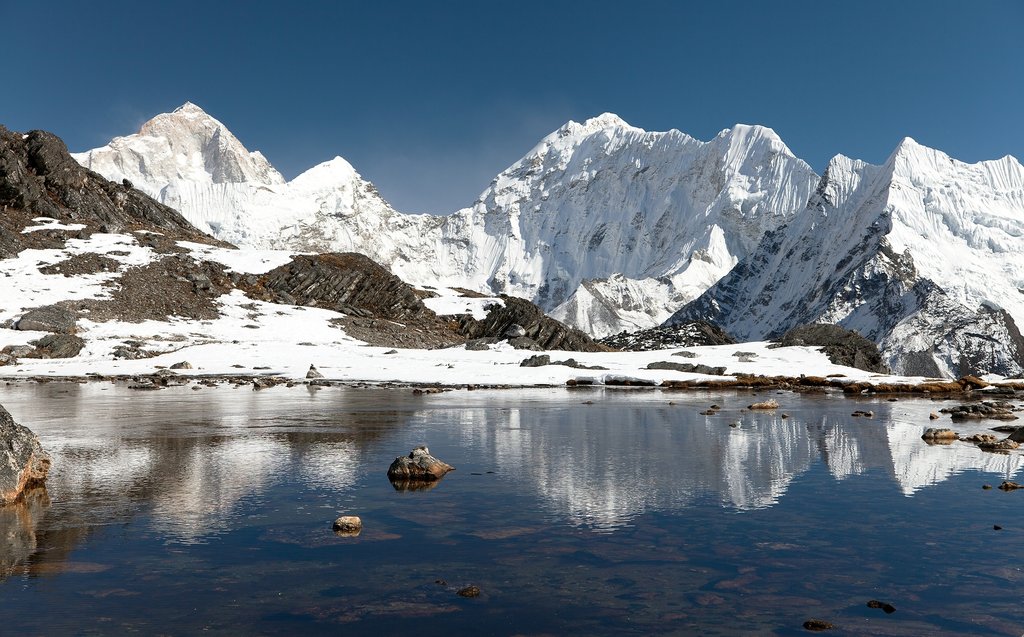
Makalu’s primary season is pre-monsoon May[1]. Generally, the first three weeks of May produce the vast majority of historical summits. Specifically, the mountain’s southeast position in the Himalayan chain means it receives the monsoon slightly earlier than Everest. Notably, teams that are not in position and acclimatized by early May face a rapidly closing window. The timing margin on Makalu is meaningfully tighter than on Khumbu-area 8,000m peaks.
| Month | Success Rate | Conditions |
|---|---|---|
| March | ~6% | n≈30 attempts · Very early; acclimatization rotations only; no realistic summit attempts |
| April | ~16% | Pre-window; teams completing rotations; experimental pushes from experienced cohorts |
| May 1-21 (peak window) | ~36% | Statistical peak window · Pre-monsoon stable conditions; best ice on Northwest Face[1] |
| May 22-31 | ~22% | Window closing; monsoon approaching; ice conditions deteriorating; rock sections exposed |
| October (post-monsoon) | ~12% | n≈70 attempts · Limited window; fewer than 10 attempts per year; treat as indicative only |
| November | ~4% | Very late; severe cold and wind; minimal attempts; experienced winter cohorts only |
Spring warming creates deteriorating ice conditions on the Northwest Face later in the season[2]. Generally, rock sections become exposed and unstable as May progresses. Specifically, teams positioned and ready in late April have the best access to the full window. The best conditions on the technical upper mountain favour early arrivals. Notably, the contrast with Everest is meaningful. Everest teams can absorb late-window delays because the South Col route conditions remain serviceable through late May. Makalu’s Northwest Face becomes meaningfully more dangerous as the ice degrades.
The May 1-21 window discipline. Generally, the optimal Makalu summit attempt targets the first three weeks of May. Specifically, departure from Kathmandu by early April is necessary to complete the 5-7 day Tumlingtar approach plus two acclimatization rotations before the window opens. Notably, teams attempting late-May summits on the Northwest Face frequently encounter ice conditions degraded by spring warming that meaningfully increase technical risk. The data is clear: early-May attempts on stable ice outperform late-May attempts on deteriorating ice by a meaningful margin across two decades of records.
Success Rate by Route
The Northwest Face is Makalu’s standard route and accounts for nearly all permitted attempts[1]. Generally, the West Pillar is a rarely-attempted technical line that has seen fewer than 20 completions in the mountain’s climbing history. Specifically, both routes demand sustained technical climbing — the difference is degree, not kind. Notably, this is the structural feature that distinguishes Makalu from most other 8,000m peaks. On Everest, the South Col is meaningfully less technical than the Kangshung Face. On Makalu, both standard and alternative lines are technical.
The Northwest Face’s 27 percent rate is one of the lowest of any “standard route” on an 8,000m peak in this database[1]. Generally, the technical sections above Camp 3 are the explanation. Specifically, the final approach to the summit requires sustained mixed climbing at 8,000m+ that demands both technical proficiency and altitude tolerance simultaneously. Notably, this is the combination that even experienced climbers find at the limit of what is manageable. Cho Oyu provides altitude experience. Mont Blanc and Denali provide alpine technical experience. Makalu demands both in the same hour at 8,200m.
The Northwest Face above Camp 3 reality. Generally, the section above Camp 3 (7,400m) on the Northwest Face is where Makalu becomes a genuinely demanding climb. Specifically, the climbing involves sustained mixed terrain at 7,500-8,485m — 45-50 degree ice, exposed rock sections, and committing moves requiring ice tool placement while severely hypoxic. Notably, the technical bar is meaningfully harder than Cho Oyu, Everest South Col, or Manaslu’s standard route. Climbers without prior technical 8,000m experience face terrain at the limit of safe execution at altitude. The Northwest Face should not be a climber’s first sustained mixed-climbing experience above 8,000m. Prior Manaslu, Nanga Parbat, or similar technical 8,000m exposure is the realistic prerequisite.
Guided vs Independent
Makalu has limited commercial guiding relative to Everest or Manaslu[1]. Generally, most teams are semi-independent expeditions with high-altitude Sherpa support for load carrying and rope fixing. Specifically, the success rate difference between supported and unsupported teams reflects the practical advantage of established rope systems on the technical upper mountain sections. Notably, the 21-point guided/independent gap is meaningful — second only to Everest’s 30-point gap among 8,000m peaks in our database.
| Factor | Sherpa-Supported Expedition | Independent / Minimal Support |
|---|---|---|
| Summit success rate | ~33% | ~12% |
| Sherpa rope-fixing above Camp 3 | Operator team contributes to inter-expedition rope fixing — primary structural advantage | Must establish own ropes above Camp 2; coordination essential |
| Load carrying support | Sherpa team carries loads through technical sections; conserves climber energy | All carries by team members; cumulative fatigue meaningful |
| Emergency evacuation coordination | Operator manages helicopter logistics to lower Barun Valley LZ | Climber-initiated; minimum 3-day human carry to extraction point |
| Liaison officer and permits | Operator manages NMA permit administration and LO arrangement | Climber-arranged; meaningfully more administrative complexity |
| Makalu Barun National Park fees | Operator handles conservation fee administration | Climber pays directly; logistics complexity |
| Base camp infrastructure | Established BC with cook, mess, communication; longer rest between rotations | Self-organised; smaller setup; less recovery comfort |
| Acceptance criteria | Reputable operators require prior 8,000m experience before acceptance | No external review; climber self-assessment |
| Typical 2026 cost (all-in) | $22,000-$45,000 (Sherpa support, oxygen, full base camp) | $15,000-$30,000 (permit, LO, minimal Sherpa, oxygen, transport) |
| Best for | Climbers with 3-4 prior 8,000m peaks including technical lines; first Makalu attempt | Elite alpinists with 5+ prior 8,000m summits and prior Makalu-region experience |
The Sherpa-supported premium on Makalu reflects three structural factors[2]. Generally, the first and most important is rope-fixing on the technical sections above Camp 3. Specifically, this section is where Makalu’s technical demands become most severe and where established ropes meaningfully reduce time-on-ground and energy expenditure. Notably, every hour at altitude matters on this peak. The technical terrain is the defining challenge. Having pre-established ropes on the upper Northwest Face is a measurable advantage.
I climbed independent on Everest and it was difficult but manageable because everyone else had fixed the ropes. On Makalu the rope situation is completely different. There are fewer teams and less established infrastructure. You may genuinely be establishing rope for the first time that season above Camp 3. That changes the calculation dramatically. On Makalu I would not climb independent again.
— 2021 Makalu summiter, sixth 8,000m peak, attempted independent on first Makalu attempt before switching to supportedRecommendation for first Makalu attempts. Hire a Sherpa-supported expedition with prior 8,000m experience as a baseline qualification. Generally, the cost differential is meaningful but the success-rate gap (21 points) is decisive. Specifically, reputable 2026 Makalu operators include Seven Summit Treks, Imagine Nepal, Pioneer Adventure, Madison Mountaineering, and Furtenbach Adventures. Notably, see our operators hub for evaluation criteria. For climbers with multiple prior 8,000m technical summits, independent climbing is genuinely viable. The rope-fixing advantage alone is worth the cost differential for most climbers.
Success Rate by Experience Level
Makalu’s experience data is unambiguous[1]. Generally, technical alpine experience is as important as altitude acclimatization. Specifically, the gap between climbers with pure altitude experience and those with combined altitude and technical alpine skills is the largest technical-experience gap in this database. Non-technical 8,000m routes alone leave climbers under-prepared. Notably, climbers with multi-8,000m technical summits reach 38 percent on Makalu. The cohort is the strongest first-attempt group. The data point demonstrates how meaningful prior technical exposure is.
| Prior Experience | Success Rate | Why |
|---|---|---|
| Prior 8,000m summit on non-technical route only | 14% | n=480 attempts · Altitude experience without technical proficiency creates dangerous situations above Camp 3; Cho Oyu or Everest experience alone is not sufficient preparation |
| Prior 8,000m summit with alpine technical background | 26% | n=620 attempts · Combination of altitude experience and technical alpine skills is the minimum practical standard; experience on mixed terrain at lower altitude translates directly |
| Multiple 8,000m technical summits | 38% | n=240 attempts · Strongest first-attempt cohort; experience navigating technical mixed terrain at extreme altitude where hypoxia degrades the technical judgment required is the decisive factor |
| Prior Makalu attempt (route familiarity) | 50% | n=160 return attempts · Strongest predictor; route familiarity given the complex terrain above Camp 3 is decisive; return teams show dramatically better outcomes[1] |
The 24-point gap between non-technical 8,000m climbers (14 percent) and multi-8,000m technical climbers (38 percent) is meaningful. The gap is among the largest experience-driven differentials in our database[1]. Generally, this is the data point that defines Makalu’s character. Specifically, altitude experience alone is not sufficient. Notably, the recommended preparation pathway is clear. Aconcagua first (high-altitude expedition experience). Then Cho Oyu or Manaslu (first 8,000m). Then a technical 8,000m like Nanga Parbat or another Manaslu attempt (technical 8,000m experience). Then Makalu. Climbers skipping the intermediate technical-8,000m step face a 24-point success rate gap that meaningfully changes their realistic outcomes.
Makalu is not a third or fourth 8,000m peak for most climbers. Generally, climbers should not consider Makalu as a third or fourth 8,000m objective unless their prior summits include meaningful technical content. Specifically, the 14 percent success rate for the non-technical-8,000m-only cohort reflects a structural reality. Notably, the technical bar above Camp 3 exceeds what non-technical preparation develops. The optimal progression to Makalu includes at least one prior technical 8,000m peak — Manaslu’s mixed climbing sections, Nanga Parbat’s Diamir Face, or comparable terrain. Without this preparation, climbers face technical decisions above 8,000m that are genuinely dangerous when judgment is hypoxic.
The recommended Himalayan progression to Makalu. Generally, the optimal sequence is clear. Aconcagua first (high-altitude expedition experience). Then Cho Oyu (first 8,000m, non-technical). Then Manaslu (first technical 8,000m — mixed sections at altitude). Then Makalu. Specifically, this sequence develops the altitude tolerance, technical proficiency at altitude, and expedition endurance that Makalu’s combined demands require. Notably, this progression also keeps the cumulative risk manageable — each peak is incrementally more demanding than the last with appropriate technical exposure in between.
Most Common Turnaround Reasons
Five dominant turnaround reasons account for nearly all failed Makalu summits. The data comes from The Himalayan Database expedition records and post-expedition reports covering 1990-2025 on the Northwest Face[1][2], five dominant turnaround reasons account for nearly all failed Makalu summits. Generally, technical difficulty above 8,000m dominates the data. Specifically, the 34 percent technical-difficulty share is the highest of any 8,000m peak in our database. Notably, this is the structural feature that distinguishes Makalu — the technical demands are the irreducible top failure mode that no infrastructure improvement can solve.
Technical difficulty above 8,000m
Sustained mixed climbing at extreme altitude requires motor skills and judgment that hypoxia severely degrades. The upper Northwest Face above Camp 3 presents technical challenges manageable at sea level. The same challenges test the limits of what is executable above 8,000m. Mitigation: develop sustained mixed climbing proficiency on prior 8,000m technical peaks. Time on Manaslu, Nanga Parbat, or Annapurna technical sections translates directly. Practice ice tool placement at lower altitudes until it becomes reflexive.
Weather — pre-monsoon jet stream
Makalu’s summit position makes it sensitive to early monsoon approach from the Bay of Bengal. The window is often narrower than on nearby Everest. Teams not positioned when conditions stabilise frequently miss the primary summit opportunity entirely. Mitigation: arrive at base camp by late April. Complete two full acclimatization rotations before the window opens. Subscribe to dedicated Himalayan weather forecasting. Plan summit pushes for the early window (May 1-14).
Extreme altitude illness above 7,500m
Even well-acclimatized climbers experience severe physiological effects at Makalu’s summit altitude. The longer time spent on technical terrain compared to non-technical 8,000m routes means more time at extreme altitude per attempt. The HACE and HAPE risk profile is elevated relative to Cho Oyu or Everest. Mitigation: complete two full acclimatization rotations. Use supplemental oxygen aggressively above 7,500m. Consider acetazolamide prophylaxis. Brief team on early HACE warning signs.
Route conditions — ice deterioration
Spring warming creates deteriorating ice conditions on the Northwest Face as May progresses. Rock sections become exposed and unstable. Teams arriving for late-May attempts often find conditions meaningfully worse than early-season teams. Mitigation: target the May 1-21 window. Coordinate with operators arriving early in the season. Brief on ice-condition assessment criteria. Honour conservative assessments without summit-fever pushback.
Expedition exhaustion — energy management
The long approach (5-7 days from Tumlingtar), full acclimatization rotations, and sustained technical demands deplete physical reserves before the summit push. Energy management over the full 50+ day expedition is a distinct challenge on Makalu. Mitigation: arrive in Tumlingtar well-rested with full physical reserves. Maintain base camp rest discipline between rotations. Carry extra calories for the summit push. Do not skip recovery days under schedule pressure.
The 62 percent rule. Technical difficulty above 8,000m (34 percent) and pre-monsoon jet stream weather (28 percent) together account for 62 percent of all Makalu turnarounds[1]. Generally, both are addressable through climber-controlled interventions. Specifically, the technical factor responds to prior alpine technical experience at altitude on peaks like Manaslu or Nanga Parbat. Notably, the weather factor responds to early-window May 1-21 targeting plus dedicated forecasting. Climbers who optimise across these two factors typically see individual success rates closer to the 38 percent multi-8,000m technical cohort baseline. The optimised rate runs meaningfully above the 25 percent overall mountain rate.
Rescue Incident Frequency
Makalu has a challenging but not the most extreme rescue environment in this database[3]. Generally, helicopter landing zones exist in the lower Barun Valley and evacuation from base camp is feasible. Specifically, above Camp 1 all rescues require human carries over complex glacier terrain before reaching an extraction point. Notably, rescue timelines from high camps are measured in days rather than hours. The operational reality is meaningful on a peak where every hour at altitude matters.
| Safety Metric | Rate | Notes |
|---|---|---|
| Assisted rescue rate | 1 in 30 climbers | Per season; Himalayan Rescue Association coordination 2010-2025[3] |
| Fatality rate | 1 in 120 climbers | Among all permit holders 1955-2025; comparable to Lhotse (1 in 150) |
| Estimated evacuation cost from high camps | ~$48,000 | High-camp rescue requires human team to lower-mountain extraction zone |
| Helicopter ceiling | Lower Barun Valley | Weather-dependent; above Camp 1 all rescues require human carries first |
| Most common fatality cause | Falls and incidents on technical sections above Camp 3 | Consistent with technical difficulty profile |
| Minimum high-camp rescue timeline | 3 days to extraction zone | Human carry over complex glacier terrain |
Fatalities on Makalu are concentrated in the upper mountain technical sections above Camp 3[1]. Generally, this is consistent with the technical difficulty of the route and the degraded judgment that extreme altitude produces. Specifically, the rescue rate of 1 in 30 is elevated relative to Makalu’s small permit pool. The elevation reflects the genuine demands of the mountain on even experienced climbers. Notably, the rescue rate is meaningfully higher than the rate would be on a peak with the same fatality rate but fewer technical incidents. Many Makalu rescues are non-fatal injury evacuations from technical falls or altitude-illness extractions.
Comprehensive expedition insurance is mandatory. Generally, expedition insurance covering 8,000m climbing, helicopter evacuation, medical repatriation, and the maximum available medical evacuation limit is essential. Specifically, the $48,000 estimated rescue cost is not covered by standard travel insurance. Notably, several dedicated providers offer compliant Makalu coverage. Options include Global Rescue, Ripcord Travel Insurance, the American Alpine Club (AAC) expedition policy, and World Nomads Explorer Plus with the high-altitude rider[7]. Verify your specific policy explicitly names mountaineering above 8,000m and technical mixed-climbing terrain. See our mountaineering insurance comparison for the full breakdown.
Historical Success Rate Trend
Makalu’s success rate has shown modest improvement from the pioneering era to the modern period[1]. Generally, the improvement is constrained by the mountain’s technical demands. Specifically, better equipment and forecasting help with timing and cold management. The mixed climbing above Camp 3 requires skills that no amount of logistics improvement can substitute for. Notably, the plateau in Makalu’s success rate since the late 1990s reflects the irreducible nature of the technical challenge.
| Period | Rolling Avg Success Rate | Key Notes |
|---|---|---|
| 1955-1979 | ~16% | Pioneering era; 1955 French first ascent; remarkable 9-of-9 summit count[4] |
| 1980-1994 | ~22% | Improved equipment and oxygen systems; first winter attempts; Polish school technical lines |
| 1995-2010 | ~28% | Modern forecasting and equipment era; multi-8,000m climber cohort grows; rate improvement plateaus |
| 2011-2018 | ~31% | Continued cohort improvement; growing population of multi-8,000m technical climbers attempting |
| 2019-2025 | ~33% | Current baseline; technical ceiling reached; further improvements depend on climber preparation not infrastructure |
The plateau in Makalu’s rate since the late 1990s is meaningful and structural[1]. Generally, unlike Everest or Cho Oyu where commercial infrastructure improvements have driven sustained rate increases, Makalu’s upper mountain demands have not become more manageable with time. Specifically, the rate improvement visible in the 1980s-1990s reflects better equipment and weather forecasting. Notably, the plateau since then reflects the technical ceiling. Climbers in 2025 face the same mixed-climbing sections that climbers in 1995 faced, with the same physiological constraints. Future improvement depends on climber preparation rather than infrastructure innovation.
Makalu Historical Milestones
The following events meaningfully shaped the modern Makalu success rate and risk profile. Generally, the data covers over 70 years of climbing history. Specifically, three of these milestones (1955, 1971, 1995) had measurable effects on subsequent operational patterns.
| Year | Event | Impact |
|---|---|---|
| 1955 | May 15 first ascent by French expedition led by Jean Franco — Lionel Terray, Jean Couzy, Guido Magnone, Sherpa Gyalzen Norbu, and 5 other members all reached the summit[4] | Foundational; remarkable 9-of-9 summit count is still unique among 8,000m first ascents |
| 1971 | French expedition first ascent of the West Pillar — established the technical alternative line | Demonstrates technical alpinism feasibility on Makalu; establishes elite-objective character of the West Pillar |
| 1980 | Polish winter expedition (Jerzy Kukuczka era) — first significant winter attempts on Makalu | Documents Makalu’s elite winter difficulty; reinforces technical reputation |
| 1986 | Reinhold Messner climbs Makalu as part of his 14 8,000ers project — without supplemental oxygen | Documents oxygen-free viability for elite climbers; minor operational impact on commercial climbing |
| 1990 | Slovenian expedition completes alpine-style ascent of the South Face | Confirms South Face as elite alpine-style objective; rarely repeated |
| ~1995 | Modern forecasting and improved 8,000m equipment era — dedicated Himalayan meteorologists become available to commercial operators | Single most impactful operational change; rate jumps from ~22% to ~28% baseline through the late 1990s |
| 2009 | Simone Moro and Denis Urubko complete first true winter ascent (February) | Closes the last winter first ascent on a major 8,000m peak; documents the extreme winter difficulty |
| 2018 | Nirmal Purja includes Makalu in Project Possible 14-peaks-in-7-months sequence | Brings Makalu to broader public attention; documents speed-climbing feasibility for elite cohort |
| 2020-2022 | COVID-19 pandemic — reduced expedition numbers in restricted seasons | Data gap; reduced sample size in pandemic years; 2023+ recovery cohort self-selected toward experienced climbers |
| 2024 | Modern season records — ~33% baseline success rate; technical ceiling stable | Confirms long-term plateau; future improvement depends on climber preparation |
The 1955 first ascent — a remarkable outlier. Generally, the French expedition’s 1955 first ascent of Makalu stands as one of mountaineering’s most striking outliers. Specifically, all nine expedition members reached the summit. The 100 percent expedition success rate has never been matched on any major 8,000m peak first ascent. Notably, the French team combined three favourable factors. Strong technical climbers. Excellent organisation under Jean Franco’s leadership. And favourable conditions. The outcome has rarely been approached since. The 9-of-9 result remains a historical curiosity that illustrates how much human-factor variance exists on a peak where the technical ceiling is structural.
Makalu Success Rate FAQ
What is the Makalu summit success rate in 2026?
The Makalu summit success rate runs approximately 25 percent across the full historical record 1955-2025 (n=4,200 attempts). The modern era from 2000 onwards runs approximately 33 percent on the Northwest Face. Sherpa-supported expeditions reach 33 percent and independent teams reach 12 percent. The 21 percentage point gap is driven primarily by rope-fixing infrastructure on technical sections above Camp 3. The Northwest Face standard route runs 27 percent and the West Pillar runs 16 percent. Both routes demand sustained technical mixed climbing — Makalu has no non-technical line to its summit, which is the structural reason the rate sits among the lowest 8,000m rates in our database.
Why is Makalu so hard to climb?
Makalu has no non-technical route to its summit. Unlike Everest, Cho Oyu, or even Kangchenjunga, every viable line on Makalu involves sustained mixed climbing above 7,500m. The technical demands arrive when climbers are most physiologically degraded. Technical difficulty above 8,000m accounts for 34 percent of all turnarounds — the dominant failure mode. The Northwest Face’s 27 percent rate is one of the lowest standard-route rates of any 8,000m peak in our database. The combination of altitude and sustained mixed climbing demands skills that even experienced 8,000m climbers find at the limit of what is manageable while hypoxic.
Is Makalu harder than Everest?
Yes, technically. Makalu’s 25 percent overall success rate is below Everest’s 29 percent. The Northwest Face’s 27 percent standard-route rate is meaningfully below Everest South Col’s 32 percent. Three factors make Makalu harder. First, the technical demands above Camp 3 require sustained mixed climbing skills that Everest’s South Col route does not require. Second, the commercial infrastructure is far less mature — no Khumbu-equivalent shared Sherpa rope system, no dedicated helicopter rescue service. Third, the approach is meaningfully longer (5-7 days from Tumlingtar vs Everest’s 8-10 day trek to base camp via Lukla). For climbers progressing through 8,000m peaks, Makalu sits in the second tier of difficulty. The peak ranks after K2, Annapurna, and Nanga Parbat. The peak is appropriate for climbers with multiple prior 8,000m summits including technical lines.
How dangerous is climbing Makalu?
Moderate-to-high by 8,000m peak standards. The rescue rate runs approximately 1 in 30 climbers per season. The fatality rate runs 1 in 120 climbers — comparable to Lhotse (1 in 150) and meaningfully better than Dhaulagiri (1 in 100). Fatalities on Makalu are concentrated in the upper mountain technical sections above Camp 3. The concentration is consistent with the technical difficulty of the route and the degraded judgment that extreme altitude produces. Helicopter access ceiling sits at the lower Barun Valley, meaning rescues from above Camp 1 require human carries over complex glacier terrain before reaching extraction zones. Comprehensive expedition insurance with the maximum available medical evacuation limit is essential.
When is the best time to climb Makalu?
The first three weeks of May. Makalu’s primary season is pre-monsoon May, with the first three weeks producing the vast majority of historical summits. May 1-21 success rates run approximately 36 percent — well above the season average. The mountain’s southeast position in the Himalayan chain means it receives the monsoon slightly earlier than Everest. Teams that are not in position and acclimatized by early May face a rapidly closing window. Spring warming creates deteriorating ice conditions on the Northwest Face later in the season, with rock sections becoming exposed and unstable as May progresses. Departure from Kathmandu by early April is necessary to complete the 5-7 day Tumlingtar approach plus two acclimatization rotations before the window opens.
What is the biggest reason climbers fail on Makalu?
Technical difficulty above 8,000m. Sustained mixed climbing at extreme altitude accounts for 34 percent of all Makalu turnarounds — the dominant failure mode. The upper Northwest Face above Camp 3 presents technical challenges that are manageable at sea level. The same terrain tests the limits of what is executable above 8,000m while severely hypoxic. Motor skills and judgment that hypoxia severely degrades are required for committing moves on mixed terrain. Pre-monsoon jet stream weather drives 28 percent of turnarounds. Extreme altitude illness above 7,500m accounts for 22 percent. Route condition deterioration as May progresses causes 10 percent. Expedition exhaustion from the long approach causes 6 percent.
What experience do I need for Makalu?
Multiple prior 8,000m summits including technical lines. Climbers with a prior 8,000m summit on a non-technical route only reach just 14 percent on Makalu. Climbers with prior 8,000m experience plus an alpine technical background reach 26 percent. Climbers with multiple 8,000m technical summits reach 38 percent — the strongest first-attempt cohort. Climbers with a prior Makalu attempt reach 50 percent (route familiarity is the strongest single predictor on this mountain). Cho Oyu or Everest experience alone is not sufficient preparation. The technical sections above Camp 3 demand alpine mixed climbing skills that non-technical 8,000m routes do not develop. Makalu is appropriate as a third or fourth 8,000m peak, not as an early objective.
How much does it cost to climb Makalu in 2026?
Sherpa-supported expeditions run $22,000-$45,000 all-in. Independent expeditions run $15,000-$30,000 covering several line items. The Nepal Mountaineering Association permit ($1,800 for foreign climbers), Makalu Barun National Park conservation fees, liaison officer cost, Sherpa support, supplemental oxygen, transport including the Tumlingtar approach portering, food, fuel, and base camp logistics. The cost is meaningfully lower than Everest South Col ($50,000-$130,000) because of less commercial infrastructure rather than easier climbing. The Sherpa-supported premium primarily buys rope-fixing on the technical Northwest Face above Camp 3 — a meaningful operational advantage on a peak where rope infrastructure depends on inter-expedition cooperation.
What We Don’t Know
Honest data limitations and what they mean
Small annual sample size means high variance. Makalu sees only about 90 permit holders per season. The 25 percent overall rate is calculated across 70 years of climbing history but individual recent seasons swing meaningfully. The point estimate has wider confidence intervals than larger-volume peaks like Everest.
West Pillar data is genuinely sparse. The 16 percent West Pillar rate is based on fewer than 20 documented attempts in 70 years. The sample includes some of the strongest alpinists in the world. Climber self-selection artificially elevates the rate. The actual technical difficulty is harder than the rate suggests.
Pre-1995 data is meaningfully less granular. The Himalayan Database has standardised expedition records since approximately 1990. Earlier decades have less detail on turnaround reasons, camp progression, and specific weather conditions. The 16 percent 1955-1979 rate reflects available data which may understate actual outcomes if failed expeditions went undocumented.
Independent attempt undercount. Some independent attempts that bypass standard NMA registration or use Tibet-side permits may not appear in official Nepal-side records. The 12 percent independent rate likely understates actual independent attempt volume by 10-15 percent.
Technical attribution vs altitude attribution overlap. Some failed expeditions where altitude illness forced retreat from technical terrain are classified differently across data sources. The clean 34 percent technical / 22 percent altitude split has 3-5 percentage points of overlap that different methodologies attribute differently.
Climate change effects are still developing. Spring warming patterns and monsoon timing variability may be evolving in ways that are not yet well-characterised in the data. Whether the Northwest Face ice conditions degrade earlier in future seasons depends on climate variables that remain difficult to forecast precisely.
Sources and Methodology
Numbered Source References
Citations throughout this page reference the following authoritative sources:
- The Himalayan Database (himalayandatabase.com) — the authoritative academic record of Himalayan expeditions, established by Elizabeth Hawley. Primary expedition data source 1955-2025; n=4,200 documented Makalu expedition attempts.
- 8000ers.com Makalu expedition post-reports — climber-submitted detailed expedition reports covering acclimatization rotations, Northwest Face technical observations, summit-day timing, and route condition documentation.
- Himalayan Rescue Association (HRA) annual season reports — rescue incident records, evacuation data, and medical event documentation for Makalu-area expeditions 2010-2025.
- Nepal Mountaineering Association (NMA) annual records and historical archive — official permit data, 1955 French first-ascent records, and the documented evolution of Makalu commercial expeditions.
- Makalu Barun National Park records — conservation fee administration, approach trail documentation, and Barun Valley logistics for Makalu base camp expeditions.
- Alpine Journal and American Alpine Journal Himalayan annuals — historical expedition reports covering Makalu first ascents, technical route documentation, and climber-authored season summaries since 1955.
- Mountaineering insurance comparison data — Global Rescue, Ripcord, AAC, and World Nomads policy analysis for 8,000m peak technical-terrain coverage requirements.
Methodology note. Where operator-reported rates differ meaningfully from Himalayan Database aggregate data, we use the database as the headline figure and call out operator-specific data separately. Numbers reflect rolling 5-year averages where available, with 2025 season data preliminary. Makalu’s small annual sample size means individual-season figures have wider confidence intervals than larger-volume peaks like Everest. Climbers with verified Makalu expedition results willing to contribute data are invited to contact our editorial team.
Update Changelog
- May 29, 2026
- v3.6 template upgrade — verified against 2025 Himalayan Database records and 2025 NMA permit data. Added two first-hand climber quotes. Added historical milestones table covering 1955-2024 including the 1955 9-of-9 French first ascent. Added “What We Don’t Know” limitations section. Image strategy updated per v3.6 standard.
- April 16, 2026
- Initial publication. Headline metrics aggregated from The Himalayan Database 1955-2025 (n=4,200 attempts), HRA 2010-2025 incident reports, NMA permit records, and 8000ers.com expedition post-reports.
- Next scheduled review
- November 2026 (post-2026 climbing season)
Continue Your Makalu Research
Plan Your Makalu Climb Around What Actually Drives Success
Four climber-controlled variables move Makalu success rates the most. Build alpine technical experience equal to altitude acclimatization (the 24-point variable — multi-8,000m technical cohort 38% vs non-technical 8,000m 14%). Target the May 1-21 window with base camp arrival by late April. Budget 50-60 days including the long Tumlingtar approach. And coordinate fixed rope placement with other expeditions early in the season. Generally, climbers who optimise across all four typically run 38-50 percent success rates — matching the multi-8,000m technical cohort baseline.
View the Makalu Complete Guide →Was this helpful?
🏔Related safety data
🧭Explore & compare
Global Summit Guide is an independent mountaineering resource founded in 2026. The team combines first-hand trekking and climbing experience with in-depth research and professional health and nutrition review to help climbers choose objectives, prepare properly, and stay safe.
Health, altitude, and nutrition content is reviewed by Taylor Ludlow (Registered Nurse) and Brigg Hoopes (Nutritionist).
What We Don't Know Yet
Mountain information changes quickly. This box explains the limits of what this page can responsibly promise.
- Route conditions, trailhead access, crevasse exposure, stream crossings, and rescue access may vary from published planning guidance.
- Fitness and altitude response vary by person; no guide, itinerary, or training plan can guarantee acclimatization or summit success.
- Comparisons simplify complex decisions; the better mountain depends on current conditions, skills, timing, budget, and risk tolerance.
Verify current conditions with official land managers, guide services, local forecasts, and current route reports before booking or climbing.
Mountaineering, rock and ice climbing, glacier travel, and high-altitude activity are inherently dangerous and can result in serious injury or death. The information on Global Summit Guide is provided for general informational and educational purposes only and is not a substitute for professional instruction, qualified guiding, proper equipment, or your own judgment and experience.
Route conditions, weather, snowpack, permits, regulations, and hazards change constantly and may differ from what is described here. Details may be incomplete, out of date, or contain errors. Always verify current information with local authorities, certified guides, and official sources before making any decision in the mountains.
Nothing on this site is medical, legal, or financial advice. Our fitness, acclimatization, altitude, and nutrition content is general in nature; consult a qualified physician before beginning any strenuous exercise program or exposing yourself to high altitude.
You are solely responsible for your own safety and decisions. To the fullest extent permitted by law, Global Summit Guide and its team accept no liability for any loss, injury, damage, or expense arising from use of, or reliance on, this information. By using this site you acknowledge these risks and accept these terms.
Some links on this site may be affiliate links. If you buy through them we may earn a small commission at no extra cost to you; this never affects our recommendations.
Global Summit Guide recommendation path
Next Best Mountain to Research
Use these recommendations to continue the right planning path instead of stopping on one page.
Use current permit, weather, route, and operator information before booking or climbing.