
Last updated June 8, 2026
Nanga Parbat Climb Guide: The Killer Mountain, Hermann Buhl’s Solo, & the Rupal Face (2026)
31 climbers died on Nanga Parbat before anyone reached the summit. Hermann Buhl finally did it solo on 3 July 1953 — climbing through the night, summitting at 19:00, and bivouacking standing up on a one-handhold ledge. Today the Pakistan permit is $2,500, the Kinshofer Route on the Diamir Face is the commercial standard, and the historical fatality rate is 22.3% — third-deadliest 8000er after Annapurna and K2. Here’s the verified 2026 planning data.
The History of the Killer Mountain
Nanga Parbat is the westernmost 8000er on earth — the western anchor of the Himalaya range, where the great chain ends and the Karakoram of Pakistan begins. The mountain rises in stunning isolation from the Indus River valley, with the Indus flowing only ~25 km north of the summit. This creates the greatest vertical relief from base to summit of any mountain in the world: roughly 7,000 vertical meters from the river to the top. The name Nanga Parbat derives from Sanskrit and Hindi nanga (naked) and parbat (mountain) — “the naked mountain,” referring to its huge, exposed walls.
1895: Mummery — The First 8000m Attempt in History
British alpinist Albert F. Mummery attempted Nanga Parbat in 1895, becoming the first mountaineer in history to attempt any 8000-meter peak. Mummery was 40 years old, famous for breakthrough Alpine routes, and confident. He wrote to his wife from base camp at Tarishing in the Rupal valley: “I don’t think there will be any serious mountaineering difficulties on the Nanga, it will mainly be a question of endurance.”
He was wrong. Mummery reached approximately 6,100m on the Diamir Face. While reconnoitering the Rakhiot Face with two Gurkha climbers, all three were killed — most likely in an avalanche. Their bodies were never found. Hermann Buhl later called Mummery “one of the greatest mountaineers of all time.”
1932-1939: The German Era of Tragedy
Nanga Parbat became known in the 1930s as “the German peak” as five German expeditions attempted it, mostly via the long Rakhiot Face route from the north.
1932: The German-American expedition led by Willy Merkl was turned back by excessive snowfall.
1934: Merkl’s second expedition reached 7,850m before a blizzard caught the upper team. Willy Merkl himself died, along with three other climbers and six Sherpas. The 1934 disaster gave Nanga Parbat its German nickname — “Schicksalsberg der Deutschen”, the “German Mountain of Fate.”
1937: An avalanche destroyed the German expedition’s Camp IV at 6,250m. Sixteen climbers died, including nine Sherpas — one of the worst mountaineering disasters in history at that time.
The grim tally: By the start of 1953, 31 climbers had died attempting Nanga Parbat without anyone reaching the summit — the deadliest pre-first-ascent record of any 8000-meter peak. The mountain earned its English nickname: “the Killer Mountain.”
3 July 1953: Hermann Buhl’s Solo Summit
The 1953 German-Austrian Nanga Parbat Expedition — the “Willy Merkl Memorial Expedition” led by Dr. Karl Herrligkoffer with Peter Aschenbrenner as climbing leader — established Camp V at 6,900m on July 2. From there, Hermann Buhl departed for the summit at 02:30 on July 3, climbing alone after his partner Otto Kempter turned back. The expedition leadership had radioed orders to abandon the summit attempt due to deteriorating weather. Buhl ignored them.
What followed is one of the most extraordinary feats in mountaineering history. Buhl climbed for 17 hours without supplemental oxygen through cornices and ridges above 26,000 feet, eventually crawling on hands and knees. He reached the summit at 19:00. Forced to descend in darkness, he stopped around 21:00 and bivouacked standing up on a small ledge with a single handhold — no sleeping bag, no tent, no shelter. After a sleepless night, he resumed descent at 04:00, finally reaching Camp V at 19:00 on July 4. His teammates had given him up for dead.
This remains the only instance in mountaineering history where an 8000-meter summit was first reached by a climber climbing alone. Herrligkoffer publicly criticized Buhl afterward for disobeying orders.
1962: First Ascent of the Diamir Face — the Kinshofer Route
On 22 June 1962 at 17:00, Germans Toni Kinshofer, Siegfried Löw, and Anderl Mannhardt made the second ascent of Nanga Parbat — and the first via the Diamir Face. This was the route that became the commercial standard, still known as the Kinshofer Route. The expedition was again led by Karl Herrligkoffer. Tragically, Siegfried Löw died on the descent.
1970: The Messner Brothers — Rupal Face Triumph and Tragedy
On 27 June 1970, Reinhold and Günther Messner reached the summit via the Rupal Face — the south side wall that is, at 4,600m of vertical relief, the highest mountain face in the world. The brothers traversed across the summit and descended the Diamir Face — the first traverse of an 8000-meter peak.
The triumph was overshadowed by tragedy: Günther Messner died on the descent, killed by an avalanche on the lower Diamir Face. His body was not found until 2005, when the glacier finally released his remains. The 1970 Rupal Face expedition was led by Karl Herrligkoffer (his fourth Nanga Parbat expedition). Reinhold Messner went on to climb all 14 8000ers without oxygen — and his second 8000er, Manaslu in 1972, also ended in a teammate’s death.
1978: Messner’s Solo Diamir Face
On 9 August 1978, Reinhold Messner soloed the Diamir Face — the first complete solo ascent of Nanga Parbat (Buhl’s 1953 ascent only soloed the upper portion). Messner used a new variation on the Diamir wall.
1984: First Woman
French climber Lilliane Barrard became the first woman to summit Nanga Parbat in 1984. She later died on K2 in 1986 during the catastrophic K2 season that claimed 13 lives.
2005: House & Anderson — The Central Pillar of Rupal
On 2 September 2005, Americans Steve House and Vince Anderson completed the first ascent of the Central Pillar of the Rupal Face in alpine style — five days up, two days down. Steve House described summit day as “physically one of the hardest days I have ever had in the mountains.” Their climb is widely considered one of the boldest Himalayan ascents in history.
26 February 2016: First Winter Ascent
After 26 years of failed winter attempts, on 26 February 2016, Italian Simone Moro, Spanish Alex Txikon, and Pakistani Ali Sadpara reached the summit in winter. Italian Tamara Lunger turned back approximately 70m below the summit due to exhaustion. This was the first winter ascent of any 8000er in Pakistan and the 13th of 14 8000ers to be climbed in winter (only K2 remained — eventually climbed in winter 2021 by a Nepali team).
23 June 2013: The Diamir Base Camp Terrorist Attack. Eleven people — 10 foreign climbers and a Pakistani guide — were killed at Diamir Base Camp by Tehrik-i-Taliban Pakistan militants. Climbers from Ukraine, Slovakia, China, Lithuania, Nepal, and Pakistan were among the dead. The attack devastated Pakistan’s climbing tourism for several seasons. Significant Pakistani military escort and security improvements have been in place since 2014 for foreign expeditions.
Three Faces, Three Mountains
Nanga Parbat is unique among 8000ers in that it has three completely independent climbing faces, each so large they function as separate mountains. The Indus River curves around the massif, so all three faces are reachable by different road approaches.
Diamir Face (West) — 4,000m wall above the Diamir Valley. Home of the Kinshofer Route (1962), the modern commercial standard. Access from Bunar Bridge on the Karakoram Highway, then a 2-day trek to Diamir Base Camp at ~4,200m.
Rakhiot Face (North) — Where Buhl’s 1953 first-ascent route ascended. Approach via Tato Village from Gilgit. Less commercially developed since the 1970s. Mummery died reconnoitering this face in 1895.
Rupal Face (South) — At ~4,600m of vertical relief, the highest mountain face in the world. Approach from Astore via Tarishing village. Climbed first by the Messner brothers in 1970. Site of the House/Anderson 2005 alpine-style masterpiece. Almost no commercial traffic — alpine alpinists only.
Nanga Parbat Climbing Timeline
Albert F. Mummery makes the first attempt on any 8000er in history. He and two Gurkhas die on the Rakhiot Face. Bodies never found.
German expedition reaches 7,850m. Willy Merkl, three climbers, and six Sherpas die in a blizzard. “German Mountain of Fate” name takes hold.
Avalanche destroys German Camp IV. Sixteen dead (incl. 9 Sherpas) — one of mountaineering’s worst single-event tragedies.
Buhl departs Camp V at 02:30, climbs solo for 17 hours, summits at 19:00, bivouacs standing up. Only 8000er ever first ascended solo.
Kinshofer, Löw, Mannhardt make the second ascent — first via Diamir. Löw dies on descent. Route becomes the modern commercial standard.
Reinhold and Günther Messner climb the Rupal Face — world’s highest wall — and traverse to Diamir descent. Günther dies on descent.
Reinhold Messner makes the first complete solo ascent via a new Diamir variation.
French climber Lilliane Barrard — first woman to summit Nanga Parbat. She dies on K2 two years later.
Americans Steve House and Vince Anderson — alpine-style ascent of the most difficult line on the Rupal Face. 5 days up, 2 down. Considered one of the boldest Himalayan ascents ever.
11 killed at Diamir Base Camp by TTP militants. Climbing tourism in Pakistan devastated for years. Security protocols permanently changed.
Moro, Txikon, Sadpara summit; Lunger turns back 70m short. 13th of 14 8000ers to receive a winter ascent (only K2 remained).
Czech climbers Novotný and Húserka first summits in late June. David Göttler succeeds on Rupal after multiple prior attempts. Denis Urubko and Maria Cardell open new alpine-style Diamir route.
The Climbing Routes
Nanga Parbat’s three faces each host multiple route variations, but only the Kinshofer Route on the Diamir Face is commercially guided. The Rupal Face is the world’s largest mountain wall and remains the domain of elite alpinists. The Rakhiot Face — where Buhl made history in 1953 — sees little modern traffic.
| Route | Face | First Ascent | Status |
|---|---|---|---|
| Kinshofer Route | Diamir (West) | 22 June 1962 | ● Open · Standard |
| Messner Route (1978) | Diamir | 9 August 1978 | ● Open · Variation |
| Buhl/Rakhiot Route | Rakhiot (North) | 3 July 1953 | ● Open · Rare |
| Messner Route (1970) | Rupal (South) | 27 June 1970 | ● Open · Elite Only |
| Schell Route | Rupal | 1976 | ● Open · Elite Only |
| Central Pillar (House/Anderson) | Rupal | 2 September 2005 | ● Open · Elite Only |
| Mummery Rib | Diamir | Never completed as ascent | ○ Unclimbed Line |
Kinshofer Route — Diamir Face (The Commercial Standard)
Approach: From Islamabad, drive ~12-14 hours north on the Karakoram Highway to Chilas, then to Bunar Bridge on the Indus. From there, a 2-day trek up the Diamir Valley through Halala village to Diamir Base Camp at ~4,200m. Pakistani military escort is provided to/from Bunar Bridge.
Route character: The route climbs the steep snow and rock face above base camp. The crux is the Kinshofer Wall — a steep mixed rock and ice section between C1 and C2, often fixed with ropes by the lead operators. Above the Kinshofer Wall, the route traverses to broader snow slopes that lead to the upper Bazhin Basin and the final summit ridge.
Key challenges: The Kinshofer Wall traffic jam (similar to K2 bottleneck — slow movement at altitude), serac fall above C3, and the long summit day from C4. The summit ridge from the Bazhin Basin joins the upper portion of Mummery’s intended 1895 route.
Used by: All commercial 8000m operators on Nanga Parbat (Furtenbach, Seven Summit Treks, SummitClimb, Madison Mountaineering, 14 Peaks Expedition, Pioneer Adventures).
Rupal Face — The World’s Highest Mountain Wall
Character: The Rupal Face rises ~4,600 vertical meters from the Rupal Valley floor to the summit ridge — the largest mountain wall on earth. Approach from Astore via Tarishing village; this is also the valley where Mummery established his 1895 base camp.
Routes on the face: Messner Route (1970) — the brothers’ first-ascent line, traversing to Diamir for descent. Schell Route (1976) — Austrian Polish line. Central Pillar (2005) — Steve House and Vince Anderson’s alpine-style masterpiece, considered one of the most committing big-wall climbs in Himalayan history.
Status: Open but extremely rare. Requires elite alpine skills, multi-year acclimatization preparation, and significant tolerance for objective hazard. No commercial guiding exists on this face.
Rakhiot Face — Hermann Buhl’s 1953 Route
Character: The Rakhiot route climbs from the Rakhiot Glacier east of the summit, traverses across the Silver Saddle and the Mazeno Ridge area, and tops out via the long upper ridge. It is significantly longer than the Kinshofer Route and crosses substantial avalanche-prone terrain.
Historical importance: Buhl’s 1953 first ascent. The 1934 and 1937 disasters both occurred on this face. Mummery and his two Gurkha companions died here in 1895.
Modern status: Open but rarely climbed. The Diamir Face’s Kinshofer Route is shorter, more reliable, and better-equipped, so commercial expeditions have shifted entirely to the Diamir side since the 1960s.
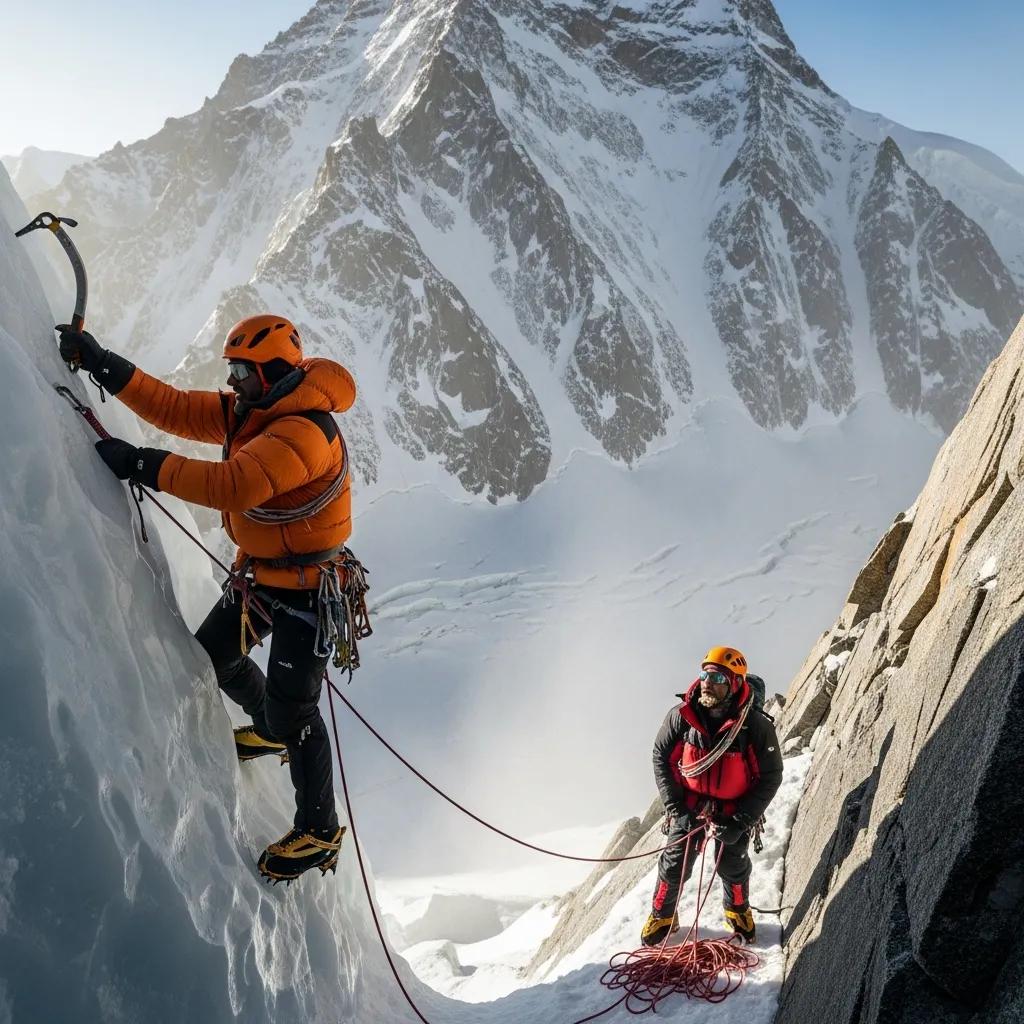
Kinshofer Route Camp Structure (Diamir Face)
Modern commercial expeditions establish four high camps above Diamir Base Camp. Camp positions can shift year-to-year based on serac conditions on the upper face.
The Kinshofer Wall bottleneck: The fixed-rope section between Camps 1 and 2 is the equivalent of K2’s Bottleneck for Nanga Parbat — a narrow mixed rock-and-ice section that can produce dangerous queueing when multiple teams move on the same day. Operators with experienced lead Sherpa typically aim to clear the wall before 8 AM to minimize warming-induced rockfall above. Ask your operator how they coordinate Kinshofer Wall timing with other teams.
Permits, Fees & Pakistan Logistics
Nanga Parbat falls under the Gilgit-Baltistan Tourism Department’s expedition permit system. After a contentious 2024–2025 fee-revision dispute (originally proposed at $4,000/climber), authorities settled on the following structure, which is confirmed to remain unchanged through 2026:
| Item | Cost (USD) | Notes |
|---|---|---|
| Climbing permit — Summer (June–Aug) | $2,500 per climber | Confirmed 2025–2026 rate; primary climbing season |
| Climbing permit — Spring/Autumn | $1,500–1,875 per climber | 40% discount range; rarely used on Nanga Parbat |
| Climbing permit — Winter (Dec–Feb) | ~$600 per climber | 95% discount; only attempted by elite alpine teams |
| Rescue bond | $10,000 per team (refundable) | Refunded if not used during expedition |
| Environmental fee | $68 per team | Gilgit-Baltistan environmental compliance |
| Service fee | $300 per team (non-refundable) | Tour operator administrative fee |
| Liaison officer | ~$1,500–2,500 per expedition | Pakistani military assignment; meals/accommodation by team |
| Pakistan visa | ~$60–200 | Trekking and mountaineering visa available |
| Military escort (Karakoram Highway) | Included in operator fee | Mandatory since 2013 attack |
| Insurance (climber + staff) | Variable | High-altitude rescue + medical mandatory |
| Budget guided expedition | $18,000–24,000 | Pakistani-operated, basic logistics, partial oxygen |
| Mid-tier guided expedition | $25,000–35,000 | Western/Pakistani combo, full oxygen, dedicated Sherpa |
| Premium guided expedition | $38,000–48,000+ | Furtenbach, Madison — high Sherpa ratios, weather forecasting, hyperbaric tents |
Why Pakistan permits stayed cheaper than Nepal: Gilgit-Baltistan authorities originally proposed $4,000/climber permits for 2025, matching Nepal’s spring 8000er fees. Pakistan Association of Tour Operators (PATO) petitioned the Gilgit-Baltistan High Court, arguing the increase would crater Pakistan’s climbing tourism (which had already suffered from political instability and the 2013 attack). The court granted a stay. The compromise: $2,500 individual permits for non-K2 8000ers — significantly cheaper than Nepal’s $3,000 for Manaslu, Lhotse, Makalu, and Kangchenjunga.
Security protocol since 2013: All foreign expeditions to Diamir Base Camp require Pakistani military escort. Climbers travel from Bunar Bridge to base camp under armed protection, and a security detail remains at base camp during the expedition. This adds approximately $1,500–3,000 to expedition costs depending on team size and is non-negotiable. The protocol has held since 2013 with no further incidents at base camps.
Best Time to Climb & Weather Windows
Nanga Parbat is a summer-season mountain. Pakistan’s western Himalaya and Karakoram peaks are protected from the South Asian monsoon by the main Himalayan crest, so peak climbing season runs late June through mid-August. This is the opposite of Nepal’s 8000ers (spring-dominant) and Manaslu (autumn-dominant).
| Season | Window | Conditions | Watch For |
|---|---|---|---|
| Summer | Late June – Mid August | Primary season; ~95% of attempts | Short summit windows (5–10 days); storm cycles can compress chances |
| Spring (Pre-Monsoon) | April – Early June | Cold, less stable | High winds, cold temperatures, often unclimbable |
| Autumn | September – Early October | Possible but uncommon | Operators focus on K2 in late summer, not autumn Nanga Parbat |
| Winter | December – February | Elite alpinists only | 13th of 14 8000ers to receive winter ascent (2016) |
The 2025 summer pattern (typical): Czech climbers Marek Novotný and Ondra Húserka made the first summits of the season in late June 2025. Seven Summit Treks reported a broad summit wave on July 9–10, 2025 including multiple no-oxygen ascents. David Göttler succeeded on the Rupal Face after multiple prior tries. Denis Urubko and Maria Cardell opened a new alpine-style route on the Diamir Face. Summit windows in 2025 came in 5–7 day stretches separated by storm cycles.
Essential Gear Checklist
Nanga Parbat gear requirements match standard 8000-meter expedition kit, with extra emphasis on technical hardware for the Kinshofer Wall (mixed climbing skills required) and warmth for cold, wind-exposed upper camps. The 14-18 hour summit day demands battery capacity and weight management.
High-Altitude Clothing
- 8000m down suit OR expedition parka + down pants (-40°C rated)
- Base layers (3 sets), heavyweight fleece, windproof shell
- Expedition mitts + liner gloves (3 pairs)
- Balaclava + buff + goggles (2 pairs, including summit-clear lens)
- Glacier sunglasses (Category 4)
Boots & Foot Systems
- 8000m triple boots (La Sportiva Olympus Mons, Millet Everest, Scarpa Phantom 8000)
- Mid-altitude double boots for rotations
- Crampons with anti-balling plates (Petzl Lynx, Grivel G14)
- Multiple sock systems with vapor barrier
- Insulated overgaiters
Technical Hardware (Kinshofer-Specific)
- Harness (full strength, sized over down suit)
- Helmet (essential — rockfall on Kinshofer Wall)
- Ice axe + 2nd tool for steep mixed sections
- Ascender + descender + 4 locking carabiners
- 2 prusik cords + 2 slings
Expedition & Comms
- Headlamp + 4 spare battery sets (cold-rated lithium)
- Personal first-aid + frostbite prevention kit
- Garmin inReach Mini 2 or sat phone
- Power bank + solar panel for base camp
- Pakistan visa, military escort documents
Difficulty & Why Nanga Parbat Kills
Per NASA Earth Observatory data cited as of 2012: approximately 335 successful summits and 68+ deaths — a 22.3% fatality rate. Only Annapurna I (~30%) and K2 (~22-25%) are statistically more dangerous. Nanga Parbat earns its “Killer Mountain” name through four distinct risk profiles:
1. Avalanche-prone terrain on every face. The 1937 disaster (16 dead in a single avalanche at C4 on the Rakhiot Face), the 1934 disaster (Merkl’s blizzard tragedy), and Günther Messner’s 1970 death on the Diamir descent all involved snow-load avalanches. The Diamir Face’s upper serac zones above C3 continue to release periodically.
2. Length and exposure of summit day. The summit ridge from C4 (~7,400m) is long and exposed. Typical round-trip times are 14–18 hours, deep into the death zone. Multiple fatalities have occurred on descent when weather changed during the long return.
3. The Kinshofer Wall bottleneck. Unlike most 8000er crux sections, the Kinshofer Wall mixed rock-and-ice climbing happens at “only” 5,500m, but slow movement through this bottleneck during a fixed period (typically 1 climb up, multiple acclimatization rotations) means cumulative exposure to rockfall and ice fall is significant.
4. The 2013 attack — non-mountain risk. Unique among 8000ers, Nanga Parbat carries a security risk profile that didn’t exist before 23 June 2013. While Pakistani military escort and security protocols have been effective since 2014, the geopolitical situation in Gilgit-Baltistan remains a consideration for some expedition operators (Mingma G of Imagine Nepal: “This year the number of climbers in Pakistan dropped…it could be our last season in Pakistan.”). Talk to your operator about current conditions; they shift season to season.
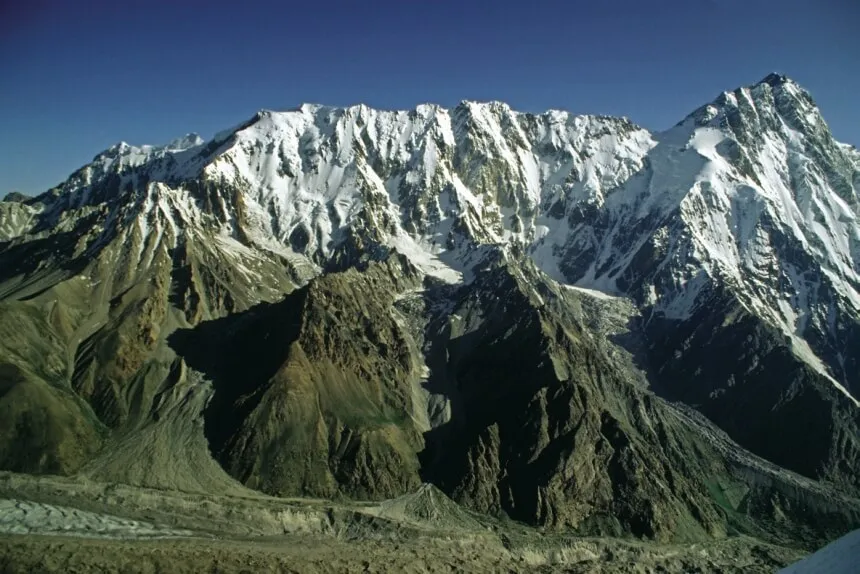
Featured Expedition Operators
The operators below run established Nanga Parbat programs. When evaluating, ask specifically about: military escort arrangements and security briefings, Kinshofer Wall traffic protocols, oxygen strategy, weather forecasting partners (most use Karl Gabl or Marc DeKeyser), and recent Nanga Parbat-specific track record.
Furtenbach Adventures
Austrian-led operator with strong technology-forward systems including pre-acclimatization, hyperbaric tents, and rigorous weather analysis. Furtenbach has been one of the more visible operators on Pakistan’s 8000ers since the 2013 attack era ended. Premium-tier pricing with high Sherpa-to-climber ratios. furtenbachadventures.com
Seven Summit Treks
Kathmandu-based operator with the largest operational footprint on Pakistan’s 8000ers each summer. Coordinates rope-fixing and Sherpa logistics across multiple Pakistan peaks (K2, Broad Peak, GI, GII, Nanga Parbat). The 2025 Nanga Parbat summit wave on July 9–10 was largely a Seven Summit Treks operation. Multiple service tiers from budget to premium. sevensummittreks.com
SummitClimb
International mountaineering company offering guided expeditions on major Himalayan and Karakoram peaks. Smaller team sizes than Seven Summit Treks; structured itineraries. Mid-tier pricing. summitclimb.com
Madison Mountaineering
U.S.-based premium operator with experienced Western lead guides plus Sherpa support. Garrett Madison’s team runs Nanga Parbat programs as part of broader Karakoram operations (typically combined with K2 or Broad Peak in the same season). Higher Sherpa ratios and weather forecasting. madisonmountaineering.com
Pakistani Operators
Several established Pakistani operators including Jasmine Tours (Ali Porik), Karakorum Expeditions, and Summit Karakoram run cost-effective Nanga Parbat programs with strong local logistics and military escort coordination. These tend to be in the $18K–24K budget tier for fully-supported expeditions.
Frequently Asked Questions
Between Albert Mummery’s first attempt in 1895 and Hermann Buhl’s first ascent in 1953, 31 climbers died trying to reach the summit — the deadliest pre-first-ascent record of any 8000-meter peak. The 1937 German expedition lost 16 climbers (including 9 Sherpa) in a single avalanche at Camp IV on the Rakhiot Face. By 2012, at least 68 climbers had died on the mountain with a 22.3% historical fatality rate, making Nanga Parbat the third deadliest 8000er after Annapurna I and K2.
Austrian climber Hermann Buhl made the first ascent on 3 July 1953 — alone and without supplemental oxygen, in defiance of expedition leader Karl Herrligkoffer’s orders to turn back. Buhl departed high camp at 02:30, climbed for 17 hours, reached the summit at 19:00, and bivouacked standing up on a narrow ledge with a single handhold through the night. This remains the only 8000er ever first ascended solo in mountaineering history. The expedition was the 1953 German-Austrian Willy Merkl Memorial Expedition, named for the climber who died on Nanga Parbat in 1934.
The Pakistan climbing permit is $2,500 per climber in summer season (June-August), valid for 2025 and 2026 after Gilgit-Baltistan authorities revised originally-planned $4,000 fees down following operator protests. Winter season permits cost approximately $600 per climber (95% discount). A guided commercial expedition typically costs $18,000–$48,000 depending on operator, oxygen strategy, and support level. Budget Pakistani operators run $18K–24K; premium operators like Furtenbach Adventures or Madison Mountaineering run $38K–48K.
Three main faces with multiple routes: the Diamir Face (west) where the standard Kinshofer Route was first climbed in 1962 — this is today’s commercial standard; the Rakhiot Face (north) where Hermann Buhl made the 1953 first ascent — rarely used today; and the Rupal Face (south) — the world’s highest mountain wall at ~4,600 meters of vertical relief, first climbed by Reinhold and Günther Messner in 1970 — an elite alpinist objective only. Mummery’s intended 1895 route on the Diamir, the “Mummery Rib,” has never been completed as an ascent.
June through July (summer). Pakistan’s 8000ers are summer-season mountains because the Karakoram and western Himalaya are monsoon-protected by the main Himalayan crest. Summit windows are typically short — 5-10 days in late June or July. Winter is reserved for elite alpinists: Nanga Parbat was the second-to-last 8000er to receive a winter ascent (26 February 2016 by Simone Moro, Alex Txikon, and Ali Sadpara). Only K2 came later in 2021.
Nanga Parbat is in Gilgit-Baltistan, Pakistan, at the extreme western end of the Himalaya range. Coordinates: 35.2375°N, 74.5894°E. It is the western anchor of the Himalaya — the next 8000er to the east is Annapurna, over 1,500km away. The mountain rises in stunning isolation from the Indus River valley, with the river flowing only 25km north of the summit, creating the greatest vertical relief from base to summit of any mountain in the world (~7,000m).
Yes, exactly once. On 26 February 2016, Italian Simone Moro, Spanish Alex Txikon, and Pakistani Ali Sadpara reached the summit. Italian Tamara Lunger turned back approximately 70m below the summit due to exhaustion. This was the first winter ascent of any 8000er in Pakistan and ended a 26-year quest by elite winter alpinists. Nanga Parbat was the second-to-last 8000er to receive a winter ascent — only K2 came later (16 January 2021 by a Nepali team led by Nirmal Purja and Mingma G).
Nanga Parbat is the third deadliest 8000er with a historical fatality rate of approximately 22.3% (~335 summits / 68+ deaths as of 2012, per NASA Earth Observatory). Only Annapurna I and K2 are statistically more dangerous. The 2013 Diamir Base Camp terrorist attack killed 10 climbers and a Pakistani guide, adding a non-mountain risk factor unique to this peak in modern era. Pakistani military escort has been mandatory and effective since 2014.
The Rupal Face is Nanga Parbat’s south wall — at approximately 4,600 meters of vertical relief, it is the highest mountain face in the world. It was first climbed in 1970 by Reinhold and Günther Messner. The Central Pillar of the Rupal Face was climbed alpine-style by Americans Steve House and Vince Anderson in 2005 (5 days up, 2 down), one of the boldest Himalayan ascents in history. The Rupal Face remains an elite alpinist objective only — no commercial guiding exists on this face.
The 2013 Diamir Base Camp terrorist attack killed 11 people (10 foreign climbers and a Pakistani guide). Since 2014, Pakistani military escort has been mandatory for all foreign expeditions to Diamir Base Camp, and security details remain at base camp throughout the season. The protocol has held since 2013 with no further incidents at base camps. That said, security conditions in Gilgit-Baltistan remain a consideration — some operators (including Imagine Nepal’s Mingma G) have publicly questioned whether they’ll continue Pakistan operations. Discuss current conditions with your operator.
Nanga Parbat Map & Live Weather
Nanga Parbat’s summit coordinates: 35°14’15″N 74°35’21″E (35.2375°N, 74.5894°E). The map below shows the summit and the surrounding Gilgit-Baltistan region. The Indus River flows just 25km north of the summit — visible at the top of the map view at this zoom level.
This peak is one of the 14 mountains on Earth above 8,000 meters
The 14 eight-thousanders are the only mountains on Earth that rise above 8,000m — the altitude where the human body enters the Death Zone. See the complete collection ranked by elevation, with death rates, first ascent history, and the Messner/Kukuczka/Nims Purja completion records.
View All 14 Eight-Thousanders →🏔 Part of the 14 Eight-Thousanders
One of the 14 mountains on Earth above 8,000m. See the complete collection with death rates, first ascents, and the 14 Peaks Challenge history.
View All 14 Eight-Thousanders →Was this helpful?
🏔Related guides
🧭Explore & compare
Global Summit Guide is an independent mountaineering resource founded in 2026. The team combines first-hand trekking and climbing experience with in-depth research and professional health and nutrition review to help climbers choose objectives, prepare properly, and stay safe.
Health, altitude, and nutrition content is reviewed by Taylor Ludlow (Registered Nurse) and Brigg Hoopes (Nutritionist).
What We Don't Know Yet
Mountain information changes quickly. This box explains the limits of what this page can responsibly promise.
- Route conditions, snowpack, closures, and weather can change quickly after this page is updated.
- Permit rules, fees, quotas, and reservation windows may change between review cycles.
- Operator availability, pricing, guide ratios, and cancellation terms can change by season.
- Your fitness, altitude response, risk tolerance, and experience level may change what is safe or realistic.
- Use this page for planning guidance, then verify current information with official sources and qualified local experts before committing.
Verify current conditions with official land managers, guide services, local forecasts, and current route reports before booking or climbing.
Mountaineering, rock and ice climbing, glacier travel, and high-altitude activity are inherently dangerous and can result in serious injury or death. The information on Global Summit Guide is provided for general informational and educational purposes only and is not a substitute for professional instruction, qualified guiding, proper equipment, or your own judgment and experience.
Route conditions, weather, snowpack, permits, regulations, and hazards change constantly and may differ from what is described here. Details may be incomplete, out of date, or contain errors. Always verify current information with local authorities, certified guides, and official sources before making any decision in the mountains.
Nothing on this site is medical, legal, or financial advice. Our fitness, acclimatization, altitude, and nutrition content is general in nature; consult a qualified physician before beginning any strenuous exercise program or exposing yourself to high altitude.
You are solely responsible for your own safety and decisions. To the fullest extent permitted by law, Global Summit Guide and its team accept no liability for any loss, injury, damage, or expense arising from use of, or reliance on, this information. By using this site you acknowledge these risks and accept these terms.
Some links on this site may be affiliate links. If you buy through them we may earn a small commission at no extra cost to you; this never affects our recommendations.
Global Summit Guide recommendation path
Next Best Mountain to Research
Use these recommendations to continue the right planning path instead of stopping on one page.
Use current permit, weather, route, and operator information before booking or climbing.
Search Flights, Hotels & Rental Cars
Have the mountain or destination picked? Use Expedia to compare the flights, lodging and rental cars that fit your actual trip dates. For mountain travel, consider arriving early enough for delays and adding a buffer night after the climb before a fixed flight home.
Compare current flight, hotel and car options.
Affiliate disclosure: Global Summit Guide may earn a commission if you book through this link, at no additional cost to you.