Climbing Gasherbrum I: The Hidden Peak & Birthplace of Alpine-Style 8,000ers
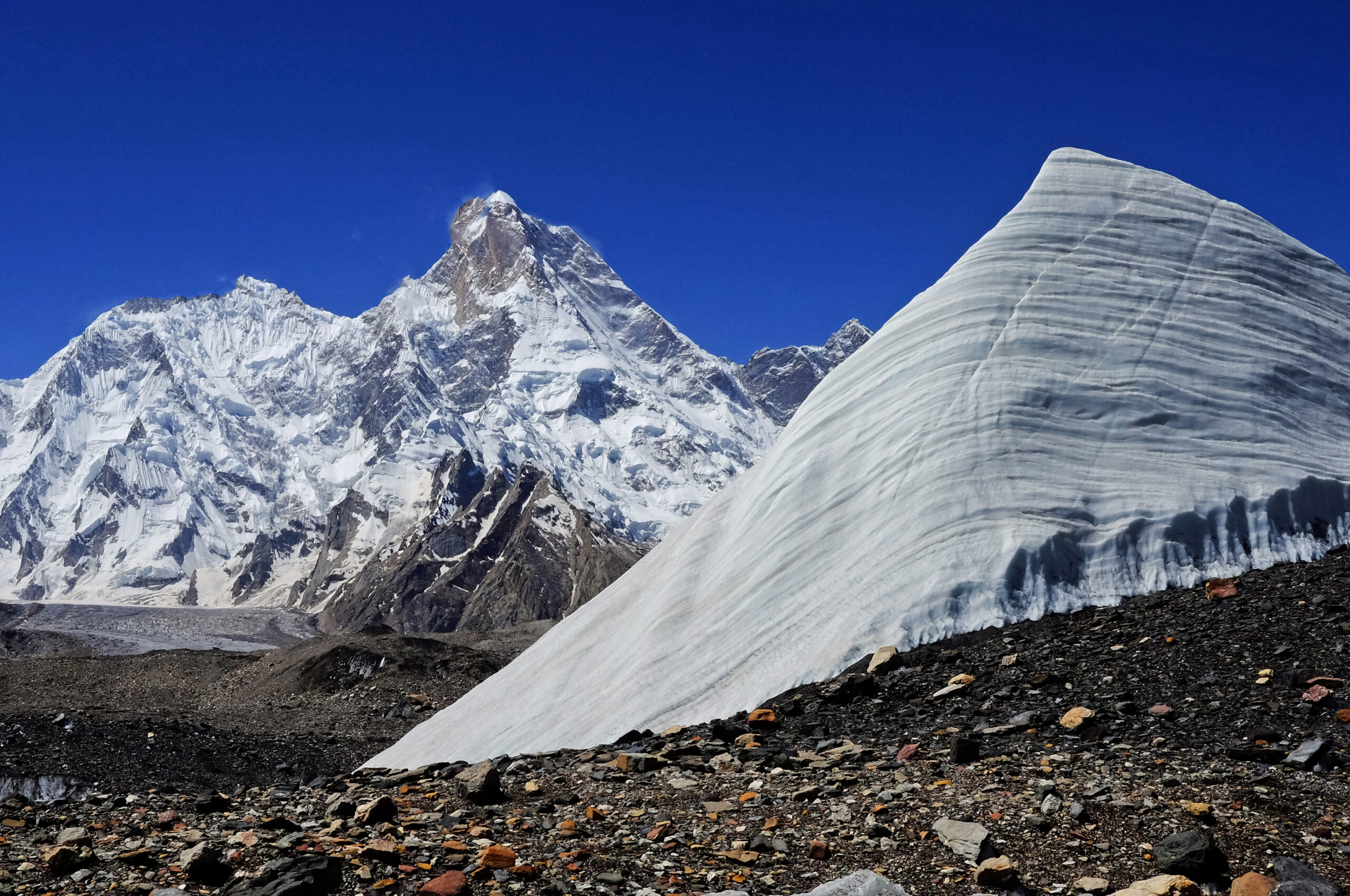
At 8,080 meters (26,510 ft), Gasherbrum I is the world’s eleventh-highest mountain and the “Hidden Peak” of the Karakoram — a remote granite summit tucked deep within the Gasherbrum Massif on the Pakistan–China border. The name Gasherbrum comes from the Balti words rgasha (beautiful) and brum (mountain) — contrary to the widespread “shining wall” mistranslation. Originally designated K5 by the 1856 Great Trigonometric Survey of India, the mountain was renamed Hidden Peak by William Martin Conway in 1892 for its extreme remoteness. Americans Pete Schoening and Andy Kauffman made the first ascent on July 5, 1958. In August 1975, Reinhold Messner and Peter Habeler revolutionized Himalayan climbing by making the first pure alpine-style ascent of any 8,000m peak here — establishing a new ethic that redefined mountaineering. This complete guide covers the Japanese Couloir standard route, Pakistan’s stable 2026 permit structure (unlike Nepal’s September 2025 fee increases), the Baltoro Glacier approach, and the 2025 July 20 summit wave led by Imagine Nepal.
(26,510 ft)
(7-person group)
since 1958
8,000er (Messner)
Gasherbrum I Location & Current Conditions
Live 7-day forecast at Gasherbrum Base Camp elevation (5,150m) on the Baltoro Glacier and interactive terrain map of the Karakoram region on the Pakistan–China border.
Gasherbrum I · Pakistan/China Border
35.7239°N, 76.6956°EBase Camp Weather
Elev: 5,150 mGasherbrum I is one of the least-climbed 8,000m peaks on Earth — fewer than 200 total ascents since the 1958 American first ascent. The mountain sits at the heart of the Gasherbrum Massif in Pakistan’s Karakoram, accessible only via a 9-10 day trek up the Baltoro Glacier from Askole through Concordia — the legendary glacial amphitheater with four 8,000m peaks (K2, Broad Peak, Gasherbrum I, and Gasherbrum II) within a 20 km radius. Americans Pete Schoening and Andy Kauffman made the first ascent on July 5, 1958 via the Roch Ridge, leading an eight-man team under Nicholas Clinch. Seventeen years later, in August 1975, Reinhold Messner and Peter Habeler returned to this same mountain and climbed a new route on the northwest face in three days without rope, supplemental oxygen, or fixed camps — making Gasherbrum I the site of the first pure alpine-style ascent of any 8,000m peak and redefining Himalayan climbing forever. The first winter ascent came on March 9, 2012 by Polish climbers Adam Bielecki and Janusz Gołąb, without supplemental oxygen, during a historic Polish Winter Himalaism program. The 2025 season’s major summit wave fell on July 20 with Imagine Nepal placing Dr. Sashko Kedev on top to complete his 14 eight-thousanders — the first Macedonian climber to do so.
All 2026 figures in this guide — permit fees, regulations, expedition costs, and logistics — were verified against the Alpine Club of Pakistan, confirming that Pakistan’s 8,000m peak fees did not increase for the 2026 season (unlike Nepal’s September 2025 hike). Historical climbing data draws on The Himalayan Database, the American Alpine Journal’s first-winter-ascent account, Nicholas Clinch’s A Walk in the Sky: Climbing Hidden Peak (1982), and ExplorersWeb 2025 season coverage. The Messner-Habeler 1975 alpine-style narrative draws from Reinhold Messner’s published accounts and the 2025 retrospective coverage in Alpine Mag. Fact-check date: April 18, 2026.
Gasherbrum I at a Glance
Before diving into routes, logistics, and the 2026 permit structure, here are the essential facts every Gasherbrum I climber should know about the Hidden Peak.
Why Gasherbrum I Is One of the Least-Climbed 8,000ers
Gasherbrum I’s reputation as one of the most demanding 8,000m peaks is well-earned. The combination of technical climbing, extreme remoteness, the demanding Baltoro Glacier approach, and a relatively small commercial operator pool means Gasherbrum I sees far fewer summits than Nepal-side 8,000m peaks. Understanding these factors is essential before committing to an expedition.
Fewer Than 200 Total Ascents
Gasherbrum I has fewer than 200 recorded total ascents since 1958 — one of the smallest totals on the 14 eight-thousanders list. For comparison, Everest sees 500+ summits per year. This isn’t because G1 is short of climbers who want to attempt it — it’s because the mountain’s combination of technical difficulty, remote logistics, and weather unpredictability means success rates on single expeditions are typically 20-40% rather than the 60-80% common on Nepal-side commercial 8,000ers.
The Baltoro Glacier Approach
The approach to Gasherbrum Base Camp is one of the longest on any 8,000m peak: 9-10 days of trekking on the Baltoro Glacier from Askole, through waypoints including Paiju (3,480m), Urdukas (4,130m), Goro II, and Concordia (4,550m) to Base Camp at 5,150m. The trek consumes 2+ weeks of the total expedition budget, requires dozens of porters per expedition, and exposes climbers to the full scope of Karakoram logistics — weather delays, porter strikes, and glacier route-finding all before the real climbing begins.
Technical Japanese Couloir Route
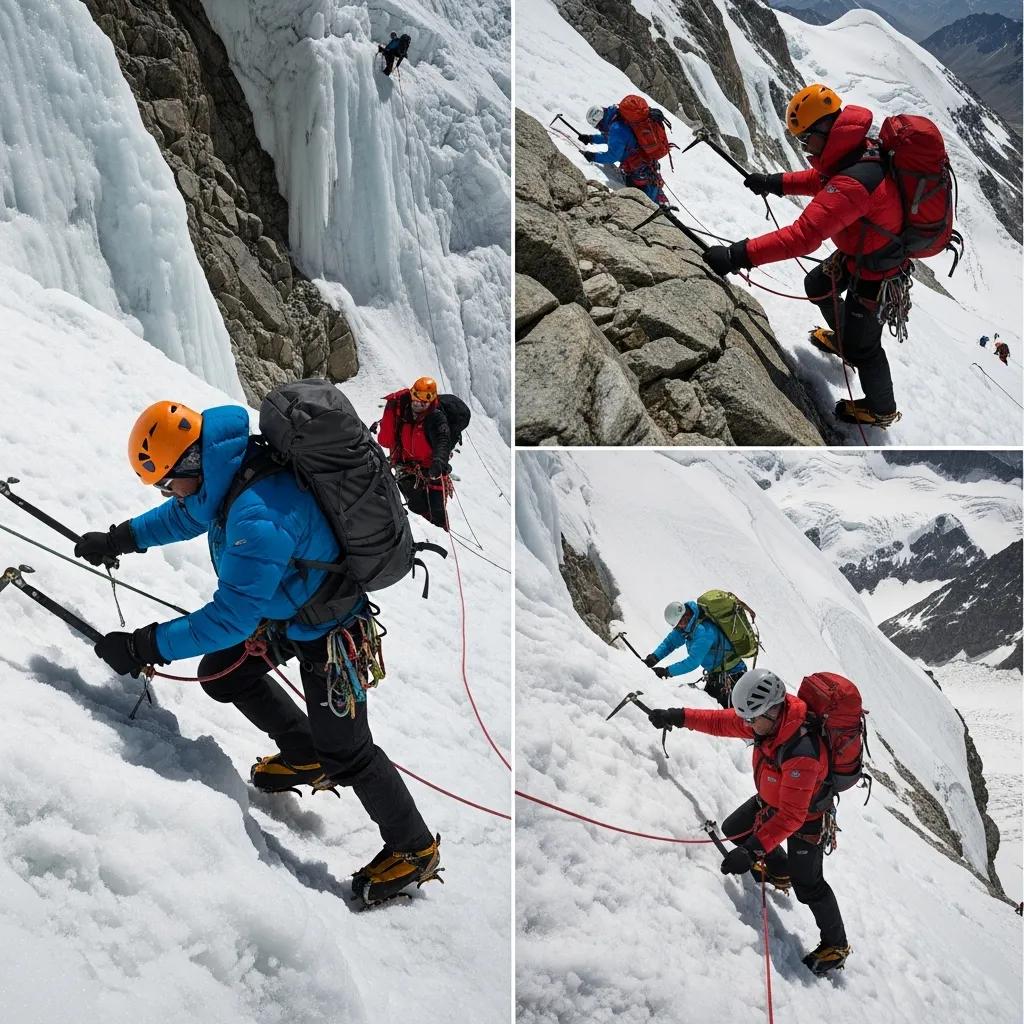
The standard Japanese Couloir route on the northwest face demands sustained steep snow and ice climbing at 40-55° with shorter steeper sections, crevasse-field navigation on the Gasherbrum glacier approach, and technical rock climbing on the upper summit pyramid. Unlike Cho Oyu or Manaslu where the standard routes involve primarily snow walking with fixed ropes, Gasherbrum I demands real climbing technique throughout. Elite Exped requires clients to have “mastered mountaineering skills and have a high level of fitness” before accepting them.
Remote Rescue & Medical Support
Pakistan’s helicopter rescue capacity for Karakoram climbers is significantly more limited than Nepal’s. Rescue flights from Skardu to Gasherbrum Base Camp are possible but weather-dependent and expensive, and rescue from above Base Camp typically requires descent to at least Camp 1 before helicopter extraction is possible. The nearest serious medical facilities are in Skardu (3+ days from Base Camp under ideal conditions, much longer if weather delays jeeps or flights). Self-sufficiency matters on G1.
Weather Window Pressure
Karakoram summer weather is fundamentally less stable than Nepal spring. Unlike the relatively predictable pre-monsoon Himalayan windows, Gasherbrum I climbers must read jet stream patterns that can shift unpredictably. Teams often have only 2-3 viable summit windows across the entire July climbing period, and windows can close abruptly mid-summit-push. The 2025 season’s July 20 summit wave came after weeks of waiting for the first sustained window.
Fixed-Line Coordination Challenges
Unlike Nepal-side peaks where established rope-fixing teams coordinate across multiple operators, Pakistan’s Karakoram sees smaller expedition populations and fewer coordinated rope-fixing efforts. Expeditions often arrive to find partially-fixed routes, incomplete infrastructure, or the need to assume fixing responsibility themselves. Teams that plan to rely entirely on pre-existing fixed lines may be disappointed; climbers must be prepared to lead pitches, break trail through deep snow, and contribute to rope-fixing when conditions require.
The 1975 Messner-Habeler Precedent
Gasherbrum I carries a weight of climbing history that affects modern expeditions. The 1975 Messner-Habeler first alpine-style 8,000m ascent — performed on this mountain — set a standard that elite climbers still aspire to match. Climbers who attempt G1 often arrive motivated by this history, and small alpine-style teams continue to attempt new variations and unclimbed faces. The mountain rewards skilled, self-sufficient climbers and punishes those who expect Everest-level commercial handholding.
The Polish Winter Fatalities
The March 9, 2012 first winter ascent by Bielecki and Gołąb was overshadowed by the disappearance the same day of three climbers from a simultaneous international expedition: Austrian Gerfried Göschl, Swiss Cedric Hählen, and Pakistani Nisar Hussain Sadpara. The trio, attempting a new winter route on the south side, were last seen approximately 250m below the summit at 10:30 AM before losing satellite contact. They are believed to have been blown off the mountain by strong winds. On July 7, 2013, Polish climber Artur Hajzer — expedition leader for the 2012 winter summit — died after falling in the Japanese Couloir during a summer return attempt.
Who Can Realistically Climb Gasherbrum I?
Gasherbrum I is not a preparation peak. It is an intermediate-to-advanced 8,000m objective typically climbed by experienced mountaineers building toward the 14 eight-thousanders or who have completed at least one prior 8,000m peak. The mountain’s combination of technical climbing, remote logistics, and weather unpredictability rewards experienced judgment and punishes inexperience.
Minimum Experience Prerequisites
Reputable Gasherbrum I operators typically require the following experience before accepting clients:
- At least one prior 8,000m summit — ideally Manaslu, Cho Oyu, or Broad Peak as preparation. Operators such as Elite Exped require climbers to have “made ascents of at least two 6,000m or 7,000m peaks, and at least one 8,000m mountain”
- Strong technical ice climbing — comfort on sustained 40-55° ice and short steeper sections
- Proven fixed-line and jumar competence on steep technical terrain
- Crevasse-navigation skills — the Gasherbrum glacier approach from Base Camp to Camp 1 involves significant crevasse exposure
- Rock climbing competence in mountaineering boots — the upper summit pyramid involves rock movement
- Exceptional aerobic fitness — G1’s long summit days and high-camp placements reward endurance
- Cold-weather tolerance below -30°C — summit-day temperatures in July routinely fall below -25°C with wind chill
- Mature expedition judgment — G1’s remote logistics mean small errors compound quickly
- Willingness to carry personal loads — Karakoram expeditions often require more personal hauling than Nepal commercial climbs
Gasherbrum I Is Appropriate For:
Experienced 8,000m climbers building toward K2 or Broad Peak. Gasherbrum I is an excellent Karakoram preparation peak — climbers planning K2 or Broad Peak attempts often climb G1 first to build familiarity with Pakistan logistics, the Baltoro approach, and Karakoram weather patterns.
Climbers progressing through the 14 eight-thousanders. G1 is a distinctive notch on the 14-peak project — many climbers target it mid-career after completing Cho Oyu, Manaslu, and often Broad Peak, before attempting K2 or the most dangerous peaks. Its technical character provides genuine preparation for harder objectives.
Technical climbers seeking remote, less-commercial 8,000m experiences. Those who prefer the character of smaller-team Karakoram expeditions over Nepal’s increasingly commercialized 8,000m climbing scene find Gasherbrum I rewarding. The mountain still feels like real expedition climbing rather than guided tourism.
Climbers pursuing G1 + G2 doubleheaders. Gasherbrum I and Gasherbrum II share Base Camp, making combined expeditions logistically efficient. Climbers with at least 50 days available often target both peaks in a single Karakoram season.
Gasherbrum I Is Not Appropriate For:
First-time 8,000m climbers. G1 is not a reasonable first 8,000m attempt. The combination of technical climbing, remote logistics, and limited rescue support make first-time attempts disproportionately risky.
Climbers without prior Karakoram experience. Pakistan logistics differ meaningfully from Nepal. Climbers who have only climbed in Nepal will find G1’s approach, permit system, and expedition infrastructure significantly more demanding than expected.
Climbers expecting Nepal-level commercial infrastructure. G1’s commercial operator pool is smaller, fixed-line infrastructure is less predictable, and weather-forecast services are less sophisticated than major Nepal 8,000m operations. Climbers who rely on commercial support to compensate for skill gaps will be exposed to the mountain’s full character.
Climbers with tight expedition timelines. The 40-50 day expedition window (compared to Nepal’s typical 35-45 days for equivalent peaks) reflects real constraints. Climbers who cannot commit to 6-7 weeks of expedition time should choose a different 8,000m peak.
A realistic progression to Gasherbrum I typically spans 8-12 years of serious mountaineering: 2-3 years building technical alpine skills, 2-3 years on 6,000-7,000m peaks (Ama Dablam, Baruntse, Spantik), at least one prior 8,000m summit (Manaslu, Cho Oyu, or Broad Peak are typical), and ideally familiarity with Pakistan logistics through prior Karakoram trekking or climbing. Climbers attempting G1 as their first 8,000m peak face disproportionately elevated risk given the mountain’s technical character and the limited rescue infrastructure in the remote Baltoro region.
Gasherbrum I & the 14 Eight-Thousanders Progression
Gasherbrum I is not one of the Seven Summits — the highest peaks of each continent — because Asia’s representative in that framework is Mount Everest. However, Gasherbrum I plays a meaningful role in the 14 eight-thousanders progression as one of the technically demanding Karakoram peaks that climbers typically approach mid-career, after completing easier 8,000ers but before attempting the most dangerous objectives like K2 or Annapurna.
Explore the Seven Summits Framework
Gasherbrum I is not a Seven Summit, but it serves as Karakoram preparation for climbers targeting K2 — not a Seven Summit itself, but the ultimate mountaineering challenge. Climbers pursuing both collections often use G1 as their first Karakoram 8,000m peak before attempting K2.
Gasherbrum I as Karakoram Preparation
For climbers targeting K2 — the world’s second-highest and arguably most challenging 8,000m peak — Gasherbrum I serves as excellent Karakoram-specific preparation. Specific capabilities transfer directly:
- Baltoro Glacier experience. K2 shares the same Askole → Concordia approach. Climbers who have completed the G1 approach arrive at K2 with the logistical experience already built — porter negotiations, glacier route-finding, weather-delay management.
- Karakoram weather patterns. G1 teaches climbers how to read Pakistan jet stream forecasts, assess summit windows, and manage extended Base Camp waits — all critical K2 skills.
- Technical climbing at altitude. The Japanese Couloir provides experience on sustained 40-55° terrain that K2’s Abruzzi Spur demands at similar angles.
- Pakistani logistics familiarity. Alpine Club of Pakistan permit processes, Skardu operations, Liaison Officer protocols, and porter management all transfer directly from G1 to K2.
- Self-sufficiency mindset. G1’s smaller commercial infrastructure forces climbers to develop the self-reliance K2 absolutely requires.
Where Gasherbrum I Fits in a 14-Peak Project
For climbers pursuing all 14 eight-thousanders, Gasherbrum I typically appears mid-project:
- Typical prior climbs: Cho Oyu and Manaslu completed (the two most common first 8,000ers), often Everest or Lhotse, and ideally Broad Peak as Karakoram introduction
- G1 in the sequence: Climbed somewhere between the 3rd and 8th 8,000m summit in most 14-peak projects
- Subsequent targets: K2, Nanga Parbat, Annapurna, Kangchenjunga, and Makalu as progressively more technical objectives
- Doubleheader option: G1 + G2 in a single expedition advances the project count by two summits efficiently
For detailed Seven Summits planning, see our complete Seven Summits guide and Your Path to the Seven Summits planning tool.
Gasherbrum I History: From K5 Mystery to the Alpine-Style Revolution
Gasherbrum I’s climbing history spans nearly 90 years — from the 1856 Great Trigonometric Survey that first identified the peak as K5, through the 1958 American first ascent, the 1975 Messner-Habeler alpine-style revolution, the 1984 Messner-Kammerlander G1/G2 traverse, and the 2012 Polish first winter ascent. Understanding this history provides essential context for why Gasherbrum I occupies such a distinctive place in mountaineering culture.
Early Identification and Reconnaissance (1856-1936)
Gasherbrum I was first identified as K5 — the fifth peak of the Karakoram — by T.G. Montgomerie in 1856 during the British Great Trigonometric Survey of India, when he spotted the peaks from more than 200 km away. In 1892, British explorer and climber William Martin Conway gave the mountain its alternate name Hidden Peak, reflecting its extreme remoteness within the Gasherbrum Massif.
The first climbing attempts came in the 1930s. In 1934, a large international expedition organized by Swiss climber G.O. Dyhrenfurth explored the Gasherbrum area, with two climbers reaching 6,300 meters. In 1936, a French expedition led by H. De Segogne reached 6,900 meters but was turned back by storms and altitude challenges. Both expeditions established that Gasherbrum I would require a major commitment to climb successfully.
The 1958 American First Ascent
The successful first ascent came on July 5, 1958 through an eight-man American expedition led by Nicholas B. Clinch. The team included Pete Schoening (already famous for his 1953 K2 “belay of the century”), Andy Kauffman, and Pakistani army officers Captain Mohammad Akram and Captain S.T.H. Rizvi.
Pete Schoening and Andy Kauffman reached the summit via what became known as the Roch Ridge (Southeast Ridge), making Gasherbrum I the ninth 8,000-meter peak to be climbed. Clinch later wrote the definitive expedition account, A Walk in the Sky: Climbing Hidden Peak (1982), which remains the classic narrative of the climb.
The 1958 ascent was a major achievement in its era — Gasherbrum I’s remoteness had defeated prior expeditions, and the Americans proved the mountain could be climbed. However, like most 1950s Himalayan ascents, the expedition used extensive fixed-rope support, multiple high camps, and oxygen above the highest camps. The climb established the mountain’s feasibility but did not define its ultimate character.
The 1958 summit made Gasherbrum I the ninth of the 14 eight-thousanders to receive a first ascent, following Annapurna (1950), Everest (1953), Nanga Parbat (1953), K2 (1954), Cho Oyu (1954), Makalu (1955), Kangchenjunga (1955), Lhotse (1956), Manaslu (1956), Gasherbrum II (1956), and Broad Peak (1957). Only Dhaulagiri (1960) and Shishapangma (1964) remained unclimbed after Gasherbrum I. The rapid succession of first ascents during 1950-1964 is known as the “Golden Age of Himalayan mountaineering.”
The 1975 Alpine-Style Revolution
The single most important Gasherbrum I climb came seventeen years after the first ascent. In August 1975, Reinhold Messner and Peter Habeler began a three-day ascent that revolutionized Himalayan climbing.
Starting their climb on August 8, 1975, Messner and Habeler carried only their personal climbing equipment — no rope, no supplemental oxygen, no fixed camps, no porter support above Base Camp. They climbed a new route on the northwest face in pure alpine style, reaching the summit on August 10, 1975. One day later, a team of three led by Austrian Hanns Schell reached the summit via the American route.
The Messner-Habeler ascent was the first pure alpine-style ascent of any 8,000m peak. Before this climb, the prevailing Himalayan wisdom held that 8,000m summits required large expedition-style efforts with extensive fixed infrastructure. Messner and Habeler proved the opposite — that small, fast, self-sufficient teams could climb 8,000m peaks more safely and ethically than heavily-supported expeditions.
The 1975 ascent redefined mountaineering. Messner went on to climb all 14 eight-thousanders (completing the feat in 1986), and alpine-style climbing became the gold standard for elite high-altitude mountaineering. Everything from the 2012 Polish winter ascent to contemporary small-team attempts on technical faces traces back to this 1975 precedent set on Gasherbrum I.
The 1984 Messner-Kammerlander Traverse
Messner returned to Gasherbrum I nine years after his first alpine-style ascent. In 1984, Reinhold Messner and Hans Kammerlander traversed from Gasherbrum II (8,035m) to Gasherbrum I (8,080m) without returning to Base Camp between the two climbs — a logistical achievement unmatched in 1980s Himalayan mountaineering. The traverse remains one of the most celebrated alpine-style achievements in high-altitude climbing history, accomplished with support from Balti porter Little Karim rather than Sherpa.
The 2012 First Winter Ascent
Gasherbrum I remained unclimbed in winter for over five decades after the 1958 summit. On March 9, 2012, Polish climbers Adam Bielecki (28) and Janusz Gołąb completed the first winter ascent — without supplemental oxygen — via the Japanese Couloir on the northwest face. They reached the summit at 08:30 local time after climbing from Camp 3 at 7,040m, beginning at midnight in temperatures of -35°C with windchill at -53°C.
The ascent was part of the Polish Alpine Association’s “Polish Winter Himalaism 2010-2015” program led by Artur Hajzer, whose goal was for a new generation of Polish mountaineers to claim first winter ascents on the remaining unclimbed-in-winter 8,000m peaks. Gasherbrum I became the 11th 8,000m peak to receive a winter ascent.
The celebration was tempered by tragedy. On the same day, three climbers from an international expedition attempting a different winter route on the south side — Austrian Gerfried Göschl, Swiss Cedric Hählen, and Pakistani Nisar Hussain Sadpara — disappeared near the summit and were never found. They were last sighted approximately 250m below the summit before losing satellite contact; strong winds are presumed to have blown them off the mountain.
Further tragedy followed the 2012 summit: on July 7, 2013, expedition leader Artur Hajzer returned to Gasherbrum I for a summer summit attempt and died after falling in the Japanese Couloir. On July 21, 2013, three Spanish climbers — Abel Alonso, Xebi Gomez, and Álvaro Paredes — summited Gasherbrum I but disappeared during the descent after a storm. Gasherbrum I has claimed significant members of the global climbing community.
Modern Notable Ascents
- 1977: Fourth successful ascent by Slovenians Nejc Zaplotnik and Andrej Stremfelj on a new route. Team member Drago Bregar died during the climb.
- 1980: French climbers Maurice Barrard and Georges Narbaud summit via the South Ridge for the first time (fifth overall ascent).
- 1981: Japanese expedition completes the route through the couloir on the northwest face that becomes known as the “Japanese Couloir” — the line that becomes the modern standard commercial route.
- 1985: Solo ascents by French climber Benoît Chamoux and Italian Giampiero Di Federico (the latter opening a new route on the northwest face on July 14).
- 2003: 19 climbers summit Gasherbrum I in a strong season; 4 climbers died including Iranian mountaineer Mohammad Oraz.
- 2017: On July 30, Czech climbers Marek ‘Mára’ Holeček and Zdeněk Hák complete a six-day alpine-style ascent without supplemental oxygen, establishing a new route on the Southwest Face named “Satisfaction!” in memory of Zdeněk Hrubý.
- July 20, 2025: Imagine Nepal places Dr. Sashko Kedev on top of Gasherbrum I, completing his 14 eight-thousanders — a historic first for Macedonia. 4 teams (3 Nepali, 1 Pakistani) summit, totaling 13+ successful ascents across the day.
Gasherbrum I’s Climbing Routes: Japanese Couloir & Technical Alternatives
Gasherbrum I has seen numerous route lines over its climbing history, but only one — the Japanese Couloir on the northwest face — is the commercial standard. The 1958 Roch Ridge (Southeast Ridge) first-ascent line is still climbed occasionally, and technical alternatives including the Messner-Habeler 1975 northwest route and various South Face variations remain elite alpine-style objectives. This guide focuses on the Japanese Couloir since it is the only realistic option for most climbers.
| Route | Country Access | Base Camp Elev | Key Features | Share | Character |
|---|---|---|---|---|---|
| Japanese Couloir (NW Face) | Pakistan (Baltoro) | 5,150 m | 1981 Japanese line, standard fixed-rope route | ~85%+ | Standard commercial |
| Roch Ridge (SE Ridge) | Pakistan | 5,150 m | 1958 American first-ascent line | ~5-10% | Historic alternative |
| Messner-Habeler NW Route | Pakistan | 5,150 m | 1975 first alpine-style 8,000er route | <2% | Elite alpine only |
| Southwest Face / South variations | Pakistan | ~5,100 m | Holeček-Hák 2017 “Satisfaction!” line, others | <1% | Elite alpine only |
Japanese Couloir (Northwest Face)
The Japanese Couloir is the standard commercial route on Gasherbrum I — the line first completed with fixed-rope infrastructure by a Japanese expedition in 1981, giving the route its name. It climbs the couloir feature on the northwest face of the mountain, providing the most practical technical line through the upper mountain. Virtually all commercial operators running Gasherbrum I programs use this route.
From Gasherbrum Base Camp at 5,150m on the Baltoro Glacier, climbers cross the Gasherbrum glacier to reach Camp 1 at approximately 5,950m. Above Camp 1, the Gasherbrum I and Gasherbrum II routes diverge — G1 climbers turn toward the northwest face while G2 climbers head southwest. Camp 2 at 6,400m sits beneath the couloir entrance. The Japanese Couloir itself is the crux of the route — sustained 40-55° snow and ice climbing with shorter steeper sections that demand technical ice skill at altitude. Camp 3 at approximately 7,040m is typically placed near the top of the couloir.
From Camp 3, climbers traverse and climb up the upper face. Some expeditions establish Camp 4 at 7,400m for a shorter summit day; others push directly from Camp 3. Summit day involves rock climbing sections on the upper pyramid at altitudes above 7,800m — real movement on exposed rock with crampons at extreme altitude. The final summit ridge offers spectacular views of K2, Broad Peak, Gasherbrum II, and the entire Karakoram. Summit-to-Camp-3 round trips typically take 12-16 hours.
Roch Ridge (Southeast Ridge)
The Roch Ridge — also called the Southeast Ridge or the “American route” — was the line pioneered by the 1958 American first-ascent expedition led by Nicholas Clinch. Pete Schoening and Andy Kauffman reached the summit via this ridge on July 5, 1958, making it the historically significant line and the route followed in 1981 by a Japanese team that fixed ropes for the sixth successful ascent.
The Roch Ridge is longer than the Japanese Couloir and involves sustained steep snow climbing on the ridge proper rather than concentrated technical difficulty in a couloir. Some expeditions — particularly those wanting to follow a historically significant line rather than the modern fixed-rope standard — still choose the Roch Ridge. It requires similar technical capability to the Japanese Couloir but involves different camp placements and a different acclimatization pattern.
For commercial clients, the Roch Ridge is typically not offered as a standard program — operators default to the Japanese Couloir because it has better fixed-line infrastructure, clearer camp sites, and shorter summit-day exposure. Climbers interested in the Roch Ridge line work with specialty operators or assemble small private expeditions.
Messner-Habeler NW Route & South/SW Face Variants
Gasherbrum I hosts several of the most historically significant alpine-style lines in Himalayan climbing. The Messner-Habeler northwest face route (August 1975) established the first pure alpine-style ascent of any 8,000m peak — a landmark achievement that redefined mountaineering ethics. In 1982, Germans Michael Dacher, Siegfried Hupfauer, and Günter Sturm summited via a new route on the north face. In 1985, Italian Giampiero Di Federico soloed a new northwest face line.
The South Face and Southwest Face host some of the mountain’s hardest technical lines. In July 2017, Czech climbers Marek “Mára” Holeček and Zdeněk Hák completed a six-day alpine-style ascent without supplemental oxygen, establishing a new route on the Southwest Face named “Satisfaction!” in memory of Zdeněk Hrubý. In 1987, a Japanese team climbed the South Face. These faces see minimal modern activity — most new-route attempts come from small, elite alpine-style teams over multi-year campaigns.
For commercial clients, technical variants are not realistic planning options. Climbers researching Gasherbrum I for guided commercial climbing should focus entirely on the Japanese Couloir standard route. The technical lines exist for elite alpinists pursuing career-defining objectives, and any attempt requires extensive personal preparation, alpine-style expedition experience, and specialized logistics support.
2026 Gasherbrum I Permits, Fees & Pakistan Regulations
Gasherbrum I climbing permits are administered by the Alpine Club of Pakistan under the authority of Pakistan’s Ministry of Tourism. The 2026 permit structure is notable for being stable — unlike Nepal’s September 2025 fee increase on its 8,000m peaks, Pakistan has held its Karakoram fees at existing levels for 2026, making G1 and other Pakistani 8,000ers meaningfully cheaper than Nepal-side peaks on a per-climber basis.
While Nepal raised permit fees across all its 8,000m peaks by approximately 67% effective September 1, 2025 (Makalu from $1,800 to $3,000; Everest from $11,000 to $15,000; and proportional increases on all others), Pakistan’s climbing fees have not increased for 2026. Gasherbrum I, K2, Broad Peak, Gasherbrum II, and Nanga Parbat all retain their existing fee structures. This makes Pakistan-side 8,000m climbing relatively more affordable in 2026 than Nepal-side peaks — though overall expedition costs remain driven primarily by logistics, porter wages, and operator services rather than permit fees.
2026 Gasherbrum I Permit Fee Structure
Pakistan uses a group-based royalty structure rather than Nepal’s per-climber model. For Gasherbrum I:
- Base royalty fee: Approximately $5,400 for a 7-member climbing team
- Additional climbers: Approximately $900 per additional climber beyond the initial 7
- Environmental/Waste Management Fee: Approximately $68 per climber (paid separately)
- Search & rescue deposit: Typically $2,000-$4,000 per expedition (refundable if not used)
On a per-climber basis, this works out to roughly $770-$1,270 depending on team size — considerably cheaper than Nepal’s $3,000 per climber for 8,000m peaks like Makalu or Manaslu. Large teams benefit from the economies of scale in Pakistan’s group-based pricing.
Key Regulatory Requirements
Beyond the royalty fee, several Pakistan regulations govern 8,000m Karakoram expeditions:
- Mandatory Liaison Officer: A Pakistani government-appointed Liaison Officer accompanies each expedition. The expedition covers the Liaison Officer’s equipment (full mountaineering kit), food, insurance, and honorarium.
- Alpine Club of Pakistan briefings: Mandatory pre-expedition briefing in Islamabad and post-expedition debriefing
- Climbing permit applications: Permits require advance application (typically 3-6 months before expedition) through the Alpine Club of Pakistan
- Environmental deposits: Expeditions must provide deposits for garbage management, refunded upon verified cleanup
- Porter regulations: Strict rules govern porter treatment, wages, loads, and insurance
- Insurance: Climbers must carry comprehensive insurance including helicopter rescue coverage in the remote Karakoram
- Visa requirements: Pakistan tourist visa required; currently available as e-visa for most nationalities
Access Logistics
Gasherbrum I access is more complex than most Nepal 8,000m peaks due to the remote Baltoro location:
- International flight to Islamabad: Pakistan’s main international airport (Islamabad International)
- Islamabad to Skardu: Two options — PIA direct flight (approximately 1 hour, weather-dependent) or 22-24 hour drive via the Karakoram Highway through Chilas and Babusar Pass
- Skardu to Askole: Full-day jeep drive on winding mountain road through the Shigar Valley
- Askole to Gasherbrum Base Camp: 9-10 day trek along the Braldu River and up the Baltoro Glacier, through Paiju (3,480m), Urdukas (4,130m), Goro II, Concordia (4,550m), and finally to Base Camp at 5,150m
- Return via Gondogoro La: Most expeditions return via the Gondogoro La pass (5,650m) to Hushe rather than retracing the Baltoro — a more scenic but demanding return route
The Baltoro approach passes through one of the most spectacular mountain landscapes on Earth — Concordia alone offers views of four 8,000m peaks within 20 km (K2, Broad Peak, Gasherbrum I, Gasherbrum II) plus Masherbrum, Gasherbrum IV, Mitre Peak, and dozens of other major peaks. But the approach is logistically demanding, requiring substantial porter support and tolerance for multi-week wilderness travel.
Gasherbrum I Expedition Costs in 2026
Gasherbrum I expeditions have a distinctive cost structure relative to Nepal-side 8,000m peaks. Permit fees are lower (per climber) than Nepal, but logistics costs — particularly porter wages for the 9-10 day Baltoro approach — are significantly higher. Understanding the full cost picture helps climbers budget realistically.
Standard Expedition: $25,000–$50,000
A standard commercial Gasherbrum I expedition in 2026 costs $25,000-$50,000 per climber for a full 40-50 day Pakistan-side program. This tier includes the royalty fee share, Liaison Officer costs, Islamabad-Skardu-Askole transport, Baltoro porter services, Base Camp services with meals and tents, fixed-line group contribution, basic Sherpa or high-altitude porter support, essential oxygen supply (3-4 bottles), and logistics management. Operators running annual G1 programs include SummitClimb, 8K Expeditions, Imagine Nepal, Pioneer Adventure, Saltoro Summits, and Karakoram Expeditions.
Premium Expedition: $50,000–$70,000+
Premium operators — notably Elite Exped (founded by Nirmal “Nimsdai” Purja and Mingma David Sherpa) — charge $50,000-$70,000+ for enhanced Gasherbrum I programs featuring 1:1 Sherpa-to-client ratios, more oxygen bottles (5-6), personalized guiding, superior Base Camp amenities, enhanced safety protocols, and tighter expedition management. Elite Exped explicitly markets its approach as controlling “every aspect of the expedition logistics ourselves, so we’re never reliant on third parties who could potentially let us down. We set out our own routes, fix our own ropes, pitch our own tents.”
G1 + G2 Doubleheader: +30-50% Additional Cost
The shared-base-camp logistics of Gasherbrum I and Gasherbrum II make combined expeditions financially efficient. A G1 + G2 doubleheader typically costs 130-150% of a single G1 expedition — adding only 10-15 days of additional climbing time and producing two 8,000m summits for modestly more total expenditure. Operators including SummitClimb and 8K Expeditions run combined programs as their standard Karakoram offering.
Additional Required Costs Beyond Expedition Fee
- Personal 8,000m climbing gear: $6,000-$12,000 for a complete kit
- International flights to Islamabad: $1,200-$2,800 round trip
- Comprehensive insurance (Karakoram-specific): $1,500-$3,500 — helicopter rescue is expensive and weather-dependent in Pakistan
- Summit bonus for Sherpa/high-altitude porters: $1,000-$2,500 per climber
- Base Camp staff tips: $300-$700
- Porter tips (Baltoro approach): $200-$500
- Extra oxygen beyond included: $400-$600 per cylinder
- Satellite phone rental: $300-$600
- Islamabad and Skardu hotel nights: $300-$700
- Pakistan visa: $60-$200 depending on nationality
Total realistic Gasherbrum I budget: $30,000-$55,000 (standard), $55,000-$85,000+ (premium). Gasherbrum I is typically 15-25% cheaper than comparable Nepal-side 8,000ers for 2026, primarily due to the stable Pakistan permit fees versus Nepal’s September 2025 increases.
Gasherbrum I Gear Checklist
Gasherbrum I gear requirements mirror other 8,000m peaks but with three distinctive emphases: technical ice tools for the Japanese Couloir’s sustained steep climbing; crevasse-rescue gear for the Gasherbrum glacier approach to Camp 1; and robust trekking kit for the 9-10 day Baltoro approach before serious climbing begins. Operators supply group equipment, fixed lines, oxygen, and Base Camp gear.
Death Zone Clothing
- Full down suit (Himalaya-grade, 800-fill, -40°C rated)
- 2-3 sets base layers (merino wool or synthetic)
- Heavyweight fleece mid-layer
- Windproof/water-resistant hardshell jacket and pants
- Expedition mitts + liner gloves (2+ pairs of mitts)
- Balaclava + buff for face protection
- Category 4 glacier sunglasses + goggles for wind
8,000m Boot System
- 8,000m double/triple boots (La Sportiva Olympus Mons, Scarpa Phantom 8000, Millet Everest)
- Insulated overboots (if not triple boot)
- 4-5 pairs heavy-duty socks
- Sock liners (multiple pairs)
- Trekking boots (sturdy mid-height) for the Baltoro approach
- Chemical foot warmers (emergency backup)
Technical Climbing Gear (Ice & Rock)
- Climbing harness (alpine style, rated for extreme conditions)
- Climbing helmet (rockfall protection essential on upper mountain)
- Semi-automatic 12-point crampons compatible with 8,000m boots
- Two technical ice tools for Japanese Couloir (40-55° sustained ice)
- Full-size ascender (Petzl Ascension or equivalent) + backup
- Belay/rappel device — figure 8 or tube style (not ATC for fixed lines)
- 10-12 locking carabiners + 8-10 non-locking
- Personal quickdraws, slings, prusik cords
Crevasse & Glacier Travel Kit
- Pulley + 2-3 spare prusik cords for crevasse rescue
- Ice screws (2-3 personal, more if small-team climbing)
- Snow stakes/pickets for intermediate anchors
- Snow shovel (also for tent platform construction)
- Rope (if operator does not supply personal glacier rope for BC-C1 travel)
Oxygen System
- Oxygen mask (Summit Oxygen or Topout)
- Regulator matched to operator’s bottles
- 3-4 oxygen bottles standard (many climbers prefer 5-6 for G1)
- Spare mask parts (valves, seals)
- Oxygen typically begins at Camp 3 or for summit push
Sleep System
- Down sleeping bag rated to -40°C for high camps
- Second lighter bag or liner for Base Camp
- Closed-cell foam pad + inflatable pad combination
- Compression stuff sack
- Thermal liner for extra warmth at Camp 3/4
Hydration & Nutrition
- Insulated water bottles (Nalgene with parka sleeves) — hydration bladders freeze
- Water purification tablets (chlorine dioxide)
- High-calorie expedition food (6,000-7,000 cal/day summit push)
- Personal snacks for the 9-10 day Baltoro approach (operator provides meals but personal supplements help)
- Electrolyte supplements
Self-Rescue & Documentation
- Personal first aid kit with altitude medications (Diamox, dexamethasone if prescribed)
- Blister and frostbite prevention supplies (critical for long Baltoro approach)
- Emergency bivy bag or space blanket
- Headlamp + 4-5 spare battery sets
- Satellite messenger (Garmin inReach or similar) — helicopter rescue is weather-dependent in Pakistan
- GPS device
- Pakistan climbing permit documents
- Passport + Pakistan visa
- Medical certificate
- Solar charger + cold-resistant power bank
- Camera (with spare cold-resistant batteries)
The Japanese Couloir: Gasherbrum I’s Technical Crux
No feature defines Gasherbrum I more than the Japanese Couloir — the sustained steep ice and snow gully on the northwest face where modern climbers pass between Camp 2 and Camp 3. Understanding the Japanese Couloir is essential to understanding how Gasherbrum I expeditions differ from less technical 8,000m peaks.
What the Japanese Couloir Is
The Japanese Couloir is the prominent ice and snow couloir on Gasherbrum I’s northwest face, running from approximately 6,400m (the Camp 2 elevation) up to approximately 7,040m (the Camp 3 elevation). The couloir was first systematically climbed with fixed-rope infrastructure by a Japanese expedition in 1981 — giving the route its modern name. It provides the most practical technical line through the upper mountain, and virtually all commercial expeditions now use this couloir as their path to the summit pyramid above.
Why It Defines the Climb
The Japanese Couloir concentrates most of Gasherbrum I’s technical difficulty into a single defining section:
- Sustained 40-55° climbing with shorter sections steeper than 55° — demanding real ice climbing technique, not just fixed-line ascending
- Variable snow conditions from season to season — some years offer clean ice; others feature deep snow that buries fixed lines
- Rockfall and serac-fall exposure from the upper face — the couloir funnels debris from above
- Limited rest positions — the couloir has few natural ledges where climbers can stop safely
- Altitude amplifies everything — the couloir sits between 6,400m and 7,040m, where oxygen-depleted climbers must execute technical movements efficiently
Fatal Accidents in the Japanese Couloir
The couloir has claimed several notable climbers over the decades:
- July 7, 2013: Polish climber Artur Hajzer — expedition leader for the 2012 first winter ascent and a legendary figure in Polish Himalayan climbing — died after falling in the Japanese Couloir during a summer summit attempt. Hajzer was part of the “Golden Age of Polish Himalayan Climbing” and had helped complete the first winter ascent of Annapurna in 1987. His death underscored that the Japanese Couloir punishes complacency even among the most experienced 8,000m climbers.
- July 21, 2013: Spanish climbers Abel Alonso, Xebi Gomez, and Álvaro Paredes summited Gasherbrum I but disappeared during the descent after a storm — the couloir’s exposure during storm conditions creates conditions where navigation becomes difficult and retreats turn deadly.
- Multiple other fatalities across the couloir’s history have come from falls on descent, exhaustion-related collapses, and altitude-illness compromises that proved fatal on the technical terrain.
How Experienced Climbers Manage the Japanese Couloir
Climbers who have successfully summited Gasherbrum I share consistent principles for managing the Japanese Couloir:
- Move efficiently through the couloir. Time-in-zone matters — faster crossings reduce exposure to rockfall and weather deterioration.
- Climb during favorable ice conditions. Pre-dawn cold-temperature climbs often provide safer ice than afternoon climbs when solar warming loosens rocks above.
- Verify fixed-line integrity. Fixed ropes in the couloir vary by season — experienced climbers check anchor quality and rope condition before trusting the lines completely.
- Reserve descent energy. The Japanese Couloir’s steep terrain demands as much attention descending as ascending. Climbers who spent everything on the summit have less margin for descent errors.
- Respect weather forecasts absolutely. The couloir becomes dangerous in storms — climbers caught in the couloir during weather deterioration face difficult retreat decisions.
- Technical ice skills matter. Climbers with strong ice-climbing backgrounds manage the couloir efficiently; those who only have fixed-line ascending experience often move too slowly and maximize exposure.
Experienced Karakoram climbers consistently emphasize that the Japanese Couloir is where technical preparation pays off. Climbers who developed real ice climbing skill before Gasherbrum I manage the couloir efficiently and arrive at Camp 3 with energy reserves for the summit push. Climbers who skipped this preparation often find themselves depleted by the couloir alone, leaving inadequate reserves for the upper mountain.
Gasherbrum I Safety, Mortality & Risk Management
Gasherbrum I is often described as one of the less dangerous 8,000m peaks — but this characterization requires careful context. The mountain’s low absolute death count reflects its small total climbing population (fewer than 200 total ascents) rather than inherently safe conditions. On a per-expedition basis, Gasherbrum I is serious terrain that has killed experienced climbers. Understanding where Gasherbrum I deaths actually occur is essential for realistic planning.
Gasherbrum I Mortality Patterns
Through early 2026, approximately 30+ climbers have died on Gasherbrum I against fewer than 200 successful summits — a cumulative fatality ratio of approximately 15-20%. This places Gasherbrum I in the middle tier of 8,000m danger — significantly less deadly than Annapurna (historically 32%) or K2 (approximately 24%), but more serious than Cho Oyu or Manaslu.
Where Gasherbrum I Deaths Occur
- Japanese Couloir falls: The dominant fatality location for summer attempts — Hajzer 2013, descent falls, exhaustion-related collapses
- Weather-caught summit parties: The 2013 Spanish climbers’ descent storm disappearance, the 2012 Göschl/Hählen/Sadpara winter disappearance
- Crevasse falls on the glacier approach: Base Camp to Camp 1 involves significant crevasse exposure; inadequately roped teams face real hazard
- Altitude illness: HAPE and HACE account for a portion of Gasherbrum I deaths, particularly among climbers who compress acclimatization or push too aggressively through the 9-10 day Baltoro approach
- Remote rescue timing: Deaths that might have been survivable with prompt rescue become fatal given Pakistan’s limited helicopter capacity and weather-dependent evacuation
Historical Fatality Events
- 1977: Drago Bregar killed during the fourth successful ascent (Slovenian expedition)
- 2003: Four deaths including Iranian climber Mohammad Oraz in a strong but costly season (19 summits, 4 deaths)
- March 9, 2012: Austrian Gerfried Göschl, Swiss Cedric Hählen, and Pakistani Nisar Hussain Sadpara disappear on winter south-side new-route attempt, never found
- July 7, 2013: Polish climber Artur Hajzer dies falling in Japanese Couloir during summer attempt
- July 21, 2013: Spanish climbers Abel Alonso, Xebi Gomez, and Álvaro Paredes summit but disappear in descent storm
Safety Principles for Gasherbrum I
Experienced Gasherbrum I climbers emphasize these principles:
- Build genuine technical ice skills before arrival. The Japanese Couloir rewards climbers who can efficiently climb sustained 40-55° ice; climbers who struggle on ice waste energy and maximize exposure.
- Use supplemental oxygen on summit day. Given the couloir’s technical demands, faster efficient movement is a genuine safety advantage. Oxygen from Camp 3 upward helps maintain the cognitive function complex terrain requires.
- Respect the Baltoro approach. The 9-10 day trek is not a rest period — dehydration, poor acclimatization, porter mismanagement, or early altitude symptoms compromise the entire expedition. Climbers should arrive at Base Camp genuinely rested and acclimatized.
- Rope up for crevasse exposure. The Base Camp to Camp 1 glacier travel is casually fatal if climbers treat it as simple walking. Roped-team travel with self-rescue capability matters.
- Verify fixed-line quality before committing. The Japanese Couloir’s fixed lines vary by season — experienced climbers check anchors and rope integrity rather than assuming infrastructure.
- Plan conservative weather margins. Karakoram weather windows close faster than Nepal. Climbers who commit to summit pushes on marginal forecasts risk the descent storms that have killed others.
- Carry satellite communication. Helicopter rescue from Base Camp is possible; rescue from the upper mountain is extremely limited. Self-sufficiency and communication matter.
- Don’t underestimate G1 because it’s lower than K2. G1 kills experienced climbers regularly. The low cumulative death count reflects small climbing populations, not inherent safety.
When to Climb Gasherbrum I
Gasherbrum I’s climbing calendar is tightly constrained by Karakoram weather patterns. Summer (June-August) is the overwhelming standard season, with winter reserved for extreme specialized attempts and autumn essentially not attempted due to the rapid onset of winter conditions.
Summer (June–August): Primary Season
Virtually all successful Gasherbrum I summits occur between early June and late August. The Karakoram’s high-summer window is the opposite of Nepal’s pre-monsoon spring climbing calendar — while Nepal-side 8,000m peaks are climbed in April-May, Pakistan’s Karakoram is climbed when the jet stream lifts north of the range in high summer.
Summit windows typically open between early July and late July, with most successful expeditions timing attempts for mid-July. The 2025 Gasherbrum I season produced its major summit wave on July 20, 2025, with Imagine Nepal, 8K Expeditions, and other teams placing climbers on top in what became the first Karakoram 8,000m summits of the year. Teams should arrive at Base Camp by mid-June to allow the 3-4 week acclimatization rotation schedule before July windows open.
Winter (December–February): Elite Specialized Only
Winter Gasherbrum I was first climbed on March 9, 2012 by Polish climbers Adam Bielecki and Janusz Gołąb — making G1 the 11th 8,000m peak to receive a winter ascent. Winter conditions are extreme: temperatures at summit camps routinely drop below -40°C, windchill values exceed -50°C, jet stream winds often prevent any climbing, and the Baltoro approach itself is dramatically harder in winter conditions.
The 2012 winter ascent came at significant cost — the same day saw three climbers from a separate international expedition disappear on a winter south-side new route. Winter Gasherbrum I is reserved for elite specialized mountaineering and is not a commercial opportunity.
Autumn (September–October): Not Attempted
Autumn Gasherbrum I attempts are essentially nonexistent. The Karakoram transitions rapidly from summer to winter conditions in September, with weather deteriorating faster than teams can complete acclimatization and summit pushes. Commercial operators do not offer autumn programs, focusing Pakistan capacity entirely on summer.
Spring (March–May): Not Viable
Early spring is transitional — too warm for winter alpine-style climbs, too cold for summer-style commercial expeditions. The Baltoro approach is often impossible in early spring due to avalanche hazard and unconsolidated snow. Spring Gasherbrum I attempts are extremely rare.
Realities of the Summit Window
Key considerations for Gasherbrum I summit timing:
- Window structure: Gasherbrum I tends to produce 2-4 viable summit windows (2-3 days each) across the early-to-late July period
- Route condition variability: Snow depth, ice quality in the Japanese Couloir, and rope status can dramatically affect climbing feasibility from season to season
- Jet stream patterns: Early-July jet stream typically blocks summit attempts; windows open as the jet stream lifts north
- Monsoon edge effects: Late August attempts face growing storm activity as the Asian monsoon system reaches its seasonal peak
- Ready-state required: Climbers must be fully acclimatized before windows open — teams still rotating when windows arrive often miss them
- Patience dominates: 2-3 weeks at Base Camp waiting for windows is normal; climbers who cannot manage this psychologically fail regardless of physical preparation
- Doubleheader timing: G1 + G2 expeditions typically target G2 first (easier) then G1 second — using G2 as final acclimatization for G1
Five Notable Gasherbrum I Expeditions from 2025
The 2025 Gasherbrum I season produced a revealing cross-section of modern Karakoram climbing — from historic 14-peak completions to coordinated multi-operator summit waves. The season’s major summit activity concentrated on July 20, 2025, when four teams placed more than 13 climbers on the summit in the first Karakoram 8,000m summits of the year. The season was defined by a challenging early-summer weather pattern that delayed route-opening, followed by a brief but productive July window that rewarded well-positioned teams.
Imagine Nepal — Kedev Completes 14 Peaks (Macedonia First)
14/14 First for MacedoniaImagine Nepal led the first Gasherbrum I summit of 2025, placing Dr. Sashko Kedev (Macedonia), Wang Zhong (China, 10/14), Dawa Gyalje Sherpa (repeat summit), and Ngima Nuru Sherpa (11/14) on top at 10:44 AM PKT. Dr. Kedev’s G1 summit completed his 14 eight-thousanders — a historic first for Macedonia. Dawa Gyalje Sherpa had completed his own 14/14 in 2024 and summited G1 again as team support. The team’s success was notable both for the individual milestone and for their role opening the 2025 Karakoram climbing season.
8K Expeditions — Sydorenko & Arcimowicz Summit
Summit ReachedOn the same July 20 summit day, 8K Expeditions placed Ukrainian climber Pavlo Sydorenko and Polish climber Magdalena Arcimowicz on top, supported by Migma Dorchi Sherpa and Pem Lakpa Sherpa. Notably, the Nepali Sherpas did not use supplementary oxygen — an impressive feat on Gasherbrum I’s technical Japanese Couloir route. The 8K team was among the several Nepal-based operators that coordinated effectively during the brief July window to produce successful summits.
Multi-Team Summit Wave — 13+ Summits July 20
13+ SummitsFour teams — three Nepal-based and one Pakistani — summited Gasherbrum I on July 20, 2025, with over 13 total climbers reaching the top. The coordinated summit wave represented one of the strongest G1 days in recent seasons and reflected effective rope-fixing coordination across operators. The success stood in contrast to the broader 2025 Karakoram season, where K2 and Broad Peak expeditions continued to struggle with deteriorating conditions that prevented Camp 3 establishment through late July.
Elite Exped & Premium Operators — Self-Sufficient Approach
Summit ReachedElite Exped and other premium operators ran Gasherbrum I programs in 2025 emphasizing self-sufficient expedition style — controlling their own logistics, setting their own routes, fixing their own ropes, and not relying on third-party coordination. This approach proved valuable during the 2025 Karakoram season’s uncertainty, as premium teams were not dependent on other operators’ schedules for route-opening. The successful Elite Exped-style expeditions demonstrated that Gasherbrum I continues to reward climbers who work with operators committed to full in-house logistics control.
Early Season Weather Delays Rope-Fixing
Delayed but ResolvedThe 2025 Gasherbrum I season opened with unexpectedly challenging weather — high temperatures, wind, and intermittent snow and rain at lower elevations through early July. Rope-fixing teams were delayed establishing complete infrastructure, and multiple expeditions spent extended time at Base Camp waiting for conditions to improve. The July 20 summit wave came only after conditions stabilized and teams collectively pushed through to complete fixing. The season lesson: patience and flexibility remained essential even for teams that had arrived prepared.
What Climbers Learned on Gasherbrum I in 2025
These advice notes reflect the most practical lessons that stood out from the 2025 Gasherbrum I season:
Patience pays off in Karakoram. The 2025 season reinforced that Karakoram summer windows are shorter and less predictable than Nepal spring windows. Teams that arrived with generous timelines — prepared to wait 3-4 weeks at Base Camp if necessary — had better outcomes than teams with rigid schedules. When the July 20 window opened, only fully-acclimatized and well-positioned teams could capitalize on it.
Pakistan logistics require self-sufficiency. The 2025 season demonstrated that teams dependent on third-party coordination struggled more than teams running fully in-house logistics. Elite Exped’s “control every aspect ourselves” approach and similar premium-operator models produced better outcomes than teams relying on rope-fixing coordination across multiple operators. Climbers planning 2026 G1 expeditions should evaluate operator self-sufficiency closely.
Technical preparation for the Japanese Couloir is non-negotiable. The 2025 season again showed that climbers with strong technical ice backgrounds managed the Japanese Couloir efficiently while those with only fixed-line ascending experience moved slowly and depleted their reserves before the upper mountain. Teams planning G1 expeditions should verify clients have genuine ice climbing capability — not just 8,000m experience from walking routes.
Descent discipline matters. Hajzer’s 2013 death in the Japanese Couloir and the 2013 Spanish climbers’ descent storm disappearance remain cautionary tales. The 2025 season’s successful teams consistently built descent discipline into their summit plans — reserving 30-40% of summit-day energy for the descent, moving efficiently through the couloir on the way down, and not lingering at altitude after summiting.
Doubleheader efficiency rewards well-timed teams. G1 + G2 programs in 2025 again demonstrated logistical efficiency, with well-timed teams using G2 as final acclimatization for G1 and capitalizing on the shared Base Camp infrastructure. Climbers with 50-55 days available should seriously consider doubleheader programs.
Weather forecasting is critical. Teams with access to dedicated commercial weather forecasting services (Meteotest Bern, Karl Gabl, or similar) consistently timed their summit pushes better than teams relying on public forecasts. Investment in weather-forecast services is worthwhile for Karakoram expeditions given the narrow summit windows.
Gasherbrum I Planning Guides
For climbers actively preparing a Gasherbrum I expedition, these detailed planning guides cover routes, costs, timing, gear, and training — the core knowledge required to assemble a successful 40-50 day commitment.
Frequently Asked Questions About Climbing Gasherbrum I
How hard is Gasherbrum I to climb?
Gasherbrum I is one of the more technical 8,000m peaks and is considerably harder than its neighbor Gasherbrum II despite being only 45 meters taller. It is one of the least-climbed 8,000ers with fewer than 200 recorded total ascents — a combination of its remoteness, technical difficulty, and the demanding Baltoro Glacier approach. The standard Japanese Couloir route on the northwest face involves sustained steep snow and ice climbing at 40-55°, crevasse navigation on the Gasherbrum glacier approach, and rock climbing sections in the summit pyramid. The mountain sees fewer than 50 total summits in most years across all operators combined. Gasherbrum I demands prior 8,000m experience — Elite Exped and other premium operators require at least one prior 8,000m summit plus multiple 6,000-7,000m technical climbs before accepting clients. The 1975 Messner-Habeler alpine-style ascent — the first pure alpine-style climb of any 8,000m peak — remains a landmark demonstration of what technical climbers can achieve on this mountain.
How much does it cost to climb Gasherbrum I in 2026?
A complete 2026 Gasherbrum I expedition costs $25,000 to $50,000 per climber with premium operators charging $50,000-$70,000. Critically for 2026 planning: climbing fees in Pakistan have NOT increased, unlike Nepal’s September 2025 fee hike on its 8,000m peaks. The Alpine Club of Pakistan administers Gasherbrum I permits under a group-based royalty structure at approximately $5,400 for a 7-member team plus $900 per additional climber — significantly cheaper than Nepal’s 8,000m peaks on a per-climber basis. Additional costs include the Baltoro Glacier trek approach (9-10 days from Askole to Base Camp), porter wages (now one of the largest expedition line items given porter count requirements), domestic flights or jeep transport Islamabad-Skardu, mandatory liaison officer, comprehensive insurance with Pakistan evacuation coverage, personal gear, oxygen supplies, and Alpine Club of Pakistan environmental deposits. Total realistic budget: $30,000-$55,000 standard, $55,000-$85,000 premium.
How long does a Gasherbrum I expedition take?
A complete Gasherbrum I expedition takes 40-50 days from arrival in Pakistan through final descent. Typical timeline: Days 1-3 arrive Islamabad, Alpine Club briefing. Days 4-6 fly or drive Islamabad to Skardu (22-24 hour drive via the Karakoram Highway or direct PIA flight). Days 7-8 jeep transport Skardu to Askole. Days 9-15 trek through the Braldu River valley via Paiju (3,480m), Urdukas (4,130m), and Goro II to Concordia (4,550m), then to Gasherbrum Base Camp at 5,150m. Days 16-42 climbing period with acclimatization rotations through Camp 1 (~5,950m), Camp 2 (~6,400m), Camp 3 (~7,040m), and Camp 4 (~7,400m). Summit windows typically July 10-25. Days 43-50 return trek via Gondogoro La pass (5,650m) to Hushe, then jeep back to Skardu and flight to Islamabad. Gasherbrum I’s Baltoro Glacier approach is one of the longest and most logistically demanding on any 8,000m peak.
Who was the first to climb Gasherbrum I?
American climbers Pete Schoening and Andy Kauffman were the first to summit Gasherbrum I on July 5, 1958, as members of an eight-man American expedition led by Nicholas B. Clinch. The team also included Pakistani army officers Captain Mohammad Akram and Captain S.T.H. Rizvi. The ascent used what became known as the Roch Ridge (or Southeast Ridge), which the American team pioneered. The climb came after the 1934 Dyhrenfurth-led international reconnaissance that reached 6,300m and a 1936 French expedition that reached 6,900m. Clinch wrote a definitive expedition account in his book A Walk in the Sky: Climbing Hidden Peak (1982). Gasherbrum I became the ninth 8,000m peak to be climbed. In August 1975, Reinhold Messner and Peter Habeler made history again by completing the first pure alpine-style ascent of an 8,000m peak — climbing a new route on the northwest face in three days without fixed ropes, supplemental oxygen, or bottled water. The first winter ascent came on March 9, 2012 by Polish climbers Adam Bielecki and Janusz Gołąb without supplemental oxygen.
What does Gasherbrum mean? Why is it called the Hidden Peak?
Contrary to a widespread claim that Gasherbrum means “shining wall,” the name actually comes from the Balti words “rgasha” (beautiful) and “brum” (mountain) — literally “beautiful mountain.” The “shining wall” mistranslation likely derives from the highly visible face of the neighboring peak Gasherbrum IV. Gasherbrum I was originally designated K5 (the fifth peak of the Karakoram) by T.G. Montgomerie in 1856 during the Great Trigonometric Survey of India, when he first spotted the peaks from more than 200 km away. In 1892, British explorer William Martin Conway gave Gasherbrum I the alternate name “Hidden Peak” to reflect its extreme remoteness — the peak is tucked deep within the Gasherbrum Massif, largely obscured from distant viewpoints by surrounding mountains. Both names remain in use today, with “Hidden Peak” being particularly common among climbers and “Gasherbrum I” or “G1” being standard in mountaineering literature.
Can a beginner climb Gasherbrum I?
No — Gasherbrum I is emphatically not appropriate for beginners. The mountain’s remote Karakoram location, technical Japanese Couloir route, and logistical complexity demand experienced high-altitude mountaineers. Premium operators such as Elite Exped require climbers to have summited at least two 6,000-7,000m peaks and at least one 8,000m mountain before accepting them onto a Gasherbrum I expedition. Minimum realistic prerequisites: one prior 8,000m summit (Manaslu, Cho Oyu, or Broad Peak are common preparation peaks), proven technical ice climbing capability on 40-55° slopes, fixed-line and jumar competence, strong crevasse-navigation skills for the Gasherbrum glacier approach, comfort with 9-10 day trekking approaches carrying personal gear, tolerance for remote Karakoram logistics, exceptional fitness for long summit days, and cold-weather tolerance below -30°C. Gasherbrum I is typically climbed by 14-peak project aspirants or climbers who have already completed easier 8,000ers and are building toward K2 or Broad Peak.
Is Gasherbrum I one of the Seven Summits?
No, Gasherbrum I is not one of the Seven Summits. The Seven Summits are the highest mountains on each of the seven continents: Mount Everest (Asia), Aconcagua (South America), Denali (North America), Kilimanjaro (Africa), Mount Elbrus or Mont Blanc (Europe, depending on the list), Vinson Massif (Antarctica), and Kosciuszko or Carstensz Pyramid (Oceania, depending on the list). Gasherbrum I is the eleventh-highest mountain in the world but Mount Everest holds the title for Asia in the Seven Summits framework. However, Gasherbrum I is a key summit in the 14 eight-thousanders collection — the list of all peaks above 8,000 meters — which is a distinct and more demanding objective than the Seven Summits. Climbers pursuing the 14 eight-thousanders typically approach Gasherbrum I in the middle of their project, after completing easier 8,000ers like Cho Oyu and Manaslu but before attempting K2 or the most dangerous peaks. Gasherbrum I is also frequently combined with Gasherbrum II in a single expedition, as the two peaks share Base Camp at 5,150m on the Baltoro Glacier.
What is the Japanese Couloir?
The Japanese Couloir is the standard commercial climbing route on Gasherbrum I, located on the northwest face of the mountain. The couloir was pioneered and first completed in a fixed-rope style by a Japanese expedition in 1981, giving the route its name. The couloir provides the most practical climbing line through the technical upper mountain, featuring sustained 40-55° snow and ice climbing with shorter steeper sections. Climbers reach the Japanese Couloir from Camp 2 at approximately 6,400m and ascend through Camp 3 typically placed at around 7,040m, near the top of the couloir. From the top of the couloir, climbers traverse and climb up the upper face to the summit pyramid at 8,080m. The Japanese Couloir is the route used for the 2012 first winter ascent by Bielecki and Gołąb, who surmounted the couloir to reach their summit-day high camp. The couloir’s character varies significantly by season — some years present clean ice climbing with well-fixed ropes, others feature deep snow that buries ropes and forces trail-breaking. Polish climber Artur Hajzer was killed in the Japanese Couloir on July 7, 2013, during a summer summit attempt.
When is the best time to climb Gasherbrum I?
June through August is the primary climbing season for Gasherbrum I, with the best summit windows typically opening between early July and late July. Karakoram climbing operates on an opposite seasonal calendar to the Nepal Himalaya — while Nepal’s 8,000m peaks are climbed in pre-monsoon spring, Pakistan’s Karakoram is climbed in high summer when jet stream patterns lift north of the range. The 2025 Gasherbrum I season produced its major summit wave on July 20, 2025, with Imagine Nepal, 8K Expeditions, and other operators placing climbers on top in the first Karakoram 8,000m summits of the season. Teams should arrive at Base Camp by mid-June to allow full acclimatization rotations before July windows open. Winter Gasherbrum I was first climbed on March 9, 2012 by Polish climbers Bielecki and Gołąb — making it the 11th 8,000m peak to receive a winter ascent. Winter climbing on Gasherbrum I is reserved for elite specialized mountaineering due to extreme cold, jet stream winds, and the impossibility of Baltoro Glacier logistics in winter conditions. Autumn climbing is essentially not attempted due to the rapid onset of winter in the Karakoram.
Is it possible to climb Gasherbrum I and Gasherbrum II together?
Yes — Gasherbrum I and Gasherbrum II are frequently climbed in a single expedition because they share Base Camp at 5,150m on the Baltoro Glacier. The logistical synergy is significant: climbers save the 9-10 day Baltoro Glacier approach that would otherwise be duplicated for separate expeditions, share porter costs and Base Camp infrastructure, and use the same acclimatization schedule through Camp 1 at approximately 6,000m where the two routes diverge. Several commercial operators including SummitClimb, 8K Expeditions, and Pioneer Adventure run combined G1 + G2 expeditions as their standard Karakoram program. Reinhold Messner and Hans Kammerlander famously traversed Gasherbrum II and Gasherbrum I in 1984 without returning to Base Camp between the two climbs — one of the most celebrated Himalayan alpine-style achievements ever. For modern commercial climbers, the G1 + G2 combination typically requires a 50-55 day expedition (compared to 40-50 days for G1 alone) but produces two 8,000m summits for approximately 130-150% of a single-peak expedition cost. G2 is generally considered significantly easier than G1 — many climbers successfully summit G2 but fail on G1.
Explore Related Peak Guides & Skills
Gasherbrum I is one of the technically demanding 8,000m peaks in the Karakoram and is typically climbed as part of a serious 14-peak progression or as preparation for K2. The guides below cover related peaks, the broader 14 eight-thousanders context, and the technical skills climbers must master before attempting Gasherbrum I.
Gasherbrum I Opens the Door to Serious Karakoram Climbing
Whether you’re building toward K2 or pursuing the 14 eight-thousanders, Gasherbrum I’s technical Japanese Couloir and remote Baltoro logistics build the Karakoram-specific skills more ambitious Pakistani climbs demand. Use our planning tools to map Gasherbrum I into a coherent 8,000m progression.