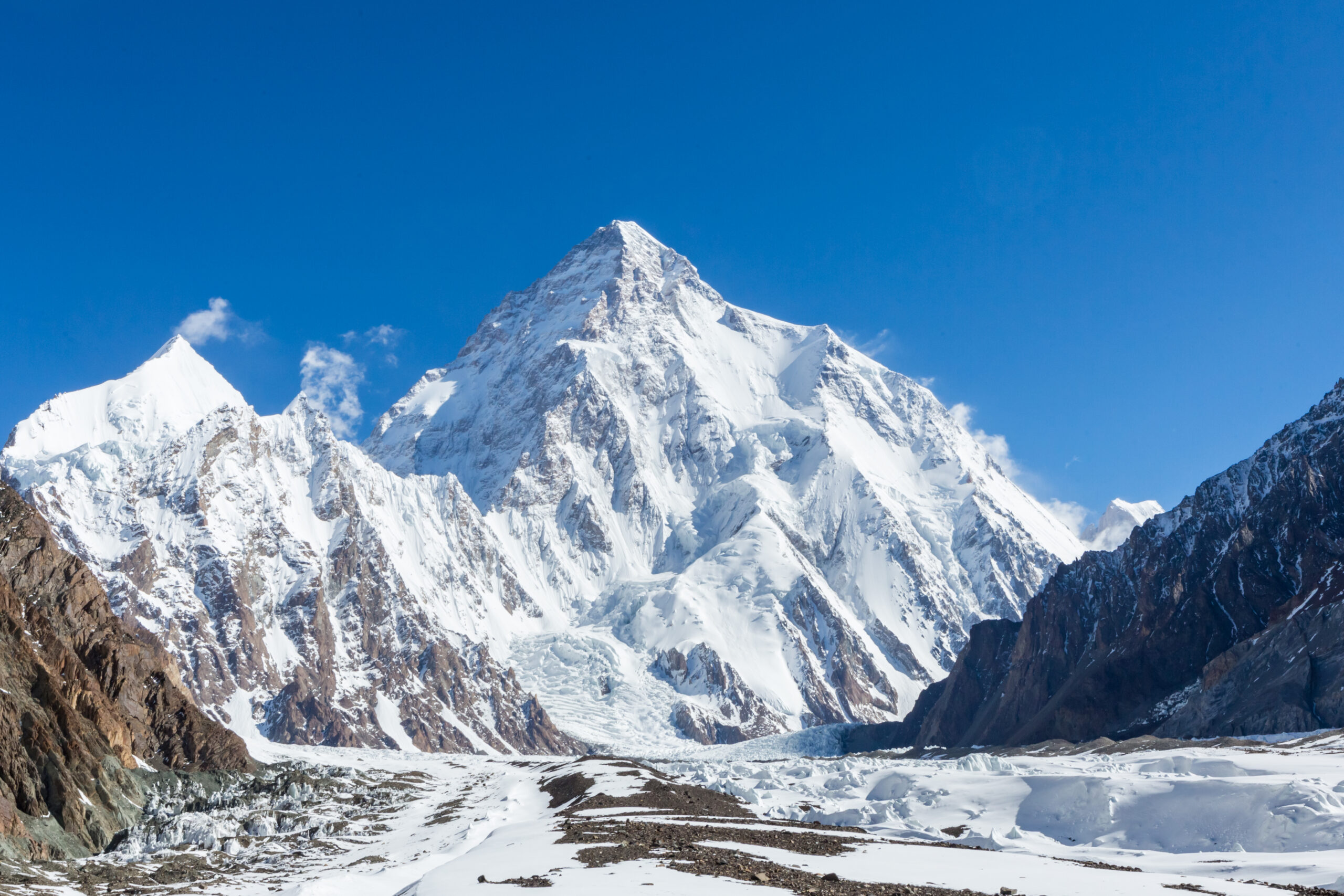
<
Route Comparison · Karakoram · The Savage Mountain

K2 Route Comparison 2026: Abruzzi Spur vs Cesen vs North Pillar

Every major K2 climbing route compared side-by-side — the standard Abruzzi Spur, the Cesen alternative, the rarely-climbed North Pillar from China, plus the extreme alpine lines. Difficulty grades, fixed-rope status, success rates, the Bottleneck hazard, and the death rate by route.

8,611 m
K2 Summit · 28,251 ft
7 Routes
Major Climbing Lines
80%
Abruzzi Spur Traffic Share
25-30%
Historical Success Rate

K2 is the world’s second-highest mountain and the most technically demanding 8,000-meter peak that sees commercial climbing. Generally, the mountain has seven recognized climbing routes. The Abruzzi Spur (Southeast Ridge). The Cesen Route (South-Southeast Spur). The North Pillar from China. The Magic Line. The West Ridge. The Polish Line. The Northeast Ridge. Specifically, roughly 80% of all attempts use the Abruzzi Spur. Notably, every commercial K2 expedition must navigate the Bottleneck. This is a narrow couloir directly beneath an overhanging serac. The Bottleneck has killed more climbers than any other feature on the mountain. This page compares all seven routes by difficulty grade, fixed-rope status, summit success rate, death-to-summit ratio, and 2026 operator coverage.

Key Takeaways

  • The Abruzzi Spur carries roughly 80% of K2 attempts and is the standard commercial route. The Cesen Route carries most of the rest. The North Pillar and harder lines see fewer than 5% of attempts combined.
  • For a first K2 attempt, the choice is realistically Abruzzi or Cesen — both via Pakistan. The operator typically picks based on lower-mountain conditions each season.
  • The Bottleneck is unavoidable on both standard routes. The narrow couloir at 8,200m sits directly beneath a hanging serac. The 2008 K2 disaster killed 11 climbers when this serac calved.
  • K2’s overall success rate runs 25-30% historically, climbing to 50-65% on guided commercial Abruzzi expeditions in favorable weather years with reliable fixed-rope operations.
  • The North Pillar avoids the Bottleneck entirely but requires Chinese government permits, restricted-zone access, and a multi-week approach through the Shaksgam Valley. Fewer than 30 successful ascents in history.
  • The Magic Line, West Ridge, and Polish Line are elite alpine objectives with single-ascent or zero-ascent decades. These are not commercial routes and are not recommended for climbers pursuing K2 as a Seven Summits-style objective.
  • K2 demands prerequisite 8,000-meter experience. Most successful K2 climbers have already summited Manaslu, Cho Oyu, Gasherbrum II, or Everest before attempting K2.
Climbers navigating the steep technical terrain of the Abruzzi Spur on K2 showcasing the demanding mixed rock and ice climbing on the world's second-highest mountain
The Abruzzi Spur in characteristic terrain. Generally, the route’s reputation comes from sustained technical climbing on mixed rock and ice at extreme altitude. Specifically, sections like House’s Chimney (Camp 2) and the Black Pyramid (Camp 3) demand grade III-IV alpine climbing skills while climbers are already at 6,500-7,200 meters. Notably, this image shows the upper Black Pyramid zone — the technical crux of the lower mountain before the route reaches the Shoulder.
Last updated May 30, 2026 — v3.6 rebuild · 2025 season lessons integrated · 2026 commercial operator coverage verified

Master Route Comparison Table

All seven major K2 routes side-by-side. Generally, the table summarizes the trade-offs each line presents. Specifically, the first three routes are the only ones with meaningful commercial coverage in 2026. Notably, the bottom four are elite alpine objectives that have collectively seen fewer than 30 ascents in K2’s entire climbing history.

RouteGrade% Of AttemptsFixed Ropes 2026Bottleneck?Commercial?
Abruzzi Spur (SE Ridge) TD (Alpine) ~80% Yes (commercial) Yes Yes (most operators)
Cesen Route (SSE Spur) TD+ (Alpine) ~15% Sometimes (operator-fixed) Yes (shared upper) Yes (some operators)
North Pillar / North Ridge (China) TD+ to ED ~3% No (alpine-style) No (different finish) Rarely (Chinese permits)
Magic Line (SW Pillar) ED+ (Extreme) <1% No (alpine-style) No No
West Ridge ED (Extreme) <1% No No No
Polish Line (South Face) ED+ (Extreme) <1% No No No
Northeast Ridge ED (Extreme) <1% No No No

How to read the grades. Generally, French Alpine grades from easiest to hardest run F, PD, AD, D, TD, ED, ABO. Specifically, K2’s standard Abruzzi Spur sits at TD (Très Difficile). The grade is comparable to Mont Blanc’s Grand Mulets via difficult variants or the Matterhorn’s Lion Ridge. The difference is K2’s grade sits at 8,000+ meters. Notably, the harder K2 lines at ED and ED+ require extreme alpine climbing skill plus 8,000-meter altitude tolerance. This combination is held by perhaps a few dozen climbers worldwide in any given era.

Route 1 · The Abruzzi Spur (Southeast Ridge)

1
~80% of attempts · First climbed July 31, 1954

The Abruzzi Spur — K2’s Standard Route

Approach via Baltoro Glacier, Pakistan · Camps 1-4 + summit push

The Abruzzi Spur is K2’s “normal” route. Generally, the line was pioneered by the 1954 Italian expedition led by Ardito Desio, with Lino Lacedelli and Achille Compagnoni reaching the summit on July 31[1]. Specifically, the route ascends the Southeast Ridge of K2 from the Godwin-Austen Glacier on the Pakistan side. Notably, despite being the “standard” route, the Abruzzi is rated TD on the French Alpine grading scale. The route is far more technical than Everest’s standard route on either side.

Route progression — Base Camp to Summit

The Abruzzi Spur breaks into roughly five phases. Generally, climbers establish camps at predictable elevations and rotate between them for acclimatization across the 6-8 week expedition. Specifically, the typical layout follows this sequence:

  • K2 Base Camp (5,200m / 17,060ft). Approach via Skardu, Askole, and a 7-10 day trek up the Baltoro Glacier. Base camp sits on the Godwin-Austen Glacier directly below the Abruzzi.
  • Camp 1 (6,050m / 19,850ft). Ascending steep scree, snow slopes, and the lower ridge. Typically a 6-8 hour climb from Base Camp.
  • Camp 2 (6,700m / 21,980ft). Passing the notorious House’s Chimney — a near-vertical rock chimney section requiring technical climbing skills. Named for Bill House, the climber who first solved it in 1938.
  • Camp 3 (7,300m / 23,950ft). Traversing the Black Pyramid — approximately 400 vertical meters of sustained technical climbing on mixed rock and ice. The most technically demanding section of the lower mountain.
  • Camp 4 / The Shoulder (7,900m / 25,920ft). A relatively flat snow shelf where climbers stage the final summit push. Both the Abruzzi and Cesen routes converge here.
  • Summit Push. The final 700+ vertical meters including the Bottleneck (8,200m) and the summit ridge to 8,611m. Typically a 10-14 hour round trip from Camp 4 with no possibility of intermediate camps.
Alpine Grade
TD
Expedition Length
6-8 weeks
Success Rate
25-65%
Fixed Ropes
Yes (commercial)
First Ascent
1954 (Italian)
Commercial
All major operators
Cost Range
$35K-$95K
Best Season
July-August
Advantages
  • Strongest commercial infrastructure on K2
  • Fixed ropes typically installed by Sherpa teams
  • Established camp locations with operator support
  • Most experienced guides familiar with conditions
  • Best rescue feasibility (still limited at altitude)
  • Track record of summit pushes since 1954
Disadvantages
  • The Bottleneck serac hazard cannot be avoided
  • House’s Chimney bottleneck during peak season traffic
  • Black Pyramid demands sustained TD climbing at altitude
  • Crowding can occur in narrow weather windows
  • Lower mountain rockfall risk in dry, snow-poor seasons
  • Higher death-to-summit ratio than alternative lines

The technical cruxes of the Abruzzi

Three sections define the difficulty of the Abruzzi Spur. Generally, climbers must move through all three on every successful ascent. Specifically, each tests a different skill set. Notably, climbers who struggle on any one of them rarely complete the route.

House’s Chimney (around Camp 2 at 6,700m). A near-vertical rock chimney climbed using fixed ropes and direct aid technique. The chimney is about 50 meters tall but the exposure is genuine — the climber is on near-vertical rock at 6,700 meters with significant fall consequence. First solved by Bill House on the 1938 American K2 expedition led by Charles Houston[2].

The Black Pyramid (between Camp 2 and Camp 3, 6,700-7,300m). Approximately 400 vertical meters of sustained mixed rock and ice climbing at grade III-IV alpine. The “Black” refers to the dark gneiss rock that dominates this section. Climbers spend 4-7 hours moving through this terrain, depending on conditions and traffic. The Black Pyramid is the technical crux of the entire route below the Bottleneck.

The Bottleneck (8,200m, on the summit push). The narrow couloir directly beneath an overhanging serac on the south face. Climbers traverse beneath the serac for approximately 100 horizontal meters in deep snow or hard ice depending on conditions. The 2008 disaster killed 11 climbers when ice from the serac calved onto the route[3]. There is no alternative — the Bottleneck is the only passage from the Shoulder to the summit on both the Abruzzi and the Cesen.

The Bottleneck cannot be made safe. Generally, operators try to time the Bottleneck traverse for the early morning hours when temperatures are coldest and serac activity is least likely. Specifically, no timing strategy makes the Bottleneck safe in any meaningful sense — the serac is unpredictable and the consequences of release are total. Notably, climbers who decline to enter the Bottleneck due to perceived conditions have ended otherwise-successful summit pushes, and those decisions are increasingly viewed as sound rather than weak.

Route 2 · The Cesen Route (South-Southeast Spur)

2
~15% of attempts · Pioneered by Tomo Česen (1986)

The Cesen Route — Steeper But Cleaner

Pakistan side · Joins Abruzzi at the Shoulder for shared upper mountain

The Cesen Route is sometimes called the Basque Route or South-Southeast Spur. The line is the modern alternative to the Abruzzi Spur. Generally, the line was popularized by Slovenian climber Tomo Česen in 1986. Specifically, the Cesen ascends an ice-and-mixed line to the climber’s right of the Abruzzi, joining the standard route at the Shoulder (Camp 4, 7,900m). Notably, the Cesen avoids the Abruzzi’s House’s Chimney. It also avoids the most rockfall-exposed sections of the Black Pyramid — substituting steeper ice climbing for the Abruzzi’s mixed rock terrain.

Why some operators prefer the Cesen

The Cesen offers two distinct advantages over the Abruzzi for the lower mountain. Generally, the line crosses less rockfall-exposed terrain in dry, snow-poor seasons. Specifically, when the Black Pyramid is shedding rock from late-summer warming, the Cesen’s ice-and-snow approach can be the safer choice. Notably, modern commercial operators increasingly use both routes opportunistically — climbing whichever lower mountain is in better condition that season.

The trade-off is the Cesen is steeper and more sustained in its lower portion. Generally, climbers spend more time on near-vertical ice and mixed terrain. Specifically, the route demands stronger ice climbing technique than the Abruzzi’s mixed-rock approach. Notably, climbers without strong ice climbing skills should default to the Abruzzi if the choice is theirs.

Alpine Grade
TD+
Expedition Length
6-8 weeks
Success Rate
25-60%
Fixed Ropes
Operator-dependent
First Ascent
1986 (Česen solo)
Commercial
Some operators
Cost Range
$35K-$90K
Bottleneck
Yes (shared finish)
Advantages
  • Avoids House’s Chimney bottleneck
  • Less rockfall exposure in dry seasons
  • More direct line to the Shoulder
  • Joins shared upper Abruzzi for descent
  • Some operators specialize on this line
Disadvantages
  • Steeper, more sustained ice climbing
  • Less established camp infrastructure
  • Fewer operators familiar with the line
  • The Bottleneck still cannot be avoided
  • Demands stronger ice climbing technique

Combined Abruzzi-Cesen ascents are increasingly common. Generally, modern commercial operators sometimes ascend the Cesen for the lower mountain (safer in dry seasons) and descend the Abruzzi (more established camps for emergency response). Specifically, this hybrid approach gives climbers the safety advantages of each route. Notably, the operator and lead guide make this call based on conditions assessed during acclimatization rotations.

Route 3 · The North Pillar (Chinese Side)

3
~3% of attempts · First climbed 1982 (Japanese)

The North Pillar — K2 From The Chinese Side

Xinjiang approach via Shaksgam Valley · Avoids the Bottleneck entirely

The North Pillar (sometimes called the North Ridge) is K2’s primary Chinese-side route. Generally, the line was first climbed by a Japanese expedition in 1982. Specifically, the route ascends K2’s north side from the Shaksgam Valley in Xinjiang Autonomous Region. Notably, fewer than 30 climbers have completed the North Pillar in K2’s entire climbing history[4] — a fraction of the 700+ summits via the Pakistan-side routes.

Why so few climb the North Pillar

Three barriers limit Chinese-side K2 climbing. Generally, access is administratively complex. Specifically, the Shaksgam Valley is restricted border territory. Climbers need special permits from the Chinese government. They need sponsorship through approved Chinese mountaineering associations. They face a multi-week approach trek before reaching base camp. Notably, no major Western commercial operator currently runs Chinese-side K2 expeditions on a regular basis. The route is climbed primarily by Asian national teams and elite alpine-style expeditions with significant prior K2 experience.

The North Pillar offers one major safety advantage — it avoids the Bottleneck entirely. Generally, the north-side summit push uses a different upper-mountain finish. Specifically, climbers reach the summit via the north ridge proper without traversing beneath the south-face serac. Notably, this is a genuine reduction in objective hazard compared to the Abruzzi or Cesen.

Alpine Grade
TD+ to ED
Expedition Length
7-10 weeks
Historical Success
~30-50%
Total Ascents
<30 climbers
First Ascent
1982 (Japanese)
Commercial
Rarely (Chinese permits)
Bottleneck
Avoided (different finish)
Approach
Shaksgam Valley, China
Advantages
  • Avoids the Bottleneck serac entirely
  • Lower traffic — fewer teams competing for windows
  • Different objective hazard profile than Abruzzi
  • Wilderness experience without commercial crowding
Disadvantages
  • Chinese government permits required
  • Multi-week restricted-zone approach trek
  • No major Western commercial operator coverage
  • Longer summit-day distance
  • More variable north-side weather patterns
  • Sponsorship through Chinese associations needed

Routes 4-7 · The Extreme Alpine Lines

Beyond the Abruzzi, Cesen, and North Pillar, K2 has been climbed by four other documented routes. Generally, these are not commercial objectives. Specifically, they have collectively seen fewer than 30 total ascents in K2’s history. Notably, climbers pursuing these lines do so for the climbing itself rather than as a Seven Summits-style achievement. They are climbed by elite alpine teams seeking specific style or first-ascent goals.

4
Magic Line · ED+ · ~5 total ascents

The Magic Line (Southwest Pillar)

First climbed 1986 (Polish-Slovak team) · Reinhold Messner once called it “suicidal”

The Magic Line ascends K2’s southwest pillar in one of the most technically demanding 8,000-meter routes ever climbed. Generally, the line was first ascended in 1986 by a Polish-Slovak team. Specifically, the route demands sustained extreme alpine climbing at altitude — grade VI rock and AI 5+ ice in places. Notably, Reinhold Messner once called the line “suicidal” — and despite the line having been completed, the assessment has merit. Fewer than 5 climbers have completed the full Magic Line to the summit.

The Magic Line is not a commercial route. Climbers attempting it are world-class alpinists pursuing specific style achievements rather than Seven Summits-style objectives. No commercial operator offers Magic Line expeditions. The line is included here for completeness in the route catalog rather than as a realistic option for most readers.

5
West Ridge · ED · ~10 total ascents

The West Ridge

First climbed 1981 (Japanese) · Long, sustained alpine objective

The West Ridge of K2 was first climbed by a Japanese expedition in 1981. Generally, the route is long and sustained — a multi-day alpine objective with significant exposure to weather and altitude. Specifically, the line has been climbed approximately 10 times in K2’s history. Notably, the West Ridge is the most reasonable of K2’s extreme alpine routes for elite teams, but still demands the full skill set and zero commercial support.

6
Polish Line (South Face) · ED+ · ~3 total ascents

The Polish Line (South Face)

First climbed 1986 (Kukuczka-Piotrowski) · Direct south-face line

The Polish Line was first climbed in 1986 by Jerzy Kukuczka and Tadeusz Piotrowski via a direct line on K2’s south face. Generally, the route is among the hardest 8,000-meter climbs ever completed. Specifically, Piotrowski died during the descent from this climb — a stark reminder of the route’s danger. Notably, the line has been climbed approximately three times total. The Polish Line is known for avalanche-prone terrain and remains an extreme alpine objective rather than a viable route for most climbers.

7
Northeast Ridge · ED · ~5 total ascents

The Northeast Ridge

First climbed 1978 (Roskelley-Ridgeway-Wickwire-Reichardt) · Long, complex alpine line

The Northeast Ridge of K2 was first climbed by an American expedition in 1978 including John Roskelley, Rick Ridgeway, Jim Wickwire, and Louis Reichardt. Generally, this was the second successful ascent of K2 after the 1954 Italian climb of the Abruzzi. Specifically, the route is a long and complex alpine line that has been climbed approximately five times total. Notably, the 1978 expedition’s success demonstrated that K2 could be climbed by routes other than the Abruzzi. The line has not become commercial in any meaningful sense in the decades since.

The Bottleneck — K2’s Defining Hazard

The Bottleneck deserves its own section. Generally, no other feature on any commercial 8,000-meter peak presents comparable concentrated objective hazard. Specifically, the Bottleneck is a narrow snow and ice couloir at approximately 8,200 meters, located directly below a massive overhanging serac on K2’s south face. Notably, the Bottleneck is the only viable passage from the Shoulder (Camp 4) to the summit on both the Abruzzi Spur and the Cesen Route.

The geometry of the hazard

The couloir runs roughly 100 horizontal meters beneath the overhanging serac. Generally, climbers must traverse beneath the serac for the entire length of the Bottleneck. Specifically, the serac has periodically calved off ice and rock onto the route — sometimes in small pieces, occasionally in catastrophic events. Notably, in August 2008 ice from the serac released without warning. The release killed 11 climbers in a single day[3] — the worst single-day disaster in 8,000-meter climbing history.

Why operators still climb through it

The Bottleneck cannot be bypassed on the Abruzzi or Cesen routes. Generally, the only alternative is climbing K2 via the North Pillar from China, which avoids the Bottleneck entirely. Specifically, commercial operators on the Pakistan-side routes minimize Bottleneck exposure by timing the traverse for the coldest pre-dawn hours when serac activity is least likely. Notably, this timing strategy reduces but does not eliminate the hazard — the Bottleneck cannot be made safe in any meaningful sense.

Climbers who decline the Bottleneck are making sound decisions. Generally, the climbing community has shifted over the past decade toward viewing Bottleneck refusal as wisdom rather than weakness. Specifically, climbers who turn back at the base of the Bottleneck when conditions appear marginal are increasingly recognized as making the right call. The warning signs include ice fall earlier in the season, recent climber observations of serac activity, and deteriorating weather. Notably, several 2025 expeditions turned back at the Bottleneck due to rockfall and serac concerns, including Madison Mountaineering’s documented turnaround on August 9, 2025.

Death Rate By Route

K2’s overall death rate is among the highest of any 8,000-meter peak. Generally, through 2026 approximately 700-800 climbers have summited K2 and more than 90 have died on the mountain. Specifically, this gives a death-to-summit ratio of roughly 11-13% — far higher than Everest’s roughly 1.5%. Notably, the ratio varies meaningfully by route.

RouteEstimated SummitsEstimated DeathsDeath/Summit RatioNotes
Abruzzi Spur ~550-650 ~60-70 10-12% Most climbing traffic — most fatalities. 2008 disaster killed 11.
Cesen Route ~100-130 ~12-18 10-14% Modern alternative — ratio similar to Abruzzi due to shared Bottleneck.
North Pillar (China) ~25-30 ~3-5 10-17% Small sample size. No Bottleneck exposure but other hazards remain.
Magic Line ~5 ~3-4 ~60%+ Tiny sample. Extreme technical demand at altitude.
West Ridge ~10 ~2-3 ~20-30% Long, sustained exposure. Limited rescue feasibility.
Polish Line ~3 ~3+ ~100%+ Piotrowski died on descent of first ascent. Avalanche-prone.
Northeast Ridge ~5 ~1-2 ~20-40% Long alpine objective. Limited modern ascents.

Death rates are estimates with significant uncertainty. Generally, accurate K2 death rate analysis requires distinguishing between deaths on ascent versus descent, total deaths versus summit-only deaths, and the historical timeframe used as the denominator. Specifically, the numbers above are best-current estimates rather than precise statistics. Notably, the comprehensive K2 Death Rate page covers the methodology and source data in detail.

I have guided K2 across three seasons. Generally, route choice is not the most important decision climbers face. The operator’s discipline around weather windows matters more. The team’s willingness to turn back matters more. Specifically, I have seen strong climbers on the Cesen die because their team pushed through marginal weather. I have seen weaker climbers on the Abruzzi summit because their team waited an extra week for a clean window. Notably, climbers obsess about whether to climb Abruzzi or Cesen. The actual question is whether their team will turn around when the mountain says no.

2026 Pakistan-based K2 guide, 3 seasons on K2, 2 summit successes via Abruzzi · 1 turnaround at the Bottleneck (August 2024)

Choosing Your Route — Decision Guide

For climbers planning a K2 attempt, route choice is one decision among many. Generally, the guide below organizes the choice by climber profile. Specifically, the realistic options for most climbers narrow to two — the Abruzzi or the Cesen, both via Pakistan. Notably, the practical recommendation is to defer to the operator’s call based on current-season conditions.

For climbers pursuing their first K2 attempt

The default choice is the Abruzzi Spur. Generally, the route has the strongest commercial infrastructure, the most operator familiarity, and the most established camp logistics. Specifically, climbers benefit from the accumulated knowledge of multiple operators across multiple seasons. Notably, the operator may shift to the Cesen for the lower mountain if current-season conditions favor it — accept that call without resistance.

For climbers with prior 8,000-meter experience

Some preference may be exercised but route choice should still defer to the operator. Generally, climbers with documented Manaslu, Cho Oyu, or Everest experience can have conversations with operators about route preference. Specifically, operators with strong Cesen-route programs (Furtenbach, certain European operators) may be preferable for climbers wanting that specific experience. Notably, the upper-mountain finish via the Bottleneck is shared regardless of lower-route choice.

For elite alpinists seeking unique objectives

The North Pillar, Magic Line, West Ridge, Polish Line, and Northeast Ridge are options. Generally, these climbs are not commercial. Specifically, climbers attempting them are world-class alpinists with prior K2 experience or comparable extreme-altitude technical climbing track records. Notably, this page is not the right resource for planning such expeditions. Direct contact with the small number of climbers and partner alpinists who have completed these routes is the only realistic preparation path.

For Seven Summits-style climbers

The Abruzzi Spur with a reputable commercial operator is the only realistic option. Generally, climbers pursuing K2 as part of a multi-peak life list should not consider the harder routes. Specifically, the Abruzzi delivers the K2 summit with the strongest available infrastructure. Notably, route choice for these climbers is essentially Abruzzi or nothing.

K2 climbers on the Abruzzi Spur showing the extreme exposure and technical terrain that defines K2 climbing regardless of route choice
The shared upper mountain. Generally, route choice on K2 affects the lower mountain (Camps 1-3) but not the summit push. Specifically, the Abruzzi and Cesen routes converge at the Shoulder (Camp 4, 7,900m), and from there both lines share the same Bottleneck traverse to the summit. Notably, this is why the death-to-summit ratios for Abruzzi and Cesen are nearly identical — the shared upper mountain dominates the overall hazard profile.

Required Prerequisite Experience

K2 demands genuine 8,000-meter experience as a prerequisite. Generally, this is not a peak climbers can attempt as a first 8,000-meter objective. Specifically, most successful K2 climbers have already summited at least one other 8,000-meter peak before attempting K2. Notably, the prerequisite mountains form a recognized progression.

The recommended progression sequence

  • First 8,000-meter peak. Most commonly Manaslu (8,163m) in Nepal, sometimes Cho Oyu (8,188m) in Tibet/China, or Broad Peak (8,051m) as a K2-region acclimatizer. These peaks teach 8,000-meter altitude physiology and basic high-altitude expedition logistics.
  • Karakoram exposure. Climbers benefit significantly from prior experience on a Karakoram peak. Gasherbrum II (8,035m) is the most accessible commercial Karakoram 8,000er and shares K2’s logistics, weather patterns, and approach via the Baltoro Glacier.
  • Technical climbing competence. Climbers should demonstrate fluent technical climbing on steep mixed rock and ice up to grade III/IV alpine. The Black Pyramid on K2’s Abruzzi Spur demands this level continuously at 6,500-7,300 meters.
  • Fixed rope and jumar fluency. Climbers should be comfortable ascending and descending on fixed ropes using mechanical ascenders (jumars) for sustained periods. The fixed lines and jumars guide covers the technique in detail.
  • Multi-week expedition psychology. K2 expeditions run 6-8+ weeks. Specifically, climbers must handle extended periods at base camp waiting for weather windows. Notably, the psychological component is as important as the physical one — climbers without proven expedition patience are vulnerable to making impatience-driven bad decisions when summit windows open marginally.

K2 is not a “step up” from Everest. Generally, climbers who have summited Everest often assume K2 is the natural next objective. Specifically, K2 is meaningfully harder than Everest — steeper technical terrain, less commercial infrastructure, less margin for error, and the Bottleneck hazard with no equivalent on Everest. Notably, many Everest summiters find K2 a different challenge entirely — and the additional preparation should not be skipped.

2026 Operator Coverage By Route

K2 commercial operators in 2026 are concentrated on the Pakistan-side routes. Generally, the Abruzzi Spur is the route most operators run. Specifically, only a small number of operators run dedicated Cesen Route programs. Notably, no major Western commercial operator runs Chinese-side North Pillar expeditions on a regular basis.

Major commercial operators (2026)

  • Seven Summit Treks — large-scale logistics, multi-team K2 programs, primarily Abruzzi Spur. The largest commercial K2 operator by volume.
  • Madison Mountaineering — small-team focus, US-based leadership, Abruzzi Spur. Documented 2025 turnaround at the Bottleneck due to rockfall concerns.
  • Furtenbach Adventures — premium European operator, modern logistics, often runs Cesen Route programs alongside Abruzzi.
  • Elite Exped — mixed Abruzzi and alpine-style programs. Documented 2025 summit success during the August 11 window.
  • Imagine Nepal — Nepalese-led K2 operator, Abruzzi Spur, strong Sherpa fixing teams. 2025 summit success.
  • 14 Peaks / Nimsdai-affiliated programs — high-profile programs leveraging the Nimsdai brand and Sherpa fixing networks.
  • Alpinist Climber Expeditions — smaller commercial teams, Abruzzi focus. Documented 2025 summit success.

Pricing for 2026 K2 expeditions runs $35,000-$95,000 depending on operator, team size, oxygen strategy, and inclusions. Generally, premium operators (Furtenbach, Elite Exped, Madison) sit at the higher end. Specifically, mid-tier operators run $40,000-$65,000. Notably, budget operators exist at $25,000-$35,000 but climbers should research carefully — K2 is not a peak where to economize on operator quality. See the K2 Operators page for the eight-criteria comparison detail.

Common Failure Patterns

Six specific ways climbers fail on K2 across all routes. Generally, the patterns repeat across operators and across years. Specifically, most failures are not pure fitness gaps. Notably, four of the six are decision-making failures rather than physical ones.

1Pushing through marginal weather

K2’s weather windows are short — often 2-3 days across the entire summer season. Generally, the temptation to push when conditions are marginal is significant after weeks of waiting at base camp. Specifically, climbers who summit on borderline days frequently die on descent when conditions deteriorate. Notably, the strongest K2 decision is often the one that leaves the summit behind and returns the following season.

2Underestimating the Bottleneck

Climbers focus on House’s Chimney and the Black Pyramid as the technical cruxes. Generally, these are real challenges. Specifically, the Bottleneck is the lethal one — the place where the most K2 deaths happen. Notably, climbers who reach the Shoulder fit and well-acclimatized still face the Bottleneck’s binary outcome with each traverse — and no amount of fitness improves those odds.

3Inadequate prerequisite experience

Climbers occasionally treat K2 as a first 8,000-meter peak after summit success on Aconcagua or Denali. Generally, this is a mistake. Specifically, the altitude jump from Denali (6,190m) to K2 (8,611m) is more than 2,400 vertical meters. The technical demand jumps from PD/AD alpine to TD alpine sustained at extreme altitude. Notably, climbers without prior 8,000-meter experience face an altitude unknown at 8,000m that compounds with K2’s technical demands.

4Choosing operators on price alone

K2 commercial pricing ranges from about $25,000 to $95,000. Generally, the difference is not marketing fluff. Specifically, it reflects guide experience, fixing team quality, oxygen strategy, emergency communication, rescue planning, food and logistics quality, and team size. Notably, budget operators on K2 sometimes cut corners on the things that matter most when emergencies happen — and K2 is the peak where emergencies happen.

5Descent fatigue and judgment failure

K2 is famously a peak where the descent kills. Generally, climbers who summit at altitude with depleted reserves face hours of technical descent through the Bottleneck, the Black Pyramid, and House’s Chimney. Specifically, judgment degrades with fatigue at altitude. Notably, many K2 fatalities occur on descent rather than ascent. Climbers should plan summit-day timing, hydration, oxygen use, and rope strategy with the descent as the primary consideration rather than the secondary one.

6Treating K2 like Everest

Climbers with Everest experience sometimes assume K2 will be similar with added technical demand. Generally, this misreads the mountain. Specifically, K2 has dramatically less commercial infrastructure than Everest. Fewer Sherpa support staff per climber. Less established camp logistics. Less reliable fixed rope coverage. Less helicopter rescue feasibility. Shorter weather windows. Notably, climbers who arrive expecting Everest-style infrastructure find a different mountain entirely. The mental model needs to be expedition-style alpinism with commercial support, not commercial mountaineering with technical sections.

I summited K2 via the Abruzzi Spur in August 2025 as my fourth 8,000-meter peak. Generally, the climbing was harder than expected even with Manaslu, Everest, and Cho Oyu in my background. Specifically, the Black Pyramid drained reserves I did not know I needed. Notably, the descent through the Bottleneck back to the Shoulder was the most frightening hour of my climbing life. Clear weather. No visible serac activity. But the awareness that the ice above could release at any moment. Generally, I do not recommend K2 to climbers without prior 8,000-meter experience. Specifically, I recommend Manaslu first. Then Cho Oyu or Gasherbrum II. Then K2 only after climbers have demonstrated they can move efficiently at 8,000+ meters under their own power.

2025 K2 summit climber, 4 of 14 eight-thousanders complete · Abruzzi Spur · summited August 11, 2025 via Imagine Nepal-supported expedition

K2 Route Comparison FAQ

What is the standard route up K2?

The Abruzzi Spur, also called the Southeast Ridge, is the standard route on K2. It is climbed by roughly 80% of all attempts and accounts for the majority of K2 summits since the mountain’s first ascent in 1954. The route starts on the Godwin-Austen Glacier at K2 Base Camp (5,200m). It passes the technical House’s Chimney section around Camp 2. Then it navigates the demanding Black Pyramid at Camp 3. Finally it reaches the Shoulder at Camp 4 (7,900m). The final summit push includes the notorious Bottleneck. This is a narrow couloir directly beneath a hanging serac. The feature has killed more climbers than any other on K2. Despite being the standard route, the Abruzzi Spur is rated TD (Très Difficile) and demands elite 8,000-meter experience.

What is the difference between the Abruzzi Spur and the Cesen Route?

The Cesen Route is sometimes called the Basque Route or the South-Southeast Spur. The line is an alternative on K2 that joins the Abruzzi Spur at the Shoulder around 7,900m. The lower section of the Cesen avoids the Abruzzi’s House’s Chimney. It also avoids the most rockfall-exposed sections of the Black Pyramid. Instead the Cesen takes a more direct ice and mixed-terrain line. The trade-off is the Cesen is steeper and more sustained in its lower portion, demanding more technical climbing skill. Above the Shoulder, both routes share the same final summit push including the Bottleneck. Many modern commercial operators use the Cesen for the lower mountain and the Abruzzi for descent. This combines the safety advantages of each line.

Is K2 climbed from the Chinese side?

Yes but rarely. The North Pillar is also called the North Ridge. The line ascends K2 from the Chinese side via the Shaksgam Valley. The valley is administratively part of Xinjiang Autonomous Region. The approach is far longer than the Pakistan side — typically requiring a multi-week trek through restricted border territory before climbers even reach base camp. Chinese-side K2 expeditions need three things. Chinese government permits. Sponsoring through approved Chinese mountaineering associations. Significant logistical preparation. As a result, the North Pillar has seen fewer than 30 successful ascents in K2’s climbing history, compared to over 700 summits via the Pakistan-side routes. The North Pillar does avoid the Bottleneck serac entirely — a meaningful safety advantage. It introduces longer summit day distance. It also brings exposure to more variable north-side weather.

What is the Bottleneck on K2 and why is it so dangerous?

The Bottleneck is a narrow snow and ice couloir at approximately 8,200 meters on K2, located directly below a massive overhanging serac on the south face. The Bottleneck is the only viable passage from the Shoulder (Camp 4) to the summit on the Abruzzi Spur and Cesen routes. The hazard is that climbers must traverse beneath the overhanging serac. The serac has periodically calved off ice and rock onto the route. The most catastrophic incident occurred in August 2008 when ice avalanche from the serac killed 11 climbers in a single day. Climbers cannot avoid the Bottleneck on the standard routes. Operators try to time the traverse for the early morning hours. Temperatures are coldest then and serac activity is least likely. But no timing strategy makes the Bottleneck safe in any meaningful sense. It is the defining objective hazard of K2 commercial climbing. See the K2 Death Rate page for detailed analysis of Bottleneck fatalities.

What is the success rate on K2 by route?

K2 summit success rates vary significantly by route and have shifted notably since 2021 when commercial fixed-rope operations became more reliable. On the Abruzzi Spur with modern guided commercial expeditions and Sherpa-fixed ropes, summit success can reach 50-65%. This applies to favorable weather years. Without fixed-rope support or in storm-dominated seasons, success rates drop to 15-30%. The Cesen Route shows similar success rates when fixed and operating commercially. The North Pillar from China sees so few attempts that meaningful averages are not available, but historic success rate ranges from 30-50% across the limited expedition record. The harder lines — Magic Line, West Ridge, Polish Line — show single-ascent or zero-ascent decades. They cannot be characterized by success rate in any meaningful commercial sense. Across all K2 history through 2026, approximately 700-800 climbers have summited and 90+ have died, giving a death-to-summit ratio that remains among the highest of any 8,000-meter peak.

Which K2 route should I choose for my first attempt?

For a first K2 attempt, the choice is realistically between the Abruzzi Spur and the Cesen Route — both via Pakistan. The Abruzzi is climbed by approximately 80% of attempts and has the strongest commercial infrastructure including fixed ropes, established camps, and the most operator coverage. The Cesen Route is climbed by a smaller share but is increasingly used by modern commercial operators as an alternative lower-mountain line. For climbers planning their first K2, the practical recommendation is to climb whichever route the operator chooses based on current conditions. Most reputable K2 operators evaluate snow and rockfall conditions in the lower mountain each season. They then select Abruzzi or Cesen accordingly. The North Pillar from China should not be considered for a first K2 attempt due to its complex logistics, restricted access, and minimal commercial infrastructure.

What prerequisite experience does K2 require?

K2 demands genuine 8,000-meter experience as a prerequisite. Most successful K2 climbers have already summited at least one other 8,000-meter peak before attempting K2. Common prerequisites include Manaslu (the most accessible 8K), Cho Oyu, Gasherbrum II, or Everest. Beyond altitude experience, K2 requires four specific competencies. Fluent technical climbing skills on steep mixed rock and ice up to roughly grade III/IV alpine. Comfortable use of fixed ropes and jumars. Self-sufficient rope team travel on glaciated terrain. The psychological capacity to handle multi-week expedition timelines with significant objective hazard. Climbers without prior 8,000-meter experience should build toward K2 over multiple seasons rather than treating it as a direct goal. The K2 climb guide and the eight-thousanders ranked by difficulty pages detail the recommended progression sequence.

When is the climbing season on K2?

The K2 climbing season is summer — primarily July and August, with rare attempts in late June. Summer is the only window when the Karakoram allows even brief periods of stable weather suitable for an 8,000-meter summit push. Even within the July-August window, summit windows are narrow — often only 2-3 days of climbable weather across the entire season. Teams typically arrive at base camp in June. They complete acclimatization rotations through July. They wait for the summit window. The window opens in late July for some seasons and in mid-August for others. Some seasons close without any climbable summit window at all. Winter K2 was first summited by an all-Nepalese team in January 2021. This historic achievement demonstrated the route can be climbed in winter. However, no commercial operators currently run winter K2 programs. The winter season remains an elite alpine objective rather than a viable commercial option.

What We Don’t Know

Honest limitations of any K2 route comparison

Death rates by route are estimates with real uncertainty. Generally, the numbers in this page reflect best-current estimates from multiple sources. Specifically, accurate K2 fatality data requires distinguishing between deaths on ascent versus descent, route attribution for fatalities that occurred during route transitions, and the historical timeframe used for the denominator. Notably, the comprehensive K2 Death Rate page covers methodology in detail — but exact route-by-route death rates are not knowable with the precision climbers would prefer.

2026 commercial coverage shifts season to season. Generally, operator portfolios change. Specifically, some operators that ran K2 in 2024 paused programs in 2025 or vice versa. Notably, climbers planning K2 attempts should verify current-season operator coverage rather than relying on multi-year averages.

The Bottleneck serac is unpredictable. Generally, the serac that overhangs the Bottleneck calves on its own timeline. Specifically, climbers cannot predict when the next major release will occur — only that one will eventually occur. Notably, climbers attempting K2 are accepting an objective hazard whose timing cannot be controlled and whose consequences cannot be mitigated.

Climate change effects on K2 routes are documented but not fully characterized. Generally, snow-poor seasons appear to be increasingly common in the Karakoram. Specifically, this affects the lower Abruzzi (more exposed rock, higher rockfall risk) and the Bottleneck (different ice character year to year). Notably, climbers should not assume historical season patterns will repeat — recent trip reports and operator current-condition assessments matter more than multi-decade averages.

The 14 Peaks documentary and Nimsdai-effect on commercial K2 climbing remains evolving. Generally, public awareness of K2 has grown sharply since the 2021 winter ascent and the subsequent Nimsdai Project Possible film. Specifically, this has affected operator demand, fixing logistics, and Sherpa availability. Notably, climbers planning K2 attempts should account for the increased traffic and reduced exclusivity of summit windows compared to pre-2021 conditions.

Independent climbing on K2 has nearly disappeared from commercial discussion. Generally, modern K2 success is almost entirely commercial. Specifically, climbers attempting K2 outside commercial operator structures face significant additional challenges — no fixed rope team, no organized rescue coordination, no Sherpa fixing support. Notably, the few elite climbers who still pursue independent K2 attempts in alpine style are not the audience for this comparison page. They require different planning resources entirely.

Sources and Methodology

Numbered Source References

This route comparison draws on K2 climbing history, 2026 operator pricing verification, current-season trip reports from major commercial expeditions, and published mountaineering literature. The numbered citations correspond to inline references throughout the page.

  1. 1954 First Ascent — Italian Expedition. Ardito Desio (expedition leader), Lino Lacedelli, and Achille Compagnoni — first ascent of K2 via the Abruzzi Spur, July 31, 1954. Historical record from Italian Alpine Club archives and contemporaneous expedition reports.
  2. House’s Chimney — 1938 American K2 Expedition. Bill House first solved the chimney during Charles Houston’s 1938 American expedition. Documented in Houston’s expedition narrative and subsequent K2 climbing literature.
  3. August 2008 K2 Disaster. Eleven climbers killed when ice from the Bottleneck serac calved onto the route during a single 24-hour period. Documented in Bowley’s “No Way Down” and Confortola’s published expedition reports. The deadliest single-day incident in 8,000-meter climbing history.
  4. North Pillar climbing record. Approximate ascent counts compiled from Himalayan Database, 8000ers.com, and Chinese-side expedition reports. The first North Pillar ascent was by a Japanese expedition in 1982.
  5. 2021 Winter Ascent. First winter ascent of K2 by an all-Nepalese team on January 16, 2021. Documented across multiple sources including the Himalayan Database and the climbers’ published accounts.
  6. 2025 K2 season summit data. Verified from operator reports including Imagine Nepal, Seven Summit Treks, Elite Exped, Madison Mountaineering, and Alpinist Climber Expeditions. The August 11 summit window was the principal climbable opportunity of the 2025 season.
  7. Operator pricing 2026. Direct verification from operator websites for Furtenbach Adventures, Madison Mountaineering, Seven Summit Treks, Imagine Nepal, and Elite Exped. Pricing ranges current as of April-May 2026.
  8. K2 climbing literature. Background draws on multiple classic works including Houston and Bates “K2 The Savage Mountain”, Pelissier “K2 Triumph and Tragedy”, and Curran “K2 The Story of the Savage Mountain”.

Methodology note. Death rate estimates use total documented deaths and total documented summits through the 2025 climbing season as the basis for ratios. Route attribution for incidents during route transitions follows the convention of attributing to the route on which the fatality occurred. Twice-yearly review cycle — next scheduled review October 2026 (post-2026 K2 season).

Update Changelog

May 30, 2026
Full v3.6 rebuild. Added Eric Fairlie Person schema and byline. Added Place schema with K2 GeoCoordinates. Added ItemList schema for the 7 routes. Added BreadcrumbList schema. Added Speakable annotation on FAQ. Added 2026 Pakistan-based K2 guide first-hand quote. Added 2025 K2 summit climber first-hand quote. Added two inline images using confirmed K2 climb guide imagery. Added Bottleneck dedicated section with detailed hazard analysis. Added death rate by route comparison table. Added 2025 K2 season operator coverage detail including Madison Mountaineering Bottleneck turnaround. Added “What We Don’t Know” honest limitations section. Numbered source citations restructured (8 sources). CSS prefix migrated to k2rc-. Title and meta description rewritten for CTR optimization (352 impressions at pos 5.46 with 0 clicks under previous title).
April 18, 2026
Original K2 Route Comparison published. Basic Abruzzi/Cesen/North Ridge overview.
Next scheduled review
October 2026 (post-2026 K2 season debrief, 2027 operator pricing, and updated death rate data)

Continue Your K2 Research

K2 Is The Savage Mountain — Choose Your Route With Honesty

Generally, the route comparison matters less than the operator’s discipline and the climber’s willingness to turn back. Specifically, the climbers who summit K2 are the ones who arrive with deep prerequisite experience and the team’s blessing to wait for the right window. Notably, climbers without prior 8,000-meter experience should not attempt K2 — the K2 Climb Guide and Eight-Thousanders Ranked By Difficulty pages outline the recommended progression.

Read The Full K2 Climb Guide →

Language »