
Last updated October 22, 2026
K2 Climbing Routes: Abruzzi Spur, Cesen, North Ridge & Major Lines
The Abruzzi Spur is K2’s established supported route. The Cesen is its main Pakistan-side alternative—but both share the upper mountain and Bottleneck. The remote North Ridge and historic Magic Line are specialist expeditions, not interchangeable commercial options.
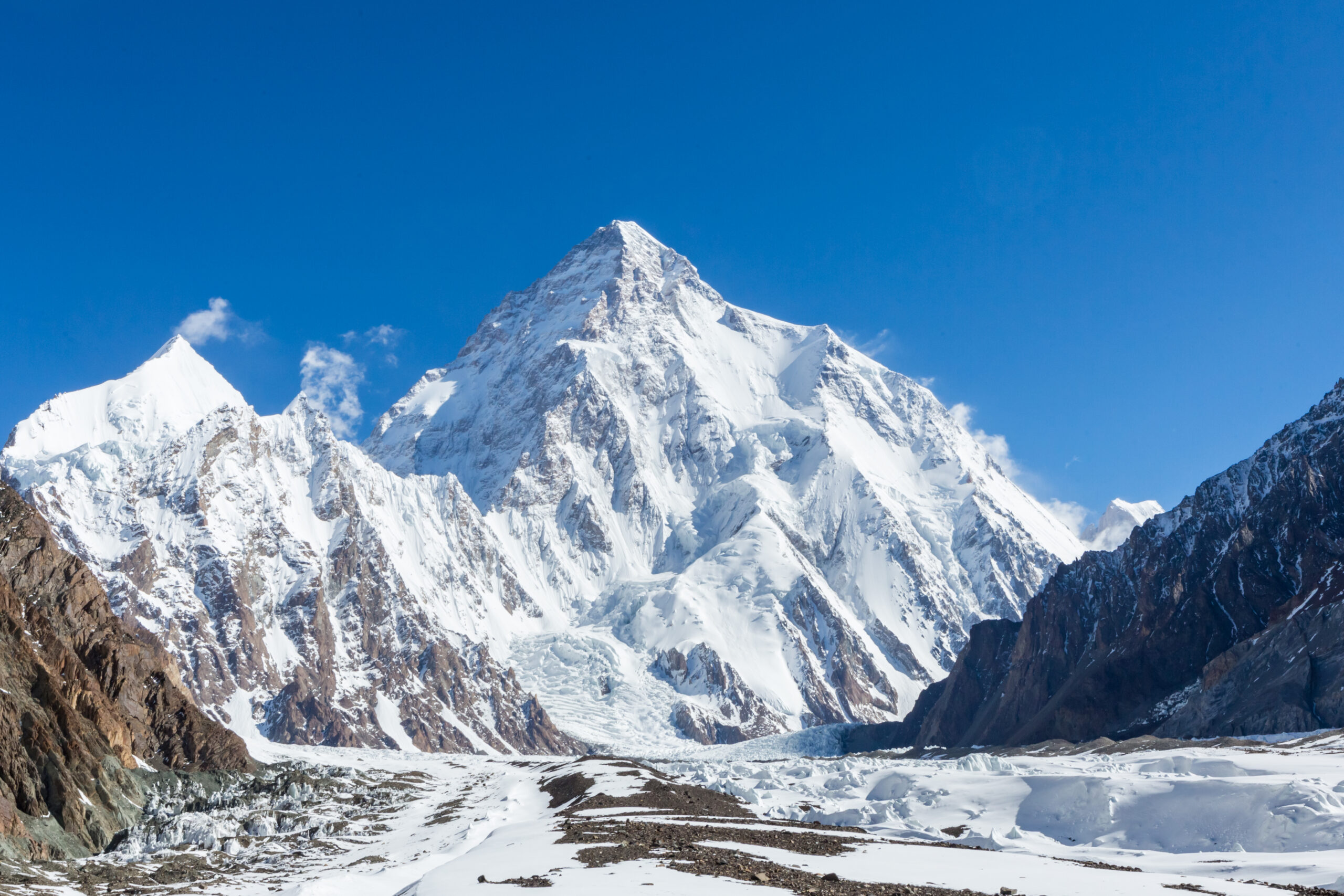
K2, Karakoram. Route schematics below explain relationships, not real-time navigation.
K2 has many climbing lines, but only one clear commercial default.
The Abruzzi Spur / Southeast Ridge has the deepest operating history and normally the strongest rope-fixing, camp and team infrastructure. The Cesen / South-Southeast Spur avoids House’s Chimney and much of the lower Abruzzi system, then joins it high on the mountain. The North Ridge is a distinct China-side expedition with substantially different access and support.
Neither Abruzzi nor Cesen avoids the Bottleneck, the traverse beneath the hanging serac, or the exhausting descent. Route selection depends on current snow loading, rockfall, fixed-rope progress, team skill and the leader’s experience—not a universal “safer route” verdict.
Abruzzi vs Cesen vs North Ridge
| Factor | Abruzzi Spur | Cesen Route | North Ridge |
|---|---|---|---|
| Side | Pakistan, southeast | Pakistan, south-southeast | China, north |
| Practical role | Commercial / supported standard | Principal alternative in some seasons | Separate specialist expedition |
| Characteristic terrain | House’s Chimney, Black Pyramid, Shoulder | Steeper lower snow, ice and mixed terrain | Remote northern approach and ridge |
| Infrastructure | Typically strongest | Season / operator dependent | Special arrangement required |
| Bottleneck exposure | Yes | Yes, after high convergence | No standard Abruzzi Bottleneck passage; different upper hazards |
| Best use | Default starting discussion for qualified supported climbers | Specific condition-based alternative with suitable team | Very experienced, independent expedition team |
Where the two Pakistan-side routes meet
Abruzzi lower mountain
Lower ridge → House’s Chimney → Black Pyramid → upper Shoulder.
The most established support network follows this system in normal modern climbing seasons.
Cesen lower mountain
South-Southeast Spur → steeper snow and mixed terrain → upper Shoulder.
The line bypasses some lower Abruzzi obstacles but does not provide an independent summit finish.
Abruzzi Spur: the complete terrain sequence
Starting above the Godwin-Austen Glacier, the Abruzzi follows K2’s Southeast Ridge through a succession of changing climbing problems.
- Base Camp and lower ridge: glacier logistics, acclimatization and a technical transition onto the ridge.
- House’s Chimney: steep rock and mixed terrain near the lower camp system.
- Black Pyramid: sustained mixed climbing, rockfall considerations and rope-management pressure.
- Shoulder: upper snow terrain and the high-camp / summit-launch zone.
- Bottleneck and traverse: steep terrain beneath unstable hanging ice; no fixed rope removes objective icefall risk.
- Summit and descent: high-altitude fatigue, weather and timing can make retreat the decisive challenge.
Camp positions, heights, ropes and route conditions change from expedition to expedition.
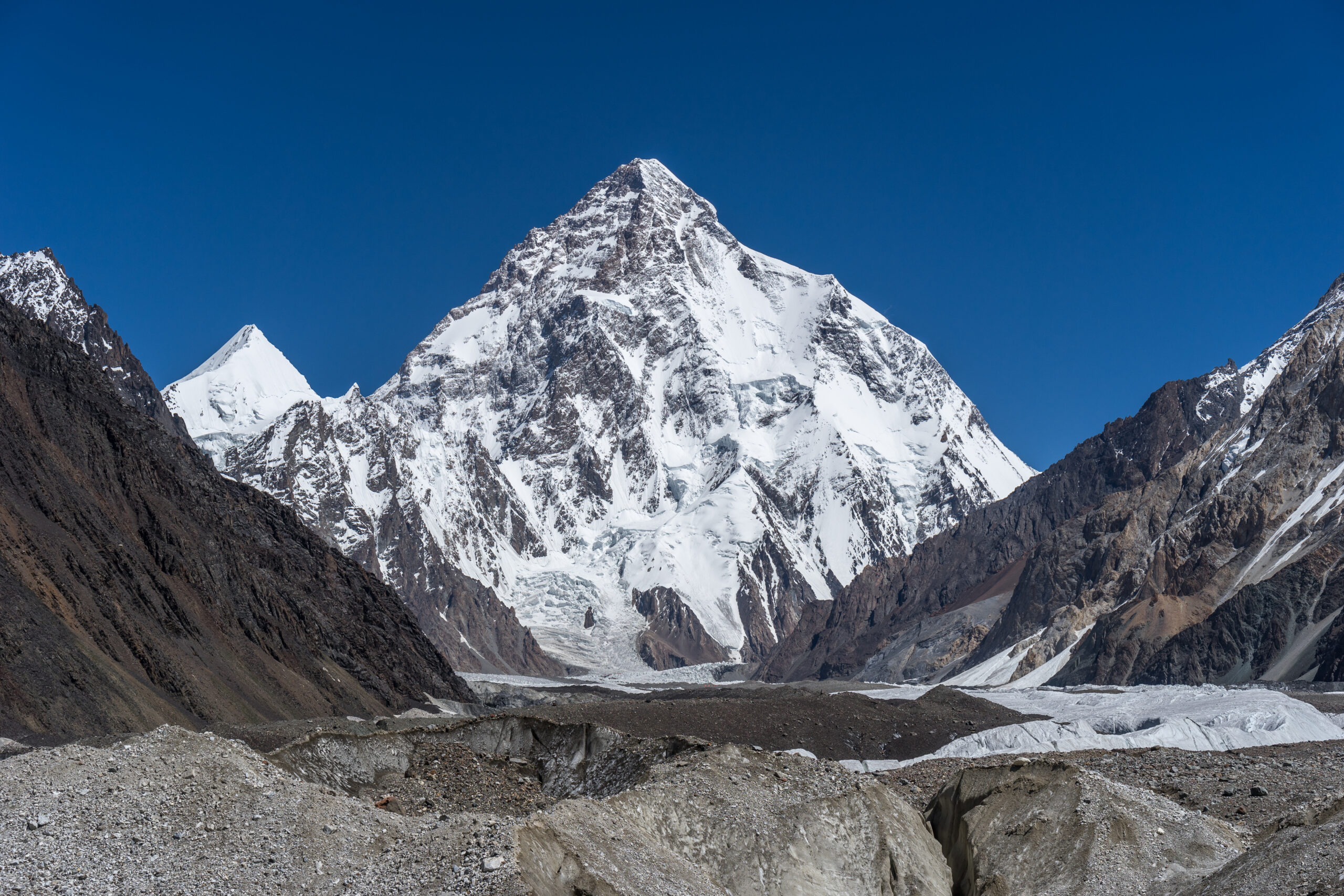
Nine major successful route families
The labels summarize widely recorded successful systems; variations and traverses are not consistently counted across all route histories. The entries below are historical context, not nine comparable expedition packages.
| Route | Side | First accepted summit | Modern use | Distinctive feature |
|---|---|---|---|---|
| Abruzzi Spur / Southeast Ridge | Pakistan · Southeast | 1954 | Supported standard | House’s Chimney, Black Pyramid, Shoulder, Bottleneck |
| Cesen / Basque / SSE Spur | Pakistan · South-southeast | 1994 accepted summit | Occasional alternative | Steeper lower snow, ice and mixed climbing; joins Abruzzi high |
| North Ridge | China · North | 1982 | Separate remote expedition | Long northern glacier approach and independent summit route |
| Northeast Ridge | Pakistan / northeast | 1978 | Historic rare | Complex ridge with high connection to the Southeast Ridge |
| West Ridge | Pakistan · West | 1981 | Historic rare | Complex remote western ridge system |
| Magic Line / Southwest Pillar | Pakistan · Southwest | 1986 | Elite historic | Long sustained technical pillar and ridge |
| Polish South Face / Central Rib | Pakistan · South | 1986 | Elite historic | Very steep direct south-face line |
| Northwest combination | China · Northwest | 1991 | Historic rare | Northwest line connecting with northern terrain |
| Direct West Face | Pakistan · West | 2007 | Elite historic | Steep direct wall climbing at very high altitude |
Abruzzi Spur / Southeast Ridge
First accepted summit: 1954. House’s Chimney, Black Pyramid, Shoulder, Bottleneck.
Deepest familiar camp, fixing and operator system.
Cesen / Basque / SSE Spur
First accepted summit: 1994 accepted summit. Steeper lower snow, ice and mixed climbing; joins Abruzzi high.
Avoids parts of the lower Abruzzi, not the Bottleneck.
North Ridge
First accepted summit: 1982. Long northern glacier approach and independent summit route.
Very different permits, logistics and retreat.
Northeast Ridge
First accepted summit: 1978. Complex ridge with high connection to the Southeast Ridge.
Not a routine supported-route alternative.
West Ridge
First accepted summit: 1981. Complex remote western ridge system.
Specialist expedition rather than commercial route.
Magic Line / Southwest Pillar
First accepted summit: 1986. Long sustained technical pillar and ridge.
Serious technical commitment and difficult descent.
Polish South Face / Central Rib
First accepted summit: 1986. Very steep direct south-face line.
Exceptional exposure; not a commercial choice.
Northwest combination
First accepted summit: 1991. Northwest line connecting with northern terrain.
Complex route naming across sources.
Direct West Face
First accepted summit: 2007. Steep direct wall climbing at very high altitude.
Among K2’s most serious technical lines.
Ask the operator these seven questions.
- Which lower route is intended, and what conditions would trigger a change?
- Where will camps, fixed ropes and oxygen supplies be established this season?
- What is the actual upper-route convergence and descent plan?
- How recently has the leader climbed the intended line?
- What happens if Bottleneck conditions deteriorate or ropes are damaged?
- What are the high-altitude rescue limits, turn-around rules and descent reserves?
- What evidence supports the team’s risk assessment beyond a marketing success percentage?
Explore mountaineering operators → · Compare high-altitude insurance →
A route atlas is not a conditions report.
Dry rock, freshly loaded snow, serac movement, weather windows, fixed-rope work, congestion and the capability of the operating team can change the defensibility of a particular line. K2’s named obstacles are constant; their current conditions are not.
Do not use historical camp elevations or a website schematic for navigation. Obtain current observations from the expedition team and appropriate authoritative forecasts.
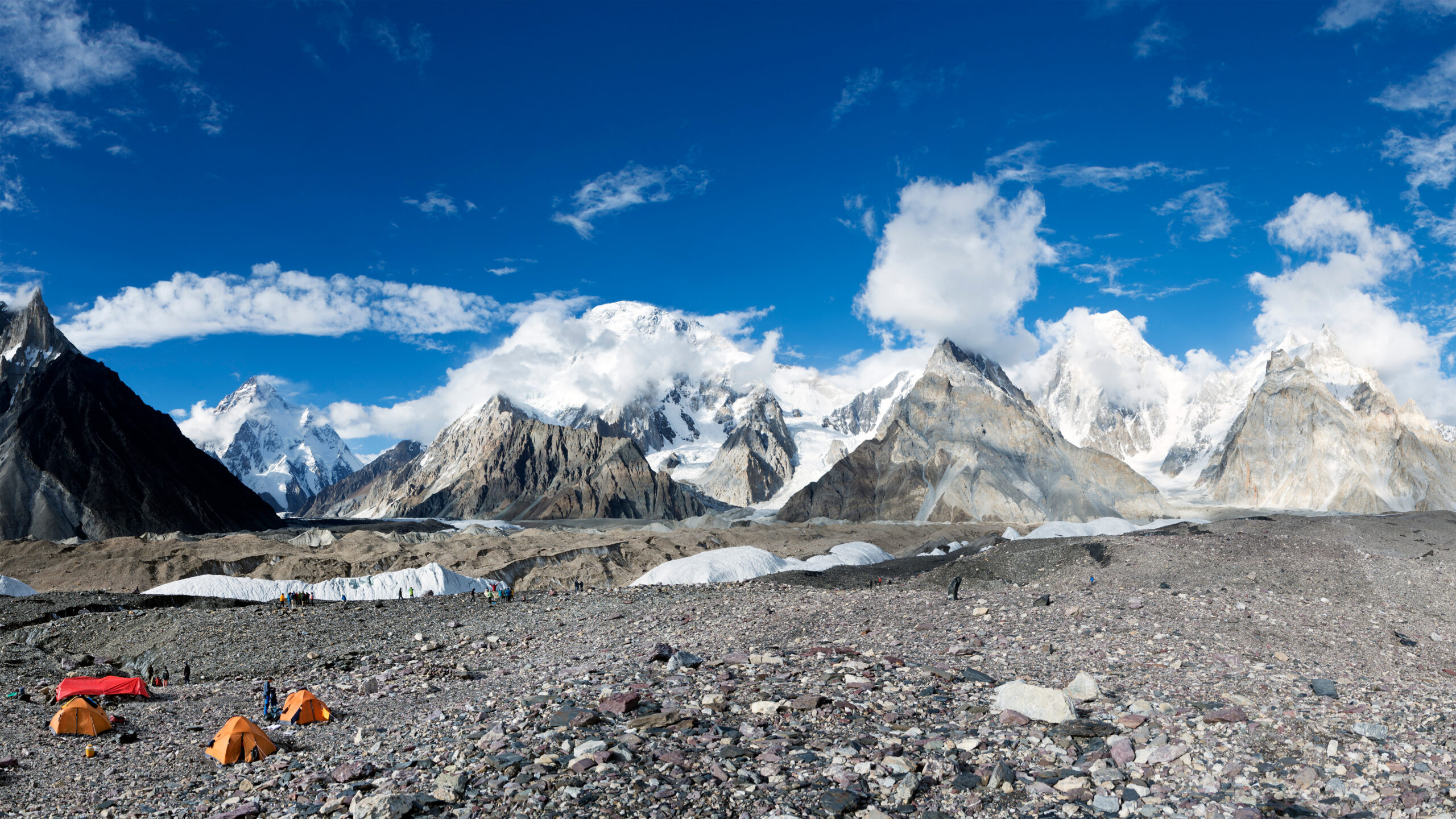
Questions climbers ask
What is the normal route up K2?
The Abruzzi Spur, also called the Southeast Ridge, is the established Pakistan-side supported route and the line of the 1954 first ascent.
Is the Cesen Route easier than Abruzzi?
No. Cesen changes the lower-mountain problems and may require steeper snow and ice climbing; it does not eliminate the shared high-altitude hazards.
Does Cesen bypass the Bottleneck?
No. It joins the Abruzzi system high on K2, and both lines follow the common upper route through the Bottleneck.
Can K2 be climbed from China?
Yes. The North Ridge was successfully climbed in 1982, but its access and support differ substantially from the usual Pakistan-side expedition.
What is K2’s Magic Line?
A difficult historic route up the South-Southwest Pillar, first climbed to the summit in 1986. It is not a routine supported route.
How many successful routes are there on K2?
This guide groups them into nine major successful route families. Counts differ depending on whether independent ridges, face variants and high-altitude combinations are treated separately.
Choose the next question—not just the next route.
Abruzzi vs Cesen in depth → · The Bottleneck → · Season updates → · K2 disaster history → · Mountain comparisons →
Editorial, history-led information. This is not current route beta or professional expedition instruction. Route selection must be made using present conditions and competent expedition leadership.
There’s more than one way up the Savage Mountain. See every major line explained — from the standard Abruzzi Spur to the rarely-climbed North Ridge — in the full guide to K2 routes.
Was this helpful?
🏔Related peaks nearby
🧭Explore & compare
Global Summit Guide is an independent mountaineering resource founded in 2026. The team combines first-hand trekking and climbing experience with in-depth research and professional health and nutrition review to help climbers choose objectives, prepare properly, and stay safe.
Health, altitude, and nutrition content is reviewed by Taylor Ludlow (Registered Nurse) and Brigg Hoopes (Nutritionist).
What We Don't Know Yet
Mountain information changes quickly. This box explains the limits of what this page can responsibly promise.
- Guide-company prices, departure dates, guide ratios, included services, and cancellation rules can change without notice.
- Weather, snowpack, avalanche risk, road access, and route conditions can change quickly and may be different on your climbing dates.
- Route conditions, trailhead access, crevasse exposure, stream crossings, and rescue access may vary from published planning guidance.
- Comparisons simplify complex decisions; the better mountain depends on current conditions, skills, timing, budget, and risk tolerance.
Verify current conditions with official land managers, guide services, local forecasts, and current route reports before booking or climbing.
Mountaineering, rock and ice climbing, glacier travel, and high-altitude activity are inherently dangerous and can result in serious injury or death. The information on Global Summit Guide is provided for general informational and educational purposes only and is not a substitute for professional instruction, qualified guiding, proper equipment, or your own judgment and experience.
Route conditions, weather, snowpack, permits, regulations, and hazards change constantly and may differ from what is described here. Details may be incomplete, out of date, or contain errors. Always verify current information with local authorities, certified guides, and official sources before making any decision in the mountains.
Nothing on this site is medical, legal, or financial advice. Our fitness, acclimatization, altitude, and nutrition content is general in nature; consult a qualified physician before beginning any strenuous exercise program or exposing yourself to high altitude.
You are solely responsible for your own safety and decisions. To the fullest extent permitted by law, Global Summit Guide and its team accept no liability for any loss, injury, damage, or expense arising from use of, or reliance on, this information. By using this site you acknowledge these risks and accept these terms.
Some links on this site may be affiliate links. If you buy through them we may earn a small commission at no extra cost to you; this never affects our recommendations.
Global Summit Guide recommendation path
Next Best Mountain to Research
Use these recommendations to continue the right planning path instead of stopping on one page.
Use current permit, weather, route, and operator information before booking or climbing.
Explore Travel Options for Your Destination
Once your mountain, dates and route are taking shape, compare flights, hotels and other travel options that fit the trip.
Affiliate link. We may earn a commission at no additional cost to you.