<
Cho Oyu Climb Guide
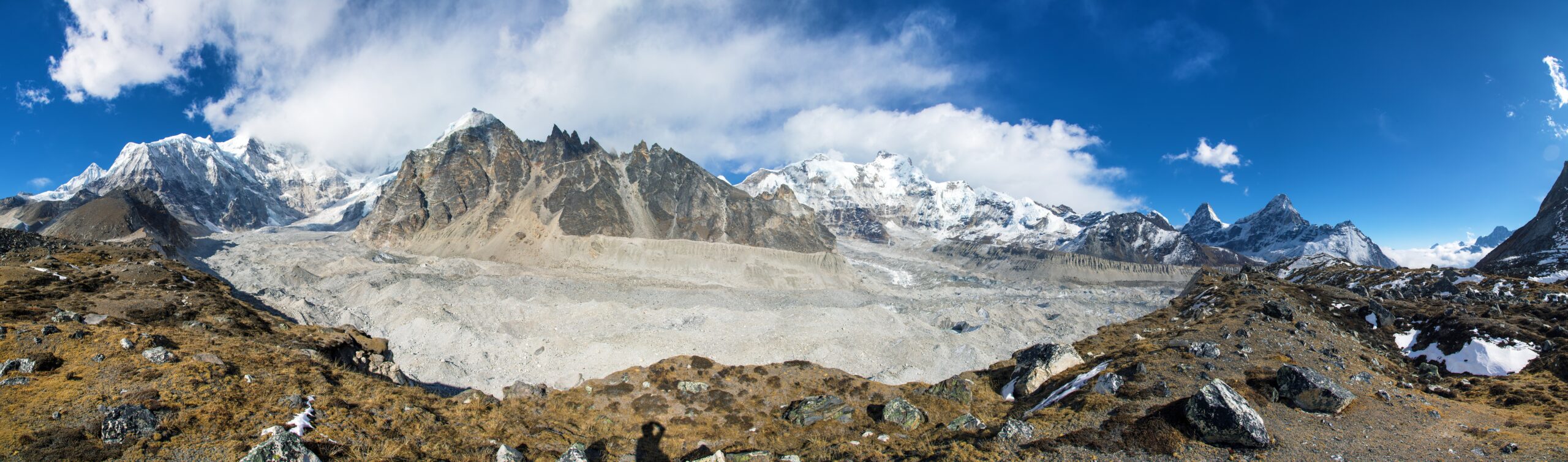
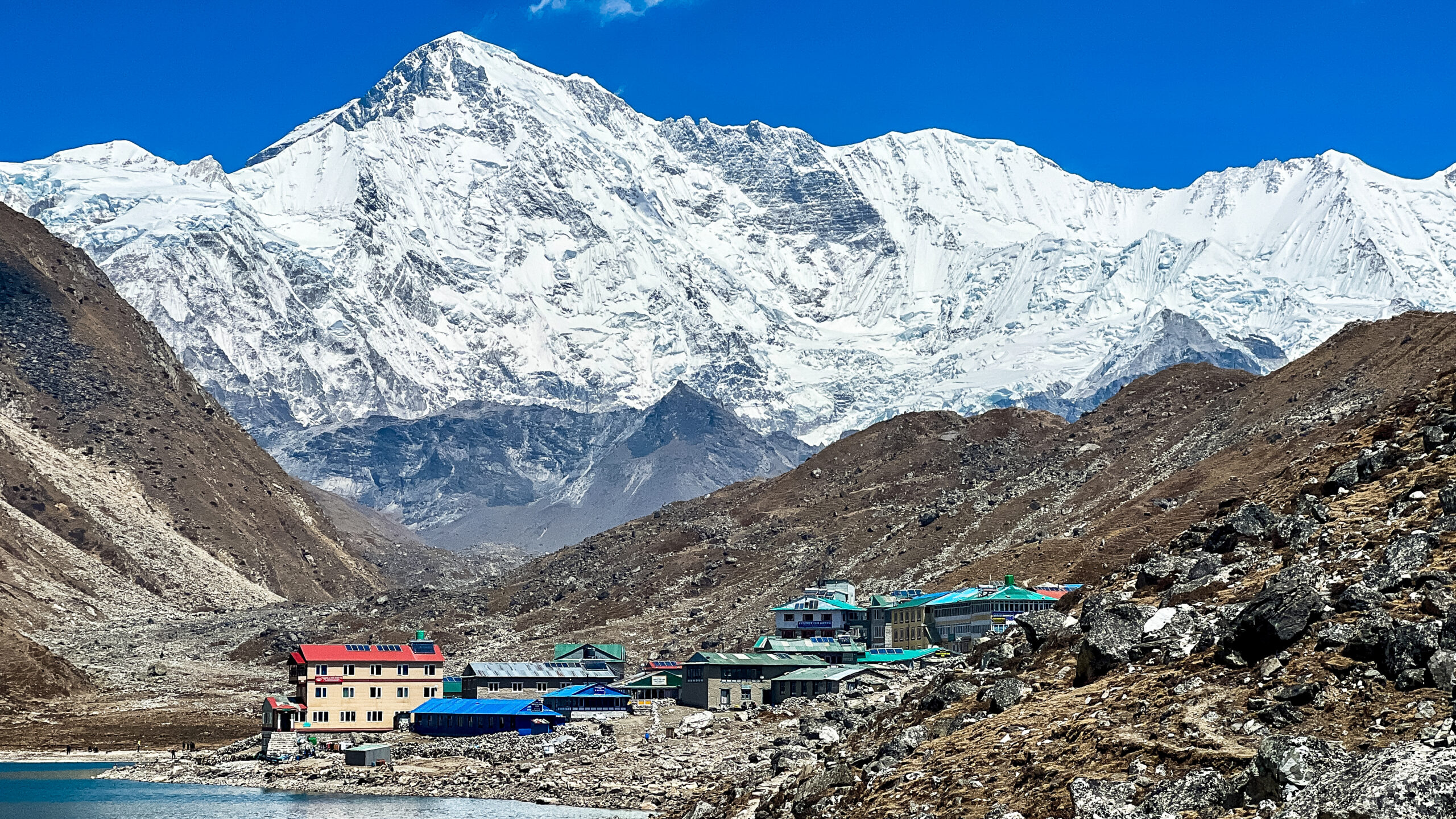
Mount Cho Oyu, Beautiful panoramic view of Mount Cho Oyu and lake, Cho Oyu base camp trekking trail, Sagarmatha national park, Gokyo valley, Khumbu valley, Nepal Himalaya mountain

Iconic Peaks · Sixth Highest · Updated April 2026

Climbing Cho Oyu: The Turquoise Goddess, Sixth-Highest and Most Accessible 8,000er

At 8,188 meters (26,864 ft), Cho Oyu is the sixth-highest mountain in the world and widely considered the most accessible of the 14 eight-thousanders. The Tibetan name means “Turquoise Goddess” — a reference to the mountain’s luminous evening glow as the sun sets over the Mahalangur Himalayas on the Nepal-Tibet border. This complete 2026 guide covers the Northwest Ridge standard route from the Tibetan side, the CTMA permit structure, Herbert Tichy’s groundbreaking 1954 Austrian first ascent, the 1985 Polish winter ascent by Berbeka and Pawlikowski, expedition logistics from Tingri through Chinese Base Camp to Advanced Base Camp, and Cho Oyu’s established role as the definitive preparation peak for Mount Everest.

8,188 m
Summit elevation
(26,864 ft)
~$11-14K
2026 CTMA
permit bundle
~39%
Summit success
rate (highest 8000er)
~3,900+
Summits since
Tichy 1954
Mountain Command Center

Cho Oyu Location & Current Conditions

Live 7-day forecast at Cho Oyu Advanced Base Camp elevation (5,650m) on the Gyabrag Glacier in the Tibet Autonomous Region, and interactive terrain map of the Mahalangur Himalayas near the Nangpa La trade pass.

Cho Oyu · Nepal/Tibet Border

28.0939°N, 86.6608°E

Advanced Base Camp Weather

Elev: 5,650 m
Loading current conditions…

Cho Oyu occupies a unique position among the 14 eight-thousanders. At 8,188 meters, it is the sixth-highest mountain on Earth and has the highest summit success rate of any peak above 8,000 meters — approximately 39% of all climbers who attempt the mountain reach the top. The Tibetan name Cho Oyu translates to “Turquoise Goddess,” referring to the mountain’s luminous evening glow as the sun sets over the Mahalangur Himalayas. The standard Northwest Ridge route from the Tibetan side offers moderate 30-35° slopes, a single technical serac barrier crux between Camp 1 and Camp 2, efficient overland access from Kathmandu through Gyirong and Tingri, and a 4-6 week expedition timeline that is significantly shorter than most other 8,000-meter peaks. Cho Oyu was first summited on October 19, 1954 by Austrian climbers Herbert Tichy and Joseph Jöchler together with Nepali Sherpa Pasang Dawa Lama — a light-expedition-style autumn ascent that set precedents for modern alpine-style mountaineering. The first winter ascent came on February 12, 1985 by Polish climbers Maciej Berbeka and Maciej Pawlikowski via a new route on the Southeast Pillar, part of Andrzej Zawada’s Polish-Canadian expedition. Today, Cho Oyu is the preferred preparation peak for climbers progressing toward Mount Everest — a role it fills better than any other 8,000-meter peak thanks to moderate technical demands combined with genuine death-zone altitude experience.

How this guide was researched

All 2026 permit figures, access regulations, and expedition logistics in this guide were verified against primary sources including the Nepal Department of Tourism, the China-Tibet Mountaineering Association (CTMA), and reports from registered expedition operators active on Cho Oyu since the Tibetan side reopened in 2023. Historical climbing data draws on The Himalayan Database, American Alpine Club Publications (including the 1985 Cho Oyu winter ascent report authored by expedition leader Andrzej Zawada), and the ExplorersWeb 8,000m season coverage. The 1954 first-ascent narrative draws from Herbert Tichy’s expedition accounts and Austrian Alpine Club archives. Inline expedition facts have been cross-referenced against at least two independent sources. Fact-check date: April 18, 2026.

Cho Oyu Facts: Elevation, Location, Route, Duration & Success Rate

Before exploring routes, history, and expedition logistics, these essential facts frame Cho Oyu’s character as the most accessible of the 14 eight-thousanders and the preferred Everest preparation peak.

Summit elevation
8,188 m
26,864 ft — 6th highest on Earth
Mountain range
Mahalangur Himal
Same sub-range as Everest and Lhotse
Name meaning
Turquoise Goddess
Tibetan “Cho Oyu” — evening light
Standard route
Northwest Ridge
Tibet side via Tingri & Advanced BC
Expedition length
4–6 weeks
Shortest of the 14 8,000ers
Success rate
~39%
Highest of any 8,000m peak
Typical cost
$32K–$55K
Most affordable 8,000er
First ascent
Oct 19, 1954
Tichy, Jöchler, Pasang Dawa Lama
First winter ascent
Feb 12, 1985
Berbeka & Pawlikowski (Poland)

Key Entities & Terminology

Essential Cho Oyu Vocabulary

Understanding these geographic, technical, and institutional terms will help you navigate the rest of this guide and any Cho Oyu expedition research. Each entity connects to the broader ecosystem of Himalayan mountaineering, Tibetan geography, and high-altitude climbing culture.

Turquoise Goddess
English translation of the Tibetan name Cho Oyu — reflects the mountain’s evening turquoise glow.
Mahalangur Himalayas
Sub-range of the Greater Himalaya containing Cho Oyu, Everest, Lhotse, Makalu, and Nuptse.
Tibet Autonomous Region
Chinese administrative region where Cho Oyu’s northern slopes lie; access managed by CTMA.
Tingri County
Tibetan county in Shigatse Prefecture where Cho Oyu expeditions stage before moving to Base Camp.
Nangpa La
Ancient 5,716m trade pass between Tibet and Khumbu, just west of Cho Oyu’s summit.
CTMA
China-Tibet Mountaineering Association — administers climbing permits on the Tibetan side of Cho Oyu.
Chinese Base Camp
First major camp at 4,900m on the Tibetan side, accessible by jeep road from Tingri.
Advanced Base Camp (ABC)
Higher base camp at 5,650m — the real starting point for climbing, reached by 2-day yak trek.
Gyabrag Glacier
Glacier below Cho Oyu’s Chinese Base Camp, part of the northern approach terrain.
Serac barrier
The route’s primary technical crux between Camp 1 and Camp 2 at 6,600-6,800m, requires fixed lines.
Yellow Band
Distinctive band of sedimentary rock at ~7,500m shared with Everest’s geology.
Death zone
Altitudes above 8,000m where human physiology cannot acclimatize — Cho Oyu’s summit sits 188m into the death zone.
Summit plateau
Cho Oyu’s broad, flat summit area — large enough that climbers sometimes mistake the prayer flags for the actual highest point.
Light expedition style
Alpine-inspired approach using small teams and minimal fixed infrastructure — pioneered on Cho Oyu by Tichy’s 1954 team.
Eight-thousanders
The 14 mountains above 8,000 meters — Cho Oyu is ranked sixth.
Gyirong
Border town where modern Tibet-bound Cho Oyu expeditions cross from Nepal.

Why Cho Oyu Is the Most Accessible 8,000-Meter Peak

Cho Oyu’s reputation as the most approachable of the 14 eight-thousanders is well-earned — but understanding exactly why the mountain is more accessible than K2, Annapurna, or Kangchenjunga helps climbers evaluate whether Cho Oyu is the right objective for their experience level. Eight specific factors combine to make Cho Oyu the preferred entry point into 8,000-meter mountaineering.

01

Moderate Northwest Ridge Gradient

The standard Tibetan route features consistent 30-35° snow slopes along the Northwest Ridge, with no sustained steep climbing sections. Compare this to Makalu’s summit pyramid (rock climbing at 8,300m+), K2’s Bottleneck traverse, or Kangchenjunga’s upper rock pitches. Cho Oyu’s gradient is closer to Everest’s South Col route than to any other 8,000m peak, making it well-suited for climbers transitioning from 7,000m experience. The absence of prolonged technical difficulty means climbers can focus on altitude adaptation and expedition systems rather than survival on technical terrain.

02

Single Serac Barrier Crux

Cho Oyu’s only genuine technical challenge is a 50-100 meter serac barrier between Camp 1 and Camp 2 at approximately 6,600-6,800m. The barrier is equipped with fixed ropes each season, and climbers ascend using jumars on the steepest sections. Once past the serac zone, the route returns to moderate 30-35° terrain for the remainder of the climb. This concentrated crux at intermediate altitude is far more manageable than the prolonged technical demands of Makalu, K2, or the upper slopes of Kangchenjunga. Climbers can prepare specifically for this one section rather than maintaining technical form throughout the entire summit push.

03

Efficient Overland Logistics

Access is dramatically more efficient than Nepal-side 8,000m peaks. The Tibet-side approach runs Kathmandu → Gyirong border → Nyalam → Tingri → Chinese Base Camp — all by road. Chinese Base Camp at 4,900m is accessible by jeep on a developed road, and Advanced Base Camp at 5,650m is reached in just 2 days of walking with yak support. Compare this to Makalu’s 7-9 day trek through the Barun Valley or Kangchenjunga’s 10-14 day approach. The efficient logistics reduce total expedition time to 4-6 weeks and allow climbers to arrive at Base Camp with reserves intact rather than trek-depleted.

04

Low Objective Hazard

The Tibetan Northwest Ridge has some of the lowest objective dangers of any 8,000m route. There is no icefall to cross (unlike the Khumbu Icefall on Everest), no Bottleneck serac threat (K2), and minimal avalanche exposure on the standard line. The route’s main objective hazard is the serac barrier itself — concentrated, predictable, and manageable with proper conditions. This low-hazard profile is a major reason Cho Oyu has been described as “the safest 8,000m normal route” by operators like SummitClimb. Climbers still face extreme altitude and weather risks, but the accumulation of catastrophic objective dangers that characterizes peaks like Annapurna or K2 is absent.

05

Highest Success Rate of Any 8,000er

Cho Oyu’s historical summit success rate runs approximately 39% of all climbing members — the highest of any 8,000m peak. By comparison, Everest runs approximately 30-35%, Makalu around 19%, and K2 historically closer to 25%. Through early 2026, Cho Oyu has seen over 3,900 successful summits (more than the original 2022 figure of 3,923), making it the second-most-climbed 8,000m peak after Everest. The high success rate reflects the combination of moderate terrain, efficient logistics, strong commercial infrastructure, and favorable weather windows — not simplicity. Climbers still need excellent preparation to join those 39%.

06

Strong Commercial Infrastructure

Cho Oyu has the most developed commercial infrastructure of any 8,000m peak after Everest. Experienced operators including Madison Mountaineering, Furtenbach Adventures, Adventure Consultants, SummitClimb, Seven Summit Treks, 8K Expeditions, Alpenglow, Imagine Nepal, and Elite Exped run regular Cho Oyu programs with established Sherpa teams, proven Base Camp operations, reliable fixed-line setups, and sophisticated oxygen logistics. This infrastructure makes Cho Oyu particularly suitable for first-time 8,000m climbers who benefit from expert expedition management while they focus on altitude adaptation. The infrastructure density resembles Everest’s Khumbu operation more than any other 8,000m peak.

07

Affordable by 8,000m Standards

Cho Oyu is typically the most affordable 8,000m peak for commercial climbers. Standard expeditions cost $32,000-$55,000, compared to Makalu at $42,000-$70,000, Lhotse at $40,000-$60,000, Kangchenjunga at $40,000-$65,000, and Everest starting around $45,000 and running to $250,000+. Cho Oyu’s efficient logistics reduce Sherpa requirements, simpler terrain reduces oxygen needs, and shorter timelines reduce operational overhead — all passed through to lower climber pricing. The affordability makes Cho Oyu accessible to climbers who might not budget for Everest but want genuine 8,000m experience.

08

Dual-Season Viability

Cho Oyu climbs successfully in both spring (April-May) and autumn (September-October), giving climbers flexible scheduling options. The autumn post-monsoon season is historically classic — Herbert Tichy’s 1954 first ascent was an autumn climb. Spring has grown in popularity since the 2023 Tibet reopening, with longer daylight and warmer temperatures. This dual-season viability is rare among 8,000m peaks — most (Kangchenjunga, K2, Broad Peak) are primarily summer objectives, while others (Everest south-side) are primarily spring objectives. Cho Oyu’s flexibility allows climbers to fit the expedition into work or personal calendars more easily than other 8,000ers.


Who Can Realistically Climb Cho Oyu?

Cho Oyu is frequently described as “beginner 8,000m,” but this framing hides important prerequisites. While Cho Oyu is genuinely the most accessible 8,000-meter peak, it still requires real high-altitude mountaineering experience. The mountain rewards climbers who have built progressive experience through smaller peaks and punishes those who confuse “most accessible 8,000m” with “beginner friendly.” Understanding the actual prerequisites helps aspiring Cho Oyu climbers assess whether the mountain is within reach.

Minimum Experience Prerequisites

Reputable Cho Oyu operators typically require the following experience before accepting clients:

  • Multiple successful 6,000m+ summits — typical examples include Island Peak, Mera Peak, Lobuche Peak, or Ama Dablam in Nepal; Denali or Aconcagua for Western climbers; or Muztagh Ata, Peak Lenin, or Khan Tengri in the Pamirs and Tien Shan
  • Strong glacier travel and crevasse rescue skills — essential for managing the Gyabrag Glacier approach and the route through the serac barrier
  • Competent fixed-line ascending with jumars — the serac barrier section and several short steep sections demand fluent jumar technique
  • Crampon and ice axe proficiency on moderate snow and ice terrain
  • Aerobic fitness for sustained high-altitude effort — summit day from Camp 3 at 7,400m requires 10-14 hours of continuous effort at extreme altitude
  • Prior experience above 7,000m ideally — climbers who have reached 7,000m+ on Ama Dablam, Baruntse, Lenin Peak, or Muztagh Ata have meaningful altitude preparation
  • Cold-weather tolerance down to -35°C — Cho Oyu summit temperatures routinely fall below -35°C with wind chill pushing beyond -50°C

Cho Oyu Is Appropriate For:

Climbers pursuing their first 8,000m summit. Cho Oyu is the mountain most operators and experienced mountaineers recommend for a first 8,000m peak. The moderate terrain, strong infrastructure, and affordable logistics create optimal conditions for learning death-zone climbing systems without facing simultaneous technical challenges.

Seven Summits climbers preparing for Everest. Cho Oyu is widely considered the best preparation peak for Mount Everest. The Northwest Ridge route uses the same core skills Everest’s South Col route demands — fixed-line ascending, moderate snow climbing, death-zone summit-day pacing, and oxygen system management. Climbers who successfully complete Cho Oyu arrive at Everest with directly applicable experience.

Climbers progressing through the 14 eight-thousanders. Cho Oyu typically appears early in 14-peak projects — often as the first or second 8,000m summit. Climbers build Cho Oyu into plans that progress through Manaslu, Lhotse, Everest, and eventually the more technical peaks like Makalu, Kangchenjunga, and ultimately K2 and Annapurna.

Climbers with limited expedition time. Cho Oyu’s 4-6 week timeline is significantly shorter than most 8,000m peaks. For climbers who cannot commit 8-12 weeks to Makalu or K2, Cho Oyu provides genuine 8,000m experience within a more manageable window.

Cho Oyu Is Not Appropriate For:

Complete mountaineering beginners. Despite its “easiest 8,000er” reputation, Cho Oyu requires foundational mountaineering skills. Climbers without prior glacier travel, crampon experience, or high-altitude exposure should build skills on 6,000-7,000m peaks before attempting Cho Oyu.

Climbers without genuine fitness preparation. Cho Oyu’s moderate terrain does not compensate for inadequate aerobic conditioning. Summit day demands sustained effort at altitudes above 8,000m, and underprepared climbers often turn back at the serac barrier or higher due to pure exhaustion.

Climbers expecting technical simplicity. The serac barrier at 6,600-6,800m requires genuine technical competence. Climbers who struggle with fixed-line work, steep snow climbing, or jumar technique will find this section more challenging than the “most accessible 8,000er” reputation suggests.

The realistic Cho Oyu progression

A typical Cho Oyu progression spans 4-7 years of serious mountaineering: 1-2 years building foundational skills on glacier travel, rope work, and crampon use; 2-3 years on progressive 5,000-6,000m peaks (Island Peak, Ama Dablam, Denali, Aconcagua); ideally 1-2 seasons on 7,000m objectives (Muztagh Ata, Peak Lenin, Khan Tengri) to test altitude tolerance above 7,000m; then Cho Oyu. Climbers who compress this progression — jumping from low-altitude experience directly to an 8,000m peak — face elevated risk even on a “gentle” 8,000er like Cho Oyu.


Cho Oyu as the Definitive Everest Preparation Peak

Cho Oyu is not one of the Seven Summits — Mount Everest holds the title for Asia in that framework. However, Cho Oyu plays a uniquely important role for Seven Summits climbers because it is widely considered the best 8,000m preparation peak for Everest. Climbers targeting the Seven Summits (and particularly those worried about Everest’s scale) consistently choose Cho Oyu as their stepping stone to the world’s highest peak.

Seven Summits Context

Cho Oyu: The Gateway to Everest

Cho Oyu is not a Seven Summit, but it prepares climbers specifically for Mount Everest — Asia’s highest peak. Of the 14 eight-thousanders, Cho Oyu builds the most directly transferable skills for the Everest South Col route. This makes Cho Oyu essential for serious Seven Summits aspirants.

Five Reasons Cho Oyu Is the Best Everest Preparation

Guided operators including Madison Mountaineering, Alpenglow, Furtenbach Adventures, and Adventure Consultants all explicitly position Cho Oyu as their preferred Everest preparation peak. Five specific capabilities make Cho Oyu uniquely valuable preparation:

1. Extreme altitude physiological experience. Cho Oyu’s 8,188m summit places climbers approximately 188m into the death zone for extended summit-day periods. This experience directly builds the physiological tolerance Mount Everest’s 8,848m summit will demand. Climbers who have summited Cho Oyu understand — from lived experience — how their body performs above 8,000m, how long oxygen reserves last, and how decision-making degrades with hypoxia. This cannot be simulated at lower altitude.

2. Skill match with the Everest South Col route. The Northwest Ridge route requires the same core skills as Everest: jumar ascending on fixed lines, moderate snow climbing, glacier travel, high-camp living at 7,400m+, and long summit-day pacing. Climbers who handle Cho Oyu’s serac barrier, Camp 2 to Camp 3 transition, and summit plateau crossing arrive at Everest with directly applicable experience — not transferable-but-different experience from technical peaks like Makalu or Annapurna.

3. Similar infrastructure exposure. Cho Oyu operates with substantial commercial infrastructure that resembles Everest more than any other 8,000m peak. Climbers experience large Base Camp operations, Sherpa team coordination, oxygen logistics, weather forecasting, and expedition management at Everest-similar scale. The learning curve on Everest is shorter for climbers who have managed Cho Oyu systems.

4. Manageable time commitment. At 4-6 weeks, Cho Oyu is approximately 60% of an Everest expedition’s duration. Climbers can commit to Cho Oyu without disrupting work and family obligations the way a full Everest attempt would. This allows Cho Oyu to fit into an Everest progression without consuming all available expedition time.

5. Affordable preparation investment. At $32,000-$55,000 for a standard commercial climb, Cho Oyu is a fraction of Everest’s $45,000-$250,000 range. Climbers can invest in Cho Oyu as preparation without a budget that threatens their ability to later attempt Everest itself.

The Cho Oyu → Everest Progression Timeline

A typical Cho Oyu to Everest progression looks like this:

  • Year 1: Cho Oyu expedition (autumn or spring) — build first 8,000m experience
  • Year 2: Debrief, integrate lessons, continue physical preparation, maintain altitude tolerance through 6,000m peaks or high-altitude training
  • Year 3: Mount Everest expedition with Cho Oyu experience as foundation

Some climbers compress this to a single year (Cho Oyu autumn → Everest spring), though most operators and coaches recommend the full 2-3 year progression to allow physiological adaptation and psychological integration. The direct Cho Oyu → Everest pathway has produced higher success rates and lower incident rates than direct attempts at Everest without prior 8,000m experience.

For comprehensive Seven Summits planning across all seven continents, see our complete Seven Summits guide and interactive Your Path to the Seven Summits planning tool.


Cho Oyu History: From the 1952 British Reconnaissance to the 2023 Tibet Reopening

Cho Oyu’s climbing history is shorter than most 8,000m peaks but unusually innovative. The 1952 British reconnaissance, the 1954 Austrian first ascent in autumn with light-style methodology, the 1985 Polish winter ascent via a technical new route, the 1993 Chapuisat female winter first ascent, the 2001 CTMA closure and reopenings, and the 2023 Tibet reopening after Covid-era closures — each chapter has shaped the mountain’s current character as the definitive accessible 8,000er.

Early Reconnaissance (1921-1952)

Cho Oyu was first photographed and mapped during the 1921 British reconnaissance expeditions to the Everest region. Its distinctive westernmost position in the Mahalangur Himal and its relatively moderate slopes were noted, but the mountain received no serious climbing attention for decades.

The first serious attempt came in 1952 — a British reconnaissance led by Eric Shipton that included future Everest climbers Edmund Hillary, Tom Bourdillon, and George Lowe. The team attempted the mountain from the Nepal side as preparation for their 1953 Everest attempt, but retreated due to technical difficulties and avalanche risk on the southern approaches. Hillary’s team recognized that the Nepal side was significantly harder than the Tibetan approach, a conclusion that still drives commercial route selection today.

The 1954 Austrian First Ascent

The first successful ascent came in October 1954 through a remarkable light-expedition-style climb that contrasted with the massive national expeditions of the period. The team was led by Herbert Tichy — a 41-year-old Austrian journalist-climber — with Austrian mountain guide Joseph Jöchler and Nepali Sherpa Pasang Dawa Lama.

On October 19, 1954, Tichy, Jöchler, and Pasang Dawa Lama reached the summit via the Northwest Ridge from the Tibetan side. They climbed in the post-monsoon autumn season, used minimal supplemental resources, and achieved the summit without supplemental oxygen — a breakthrough style that would later be called “alpine style” or “light expedition style.” Tichy’s approach stood in stark contrast to the large national expeditions that had climbed Annapurna (1950), Everest (1953), Nanga Parbat (1953), and K2 (1954).

Cho Oyu’s historical significance

Cho Oyu’s 1954 first ascent was the 5th of the 14 eight-thousanders to be climbed, following Annapurna (1950), Everest (May 1953), Nanga Parbat (July 1953), and K2 (July 1954). More importantly, Tichy’s light-expedition-style ascent and the autumn season choice broke precedents that had defined 8,000m climbing. This methodological innovation influenced every subsequent 8,000m climb and established Cho Oyu’s character as a mountain where new approaches could be tested.

Notable Cho Oyu Climbs (1984-2009)

  • 1984: First female ascent by Věra Komárková (USA) and Dina Štěrbová (Czechoslovakia) — Štěrbová became the first Czechoslovakian woman to summit an 8,000m peak
  • February 12, 1985: First winter ascent by Polish climbers Maciej Berbeka and Maciej Pawlikowski via a new route on the Southeast Pillar — part of a Polish-Canadian expedition led by Andrzej Zawada. Climbed in -25°C conditions without supplemental oxygen. Three days later (February 15), teammates Zygmunt A. Heinrich and Jerzy Kukuczka repeated the ascent — Kukuczka’s second 8,000er summit within one winter (after Dhaulagiri on January 21, 1985)
  • February 10, 1993: Marianne Chapuisat of Switzerland became the first woman to summit an 8,000m peak in winter, reaching Cho Oyu’s summit in a Spanish-led international expedition
  • Autumn 1990: Voytek Kurtyka, Erhard Loretan, and Jean Troillet ascended Cho Oyu’s Southwest Face and descended via the West Ridge without supplemental oxygen — one of the great alpine-style Himalayan climbs
  • Autumn 1991: A Russian expedition led by Sergey Efimov established a new route on the Southeast Ridge-East Ridge
  • 1994: Japanese climber Yasushi Yamanoi established a new variation of the 1990 Kurtyka route, summiting on September 23 without bottled oxygen
  • 2009: Denis Urubko and Boris Dedeshko’s climb was the last successful Nepal-side ascent for nearly 15 years

Access Closures and the 2023 Reopening

Cho Oyu has experienced multiple access restrictions over its history, reflecting the complex political dynamics of climbing in Tibet Autonomous Region. Chinese authorities have intermittently restricted foreign climber access depending on political calendars, the Dalai Lama’s activities, and tensions around the Nangpa La trade route. The mountain was closed during the 2001-2002 period around the Tenth Panchen Lama succession, and again for significant portions of 2008 around the Beijing Olympics.

The most extensive recent closure came during the Covid-19 pandemic (2020-2023), when Tibet Autonomous Region was closed to all foreign climbers. During this period, limited Nepal-side activity occurred — Gelje Sherpa’s teams attempted the Nepal side in 2022 and 2023, reaching 7,400m and 7,600m respectively before weather forced retreats. Tibet-side access was fully reopened in 2023, and the 2024 season marked the return of standard commercial Cho Oyu operations. Seven Summit Treks’ 2024 team established a new South-Southwest Ridge route from the Nepal side with supplemental oxygen, marking the return of Nepal-side climbing.

Through early 2026, Cho Oyu has seen approximately 3,900+ successful summits total, making it the second-most-climbed 8,000m peak after Everest. The mountain has had fewer deaths proportionally than most 8,000m peaks, reflecting its moderate terrain and strong commercial infrastructure.


Cho Oyu’s Climbing Routes: The Northwest Ridge Standard & Technical Alternatives

Cho Oyu has 13 established climbing routes, but commercial Cho Oyu planning focuses overwhelmingly on the Northwest Ridge from the Tibetan side. The technical Nepal-side routes (Southeast Pillar, Southwest Face, South-Southwest Ridge) are reserved for alpine-style specialists. This guide focuses on the standard route since it accounts for over 95% of successful ascents.

RouteCountry AccessBase Camp ElevKey FeaturesShareCharacter
Northwest Ridge (Tibet)Tibet Autonomous Region4,900 m (CBC) / 5,650 m (ABC)Standard route, serac barrier crux, 30-35° slopes, Tichy 1954 line~95%+Standard commercial
Southeast PillarNepal (rare)~5,000 m1985 Polish winter FA, technical alpine<1%Elite alpine only
Southwest FaceNepal (rare)~5,000 m1990 Kurtyka-Loretan-Troillet, no-O2<1%Elite alpine only
South-Southwest RidgeNepal~5,000 m2024 SST new commercial line~1-3%Limited commercial
02
Elite alpine · Rarely commercial · 1985 Polish winter FA

Nepal-Side Routes (Southeast Pillar, Southwest Face)

Nepal · Solukhumbu · Gokyo approach Historic Polish & Kurtyka lines

Cho Oyu’s Nepal-side routes are dramatically more technical than the Tibetan Northwest Ridge. The Southeast Face features steep rock and ice terrain, high avalanche risk, and minimal commercial infrastructure. The Southeast Pillar — climbed in winter by Maciej Berbeka and Maciej Pawlikowski on February 12, 1985 — is an alpine-scale technical route that contrasts sharply with the standard route’s character.

The Southwest Face was first climbed by Voytek Kurtyka, Erhard Loretan, and Jean Troillet in autumn 1990 — an oxygen-free alpine-style ascent regarded as one of the great Himalayan climbs. The Nepal-side routes remain primarily targets for elite specialist climbers rather than commercial clients.

In 2024, Seven Summit Treks’ team led by Alasdair McKenzie and including Tenjing Gyalzen, Lakpa Temba, Lakpa Tenji, Ngima Ongda, Chhangba, and Gelje Sherpa established a new South-Southwest Ridge route from the Nepal side using supplemental oxygen. This 2024 climb represents the re-emergence of limited Nepal-side commercial activity, though the overwhelming majority of Cho Oyu climbers continue to use the Tibetan standard route.

Nepal-Side Routes
Southeast Pillar FAFeb 12, 1985
Winter FA climbersBerbeka & Pawlikowski
Southwest Face FAAutumn 1990
1990 climbersKurtyka/Loretan/Troillet
South-SW Ridge FA2024
Commercial activityVery limited

2026 Cho Oyu Permits, CTMA Fees & Tibet Access

Cho Oyu permits are administered primarily by the China-Tibet Mountaineering Association (CTMA) since approximately 95%+ of climbs use the Tibetan Northwest Ridge. Nepal-side climbs (rare) pay the Nepal Department of Tourism permit fee. Understanding the CTMA permit structure and the full cost bundle is essential for realistic 2026 expedition budgeting.

The Tibet access reopening

Tibet Autonomous Region was closed to foreign climbers throughout the Covid-19 pandemic (2020-2023). CTMA fully reopened Tibet-side Cho Oyu climbing in 2023, and the 2024-2025 seasons marked the return of standard commercial operations. 2026 represents the third full season of renewed Tibet access — climbers should verify current CTMA policies with operators before committing, since access can shift around Chinese political calendars. Nepal-side climbs have operated continuously but represent less than 3% of total Cho Oyu summits.

2026 CTMA Permit Bundle (Tibet Side)

The Tibet-side CTMA permit is not a standalone fee like Nepal’s mountaineering permits — it is a bundled package that includes multiple required components. Expedition operators negotiate with CTMA on behalf of climbers, and the total bundle typically includes:

  • Cho Oyu climbing permit: Core CTMA mountaineering authorization
  • Tibet travel permit: Required separately from standard Chinese visa
  • Government liaison officer fees: Mandatory CTMA-assigned officer accompanies each expedition
  • Garbage management and disposal fees: Environmental deposit system
  • Summit route fixing charges: Contribution to seasonal fixed-line installation
  • CTMA summit certificate: Official recognition of summit
  • Administrative processing: Application fees and operator coordination

Total CTMA permit bundle costs approximately $11,000-$14,000 per climber in 2026, depending on operator and team size. Unlike Nepal’s simple fixed fee structure, CTMA pricing varies by season, team configuration, and operator negotiations.

2026 Nepal-Side Permit (Rare)

Cho Oyu climbs from the Nepal side pay the Nepal Department of Tourism permit fee under the revised structure effective September 1, 2025:

  • Spring (March-May): $3,000 per climber
  • Autumn (September-November): $1,500 per climber
  • Winter / Monsoon: $750 per climber

Nepal-side Cho Oyu climbing is logistically much more expensive than the permit suggests because Nepal-side routes require full commercial expedition infrastructure despite the limited commercial activity. Most 2026 climbers will use the Tibetan standard route regardless.

Key Tibet Access Regulations

Beyond the permit itself, Tibet-side Cho Oyu expeditions must comply with several regulatory requirements:

  • Tibet visa: Separate from Chinese visa — processed through operators in Kathmandu. Typically 5-7 day processing window.
  • CTMA liaison officer: Mandatory government officer accompanies each expedition through Tibet and Base Camp operations
  • Group composition requirements: CTMA typically requires groups of minimum size and may restrict solo climbers
  • Route fixing coordination: CTMA coordinates seasonal fixed-line installation with commercial operators
  • Environmental requirements: Biodegradable waste management and garbage removal with verified deposits
  • Insurance requirements: Minimum $90,000 coverage for high-altitude evacuation required by many operators
  • Communications restrictions: Drone and special filming permits required separately
  • Sherpa and staff insurance: Operators must provide insurance for all support staff

Access Logistics from Kathmandu

The standard Tibet-side Cho Oyu approach is one of the most efficient access routes to any 8,000m peak:

  1. Kathmandu arrival: International flight to Tribhuvan International Airport (1,400m). Tibet visa processing, expedition briefing, gear check — 2-3 days
  2. Kathmandu to Gyirong: Overland drive to the Gyirong border crossing at approximately 2,700m. Typically 6-8 hours by road
  3. Gyirong to Nyalam: Cross into Tibet and drive to Nyalam for first acclimatization night
  4. Drive to Tingri: Continue across Lalung La pass (5,050m) to Tingri at 4,300m. Acclimatization rest day
  5. Drive to Chinese Base Camp: Short jeep drive to CBC at 4,900m on a developed road. Acclimatization day
  6. Trek to Interim Camp: 4-hour walk to intermediate camp at 5,150m above the Gyabrag Glacier terminal moraine
  7. Trek to Advanced Base Camp: 7-hour walk to ABC at 5,650m — the real starting point for climbing

Total Kathmandu-to-ABC time: approximately 7-9 days, compared to 10-14 days for Makalu, Lhotse, or Kangchenjunga. This efficiency is a key driver of Cho Oyu’s shorter overall expedition timeline.


Cho Oyu Expedition Costs in 2026

Cho Oyu is typically the most affordable 8,000m peak for commercial climbers, reflecting efficient logistics, established infrastructure, and moderate Sherpa requirements. Understanding the full cost picture helps climbers budget realistically and evaluate operator pricing.

Standard Expedition: $25,000–$40,000

A standard commercial Cho Oyu expedition in 2026 costs $25,000-$40,000 per climber, typically through Nepali operators with established CTMA relationships. This tier includes the CTMA permit bundle (~$11,000-$14,000), liaison officer fees, Chinese Base Camp and Advanced Base Camp operations with meals and tents, fixed lines and group equipment, basic Sherpa support, essential oxygen supply (3-4 bottles), and logistics management. Operators in this tier include Nepali outfitters like Satori Adventures Nepal, Seven Summit Treks, SummitClimb, 8K Expeditions, Imagine Nepal, and Makalu Adventure.

Premium Expedition: $40,000–$60,000

Premium Cho Oyu operators charge $40,000-$60,000 for enhanced expeditions featuring higher Sherpa-to-client ratios (often 1:1), more oxygen bottles (4-6), Western guides, superior Base Camp amenities including showers and solar charging, enhanced safety protocols, and smaller team sizes. Operators in this tier include Madison Mountaineering, Adventure Consultants, Furtenbach Adventures, Mountain Professionals, Alpine Ascents International, and specialty alpine-style operators. Premium operators often position Cho Oyu explicitly as Everest preparation and provide more intensive coaching and technical refinement than standard operators.

Rapid/Premium Fast Ascent: $60,000–$85,000

The rapid-ascent Cho Oyu tier uses pre-acclimatization protocols (hypoxic tents, targeted high-altitude training), helicopter transfers, and compressed timelines to complete the expedition in 28-40 days. Operators including Alpenglow Expeditions and Furtenbach’s rapid programs charge $60,000-$85,000 for these programs. The approach works well for experienced climbers with strong altitude tolerance who cannot commit to a 5-6 week standard expedition.

Additional Required Costs Beyond Expedition Fee

  • Personal gear: $4,000-$10,000 (8,000m boots, down suit, technical climbing equipment)
  • International flights to Kathmandu: $1,200-$2,500 round trip
  • Travel insurance with high-altitude coverage: $1,200-$3,500 (minimum $90,000 coverage typically required)
  • Pre/post-climb Kathmandu hotels: $200-$600
  • Tips for Sherpa and support staff: Summit bonus $1,200 per climbing guide + $300 per cook/kitchen helper typical
  • Personal communications (satellite phone rental): $200-$600
  • Supplemental oxygen (if using beyond included): $400-$600 per bottle
  • Drone or filming permits: $500-$2,000 if needed
  • Nepal entry visa: $125 for 90-day multi-entry (needed even for Tibet-side climbs)

Total realistic Cho Oyu expedition budget: $32,000-$55,000 (standard), $50,000-$75,000 (premium), $70,000-$100,000 (rapid/luxury). This places Cho Oyu as the most affordable pathway to 8,000m experience.


Cho Oyu Gear Checklist

Cho Oyu gear requirements are standard 8,000m expedition gear, with slightly less emphasis on technical climbing equipment compared to Makalu or Kangchenjunga. However, the death-zone altitude demands complete cold-weather and oxygen systems regardless of the route’s moderate technical character.

Death Zone Clothing

  • Full down suit (Himalaya-grade, 800-fill, -40°C rated)
  • Or: expedition parka + down pants combination
  • 2-3 sets base layers (merino wool or synthetic)
  • Heavyweight fleece mid-layer
  • Windproof/water-resistant hardshell jacket and pants
  • Expedition mitts + liner gloves (2+ pairs of mitts)
  • Balaclava + buff for face protection
  • Category 4 glacier sunglasses + goggles for wind

8,000m Boot System

  • 8,000m double/triple boots (La Sportiva Olympus Mons, Scarpa Phantom 8000, Millet Everest)
  • Insulated overboots (if not triple boot)
  • 4-5 pairs heavy-duty socks
  • Sock liners (multiple pairs)
  • Chemical foot warmers (emergency backup)

Climbing Hardware

  • Climbing harness (alpine style)
  • Climbing helmet
  • 12-point steel crampons for moderate mixed terrain
  • 65-70cm mountaineering ice axe
  • Ascender (Petzl Ascension or similar) for serac barrier
  • Belay/rappel device (figure-8 or tube style — ATC recommended)
  • 8-10 locking carabiners + 6-8 non-locking
  • Prusik cords for self-rescue
  • Personal quickdraws and slings

Oxygen System

  • Oxygen mask (Summit Oxygen or Topout)
  • Regulator matched to operator’s bottles
  • 3-5 oxygen bottles standard (summit day typically uses 2-3)
  • Spare mask parts (valves, seals)
  • Backup low-flow regulator

Sleep System

  • Down sleeping bag rated to -40°C
  • Closed-cell foam pad + inflatable pad combination
  • Compression stuff sack
  • Silk or thermal liner for additional warmth

Hydration & Nutrition

  • Insulated water bottles (Nalgene with parka sleeves) — hydration bladders freeze
  • Water purification tablets (chlorine dioxide)
  • High-calorie expedition food (5,000-6,000 cal/day summit push)
  • Gels and easy-digest foods for summit day
  • Electrolyte supplements

Self-Rescue & Emergency Kit

  • Personal first aid kit with altitude medications (Diamox, dexamethasone if prescribed)
  • Blister and frostbite prevention supplies
  • Emergency bivy bag or space blanket
  • Headlamp + 3-4 spare battery sets
  • Satellite messenger (Garmin inReach or similar)
  • GPS device

Documents & Electronics

  • Nepal tourist visa (90-day multi-entry)
  • Tibet travel permit (processed in Kathmandu)
  • CTMA climbing permit documents
  • Travel insurance documents ($90,000+ high-altitude + body recovery)
  • Medical certificate
  • Solar charger + cold-resistant power bank
  • Camera (with spare cold-resistant batteries)
  • Watch with altimeter

Cho Oyu Safety, Altitude & The “Easy 8000er” Illusion

Cho Oyu’s reputation as the most accessible 8,000m peak creates a specific risk pattern: inexperienced climbers assume the mountain is safer than it actually is and are underprepared for its genuine hazards. Understanding where Cho Oyu deaths actually occur — and the common pattern of overconfident climbers at extreme altitude — is essential for realistic planning.

Cho Oyu Mortality Statistics

Cho Oyu’s historical death-to-summit ratio is approximately 1-2% — significantly lower than K2 (20-25%), Kangchenjunga (20-22%), Annapurna (25%+), or Makalu (7-8%), and comparable to Everest’s 1-3%. Through early 2026, Cho Oyu has seen approximately 3,900+ successful summits against approximately 50-60 deaths, making it one of the safest 8,000m peaks in absolute terms. However, this statistical safety does not eliminate risk — it reflects the combination of moderate terrain, strong commercial infrastructure, and efficient logistics that reduces the number of fatal scenarios.

Why “Easy 8000er” Is Dangerous

Cho Oyu’s accessibility reputation creates specific risk factors:

  • Underprepared climbers. Cho Oyu sees more climbers with minimal prior high-altitude experience than any other 8,000m peak. Some climbers attempt Cho Oyu as their first mountain above 6,000m — a risk profile that elevated altitude illness rates significantly.
  • Overconfidence at altitude. Climbers who have read that Cho Oyu is “easy” can become overconfident in their altitude tolerance, pushing past turnaround times or ignoring early symptoms of altitude illness.
  • Oxygen complacency. Some climbers attempt Cho Oyu without supplemental oxygen believing the moderate terrain compensates. The death zone doesn’t care how moderate the slope is — oxygen deprivation still impairs judgment and performance.
  • Route complacency. The serac barrier between Camp 1 and Camp 2 is a genuine technical obstacle. Climbers who have not practiced fixed-line technique can struggle significantly here.
  • Summit plateau confusion. The broad summit plateau has caused multiple summit disputes where climbers declared the summit at prayer flags without reaching the true high point. Descents in poor visibility from the plateau have produced navigation errors.

Primary Cho Oyu Death Patterns

  • Altitude illness: HAPE (High-Altitude Pulmonary Edema) and HACE (High-Altitude Cerebral Edema) account for a significant portion of Cho Oyu deaths, particularly among climbers with insufficient acclimatization
  • Exhaustion-related falls: Descent falls on the Northwest Ridge, particularly near the serac barrier, account for multiple fatalities
  • Hypothermia: Summit temperatures below -35°C combined with wind chill have caused hypothermia deaths, particularly in late-season attempts
  • Avalanche on Nepal-side routes: Nepal-side technical routes have higher objective hazard than the Tibetan standard
  • Serac collapse: The serac barrier between C1 and C2 has caused fatalities in certain seasons when conditions deteriorate

Safety Principles for Cho Oyu

  • Respect the altitude. Cho Oyu’s moderate terrain does not compensate for extreme altitude. The death zone affects every climber regardless of the slope angle.
  • Use supplemental oxygen above 7,400m. While no-oxygen Cho Oyu is possible for experienced climbers, the combination of altitude and efficiency makes oxygen a significant safety advantage.
  • Practice fixed-line technique before arrival. The serac barrier is not the place to learn jumar skills.
  • Acclimatize conservatively. Cho Oyu’s efficient logistics can tempt climbers to compress acclimatization — this is the single biggest error climbers make on the mountain.
  • Navigate the summit plateau carefully. Use GPS, consult guides, and confirm you’ve reached the true high point rather than stopping at prayer flags.
  • Maintain descent energy. Most Cho Oyu incidents happen on descent when climbers have expended everything on the ascent.
  • Weather windows matter. Cho Oyu’s high success rate depends on climbers timing summit pushes for stable weather windows — not forcing attempts in marginal conditions.

When to Climb Cho Oyu

Cho Oyu is one of the few 8,000m peaks with two genuinely viable climbing seasons — autumn and spring. Understanding the trade-offs between seasons helps climbers match expedition timing to personal schedules and conditions preferences.

Autumn (September–October): The Historical Classic Season

Autumn is Cho Oyu’s historical classic season and the timing Herbert Tichy chose for the 1954 first ascent. Post-monsoon conditions typically feature more stable weather, clearer views, less crowded high camps, and the warmest possible summit temperatures. Summit windows usually open between October 1-15, with most successful expeditions timing attempts for the first half of October before winter conditions arrive.

Autumn 2025 saw significant Cho Oyu activity including SummitClimb’s successful team, Madison Mountaineering’s guided group, Alpenglow’s rapid-ascent program, and multiple independent climbers. The season reinforced autumn’s reliability as Cho Oyu’s preferred timing. Autumn climbers should arrive at Base Camp by mid-September to complete acclimatization rotations before summit windows open.

Spring (April–May): Growing Popularity

Spring has grown significantly in popularity since the 2023 Tibet reopening. Pre-monsoon conditions offer longer daylight hours, somewhat warmer temperatures, and better visibility during summit-day pushes. Summit windows typically open between May 1-20. Spring also allows climbers to combine Cho Oyu with Nepal-based training on 6,000m peaks in the preceding weeks.

Spring Cho Oyu climbers often fit the mountain into broader Himalayan seasons, attempting Cho Oyu as preparation for Everest (May-June) or returning from Everest to climb Cho Oyu as a secondary objective. Commercial operators increasingly offer spring Cho Oyu as their preferred Everest-prep timing.

Winter (December–February): Elite Specialized Only

Winter Cho Oyu was first climbed on February 12, 1985 by Polish climbers Maciej Berbeka and Maciej Pawlikowski via a new route on the Southeast Pillar. Three days later, Zygmunt A. Heinrich and Jerzy Kukuczka repeated the ascent. Winter climbing remains reserved for elite alpine-style specialists — temperatures below -40°C, jet stream winds exceeding 200 km/h, and rapidly deteriorating weather combine to create conditions that defeated multiple strong teams before the 1985 success.

Marianne Chapuisat’s February 10, 1993 Cho Oyu ascent made her the first woman to summit an 8,000m peak in winter — a record that stood alone for 25 years until Elisabeth Revol’s Nanga Parbat winter climb in 2018. Winter Cho Oyu is not a commercial opportunity.

Monsoon (June–August): No Climbing

Monsoon season climbing is not viable. Heavy precipitation, poor visibility, and high avalanche risk combine to eliminate summit windows.

Season Comparison Summary

  • Autumn advantages: Historical track record, stable weather, warmer temps, clearer views, classic Tichy-era timing
  • Spring advantages: Longer daylight, growing commercial infrastructure, alignment with Everest prep timing, combination possibilities
  • Either season: 2-4 viable summit windows of 2-4 days each typically present
  • Planning: Arrive at Base Camp 3-4 weeks before target summit window

Five Notable Cho Oyu Expeditions from 2025

The 2025 Cho Oyu season — the second full season after the 2023 Tibet reopening — produced a revealing cross-section of modern 8,000m climbing. From guided commercial teams to rapid-ascent specialists to weather-delayed turnarounds, the season demonstrated that even the most accessible 8,000m peak rewards disciplined preparation.

SummitClimb Autumn Expedition

Autumn 2025Commercial ExpeditionNormal Route
Summit Reached

SummitClimb reported a successful Cho Oyu expedition in 2025, with team members and Sherpas reaching the summit after a gradual build through the Tibetan side of the mountain. The climb reflected how Cho Oyu still rewards organized teams that keep the pace conservative early and strong late. SummitClimb’s consistent Cho Oyu success record reflects their experience running the mountain since the 1990s.

Madison Mountaineering 2025 Team

Autumn 2025Guided TeamNorthwest Ridge
Summit Reached

Madison Mountaineering’s 2025 Cho Oyu season included waiting out weather before returning up to advanced base camp and continuing the climb. Their season showed how even on one of the more approachable 8,000ers, weather patience can decide whether a climb feels smooth or rushed. Madison has consistently positioned Cho Oyu as ideal Everest preparation, and their 2025 result reinforced that positioning.

Alpenglow Cho Oyu Summit Team

2025Rapid / Guided ExpeditionNormal Route
Summit Reached

Alpenglow highlighted a successful 2025 Cho Oyu ascent and continued to position the mountain as an important step for climbers preparing for Everest. Their approach emphasized that speed only works when it sits on top of real acclimatization and disciplined movement. Alpenglow’s pre-acclimatization protocols and helicopter access continue to compress Cho Oyu timelines without compromising success rates.

Independent Small-Team Cho Oyu Push

2025Self-managedNormal Route
Small-team success

Independent small-team climbers demonstrated in 2025 that self-managed Cho Oyu expeditions remain viable for experienced alpinists. Their main challenge was managing effort without large support structure, and their conditions included cold, windy, and energy-draining high camps. The main lesson was that good self-management matters as much as summit ambition — independent climbers who succeeded on Cho Oyu in 2025 did so through disciplined preparation and conservative decision-making, not heroic effort.

Weather-Delayed Attempt

2025Summit AttemptWind / Timing / Fatigue
Turned Back

Not every 2025 Cho Oyu team got a clean summit run. Some climbs were slowed or stopped by wind, delayed windows, or the simple reality that even a comparatively accessible 8,000-meter peak can become serious when recovery and conditions stop lining up. Weather-delayed teams provided important lessons about the margins between successful summit pushes and disciplined retreats.

What Climbers Learned on Cho Oyu in 2025

These advice notes reflect the most practical lessons that stood out from the 2025 Cho Oyu season:

Do not confuse approachable with easy. One of the clearest lessons from 2025 is that Cho Oyu may be more straightforward than some other 8,000ers, but it still demands real acclimatization, weather respect, and disciplined pacing. Climbers who arrived treating the mountain as a formality often struggled more than those who treated it with full respect due an 8,000m peak.

Wind can ruin a good plan quickly. Cho Oyu in 2025 reinforced that strong winds can drain energy, slow movement, and turn a manageable summit day into a poor one. Climbers would likely say they learned to wait for calmer conditions instead of negotiating with the forecast. The mountain’s exposed summit plateau amplifies wind effects in ways the approach doesn’t suggest.

Save strength for higher camps. Even on Cho Oyu, summit success usually belongs to climbers who arrive at the upper camps feeling controlled rather than depleted. A strong 2025 takeaway is to start slower and finish stronger. The moderate terrain below Camp 2 can deceive climbers into wasting reserves that matter above 7,000m.

Fast ascents only work on top of real preparation. The season reinforced that quick summit strategies still depend on thorough acclimatization and honest self-assessment. Speed without foundation is just risk disguised as ambition. Alpenglow’s and Furtenbach’s rapid programs succeed because clients arrive pre-acclimatized — not because the mountain itself has become faster.

Independent judgment still matters on guided climbs. Guided support can improve logistics, but climbers still have to manage themselves. Cho Oyu in 2025 showed that good decision-making, self-awareness, and communication remain essential. Climbers who outsourced too much of their decision-making to guides struggled more than those who engaged fully with their own performance.

The descent still decides the quality of the climb. The best climbs of the season were not just summit stories. They were complete mountain days with safe returns, steady pacing, and enough margin left to come down well. The serac barrier between Camp 1 and Camp 2 demands as much attention going down as going up.


Cho Oyu Planning Guides

For climbers actively planning a Cho Oyu expedition, these detailed planning guides cover routes, costs, timing, gear, and training — the core knowledge required to assemble a successful 4-6 week commitment.


Frequently Asked Questions About Climbing Cho Oyu

Is Cho Oyu really the easiest 8,000-meter peak?

Cho Oyu is widely regarded as the most accessible of the 14 eight-thousanders, but ‘easiest’ is relative to the other 8,000m peaks — not to mountaineering in general. At 8,188m, Cho Oyu features a standard Northwest Ridge route with moderate 30-35° slopes, relatively few technical sections, and the lowest objective hazards of any 8,000m peak via its Tibetan normal route. The mountain’s historical summit success rate runs approximately 39% (highest among the 14 8,000ers), and through early 2026 the peak has seen over 3,900 successful summits against a much lower death rate than neighbors K2, Kangchenjunga, or Annapurna. That said, Cho Oyu is still a death-zone expedition. Climbers must navigate the serac barrier at 6,600-6,800m (the route’s primary technical crux with fixed ropes), manage extreme altitude, endure -35°C summit temperatures, and cross the extensive summit plateau where the highest point can be difficult to identify. The mountain’s reputation as an Everest preparation peak reflects its role in the progression toward the world’s highest summit — not an assessment that Cho Oyu is simple.

How much does it cost to climb Cho Oyu in 2026?

A commercial Cho Oyu expedition costs $25,000 to $45,000 in 2026, with premium operators charging $45,000-$65,000. The Tibetan-side permit is administered by the China-Tibet Mountaineering Association (CTMA) and typically bundled into operator pricing — the full CTMA permit package, liaison officer, garbage management fees, Tibet visa processing, and summit rope-fixing charges together total approximately $11,000-$14,000 per climber. Nepal-side climbs (rarer) pay the $3,000 Nepal Department of Tourism permit following the September 2025 fee increase. Beyond permits, expedition costs include Sherpa support ($6,000-$12,000), oxygen systems ($2,000-$4,000 for 3-5 cylinders), overland transport via Tibet through Tingri and Gyirong, yak transport of expedition gear to Advanced Base Camp at 5,650m, all meals and accommodation at Chinese Base Camp and higher camps, insurance with high-altitude rescue coverage ($90,000 minimum), and government liaison officer fees. Total realistic Cho Oyu budget: $32,000-$55,000 standard, $55,000-$75,000 premium. Cho Oyu is typically the most affordable of the 14 eight-thousanders.

Who was the first to climb Cho Oyu?

Cho Oyu was first summited on October 19, 1954, by Austrian climbers Herbert Tichy and Joseph Jöchler together with Nepali Sherpa Pasang Dawa Lama. The team climbed via the Northwest Ridge from the Tibetan side in a remarkable light-expedition-style autumn ascent — notable because most early 8,000m peaks were climbed by large national expeditions in spring. Tichy’s Austrian team operated with minimal resources, no supplemental oxygen, and in the post-monsoon season, making their achievement particularly innovative for 1954. Cho Oyu was the fifth of the 14 eight-thousanders to be climbed, following Annapurna (1950), Everest (May 1953), Nanga Parbat (July 1953), and K2 (July 1954). The first winter ascent came more than 30 years later on February 12, 1985, by Polish climbers Maciej Berbeka and Maciej Pawlikowski via a new route on the Southeast Pillar, part of a Polish-Canadian expedition led by Andrzej Zawada — a technical alpine-style climb done without supplemental oxygen. Marianne Chapuisat of Switzerland became the first woman to summit an 8,000m peak in winter when she reached Cho Oyu’s summit on February 10, 1993.

How long does a Cho Oyu expedition take?

A complete Cho Oyu expedition takes 4-6 weeks for standard itineraries, significantly shorter than most other 8,000m peaks due to the efficient Tibetan approach. Rapid commercial operators can complete the full expedition in 35-40 days, with some offering accelerated 28-day programs using pre-acclimatization protocols and chartered helicopter access. Typical timeline: Days 1-3 arrive Kathmandu, obtain Tibet visa, attend expedition briefing. Days 4-7 overland drive through Gyirong border, Nyalam, Tingri to Chinese Base Camp at 4,900m. Days 8-14 acclimatization at Chinese Base Camp then move to Advanced Base Camp at 5,650m. Weeks 3-4 establish and rotate through Camp 1 (~6,200m), Camp 2 (~6,600m), and Camp 3 (~7,400m). Week 5 summit push including summit day from Camp 3 to the summit plateau and back, followed by descent. Weeks 5-6 return overland to Kathmandu. The mountain’s efficient logistics — base camp accessible by jeep on a road, yak transport to ABC, short trek distances — are a key reason Cho Oyu has become the preferred first 8,000m peak for climbers.

Where is Cho Oyu located?

Cho Oyu is located on the China-Nepal border in the Himalayas, approximately 20 kilometers west of Mount Everest. On the Chinese side, the mountain falls within Tingri County in Shigatse Prefecture of the Tibet Autonomous Region. On the Nepali side, Cho Oyu sits in Solukhumbu District within Koshi Province. The mountain is part of the Mahalangur Himalayas — the same sub-range that contains Everest, Lhotse, Makalu, and Nuptse. Cho Oyu’s geographic coordinates are 28.0939°N, 86.6608°E (28°05’39”N, 86°39’39”E). The summit sits directly above the Nangpa La — a 5,716m glaciated pass that has served for centuries as the primary trade route between the Khumbu Sherpas and Tibetans. Cho Oyu is the westernmost major peak in the Khumbu sub-section of the Mahalangur Range. Most commercial expeditions access the mountain from the Tibetan (northern) side via Tingri, since the Tibetan Northwest Ridge route is significantly less technical than Nepal-side faces. Tibet-side access was fully reopened in 2023 after extended Covid-era closures, and 2026 represents the third full season of renewed commercial Cho Oyu operations from the north.

Can a beginner climb Cho Oyu?

Cho Oyu is frequently described as ‘beginner 8,000m’ but this framing is misleading. While Cho Oyu is the most accessible 8,000m peak and a standard stepping stone for Everest, it requires genuine high-altitude mountaineering experience. Beginners in the broader sense — climbers without prior glacier travel, fixed-line competence, or high-altitude exposure — should not attempt Cho Oyu. Recommended prerequisites: multiple 6,000m+ peaks completed (Island Peak, Mera Peak, Aconcagua, Denali, or similar), solid glacier travel and crevasse rescue skills, competent fixed-line ascending with jumars, crampon and ice axe proficiency on moderate terrain, adequate aerobic fitness for sustained high-altitude effort, and ideally prior experience above 7,000m such as Ama Dablam, Baruntse, Lenin Peak, or Muztagh Ata. Cho Oyu sees a higher percentage of inexperienced climbers than any other 8,000m peak, which contributes to deaths among climbers who underestimate the death-zone altitude despite the moderate terrain. The mountain rewards disciplined preparation and punishes climbers who confuse ‘most accessible 8,000m peak’ with ‘easy’.

Why is Cho Oyu called the Turquoise Goddess?

The name Cho Oyu (Tibetan: ཇོ་བོ་དབུ་ཡ, romanized jo bo dbu ya) translates to ‘Turquoise Goddess’ in Tibetan. The name reflects the mountain’s dramatic evening appearance — during sunset, the extensive summit snow fields and icy northern flanks take on a distinctive turquoise-blue glow as light scatters through the high-altitude atmosphere. This visual phenomenon gave the mountain its sacred status in Tibetan Buddhist culture, where Cho Oyu is traditionally considered the abode of a goddess deity. The mountain sits close to the ancient Nangpa La trade route that has connected Khumbu Sherpas and Tibetans for centuries, making Cho Oyu a cultural landmark well before Western mountaineers began attempting the peak in the 1950s. The spiritual significance of the mountain remains strong in local communities. Herbert Tichy’s 1954 first-ascent team respected these traditions, and modern expeditions continue to acknowledge the cultural weight of the mountain alongside its climbing significance. The contrast with Makalu’s ‘Great Black One’ name reflects the fundamentally different character of these two 8,000m neighbors — Cho Oyu luminous and approachable, Makalu dark and forbidding.

When is the best time to climb Cho Oyu?

Cho Oyu has two viable climbing seasons: autumn (September-October, post-monsoon) and spring (April-May, pre-monsoon). Autumn is the historical classic season and is when Herbert Tichy’s 1954 first-ascent team completed their climb. Post-monsoon conditions typically feature more stable weather, clearer views, and less crowded high camps. Spring has become increasingly popular with commercial operators since the 2023 Tibet reopening, offering longer daylight hours and warmer temperatures than autumn. Summit windows in both seasons typically open across multiple short weather windows of 2-4 days each, with the most successful expeditions timing pushes for windows between October 1-15 (autumn) or May 1-20 (spring). Winter climbing is reserved for elite specialized mountaineering — Cho Oyu was first climbed in winter on February 12, 1985 by Polish climbers Maciej Berbeka and Maciej Pawlikowski via the technical Southeast Pillar. Monsoon season (June-August) climbing is not viable due to heavy precipitation and avalanche risk. The mountain’s reputation for a high success rate depends heavily on climbers choosing the correct season and arriving fully acclimatized before their window opens.

Why is Cho Oyu the best 8,000m preparation for Everest?

Cho Oyu is widely considered the ideal 8,000m preparation peak for Everest for several specific reasons. First, at 8,188m, Cho Oyu places climbers in the extreme death zone for extended summit-day periods — building physiological tolerance Everest’s 8,848m summit will demand. Second, the Northwest Ridge standard route requires the same core skill set as Everest’s South Col route: fixed-line ascending with jumars, moderate snow and ice climbing, glacier travel, high-camp living at 7,400m+, and summit-day pacing in the death zone. Third, Cho Oyu operates with substantial commercial infrastructure similar to Everest, helping climbers experience expedition logistics, Sherpa coordination, oxygen system management, and weather-window discipline before attempting Everest. Fourth, the 4-6 week Cho Oyu timeline is approximately 60% of an Everest expedition — a manageable commitment that still builds Everest-scale experience. Fifth, the moderate technical terrain means climbers can focus on altitude adaptation and systems mastery rather than technical survival, which is appropriate for a preparation peak. Guided operators like Madison Mountaineering, Alpenglow, and Furtenbach Adventures explicitly position Cho Oyu as their preferred Everest preparation peak. Climbers who successfully complete Cho Oyu typically have the experience base to attempt Everest with significantly reduced risk.

What is the Tibet side versus Nepal side of Cho Oyu?

Cho Oyu has two fundamentally different climbing sides with very different characters. The Tibet side (northern approach) is the standard commercial route. It features the moderate Northwest Ridge with 30-35° slopes, a single serac barrier crux between Camp 1 and Camp 2 at 6,600-6,800m requiring fixed lines, efficient overland access from Kathmandu via Gyirong border to Chinese Base Camp at 4,900m, yak transport to Advanced Base Camp at 5,650m, and well-established commercial infrastructure. Approximately 95%+ of all Cho Oyu summits come via the Tibet side. The Nepal side (southern approach) is technically demanding with steep faces, high avalanche risk, unpredictable weather, and minimal commercial infrastructure. Historical Nepal-side routes include the Southeast Face (1978 unauthorized Austrian ascent), the Southeast Pillar (1985 Polish winter FA), and the Southwest Face (1990 Kurtyka-Loretan-Troillet no-oxygen ascent). After Denis Urubko and Boris Dedeshko’s 2009 climb, there were no successful Nepal-side ascents until Seven Summit Treks’ 2024 South-Southwest Ridge climb. Practical commercial Cho Oyu planning focuses entirely on the Tibet side. Climbers should verify current Tibet access regulations with their chosen operator, since CTMA policies can shift.


Authoritative Sources & Further Reading

This guide is researched and fact-checked against primary sources in Himalayan mountaineering. Climbers planning expeditions should consult these authoritative references for the most current official information:

Published: February 15, 2026
Last updated: April 18, 2026
Next scheduled review: June 2026 (post-2026 season)

Research Your Cho Oyu Expedition

Cho Oyu Is the Gateway to Everest & the 14 Eight-Thousanders

Whether you’re pursuing the Seven Summits or the 14 eight-thousanders, Cho Oyu is the preferred first 8,000m peak and the definitive preparation for Mount Everest. Use our planning tools to build your path to the Turquoise Goddess.

Seven Summits Path →
Mount Cho Oyu
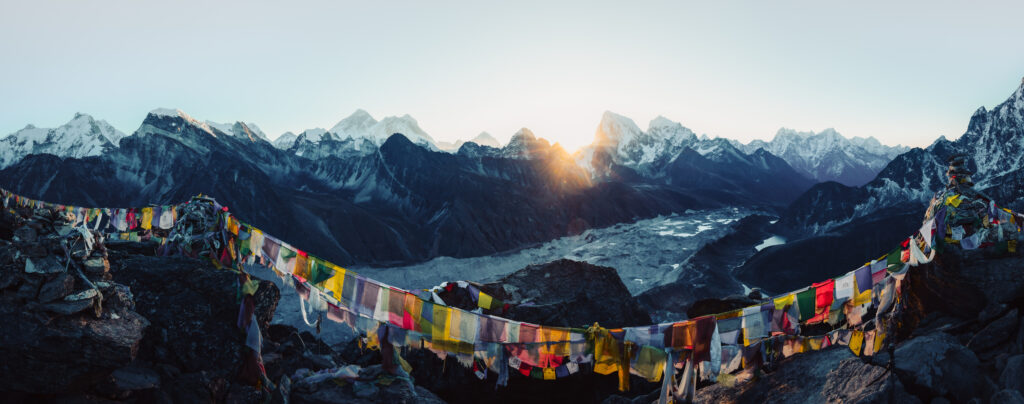
The largest glacier in Nepal – Ngozumpa glacier, Cholatse, Taboche with the two Gokyo lakes is visible in this stunning panorama from the top of 5350 m. Iconic Mount Everest range