
Last updated March 5, 2026
K2 Training Plan: How to Prepare for the World’s Most Dangerous Mountain
K2 is the world’s second-highest peak and demands careful, specific preparation. This guide outlines the core parts of a K2 training plan: physical conditioning, mental resilience, and acclimatization. High-altitude climbing places heavy physiological and logistical demands on you; underestimating them increases risk. Use the techniques and strategies here to improve safety and your chance of a successful ascent. The article provides a clear roadmap: training schedule, physical work, mental preparation, and acclimatization tactics.
Training Schedule
A structured, multi-month schedule is essential. Plan progressive blocks that target endurance, strength, and flexibility. Increase intensity and complexity over time and track progress so you peak before departure. The sections below break these areas into specific, repeatable elements.
- Endurance Training: Long-distance hiking and running to build cardiovascular fitness.
- Strength Training: Weightlifting and bodyweight exercises to enhance muscle strength.
- Flexibility Training: Stretching and yoga to improve overall flexibility and prevent injuries.
Make these elements regular features of your weekly plan. Consistent application develops the aerobic capacity, power, and mobility needed for K2’s terrain.
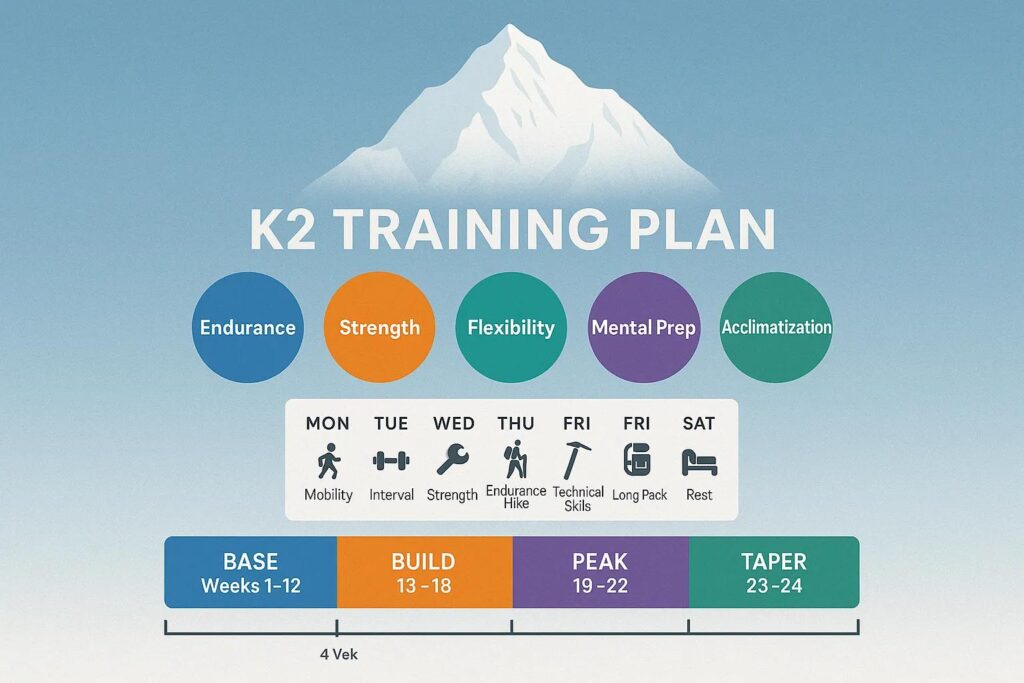
Think of your program as periodised blocks rather than a random collection of workouts. Typical phases include a base period (months of steady aerobic work to build an engine), a build period (higher intensity, heavier loads, and skill-specific sessions), a peak phase with technical and high-load simulations, and a short taper before travel and the climb. Each block has clear goals and measurable markers so you know when to progress intensity or volume.
Below is a sample 24-week outline you can adapt to your level. Timescale and progression vary by athlete: less experienced climbers will need longer base phases and more conservative increases in load.
- Weeks 1–12 (Base): Focus on aerobic endurance, core strength, mobility and building a habit of long hikes with a loaded pack. Low to moderate intensity; accumulate hours.
- Weeks 13–18 (Build): Add interval work, hill repeats, heavier strength sessions, and longer technical days. Simulate multi-day outings with incremental elevation and time on feet.
- Weeks 19–22 (Peak): Include high-intensity threshold sessions, long back-to-back days carrying full kit, and targeted technical practice (ropes, crampons, ice skills).
- Weeks 23–24 (Taper & Travel): Reduce volume, maintain intensity briefly, prioritise sleep and recovery before departure.
Sample microcycle (one week during build phase):
- Monday: Active recovery + mobility and yoga (45–60 minutes).
- Tuesday: Interval run or stairmill session (60 minutes total including warm-up/cool-down).
- Wednesday: Strength session focused on posterior chain, loaded carries and core (60–75 minutes).
- Thursday: Moderate endurance hike or long cycling session (90 minutes+).
- Friday: Technical skills practice (rope work, crampon drills) or short HIIT session.
- Saturday: Long hike with full pack (6–10 hours depending on phase).
- Sunday: Rest or easy active recovery and targeted stretching.
Endurance Training
Endurance work builds the cardiovascular base and stamina you will rely on at altitude. Use long hikes, running and cycling to raise your aerobic threshold. Schedule a minimum of three endurance sessions per week and lengthen sessions gradually to reduce injury risk.
- Long-Distance Hiking: Aim for hikes of 10-15 miles on varied terrain to simulate the conditions of K2.
- Running: Incorporate interval training to improve speed and cardiovascular capacity.
- Cycling: Use cycling as a low-impact alternative to build leg strength and endurance.
Regularly performing these activities helps your body adapt to long days of sustained effort and reduces fatigue on technical ground.
To better simulate mountaineering, practise hikes with a progressively heavier pack (start light and work up to anticipated expedition load). If you train at low elevation, incorporate steep hill repeats or stair climbing to mimic the muscle demands of sustained uphill travel. When possible, do multi-day hikes to practice recovery between long efforts and to adapt psychologically to sustained exertion.
Cross-training is valuable: use cycling, rowing, or swimming to maintain aerobic volume while lowering impact stress. Track session duration and perceived effort rather than obsessing about pace—on K2, time on feet and efficient energy use matter more than speed.
Research supports methods that let you build foundational fitness for high-altitude climbs even from flat, lowland training environments.
Lowland Training for High-Altitude Climbs
Purpose: This study develops and experimentally substantiates a method for training amateur mountaineers on flat terrain to prepare for high-altitude ascents.
Training program in the lowlands for amateur mountaineers for climbing to the peaks, O Ryepko, 2023
Strength Training
Strength training supplies the power and endurance for steep approaches, carrying loads, and technical climbing. Build a balanced plan that targets the legs, core and upper body while allowing recovery between sessions.
- Leg Exercises: Squats, lunges, and deadlifts to build leg strength for climbing.
- Core Workouts: Planks and Russian twists to enhance core stability and balance.
- Upper Body Strength: Pull-ups and push-ups to develop upper body strength for using climbing gear.
Schedule two to three focused strength sessions per week and progress load or reps over months to prepare muscles for K2’s sustained demands.
Focus on functional strength and endurance: include unilateral work (single-leg Romanian deadlifts, step-ups) that mirrors uneven mountain terrain, and include heavy but low-rep phases for maximal strength alongside higher-rep circuits to build local muscular endurance. Add loaded carries (farmer’s walks, rucksack marches) to condition the shoulders and grip for long days with a pack. Always pair hard sessions with mobility work and appropriate rest.
Use sets and reps that match your phase: during base phases favour 3–4 sets of 8–12 reps for hypertrophy and endurance; in the strength phase shift to 3–5 sets of 3–6 reps for compound lifts. For endurance-specific strength, include circuits of 15–25 reps or timed rounds. Monitor joint health—heavier loads require slower progression and attentive recovery strategies.
Integrate mobility and prehab protocols into each session: hips, thoracic spine, hamstrings and calves are commonly tight in mountaineers. Short daily mobility flows and targeted soft-tissue work reduce injury risk and preserve range of motion essential for scrambling and technical moves on steep snow and rock.
Mental Preparation
Mental resilience is as important as physical fitness. Develop clear strategies to manage fear, anxiety and prolonged fatigue. Practice decision-making under stress so you can respond calmly on the mountain.
- Visualization Techniques: Practice visualizing successful climbs to build confidence.
- Mindfulness and Meditation: Incorporate mindfulness practices to enhance focus and reduce anxiety.
- Goal Setting: Establish clear, achievable goals to maintain motivation throughout the training process.
Mental imagery is an evidence-based tool: it improves focus and can reduce the risk of burnout when practised regularly.
Mental Visualization for Climbing Training
Mental imagery can increase focus and help prevent training burnout. Like physical drills, visualization must be practised frequently to be effective.
Mental imagery and visualization in sport climbing training., 2011
Prioritise mental skills training alongside physical work to improve stress management and decision-making on long, exposed routes.
Include structured mental drills in your preparation: set up scenario-based exercises where you and your team must decide quickly about weather, injury or route choice. Practice these under fatigue (after a long training day) so the emotional responses approximate those experienced on expedition. Establish clear decision rules—pre-determined conditions under which you will turn back or descend—and rehearse communicating them with teammates to avoid confusion under stress.
Techniques such as breath-control, short meditations, and focused attention drills help maintain composure during exposed sections or when tired. Sleep-deprivation simulations and long solo marches can also teach you how your mind behaves under prolonged stress and help you build coping strategies. Remember: mental preparation also covers team dynamics, leadership, and clear role definition during critical phases of a climb.
Acclimatization Strategies
Acclimatization reduces the risk of altitude illness by allowing the body time to adapt to lower oxygen levels. Plan your ascent and training to support physiological adjustment rather than rapid altitude gain.
- Gradual Ascent: Plan for a slow ascent to allow the body to adapt to higher altitudes.
- Hydration: Maintain proper hydration to support physiological functions at altitude.
- Rest Days: Incorporate rest days into the climbing schedule to facilitate recovery and adaptation.
Follow these acclimatization practices to protect health and maintain function during the climb. For more information, visit about our summit guide.
Build acclimatisation into your climbing plan with rotations: ascend to a higher camp for a day or two, then descend to sleep lower. This strategy encourages physiological adaptation while reducing the risk of severe altitude illness. When possible, arrive at base and allow several days of low-intensity activity before high exertion. Use pulse oximetry and symptom checklists to track trends, and never ignore persistent or worsening symptoms—descending remains the definitive treatment for altitude illness.
Hydration and nutrition become more important at altitude: aim for regular small meals with a balance of carbohydrates and protein to sustain energy and muscle repair. Work with a physician or expedition medic on plans for medication or prophylaxis if appropriate for your health history. Make decisions about supplemental oxygen early: factor its weight, logistics, and how it will be deployed on summit pushes into both training simulations and your expedition budget.
K2 Climbing Techniques
Learn and rehearse the specific techniques you will use on K2. Practical skill work reduces risk and increases efficiency on steep, icy and exposed sections.
- Rope Management: Mastering rope techniques for safety and efficiency.
- Crampon Use: Learning to use crampons effectively on icy terrain.
- Ice Axe Techniques: Practicing self-arrest and other ice axe skills for safety.
Regular practice of these skills builds competence, reduces errors, and increases safety on technical terrain.
Spend dedicated sessions on rope team movement, hauling techniques, short-fixing, and efficient belay transitions. Practice these skills on a variety of terrain—rock, snow and mixed ground—so you can quickly adapt technique to conditions. Crampon control and balance drills, ice-screw placement practice, and frequent self-arrest drills with varied surfaces are essential. When possible, take guided courses that include crevasse rescue and rope-team rescue scenarios; these are high-value experiences that translate directly to safety on K2.
Train for efficiency: on a long route, reducing wasted movement and making transitions smooth saves energy and reduces exposure to objective hazards. Practice putting on and taking off boots and crampons with gloves on, managing lines in high wind, and performing technical tasks while cold and tired.
K2 Acclimatization Strategies
Acclimatization strategies are crucial for minimizing the risk of altitude sickness. Key strategies include:
- Climb High, Sleep Low: Ascend to higher altitudes during the day and return to lower elevations to sleep.
- Monitor Symptoms: Be vigilant for signs of altitude sickness and descend if symptoms occur.
- Use Supplemental Oxygen: Consider using supplemental oxygen for higher altitudes to aid acclimatization.
Applying these practices supports safer physiological adaptation to K2’s extreme conditions.
Good acclimatisation relies on consistent pacing and conservative decision-making. Keep daily elevation gains moderate wherever possible and include full rest days every 3–5 days depending on how your team is responding. Use objective measures (resting heart rate, sleep quality, oxygen saturation) and subjective measures (headache, nausea, dizziness) to guide progression. It is common for well-led teams to extend rotations or add extra rest days when a member shows even mild symptoms, and this conservative approach greatly improves safety and summit probability.
Frequently Asked Questions
What is the best time of year to attempt a K2 climb?
Late June to early August is the standard window for K2 when weather is most stable. Still, conditions can change quickly. Monitor forecasts closely and be prepared to delay or descend if weather deteriorates.
Within that window, aim to arrive early enough to allow an extended acclimatisation period. Weather patterns can vary year-to-year; use the established climbing seasons as a guideline but plan for a flexible timeline. Build contingency days into your itinerary for weather delays and route preparation.
How can I improve my mental resilience for climbing K2?
Build coping strategies: use visualization, mindfulness and short, measurable goals. Simulated exposures—training at altitude or long, demanding hikes—help the mind adapt to fatigue and stress.
Work on teamwork and communication skills as part of mental preparation. Practice rapid decision-making drills and establish clear personal and team criteria for turning back. Training with a consistent group of partners builds shared norms and smoother coordination on the mountain.
What type of gear is essential for climbing K2?
Essentials include mountaineering boots, crampons, an ice axe and a reliable harness. Also carry a four-season tent, a sleeping bag rated for extreme cold, layered clothing, a first aid kit, communications equipment and, where planned, supplemental oxygen.
Beyond core items, thoroughly check the condition of all gear before departure and replace worn components (boot soles, crampon straps, tether points) early. Practice using new or unfamiliar gear during training so it does not create unexpected problems on the mountain. Redundancy on critical items—extra crampon straps, shelter repair kits, headlamp batteries—can prevent a minor failure becoming a trip-ending issue.
How should I prepare for altitude sickness before climbing K2?
Prepare with gradual acclimatization: ascend slowly, stay well hydrated and schedule rest days. Monitor for symptoms such as headache or nausea and descend promptly if symptoms appear.
Consult a medical professional experienced in travel and altitude medicine for personalised advice. They can recommend monitoring strategies, discuss contraindications for particular medications, and advise on optimising sleep and nutrition for altitude. Many climbers find having a simple symptom checklist and a plan for immediate descent or evacuation reduces stress and speeds safer choices when symptoms arise.
What are the common challenges faced during a K2 ascent?
Expect extreme weather, technical climbing sections and the risk of altitude sickness. Avalanches and rockfall add objective danger. Prolonged fatigue can impair judgement. Thorough training, planning and teamwork reduce these risks.
Operational challenges such as delays in porter support, route fixing, and unexpected weather windows are common. Plan logistics conservatively, maintain clear communication with support staff, and keep contingency supplies and emergency plans ready to deploy if conditions change rapidly.
Is it necessary to hire a guide for climbing K2?
Hiring a professional guide is not mandatory but is strongly recommended, especially for less experienced climbers. Guides provide route knowledge, weather interpretation, safety protocols and logistical support that increase your chances of a safe outcome.
If you choose to climb with a guide service, vet providers for experience on K2, group size limits, rescue capability and transparency about how decisions are made on the mountain. If climbing independently, ensure all team members have clearly defined roles and the technical skills needed to manage rope teams, crevasse rescue, and emergency descent procedures.
Conclusion
Preparing for K2 requires dedication, a structured training plan, mental preparation and deliberate acclimatization. For more resources and training programmes, see the Information Hub. Proper preparation reduces risk and improves your odds of a successful climb.
Planning a trip to climb K2 or another high mountain? Trip planning is essential. Good planning ensures you have the right gear, permits and support.
Ensuring you have the right gear safety is paramount on K2. Appropriate equipment can determine performance and, in extreme cases, survival.
Many climbers are interested in other mountains to climb. Numerous other challenging peaks worldwide offer comparable technical and physical demands.
Conclusion
Successful preparation for K2 combines focused physical training, mental resilience and effective acclimatization. Implement a structured plan to improve your chances of a safe ascent. For tailored guidance and training resources, visit our Information Hub. Equip yourself with the knowledge and tools needed for the world’s most challenging peaks.
Final practical notes: document your kit and logistics, train with the exact partners or guides who will join you where possible, and allow your schedule to remain flexible so safety-driven adjustments can be made without pressure. Conservative, well-practised plans and calm decision-making on the mountain often determine success more than raw fitness alone.
Was this helpful?
🏔Related safety data
🧭Explore & compare
Global Summit Guide is an independent mountaineering resource founded in 2026. The team combines first-hand trekking and climbing experience with in-depth research and professional health and nutrition review to help climbers choose objectives, prepare properly, and stay safe.
Health, altitude, and nutrition content is reviewed by Taylor Ludlow (Registered Nurse) and Brigg Hoopes (Nutritionist).
What We Don't Know Yet
Mountain information changes quickly. This box explains the limits of what this page can responsibly promise.
- Weather, snowpack, avalanche risk, road access, and route conditions can change quickly and may be different on your climbing dates.
- Gear requirements can change by season, route variation, weather window, personal cold tolerance, and guide-service requirements.
- Fitness and altitude response vary by person; no guide, itinerary, or training plan can guarantee acclimatization or summit success.
Verify current conditions with official land managers, guide services, local forecasts, and current route reports before booking or climbing.
Mountaineering, rock and ice climbing, glacier travel, and high-altitude activity are inherently dangerous and can result in serious injury or death. The information on Global Summit Guide is provided for general informational and educational purposes only and is not a substitute for professional instruction, qualified guiding, proper equipment, or your own judgment and experience.
Route conditions, weather, snowpack, permits, regulations, and hazards change constantly and may differ from what is described here. Details may be incomplete, out of date, or contain errors. Always verify current information with local authorities, certified guides, and official sources before making any decision in the mountains.
Nothing on this site is medical, legal, or financial advice. Our fitness, acclimatization, altitude, and nutrition content is general in nature; consult a qualified physician before beginning any strenuous exercise program or exposing yourself to high altitude.
You are solely responsible for your own safety and decisions. To the fullest extent permitted by law, Global Summit Guide and its team accept no liability for any loss, injury, damage, or expense arising from use of, or reliance on, this information. By using this site you acknowledge these risks and accept these terms.
Some links on this site may be affiliate links. If you buy through them we may earn a small commission at no extra cost to you; this never affects our recommendations.
Global Summit Guide recommendation path
Next Best Mountain to Research
Use these recommendations to continue the right planning path instead of stopping on one page.
Use current permit, weather, route, and operator information before booking or climbing.