web analytics

Tag: patagonia

  • Cerro Torre Death Rate: How Deadly Is Patagonia’s Spire?

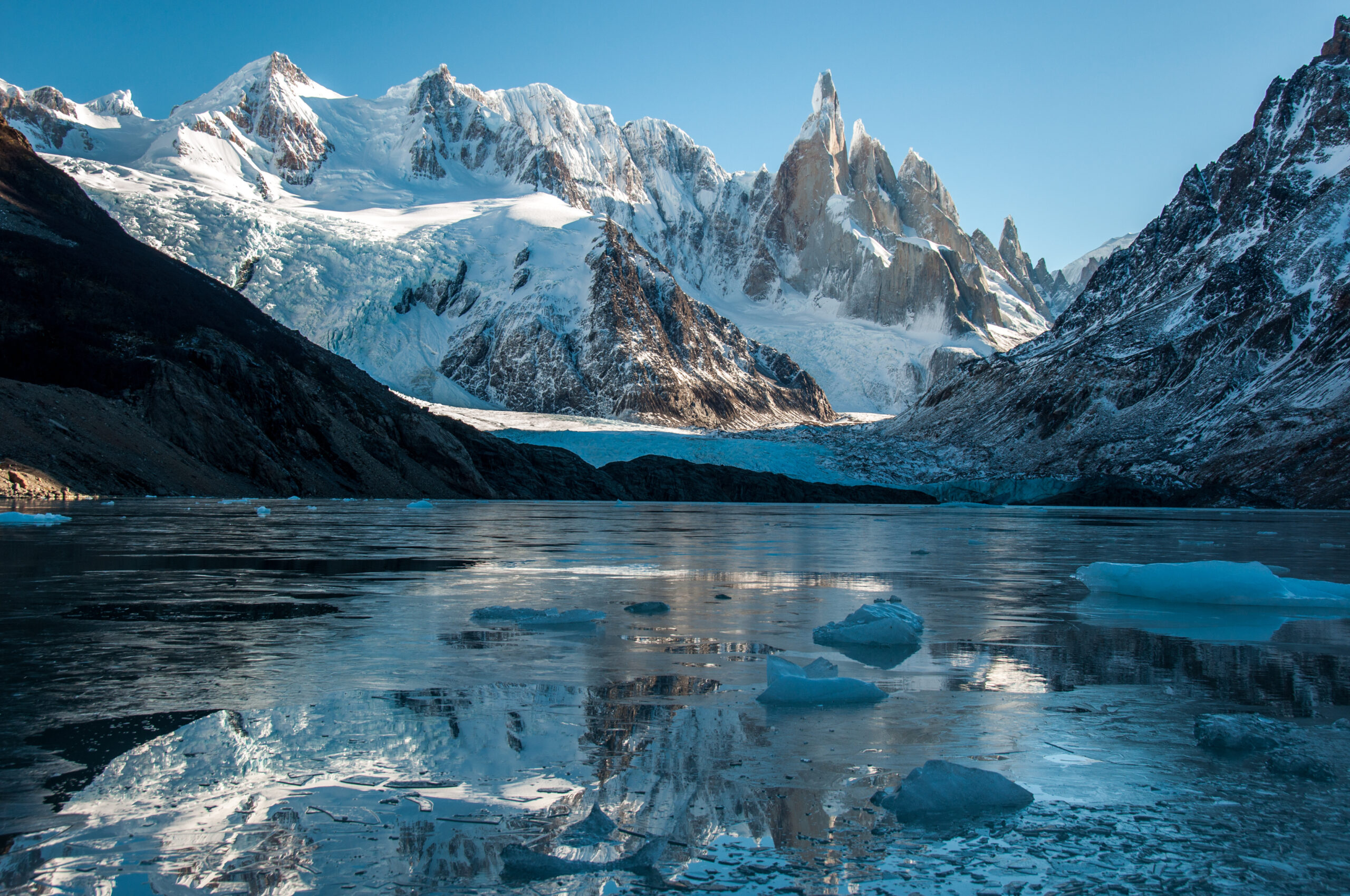
    Cerro Torre, the rime-iced granite spire of Patagonia and one of the hardest climbs on Earth
    Safety & Risk · Fatality Data · 2026

    Cerro Torre Death Rate: How Deadly Is Patagonia’s Hardest Spire?

    Barely 3,128 metres tall, yet one of the most feared mountains on Earth. Cerro Torre’s danger has nothing to do with altitude and everything to do with vertical granite, rime ice, and the worst weather in the inhabited world. Here’s the real death rate, what it means, and the deaths that built the legend.

    The short answer

    Around 6% per climber among serious attempts – extreme for a peak under 3,200 m.

    Cerro Torre’s estimated fatality rate is roughly 6% per climber among serious attempts – far below the deadliest 8,000ers (Annapurna ~27-32%, K2 ~22-25%), but severe for its modest height. Its danger is technical, not altitudinal: vertical granite, rime ice, and ferocious weather.

    The number works differently here than on commercial 8,000ers. Cerro Torre is an elite objective attempted by relatively few, where most attempts are turned back by storms rather than reaching the top – so read it as danger-per-attempt, not a death-to-summit ratio. For where it sits among all peaks, see our most dangerous mountains ranking.

    3,128 mSummit (10,262 ft)
    ~6%Per-climber fatality (serious attempts)
    1959First death (Toni Egger)
    1974First undisputed ascent
    Rime iceThe signature hazard

    Fatality Snapshot

    As of Jul 17, 2026 · directional risk band · few attempts, elite objective
    Fatality rate

    ~6% per climber, serious attempts

    Danger source

    Technical + weather not altitude

    Trend

    Falling far lower than 1959-1980s

    For comparison

    Annapurna ~27-32% deadliest 8000er by ratio

    What the number means

    Danger-per-attempt, not a death-to-summit ratio.

    On the 8,000ers, “death rate” almost always means deaths divided by successful summits. Cerro Torre can’t be measured that cleanly: it’s an elite technical objective climbed by comparatively few people, and on any given expedition most attempts are turned back by weather without reaching the summit. So its estimated ~6% per-climber fatality rate among serious attempts is best read as danger-per-attempt. That’s low next to Annapurna or K2 – but for a peak barely 3,128 m high, it reflects just how unforgiving the climbing is.

    Why it’s so dangerous

    Everything hard about mountaineering, minus the altitude.

    Cerro Torre rises as a near-vertical granite spire straight out of the Southern Patagonian Ice Field, and its danger is a stack of technical hazards rather than thin air:

    HazardWhy it kills
    Rime iceFragile, feathery ice mushrooms cap the spire; climbers must tunnel through unstable, unprotectable rime
    Patagonian weatherAmong the fiercest on Earth – violent storms arrive fast, and windows are measured in hours
    Vertical graniteSustained hard rock and mixed climbing where a fall is typically fatal
    RockfallWarming has increased rockfall on some sections – a factor in recent deaths
    No rescueRemote, committing terrain; if a storm traps you high, there is often no safe retreat and no help
    The tiny-window trap. More than almost any mountain, Cerro Torre punishes impatience. Climbers wait days or weeks for a narrow good-weather window, then move fast and commit – and a window that closes early can leave a party high on the spire in a full Patagonian storm. That combination of extreme difficulty and unforgiving weather is exactly what the death rate is measuring.
    The rime-ice mushrooms and vertical granite of Cerro Torre in Patagonia
    The signature hazard. The summit mushrooms of Cerro Torre – unstable, feathery rime ice that can’t be reliably protected – are the crux and the reason the mountain resisted an undisputed ascent until 1974. Terrain like this is why a slip here is rarely survivable.

    The deaths that defined it

    From the disputed first ascent to a modern tragedy.

    Cerro Torre’s reputation was forged in controversy and loss. In 1959, Cesare Maestri claimed the first ascent with Austrian climber Toni Egger – but Egger was swept to his death on the descent, taking the only camera and with it the proof. When later expeditions failed to repeat the line and brought further deaths, doubt hardened into one of climbing’s most famous disputes; the first undisputed ascent came only in 1974, by Casimiro Ferrari’s Ragni di Lecco team via the west face. Decades later, in 2022, the accomplished alpinist Korra Pesce was struck by rockfall while descending and died – a reminder that even for the world’s best, the mountain’s margins are razor-thin.

    Cerro Torre vs the 8000ers

    A different kind of deadly.

    Comparing Cerro Torre’s rate to an 8,000er’s is almost comparing two different sports. The great Himalayan and Karakoram killers – Annapurna, K2, Nanga Parbat – are lethal through a mix of extreme altitude and objective hazard on expeditions that many attempt. Cerro Torre is lethal through pure technical difficulty and weather on a peak few can even seriously try. It’s why it appears near the top of every “hardest mountain” list but well down the fatality-rate table.

    Deadly through difficulty
    Cerro Torre

    ~6% per attempt · technical climbing + Patagonian weather, not altitude.

    Deadly through altitude & hazard
    Annapurna / K2

    ~22-32% death-to-summit · thin air, avalanche, serac on commercial expeditions.

    Where it ranks. For the full fatality-rate order across every major peak, see our most dangerous mountains ranked by fatality rate and the death rates by mountain hub. For why it’s a top technical objective, see the 10 hardest mountains and the difficulty framework.

    Has it become safer?

    Safer than it was – not safe.

    The modern fatality rate is dramatically lower than during the 1959-1980s era. Better equipment, vastly improved forecasting, refined technique, and accumulated route knowledge have all cut the risk for skilled parties who wait for the right window. But the mountain hasn’t changed: the rime, the storms, and the exposure remain, and warming has increased rockfall on some sections. Cerro Torre rewards experience and patience – and still humbles the best climbers alive.

    Planning a Patagonia trip? Compare flights and lodging via the Global Summit Guide Expedia travel shop. Disclosure: affiliate link; we may earn a small commission at no extra cost to you, and it never affects our reporting.

    Cerro Torre death rate FAQ

    The questions people search right after “cerro torre death rate.”

    What is Cerro Torre’s death rate?

    Roughly 6% per climber among serious attempts – far below Annapurna (~27-32%) or K2 (~22-25%), but extreme for a 3,128 m peak. It’s danger-per-attempt, not death-to-summit, since most attempts are turned back by weather. The modern rate is far lower than the 1959-1980s era.

    Why is it so dangerous under 3,200 m?

    Its danger is technical and weather-driven, not altitude: vertical granite, fragile rime ice, violent Patagonian storms, rockfall, and no rescue. A fall on this terrain is typically fatal.

    How many have died on it?

    There’s no official tally as for the 8,000ers, but deaths have accumulated since the first-ascent era. The most famous is Toni Egger (1959); more recently, Korra Pesce died in 2022 from rockfall on the descent.

    Is it the deadliest mountain?

    No – by rate it’s well below the deadliest 8,000ers, and Mont Blanc has a far higher total toll. It’s among the most feared for difficulty, not for topping the death charts. See most dangerous mountains.

    Has it become safer?

    Yes – modern gear, forecasting, and technique have cut the rate sharply since the 1980s. But the rime, storms, and exposure are unchanged, so it’s safer, not safe.

    How we built this

    • Patagonian climbing records, alpine journals, and accident reporting for fatality context
    • First-ascent history (Maestri 1959 dispute; Ferrari / Ragni di Lecco 1974) for the historical record
    • GSG house estimate of ~6% per-climber fatality among serious attempts, cross-checked against the most-dangerous ranking
    • Presented as a directional risk band, since Cerro Torre sees far fewer attempts than the 8,000ers

    Last updated: July 17, 2026. Next review: January 2027. Research-based safety data, not a record of personal ascents; figures are directional, not exact probabilities.

    About the author

    Travis Ludlow · Founder & Head of Research · Safety review: Dawson Ludlow

    Travis leads research at Global Summit Guide, which maintains a safety-data hub covering fatality patterns across the world’s major peaks. This Cerro Torre page sits within that hub – a single-peak deep dive that points up to the cross-mountain ranking.

    Read the editorial mission and team background.

    See how Cerro Torre stacks up

    One spire, one very specific kind of danger. Compare it against every major peak – by fatality rate and by difficulty – in our safety-data hub.

    Most Dangerous Mountains The 10 Hardest Mountains
    Was this helpful?

    Yes
    No
    Thanks for your feedback!
  • Cerro Torre Death Rate: No Reliable % — Fatalities & Risk

    Cerro Torre granite spire in Patagonia
    Mountain Safety Data · Patagonia

    Cerro Torre Death Rate: Why There Is No Reliable Percentage

    Cerro Torre is unquestionably a serious technical mountain, but there is no defensible mountain-wide fatality-rate percentage. The historical record does not contain a complete, standardized count of attempts, climbers, successful summits and deaths from which a trustworthy denominator can be built.

    Updated October 4, 2026 · Research-based fatality analysis · No fabricated percentage

    3,128 m Elevation
    No % Defensible death rate
    1959 Egger fatality
    1974 First undisputed ascent
    Direct answer

    What Is Cerro Torre’s Death Rate?

    No reliable percentage is currently available. A valid fatality rate requires both a numerator and a denominator: how many people died, and how many people were exposed to the mountain under a consistently defined system.

    Cerro Torre does not have a Himalayan Database-style historical record of every expedition member, attempt and successful summit. Its climbing history is instead reconstructed from expedition reports, alpine journals, accident accounts and route histories.

    That material is extremely useful for understanding how climbers have died, but it is not sufficient for claiming that an individual climber faces a 4%, 6%, 10% or any other precise historical probability.

    Data confidence

    What We Know—and What We Do Not

    Separating strong evidence from incomplete evidence is more useful than forcing Cerro Torre into a global league table.

    QuestionEvidence qualityResponsible answer
    Cerro Torre elevationHigh3,128 m / 10,262 ft.
    First undisputed ascentHigh January 1974 by the Italian Ragni di Lecco team via the west side.
    Did Toni Egger die in 1959?High Yes. His death is established; the claimed summit and exact accident sequence remain tied to the disputed Maestri account.
    Are major later fatalities documented?High for individual cases Yes, including Carroll and McAndrews in 1973 and Korra Pesce in 2022.
    Total all-history Cerro Torre deathsIncomplete No single authoritative audited total should be presented as complete.
    Total historical attemptsIncomplete No standardized all-history attempt denominator exists.
    Cerro Torre fatality percentageNot defensible Do not publish a precise percentage.
    Personal probability of deathNot calculable from historical cases Depends on route, conditions, team competence, weather and many other variables.
    Patagonian alpine terrain associated with Cerro Torre
    Cerro Torre’s modest elevation hides the real problem: sustained technical climbing, rime ice, weather and difficult retreat terrain.
    Documented history

    Three Major Cerro Torre Fatality Cases

    These are important documented cases—not a claim that they form the complete Cerro Torre fatality record.

    1959 · Toni Egger Death During the Disputed Maestri Expedition

    Austrian alpinist Toni Egger died during the 1959 Cerro Torre expedition with Cesare Maestri. Maestri later claimed the pair had reached the summit and that Egger was killed by an avalanche during descent.

    The claimed ascent is now widely disputed. Later climbers found major inconsistencies between Maestri’s descriptions and the physical evidence on the mountain. Egger’s death is real; a successful 1959 summit should not be presented as established fact.

    1973 · Carroll & McAndrews Rockfall During Descent

    Australian Keven Carroll and American Steven McAndrews died after climbing high on Cerro Torre’s west side. Historical ascent chronologies record that the pair were seen on the summit ridge before they were killed by rockfall during the descent.

    Their accident is one of the clearest early examples of the consequence of retreat on Cerro Torre: finishing the upward climbing does not end the technical exposure.

    2022 · Corrado “Korra” Pesce Rock and Ice During Descent

    Corrado Pesce and Tomás Aguiló completed a new route on Cerro Torre in January 2022. During the descent they were struck by rock and ice. Aguiló escaped despite serious injuries and sought help; Pesce remained badly injured on the mountain and died.

    Eyewitness reporting from the climbing party and later analysis make this one of the best-documented modern Cerro Torre accidents.

    Do not add all Chaltén Massif deaths to Cerro Torre. Deaths on Fitz Roy, Aguja Guillaumet, Cerro Standhardt, Cerro Mocho or other nearby peaks are evidence about the seriousness of Patagonian alpinism, but they are not Cerro Torre fatalities.
    Patagonian granite towers in the Chaltén climbing region
    The wider Chaltén Massif contains many serious technical objectives. Regional fatality trends should not be mislabeled as Cerro Torre-specific statistics.
    Risk without false precision

    Why Cerro Torre Can Be Extremely Dangerous Without a Death-Rate Number

    Statistical uncertainty does not make the mountain less serious.

    Technical terrain

    Vertical Granite

    Cerro Torre is an elite technical climbing objective. The difficulty comes from sustained rock, mixed and ice climbing rather than extreme altitude.

    Summit terrain

    Rime Ice

    Wind-built rime formations can create complex climbing and unstable ice around the summit structure and upper routes.

    Weather

    Short Patagonian Windows

    Strong wind and rapidly changing weather can make a route impractical even when a team is technically capable of climbing it.

    Retreat

    Descent Remains Technical

    Several famous Cerro Torre accidents occurred while descending or retreating. The route is not “finished” when the upward climbing ends.

    Objective hazards

    Rock, Ice & Avalanche

    Different routes and temperatures expose climbers to combinations of rockfall, falling ice, snow instability and avalanche terrain.

    Rescue

    Small Margin for Error

    Rescue exists in the El Chaltén region, but severe weather and technical terrain can make timely access impossible. Pesce’s 2022 accident demonstrated that limitation clearly.

    Wide Patagonian mountain landscape illustrating exposure to severe weather
    Patagonia’s risk is highly condition-sensitive. Route quality, temperature, wind and retreat options matter more than one historical percentage.
    Changing mountain environment

    Climate Change: Important, but Do Not Invent a Cerro Torre Trend Line

    The strongest evidence concerns changing Patagonian mountain conditions, not a mathematically measured Cerro Torre death-rate increase.

    Columbia Climate School has documented how warming is reshaping mountaineering conditions in the Patagonian Andes. Veteran climbers report glacier retreat, unstable moraine approaches and increased rockfall risk, while researcher Dörte Pietron has described a warmer, drier environment producing more difficult and unstable approaches and descents.

    That is enough to say that climate change is changing the risk environment in Patagonia. It is not enough to say that Cerro Torre’s fatality rate has risen by a measured percentage since a particular year. There is no standardized Cerro Torre denominator against which such a trend could be calculated.

    Better wording: warming conditions are affecting Patagonian climbing hazards and risk assessment. Avoid claiming a measured Cerro Torre fatality-rate increase unless a future dataset actually supports one.
    Do not compare unlike datasets

    Cerro Torre vs K2, Annapurna and Other “Deadliest Mountains”

    The important distinction is data quality, not which mountain produces the scariest historical percentage.

    Mountain / datasetHistorical data structureCan a ratio be shown?
    Nepal 8,000ers Standardized expedition datasets expose deaths, members and summit counts using defined collection systems. Yes, when denominator and cutoff are stated.
    K2 A separate compiled historical summit/death series can be used when the source rules and cutoff year are explicit. Yes, but keep it separate from Nepal datasets.
    Denali / Rainier Strong modern park and incident reporting, but not always one universal all-history summit denominator. Depends on the exact metric.
    Cerro Torre Case histories, expedition reports and climbing literature without a complete standardized exposure denominator. No reliable mountain-wide percentage.
    The ranking rule: Cerro Torre can reasonably appear among the world’s most serious technical mountains without pretending that it belongs in the same mathematical table as peaks with auditable expedition denominators.
    Direct search answers

    Cerro Torre Death Rate FAQ

    What is Cerro Torre’s death rate?

    No defensible mountain-wide percentage can currently be calculated. Historical attempt, summit and fatality records are not standardized enough to provide a trustworthy denominator.

    How many people have died on Cerro Torre?

    There is no complete authoritative all-history total. Important documented cases include Toni Egger in 1959, Keven Carroll and Steven McAndrews in 1973, and Corrado “Korra” Pesce in 2022.

    Why is Cerro Torre so dangerous?

    The mountain combines sustained technical rock and ice climbing, rime-ice formations, severe Patagonian weather, objective hazards and highly consequential retreat terrain.

    Did Toni Egger die after summiting Cerro Torre?

    Cesare Maestri claimed that he and Egger summited in 1959 and that Egger died during the descent, but the ascent claim is widely disputed. Egger’s death is established; a successful summit is not.

    What happened to Korra Pesce?

    Pesce and Tomás Aguiló were struck by rock and ice while descending Cerro Torre in January 2022 after completing a new route. Aguiló escaped despite serious injuries; Pesce remained critically injured on the mountain and died.

    Is Cerro Torre statistically deadlier than K2?

    That comparison cannot be made honestly with one percentage because K2 has a more defensible historical summit/death series while Cerro Torre lacks the required standardized denominator.

    Does climate change make Cerro Torre more dangerous?

    Warming conditions are changing the risk environment in the Patagonian Andes, including glacier, approach and rockfall hazards. Current evidence does not justify assigning a measured Cerro Torre fatality-rate increase.

    Is descent especially dangerous on Cerro Torre?

    Several of Cerro Torre’s best-known fatal accidents occurred on descent or retreat. That is an important qualitative pattern, but the incomplete dataset does not support claiming that a known percentage of all fatalities occurs during descent.

    Research basis

    Sources & Methodology

    Methodology: this page does not calculate a Cerro Torre fatality rate because the historical exposure denominator is incomplete. It uses documented case histories to describe accident patterns and objective seriousness without turning incomplete records into a false percentage.

    Bottom line

    Cerro Torre Is Serious Enough Without Inventing a Percentage

    Cerro Torre’s historical record contains real fatal accidents involving exceptional climbers. What it does not contain is a complete, standardized denominator that allows Global Summit Guide to tell readers that “X% of Cerro Torre climbers die.”

    The more useful conclusion is narrower and stronger: Cerro Torre combines elite technical difficulty, unstable rock and ice, severe Patagonian weather and consequential retreat terrain—and the historical data should be presented as documented cases, not false mathematical precision.

    Compare Death-Rate Methodology Open Cerro Torre Guide
    Mountaineering Truth Project · Death Rates & Risk

    How Cerro Torre Compares to the Deadliest Mountains

    One peak is only one denominator. See how Cerro Torre compares with the other deadliest mountains, or step up to the ranked overview and the full collection.

    Was this helpful?

    Yes
    No
    Thanks for your feedback!
  • 15 Greatest Mountains in the Andes, Ranked for Climbers

    15 Greatest Mountains in the Andes, Ranked for Climbers (2026)
    Andes mountain landscape representing Aconcagua, Patagonia, the Cordillera Blanca and the great peaks of South America
    The Andes cannot be ranked by height alone. This list combines climbing quality, stature, beauty, history, technical significance, progression value, uniqueness, accessibility and cultural identity.
    15 peaks · adjustable ranking · peak matcher · 12-month calendar · 2026

    The 15 Greatest Peaks of the Andes: An Interactive Climber’s Ranking

    Compare Aconcagua, Cerro Torre, Fitz Roy, Alpamayo, Huascarán and ten more defining Andean mountains—then change the ranking based on what matters most to your own lifetime list.

    Aconcagua ranks first overall—but a technical alpinist may reasonably place Cerro Torre or Fitz Roy at number one.

    Aconcagua wins the combined ranking for altitude, expedition stature and progression value. Cerro Torre is the range’s greatest technical icon. Fitz Roy is the greatest granite massif. Alpamayo is the classic beauty winner. Chimborazo and Huayna Potosí are the strongest practical gateways into 6,000-metre Andean climbing.

    Why the Andes are personal to us

    Our family has traveled through Patagonia and experienced the scale, wind and drama of the Southern Andes firsthand. We have also stood at the base of Aconcagua and looked toward the highest summit in the Americas.

    We have not climbed Aconcagua, and this page does not imply that we have. It remains one of the mountains we most hope to climb in the future. Those experiences shaped this ranking: Patagonia showed us that a 3,000-metre granite tower can feel more imposing than mountains twice its height, while Aconcagua showed us the scale and commitment of the Central Andes.

    Read our Patagonia trip report · Explore the Aconcagua climbing guide

    15Ranked lifetime peaks
    100Major 6,000m peaks
    9 factorsTransparent scoring
    12 monthsAndes climbing calendar
    6,962mAconcagua standard
    Greatest overall expedition

    Aconcagua

    The highest mountain in the Americas and the Andes’ defining expedition.

    Greatest technical icon

    Cerro Torre

    A benchmark for elite alpine climbing, history and Patagonian weather.

    Greatest granite massif

    Fitz Roy

    The Andes’ most recognizable technical skyline.

    Most beautiful ice mountain

    Alpamayo

    A fluted pyramid that combines symmetry with real alpine difficulty.

    Best first guided 6,000er

    Huayna Potosí

    Exceptional access and value when approached with proper acclimatization.

    Best first major 6,000er

    Chimborazo

    A logical next step after Ecuador’s lower volcanoes.

    Greatest volcano objective

    Ojos del Salado

    The highest volcano on Earth and a true Atacama expedition.

    Greatest underappreciated giant

    Yerupajá

    A remote and formidable technical mountain with world-class stature.

    Build Your Andes Lifetime List

    Move the sliders to change what “greatest” means. The tool recalculates every peak using your priorities.

    A subjective ranking made transparentThe fixed editorial ranking uses the default weights. Your version can prioritize technical climbing, beauty, altitude, access or cultural experience.

    Your top five Andes peaks

    The Andes Peak Score

    20%Climbing quality
    20%Global stature
    15%Visual impact
    10%Historical importance
    10%Technical significance
    10%Progression value
    5%Uniqueness
    5%Access and logistics
    5%Cultural identity

    The score measures why a mountain matters to climbers. It does not measure safety, summit probability or whether the peak is appropriate for a particular person.

    The 15 Greatest Peaks of the Andes

    #PeakCountryElevationCategoryClimber levelBest seasonScore
    1AconcaguaCentral AndesArgentina6,962mGreatest overall Andes expeditionHigh-altitude expeditionDecember–February96
    2Cerro TorrePatagoniaArgentina / Chile3,128mGreatest technical iconElite alpine climbingDecember–February95
    3Fitz RoyPatagoniaArgentina / Chile3,405mGreatest granite climbing massifElite alpine rockDecember–February94
    4AlpamayoCordillera BlancaPeru5,947mMost beautiful technical ice mountainAdvanced alpine iceJune–August93
    5HuascaránCordillera BlancaPeru6,768mGreatest Peruvian giantSerious glaciated 6,000erJune–August91
    6Ojos del SaladoAtacamaChile / Argentina6,893mGreatest high-altitude volcano objectiveRemote high-altitude expeditionDecember–March89
    7ChimborazoEquatorial AndesEcuador6,263mBest first major Andean 6,000erGuided glacier climbJune–August / December–January88
    8YerupajáCordillera HuayhuashPeru6,635mGreatest underappreciated Andean giantElite technical expeditionJune–August87
    9CotopaxiEquatorial AndesEcuador5,897mBest first guided glacier volcanoIntroductory glaciated mountaineeringJune–August / December–January85
    10IllimaniCordillera RealBolivia6,438mGreatest Bolivian skyline mountainSerious glaciated 6,000erJune–August84
    11ChacrarajuCordillera BlancaPeru6,112mMost serious Cordillera Blanca technical prizeElite alpine ice and mixedJune–August83
    12Huayna PotosíCordillera RealBolivia6,088mBest first guided 6,000er for valueIntroductory 6,000m glacier climbJune–August82
    13SajamaWestern CordilleraBolivia6,542mBest remote Bolivian volcanoRemote high-altitude glacier climbJune–August81
    14ArtesonrajuCordillera BlancaPeru6,025mGreatest cinematic pyramidAdvanced technical iceJune–August80
    15MercedarioCentral AndesArgentina6,720mBest quiet alternative to AconcaguaRemote high-altitude expeditionDecember–February79
    01
    Greatest overall Andes expedition

    Aconcagua

    Argentina · Central Andes · 6,962m

    96/100

    The crown of the Andes and the highest mountain in the Americas.

    Climber levelHigh-altitude expedition
    Best seasonDecember–February
    Typical trip18–22 days
    Budget$$$$
    Strongest qualityAltitude, expedition stature and progression value
    Main limitationThe Normal Route offers less technical climbing than the peaks below it.
    Climb beforeCotopaxi, Chimborazo or another 5,500–6,300m objective
    Logical next stepDenali or a carefully selected 7,000m expedition
    02
    Greatest technical icon

    Cerro Torre

    Argentina / Chile · Patagonia · 3,128m

    95/100

    A granite and rime-ice tower that represents the edge of world alpinism.

    Climber levelElite alpine climbing
    Best seasonDecember–February
    Typical trip3–6 week weather window
    Budget$$$$
    Strongest qualityTechnical significance, history and visual impact
    Main limitationAppropriate for only a very small population of elite alpinists.
    Climb beforeLong Patagonian granite routes and major technical alpine objectives
    Logical next stepCutting-edge Patagonian or Himalayan alpine routes
    03
    Greatest granite climbing massif

    Fitz Roy

    Argentina / Chile · Patagonia · 3,405m

    94/100

    The defining granite skyline of El Chaltén and a global symbol of climbing.

    Climber levelElite alpine rock
    Best seasonDecember–February
    Typical trip3–5 week weather window
    Budget$$$$
    Strongest qualityClimbing quality, beauty and global recognition
    Main limitationThe true summit routes are far beyond ordinary commercial mountaineering.
    Climb beforeMajor alpine rock routes and Patagonian weather experience
    Logical next stepCerro Torre or advanced Patagonian linkups
    04
    Most beautiful technical ice mountain

    Alpamayo

    Peru · Cordillera Blanca · 5,947m

    93/100

    A near-perfect pyramid of fluted ice in the Cordillera Blanca.

    Climber levelAdvanced alpine ice
    Best seasonJune–August
    Typical trip10–14 days
    Budget$$$
    Strongest qualityAesthetic climbing quality and visual impact
    Main limitationSteep ice and changing conditions make it unsuitable for developing climbers.
    Climb beforePisco, Tocllaraju and sustained alpine-ice experience
    Logical next stepChacraraju, technical Huayhuash peaks or Patagonia
    05
    Greatest Peruvian giant

    Huascarán

    Peru · Cordillera Blanca · 6,768m

    91/100

    Peru’s highest summit and the crown of the world’s highest tropical mountain range.

    Climber levelSerious glaciated 6,000er
    Best seasonJune–August
    Typical trip10–14 days
    Budget$$$
    Strongest qualityAltitude, national stature and Cordillera Blanca context
    Main limitationSerac and crevasse hazards can make the standard route highly conditions-dependent.
    Climb beforePisco, Chopicalqui or comparable glaciated peaks
    Logical next stepAconcagua, Illimani or larger expeditions
    06
    Greatest high-altitude volcano objective

    Ojos del Salado

    Chile / Argentina · Atacama · 6,893m

    89/100

    The highest volcano on Earth in the austere Atacama high desert.

    Climber levelRemote high-altitude expedition
    Best seasonDecember–March
    Typical trip10–14 days
    Budget$$$
    Strongest qualityAltitude, uniqueness and desert expedition character
    Main limitationThe standard climb offers less technical variety than Peru or Patagonia.
    Climb beforeChimborazo or another acclimatized 6,000m volcano
    Logical next stepAconcagua or a more remote 7,000m expedition
    07
    Best first major Andean 6,000er

    Chimborazo

    Ecuador · Equatorial Andes · 6,263m

    88/100

    The point on Earth’s surface farthest from the planet’s center.

    Climber levelGuided glacier climb
    Best seasonJune–August / December–January
    Typical trip7–10 day Ecuador program
    Budget$$
    Strongest qualityProgression value, access and geographic uniqueness
    Main limitationChanging glacier conditions and high winds can make the summit day serious.
    Climb beforeRumiñahui, Cayambe or Cotopaxi
    Logical next stepIllimani, Huascarán or Aconcagua
    08
    Greatest underappreciated Andean giant

    Yerupajá

    Peru · Cordillera Huayhuash · 6,635m

    87/100

    A remote, steep and dangerous pyramid dominating the Cordillera Huayhuash.

    Climber levelElite technical expedition
    Best seasonJune–August
    Typical trip2–4 week expedition
    Budget$$$$
    Strongest qualityTechnical significance, remoteness and mountain stature
    Main limitationObjective hazard and route difficulty make it inappropriate for most climbers.
    Climb beforeAdvanced Cordillera Blanca and major alpine expeditions
    Logical next stepCutting-edge technical expedition climbing
    09
    Best first guided glacier volcano

    Cotopaxi

    Ecuador · Equatorial Andes · 5,897m

    85/100

    One of the world’s most recognizable volcanic cones and an efficient glacier-training objective.

    Climber levelIntroductory glaciated mountaineering
    Best seasonJune–August / December–January
    Typical trip5–8 day acclimatization program
    Budget$$
    Strongest qualityAccess, progression value and visual identity
    Main limitationVolcanic closures and changing glacier conditions can interrupt access.
    Climb beforeStrong hiking base and lower Ecuador acclimatization peaks
    Logical next stepChimborazo, Huayna Potosí or Mera Peak
    10
    Greatest Bolivian skyline mountain

    Illimani

    Bolivia · Cordillera Real · 6,438m

    84/100

    The immense multi-summit mountain that dominates the skyline above La Paz.

    Climber levelSerious glaciated 6,000er
    Best seasonJune–August
    Typical trip6–9 day program
    Budget$$
    Strongest qualityCultural identity, altitude and progression value
    Main limitationThe long upper ridge and glacier hazards are more serious than its accessibility suggests.
    Climb beforeHuayna Potosí and acclimatization around La Paz
    Logical next stepHuascarán or Aconcagua
    11
    Most serious Cordillera Blanca technical prize

    Chacraraju

    Peru · Cordillera Blanca · 6,112m

    83/100

    A steep, intimidating ice-and-rock pyramid above the Parón Valley.

    Climber levelElite alpine ice and mixed
    Best seasonJune–August
    Typical trip2–3 week expedition
    Budget$$$$
    Strongest qualityTechnical quality and prestige among Andean alpinists
    Main limitationSevere objective hazards and changing ice conditions limit realistic attempts.
    Climb beforeAlpamayo-level ice, mixed climbing and expedition judgment
    Logical next stepYerupajá or Patagonian technical objectives
    12
    Best first guided 6,000er for value

    Huayna Potosí

    Bolivia · Cordillera Real · 6,088m

    82/100

    A highly accessible 6,000m training peak close to La Paz.

    Climber levelIntroductory 6,000m glacier climb
    Best seasonJune–August
    Typical trip3–6 days plus acclimatization
    Budget$
    Strongest qualityAccess, cost and progression value
    Main limitationThe “easy 6,000er” label encourages underprepared attempts.
    Climb beforeAcclimatized hiking and a glacier-skills course
    Logical next stepIllimani, Chimborazo or Aconcagua
    13
    Best remote Bolivian volcano

    Sajama

    Bolivia · Western Cordillera · 6,542m

    81/100

    Bolivia’s highest mountain rising above an extraordinary Altiplano landscape.

    Climber levelRemote high-altitude glacier climb
    Best seasonJune–August
    Typical trip7–10 days
    Budget$$
    Strongest qualityNational stature, remoteness and high-desert character
    Main limitationAccess and route conditions can be more complicated than the standard grade suggests.
    Climb beforeHuayna Potosí or Chimborazo
    Logical next stepOjos del Salado or Aconcagua
    14
    Greatest cinematic pyramid

    Artesonraju

    Peru · Cordillera Blanca · 6,025m

    80/100

    A sharply symmetrical ice pyramid often linked to the Paramount mountain silhouette.

    Climber levelAdvanced technical ice
    Best seasonJune–August
    Typical trip8–12 days
    Budget$$$
    Strongest qualityBeauty, technical quality and photographic identity
    Main limitationSerac and ice conditions can change the viability of standard lines.
    Climb beforePisco, Tocllaraju and steep-ice competence
    Logical next stepAlpamayo or Chacraraju
    15
    Best quiet alternative to Aconcagua

    Mercedario

    Argentina · Central Andes · 6,720m

    79/100

    A massive 6,700m expedition peak with far fewer climbers than Aconcagua.

    Climber levelRemote high-altitude expedition
    Best seasonDecember–February
    Typical trip14–20 days
    Budget$$$
    Strongest qualityAltitude, solitude and expedition authenticity
    Main limitationLess infrastructure and global recognition than Aconcagua.
    Climb beforeChimborazo, Ojos del Salado or Aconcagua preparation
    Logical next stepAconcagua, Denali or remote 7,000m peaks

    Which Andes Peak Fits You?

    Select your travel month, available time, current experience and primary goal. The matcher returns three realistic starting points.

    Match the mountain to the climberA lifetime ranking and a practical next-climb recommendation are different questions.

    Your three matches

    A 12-Month Andes Climbing Calendar

    The range is long enough that one region is usually entering a useful season while another is closing. Choose a month to see the strongest regions and peak types.

    There is an Andean climbing season every month. Central Andes and Patagonia objectives favor austral summer, while Peru and Bolivia favor the May-to-September dry season. Ecuador provides multiple useful windows.

    The 100 Major 6,000m Peaks of the Andes

    Counting 6,000-metre peaks depends on prominence. John Biggar’s Andes list identifies 100 major summits using at least 400 metres of topographic prominence, plus a separate subsidiary list for peaks with 200–400 metres.

    Preview rankPeakElevationCountryRangeCounting rule
    1Aconcagua6,962mArgentinaCentral Andes400m+ major peak
    2Ojos del Salado6,893mChile / ArgentinaAtacama400m+ major peak
    3Monte Pissis6,793mArgentinaAtacama / Puna400m+ major peak
    4Huascarán Sur6,768mPeruCordillera Blanca400m+ major peak
    5Cerro Bonete Chico6,759mArgentinaPuna400m+ major peak
    6Nevado Tres Cruces Sur6,748mChile / ArgentinaAtacama400m+ major peak
    7Llullaillaco6,739mChile / ArgentinaPuna400m+ major peak
    8Mercedario6,720mArgentinaCentral Andes400m+ major peak
    9Walter Penck / Cazadero6,658mArgentinaPuna400m+ major peak
    10Incahuasi6,640mChile / ArgentinaAtacama400m+ major peak
    11Yerupajá6,635mPeruCordillera Huayhuash400m+ major peak
    12Tupungato6,570mChile / ArgentinaCentral Andes400m+ major peak
    13Sajama6,542mBoliviaWestern Cordillera400m+ major peak
    14Illimani6,438mBoliviaCordillera Real400m+ major peak
    15Coropuna6,425mPeruCordillera Ampato400m+ major peak
    Use a separate child page for the full sortable database. This ranking page should preview the dataset and own “greatest” and “most iconic” intent. A dedicated highest-peaks page should own the full elevation list, prominence filters and climbed/not-climbed checklist.

    Three Andes Progression Paths

    First 6,000m progression

    1. Ecuador acclimatization peaks
    2. Cotopaxi or Cayambe
    3. Chimborazo
    4. Huayna Potosí
    5. Illimani
    6. Aconcagua

    Cordillera Blanca progression

    1. Pisco
    2. Tocllaraju
    3. Huascarán or Chopicalqui
    4. Alpamayo
    5. Artesonraju
    6. Chacraraju

    Patagonia technical progression

    1. Patagonia trekking and weather experience
    2. Long alpine rock routes elsewhere
    3. Minor Chaltén massif objectives
    4. Aguja Guillaumet or comparable
    5. Fitz Roy routes
    6. Cerro Torre-level objectives

    The Andes by Country

    CountryDefining characterHighest peakBest-known objectivesPrimary season
    ArgentinaHighest non-Asian peak, Central Andes expeditions and PatagoniaAconcagua 6,962mAconcagua, Mercedario, Fitz Roy, Cerro TorreNovember–March
    ChileAtacama volcanoes and Patagonian massifsOjos del Salado 6,893mOjos del Salado, Tres Cruces, shared Patagonia objectivesOctober–March
    PeruThe world’s highest tropical range and concentrated technical 6,000ersHuascarán 6,768mHuascarán, Alpamayo, Yerupajá, ChacrarajuMay–September
    BoliviaAccessible 6,000m progression from La Paz and the AltiplanoSajama 6,542mIllimani, Huayna Potosí, SajamaMay–September
    EcuadorEquatorial volcanoes and efficient glacier progressionChimborazo 6,263mChimborazo, Cotopaxi, Cayambe, AntisanaJune–August and December–January
    ColombiaNorthern Andes, tropical glaciers and remote Sierra NevadaPico Cristóbal Colón / Simón Bolívar areaSierra Nevada de Santa Marta and CocuyRegion-specific
    VenezuelaSierra Nevada de Mérida and high tropical rock objectivesPico BolívarPico Bolívar and surrounding summitsRegion-specific

    Greatest Andes Peaks FAQ

    What is the greatest peak in the Andes?

    Aconcagua ranks first overall because it combines the highest elevation in the Americas, Seven Summits stature, expedition commitment and unmatched progression value. A technical climber may reasonably rank Cerro Torre or Fitz Roy first instead.

    What is the highest mountain in the Andes?

    Aconcagua in Argentina is the highest mountain in the Andes and the Americas. This page uses 6,962 metres, consistent with current Argentine government references.

    How many major 6,000-metre peaks are in the Andes?

    John Biggar’s Andes peak list identifies 100 major 6,000-metre summits using at least 400 metres of topographic prominence. Different counting rules produce different totals.

    What is the best first 6,000-metre peak in the Andes?

    Huayna Potosí is one of the most accessible guided 6,000ers, while Chimborazo offers a stronger multi-day progression when paired with lower Ecuador volcanoes. Neither should be treated as an easy mountain.

    What is the most beautiful mountain in the Andes?

    Alpamayo is the classic answer for symmetry and fluted ice. Fitz Roy, Cerro Torre, Artesonraju and Yerupajá are equally strong contenders under different definitions of beauty.

    What is the hardest mountain in the Andes?

    There is no single universal answer. Cerro Torre, Yerupajá and Chacraraju are among the range’s most serious technical objectives, while conditions and route choice can change the ranking.

    When is the best time to climb in the Andes?

    Central Andes and Patagonia objectives generally favor austral summer, while Peru and Bolivia favor the May-to-September dry season. Ecuador has multiple useful windows, so an Andean climbing season exists in every month.

    Have the Global Summit Guide team climbed Aconcagua?

    No. The Ludlow family has visited Patagonia and stood at the base of Aconcagua, but has not climbed Aconcagua. It remains a future objective.

    Key factual sources

    Build the Andes list that fits your future

    Start with a realistic next mountain, then keep the lifetime list visible. The Andes can provide glacier training, first 6,000ers, remote expeditions, high-altitude progression and the world’s most serious technical alpine climbing.

    Build my lifetime listMatch my next peak
    Best-for matrix · 15 lifetime Andes objectives

    Which of the Andes’ Greatest Mountains Actually Fits You?

    The main ranking measures why each mountain matters. This table answers a different question: which objective fits your current experience, available time, logistics tolerance and climbing goal?

    #MountainDifficulty / climber levelTypical tripRelative cost / accessBest forWhy it belongs on a lifetime list
    1 Aconcagua High-altitude expedition 18–22 days $$$$ · major park-permit, mule and expedition infrastructure, but unusually developed logistics for a mountain this high. Experienced high-altitude trekkers ready for their first major expedition-scale summit. Highest mountain outside Asia, Seven Summits stature and the Andes’ defining altitude objective.
    2 Cerro Torre Elite alpine 3–6 week weather window $$$$ · El Chaltén access is easy; the technical climbing, weather window and self-sufficient logistics are not. Elite alpinists with advanced rock, ice, mixed and Patagonian weather experience. One of world alpinism’s defining technical and historical mountains.
    3 Fitz Roy Elite alpine rock 3–5 week weather window $$$$ · straightforward access to El Chaltén, but summit routes require elite technical systems. Highly experienced alpine rock climbers who can move fast during short Patagonia weather windows. The Andes’ most recognizable granite skyline and a global climbing symbol.
    4 Alpamayo Advanced alpine ice 10–14 days $$$ · Huaraz gateway, expedition approach and technical guide/logistics commonly required. Climbers with solid glacier experience and sustained steep-ice competence. The classic Andean beauty prize: extraordinary shape plus genuinely technical climbing.
    5 Huascarán Serious glaciated 6,000er 10–14 day mountain program, longer with proper acclimatization $$$ · Huaraz / Musho access, guide and glacier logistics, conditions highly consequential. Experienced glaciated-peak climbers seeking a major 6,000m expedition rather than a first glacier climb. Peru’s highest summit and the crown of the Cordillera Blanca.
    6 Ojos del Salado Remote altitude expedition 10–14 days $$$ · remote 4×4 access, high-desert logistics and significant acclimatization planning. Climbers who want extreme altitude and expedition remoteness without sustained technical climbing. Highest volcano on Earth and one of the Andes’ most distinctive environments.
    7 Chimborazo Guided glacier 6,000er 7–10 day Ecuador program $$ · strong road/refuge access and efficient Ecuador logistics, but acclimatization days remain essential. Climbers moving from lower glaciated volcanoes into a serious first major 6,000m summit. Exceptional progression value and the point farthest from Earth’s center.
    8 Yerupajá Elite technical expedition 2–4 weeks $$$$ · remote Huayhuash access, expedition logistics and serious technical/objective hazards. Elite expedition alpinists with extensive technical Peru and high-risk route judgment. A world-class giant whose seriousness is far greater than its mainstream recognition.
    9 Cotopaxi Intro glacier mountaineering 5–8 day acclimatization program $$ · excellent Quito/park access and established guiding, subject to volcanic and glacier conditions. Strong hikers ready to learn basic guided glacier systems after proper acclimatization. One of Earth’s most recognizable volcanoes and an efficient Andean progression mountain.
    10 Illimani Serious glaciated 6,000er 6–9 days $$ · La Paz provides excellent staging, but the upper route is more serious than the access suggests. Climbers who have already succeeded on Huayna Potosí-level objectives and want a larger Bolivian step. Bolivia’s defining skyline mountain and a superb bridge toward larger expeditions.
    11 Chacraraju Elite ice & mixed 2–3 weeks $$$$ · Huaraz / Parón logistics, technical expedition support and highly conditions-dependent lines. Advanced ice and mixed alpinists already operating around Alpamayo-level technical difficulty. One of the Cordillera Blanca’s premier technical prizes.
    12 Huayna Potosí Intro guided 6,000er 3–6 days plus acclimatization $ · unusually close to La Paz with established local guiding and relatively low logistics cost. Properly acclimatized climbers seeking a first guided 6,000m glacier objective. Exceptional access, value and progression utility.
    13 Sajama Remote glacier volcano 7–10 days $$ · remote Altiplano access but comparatively modest commercial expedition infrastructure. Acclimatized climbers who want a quieter, more remote 6,500m Bolivian objective. Bolivia’s highest mountain and one of the Andes’ great high-desert volcanoes.
    14 Artesonraju Advanced technical ice 8–12 days $$$ · Cordillera Blanca access with technical guide/logistics and conditions-sensitive ice terrain. Climbers with prior steep-ice experience who value aesthetics as much as altitude. An extraordinary ice pyramid with immense photographic and climbing appeal.
    15 Mercedario Remote altitude expedition 14–20 days $$$ · fewer established services and more remote logistics than nearby Aconcagua. Experienced expedition climbers who want Aconcagua-scale altitude with much greater solitude. One of the Andes’ great under-climbed 6,700m giants.

    Difficulty is intentionally not one grade.

    Aconcagua’s problem is primarily expedition altitude. Fitz Roy and Cerro Torre are elite technical alpine objectives. Huayna Potosí is comparatively accessible but still reaches 6,088 metres. A single difficulty scale would hide the differences that actually determine whether a mountain fits you.

    The $ symbols are relative—not live quotes.

    They compare the logistics burden of these 15 mountains. Operator pricing, permits, guide ratios, exchange rates, transport and technical conditions change by season. Use the individual mountain guide when you move from lifetime-list research into actual trip planning.

    Choose by objective

    Turn the Lifetime Ranking Into a Realistic Next Mountain

    “Greatest” and “best next climb” are different questions. Start with the path that matches the kind of Andean climbing you actually want to build toward.

    Was this helpful?

    Yes
    No
    Thanks for your feedback!
Language »