
Last updated September 11, 2026
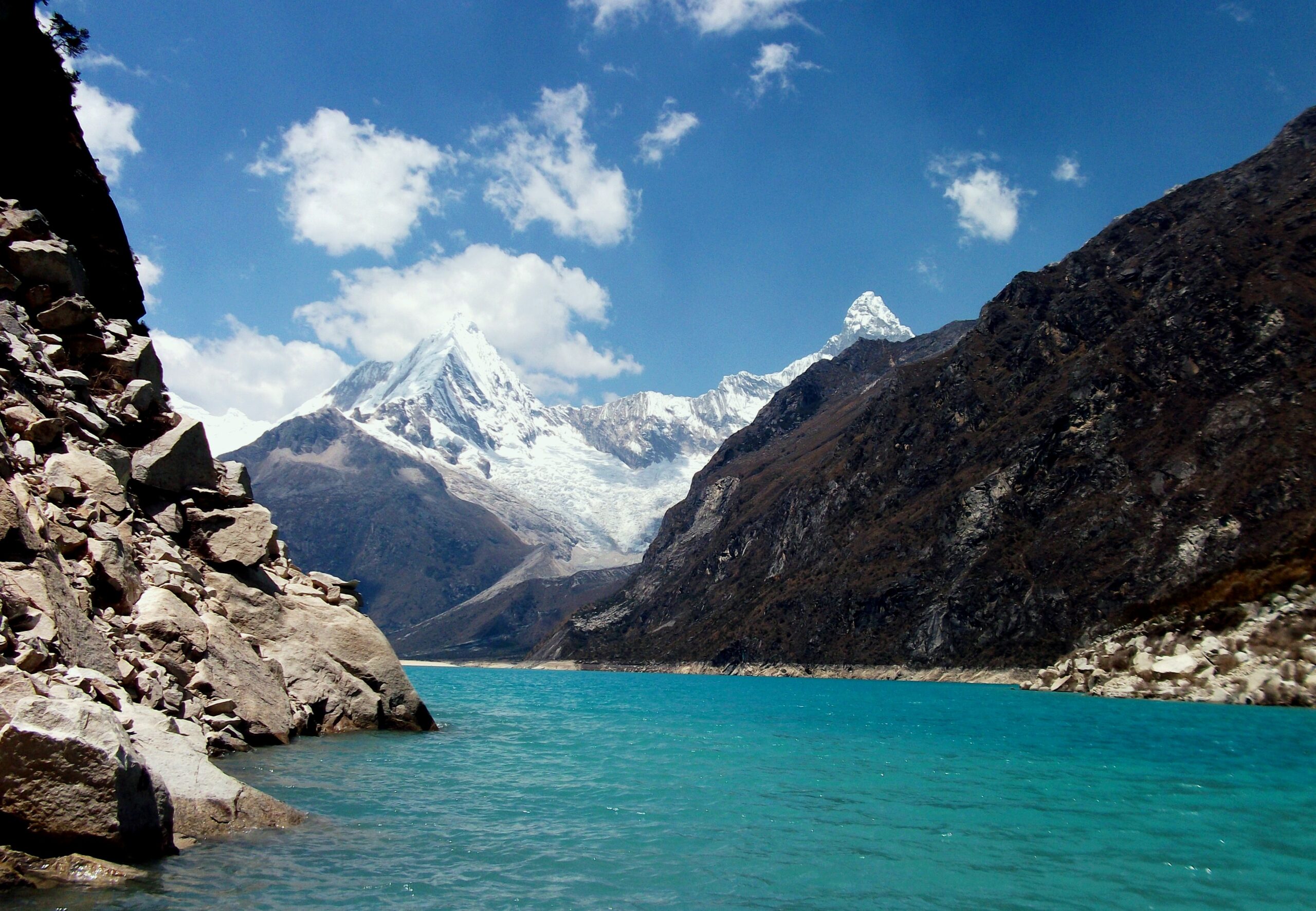
Huascarán Climbing Guide: Garganta Route, Cost & Difficulty
Huascarán Sur is Peru’s highest mountain and one of the most serious commercial 6,000-metre glacier climbs in the Andes. The normal route combines extreme altitude, large crevasses, steep ice and snow, serac exposure and a narrow margin for rescue.
Huascarán is not simply a high mountain. It is a changing glacier route at 6,768 metres.
The normal Garganta Route begins near Musho, passes Base Camp and two high camps, crosses heavily crevassed glacier terrain near the saddle between Huascarán Norte and Sur, and finishes on the upper slopes of Huascarán Sur. A six- or seven-day mountain itinerary is appropriate only for a climber who arrives fully acclimatized, technically competent and accepted by the guide.
- Best base: Huaraz, about 3,050 m.
- Normal access: Musho on the western side.
- Key hazard: changing crevasse and serac terrain near La Garganta.
- Technical reality: crampons, axe, rope systems, rappels and steep snow or ice.
- Acclimatization: a 5,000–5,800 m preparation peak is a strong minimum.
- Access: SERNANP currently requires authorized tourism operators.
What Does It Cost to Climb Huascarán?
There is no universal Huascarán price. The useful comparison is between the short mountain service and a complete acclimatized expedition.
| Budget item | Current published figure | Usually covers | Usually separate / verify | Source check |
|---|---|---|---|---|
| Huascarán National Park | S/150 general 4–30 day ticket | Park admission for the applicable period | Guide service, transport, climbing support and personal expenses | SERNANP · checked Sep 11, 2026 |
| Local 6-day Huascarán example | US$2,650 pp for two climbers | Guide, mountain meals, tents, porter support, cook, donkeys and scheduled Huaraz transport in the cited example | Acclimatization, park entrance, hotels, personal gear, insurance and tips | Peru Expeditions · 2026 published departure |
| Local group pricing example | Falls as group size rises in some published programs | Mountain logistics depend heavily on guide ratio and group support | Do not choose only by the lowest per-person number | Current local published pricing |
| 14-day technical program | Quote required on current AAI listing | Pisco Oeste acclimatization plus Huascarán expedition structure | Confirm airfare, insurance, personal equipment and exact hotel inclusions | American Alpine Institute · current listing |
| 21-day international example | From US$5,650 pp | Long acclimatization sequence, preparation climbs and Huascarán phase | Confirm current departures and exact inclusions before comparing | Ian Taylor Trekking · checked Sep 11, 2026 |
The cheapest six-day quote is not automatically the cheapest trip.
A climber who still needs acclimatization, hotel nights, technical equipment, insurance and a warm-up peak must add those costs somewhere. Compare the complete program required for your readiness level rather than comparing only the Huascarán mountain phase.
Who Should Climb Huascarán?
Huascarán is not a first 6,000-metre peak and should not be the place where a climber learns basic glacier movement.
Prior 5,500 m+ Experience
You should already know how your body performs over multiple days above 5,000 metres.
Roped Movement
Maintain efficient rope spacing and movement around large crevasses without being taught every step.
Steep Snow & Ice
Use crampons and an axe confidently, including descending and rappelling in technical high-mountain terrain.
Crevasse Systems
Understand arrest, anchors and rescue fundamentals even when the guide leads the final response.
Consecutive Hard Days
Sustain long vertical days while carrying personal climbing gear and still move safely on descent.
High-Camp Competence
Manage hydration, food, sleep and personal systems above 5,000 m without losing the ability to climb the next day.
Warm-Up Peak
Let the guide evaluate you on Pisco, Yanapaccha, Ishinca or another appropriate preparation objective.
Accept the No-Go
Huascarán’s glacier can make a planned summit unreasonable. Turning around must be an expected expedition outcome.
A strong readiness question
Instead of asking “Can I climb Huascarán?”, ask whether an experienced Cordillera Blanca guide would be comfortable taking you through the current Garganta route after watching you climb a preparation peak.
The Garganta Route From Musho to Huascarán Sur
The geography is stable. The exact glacier line is not. Camp positions and passages move as crevasses open and seracs change.
Musho
Approximately 3,000–3,150 m depending on approach reference.
Base Camp
Commonly around 4,250–4,350 m.
High Camp 1
Often around 5,250–5,350 m.
La Garganta
Crevasses, serac exposure and steep ice can control the expedition.
Camp 2
Often around 6,000 m, adjusted to current conditions.
6,768 m
Huascarán Sur, Peru’s highest point.
Musho to Base Camp
Teams drive north from Huaraz toward the Callejón de Huaylas and turn toward Musho. Animal support can carry group equipment on the approach. The trail gains through agricultural country, eucalyptus and high Andean vegetation before reaching the Base Camp zone.
Base Camp to High Camp 1
Above Base Camp the climb changes from trekking to mountaineering. Climbers cross moraine and rock before stepping onto the glacier. From this point onward, personal technical equipment and efficient movement matter. Current local itineraries place the first high camp around 5,260–5,350 m.
High Camp 1 through La Garganta
This is the section that should control the decision to climb. Current local route descriptions emphasize large crevasses, hard ice and exposure to hanging seracs between the high camps. Early movement can reduce exposure to heat-driven deterioration, but no departure time removes the underlying objective hazard.
La Garganta is not a fixed trail.
A route description from last season is not proof that the same snow bridge, traverse or high-camp location exists now. Ask the operator who most recently traveled the route and when.
High Camp 2 to Huascarán Sur
Summit day normally begins around midnight or shortly afterward. Teams leave near 6,000 m, negotiate crevasses and steeper snow or ice before reaching the upper glacier and summit plateau. Current local descriptions report summit days around 11–12 hours back to the high camp in good conditions, with rappelling used where required.
A Six- to Seven-Day Huascarán Mountain Phase
This is not a complete expedition itinerary. It assumes the climber has already completed acclimatization and technical preparation.
Huaraz to Musho and Base Camp
Drive to Musho, organize local support and climb to the Base Camp zone around 4,250–4,350 m.
Base Camp to High Camp 1
Cross moraine, enter the glacier and establish the first high camp around 5,300 m depending on the current route.
High Camp 1 to Camp 2 near La Garganta
Move early through the most condition-dependent section of the route: crevasses, steep ice and serac exposure.
Rest or contingency day
A weather or recovery day can prevent the team from forcing a summit attempt immediately after a difficult high-camp move.
Huascarán Sur summit attempt
Depart around midnight, climb through the upper glacier and return to Camp 2 or lower depending on conditions, time and team strength.
Descend to Base Camp
Reverse the high glacier and Garganta section during a cold, controlled window.
Base Camp to Musho and Huaraz
Walk back to the roadhead and return to Huaraz. Some operators compress this into six days when conditions and schedule allow.
Build Acclimatization Before Entering the Garganta
Huaraz gives extraordinary access to progressively higher objectives. Use that advantage instead of rushing directly to Huascarán.
| Stage | Approximate altitude | What it should prove |
|---|---|---|
| Huaraz arrival | ~3,050 m | Recovery from travel, symptoms, sleep, hydration and equipment organization. |
| Acclimatization hike | 4,000–4,700 m | First high exposure without a technical summit commitment. |
| Intro glacier objective | 5,000–5,500+ m | Crampon efficiency, rope movement and guide assessment. |
| Pisco Oeste or equivalent | ~5,750 m | Strong altitude test and a meaningful high summit before Huascarán. |
| Recovery in Huaraz | ~3,050 m | Sleep, eat, repack and make the final go/no-go decision. |
| Huascarán | 4,300–6,768 m | Apply the altitude and technical system on the main objective. |
Fourteen days can work; three weeks can be stronger.
American Alpine Institute currently uses a 14-day program with Pisco Oeste before Huascarán. Ian Taylor currently publishes a 21-day program with a longer acclimatization sequence. Both illustrate the same principle: the six-day Huascarán climb sits at the end of the acclimatization plan, not at the beginning.
Use the altitude acclimatization guide for the underlying physiology and planning principles.
Huascarán Difficulty Is a Hazard Stack
A route grade describes climbing difficulty. It cannot summarize altitude, rescue delay or exposure beneath unstable ice.
Route Blocking
Large openings can force major route changes or make an old passage unusable.
Objective Icefall
The Garganta area can expose teams to hanging ice that cannot be made safe through technical ability alone.
Seasonal Weakening
Bridges that are supportive earlier in the season can weaken after repeated sun and traffic.
6,768 Metres
High Camp 2 is already near 6,000 m before a long summit day begins.
Snow and Hard Ice
Current route descriptions report steep sections requiring secure crampon technique and controlled rappelling.
Ground Rescue Reality
Rescue from technical glacier terrain is difficult and may depend on the climbing team and ground evacuation rather than rapid air support.
Turnaround criteria should be discussed before leaving Huaraz.
Unacceptable serac activity, a collapsing bridge, new avalanche loading, worsening altitude illness, pace too slow for the exposure, dangerous ice conditions or the guide’s concern are sufficient reasons to abandon the summit.
Review glacier travel basics before treating Huascarán as a realistic next objective.
Huascarán National Park Fees and Operator Requirement
Park access is inexpensive compared with the expedition, but it is still a real requirement that belongs in the budget.
S/150
SERNANP currently lists the general ticket valid four to 30 days at S/150.
Authorized Operator
SERNANP currently states that visitors must use tourism operators authorized by the protected-area authority.
Technical Mountain Guide
Specialist Huascarán operators commonly use UIAGM/IFMGA-qualified guides and small technical-climbing ratios.
Authorized operator and guide certification are two separate checks.
First confirm that the tourism operator is currently authorized for Huascarán National Park. Then ask exactly who will guide the technical high mountain, what certification that person holds and what client-to-guide ratio applies above High Camp 1.
Best Time to Climb Huascarán
May through September is the broad climbing window. June through August is the core period, but route condition can deteriorate inside the same season.
Transition
Some operators begin climbing. Residual snow and unsettled weather can still affect route establishment.
Strong Early Window
Core dry-season climbing begins with colder glacier conditions and growing route activity.
Main Season
Most established operating schedules occur here, but crevasses can open progressively as the season advances.
Late Window
Possible stable periods remain, but fresh snow, weaker bridges or a deteriorating line can close the route.
Ask for a dated route report.
Before the final payment, ask when the operator’s own guide last moved from High Camp 1 through La Garganta, where Camp 2 is currently being placed, whether recent teams summited and what hazards caused recent turnarounds.
The Operator Quote Is Only One Layer of the Huascarán Budget
A cheap mountain service can become expensive when every missing component is added after booking.
Inside the expedition quote
- Lead and assistant mountain-guide staffing
- Huaraz-to-Musho transportation
- Donkeys or approach support
- Porters above Base Camp if included
- Cook and mountain meals
- Tents and group technical equipment
- Radios or satellite communication
- Preparation peak if included
- Weather or reserve days
Often outside the headline quote
- S/150 park admission if not bundled
- Lima and Huaraz hotels
- International and domestic transportation
- Personal climbing equipment
- Equipment rental
- High-altitude technical-climbing insurance
- Meals in towns
- Tips and personal expenses
- Extra acclimatization days or peaks
- Costs created by weather changes
The best quote makes exclusions easy to understand.
Ask for one written price sheet showing the guide ratio, mountain staff, acclimatization, park fee, hotels, meals, transport, group technical equipment, insurance requirement, weather-day policy and what happens financially if the Garganta route becomes unsafe.
Compare expedition structures in the Global Summit Guide operator hub and verify insurance with the mountaineering insurance above 6,000 m guide .
How to Choose a Huascarán Operator
The right operator knows the present glacier, not merely the historical normal route.
| Ask | A strong answer contains |
|---|---|
| Are you currently authorized by SERNANP? | Current authorization, not simply a company registration or an old park relationship. |
| Who will actually guide me? | Name, UIAGM/IFMGA or appropriate certification, recent Huascarán work and summit-day role. |
| What is the ratio? | The client-to-guide ratio above High Camp 1, not the total number of cooks and porters. |
| When was your most recent Garganta passage? | A specific recent date, current crevasse issues and Camp 2 location. |
| Which acclimatization peak will we climb? | A named peak, schedule and clear purpose rather than vague “acclimatization days.” |
| What is the rescue plan? | Communication, staffing, lowering or evacuation system and ground-response process. |
| What cancels the summit? | Specific guide authority regarding seracs, bridges, avalanche conditions, pace and symptoms. |
| What happens if Huascarán is unsafe? | Alternative objective, reserve-day policy and written financial treatment. |
What Equipment System Does Huascarán Require?
The operator’s final packing list controls. The parent page should explain the system rather than duplicate every item.
Insulated Boots & Crampons
Boots appropriate for a 6,000 m technical peak, paired and tested with reliable steel crampons.
Axe, Harness & Helmet
Personal glacier and steep-terrain equipment matched to the guide’s rope and protection system.
High-Altitude Insulation
Warm down layer, storm shell, protected hands and enough margin for a slow summit day above 6,000 m.
Cold Sleep System
Sleeping bag and pad appropriate to the operator’s high camps and expected nighttime temperatures.
Huascarán’s Mountaineering and Regional History
The history matters, but it should not displace the current route, access and readiness questions that brought the climber here.
1908: Huascarán Norte
American mountaineer Annie Smith Peck and Swiss guides reached Huascarán Norte in 1908. The climb became one of the defining achievements of Peck’s career and an important early chapter in high-altitude mountaineering in Peru.
1932: Huascarán Sur
The higher south summit was first climbed in 1932 by members of a German-Austrian expedition together with Peruvian participants, establishing the first ascent of the summit now targeted by most modern Huascarán expeditions.
1970: Yungay
On May 31, 1970, a major earthquake triggered a catastrophic rock, ice and debris avalanche from the Huascarán massif that buried Yungay and devastated surrounding communities. The disaster is essential to the mountain’s regional history, but it is distinct from the day-to-day glacier hazards faced by modern climbers on the Garganta Route.
Huascarán Climbing FAQ
These answers match the visible content and FAQ schema above.
How difficult is Huascarán?
Huascarán Sur is a serious technical high-altitude glacier climb. The normal route is often described around AD depending on conditions, but the full challenge includes 6,768 m altitude, crevasses, steep snow or ice, serac exposure and difficult rescue.
How long does it take to climb Huascarán?
The mountain phase is commonly six or seven days for an already acclimatized climber. Allow roughly two to three weeks for a responsible complete expedition including acclimatization.
What is the normal route?
The standard route approaches from Musho, climbs through Base Camp and two high camps, crosses the heavily glaciated terrain near La Garganta and continues to Huascarán Sur.
How much does Huascarán cost?
Current published examples range from roughly US$2,650 for a short local six-day service for two climbers to US$5,650 starting price for a 21-day international program. Compare inclusions, acclimatization and guide ratio before comparing price.
How much is the national park fee?
SERNANP currently lists the general four-to-30-day Huascarán National Park ticket at S/150.
Do I need a guide?
SERNANP currently requires visitors to use authorized tourism operators in Huascarán National Park. On this technical objective, choose a specialist guide team with appropriate high-mountain certification and current route knowledge.
When is the best season?
May through September is the broad operating window, with June through August the core period. The actual glacier condition is more important than choosing a month in isolation.
Is Huascarán harder than Aconcagua?
Technically, yes on the standard routes. Aconcagua is higher, but Huascarán involves substantially more glacier travel, crevasse management and steep snow or ice climbing.
Sources and What Must Be Rechecked
Stable mountain facts can live here for years. Route condition, pricing and operator authorization should be treated as temporary.
Primary and institutional sources
Current operating examples
- American Alpine Institute — 14-day Huascarán structure and Pisco Oeste acclimatization.
- Ian Taylor Trekking — 21-day program and current starting-price example.
- Peruvian Andes Adventures — current six/seven-day route description, acclimatization and UIAGM guide standards.
- Peru Expeditions — current six-day price and inclusion/exclusion example.
Recheck before booking.
Verify the SERNANP operator list, park fee, current Garganta route, camp locations, guide assignment, ratio, rescue plan, weather-day policy and total price immediately before making a non-refundable payment.

About the research
Travis Ludlow leads Global Summit Guide’s mountain research and planning architecture. This page is research-based and does not claim a first-hand Huascarán ascent.
Read the Global Summit Guide editorial approach →Build the Huascarán Expedition Around the Right Decisions
Huascarán belongs inside a broader Andes progression. Use the regional parent to compare objectives, then move into the skill, operator and insurance resources that close the specific gaps in your plan.
Choose the Acclimatization and Guide Team First.
Huascarán’s summit date matters less than arriving with the right skills, enough altitude exposure and a guide who is willing to abandon the route when the Garganta is wrong.
Was this helpful?
🏔Related peaks nearby
🧭Explore & compare
Global Summit Guide is an independent mountaineering resource founded in 2026. The team combines first-hand trekking and climbing experience with in-depth research and professional health and nutrition review to help climbers choose objectives, prepare properly, and stay safe.
Health, altitude, and nutrition content is reviewed by Taylor Ludlow (Registered Nurse) and Brigg Hoopes (Nutritionist).
What We Don't Know Yet
Mountain information changes quickly. This box explains the limits of what this page can responsibly promise.
- Route conditions, trailhead access, crevasse exposure, stream crossings, and rescue access may vary from published planning guidance.
- Total trip cost can change with flights, lodging, guide pricing, permits, gear rentals, transportation, and exchange rates.
- Visa, passport, vaccination, border, insurance, and local transportation rules may change before your trip.
Verify current conditions with official land managers, guide services, local forecasts, and current route reports before booking or climbing.
Mountaineering, rock and ice climbing, glacier travel, and high-altitude activity are inherently dangerous and can result in serious injury or death. The information on Global Summit Guide is provided for general informational and educational purposes only and is not a substitute for professional instruction, qualified guiding, proper equipment, or your own judgment and experience.
Route conditions, weather, snowpack, permits, regulations, and hazards change constantly and may differ from what is described here. Details may be incomplete, out of date, or contain errors. Always verify current information with local authorities, certified guides, and official sources before making any decision in the mountains.
Nothing on this site is medical, legal, or financial advice. Our fitness, acclimatization, altitude, and nutrition content is general in nature; consult a qualified physician before beginning any strenuous exercise program or exposing yourself to high altitude.
You are solely responsible for your own safety and decisions. To the fullest extent permitted by law, Global Summit Guide and its team accept no liability for any loss, injury, damage, or expense arising from use of, or reliance on, this information. By using this site you acknowledge these risks and accept these terms.
Some links on this site may be affiliate links. If you buy through them we may earn a small commission at no extra cost to you; this never affects our recommendations.
Global Summit Guide recommendation path
Next Best Mountain to Research
Use these recommendations to continue the right planning path instead of stopping on one page.
Use current permit, weather, route, and operator information before booking or climbing.
Search Flights, Hotels & Rental Cars
Have the mountain or destination picked? Use Expedia to compare the flights, lodging and rental cars that fit your actual trip dates. For mountain travel, consider arriving early enough for delays and adding a buffer night after the climb before a fixed flight home.
Compare current flight, hotel and car options.
Affiliate disclosure: Global Summit Guide may earn a commission if you book through this link, at no additional cost to you.