
Last updated September 15, 2026
Chimborazo Climb Guide: Routes, Acclimatization, Cost & Current Access
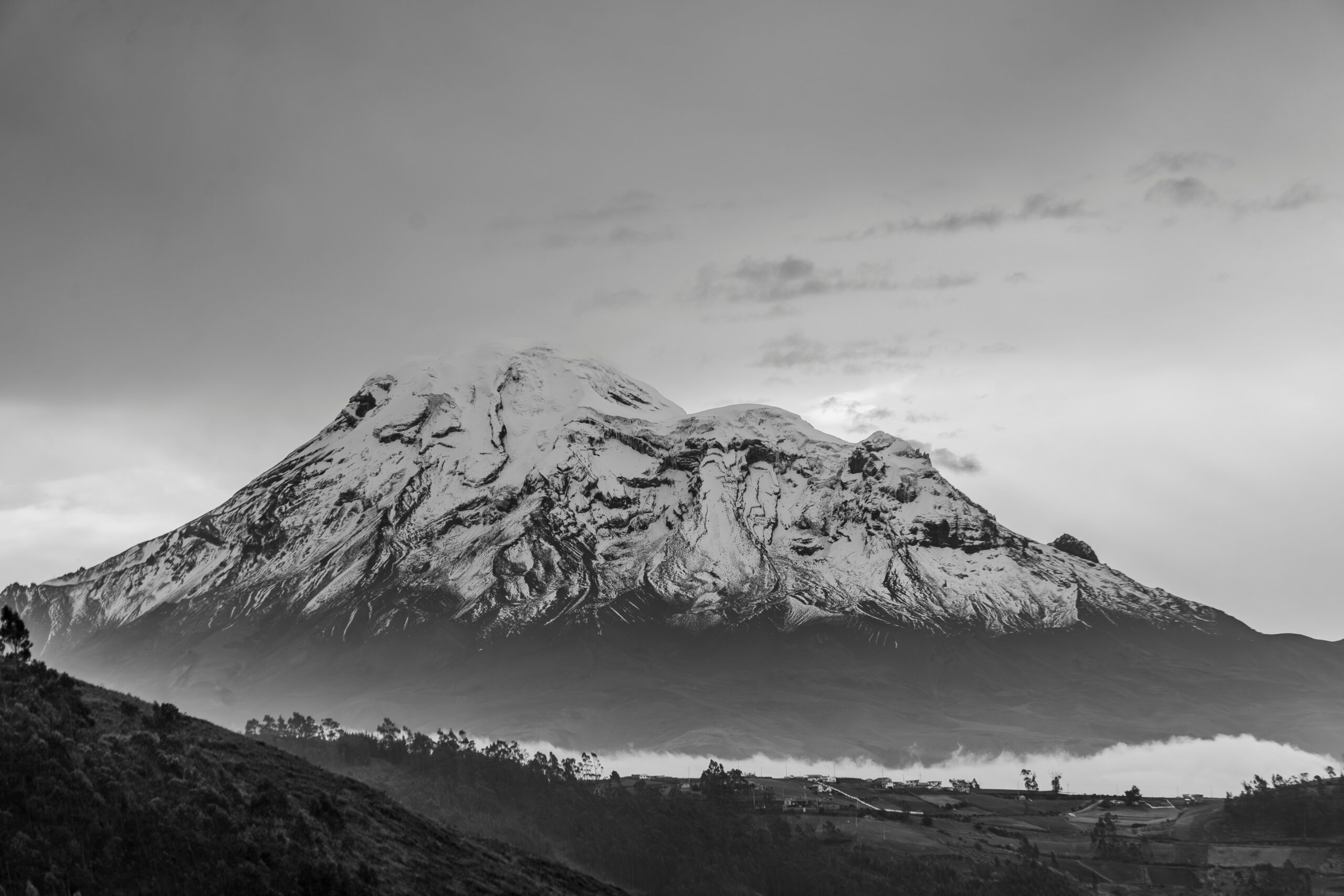
Chimborazo is Ecuador’s highest mountain and the point on Earth’s surface farthest from the planet’s center. For climbers, the more important facts are practical: a summit above 6,200 metres, roughly 1,450 metres of ascent from the Carrel Refuge level, changing glacier terrain, two officially mapped summit-route systems and an authorization process that should be confirmed directly with the Chimborazo Wildlife Reserve before departure.
What is climbing Chimborazo actually like?
Chimborazo is a serious high-altitude glacier climb, not a hiking summit. The difficulty comes from combining glacier travel, crampons, cold, darkness, crevasse and avalanche exposure with a summit above 6,200 metres.
Ecuador’s Ministry of Tourism publishes two southwest-face summit approaches from the Carrel Refuge system: El Corredor, listed at 4.5 km and 8–9 hours, and the El Castillo ridge, listed at 5.5 km and 9–10 hours. Both gain roughly 1,450 metres.
Which line is appropriate is not something to decide from an old route description. Glacier recession, snow coverage, rockfall, crevasses and avalanche conditions can alter the practical route. Current local conditions should control the decision.
Technical difficulty alone understates the climb.
Official Ecuador route graphic elevation.
Veintimilla is the lower summit encountered before the true high point.
Do not treat arriving in Quito as sufficient preparation for 6,263 m.
Chimborazo at a glance
Elevation numbers differ in older tourism material. For current mountain height, Global Summit Guide uses Ecuador’s Instituto Geofisico figure of 6,263 m.
| Planning field | Current working figure | Why it matters |
|---|---|---|
| Elevation | 6,263 m / 20,548 ft | Ecuador Instituto Geofisico current listing. |
| Country | Ecuador | Central Andes, southwest of Quito and west of Riobamba. |
| Mountain type | Composite stratovolcano | IGEPN describes Chimborazo as potentially active, with its last eruption between the fifth and seventh centuries. |
| Carrel Refuge | 4,800 m on official tourism graphic | Primary road-access high-mountain staging point. |
| Whymper Refuge | 5,000 m | Historic higher refuge and route landmark. |
| Ridge Camp | 5,300 m | High-camp option shown on Ecuador’s route graphic. |
| Official route gain | 1,450 m+ | Large summit-day workload at extreme altitude. |
| Summit | Whymper | Highest point; distinguish from lower Veintimilla summit. |
| Core equipment | Crampons, ice axe, harness, rope system, helmet | Glaciated mountaineering objective, not a trek. |
The farthest point from Earth’s center
Chimborazo does not beat Everest above sea level. It holds a different geographic record.
Highest above sea level
Everest remains Earth’s highest summit when measured from mean sea level. That is the normal definition used for mountain elevation.
Farthest from Earth’s center
Because Earth bulges around the equator and Chimborazo sits close to it, the mountain’s summit is farther from Earth’s center than Everest’s. Ecuador’s Instituto Geofisico describes this equivalently as the surface point closest to the sun.
El Corredor vs El Castillo ridge
Ecuador’s tourism graphic publishes both lines. Modern guides may favor different variants as snow, ice and rockfall conditions evolve.
El Corredor
The Ecuador Ministry of Tourism map shows El Corredor leaving the Carrel/Whymper refuge system and climbing more directly toward the upper glacier and summits.
Do not assume the mapped line is automatically the preferred modern line on the day you climb. Rockfall, snow coverage and glacier condition can materially affect route selection.
El Castillo Ridge
The El Castillo line reaches the ridge-camp / El Castillo area before joining the glaciated upper mountain toward Veintimilla and Whymper.
Current Ecuador operators commonly describe ridge or high-camp variants as part of their modern Chimborazo programs. The exact track still depends on live mountain conditions.
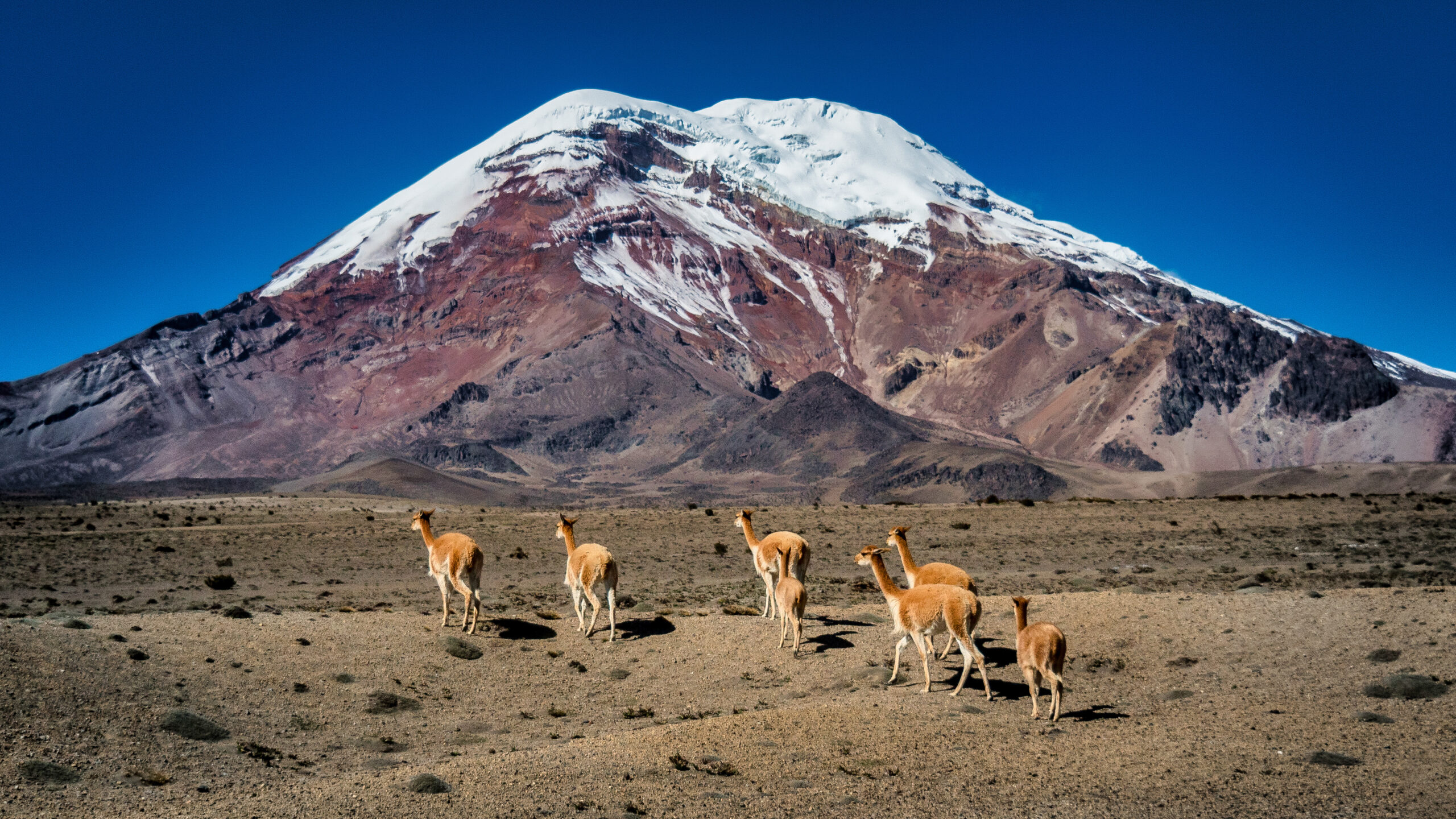
Route names are stable. Route conditions are not.
Chimborazo’s glacier has retreated substantially over recent decades. That means a route description written several seasons ago can remain geographically recognizable while the actual hazards, snow cover and preferred line have changed.
Moderate technical climbing does not mean an easy mountain
Chimborazo combines manageable climbing technique with a very large physiological and environmental burden.
6,263 metres
The summit is well above the altitude where insufficient acclimatization can end an otherwise strong climb.
Glacier travel
Crampons, rope systems, ice axe use and movement around crevasses are core skills rather than optional extras.
1,450 m+
The official route graphic shows a large elevation gain, much of it completed overnight at extreme altitude.
Cold + wind + UV
Equatorial sun, glacier reflection, wind chill and pre-dawn cold create a demanding clothing and eye-protection problem.
What Ecuador’s current protected-area guidance actually says
This replaces the old page’s blanket “guide mandatory since 2012” statement.
Advance authorization is the verified requirement
Current Ministry of Environment protected-area guidance says high-mountain and acclimatization activity in the Chimborazo Wildlife Reserve requires an advance authorization request.
The same official guidance explicitly refers to agencies, operators and independent persons, with independent-person / operator requests listed on a five-day advance timetable.
Ecuador’s Ministry of Tourism separately recommends that people undertaking high-mountain activities contact an authorized tourism operator or join a recognized mountaineering club.
Because regulations can change, verify the current procedure directly with the reserve immediately before travel rather than treating any old blog post as the controlling regulation.
Request access before arrival.
Current official guidance includes independent persons.
Recommended is not the same language as a universal legal guide mandate.
Confirm the current procedure before departure.
The biggest controllable part of the Chimborazo plan
Do not confuse strong sea-level fitness with readiness to move efficiently above 6,000 metres.
Spend initial time around 2,850 m rather than landing and immediately driving to the highest sleeping altitude available.
Use a day hike or moderate volcano to see how you move, hydrate, sleep and recover above the altitude of most U.S. summits.
Illiniza Norte or another appropriate progression objective can add altitude without immediately committing to a 6,000 m glacier summit.
A prior Ecuador glacier climb such as Cayambe or Cotopaxi can combine additional altitude exposure with crampon and rope-system rehearsal when conditions and access permit.
Attempt the mountain only after the previous stages show acceptable altitude response, recovery and technical readiness.
Think in two layers: acclimatization first, Chimborazo second
A two-day Chimborazo package assumes you have already solved the acclimatization problem.
2-day summit program
Appropriate as a mountain-specific service for climbers who have already accumulated the necessary altitude exposure elsewhere in Ecuador.
5–7 days
Combine several progressively higher objectives before Chimborazo. The exact sequence should respond to current access and the climber’s prior altitude history.
7–10+ days
More useful for climbers arriving from low elevation who want time to adapt rather than treating every day as a race toward the summit.
What does it cost to climb Chimborazo?
There is no single universal Chimborazo price. Current local prices depend heavily on party size, refuge versus high camp and whether acclimatization is included.
| Published example | Price | Structure | Planning lesson |
|---|---|---|---|
| Ecuador Eco Adventure · refuge | $395 pp for 2 / $600 solo | Chimborazo climb from roughly 4,800 m | Party size materially changes the per-person price. |
| Ecuador Eco Adventure · high camp | $485 pp for 2 / $750 solo | High-camp start around 5,200 m | High camp can cost more but reduces part of the summit-night gain. |
| Andean Summit Adventure · refuge | From $490 | Two-day Chimborazo program | A second current operator confirms that sub-$1,000 local summit packages exist. |
| Andean Summit Adventure · high camp | From $520 | Two-day high-camp version | Compare inclusions before comparing price. |
| Gulliver · 5-day program | From $825 | Illiniza Norte + Chimborazo | Adding acclimatization changes the product—not just the price. |
| Gulliver · 10-day progression | $1,258 published | Multiple Ecuador objectives ending with Chimborazo | Longer progression can still be relatively affordable compared with major expedition peaks. |
Chimborazo can be climbed year-round—but that does not make every week equal
Ecuador Tourism identifies two particularly popular periods and stresses checking actual weather conditions.
Clearer, windier
Official tourism guidance describes clearer skies and sunny days with the possibility of strong winds.
Less wind, more snow
Official guidance describes less wind and heavier snow cover during this popular period.
Conditions decide
Ecuador Tourism explicitly says the country’s mountains can be climbed year-round, provided weather and mountain conditions are checked.
What can actually end a Chimborazo climb?
Ecuador’s official route graphic marks avalanche, serac and rockfall terrain. None of those hazards disappears because the technical grade is moderate.
AMS, HACE & HAPE
Chimborazo is high enough for severe altitude illness. Do not continue upward with worsening altitude symptoms.
Crevasses & snow bridges
Tropical glacier conditions can evolve rapidly. Rope travel and current route knowledge matter.
Serac exposure
Ecuador’s official graphic explicitly marks serac / icefall terrain on the mountain.
Avalanche terrain
Fresh snow, warming and wind loading can alter the hazard independently of the calendar.
Rockfall
Official Ecuador route material marks rockfall zones, reinforcing the need for current route selection and timing.
Wind, cloud & cold
Summit temperatures, wind chill and visibility can make a technically manageable route unsafe.
What you need for Chimborazo
Rental packages are common in Ecuador, but fit-critical items deserve special attention.
Mountaineering boots + crampons
Boots must match the expected cold and work correctly with the crampon system supplied or carried.
Ice axe, harness, helmet
Plus rope-compatible carabiner and attachment system appropriate to the team’s glacier setup.
Layer for pre-dawn cold
Base layers, insulation, shell protection, substantial gloves and spare hand warmth.
Glacier-rated protection
High altitude, equatorial sun and snow reflection make serious eye and skin protection essential.
Reliable headlamp
Expect much of the ascent before daylight. Carry spare power in a way that remains usable in cold conditions.
Cold-resistant system
Bottles and insulation should work when hydration systems and exposed water lines may freeze.
Why this guide does not quote a “Chimborazo success rate”
The mountain deserves better than recycling a percentage with no auditable denominator.
The previous parent guide quoted a broad 40–60% success range. Global Summit Guide’s separate Chimborazo summit-rate audit found no public government dataset that supports one audited mountain-wide percentage using a defined attempt denominator.
Some individual operators publish their own outcomes. Those can be useful when the operator explains exactly who counts as an attempt and who counts as a summit—but an operator cohort should not be relabeled as the success rate for the entire mountain.
For the current evidence, use our dedicated Chimborazo Summit Success Rate page.
No verified universal denominator located.
Do not generalize one client cohort to every climber.
More useful than chasing one floating percentage.
Chimborazo climbing questions
Current access and glacier conditions should always be rechecked before departure.
How high is Chimborazo?
Ecuador’s Instituto Geofisico currently lists Chimborazo at 6,263 m. Older Ecuador tourism material still shows 6,268 m, which explains why both numbers appear online.
Is Chimborazo really the closest point to the sun?
In the geographic sense behind the famous claim, yes: its summit is the point on Earth’s surface farthest from Earth’s center because Chimborazo sits close to the equatorial bulge. Everest remains much higher above sea level.
Do I legally need a guide?
We would not publish a blanket yes from the current government sources. Protected-area guidance explicitly includes independent persons in the authorization procedure, while Ecuador Tourism recommends an authorized operator or recognized mountaineering club. Confirm current requirements directly with the reserve.
What is the normal route?
Ecuador’s official route graphic publishes both El Corredor and El Castillo ridge. Current guides and operators may prefer one or use variants according to glacier, snow and rockfall conditions.
How hard is Chimborazo?
It is a serious glacier ascent requiring high-altitude endurance, crampon and ice-axe competence, rope travel and conservative judgment. It does not require the sustained technical climbing found on harder alpine peaks, but 6,263 metres makes it physically consequential.
How much does it cost?
Current local two-day climbing products can begin below US$500 per person when two climbers share a guide, while solo climbs, high camp and acclimatization programs cost more. Compare current operator inclusions rather than using an old universal price range.
When is the best season?
Ecuador Tourism says the mountain can be climbed year-round with conditions verified first. Its official Chimborazo graphic identifies June–August and November–January as the most visited periods.
Is Chimborazo a good first glacier climb?
It can fit a progression for someone who has learned the required skills and acclimatized appropriately, but the summit should not double as both the first exposure to glacier systems and the first experience above 6,000 metres.
Where the planning facts come from
Official sources own regulations and stable mountain facts. Operators are used for current commercial examples.
Official Chimborazo Route Graphic
El Corredor and El Castillo routes, Carrel and Whymper refuges, route distances, ascent estimates, seasonal guidance and mapped hazard zones.
Open official route graphic →Protected Areas — Sierra
Current reserve access guidance including advance authorization and language covering agencies, operators and independent persons.
Open protected-area guidance →Chimborazo Volcano
Current 6,263 m elevation, volcano classification, coordinates and geologic / volcanic context.
Open IGEPN Chimborazo page →2016 Summit GPS Project
Ecuadorian and French scientific work concerning Chimborazo’s position as the surface point farthest from Earth’s center.
Open IGEPN report →Ecuador Eco Adventure
Current advertised refuge and high-camp Chimborazo prices by one- versus two-climber guide ratio.
Open current climb page →Andean Summit Adventure
Current two-day refuge and high-camp price examples plus operator discussion of modern glacier conditions.
Open current Chimborazo page →Build the complete Chimborazo plan
This parent guide owns the full climb. Use the supporting pages for summit statistics, route detail, acclimatization and the Ecuador volcano progression.
Was this helpful?
🏔Related peaks nearby
🧭Explore & compare
Global Summit Guide is an independent mountaineering resource founded in 2026. The team combines first-hand trekking and climbing experience with in-depth research and professional health and nutrition review to help climbers choose objectives, prepare properly, and stay safe.
Health, altitude, and nutrition content is reviewed by Taylor Ludlow (Registered Nurse) and Brigg Hoopes (Nutritionist).
What We Don't Know Yet
Mountain information changes quickly. This box explains the limits of what this page can responsibly promise.
- Route conditions, trailhead access, crevasse exposure, stream crossings, and rescue access may vary from published planning guidance.
- Total trip cost can change with flights, lodging, guide pricing, permits, gear rentals, transportation, and exchange rates.
- Fitness and altitude response vary by person; no guide, itinerary, or training plan can guarantee acclimatization or summit success.
- Visa, passport, vaccination, border, insurance, and local transportation rules may change before your trip.
Verify current conditions with official land managers, guide services, local forecasts, and current route reports before booking or climbing.
Mountaineering, rock and ice climbing, glacier travel, and high-altitude activity are inherently dangerous and can result in serious injury or death. The information on Global Summit Guide is provided for general informational and educational purposes only and is not a substitute for professional instruction, qualified guiding, proper equipment, or your own judgment and experience.
Route conditions, weather, snowpack, permits, regulations, and hazards change constantly and may differ from what is described here. Details may be incomplete, out of date, or contain errors. Always verify current information with local authorities, certified guides, and official sources before making any decision in the mountains.
Nothing on this site is medical, legal, or financial advice. Our fitness, acclimatization, altitude, and nutrition content is general in nature; consult a qualified physician before beginning any strenuous exercise program or exposing yourself to high altitude.
You are solely responsible for your own safety and decisions. To the fullest extent permitted by law, Global Summit Guide and its team accept no liability for any loss, injury, damage, or expense arising from use of, or reliance on, this information. By using this site you acknowledge these risks and accept these terms.
Some links on this site may be affiliate links. If you buy through them we may earn a small commission at no extra cost to you; this never affects our recommendations.
Global Summit Guide recommendation path
Next Best Mountain to Research
Use these recommendations to continue the right planning path instead of stopping on one page.
Use current permit, weather, route, and operator information before booking or climbing.
Search Flights, Hotels & Rental Cars
Have the mountain or destination picked? Use Expedia to compare the flights, lodging and rental cars that fit your actual trip dates. For mountain travel, consider arriving early enough for delays and adding a buffer night after the climb before a fixed flight home.
Compare current flight, hotel and car options.
Affiliate disclosure: Global Summit Guide may earn a commission if you book through this link, at no additional cost to you.