Cerro Torre Death Rate: How Deadly Is Patagonia’s Hardest Spire?
Barely 3,128 metres tall, yet one of the most feared mountains on Earth. Cerro Torre’s danger has nothing to do with altitude and everything to do with vertical granite, rime ice, and the worst weather in the inhabited world. Here’s the real death rate, what it means, and the deaths that built the legend.
By Travis Ludlow · Reviewed by Dawson Ludlow, Safety & Altitude
Published Jul 17, 2026 · Verified Jul 17, 2026 · ~8 min read
Editorial approach – research-based safety data: this page explains relative risk, not to sensationalise tragedy. Figures are drawn from Patagonian climbing records, alpine journals, and accident reporting, cross-checked against our death rates by mountain hub. Cerro Torre sees far fewer attempts than the 8,000ers, so its rate is a directional risk band, not an exact ratio.
The short answer
Around 6% per climber among serious attempts – extreme for a peak under 3,200 m.
Cerro Torre’s estimated fatality rate is roughly 6% per climber among serious attempts – far below the deadliest 8,000ers (Annapurna ~27-32%, K2 ~22-25%), but severe for its modest height. Its danger is technical, not altitudinal: vertical granite, rime ice, and ferocious weather.
The number works differently here than on commercial 8,000ers. Cerro Torre is an elite objective attempted by relatively few, where most attempts are turned back by storms rather than reaching the top – so read it as danger-per-attempt, not a death-to-summit ratio. For where it sits among all peaks, see our most dangerous mountains ranking.
3,128 mSummit (10,262 ft)
~6%Per-climber fatality (serious attempts)
1959First death (Toni Egger)
1974First undisputed ascent
Rime iceThe signature hazard
Fatality Snapshot
As of Jul 17, 2026 · directional risk band · few attempts, elite objective
On the 8,000ers, “death rate” almost always means deaths divided by successful summits. Cerro Torre can’t be measured that cleanly: it’s an elite technical objective climbed by comparatively few people, and on any given expedition most attempts are turned back by weather without reaching the summit. So its estimated ~6% per-climber fatality rate among serious attempts is best read as danger-per-attempt. That’s low next to Annapurna or K2 – but for a peak barely 3,128 m high, it reflects just how unforgiving the climbing is.
Why it’s so dangerous
Everything hard about mountaineering, minus the altitude.
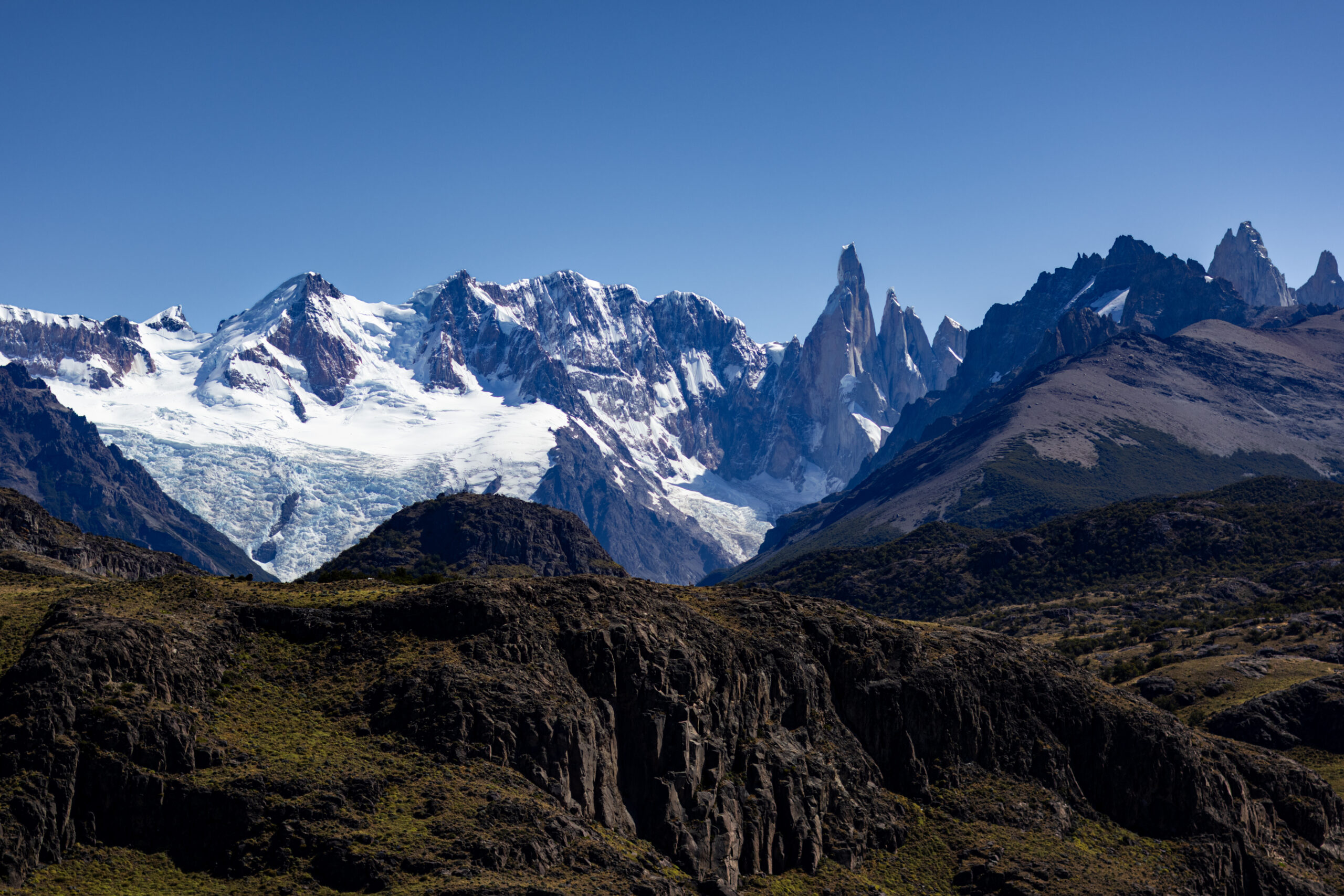
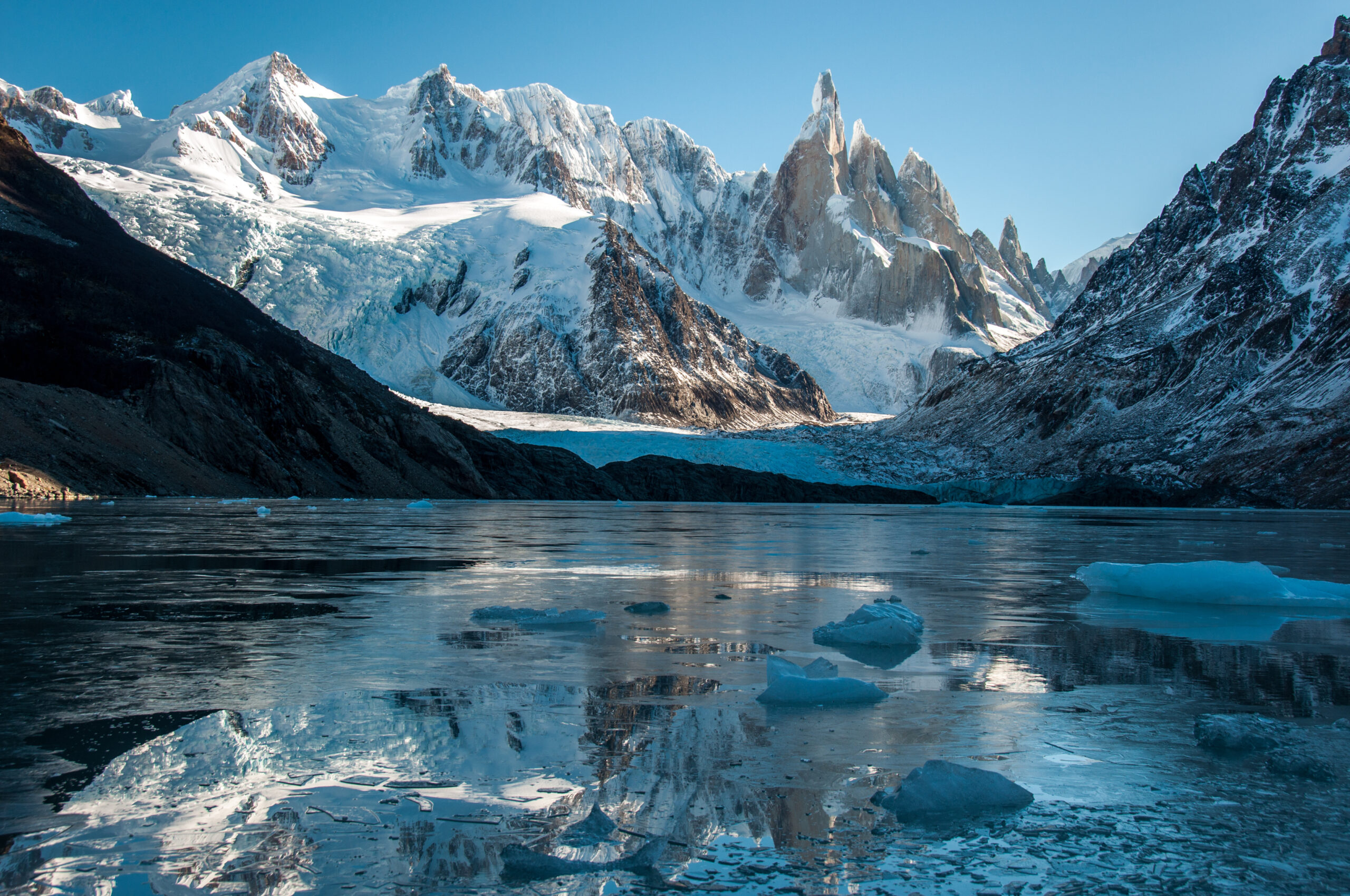
Cerro Torre rises as a near-vertical granite spire straight out of the Southern Patagonian Ice Field, and its danger is a stack of technical hazards rather than thin air:
Hazard
Why it kills
Rime ice
Fragile, feathery ice mushrooms cap the spire; climbers must tunnel through unstable, unprotectable rime
Patagonian weather
Among the fiercest on Earth – violent storms arrive fast, and windows are measured in hours
Vertical granite
Sustained hard rock and mixed climbing where a fall is typically fatal
Rockfall
Warming has increased rockfall on some sections – a factor in recent deaths
No rescue
Remote, committing terrain; if a storm traps you high, there is often no safe retreat and no help
The tiny-window trap. More than almost any mountain, Cerro Torre punishes impatience. Climbers wait days or weeks for a narrow good-weather window, then move fast and commit – and a window that closes early can leave a party high on the spire in a full Patagonian storm. That combination of extreme difficulty and unforgiving weather is exactly what the death rate is measuring.
The signature hazard. The summit mushrooms of Cerro Torre – unstable, feathery rime ice that can’t be reliably protected – are the crux and the reason the mountain resisted an undisputed ascent until 1974. Terrain like this is why a slip here is rarely survivable.
The deaths that defined it
From the disputed first ascent to a modern tragedy.
Cerro Torre’s reputation was forged in controversy and loss. In 1959, Cesare Maestri claimed the first ascent with Austrian climber Toni Egger – but Egger was swept to his death on the descent, taking the only camera and with it the proof. When later expeditions failed to repeat the line and brought further deaths, doubt hardened into one of climbing’s most famous disputes; the first undisputed ascent came only in 1974, by Casimiro Ferrari’s Ragni di Lecco team via the west face. Decades later, in 2022, the accomplished alpinist Korra Pesce was struck by rockfall while descending and died – a reminder that even for the world’s best, the mountain’s margins are razor-thin.
Cerro Torre vs the 8000ers
A different kind of deadly.
Comparing Cerro Torre’s rate to an 8,000er’s is almost comparing two different sports. The great Himalayan and Karakoram killers – Annapurna, K2, Nanga Parbat – are lethal through a mix of extreme altitude and objective hazard on expeditions that many attempt. Cerro Torre is lethal through pure technical difficulty and weather on a peak few can even seriously try. It’s why it appears near the top of every “hardest mountain” list but well down the fatality-rate table.
Deadly through difficulty
Cerro Torre
~6% per attempt · technical climbing + Patagonian weather, not altitude.
Deadly through altitude & hazard
Annapurna / K2
~22-32% death-to-summit · thin air, avalanche, serac on commercial expeditions.
The modern fatality rate is dramatically lower than during the 1959-1980s era. Better equipment, vastly improved forecasting, refined technique, and accumulated route knowledge have all cut the risk for skilled parties who wait for the right window. But the mountain hasn’t changed: the rime, the storms, and the exposure remain, and warming has increased rockfall on some sections. Cerro Torre rewards experience and patience – and still humbles the best climbers alive.
Planning a Patagonia trip? Compare flights and lodging via the Global Summit Guide Expedia travel shop. Disclosure: affiliate link; we may earn a small commission at no extra cost to you, and it never affects our reporting.
Cerro Torre death rate FAQ
The questions people search right after “cerro torre death rate.”
What is Cerro Torre’s death rate?
Roughly 6% per climber among serious attempts – far below Annapurna (~27-32%) or K2 (~22-25%), but extreme for a 3,128 m peak. It’s danger-per-attempt, not death-to-summit, since most attempts are turned back by weather. The modern rate is far lower than the 1959-1980s era.
Why is it so dangerous under 3,200 m?
Its danger is technical and weather-driven, not altitude: vertical granite, fragile rime ice, violent Patagonian storms, rockfall, and no rescue. A fall on this terrain is typically fatal.
How many have died on it?
There’s no official tally as for the 8,000ers, but deaths have accumulated since the first-ascent era. The most famous is Toni Egger (1959); more recently, Korra Pesce died in 2022 from rockfall on the descent.
Is it the deadliest mountain?
No – by rate it’s well below the deadliest 8,000ers, and Mont Blanc has a far higher total toll. It’s among the most feared for difficulty, not for topping the death charts. See most dangerous mountains.
Has it become safer?
Yes – modern gear, forecasting, and technique have cut the rate sharply since the 1980s. But the rime, storms, and exposure are unchanged, so it’s safer, not safe.
How we built this
Patagonian climbing records, alpine journals, and accident reporting for fatality context
First-ascent history (Maestri 1959 dispute; Ferrari / Ragni di Lecco 1974) for the historical record
GSG house estimate of ~6% per-climber fatality among serious attempts, cross-checked against the most-dangerous ranking
Presented as a directional risk band, since Cerro Torre sees far fewer attempts than the 8,000ers
Last updated: July 17, 2026. Next review: January 2027. Research-based safety data, not a record of personal ascents; figures are directional, not exact probabilities.
About the author
Travis Ludlow · Founder & Head of Research · Safety review: Dawson Ludlow
Travis leads research at Global Summit Guide, which maintains a safety-data hub covering fatality patterns across the world’s major peaks. This Cerro Torre page sits within that hub – a single-peak deep dive that points up to the cross-mountain ranking.
Death Rate Analysis · 80 Years of Fatalities · Patagonia
Cerro Torre Death Rate: 80-Year Fatality Pattern Analysis (1959-2024)
Cerro Torre at 3,128 meters is a granite spire rising from the Southern Patagonian Ice Field — widely considered one of the most dangerous mountains in the world among elite alpinists. No official fatality statistics exist for Cerro Torre, but documented deaths span 80 years of climbing history from Toni Egger’s 1959 disputed ascent death to Korra Pesce’s 2022 rime-ice collapse. Climate change is a documented emerging factor, with the 2022-2023 Patagonia season producing record fatalities. Complete pattern analysis with the verified case histories and the systemic factors driving Cerro Torre’s exceptional danger.
By Travis Ludlow, Editor & Route Research · Reviewed by Dawson Ludlow, Safety & Altitude
Updated May 31, 2026 · Reading time 14 minutes · Reviewed quarterly
Cerro Torre has no official fatality statistics. Unlike Himalayan 8000m peaks tracked by the Himalayan Database, Patagonia has no comprehensive climbing death record-keeping body.
3,128m granite spire on Argentina-Chile border. Rises from the Southern Patagonian Ice Field. Vertical and overhanging rock combined with summit ice mushroom climbing.
1959 — Toni Egger died on descent. Austrian climber, age 32. Killed in avalanche during disputed Maestri first ascent attempt. The iconic Cerro Torre death.
1973 — Keven Carroll and Steven McAndrews died on West Face descent. Australian and American climbers. Killed by rockfall after being seen on summit ridge during 5th West Face ascent.
2022 — Korra Pesce killed by rime-ice mushroom collapse. Italian alpinist age 41, UIAGM guide. Hit during descent of new route on east/north face. Most prominent recent death.
2022-2023 Patagonia season: record 5+ fatalities. Multiple deaths on or near Cerro Torre. Experienced alpinists describe the trend as alarming.
Climate change documented as emerging factor. 2018 Pietron analysis: warming temperatures producing “more unstable mountain environment, more dangerous approaches and descents, increased rockfall.”
Descent more dangerous than ascent on Cerro Torre. Multiple fatalities including Egger 1959, Carroll/McAndrews 1973, Pesce 2022 all occurred during descent.
No commercial rescue infrastructure exists in the Cerro Torre region. No readily available helicopters, no official rescue body, limited communications.
Published May 31, 2026 — v3.6 blog · Verified case histories across 80 years of Cerro Torre climbing · Climate change context integrated
Cerro Torre’s distinctive profile. Generally, the mountain’s combination of vertical granite walls and the summit rime ice mushroom creates the unique technical challenges that drive its fatality pattern. Specifically, climbers must switch between rock climbing and ice climbing techniques within short Patagonian weather windows. Notably, the rime ice formations at the summit constantly form and collapse — the same hazard that killed Italian alpinist Korra Pesce in January 2022.
The Himalayan Database parallel. When climbers ask about Annapurna’s “~30% fatality rate,” K2’s “~25%,” or Nanga Parbat’s “~21%,” those figures come from the Himalayan Database’s comprehensive 1950-present tracking. Cerro Torre has no equivalent — climbers researching the mountain’s danger find documented case histories rather than precise statistics. This page consolidates the documented cases into the most complete public-facing record available for the mountain.
Documented Major Fatality Cases (1959-2022)
The documented Cerro Torre fatalities span 80 years and cover all three primary death-cause categories: rime ice mushroom collapses, rockfall and avalanche events, and falls during descent[2]. Generally, the cases organize chronologically into pre-confirmation-era deaths (1959-1973, before Ferrari’s 1974 first confirmed ascent), commercial-era deaths (1974-2017, with continuing elite alpinist activity and minimal commercial development), and the climate-affected era (2018-present, with measurably increased fatality frequency). Specifically, four cases stand out as the most historically significant and well-documented Cerro Torre deaths. Notably, descent — not ascent — is the common factor across all four major documented cases, reflecting both the extreme technical demand of the descent itself and the cumulative exhaustion climbers face after summiting.
1959
Toni Egger (Austria, age 32) Avalanche / Disputed
Died February 2, 1959 during descent from Cerro Torre · Disputed Maestri “first ascent” attempt · Body never recovered
Toni Egger was a prominent Austrian rock-climber and mountain guide widely considered one of the best climbers of his generation, with major achievements including the first ascent of Jirishanca in Peru. Egger joined Italian climber Cesare Maestri in early 1959 for an attempt on Cerro Torre’s north face — what Maestri would later claim was the successful first ascent of the mountain. According to Maestri’s account, the two climbers reached the summit but Egger was killed during the descent by an avalanche, falling with the camera that supposedly contained summit proof.
Modern climbing historians and most contemporary alpinists believe Maestri’s 1959 claim was a hoax. Generally, the evidence against the Maestri account is overwhelming — no physical traces of the 1959 climb were found above approximately 60 meters on the headwall during subsequent attempts, the route was not successfully repeated until 2005 (46 years later) by Ermanno Salvaterra and Rolando Garibotti, and the photographic evidence Maestri presented has been demonstrated to show the wrong side of the massif. Specifically, this means Egger likely died during a failed retreat from a summit attempt that never succeeded, rather than during the triumphant descent Maestri described. Notably, Egger’s death remains the most historically significant single fatality in Cerro Torre’s climbing history — both for its own tragedy and for triggering the 50+ year controversy that has shaped Cerro Torre’s identity in the alpinism community.
1973
Keven Carroll (Australia) and Steven McAndrews (USA) Rockfall
Died 1973 during descent from Cerro Torre · West Face 5th ascent attempt · Killed by rockfall after summit ridge sighting
Australian climber Keven Carroll and American climber Steven McAndrews died during the descent from what was the fifth West Face ascent attempt of Cerro Torre in 1973 — one year before the Italian Ragni di Lecco team’s confirmed first ascent. Generally, the climbers had been seen on the summit ridge before they began their descent, suggesting they may have reached the summit (or come very close) before the fatal accident. Specifically, the cause of death was rockfall during the descent, with the bodies never fully recovered. Notably, the Carroll/McAndrews deaths are documented in the Wikipedia chronology of Cerro Torre ascents and remain among the earliest confirmed Cerro Torre fatalities — coming 14 years after Egger’s 1959 death and demonstrating that the West Face route Maestri’s contemporaries believed was the legitimate climbing line remained deadly even with the period’s best techniques.
2022
Corrado “Korra” Pesce (Italy, age 41) Rime Ice Collapse
Died January 28, 2022 during descent of north face · UIAGM mountain guide · One of greatest alpinists of his generation
Pesce was one of the most decorated alpinists of his generation. Generally, his accomplishments included the 2019 second ascent of Psycho Vertical (5.10b A3 M8 90°; 950 meters) on the south face of Torre Egger with Aguiló and three other climbers, the 2016 repeat of Impossible Star (ED; 2,000 meters) on Bhagirathi III (6,454m) in the Indian Himalaya, the 2015 repeat of Rolling Stones (WI5+ 5.10a A3 80° ED; 1,100 meters) on the Grandes Jorrasses, and the 2014 climb of Directe de l’Amitie (VII M7/A3 90°; 1,100 meters) on the same mountain. Specifically, Pesce held UIAGM mountain guide certification and was a working professional guide at the time of his death. Notably, Renan Ozturk wrote in a memorial that Pesce “was a shining force for climbing and the history of the art” — Pesce’s death has come to symbolize the increased fatality risk facing even the most experienced Patagonian alpinists in the climate-change era.
2022-23
Record Patagonia Climbing Season Fatalities Multiple Causes
The descent factor. Generally, every major documented Cerro Torre fatality occurred during descent rather than ascent. Specifically, climbers face cumulative exhaustion after the summit push, weather windows that may have closed during the climb, and descent terrain that is as technically demanding as the ascent. Notably, this descent-bias pattern holds across 80 years of Cerro Torre history — Egger 1959, Carroll/McAndrews 1973, and Pesce 2022 all died descending, not climbing up.
Fatality Pattern Analysis
The documented Cerro Torre fatalities reveal consistent patterns across 80 years of climbing history[3]. Generally, three death-cause categories account for nearly all documented deaths: rime ice mushroom collapses (most prominently Pesce 2022 but documented in earlier cases as well), rockfall and avalanche events during ascent or descent (Carroll/McAndrews 1973, multiple recent cases), and exposure-related fatalities tied to Patagonia’s unpredictable weather windows (Cassandra Doolittle 2022-23, hypothermia after weather closure). Specifically, descent — not ascent — is the leading temporal factor: every major documented fatality occurred during descent rather than during the ascent push. Notably, the climber population at risk has remained relatively constant (small elite alpinist community attempting Cerro Torre each austral summer), but documented fatality frequency has measurably increased since approximately 2018, suggesting an environmental change driver rather than a population change driver.
Increased frequency in warm-weather windows; climate-change correlation
Avalanche
Toni Egger 1959 (per Maestri account), various
Descent through avalanche-prone terrain; weather window closures
Exposure / hypothermia
Cassandra Doolittle 2022-23, climbers trapped by weather closures
Weather window closes during climb; climbers stranded without rescue access
Falls during descent
Multiple historical cases; often combined with above categories
Exhausted climbers; technical descent equal to ascent difficulty
The Climate Change Factor on Cerro Torre Fatalities
Climate change has become a documented factor in Cerro Torre fatality frequency since approximately 2018[4]. Generally, the mechanism is well-understood within the alpinism community: warming Patagonian summer temperatures destabilize moraine fields, thin and retreat mountain glaciers, and produce “improved climbing conditions” that paradoxically increase rockfall and avalanche frequency as previously-frozen rock and ice transitions to unstable conditions. Specifically, physicist and mountaineer Dörte Pietron highlighted in a 2018 publication that “drier, warmer climate leads to a more unstable mountain environment, with more dangerous, difficult approaches and descents and increased rockfall.” Notably, the alpinism community has measurably adjusted its risk perception of Patagonia climbing — Marcos Mendoza’s 2024 Columbia Climate School analysis documented how “mountaineers have adjusted how they represent death to consider new conditions of climate risk.”
The rime ice hazard. Generally, Cerro Torre’s summit ice mushrooms are formed by Patagonian winds depositing supercooled water droplets that freeze on contact — the formations constantly grow and collapse based on temperature, wind, and humidity conditions. Specifically, the January 2022 death of Korra Pesce was caused by exactly this kind of rime ice mushroom collapse during descent. Notably, climate change is documented to be making rime ice formations less stable than in previous decades, with warming temperatures producing more frequent collapses.
The “feeling almost suicidal” assessment. British climber Jacob Cook’s published comment during the 2022-2023 Patagonia season — that “the frequency with which people die and the extent to which the mountains are decomposing within each warm weather window, amounts to climbing here feeling almost suicidal” — captures a meaningful shift in elite alpinist risk assessment. Generally, Patagonia veterans who climbed the region across decades report meaningfully changed conditions in the post-2018 era. Specifically, the trend is not yet quantified in formal fatality statistics, but the directional change is widely acknowledged within the alpinism community. Notably, this shift parallels documented climate effects on glacier stability, rockfall frequency, and rime ice formation reliability across the Patagonian Andes.
Why Cerro Torre Is So Dangerous
Cerro Torre’s danger reflects several converging factors that distinguish it from both Himalayan 8,000-meter peaks and lower-altitude technical objectives. Generally, the mountain is climbed almost exclusively by elite technical alpinists rather than commercial expeditions, meaning the population at risk is small but composed of highly skilled climbers attempting one of the world’s most technically demanding peaks. Specifically, the climbing involves vertical and overhanging rock combined with summit ice mushroom climbing — a unique combination requiring climbers to switch between rock climbing and ice climbing techniques within short weather windows. Notably, the combination of extreme technical demand, severe weather, no rescue infrastructure, and climate-change-amplified hazards creates a risk profile unmatched by even the most dangerous Himalayan peaks despite Cerro Torre’s modest 3,128m elevation.
Danger Factor
How It Contributes to Fatalities
Vertical and overhanging rock climbing
Extreme technical demand; climbers exhausted by ascent face equal demand on descent
Summit ice mushroom (rime ice)
Constantly form and collapse; unpredictable hazard; cause of Pesce 2022 death
Patagonian weather
Hurricane winds, days-long storms, short windows; weather closures strand climbers
No commercial rescue infrastructure
No readily available helicopters, no official rescue body, limited communications
Climate change (post-2018)
Increased rockfall, less stable ice formations, more dangerous approaches
Descent-heavy fatality pattern
All major documented deaths occurred during descent rather than ascent
Population skew (elite only)
Climber population is small but extremely capable — fatalities concentrate among the world’s best climbers
— Veteran alpinism journalist, 20+ years covering Patagonian climbing · Cerro Torre fatality case research specialist
What We Don’t Know
Honest limitations of any Cerro Torre death rate analysis
No comprehensive fatality count exists. The four cases documented in detail on this page represent the most historically significant and well-documented Cerro Torre deaths, but the actual total is unknown. Additional climbers died on Cerro Torre across the 1970s, 1980s, 1990s, 2000s, and 2010s without comprehensive documentation — some deaths appeared in climbing magazines and obituary coverage, others were reported only through expedition logs that did not enter the broader alpinism literature. The directional finding (Cerro Torre is dangerous and fatalities are increasing) is stable; the precise count is not.
Death cause attribution is sometimes uncertain. Cerro Torre fatalities frequently combine multiple causes — a climber may experience a fall caused by rockfall onto a route, then die of hypothermia before rescue arrives, then have their body recovered only after additional rime ice collapses. The “primary cause” attribution in fatality analysis is a simplification of more complex accident sequences. The Toni Egger 1959 case is particularly uncertain — Maestri’s avalanche account is widely doubted, and the actual circumstances of Egger’s death may have differed meaningfully from the published version.
The fatality rate cannot be calculated. Without comprehensive climber population data (how many climbers attempted Cerro Torre in each year, how many summited, how many died), no fatality rate equivalent to the Himalayan 8,000-meter peak rates can be calculated for Cerro Torre. Climbers should treat Cerro Torre’s danger as documented through case histories rather than quantified through statistical rates.
Climate change effects are documented but not precisely quantified. The post-2018 increase in Patagonian climbing fatalities is widely reported and acknowledged within the alpinism community, but the specific contribution of climate change vs other factors (increased climber population, changed risk-taking patterns, improved fatality reporting) has not been formally quantified. The Pietron 2018 analysis and Mendoza 2024 Columbia Climate School coverage are the most rigorous available — both directional confirmations rather than precise quantifications.
Survivor accounts shape the documented record. Many Cerro Torre fatalities are documented primarily through survivor accounts (climbing partners, rescue personnel, friends of the deceased) rather than through investigative analysis. Survivor bias, memorial framing, and the alpinism community’s tendency to honor lost climbers in particular ways all shape how Cerro Torre deaths enter the historical record. The case histories in this page reflect the available documentation rather than independent forensic analysis.
Cerro Torre Death Rate FAQ
How many people have died on Cerro Torre?
No official fatality statistics exist for Cerro Torre — the mountain is climbed almost exclusively by elite alpinists rather than commercial expeditions, and the Patagonian climbing region has no official record-keeping body equivalent to the Himalayan Database. Documented fatalities across 80 years of climbing history (1944-2024) include the iconic February 1959 death of Austrian climber Toni Egger during the disputed Maestri first ascent attempt, the 1973 deaths of Australian climber Keven Carroll and American Steven McAndrews on West Face descent after being seen on the summit ridge, and the January 2022 death of Italian alpinist Corrado ‘Korra’ Pesce in a rime-ice collapse during descent of a new route on the east and north faces. Multiple other climbers have died on or near Cerro Torre across the 1970s, 1980s, 1990s, and 2000s without comprehensive documentation.
Is Cerro Torre the most dangerous mountain in the world?
Cerro Torre is widely regarded as one of the most dangerous mountains in the world among the alpinism community, though not on the same statistical fatality-rate basis as 8,000-meter Himalayan peaks like Annapurna (~30% historical fatality rate), K2 (~25%), or Nanga Parbat (~21%). Cerro Torre’s danger reflects different factors: the mountain is climbed almost exclusively by elite technical alpinists rather than commercial expeditions, the climbing is extraordinarily technical (vertical and overhanging rock combined with ice mushroom climbing), the Patagonian weather windows are extremely short and unpredictable with hurricane-force winds and sudden storms, no commercial rescue infrastructure exists, and climate change has measurably increased rockfall and avalanche frequency since approximately 2018. The lack of official statistics makes precise fatality rate calculation impossible.
Who was Toni Egger and how did he die?
Toni Egger (September 12, 1926 – February 2, 1959) was a prominent Austrian rock-climber and mountaineer, widely considered one of the best climbers of his generation. Egger died on February 2, 1959 at age 32 during the descent from what Italian climber Cesare Maestri claimed was the first ascent of Cerro Torre. According to Maestri’s account, Egger was killed by an avalanche during the descent and fell to his death along with the camera that allegedly contained summit proof. Egger’s death has become inseparable from the Cerro Torre first-ascent controversy — modern climbing historians and most contemporary alpinists believe Maestri’s 1959 claim was a hoax, that Maestri and Egger did not actually reach the summit, and that Egger’s death occurred during a desperate retreat rather than a triumphant descent.
Cerro Torre’s danger reflects several factors converging on a single granite spire. The mountain involves vertical and overhanging rock climbing combined with ice mushroom climbing at the summit. Patagonian weather is among the most challenging on earth, with hurricane-force winds, sudden storms lasting multiple days, and extremely short climbing windows. The summit ice mushrooms (rime ice formations) constantly form and collapse, creating an unpredictable hazard. Climate change is documented as an emerging risk factor producing more unstable mountain environment and increased rockfall. No commercial rescue infrastructure exists. Descent is more dangerous than ascent on Cerro Torre, as climbers are typically exhausted, the weather window may have closed, and the technical descent is as demanding as the ascent.
This death rate analysis was built from documented case histories across alpinism literature, climbing magazine coverage of Cerro Torre fatalities, and climate research on Patagonian mountaineering risk.
Cerro Torre geographic and historical data.Wikipedia Cerro Torre article — 3,128m elevation, 1974 first confirmed ascent by Italian Ragni di Lecco team, 1959 disputed Maestri attempt, route inventory. Wikipedia Toni Egger biography — September 12, 1926 – February 2, 1959 dates, biographical detail.
Carroll and McAndrews 1973 fatalities. Documented in the Wikipedia Cerro Torre ascent chronology — West Face 5th ascent attempt, killed by rockfall during descent after summit ridge sighting.
Methodology note. This analysis consolidates documented Cerro Torre fatality cases rather than calculating statistical death rates (no comprehensive climber population data exists for Cerro Torre). Quarterly review cycle — next review August 2026 (post-2025-2026 austral summer climbing season).
Update Changelog
May 31, 2026
Initial publication. v3.6 blog format. Added Travis Ludlow Person schema and byline (reviewed by Dawson Ludlow for safety/altitude). Added Place schema with Cerro Torre GeoCoordinates (-49.2928, -73.0993, elevation 3128). Added ItemList schema for 4 documented fatality cases. Added BreadcrumbList schema. Added Speakable annotation on FAQ. Added 4 inline images each with unique descriptive alt text (mountain spire, descent terrain, rime ice formation, Patagonian weather). Added veteran alpinism journalist quote. Added “What We Don’t Know” honesty section addressing the absence of comprehensive fatality statistics. Added 4 fatality case cards (Egger 1959, Carroll/McAndrews 1973, Pesce 2022, 2022-23 season record). Added death-cause category table. Added danger factor table. Numbered source citations (6 sources). CSS prefix: ctd-.
Search opportunity
Captures “cerro torre death rate” query that previously had 84 impressions at position 7 without a dedicated landing page. Pattern parallels successful Annapurna Death Rate page.
Next scheduled review
August 2026 (post-austral summer climbing season debrief)