
Last updated September 6, 2026
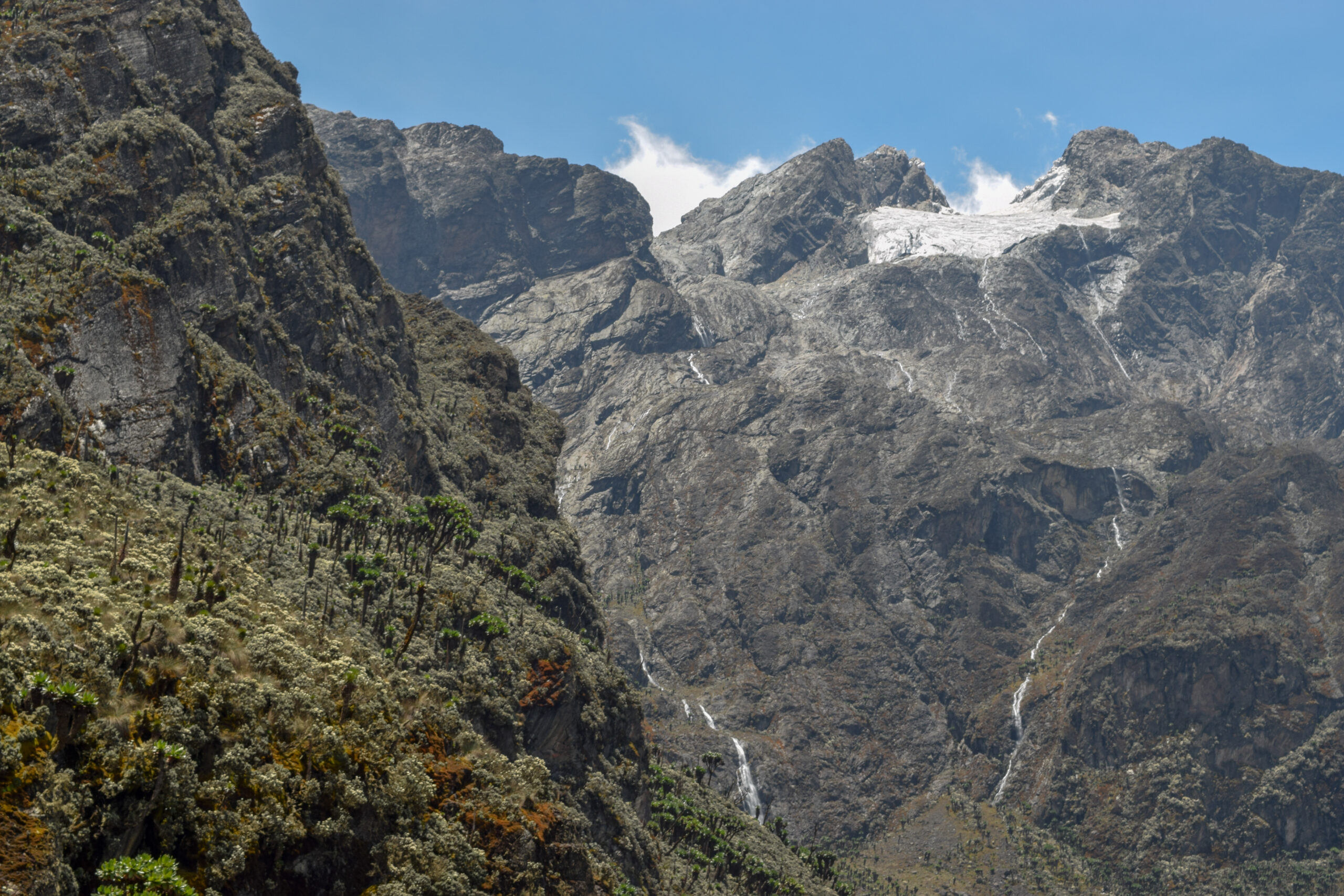
Mount Stanley (Margherita Peak): Africa’s Most Technical Standard Summit
Margherita Peak on Mount Stanley is Africa’s third-highest summit — but unlike Kilimanjaro or Mount Kenya’s trekking routes, it demands crampons, a rope, an ice axe and fixed-line work on a retreating equatorial glacier deep in the Rwenzori “Mountains of the Moon.” This is the complete 2026 guide: routes, summit day, difficulty, cost, season and the skills you need first.
Mount Stanley’s Margherita Peak (5,109 m / 16,763 ft) is Africa’s third-highest mountain and the highest point in both Uganda and the DR Congo, which share its summit. It rises in the glaciated Rwenzori Mountains — the “Mountains of the Moon” — and is Africa’s most technical standard summit, requiring glacier travel and fixed-line climbing rather than a pure trek.
Africa’s third-highest peak — and the one that actually requires mountaineering skills, not just fitness.
What it is: a 7–10 day glaciated expedition to 5,109 m across the Uganda/DRC border, finishing with crampons, a rope and fixed lines on the Stanley Plateau and summit ridge.
Why it’s special: permanent equatorial glaciers, near-zero crowds, and the crown jewel of the “Africa Triple Crown” (Kilimanjaro, Mount Kenya, Mount Stanley). It feels like a genuine expedition, not a tourist trek.
The catch: it is not a first African mountain. The weather is relentlessly wet, the terrain is mud-glacier-rock-ice, and you need prior alpine training. Do Kilimanjaro and Mount Kenya first.
The mountain: Margherita Peak in the Mountains of the Moon
The highest point of the Rwenzori, shared by two countries.
Mount Stanley is the highest massif in the Rwenzori Mountains, the fabled “Mountains of the Moon” on the border between Uganda and the Democratic Republic of the Congo. Its highest summit, Margherita Peak, reaches 5,109 metres (16,763 feet) — making it the third-highest mountain in Africa, after Kilimanjaro (5,895 m) and Mount Kenya (5,199 m), and the highest point in both Uganda and the DR Congo, which share the summit on the international border.
What sets the Rwenzori apart from Africa’s other high peaks is water and ice: this is one of the few places on the equator with permanent glaciers. The range is perpetually wet — bogs, mist and rain define the approach — and the summit is reached over genuine glacier terrain, not a dry trekking trail.
Why Mount Stanley is harder than it looks
Lower than Kilimanjaro, but far more demanding — here’s the comparison climbers need.
| Comparison | Kilimanjaro | Mount Stanley |
|---|---|---|
| Elevation | 5,895 m | 5,109 m |
| Technical skills | None on standard routes | Crampons, rope, ice axe, fixed lines |
| Main challenge | Altitude and summit night | Weather, glacier, mud, remoteness, altitude |
| Typical duration | 6–9 days | 7–10 days |
| Best first African peak? | Yes | No — better after prior alpine training |
The takeaway: Kilimanjaro is higher but non-technical; Mount Stanley is lower but a real mountaineering objective. The wet Rwenzori environment — deep mud on the approach, then glacier, wet rock and ice up high — is what makes it Africa’s most technical standard summit.
Routes: Central Circuit vs Kilembe Trail
Two main Ugandan approaches to Elena Hut and the summit.
The two established routes both run through Uganda’s Rwenzori Mountains National Park and converge on Elena Hut, the high camp below the Stanley Plateau from which the summit is attempted.
Central Circuit Trail
The classic and most popular route — a multi-day loop through the Bujuku and Mubuku valleys, passing the range’s famous bogs and giant-lobelia scenery before reaching Elena Hut. It’s the standard choice for a Margherita Peak attempt and offers the traditional Rwenzori experience.
Kilembe Trail
The scenic southern approach, starting near Kilembe. Often praised for its varied terrain and views, it provides an alternative ascent and is sometimes combined with the Central Circuit for a traverse. Both require the same technical summit day from Elena Hut.

Summit day from Elena Hut
The technical heart of the climb — a pre-dawn start across glacier and fixed ropes to Margherita.
| Stage | Approx. timing | What happens |
|---|---|---|
| Wake-up | Midnight–1:00 a.m. | Breakfast, gear check, harness, helmet, crampons, rope, headlamp and waterproof layers |
| Glacier approach | Pre-dawn | Move from Elena Hut toward the Stanley Plateau; conditions may include mud, rock, ice and snow |
| Stanley Plateau | Early morning | Roped glacier travel with crevasse awareness; route choice depends on current ice conditions |
| Summit ridge | Morning | Fixed ropes, wet rock and exposed sections lead to Margherita Peak |
| Descent | Late morning–afternoon | Descend carefully before weather, fatigue and softening snow increase risk |
Who should climb Mount Stanley?
The honest answer: not first-timers. This is a mountain for climbers with prior alpine skills.
Mount Stanley suits climbers who already have glacier travel, crampon and rope-team experience and want a genuine expedition rather than a guided trek. It is a poor choice as a first big mountain — the wet conditions, technical summit day and remoteness punish anyone still learning basic skills. The ideal candidate has done Kilimanjaro for altitude and Mount Kenya for rock and scrambling, and is ready to combine both on glaciated terrain.
Mount Stanley in the Africa Triple Crown
The logical progression through Africa’s three great high peaks — and why Stanley comes last.
| Peak | Elevation | What it teaches | Best role |
|---|---|---|---|
| Kilimanjaro | 5,895 m | Altitude, pacing, long summit night | First big African mountain |
| Mount Kenya | 5,199 m | Rock, scrambling, route choice, African alpine terrain | Technical bridge |
| Mount Stanley | 5,109 m | Wet expedition climbing, glacier travel, fixed lines | Triple Crown completion |
Each teaches something the next requires. Kilimanjaro builds altitude experience; Mount Kenya adds rock and scrambling; Mount Stanley combines everything on glaciated terrain. Climbed in that order, they form a natural progression — which is exactly why Stanley belongs last. See the full ranking of Africa’s highest peaks for the wider context, and compare it with southern Africa’s non-technical high point, Thabana Ntlenyana.
Costs, permits & logistics
What a Mount Stanley expedition actually costs, and how long to budget.
| Cost item | Typical range | Notes |
|---|---|---|
| Guided mountain package | $1,800–$3,500+ | Varies by route, duration, group size, operator, gear inclusion and park fees |
| Total trip budget | $3,500–$6,500+ | Flights, hotels, transfers, insurance, tips and gear can double the base climb price |
| Trip length | 12–15 days | Allows for international travel, road transfers, 7–10 days on the mountain and a weather buffer |
| Insurance | Required | Must cover high-altitude trekking, technical mountaineering, evacuation and Uganda/DRC logistics |
Note the gap between the climb price and the true trip cost: the guided package is only part of it, and flights, insurance, gear and buffer days routinely push the all-in figure toward $5,000–$6,500. Mountaineering-grade insurance covering technical climbing and evacuation is non-negotiable in this remote setting.
Best time to climb Mount Stanley
The Rwenzori is wet year-round — the goal is the least-wet window, not a dry one.
| Season | Verdict | Why |
|---|---|---|
| December–February | Best overall | Often the most reliable window, though still wet by normal mountain standards |
| June–August | Good secondary window | Popular for international climbers and often usable for summit attempts |
| March–May | Avoid if possible | Long rains, deeper mud, higher route-disruption risk |
| September–November | Often difficult | Short-rain pattern; visibility and trail conditions can deteriorate |
Safety, route changes & glacier retreat
The standard route is not fixed — the ice that defines it is disappearing.
Mount Stanley’s glaciers are retreating rapidly, and that steadily changes the summit route: sections that were once straightforward glacier travel become exposed rock, crevasses open in new places, and the safest line shifts year to year. A trip report or photo from a few seasons ago may no longer reflect current conditions. This is why current, local information matters more here than on a stable trekking peak — confirm the present state of the Stanley Plateau and summit ridge with your operator before committing, and treat glacier competence and fixed-line skills as mandatory, not optional.
Mount Stanley FAQ
Direct answers on height, difficulty, season, skills and where it fits.
How high is Mount Stanley's Margherita Peak?
Margherita Peak on Mount Stanley is 5,109 meters (16,762 feet) high. It is the third-highest mountain in Africa after Kilimanjaro and Mount Kenya, and the highest point in both Uganda and the Democratic Republic of the Congo.
Is Mount Stanley harder than Kilimanjaro?
Yes. Kilimanjaro is a non-technical high-altitude trek, while Mount Stanley requires glacier travel, crampons, an ice axe, roped movement, fixed-line technique and scrambling on wet rock. Stanley is lower than Kilimanjaro but more technical, wetter, more remote and harder to manage safely.
What is the best time to climb Mount Stanley?
The best windows are December to February and June to August. The Rwenzori Mountains are wet year-round, so these are relatively drier seasons rather than true dry seasons. Climbers should still expect rain, mud, fog and summit snow or ice conditions.
How many days does Mount Stanley take?
Most Margherita Peak climbs take 7 to 9 days on the mountain via the Central Circuit, or 8 to 10 days via the Kilembe Trail. Including international travel, road transfers and weather buffer, plan roughly 12 to 15 days.
Do you need technical climbing experience for Margherita Peak?
Yes. You should be comfortable with crampons, ice axe use, basic rope travel, wet scrambling, fixed lines and long summit days. A strong Kilimanjaro trek alone is not enough preparation unless you also add glacier and alpine-skills training.
Why is Mount Stanley called the Mountains of the Moon?
The Rwenzori Mountains are associated with the ancient 'Mountains of the Moon' described by Ptolemy. The name reflects the range's long historical reputation as equatorial snow mountains connected with the headwaters of the Nile.
Is Margherita Peak still glaciated?
Yes, but the Rwenzori glaciers are retreating rapidly. Margherita Peak still involves glacier travel, but route conditions can change quickly as ice thins, crevasses shift and more rock is exposed.
Should Mount Stanley be your first African mountain?
Usually no. Most climbers should start with Kilimanjaro, then add Mount Kenya or another technical/glaciated objective before attempting Mount Stanley. Stanley is best as an African Triple Crown completion peak or a unique equatorial glacier objective for climbers with alpine skills.
How we researched this
Elevation and geography are compiled from national and geographic references; route, glacier, summit-day, cost, permit and season details from Rwenzori Mountains National Park sources and licensed operators. Where accounts differ, this page follows the more conservative reading of difficulty and conditions, consistent with the mountain’s technical, wet reputation.
Research position: Global Summit Guide has not climbed Mount Stanley; this is a research-based guide, not a first-hand trip report. Reviewed each season; last updated July 28, 2026. Equatorial glaciers are retreating and the route changes — verify current conditions, permits and prices before travel.
The crown jewel of the Africa Triple Crown
Mount Stanley is Africa’s third-highest peak and its most technical standard summit — a wet, glaciated Rwenzori expedition for climbers ready to move on rope and crampons. Build your skills on Kilimanjaro and Mount Kenya first, then complete the crown.
See Africa’s Highest Peaks Mount Kenya GuideMount Stanley & the High Peaks of Africa
The Rwenzori’s glaciated Margherita Peak is one of Africa’s great summits. Explore the continent’s high peaks below.
Was this helpful?
🏔Related peaks nearby
🧭Explore & compare
Global Summit Guide is an independent mountaineering resource founded in 2026. The team combines first-hand trekking and climbing experience with in-depth research and professional health and nutrition review to help climbers choose objectives, prepare properly, and stay safe.
Health, altitude, and nutrition content is reviewed by Taylor Ludlow (Registered Nurse) and Brigg Hoopes (Nutritionist).
What We Don't Know Yet
Mountain information changes quickly. This box explains the limits of what this page can responsibly promise.
- Route conditions, trailhead access, crevasse exposure, stream crossings, and rescue access may vary from published planning guidance.
- Route conditions, snowpack, closures, and weather can change quickly after this page is updated.
- Permit rules, fees, quotas, and reservation windows may change between review cycles.
- Operator availability, pricing, guide ratios, and cancellation terms can change by season.
- Your fitness, altitude response, risk tolerance, and experience level may change what is safe or realistic.
Verify current conditions with official land managers, guide services, local forecasts, and current route reports before booking or climbing.
Mountaineering, rock and ice climbing, glacier travel, and high-altitude activity are inherently dangerous and can result in serious injury or death. The information on Global Summit Guide is provided for general informational and educational purposes only and is not a substitute for professional instruction, qualified guiding, proper equipment, or your own judgment and experience.
Route conditions, weather, snowpack, permits, regulations, and hazards change constantly and may differ from what is described here. Details may be incomplete, out of date, or contain errors. Always verify current information with local authorities, certified guides, and official sources before making any decision in the mountains.
Nothing on this site is medical, legal, or financial advice. Our fitness, acclimatization, altitude, and nutrition content is general in nature; consult a qualified physician before beginning any strenuous exercise program or exposing yourself to high altitude.
You are solely responsible for your own safety and decisions. To the fullest extent permitted by law, Global Summit Guide and its team accept no liability for any loss, injury, damage, or expense arising from use of, or reliance on, this information. By using this site you acknowledge these risks and accept these terms.
Some links on this site may be affiliate links. If you buy through them we may earn a small commission at no extra cost to you; this never affects our recommendations.
Global Summit Guide recommendation path
Next Best Mountain to Research
Use these recommendations to continue the right planning path instead of stopping on one page.
Use current permit, weather, route, and operator information before booking or climbing.
Search Flights, Hotels & Rental Cars
Have the mountain or destination picked? Use Expedia to compare the flights, lodging and rental cars that fit your actual trip dates. For mountain travel, consider arriving early enough for delays and adding a buffer night after the climb before a fixed flight home.
Compare current flight, hotel and car options.
Affiliate disclosure: Global Summit Guide may earn a commission if you book through this link, at no additional cost to you.