Global Summit Guide logo featuring mountain imagery, symbolizing hiking and mountaineering resources for trip planning and safety.

Category: Climbing News

  • Autumn Himalaya 2026 Preview: The Season, Peaks & Permits

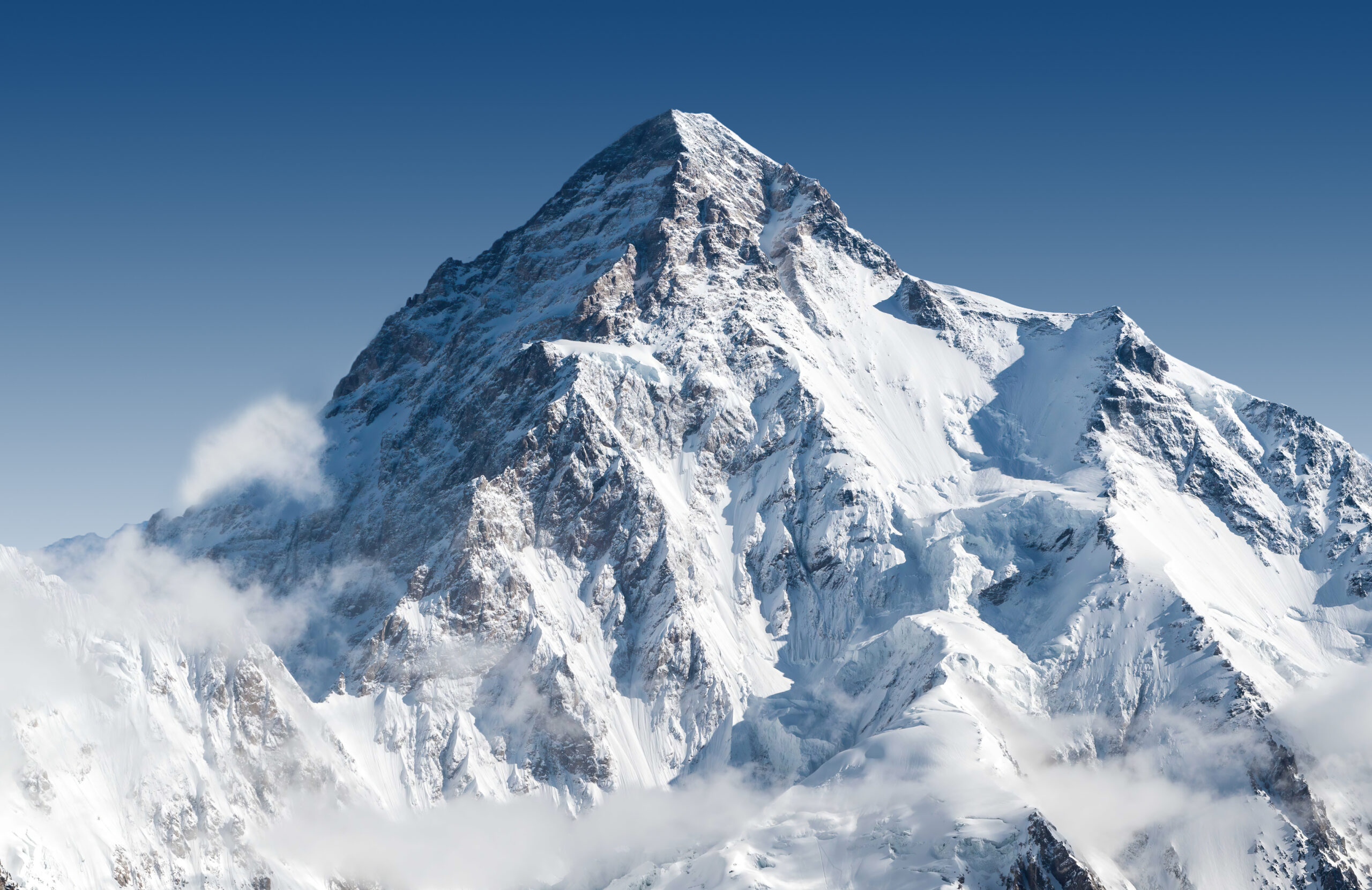
    Snow-covered Mount Everest peak and surrounding landscape illustrating high-altitude climbing challenges.
    Climbing News · Season Preview · Autumn 2026

    Autumn Himalaya 2026 Preview: The Season, Peaks & Permits

    As the Karakoram season winds down, the Himalaya’s second act is coming into view. Post-monsoon autumn brings stable skies, quieter mountains, and a very different cast of peaks — Manaslu, Cho Oyu, Dhaulagiri, and the technical jewel Ama Dablam. Here’s what the autumn 2026 season looks like and how to plan for it.

    The season, in brief

    Post-monsoon Sept–Nov: Manaslu leads the 8000ers, Ama Dablam owns the technical scene.

    Autumn is Nepal’s second major season. The monsoon clears in late September, October delivers the most stable weather, and November turns cold and clear. Manaslu (8,163 m) is the autumn 8,000er of choice — now the season’s most popular expedition and a common Everest warm-up — while Ama Dablam (6,812 m) is the iconic November technical peak.

    Cho Oyu and Dhaulagiri round out the 8,000m options. Permits vary sharply by peak and a licensed guide is mandatory in Nepal — the full fee-by-peak detail is in our permits & fees guide.

    Sep–NovAutumn season
    8,163 mManaslu (lead 8000er)
    6,812 mAma Dablam (technical)
    OctoberMost stable weather
    2ndOf Nepal’s two seasons

    Autumn 2026 Season Snapshot

    As of Jul 17, 2026 · forward-looking · confirm permits before booking
    Lead 8000er

    Manaslu most popular; Everest prep

    Technical classic

    Ama Dablam November prime window

    Also in season

    Cho Oyu · Dhaulagiri serious 8000m options

    Rule

    Guide mandatory in Nepal since Apr 2023

    When the season runs

    Post-monsoon — the mirror image of spring.

    The autumn season opens as the summer monsoon retreats, usually in late September, and runs through November. October is the sweet spot: the air is washed clean, skies are stable, and the peaks are in good condition. By November the weather stays clear but turns colder with shorter days — perfect for technical peaks like Ama Dablam, tougher for the big 8,000ers as winter approaches. It’s Nepal’s second climbing season, and for several peaks it’s the best one.

    The peaks in play

    A different cast from the spring Everest circus.

    PeakHeightAutumn role
    Manaslu8,163 m (8th)The season’s headline 8,000er — most popular autumn expedition, common Everest prep
    Cho Oyu8,188 m (6th)Traditional autumn 8,000er, mostly from the Tibet side (access can vary year to year)
    Dhaulagiri8,167 m (7th)Serious, quieter, avalanche-exposed — a step up in commitment
    Ama Dablam6,812 mThe technical jewel — “the Matterhorn of the Himalaya,” prime in November

    Autumn Everest and Lhotse attempts do happen but are rare next to the spring season, when most of the commercial machine operates. If spring is about Everest, autumn is about Manaslu and Ama Dablam. See where these peaks rank in our 8,000ers ranked by difficulty and the full 14 eight-thousanders guide.

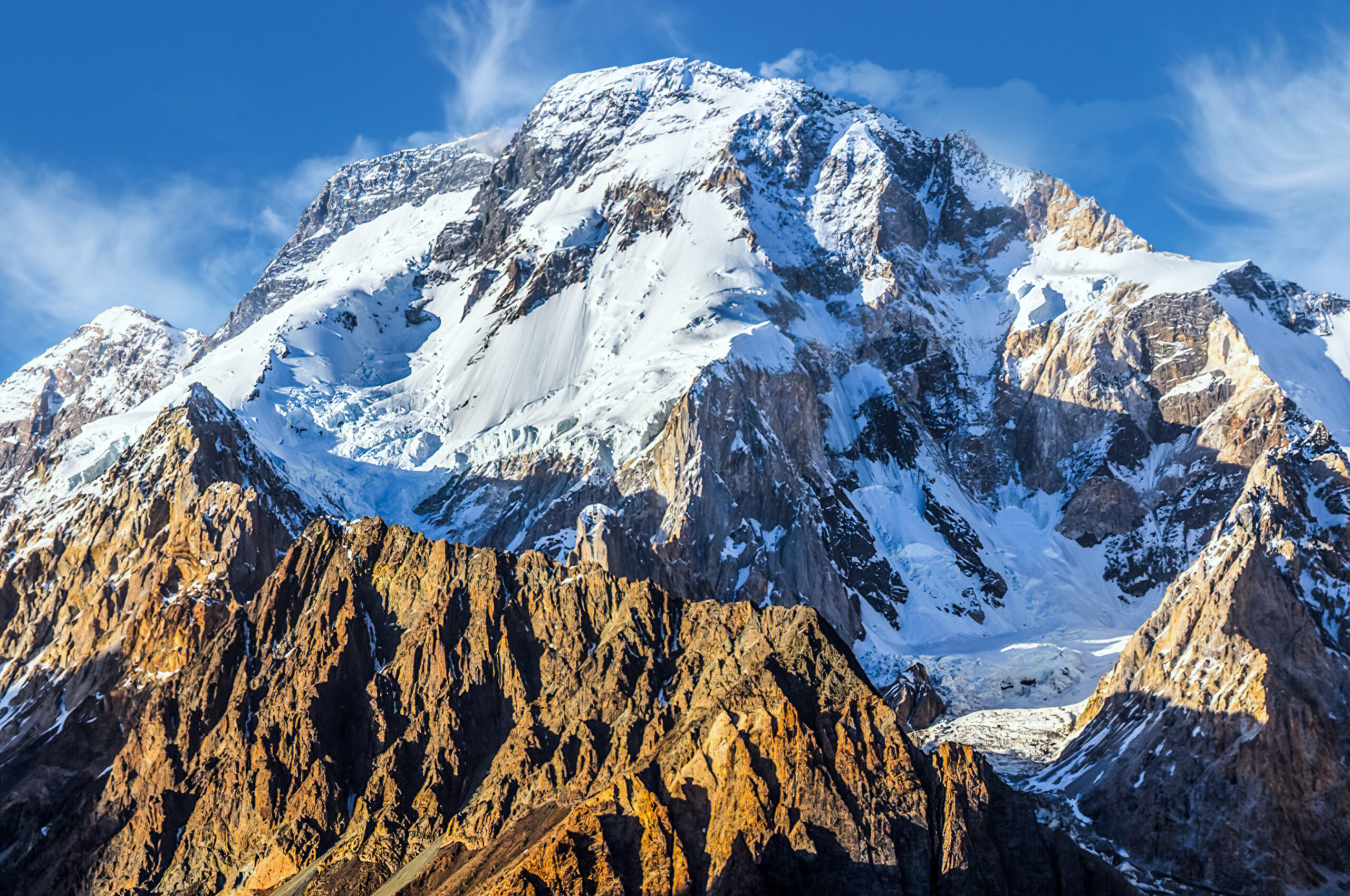
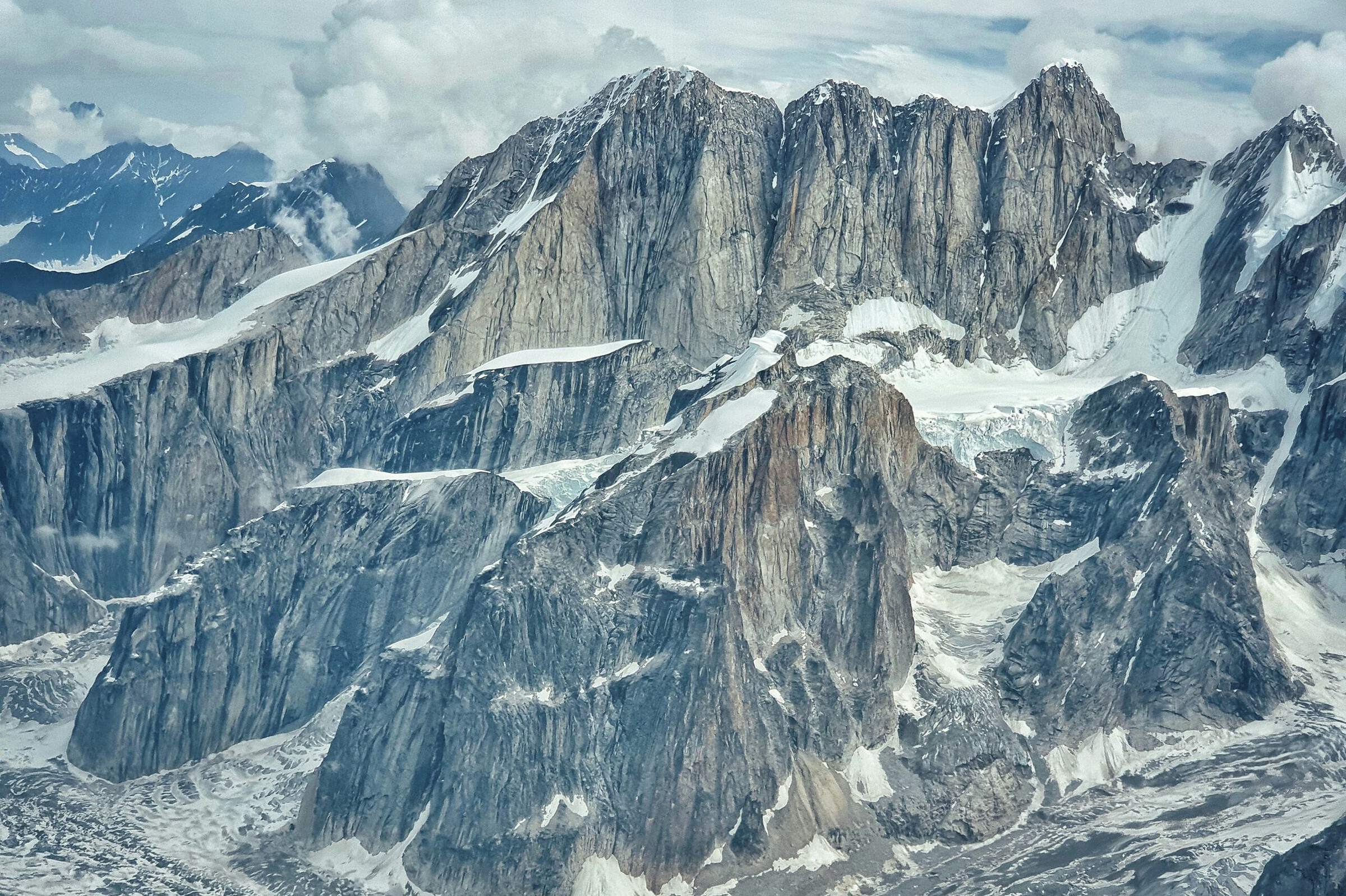
    Aerial view of snowy mountain peak with climbers, labeled climbing routes, and high-altitude terrain, relevant to Manaslu expedition logistics and climbing safety.
    The autumn 8,000er. Manaslu (8,163 m) has become the most popular autumn expedition peak, widely used as an Everest warm-up. Its accessibility relative to Everest and K2 — and an autumn permit far cheaper than Everest’s — make it the anchor of the post-monsoon season.

    Permits & costs

    Wildly different by peak — and a guide is mandatory.

    Autumn permit and cost planning is peak-specific. As a rough guide, expedition royalties run to roughly Cho Oyu ~$5,500, Manaslu ~$1,800, and Annapurna ~$3,600, with Everest at about $11,000 — all separate from guide, operator, and logistics costs. Since April 2023, Nepal has required a licensed local guide for foreign climbers, and major expedition peaks must be booked through registered operators.

    Full fee breakdown lives on the permits page. These are headline figures for orientation only. For the complete, peak-by-peak permit and fee detail — including trekking-peak permits, conservation fees, and the guide rules — see our mountaineering permits & fees guide. Confirm current rates with your operator before booking.

    What to watch in 2026

    Three storylines heading into the season.

    StorylineWhy it matters
    Manaslu crowdsAs the go-to Everest warm-up, Manaslu draws big autumn numbers — expect fixed-rope traffic and a busy Base Camp
    Cho Oyu accessCho Oyu is climbed mainly from Tibet; China-side access and permit conditions can shift year to year, so confirm early
    Ama Dablam volumeNovember’s technical classic keeps growing in popularity — book huts, permits, and guides well ahead
    This is a preview, not a live report. Published mid-July ahead of the season, this page previews what autumn 2026 is shaping up to be. Summit results, conditions, and any permit changes will firm up from September — we’ll refresh as the season opens. Always verify current permits, operator terms, and access with your operator before committing.

    Planning your autumn climb

    Book early, match the peak to your experience.

    Autumn’s popularity means the best operators, guides, and Ama Dablam permits go early — plan several months out. Match the objective honestly to your experience: Manaslu is an accessible-but-serious 8,000er and a logical Everest stepping stone; Ama Dablam is a genuine technical climb despite its lower height; Dhaulagiri is a step up in commitment and objective hazard. Whatever you choose, build the altitude and skills first.

    Planning a Nepal trip? Compare flights and lodging via the Global Summit Guide Expedia travel shop. Disclosure: affiliate link; we may earn a small commission at no extra cost to you. Permits and guides are booked directly with registered Nepali operators.

    Autumn Himalaya FAQ

    The questions people search heading into the autumn season.

    When is the autumn Himalaya season?

    Roughly September to November, after the monsoon. October brings the most stable weather; November is colder and clearer. It’s Nepal’s second major season and prime time for Manaslu and Ama Dablam.

    Which 8000ers are climbed in autumn?

    Mainly Manaslu (the headline peak), Cho Oyu, and Dhaulagiri. Autumn Everest attempts are rare compared with spring. See our 8,000ers ranked by difficulty.

    Why is Ama Dablam so popular in autumn?

    At 6,812 m it offers serious, exposed technical climbing without 8,000m altitude, with November its prime window and stable weather above the Everest trekking route. It’s the season’s iconic technical objective.

    How much do autumn permits cost?

    By peak: roughly Cho Oyu ~$5,500, Manaslu ~$1,800, Annapurna ~$3,600, Everest ~$11,000 — plus guide and logistics. Full detail in our permits & fees guide.

    Is autumn better than spring?

    Different. Spring is the main 8,000m and Everest season; autumn is more stable early, quieter, and ideal for Manaslu and Ama Dablam, but colder heading into winter.

    How we built this preview

    • The standard Himalayan season calendar (post-monsoon timing and weather patterns)
    • Nepal Department of Tourism permit structures and the April 2023 guide requirement
    • Operator reporting on autumn peak popularity and typical itineraries
    • Headline permit figures cross-checked against our permits & fees guide (detailed tables there)
    • Forward-looking preview — to be refreshed with conditions and results from September

    Last updated: July 17, 2026. Next update: season open (September 2026). A planning preview, not a live conditions report — verify permits and access with your operator.

    About the author

    Travis Ludlow · Founder & Head of Research · Research: Walker Ludlow

    Travis leads research at Global Summit Guide, tracking the world’s climbing seasons across the year. This autumn preview complements our live Karakoram summer dispatches — as one season closes, it points you toward the next.

    Read the editorial mission and team background.

    One season ends, the next begins

    As the Karakoram summer closes, the autumn Himalaya opens. Line up your peak, permit, and window now — and follow the season with us as it unfolds.

    Permits & Fees 8,000ers by Difficulty

    Was this helpful?

    Yes
    No
    Thanks for your feedback!
  • Karakoram Weather Window Explained: How Teams Time a Summit Push

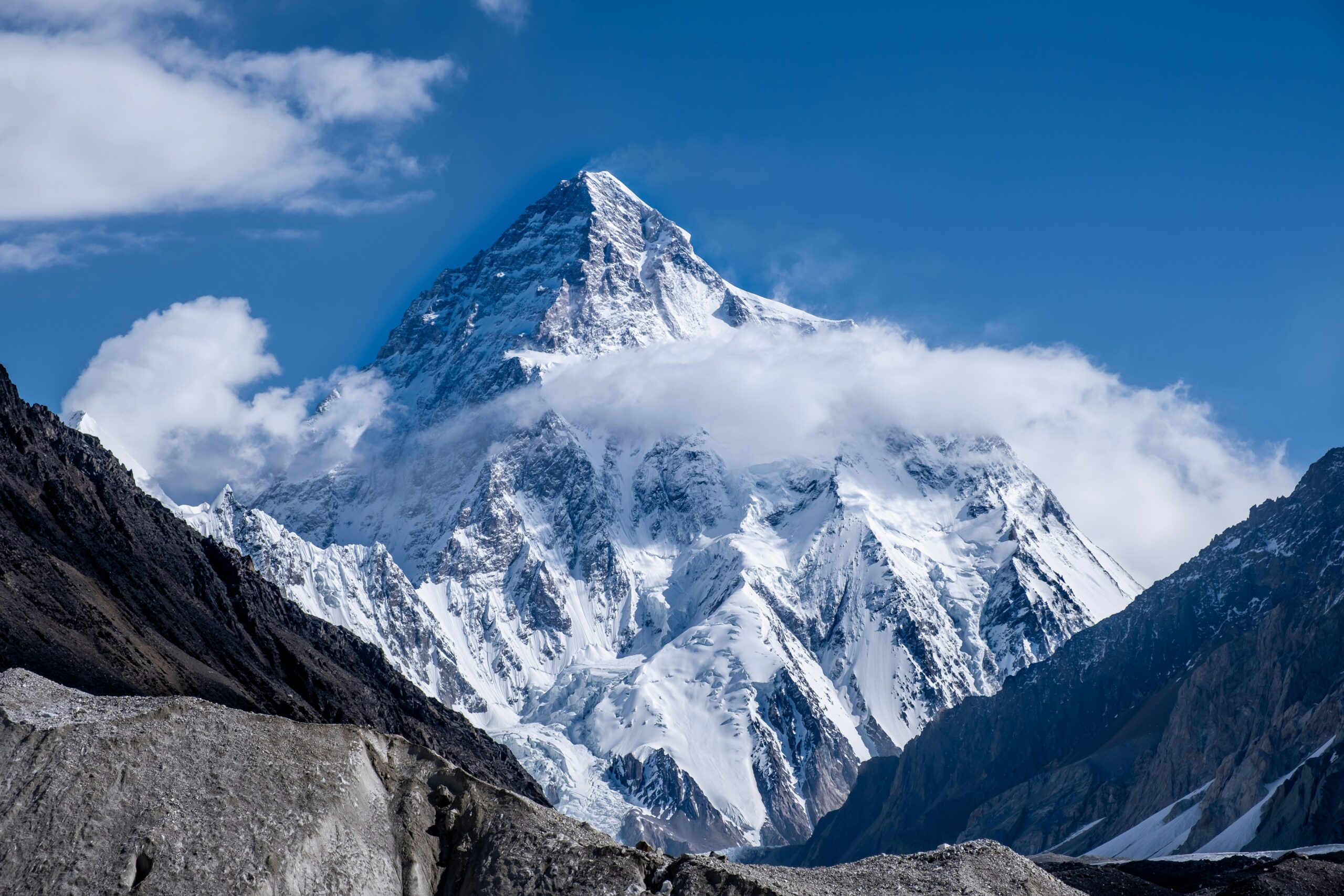
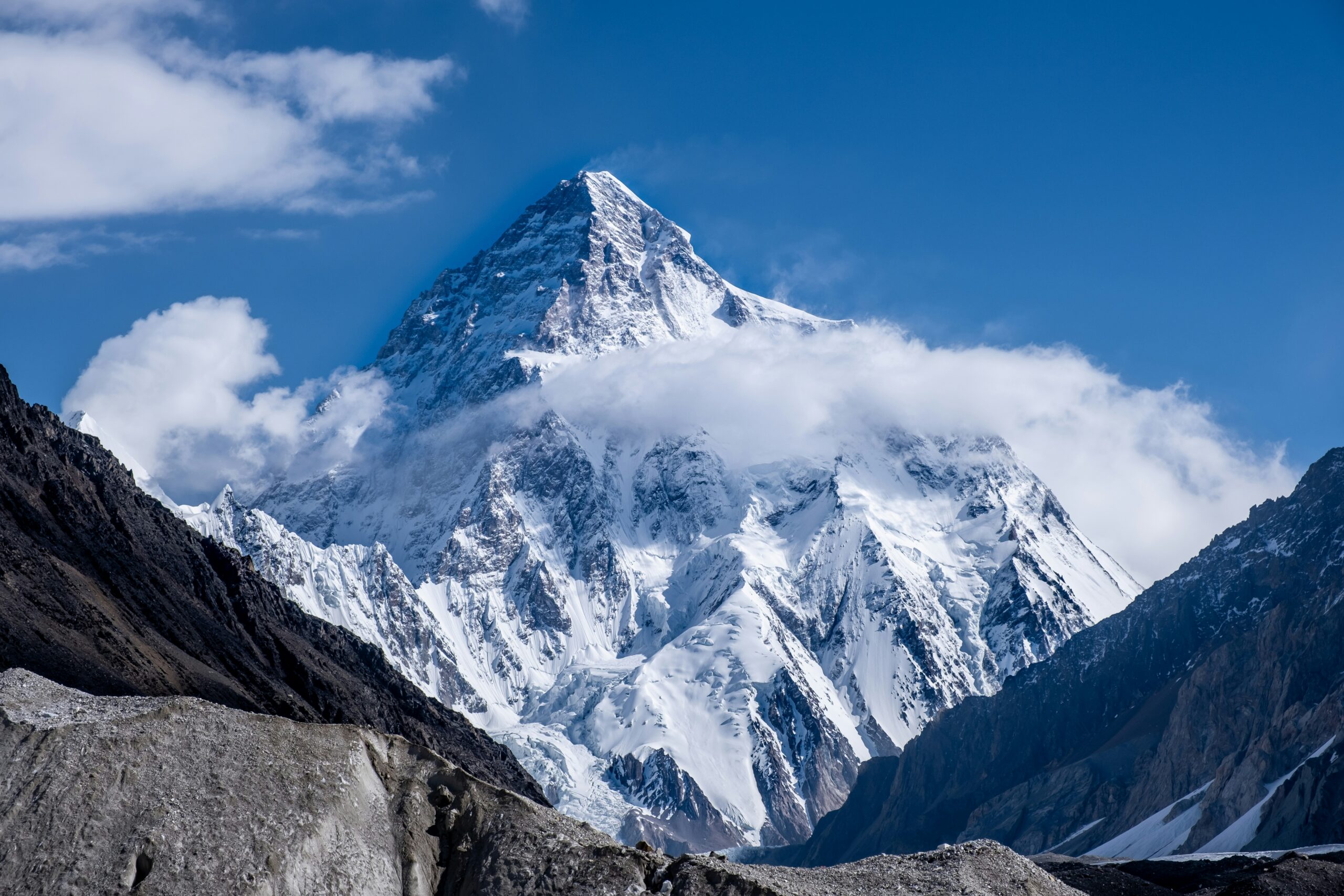
    Majestic view of K2, the Savage Mountain, showcasing its snow-capped peak and surrounding rugged terrain under a clear blue sky, emphasizing the challenges climbers face in high-altitude conditions.
    🇵🇰 Karakoram · Explainer · Summit Window

    Karakoram Weather Window Explained: How Teams Time a Summit Push

    On the 8,000ers of Pakistan, the whole season comes down to a handful of days. Here’s what opens that window, why it’s so short and unreliable, and how expedition teams read the sky to time a summit push on K2 and its neighbours.

    🌦️ The window, in brief

    Every Karakoram 8,000m season hinges on one thing: a short, unreliable weather window in late July. Two giant weather systems — the retreating monsoon and the migrating jet stream — briefly align to drop the wind and precipitation over the peaks. Statistically, nearly all K2 summits fall between about July 20 and August 10, and the true window is often just a few days inside that.

    Right now, in mid-July 2026, teams across K2, Broad Peak, and the Gasherbrums are doing exactly what this article describes: acclimatizing, pre-positioning, and watching the forecast. Follow the live picture in our K2 2026 tracker and Broad Peak & Gasherbrum dispatch.

    Jul 20–Aug 10
    Prime window
    ~−20 °C
    Summit temp (in window)
    39%
    Years with no K2 summits (’86–’16)
    1954
    First K2 summit (Jul 31)

    Why the window exists

    Two weather systems, one brief truce.

    The Karakoram sits further north and deeper inland than the Himalaya, which makes its climate more continental and more violent. For most of the year, the peaks are scoured by jet-stream winds — hurricane-force gusts that make the upper mountain unclimbable and drive off-season summit temperatures toward −60 °C. The season is defined by the brief period when those winds lift.

    Two systems govern it. First, the South Asian monsoon: through June and July, warm, moist air drives north, bringing rain low and heavy snow high. Then, near the end of July, the polar jet stream migrates north and the monsoon slides north with it toward the Tibetan highlands, while the subtropical jet shifts well south of the Karakoram. For a short spell, the peaks are left in relative calm — lower wind, less precipitation, and “manageable” cold around −20 °C on the summit. That truce is the window.

    When it opens

    The last two weeks of July, give or take.

    The best Karakoram climbing weather is typically the last two weeks of July, sometimes starting as early as mid-July and running into early August. It’s not a new discovery — the Italians made the first ascent of K2 on July 31, 1954, squarely inside it, and the pattern has held ever since. Statistically, nearly every K2 summit in history has landed between roughly July 20 and August 10.

    Early–mid JulyMonsoon still active — snow high, rain low. Teams trek in, acclimatize, and fix the lower route.
    ~July 20 onwardJet stream lifts, monsoon retreats. The prime window opens — a few stable days at a time.
    Into early AugustWindow can persist, but warming raises rockfall and instability. Later is riskier.

    Why it’s short & unreliable

    Two systems have to line up — and often don’t.

    Because the window depends on two large systems briefly aligning, it’s fragile. If the monsoon lingers or the jet stream dips back, the window slams shut. The numbers are sobering: between 1986 and 2016, 39% of years — 12 of 30 — produced no K2 summits at all because the weather never cooperated in the back half of July. A whole season of effort can end without a single summit.

    Why forecasts fail hereThe Karakoram is a forecaster’s nightmare: remote, high, and crowded with giant peaks that spin up local wind tunnels and microclimates — including the notorious localized “K2 cloud” that can trap climbers in the high camps. Global models struggle at this altitude and resolution, so forecasts several days out are frequently wrong. Teams buy specialist high-altitude forecasts and still treat any window as provisional until it actually arrives.
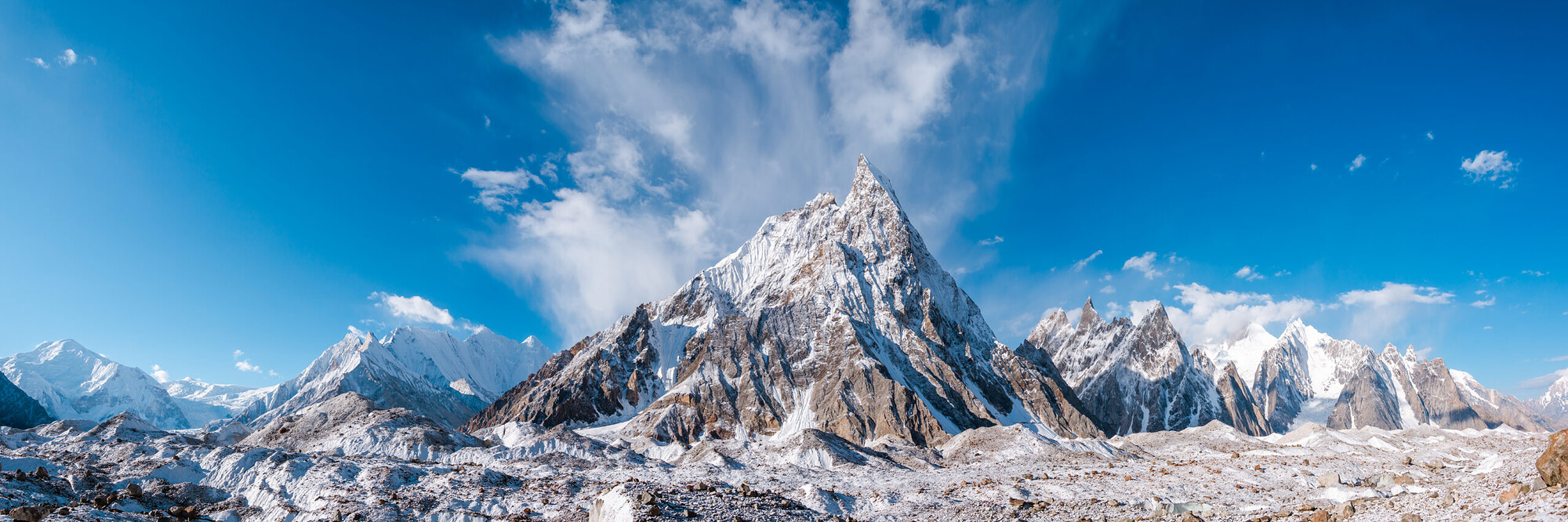
    Gasherbrum I peak and glacier in the Karakoram range, Pakistan climbing expedition.
    The trail-breaking problem. A window in the sky isn’t enough — someone still has to open the route. After heavy monsoon snow, rope-fixers must break trail through deep snow above the high camps before anyone can push to the top, which can eat the first day or two of a precious window.

    How teams time a push

    Acclimatize early, wait, then move fast.

    The choreography is remarkably consistent across the Karakoram’s big peaks:

    1 · AcclimatizeComplete rotations to the high camps early in the season, sleeping progressively higher to adapt — done before the window, not during it.
    2 · Pre-position & watchReturn to Base Camp, rest, and monitor multi-model forecasts, waiting for a stable multi-day window to appear.
    3 · Fix the routeRope-fixers break trail and fix lines through the upper mountain — the deep-snow section above the high camps is the crux of opening the route.
    4 · The pushWhen the window and the fixed route align, teams move fast to the high camps and launch a night-time summit bid, aiming to top out in the morning and descend before it closes.
    Who the window punishes mostAs on Everest, the climbers with the least margin are those going without supplemental oxygen. They benefit from fixed ropes and a broken trail, but they must move fast and avoid the traffic jams that form when everyone launches into the same narrow window — lingering high and cold without oxygen is how no-O2 attempts turn dangerous. It’s one reason the compressed, single-window nature of the Karakoram season carries real risk. See where these peaks rank in our 8,000ers ranked by difficulty.

    Live Karakoram conditions

    The window, in real time — watch it build or break.

    Here’s the concept in action. The 7-day outlook below is modelled data for the K2 region — a general indicator, not a summit-day forecast (teams pay for specialist high-altitude models before committing). Watch for a run of calm, dry days: that’s the shape of a window forming.

    K2 region (~Base Camp, Karakoram)

    Loading live data…
    Fetching the latest forecast…
    A general indicator only. This is modelled data near Base Camp altitude; the 8,000m summits are colder and far windier. The window is defined at the summit, not the valley — which is exactly why teams pay for specialist high-altitude forecasts.

    Reading the window yourself

    What experienced climbers actually watch.

    You don’t need to be a meteorologist, but you do need to know what matters. On the 8,000ers, the two variables that define a window are summit-altitude wind (ideally dropping below ~30–40 km/h) and precipitation (none, ideally, with settled snow). Temperature matters less than wind — it’s the wind that kills. Climbers cross-reference several models rather than trusting one, and treat a forecast more than three or four days out as a rough guide, not a promise.

    🧭 Go deeper

    Frequently asked questions

    When is the Karakoram summit window?

    Roughly the last two weeks of July into early August — statistically nearly all K2 summits fall between about July 20 and August 10, opened by the monsoon retreating and the jet stream migrating north.

    Why is the window so short?

    It depends on two big systems briefly aligning. When the monsoon slides north and the jet stream lifts off the peaks, wind and precipitation drop; when either shifts back, the window closes — often after just a few days.

    Why are forecasts unreliable?

    The Karakoram is remote, high, and full of giant peaks that create local wind tunnels and microclimates like the “K2 cloud.” Global models struggle at this resolution, so multi-day forecasts are often wrong. See mountain weather for climbers.

    How do climbers time a push?

    Acclimatize early, then wait at Base Camp for a stable multi-day window with the route fixed high, then move fast to the high camps for a night-time summit bid — topping out in the morning and descending before it closes.

    How cold is it in the window?

    Around −20 °C on the summit — harsh but survivable — versus about −60 °C off-season, when jet-stream winds make the peak unclimbable.

    About this explainer

    The mechanics here — the monsoon and jet-stream interaction, the late-July window, and the historical summit statistics — are drawn from meteorological analysis of Karakoram summer weather and long-run summit records, and are evergreen. The current-season notes and the live widget reflect conditions as they change; for the day-to-day picture, follow our season trackers.

    This is an educational overview, not operational guidance. Real summit-push decisions rely on specialist high-altitude forecasts and experienced judgment on the ground.

    Travis Ludlow

    Founder & Head of Research, Global Summit Guide

    Travis leads research at Global Summit Guide, where the team tracks the world’s major climbing seasons and maintains guides to more than 500 peaks. This explainer sits alongside our live Karakoram dispatches — the theory here, the day-to-day reality there.

    Watch the window with us

    The theory is here; the drama is on the mountain. Follow the 2026 Karakoram season as teams read the sky and time their push on K2 and its neighbours.

    Follow the K2 season → Broad Peak & Gasherbrum →

    Was this helpful?

    Yes
    No
    Thanks for your feedback!
  • Nanga Parbat 2026 Season Wrap: Summits, Records & Ski Descent

    Nanga Parbat in Pakistan, focus of the 2026 season wrap
    2026 season record · Pakistan · Diamir & Rupal · updated August 11

    Nanga Parbat 2026 Season Wrap: Who Summited & What Happened

    Nanga Parbat opened Pakistan’s 8,000-metre summer with a concentrated commercial summit wave, delivered a historic ski descent and a 14×8000 completion, then stayed active into August through an ambitious Rupal Face project.

    Major summit waves verifiedMilestones sourced separatelyCommercial + alpine season distinguishedUncertainty disclosed

    Published July 11, 2026 · Updated August 11, 2026 · By Travis Ludlow

    8,126 mNanga Parbat
    Jun 30First Major Summit Wave
    Jul 18K Summit Wave
    Jul 314×8000 Completion
    Jun 30Bargiel Ski Descent
    Aug 6Rupal Project Ends
    By Travis Ludlow · Global Summit Guide Research
    Season retrospective · not a live dispatch
    Why this page changed after July 11: the original wrap was published while confirmations were still arriving and before the late Rupal Face project had finished. This August 11 version treats the page as a retrospective 2026 season record, not an early-July live update.
    The direct answer

    What Defined Nanga Parbat’s 2026 Season?

    The commercial season was concentrated on the Kinshofer Route on the Diamir Face, with the key summit activity clustered around June 30 through July 3. The season included Pakistan’s first 8,000m summit wave of the summer, Andrzej Bargiel’s historic ski descent, Kili Pemba Sherpa’s completion of all fourteen 8,000ers, an oldest-woman summit record, and a later alpine-style Rupal Face attempt that continued into August.

    • Main commercial route: Kinshofer / Diamir Face.
    • Major summit period: June 30–July 3.
    • Historic ski event: Andrzej Bargiel summited June 30 and skied the mountain without supplemental oxygen.
    • 14×8000 milestone: Kili Pemba Sherpa completed all fourteen on July 3.
    • Season character: relatively quiet, warm and strongly shaped by heat, soft snow and route timing.
    The season in sequence

    Nanga Parbat 2026 Timeline

    The commercial Diamir season and the later Rupal alpine project were related by weather, but they were very different climbing operations.

    1

    Early June — a quieter Pakistan season takes shape

    Pakistan’s 8,000m summer was lighter than some recent years. Several large international outfitters had reduced or skipped Pakistan programs, while Seven Summit Treks, 8K Expeditions, Imagine Nepal and independent/alpine teams still fielded Nanga Parbat projects.

    2

    June — route fixing and heat become central

    Commercial teams worked the Diamir side and standard Kinshofer line. Warm conditions slowed progress at times and increased concern about soft snow, rockfall and lower-route timing.

    3

    June 30 — first major summit wave

    A Seven Summit Treks team reached 8,126m after seasonal rope-fixing work. The summit group included Tao Hu, Antonina Samoilova, Mindaugas Satkauskas, Abbas Ali Mehdi and Nepali guides, and was reported as Pakistan’s first 8,000m summit wave of the summer.

    4

    June 30 — Andrzej Bargiel skis Nanga Parbat

    Andrzej Bargiel summited with Janusz Golab and then descended the mountain on skis without supplemental oxygen. Reporting by Red Bull and ExplorersWeb described it as the first continuous ski descent of Nanga Parbat.

    5

    July 1 — 8K Expeditions summit wave

    8K Expeditions documented a large summit group that included Liliya Ianovskaia, Naoko Watanabe, Iryna Karagan, Saori Eragaki, Valentyn Sypavin, Pavlo Sydrenko, Danylo Yasnyuk, Muhammad Ali, Keizo Konishi and a team of Nepali high-altitude guides.

    6

    July 3 — Kili Pemba completes all 14 eight-thousanders

    Imagine Nepal reported Kili Pemba Sherpa on the summit with Lakpa Chhiri Sherpa and Wang Zhong. The ascent completed Kili Pemba’s set of all fourteen 8,000-metre peaks.

    7

    July–August — the Rupal project continues

    Marek Holecek and Tomas Petrecek pursued an alpine-style project on the Rupal Face after the main commercial summit wave. Warmth, rain, avalanches, meltwater and rock movement repeatedly complicated the line.

    8

    August 6 — Rupal project ends

    The pair’s annual project ended without a new route. This matters because it shows the 2026 Nanga Parbat season did not truly end when the Diamir commercial teams began leaving in early July.

    Documented summit waves

    Who Summited Nanga Parbat in 2026?

    The strongest public record is operator-by-operator rather than one centralized official final list.

    Date / waveOperator / projectDocumented climbersWhy it mattered
    June 30Seven Summit Treks / KinshoferTao Hu, Antonina Samoilova, Mindaugas Satkauskas, Abbas Ali Mehdi, Dawa Sherpa, Dendi Sherpa, Lakpa Temba SherpaReported as Pakistan’s first 8,000m summit wave of the 2026 summer
    June 30Andrzej Bargiel projectAndrzej Bargiel, summit with Janusz GolabSummit followed by historic continuous ski descent; no supplemental oxygen
    July 18K ExpeditionsLiliya Ianovskaia, Naoko Watanabe, Iryna Karagan, Saori Eragaki, Valentyn Sypavin, Pavlo Sydrenko, Danylo Yasnyuk, Muhammad Ali, Keizo Konishi and Nepali guidesLarge multinational commercial summit wave; included oldest-woman record claim
    July 3Imagine NepalKili Pemba Sherpa, Lakpa Chhiri Sherpa, Wang ZhongKili Pemba completed all fourteen 8,000m peaks

    This table intentionally does not claim to be the official final person-by-person total for the season. Operator posts, expedition dispatches and specialist reporting document the major summit waves well, but there is no single centralized public record that resolves every duplicate, spelling variant, guide role and late confirmation in one place.

    That distinction makes the page more useful, not less. Readers can see the best-documented summit events without Global Summit Guide pretending that a provisional tally is an audited registry.

    Nanga Parbat mountain range with snow-capped peaks and rugged terrain, illustrating high-altitude climbing challenges associated with 8,000m peaks.
    June 30 · one of the season’s defining stories

    Andrzej Bargiel Summited — Then Skied Nanga Parbat.

    The ski descent turned an already important summit day into one of the defining mountaineering stories of Pakistan’s 2026 summer.

    A different style from the commercial wave

    Why Bargiel’s Descent Belongs in the Season Record

    The achievement was not simply another summit on the Kinshofer traffic calendar.

    Andrzej Bargiel reached Nanga Parbat’s summit on June 30 with Janusz Golab and then descended the mountain on skis without supplemental oxygen. Red Bull described the descent as the first fully continuous ski line recorded on Nanga Parbat, while ExplorersWeb also reported the complete ski descent.

    The significance is partly stylistic. A commercial summit wave depends on fixed lines, team logistics and shared infrastructure; a high-altitude ski project must also solve snow quality, continuity, route transitions and descent timing. The same warm season that complicated climbing conditions could create both opportunities and hazards for a skier depending on aspect and hour.

    Do not let the ski story displace the route context.

    Use the Nanga Parbat route comparison and Nanga Parbat routes guide to understand how Diamir, Rupal and historic lines differ. This page owns the 2026 event record, not the technical route encyclopedia.

    Beyond the summit count

    Records and Milestones from 2026

    The season produced several achievements that matter independently of the raw number of successful climbers.

    14×8000

    Kili Pemba Sherpa

    Imagine Nepal reported Kili Pemba Sherpa on Nanga Parbat’s summit July 3 with Lakpa Chhiri Sherpa and Wang Zhong, completing all fourteen 8,000-metre peaks.

    Women’s age record

    Liliya Ianovskaia

    8K Expeditions and specialist reporting identified Ianovskaia as the oldest woman to summit Nanga Parbat during the July 1 wave. Sources differ on the exact age published, so this page preserves the record claim without forcing a disputed number.

    Ski mountaineering

    Andrzej Bargiel

    A no-supplemental-oxygen summit followed by a full ski descent added a major ski-mountaineering milestone to what otherwise might have been remembered mainly as a short commercial summit window.

    Climber preparing beneath Nanga Parbat during a high-altitude expedition
    Nanga Parbat’s commercial season is short, but the mountain can remain active after the main summit wave through independent, alpine-style and technical projects.
    The recurring 2026 theme

    Warm Conditions Changed the Character of the Season

    Heat showed up differently on the Diamir commercial route and the Rupal alpine project.

    Season signalDiamir / Kinshofer implicationRupal implication
    Warm temperaturesSoftening snow and greater attention to early movement on the lower mountainRain, meltwater and thawing rock/ice systems complicated a new-route project
    Rockfall / instabilityLower-route timing became more important as the day warmedRock movement added to avalanche and water hazards on steep terrain
    Short usable windowsCommercial teams concentrated summit activity into a small number of daysAlpine climbers needed a much longer stable sequence to commit to a major face
    Route styleFixed-line Kinshofer climbing allowed multiple teams to use the same openingNew-route climbing had no equivalent commercial infrastructure buffer

    For the evergreen climate and seasonal-planning question, move into the underlinked Nanga Parbat Weather guide. That page should own normal summer patterns, monsoon-edge uncertainty, temperature and forecast planning. This page should remain anchored to what actually happened in 2026.

    The commercial season was not the whole season

    The Rupal Face Project Continued into August

    This is the most important update missing from the original July 11 wrap.

    Marek Holecek and Tomas Petrecek established a separate alpine-style project on Nanga Parbat’s Rupal Face after the main Diamir summit wave. Their objective belonged to a different category from commercial Kinshofer climbing: a new-line problem on one of the world’s largest mountain faces.

    As the project developed, warm weather and unusual rain became major obstacles. Reporting described repeated avalanches, meltwater and rock movement. The conditions made it increasingly difficult to justify a committing push into terrain where retreat options could shrink rapidly.

    By August 6 the project had ended without a new route. That changes the season summary in an important way: the commercial Diamir season largely wound down in early July, but meaningful alpine activity on Nanga Parbat continued into August.

    Commercial season ≠ mountain season.

    That distinction is worth preserving on future season-wrap pages. A commercial summit list can be mostly settled while alpine-style, ski or new-route projects are still active elsewhere on the mountain.

    What carries forward

    What the 2026 Season Means for 2027 Planning

    A retrospective is most useful when it improves the next decision instead of merely listing names.

    Timing

    Early movement matters more in warm cycles

    Soft snow, rockfall and thaw-related instability can make predawn movement and conservative turnaround discipline increasingly important on lower exposed terrain.

    Route choice

    Diamir and Rupal are different sports

    The Kinshofer line can support coordinated commercial climbing; a Rupal new-route project requires a much larger stable-weather commitment and far fewer infrastructure assumptions.

    Operator system

    Rope fixing remains central to the commercial window

    The 2026 summit wave followed coordinated fixing and camp establishment. Climbers comparing 2027 companies should ask who fixes, who supports high camps and how the operator handles a short weather window.

    Training

    A short window punishes slow recovery

    A climber who needs too long to recover after rotations can miss the only viable summit period. The training target is not simply strength; it is repeatable high-altitude work and recovery.

    Forecasting

    Base Camp warmth is not a summit forecast

    The lower mountain and high mountain can respond differently. Teams need wind, snow and temperature information at the elevations that determine the summit decision.

    Decision discipline

    No summit is a normal outcome

    Nanga Parbat’s history and 2026 conditions reinforce the need to treat retreat as a legitimate expedition result when snow, heat, avalanche or timing removes the margin.

    Parent-child architecture

    The Nanga Parbat Planning Library

    This season-wrap URL owns the 2026 retrospective. The surrounding cluster owns evergreen planning questions.

    Parent guide

    Nanga Parbat Climb Guide

    Evergreen planning for the Killer Mountain: history, main routes, difficulty, access and expedition structure.

    Open guide →
    Orphan #1

    Nanga Parbat Operators

    A hard-orphan commercial child in the earlier audit. Compare expedition companies, support models and Pakistan logistics.

    Open guide →
    Orphan #2

    Nanga Parbat Weather

    The underlinked evergreen weather child: monsoon edge, summer heat, snow loading and timing by season.

    Open guide →
    Route comparison

    Nanga Parbat Route Comparison

    Diamir/Kinshofer vs Rupal vs Rakhiot: different hazards, styles and expedition systems.

    Open guide →
    Route atlas

    Nanga Parbat Routes

    Detailed Kinshofer, Rupal and historic route architecture.

    Open guide →
    Permits & logistics

    Nanga Parbat Permits & Logistics

    Pakistan permit, local operator and approach planning without mixing the season-wrap intent.

    Open guide →
    Difficulty

    Nanga Parbat Difficulty & Safety

    Objective hazards, Kinshofer Wall, descent risk and responsible readiness.

    Open guide →
    Equipment

    Nanga Parbat Gear List

    8,000m clothing, boots, technical kit, oxygen compatibility and redundancy.

    Open guide →
    Training

    Nanga Parbat Training Plan

    Prepare for long rotations, fixed lines, steep terrain, recovery and the compressed summit window.

    Open guide →
    Outcome data

    Nanga Parbat Summit Success Rate

    Understand modern and historical success before comparing a single season with the long record.

    Open guide →
    Risk data

    Nanga Parbat Death Rate

    Separate historical death-to-summit ratios from individual per-attempt risk.

    Open guide →
    8,000m collection

    All 14 Eight-Thousanders

    Place the 2026 Nanga Parbat milestones inside the wider 8,000m landscape.

    Open guide →
    Search-intent coverage

    Nanga Parbat 2026 Season FAQ

    These answers separate confirmed season events from the broader evergreen mountain guide.

    Who summited Nanga Parbat in 2026?

    Multiple teams reached the summit during the main commercial wave around June 30 to July 3. Documented summiters included climbers and guides from Seven Summit Treks, 8K Expeditions and Imagine Nepal. Because there is no single official centralized person-by-person season register, this page separates well-documented summit waves and milestone ascents from any claim of a final exhaustive total.

    What was the main Nanga Parbat route in 2026?

    Commercial teams primarily used the Kinshofer Route on the Diamir Face, the standard modern line on the western side of the mountain. The season also included a separate alpine-style project on the Rupal Face, which continued into August but ended without a new route.

    When were the main Nanga Parbat summits in 2026?

    The principal commercial summit activity clustered around June 30 through July 3. Seven Summit Treks reported Pakistan’s first 8,000-metre summit wave of the summer, 8K Expeditions documented a July 1 summit group, and Imagine Nepal’s Kili Pemba Sherpa, Lakpa Chhiri Sherpa and Wang Zhong summited on July 3.

    Did Andrzej Bargiel ski Nanga Parbat in 2026?

    Yes. On June 30, 2026, Andrzej Bargiel summited Nanga Parbat with Janusz Golab and then skied down the mountain without supplemental oxygen. Red Bull and ExplorersWeb described the descent as the first continuous ski descent of Nanga Parbat.

    Who completed all 14 eight-thousanders on Nanga Parbat in 2026?

    Kili Pemba Sherpa of Imagine Nepal reached Nanga Parbat’s summit on July 3, 2026, with Lakpa Chhiri Sherpa and Wang Zhong, completing all fourteen 8,000-metre peaks.

    Was there a Rupal Face attempt in 2026?

    Yes. Marek Holecek and Tomas Petrecek established an alpine-style project on the Rupal Face after the main commercial Diamir summit wave. Warm temperatures, rain, avalanches, meltwater and rock movement complicated the attempt, and the project ended in early August without a new route.

    What did the 2026 season reveal about Nanga Parbat conditions?

    Warm conditions were a recurring theme. Commercial teams on the Diamir side dealt with softening snow and increased lower-route instability, while the Rupal project later reported rain, avalanches, meltwater and rock movement. The season reinforced how strongly timing, route choice and early movement affect Nanga Parbat.

    Is this page the main Nanga Parbat climbing guide?

    No. This URL is the retrospective record of the 2026 season. The Nanga Parbat parent page owns evergreen route, history, difficulty and expedition planning; separate children cover weather, operators, permits, routes, training, gear and safety.

    Source hierarchy and uncertainty

    Methodology and Known Limits

    A season wrap needs stricter event verification than an evergreen mountain guide.

    How We Verified 2026

    • Operator summit announcements for commercial summit waves.
    • Imagine Nepal’s dated July 3 record for Kili Pemba Sherpa.
    • 8K Expeditions’ July 1 summit list and record announcement.
    • Specialist climbing reporting and Red Bull project reporting for Andrzej Bargiel.
    • Specialist climbing reporting for the late Rupal Face project.

    What Remains Imperfect

    • No single official centralized final person-by-person summit registry was located.
    • Operator spellings and guide-role labels can vary between reports.
    • Sources differ on Liliya Ianovskaia’s exact age, so we preserve the oldest-woman record claim without asserting one disputed number.
    • Weather descriptions are qualitative unless tied to a specific forecast archive.
    • Commercial season closure and all-mountain season closure occurred at different times.
    Confidence: high for the major summit waves, Bargiel’s ski descent, Kili Pemba’s 14×8000 completion and the existence/outcome of the Rupal project; medium for any claim of a complete final season-wide summit count because no single audited centralized list was found.
    The 2026 season was short—but not simple

    A Concentrated Diamir Summit Wave, a Historic Ski Descent, and a Rupal Project That Lasted into August.

    Use the season wrap as the historical record, then move into the Nanga Parbat parent, weather, route and operator pages for 2027 planning.

    Was this helpful?

    Yes
    No
    Thanks for your feedback!
  • Mont Blanc Conditions This Week: Grand Couloir Heat & Rockfall Watch

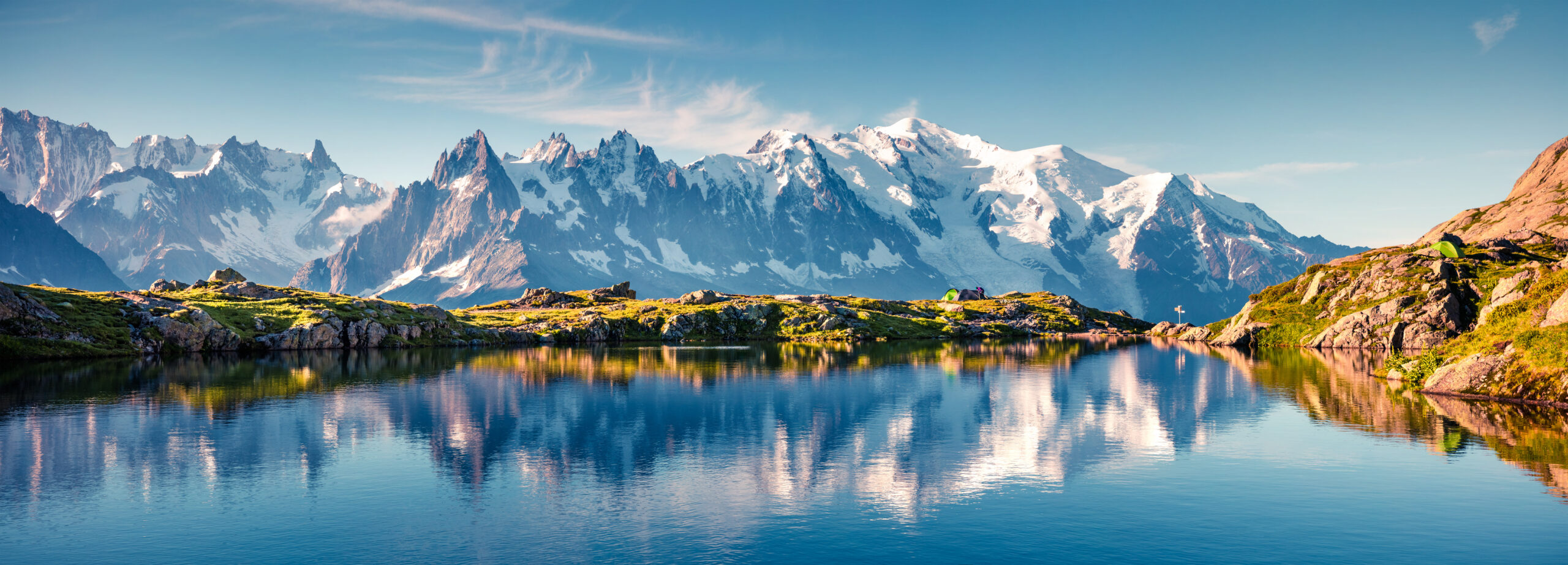
    Snow-capped Alps mountain range reflected in alpine lake, Gran Paradiso and Mont Blanc climbing routes.
    🇫🇷 Mont Blanc · Conditions Watch · Jul 2026

    Mont Blanc Conditions This Week: Grand Couloir Heat & Rockfall Watch

    The Goûter route is open and busy — but mid-summer heat is loading the dice in the Grand Couloir, the most dangerous section of the normal route. Here’s where conditions stand this week, why the heat matters, and exactly what to do about it.

    Conditions watch · Jul 12, 2026

    The Goûter route is in peak season and open — and this is exactly the window when heat drives rockfall. Mid-July sits in the busiest, warmest part of the Mont Blanc season, and warm, dry spells sharply raise the risk in the Grand Couloir, the route’s notorious “corridor of death.” Refuge dismantling work on the old Goûter hut continues through the summer but does not close the route.

    The dominant hazard right now isn’t technical difficulty — it’s timing and temperature. Teams are crossing the couloir in the pre-dawn cold and moving fast. On hot days, the risk climbs through the morning and afternoon, and during past heatwaves the prefecture has asked climbers to postpone the ascent entirely.

    This is a dated watch. Alpine conditions change day to day — always confirm the latest with the Chamonix Office de Haute Montagne and the Haute-Savoie prefecture before you go. We refresh this page through the season.

    📌 This is the this-week watch — the full guide is the pillarThis page covers the current picture. For the complete, evergreen reference — 2026 season dates, refuge reservations, cost, cable status, and the camp-by-camp route — see our Mont Blanc Goûter route conditions guide, with the full itinerary in the Goûter route expedition breakdown.
    4,808 m
    Summit (15,774 ft)
    3,340 m
    Grand Couloir crossing
    Before 06:00
    Cross the couloir
    ~May–Oct
    2026 season

    Where it is

    The highest point in Western Europe, above Chamonix and Saint-Gervais.

    Mont Blanc rises to 4,808 m on the France–Italy border, above the Chamonix valley. The standard Goûter route starts from Saint-Gervais / Les Houches, climbs via the Nid d’Aigle, the Tête Rousse hut (3,167 m), across the Grand Couloir at about 3,340 m, up to the Goûter Refuge (3,835 m), then along the Bosses Ridge to the summit. The couloir crossing sits early on summit day — which is why where you sleep the night before decides when you cross it.

    Summit: Mont Blanc (4,808 m) Grand Couloir: ~3,340 m crossing Base: Chamonix / Saint-Gervais

    Why heat is the story this week

    Warm days don’t just make you sweat — they bring the mountain down.

    The Grand Couloir is a natural funnel for falling rock, and what holds that rock in place is ice and permafrost. When a warm, dry spell hits — exactly the mid-summer pattern — that frozen glue melts, and the couloir starts shedding stones, sometimes day and night. Research on the couloir found that the majority of rockfall happens through the middle of the day, which is why the entire safety strategy is built around crossing before the rock warms up.

    This isn’t theoretical. Hot summers have produced the worst conditions on record: during the 2015 heatwave the Goûter hut was temporarily closed by prefectural order, and in other dry years the authorities have publicly asked climbers to postpone. A hot forecast, in other words, is a direct rockfall signal — and the reason a “conditions this week” check matters more on Mont Blanc than on almost any peak in the Alps.

    Gran Paradiso mountain range reflected in alpine lake, Italy's Graian Alps.
    Timing beats fitness here. The Goûter route is graded PD — not technically hard — but the Grand Couloir turns the ascent into a problem of when, not whether. The strongest climbers on the mountain are the ones across the couloir before first light.

    The Grand Couloir, by the numbers

    One of the deadliest spots in the Alps — and unavoidable on the normal route.

    The couloir’s reputation is earned. French mountain police recorded 347 rescue operations, 102 deaths, and 230 injuries in the Grand Couloir between 1990 and 2017 — a toll that has made “couloir de la mort” a genuine local name, not tabloid hyperbole. A 2020 Petzl Foundation study even examined whether an alternative path could replace the crossing and concluded any alternative would be more dangerous. The couloir is the route.

    The hazardFalling rock funnelled down a ~40 m-wide gully; a single stone can be fatal.
    The driverHeat and drought melt the permafrost binding the rock — warm afternoons are worst.
    The defenceCross before dawn, move fast (2–5 minutes), helmet on, never linger.
    The alternativeThe Trois Monts route avoids the couloir entirely — more technical, but no couloir.

    Mont Blanc’s overall toll is part of why it ranks among the most dangerous mountains in Europe despite its modest grade — context we cover in our death rates by mountain analysis.

    What to do this week

    If you’re climbing in the next few days, this is the checklist.

    None of this replaces a qualified guide or the official advisory, but it’s the discipline that keeps climbers alive in the couloir during the hot months:

    1 · Sleep low, cross earlyStart from the Tête Rousse hut so you cross the couloir in the pre-dawn cold, ideally before 06:00.
    2 · Read the forecast as a rockfall gaugeHot, dry days = higher risk. If a heatwave is forecast, consider postponing or switching routes.
    3 · Check the official advisoryOffice de Haute Montagne (Chamonix) and the Haute-Savoie prefecture publish current conditions and any closures.
    4 · Consider the Trois MontsIf the Goûter is shedding, the Aiguille du Midi / Cosmiques approach avoids the couloir.
    5 · Helmet, crampons, speedHelmet non-negotiable; crampons required from the Goûter upward all season; cross fast and don’t stop.
    🎒 Prepare properly (deep-dive guides)

    Live conditions & heat watch

    On this route, the temperature forecast is a safety forecast.

    The 7-day outlook below is modelled data for the Mont Blanc / Chamonix region — a general indicator, not a summit-day forecast. Read it as a rockfall gauge: warm, dry days push the Grand Couloir risk up, cool spells and fresh snow settle it down. For summit-day planning, pair this with a dedicated alpine forecast and the Office de Haute Montagne bulletin.

    Mont Blanc / Chamonix region

    Loading live data…
    Fetching the latest forecast…
    Read heat as risk. This is valley-and-massif model data; the freezing level and how hot the rock gets matter as much as the summit temperature. When it’s warm, cross the couloir earlier and be ready to turn back.

    Planning to climb this season?

    Beyond this week — the full picture for a Mont Blanc attempt.

    If Mont Blanc is on your list for this summer, the conditions watch is only the starting point. Get the season logistics and the honest difficulty from the guides below, and see where Mont Blanc sits among Europe’s great peaks:

    🏔️ Your Mont Blanc planning shelf

    Mont Blanc is one of 500+ peaks in our mountain database — compare it, and find your next objective.

    Frequently asked questions

    Is Mont Blanc safe to climb this week?

    The Goûter route is open and in peak season, but mid-summer heat drives Grand Couloir rockfall — the route’s biggest hazard. Whether it’s advisable on a given day depends on temperature and the current advisory. Cross before dawn, check the Office de Haute Montagne and prefecture, and be ready to turn back. Full detail in our Goûter conditions guide.

    Is the Goûter route open right now?

    Yes — the 2026 season runs roughly late May to early October, and mid-July is peak window. Old-hut dismantling work continues through summer but doesn’t close the route. Confirm refuge bookings and any short-notice closures with FFCAM and the prefecture.

    What time should I cross the Grand Couloir?

    Before dawn — ideally before 06:00, when the rock is coldest and rockfall is lowest. Most rockfall happens through the middle of the day. Starting from Tête Rousse lets you cross in the dark.

    Does heat really increase rockfall?

    Yes, sharply. Heat and drought melt the permafrost binding the rock above the couloir. Hot summers have produced the worst conditions on record, and in 2015 the Goûter hut was closed during a heatwave.

    Can I avoid the couloir?

    The Trois Monts route (via the Aiguille du Midi and Cosmiques hut) avoids the Grand Couloir entirely. It’s more technical but sidesteps the rockfall — the usual alternative when the Goûter is in poor shape.

    How dangerous is the Grand Couloir?

    It’s one of the deadliest spots in the Alps: 347 rescues, 102 deaths, and 230 injuries between 1990 and 2017. The danger is objective — falling rock in a narrow gully — so timing and discipline matter most.

    How we compiled this

    This watch draws on the Chamonix Office de Haute Montagne, the Haute-Savoie prefecture, FFCAM refuge information, and published rockfall research (UIAA, the Petzl Foundation, and the EDYTEM–ISTerre study), cross-checked against our own Goûter route conditions guide. Conditions are described in general, dated terms rather than as day-specific guarantees.

    Alpine conditions change quickly. This page is an educational planning aid, not a substitute for the official advisory — always confirm the current situation with the Office de Haute Montagne and the prefecture, and climb with a qualified guide if you lack alpine experience.

    Travis Ludlow

    Founder & Head of Research, Global Summit Guide

    Travis leads research at Global Summit Guide, where the team tracks conditions on the world’s major peaks and maintains guides to more than 500 mountains, with safety content reviewed by Taylor Ludlow, RN. This is a dated conditions watch; for full route and planning detail, it points you to our evergreen Mont Blanc guides.

    Climb it in the right window

    The Goûter route rewards good timing more than raw strength. Get the full season picture and the camp-by-camp plan before you go — and cross the couloir before the sun hits the rock.

    Full Goûter conditions → The expedition breakdown →

    Was this helpful?

    Yes
    No
    Thanks for your feedback!
  • Broad Peak & Gasherbrum: First Summit Pushes of the Karakoram Season

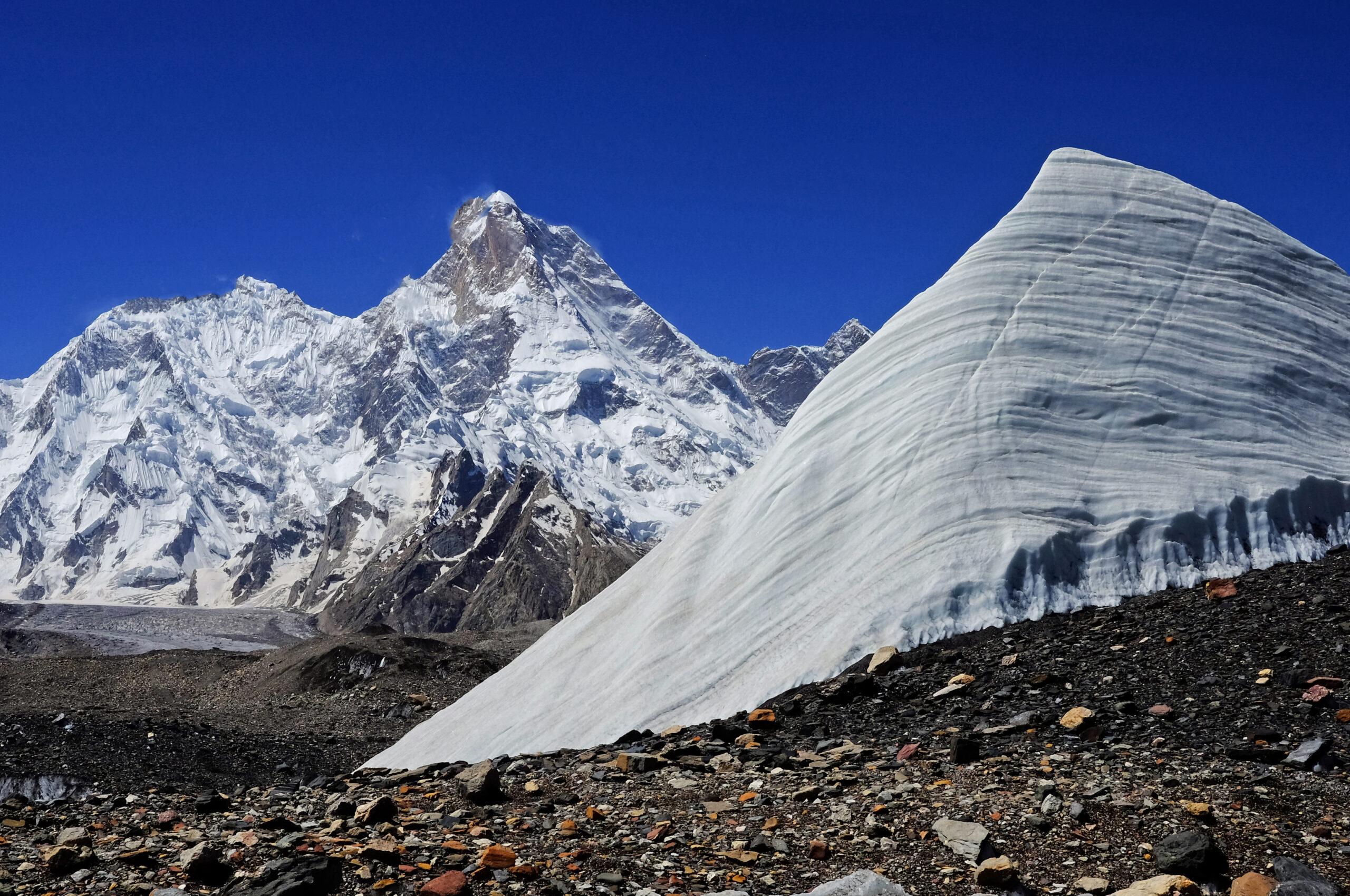
    Snow-covered Broad Peak mountain in Karakoram Range, climbing preparation for K2 expeditions
    🇵🇰 Karakoram · Season Dispatch · 2026

    Broad Peak & Gasherbrum: First Summit Pushes of the Karakoram Season

    Before K2 takes the spotlight, its neighbours go first. Three of the Baltoro’s 8,000ers — Broad Peak, Gasherbrum I, and Gasherbrum II — are where the 2026 Karakoram season opens. Here’s who’s on the mountains, where the ropes are, and when the first summits are likely.

    Where things stand · Jul 11, 2026

    The 2026 Karakoram season is opening on Broad Peak and the Gasherbrums — quietly. It’s a lighter summer than usual in Pakistan, but teams are in position. On Broad Peak, rope-fixing had pushed high on the standard route and a first summit push was poised, only to be postponed by strong wind and fresh snow while teams wait for a cleaner window.

    On the Gasherbrums, commercial and alpine teams have been establishing at base camp after the long Baltoro trek, with a notable number of climbers going without supplemental oxygen. No confirmed 8,000m summits yet — the first of the season would be expected with the next stable weather window, typically mid-to-late July. Meanwhile the Nanga Parbat season over on the Diamir side has been wrapping up.

    This is a live dispatch. Karakoram conditions change by the day; we refresh it as the pushes develop.

    📌 This is the live dispatch — the deep guides are one click awayThis page tracks the 2026 season. For routes, difficulty, cost, and planning on each peak, go straight to the full guides: Broad Peak, Gasherbrum I, and Gasherbrum II — and see where all three sit in our 8,000ers ranked by difficulty.
    8,080 m
    Gasherbrum I (11th)
    8,051 m
    Broad Peak (12th)
    8,035 m
    Gasherbrum II (13th)
    Jul–Aug
    Summit window

    Where they are

    Four of the world’s fourteen 8,000ers, clustered around one glacial junction.

    Broad Peak, Gasherbrum I, Gasherbrum II, and K2 all sit within about 20 km of Concordia, the confluence of the Baltoro and Godwin-Austen glaciers — one of the greatest concentrations of high peaks on Earth. Climbers reach them the same way: fly to Skardu, drive to Askole, then trek roughly a week up the Baltoro. Broad Peak’s base camp sits on the Godwin-Austen Glacier near K2’s; the Gasherbrums share a base camp further up the South Gasherbrum Glacier.

    Broad Peak: 8,051 m Gasherbrum I & II: 8,080 / 8,035 m K2: 8,611 m (nearby) Concordia: Baltoro junction

    Broad Peak: first to move

    The 12th-highest mountain — and often the season’s opening act.

    At 8,051 m, Broad Peak is the 12th-highest mountain in the world, standing about 8 km from K2. First climbed in June 1957 by an Austrian team — Marcus Schmuck, Fritz Wintersteller, Kurt Diemberger, and the legendary Hermann Buhl, who died on nearby Chogolisa days later — it’s long been considered one of the more approachable 8,000ers. That reputation comes with an asterisk: its summit is reached via a long, deceptive ridge with a notorious false summit that repeatedly turns climbers back short of the true top.

    In 2026, Broad Peak has been the pace-setter. Rope-fixing pushed high on the standard route, and a first summit push was ready to go before wind and fresh snow forced a postponement. It’s the familiar Karakoram waiting game — everything set, held back by the sky.

    Full Broad Peak guideRoutes, camps, cost, permits, and the false-summit trap are covered in depth in our complete Broad Peak climb guide.
    Gasherbrum I peak and glacier in the Karakoram range, Pakistan climbing expedition.
    The Gasherbrum group. “Gasherbrum” comes from the Balti rgasha brum — “beautiful mountain.” Two of the massif’s peaks are 8,000ers: Gasherbrum I (the Hidden Peak) and Gasherbrum II, both climbed from a shared base camp up the South Gasherbrum Glacier.

    The Gasherbrums: I & II

    Two 8,000ers, one massif — and very different climbs.

    The Gasherbrum massif holds two of the fourteen 8,000ers, and they’re often confused despite being quite different objectives:

    PeakHeight / rankCharacterFirst ascent
    Gasherbrum I (Hidden Peak)8,080 m · 11thSteeper, more technical; Japanese Couloir from Gasherbrum La1958 (American)
    Gasherbrum II8,035 m · 13thOne of the most accessible 8,000ers; a common first eight-thousander1956 (Austrian)

    In 2026, the Gasherbrums have drawn both commercial groups and elite alpinists. Teams have been establishing at base camp for standard-route attempts, while small alpine parties eye harder objectives on the massif. As on Broad Peak, the first summits hinge entirely on the next weather window.

    🏔️ Go deeper on the Gasherbrums

    Why they share one window

    Same glacier, same weather, same waiting game as K2.

    These peaks don’t just sit next to each other — they run on the same clock. The Karakoram summer offers shorter, less reliable weather windows than Nepal’s Himalaya, so teams across Broad Peak, the Gasherbrums, and K2 all watch the same forecasts and often move within days of one another. Typically the sequence runs Gasherbrum II and Broad Peak first, Gasherbrum I alongside, and K2 last, in its late-July to early-August window.

    That’s also why many climbers pair these peaks with bigger goals: Gasherbrum II and Broad Peak are common stepping stones toward K2. You can follow the top of that pyramid in our 2026 K2 season tracker — the companion to this dispatch — and see the season’s other Pakistan giant in our Nanga Parbat guide.

    Where they rank

    Accessible by 8,000er standards — but never easy.

    It’s tempting to file Broad Peak and Gasherbrum II under “easier 8,000ers,” and by standard-route difficulty they are among the more approachable of the fourteen — well below K2, Annapurna, or Nanga Parbat. But “accessible 8,000er” still means extreme altitude, real objective hazard, and Karakoram weather. Gasherbrum I sits a clear notch harder than GII, and Broad Peak’s false summit has ended more attempts than its grade suggests.

    We don’t re-rank them here — that’s the pillar’s job. For the full hardest-to-easiest picture, with fatality rates and technical grades:

    📊 See the full ranking

    Live Karakoram conditions

    The forecast is the story — these summits wait on the window.

    Every summit push on this page depends on one thing: a stable weather window. The 7-day outlook below is modelled data for the Concordia / Baltoro region — a general indicator, not a summit-day forecast (expedition teams buy specialist high-altitude forecasts before committing). It’s a useful read on whether the next window is building or breaking down.

    Karakoram summit region (~Concordia / Baltoro)

    Loading live data…
    Fetching the latest forecast…
    A general indicator only. This is modelled data near glacier/base-camp altitude — the 8,000m summits are colder and far windier. Teams launch only when a multi-day window of light wind lines up with the route being fixed to the top.

    Frequently asked questions

    Has anyone summited Broad Peak or Gasherbrum in 2026 yet?

    Not as of this update (July 11, 2026). Broad Peak was fixed high with a first push poised but weather-delayed; Gasherbrum teams were still establishing at base camp. The season’s first summits usually come mid-to-late July with the first stable window. We refresh this dispatch as pushes develop.

    When are these peaks climbed?

    In the Karakoram summer only — roughly June through August, with most summits in July and August. Gasherbrum II often sees the season’s first 8,000m summits, followed by Broad Peak and Gasherbrum I, with K2 last.

    Which is easiest — Broad Peak, GI or GII?

    Gasherbrum II is one of the most accessible 8,000ers and a common first eight-thousander. Broad Peak is approachable but has a deceptive false summit. Gasherbrum I is meaningfully steeper and more technical. See our 8,000ers ranked by difficulty.

    How do they relate to K2’s season?

    They share the same Baltoro region, weather, and summer window as K2, and many climbers use Broad Peak or GII to build Karakoram experience before K2. First summits here usually precede K2’s late-July window — follow it in our K2 2026 tracker.

    Are Broad Peak and GII good first 8000ers?

    GII is one of the more common first eight-thousanders, and Broad Peak is often a K2-region acclimatizer. Both are serious expeditions with real hazards, but their moderate grade makes them a genuine step into 8,000m climbing.

    How we track this

    This dispatch is compiled from expedition dispatches, operator updates, and specialist mountaineering coverage (including ExplorersWeb), cross-checked against the standard Karakoram climbing calendar. Fast-moving details — rope-fixing progress, summit pushes, casualties — are reported cautiously and dated, because early base-camp information is often incomplete and evolves.

    Conditions change daily during the season. For the current state of any climb, follow the operators directly; for routes, cost, and planning, our full mountain guides are the authoritative reference.

    Travis Ludlow

    Founder & Head of Research, Global Summit Guide

    Travis leads research at Global Summit Guide, where the team tracks the world’s major climbing seasons and maintains guides to more than 500 peaks. This Karakoram dispatch is updated through the summer; for full route, cost, and difficulty detail, we always point you to the individual mountain guides.

    The Karakoram season is just getting started

    Broad Peak and the Gasherbrums open the summer; K2 closes it. See where these giants rank among the world’s highest, then follow the whole season as it unfolds.

    8,000ers by difficulty → Follow the K2 season →

    Was this helpful?

    Yes
    No
    Thanks for your feedback!
  • How Much Do Sherpas Get Paid in 2026? What Everest Guides Actually Earn This Season

    { “@context”: “https://schema.org”, “@type”: “Article”, “headline”: “How Much Do Sherpas Get Paid in 2026? What Everest Guides Actually Earn This Season”, “description”: “A 2026 snapshot of Sherpa pay: this season’s base wages, summit bonuses, tips, insurance minimums, and the $15,000 Everest permit – plus where every dollar of an expedition fee actually goes.”, “author”: { “@type”: “Person”, “name”: “Travis Ludlow”, “jobTitle”: “Founder & Head of Research, Global Summit Guide”, “url”: “https://globalsummitguide.com/about/” }, “publisher”: { “@type”: “Organization”, “name”: “Global Summit Guide”, “url”: “https://globalsummitguide.com/”, “logo”: { “@type”: “ImageObject”, “url”: “https://globalsummitguide.com/wp-content/uploads/2026/02/global-logo-new-2.png” } }, “datePublished”: “2026-07-11”, “dateModified”: “2026-07-11”, “mainEntityOfPage”: “https://globalsummitguide.com/sherpa-pay-2026/”, “articleSection”: “Climbing News” } { “@context”: “https://schema.org”, “@type”: “ItemList”, “name”: “Sherpa Pay 2026 at a Glance”, “itemListElement”: [ { “@type”: “ListItem”, “position”: 1, “name”: “A personal climbing Sherpa’s base is roughly $2,500-$4,500 per expedition in 2026” }, { “@type”: “ListItem”, “position”: 2, “name”: “Summit bonuses run about $1,500-$3,500, with tips adding more” }, { “@type”: “ListItem”, “position”: 3, “name”: “An elite Khumbu Sherpa can clear $10,000+ in a single season, far more across a full year” } ] } { “@context”: “https://schema.org”, “@type”: “FAQPage”, “mainEntity”: [ { “@type”: “Question”, “name”: “How much do Sherpas get paid in 2026?”, “acceptedAnswer”: { “@type”: “Answer”, “text”: “In 2026, a personal climbing Sherpa on Everest typically earns a base of roughly $2,500-$4,500 for the expedition, plus a summit bonus of about $1,500-$3,500 and a share of client tips. An experienced Khumbu Sherpa can clear $10,000 or more in a single season, and considerably more across a full year of expeditions once tips are counted. Support roles – base-camp crew and porters – earn less. For the full breakdown of where every dollar of an expedition fee goes, see our Sherpa Wage Economy analysis.” } }, { “@type”: “Question”, “name”: “What is the difference between base salary and total season pay?”, “acceptedAnswer”: { “@type”: “Answer”, “text”: “Base salary is the guaranteed wage for the expedition, roughly $2,500-$4,500 for a veteran climbing Sherpa in 2026. Total season pay adds summit bonuses, load or performance bonuses, and tips, which together can double or more the take-home figure. Because tips and summit bonuses are conditional, actual earnings vary a lot by year, client, and how the season goes.” } }, { “@type”: “Question”, “name”: “How big is the summit bonus in 2026?”, “acceptedAnswer”: { “@type”: “Answer”, “text”: “The standard Everest summit bonus in 2026 is roughly $1,500-$3,500 when a Sherpa’s client reaches the top. Elite lead Sherpas who fix ropes and manage the route command the higher end. Bonuses are a major part of why the summit-day incentive is so strong – and part of why turnaround discipline matters so much.” } }, { “@type”: “Question”, “name”: “Do tips really make a difference to Sherpa pay?”, “acceptedAnswer”: { “@type”: “Answer”, “text”: “Yes. Tips are the part of compensation climbers control directly, and they are real income, not a courtesy. Standard practice adds several thousand dollars per climber to the Sherpa team at the base-camp tipping ceremony. Across a full year of expeditions, tip income alone can reach $25,000-$40,000 for a busy senior Sherpa. Our Sherpa Wage Economy breakdown covers how tipping fits the wider pay structure.” } }, { “@type”: “Question”, “name”: “How does Sherpa pay compare to Western guides?”, “acceptedAnswer”: { “@type”: “Answer”, “text”: “There is a large gap. While an elite Sherpa might earn around $10,000 in a season, a Western lead guide from a US or European operator can earn $30,000-$50,000 for the same roughly two months – despite the Sherpas doing more trips through the most dangerous terrain. The gap has narrowed since 2014 as Sherpa labor has grown to 32-38 percent of the operator fee, but it remains substantial.” } }, { “@type”: “Question”, “name”: “Is Sherpa pay enough, given the risk?”, “acceptedAnswer”: { “@type”: “Answer”, “text”: “It is high pay by Nepali standards and a vital source of household income in the Khumbu, but low for the risk involved – Sherpa climbing is among the most dangerous jobs in the world. Post-2014 reforms raised wages and insurance minimums (now $15,000-$20,000 of mandatory cover, with many operators paying more), but the debate over fair compensation is ongoing. See our death rates by mountain analysis for the risk context.” } } ] } { “@context”: “https://schema.org”, “@type”: “BreadcrumbList”, “itemListElement”: [ { “@type”: “ListItem”, “position”: 1, “name”: “Home”, “item”: “https://globalsummitguide.com/” }, { “@type”: “ListItem”, “position”: 2, “name”: “Climbing News” }, { “@type”: “ListItem”, “position”: 3, “name”: “Sherpa Pay 2026” } ] } @import url(‘https://fonts.googleapis.com/css2?family=Outfit:wght@300;400;500;600;700&family=DM+Serif+Display:ital@0;1&display=swap’); .shpa-page { font-family: ‘Outfit’, sans-serif; color: #122a44; line-height: 1.65; margin: 0 auto; padding: 0; } .shpa-page h1, .shpa-page h2, .shpa-page h3, .shpa-page h4 { font-family: ‘DM Serif Display’, serif; font-weight: 400; color: #0a1929; line-height: 1.15; } .shpa-page p { font-size: 1.02rem; margin-bottom: 1.1em; } .shpa-page a { color: #2e5986; text-decoration: none; border-bottom: 1px solid #c8d4e0; } .shpa-page a:hover { color: #d4913a; border-bottom-color: #d4913a; } .shpa-hero { position: relative; padding: 0; color: #f5e4c8; overflow: hidden; background: #0a1929; border-radius: 12px; margin-bottom: 0; } .shpa-hero-image { width: 100%; height: auto; display: block; max-width: 100%; } .shpa-hero-text { padding: 40px 36px; background: linear-gradient(135deg, rgba(10,25,41,0.90), rgba(46,89,134,0.80)); } .shpa-hero-tag { font-size: 0.84rem; color: #d4913a; text-transform: uppercase; letter-spacing: 2px; font-weight: 700; margin-bottom: 14px; } .shpa-hero h1 { color: #f5e4c8 !important; font-size: 2.05rem; line-height: 1.1; margin: 0 0 16px; } .shpa-hero h1 em { color: #d4913a; font-style: italic; } .shpa-hero p { color: #f5e4c8; font-size: 1.06rem; line-height: 1.5; margin: 0; } .shpa-byline { background: #f8f4ec; padding: 14px 22px; font-size: 0.85rem; color: #5a4f30; border: 1px solid #e8d8ad; border-radius: 8px; margin: 18px 0; } .shpa-byline-top { display: flex; justify-content: space-between; flex-wrap: wrap; gap: 10px; align-items: center; margin-bottom: 8px; } .shpa-byline-author { font-weight: 600; color: #0a1929; font-size: 0.94rem; } .shpa-byline-author a { color: #2e5986; border-bottom: none; } .shpa-byline-meta { color: #7a6f50; font-size: 0.82rem; } .shpa-byline-credentials { font-size: 0.82rem; color: #5a4f30; line-height: 1.45; padding-top: 6px; border-top: 1px solid #e8d8ad; font-style: italic; } .shpa-byline-credentials strong { color: #0a1929; font-style: normal; } /* Quick answer (blue) */ .shpa-answer { background: linear-gradient(135deg, #14395e 0%, #2e5986 100%); color: #fff; padding: 30px 36px; margin: 26px 0; border-radius: 14px; box-shadow: 0 8px 24px rgba(20,57,94,0.35); border: 4px solid #d4913a; } .shpa-answer h2 { margin: 0 0 14px !important; font-size: 1.5rem !important; color: #fff !important; padding-bottom: 0 !important; border-bottom: none !important; } .shpa-answer p { margin: 0 0 12px; font-size: 1.06rem; color: #fff; line-height: 1.55; } .shpa-answer p:last-child { margin-bottom: 0; } .shpa-answer strong { color: #ffe6a3; font-weight: 700; } .shpa-answer em { color: #ffe6a3; font-style: italic; } .shpa-answer .shpa-answer-tag { display: inline-block; background: #d4913a; color: #0a1929; padding: 4px 12px; border-radius: 4px; font-size: 0.78rem; font-weight: 700; text-transform: uppercase; letter-spacing: 0.6px; margin-bottom: 12px; } .shpa-answer a { color: #ffe6a3; border-bottom: 1px solid rgba(255,230,163,0.5); } .shpa-answer a:hover { color: #fff; border-bottom-color: #fff; } .shpa-stat-grid { display: grid; grid-template-columns: repeat(4, 1fr); gap: 12px; padding: 22px; background: linear-gradient(135deg, #0a1929 0%, #122a44 100%); color: #f5e4c8; border-radius: 10px; margin: 22px 0; } .shpa-stat { background: #1a3354; border: 1px solid #d4913a; border-radius: 8px; padding: 14px 12px; text-align: center; } .shpa-stat-num { font-family: ‘DM Serif Display’, serif; font-size: 1.3rem; color: #d4913a; line-height: 1; margin-bottom: 4px; } .shpa-stat-label { font-size: 0.7rem; color: #f5e4c8; text-transform: uppercase; letter-spacing: 0.5px; } .shpa-toc { background: #f8f4ec; border: 1px solid #e8d8ad; border-radius: 10px; padding: 18px 24px; margin: 22px 0; } .shpa-toc .shpa-toc-label { margin: 0 0 12px; font-size: 1.08rem; font-weight: 700; color: #0a1929; font-family: ‘DM Serif Display’, serif; } .shpa-toc ol { margin: 0; padding-left: 22px; columns: 2; column-gap: 28px; font-size: 0.92rem; } .shpa-toc li { margin-bottom: 5px; line-height: 1.4; } .shpa-inline-image { margin: 32px 0; border-radius: 10px; overflow: hidden; box-shadow: 0 4px 14px rgba(212,200,168,0.5); } .shpa-inline-image img { width: 100%; height: auto; display: block; max-width: 100%; } .shpa-inline-image figcaption { padding: 14px 22px; background: #f8f4ec; font-size: 0.88rem; color: #5a4f30; font-style: italic; line-height: 1.5; } .shpa-inline-image figcaption strong { color: #0a1929; font-style: normal; } .shpa-section-header { background: linear-gradient(135deg, #122a44 0%, #2e5986 100%); color: #f5e4c8; padding: 28px 34px; margin: 40px 0 24px; border-radius: 12px; border-left: 8px solid #d4913a; box-shadow: 0 6px 18px rgba(18,42,68,0.4); } .shpa-section-header h2 { color: #d4913a !important; font-size: 1.8rem !important; margin: 0 0 6px !important; padding: 0 !important; border: none !important; } .shpa-section-header h2 em { color: #fdd47a; font-style: italic; } .shpa-section-header p { color: #f5e4c8; font-size: 0.96rem; margin: 0; line-height: 1.5; } .shpa-content { padding: 24px 0 0; } .shpa-content h2 { font-size: 1.9rem; margin-top: 48px; margin-bottom: 18px; padding-bottom: 11px; border-bottom: 2px solid #d4913a; } .shpa-content h2:first-of-type { margin-top: 0; } .shpa-content h2 em { color: #d4913a; font-style: italic; } .shpa-content h3 { font-size: 1.34rem; margin-top: 28px; margin-bottom: 12px; color: #0a1929; } .shpa-callout-info { background: #e8f0f7; border-left: 5px solid #2e5986; padding: 16px 22px; border-radius: 6px; margin: 20px 0; font-size: 0.95rem; color: #0a1929; } .shpa-callout-info .shpa-callout-title { font-weight: 700; color: #2e5986; font-size: 0.98rem; margin-bottom: 6px; display: block; } .shpa-callout-warning { background: #fdf3e8; border-left: 5px solid #b86a15; padding: 16px 22px; border-radius: 6px; margin: 20px 0; font-size: 0.95rem; color: #0a1929; } .shpa-callout-warning .shpa-callout-warning-title { font-weight: 700; color: #b86a15; font-size: 0.98rem; margin-bottom: 6px; display: block; } .shpa-callout-danger { background: #fbe5e2; border-left: 5px solid #a83a2b; padding: 16px 22px; border-radius: 6px; margin: 20px 0; font-size: 0.95rem; color: #0a1929; } .shpa-callout-danger .shpa-callout-danger-title { font-weight: 700; color: #a83a2b; font-size: 0.98rem; margin-bottom: 6px; display: block; } .shpa-pillar { background: #e8f0d8; border-left: 5px solid #5a8a2e; padding: 18px 22px; border-radius: 6px; margin: 22px 0; font-size: 0.95rem; color: #0a1929; } .shpa-pillar .shpa-pillar-title { font-weight: 700; color: #4a7a1e; font-size: 0.98rem; margin-bottom: 6px; display: block; } .shpa-pillar ul { margin: 8px 0 0; padding-left: 20px; } .shpa-pillar li { margin-bottom: 5px; } .shpa-table-wrap { overflow-x: auto; margin: 18px 0; } .shpa-cmp { width: 100%; border-collapse: collapse; font-size: .86rem; background: #fff; border: 1px solid #e5d9bd; border-radius: 12px; overflow: hidden; min-width: 640px; } .shpa-cmp th { background: #0a1929; color: #f5e4c8; text-align: left; padding: 11px 12px; font-family: ‘Outfit’, sans-serif; font-weight: 700; font-size: .75rem; } .shpa-cmp td { padding: 10px 12px; border-top: 1px solid #efe6cf; color: #3a4a5a; line-height: 1.4; vertical-align: top; } .shpa-cmp td.shpa-role { font-weight: 700; color: #0a1929; background: #faf6ec; white-space: nowrap; } .shpa-cmp td.shpa-h { color: #b86a15; font-weight: 600; white-space: nowrap; } .shpa-cmp tr:nth-child(even) td { background: #fbf8f0; } .shpa-cmp tr:nth-child(even) td.shpa-role { background: #f5efe1; } .shpa-mini { width: 100%; border-collapse: collapse; font-size: .85rem; background: #fff; border: 1px solid #e5d9bd; border-radius: 10px; overflow: hidden; margin: 12px 0; } .shpa-mini td { padding: 8px 12px; border-top: 1px solid #efe6cf; color: #3a4a5a; line-height: 1.35; } .shpa-mini td:first-child { font-weight: 700; color: #0a1929; background: #faf6ec; white-space: nowrap; } .shpa-mini tr:first-child td { border-top: none; } .shpa-faq-item { background: #f8f4ec; border-radius: 8px; margin-bottom: 11px; } .shpa-faq-item summary { padding: 14px 20px; cursor: pointer; font-family: ‘DM Serif Display’, serif; font-size: 1.04rem; color: #0a1929; list-style: none; } .shpa-faq-item summary::-webkit-details-marker { display: none; } .shpa-faq-item summary::after { content: ‘+’; float: right; color: #d4913a; font-size: 1.4rem; line-height: 0.8; } .shpa-faq-item[open] summary::after { content: ‘-‘; } .shpa-faq-item div { padding: 0 20px 16px; font-size: 0.93rem; color: #0a1929; } .shpa-methodology { background: #f8f4ec; border: 2px solid #2e5986; padding: 22px 26px; border-radius: 10px; margin: 26px 0; } .shpa-methodology h3 { margin: 0 0 12px; font-size: 1.18rem; color: #2e5986; } .shpa-methodology p { font-size: 0.92rem; line-height: 1.55; margin: 0 0 8px; color: #0a1929; } .shpa-author-bio { background: linear-gradient(135deg, #f8f4ec 0%, #fbf7ef 100%); border: 2px solid #d4913a; padding: 26px 30px; border-radius: 12px; margin: 32px 0 18px; display: flex; gap: 22px; align-items: flex-start; } .shpa-author-bio-image { flex-shrink: 0; width: 100px; height: 100px; border-radius: 50%; background: #d4913a url(‘https://globalsummitguide.com/wp-content/uploads/2026/03/561db5f8-15bb-43d8-9eba-251a8c35f89f.jpg’) center/cover; border: 3px solid #d4913a; } .shpa-author-bio-content { flex: 1; } .shpa-author-bio h3 { margin: 0 0 4px; font-size: 1.26rem; color: #0a1929; } .shpa-author-bio .shpa-author-title { font-size: 0.9rem; color: #b86a15; font-weight: 700; margin-bottom: 11px; font-style: italic; } .shpa-author-bio p { margin: 0 0 9px; font-size: 0.92rem; line-height: 1.55; color: #0a1929; } .shpa-related { background: #f8f4ec; padding: 22px; border-radius: 10px; margin: 22px 0; } .shpa-related h3 { margin-top: 0; margin-bottom: 13px; color: #0a1929; font-size: 1.1rem; } .shpa-related h3.shpa-related-sub { margin-top: 18px; } .shpa-final-cta { background: linear-gradient(135deg, #122a44 0%, #1e3a5f 100%); color: #f5e4c8; padding: 36px 30px; border-radius: 14px; margin: 32px 0 0; text-align: center; border: 3px solid #d4913a; box-shadow: 0 8px 22px rgba(18,42,68,0.4); } .shpa-final-cta h3 { color: #d4913a; margin: 0 0 12px; font-size: 1.6rem; } .shpa-final-cta > p { color: #f5e4c8; font-size: 1.02rem; margin: 0 auto 22px; max-width: 620px; line-height: 1.55; } .shpa-cta-button { display: inline-block; background: transparent; color: #f5e4c8 !important; padding: 13px 24px; border-radius: 6px; font-weight: 600; border: 2px solid #d4913a !important; margin: 0 5px 8px; text-decoration: none !important; transition: all 0.15s; } .shpa-cta-button:hover { background: #d4913a; color: #0a1929 !important; } @media (max-width: 768px) { .shpa-page { padding: 0 4px; } .shpa-stat-grid { grid-template-columns: repeat(2, 1fr); } .shpa-toc ol { columns: 1; } .shpa-hero-text { padding: 28px 18px; } .shpa-hero h1 { font-size: 1.5rem; } .shpa-hero p { font-size: 0.96rem; } .shpa-byline, .shpa-answer, .shpa-section-header { padding: 18px 20px; } .shpa-answer h2 { font-size: 1.3rem !important; } .shpa-section-header h2 { font-size: 1.5rem !important; } .shpa-final-cta { padding: 26px 20px; } .shpa-final-cta h3 { font-size: 1.35rem; } .shpa-author-bio { flex-direction: column; align-items: center; text-align: center; } .shpa-content h2 { font-size: 1.55rem; } .shpa-content h3 { font-size: 1.2rem; } .shpa-cmp { font-size: 0.78rem; } }
    Sherpa carrying load on Everest trail with snow-capped mountain backdrop
    🇳🇵 Everest · Sherpa Economy · 2026 Snapshot

    How Much Do Sherpas Get Paid in 2026? What Everest Guides Actually Earn This Season

    The people who fix the ropes, carry the loads, and cross the Khumbu Icefall dozens of times a season are the engine of every Everest expedition. Here’s what they earn in 2026 — base wages, summit bonuses, tips, and what changed this year — with the full economics linked throughout.

    💰 The 2026 answer, fast

    In 2026, a personal climbing Sherpa on Everest earns a base of roughly $2,500–$4,500 for the expedition, plus a summit bonus of about $1,500–$3,500 and a share of client tips. Put together, an experienced Khumbu Sherpa can clear $10,000 or more in a single season, and considerably more across a full year once tips are counted. Base-camp crew and porters earn less; elite rope-fixing sirdars earn the top of the range.

    That’s the headline. Where every dollar of a $90,000 expedition actually goes — and why Sherpa labour has grown to 32–38% of the operator fee — is mapped in our Sherpa Wage Economy breakdown.

    📌 This is the 2026 snapshot — the pillar is the deep diveThis page answers “what do Sherpas earn this year” and covers what changed in 2026. For the full economics — the ten payment categories, the post-2014 reform, the operator-margin shift, and the year-round income picture — our Sherpa Wage Economy analysis is the definitive reference, and everything below links back to it.
    $2.5–4.5K
    Base per expedition
    $1.5–3.5K
    Summit bonus
    $10K+
    Elite season total
    $15,000
    Nepal Everest permit

    What changed in 2026

    New this season: a higher permit, tighter rules, and a labour share that keeps climbing.

    The single biggest recent shift reached the government line, not the Sherpa line: Nepal raised the standard spring Everest permit to $15,000 per foreign climber (up from $11,000), the first increase in roughly a decade. That doesn’t go to Sherpas directly, but it reshapes the total cost climbers budget — the wider picture is in our Everest permits and fees guide.

    On the labour side, the 2026 season continues a decade-long trend: Sherpa-related pay has grown to roughly 32–38% of the operator fee, up from about 22% before 2014. Alongside that, Nepal has been tightening the rules around high-altitude workers — moves toward stricter guide-to-climber ratios, mandatory medical certificates for staff, and a push for lead guides to be Nepali nationals. Insurance minimums, raised sharply after the 2014 disaster, now sit at $15,000–$20,000 of mandatory life cover per climbing Sherpa, with many operators voluntarily providing more.

    The number that matters when you bookWages and insurance are one of the clearest signals of an ethical operator. Climbing Sherpas should earn several thousand dollars for the season plus bonuses, and carry at least $15,000–$20,000 of life insurance. Our operator comparison walks through exactly how to check an operator’s staffing model, wages, and cover before you pay a deposit.

    The 2026 pay snapshot

    Representative ranges by role — a summary, not the full methodology.

    Pay varies widely by role, experience, summit count, and certification. These are representative 2026 ranges for the Nepal side; the detailed derivation lives on the wage-economy pillar.

    RoleBase (per expedition)BonusesTypical 2026 season take
    Base-camp crew / porters$500–$1,000MinimalLower; seasonal support work
    High-altitude porter (load carrier)$1,500–$3,000Per-load / carry bonusesVaries with number of carries
    Personal climbing Sherpa$2,500–$4,500$1,500–$3,500 summit + tipsSeveral thousand up to ~$10K
    Elite / sirdar / rope-fixer (IFMGA, 10+ summits)Top of rangeHighest bonuses + largest tips$10,000+ in a season

    For the most experienced Sherpas, the full-year figure is what really matters. A senior climber working multiple expeditions across the year — Everest in spring, plus other Nepalese peaks — can see tip income alone of $25,000–$40,000, on top of wages and bonuses. That’s high by Nepali standards and is a major reason competition for the best Sherpas has driven base wages up so quickly since 2014.

    Everest base camp with Sherpa carrying gear and supplies for expeditions.
    Paid by the season, not the year. A Sherpa’s earning window is a short, intense sprint — roughly eight to ten weeks in spring to make what has to support a family for twelve months. It’s why summit bonuses and tips matter so much, and why the incentive to push on summit day is so strong.

    How the pay is built

    Three moving parts: base, bonus, and the tip climbers control.

    Sherpa compensation isn’t a single flat rate — it stacks up from three pieces:

    Base wageThe guaranteed pay for the expedition. Steady, but the smaller part of a good season.
    BonusesSummit bonuses (~$1,500–$3,500) plus load or performance bonuses. Conditional — they depend on the season going well.
    TipsThe part climbers control directly, paid at the base-camp tipping ceremony. Real income, often several thousand per climber to the team.

    Because two of the three pieces are conditional, take-home pay swings hard from year to year. That’s exactly why the “how much do Sherpas make” question has no single answer — and why our pillar maps the full cash path of a representative expedition rather than quoting one figure. If you’re budgeting your own climb, the tipping line is covered in our full Everest cost breakdown.

    The most dangerous job on the mountain

    High pay for Nepal — low pay for the risk.

    Here’s the context the salary numbers can’t show on their own. While a Western climber crosses the Khumbu Icefall a handful of times, the Sherpas supporting them cross it again and again — fixing ropes, stocking camps, ferrying oxygen. Sherpa climbing is consistently ranked among the most dangerous jobs in the world, and the 2014 Icefall avalanche that killed sixteen Nepali workers is what triggered the wage and insurance reforms still shaping pay today.

    So the honest read on 2026 pay is two-sided: it’s genuinely high income by Nepali standards and a pillar of the Khumbu economy, yet low for the risk carried. For the hard numbers behind the risk, see our death rates by mountain analysis and the Everest death map.

    The pay gap in one lineAn elite Sherpa might earn around $10,000 in a season. A Western lead guide from a US or European operator can earn $30,000–$50,000 for the same two months — while doing fewer trips through the most dangerous terrain. The gap has narrowed since 2014, but it hasn’t closed.

    Sherpa pay beyond Everest

    The same labour, different mountains and different rules.

    “Sherpa pay” is really shorthand for high-altitude expedition labour, and it looks different from range to range. Right now, during the live Karakoram season, Pakistani high-altitude porters are doing the same brutal work on K2 and Broad Peak — often for less than Nepali Sherpas, and with porter welfare a recurring issue. You can follow that season in our K2 2026 tracker, with the labour and operator detail in the full K2 climb guide.

    Elsewhere the frameworks differ: on Kilimanjaro, the Kilimanjaro Porters Assistance Project sets minimum wage and tipping standards; on Denali, the US National Park Service concessionaire system standardises guide wages. The common thread — and the thing worth checking before you book any peak — is how the operator treats its local staff. That’s the fourth of the eight criteria in our operator comparison.

    K2, Everest, Denali and the rest are all in our database of 500+ mountains — compare the peaks and the expeditions that run on them.

    Frequently asked questions

    How much do Sherpas get paid in 2026?

    A personal climbing Sherpa on Everest earns roughly $2,500–$4,500 base for the expedition, plus a $1,500–$3,500 summit bonus and a share of tips. An experienced Khumbu Sherpa can clear $10,000+ in a season, and more across a full year. The full breakdown is in our Sherpa Wage Economy analysis.

    Base salary vs total season pay — what’s the difference?

    Base is the guaranteed wage (~$2,500–$4,500 for a veteran). Total season pay adds bonuses and tips, which can double the take-home. Because bonuses and tips are conditional, actual earnings vary a lot year to year.

    How big is the summit bonus in 2026?

    Around $1,500–$3,500 when a Sherpa’s client summits, with elite rope-fixers at the higher end. It’s a major part of the total and a strong summit-day incentive.

    Do tips really matter?

    Yes — tips are real income, not a courtesy, paid at the base-camp tipping ceremony. Across a full year, tip income alone can reach $25,000–$40,000 for a busy senior Sherpa. See how it fits the wider structure in our wage-economy breakdown.

    How does it compare to Western guides?

    There’s a large gap: ~$10,000 for an elite Sherpa vs $30,000–$50,000 for a Western lead guide in the same season. It has narrowed since 2014 as Sherpa labour grew to 32–38% of the operator fee, but remains substantial.

    Is it enough, given the risk?

    It’s high pay for Nepal but low for the danger — Sherpa climbing is among the world’s most hazardous jobs. Post-2014 reforms raised wages and insurance ($15,000–$20,000 minimum), but the fair-pay debate continues. See our death rates by mountain for context.

    How we compiled this

    This 2026 snapshot draws on operator disclosures, Nepal Department of Tourism data, and published Sherpa-community wage benchmarks, cross-checked against our own Sherpa Wage Economy analysis. Figures are representative ranges, not fixed rates — real pay depends on role, experience, operator, summit success, and tips, all of which vary by season.

    Permit fees, insurance minimums, and staffing rules change from year to year. For the current requirements, consult the Nepal Department of Tourism and your operator; for the full economics, our pillar is the definitive reference.

    Travis Ludlow

    Founder & Head of Research, Global Summit Guide

    Travis leads research at Global Summit Guide, where the team tracks the economics and logistics of the world’s major expeditions and maintains guides to more than 500 peaks. This is a current-season snapshot of Sherpa pay; for the full cash path of an Everest expedition, it defers to our in-depth Sherpa Wage Economy analysis.

    Where does the rest of the money go?

    Sherpa pay is one line in a much bigger ledger. See exactly how a $90,000 Everest expedition splits into ten payment categories — and how much reaches the people doing the most dangerous work.

    The full Sherpa wage economy → What Everest really costs →

    Was this helpful?

    Yes
    No
    Thanks for your feedback!
  • K2 2026 Season Tracker: Who’s at Base Camp and What Happens Next

    Majestic view of K2, the Savage Mountain, showcasing its snow-capped peak and surrounding rugged terrain under a clear blue sky, emphasizing the challenges climbers face in high-altitude conditions.
    🇵🇰 Karakoram · Season Tracker · 8,611 m · 2026

    K2 2026 Season Tracker: Who’s at Base Camp and What Happens Next

    The world’s second-highest mountain has one short window a year — and it’s opening now. Here’s where the 2026 season stands on the Savage Mountain: who’s at Base Camp, how far the ropes are fixed, and when the summit push is likely to go. Updated through the Karakoram summer.

    Where things stand · Jul 11, 2026

    The 2026 Karakoram season is underway, and it’s a quieter one than recent years. As of early-to-mid July, most teams are established at K2 Base Camp (~5,150 m) after the long trek up the Baltoro Glacier, and have been running acclimatization rotations up the standard Abruzzi Spur.

    Rope-fixing had reached roughly Camp 2, with progress toward Camp 3 and the upper mountain slowed by spells of rain, snow, and wind. No summits yet — none would be expected this early. The main summit window remains late July to early August, once the route is fixed to the top and the jet stream lifts off the peak.

    This is a live tracker. Conditions in the Karakoram change by the day; we refresh it as the summit push develops.

    📌 Looking to climb K2 yourself — not just follow the season?This page tracks what’s happening on the mountain right now. For the full how-to — operators, cost, permits, day-by-day itinerary, and preparation — start with our complete K2 climb guide, then dig into the guide to all of K2’s climbing routes and the K2 gear list.
    8,611 m
    Summit (28,251 ft)
    #2
    Highest on Earth
    Late Jul–Aug
    Summit window
    Abruzzi
    Standard route

    Where K2 is

    On the China–Pakistan border, deep in the Karakoram — six days’ trek beyond the road.

    K2 straddles the border between Pakistan’s Gilgit-Baltistan and China’s Xinjiang, at the head of the Baltoro Glacier in the heart of the Karakoram. Almost all climbing happens from the Pakistan side: teams fly to Skardu, drive to Askole, then trek roughly a week up the Baltoro past Concordia to K2 Base Camp at about 5,150 m. There are no roads, no helicopters for routine access, and no quick way out — part of what makes K2 so committing.

    Summit: K2 (8,611 m) Base Camp: ~5,150 m, Godwin-Austen Glacier Access: Baltoro Glacier trek via Concordia

    The 2026 season so far

    A lighter crowd, a slow-building route, and a familiar waiting game.

    2026 is shaping up as a quieter Karakoram summer than the busy recent years, with a modest number of climbers spread across K2, Broad Peak, and the Gasherbrums. One recurring theme this season: a notable share of climbers are attempting Pakistan’s 8,000ers without supplemental oxygen or personal Sherpa support, which puts extra weight on getting acclimatization and timing exactly right.

    On K2 itself, the rhythm has followed the usual script. Teams reached Base Camp, held their puja ceremonies, and began pushing up the Abruzzi in rotations to sleep higher and adapt. As of this update, the fixed ropes had reached around Camp 2, with the harder rock of the Black Pyramid and the route to Camp 3 still ahead — and repeatedly stalled by weather. Meanwhile the nearby peaks set the tone: on Broad Peak, rope-fixing teams have been poised for a first summit push but held back by wind and fresh snow, while the Nanga Parbat season over on the Diamir side has been wrapping up.

    Why the wait mattersOn K2 there is effectively one route and one narrow window. When rope-fixing runs late — as it often does — teams get compressed into a single mass summit push instead of staggered days. That raises the odds of crowding at the Bottleneck, the most dangerous point on the mountain. The climbers with the least margin are those going without bottled oxygen, who can’t afford long waits in the cold at 8,000 m+.

    What happens next

    The season now hinges on one thing: a weather window.

    From here, the sequence is almost always the same. The rope-fixing team pushes the line from Camp 2 up through Camp 3 and the upper mountain toward the summit; forecasters watch for the jet stream to lift off the peak; and when a two-to-three-day window appears, teams move fast — Base Camp to the high camps, then a midnight summit push through the Bottleneck at around 8,200 m. Historically the K2 summit day lands somewhere in the last week of July or the first days of August.

    Now → mid-windowFixing & positioning. Ropes extended toward the summit; teams complete final rotations and pre-position at Base Camp, watching the forecast.
    The windowSummit push. A 2–3 day weather window triggers the move to high camps and a night-time summit bid via the Bottleneck and the traverse under the serac.
    AfterDescent & wrap-up. The most dangerous phase — down-climbing tired through the same hazards — followed by the season retrospective.

    We’ll update the status block at the top of this page as the push develops. For the mechanics of the climb itself — the camps, the crux sections, and how the standard route is laid out — see our complete guide to K2’s routes.

    K2 peak partially obscured by clouds at dusk, surrounded by rugged mountain terrain, symbolizing the challenges of K2 expeditions.
    One window a year. The Karakoram summer — roughly late June through August — is the only realistic time to climb K2, and the true summit window is often just a few days inside it. Everything before that is trekking, acclimatizing, and waiting on the weather.

    The route they’re on

    The Abruzzi Spur — the standard line, and the one being fixed now.

    As in most modern seasons, the action is on the Abruzzi Spur, the ridge on the Pakistan side that has been the standard route since the 1954 first ascent. Commercial teams’ Sherpa staff fix the ropes, usually supported by Pakistani high-altitude climbers, and the season’s other big line — the Cesen (Basque) route — joins the Abruzzi around Camp 3. Beyond these, K2’s harder faces and ridges are the domain of a handful of elite alpinists each year rather than the commercial teams.

    We’re deliberately not re-explaining every camp and crux here — that’s covered in depth on the pillar pages. If you want the full picture:

    🏔️ Go deeper on the routes (evergreen guides)

    Why the descent is the danger

    K2’s reputation isn’t hype — and it isn’t the summit that kills.

    K2 is steeper, more technical, and more exposed than Everest, with no easy line to the top. The crux Bottleneck sits directly beneath a hanging serac, and the section that has claimed the most lives isn’t the way up — it’s the exhausted, oxygen-depleted descent back through the same terrain, often in deteriorating afternoon weather. Rockfall low on the mountain and avalanche risk higher up round out a genuinely serious picture. It’s why K2’s historical fatality rate sits far above Everest’s, and why experienced guides talk about “red flags stacking up” as a reason to turn around.

    The numbers behind the reputationK2 has one of the highest death-to-summit ratios of any 8,000 m peak. For the full comparison against Everest and the rest of the 8,000ers, see our death rates by mountain analysis and where K2 lands in our 8,000ers ranked by difficulty.

    Live K2 conditions

    Modelled forecast for the K2 region — a read on the window teams are waiting for.

    The single biggest variable in any K2 season is the weather at altitude. The 7-day outlook below is modelled data for the K2 region — treat it as a general indicator, not a summit-day forecast (expedition teams pay for specialist high-altitude forecasts before committing to a push). Even in July, high temperatures and jet-stream winds swing conditions from perfect to unclimbable within a day.

    K2 region (~Base Camp, Karakoram)

    Loading live data…
    Fetching the latest forecast…
    A general indicator only. This is modelled data near Base Camp altitude — the summit at 8,611 m is a different world, colder and far windier. Teams launch only when a multi-day window of light wind lines up with the route being fixed to the top.

    Thinking of climbing it?

    K2 is a realistic objective for experienced 8,000 m climbers — with a lot of preparation.

    Following the season is one thing; standing on top is another. Commercial operators do run guided K2 expeditions with fixed ropes, oxygen, and Sherpa support, but it remains one of the most serious objectives in guided mountaineering and expects real prior high-altitude experience. If K2 is on your list, our evergreen guides are built to take you from “someday” to a concrete plan:

    🧭 Start your K2 planning here

    And if you’re just here to explore the mountains themselves, K2 is one of more than 500 peaks in our mountain database — compare it against the other giants and find your own next objective.

    Frequently asked questions

    Has anyone summited K2 in 2026 yet?

    Not as of this update (July 11, 2026). Ropes on the Abruzzi Spur had reached roughly Camp 2, with the upper mountain still to be fixed. K2 summits almost always come in the late-July to early-August window, so none would be expected this early. We refresh this tracker as the push develops.

    When is K2 climbed each year?

    Only in the Karakoram summer — roughly late June through August. The true summit window is usually just a few days in late July or early August, when the jet stream lifts off the peak. Everything before that is trekking, acclimatizing, and rope-fixing.

    What route are they using?

    The standard Abruzzi Spur on the Pakistan side, where the commercial teams fix the ropes. The Cesen (Basque) route is the main alternative and joins the Abruzzi around Camp 3. Full detail in our K2 routes guide.

    How many people are climbing K2 in 2026?

    2026 is a quieter season than recent years, with a modest number of climbers across K2, Broad Peak, and the Gasherbrums, and an unusually high share going without supplemental oxygen. Exact permit numbers shift through the season.

    Why is K2 more dangerous than Everest?

    It’s steeper, more technical, and more exposed, with the crux Bottleneck under a hanging serac — and most tragedies happen on the descent, not the summit. Its historical fatality rate is far higher than Everest’s. See our death rates by mountain comparison.

    Can I climb K2 as a client?

    Yes — guided K2 expeditions exist, with fixed ropes, oxygen, and Sherpa support, but K2 demands prior 8,000 m experience. Our full K2 climb guide covers operators, cost, permits, and preparation.

    How we track this

    This tracker is compiled from expedition dispatches, operator updates, and specialist mountaineering coverage (including ExplorersWeb and Alan Arnette), cross-checked against the standard Karakoram climbing calendar. Fast-moving details — rope-fixing progress, summit pushes, casualties — are reported cautiously and dated, because early Base Camp information is often incomplete and evolves.

    Conditions and status change daily during the season. For the current state of any climb, we recommend following the operators directly; for the how-to detail, our evergreen K2 guides are the authoritative reference.

    Travis Ludlow

    Founder & Head of Research, Global Summit Guide

    Travis leads research at Global Summit Guide, where our team tracks the world’s major climbing seasons and maintains in-depth guides to more than 500 peaks. This K2 tracker is a live season dispatch, updated through the Karakoram summer, with safety notes reviewed by Taylor Ludlow, RN. For the full climbing detail, we always point you to our evergreen guides.

    Follow the season, then plan your own

    The K2 window opens once a year, and we track it as it happens. When you’re ready to go from watching to planning, our complete K2 guide and the 8,000ers difficulty ranking will get you started.

    The complete K2 guide → 8,000ers by difficulty →

    Was this helpful?

    Yes
    No
    Thanks for your feedback!
Language »