
Last updated September 20, 2026
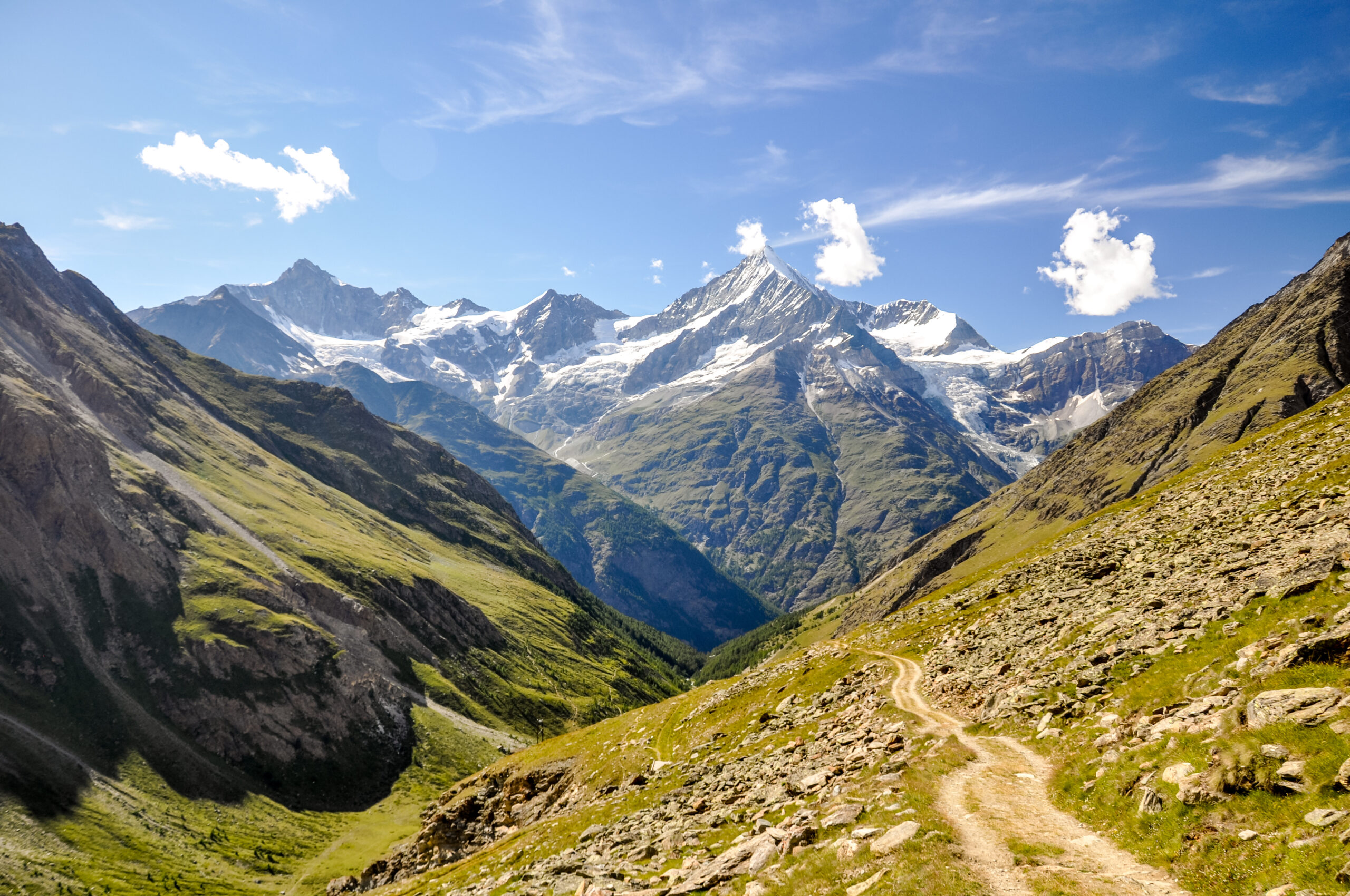
Weisshorn Gear List: East Ridge Equipment Checklist
The Weisshorn’s normal East Ridge is a long AD alpine route from the Weisshornhütte—not an equipment-shopping exercise. Bring the personal kit needed for crampon travel, exposed rock, cold pre-dawn movement and a long technical descent. Then confirm rope, protection and rescue hardware with your guide or rope team because those items change with party style and current conditions.
What Gear Do You Need for the Weisshorn East Ridge?
For the normal East Ridge, every climber should arrive with crampon-compatible mountaineering boots, fitted crampons with anti-balling plates, an ice axe, harness, helmet, headlamp, warm/weatherproof clothing, gloves plus a spare pair, glacier-quality sunglasses, sun protection, food, water and a compact alpine pack. ZERMATTERS’ current guided list specifies an approximately 30 L pack and a mandatory hut liner.
Do not treat a fixed list of ice screws, carabiners, slings and rope lengths as universal personal equipment. ZERMATTERS’ current client list does not ask the guest to bring a rope or full rack. Independent teams need their own rope, glacier-rescue system and route protection chosen for the East Ridge conditions; guided clients should confirm exactly what the guide supplies.

Gear for a Long Mixed Alpine Ridge—not a Glacier Walk.
SAC lists 1,570 metres of ascent from the hut. ZERMATTERS expects climbers to be competent with crampons, ice axe and rope and comfortable with exposed UIAA III–IV terrain.
Photo: ZERMATTERS / Valentin BinerThe East Ridge Checklist
This table separates items a guided client should normally bring from team hardware that must be agreed with the guide or independent rope team.
| Item | East Ridge baseline | Why it matters | Who normally confirms it? |
|---|---|---|---|
| Mountaineering boots | Rigid, crampon-compatible alpine boots | Mixed snow/rock, long descent, crampon security | Each climber |
| Crampons | Fitted to boots; anti-balling plates | Firn/glacier travel and summit snow | Each climber |
| Ice axe | Classic alpine axe suitable for current route | Snow travel, balance and security | Each climber |
| Harness | Light alpine harness | Roped glacier/ridge movement | Each climber |
| Helmet | Climbing helmet | Rock terrain and team movement | Each climber |
| Headlamp | Reliable light + backup power | Guided starts are commonly around 03:00 | Each climber |
| Pack | Approx. 30 L for guided ascent | Compact enough for ridge movement | Each climber |
| Warm/weatherproof layers | Insulation + wind/waterproof shell | Pre-dawn cold and exposed ridge weather | Each climber |
| Gloves | Warm pair + spare pair | Cold ridge, dexterity, wet/snow exposure | Each climber |
| Sun protection | High-protection sunglasses + sunscreen | Snow glare and altitude UV | Each climber |
| Water + food | Enough for a full summit day | No retail resupply above the hut | Each climber |
| Hut liner | Mandatory on current guided list | Weisshornhütte overnight | Each climber |
| Rope / protection | Route- and party-dependent | Glacier, ridge, belays, descent systems | Guide or independent rope team |
Pack for the client role you actually have.
A guided guest does not need to duplicate every team item the guide carries. An independent party cannot copy a guided-client list and assume the rope, rescue and protection systems will somehow appear. Confirm the team kit before you hike to the hut.

Low Bulk Matters as Much as Warmth.
The client pack must carry weather protection without turning exposed ridge movement into a snagging, off-balance problem. This is why local guided lists center on a compact alpine pack rather than an expedition-size load.
Photo: ZERMATTERSBuild the System Before Choosing Brand Names
The compatibility chain matters more than any one product recommendation: boot stiffness → crampon fit → anti-balling → movement confidence.
Rigid + Crampon Compatible
ZERMATTERS specifies mountain boots with a rigid Vibram sole. Choose warmth and stiffness for the current summer conditions and your own cold tolerance.
Fit Them at Home
The local guide list explicitly calls for anti-balling plates. Adjust the crampons to the exact boots you will wear before traveling.
One Alpine Axe on the Guided List
The current ZERMATTERS client list calls for an ice axe. The exact tool geometry should follow your guide and conditions rather than a generic “technical axe” label.
Useful on Approach Terrain
ZERMATTERS also lists a hiking pole, useful for the long valley-to-hut approach and nontechnical sections where an axe is unnecessary.
Wear It for Alpine Rock
Helmet use is non-negotiable on the mixed ridge. Check that it fits correctly over the hat or liner you intend to wear.
Nothing Should Be New at 4,000 m
Weisshorn is not where you learn crampon transitions, short-roping movement or how your gloves work with carabiners.

The Gear Has to Work on Snow and Rock Without Constant Repacking.
The upper mountain repeatedly changes movement mode. Efficient teams keep essential personal equipment accessible and avoid overloading the harness with hardware the guide or rope team has already allocated.
Photo: ZERMATTERSRope, Protection & Rescue Gear Are Not a Fixed Personal Shopping List
The old page hard-coded a 50–60 m half rope, multiple ice screws, slings and carabiners as if every climber needed the same rack. Current local guided practice is cleaner: the client list covers personal gear; the guide/team configuration is decided separately.
| Team item | Guided client | Independent team | Decision trigger |
|---|---|---|---|
| Dynamic rope | Confirm guide supplies it; do not assume without asking | Required; length/diameter chosen for party and descent system | Party size, route plan, rappel options |
| Slings / carabiners | Bring only what guide requests | Build a route-specific alpine rack | Protection strategy and transitions |
| Ice screws | Guide decides | Condition-dependent, not a universal fixed count | Current glacier/firn/ice conditions |
| Crevasse-rescue kit | Guide manages team system; personal competence still matters | Mandatory system appropriate to rope team | Glacier travel |
| Belay / rappel device | Only if guide requests | Required if your system uses it | Rope strategy and descent plan |
| Navigation backup | Phone/offline map still useful | Redundant navigation strongly advised | Visibility, route familiarity, emergency retreat |

Choose Equipment You Can Still Operate After the Summit.
ZERMATTERS lists roughly five hours back to the hut after a 6–7 hour guided ascent. Gloves, headlamp backup, rope systems and pack organization need to work when the team is tired, not only on the way up.
Photo: ZERMATTERSLayer for a 03:00 Start and an Exposed Midday Descent
Do not anchor the whole clothing system to one fixed “−10°C” number. Current mountain weather should set the insulation level.
Fast-Drying Next-to-Skin Layer
Merino or synthetic that can handle high-output movement without staying soaked.
Light Fleece / Mid Layer
Enough warmth for pre-dawn movement without forcing constant stripping and repacking.
Wind + Precipitation Protection
Use a hooded shell suitable for Alpine wind and rapidly changing summer weather.
Insulation for Stops
Size it from the actual forecast, personal cold tolerance and expected waiting time—not an evergreen temperature claim.
Primary + Spare Gloves
ZERMATTERS specifically recommends changing/spare gloves. Wet or lost gloves are a disproportionate problem on a long ridge.
Glacier-Level Sun Protection
Bring sunglasses suited to high-alpine snow exposure, sunscreen and lip protection.
Forecast-driven beats calendar-driven.
A mid-July Weisshorn day can be radically different from another mid-July day. Choose insulation from the current freezing level, wind and precipitation forecast 24–48 hours before the climb.
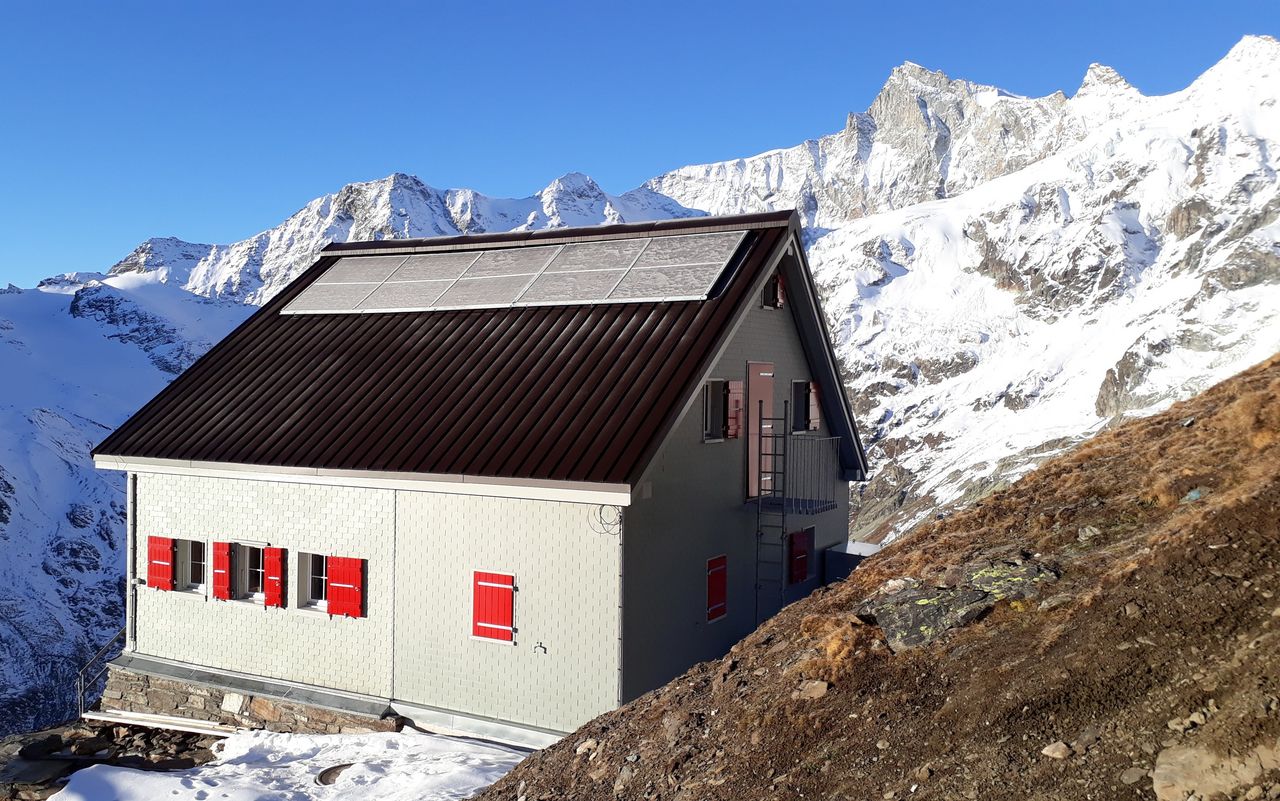
Your Final Gear Check Happens Before the Ridge Starts.
SAC currently lists 31 sleeping places and staffed operation from June through September. The hut is the normal East Ridge base and the logical place to reconfirm conditions, timing and team equipment.
Photo: Swiss Alpine Club SACWhat Changes Between Randa, the Hut and Summit Day?
The valley approach is not a throwaway walk. SAC lists about 4:30 hours and 1,540 m of ascent from Randa to the hut.
| Stage | What you carry / wear | Planning note |
|---|---|---|
| Randa → Weisshornhütte | Approach clothing, pole, full overnight + climbing kit | SAC: T2, ~4:30 h, 1,540 m ascent |
| At the hut | Mandatory liner, toiletries, personal medication, money/ID | ZERMATTERS includes an inner liner on its current client list |
| Summit morning | Helmet, harness, crampons, axe, technical clothing, food/water, headlamp | Common guided start around 03:00 |
| Rental | Core technical equipment may be rentable in Zermatt | ZERMATTERS currently quotes about CHF 50–70 for rental equipment; verify exact items/sizes |
| Insurance | Accident + evacuation coverage | ZERMATTERS recommends valid accident and evacuation insurance |
Do not arrive at the hut hoping to solve a boot or crampon mismatch. Fit technical equipment in the valley and verify rentals before the approach.
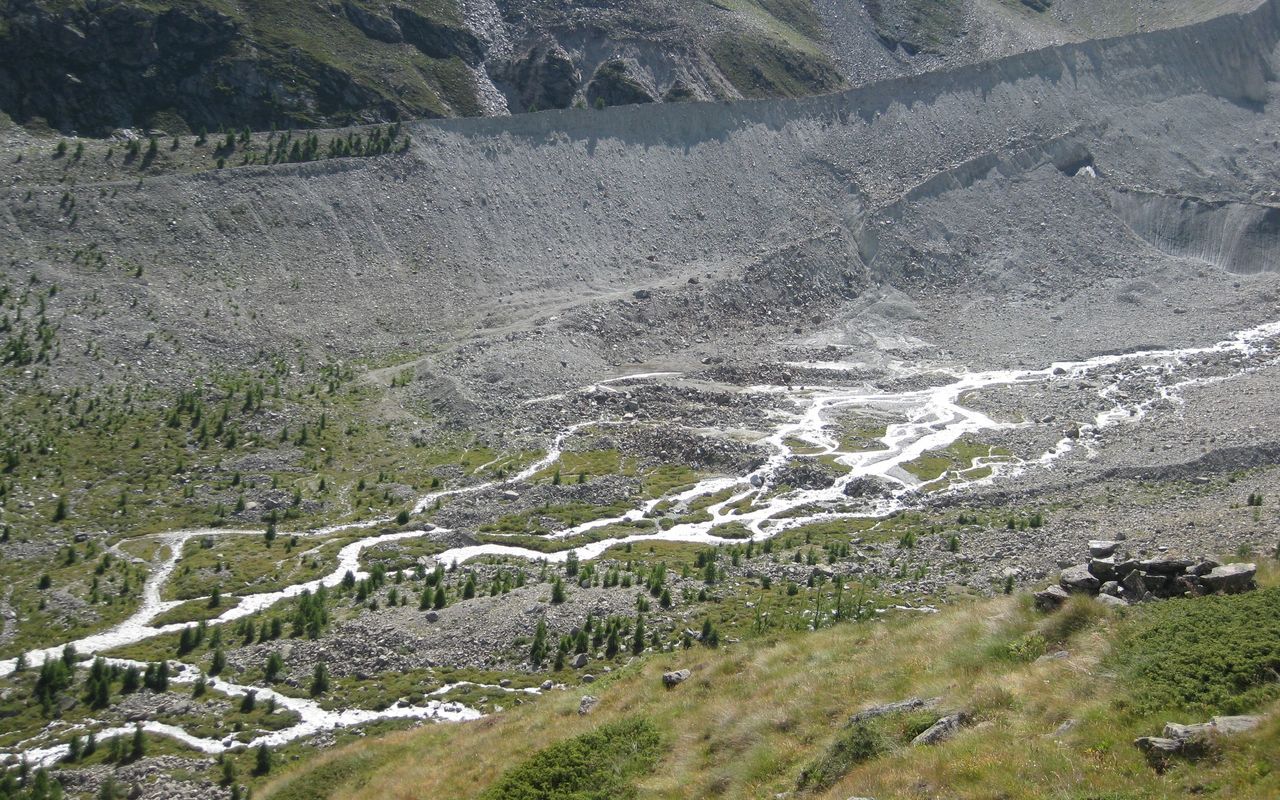
1,540 Metres of Gain Before the Summit Route Begins.
Pack weight matters because every unnecessary item has to reach the hut before the East Ridge starts. The goal is not “ultralight at any cost”; it is carrying exactly the systems your team actually uses.
Photo: Swiss Alpine Club SACEast Ridge Gear Is Not Automatically North Ridge or Schaligrat Gear
The three principal Weisshorn ridges have different grades, starts and technical problems. Treat the gear list as route-specific.
| Route | Current SAC grade | SAC ascent | Gear implication |
|---|---|---|---|
| East Ridge / Ostgrat | AD | 7–8 h · 1,570 m | Baseline page kit; team protection still condition-dependent |
| North Ridge | AD+ | 8–9 h · 1,370 m | Longer ridge system; confirm route-specific rope/protection plan |
| Schaligrat / SW Ridge | D | 5–6 h · 730 m from bivouac | Technical rack and bivouac-access problem require separate planning |
Randa → Weisshornhütte → East Ridge → Weisshorn
This map is for geographic orientation only. It is not a line to follow on the mountain.
Move From the Checklist Into Route, Weather and Safety Planning
The first row keeps the Weisshorn cluster connected. The second row contains exactly three Deep Recovery targets from the internal-link recovery pool.
Weisshorn Gear FAQ
Short answers that keep the gear advice aligned with current SAC grades and current local guide requirements.
What gear do I need for the Weisshorn East Ridge?
Bring crampon-compatible mountaineering boots, fitted crampons with anti-balling plates, an ice axe, harness, helmet, headlamp, warm and weatherproof clothing, gloves plus a spare pair, sunglasses, sun protection, water, food and a compact alpine pack. Confirm rope and protection hardware with your guide or rope team.
Is the Weisshorn East Ridge AD or AD+?
The current Swiss Alpine Club Route Portal grades the East Ridge AD. SAC grades the North Ridge AD+ and the Schaligrat D.
What size backpack do I need for Weisshorn?
ZERMATTERS currently specifies an approximately 30-litre pack for its guided Weisshorn client list. Independent climbers may need more volume depending on how team gear is divided.
Do I need to bring a rope if I hire a guide?
Do not assume either way. ZERMATTERS’ current public client equipment list does not ask the guest to bring a rope, but every guided booking should confirm what the guide provides and what the client must carry.
Do I need ice screws on the Weisshorn East Ridge?
They can be part of an independent team’s protection system, but a fixed universal count is not appropriate because snow and ice conditions change. Guided clients should follow the guide’s equipment instructions.
Do I need a sleeping bag at Weisshornhütte?
ZERMATTERS currently lists an inner liner as mandatory for its Weisshorn hut overnight. Confirm current hut bedding and reservation rules before departure rather than carrying a full camping sleeping bag by default.
Can I rent Weisshorn climbing gear in Zermatt?
ZERMATTERS currently says rental equipment is available in Zermatt and quotes roughly CHF 50–70. Confirm the exact equipment, boot/crampon sizing and availability before traveling to Randa.
Is the same gear list suitable for the Weisshorn North Ridge or Schaligrat?
No. The North Ridge is SAC AD+ and the Schaligrat is D. Each route has a different start, commitment level and protection problem, so the team rack should be planned separately.
Use SAC for Route Facts and the Guide for Client Equipment
Current route conditions still need to be confirmed immediately before the climb. A gear list cannot turn historical summer norms into a live go/no-go decision.
Carry the Personal Systems You Must Operate; Coordinate Everything Shared.
For a guided East Ridge climb, your job is to arrive with compatible boots and crampons, axe, harness, helmet, light, clothing and hut/summit essentials already tested. For an independent climb, add the rope, rescue and protection system your team has deliberately chosen for the current AD route conditions. Weisshorn is too serious for a generic rack copied from an old web list.
Weisshorn Gear & the Alpine 4,000ers
Gear is one piece of a Weisshorn climb. See the full guide and its neighbours on the Swiss frontier below.
Was this helpful?
🏔Related gear guides
🧭Explore & compare
Global Summit Guide is an independent mountaineering resource founded in 2026. The team combines first-hand trekking and climbing experience with in-depth research and professional health and nutrition review to help climbers choose objectives, prepare properly, and stay safe.
Health, altitude, and nutrition content is reviewed by Taylor Ludlow (Registered Nurse) and Brigg Hoopes (Nutritionist).
What We Don't Know Yet
Mountain information changes quickly. This box explains the limits of what this page can responsibly promise.
- Gear requirements can change by season, route variation, weather window, personal cold tolerance, and guide-service requirements.
- Visa, passport, vaccination, border, insurance, and local transportation rules may change before your trip.
- Route conditions, snowpack, closures, and weather can change quickly after this page is updated.
- Permit rules, fees, quotas, and reservation windows may change between review cycles.
- Operator availability, pricing, guide ratios, and cancellation terms can change by season.
Verify current conditions with official land managers, guide services, local forecasts, and current route reports before booking or climbing.
Mountaineering, rock and ice climbing, glacier travel, and high-altitude activity are inherently dangerous and can result in serious injury or death. The information on Global Summit Guide is provided for general informational and educational purposes only and is not a substitute for professional instruction, qualified guiding, proper equipment, or your own judgment and experience.
Route conditions, weather, snowpack, permits, regulations, and hazards change constantly and may differ from what is described here. Details may be incomplete, out of date, or contain errors. Always verify current information with local authorities, certified guides, and official sources before making any decision in the mountains.
Nothing on this site is medical, legal, or financial advice. Our fitness, acclimatization, altitude, and nutrition content is general in nature; consult a qualified physician before beginning any strenuous exercise program or exposing yourself to high altitude.
You are solely responsible for your own safety and decisions. To the fullest extent permitted by law, Global Summit Guide and its team accept no liability for any loss, injury, damage, or expense arising from use of, or reliance on, this information. By using this site you acknowledge these risks and accept these terms.
Some links on this site may be affiliate links. If you buy through them we may earn a small commission at no extra cost to you; this never affects our recommendations.
Global Summit Guide recommendation path
Next Best Mountain to Research
Use these recommendations to continue the right planning path instead of stopping on one page.
Use current permit, weather, route, and operator information before booking or climbing.