
Last updated October 13, 2026
{ “@context”: “https://schema.org”, “@type”: “Article”, “headline”: “Lyskamm (4,527m) Climbing Guide 2026: The Menschenfresser Traverse — Monte Rosa Massif, East and West Summit Ridge & Complete Pennine Alps Expedition Planning”, “description”: “Complete 2026 climbing guide for Lyskamm (4,527m) — the legendary ‘Menschenfresser’ (Man-eater) of the Pennine Alps, infamous for deadly cornice falls and home to one of the most iconic snow ridge traverses in the Alps. The 2-5 km ridge connecting Lyskamm West (4,479m) and Lyskamm East (4,527m) requires solid Alpine mountaineering experience. The complete guide covers the first ascent by J.F. Hardy’s 14-man team in 1861, the East ridge normal route from Lisjoch, the famous full traverse from Feliksjoch to Lisjoch, approach options via Gnifetti Hut and Monte Rosa Hut, Quintino Sella Hut starting point, Spaghetti Tour integration, Swiss and Italian mountain guide pricing for 2026, and the realistic skill requirements for safely climbing one of the most beautiful but most dangerous 4000m peaks in the Alps.”, “image”: “https://globalsummitguide.com/wp-content/uploads/2026/04/AdobeStock_639524727-scaled.jpeg”, “author”: {“@type”: “Organization”, “name”: “Global Summit Guide Editorial Team”}, “publisher”: {“@type”: “Organization”, “name”: “Global Summit Guide”}, “datePublished”: “2026-05-25”, “dateModified”: “2026-10-13T23:17:15+00:00” } { “@context”: “https://schema.org”, “@type”: “FAQPage”, “mainEntity”: [ {“@type”: “Question”, “name”: “How high is Lyskamm?”, “acceptedAnswer”: {“@type”: “Answer”, “text”: “Lyskamm consists of two distinct summits with Lyskamm East rising to 4,527 meters (14,852 feet) as the main and higher peak. Lyskamm West stands at 4,479 meters (14,694 feet) and is considered a stand-alone summit according to the UIAA list of Alpine 4000m peaks. The two summits are connected by a famous 2-5 km long snow ridge that has become one of the most iconic ridge traverses in the entire Alps. Notably, Lyskamm West ranks as the 8th highest mountain in the Alps, after Mont Blanc, Mont Blanc de Courmayeur, Dufourspitze, Nordend, Zumsteinspitze, Signalkuppe (Punta Gnifetti), and the Dom. The mountain sits on the Swiss-Italian border in the Pennine Alps, with the Aosta Valley region of Italy to the south and the Valais canton of Switzerland to the north. Generally, the peak forms part of the Monte Rosa massif — the second-highest mountain group in the entire Alps after Mont Blanc.”}}, {“@type”: “Question”, “name”: “Why is Lyskamm called the Menschenfresser?”, “acceptedAnswer”: {“@type”: “Answer”, “text”: “Lyskamm earned its terrifying nickname ‘Menschenfresser’ (literally ‘Man-eater’ or ‘People-eater’ in German). Specifically, the name reflects the unusually high number of climbers who fell to their deaths from the massive snow cornices that form along the summit ridge. Generally, the cornices grow on the north side of the mountain, often appearing solid from above but extending dangerously far over empty space. Notably, several famous tragedies have shaped the mountain’s reputation. On September 6, 1877, two English alpinists — William Arnold Lewis and Noel Paterson — fell to their deaths from collapsing cornices. Then in 1896, Dr. Max Günther died along with his guides Roman Imboden and Peter Ruppen from the same cornice danger. Specifically, locals at the time attributed the numerous accidents to ‘forces of darkness’ — reflecting the spiritual unease the mountain inspired in surrounding villages. Generally, modern climbers face the same cornice risks despite better equipment and weather forecasting, making Lyskamm one of the most genuinely dangerous 4000m peaks in the Alps.”}}, {“@type”: “Question”, “name”: “Who first climbed Lyskamm?”, “acceptedAnswer”: {“@type”: “Answer”, “text”: “Lyskamm East — the higher and main summit — was first climbed on August 19, 1861 by a large 14-member expedition led by Englishman J. F. Hardy. The party included seven Englishmen, one Scotsman, and six Swiss guides, with notable members including William Edward Hall. Generally, the team approached from the Italian side and climbed the East ridge from the Lisjoch (Lys Pass) to the eastern summit. Notably, the first ascent route — now called the normal route — remains the standard line for modern climbers attempting the peak. The unusually large team size reflected both the Victorian-era approach to Alpine mountaineering and the perceived seriousness of the objective. Generally, the 1861 ascent represents one of the early successful climbs of a major Pennine Alps 4000er, predating the first ascent of the Matterhorn just down the valley by four years. The team approached via the Lisjoch which is accessible from the Italian-side Gnifetti Hut or the Swiss-side Monte Rosa Hut — both refuges that still serve as the primary base camps for modern Lyskamm expeditions.”}}, {“@type”: “Question”, “name”: “What is the Lyskamm Traverse?”, “acceptedAnswer”: {“@type”: “Answer”, “text”: “The Lyskamm Traverse is the famous 2-5 km ridge crossing that connects Lyskamm West (4,479m) and Lyskamm East (4,527m). Generally, the traverse stands as one of the most iconic snow ridge climbs in the entire Alps — featuring a delicate, exposed crossing with sharp and corniced sections suspended over the dramatic north face. Notably, the traverse can be climbed in either direction (west to east or east to west) but most expeditions follow west to east starting from the Quintino Sella Hut (3,585m). The complete day involves several stages. First, 4 AM departure ascending the glacier to Felikjoch (4,000m) by dawn. Then climbing the long snow ridge to Lyskamm West. Next, traversing the famous ridge to Lyskamm East. Finally, descending to Lys Col and finishing at the Gnifetti Hut. Generally, the technical difficulty grades around AD (Assez Difficile) without specific technical sections but demands continuous concentration, perfect crampon technique, and the ability to safely move on exposed terrain. The Lyskamm Traverse is included as part of the famous Monte Rosa Spaghetti Tour and remains one of the most coveted ridge climbs in the Alps.”}}, {“@type”: “Question”, “name”: “How dangerous is climbing Lyskamm?”, “acceptedAnswer”: {“@type”: “Answer”, “text”: “Lyskamm is genuinely one of the most dangerous 4000m peaks in the Alps despite its relatively modest technical difficulty rating. The primary hazard is cornice collapse along the summit ridge — massive overhanging snow formations that have killed many climbers over the years, including the famous 1877 fall of William Arnold Lewis and Noel Paterson and the 1896 death of Dr. Max Günther with guides Roman Imboden and Peter Ruppen. Generally, the cornices form on the north side of the ridge but often appear solid from above, creating the deadly illusion that climbers can walk safely close to the edge. Specifically, the only safe practice is staying well back from the apparent ridge edge on the south side. Notably, the mountain also presents standard alpine hazards including weather changes, glacier crevasses on the approach, route finding difficulties in poor visibility, and altitude effects. Climbers attempting Lyskamm need: solid Alpine mountaineering experience on snow and mixed terrain, very good crampon technique, prior experience on AD ridges like Eiger Mittelegi or Bernina Biancograt, and ideally hire an IFMGA-certified mountain guide. The ‘Menschenfresser’ nickname earned through centuries of fatal accidents reflects genuine danger that modern equipment doesn’t fully mitigate.”}} ] } .lys-page { font-family: ‘Outfit’, sans-serif; color: #122a44; line-height: 1.65; max-width: 1200px; margin: 0 auto; padding: 0; } .lys-page h1, .lys-page h2, .lys-page h3, .lys-page h4 { font-family: ‘DM Serif Display’, serif; font-weight: 400; color: #0a1929; line-height: 1.15; } .lys-page p { font-size: 1.02rem; margin-bottom: 1.1em; } .lys-page a { color: #2e5986; text-decoration: none; border-bottom: 1px solid rgba(46,89,134,0.3); } .lys-page a:hover { color: #d4913a; border-bottom-color: #d4913a; } .lys-hero { position: relative; min-height: 580px; background: linear-gradient(135deg, rgba(10,25,41,0.85) 0%, rgba(18,42,68,0.75) 100%), url(‘https://globalsummitguide.com/wp-content/uploads/2026/04/AdobeStock_639524727-scaled.jpeg’); background-size: cover; background-position: center; color: #f5e4c8; padding: 70px 40px; display: flex; flex-direction: column; justify-content: center; overflow: hidden; } .lys-hero::before { content: ”; position: absolute; top: -100px; right: -100px; width: 400px; height: 400px; background: radial-gradient(circle, rgba(212,145,58,0.35) 0%, transparent 70%); pointer-events: none; } .lys-hero-content { max-width: 900px; position: relative; z-index: 2; } .lys-hero-breadcrumb { font-size: 0.85rem; color: rgba(245,228,200,0.7); margin-bottom: 14px; letter-spacing: 1px; text-transform: uppercase; } .lys-hero-breadcrumb a { color: rgba(245,228,200,0.85); border-bottom: none; } .lys-hero h1 { font-size: 3.4rem; color: #f5e4c8; margin: 0 0 20px; line-height: 1.05; } .lys-hero h1 em { color: #d4913a; font-style: italic; } .lys-hero-tagline { font-size: 1.15rem; color: rgba(245,228,200,0.92); margin-bottom: 32px; max-width: 760px; } .lys-stat-grid { display: grid; grid-template-columns: repeat(4, 1fr); gap: 20px; margin-top: 24px; } .lys-stat { background: rgba(245,228,200,0.08); border: 1px solid rgba(212,145,58,0.3); border-radius: 8px; padding: 18px 16px; backdrop-filter: blur(4px); } .lys-stat-num { font-family: ‘DM Serif Display’, serif; font-size: 1.9rem; color: #d4913a; line-height: 1; margin-bottom: 6px; } .lys-stat-label { font-size: 0.78rem; color: rgba(245,228,200,0.85); text-transform: uppercase; letter-spacing: 0.8px; } .lys-hub-strip { background: #122a44; color: rgba(245,228,200,0.85); padding: 14px 40px; font-size: 0.86rem; text-align: center; } .lys-hub-strip a { color: #d4913a; border-bottom: none; } .lys-hub-strip a:hover { color: #f5e4c8; } .lys-main { display: grid; grid-template-columns: 1fr 280px; gap: 50px; padding: 60px 40px; } .lys-content h2 { font-size: 2.2rem; margin-top: 60px; margin-bottom: 20px; padding-bottom: 12px; border-bottom: 2px solid #d4913a; } .lys-content h2:first-child { margin-top: 0; } .lys-content h2 em { color: #d4913a; font-style: italic; } .lys-content h3 { font-size: 1.5rem; margin-top: 32px; margin-bottom: 14px; color: #0a1929; } .lys-content h4 { font-size: 1.2rem; margin-top: 24px; margin-bottom: 10px; color: #122a44; } .lys-sidebar { font-size: 0.92rem; } .lys-sidebar-card { background: #f8f4ec; border-radius: 10px; padding: 22px; margin-bottom: 22px; position: sticky; top: 20px; } .lys-sidebar-card h4 { margin: 0 0 14px; font-size: 1.1rem; color: #0a1929; border-bottom: 1px solid #d4c8a8; padding-bottom: 8px; } .lys-sidebar-card ul { margin: 0; padding-left: 18px; } .lys-sidebar-card li { margin-bottom: 6px; font-size: 0.88rem; } .lys-sidebar-facts { background: #0a1929; color: #f5e4c8; border-radius: 10px; padding: 22px; margin-bottom: 22px; } .lys-sidebar-facts h4 { color: #d4913a; margin: 0 0 14px; font-size: 1rem; border-bottom: 1px solid rgba(212,145,58,0.3); padding-bottom: 8px; } .lys-sidebar-facts dl { margin: 0; } .lys-sidebar-facts dt { color: rgba(245,228,200,0.7); font-size: 0.78rem; text-transform: uppercase; letter-spacing: 0.5px; margin-top: 10px; } .lys-sidebar-facts dd { margin: 2px 0 0; font-size: 0.95rem; color: #f5e4c8; } .lys-table { width: 100%; border-collapse: collapse; margin: 24px 0; font-size: 0.92rem; } .lys-table th { background: #0a1929; color: #f5e4c8; padding: 12px 14px; text-align: left; font-weight: 500; font-size: 0.82rem; letter-spacing: 0.5px; text-transform: uppercase; } .lys-table td { padding: 11px 14px; border-bottom: 1px solid #e8e2d4; vertical-align: top; } .lys-table tr:nth-child(even) td { background: #fbf7ef; } .lys-callout-info { background: #e8f0f7; border-left: 4px solid #2e5986; padding: 18px 22px; border-radius: 6px; margin: 24px 0; } .lys-callout-info strong { color: #2e5986; } .lys-callout-warning { background: #fdf3e8; border-left: 4px solid #b86a15; padding: 18px 22px; border-radius: 6px; margin: 24px 0; } .lys-callout-warning strong { color: #b86a15; } .lys-callout-danger { background: #fde8e3; border-left: 4px solid #a83a2b; padding: 18px 22px; border-radius: 6px; margin: 24px 0; } .lys-callout-danger strong { color: #a83a2b; } .lys-route-card { background: #f8f4ec; border-radius: 12px; padding: 28px; margin: 28px 0; border-left: 5px solid #d4913a; } .lys-route-card h3 { color: #0a1929; margin-top: 0; margin-bottom: 8px; font-size: 1.6rem; } .lys-route-meta { color: #b86a15; font-weight: 600; font-size: 0.92rem; margin-bottom: 16px; } .lys-route-card h4 { color: #122a44; margin-top: 20px; margin-bottom: 8px; font-size: 1.05rem; } .lys-route-specs { display: grid; grid-template-columns: repeat(4, 1fr); gap: 10px; margin: 18px 0; padding-top: 16px; border-top: 1px solid #d4c8a8; } .lys-spec { background: #ffffff; padding: 10px 12px; border-radius: 6px; border: 1px solid #e8e2d4; } .lys-spec-label { font-size: 0.7rem; color: #8b7a4e; text-transform: uppercase; letter-spacing: 0.4px; margin-bottom: 2px; } .lys-spec-val { font-family: ‘DM Serif Display’, serif; font-size: 1rem; color: #0a1929; } .lys-pros-cons { display: grid; grid-template-columns: 1fr 1fr; gap: 20px; margin-top: 20px; } .lys-pros, .lys-cons { padding: 16px; border-radius: 8px; } .lys-pros { background: #e8f4ee; border-left: 3px solid #2e7d52; } .lys-cons { background: #fdf3e8; border-left: 3px solid #b86a15; } .lys-pros h5, .lys-cons h5 { font-family: ‘DM Serif Display’, serif; margin: 0 0 10px; font-size: 1rem; } .lys-pros h5 { color: #2e7d52; } .lys-cons h5 { color: #b86a15; } .lys-pros ul, .lys-cons ul { margin: 0; padding-left: 20px; font-size: 0.9rem; } .lys-pros li, .lys-cons li { margin-bottom: 4px; } .lys-feature-img { margin: 32px 0; border-radius: 10px; overflow: hidden; box-shadow: 0 4px 20px rgba(10,25,41,0.12); } .lys-feature-img img { width: 100%; display: block; } .lys-feature-img figcaption { padding: 12px 18px; background: #f8f4ec; font-size: 0.85rem; color: #5a4f30; font-style: italic; } .lys-faq { margin: 30px 0; } .lys-faq-item { background: #f8f4ec; border-radius: 8px; margin-bottom: 12px; padding: 0; } .lys-faq-item summary { padding: 18px 24px; cursor: pointer; font-family: ‘DM Serif Display’, serif; font-size: 1.1rem; color: #0a1929; list-style: none; } .lys-faq-item summary::after { content: ‘+’; float: right; color: #d4913a; font-size: 1.4rem; line-height: 0.8; } .lys-faq-item[open] summary::after { content: ‘−’; } .lys-faq-item div { padding: 0 24px 20px; font-size: 0.95rem; } .lys-related { background: #f8f4ec; padding: 26px; border-radius: 10px; margin: 30px 0; } .lys-related h4 { margin-top: 0; margin-bottom: 16px; color: #0a1929; } .lys-related ul { margin: 0; padding-left: 20px; } .lys-related li { margin-bottom: 8px; font-size: 0.95rem; } .lys-sources { background: #fbf7ef; border: 1px solid #e8d8ad; padding: 22px 26px; border-radius: 8px; margin: 30px 0; font-size: 0.9rem; } .lys-sources h4 { margin-top: 0; color: #5a4f30; } .lys-sources ul { margin: 0; padding-left: 20px; } .lys-sources li { margin-bottom: 6px; } .lys-updated-banner { background: #d4913a; color: #0a1929; padding: 12px 24px; border-radius: 6px; font-weight: 600; text-align: center; font-size: 0.95rem; margin: 24px 0; } .lys-timeline-block { background: linear-gradient(135deg, #122a44 0%, #1e3a5f 100%); color: #f5e4c8; padding: 28px; border-radius: 10px; margin: 28px 0; } .lys-timeline-block h4 { color: #d4913a; margin-top: 0; } .lys-timeline-row { display: grid; grid-template-columns: 110px 1fr; gap: 16px; padding: 11px 0; border-bottom: 1px solid rgba(245,228,200,0.15); } .lys-timeline-row:last-child { border-bottom: none; } .lys-timeline-time { color: #d4913a; font-weight: 600; font-family: ‘DM Serif Display’, serif; font-size: 1.05rem; } .lys-timeline-event { color: rgba(245,228,200,0.92); font-size: 0.95rem; } .lys-timeline-event strong { color: #f5e4c8; } .lys-final-cta { background: linear-gradient(135deg, #122a44 0%, #1e3a5f 100%); color: #f5e4c8; padding: 36px 32px; border-radius: 12px; margin: 40px 0 0; text-align: center; } .lys-final-cta h3 { color: #d4913a; margin: 0 0 12px; font-size: 1.6rem; } .lys-final-cta p { color: rgba(245,228,200,0.9); font-size: 1rem; margin: 0 0 22px; max-width: 600px; margin-left: auto; margin-right: auto; line-height: 1.6; } .lys-cta-button { display: inline-block; background: #d4913a; color: #0a1929; padding: 14px 28px; border-radius: 6px; font-weight: 600; text-decoration: none; border: none !important; font-size: 1rem; } .lys-cta-button:hover { background: #f5e4c8; color: #0a1929; } @media (max-width: 900px) { .lys-main { grid-template-columns: 1fr; padding: 40px 20px; } .lys-hero { padding: 40px 20px; min-height: auto; } .lys-hero h1 { font-size: 2.2rem; } .lys-stat-grid { grid-template-columns: repeat(2, 1fr); } .lys-route-specs { grid-template-columns: repeat(2, 1fr); } .lys-pros-cons { grid-template-columns: 1fr; } .lys-timeline-row { grid-template-columns: 80px 1fr; } .lys-sidebar-card { position: static; } }Lyskamm (4,527m) Climbing Guide 2026: The Menschenfresser Traverse — Monte Rosa Massif, East and West Summit Snow Ridge & Complete Pennine Alps Planning
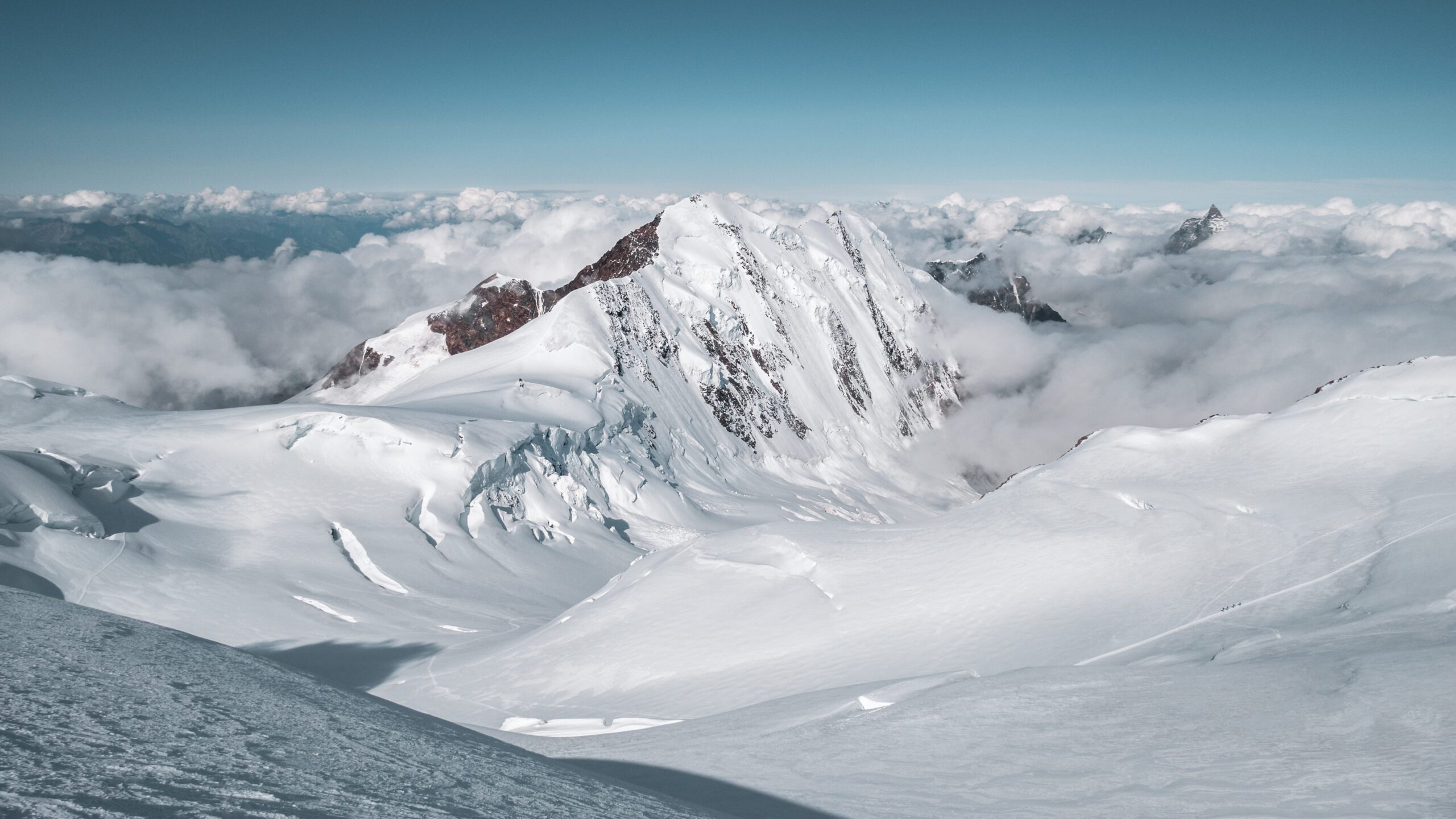
Lyskamm rises on the Swiss-Italian border in the Pennine Alps as part of the legendary Monte Rosa massif. The mountain features two distinct summits. Specifically, Lyskamm East at 4,527m is the main summit. Then Lyskamm West stands at 4,479m. Notably, both summits are connected by one of the most famous and feared snow ridge traverses in the entire Alps. Generally known as “Menschenfresser” (Man-eater) because of the deadly cornices that have killed numerous climbers over the past 150 years. Notably, Lyskamm remains genuinely one of the most dangerous 4000m peaks despite a modest technical grade. The famous traverse spans 2-5 km of exposed, corniced snow ridge suspended above the dramatic north face — an iconic Alpine challenge that demands solid mountaineering experience. The complete 2026 guide covers multiple topics. First, the East ridge normal route. Then the full traverse from Feliksjoch to Lisjoch. Additionally, approach options via the Gnifetti, Monte Rosa, and Quintino Sella huts. Next, Spaghetti Tour integration and current Swiss-Italian guide pricing. Finally, the realistic skill requirements for safely climbing the Menschenfresser.
Lyskamm holds a unique place among the Alpine 4000ers. Notably, the mountain combines spectacular beauty with genuine danger. Specifically, the combination has earned it both legendary climbing status and the chilling nickname “Menschenfresser.” Generally, the peak features two distinct summits. Additionally, the summits are connected by what is widely considered one of the most iconic snow ridge traverses in the entire Alps. The 2-5 km ridge between Lyskamm West (4,479m) and Lyskamm East (4,527m) spans exposed terrain suspended over the dramatic north face. Notably, the position creates both the visual drama climbers come to experience. Additionally, the same position creates the cornice formations that have made the mountain so deadly over the past 150 years.
The Lyskamm sits at the heart of the Monte Rosa massif — the second-highest mountain group in the entire Alps after Mont Blanc. Notably, the peak straddles the international border between Switzerland (Valais canton) and Italy (Aosta Valley). Generally, Lyskamm West ranks as the 8th highest mountain in the Alps according to the UIAA list of 4000m peaks. Specifically, only Mont Blanc, Mont Blanc de Courmayeur, Dufourspitze, Nordend, Zumsteinspitze, Signalkuppe (Punta Gnifetti), and the Dom stand higher. The German name Liskamm translates to “Lys Ridge” — referring to the long ridge that gives the mountain its distinctive elongated profile.
This guide covers what you need to know about climbing Lyskamm in 2026 — step by step from initial expedition planning through summit success. The legendary climbing history starting with the 1861 first ascent by J. F. Hardy’s 14-member team and continuing through over 150 years of tragedy and triumph on the corniced ridges. The mountain has two main route options. First, the East ridge normal route from Lisjoch to the East summit. Second, the famous full traverse connecting both summits along the iconic snow ridge. Climbers have multiple approach hut options. First, the Italian-side Gnifetti Hut (3,650m). Then the Swiss-side Monte Rosa Hut (2,883m). Additionally, the Quintino Sella Hut (3,585m) at the edge of the Felik Glacier. The Spaghetti Tour integration where Lyskamm appears as one of the most spectacular days in this classic multi-day Monte Rosa traverse. The cornice safety practices that distinguish successful climbers from cornice victims. Current Swiss and Italian mountain guide pricing for 2026 expeditions. The skills and experience requirements — Lyskamm is genuinely not a beginner peak despite its modest technical grade.
Lyskamm At a Glance
The essential climbing reference for Lyskamm. Detailed sections follow below.
| Lyskamm East elevation | 4,527 m (14,852 ft) — main summit |
|---|---|
| Lyskamm West elevation | 4,479 m (14,694 ft) — stand-alone UIAA summit |
| Prominence | 379 m (down to Lisjoch) |
| Native name | Liskamm (German) — translates as “Lys Ridge” |
| Famous nickname | “Menschenfresser” (Man-eater / People-eater) |
| UIAA ranking | Lyskamm West: 8th highest in Alps |
| Parent peak | Monte Rosa (3 km isolation to Zumsteinspitze) |
| Mountain group | Monte Rosa massif |
| Range | Pennine Alps (Valais Alps) |
| Countries | Italy and Switzerland |
| Italian region | Aosta Valley |
| Swiss canton | Valais |
| Coordinates | 45°55’21″N 7°50’08″E |
| First ascent | August 19, 1861 — J. F. Hardy with 14-member team |
| First ascent team | 7 Englishmen, 1 Scotsman, 6 Swiss guides incl. William Edward Hall |
| First ascent route | East ridge from Lisjoch |
| Normal route grade | F to PD+ (depending on conditions) |
| Famous traverse grade | AD (Assez Difficile) |
| Traverse length | 2-5 km depending on counting method |
| Approach huts | Gnifetti (3,650m), Monte Rosa (2,883m), Quintino Sella (3,585m), Mantova |
| Notable historical accidents | 1877 Lewis/Paterson; 1896 Günther + 2 guides — all cornice falls |
| Standard summit day | 4 AM start; 8-12 hour summit day |
| Best climbing season | July through September |
| Cable car access | Punta Indren Gondola (Italian side) |
| Required equipment | Crampons, ice axe, harness, rope, helmet |
| Guided cost (group, 2026) | CHF 800-1,500 per person (varies by service) |
| Multi-day Spaghetti Tour | CHF 1,850-2,550 per person (Lyskamm included) |
| Typical expedition duration | 2-3 days for Lyskamm specifically; 5-7 days for Spaghetti Tour |
| Currency | CHF (Switzerland), EUR (Italy) |
| Required experience | Solid AD-grade ridge climbing; Eiger Mittelegi / Bernina Biancograt level |
The Menschenfresser nickname is not marketing — Lyskamm genuinely kills climbers. Notably, Lyskamm’s reputation as one of the deadliest 4000m peaks in the Alps rests on documented historical accidents that continue into the modern era. Generally, the primary hazard is cornice collapse. Specifically, the massive overhanging snow formations on the north side of the summit ridge appear solid from above but extend dangerously over empty space. Specifically, the September 6, 1877 deaths of William Arnold Lewis and Noel Paterson established the mountain’s dark reputation, followed by the 1896 deaths of Dr. Max Günther and his guides Roman Imboden and Peter Ruppen from the same cornice danger. Notably, locals at the time attributed the numerous accidents to “forces of darkness” — reflecting the spiritual unease the mountain inspired. Generally, modern climbers continue to fall from collapsing cornices despite better weather forecasting, GPS navigation, and improved equipment. The deceptive nature of cornices makes them genuinely difficult to assess. Specifically, climbers walking on the ridge cannot accurately judge how far the cornice extends beyond the actual rock and ice underneath. The only safe practice is staying well back from the apparent edge on the south side of the ridge. Climbers planning Lyskamm should approach the climb with serious respect for the cornice hazard rather than viewing the “Menschenfresser” nickname as merely picturesque.
Lyskamm Climbing History: 165 Years of Triumph and Tragedy
Lyskamm’s climbing history spans over 165 years from the 1861 first ascent through modern technical climbs on all aspects of the mountain. Generally, the peak’s history alternates between celebrated achievements and tragic accidents — a pattern that reflects both the spectacular climbing experience and the genuine objective hazards.
1861: First Ascent by J. F. Hardy’s 14-Member Team
Lyskamm East — the higher and main summit at 4,527m — was first climbed on August 19, 1861. Notably, the expedition involved a large 14-member team led by Englishman J. F. Hardy. Generally, the party included seven Englishmen, one Scotsman, and six Swiss guides, with William Edward Hall among the notable members. The team approached from the Italian side and climbed the East ridge from the Lisjoch (Lys Pass) to the eastern summit. Specifically, this route — now called the normal route — remains the standard line for modern climbers attempting the peak. The unusually large team size reflected both the Victorian-era approach to Alpine mountaineering and the perceived seriousness of the objective.
September 6, 1877: The Lewis-Paterson Tragedy
Lyskamm earned its first deadly reputation just 16 years after the first ascent. Notably, the first major tragedy struck on September 6, 1877. Specifically, two English alpinists — William Arnold Lewis and Noel Paterson — fell to their deaths from a collapsing cornice on the summit ridge. Generally, the accident shocked the Victorian climbing community and established the mountain’s reputation as a particularly dangerous 4000er. Specifically, the incident demonstrated the deceptive nature of Lyskamm’s cornices — formations that appear solid from above but extend dangerously over empty space.
1896: The Günther Expedition Tragedy
Nearly two decades after the Lewis-Paterson accident, another cornice tragedy struck. Generally, Dr. Max Günther died on Lyskamm in 1896 along with his two guides Roman Imboden and Peter Ruppen. Notably, the accident again involved a cornice collapse — confirming the mountain’s pattern of fatal accidents in the same hazard category. Specifically, locals at the time attributed the numerous accidents to “forces of darkness” — reflecting the spiritual unease the mountain inspired in surrounding villages. Generally, this period cemented the “Menschenfresser” nickname in Alpine climbing literature.
Early 20th Century: The Geoffrey Winthrop Young Era
Famous British mountaineer Geoffrey Winthrop Young completed several notable Lyskamm climbs. Notably, one expedition saw Young attempt a double traverse of Lyskamm — climbing it once, then attempting to return the same way after climbing Castor. Generally, his guide became too tired after the first traverse and refused to continue. Specifically, Young was disappointed and convinced the guide to return via the Lisjoch before descending to Zermatt, implying a second traverse on Lyskamm. The episode illustrates the era’s bold approach to multi-peak Alpine climbing.
Modern Era: Spaghetti Tour Integration
In the modern era, Lyskamm has become integrated into the famous Monte Rosa Spaghetti Tour. Specifically, the tour is a hut-to-hut traverse over all main 4000m peaks of the Monte Rosa massif. Notably, the tour involves more than 55 km of climbing across multiple days with the Lyskamm traverse as one of the most spectacular and challenging sections. Generally, the Spaghetti Tour follows a standard sequence: starting with the Breithorns, moving over Pollux and Castor, then tackling the Lyskamms, and finishing on Dufourspitze. Specifically, the inclusion of Lyskamm provides the most technically demanding and exposed climbing on the tour. Naturally, the section becomes the testing ground for those attempting all the Monte Rosa peaks.
Why Lyskamm has so many cornices. Notably, Lyskamm’s cornice formation pattern is unusually severe compared to other Alpine 4000ers. Generally, several factors combine to create the deadly cornices. First, the prevailing wind direction from the south pushes snow over the ridge to form cornices on the north side. Second, the elongated ridge shape provides extensive cornice-forming terrain compared to peaks with more pointed summits. Third, the north face drops dramatically from the ridge — creating empty space underneath the overhanging snow. Fourth, the climate at 4,500m provides ideal conditions for cornice formation with cold temperatures and considerable snowfall. Specifically, climbers must remember that what appears to be the ridge top from above may actually be 5-15 meters of overhanging cornice with no rock underneath. Generally, the safe practice is staying well back from any apparent edge. Specifically, climbers should stay on the south side of the ridge where the slope drops away more gradually. Notably, even experienced climbers have died on Lyskamm by misjudging cornice extent, making this hazard genuinely difficult to fully mitigate.
Lyskamm Major Routes: East Ridge Normal & Famous Traverse
Lyskamm offers two primary route options. Generally, climbers choose between climbing one summit (typically Lyskamm East via the normal route) or completing the full traverse between both summits along the famous ridge. Notably, the traverse represents the more spectacular but more committing option — requiring solid mountaineering experience and ideal weather conditions.
Route 1: East Ridge Normal Route (1861 First Ascent Line)
The East ridge represents Lyskamm’s normal route — the line of the 1861 first ascent and the most commonly attempted single-summit option. Generally, the route climbs from the Lisjoch (Lys Pass) up the East ridge to Lyskamm East at 4,527m. Notably, the climbing is fundamentally a snow climb with sections up to 45° gradient. However, the route remains genuinely serious because of cornice hazards and weather exposure on the ridge. Specifically, the route grade is F4 to PD+ in standard conditions but can rise significantly in icy or hard snow conditions.
Route Details
- Starting point: Gnifetti Hut (3,650m) or Monte Rosa Hut (2,883m)
- Approach to col: Glacier travel to reach Lisjoch (~4,150m)
- Vertical gain from col: ~380 meters to summit
- Climbing time from col: 1.5-2 hours typical
- Snow gradient: Up to 45° on steeper sections
- Technical difficulty: F4-PD+ in normal conditions
- Difficulty in icy conditions: Can increase to AD or beyond
- Total summit day: 8-10 hours hut to hut
- Cornice hazard: Significant on summit ridge
- Best for: Climbers seeking one summit; introduction to Lyskamm
East Ridge Advantages
- Shorter day than full traverse
- Historical significance as first ascent route
- Multiple hut options for approach
- Reaches the main 4,527m summit
- Less committing than traverse
East Ridge Disadvantages
- Still subject to cornice hazards
- Difficulty rises sharply in poor conditions
- Misses the iconic traverse experience
- Weather exposure on ridge
Route 2: Famous Lyskamm Traverse (West to East)
The Lyskamm Traverse stands as one of the most iconic snow ridge climbs in the entire Alps. Generally, the route connects Lyskamm West (4,479m) and Lyskamm East (4,527m) along a 2-5 km ridge suspended over the dramatic north face. Notably, the traverse is typically completed from west to east starting from the Quintino Sella Hut on the Felik Glacier edge. Specifically, the route combines stunning visual drama with serious objective hazards from cornices and weather exposure. Naturally, the route stands as one of the most coveted but most dangerous AD-grade climbs in the Alps.
Traverse Day Structure
- Starting hut: Quintino Sella Hut (3,585m) at edge of Felik Glacier
- Departure time: 4 AM typical alpine start
- First milestone: Felik Col (4,000m) at dawn
- Initial climb: Snow ridge from Felik Col to Lyskamm West
- Lyskamm West summit: 4,479m
- Traverse section: 2-5 km along snow ridge between summits
- Lyskamm East summit: 4,527m (main summit)
- Descent: Down to Lys Col, then easy south slopes
- Endpoint hut: Gnifetti Hut (3,650m)
- Final gondola: Punta Indren Gondola down to starting point
- Total traverse time: 10-14 hours typical
Required Skills for the Traverse
Notably, the Lyskamm Traverse is widely cited as requiring specific prior experience. Generally, mountain guides recommend climbers have previously completed certain routes. Specifically, the recommended routes are the Mittelegi ridge on Eiger, the Biancograt on Piz Bernina, or the Rochefort Arête in the Mont Blanc range before attempting Lyskamm. Specifically, the technical demands include:
- Solid mountaineering experience on snow and mixed terrain
- Very good crampon technique — perfect footwork on exposed ridges
- Ability to safely move on exposed terrain without falling
- Cornice awareness and safe ridge-walking practices
- Glacier travel and crevasse rescue skills
- Excellent physical fitness for sustained 10-14 hour day
- Mental focus for continuous exposure
- Weather assessment and decision-making capability
Traverse Advantages
- Most iconic snow ridge in the Alps
- Climbs both UIAA 4000m summits
- Spectacular visual experience
- Spaghetti Tour highlight
- Combines with Monte Rosa peaks
- Career milestone for serious alpinists
Traverse Disadvantages
- Most dangerous cornice exposure
- Long 10-14 hour committing day
- Requires AD-grade experience
- Weather window critical
- Less retreat options mid-traverse
- Mental concentration demands
Lyskamm Approach Huts: Italian and Swiss Options
Lyskamm climbers have multiple mountain hut options depending on chosen route and starting point. Generally, the huts range from the Italian-side Gnifetti Hut at 3,650m to the Swiss-side Monte Rosa Hut at 2,883m. Notably, the choice of hut influences which routes are most practical and which gondola access points climbers can use.
Primary Mountain Huts for Lyskamm
| Hut | Elevation | Country | Access | Best For |
|---|---|---|---|---|
| Gnifetti Hut | 3,650 m | Italy | Punta Indren Gondola | East ridge normal route; traverse finish |
| Mantova Hut | 3,498 m | Italy | Near Gnifetti via Garstelet Glacier | Alternative to Gnifetti; less crowded |
| Monte Rosa Hut | 2,883 m | Switzerland | From Zermatt via Gornergrat Bahn | Swiss approach; lower altitude base |
| Quintino Sella Hut | 3,585 m | Italy | Colle di Bettaforca gondola | Famous traverse west-to-east start |
Gnifetti Hut (3,650m) — The Standard Italian Base
The Gnifetti Hut serves as the most popular base for Lyskamm climbs. Notably, the hut sits at 3,650m on the Italian side, providing easy access to the Lisjoch and the normal East ridge route. Generally, climbers reach the hut via the Punta Indren Gondola followed by approximately 1.5 hours of glacier travel. Specifically, the hut also serves as the endpoint for the famous Lyskamm Traverse. Naturally, completing the west-to-east crossing brings climbers down to the Gnifetti Hut for a celebration evening.
- Elevation: 3,650m (provides good acclimatization)
- Access: Punta Indren Gondola + 1.5-2 hour glacier walk
- Booking: Required well in advance for peak season
- Capacity: Large hut accommodating 200+ climbers
- Meals: Half-board typical with hut dinners
- Operating season: Typically late June through September
- Cost: EUR 70-90 per night with half-board for non-CAI members
- CAI member discount: Significant savings for Italian Alpine Club members
Monte Rosa Hut (2,883m) — The Swiss Alternative
The Monte Rosa Hut on the Swiss side offers a different starting point. Generally, the hut at 2,883m provides a lower-altitude approach with longer climbing days from the hut. Notably, climbers reach the Monte Rosa Hut from Zermatt via the Gornergrat Bahn (railway) to Rotenboden. Then climbers walk across the Gorner Glacier. Generally, the approach takes 2-3 hours from the railway station.
- Elevation: 2,883m (lower acclimatization than Gnifetti)
- Access: Gornergrat Bahn from Zermatt to Rotenboden, then walk
- Glacier crossing: Across Gorner Glacier (2-3 hours)
- Climbing day: Longer than Gnifetti due to lower starting point
- Booking: Through Swiss Alpine Club (SAC) reservation system
- Cost: CHF 90-120 per night with half-board for non-members
- SAC member discount: Significant savings available
- Best for: Climbers approaching from Zermatt; combination with Monte Rosa peaks
Quintino Sella Hut (3,585m) — The Traverse Start
The Quintino Sella Hut serves as the typical starting point for the famous Lyskamm Traverse from west to east. Generally, the hut sits at the edge of the Felik Glacier at 3,585m, providing direct access to Felik Col and Lyskamm West. Notably, climbers reach the hut via the Colle di Bettaforca gondola plus approximately 3 hours of walking. Generally, the schedule allows feasible afternoon arrival before the early morning summit attempt.
- Elevation: 3,585m (good acclimatization base)
- Access: Colle di Bettaforca gondola + 3 hour walk up
- Position: Edge of Felik Glacier; perfect for Lyskamm West start
- Booking: CAI Italian Alpine Club reservation system
- Climbing day: Ideal for Felik Col to Lyskamm West to East to Gnifetti
- Best for: Famous traverse from west to east
Hut Selection Strategy
| Route Goal | Recommended Hut Sequence |
|---|---|
| Lyskamm East via normal route | Gnifetti Hut (single night) |
| Lyskamm East from Swiss side | Monte Rosa Hut (single night) |
| Famous traverse west-to-east | Quintino Sella Hut → Gnifetti Hut |
| Famous traverse east-to-west | Gnifetti Hut → Quintino Sella Hut |
| Spaghetti Tour integration | Multiple huts over 5-7 days; Gnifetti and Margherita standard stops |
Lyskamm Equipment Requirements
Lyskamm requires standard high-altitude mountaineering equipment focused on glacier travel and snow ridge climbing. Generally, the equipment list mirrors other Alpine 4000ers but emphasizes warmth and cornice safety. Notably, climbers do not need technical rock climbing equipment — the route is fundamentally a snow climb with some scrambling over rocks.
Essential Mountaineering Equipment
| Category | Specific Requirements | Notes |
|---|---|---|
| Mountaineering boots | B2-rated boots with stiff sole | Compatible with technical crampons |
| Crampons | Step-in crampons (C2-rated) | Sharp points essential for icy snow |
| Ice axe | Standard mountaineering axe (60-70 cm) | Used for arrest and balance |
| Harness | Climbing harness with leg loops | For rope team glacier travel |
| Rope | 30-50m glacier rope (provided by guide) | Standard rope team protocols |
| Helmet | Climbing helmet | Protection from rockfall and falling ice |
| Insulated boots | Modern alpine boots adequate | Cold temperatures expected |
| Down jacket | Heavy down or synthetic jacket | For summit and pre-dawn cold |
| Hard shell jacket | Waterproof breathable shell | Weather protection essential |
| Hard shell pants | Waterproof pants | Snow and wind protection |
| Layered base layers | Multiple wool or synthetic layers | Variable temperature management |
| Gloves | Lightweight + heavy outer gloves | Layer system; spare pair recommended |
| Hat and balaclava | Warm headwear | Critical for summit ridge cold |
| Glacier glasses | Category 4 mountain glasses | UV protection at altitude |
| Headlamp | Bright headlamp + spare batteries | Essential for 4 AM start |
| Backpack | 30-40L pack | Day pack for summit attempt |
| Water/hydration | 1.5-2L capacity | Insulated for sub-zero temperatures |
| Energy food | High-calorie snacks | Long summit day demands |
| Emergency kit | Bivvy bag, first aid, communication | Personal emergency response |
What You DON’T Need
- Technical rock climbing rack (no significant rock pitches)
- Ice screws (snow ridge climbing only)
- Heavy big-wall equipment
- High-altitude oxygen (peak is well below 5,500m)
- Sleeping bags (huts provide bedding)
- Cooking equipment (huts serve meals)
Best Climbing Season for Lyskamm
Lyskamm has a relatively short climbing season aligned with Alpine summer. Generally, the peak is climbed from July through September when the huts operate, weather windows stabilize, and snow conditions allow safe travel. Notably, conditions vary significantly within the climbing season — each month presents distinct advantages and challenges.
| Month | Conditions | Crowds | Recommendation |
|---|---|---|---|
| June (late) | Hard snow; cold; some huts opening | Lower crowds | For experienced climbers comfortable with firm snow |
| July | Stabilizing weather; firm snow ridge | Increasing crowds | Excellent traverse conditions |
| August | Peak season; warmest temperatures | Maximum crowds | Most popular month; book huts early |
| September | Excellent conditions; cooler temperatures | Crowds decreasing | Ideal late-season window |
| October | First winter conditions; huts closing | Very low | Late season; for experienced only |
| November-May | Winter conditions; huts closed | Effectively closed | Not climbable for most climbers |
Weather Considerations Specific to Lyskamm
- Cornice stability: Cornices most dangerous in warm afternoons
- Storm patterns: Pennine Alps storms can develop rapidly
- Whiteout conditions: Ridge becomes deadly in poor visibility
- Temperature: Summit ridge can drop to -15°C even in summer
- Wind exposure: Ridge fully exposed; can become unclimbable in storms
- Lightning risk: Avoid ridge climbing in approaching storms
- Daylight: Longer summer days allow earlier starts and more buffer
Weather window strategy for Lyskamm. Notably, Lyskamm climbing demands more careful weather window assessment than many Alpine 4000ers. Generally, the cornice hazard makes ridge climbing in marginal conditions genuinely dangerous — not just uncomfortable. Specifically, climbers should plan for several conditions. First, stable high-pressure systems (minimum 24 hours forecast clear). Then cold pre-dawn temperatures (firm snow on the ridge). Additionally, low wind (under 30 km/h on ridge level). Finally, good visibility (no developing storms within 100 km). Notably, mountain guides will routinely cancel climbs in marginal conditions — climbers should support these decisions rather than push for attempts in poor weather. Generally, the Lyskamm season offers approximately 30-40 reliable weather windows over the July-September period, meaning climbers should plan flexible scheduling allowing 2-3 days for weather waiting. The Gnifetti and Monte Rosa Huts are pleasant places to wait. Notably, using waiting days for acclimatization walks on lower peaks improves both fitness and summit success rates when the weather finally cooperates.
Lyskamm and the Spaghetti Tour: Multi-Day Monte Rosa Traverse
The famous Spaghetti Tour represents one of the most celebrated multi-day Alpine traverses. Generally, the route crosses all main 4000m peaks of the Monte Rosa massif over 5-7 days. Notably, Lyskamm features as one of the most spectacular and challenging sections. Notably, the tour covers more than 55 km of climbing across multiple days, combining ridge climbing with hut-to-hut travel.
Standard Spaghetti Tour Sequence
| Day | Section | Peaks/Features | Sleep Hut |
|---|---|---|---|
| Day 1 | Gandegg Hütte → Breithorns → Ayas Hut | Breithorn 4,164m + variations | Rifugio Ayas (3,425m) |
| Day 2 | Ayas → Pollux → Castor → Quintino Sella | Pollux (4,092m), Castor (4,228m) | Rifugio Quintino Sella (3,585m) |
| Day 3 | Quintino Sella → Felik Col → LYSKAMM TRAVERSE → Gnifetti | Lyskamm West (4,479m), Lyskamm East (4,527m) | Rifugio Gnifetti (3,650m) |
| Day 4 | Gnifetti → Pyramid Vincent → Margherita Hut | Pyramid Vincent 4,215m, Parrotspitze 4,432m, Signalkuppe 4,554m | Capanna Margherita (4,554m, highest building in Europe) |
| Day 5 | Margherita → Zumsteinspitze → Dufourspitze → Monte Rosa Hut | Zumsteinspitze 4,563m, Dufourspitze 4,634m | Monte Rosa Hut (2,883m) |
| Day 6 | Monte Rosa Hut → Rotenboden → Zermatt | Return via Gornergrat Bahn | Zermatt hotels |
Why the Lyskamm Section Is the Tour’s Highlight
- Most technical day: AD-grade traverse vs PD-grade other sections
- Most exposed climbing: Sustained ridge exposure unmatched on tour
- Career milestone: Both UIAA 4000m Lyskamm summits in one day
- Visual drama: Most spectacular ridge traverse of the tour
- Mental test: Demands sustained concentration over hours
- Cornice navigation: Real Menschenfresser hazard management
- Peak collection: Two of the 8 highest Alps summits
Lyskamm Costs and Guide Pricing (2026)
Lyskamm climbing costs vary based on group size, route choice, and whether climbers join a multi-day Spaghetti Tour. Generally, the cost structure mirrors other Pennine Alps 4000ers but adds modest premium for the technical traverse requirements. Notably, Swiss and Italian mountain guides apply slightly different pricing structures.
Standalone Lyskamm Climb Pricing
| Cost Component | 2026 Amount | Notes |
|---|---|---|
| Mountain guide (1:2 ratio group) | CHF 800-1,200 per person | Standard IFMGA guide cost |
| Mountain guide (1:1 private) | CHF 1,200-1,800 per person | Premium for private guiding |
| Gnifetti Hut overnight | EUR 70-90 per night | Half-board included; non-CAI rates |
| Monte Rosa Hut overnight | CHF 90-120 per night | Half-board included; non-SAC rates |
| Quintino Sella Hut overnight | EUR 65-85 per night | Half-board included |
| Punta Indren Gondola | EUR 35-50 round trip | Italian-side access |
| Gornergrat Bahn | CHF 110-140 round trip | Swiss-side access from Zermatt |
| Colle di Bettaforca Gondola | EUR 30-45 round trip | Quintino Sella Hut access |
| Equipment rental (Zermatt/Italy) | CHF 80-150 per day | Crampons, axe, harness, etc. |
| Travel to base | Varies by origin | Train/plane to Zermatt/Italy |
| Hotel pre/post climb | CHF 150-300 per night | Zermatt or Italian valley towns |
| Climbing insurance | $100-300 per trip | High-altitude rescue coverage |
| Total typical 2-3 day climb | CHF 1,200-2,200 per person | With guide, hut, gondolas |
Spaghetti Tour Pricing
- 5-day Spaghetti Tour (group): CHF 1,850 per person for group of 3 + guide
- 5-day Spaghetti Tour (semi-private): CHF 2,550 per person for group of 2 + guide
- Inclusions: IFMGA guide, hut bookings, all peaks
- Not included: Equipment, gondolas, drinks, personal expenses
- Additional gondolas/transport: CHF 200-300 per person
- Total with extras: CHF 2,100-2,850 per person
Major Mountain Guide Services for Lyskamm
- Zermatters (Swiss): Premium Swiss guide service from Zermatt
- Chamonix Mountain Experience (Chamex): International guide service
- Alpine Mountain Guide (Tomas Müller): Specialized Monte Rosa expert
- Vertical Vector: Specialized Spaghetti Tour operator
- Local Italian guides: Through Gressoney or Alagna valley contacts
- Explore-Share: Booking platform with certified IFMGA guides
- Bookings: Reserve 2-3 months in advance for peak July-August
Frequently Asked Questions About Climbing Lyskamm
How high is Lyskamm?
Lyskamm consists of two distinct summits with Lyskamm East rising to 4,527 meters (14,852 feet) as the main and higher peak. Lyskamm West stands at 4,479 meters (14,694 feet) and is considered a stand-alone summit according to the UIAA list of Alpine 4000m peaks. The two summits are connected by a famous 2-5 km long snow ridge that has become one of the most iconic ridge traverses in the entire Alps. Lyskamm West ranks as the 8th highest mountain in the Alps. The mountain sits on the Swiss-Italian border in the Pennine Alps as part of the Monte Rosa massif. Notably, the Monte Rosa is the second-highest mountain group in the entire Alps after Mont Blanc.
Why is Lyskamm called the Menschenfresser?
Lyskamm earned its terrifying nickname ‘Menschenfresser’ (literally ‘Man-eater’ or ‘People-eater’ in German). Specifically, the name reflects the unusually high number of climbers who fell to their deaths from the massive snow cornices that form along the summit ridge. The cornices grow on the north side of the mountain, often appearing solid from above but extending dangerously far over empty space. Several famous tragedies have shaped the mountain’s reputation. On September 6, 1877, two English alpinists — William Arnold Lewis and Noel Paterson — fell to their deaths from collapsing cornices. Then in 1896, Dr. Max Günther died along with his guides Roman Imboden and Peter Ruppen from the same cornice danger. Modern climbers face the same cornice risks despite better equipment and weather forecasting.
Who first climbed Lyskamm?
Lyskamm East — the higher and main summit — was first climbed on August 19, 1861 by a large 14-member expedition led by Englishman J. F. Hardy. The party included seven Englishmen, one Scotsman, and six Swiss guides, with notable members including William Edward Hall. The team approached from the Italian side and climbed the East ridge from the Lisjoch (Lys Pass) to the eastern summit. The first ascent route — now called the normal route — remains the standard line for modern climbers attempting the peak. The unusually large team size reflected both the Victorian-era approach to Alpine mountaineering and the perceived seriousness of the objective. The 1861 ascent represents one of the early successful climbs of a major Pennine Alps 4000er. Notably, the climb predates the first ascent of the Matterhorn just down the valley by four years.
What is the Lyskamm Traverse?
The Lyskamm Traverse is the famous 2-5 km ridge crossing that connects Lyskamm West (4,479m) and Lyskamm East (4,527m). The traverse stands as one of the most iconic snow ridge climbs in the entire Alps. Specifically, the route features a delicate, exposed crossing with sharp and corniced sections suspended over the dramatic north face. The traverse can be climbed in either direction — west to east or east to west. However, most expeditions follow west to east starting from the Quintino Sella Hut (3,585m). The complete day involves several stages. First, 4 AM departure ascending the glacier to Felikjoch (4,000m) by dawn. Then climbing the long snow ridge to Lyskamm West. Next, traversing the famous ridge to Lyskamm East. Finally, descending to Lys Col and finishing at the Gnifetti Hut. The technical difficulty grades around AD (Assez Difficile).
How dangerous is climbing Lyskamm?
Lyskamm is genuinely one of the most dangerous 4000m peaks in the Alps despite its relatively modest technical difficulty rating. The primary hazard is cornice collapse along the summit ridge. Notably, the massive overhanging snow formations have killed many climbers over the years. Specifically, the deaths include the famous 1877 fall of Lewis and Paterson and the 1896 death of Dr. Max Günther with two guides. The cornices form on the north side of the ridge but often appear solid from above. The only safe practice is staying well back from the apparent edge on the south side of the ridge. The mountain also presents standard alpine hazards including weather changes, glacier crevasses on the approach, route finding difficulties in poor visibility, and altitude effects. Climbers need solid Alpine mountaineering experience and ideally an IFMGA-certified mountain guide.
Which hut should I use for Lyskamm?
The Gnifetti Hut (3,650m) is the most popular Italian-side base, accessed via the Punta Indren Gondola. It provides good acclimatization and access to both the East ridge normal route and the Lyskamm Traverse finish. The Monte Rosa Hut (2,883m) on the Swiss side offers a lower-altitude alternative reached from Zermatt via the Gornergrat Bahn. The Quintino Sella Hut (3,585m) at the edge of the Felik Glacier serves as the standard starting point for the famous west-to-east traverse. For the traverse, most expeditions sleep at Quintino Sella the night before, complete the traverse, and descend to Gnifetti Hut for the second night. Booking 2-3 months ahead is essential for peak season.
When is the best time to climb Lyskamm?
The best time to climb Lyskamm is July through September during the standard Alpine climbing season. July offers stabilizing weather and firm snow on the ridge. August represents the peak season with warmest temperatures but maximum crowds. September provides excellent late-season conditions with cooler temperatures and reducing crowds. The mountain huts open in late June (Gnifetti) or July (others) and close around late September. October through May represents the closed winter period when huts close, conditions become severe, and the peak becomes effectively inaccessible to most climbers. Notably, the cornice hazard means weather windows must be assessed carefully — stable high-pressure systems with cold pre-dawn temperatures provide safest conditions.
How much does climbing Lyskamm cost?
Total Lyskamm climbing costs typically run CHF 1,200-2,200 per person for a standalone 2-3 day climb with mountain guide. Major cost components include several items. First, IFMGA mountain guide (CHF 800-1,200 for group ratio, CHF 1,200-1,800 for private). Then hut nights (EUR 70-90 per night at Gnifetti, CHF 90-120 at Monte Rosa Hut). Additionally, gondola access (EUR 35-50 for Punta Indren, CHF 110-140 for Gornergrat Bahn). Then equipment rental if needed (CHF 80-150 per day). Finally, accommodation in valley towns. The Spaghetti Tour costs CHF 1,850-2,550 per person for the 5-day version. Booking 2-3 months ahead is recommended for July-August peak season.
What experience do I need for Lyskamm?
Lyskamm requires solid Alpine mountaineering experience well beyond beginner level. Climbers need several specific capabilities. First, prior experience on AD-grade ridge routes such as the Mittelegi ridge on Eiger, the Biancograt on Piz Bernina, or the Rochefort Arête in the Mont Blanc range. Then very good crampon technique with perfect footwork on exposed ridges. Additionally, the ability to safely move on exposed terrain without falling. Also cornice awareness and safe ridge-walking practices. Then glacier travel and crevasse rescue skills. Naturally, excellent physical fitness for sustained 10-14 hour days. Finally, mental focus for continuous exposure and weather assessment capability. Climbers without these qualifications should hire an IFMGA-certified mountain guide who provides necessary safety supervision throughout the climb. Lyskamm is genuinely not a beginner peak despite its modest technical grade.
Can I climb Lyskamm as part of the Spaghetti Tour?
Yes — Lyskamm is included as one of the most spectacular days in the famous Monte Rosa Spaghetti Tour. The standard 5-day Spaghetti Tour sequence has several stages. First, the route starts with Breithorn. Then it moves over Pollux and Castor. Next, the tour tackles the Lyskamm Traverse on day 3. Additionally, the route continues over Pyramid Vincent, Parrotspitze, and Signalkuppe to the Margherita Hut (highest building in Europe at 4,554m). Finally, the route finishes with Dufourspitze (4,634m, highest in Switzerland). The full tour covers more than 55 km of climbing with 6-8 named 4000m summits. Lyskamm represents the most technical day on the tour and serves as the testing ground for climbers attempting all the Monte Rosa peaks. Spaghetti Tour pricing through established guide services runs CHF 1,850-2,550 per person depending on group size.
Lyskamm Related Resources
Sources & Further Reading
- UIAA — Official list of Alpine 4000m peaks (includes Lyskamm East and West)
- Wikipedia — Lyskamm geographic and historical comprehensive data
- SummitPost — Lyskamm route descriptions and historical accident reports
- Chamex — Lyskamm Traverse 2-day guided climbing program
- Outdooractive — Lyskamm W and E traverse Alpine route description
- Explore-Share — Mountain climbing trips with IFMGA certified guides on Lyskamm
- Alpine Mountain Guide (Tomas Müller) — Zermatt-based Monte Rosa expert
- Vertical Vector — Monte Rosa Spaghetti Tour specialist operator
- Italian Alpine Club (CAI) — Hut booking and information for Gnifetti, Mantova, Quintino Sella
- Swiss Alpine Club (SAC) — Hut booking for Monte Rosa Hut
- The Armchair Mountaineer — Monte Rosa multi-day route descriptions
- Various historical climbing journals — Lewis-Paterson and Günther tragedy accounts
Last updated: May 25, 2026. Next scheduled update: February 2027 (verify hut booking changes, guide pricing for 2027 season, gondola operational changes).
Ready for the Menschenfresser?
Lyskamm offers one of the most iconic snow ridge experiences in the entire Alps — but the cornice hazards demand serious respect and solid preparation. Build toward Lyskamm gradually. First, climb other AD-grade ridges like the Eiger Mittelegi or Piz Bernina Biancograt. Then hire an IFMGA-certified mountain guide. Additionally, plan for flexible weather windows during the July-September season.
Breithorn Comparison →Lyskamm & the Alpine 4,000ers
Lyskamm is one of the great Monte Rosa 4000ers. Explore its neighbours on the Swiss-Italian frontier below.
Was this helpful?
🏔Related peaks nearby
🧭Explore & compare
Global Summit Guide is an independent mountaineering resource founded in 2026. The team combines first-hand trekking and climbing experience with in-depth research and professional health and nutrition review to help climbers choose objectives, prepare properly, and stay safe.
Health, altitude, and nutrition content is reviewed by Taylor Ludlow (Registered Nurse) and Brigg Hoopes (Nutritionist).
What We Don't Know Yet
Mountain information changes quickly. This box explains the limits of what this page can responsibly promise.
- Weather, snowpack, avalanche risk, road access, and route conditions can change quickly and may be different on your climbing dates.
- Route conditions, trailhead access, crevasse exposure, stream crossings, and rescue access may vary from published planning guidance.
- Gear requirements can change by season, route variation, weather window, personal cold tolerance, and guide-service requirements.
- Fitness and altitude response vary by person; no guide, itinerary, or training plan can guarantee acclimatization or summit success.
- Visa, passport, vaccination, border, insurance, and local transportation rules may change before your trip.
Verify current conditions with official land managers, guide services, local forecasts, and current route reports before booking or climbing.
Mountaineering, rock and ice climbing, glacier travel, and high-altitude activity are inherently dangerous and can result in serious injury or death. The information on Global Summit Guide is provided for general informational and educational purposes only and is not a substitute for professional instruction, qualified guiding, proper equipment, or your own judgment and experience.
Route conditions, weather, snowpack, permits, regulations, and hazards change constantly and may differ from what is described here. Details may be incomplete, out of date, or contain errors. Always verify current information with local authorities, certified guides, and official sources before making any decision in the mountains.
Nothing on this site is medical, legal, or financial advice. Our fitness, acclimatization, altitude, and nutrition content is general in nature; consult a qualified physician before beginning any strenuous exercise program or exposing yourself to high altitude.
You are solely responsible for your own safety and decisions. To the fullest extent permitted by law, Global Summit Guide and its team accept no liability for any loss, injury, damage, or expense arising from use of, or reliance on, this information. By using this site you acknowledge these risks and accept these terms.
Some links on this site may be affiliate links. If you buy through them we may earn a small commission at no extra cost to you; this never affects our recommendations.
Global Summit Guide recommendation path
Next Best Mountain to Research
Use these recommendations to continue the right planning path instead of stopping on one page.
Use current permit, weather, route, and operator information before booking or climbing.
Search Flights, Hotels & Rental Cars
Have the mountain or destination picked? Use Expedia to compare the flights, lodging and rental cars that fit your actual trip dates. For mountain travel, consider arriving early enough for delays and adding a buffer night after the climb before a fixed flight home.
Compare current flight, hotel and car options.
Affiliate disclosure: Global Summit Guide may earn a commission if you book through this link, at no additional cost to you.